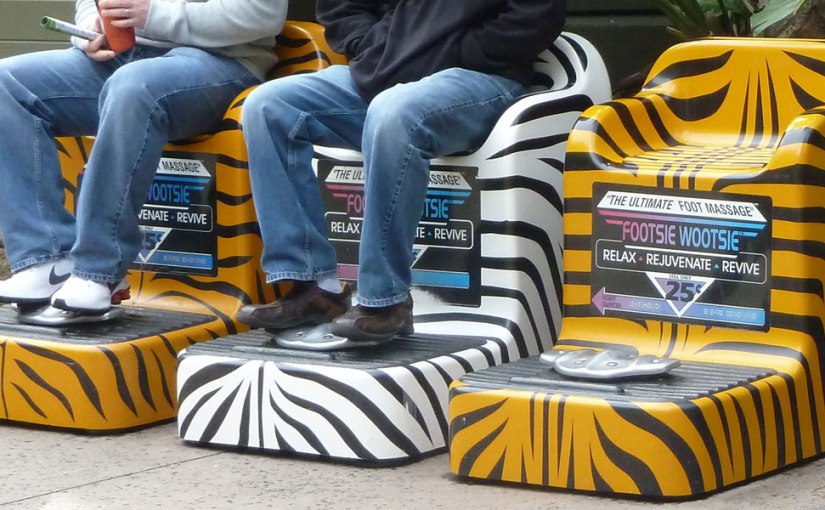
We’re goin’ to the zoo, zoo, zoo

This month Becky’s Squares are focusing on odd things – you can interpret this any way you want so I am going to take you all to the zoo this month. San Diego Zoo to be precise and the photos featured will be either odd looking animals, animals with odd names, odd facts or slightly odd photos. I hope you’ll enjoy my selection.
Day Six

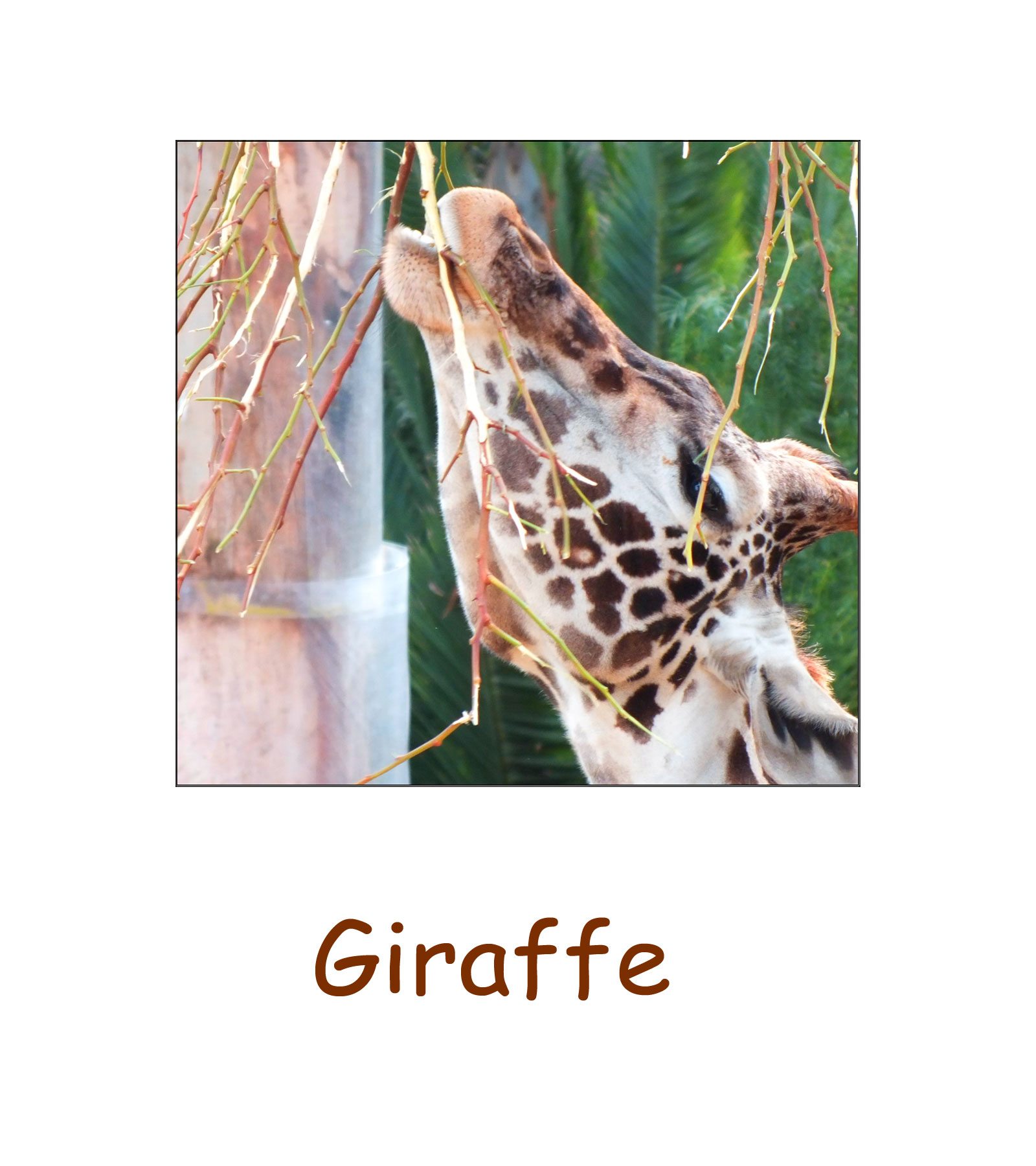
Giraffes have a small hump on their back and have a spotted pattern similar to that of a leopard. For a long time people called the giraffe a “camel-leopard,” because they believed that it was a combination of a camel and a leopard. That’s where the giraffe’s name camelopardalis comes from!

Giraffe coat colours vary from light tan to practically black. Masai giraffes, from Kenya, have patterns that look like oak leaves. Uganda or Rothschild’s giraffes sport large, brown splotches separated by thick, beige lines. The reticulated giraffe, found only in northern Kenya, has a dark coat with a seeming web of narrow white lines.

If you want to join in either daily, weekly or just on the odd occasion then please visit Becky, the only rule is that the main photo MUST be a square – that is four equal sides! You have been warned 😉
We’re goin’ to the zoo, zoo, zoo

This month Becky’s Squares are focusing on odd things – you can interpret this any way you want so I am going to take you all to the zoo this month. San Diego Zoo to be precise and the photos featured will be either odd looking animals, animals with odd names, odd facts or slightly odd photos. I hope you’ll enjoy my selection.

Day Five

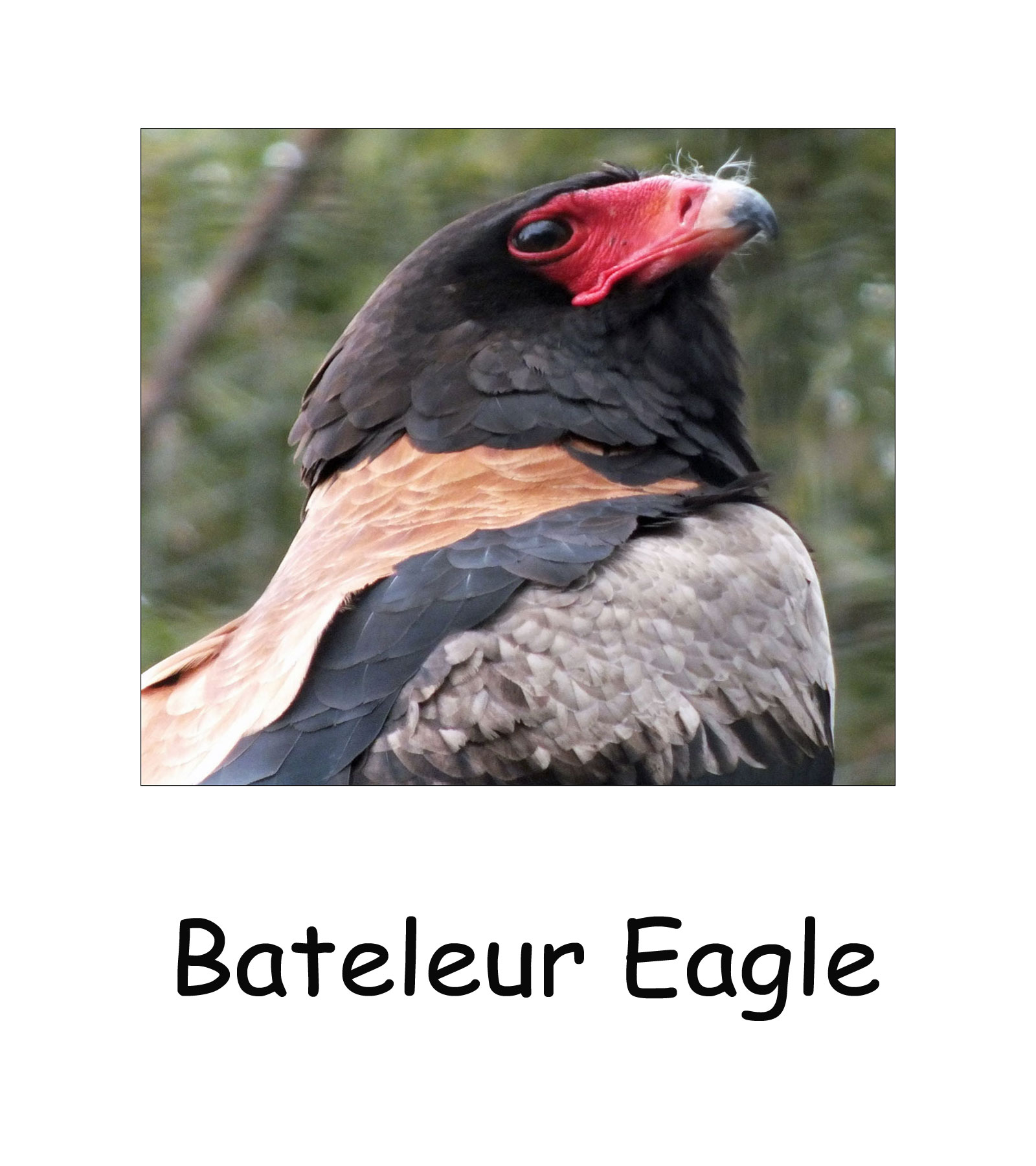
The Bateleur eagle is the most famous of the snake eagles. Bateleur is French for ‘tightrope-walker’. This name was probably chosen because of its distinctive aerial acrobatics. The nuptial aerial display is spectacular, with steep dives by the male at the female. She will roll on her back, presenting her claws and then roll on over to right herself as he hurtles past. There may be follow-the-leader dipping and rolling flight, and there may be 360 degree lateral ‘barrel’ rolls, which is often accompanied by a very loud slapping of the wings together. This percussion can be heard by humans for some great distance. All of this may be accompanied by very loud crowing calls.

It is the only member of the genus Terathopius and may be the origin of the “Zimbabwe Bird”, the national emblem of Zimbabwe.

If you want to join in either daily, weekly or just on the odd occasion then please visit Becky, the only rule is that the main photo MUST be a square – that is four equal sides! You have been warned 😉
We’re goin’ to the zoo, zoo, zoo

This month Becky’s Squares are focusing on odd things – you can interpret this any way you want so I am going to take you all to the zoo this month. San Diego Zoo to be precise and the photos featured will be either odd looking animals, animals with odd names, odd facts or slightly odd photos. I hope you’ll enjoy my selection.

Day Four

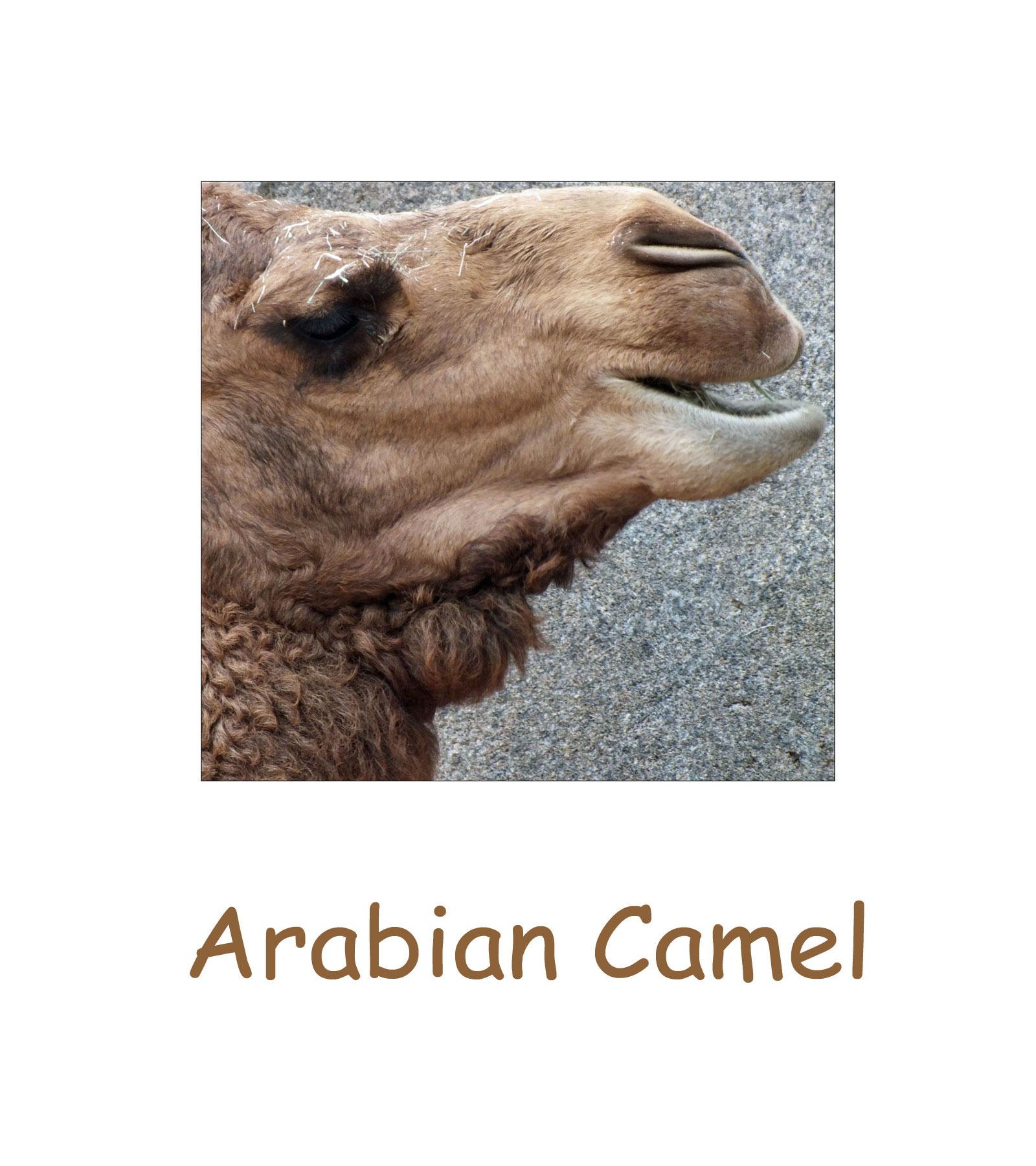
The dromedary camel, also known as the Arabian camel, exists today only as a domesticated animal. About 90 percent of the world’s camels are dromedaries. One hump or two? The dromedary camel has one hump and the Bactrian camel has two. What’s the easiest way to remember the names? Think of the capital letter D lying on its side with just one hump: D stands for dromedary. Now think of the capital letter B on its side with two humps: B for Bactrian! The humps contain fat, not water. And yes, camels do spit. Or rather throw up! Most unpleasant.

If you want to join in either daily, weekly or just on the odd occasion then please visit Becky, the only rule is that the main photo MUST be a square – that is four equal sides! You have been warned 😉
We’re goin’ to the zoo, zoo, zoo

This month Becky’s Squares are focusing on odd things – you can interpret this any way you want so I am going to take you all to the zoo this month. San Diego Zoo to be precise and the photos featured will be either odd looking animals, animals with odd names, odd facts or slightly odd photos. I hope you’ll enjoy my selection.

Day Three

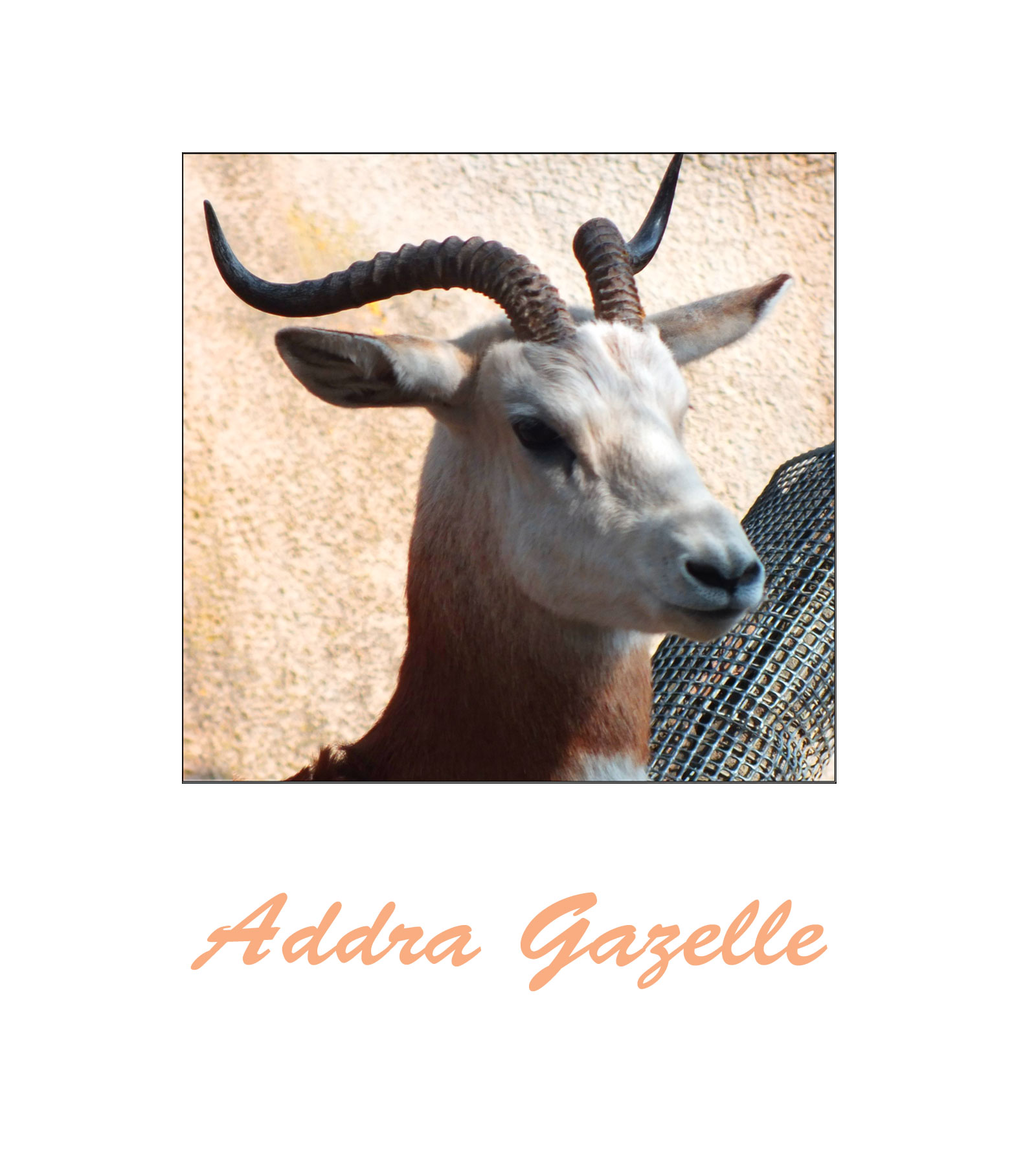
The dama gazelle (Nanger dama) also known as the “addra gazelle” or “mhorr gazelle”, is a species of gazelle. It lives in Africa, in the Sahara desert and Sahel region. The critically endangered dama gazelle is also one of the rarest. Fewer than 400 individuals remain in the wild, mainly in Chad and Sudan. Addra are considered the largest type of gazelle, with incredibly long legs and both males and females have horns. They curve back and up, but reach a length of only about 17 inches with males having 18 to 23 distinct rings and smooth tips.

If you want to join in either daily, weekly or just on the odd occasion then please visit Becky, the only rule is that the main photo MUST be a square – that is four equal sides! You have been warned 😉
We’re goin’ to the zoo, zoo, zoo

This month Becky’s Squares are focusing on odd things – you can interpret this any way you want so I am going to take you all to the zoo this month. San Diego Zoo to be precise and the photos featured will be either odd looking animals, animals with odd names, odd facts or slightly odd photos. I hope you’ll enjoy my selection.

Day Two

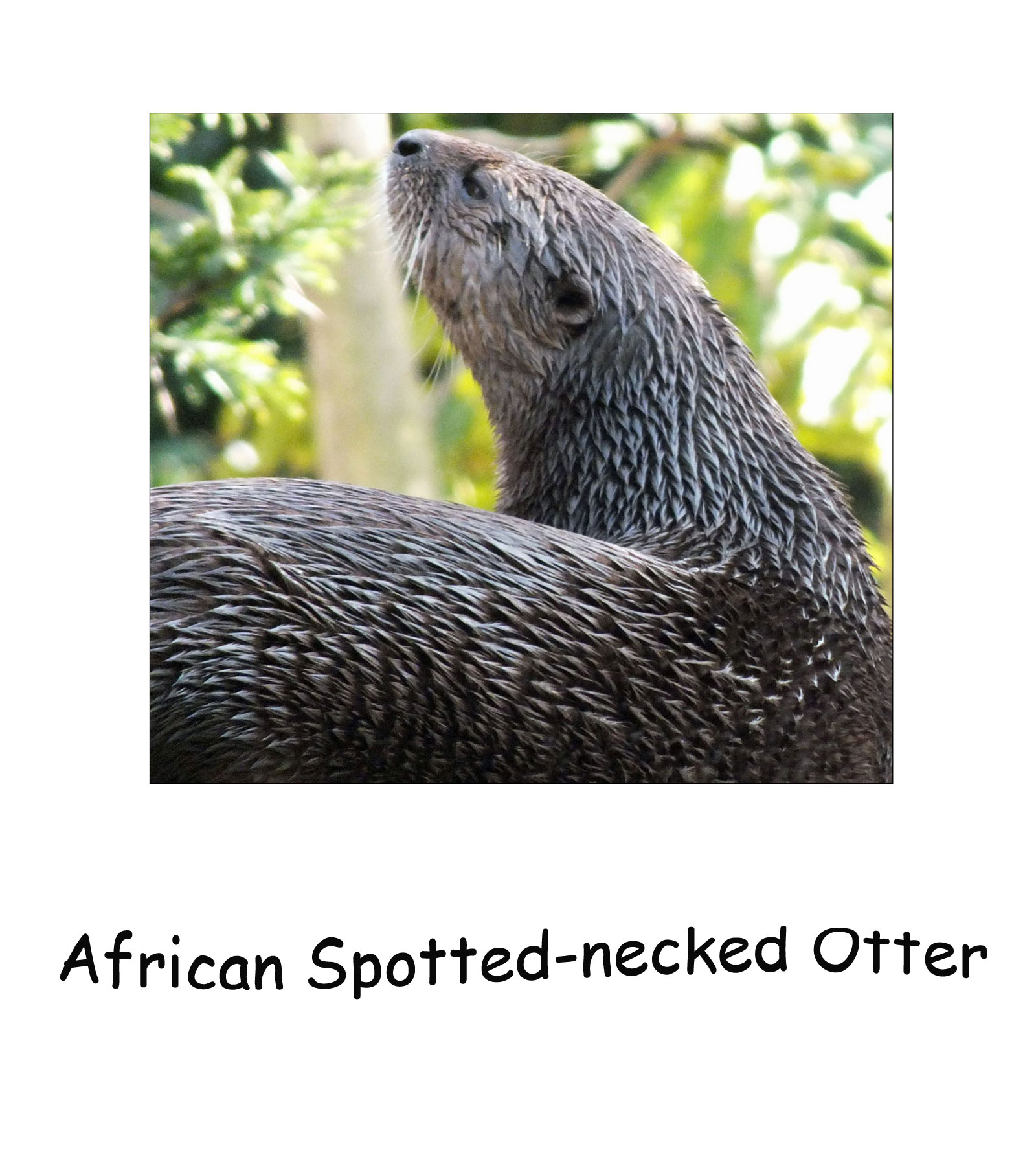
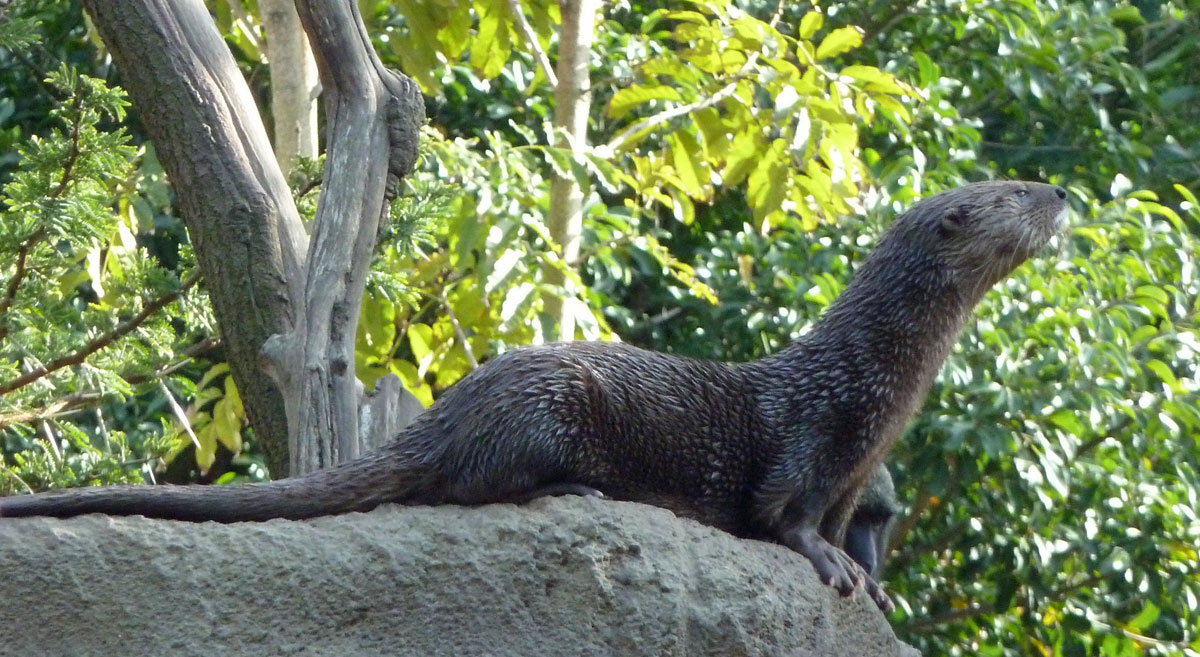
The spotted-necked otter or speckle-throated otter lives throughout sub-Sahara countries from Guinea Bissau to south-west Ethiopia and in the south eastern South Africa. The Latin name Hydrictis maculicollis breaks down to water (hydro) spotted (macula) neck (collis). The uniquely patterned spots on their chests are dappled with cream-colored or white patches, contrasting their brown to red fur. The average length of a spotted-necked otter is about 2.5 feet, and they typically weigh between 7-13 pounds, with the males being slightly larger. They have long, flattened tails and are highly flexible, easily able to touch their tails with their noses. They can live alone or in large social groups.

If you want to join in either daily, weekly or just on the odd occasion then please visit Becky, the only rule is that the main photo MUST be a square – that is four equal sides! You have been warned 😉