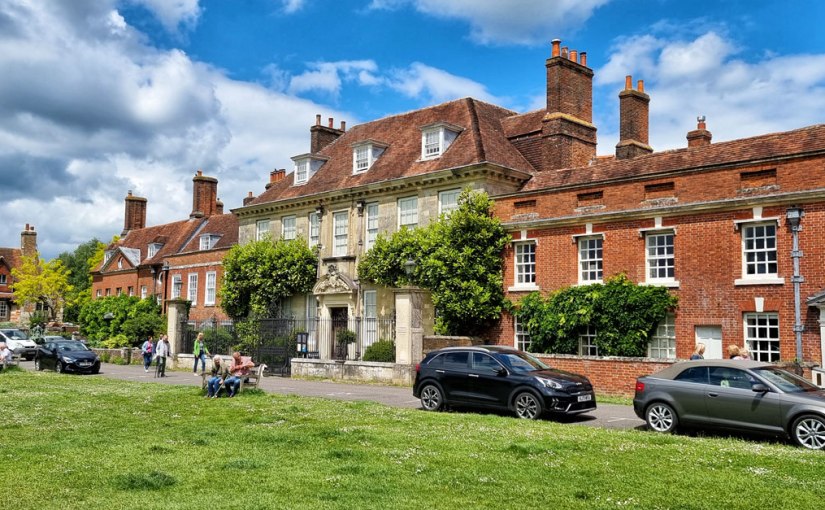
We didn’t spend a lot of time in Salisbury in June, because I was struggling with a ‘broken’ foot (my daughter insisted it was, but I thought possibly just torn ligaments – whatever, it was painful to walk on even after a month!). Apparently Salisbury has the largest Cathedral Close in Britain. It is a wonderful green space to escape the busy streets of Salisbury and to just explore and relax, with 21 Grade I listed buildings surrounding the magnificent cathedral, as well as museums and gardens.
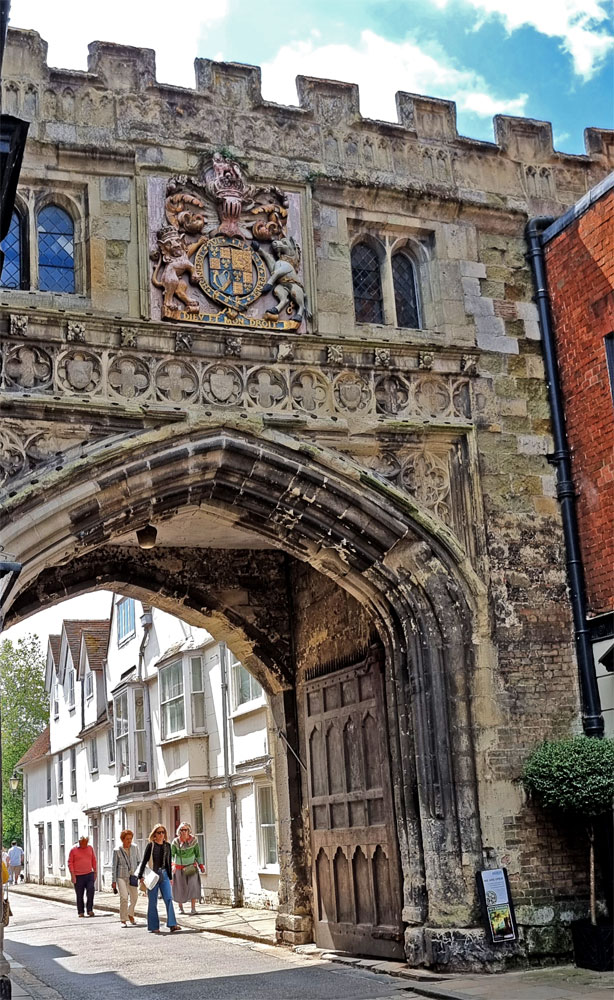
Built between 1327 and 1342 the High Street gate is the main point of entry into the Cathedral Close. It housed the small lock-up jail for those convicted of misdeeds within the Liberty of the Close. Beside the gate stands the Porters Lodge.
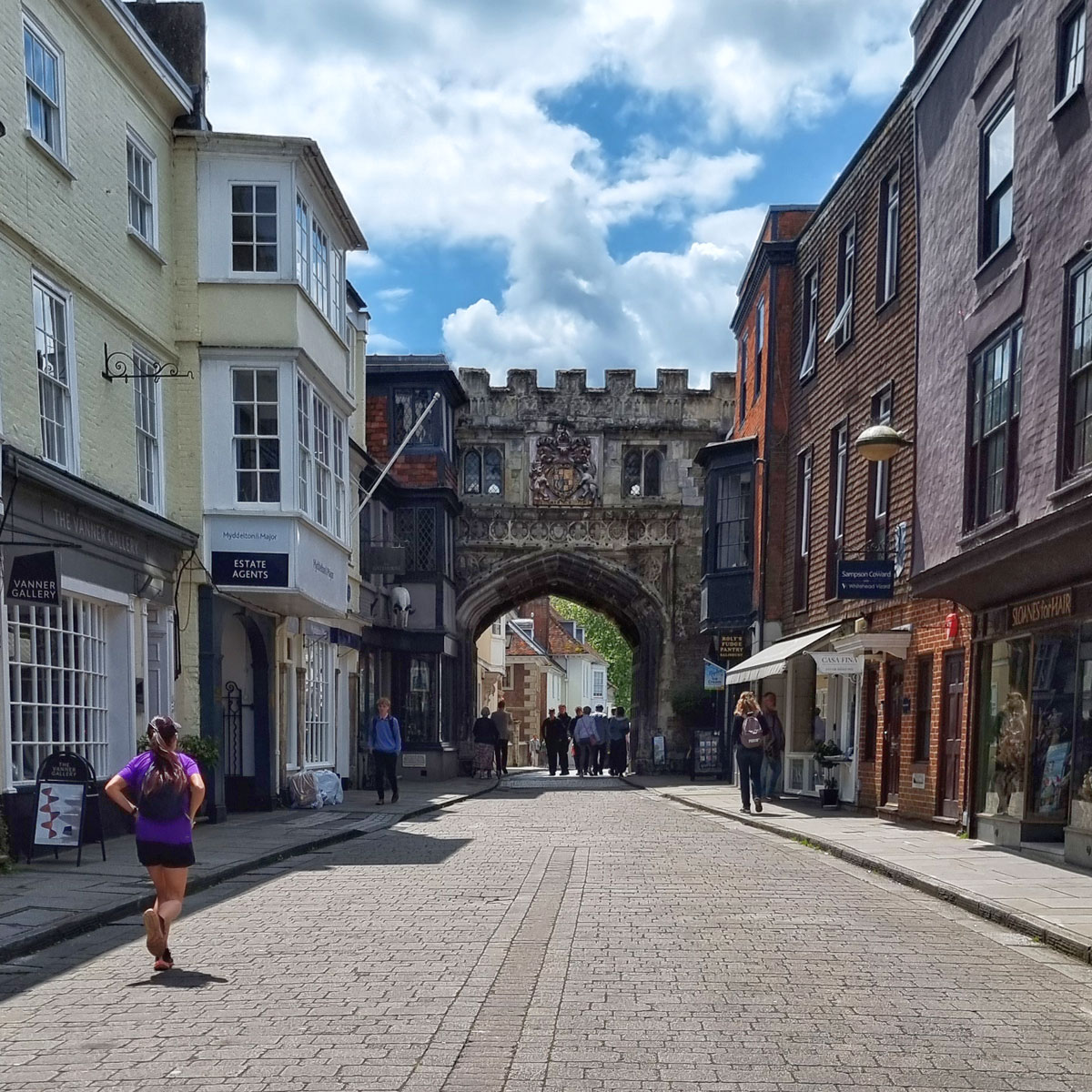
One of five gates in Salisbury’s ancient city wall and one of the four original gates, the High Street Gate (see below) joins St Ann’s Gate, the Queen’s Gate, and St Nicholas’s Gate. On the town side of the gate is the Stuart royal coat of arms which was added in the 17th century.
There are several buildings in the Close which are open to the public; others you can only stand and peer through the wrought iron railings and admire their moss covered gabled roofs, mullioned windows and beautiful gardens. It’s a shame that the cars spoil the views.
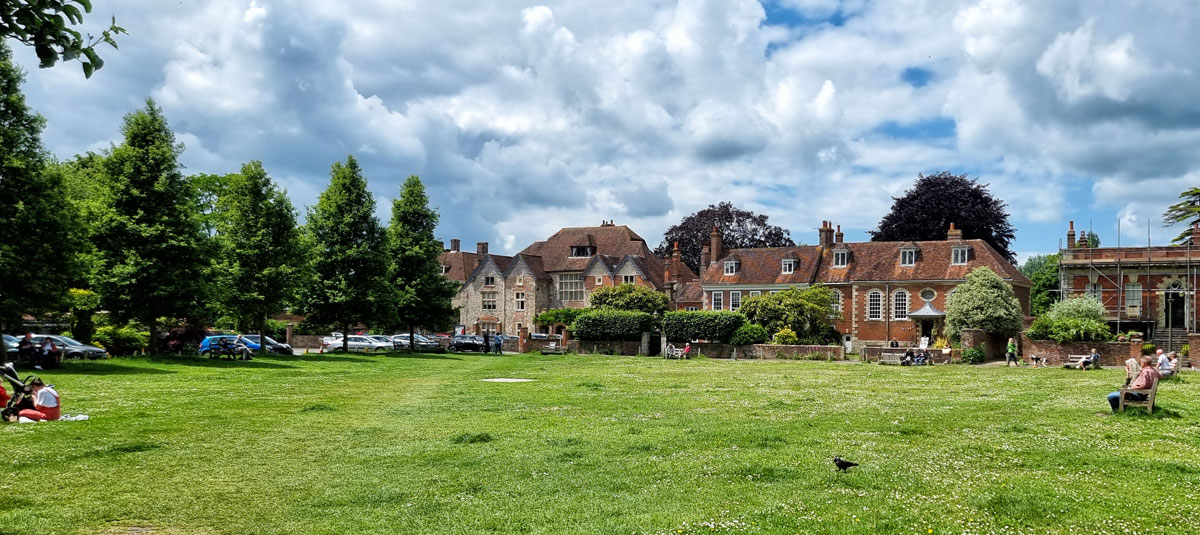
These buildings mostly stem from the 18th century, when Salisbury was a place of refinement, learning and culture, and the wealthy moved to the area and built their fine houses. A mixture of architectural styles and designs, narrow alleyways that lead off to mysterious places and grassy lawns dotted with benches.
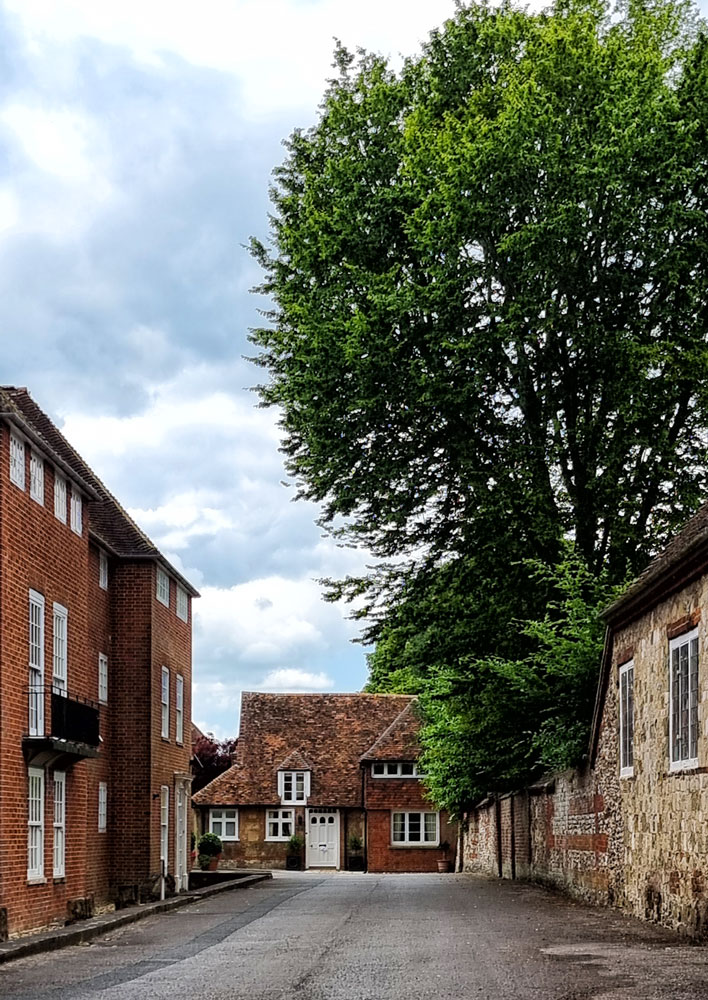
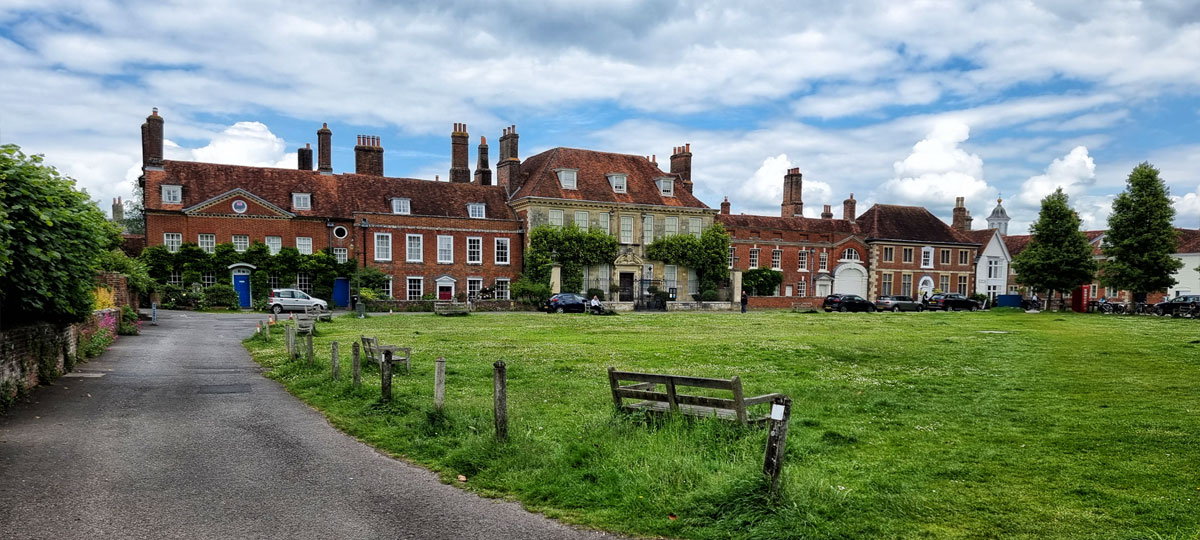
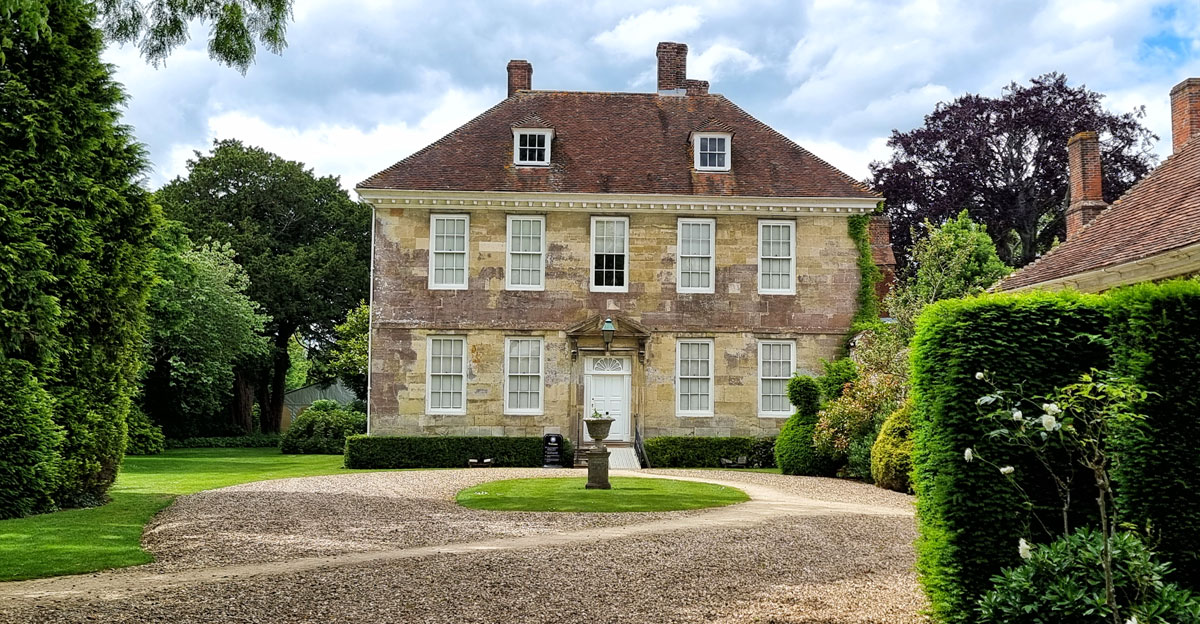
Arundells: Originally a 13th century canonry built around 1291, the last canon who lived here, Leonard Bilson, was imprisoned for practising magic and sorcery in 1562. The frontage is Georgian, the work of John Wyndham who lived there from 1718 – 1750. The house got the name of Arundells after James Arundell, the son of Lord Arundell who lived there from 1752 – 1803. Sir Edward Heath, British Prime Minister from 1970 – 1974, bought the house in 1985 and lived there until his death. After his death, the house passed to a trust who have opened it up to the public.
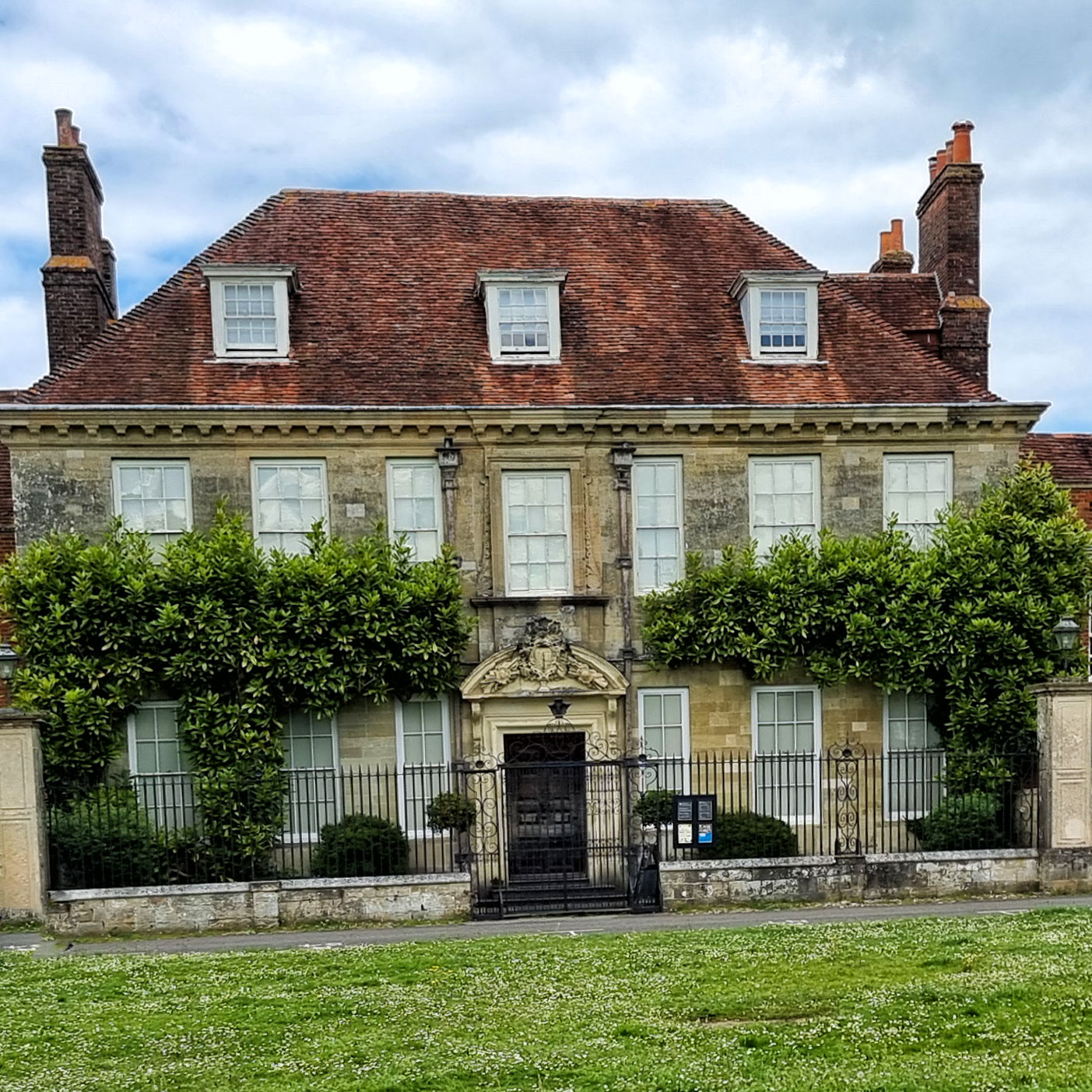
Mompesson House: Owned by the National Trust, this 18th century, Grade I listed house is open to the public. It was built for Sir Thomas Mompesson, who was MP for Salisbury on three occasions at the end of the 17th century. Unfortunately closed on the day of our visit.
The Rifles Berkshire and Wiltshire Museum: Once a Medieval canonry, it was occupied by canons from 1227 until around the 15th century, when it passed to the Bishop of Salisbury and was used as a storehouse and administrative building, being known as ‘The Wardrobe’ from around 1543.
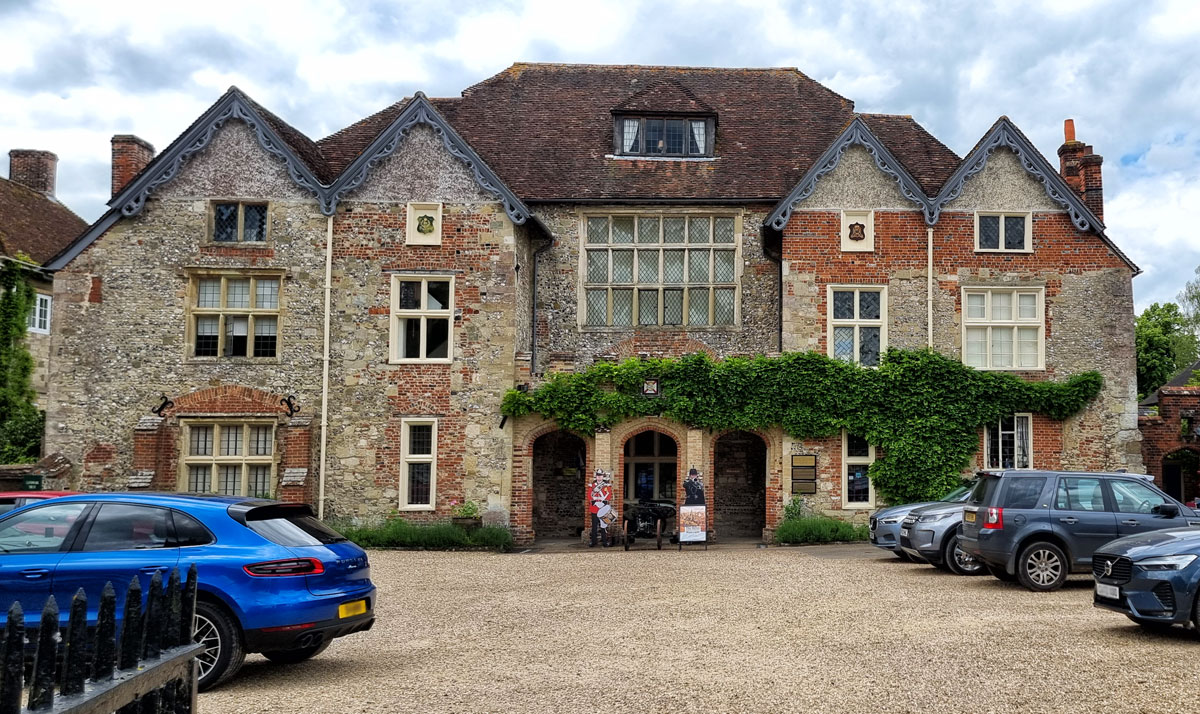
I am only sorry that my injury prevented me from further exploration as there is much more to see by continuing along the West Walk and around the River Avon and water meadows.

 TRAVEL WORDS
An amazing place with so much history. So glad it has been preserved.
I agree about the cars
Cars really spoil these historic places.
One of the (few) things that makes me proud to be English is the way we preserve our history at all costs. You have showcased a fine example of the benefits of ‘listing’ buildings. In so many other countries, they would have been demolished to make way for shopping malls in the 1970s.
Best wishes, Pete. x
Yes it’s good so much has been preserved, but there were a lot of bad decisions made in the 60s and 70s.
We indulged in a great deal of cultural vandalism during the 1960s and 1970s. So many serviceable and historic buildings were torn down to make way for shamefully tacky shopping centres. I always think many places in Europe have fared so much better than we have done.
A lovely tour none the less – hope foot is fully recovered now
Yes, thank you. It took a lot longer than I thought it would, but I sensibly didn’t walk much once we returned home. A shame we weren’t able to explore the close more.
It’s curious that the second noun in cathedral close is pronounced klos, yet the close that means ‘the ending, the finish’, while also a noun, is pronounced kloz.
Your posts have made me want to visit Salisbury.
Mmm.. I hadn’t thought about close. I guess we just automatically adjust the pronunciation.
Your post has shown me that Salisbury is somewhere that I will enjoy visiting in the future – a lovely historic town with lots to explore. I hope that your foot is fully recovered and that you’ll have the chance to walk around more of Salisbury again sometime.
I don’t know anything about the rest of the city, but this area is nice.
I visited here in my year “down south” which was 1978/9. It obviously made a good impression because I remember it quite well and recognise a lot of your pictures. I would definitely like to visit again some day.
My first visit, despite my army son living nearby. I drove through several years ago, and thought it looked a bit scruffy. But this part is quite nice.
Salisbury is beautiful and the level of preservation is wonderful.
I don’t know about the rest of the city, but the Cathedral Close is a nice area.
A shame your bad foot held you back from further exploration but you seem to have seen and photographed quite a lot. Someone once told me that torn ligaments can be more painful than a break, so whether you or your daughter was correct, I’m sure it must have been nasty to walk on even a short distance 🤗
I did a lot of hobbling that week, using a walking pole and ankle support, but by evening it was badly swollen. My son agreed that it was most likely torn ligaments and yes, they are not only very painful but also take a long time to heal. I suppose I should have sought medical advice and maybe had a boot for the foot. Anyway it seems fine now!
I’m glad that at least it is better now!
You’re really tempting me to visit. Not sure how I’ve missed out so far.
Where would we be without the rich to build their impressive mansions, Jude?
I’m quite partial to a Georgian splendour. So far I have lived in a Victorian, an Edwardian and a mock Georgian plus a lot more modern houses.