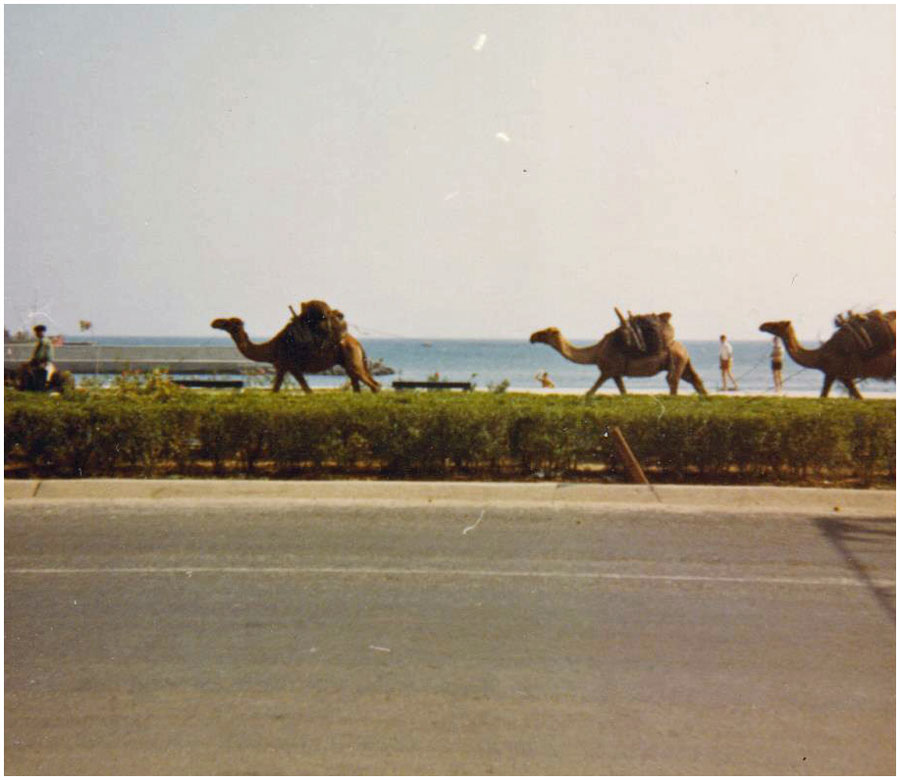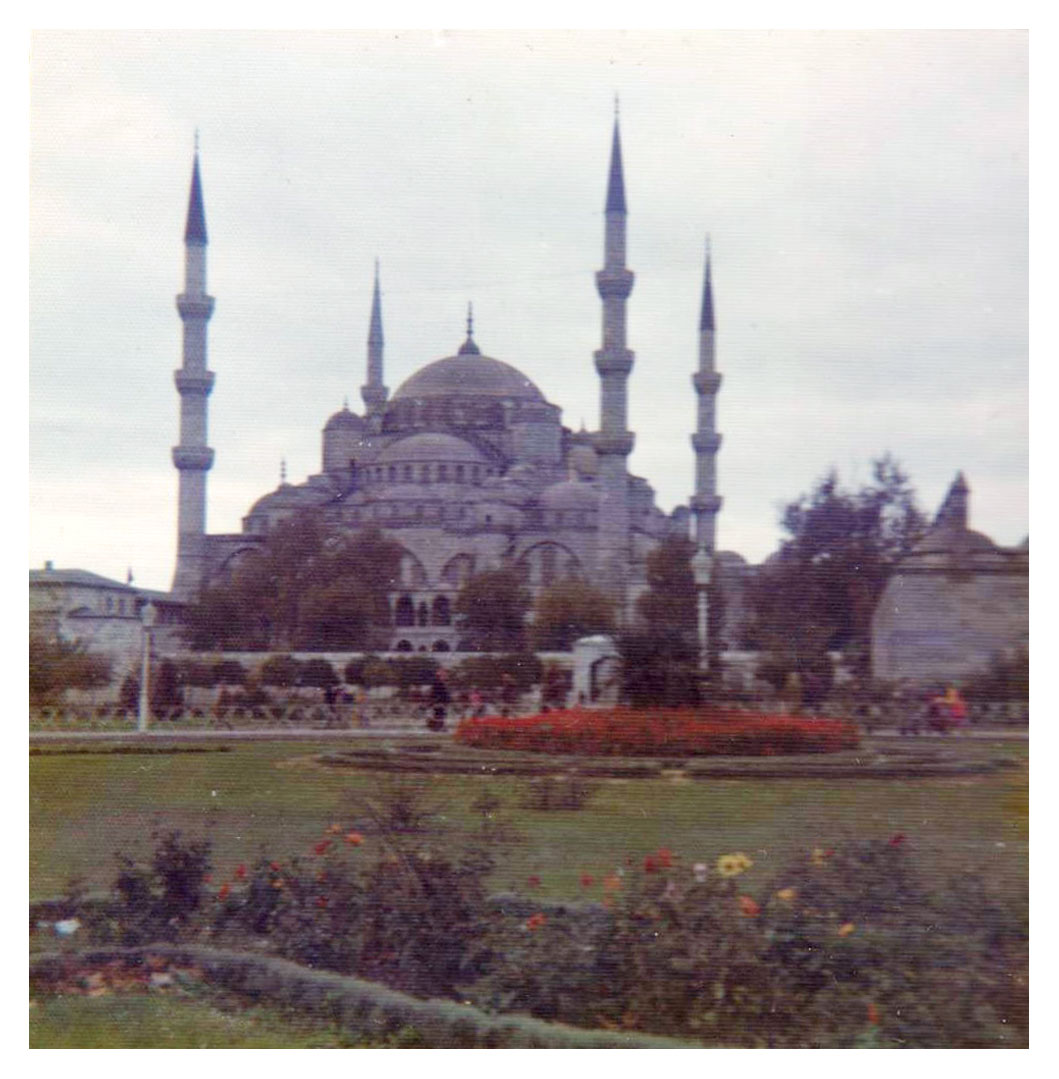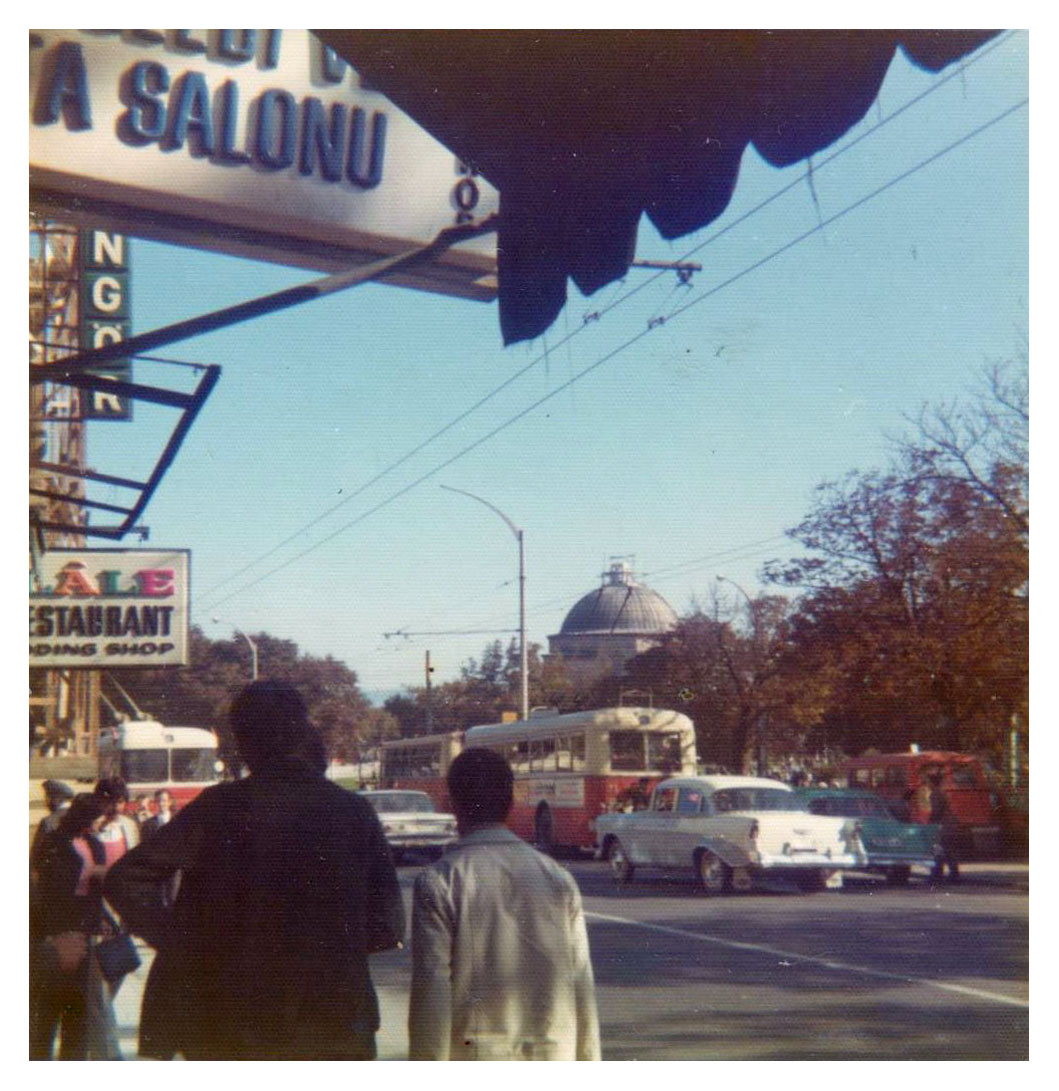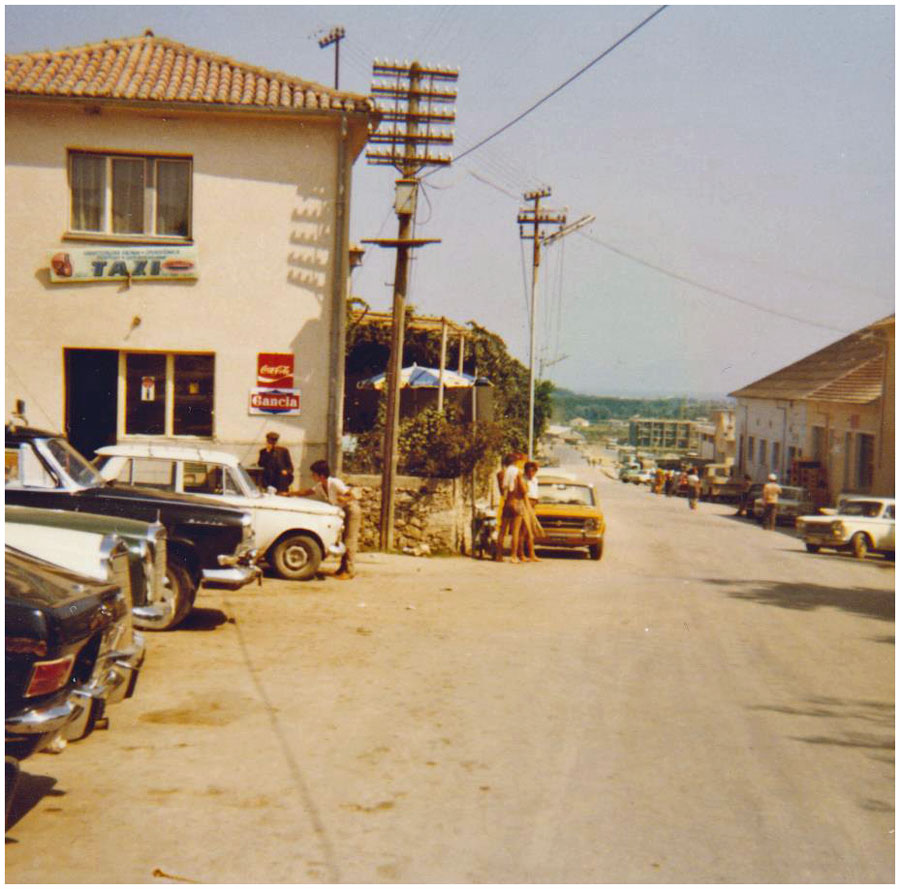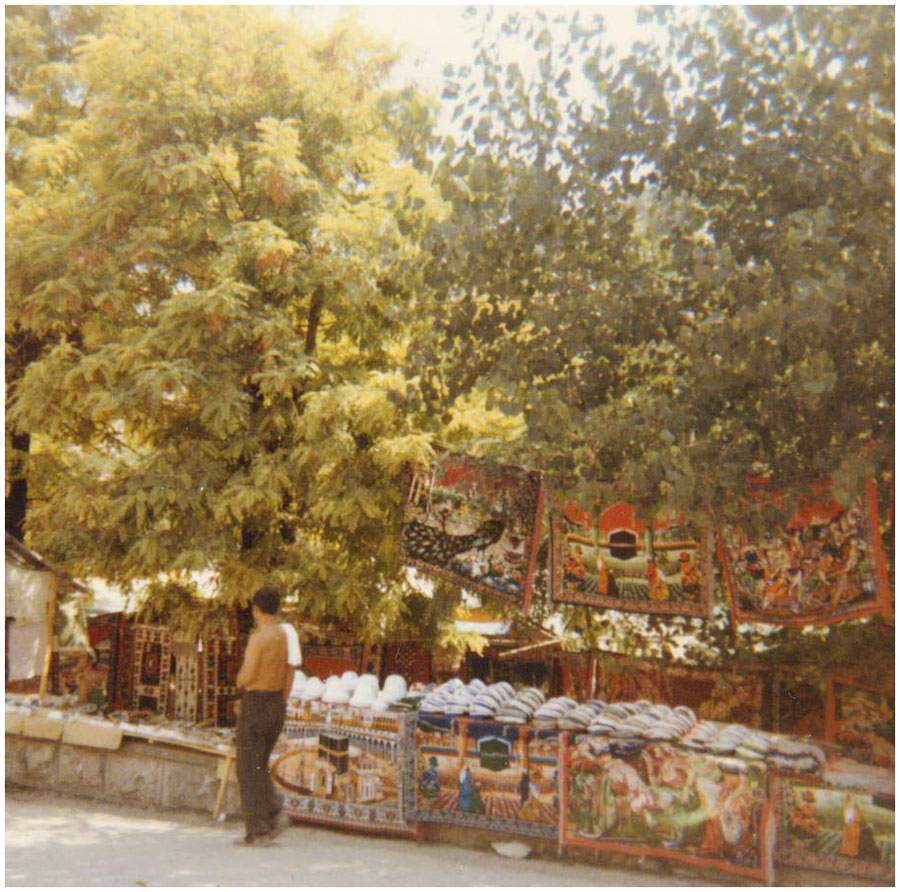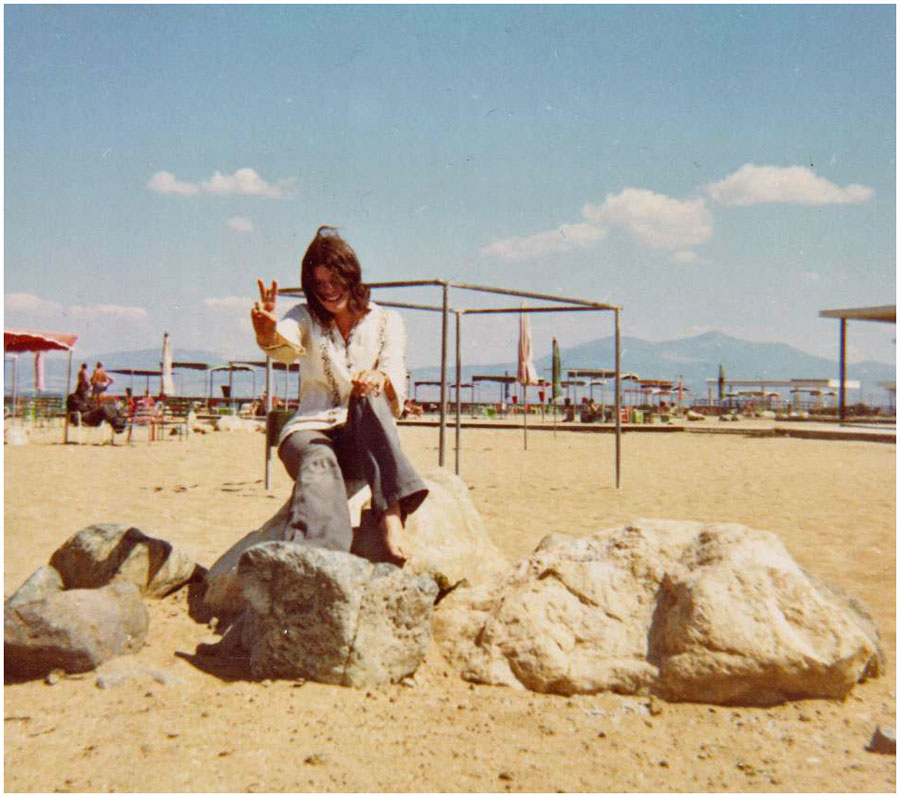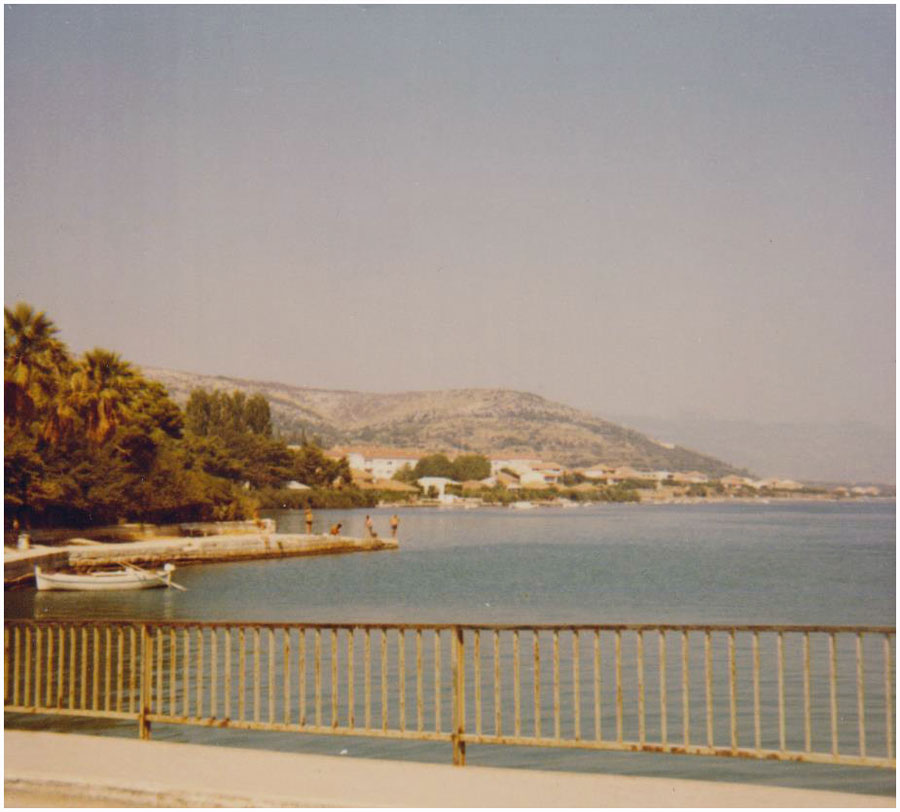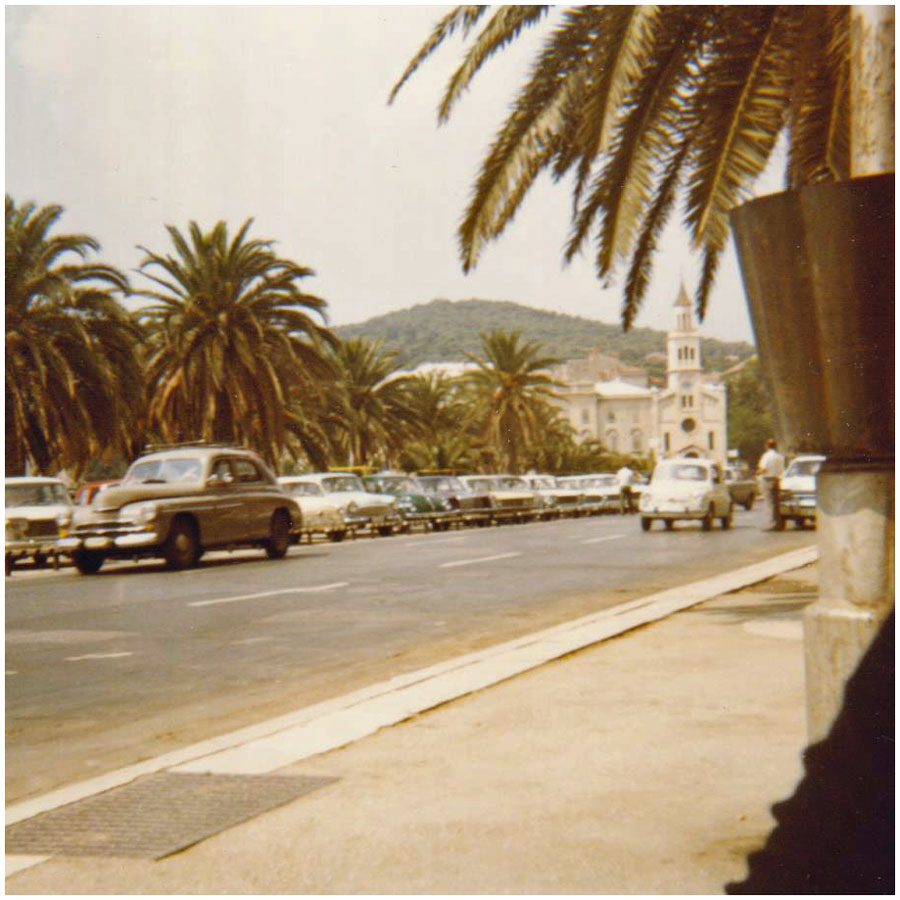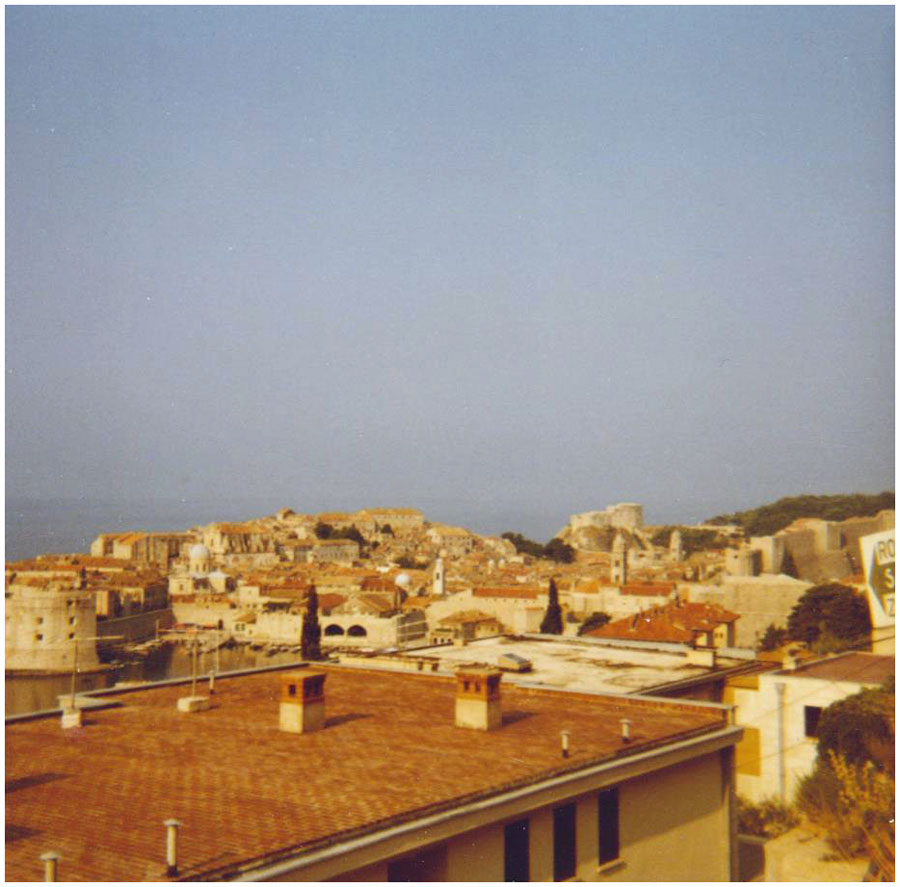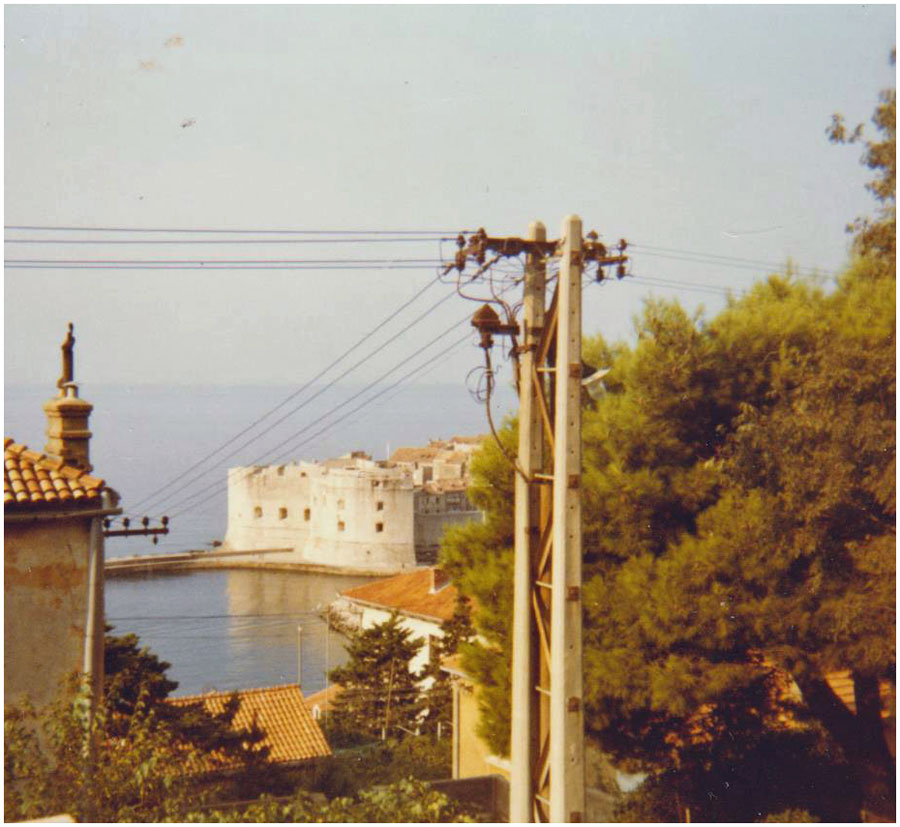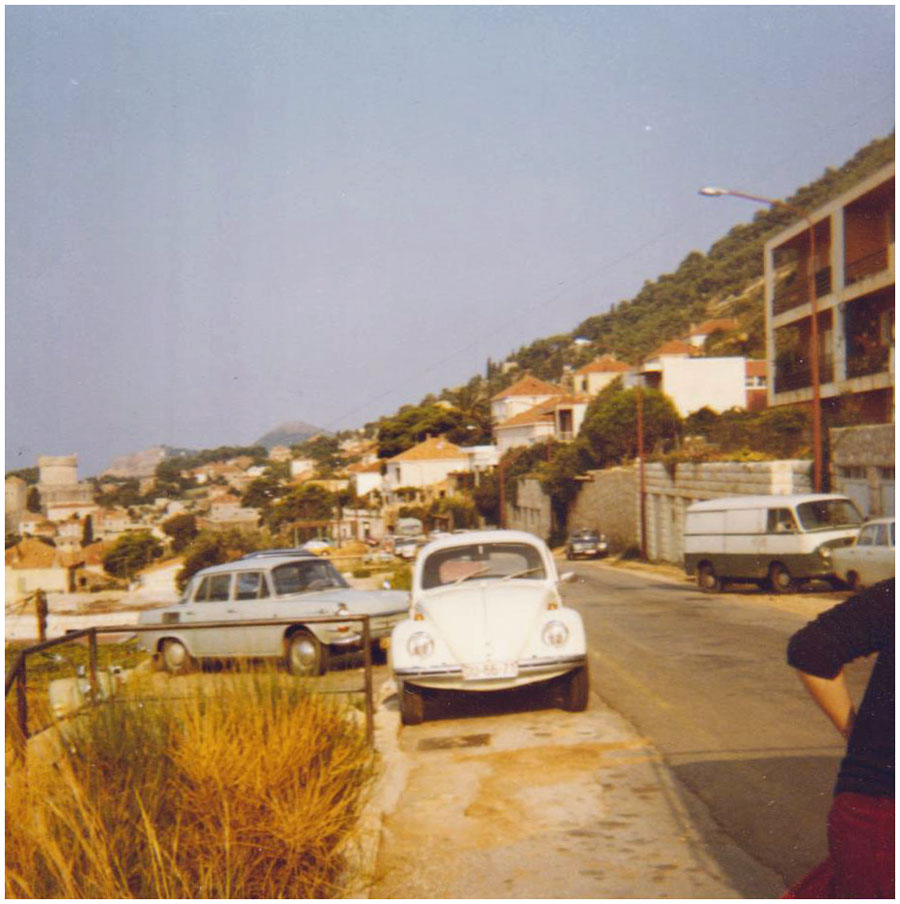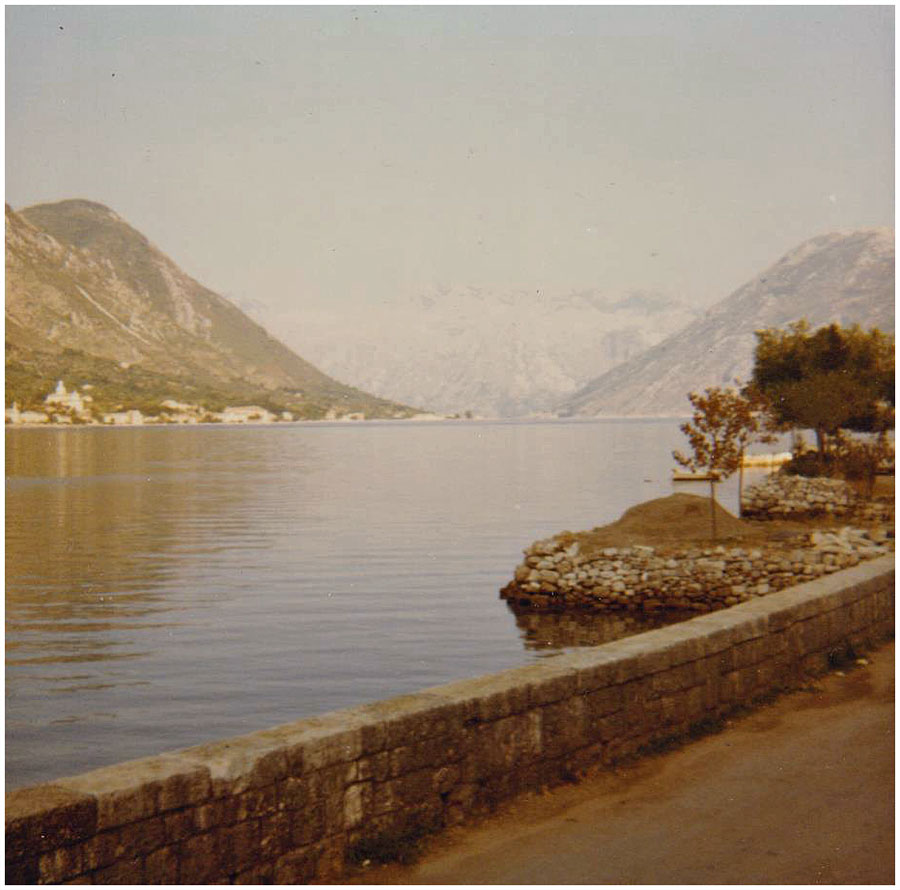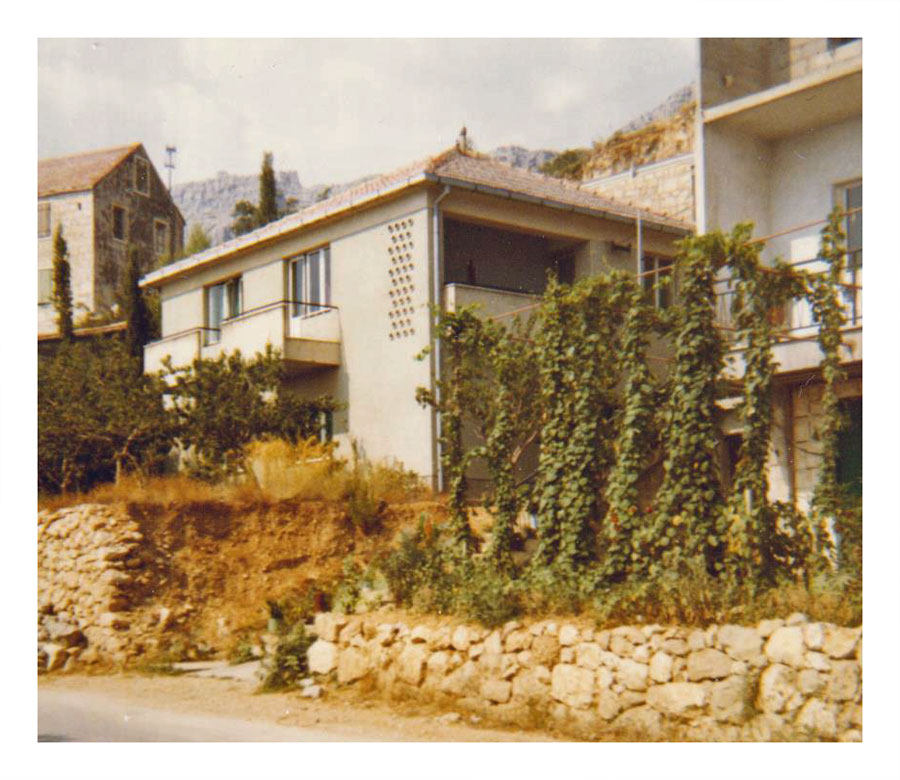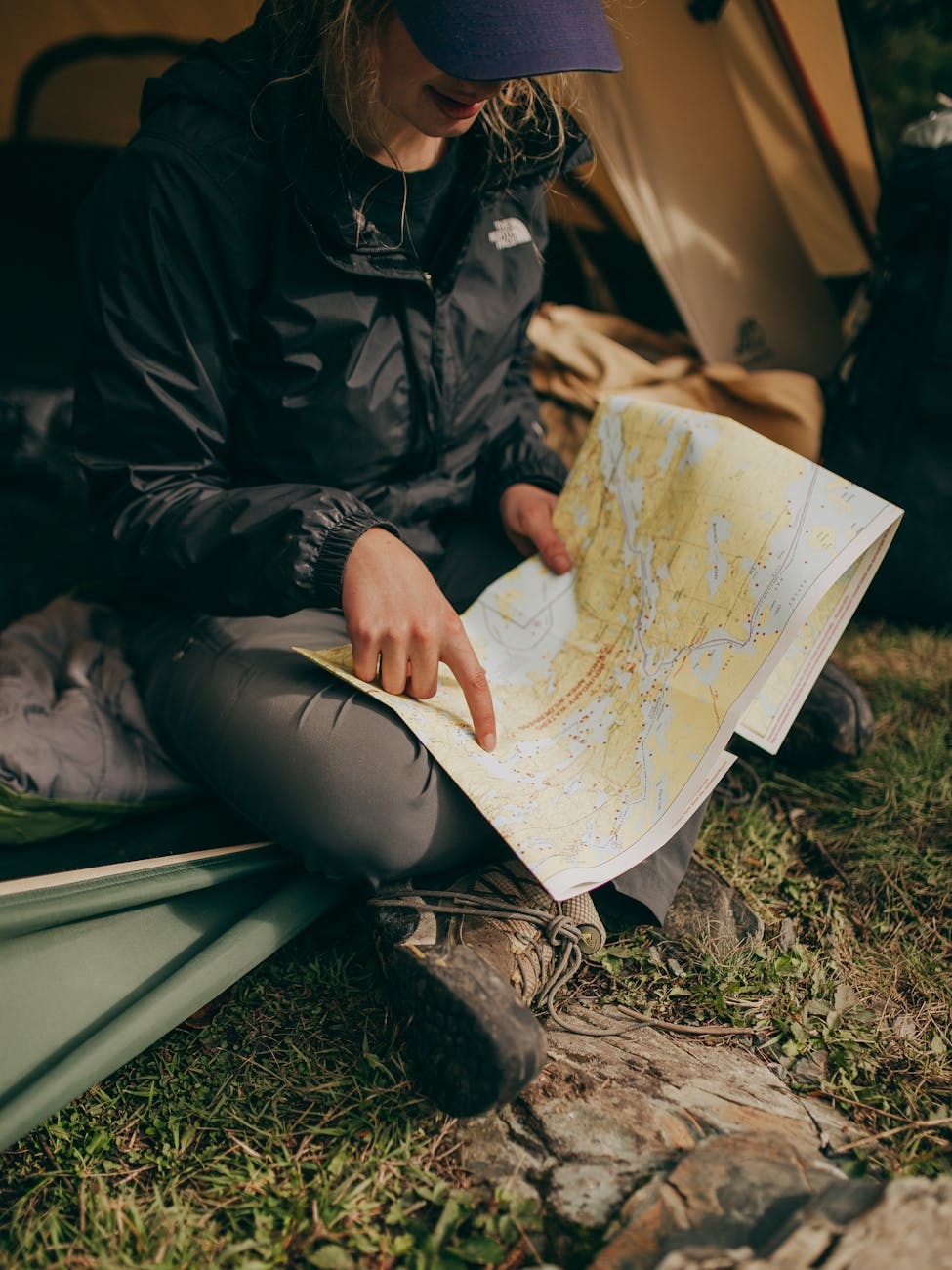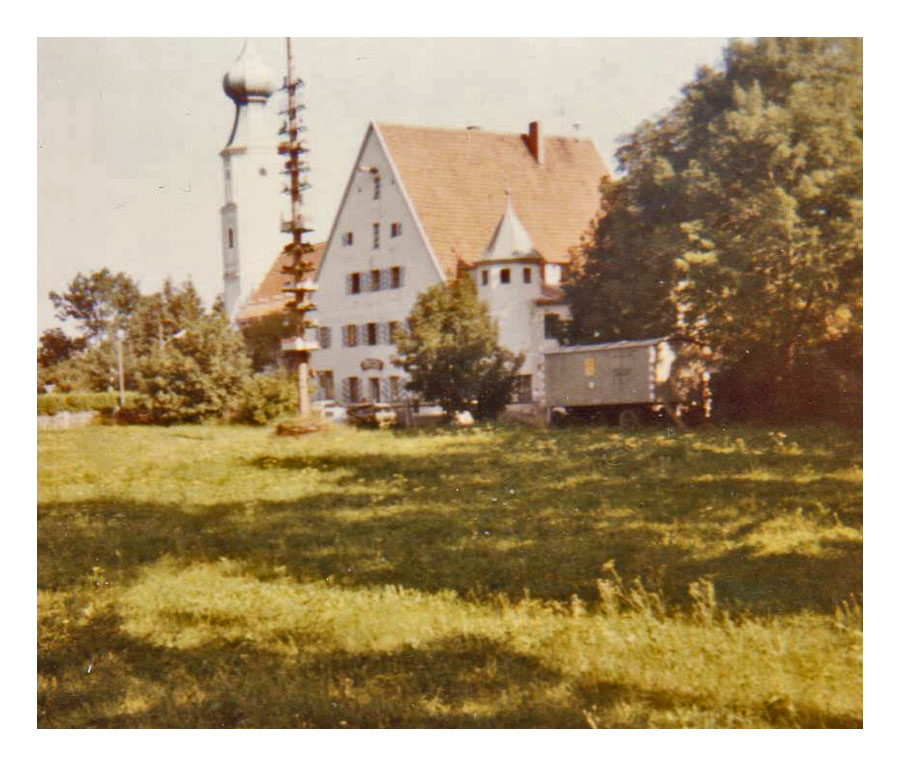
Our destination was Greece. White sand, blue sea, sun, whitewashed buildings with blue roofs. It’s what everyone thought Greece was like. So the plan was to get there as quickly as possible. Days were spent perusing maps of Europe to work out the best route. Hitch to Dover, ferry over to Oostende then the autobahn down the west of Germany, through Austria, Yugoslavia (as it was then) and into Greece.
We set off on a Thursday – no particular reason why we chose that day, and it was raining. August in England and raining! We almost changed our minds then, but eventually a beak in the weather came and we walked the couple of miles to the nearest M1 junction and the journey began.
All went well, we got lifts down to London, stopping at several of the service stations along the motorway where we could find a lift with a lorry driver and arrived, wet and cold, at Dover around 4 am in time for the 6:30 am ferry over to Oostende. Exhausted we settled down in the waiting room for a catnap.
At 10:15 am we were once again on dry land. Continental land. At first sight Oostende didn’t look much different to England, but at least it wasn’t raining. We quickly found the Tourist Information Office (the first building we sought out everywhere we went – second was a bank to change up our traveller’s cheques) and got directions to a nearby campsite where we would stay for a couple of nights. Catching the bus to the campsite we were fairly giddy with excitement.
Flower Clock
Putting up the tent proved more difficult than we imagined (we had trialled it in England, using it at the Reading Festival a few weeks earlier) due to a blustery wind that had arisen from nowhere. As luck would have it a couple of English lads noticed our predicament and came to help. On condition we went for a drink with them afterwards. Cathy and I exchanged glances, it was going to be like that was it.
Tent up, we crawled into our sleeping bags and slept for a few hours, before joining the lads in the campsite bar for pints of Belgium beer. It turned out they were northerners too – Graham from Edale near Sheffield and Darren from Manchester. They were on their way home after a couple of weeks in the Netherlands. The campsite was close to the beach and later we watched as fireworks lit the sky. I was quite relieved that the boys were leaving the next day.
I was bored with life at home. Bored with my job as a junior clerk in a very well-known building society which basically meant filing; sorting the mail; lugging the heavy franking machine to the post office; making coffee for the boss; buying cakes when it was someone’s birthday. I could have done the job half asleep. And despite the fact that I was very good with numbers, because of my age I wasn’t allowed to be on the front desk dealing with customers.
Having to work Saturday mornings interfered with going to gigs on a Friday night, though there was one occasion where I actually slept in the railway station waiting room in Huddersfield after missing the last train home and having to go straight to work. Bored with the same old pubs each weekend. The same boring blokes.
I dreamed of white sand and aqua water, sunshine and olives, even though I had never eaten an olive. My best friend was also bored with her office job and with a little persuasion she agreed to come with me and explore Europe.
There was the sticky issue of getting a passport. I wasn’t quite eighteen so had to get my parent’s permission. Mum was dead against it, but catching dad back from the pub one evening it was easy to get him to sign the form. He had no idea what he was signing, but I am sure once mum found out he would never hear the end of it.
We didn’t have much money. Originally we had reckoned on saving up for a couple of years before embarking on our trip. In fact I had saved around eighty quid, but Cathy only had forty. But we reckoned that would get us to Greece, as long as we hitchhiked as much as possible, and camped.
My mother was very angry when I told her I had handed in my notice. She thought we were a pair of day-dreaming idiots. At the time it hadn’t crossed my mind that she might just have been worried.
A few weeks later, resignation letters handed in, backpacks chosen, a two-man tent purchased along with tent pegs, a wooden mallet* , camping stove and gas cylinders, pans and tin mugs and plates, assorted dried food and coffee and we were ready for the off.
What is it that makes one person keen to explore the world and another content to stay in the same place they were born? Is in in the genes? Is it curiosity? Comfort? Fear? Boredom?
As a child growing up in the UK my wanderings began before I had any say in them as my parents moved several times before I was a teenager, purely for dad’s employment. Being introduced as the new kid in school was embarrassing and cringe-making. I hated it, but it was what it was. Fortunately from the age of 10 we stayed put in Wakefield, West Yorkshire. Or at least they did. For a while.
Dad did ponder on taking us to Australia on the £10 scheme, but chickened out at the last minute which made me sad because I was so looking forward to seeing kangaroos and koalas and living by the sea. It did however spark a keen interest in all things Australian and what else was out there in the world and needless to say my favourite subject was geography.
Fast forward to 1970 when I was due to finish my O levels. I had enjoyed my grammar school education in the main, being part of the (rather successful) hockey team left me with good memories and great pals, I contributed to the school magazine, loved the English and Geography trips (mainly to parts of the Yorkshire moors and dales) and enjoyed the languages I studied (French, German and Latin if you are remotely interested). My mother was keen for me to continue to study my A levels and go on to university. I, however had other plans. I decided I would train in hotel management, the idea being that it would be a route into working overseas. So off I went to Huddersfield Polytechnic.
I didn’t last long. The fact that I had to board during the week in a very inhospitable house which smelled of boiled cabbage (the sort you boil all day) combined with a very harsh typing teacher who hit the backs of your hands with a ruler if you dared to look at the keys whilst typing, severely tested my enthusiasm. When told I would be working in Harrogate over the Christmas break (the work experience part) away from friends and family, I quit. In retrospect that wasn’t the cleverest move on my part. But you can’t undo the past.
Six months later, standing in the kitchen drying the dishes from the usual Sunday lunch, with my mother washing up, my then boyfriend, dad and brother sitting in the lounge watching the football I had a lightbulb moment. My future life lay before me.
Those of you who have been following this blog for some time will remember that I once lived in Ludlow, Shropshire with the OH for several years (he was a Shropshire lad). We moved there to help support my mother-in-law who was struggling to cope living on her own. When we finally decided to drop anchor in Cornwall (having arranged care workers to call in daily) the OH still did a monthly journey back to visit his mum.
This song was written from that journey. But I’ll let David provide the narrative.
The song was actually mostly written on a train between Shrewsbury and Newport at a time when I was frequently commuting between Shropshire and Cornwall to visit my frail 94-year-old mother, who died a few months after, so it has particular resonance for me. It originally included a couple of extra verses about Hereford and the Vale of Usk, but after the ‘Wrekin’ chorus forced its way into the song, I decided to restrict it to the Shropshire-related verses. Maybe they’ll turn up sometime as another song.
(Note to anyone looking at this post in the Reader or on a phone you may need to visit the actual site to be able to view and listen to the music track)
Lyrics
Friends Around the Wrekin
The Abbey watches my train crawling Southwards
Thoughts of Cadfael kneeling in his cell
All along the Marches Line,
Myth and history, prose and rhyme
But those are tales I won’t be here to tell
The hill is crouching like a cat at play
Its beacon flashing red across the plain
Once we were all friends around the Wrekin
But some will never pass this way again
Lawley and Caradoc fill my window
Facing down the Long Mynd, lost in rain
But I’m weighed down with the creaks and groans
Of all the years I’ve known
And I don’t think I’ll walk these hills again
Stokesay dreams its humble glories
Stories that will never come again
Across the Shropshire hills
The rain is blowing still
But the Marcher Lords won’t ride this way again
The royal ghosts of Catherine and Arthur
May walk the paths of Whitcliffe now and then
Housman’s ashes grace
The Cathedral of the Marches
He will not walk Ludlow’s streets again
The hill is crouching like a cat at play
Its beacon flashing red across the plain
Once we were all friends around the Wrekin
But some will never pass this way again
And I may never pass this way again
Historical Notes
‘The Abbey’ is actually Shrewsbury’s Abbey Church: not much else of the Abbey survived the Dissolution in 1540 and then Telford’s roadbuilding in 1836. Cadfael is the fictional monk/detective whose home was the Abbey around 1135-45, according to the novels by ‘Ellis Peters’ (Edith Pargeter).
Shrewsbury Abbey
The Welsh Marches Line runs from Newport (the one in Gwent) to Shrewsbury. Or, arguably, up as far as Crewe, since it follows the March of Wales from which it takes its name, the buffer zone between the Welsh principalities and the English monarchy which extended well into present-day Cheshire.
‘The hill’ is the Wrekin, which, though at a little over 400 metres high is smaller than many of the other Shropshire Hills, is isolated enough from the others to dominate the Shropshire Plain.
The Wrekin
The beacon is at the top of the Wrekin Transmitting Station mast, though a beacon was first erected there during WWII. The Shropshire toast ‘All friends around the Wrekin’ seems to have been recorded first in the dedication of George Farquar’s 1706 play ‘The Recruiting Officer’, set in Shrewsbury.
Carding Mill Valley – In the Shropshire Hills, near Church Stretton, connected to the Long Mynd.
‘Lawley’ refers to the hill rather than to the township in Telford. The Lawley and Caer Caradoc do indeed dominate the landscape on the East side of the Stretton Gap coming towards Church Stretton from the North via the Marches Line or the A49, while the Long Mynd (‘Long Mountain’) pretty much owns the Western side of the Gap.
Shropshire Hills on the east side of the Strettons
Stokesay Castle, near Craven Arms, is technically a fortified manor house rather than a true castle. It was built in the late 13th century by the wool merchant Laurence of Ludlow, and has been extensively restored in recent years by English Heritage, who suggest that the lightness of its fortification might actually have been intentional, to avoid presenting any threat to the established Marcher Lords.
Stokesay castle and Gatehouse
Prince Arthur, elder brother of Henry VIII, was sent with his bride Catherine of Aragon to Ludlow administer the Council of Wales and the Marches, and died there after only a few months.
Ludlow Castle (once home to Arthur and Catherine of Aragon)
Catherine went on to marry and be divorced by Henry VIII, and died about 30 years later at Kimbolton Castle. Catherine is reputed to haunt both Kimbolton and Ludlow Castle lodge, so it’s unlikely that she also haunts Whitcliffe, the other side of the Teme from Ludlow Castle. (As far as I know, no-one is claimed to haunt Whitcliffe. Poetic licence…) The town itself does have more than its fair share of ghosts, though.
Whitcliffe Common
For some time it has puzzled me that in ‘A Ballad for Catherine of Aragon’, Charles Causley refers to her as “…a Queen of 24…” until I realized he was probably referring not to her age, but to the length of time (June 1509 until May 1533) that she was acknowledged to be Queen of England.
The ashes of A.E. Housman are indeed buried in the grounds of St. Laurence’s church, Ludlow, which is not in fact a cathedral, but is often referred to as ‘the Cathedral of the Marches’. It is indeed a church with many fine features and its tower is visible from a considerable distance (and plays a major part in Housman’s poem ‘The Recruit’).
Cathedral of the Marches
RIP David: 1949 – 2025
David standing on the top of the Wrekin -25 01 2004 ( 3 months after our marriage) the only time I ever climbed up it and the only time I managed to persuade him to shave!
My weekend in Bude, north Cornwall was interrupted by the first named storm of the year – Amy. Sunday looked to be the better day so the one I decided to travel 50 mins across to north Devon and visit RHS Rosemoor. Not as big as RHS Wisley in the south-east, but I thought it would be nice to revisit this garden, last seen in April 2011.
The lesson I have thoroughly learnt, and wish to pass on to others, is to know the enduring happiness that the love of a garden gives – Gertrude Jekyll
Winter GardenCool Garden
Asters and Pompon Dahlias in the Long BorderMiscanthus sinensis ‘Kleine-Silberspinne’The Herb, Potager and Cottage Garden with shelterBeautiful dahlias everywhereDogwoodOne moves between the new garden and the original garden, created by Lady Anne Palmer, through a tunnel beneath a road passing this little bridge and fabulous Japanese maple.Croquet lawn and Temperate HouseThe Stone Garden has a very Japanese feelCercis canadensis commonly known as Redbud trees or Judas treesHot colours in the form of RudbeckiasRosemoor House is fairly modest considering it belonged to the Earls of Orford who descended from Horace Walpole. It can now be rented out for holidays. There is a small tea-room at the side.More asters on the verandaThe Cherry Garden – best in springtimeA Kaleidoscope of colours (Dahlias – some with bees)The Lakeside in October is ablaze with autumn colour, from the molten leaves of liquidambars to the bright yellow foliage of Cornus sanguinea ‘Winter Beauty’ and the deep red of Acer palmatum ‘Chitose-yama’ – all reflected on the mirror-like water.
All approaches to the garden involve navigating miles of winding roads, hence Rosemoor is also one of the quietest RHS gardens, but utterly charming and demonstrating how colourful a garden can look in early October.