Cathedral Close

We didn’t spend a lot of time in Salisbury in June, because I was struggling with a ‘broken’ foot (my daughter insisted it was, but I thought possibly just torn ligaments – whatever, it was painful to walk on even after a month!). Apparently Salisbury has the largest Cathedral Close in Britain. It is a wonderful green space to escape the busy streets of Salisbury and to just explore and relax, with 21 Grade I listed buildings surrounding the magnificent cathedral, as well as museums and gardens.

Built between 1327 and 1342 the High Street gate is the main point of entry into the Cathedral Close. It housed the small lock-up jail for those convicted of misdeeds within the Liberty of the Close. Beside the gate stands the Porters Lodge.
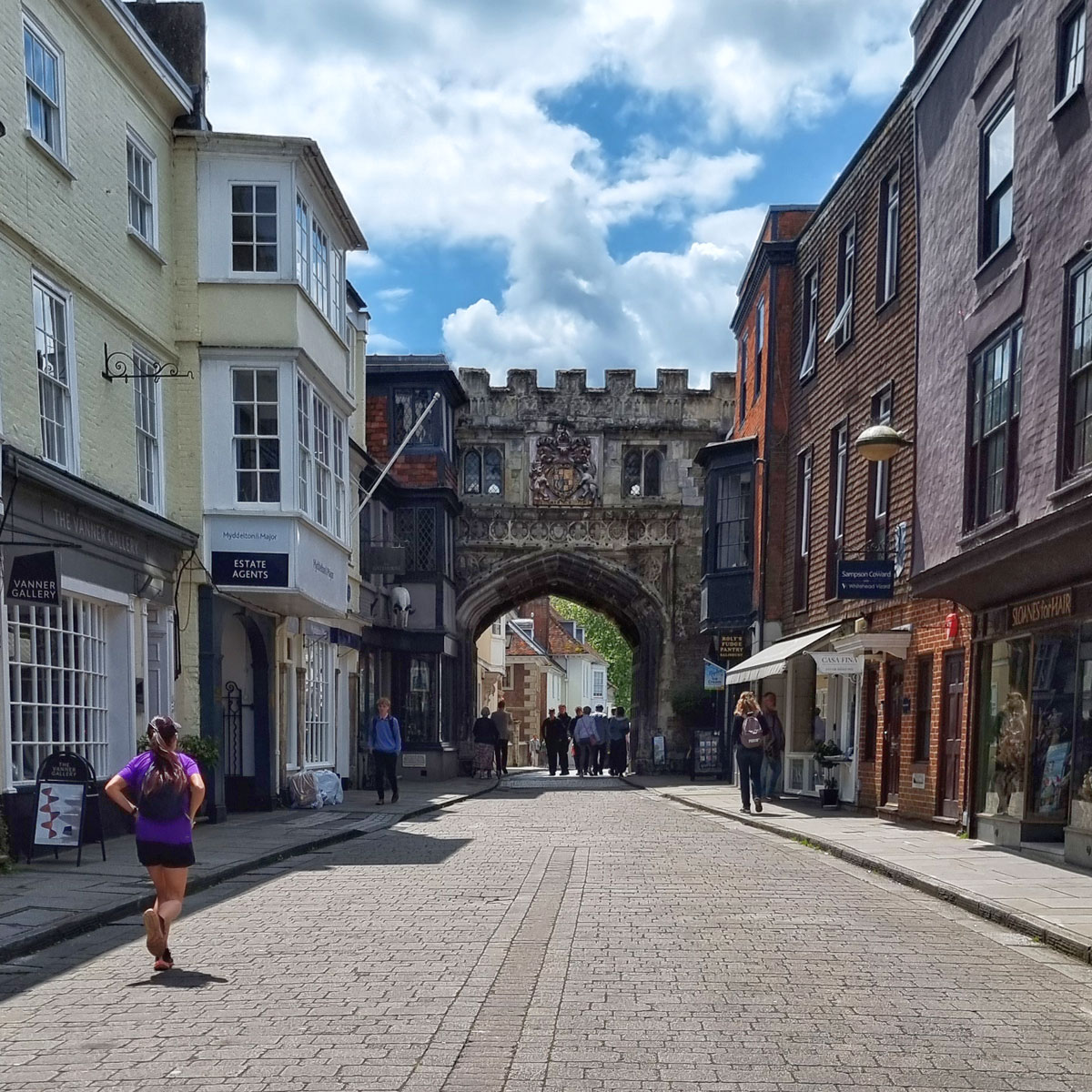
High Street Gate

One of five gates in Salisbury’s ancient city wall and one of the four original gates, the High Street Gate (see below) joins St Ann’s Gate, the Queen’s Gate, and St Nicholas’s Gate. On the town side of the gate is the Stuart royal coat of arms which was added in the 17th century.
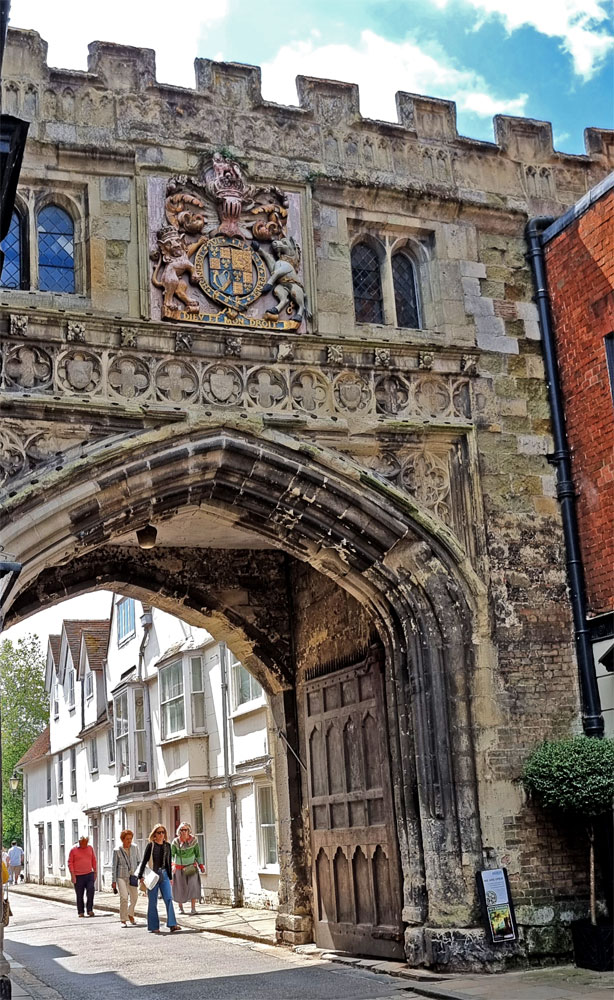
The ornate gate was built between 1327 and 1342. It is the main entry to Cathedral Close in Salisbury. The gate is locked at 11 pm and opens again at 6 am. A statue of Edward VII was added on the opposite side of the gate in 1902.

There are several buildings in the Close which are open to the public; others you can only stand and peer through the wrought iron railings and admire their moss covered gabled roofs, mullioned windows and beautiful gardens. It’s a shame that the cars spoil the views.
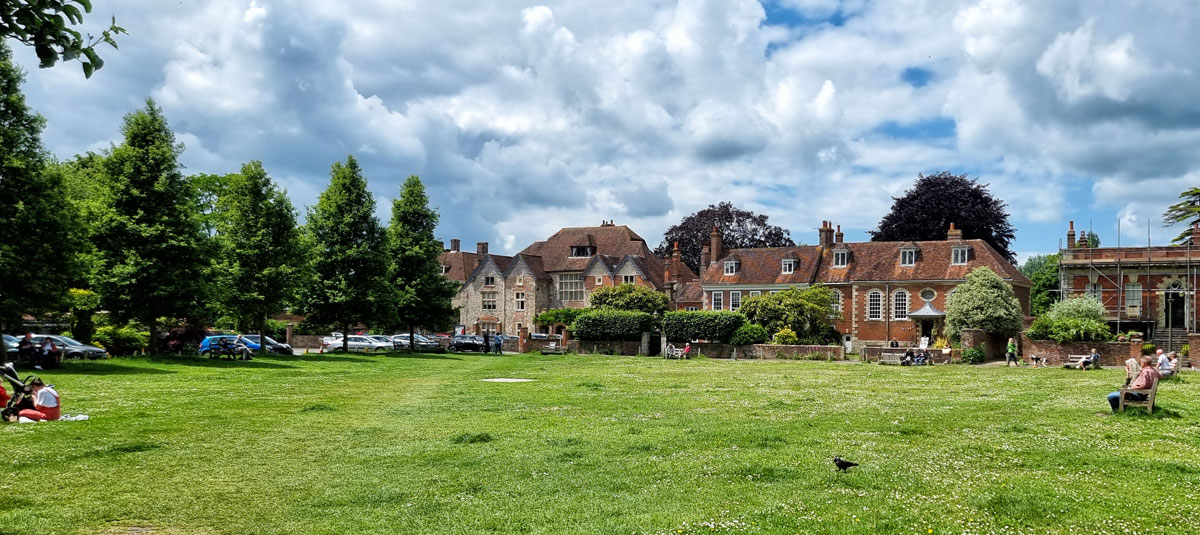
The Choristers Green acquired its name from the adjacent Wren Hall, which was The Choristers’ School from 1714 – 1947.

These buildings mostly stem from the 18th century, when Salisbury was a place of refinement, learning and culture, and the wealthy moved to the area and built their fine houses. A mixture of architectural styles and designs, narrow alleyways that lead off to mysterious places and grassy lawns dotted with benches.
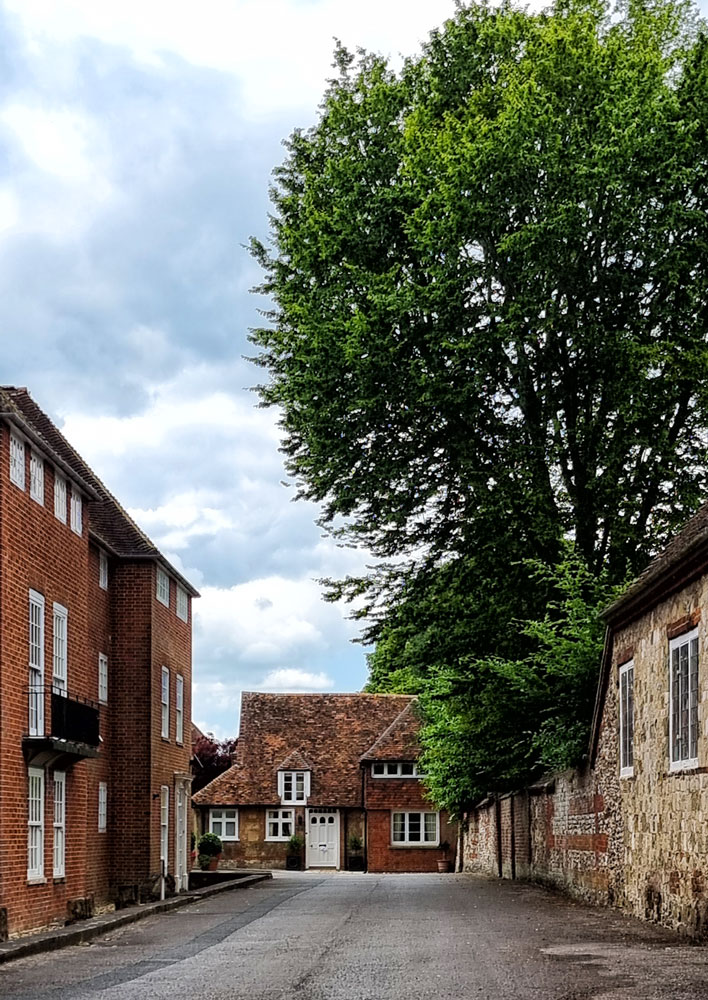
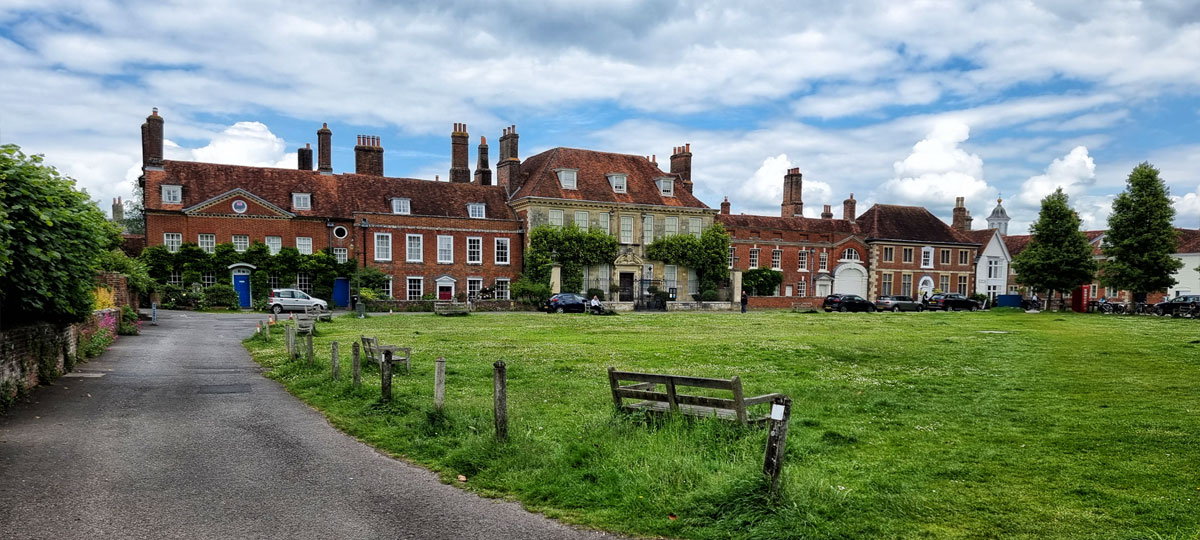
Access to the Medieval Hall
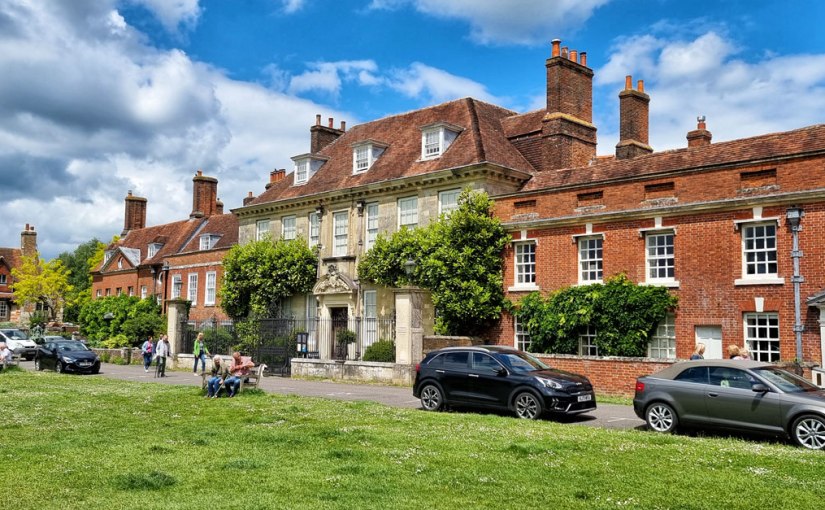
The green is surrounded by private houses in a variety of sizes and architectural styles, but all have beautiful gardens, old brick walls and chimneys aplenty.

Arundells: Originally a 13th century canonry built around 1291, the last canon who lived here, Leonard Bilson, was imprisoned for practising magic and sorcery in 1562. The frontage is Georgian, the work of John Wyndham who lived there from 1718 – 1750. The house got the name of Arundells after James Arundell, the son of Lord Arundell who lived there from 1752 – 1803. Sir Edward Heath, British Prime Minister from 1970 – 1974, bought the house in 1985 and lived there until his death. After his death, the house passed to a trust who have opened it up to the public.
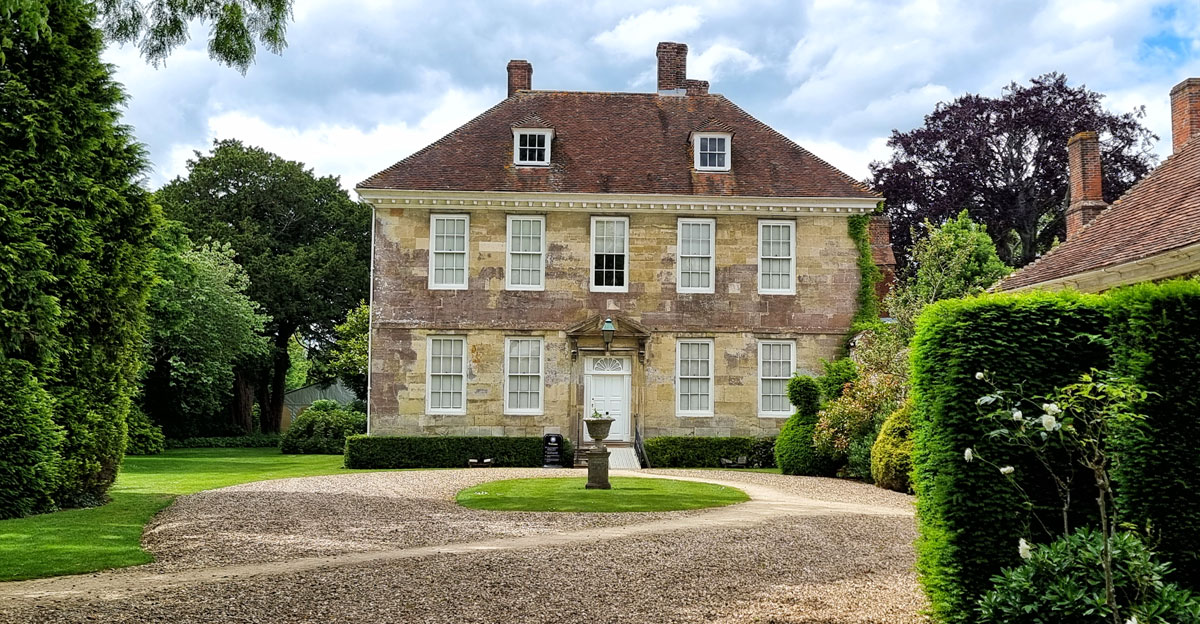
Arundells – home to former PM Edward Heath

Mompesson House: Owned by the National Trust, this 18th century, Grade I listed house is open to the public. It was built for Sir Thomas Mompesson, who was MP for Salisbury on three occasions at the end of the 17th century. Unfortunately closed on the day of our visit.
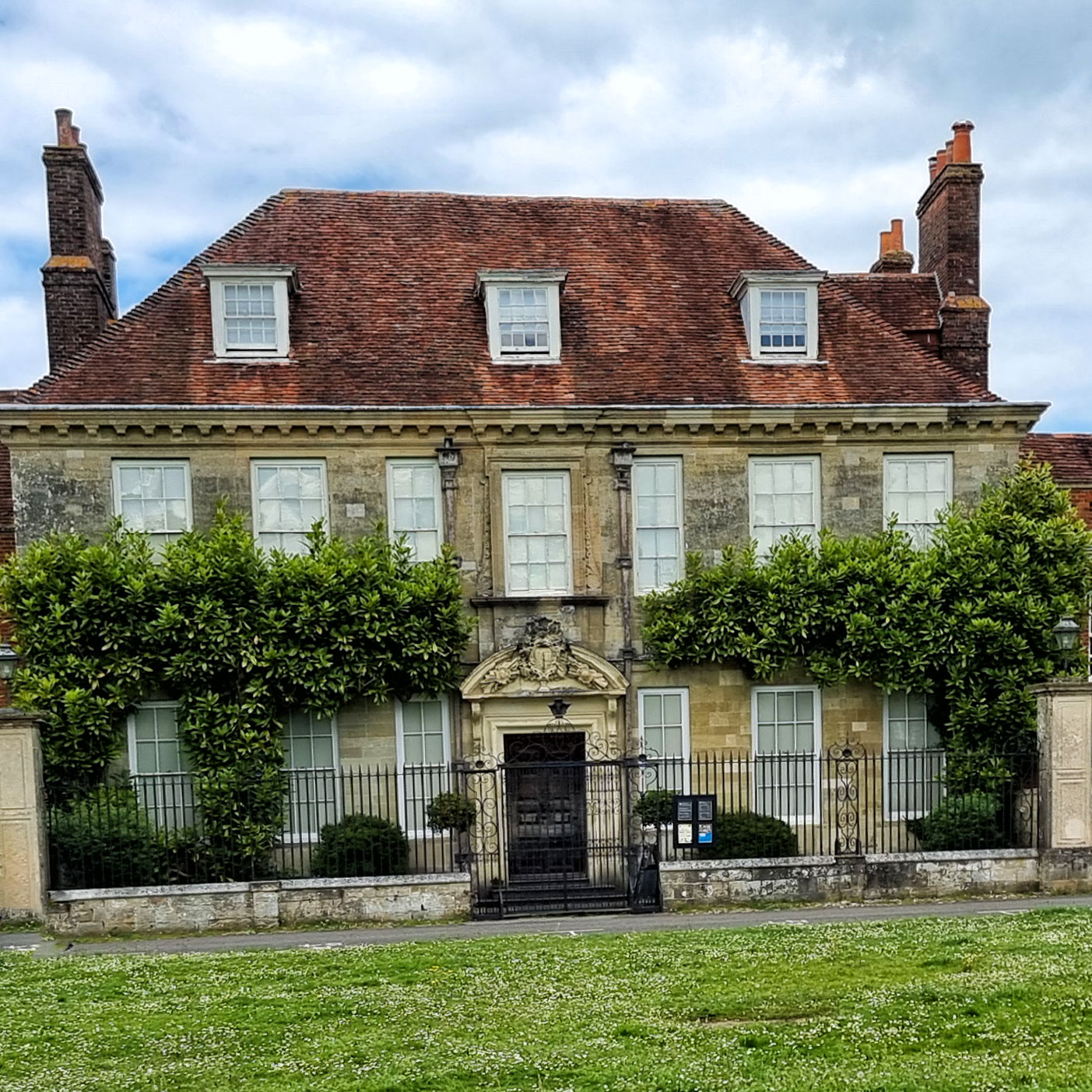
In classic Queen Anne style with a facing of Chilmark stone, which is the same stone used in the building of the cathedral, the house was finished in 1701 by Thomas’ son, Charles.

The Rifles Berkshire and Wiltshire Museum: Once a Medieval canonry, it was occupied by canons from 1227 until around the 15th century, when it passed to the Bishop of Salisbury and was used as a storehouse and administrative building, being known as ‘The Wardrobe’ from around 1543.
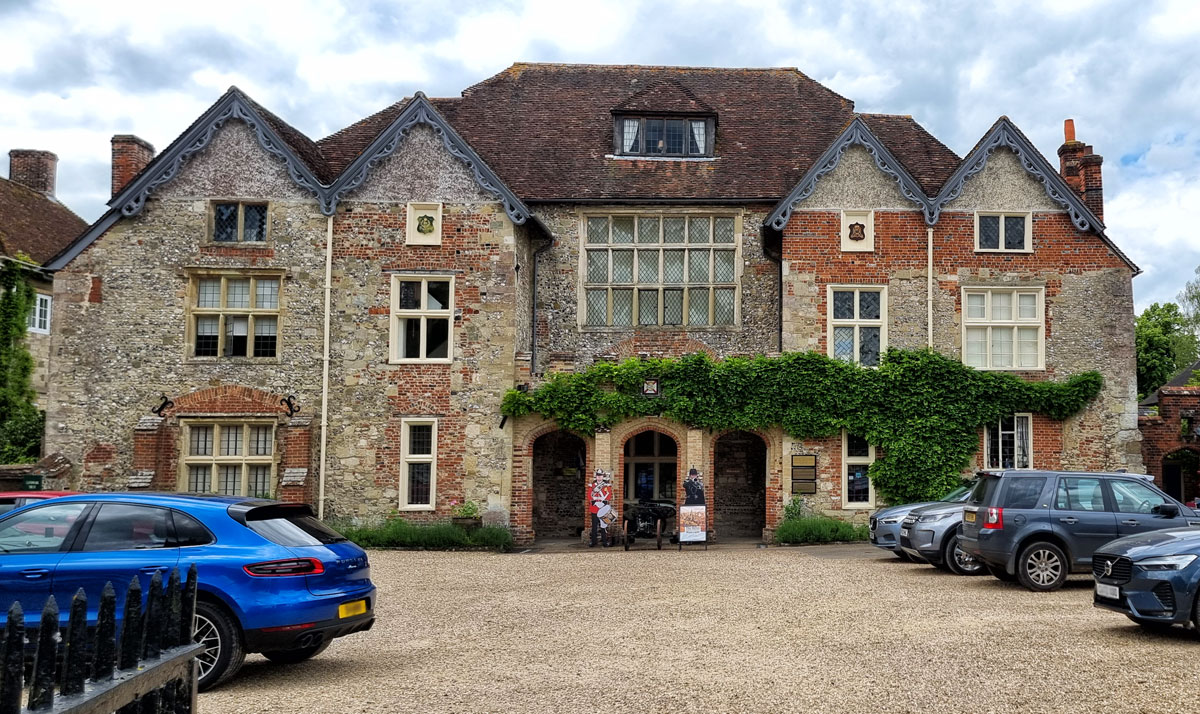
The museum houses over 36,000 objects relating to the Rifles and their previous regimental incarnations.

I am only sorry that my injury prevented me from further exploration as there is much more to see by continuing along the West Walk and around the River Avon and water meadows.
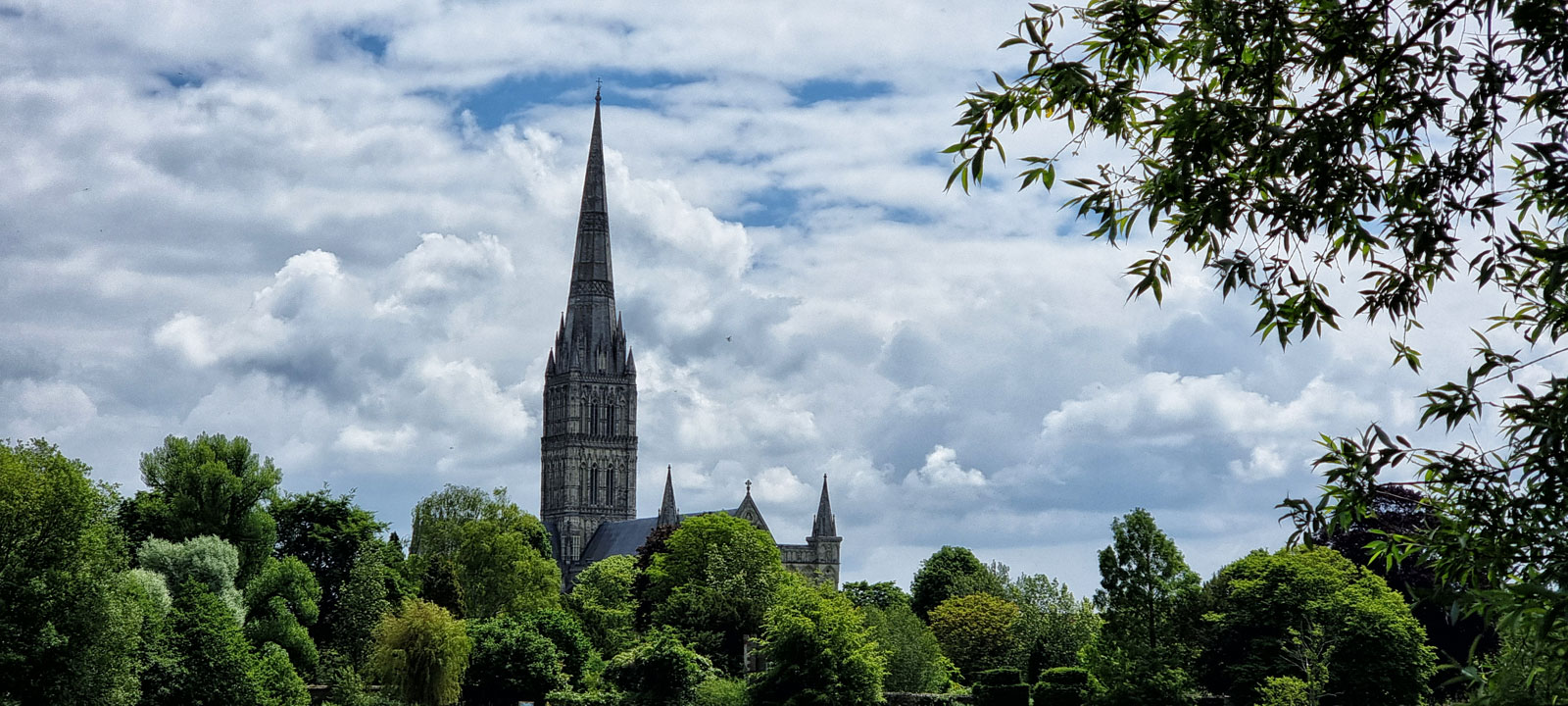
Salisbury Cathedral

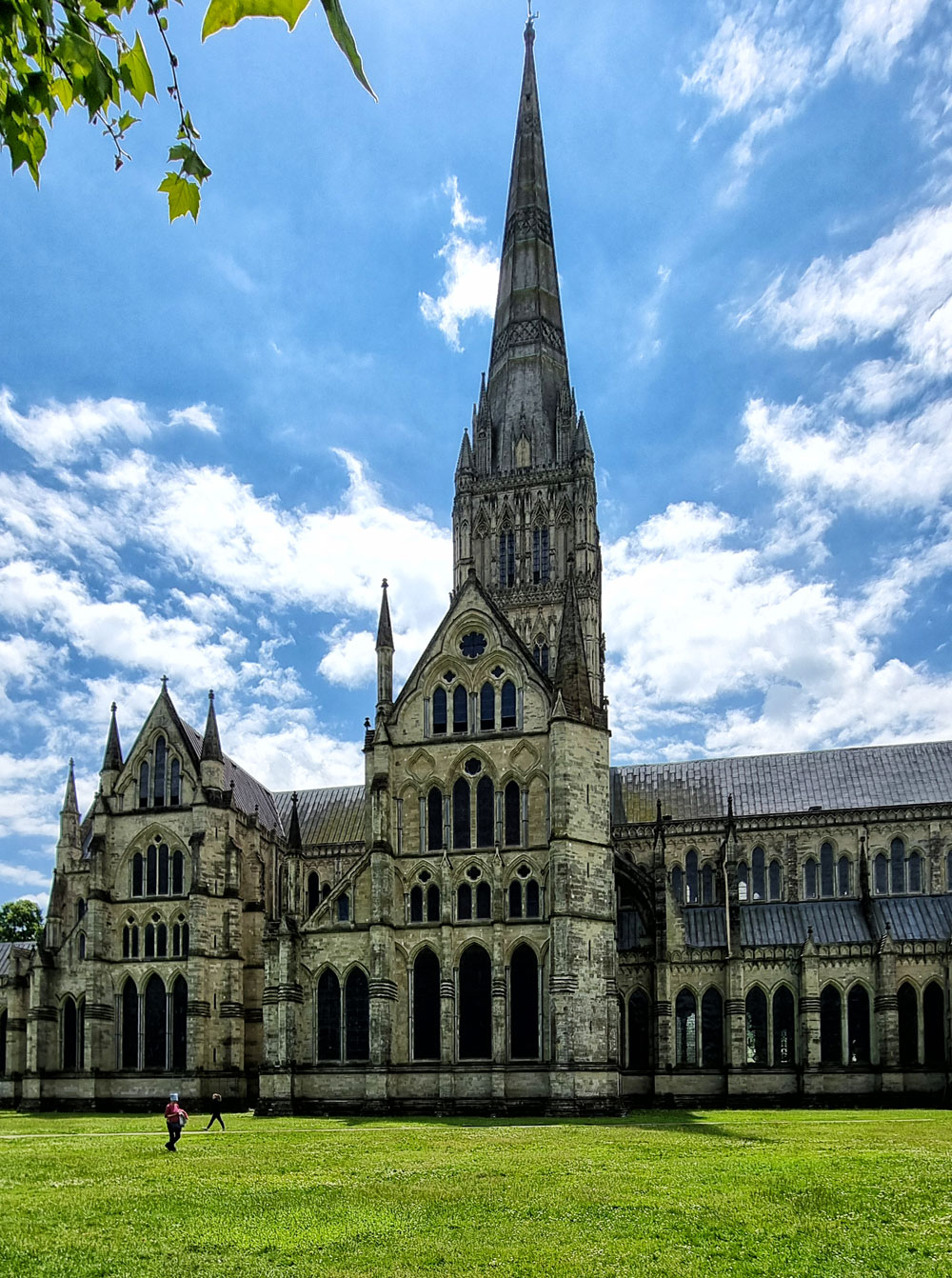
Salisbury Cathedral is built in the shape of a cross and work began in April 1220 when the decision was made to move it from Old Sarum. It boasts Britain’s tallest spire standing at 123m tall. Formally the Cathedral Church of the Blessed Virgin Mary, it is an Anglican cathedral in the city of Salisbury, England.

Photo of the cathedral and its 123m tall spire from the water meadows.
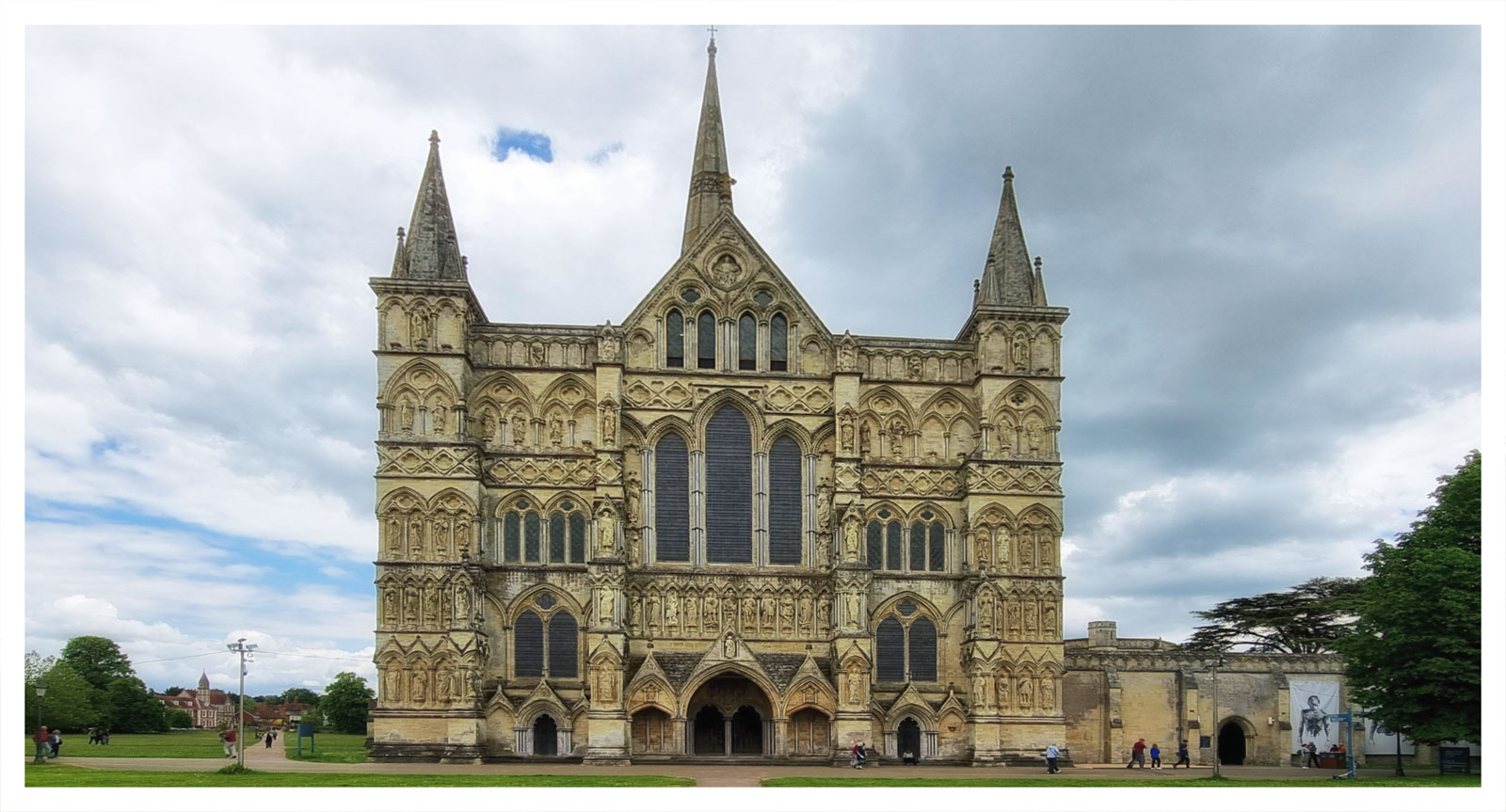
View of the cathedral from the north face
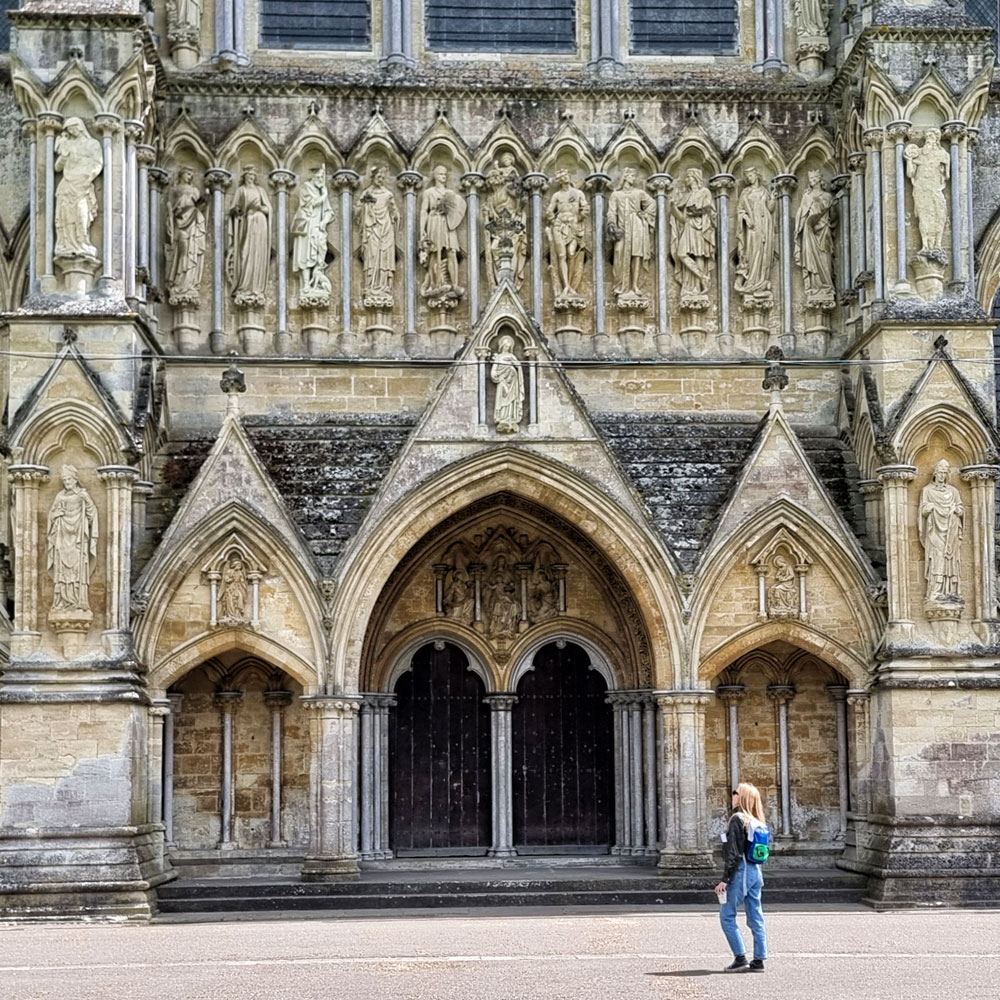
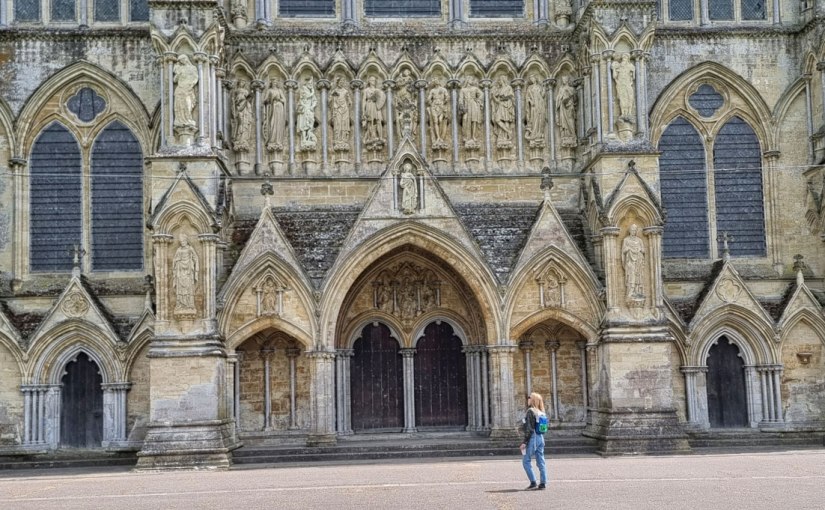
The West doors – Above the triple porch is a row of statues of saints with trefoiled canopies. At the sides are additional pairs of lancet windows with quatrefoiled plate tracery and side aisle openings.

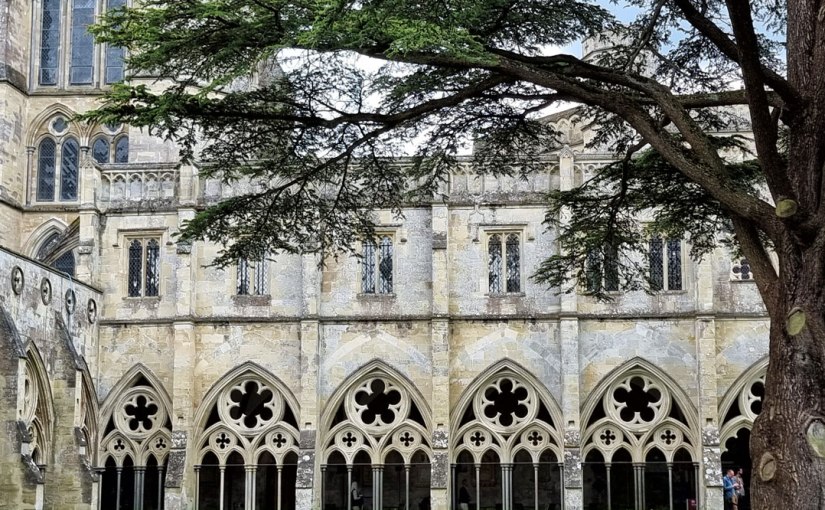
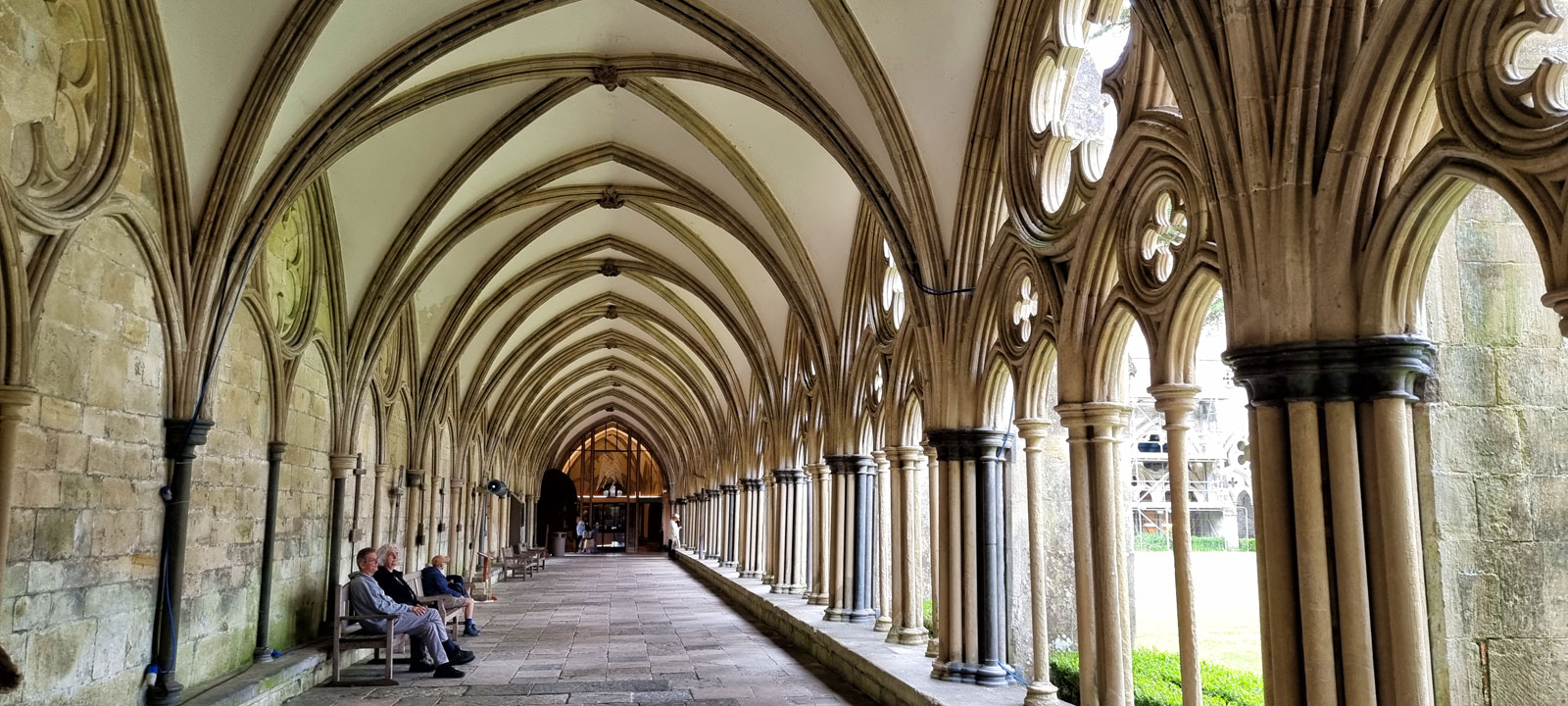
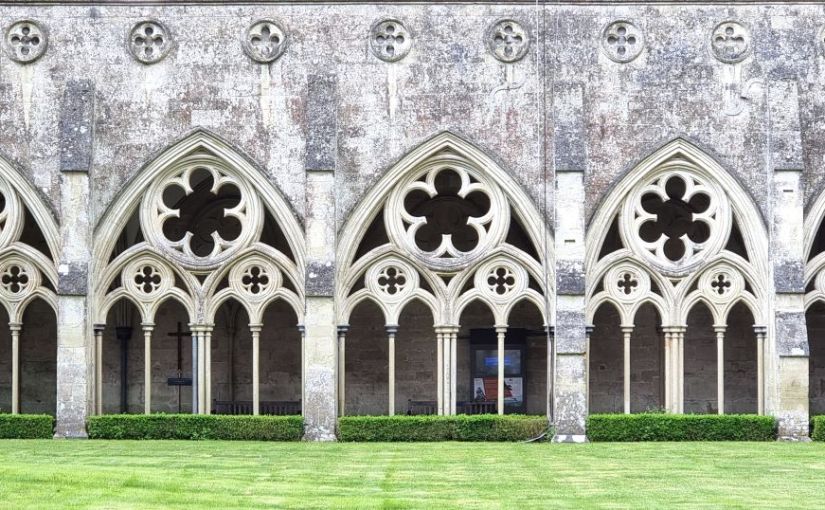
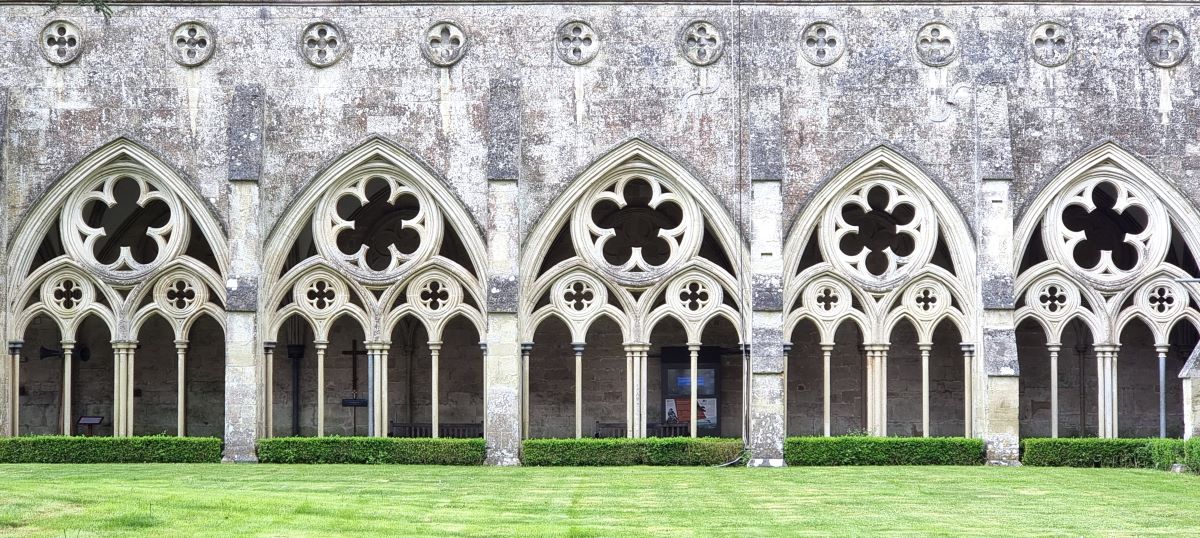
I have whetted your appetite with a few WW posts, now to have a look inside this building where there is much to explore. (Note admission to the cathedral and chapter house (where a copy of the Magna Carta is kept) is not free, though access to the cloisters is. If you like there are exclusive tours of the tower, leading you up the 332 steps to the base of the spire. I can think of a couple of bloggers who would be buying tickets for that tour!)

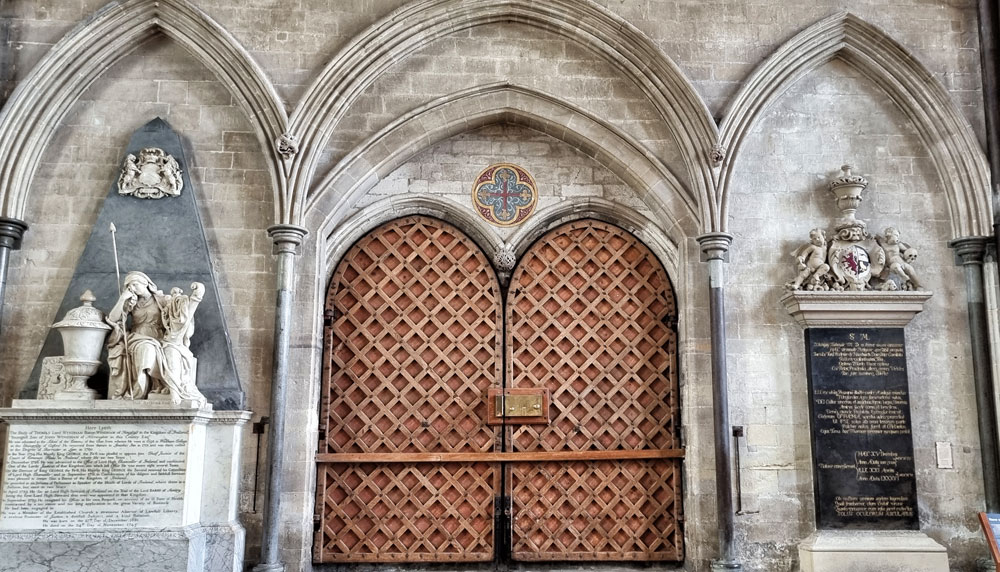
The West doors from the inside. A Consecration Cross, set in a circle, is immediately above the door.
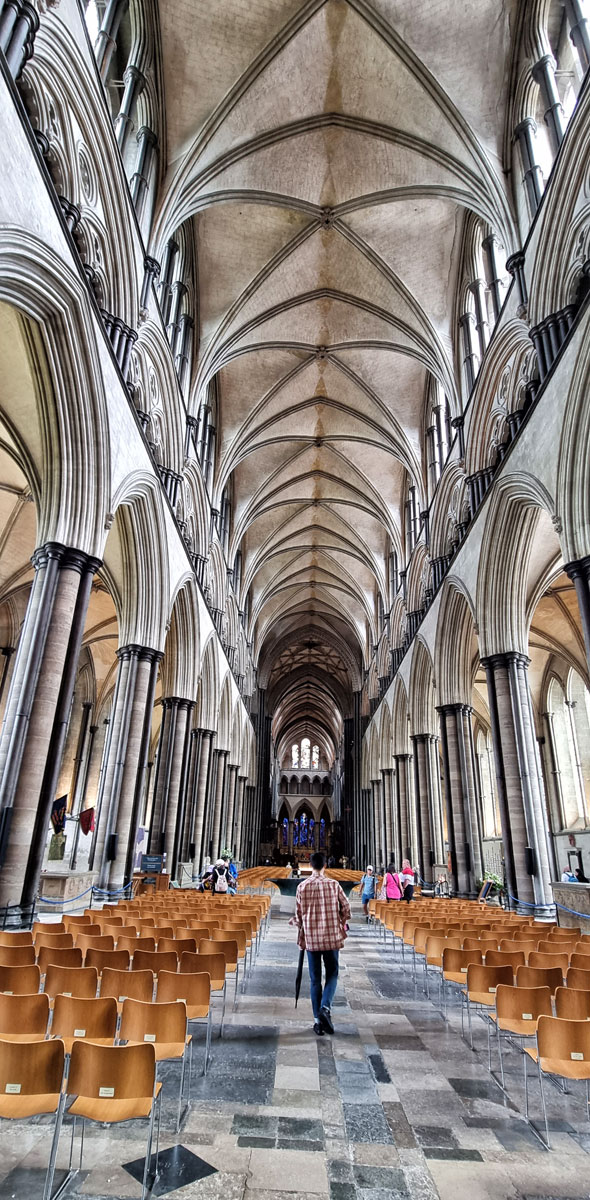
Inside the cathedral

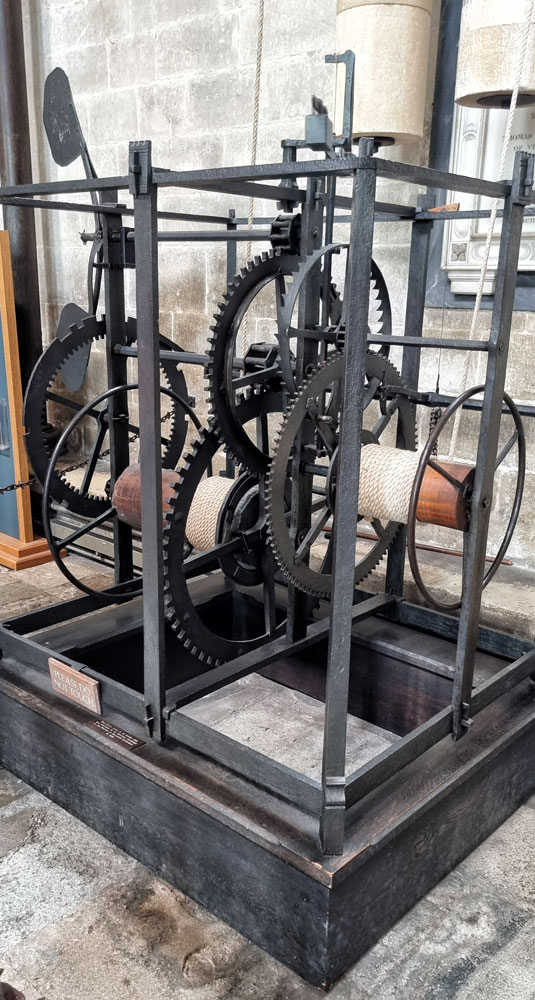
The cathedral is home to the oldest working mechanical clock, built in 1386. The clock has no face and was designed only to strike every hour. The mechanism is driven by falling weights which have to be wound up once a day.

Mechanical clock

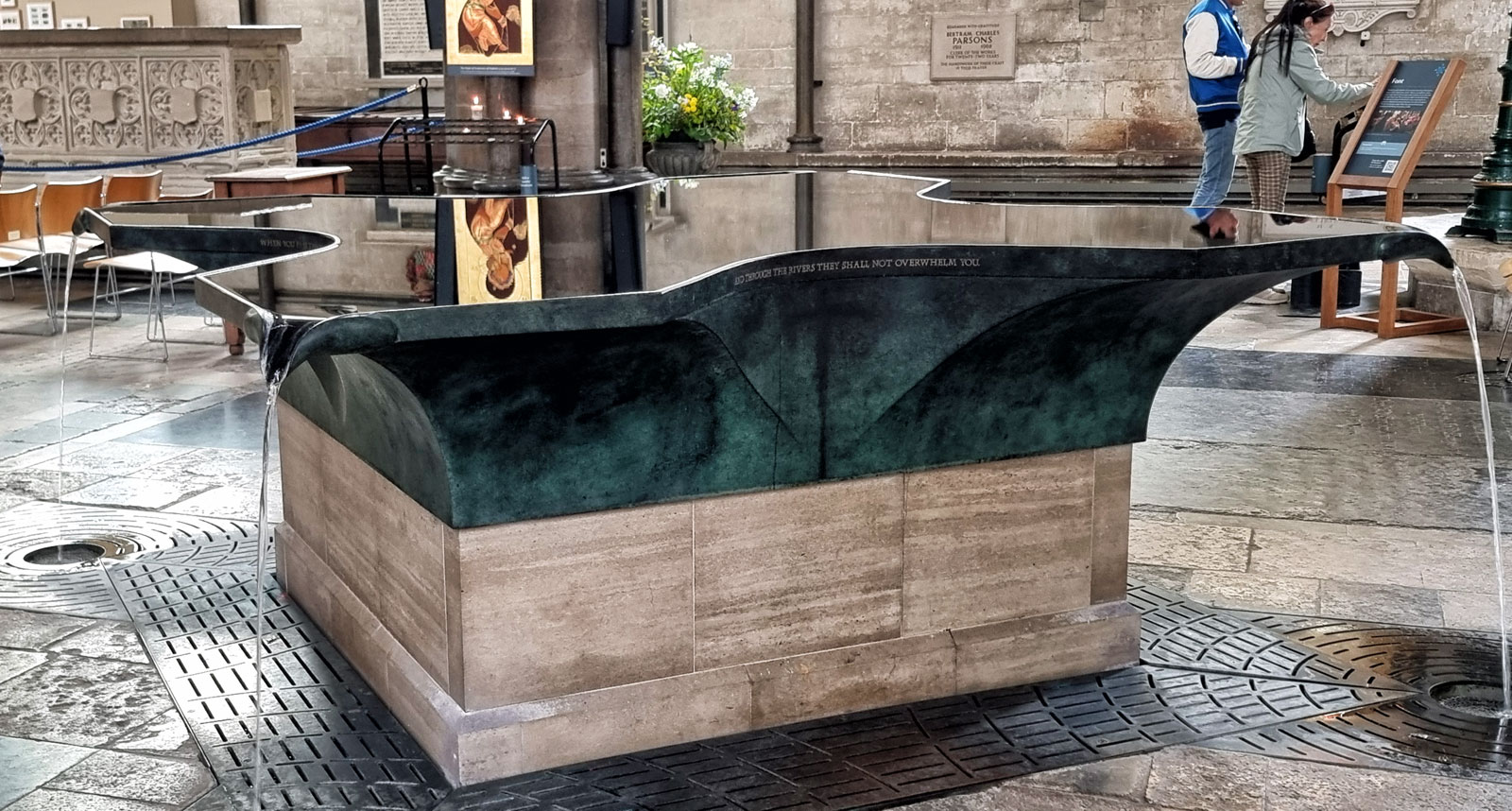
The Infinity Font is a beautiful, modern font right in the centre of the nave. It was designed by renowned British water sculptor William Pye and is the only font to have its own water supply and power source, and the only one which is centre stage in a cathedral, rather than tucked away as so many other fonts are.

The Infinity Font complete with flowing water, was installed in 2008.

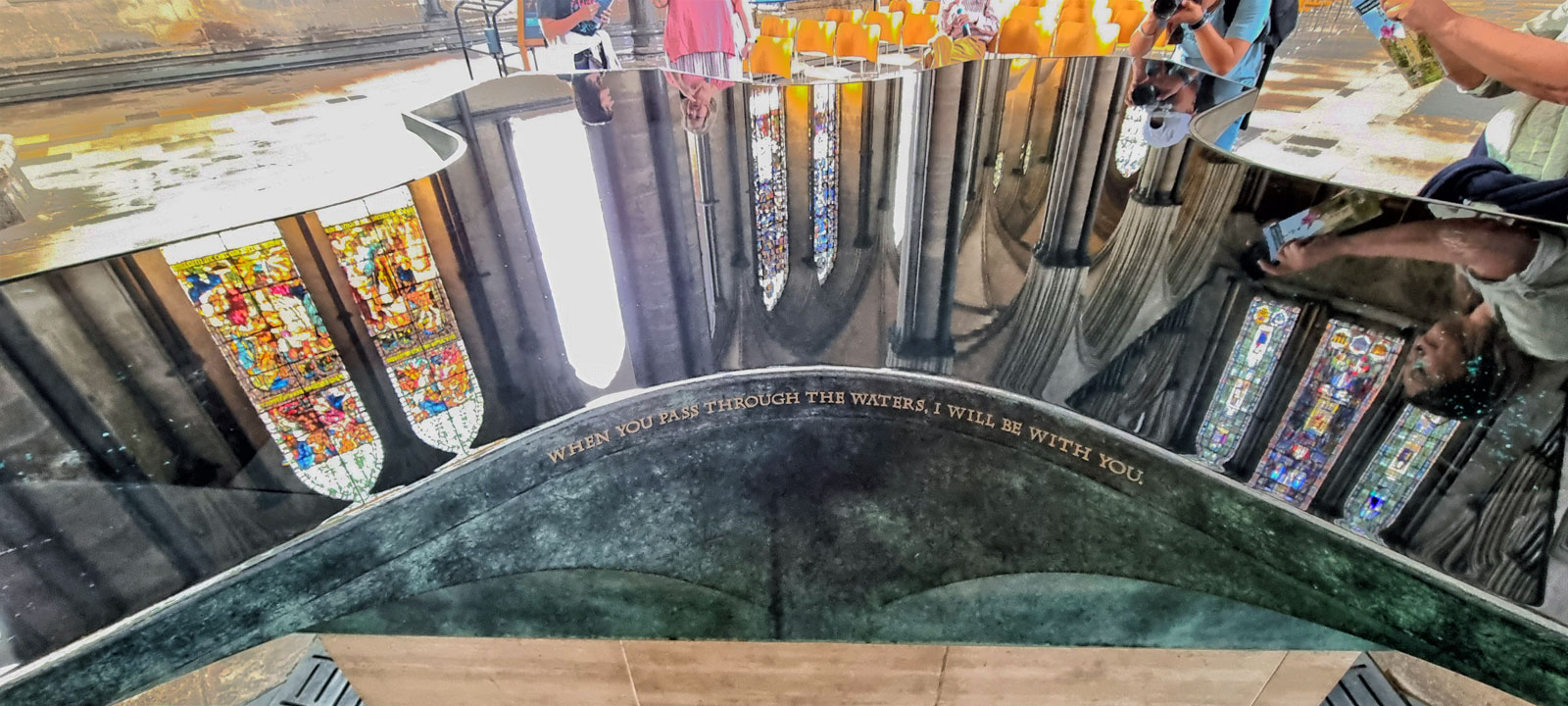
The water is so still that it looks like a mirror, leading to some incredible reflective photos.

Font reflections

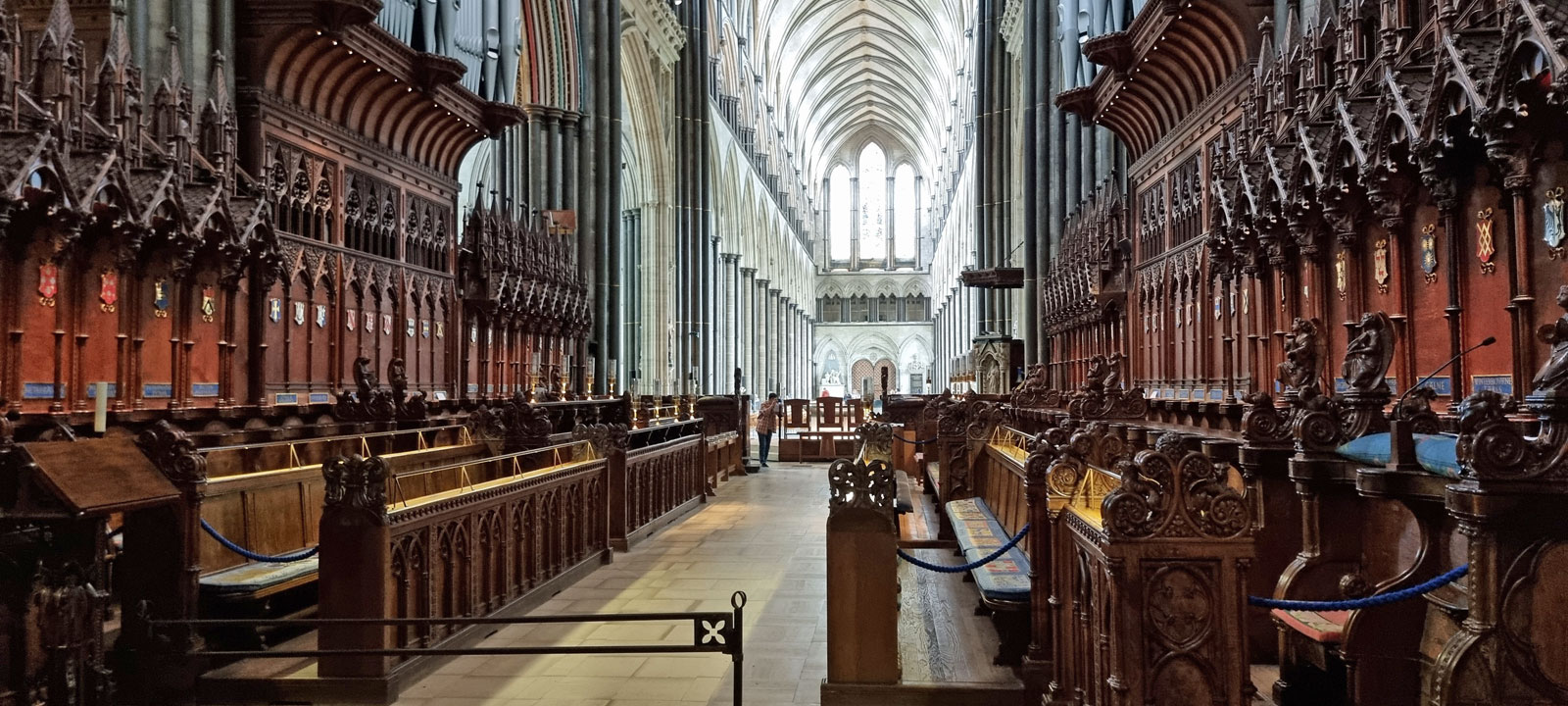
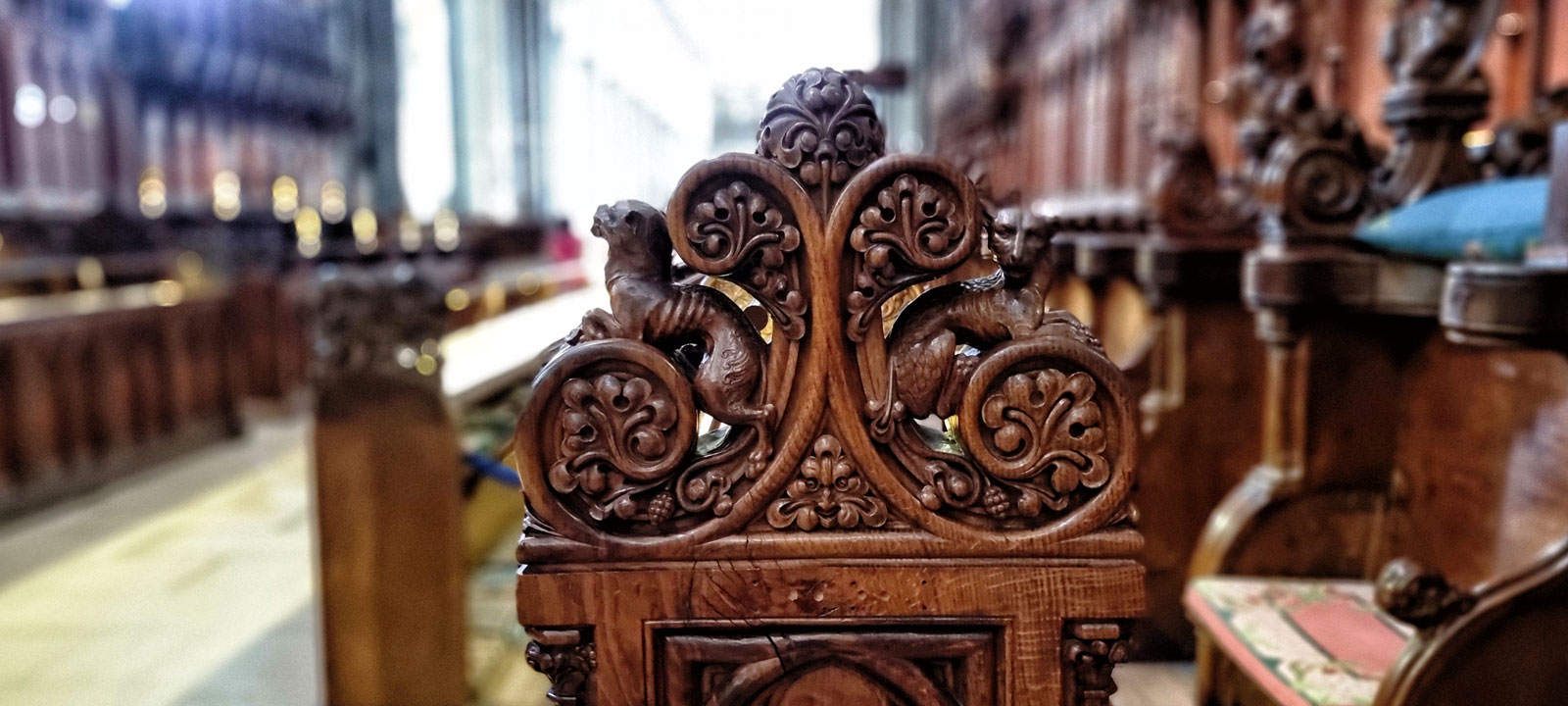
The choir stalls in Salisbury Cathedral are the oldest complete set of choir stalls in England, and are made from oak and date back to 1236: Many of the stalls have misericords, which are foldable shelves for people to rest on, and are beautifully carved. After my telling off at Lincoln cathedral I dare not approach the stalls, it is a shame that the seats are not folded back so the public can view the carvings.

13th century oak stalls are the earliest complete set of choir stalls in England.

The choir stalls have ornately carved ends with angels on tops of the back rows. I think all of them are playing a musical instrument.

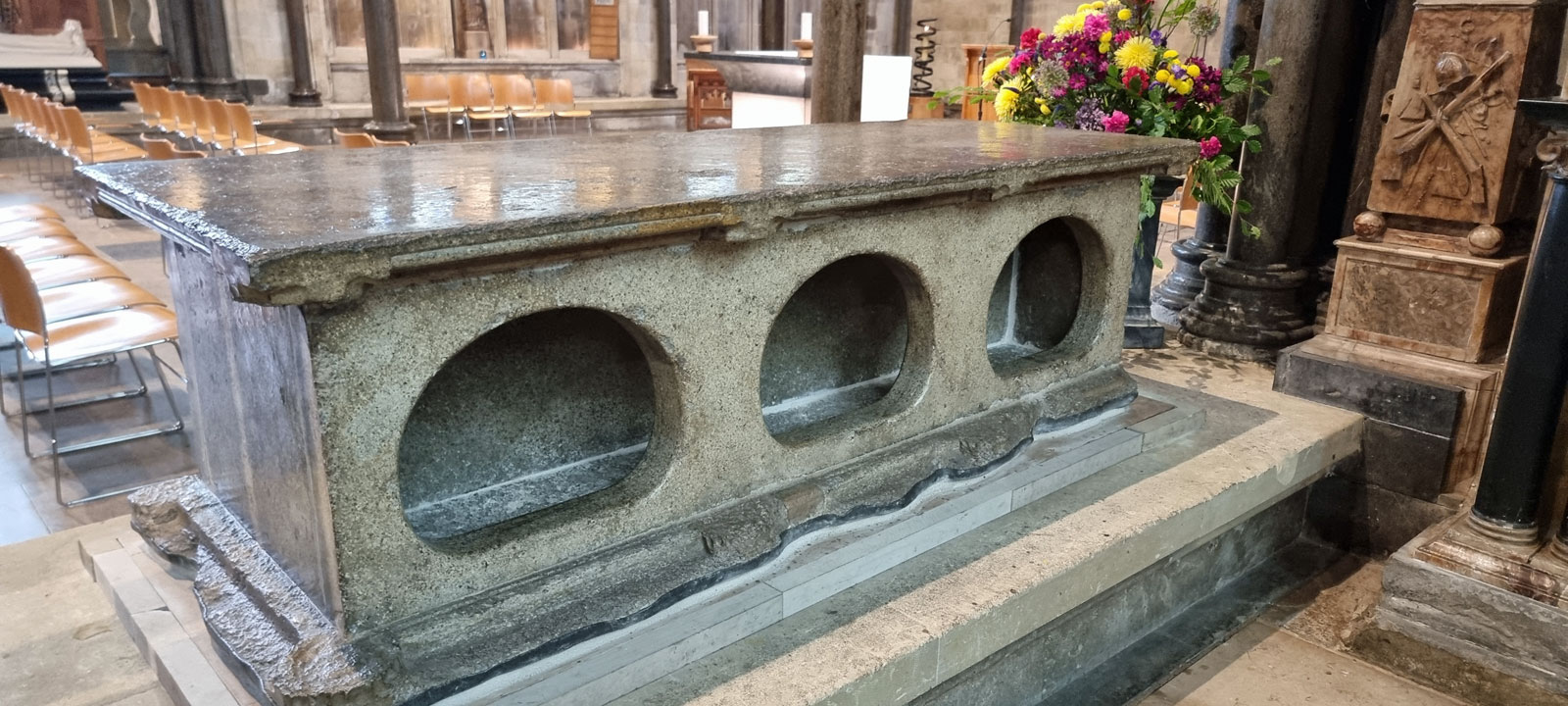
There is a wide variety of traditional tombs and memorials, the oldest being that of Bishop Osmund, Bishop of the forerunner to the cathedral at Old Sarum. The unique holes (foramina) in his tomb allowed sick people to reach in and get closer to his body in the belief that this would make them well.

Unusual tomb with holes

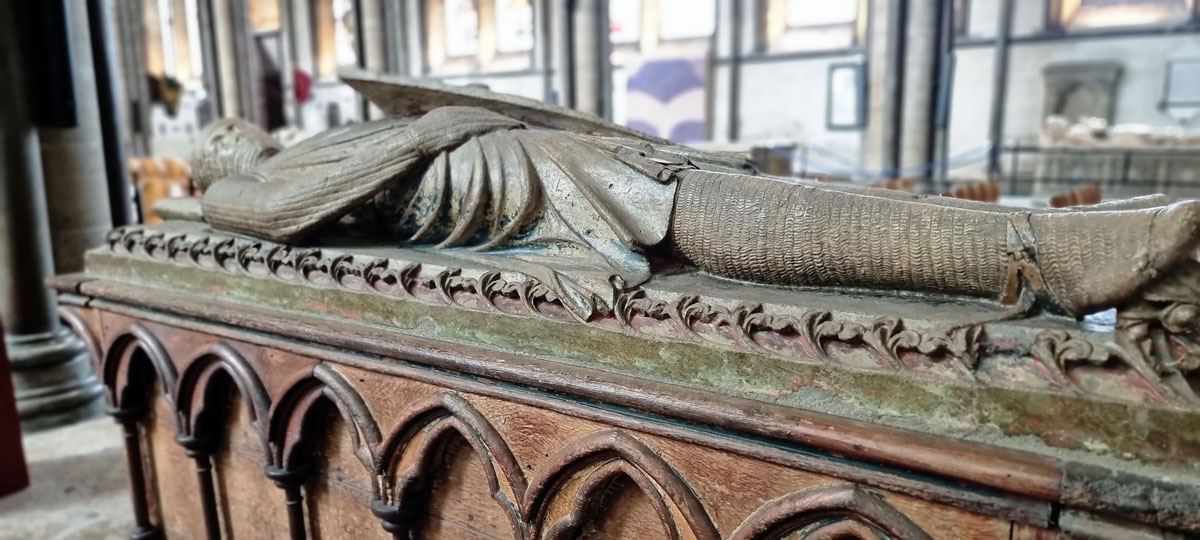
Other notables include William Longespée, 3rd Earl of Salisbury (In or before 1167 – 7 March 1226) who was an Anglo-Norman nobleman, primarily remembered for his command of the English forces at the Battle of Damme and for remaining loyal to his half-brother, King John. His nickname “Longespée” is generally taken as a reference to his great physical height and the oversized weapons that he used.

William Longespée, son of Henry II and half brother to King John who signed the Magna Carta.
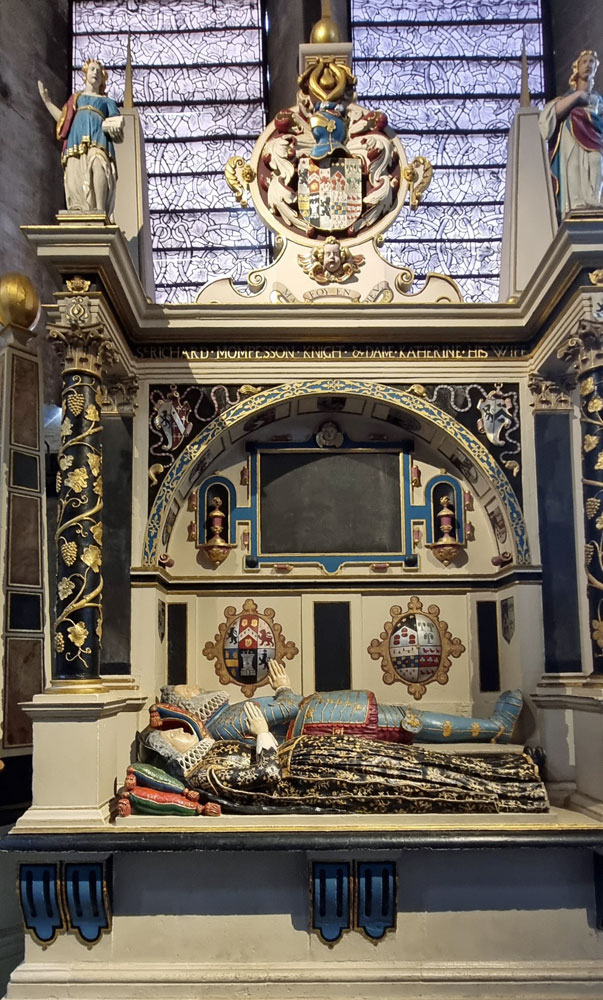
Sir Richard Mompesson and his third wife Katherine. Sir Richard was a local gentleman and politician, a Member of Parliament. He died in 1627. He had made judicious marriages and enjoyed a comfortable life. His family owned an early version of nearby Mompesson House, which is now a beautiful National Trust property.
A new window dedicated to Prisoners of Conscience was installed in 1980

At the East end of the cathedral behind the altar is a large, blue stained glass window dedicated to Prisoners of Conscience, and a candle wrapped in barbed wire which is kept permanently alight in memory of those who are imprisoned for their beliefs.

The Chapter House

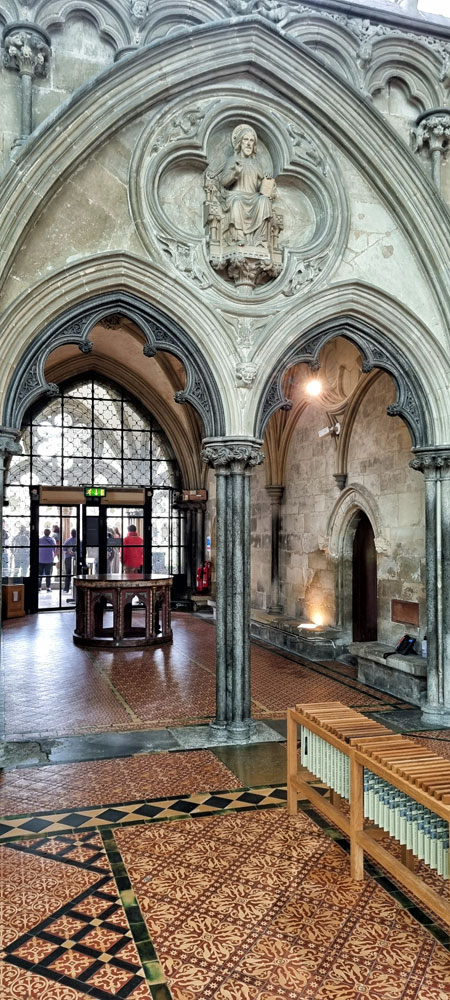
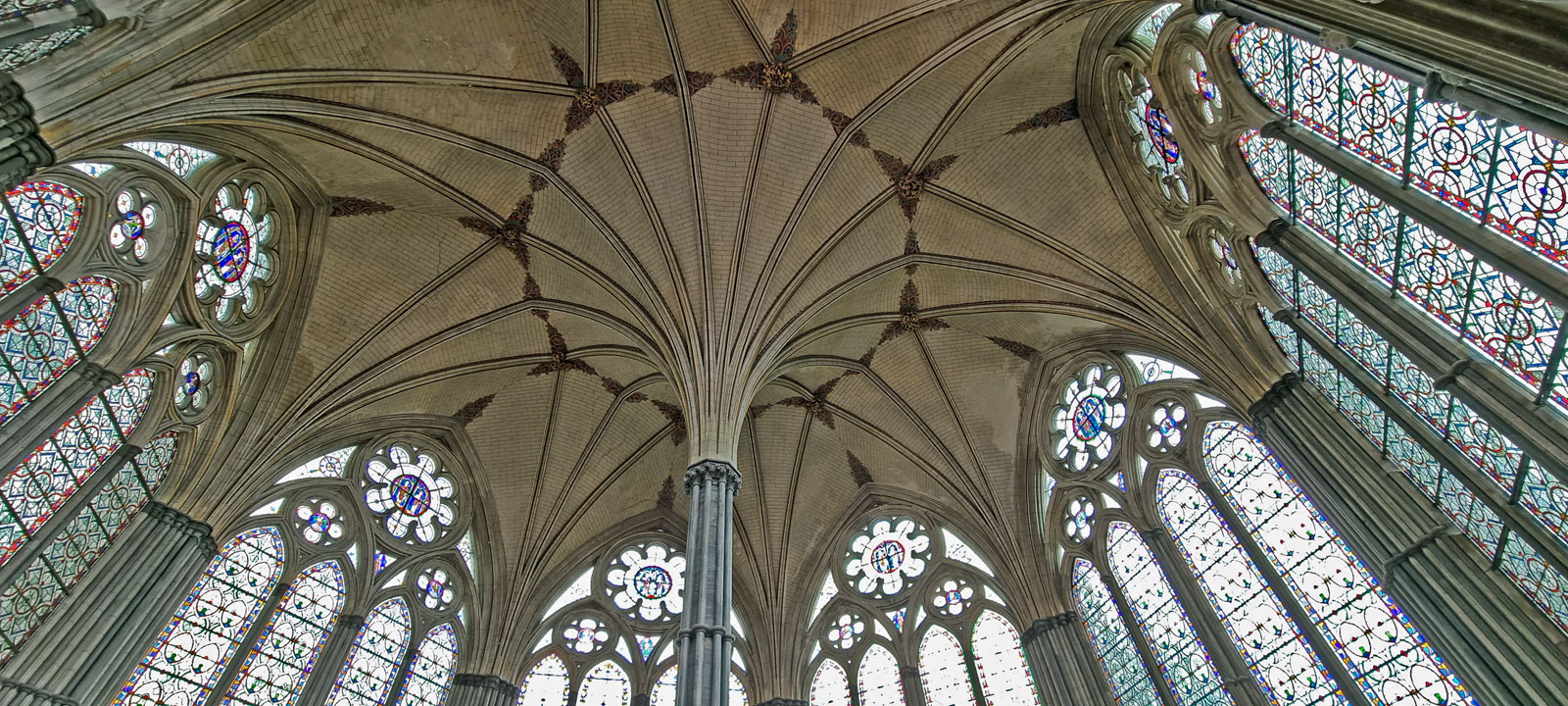
The Chapter House is where meetings were held by the clergy, and was in daily use until the Reformation, when it fell into some disrepair. It has since been restored. It is a polygonal room with high vaulted ceiling supported by a central column, stained glass windows and a frieze of stills from Genesis around the spandrels, some of which were destroyed during the 17th century. The floor is 19th century tiles emulating the original medieval inlaid tiles.

The Chapter House vaulted ceiling

The star attraction of the Chapter House, the Magna Carta is housed in a shrouded tent to protect it from the light. It is one of only four remaining copies, and is the best preserved of them all. Written in 1215 and signed under pressure by King John in a field in Runnymede, it is the foundation of human rights in the Anglo-American legal systems, declaring the rights and liberties held by free men and that the King is not above the law.