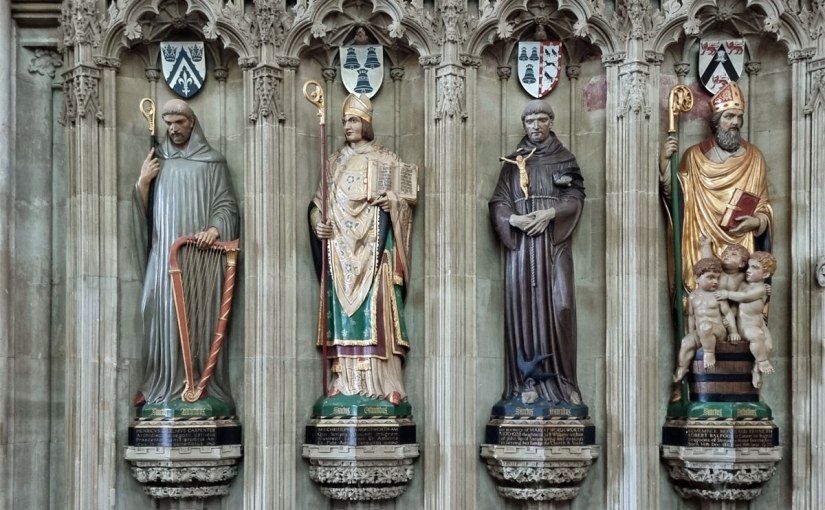
Salisbury Cathedral is built in the shape of a cross and work began in April 1220 when the decision was made to move it from Old Sarum. It boasts Britain’s tallest spire standing at 123m tall. Formally the Cathedral Church of the Blessed Virgin Mary, it is an Anglican cathedral in the city of Salisbury, England.
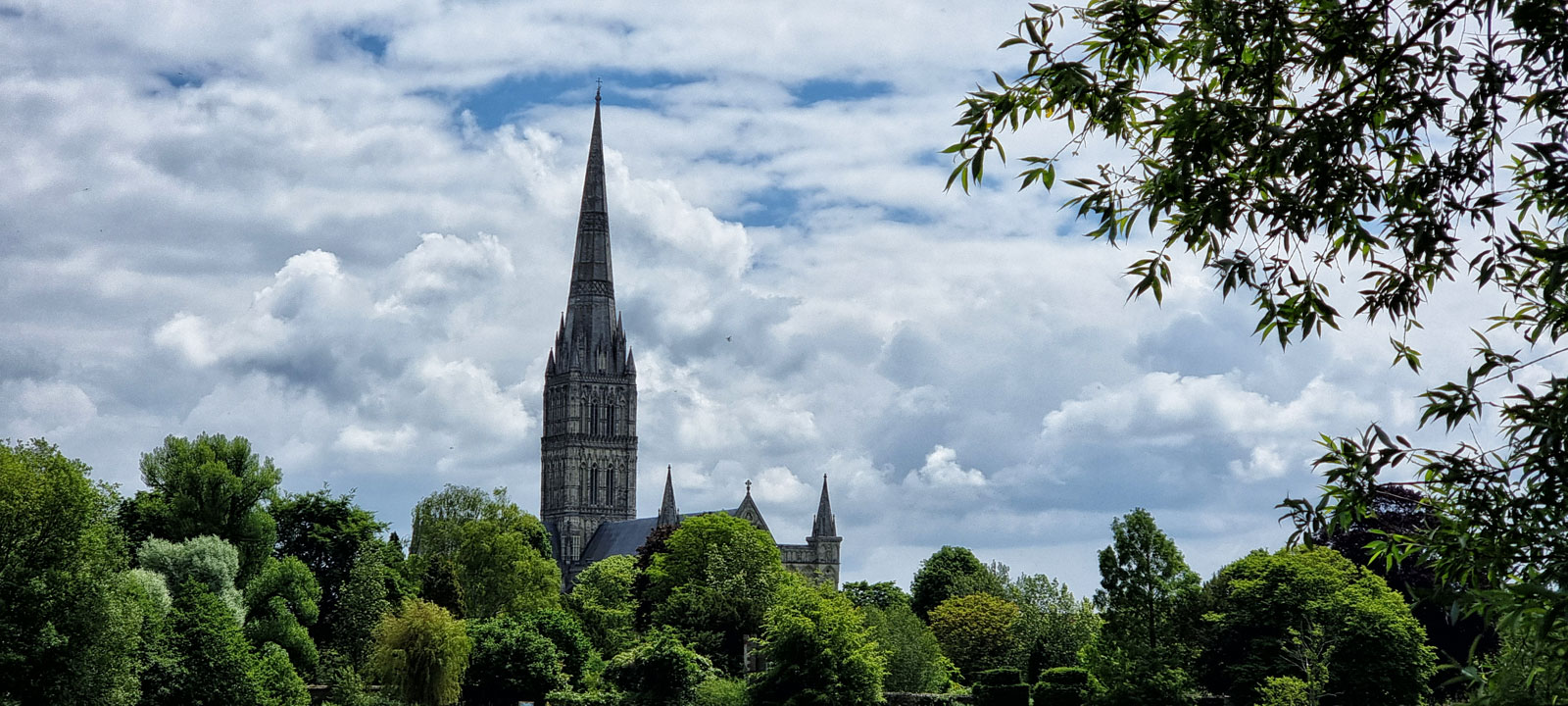
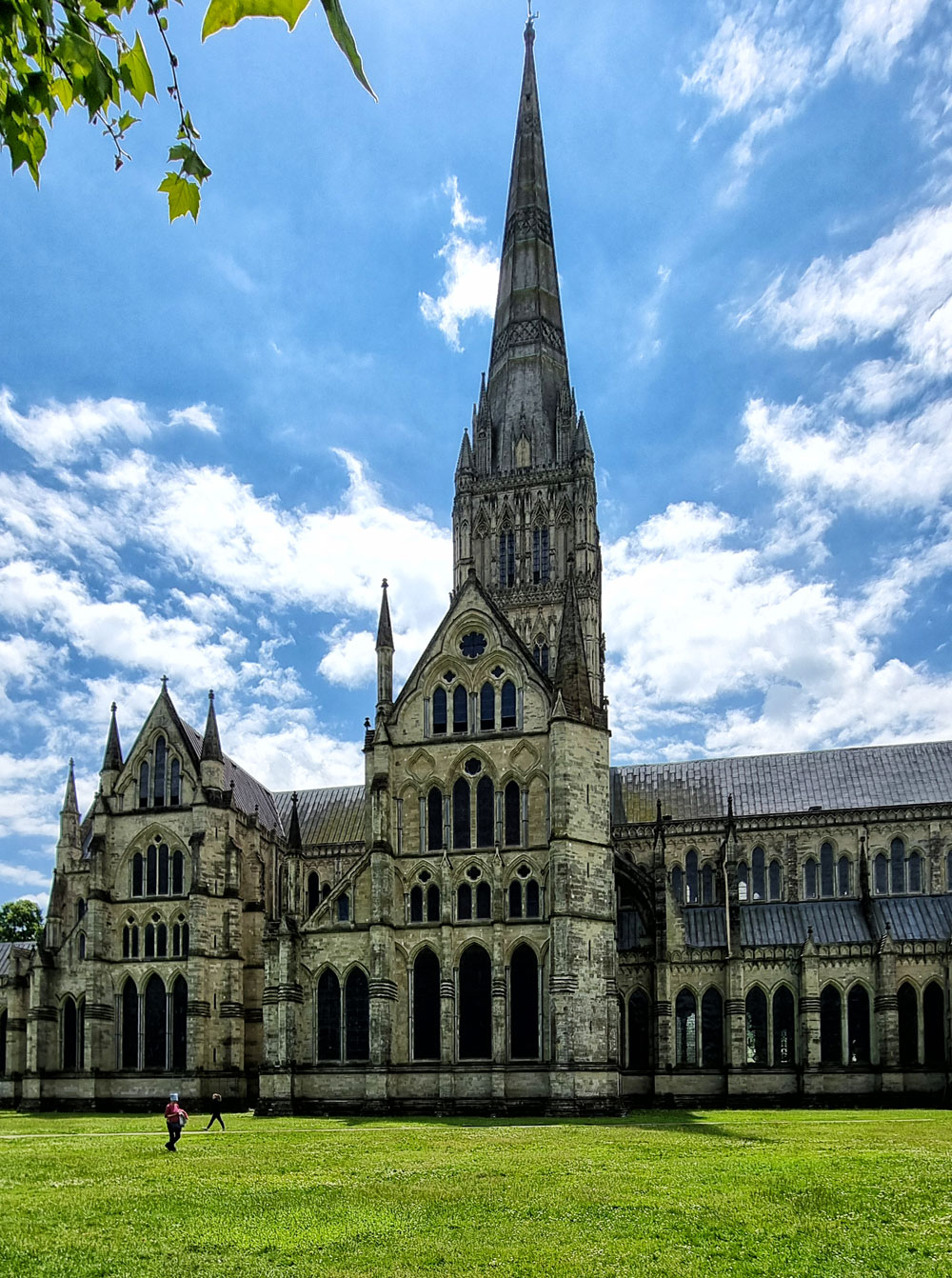
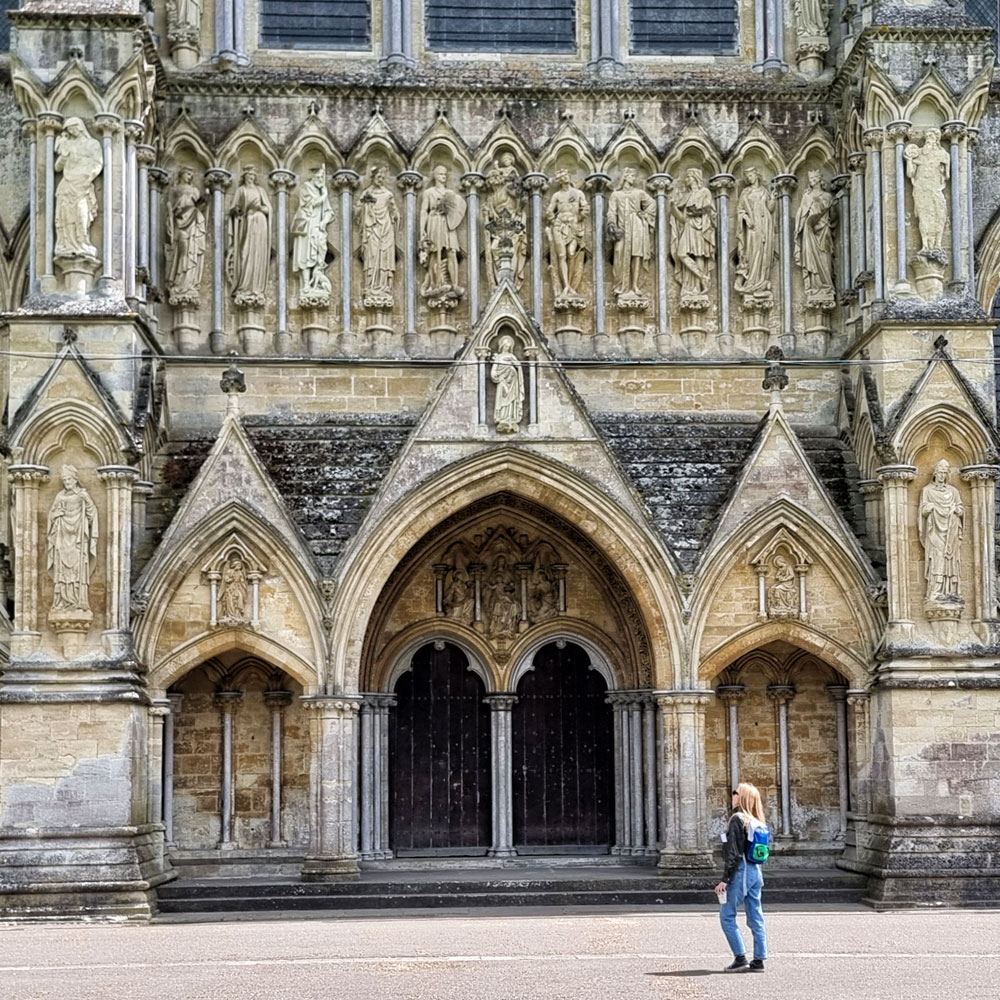
I have whetted your appetite with a few WW posts, now to have a look inside this building where there is much to explore. (Note admission to the cathedral and chapter house (where a copy of the Magna Carta is kept) is not free, though access to the cloisters is. If you like there are exclusive tours of the tower, leading you up the 332 steps to the base of the spire. I can think of a couple of bloggers who would be buying tickets for that tour!)
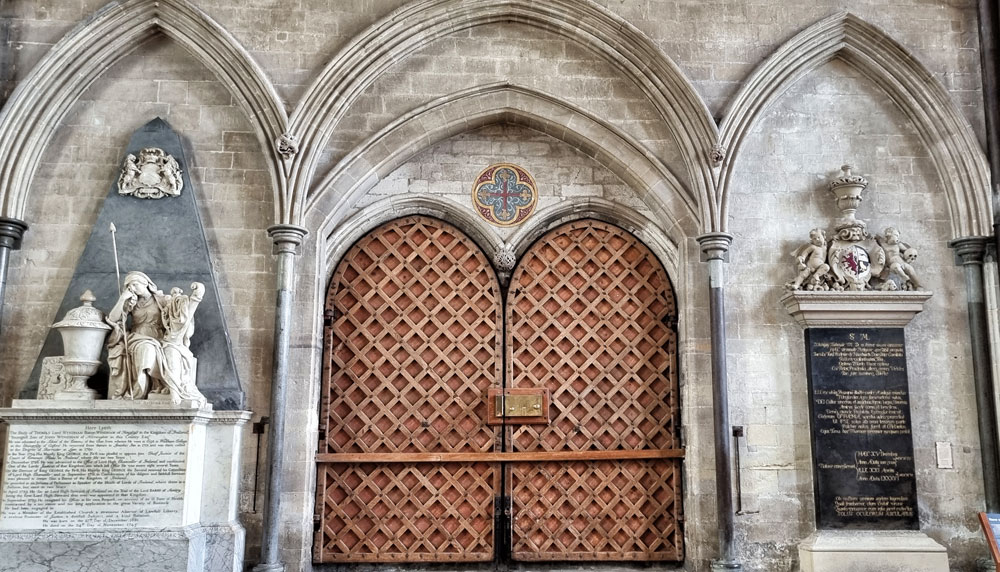
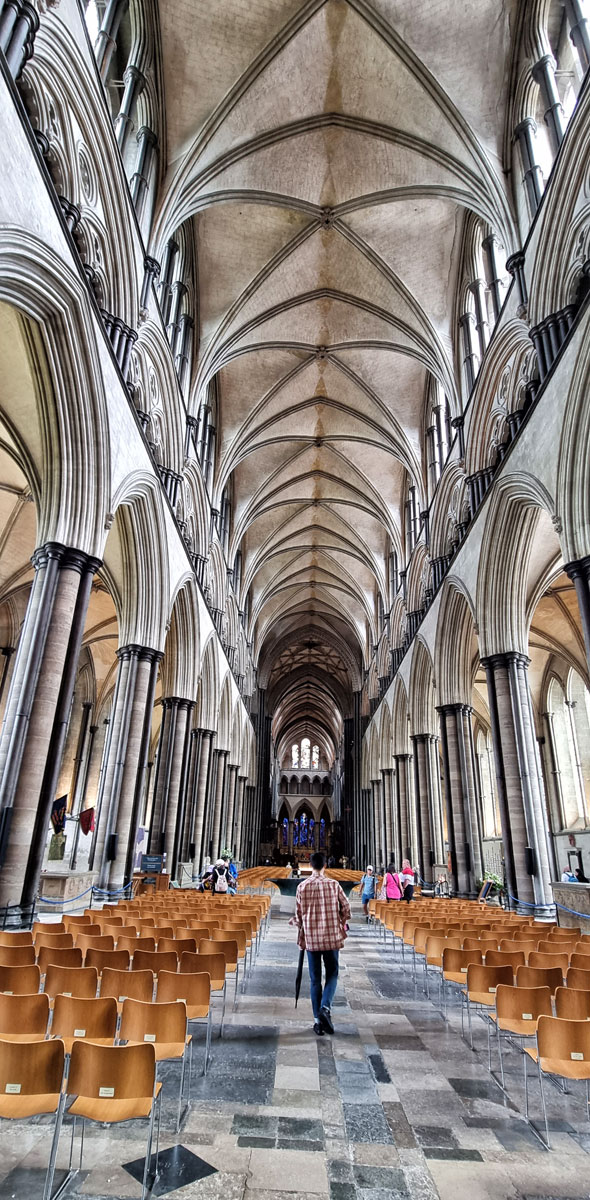


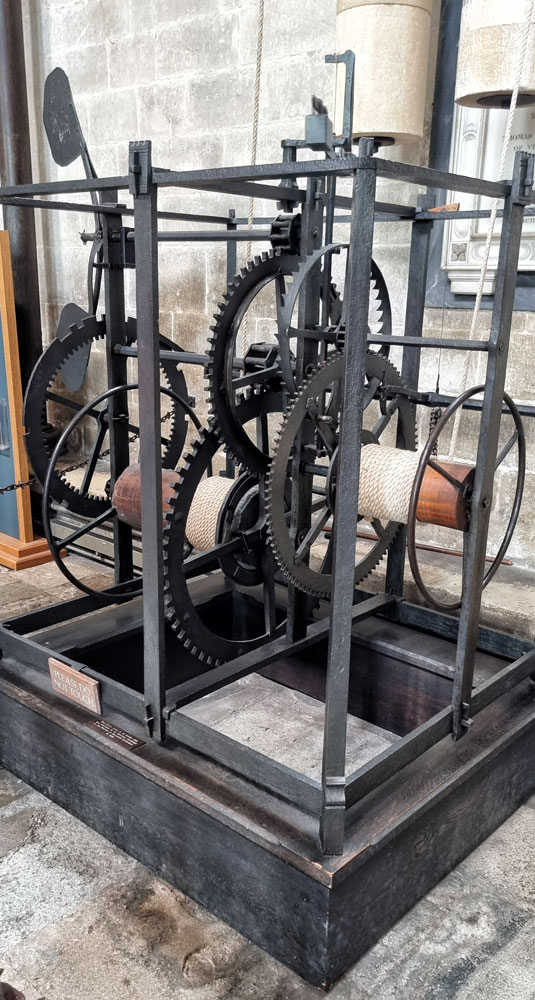
The cathedral is home to the oldest working mechanical clock, built in 1386. The clock has no face and was designed only to strike every hour. The mechanism is driven by falling weights which have to be wound up once a day.
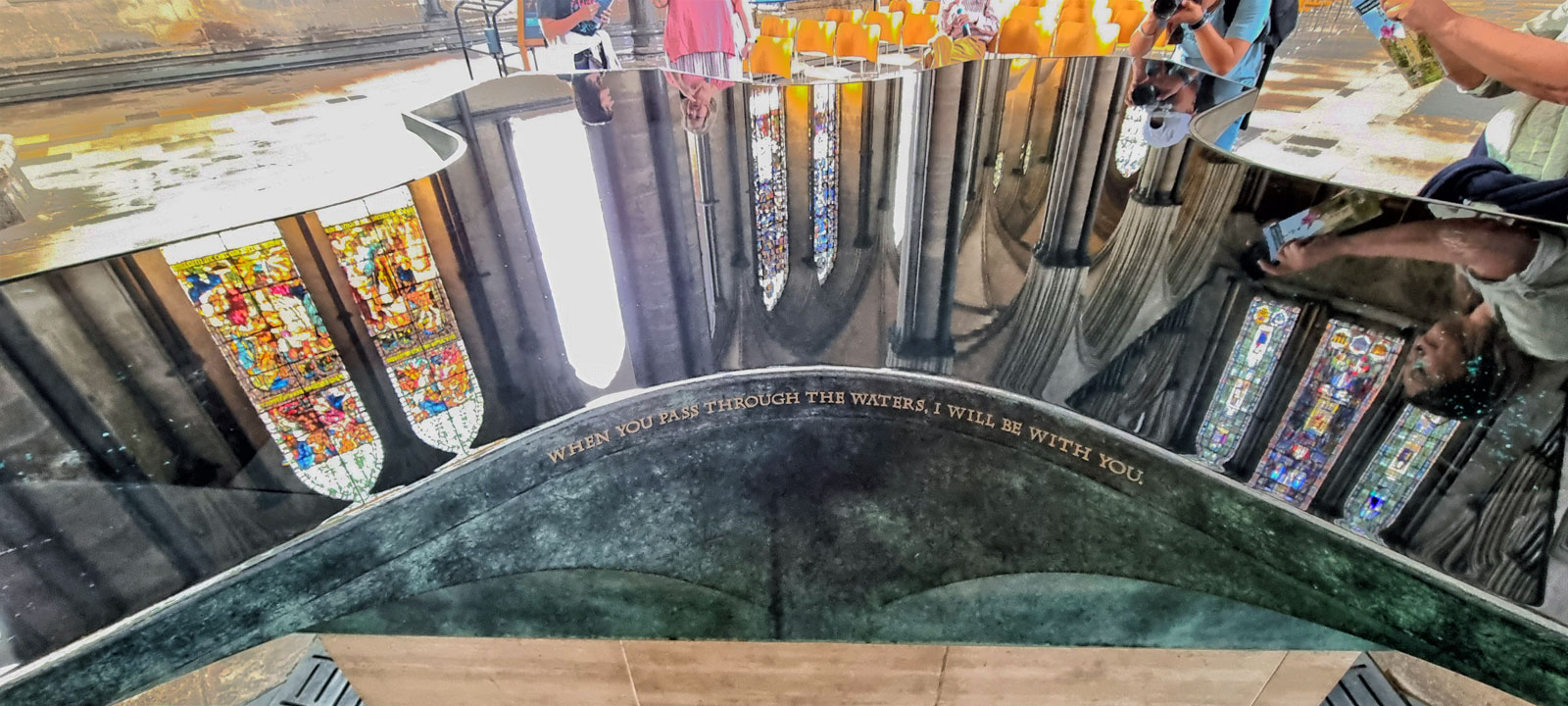
The Infinity Font is a beautiful, modern font right in the centre of the nave. It was designed by renowned British water sculptor William Pye and is the only font to have its own water supply and power source, and the only one which is centre stage in a cathedral, rather than tucked away as so many other fonts are.
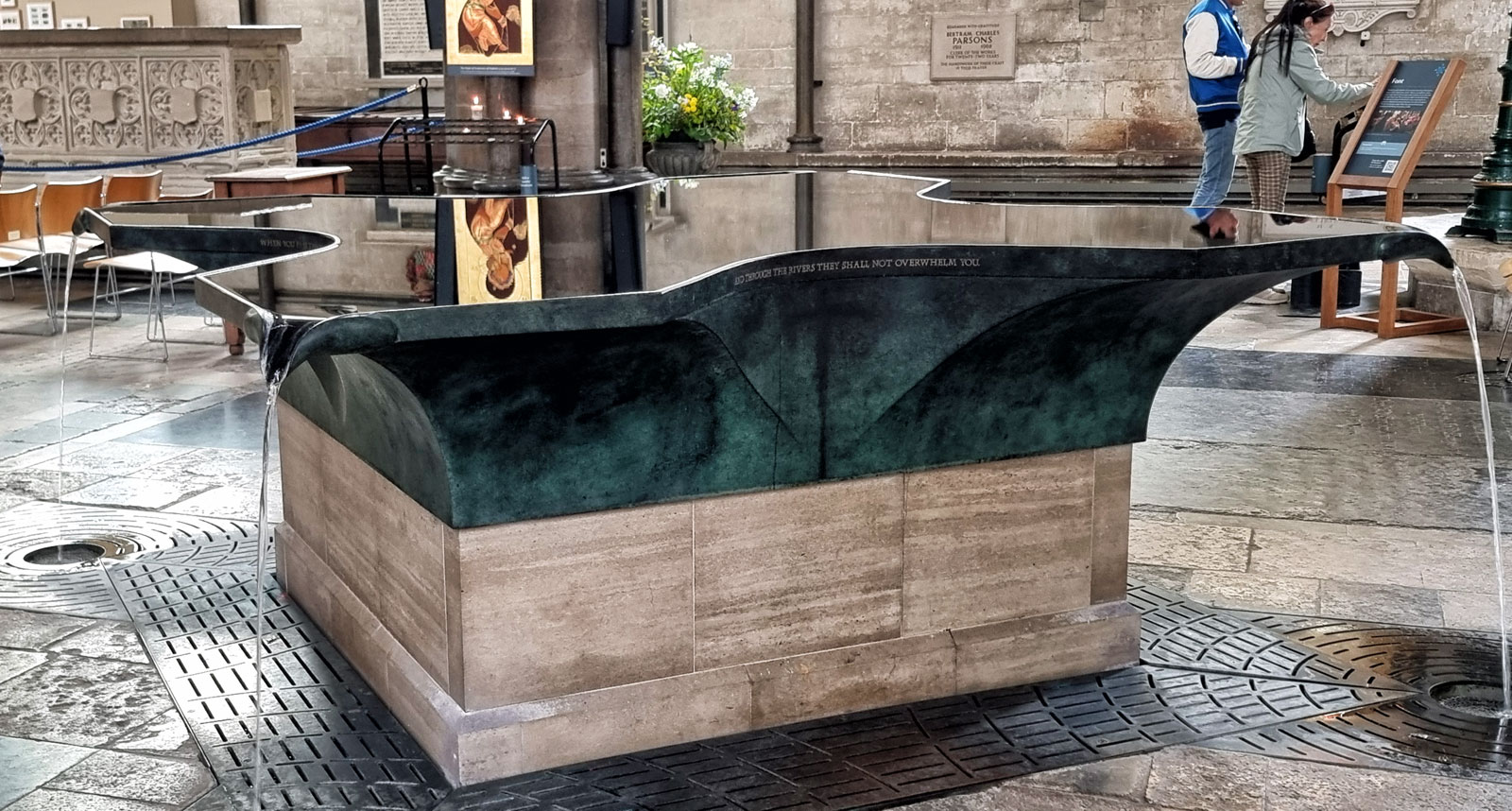
The water is so still that it looks like a mirror, leading to some incredible reflective photos.
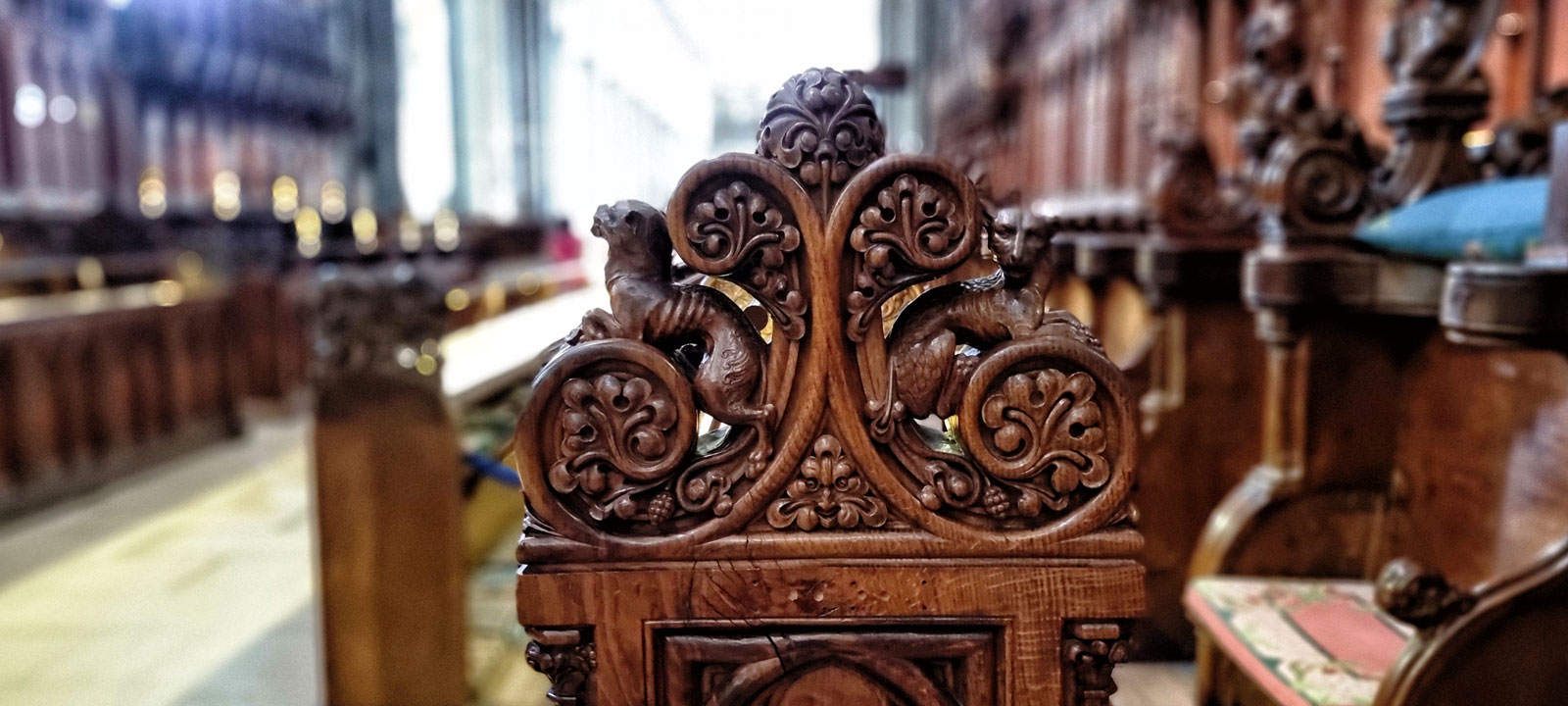
The choir stalls in Salisbury Cathedral are the oldest complete set of choir stalls in England, and are made from oak and date back to 1236: Many of the stalls have misericords, which are foldable shelves for people to rest on, and are beautifully carved. After my telling off at Lincoln cathedral I dare not approach the stalls, it is a shame that the seats are not folded back so the public can view the carvings.
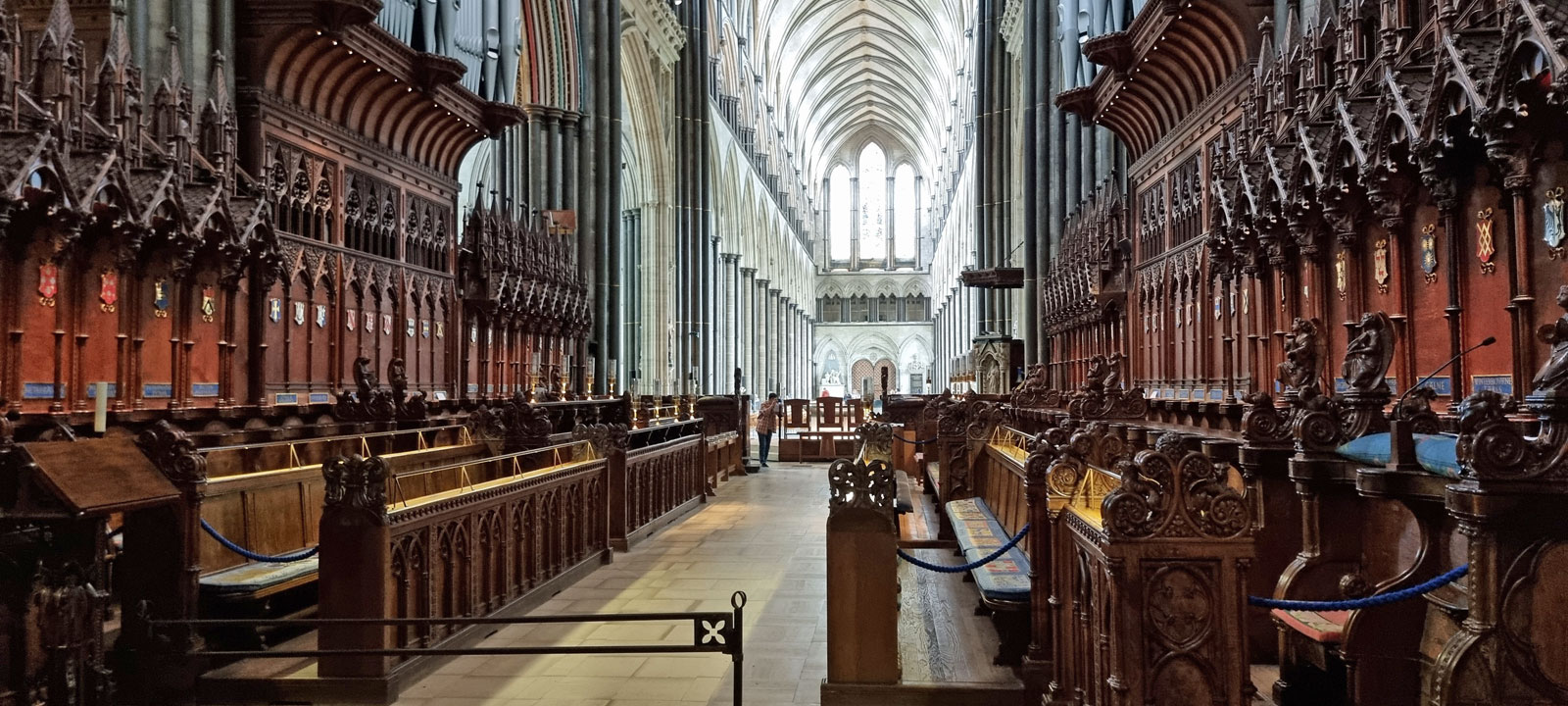
The choir stalls have ornately carved ends with angels on tops of the back rows. I think all of them are playing a musical instrument.


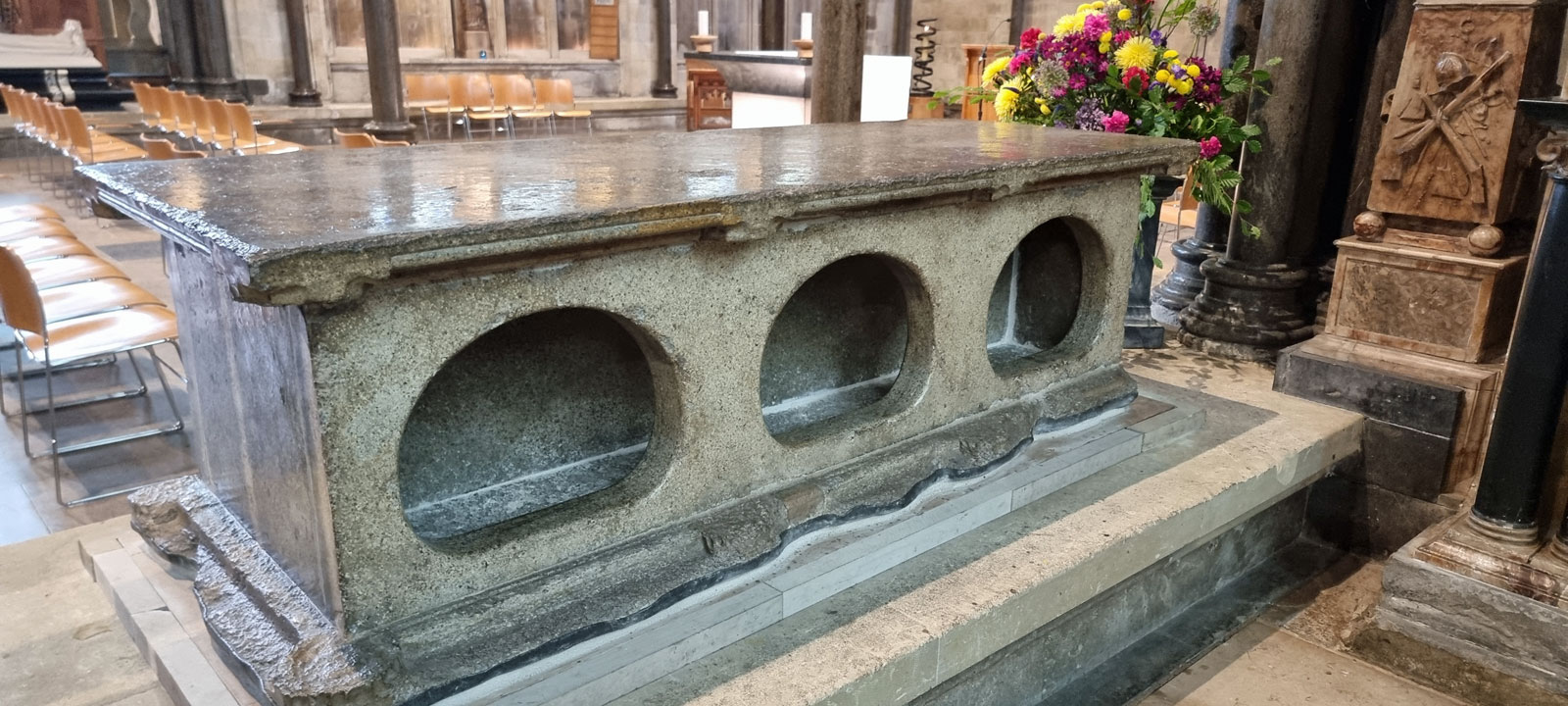
There is a wide variety of traditional tombs and memorials, the oldest being that of Bishop Osmund, Bishop of the forerunner to the cathedral at Old Sarum. The unique holes (foramina) in his tomb allowed sick people to reach in and get closer to his body in the belief that this would make them well.
Other notables include William Longespée, 3rd Earl of Salisbury (In or before 1167 – 7 March 1226) who was an Anglo-Norman nobleman, primarily remembered for his command of the English forces at the Battle of Damme and for remaining loyal to his half-brother, King John. His nickname “Longespée” is generally taken as a reference to his great physical height and the oversized weapons that he used.
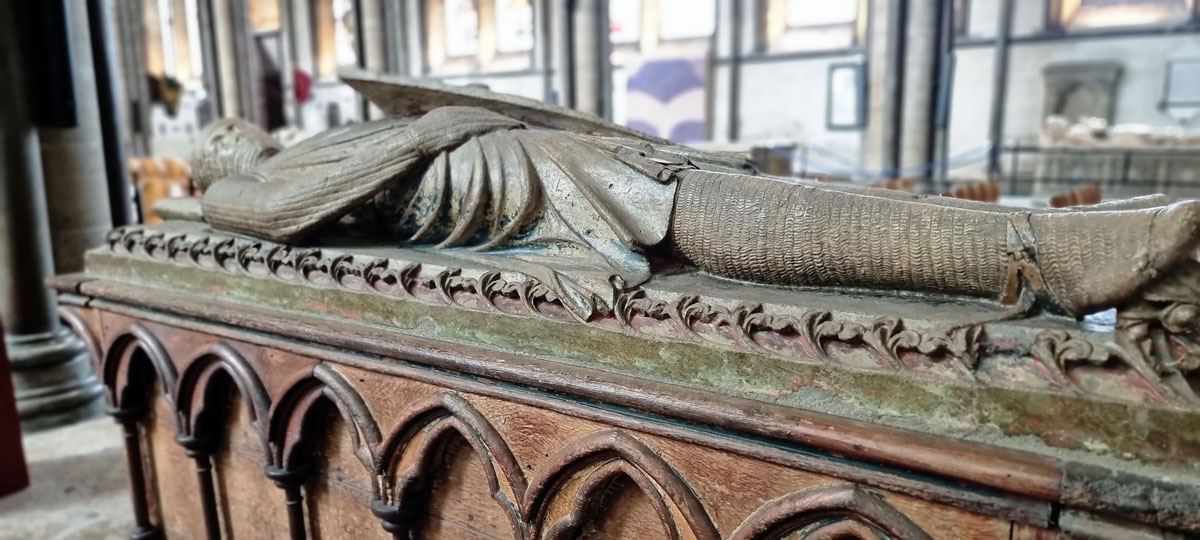
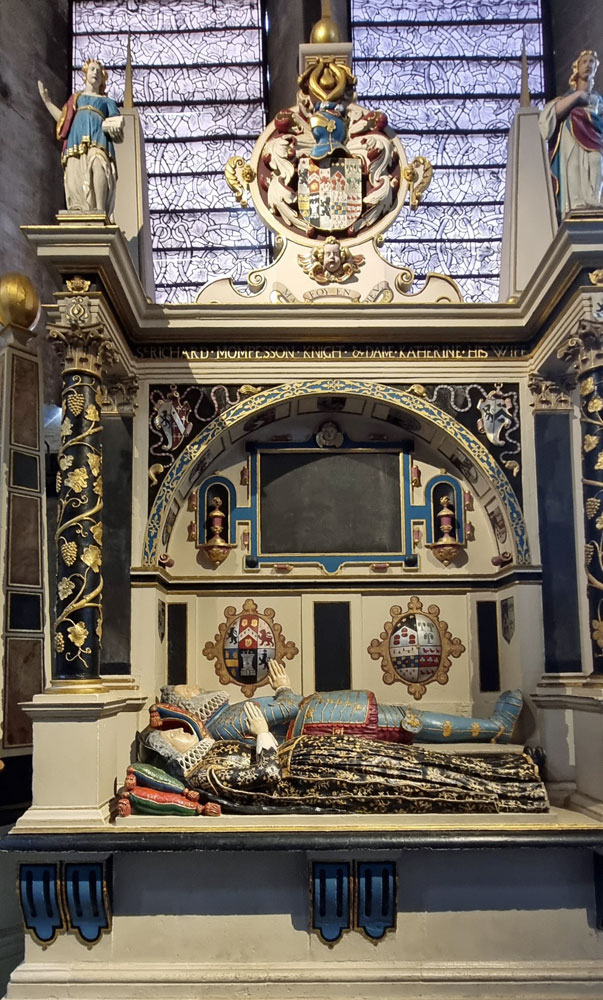

At the East end of the cathedral behind the altar is a large, blue stained glass window dedicated to Prisoners of Conscience, and a candle wrapped in barbed wire which is kept permanently alight in memory of those who are imprisoned for their beliefs.
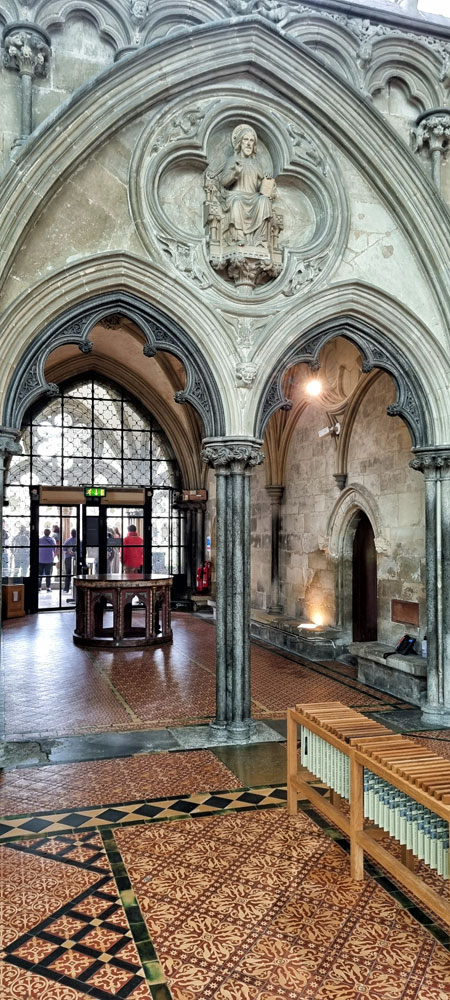
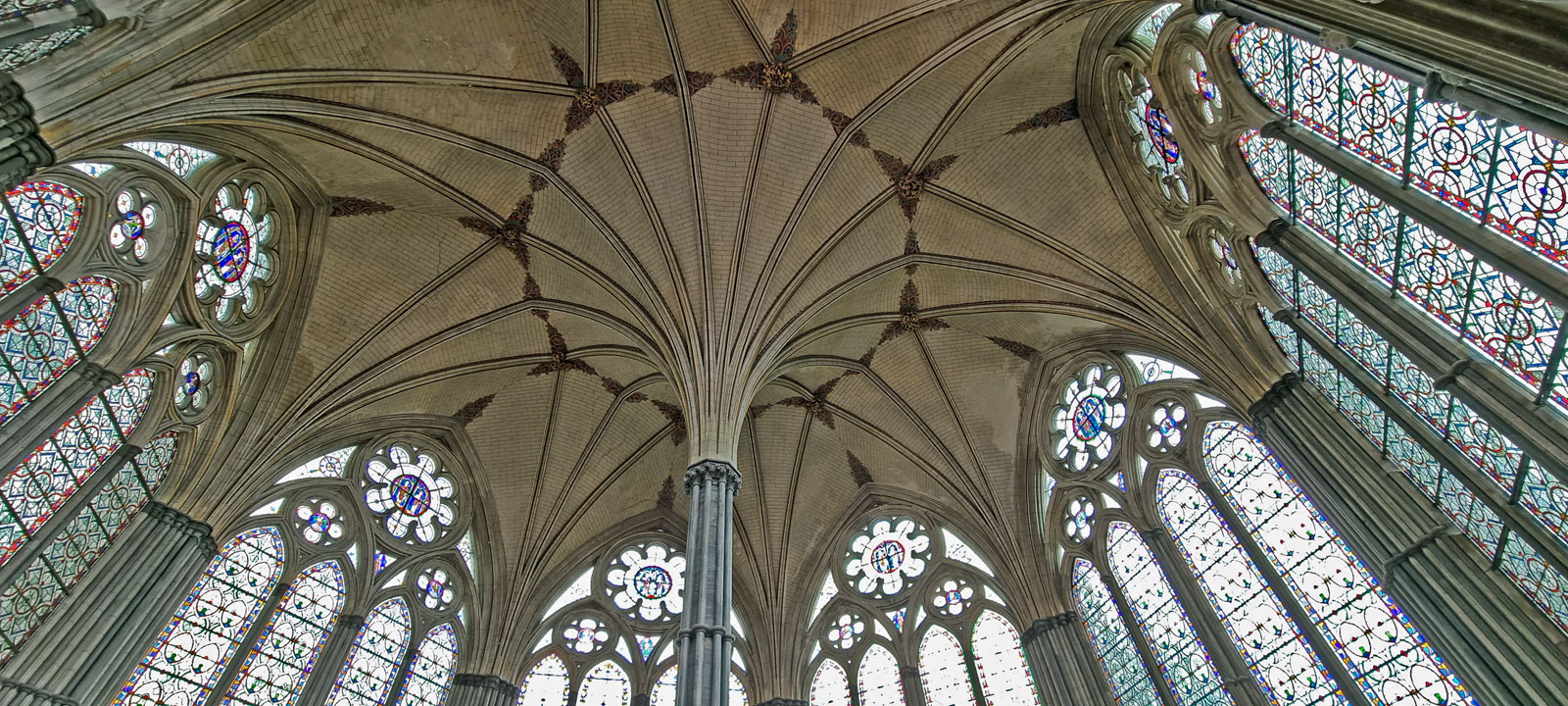
The Chapter House is where meetings were held by the clergy, and was in daily use until the Reformation, when it fell into some disrepair. It has since been restored. It is a polygonal room with high vaulted ceiling supported by a central column, stained glass windows and a frieze of stills from Genesis around the spandrels, some of which were destroyed during the 17th century. The floor is 19th century tiles emulating the original medieval inlaid tiles.
The star attraction of the Chapter House, the Magna Carta is housed in a shrouded tent to protect it from the light. It is one of only four remaining copies, and is the best preserved of them all. Written in 1215 and signed under pressure by King John in a field in Runnymede, it is the foundation of human rights in the Anglo-American legal systems, declaring the rights and liberties held by free men and that the King is not above the law.

 TRAVEL WORDS
A beautifully illustrated and presented post. I needn’t bother to pay to go in now!
Ah, it’s only a tenner and valid for a year too!
That’s fine then. Works for me. Though it might not be possible to visit more than once a year from here!
My thoughts exactly!
I remember being mightily impressed by that cathedral, but didn’t have a camera with me when I visited. I can recommend a really good book about Salisbury and its history, fiction based on some facts. Sarum by Rutherfurd, Edward
Best wishes, Pete. x
Thanks Pete. I have shortened the URL but the book can still be found
It’s a beautiful place, the font in particular is impressive.
The font is most unusual – not often you find a modern piece in an ancient cathedral.
A rather marvellous cathedral, Jude, and you have given us some wonderful detail in this post
I have been slowly ticking off the cathedrals in England, but must confess to becoming a bit weary. I was hoping to see some misericords, but no such luck.
It’s a shame Magna Carta doesn’t appear to apply to politicians! Like Margaret, I was going to say that I didn’t need to go now, but you know that if I was in the area I’d have to climb that tower. Love the clock mechanism. Who needs minutes, anyway?
I know both you and Mel would be rushing up those steps!
Slowly, in my case!
I didn’t think you did anything slowly, except for your suppers 🤔
Tired tonight! Combination of dancing last night and a very up and down (but beautiful) riverside walk today .
Beautiful! I have visited but c1978/9 so not much sticks in the memory. I think I would be up that tower though! I have read Sarum, the book, Pete recommends, but it’s not something I would undertake now. Far too long for my attention span these days.
Stunning cathedral! Your photos really highlight the details that went into building this church and everything inside it.
We went during our six week trip to UK in 1999 with our daughters. We didn’t do the tour to the spire then but I would now for sure.
Nice place beautiful building.
Must be quite something in person.