If you are in the Mendips region of Somerset you really shouldn’t miss visiting the wonderful Wells Cathedral nor the historic town of Glastonbury, possibly the quirkiest town in England. Steeped in history, myth and the smell of incense, it may not be for everybody.
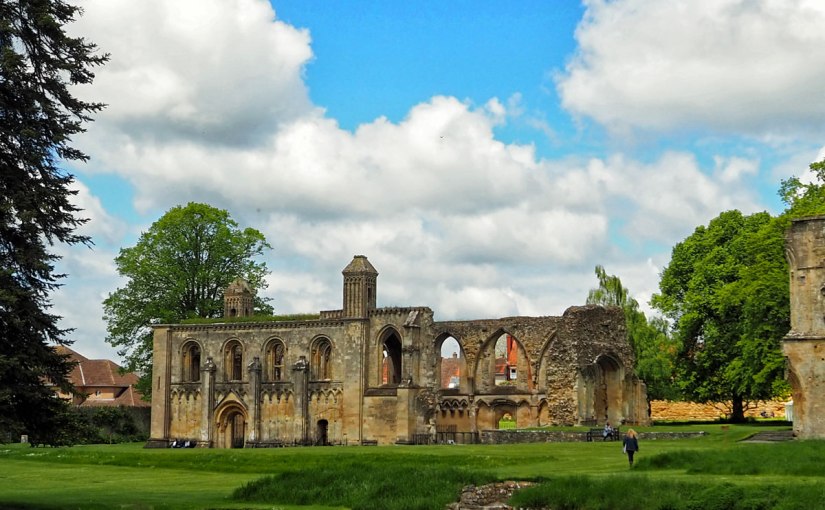
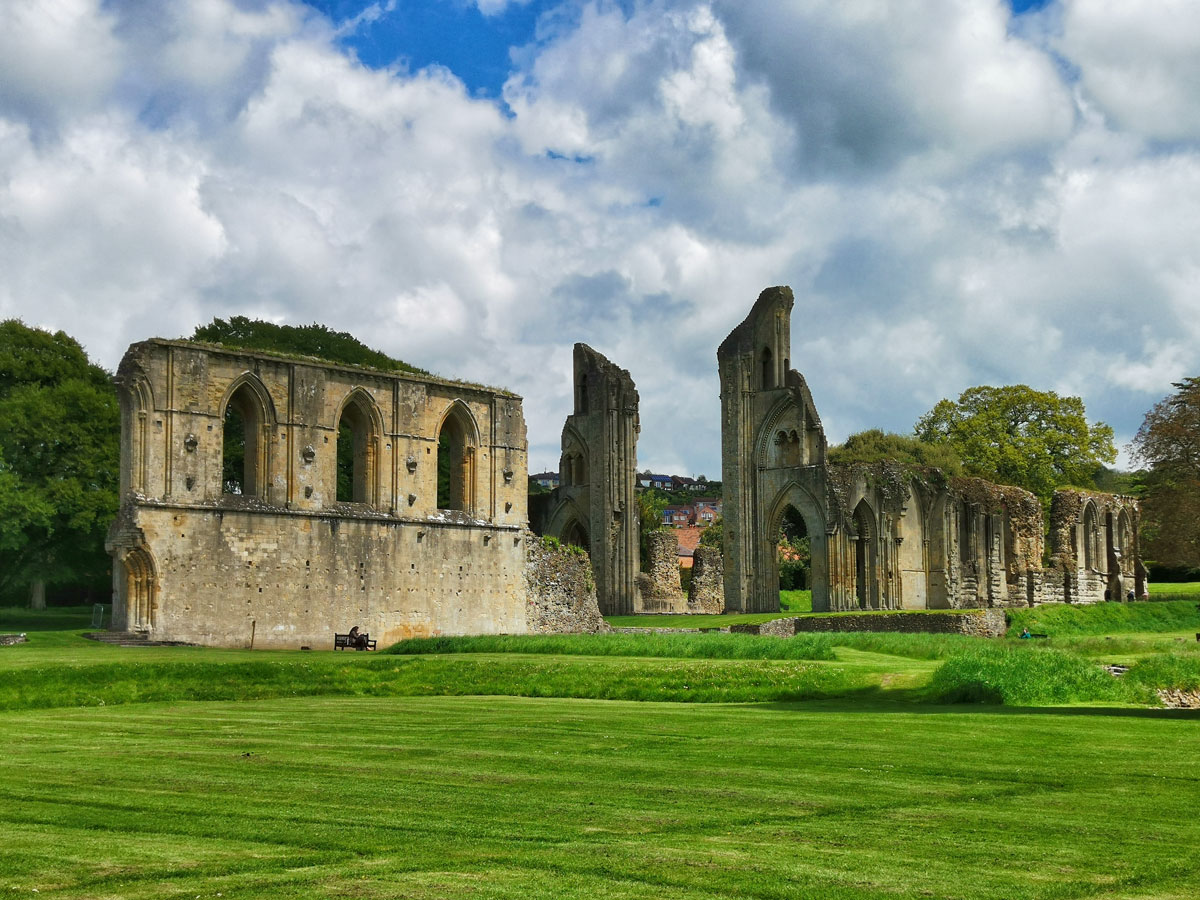
However, do not let that put you off visiting the beautiful site of Glastonbury Abbey. Since Medieval times, the abbey has held legendary status as the earliest Christian foundation in Britain linked to Joseph of Arimathea and the burial place of King Arthur.
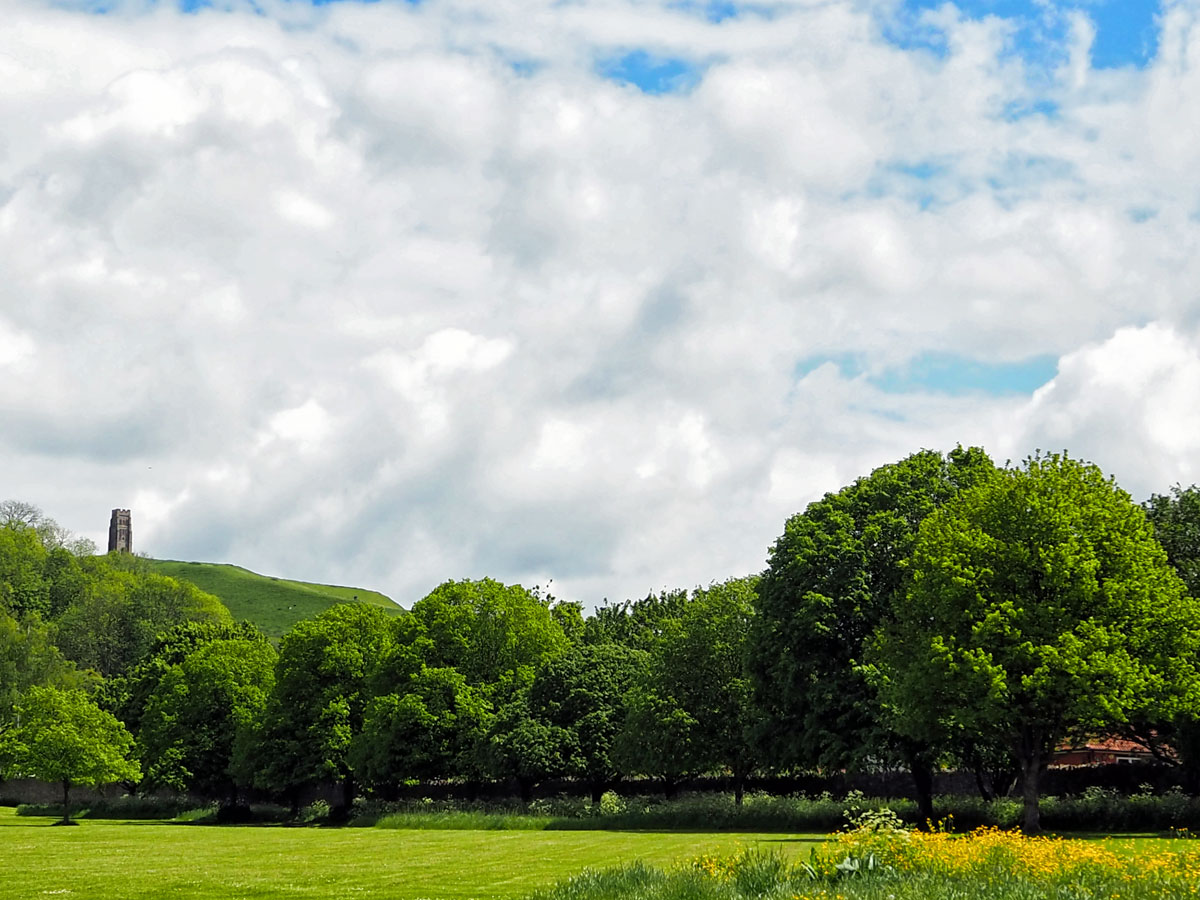
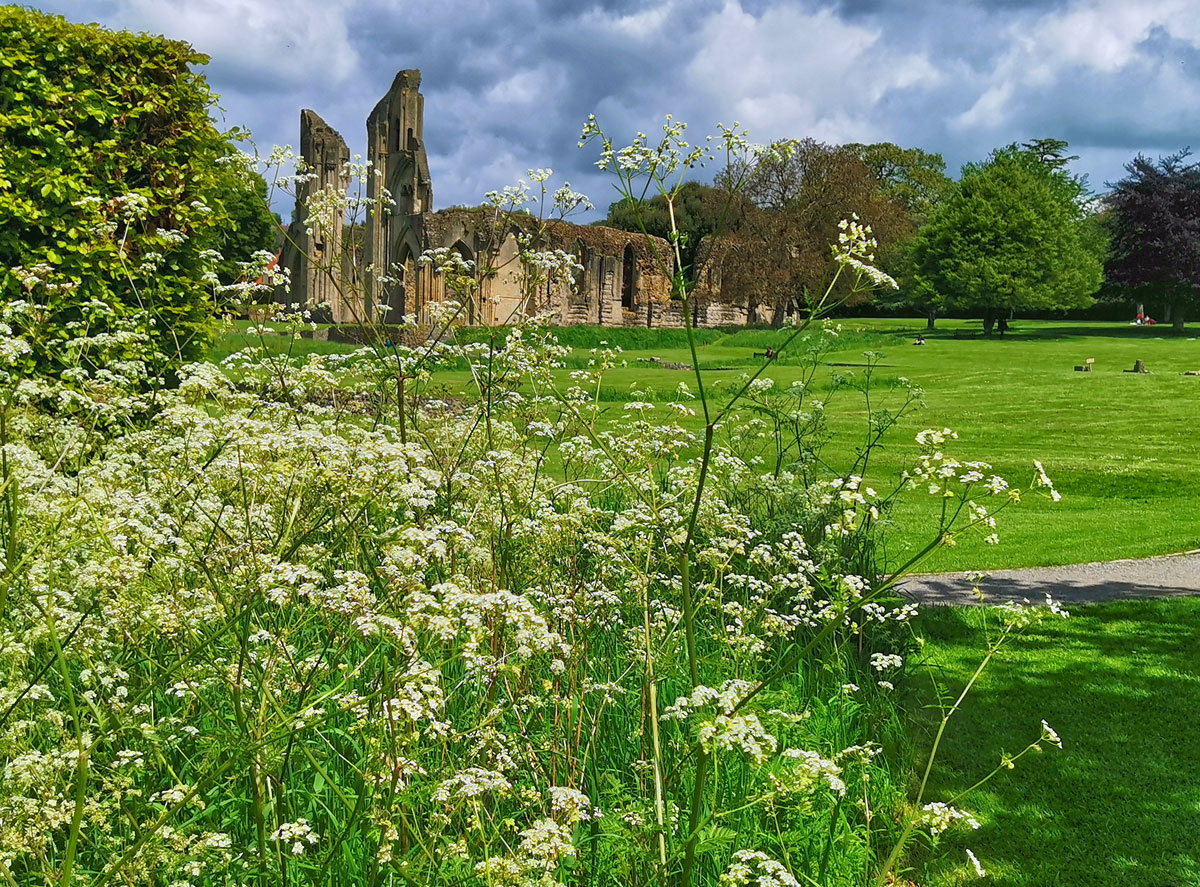
It’s a peaceful place – 36 acres of grounds to explore. Plenty of benches to sit and relax and take in the atmosphere. The remains of the abbey to walk around, which must have been enormous in its day. A medieval herb garden. Views of the Glastonbury Tor.
The abbey was built on the myth that followers of Christ settled here within the 1st century CE and built ‘The Old Church’. Abbot Dunstan remodelled and expanded the abbey and by the time of the coming of the Normans, the abbey was the wealthiest in England.
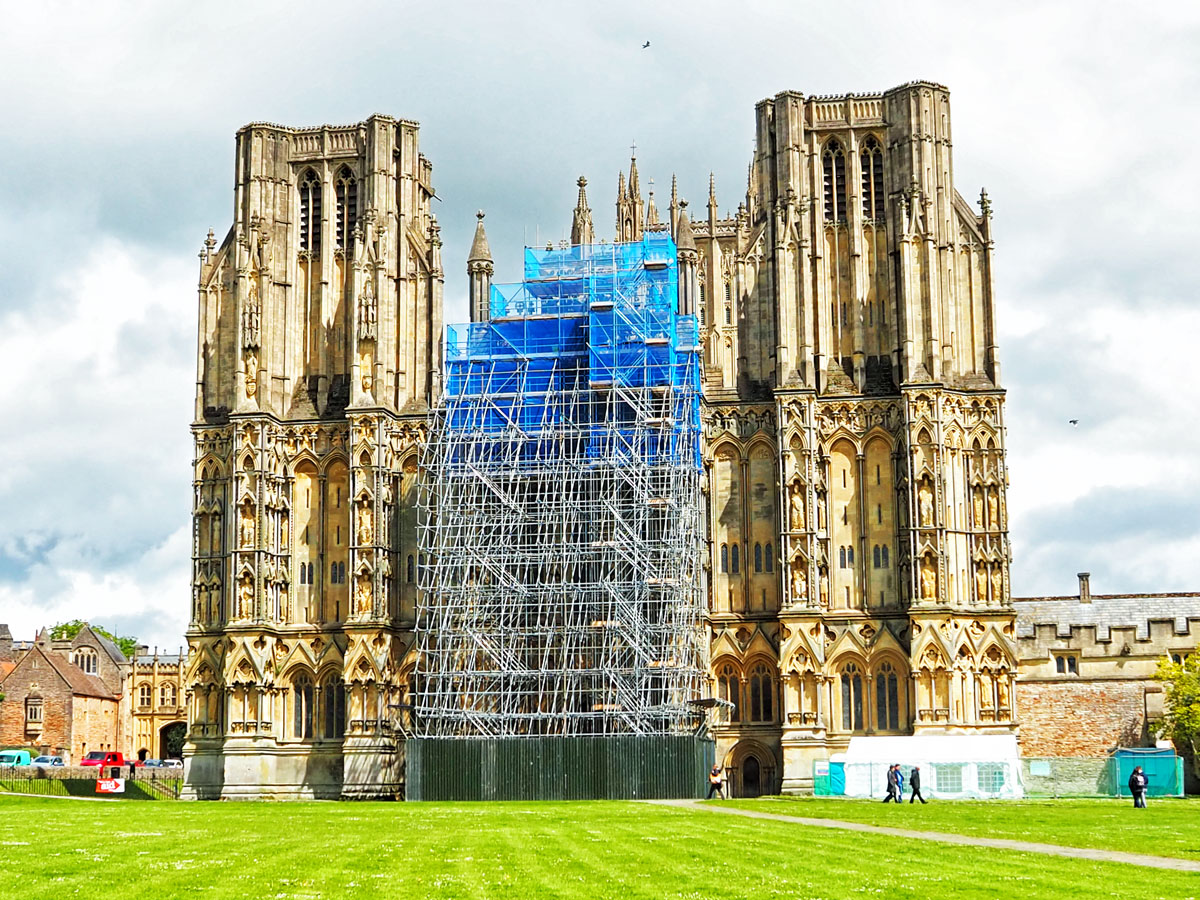
The West Front (around 300 of the original 400 medieval statues remain.)
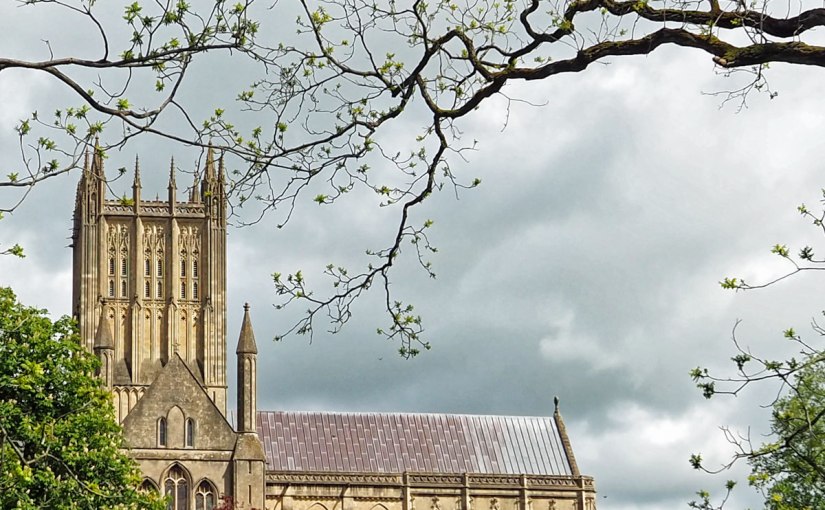
Our visit to Wells last May would not have been complete without a visit to the cathedral there. One of the many that we have not visited previously and a main reason for choosing to stay in England’s smallest city. Not that either of us is remotely religious, but we can’t help admire the craftsmanship that goes into these beautiful buildings, and even I can appreciate the peacefulness that can be found inside.
Master mason William Joy proposed the Scissor Arches (below) to prevent the collapse of a tower after a lead covered wooden spire was added in 1313. This proved to be too heavy for the foundations. Put in place between 1338 and 1348, they still stand today and are one of the most magnificent architectural features of Wells Cathedral.
The Scissor Arches
The Scissor Arches
The Scissor Arches
The ‘new’ church which was to become the cathedral of the Bishop of Bath & Wells was the first to be built in the Early English Gothic style, during 1175 – c. 1250. It was built on a new site to the north of an old minster church. Over the following three hundred years there was extension and revision, in the Decorated and Perpendicular styles in turn, as architectural fashion dictated.
corbel of the dragon-slaying monk in the chapter house stair.
keep this way…
Bubwith Chantry
Cloisters
Clock and figure of Christ risen from the dead is carved in yew by E J Clack and placed here in 1956.
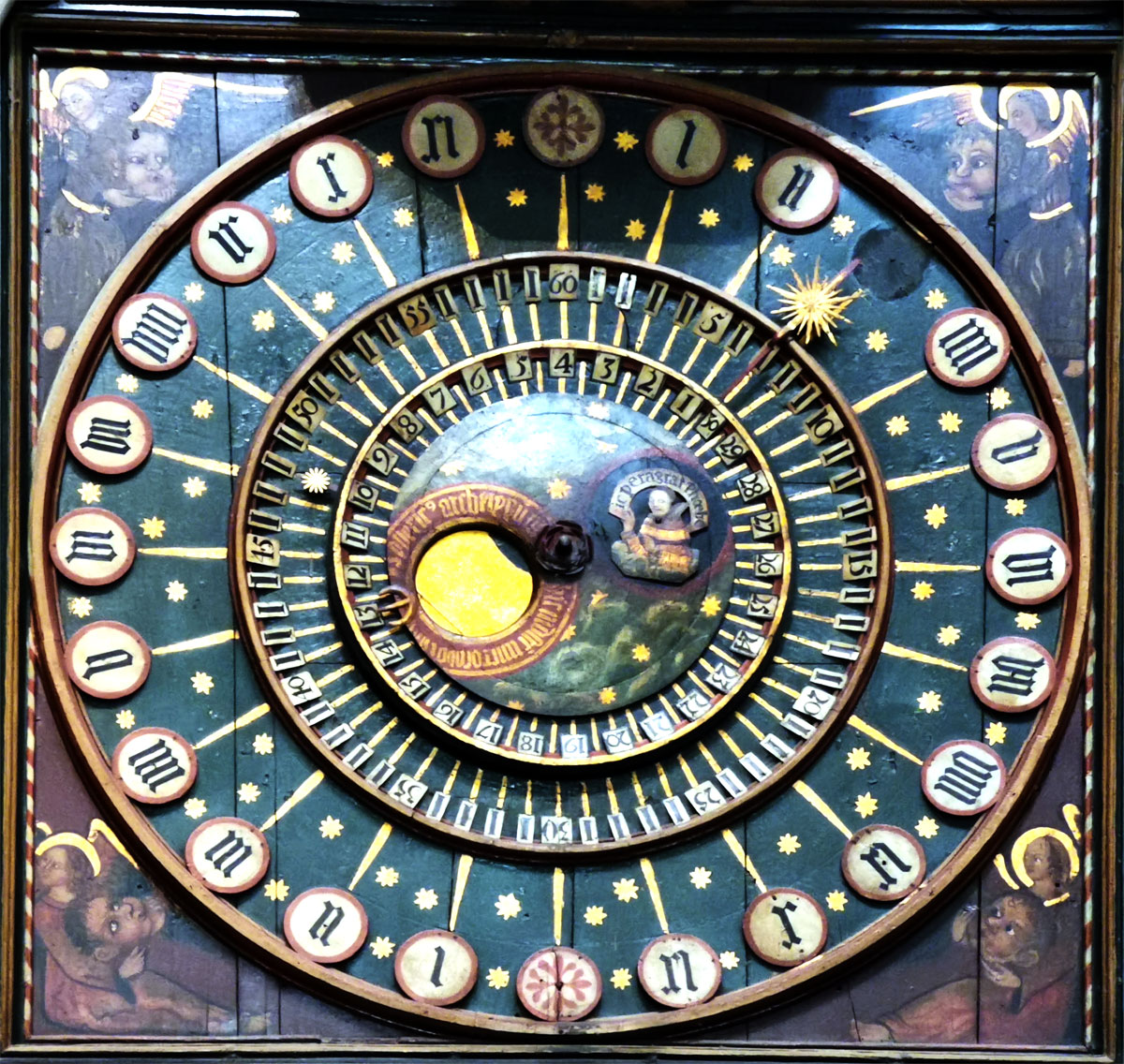
The famous Wells clock is considered to be the second oldest clock mechanism in Britain, and probably in the world, to survive in original condition and still in use. The original works were made about 1390 and the clock face is the oldest surviving original of its kind anywhere. When the clock strikes every quarter, jousting knights rush round above the clock and the Quarter Jack bangs the quarter hours with his heels.
With its intricately painted interior dial depicting the Earth surrounded by the sun, moon and stars, it’s unique in showing a geocentric worldview – when the clock was created in 1390, most people still believed that the Earth was at the centre of the Universe.
Travelling from the far west of Cornwall means that you don’t reach another county for a good hour and a half. So we haven’t been very far over the last couple of years since the first lockdown. Last week though we headed east to celebrate a significant birthday – that of our second eldest granddaughter who turned 18. I was there at her birth, though only just made it as she was over her due date and I had to return home to begin my final term of teaching practice for my PGCE. Oh, how long ago that time seems.
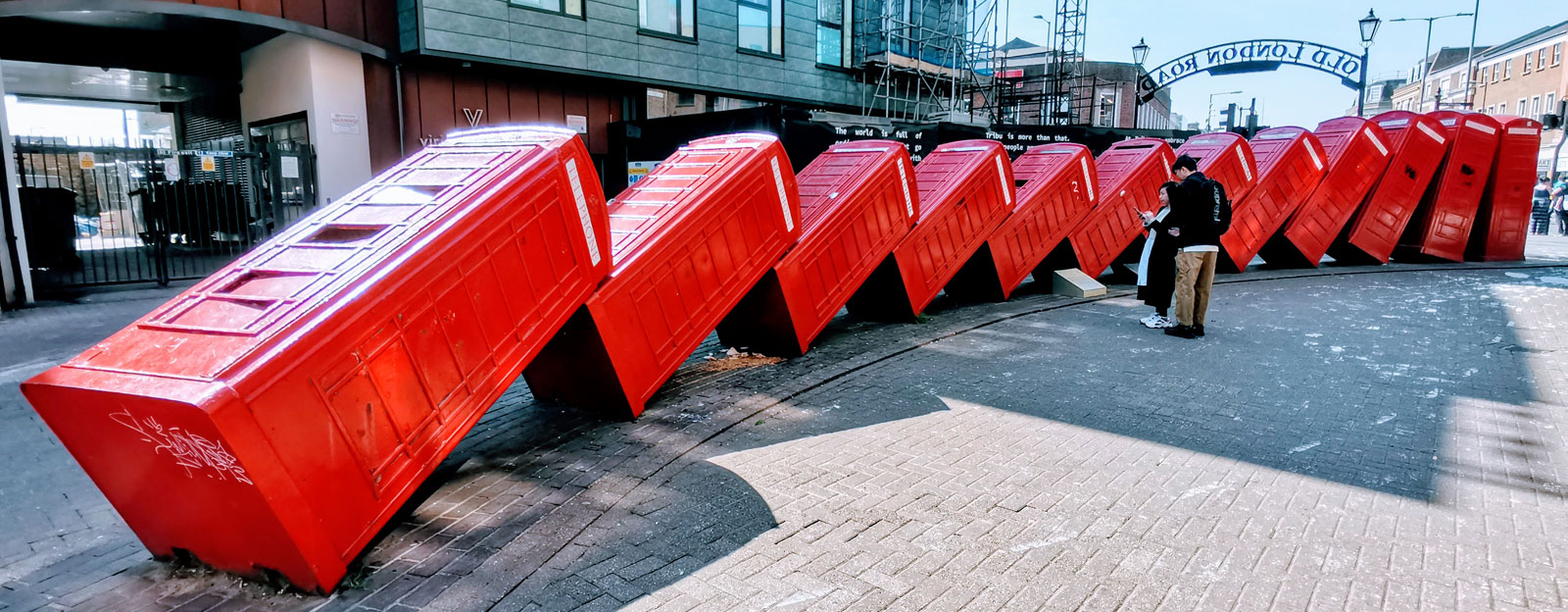
The ‘Out of Order’ installation, which consists of twelve tumbling telephone boxes, has been in place on Kingston’s lovely Old London Road since it was first installed in 1989. The piece was created by David Mach, one of the UK’s most successful artists and a former lecturer at Sculpture School in Kingston.
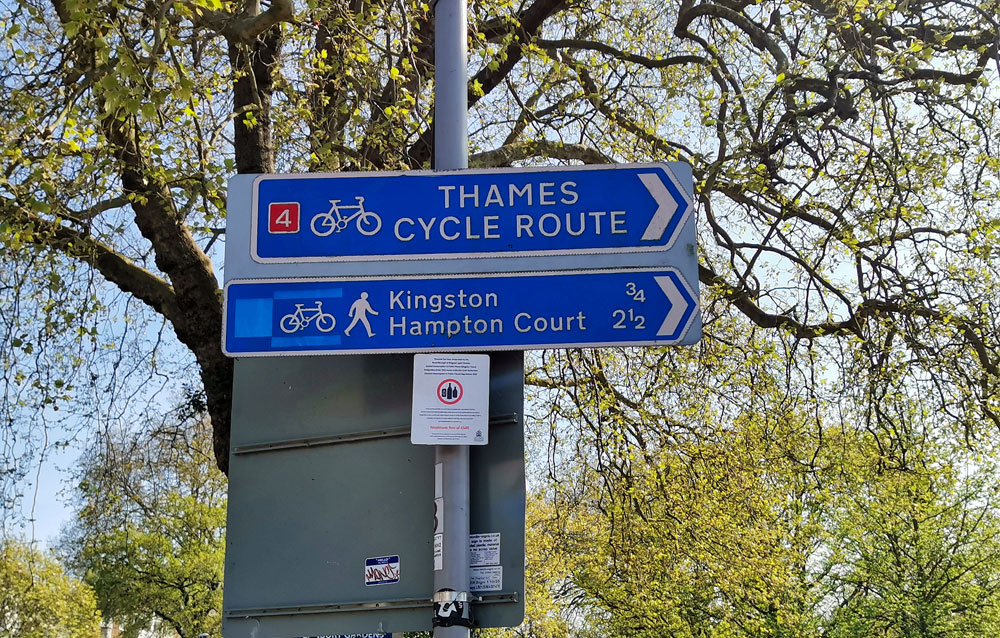
Whilst in the south-east I managed to visit a few of my favourite places in the area (we lived on the Hampshire/Surrey/West Sussex border for seven years back in the 2000s) and enjoy a few walks with my daughter along the River Thames. As usual the weather there was several degrees warmer than it ever is in Cornwall, the sun shone, the sky was blue, there was chocolate cake and I did a lot of walking!
River Thames Walks
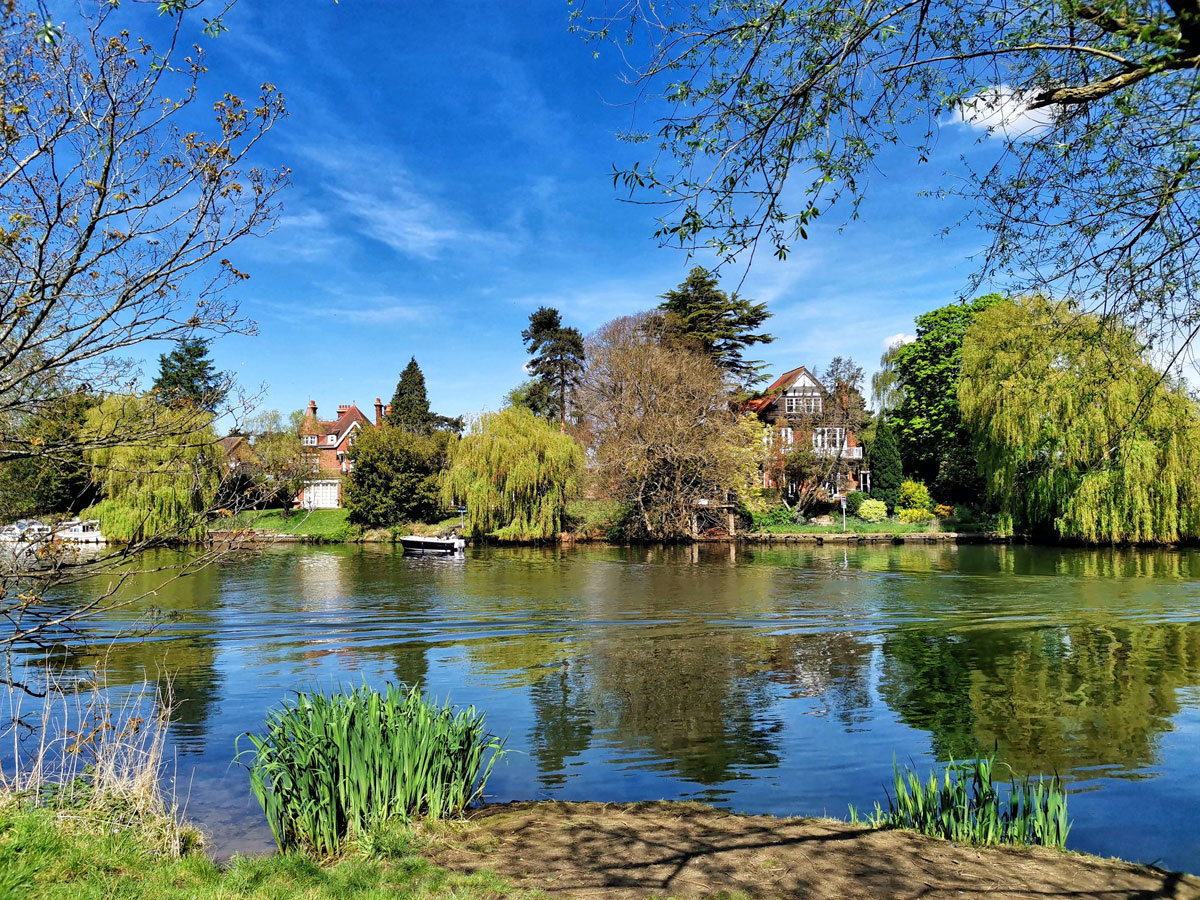
I was surprised at how countrified the towpath along the river can be once you are away from the suburbs. We strolled towards Sunbury from Hurst Park / Meadows in Moseley where the river was busy with paddleboarders, kayakers and canoeists plus the inevitable rowers, with plenty of swans, ducks and geese.
Multimillion £ houses along the River Thames in Hampton.
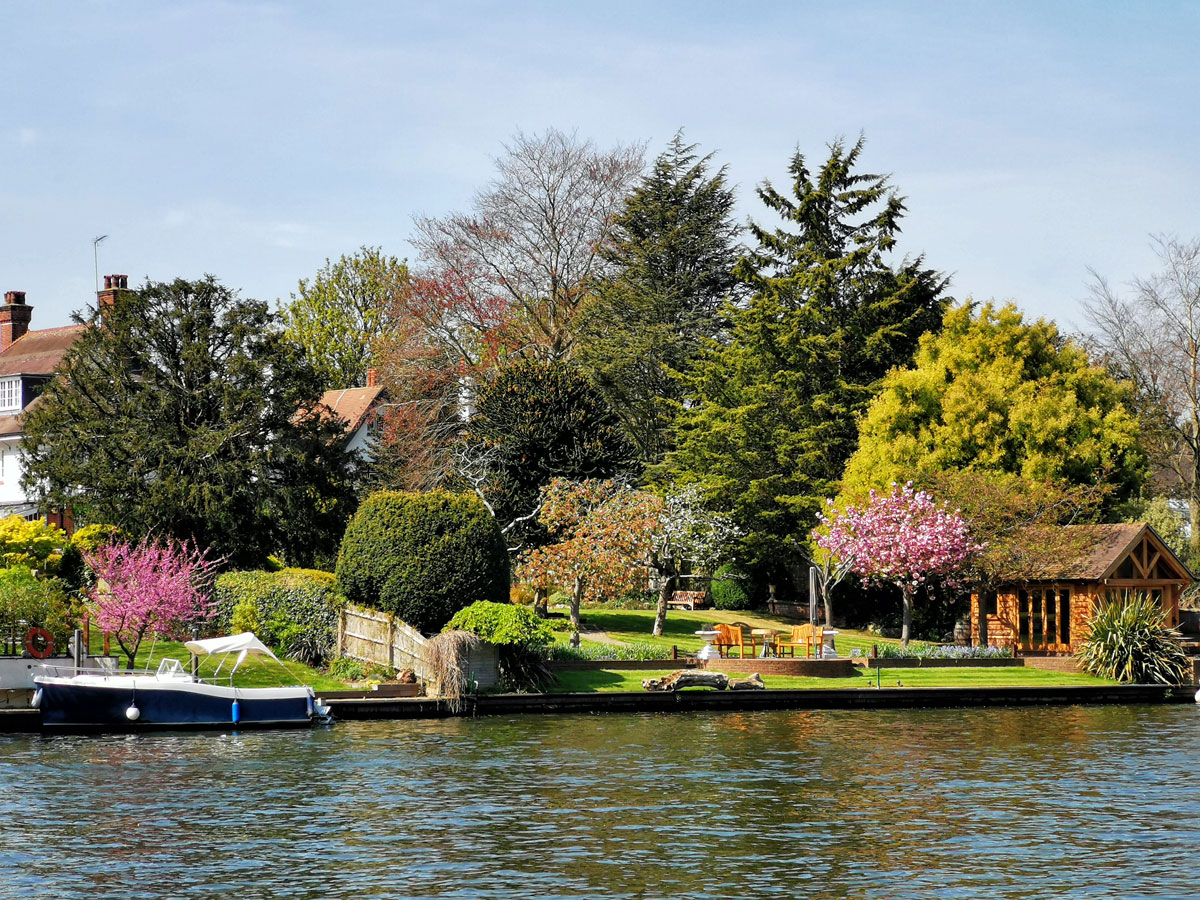
On the towpath towards Ham from Kingston it was much busier and noisier due to the low-flying aircraft overhead. But once again after leaving the delightful Canbury Park towards Teddington Lock it feels like you are almost in the country. Stunning houses along the river front once again. And so much blossom!
Houses along the Thames in Teddington
RHS Wisley Gardens
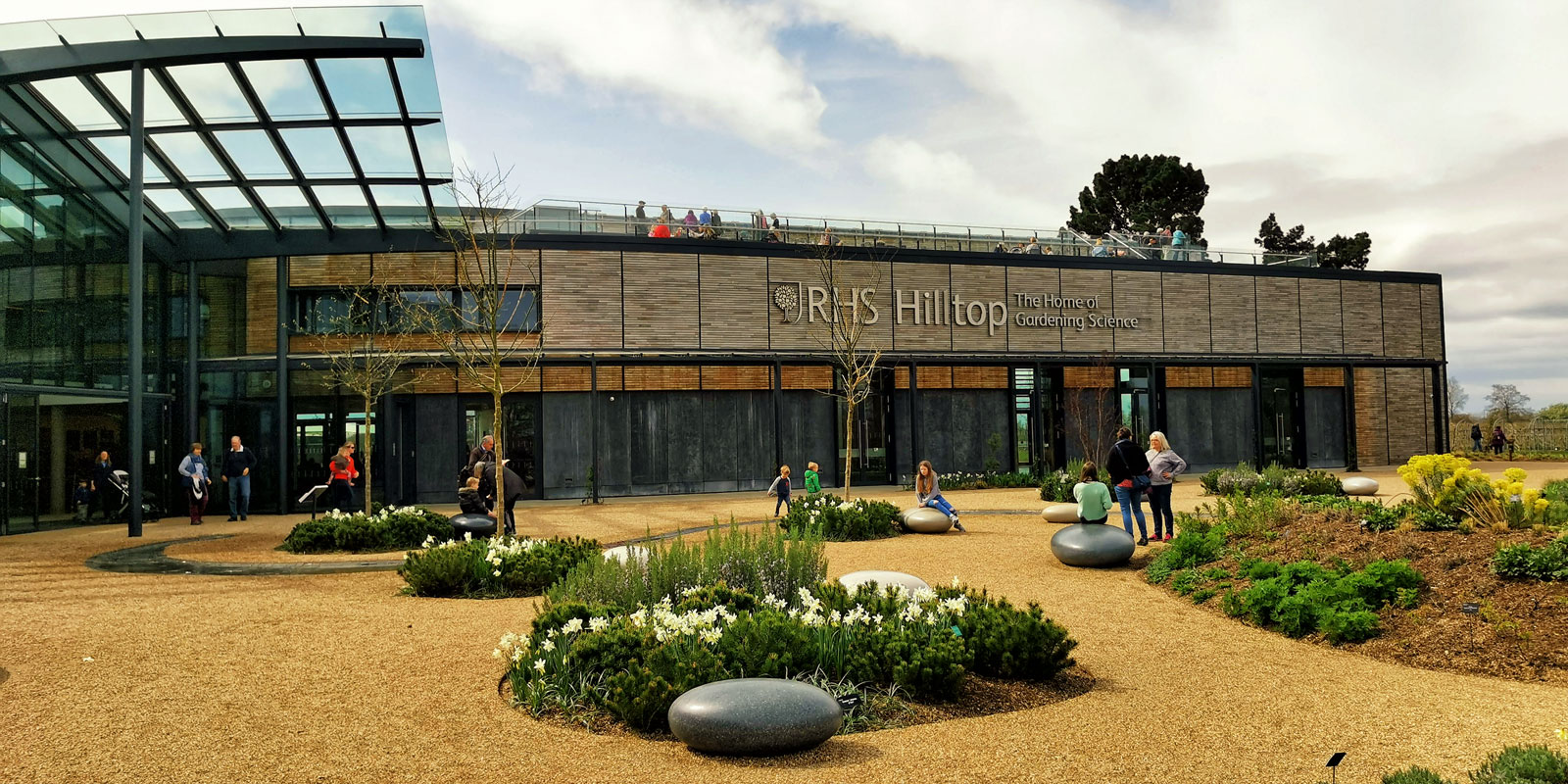
Hilltop – The Home of Gardening Science
The flagship gardens of the Royal Horticultural Society are at Wisley in Surrey, very close to the M25 motorway Junction 10 with the A3. It has been transformed since my last visit in 2015 and is extremely busy, especially when events like an Easter Egg hunt is on. The main changes are at the Welcome entrance and at Hilltop which is where the model gardens and allotments used to be. Now it is a centre for gardening science with a library and three new gardens surrounding it. There is a permanent exhibition that demonstrates the benefits of gardens for wellbeing and gives tips for creating garden spaces that improve the natural environment in a changing climate and a series of free talks, demonstrations and interactive sessions are offered daily.
Japanese Acer
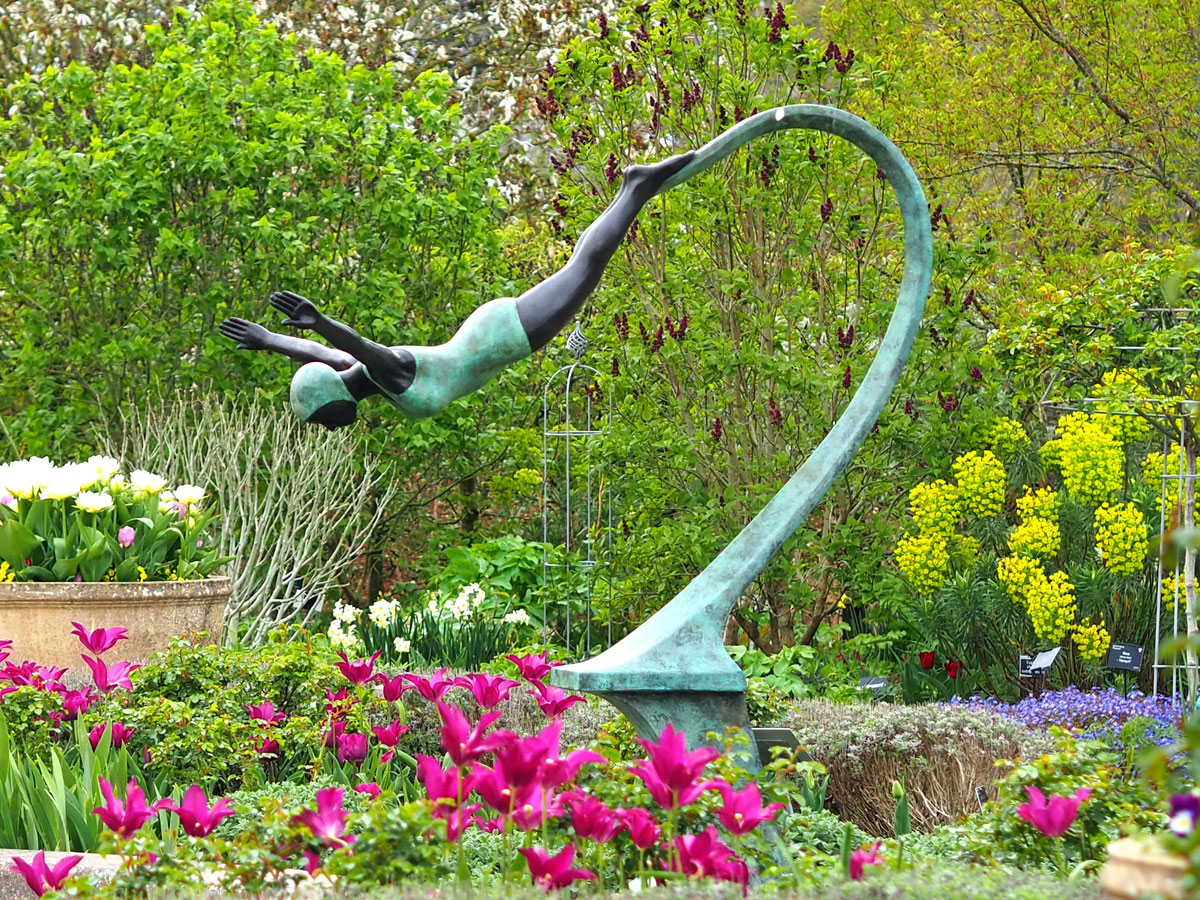
Diva by Mark Swan
Erythronium californicum ‘White Beauty’
Cercidiphyllum japonicum f. pendulum
blossom
Pulsatilla / Pasque flower
Nandina domestica
Sweet Chestnut Bird Hide by Tom Hare
Naturally I cannot resist photographing the beautiful plants and flowers, but it was lovely to see a variety of sculptures around the garden, including this one in the Cottage Garden.
Diva by Mark Swan
Devil’s Punch Bowl
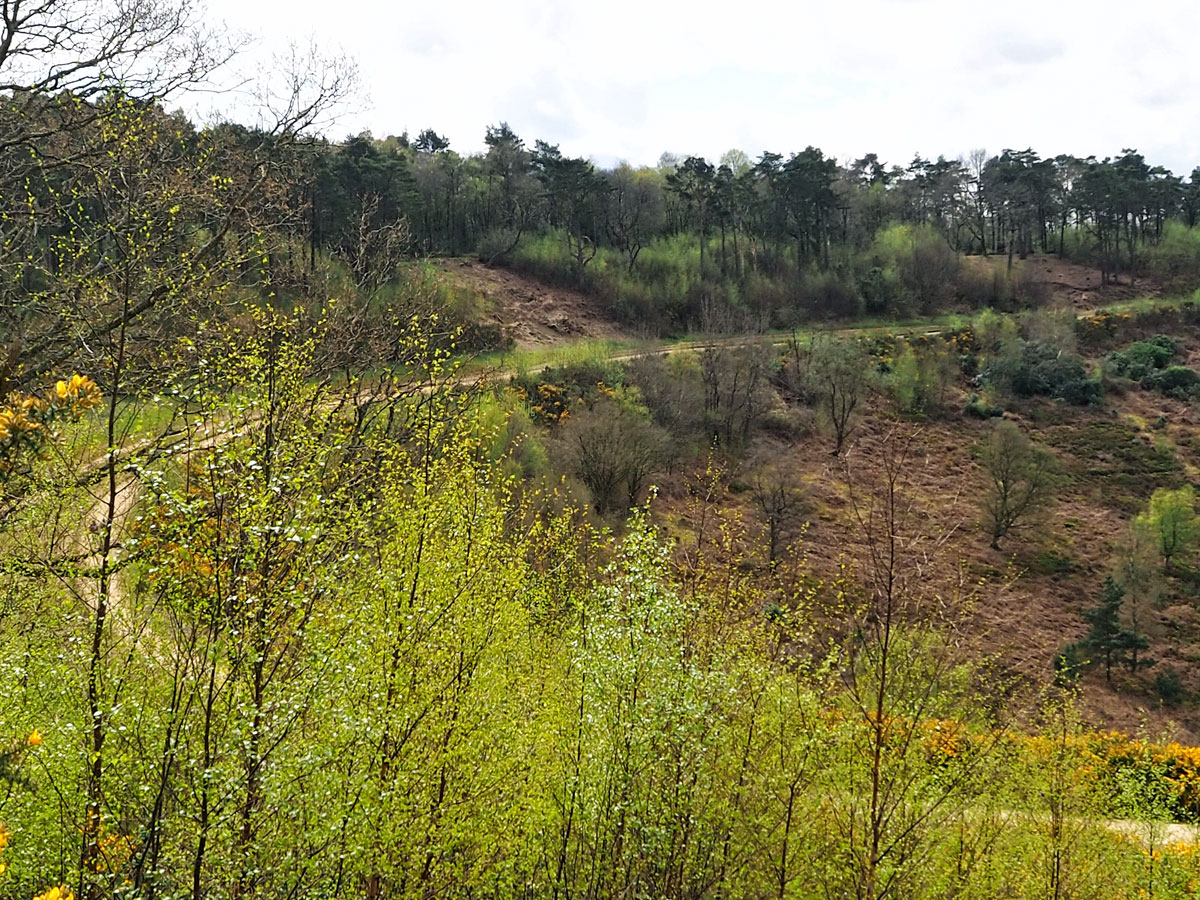
The Old A3 road around the Devil’s Punch Bowl at Hindhead
Once upon a time I used to drive along the old A3 all the time as we lived close by to Hindhead. We lived there in fact the entire 5 years it took for the A3 tunnel to be built and suffered the long delays caused by the roadworks. However now it has been dug up and a lovely all-weather circular path (2.5 miles) made along the former road joins the Devil’s Punch Bowl to the Hindhead Common where the Celtic Cross and the Sailor’s Stone can be found. I stood looking at the sweep of the track trying to work out my bearings, but it was very confusing. Chatting to a chap coming the other way, who also used to drive along this road we both agreed that it all looked very different.
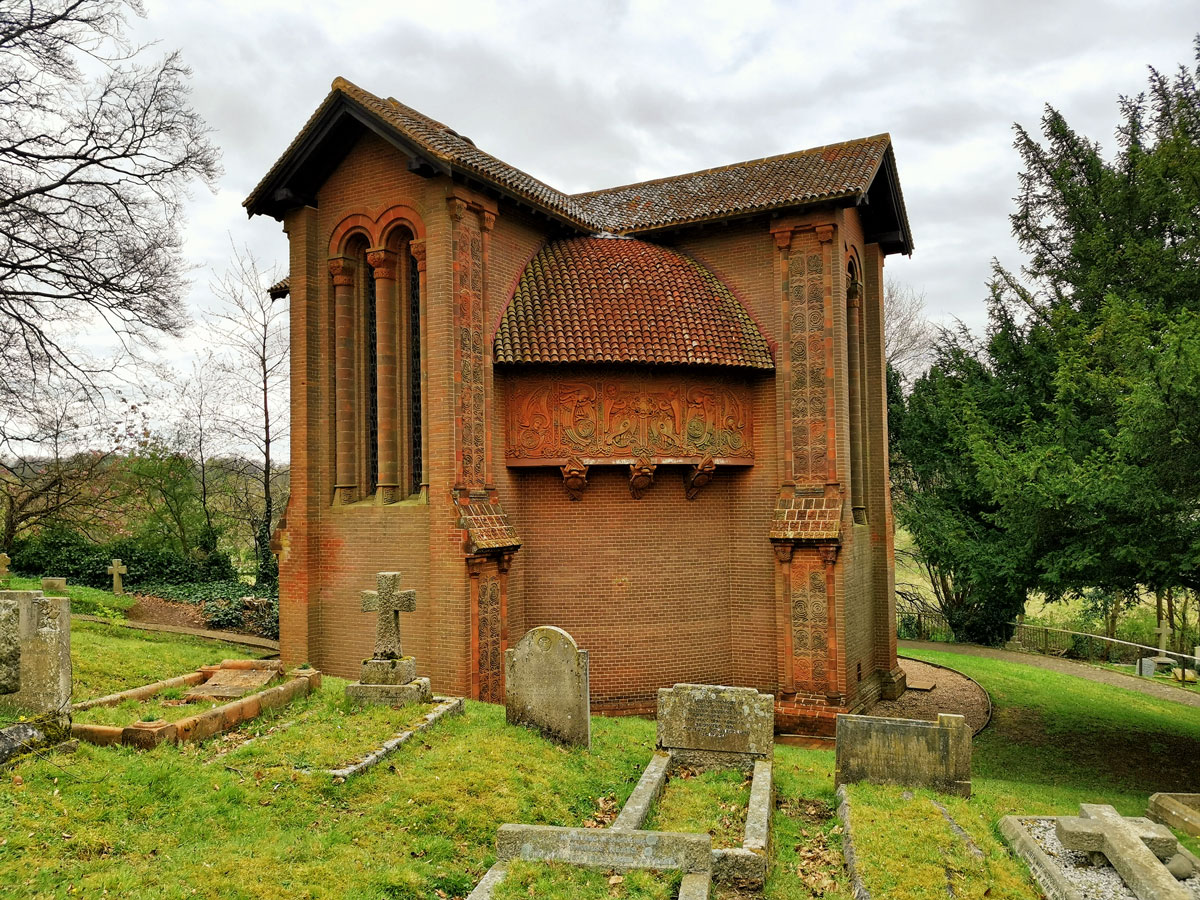
Watts Chapel
On the way to the Devil’s Punch Bowl I stopped off at Watts Chapel. I have posted about this delight before (click on the link), but I had missed one of the friezes (Owl) around the chapel so I wanted to go back and find it.
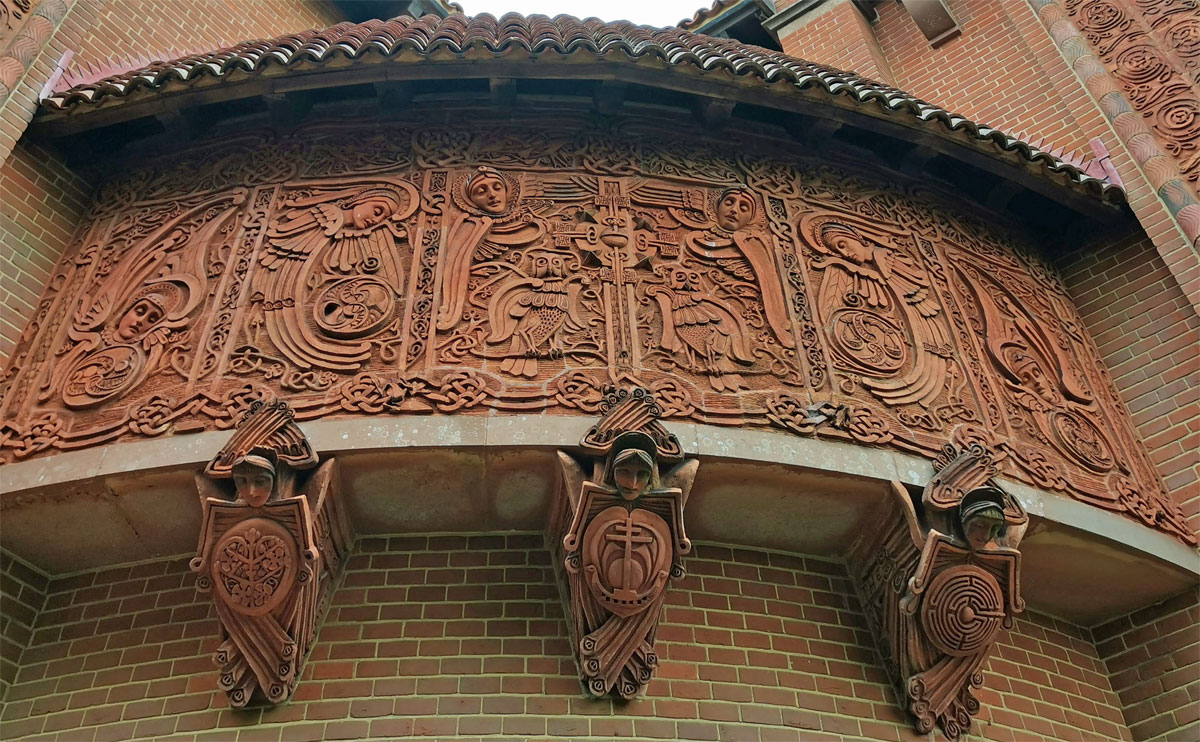
The outside of the building is made up of four large friezes which represent in turn Hope, Truth, Love and Light. Symbolic birds are represented by the peacock (Hope), the owl (Truth), the pelican (Love) and the eagle (Light). Surrounding these are attendant spirits depicted as angel heads holding symbolic discs.Watts Cemetery Chapel – Designed and decorated by Mary Seton Watts this example of Art Nouveau was completed in 1904.
The light wasn’t much better than on my previous visit, but at least it wasn’t raining. I took very similar photos as before, but here are a few more details I captured this time round.
Kingston Street Art
Coming back into Kingston we found some hoardings that had been creatively covered with street art.
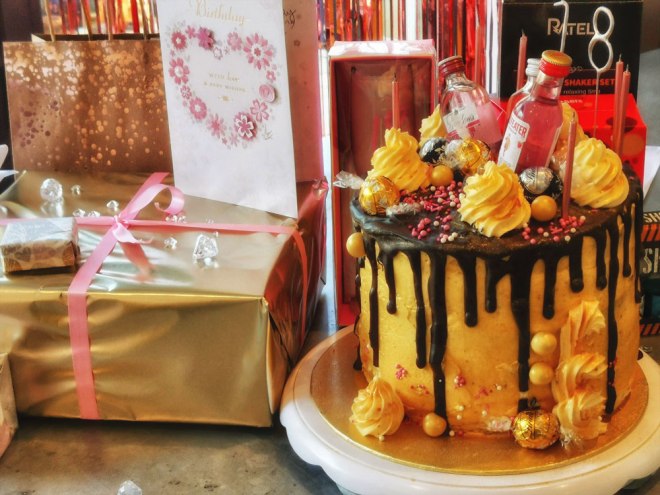
Of course I cannot finish this post without showing you the marvellous cake created by the 18 year old for her birthday, it tasted as good as it looks.
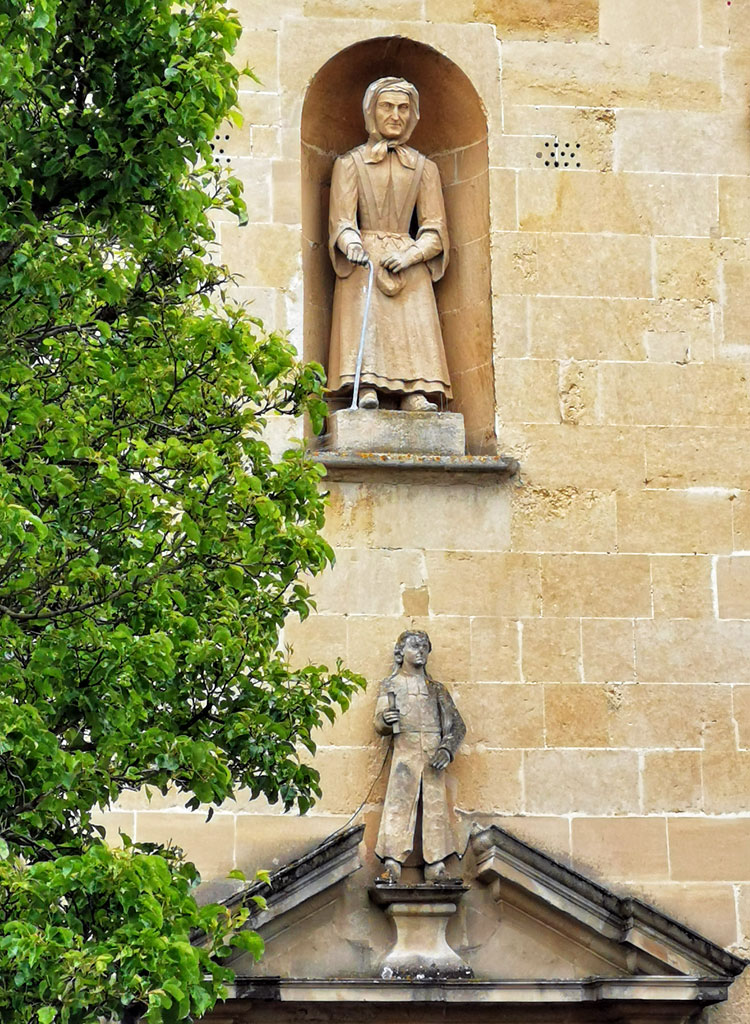
The Blue House, next to the town bridge, is Grade 1 listed; it was formerly the Bluecoat School and Almshouses, named after the colour of the school uniforms. Built in 1726 at a cost of £1,401 8s 9d, it replaced an almshouse dating from 1461 and rebuilt in 1621. The Blue House provided a home for twenty widows and schooling for twenty boys.
The front of the building is adorned by two statues, of a man and a woman, indicating the building’s dual purpose. The building’s role as a school came to an end in 1921 and it now provides studio and one-bedroom flats for seventeen elderly residents. Wikipedia
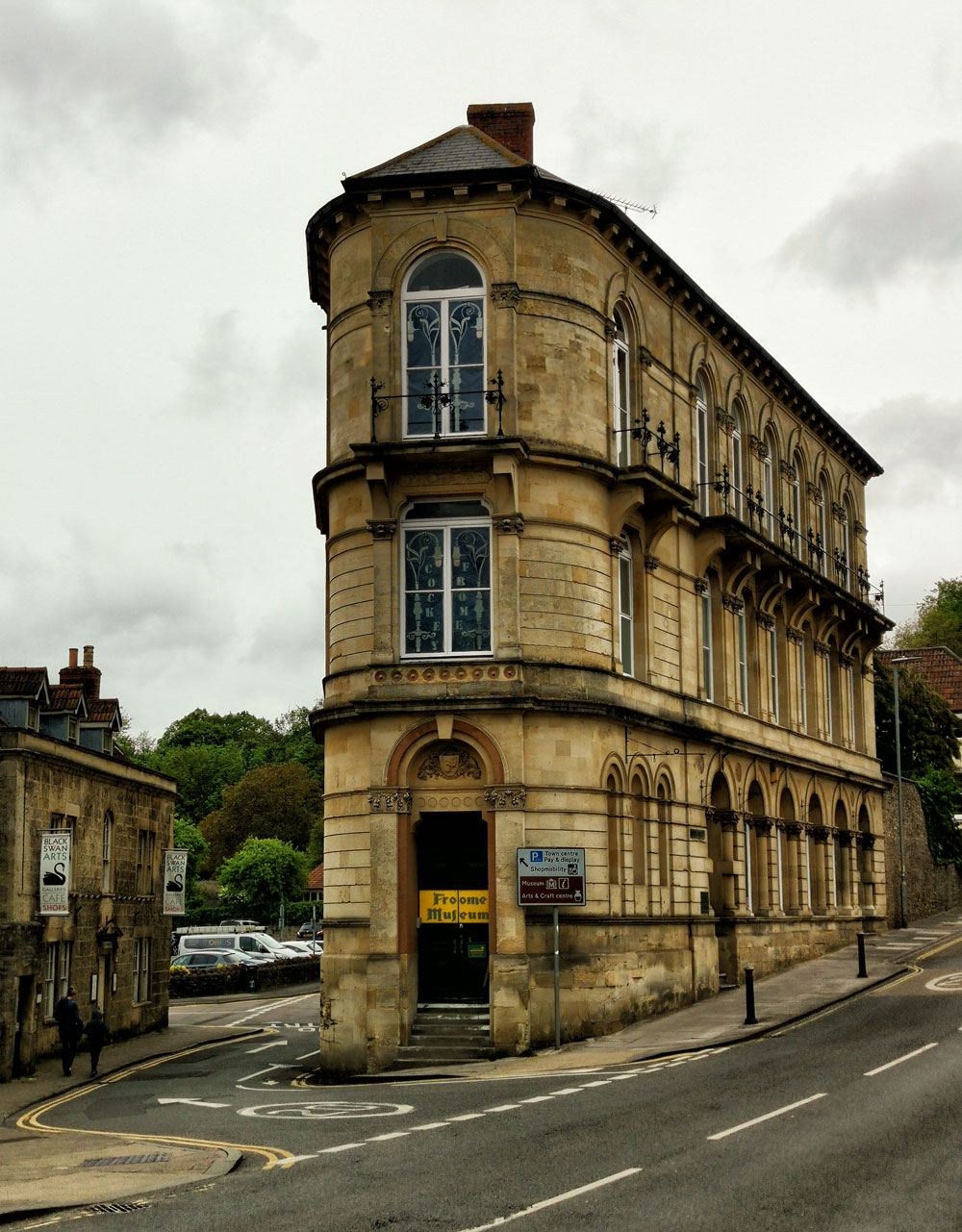
The Italianate building was built as a Literary and Scientific Institute in 1865 for John Sinkins. The architect was J Hine and it was built by the company Carr and Pickford. It is a Grade II listed building. It houses a collection of local history and has a particular important collection of artefacts from the bronze foundry of J.W.Singer. A Cockey lamp is on show, with its art nouveau style; more than 60 can still be seen around the town. (Edward Cockey (1781–1860) was an industrial entrepreneur in Frome, Somerset, England, descended from a local family of metalworkers.) Wikipedia