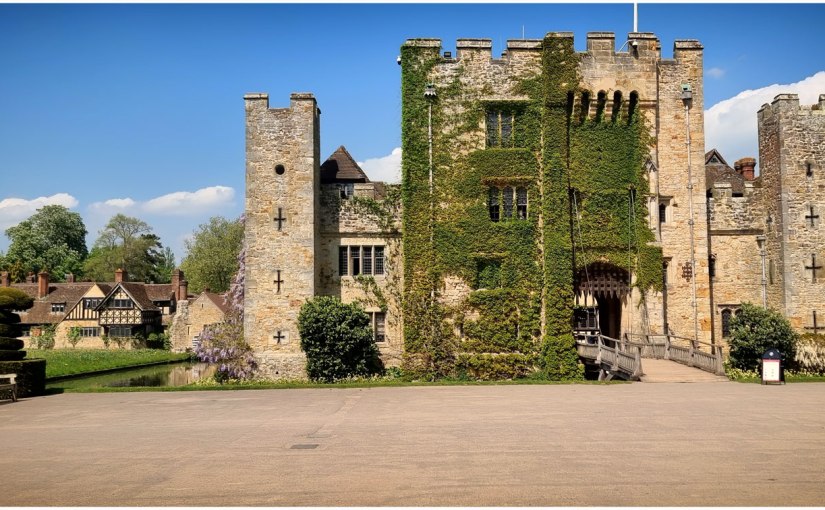
Hever Castle and Gardens: Part Three

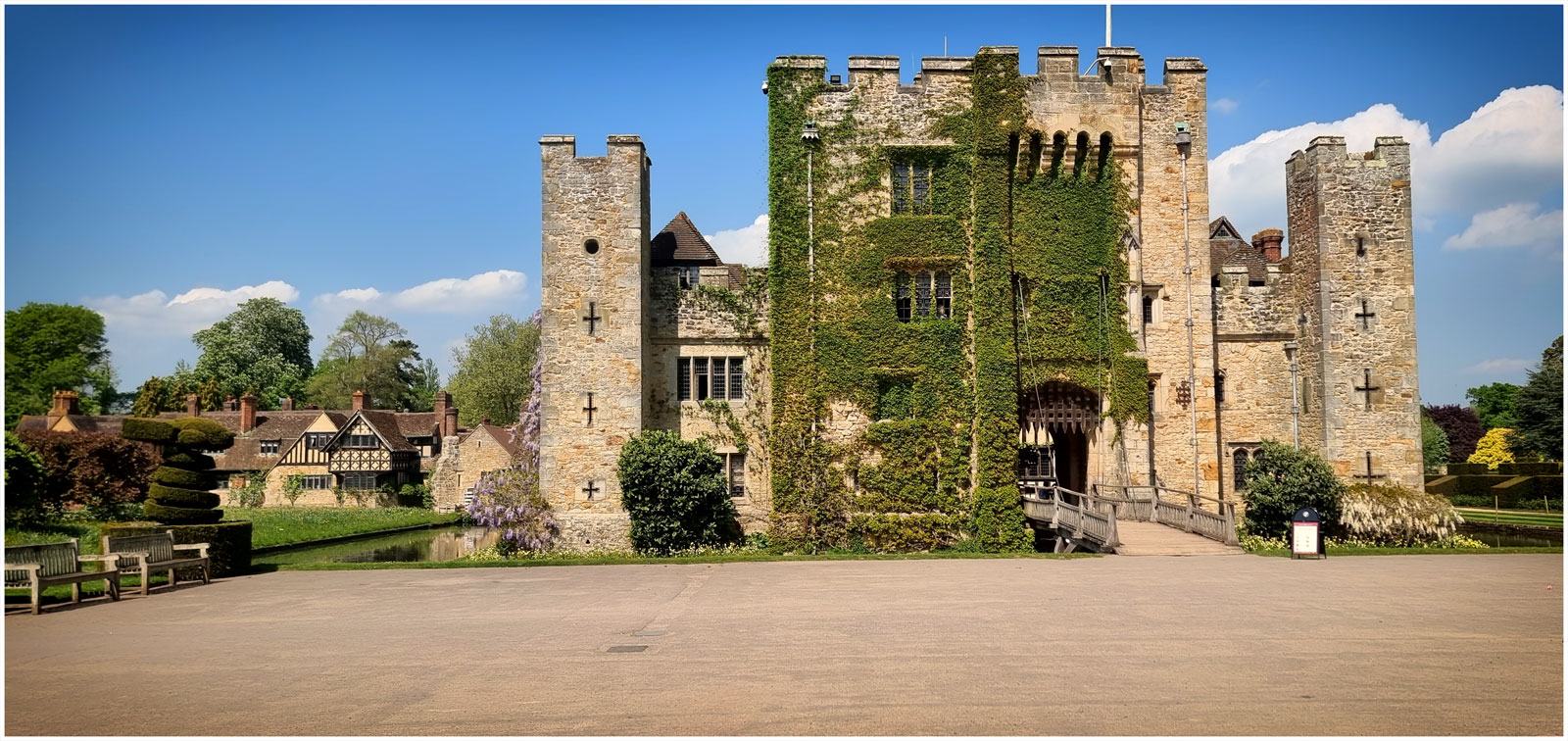
If you love your Tudor history, Hever Castle is the perfect place to get up close to several significant pieces of 16th century history. Built in 1271, it is the childhood home of Anne Boleyn, the second wife of Henry VIII who was Queen for only 1,000 days and mother of Elizabeth I. Anne’s family name was Bullen but when she was in France in the king’s court, she decided to adopt the way a French person would spell it phonetically.

As well as the beautiful gardens the castle itself is well worth visiting. It’s not very big for a castle, and some of the rooms are quite cosy you could say. Audio guides are included in Castle admission prices. They are available in English, French, German, Dutch, Russian and Chinese.
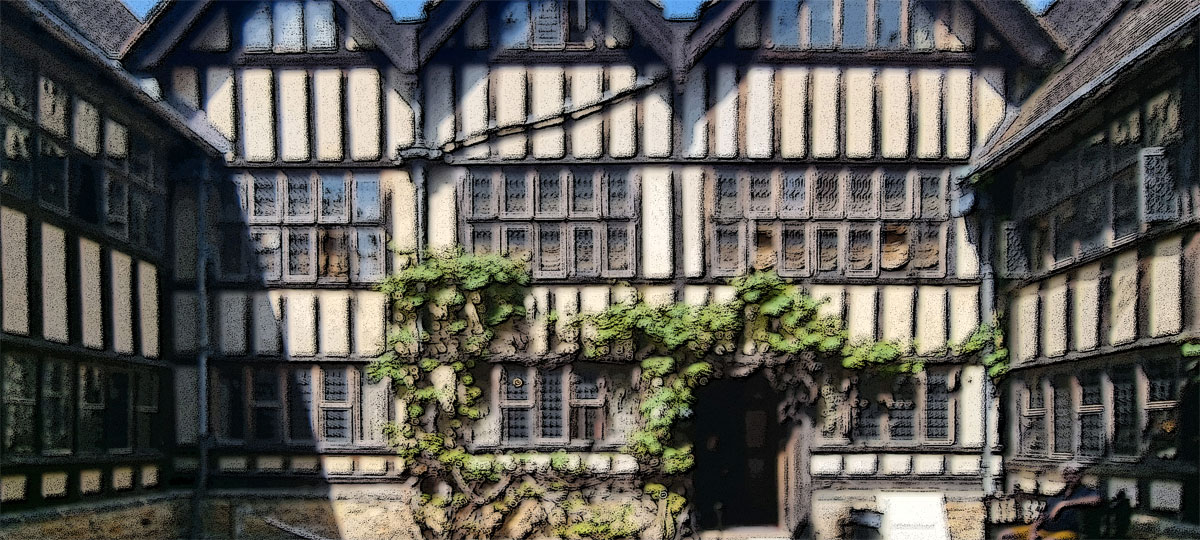
Inner Courtyard
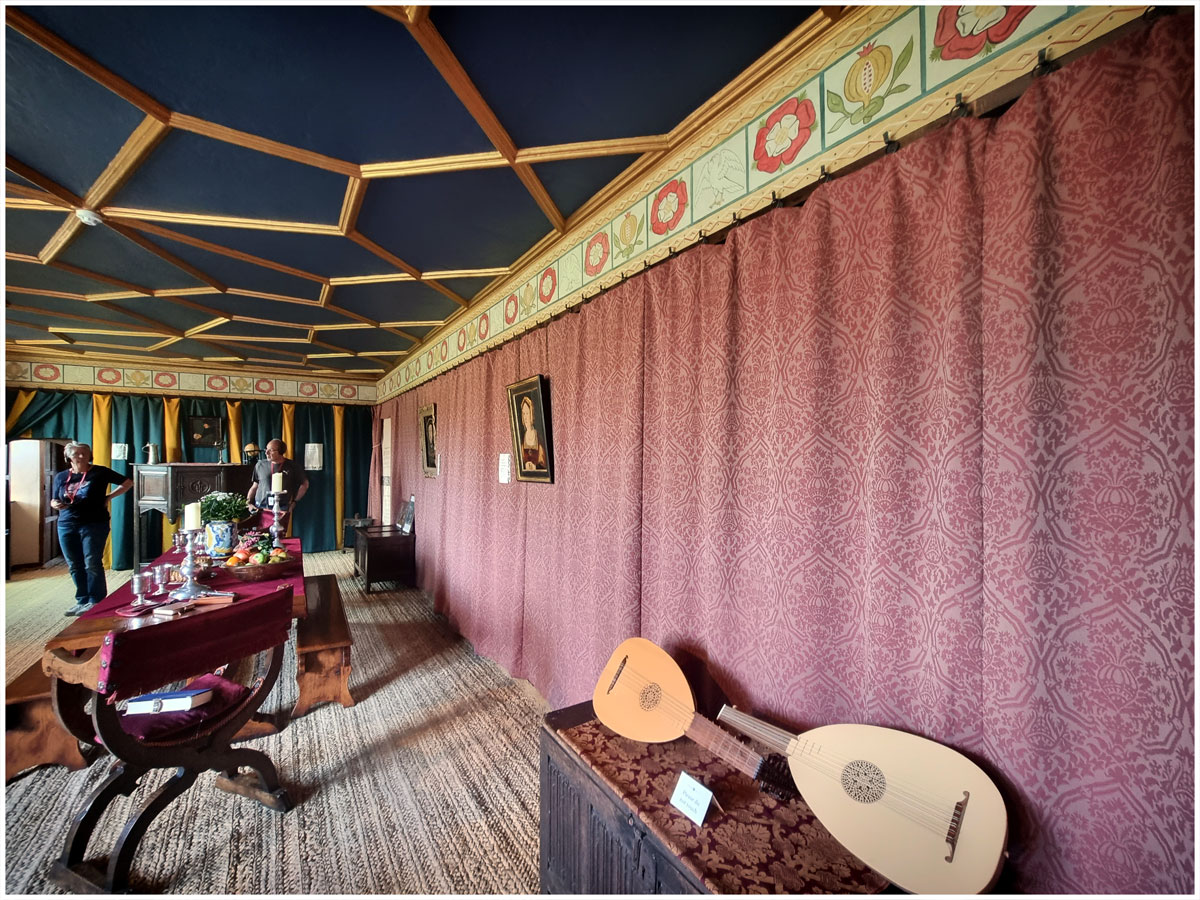
The Great Chamber – used by the Boleyn family for entertainment. music, reading, poetry readings and occasional dining.

I’m not usually keen on photographing interiors and especially when I only have my phone with me as the light can be poor, but I do like to grab shots of little details that I find interesting.
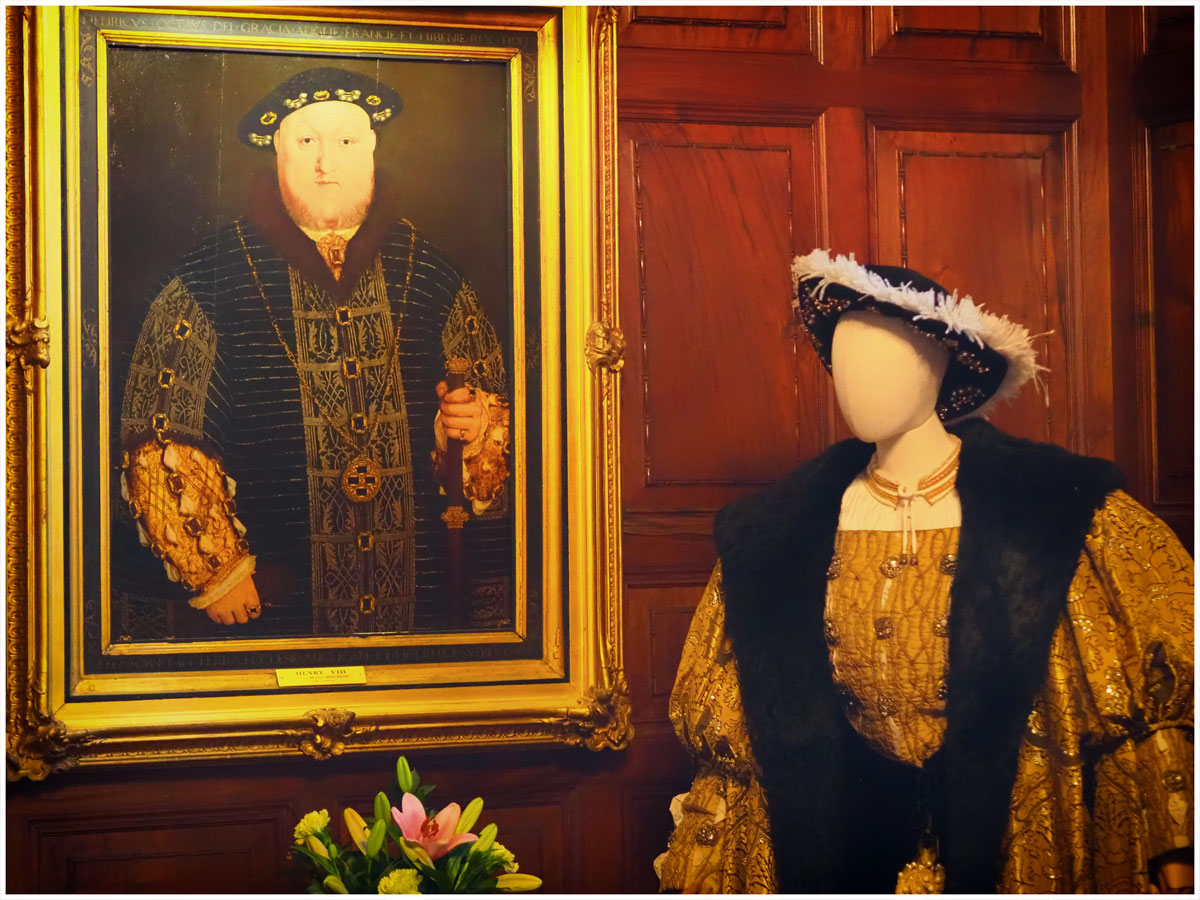
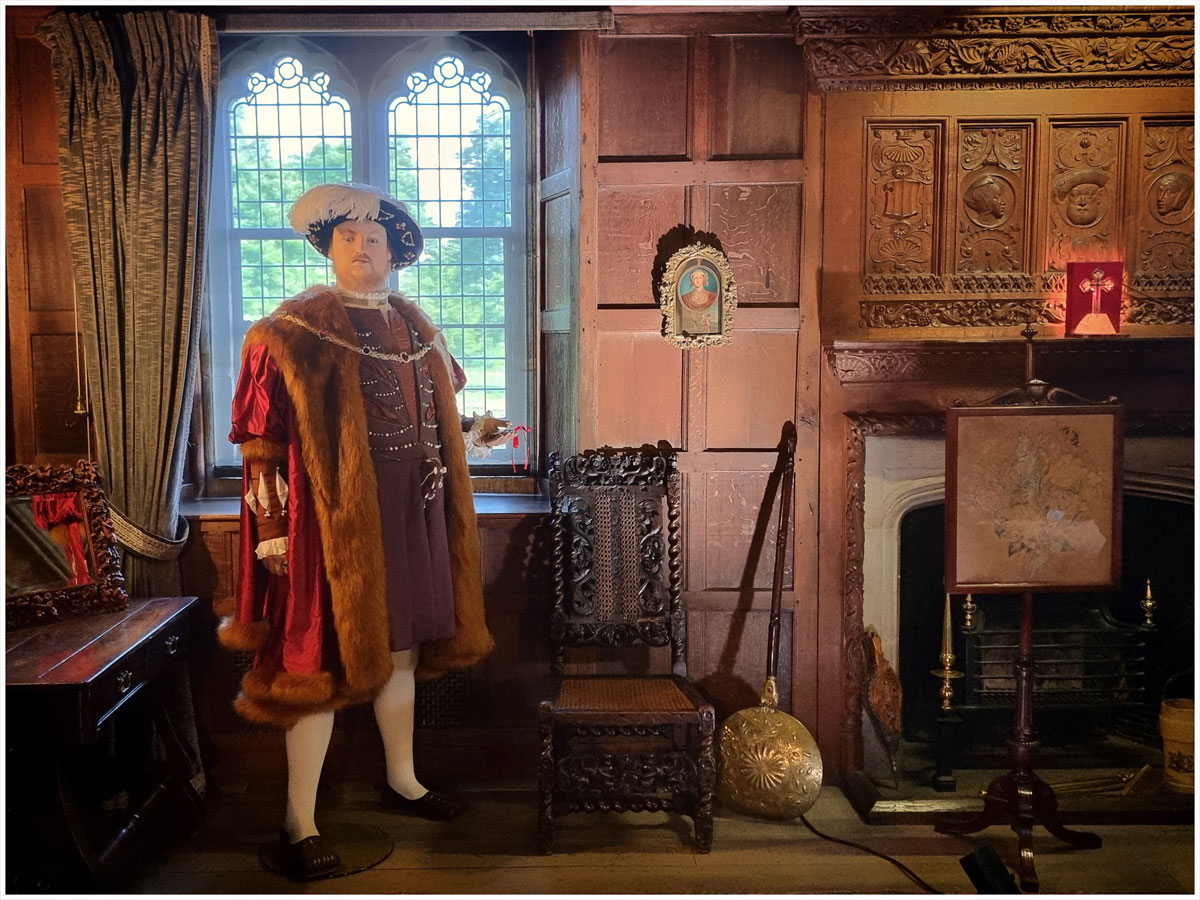
Henry VIII portrait and the costume as used in Wolf Hall and The Mirror and the Light (TV series)
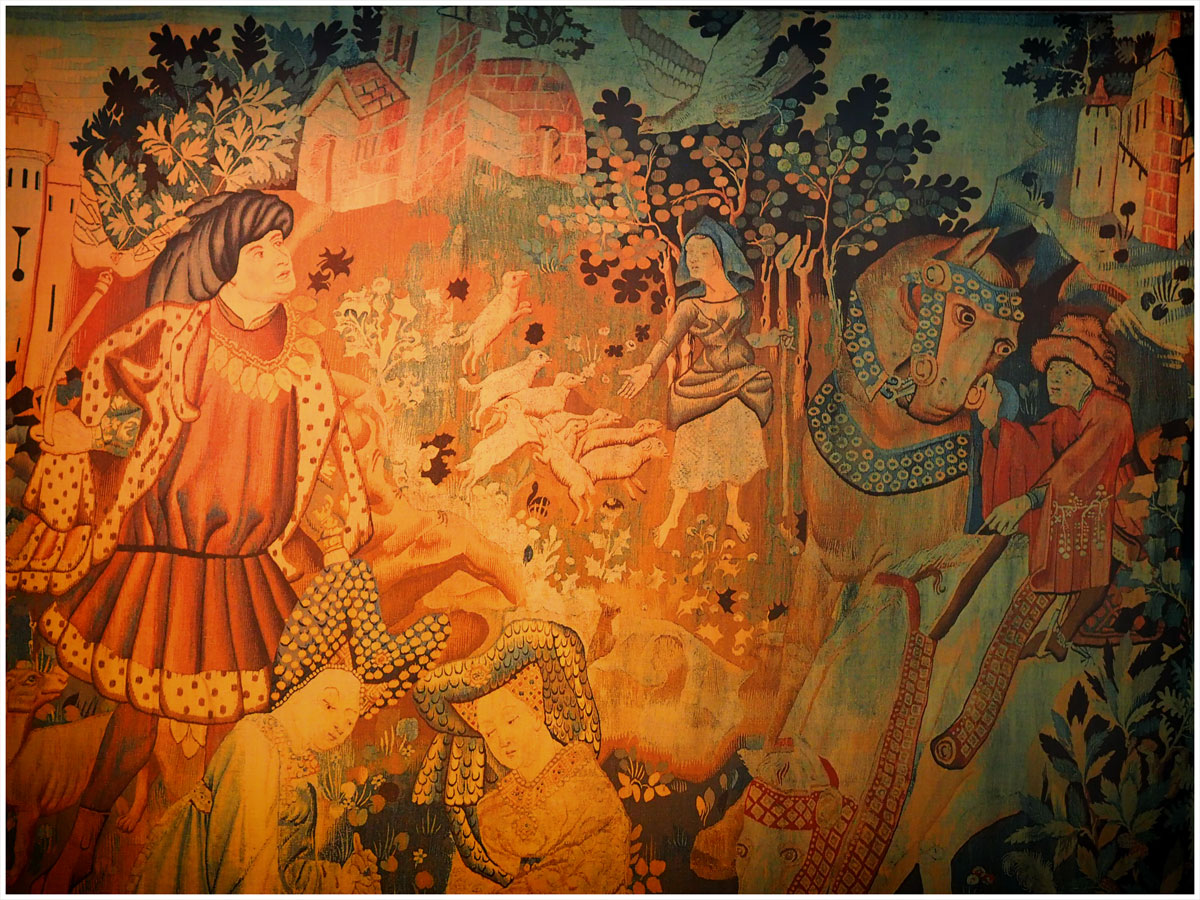
Wall tapestry
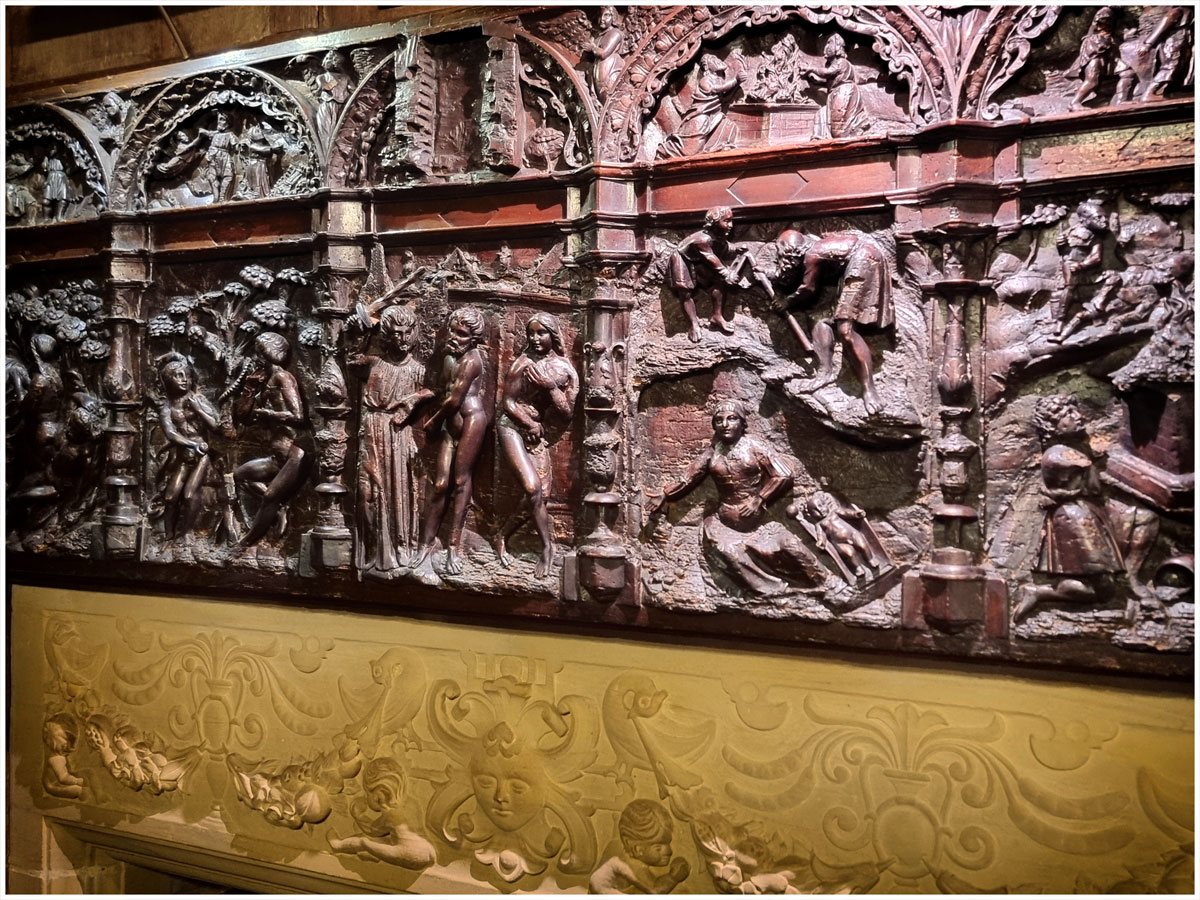
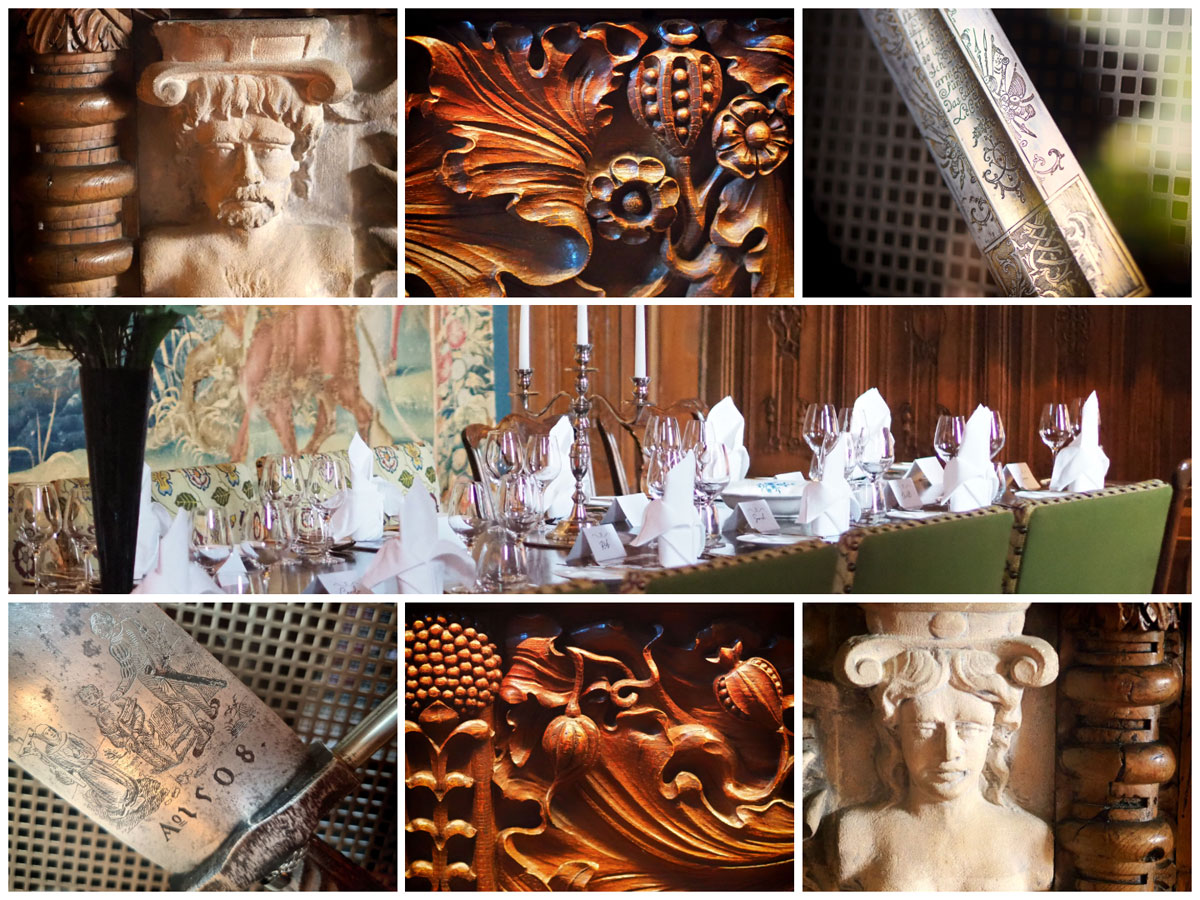
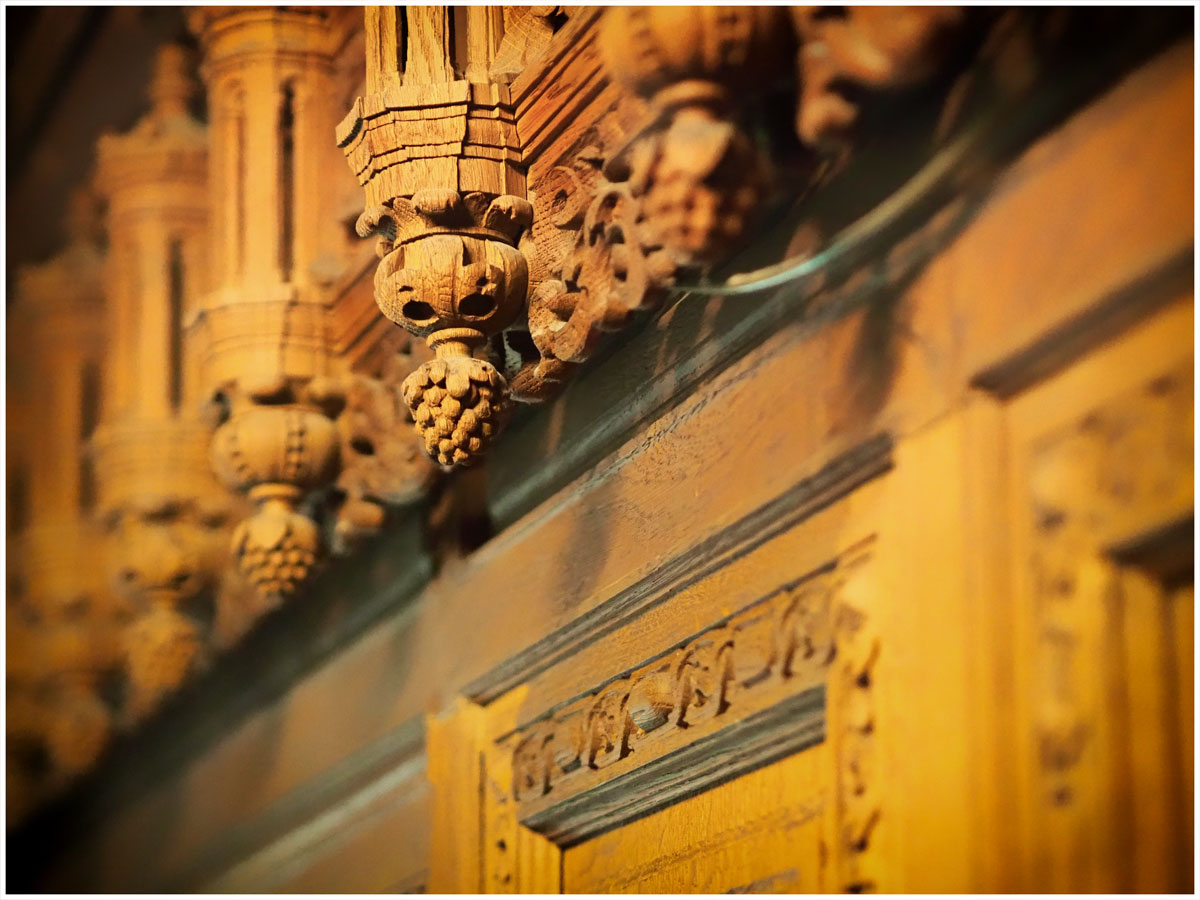
Carvings above a fireplace
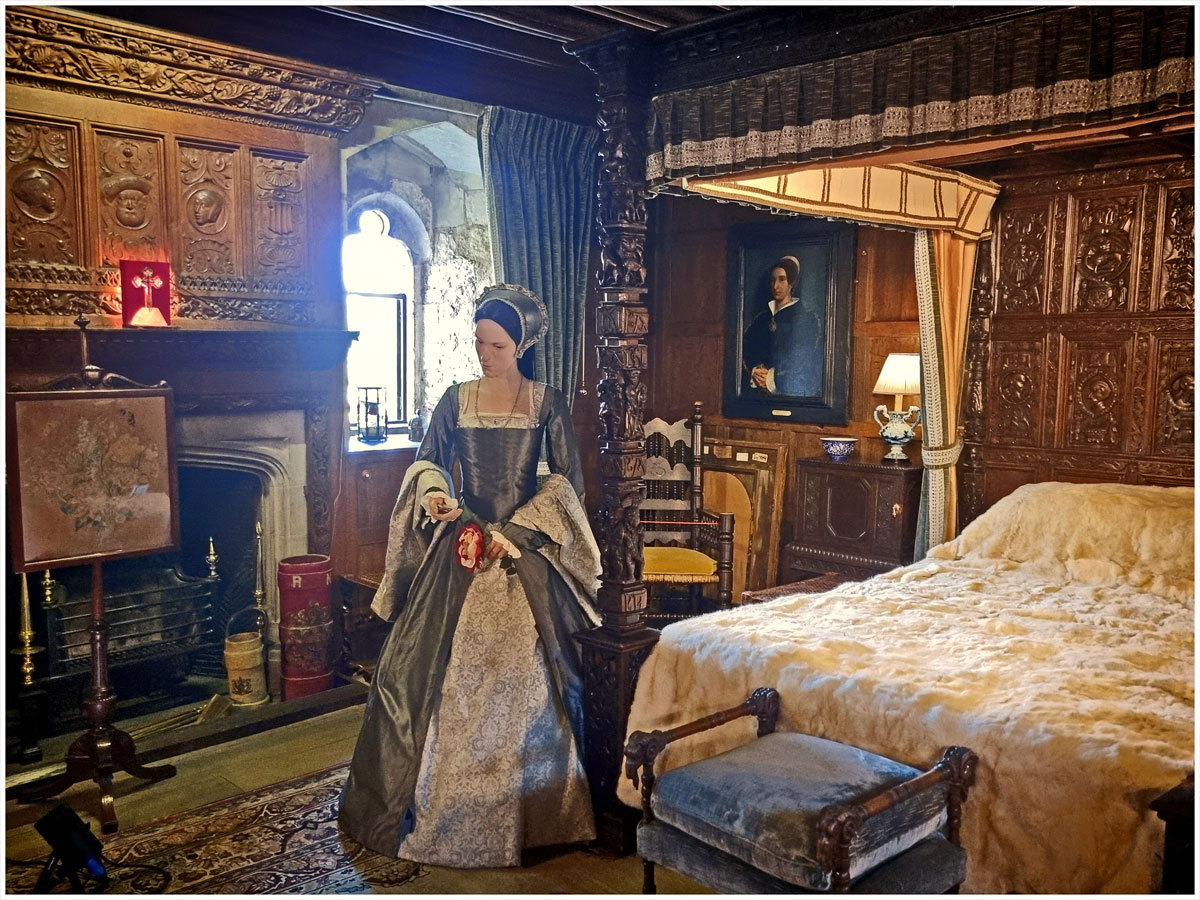
King Henry VIII’s Bedchamber, though it is believed that he would never have actually stayed the night here. The costume of Anne Boleyn from Wolf Hall and The Mirror and the Light (TV series)
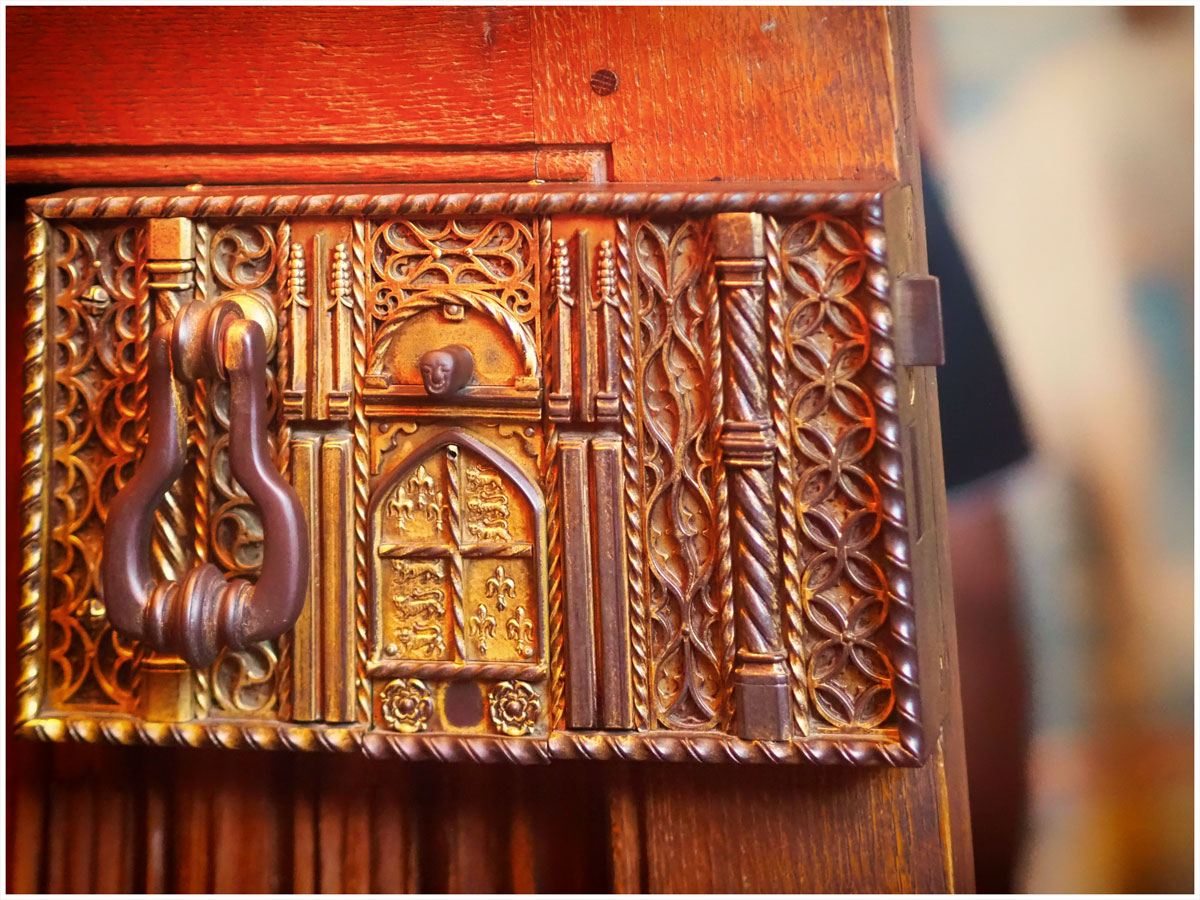
Intricate design on the door of the Great Hall
Another of Henry VIII costume in what is known as his bedchamber
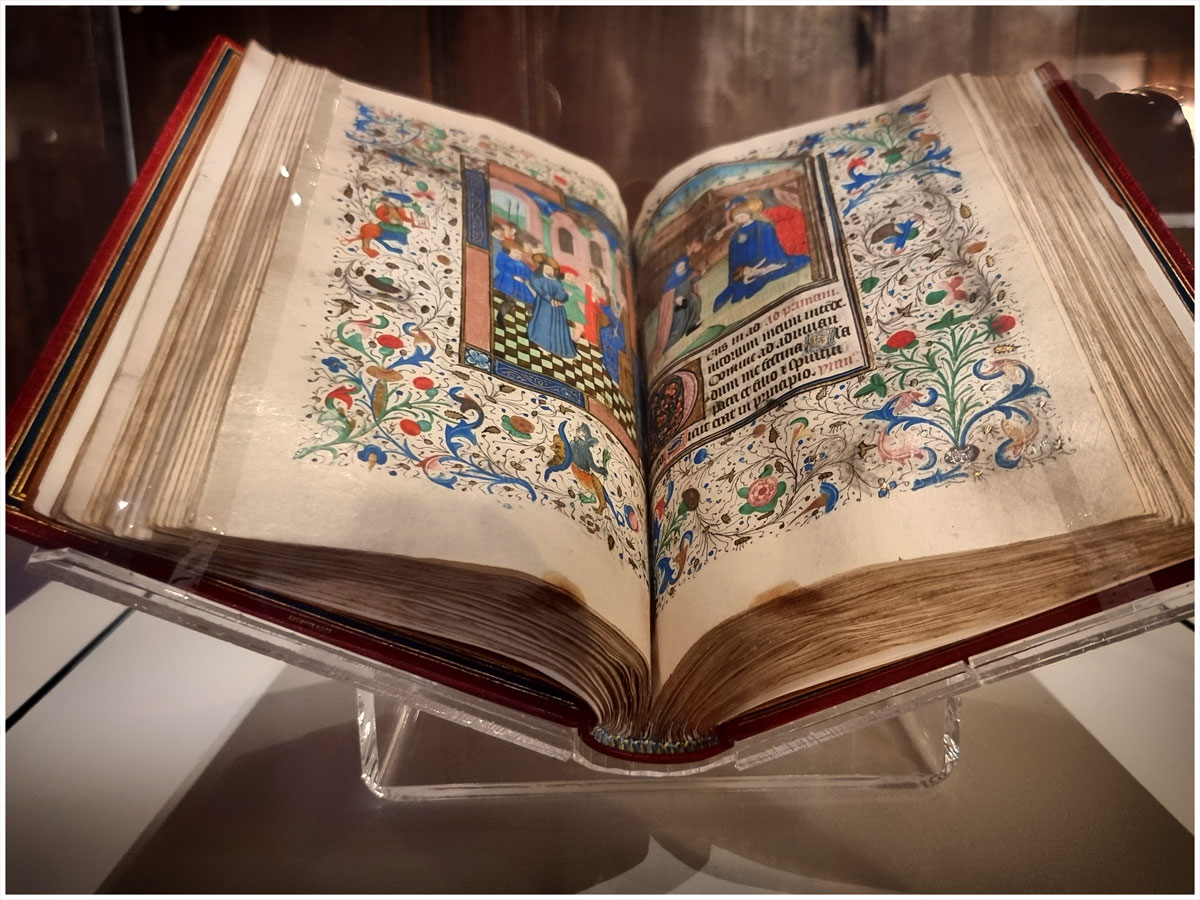
Anne Boleyn’s Book of Hours c, 1425 – 50 This prayer book was hand-written and illuminated in Bruges. Inside Anne has written her famous inscription “le temps viendra” (the time will come). She signed her name Anne Boleyn and and drew a small astrolabe or armillary sphere.
More detail of carvings on fireplaces, the dining table in the Great Hall and two German swords used for beheadings.

It takes about an hour to go around the castle and the Castle is usually busiest in the morning and early afternoon. I would recommend late afternoon to avoid school parties.

William Waldorf Astor used his fortune to restore and extend the Castle in the early 20th century.

[Wolf Hall is a British television series adaptation of two of Hilary Mantel’s novels, Wolf Hall and Bring Up the Bodies, a fictionalised biography documenting the life of Thomas Cromwell in the court of Henry VIII. The second series was adapted from The Mirror & the Light, the final novel in the trilogy. Both are excellent series and available in the UK on iPlayer.]

If you want to know more about Hever Castle,  Anne Boleyn and the rooms in the castle then I recommend visiting the website (link below).

Hever Castle & Gardens
Hever
Edenbridge
Kent TN8 7NG
Hever Castle and Gardens: Part Two

Although we didn’t manage to see all of the beautiful gardens we tried our best! Here are a few more photos from the estate.

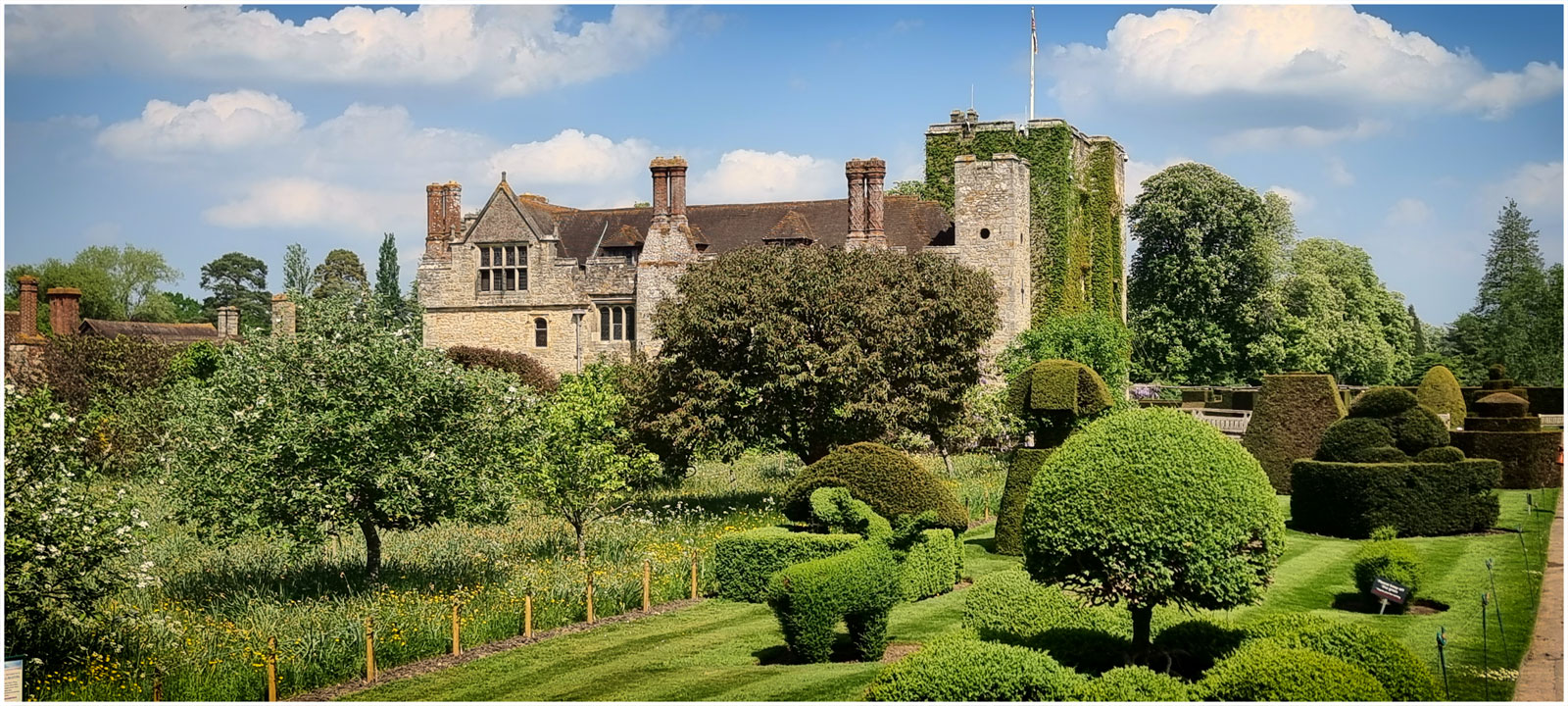
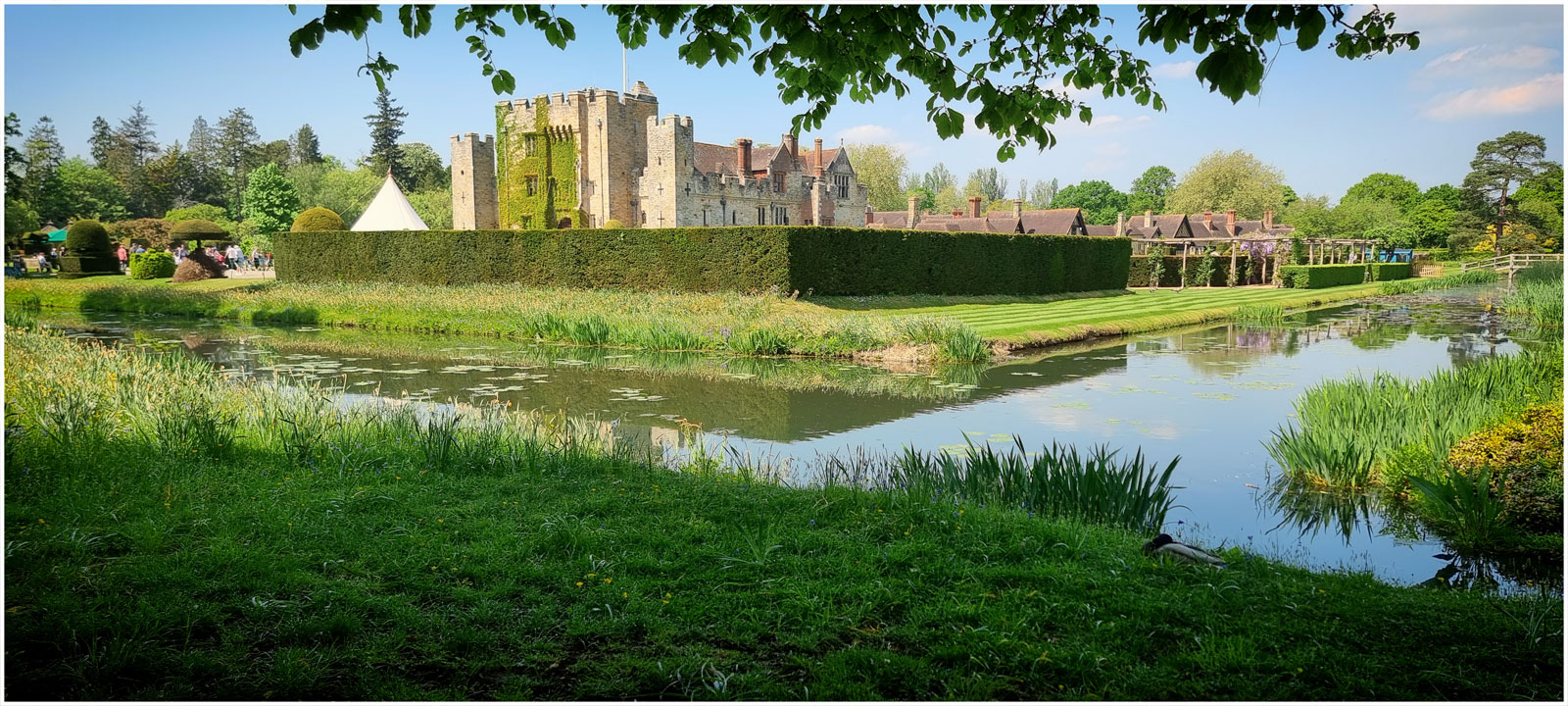
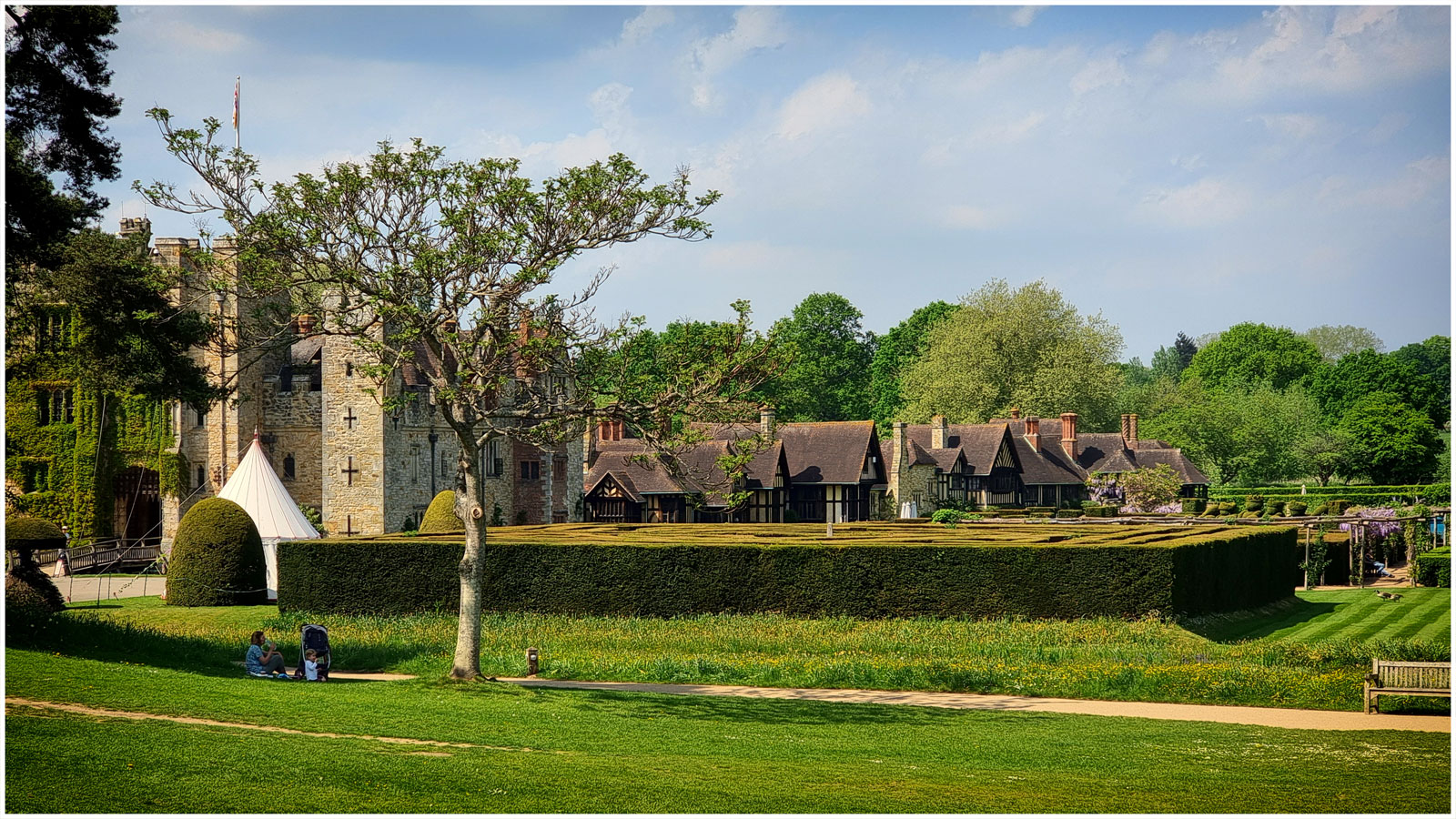
The Castle and outer moat and maze
A closer view – if you click on this image you might be able to make out the topiary chess set on the far right in the Tudor Garden
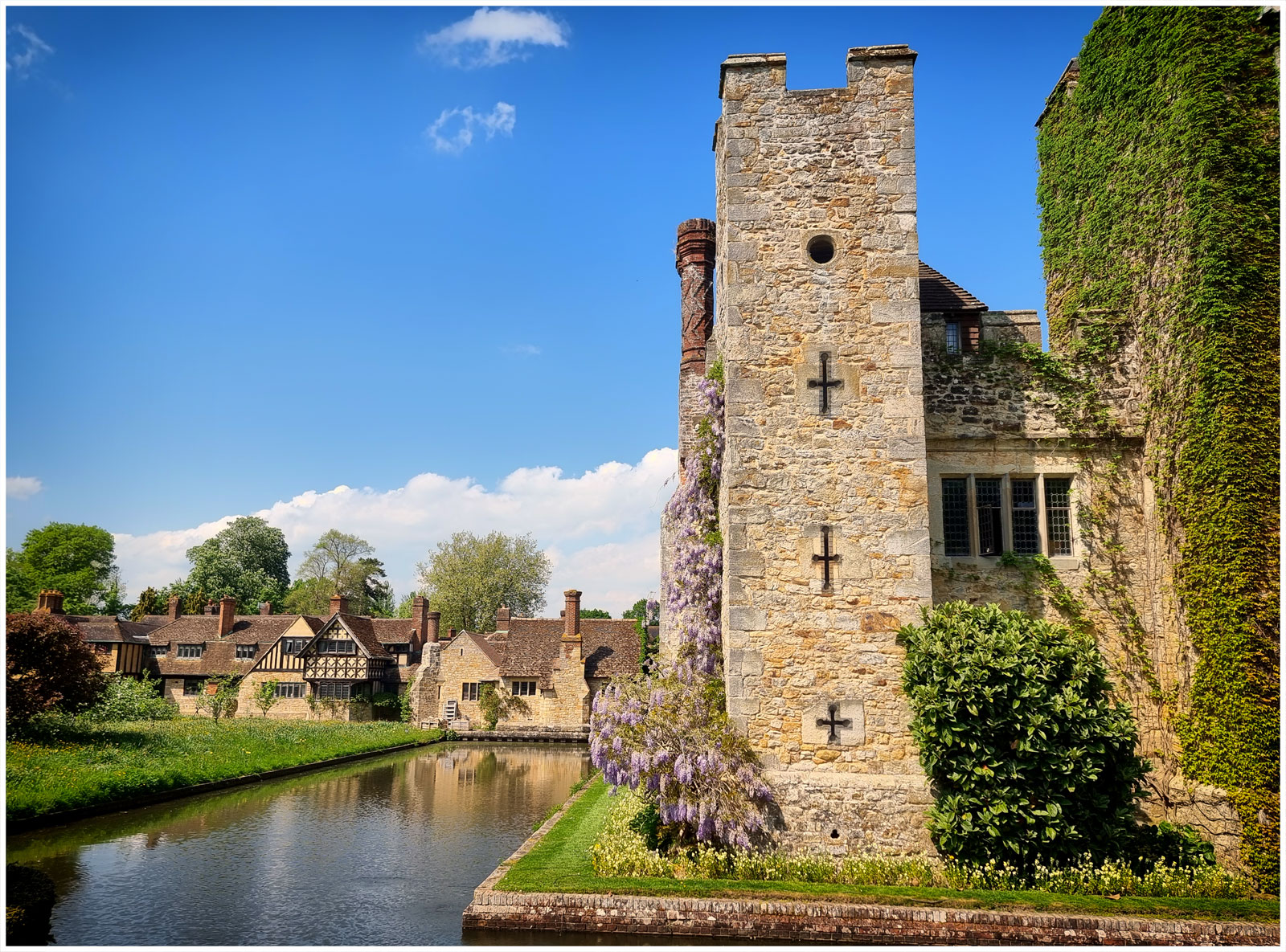
One of the towers and the inner moat
Castle from the opposite side and topiary
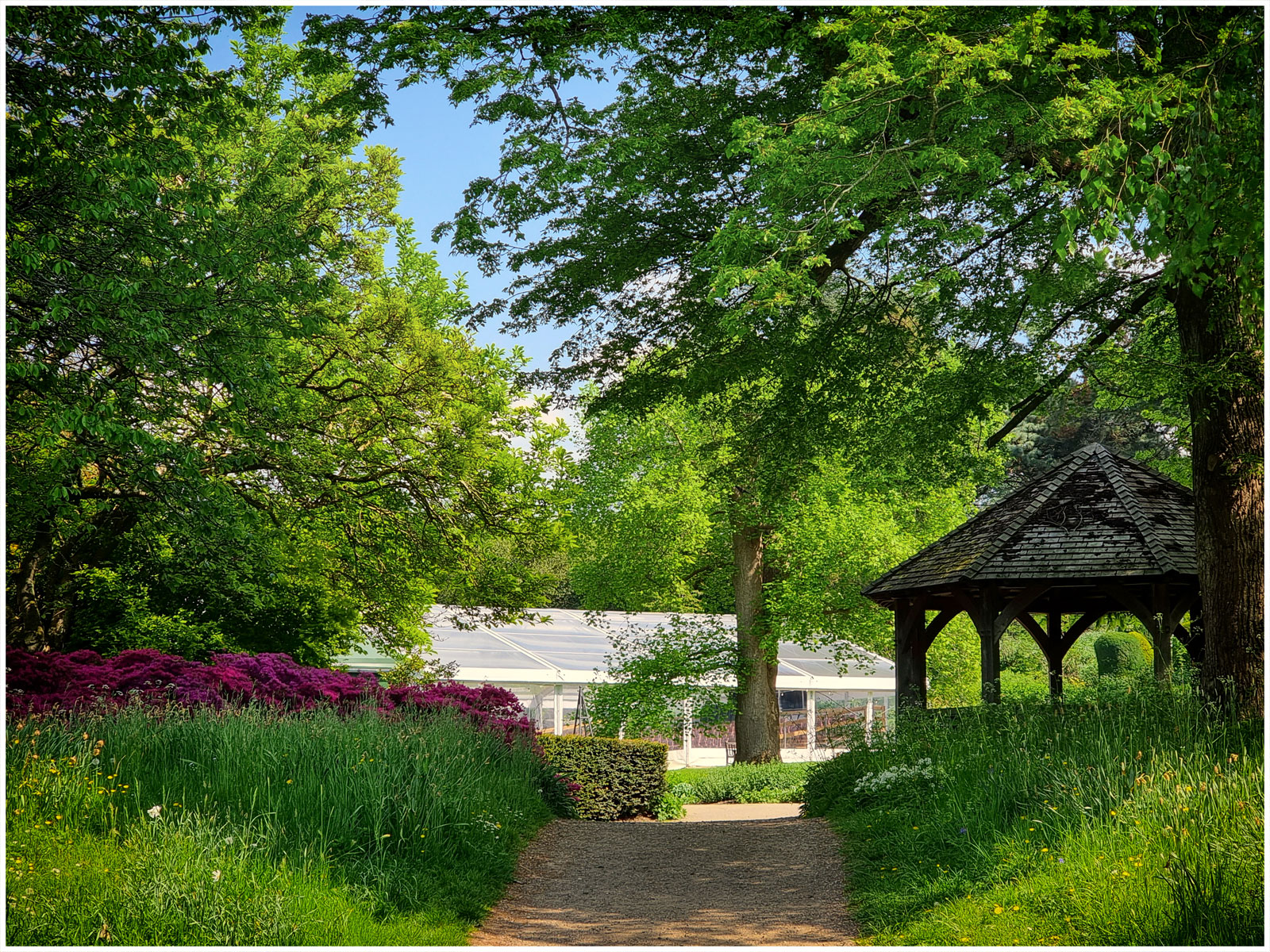
Shady area close to Anne Boleyn’s Walk – and the festival theatre
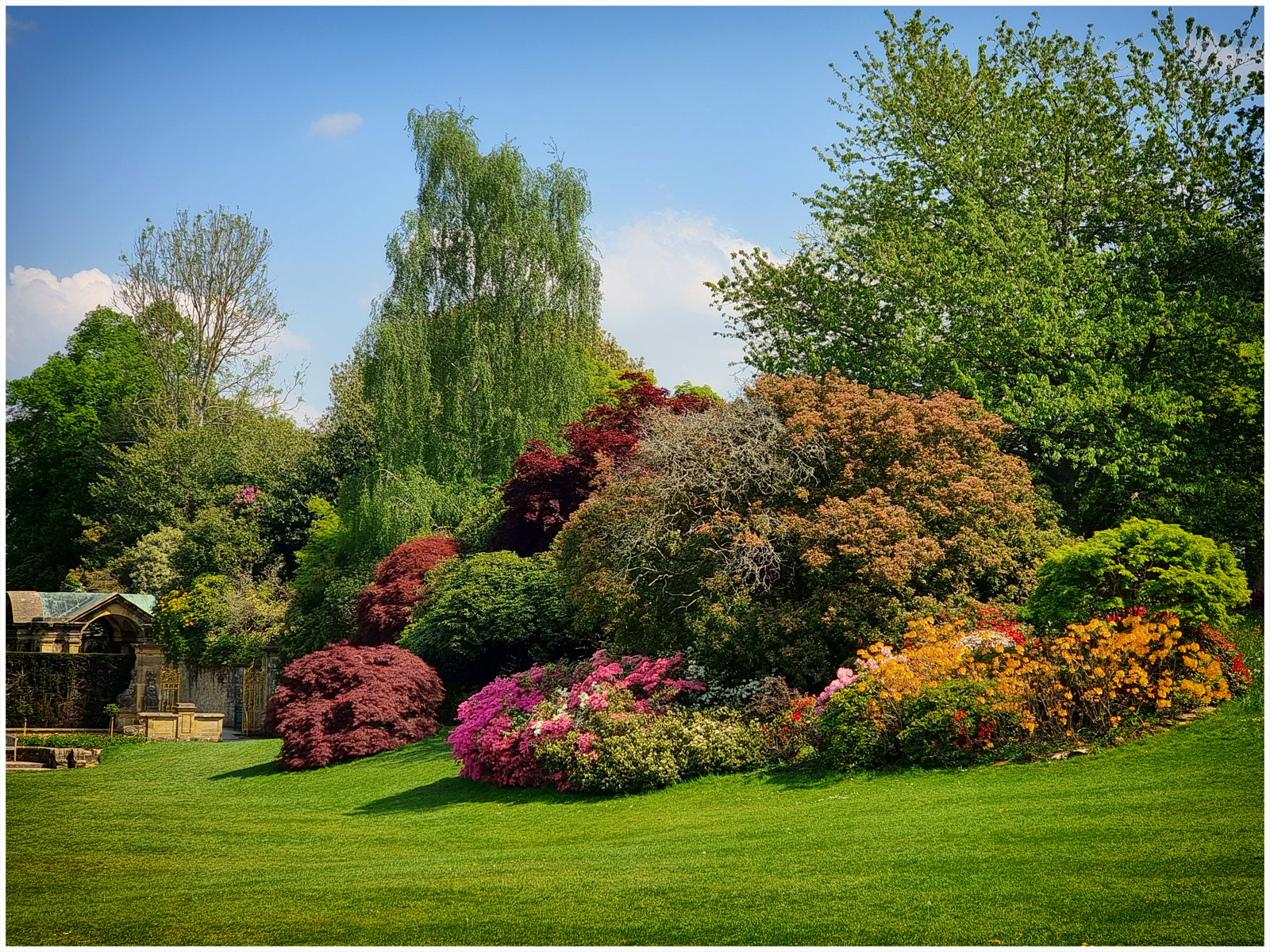
Rhododendrons and Azaleas
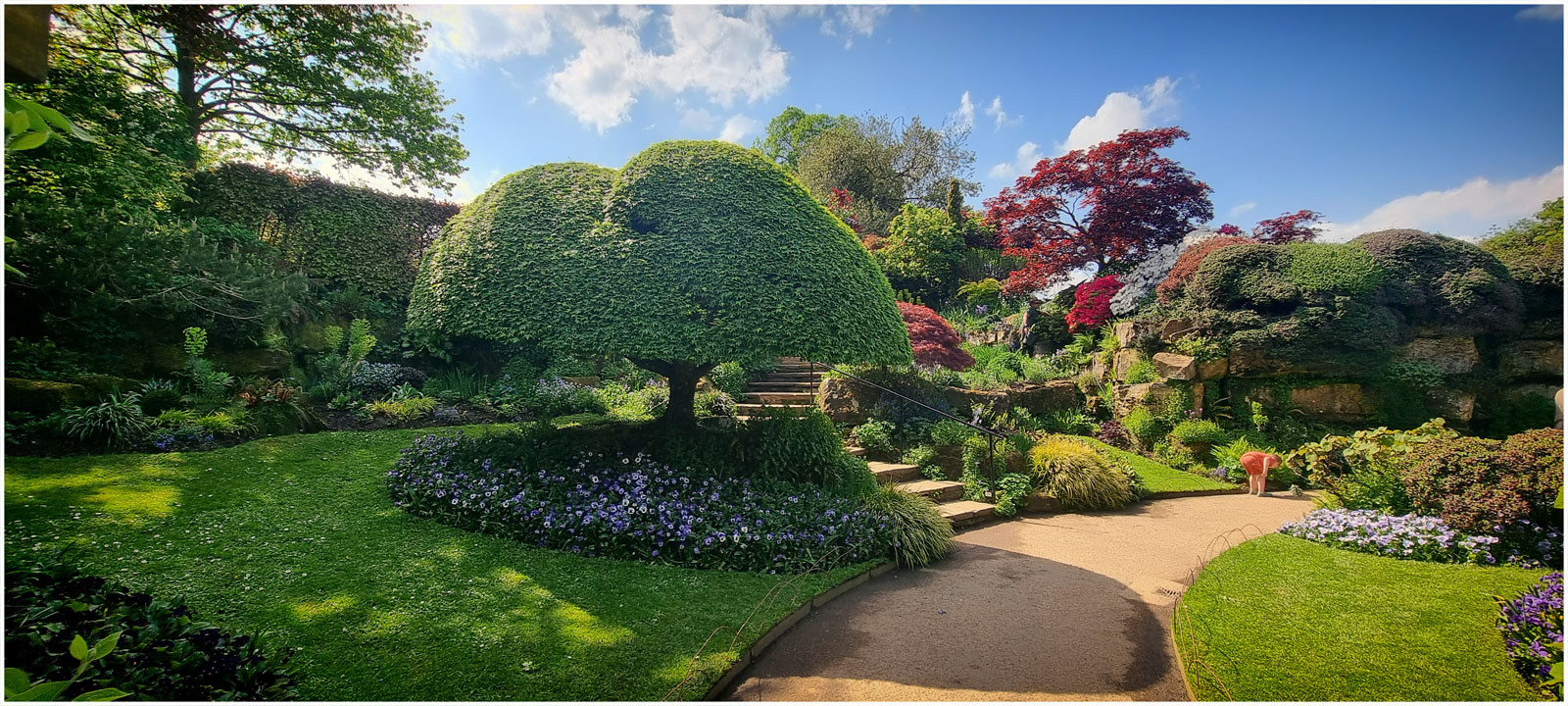
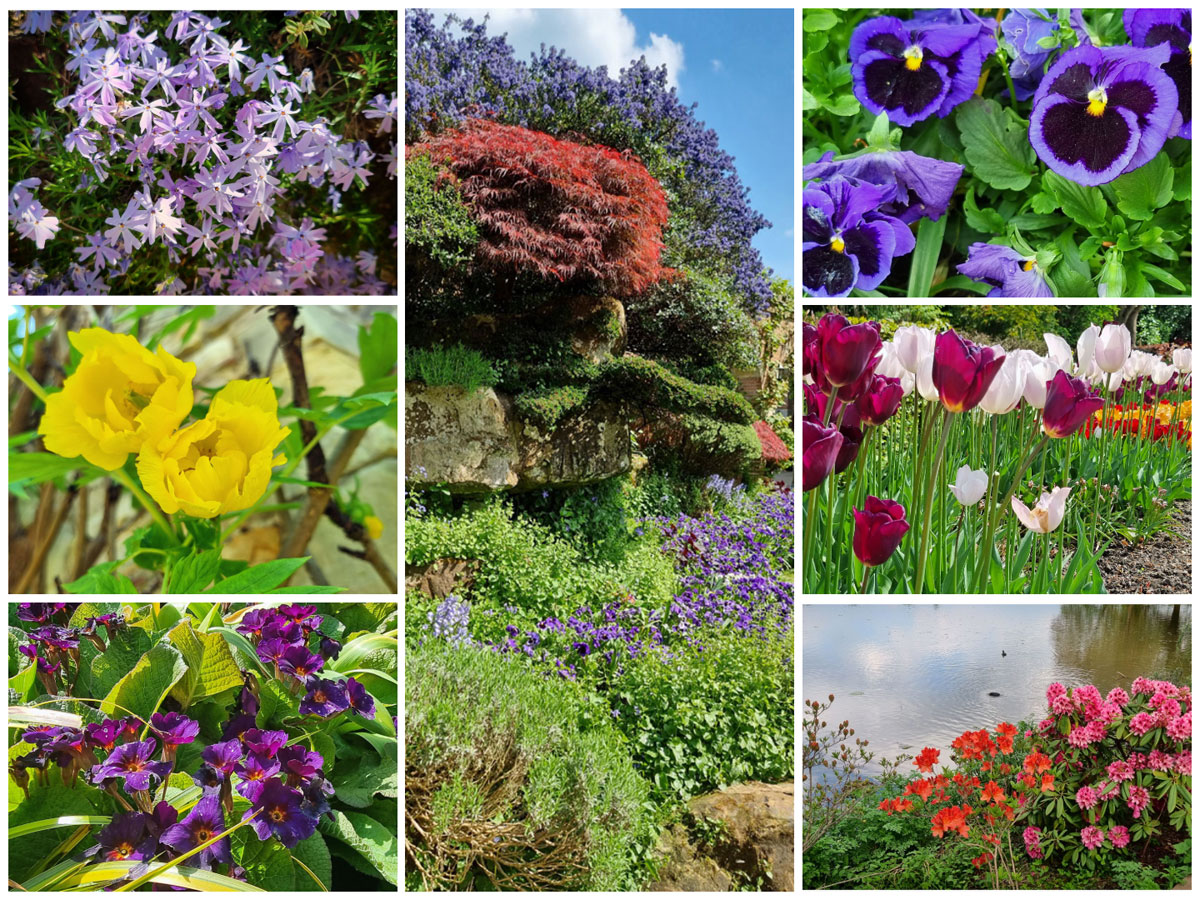
The Blue Corner – The plants are concentrated around huge rocks and steps leading to Sisters’ Pool Lawn and include blue hydrangeas, ceanothus and blue seasonal perennials.
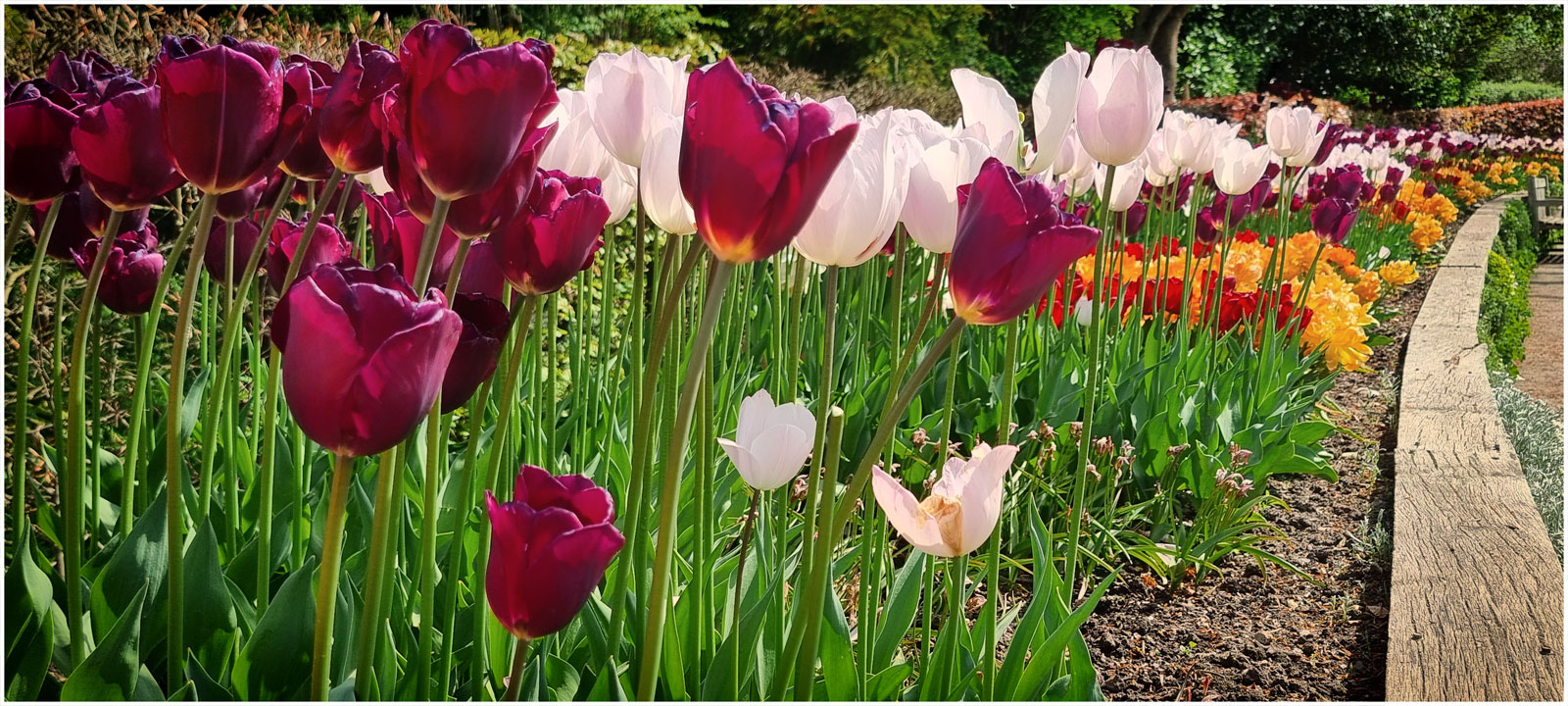
Hundreds of tulips in the border leading to the Two Sister’s Lawn and Pool
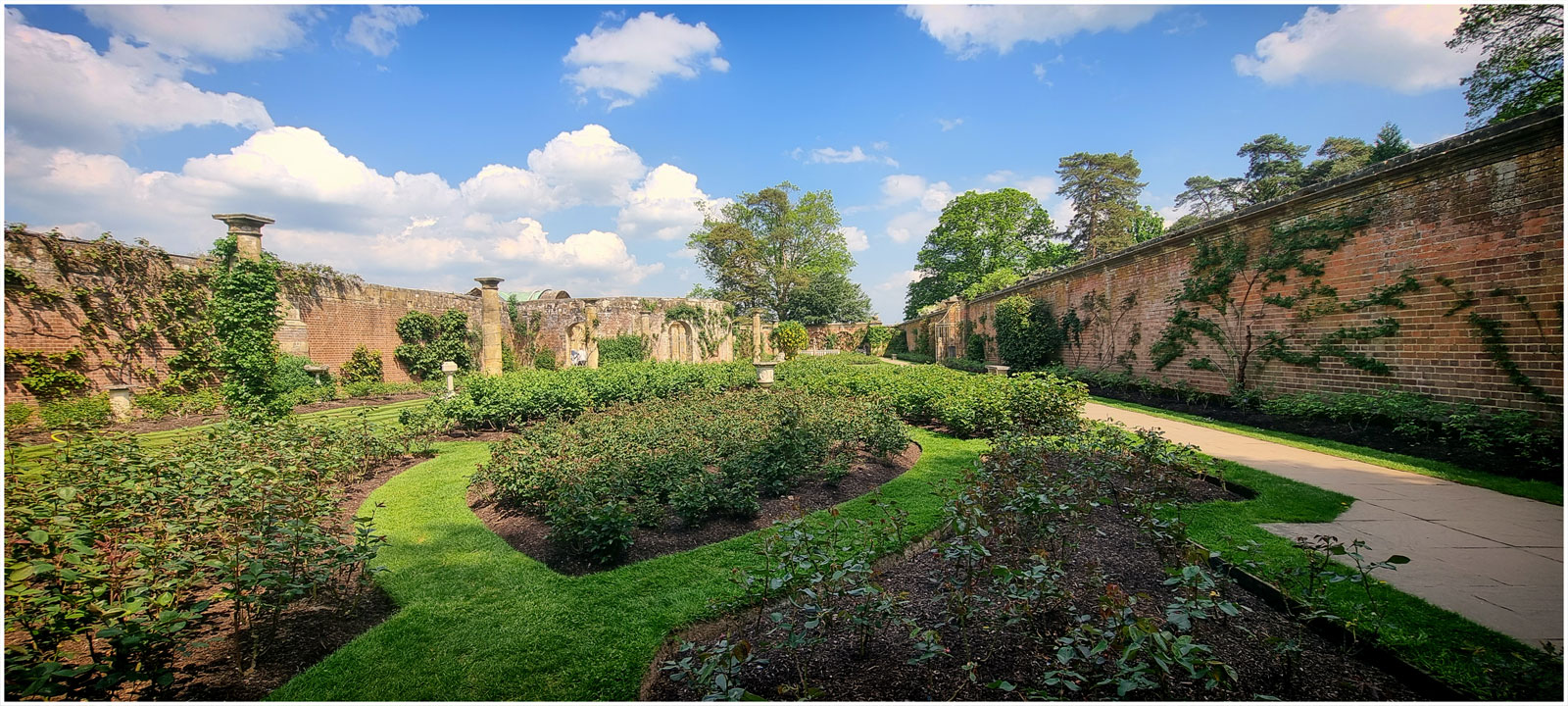
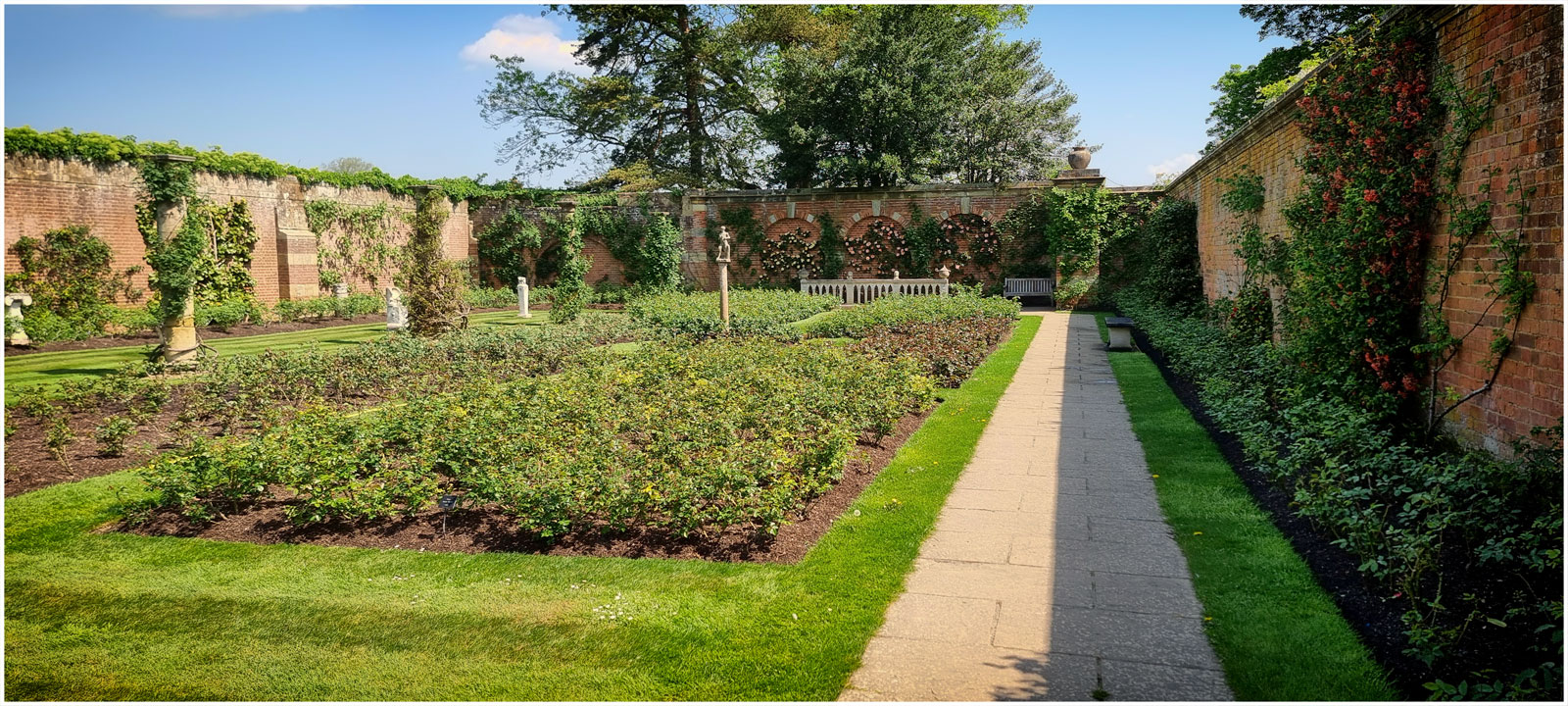
Rose Garden – best in June to September
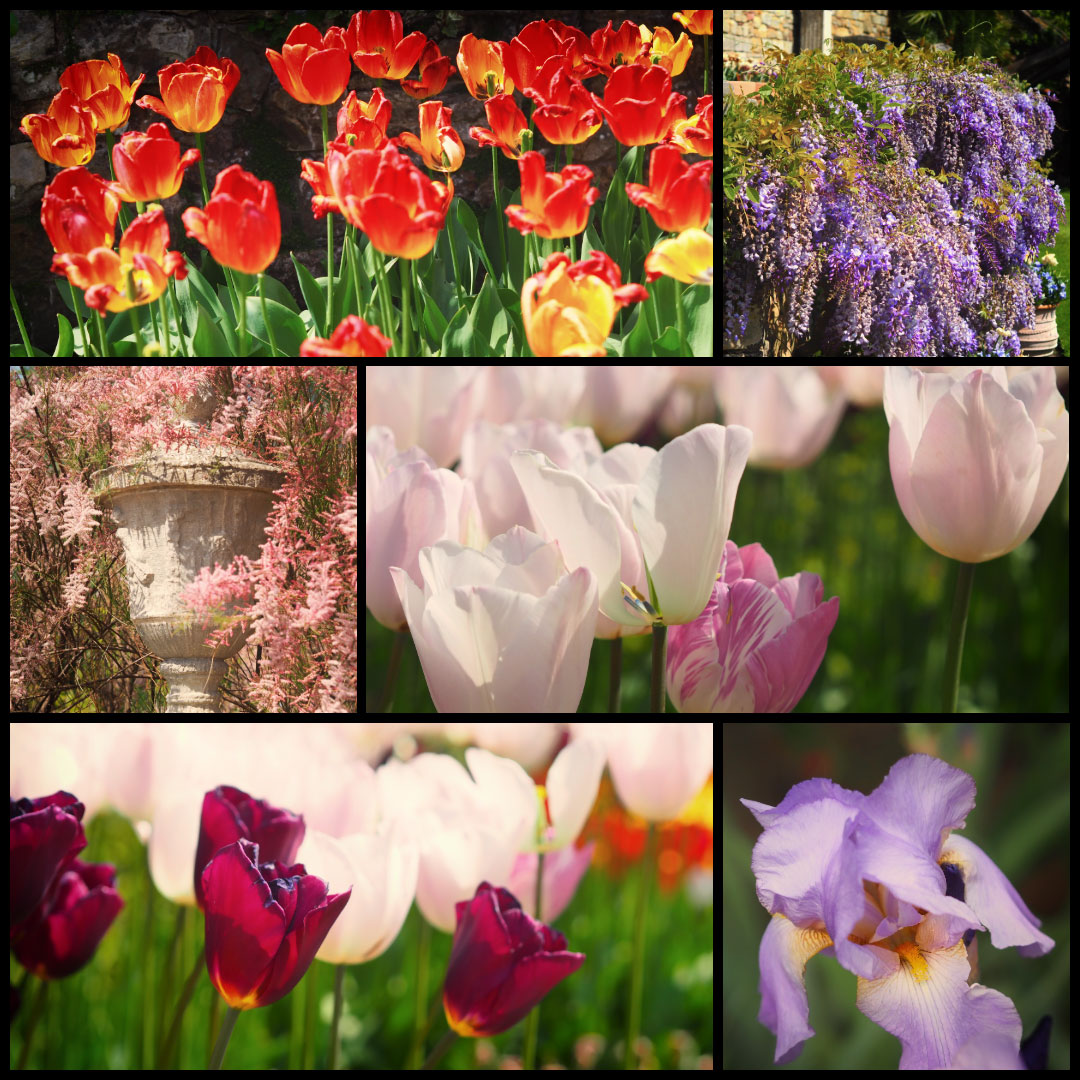
Some of the lovely flowers in early May
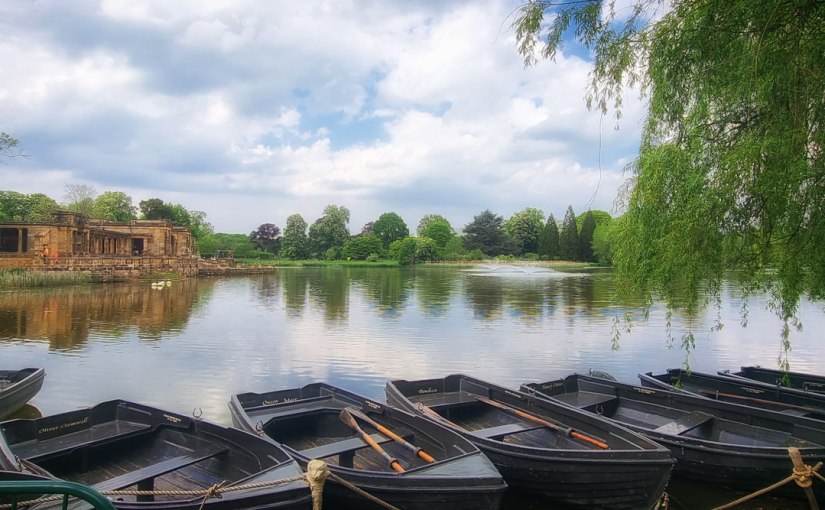
The Edwardian boathouse
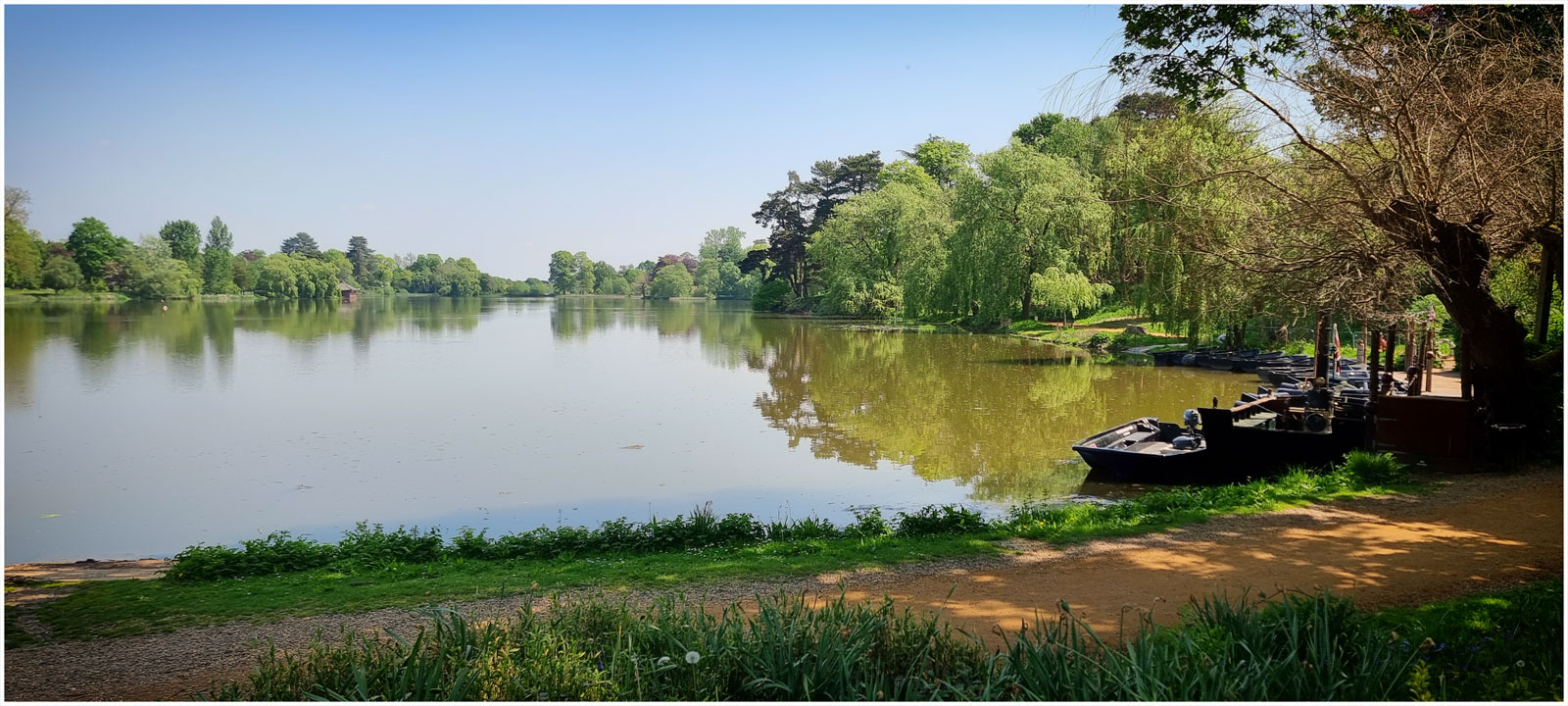
The 38 acre lake, the brainchild of William Waldorf Astor, was excavated and constructed by 800 men who were contracted in December 1904 to “carry on the works regularly and continuously by day and night (except on Sundays) when so ordered” and complete the work in two years! The lake was filled in July 1906.

It takes about an hour to walk around the lake and you might just make out the Japanese Tea House folly on the left-hand side. There is also a water maze too. The boats and pedalos  are available for hire on Weekends and Bank Holidays from Saturday 5 April 2025 and daily during school holidays. You can also take a 20 minute trip on the Lady Astor steam boat which you can just make out to the right of the photo above.

Hever Castle & Gardens
Hever
Edenbridge
Kent TN8 7NG
Jo’s Monday Walks

Hever Castle and Gardens: Part One

Whilst in Surrey over the early Spring Bank Holiday, I suggested that my daughter and I had a day out visiting Hever Castle and Gardens in Kent. It was a hot day so we didn’t have enough energy to stroll around the lake, nor did we visit the Tudor Garden with the topiary chess set! Two good reasons to return.

Dating back to the 14th century, Hever Castle was once the childhood home of Anne Boleyn, second wife of Henry VIII and Mother of Elizabeth I. It is well worth a visit especially of you are interested in Tudor history.

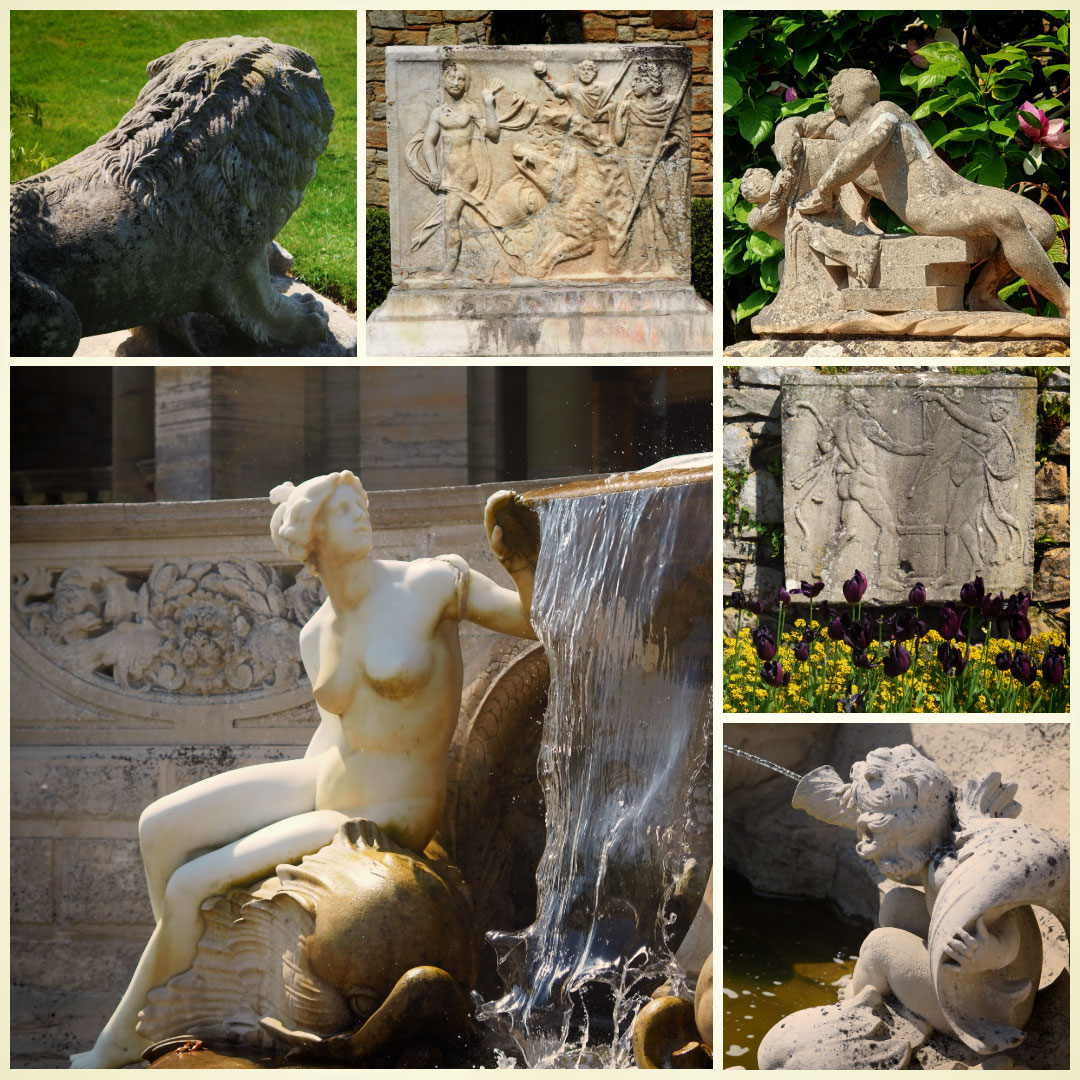
But for this post I am only exploring the beautiful gardens which were laid out between 1904 and 1908 by Joseph Cheal and Son. Until William Waldorf Astor bought Hever Castle in 1903, only a modest garden existed around the castle walls. One of the most magnificent areas of the gardens is the Italian Garden, which was designed to display William Waldorf Astor’s collection of Italian sculptures.

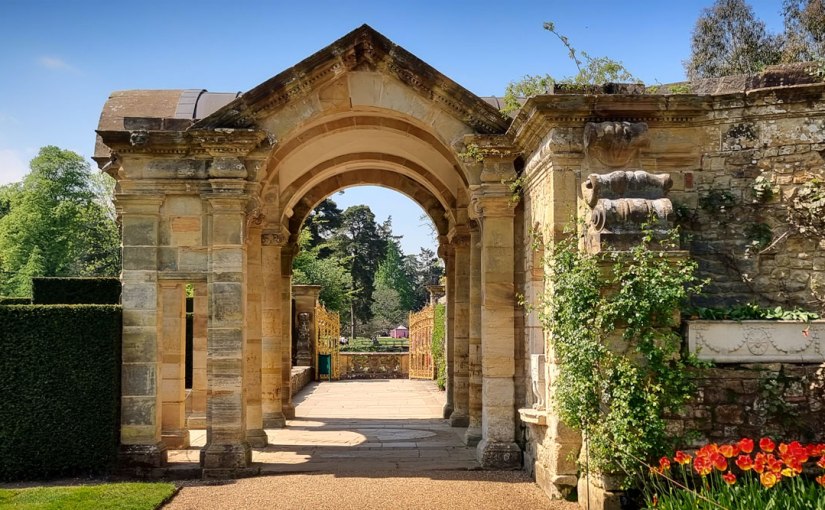
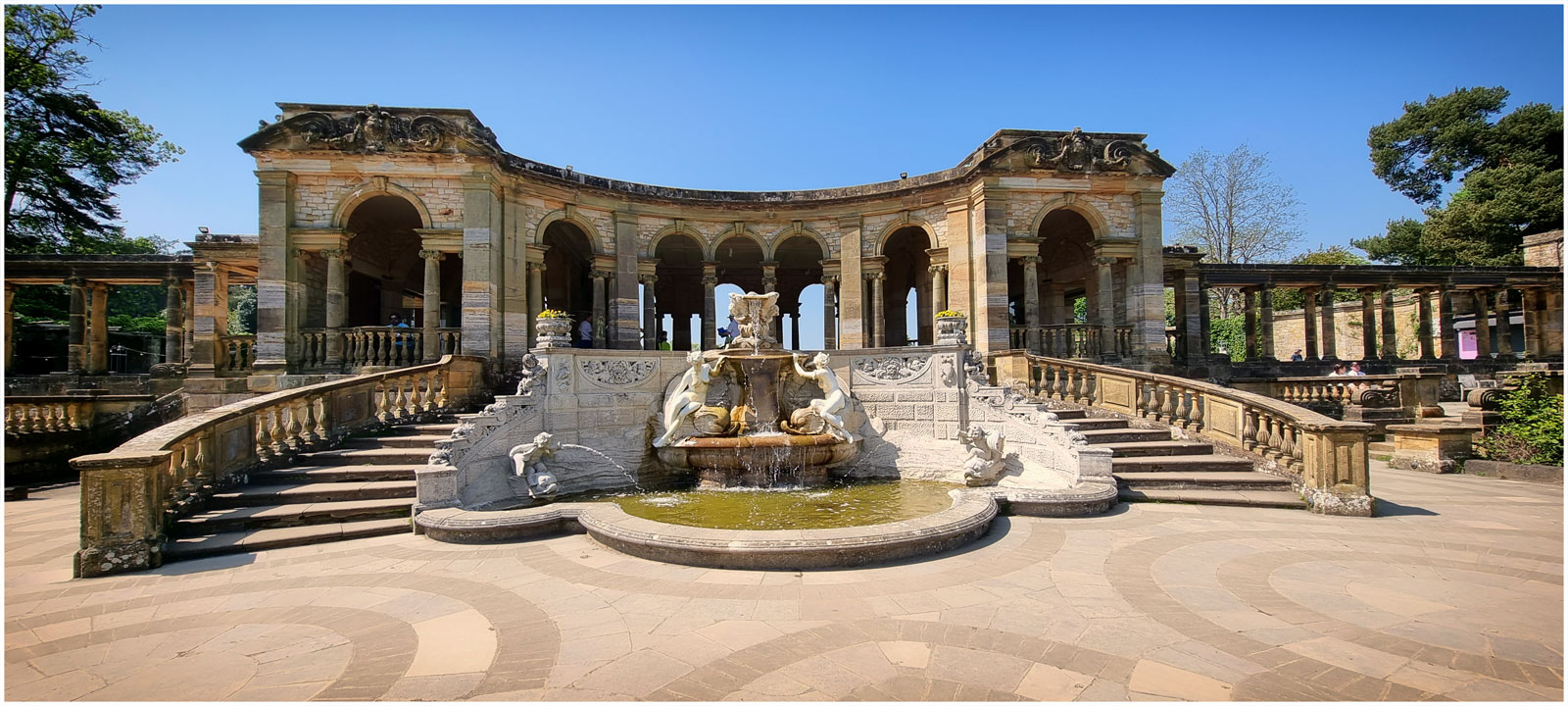
The impressive Loggia at the lake end of the garden is flanked by pillared colonnades and descends by balustrade steps to the piazza below with its classical sculpture inspired by the Trevi Fountain in Rome.
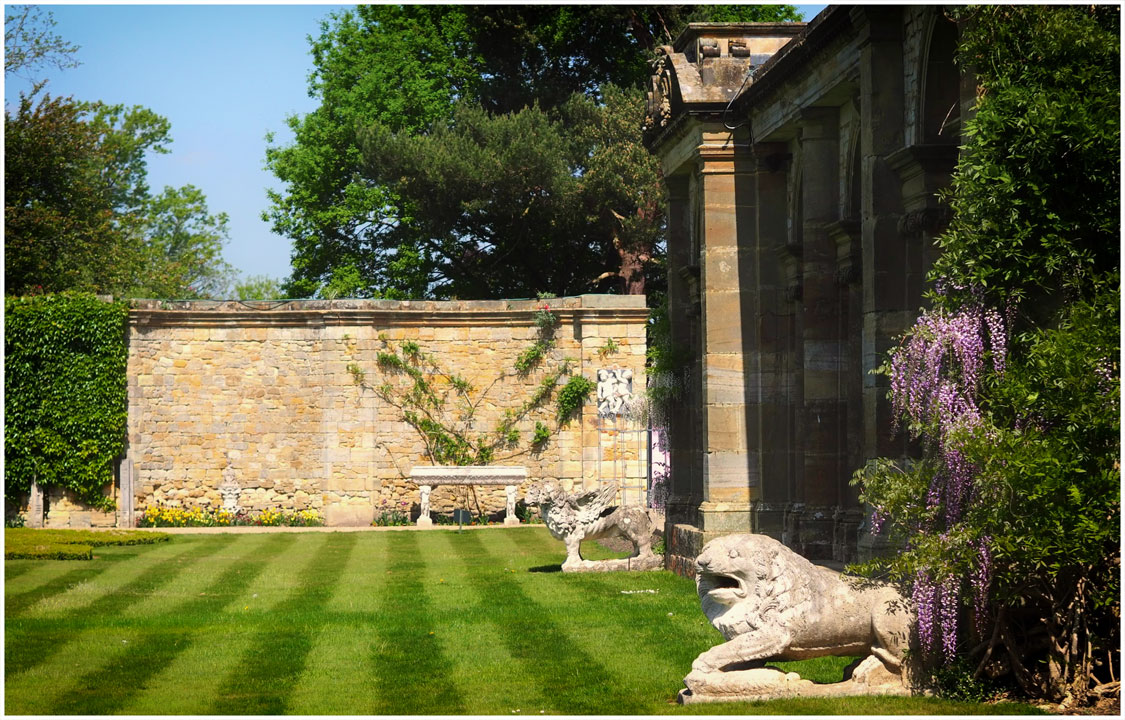
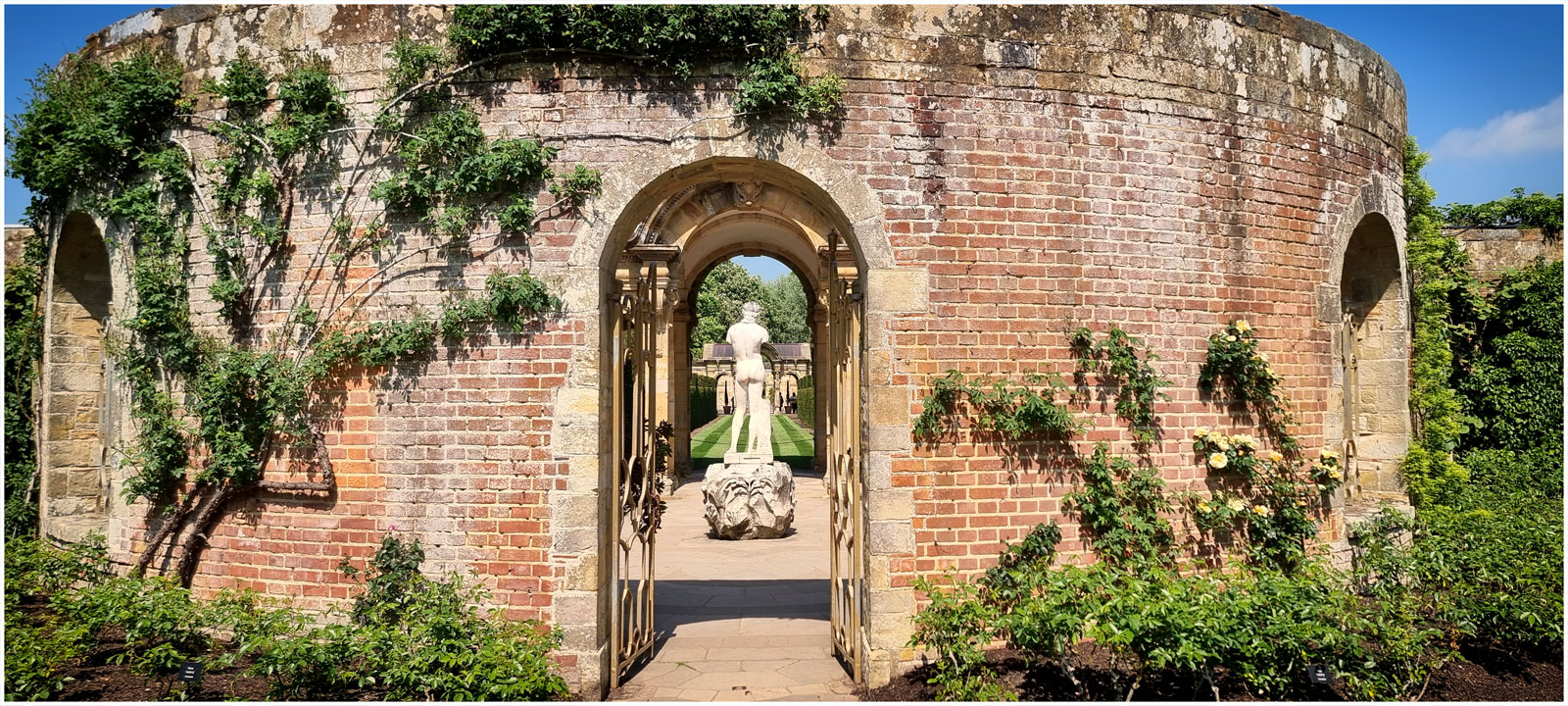
The Italian Garden. Covering four acres, the long sweeping lawns and tall clipped yew hedges form the central area of this magnificent garden, bordered by two twelve foot high walls made from local stone.
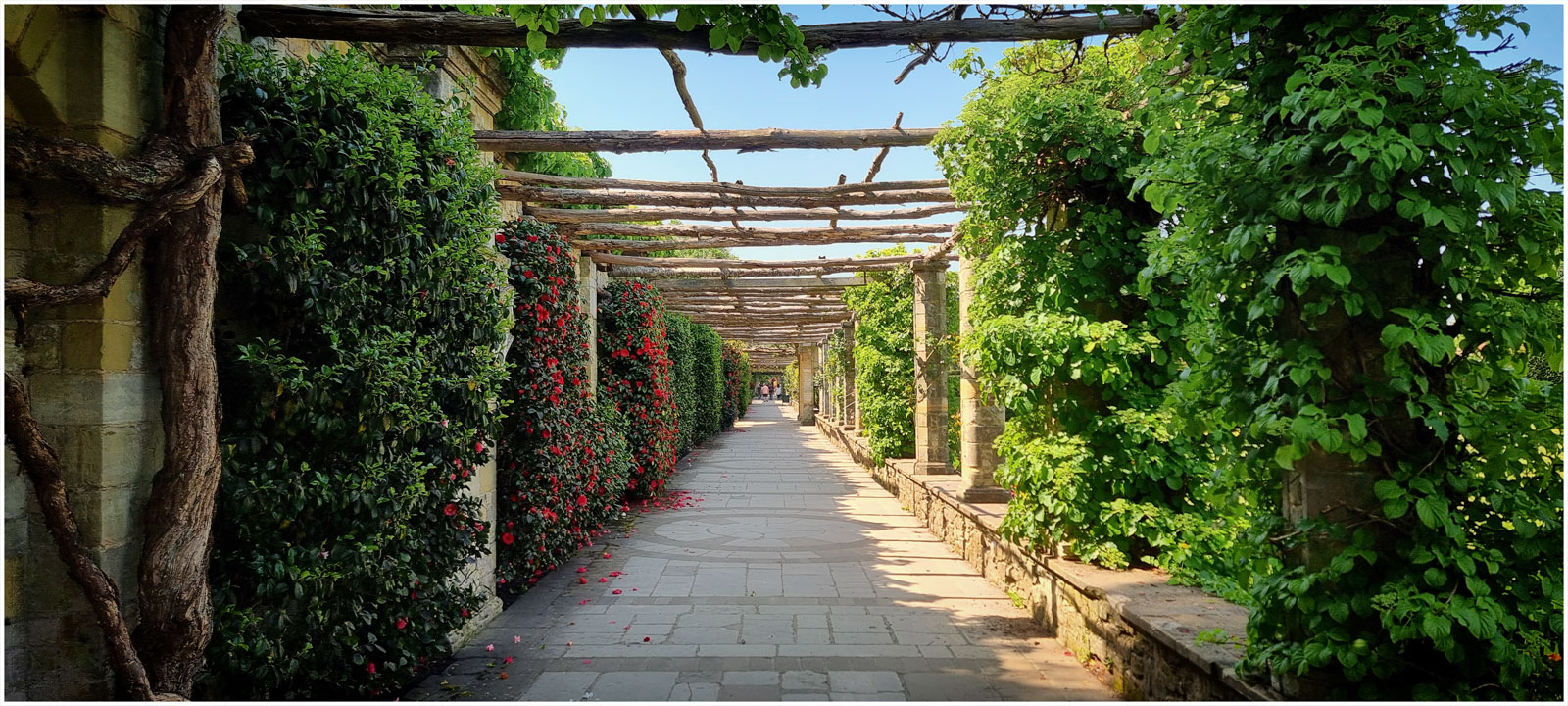
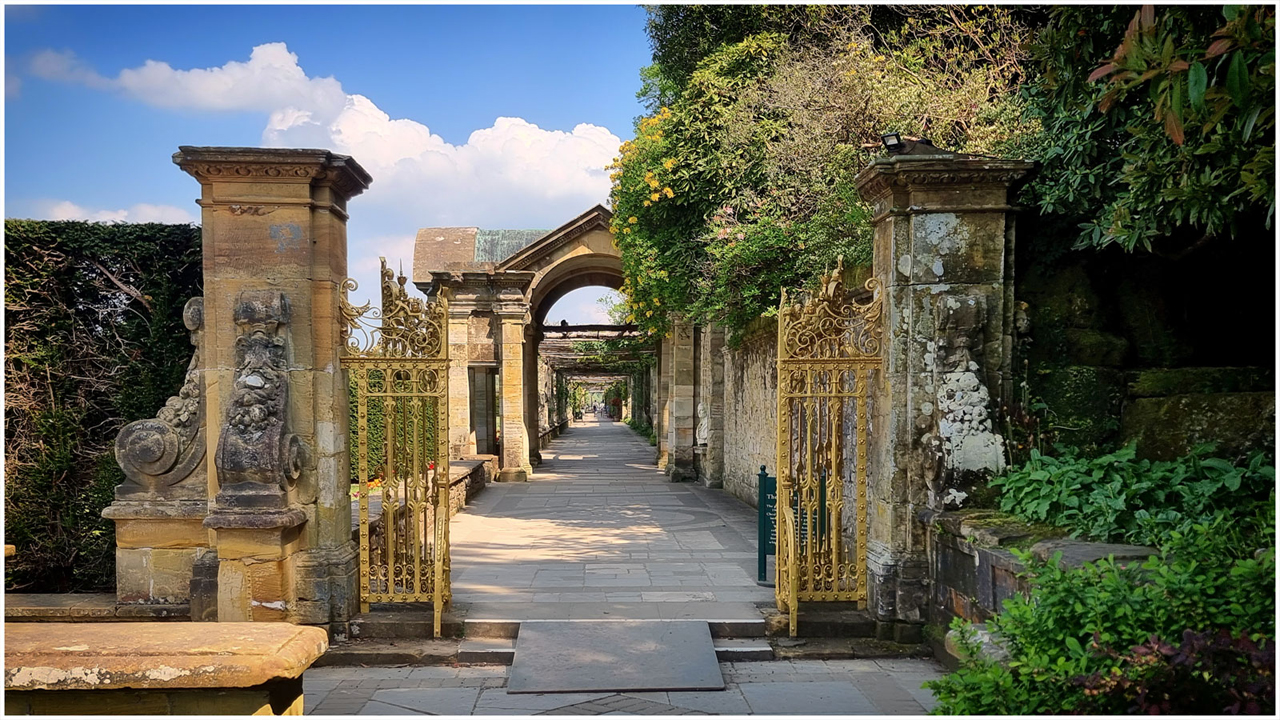
Along the south side runs the Pergola Walk with its shaded grottoes planted with ferns and moisture loving plants.
Pergola Walk
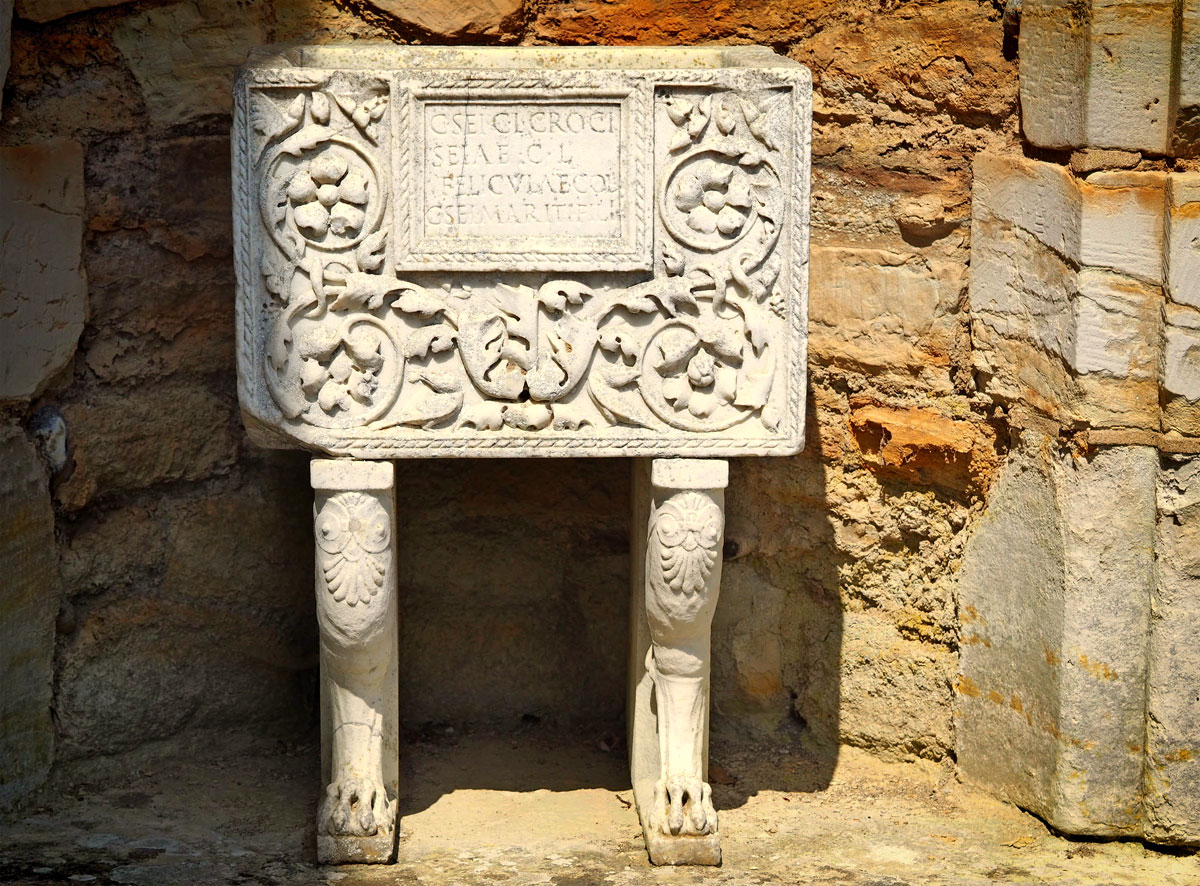
Italianate sculpture
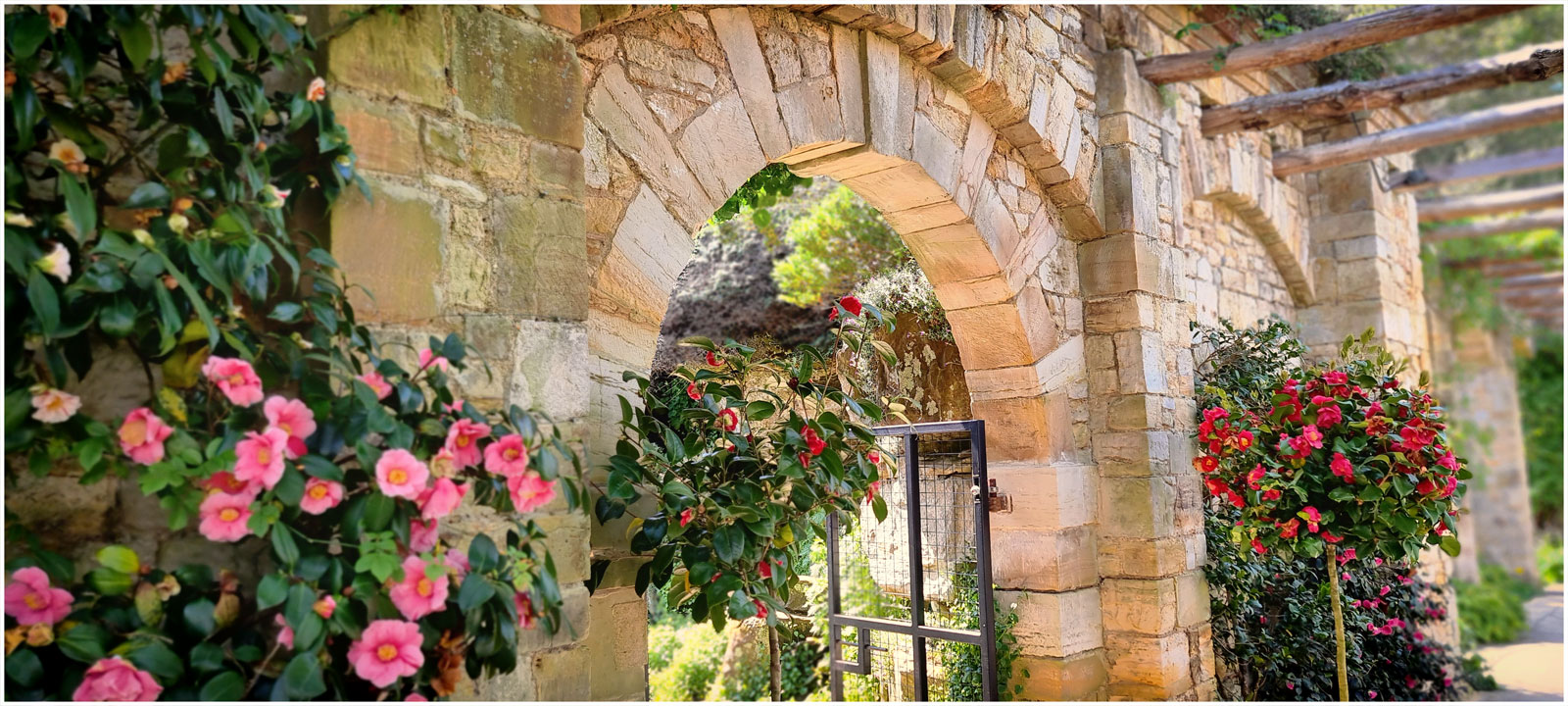
Entrance to the Pergola Walk and the Italian Garden with the stunning golden gates
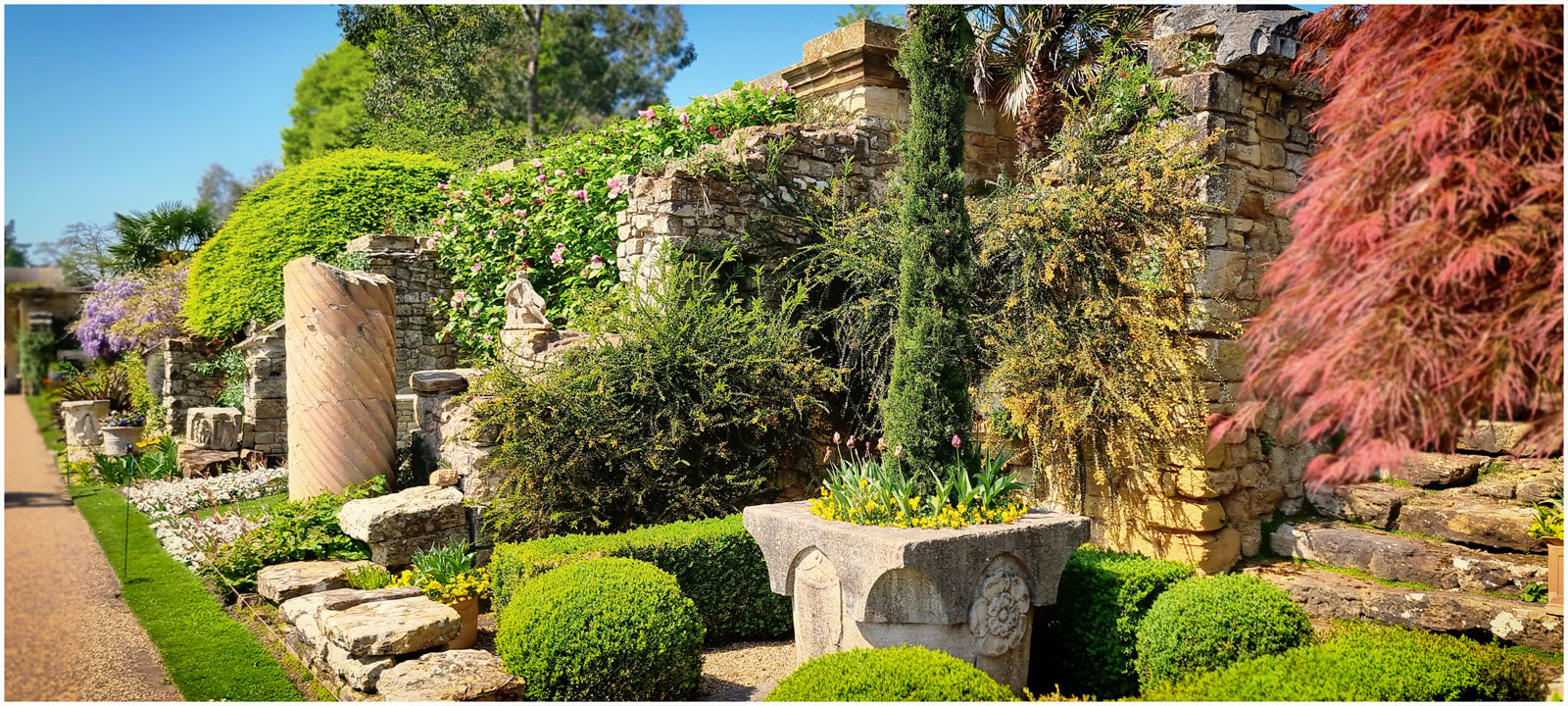
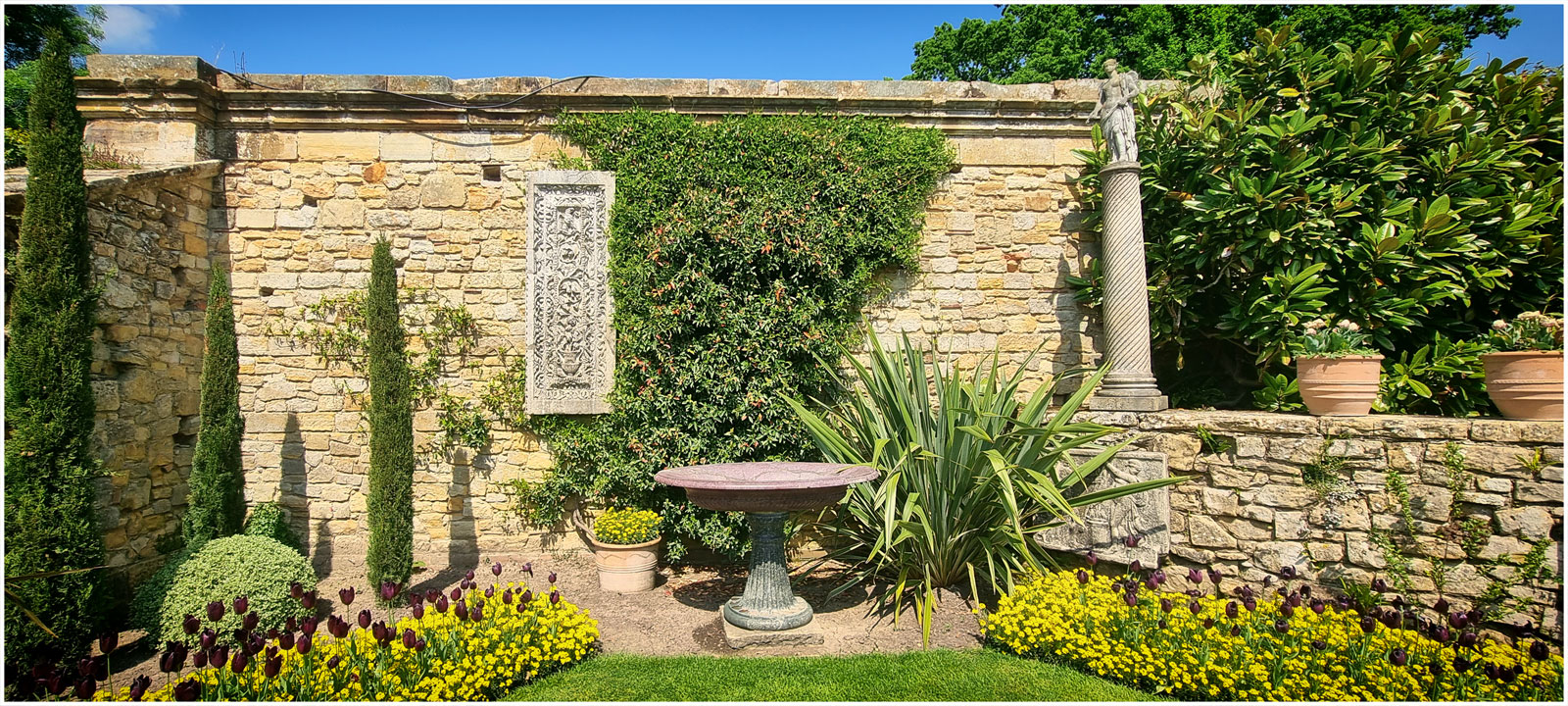
On the north side is the Pompeiian Wall which contains small bays showcasing antiquities in stone and marble enveloped with shrubs and climbing plants.
Italianate sculptures and antiquities
In one of the recessed bays
Pompeiian Wall
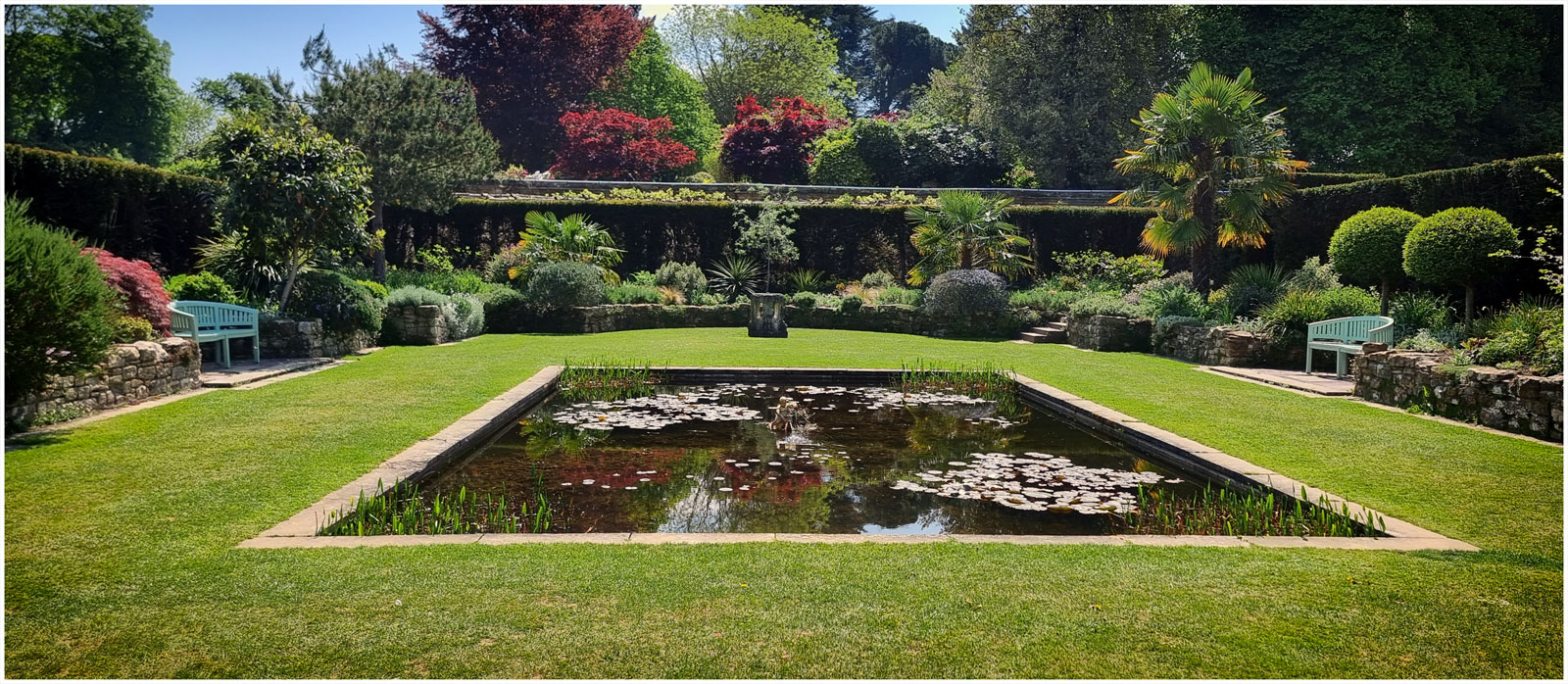
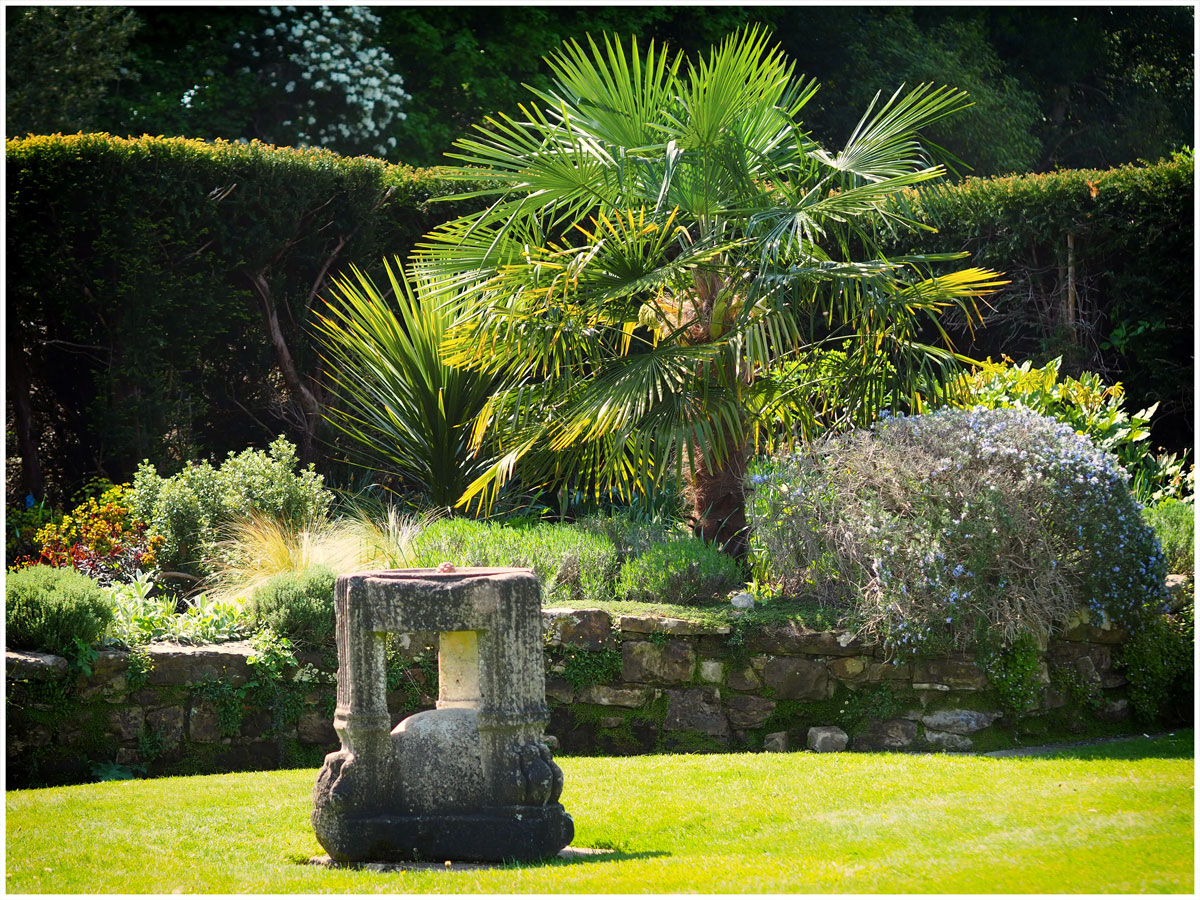
Hidden in the centre of the Italian Garden behind a tall hedge lies the Sunken Garden, an oasis of peace and quiet.
Sunken Garden
At the beginning of May the gardens were full of tulips, irises and wisteria. The planting is stunning and there is so much to see. Far more than I can possibly put in one post.
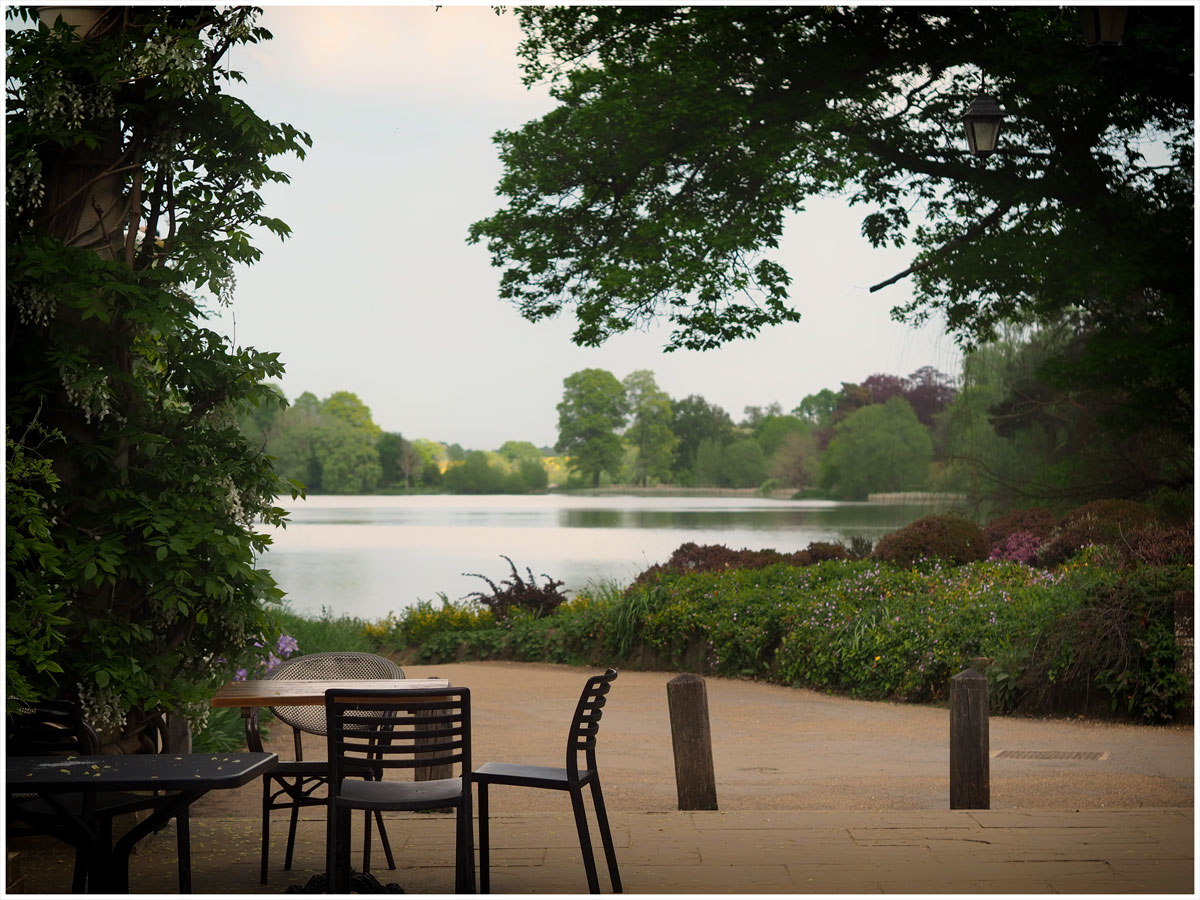
And to end, a glimpse of the lake from the Pavilion courtyard.

Then there is the Rose Garden,  the setting for over 5,000 roses which flourish from June until the end of September. Yet one more reason to return.

Hever Castle & Gardens
Hever
Edenbridge
Kent TN8 7NG
Jo’s Monday Walks

A – Z of Locations: W is for Wingham

During this year I shall be posting photographs from places around the UK, many of which have not been published before. Where I have previously blogged about a location I will provide a link to the post, though you won’t be able to comment on it as I restrict comments to six months.

W is for Wingham

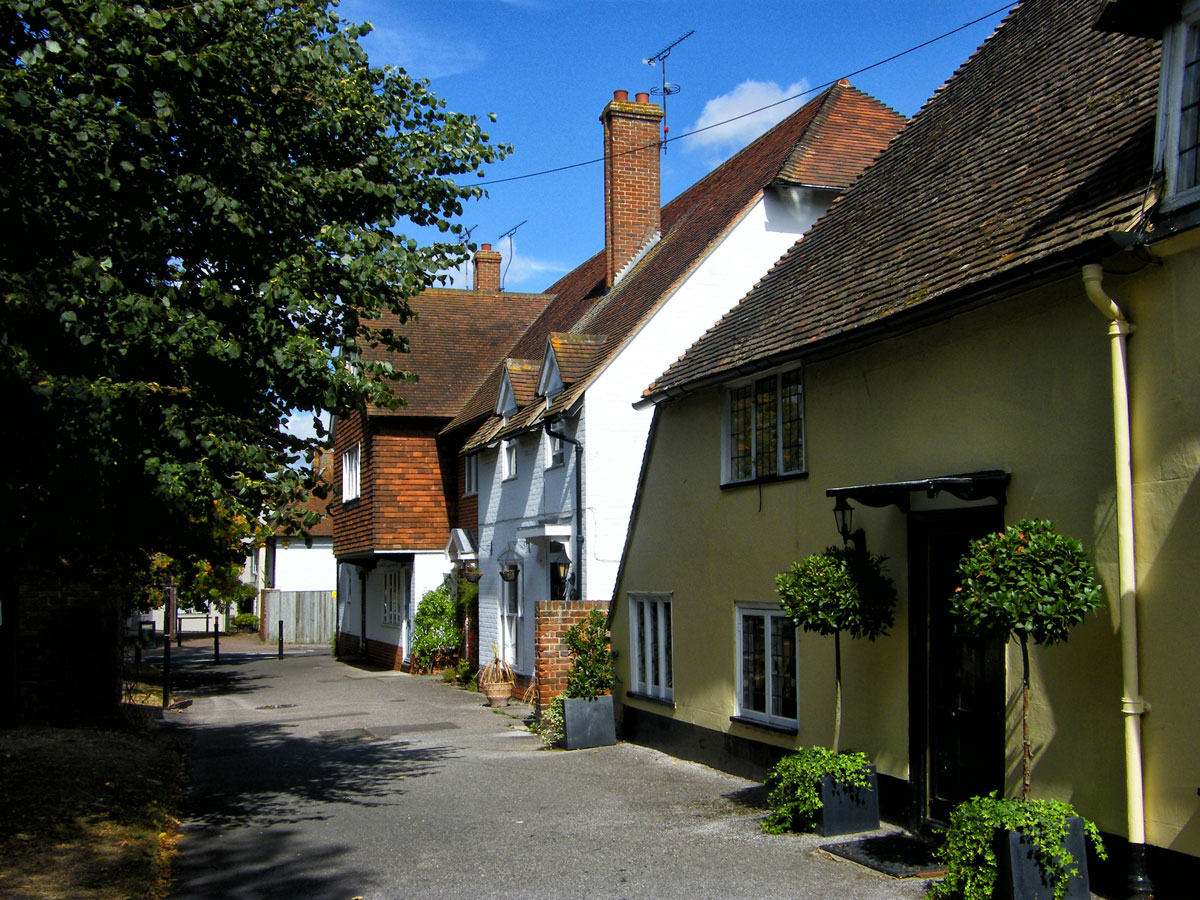
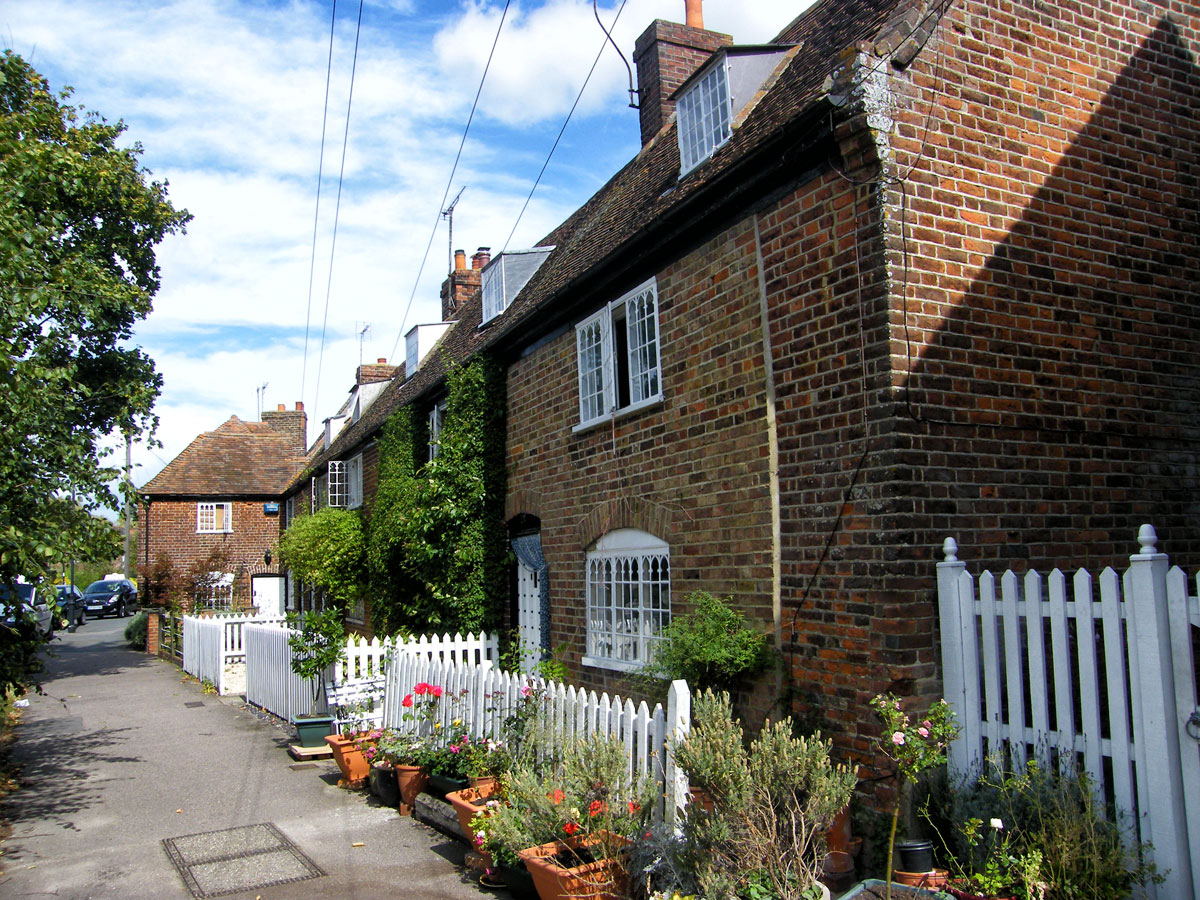
High Street

I’m sure there will be a lot of scratching of heads with this one. Where is Wingham? Even people who live in Kent may not be familiar with this small historic village on the outskirts of Canterbury.

High Street

I have been fortunate to visit Canterbury several times when my OH went there on business. Once we stayed in the city itself, but usually we stayed in a delightful  B&B place between the villages of Staple and Wingham. I would drop him off in the city and then go off to explore the Kent coast, inland villages and gardens.

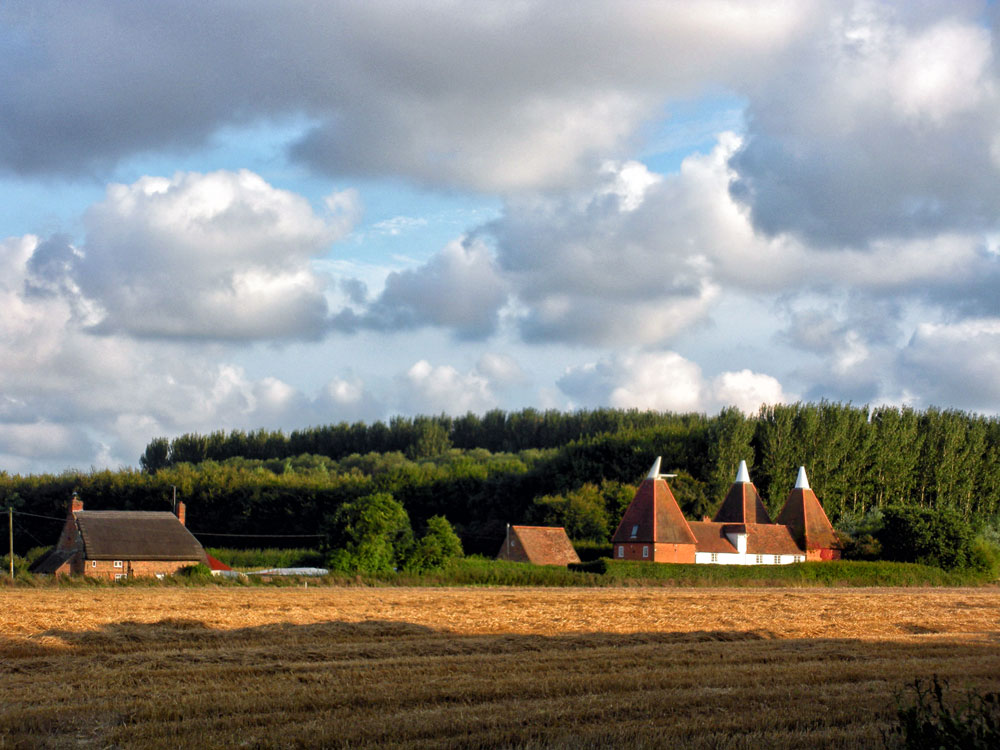
A familiar sight in Kent are these iconic Oast Houses (where hops were dried and stored for the brewing process)
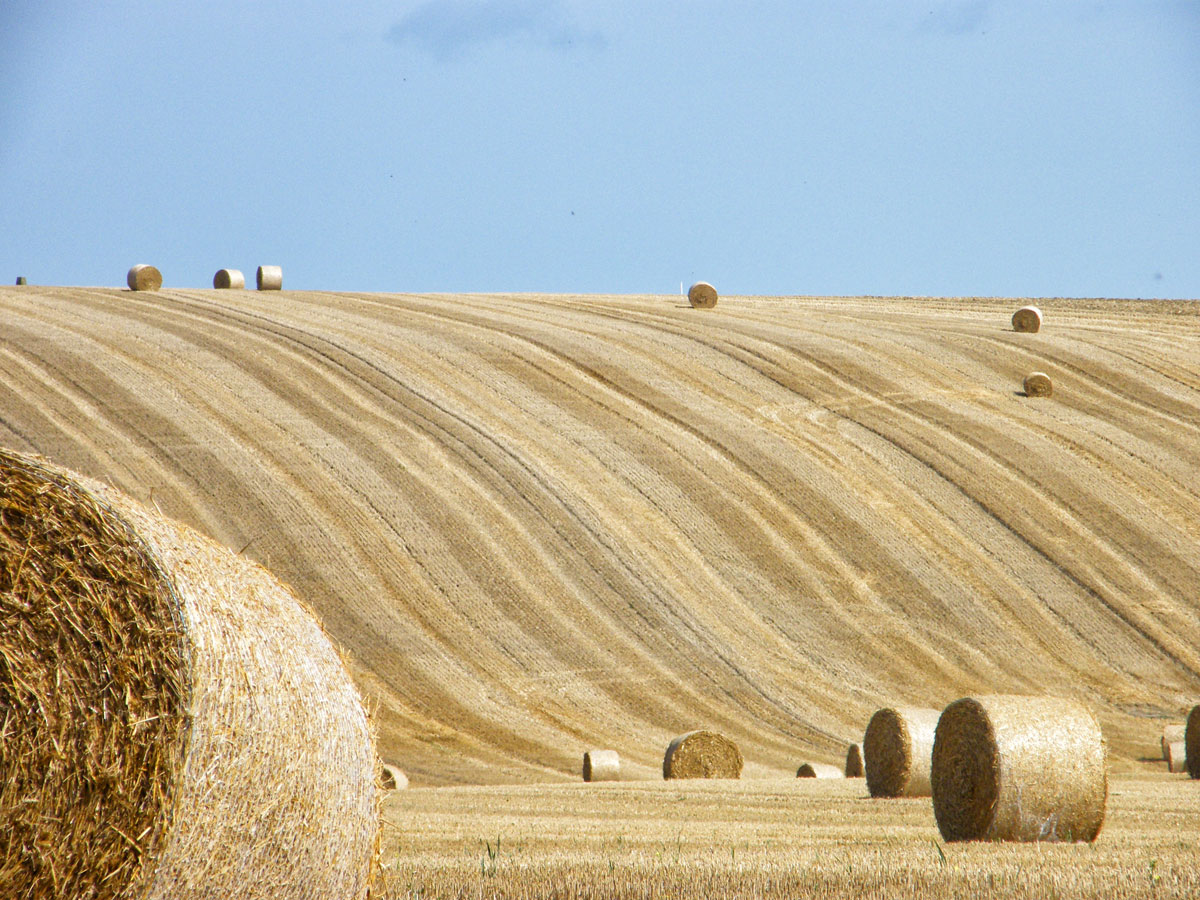
As we always visited in early September there were many fields like this where these wonderful round hay bales have been harvested.

By the 12th century Wingham was a prosperous village with a weekly market. The people of Wingham were involved in many popular protests including the Peasant’s Revolt of 1381 and the Swing Riots of 1830 when threshing machines were destroyed.

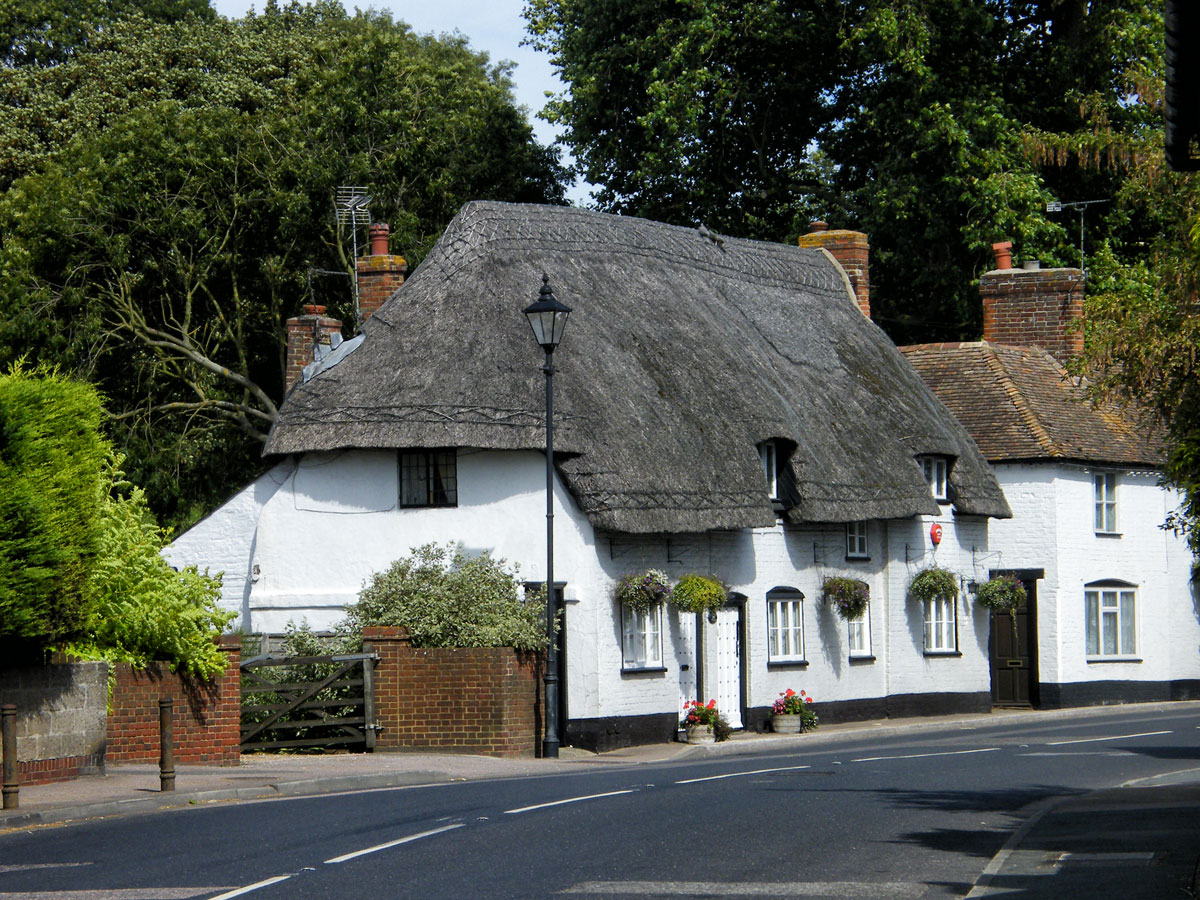
Pretty thatched cottage

At the end of the 19th century coal was discovered close by and plans were made for a mine and a railway – neither came to pass so the village remains small with a wealth of historic buildings.

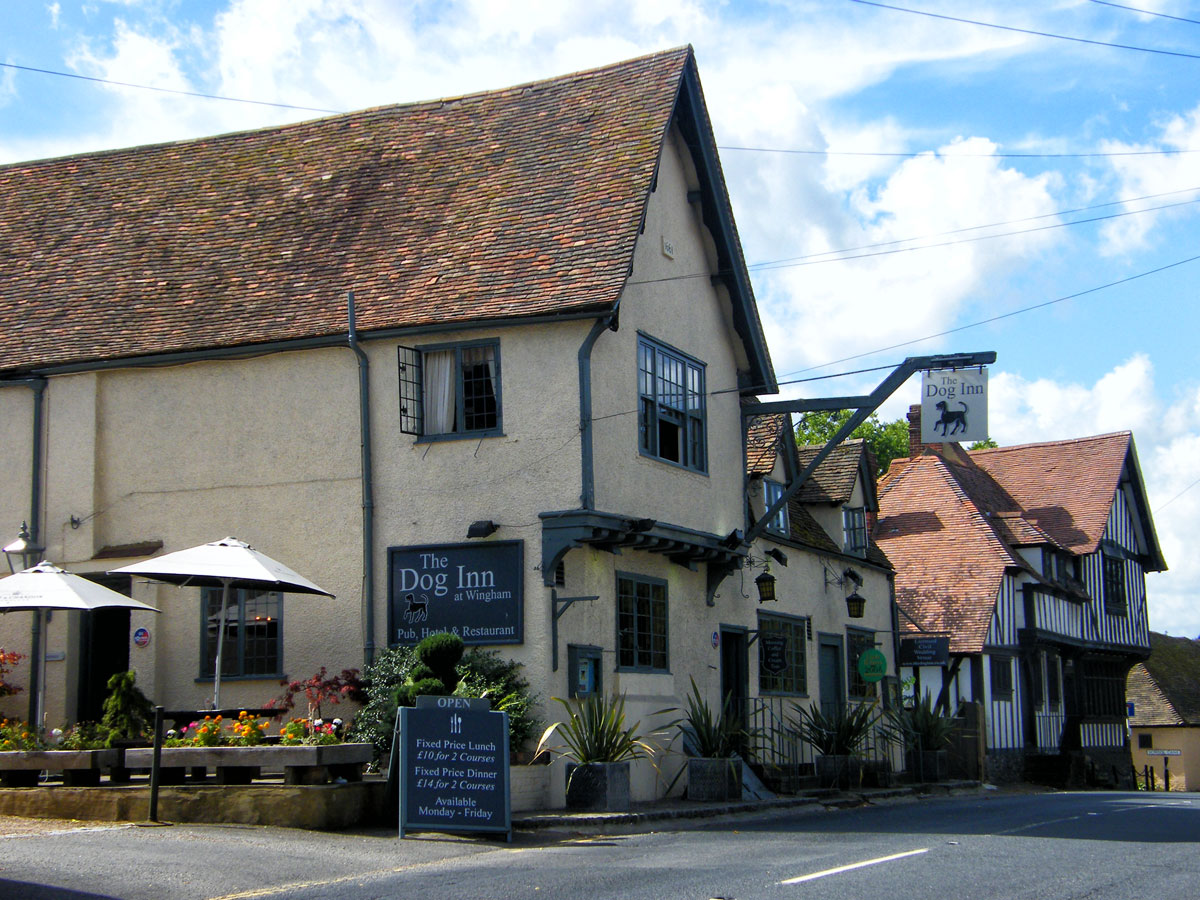
The Dog Inn c.1890
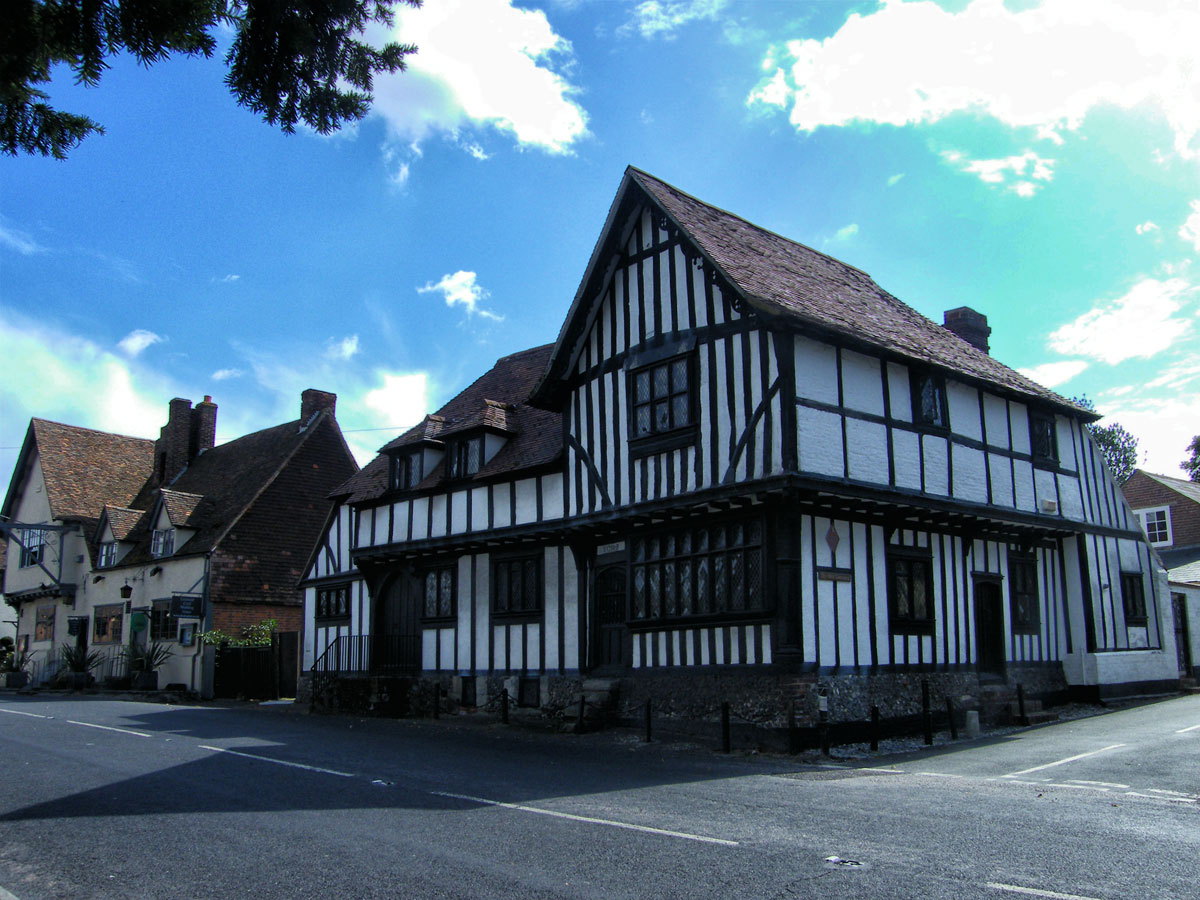
The Old Canonry and Canon Cottage, Canterbury Road, Wingham opposite the medieval church. The lower left hand wing is a survival of the row of canons’ houses for Wingham College burnt down in 1660. The undercroft, the jetty and the sans-purlin roof are all of about 1285 soon after the college was founded in 1283. The rest of the building is late 15th century in origin.
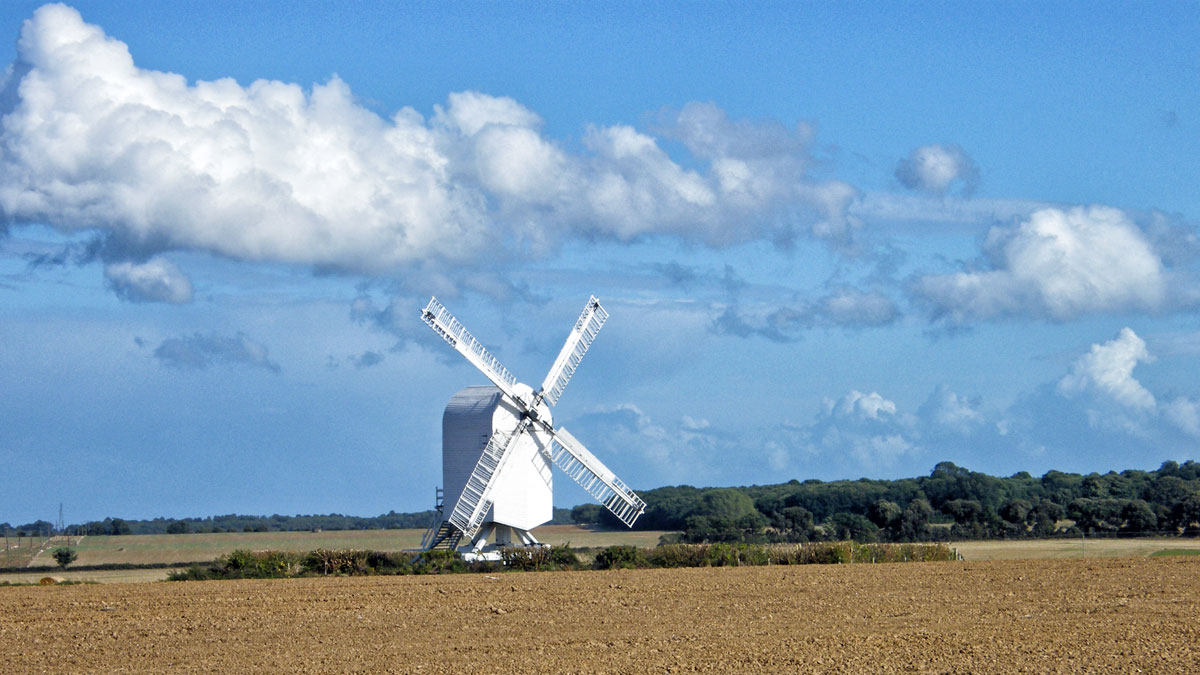
Chillenden windmill is a grade II* listed open-trestle post mill north of Chillenden, Kent, England. It is the last post mill built in Kent abut 10 mins drive from Wingham.

Reasons to visit Wingham? Well apparently there is a Wildlife Park nearby, but one of the reasons that I liked staying nearby was the easy access to the east coast (Sandwich, Broadstairs), the city of Canterbury and the north Kent coast (Herne Bay and Whitstable) and south to Dover.

Goodnestone Gardens in autumn

And there are the wonderful Goodnestone Gardens nearby.

A – Z of Locations: Q is for Quex Park

During this year I shall be posting photographs from places around the UK, many of which have not been published before. Where I have previously blogged about a location I will provide a link to the post, though you won’t be able to comment on it as I restrict comments to six months.

Q is for Quex Park

The Quex Park estate dates back to the 15th century. There is a Victorian walled garden, cucumber pit, woodland walk, croquet lawn and resident doves and peacocks.

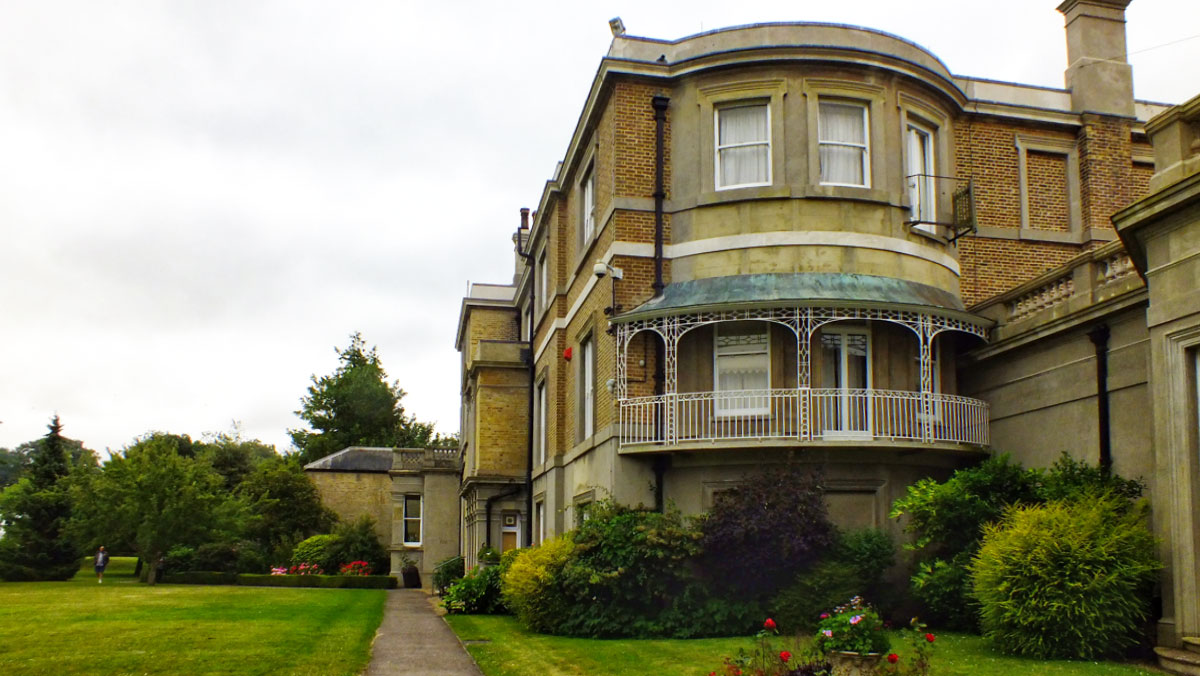
The Grade II listed Quex House is located in Birchington close to the Thanet coast in Kent and home to the Powell-Cotton Museum which houses unique natural history dioramas of African and Asian animals and wildlife, culturally significant and meaningful world-culture objects and, local archaeology from the Thanet coastline.

My visit though was to see the historic Victorian Walled Gardens

which is still undergoing restoration.

But these are not the only attractions at the site which has 15-acres of gardens, an activity centre, play areas, adventure golf, Jungle Jim’s, the Maize mazes and build a base to keep the kids amused.

There is also a craft village, Quex Barn to buy your organic fish, meat and vegetables or sit for something to eat, The Secret Garden Centre, Mama Feelgood’s café and a packed programme of events.