(Note to anyone looking at this post in the Reader or on a phone you may need to visit the actual site to be able to view and listen to the music track)
Lyrics
Death of a Marriage (words & music by David A. Harley)
The blinds are down, the locks are changed,
His cases packed and sent:
Some boxes for collection gather dust.
They’re shaking hands like strangers – that’s all that either dares:
It’s just the death of a marriage and there’s no room left for trust.
The bedroom they shared is advertised to let,
And she’s moved in with the kids.
He’s found himself a bedsit, it’s handy for his job,
But it’s the death of a marriage that was too long on the skids.
He spends a lot of time alone, because the maintenance is crippling
And he hasn’t got the bread to do the town:
He’s restless and confused, and not too certain what he wants,
Feeling guilty, ‘cause he knows he’s let her down.
She’s anxious and she’s angry, and the kids are a pain:
They miss their dad, and mum gets upset easily.
She rings from time to time, and they talk about her problems:
She says he has it easy, and of course he disagrees.
Sometimes they meet for a lunchtime drink:
He babysits, and sometimes takes the kids out for the day.
They both see other people, but they’re scared to get involved:
They’ve both been hurt too much already, and there isn’t much to say.
Sometimes, almost by chance, they spend the night together,
And wonder how they managed on their own,
But sooner or later the arguments take over:
It’s just a dying marriage that refuses to lie down.
They live day-to-day with their crises and neuroses:
Making some sort of adjustment, as best they can they cope,
Huddled round the embers of the love that passed between them,
They see each other growing older, and they’re learning not to hope.
The blinds are down, the locks are changed,
His cases packed and sent:
Some boxes for collection gather dust.
They wave goodbye like strangers – that’s all that either dares:
It’s just the death of a marriage and there’s no room left for trust.
credits
from The Game of London, released April 19, 2021
Vocal, acoustic and electric guitars, words & music by David Harley.
Recorded at Centre Sound, Camden.
Reel4Transfer for recovering usable tracks from the Centre Sound tapes – which had suffered deterioration from ‘sticky shed syndrome’ – and transferring them to digital media.
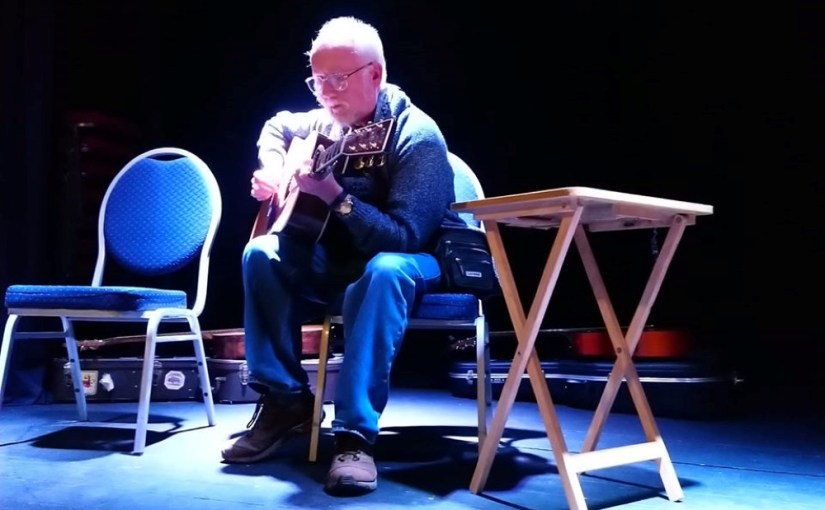
“In my mid-20s I moved to London: it wasn’t necessarily intended as a permanent move, but somehow or other I stayed there for 25 years: single, married (twice), a parent, a clerk, a wood machinist, a systems administrator, and much else.This is the version as first recorded in 1983: the arrangement is less adventurous than the more recent recording (2021), but my voice was in better shape in those days“.
(Note to anyone looking at this post in the Reader or on a phone you may need to visit the actual site to be able to view and listen to the music track)
Lyrics
Coasting (1983)
The nights pass slowly, but they pass:
The days are paper-thin.
Life goes on much as usual:
Some games I lose, some I win.
Sometimes I feel that I’m sleepwalking
Through the streets of this grey city,
But then, it’s only been a month or two.
It’s not the first time that I’ve coasted
Through the routine chores of living
And I’ll make it this time too
After you…
Today I walked in sunlight though the wind blew cold
Through my coat:
I thought about the coming spring, and I swear somewhere
I felt a twinge of hope.
I don’t expect to hear from you. I guess that’s how it should be:
There’s no point in chasing dreams that won’t come true.
It’s not the first time that I’ve coasted through the aftermath of loving
And I’ll make it this time too
After you…
Sometimes I take a weekend walk by these muddy city shores
And old man river talks to me
But I can’t quite understand: my feet stay locked to the dry land
So he drifts on with the seasons out to sea
The weeks pass slowly but they pass
And I drift from phase to phase.
I’m sick of wishing you were here to help me
Through these bleak and restless days.
Sometimes I think I’m waking into another nightmare,
But it passes, as these feelings often do.
It’s not the first time I’ve been lonely, nor the first time I’ve been left,
And I’ll make it this time too
After you…
credits
from The Game of London, released April 19, 2021
Vocal, guitar, words & music by David Harley.
Recorded at Centre Sound, Camden.
Reel4Transfer for recovering usable tracks from the Centre Sound tapes – which had suffered deterioration from ‘sticky shed syndrome’ – and transferring them to digital media.
One of David’s more recent songs, first written in 2016 though it took two years to complete.
(Note to anyone looking at this post in the Reader or on a phone you may need to visit the actual site to be able to view and listen to the music track)
Lyrics
Sea Fret
Black cat in my path today / Black news chilled me to the marrow
Black cloud standing in my way / Two birds of prey and one for sorrow
A little chaos flown from my life / Too late to hope for one last summer
A sea fret hides the harbour / A cold wind blows off the sea
You lie somewhere I’ll never find you / And no-one’s lying next to me
And surely these are not the places / That we were meant to be
Long ago you blew into my life / Like a friendly hurricane
Near misses, French kisses / Then you’d be gone again
Till later you’d drop by / And break my heart again
Sometimes I was sure I loved you
Sometimes I even think that you loved me
But there was always something else
Somewhere else you had to be
Always something in the way / Someone else you had to see
Though I always knew we’d drive each other crazy
My fevered heart still hoped someday
I’d find you waiting round the corner
For someone I hoped some day to be
Waiting there for someone / I never could quite be
Mist rolls up the mountain / A cold wind blows off the sea
There’s no ledge for us to meet on / And no-one’s lying next to me
And surely these are not the places / That we were meant to be
Those of you who have been following this blog for some time will remember that I once lived in Ludlow, Shropshire with the OH for several years (he was a Shropshire lad). We moved there to help support my mother-in-law who was struggling to cope living on her own. When we finally decided to drop anchor in Cornwall (having arranged care workers to call in daily) the OH still did a monthly journey back to visit his mum.
This song was written from that journey. But I’ll let David provide the narrative.
The song was actually mostly written on a train between Shrewsbury and Newport at a time when I was frequently commuting between Shropshire and Cornwall to visit my frail 94-year-old mother, who died a few months after, so it has particular resonance for me. It originally included a couple of extra verses about Hereford and the Vale of Usk, but after the ‘Wrekin’ chorus forced its way into the song, I decided to restrict it to the Shropshire-related verses. Maybe they’ll turn up sometime as another song.
(Note to anyone looking at this post in the Reader or on a phone you may need to visit the actual site to be able to view and listen to the music track)
Lyrics
Friends Around the Wrekin
The Abbey watches my train crawling Southwards
Thoughts of Cadfael kneeling in his cell
All along the Marches Line,
Myth and history, prose and rhyme
But those are tales I won’t be here to tell
The hill is crouching like a cat at play
Its beacon flashing red across the plain
Once we were all friends around the Wrekin
But some will never pass this way again
Lawley and Caradoc fill my window
Facing down the Long Mynd, lost in rain
But I’m weighed down with the creaks and groans
Of all the years I’ve known
And I don’t think I’ll walk these hills again
Stokesay dreams its humble glories
Stories that will never come again
Across the Shropshire hills
The rain is blowing still
But the Marcher Lords won’t ride this way again
The royal ghosts of Catherine and Arthur
May walk the paths of Whitcliffe now and then
Housman’s ashes grace
The Cathedral of the Marches
He will not walk Ludlow’s streets again
The hill is crouching like a cat at play
Its beacon flashing red across the plain
Once we were all friends around the Wrekin
But some will never pass this way again
And I may never pass this way again
Historical Notes
‘The Abbey’ is actually Shrewsbury’s Abbey Church: not much else of the Abbey survived the Dissolution in 1540 and then Telford’s roadbuilding in 1836. Cadfael is the fictional monk/detective whose home was the Abbey around 1135-45, according to the novels by ‘Ellis Peters’ (Edith Pargeter).
Shrewsbury Abbey
The Welsh Marches Line runs from Newport (the one in Gwent) to Shrewsbury. Or, arguably, up as far as Crewe, since it follows the March of Wales from which it takes its name, the buffer zone between the Welsh principalities and the English monarchy which extended well into present-day Cheshire.
‘The hill’ is the Wrekin, which, though at a little over 400 metres high is smaller than many of the other Shropshire Hills, is isolated enough from the others to dominate the Shropshire Plain.
The Wrekin
The beacon is at the top of the Wrekin Transmitting Station mast, though a beacon was first erected there during WWII. The Shropshire toast ‘All friends around the Wrekin’ seems to have been recorded first in the dedication of George Farquar’s 1706 play ‘The Recruiting Officer’, set in Shrewsbury.
Carding Mill Valley – In the Shropshire Hills, near Church Stretton, connected to the Long Mynd.
‘Lawley’ refers to the hill rather than to the township in Telford. The Lawley and Caer Caradoc do indeed dominate the landscape on the East side of the Stretton Gap coming towards Church Stretton from the North via the Marches Line or the A49, while the Long Mynd (‘Long Mountain’) pretty much owns the Western side of the Gap.
Shropshire Hills on the east side of the Strettons
Stokesay Castle, near Craven Arms, is technically a fortified manor house rather than a true castle. It was built in the late 13th century by the wool merchant Laurence of Ludlow, and has been extensively restored in recent years by English Heritage, who suggest that the lightness of its fortification might actually have been intentional, to avoid presenting any threat to the established Marcher Lords.
Stokesay castle and Gatehouse
Prince Arthur, elder brother of Henry VIII, was sent with his bride Catherine of Aragon to Ludlow administer the Council of Wales and the Marches, and died there after only a few months.
Ludlow Castle (once home to Arthur and Catherine of Aragon)
Catherine went on to marry and be divorced by Henry VIII, and died about 30 years later at Kimbolton Castle. Catherine is reputed to haunt both Kimbolton and Ludlow Castle lodge, so it’s unlikely that she also haunts Whitcliffe, the other side of the Teme from Ludlow Castle. (As far as I know, no-one is claimed to haunt Whitcliffe. Poetic licence…) The town itself does have more than its fair share of ghosts, though.
Whitcliffe Common
For some time it has puzzled me that in ‘A Ballad for Catherine of Aragon’, Charles Causley refers to her as “…a Queen of 24…” until I realized he was probably referring not to her age, but to the length of time (June 1509 until May 1533) that she was acknowledged to be Queen of England.
The ashes of A.E. Housman are indeed buried in the grounds of St. Laurence’s church, Ludlow, which is not in fact a cathedral, but is often referred to as ‘the Cathedral of the Marches’. It is indeed a church with many fine features and its tower is visible from a considerable distance (and plays a major part in Housman’s poem ‘The Recruit’).
Cathedral of the Marches
RIP David: 1949 – 2025
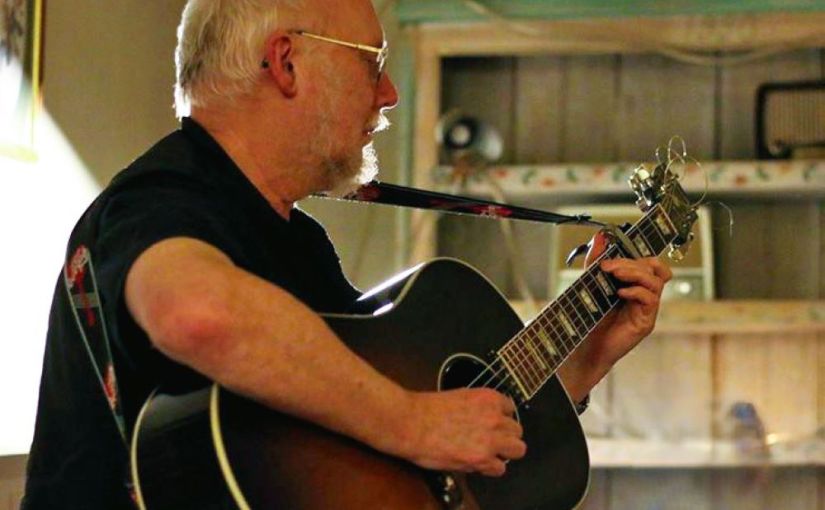
David standing on the top of the Wrekin -25 01 2004 ( 3 months after our marriage) the only time I ever climbed up it and the only time I managed to persuade him to shave!