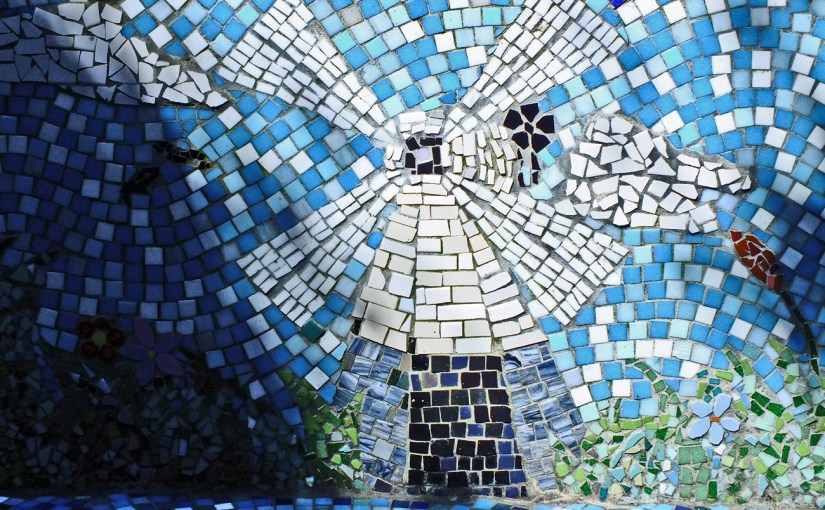
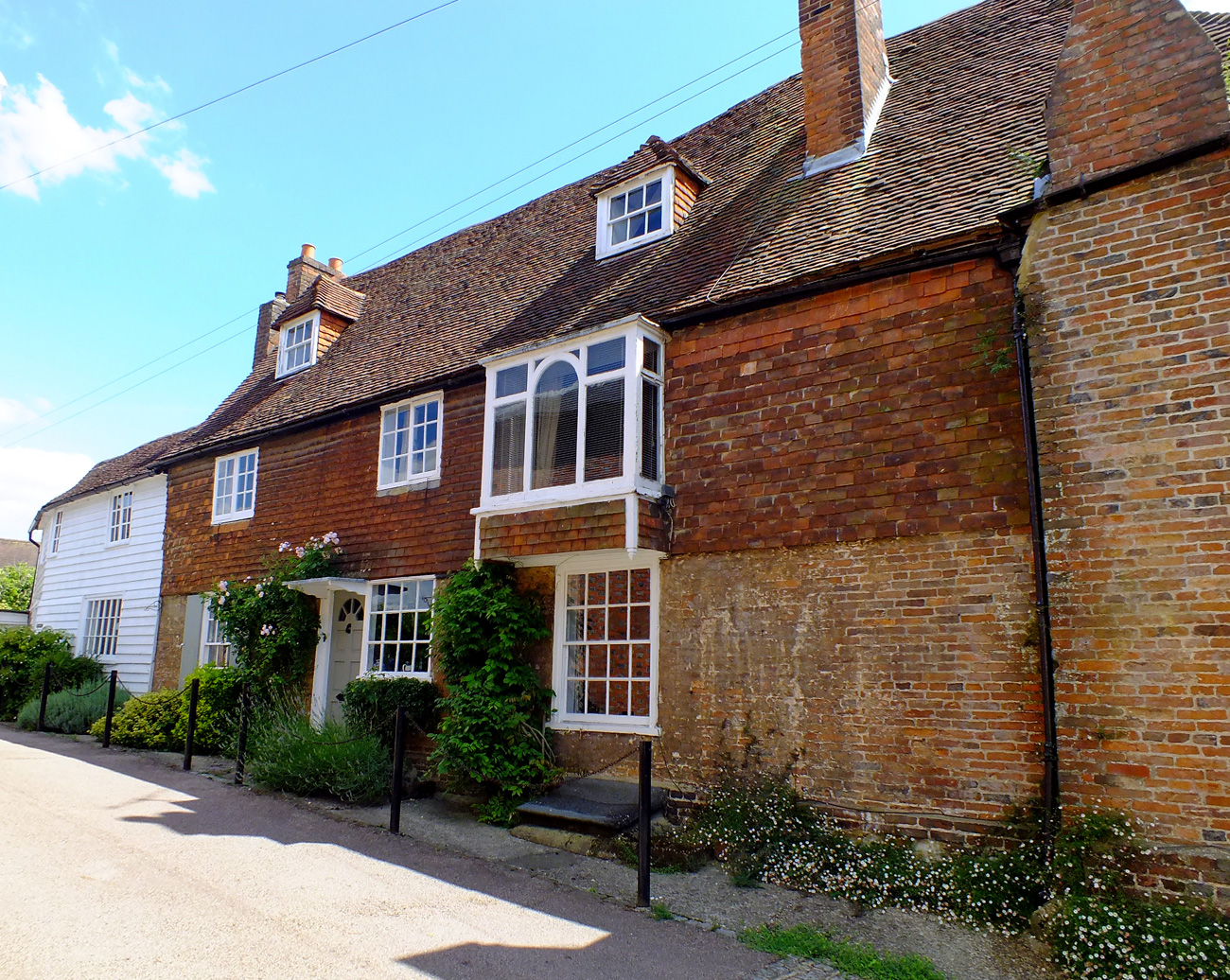
Let me introduce you to one of the prettiest towns in the Kent High Weald, only three miles from the famous Sissinghurst Gardens created by Vita Sackville-West. You may enjoy the many types of weather-boarding and architecture, independent shops, the narrow medieval streets and some interesting buildings all within an easy walk of each other including a beautiful church and a smock windmill. It is the picture of a small English town and on a warm summer’s day with church bells chiming and white sails shimmering, let’s go for a stroll around Cranbrook.

Cranbrook means ‘brook frequented by cranes or herons’. The name is first recorded as Cranebroca in the Domesday Monachorum of 1070, but as the name of a stream, not a settlement.
Leave the car in one of the free car parks and head down the High Street to the Vestry Hall built in 1859 as Cranbrook’s court-house with the Old Fire Station below. Now the Weald Information Centre.

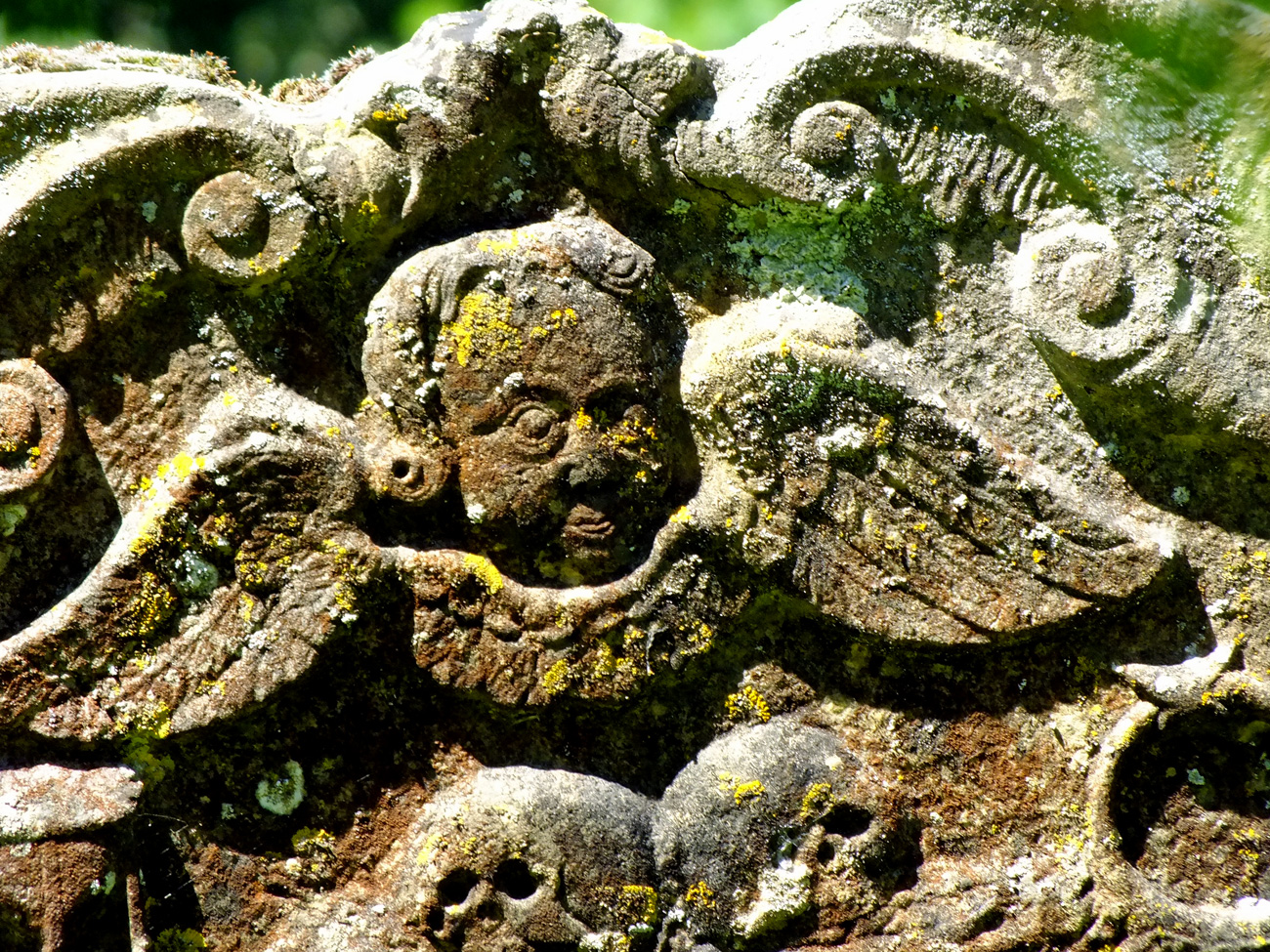
Head up the steps on the left to St Dunstan’s Church. Outside on the tower is a carved figure of Father Time. Local legend says that he comes down every night and scythes the churchyard grass to keep it neat and tidy.


Opposite the church is Church House, formerly Dence’s School, which was built in 1567 by Alexander Dence. It was used as an elementary school for 300 years.
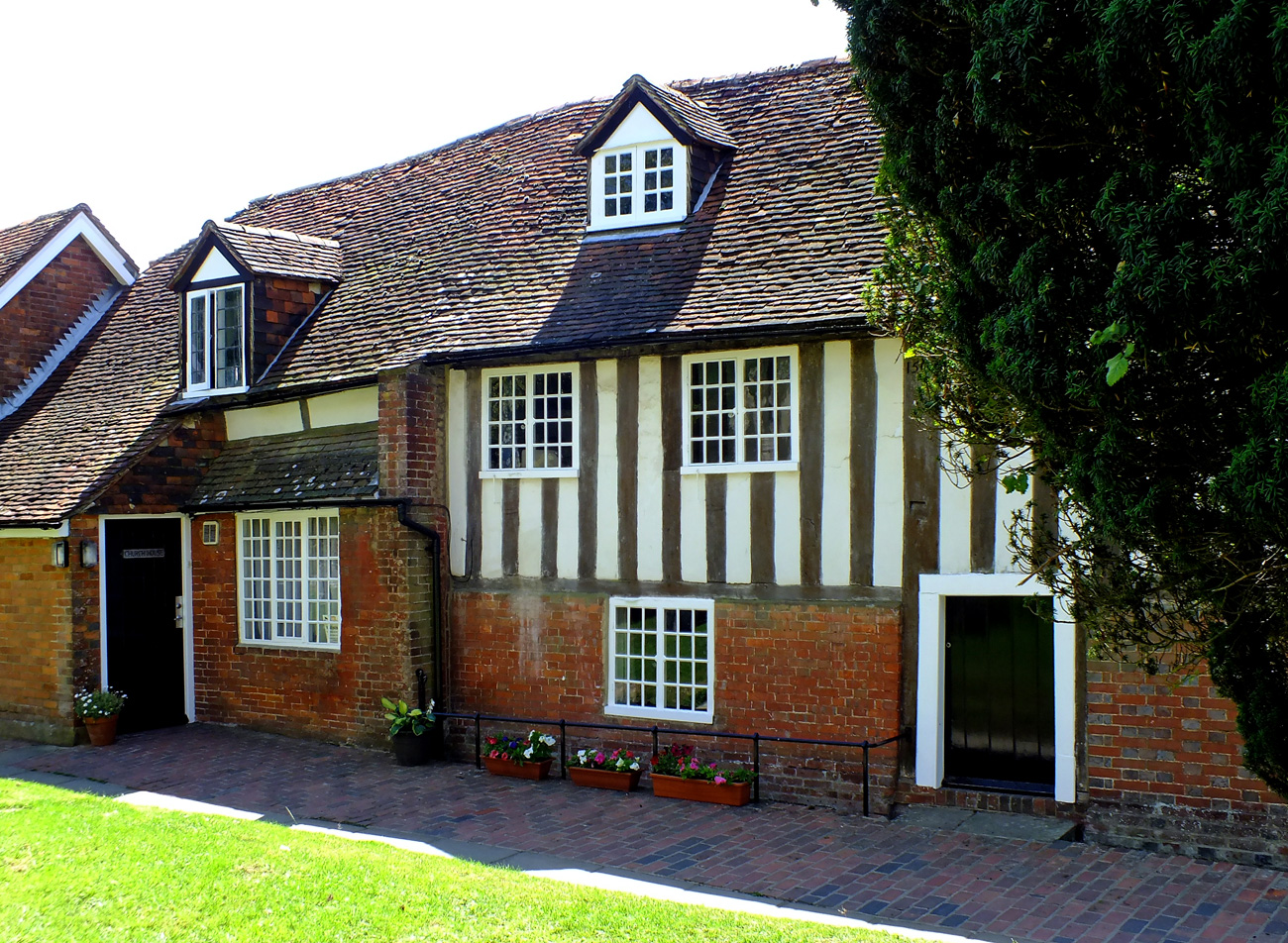
Carry on around the church and through the churchyard which leads into another small car-park and back into the town.
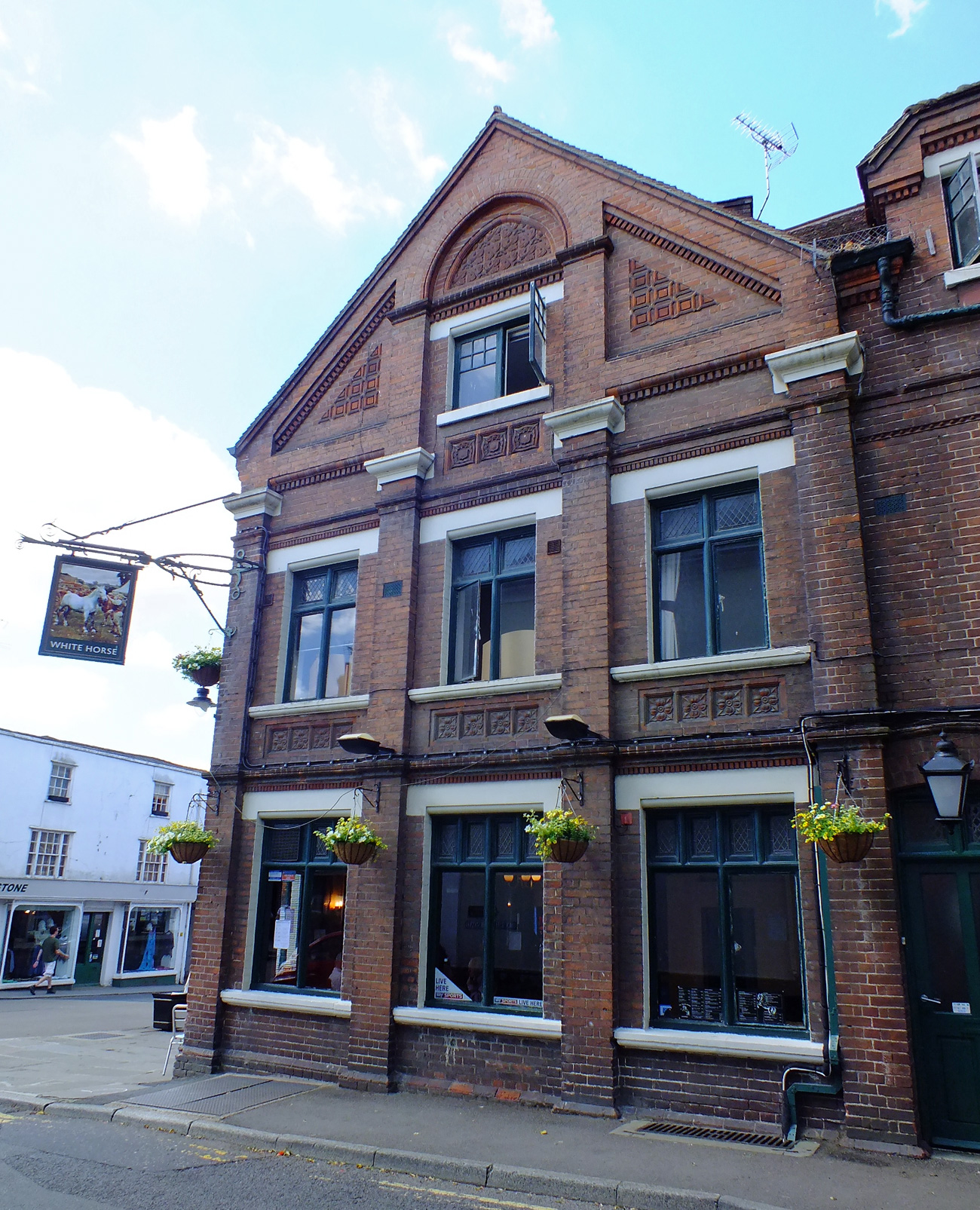
Stop to look at the decorative bricks of the White Horse public house on the corner.

Straight on down Stone Street you will catch glimpses of the windmill ahead of you.

and lots of lovely shops…


On the right hand side several narrow passageways lead off Stone Street. One passage passes Hatter’s cottage, which was William Tooth’s water-powered hat factory.

Pop around the corner to see Cranbrook School. John Blubery (d 1518) bequeathed funds for “a frescole howse for all the poor children of the towne”. The school received a charter from Queen Elizabeth I in 1574. It is now a co-educational grammar boarding and day school and still State-funded.


Retrace your steps and turn left onto St David’s Bridge where you will find a delightful Arts and Crafts House which used to be a restaurant. Originally a temperance coffee house with reading room the Old Coffee Tavern was built in 1890 by Clement Cramp (1816-1894) for working men.


Opposite is a row of white weatherboarded houses and The Chapel of Strict and Particular Baptists. Built in 1785, this is the oldest existing place of worship for Dissenters in the Parish.


Continuing up Hill Road with Hill House on the right. Dating from the late middle ages, when the town was the centre of a thriving woollen industry, Hill House is a medieval clothier’s house. Note its lovely door.


We have now arrived at Cranbrook’s windmill which is the tallest surviving smock mill in the British Isles. Built in 1814 it dominates the town. It is still in working order, grinding wheat regularly to produce wholemeal flour which can be purchased from the mill shop. The Windmill is usually open Saturday, Sunday and Wednesday afternoons in the summer. Note: not on a Monday.


Stepping into Cranbrook is like stepping back in time.


If you enjoy a walk, short or long, then you may enjoy visiting Jo’s Monday Walk where you are in for a treat.

 TRAVEL WORDS
Lovely place Jude, and well-illustrated by your photos.
Did you climb the stairs, I wonder?
Regards as always, Pete. x
We went on a Monday Pete 😉
Silly me! I should have remembered that from your comments, and the title of the series! Losing it Jude…x
Thank you for this gorgeous tour of such a pretty little town. I enjoyed the walk and the creativity of angles used in capturing the windmill. Always happy to learn from your expertise With a camera Jude.
Hi Sue! Thank you for your lovely compliments, and I’m glad you enjoyed the stroll around this beautiful town which is so different from this side of the country.
What a wonderful tour, Jude. The town is so pleasing I want to visit. I like quaint and whimsical architecture. This little town has it all. Thank you for all the pictures. They are terrific and give a good flavor of the place. ❤
Thanks Tess. It’s a gorgeous little gem. I love these towns in the Weald, all that white weatherboarding is so bright and light. The houses are quite cottagey inside with beams and things 🙂
And it looks so peaceful and clean. ❤
Indeed a pretty town!
You been to Kent Carol? Some fab gardens down there.
Been to Sissinghurst and Lloyd’s (?) garden
There are lots more to see… I have posted some on the Earth Laughs blog.
Lovely Wealden stroll!
Isn’t it a pretty town? Been past a few times en route to other places but never stopped. Well worth a couple of hours.
Another time I’m in Kent, I must stop…like you, I’ve been through en route 🙂
I like the free parking, that always goes down well and encourages me to go again 🙂
Free parking?!
I know! So civilised.
What an inviting village! I love the name Clement Cramp, and I will have to ask my Baptist friends about the strict and particular! Great post!
Such an interesting name! If it wasn’t for the headstone at the front you’d hardly know it was a chapel.
Don’t we have some lovely little towns in England?
We certainly do Gilly. Finding them can be quite a challenge though as we have some pretty dreadful ones too!
I really enjoyed this tour of such a pretty little town. I love windmills, so right out of the gate with the stained glass windmill at the beginning, it was sure to be a favourite 🙂
There are some lovely buildings in this part of the country – windmills, oast houses, weatherboarded, hung tiles – very picturesque.
Great post! I must try this walk around the town!
It is a delight on a lovely summer day. Do you live nearby?
I live just outside Manchester but we love to visit and explore all around the country!
Here I am, full of pasta! 🙂
I’d never heard of Cranbrook, Jude.(nearly called it cranberry- must be the food associations 🙂 ) What a nice little place! I love the windmill. I’d never heard the expression ‘smock mill’. Is that because of the ‘wraparound’ bit, d’you think?
Again, many thanks for taking part. You get to bits I’d find very hard to reach. 🙂
You can have too much of gardens Jo, so this was a little diversion on the way to Sissinghurst. A very pleasant town and interesting too. This type of windmill got its name from its resemblance to smocks worn by farmers!
That figures! It’s kind of what I meant 😦
Of course it is. I knew that 😀