I have lived in the UK for most of my life, but when young I definitely had wanderlust and even ended up living in South Africa for several years which was a wonderful experience. I now look forward to a long and leisurely retirement doing what I like most - gardening, photography, walking and travelling.
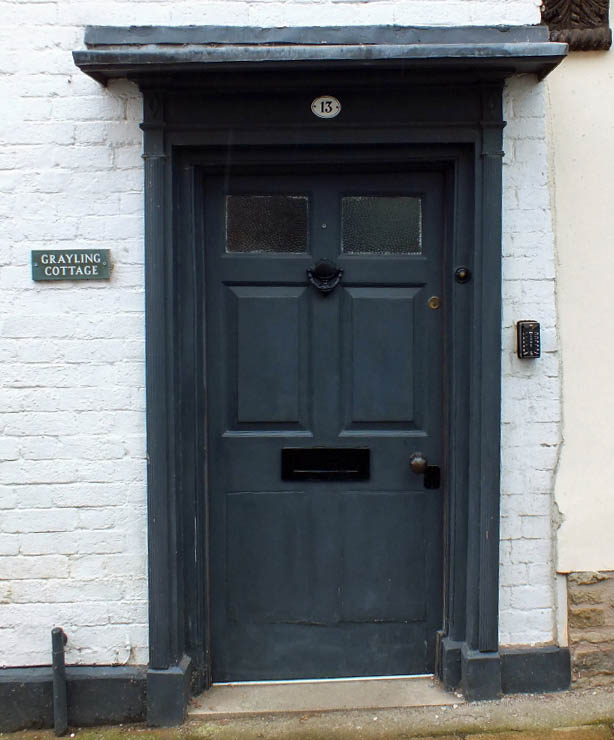
Only just in time for Ailsa’s Grey theme this week, I spotted this grey door on my way home after gathering photos for the monthly seasonal challenge. Alternatively I could have simply taken a picture of the sky as it is a particularly solid pale grey lump today. Sigh…
Grayling Cottage – Ludlow
As you can see it is very difficult to get a straight line in Ludlow. Oh, and this is my 475th post on this blog. Just thought I’d share that… 🙂
Edit: As my grey door appears to be a blue door (and I accept that it is a blue-grey, even though I know the door is more charcoal grey) I have been back to take another image with a different camera, and here it is. To be honest it is STILL not as dark a grey as it is in reality.
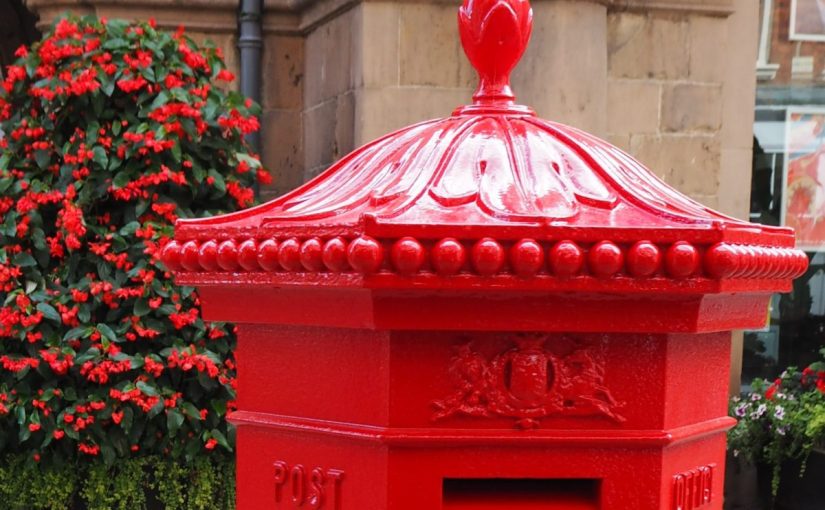
An article by English Heritage about the familiar British post boxes that we take for granted in our streets nudged me into writing about the unusual one located in Haslemere, Surrey. Sadly it is only a replica of the famous Penfold hexagonal design which dates from 1866. The box was hexagonal in shape with the top decorated by acanthus leaves and balls and painted green.
The box again achieved a degree of modest fame in the cartoon series danger mouse. Danger mouse’s sidekick was named Penfold after JW Penfold since the duo’s secret hideout was in a postbox in Baker Street. Unfortunately the hide out was not a genuine Penfold postbox! Source: The Haslemere Society
Olympic gold medal winner Helen Glover, whose Cornish home town is Penzance, had a Royal Mail box painted gold in honour of her winning performance in the rowing pairs.
Helen Glover
And of course there are many different types of the red painted boxes all over our towns and cities – originally green to blend in with the landscape they were repainted in the famous ‘pillar box red’ by 1884 to increase visibility.
Red Penfold in Bath
Penfold Painted red
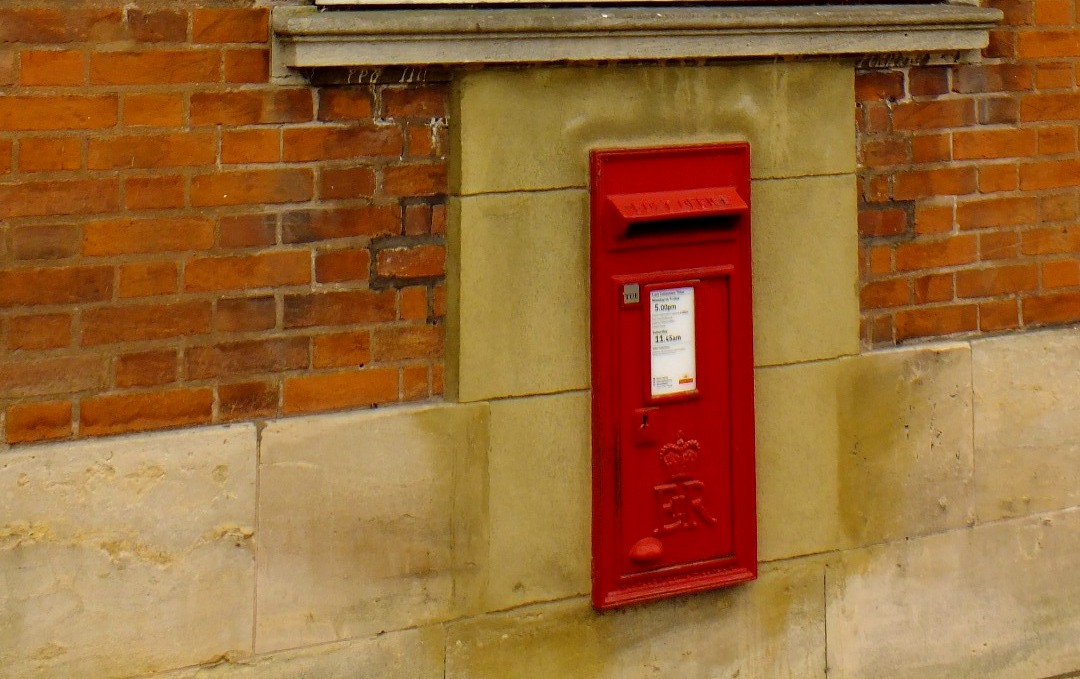
enamel-fronted boxes were inserted into the walls of Post Offices.
There are over 800 different types of post boxes. Perhaps you have an unusual one to share? If you do then please post it and link to this one in the comments or via a pingback.
This could become yet another obsession
And if you want to read more fascinating facts about post boxes then please click on the EH link above.
For the month of August I’m looking for a colourful bench
(This month I want to see photos of a bench that is painted or stained or otherwise coloured in some way. Not the plain wooden variety unless there is some colour detail)
I loved the shape and colourful frame of these otherwise ordinary wooden benches in Alert Bay, Canada
If you would like to join in with the Bench photo challenge then please take a look at my Bench Series page. No complicated rules, just a bench and a camera required 🙂
Create your own post and title it Bench Series: August
Include a link to this page in your post so others can find it too
Add the tag ‘bench series’ so everyone can find the benches easily in the WP Reader
Get your post in by the end of the month, as the new bench theme comes out on the first Sunday in September.
My Picks of the Week:
Gilly was first in with a gorgeous Gaudi bench in Barcelona. Followed quickly by another mosaic offering from Tgeriatrix and a lovely Asian carved bench from Debbie, who must be the most well-travelled person on here. Violetsky has a very colourful arty bench and keeping with the arty theme just look at the mosaics from Pauline with a link to a fascinating sculpture garden in NZ.
Moving from arty to hearts ❤ ❤ ❤ we have Polianthus
Colourful but not comfortable from Klara whilst Lori adds a poem to hers and finally Aletta is in the pink!
As always there are so many delightful benches to view, I hope you will check out the other links within the comment section.
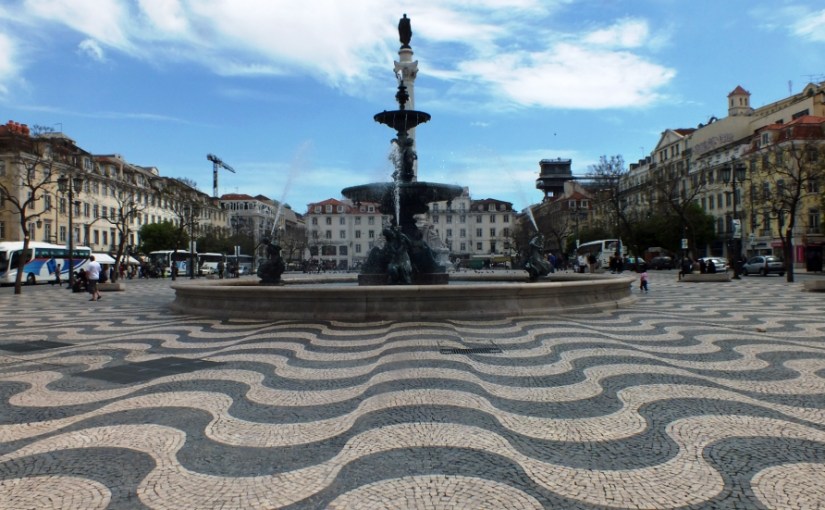
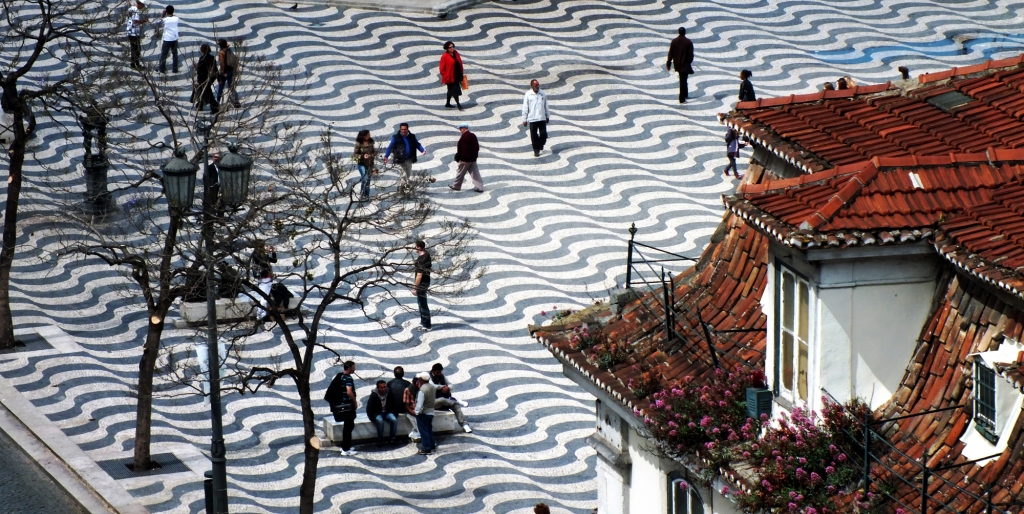
A city where it is impossible not to look at what is beneath your feet is Lisbon, Portugal. The endless intricate patterns of the cream and black cobbles automatically draw your eyes down. Known as calçada (Portuguese Pavements) some, like the wave pattern above and below in Praca Dom Pedro IV Square (Rossio), can even interfere with your balance and make people look as though they are floating above the pavement.
This is where it all started, Rossio Square, given the wave patterns in 1849.
Arch to Praca do Comércio
Belem Wave pattern
Belem Astrological Sign – Gemini
In Belém coloured marble is used with the flat cobbles to create patterns and pictures including a map of the world depicting the voyages that Portuguese explorers made during the Age of Discovery.
We’ve been together for 10 years now and you need to be replaced. But before I consign you to the bottom of the drawer, let’s take a journey through time and see where you have been…








 TRAVEL WORDS