Postcards from Around the World

From Spain we are moving on to Portugal and the capital city of Lisbon. A compact city which despite its hills is very walkable, but you can also get onto one of the historic trams which is a common mode of transport for Lisbonites. The no. 28 is the best known, but there are others.
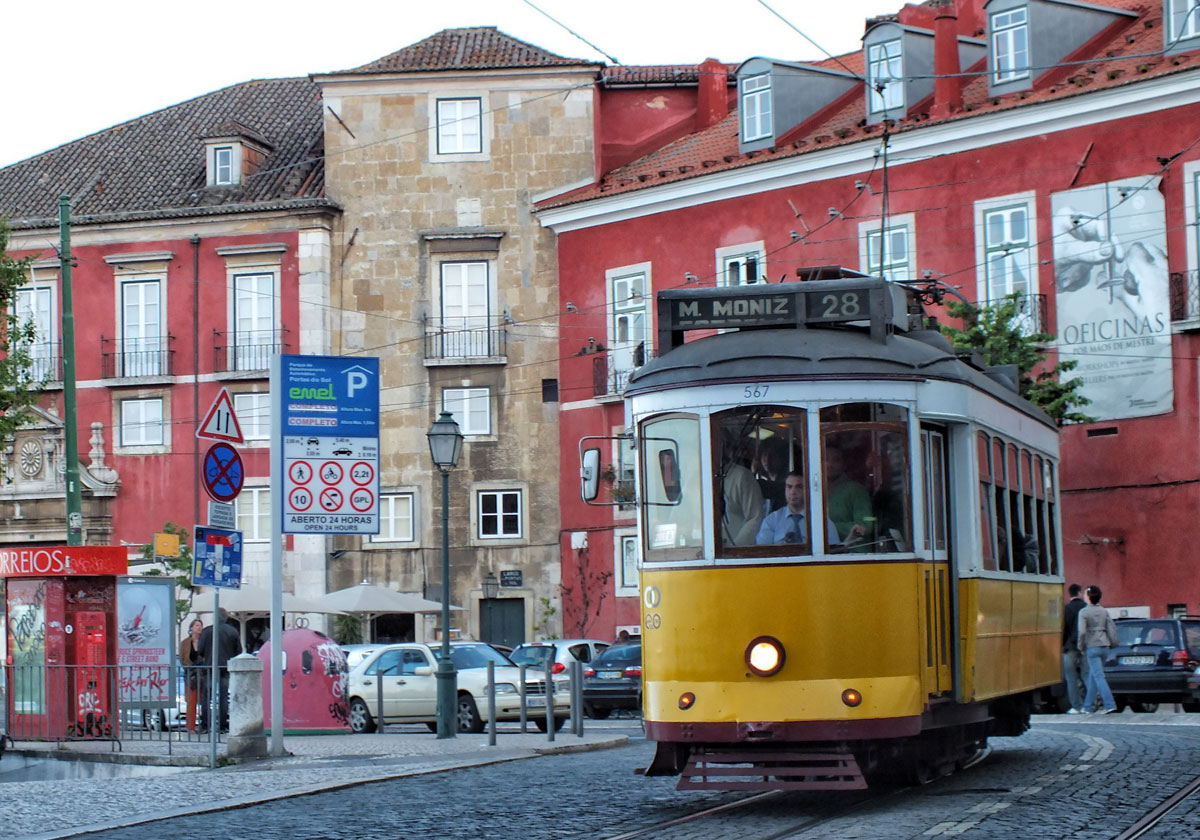
Tram 28 in Alfama district

And don’t miss the Glória funicular which leads to the São Pedro de Alcântara Miradouro overlook above Lisbon or the Santa Justa elevator designed by Ponsard, a disciple of the great master of iron works, Gustave Eiffel, more than a hundred years ago.

I spent a few days exploring, mainly walking around the various districts of Alfama, Bairro-Alto, Baixa-Chiado and Rossio and admiring the views from the various viewpoints around the city.
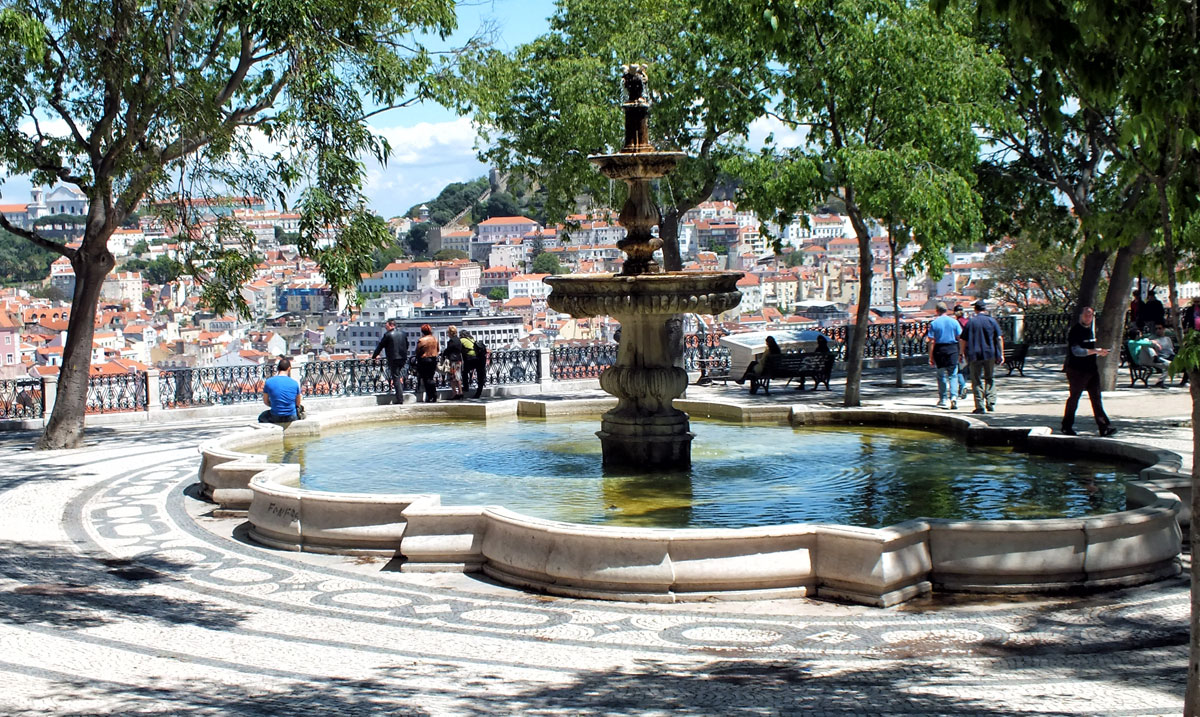
São Pedro de Alcântara Miradouro

But do not miss a visit out to Belém where you will find two unique monuments: Jerónimos Monastery and the Tower of Belém which are World Heritage Sites.  This historical and scenic district, along the River Tagus, is about 3 miles (5 km) west of downtown Lisbon. Getting there by the 15E tram (which goes to the tower) proved difficult from the train station Cais Sodré, as by the time it reached this stop it was full. Patience paid off though and just when we were considering catching a bus, one came along with standing room.
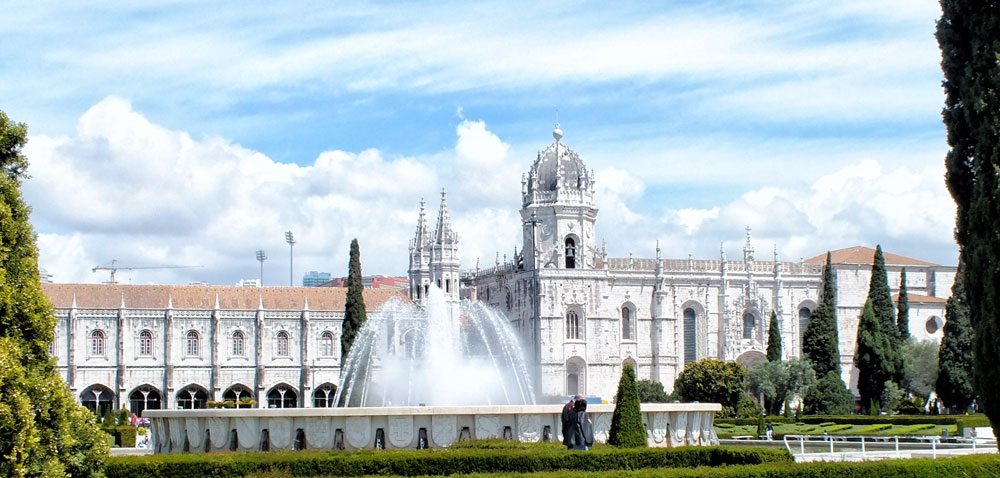
Jerónimos Monastery in the Gothic Manueline style

There was already a queue to get into the monastery and with time being short we opted to just look from the exterior and instead visited the nearby Maritime Museum which is a World of Discoveries. It reflects the importance of the experience and knowledge that the pioneering Portuguese navigators brought to the world. Great if you are fascinated by the Portuguese explorers (as I am). 

The Museum of Contemporary Art is worth a look too before crossing over to the Jardim da Praça do Império (Empire Square), built for the Portuguese World Exhibition (1940) which commemorated the 800th anniversary of the independence of Portugal and the 300th anniversary of the Restoration.
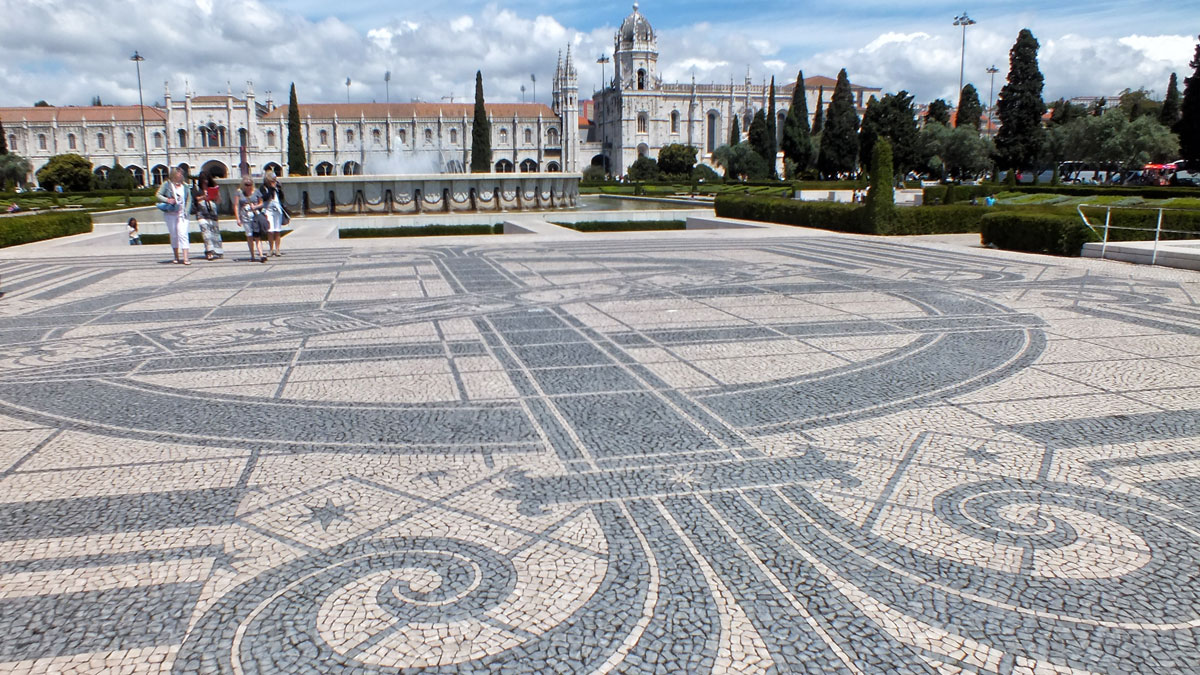
Park and Fountain

Because of a main road and railway lines you need to use an underpass to get to the area along the waterfront which is lovely.
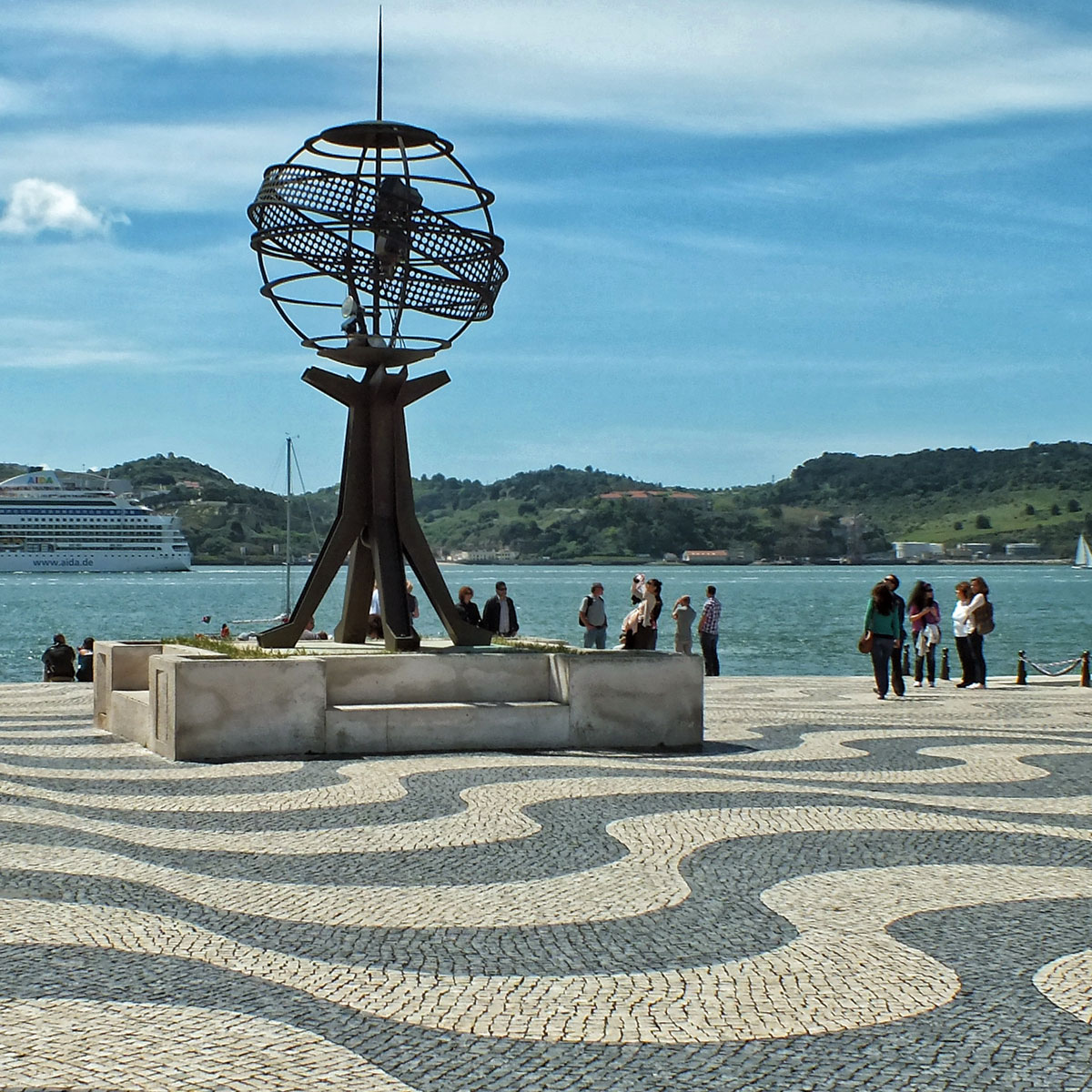
A symbol of Portuguese flag, the armillary sphere, place close to the “Padrão dos Descobrimentos”. By Edgar Barreira

Here you find the extraordinary Monument to the Discoveries / Padrão dos Descobrimentos which was first erected in 1940 in a temporary form, as part of the Portuguese World Exhibition, built with perishable materials. The 171 ft (50 m) tall monument was reconstructed in 1960 to remember the 500th anniversary of Prince Henry the Navigator’s death. You can go up to the top but again be prepared to queue.
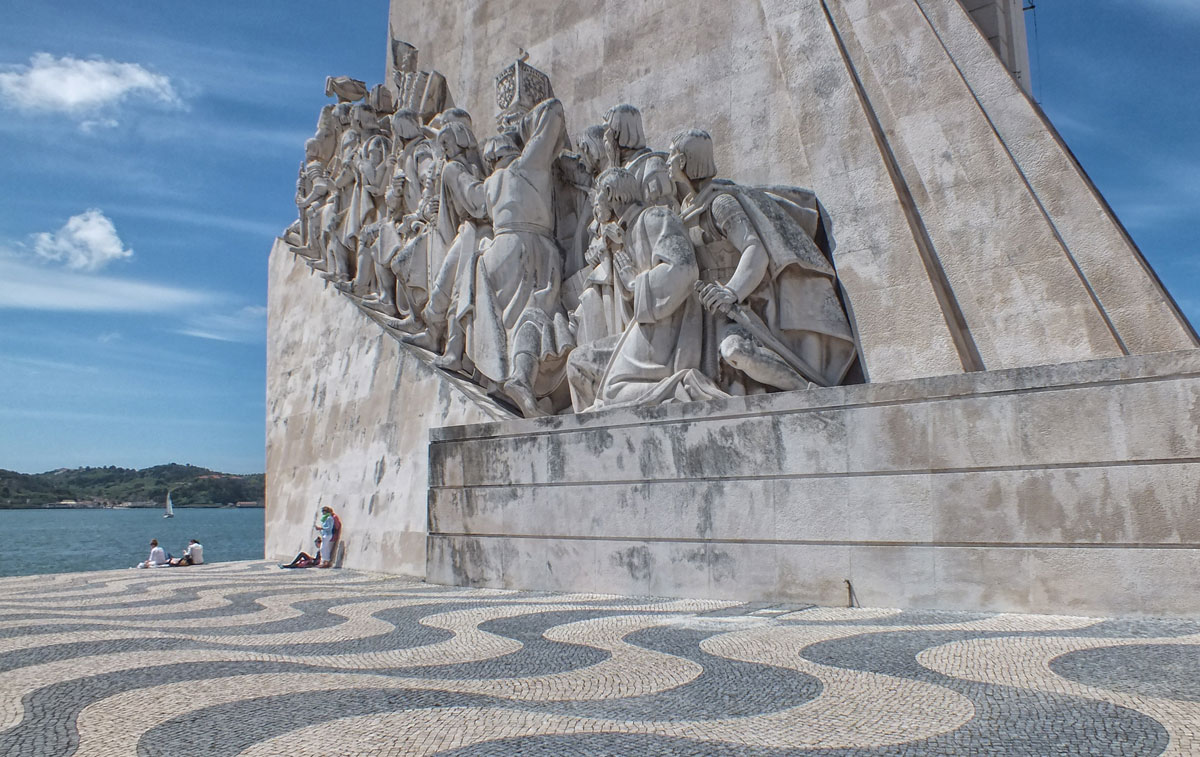
The figures includes explorers like Vasco da Gama and Magellan, monks, cartographers, kings, writers, navigators, and missionaries among many other professions. At the base of the monument is a large mosaic with a world map showing where the Portuguese explorers landed and important dates during their expeditions.
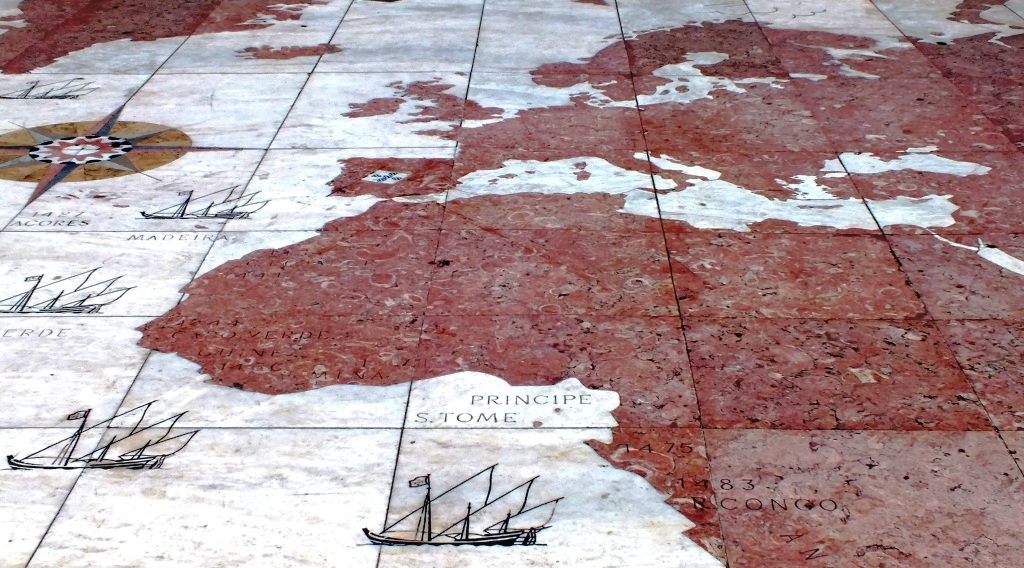
The Discovery Map

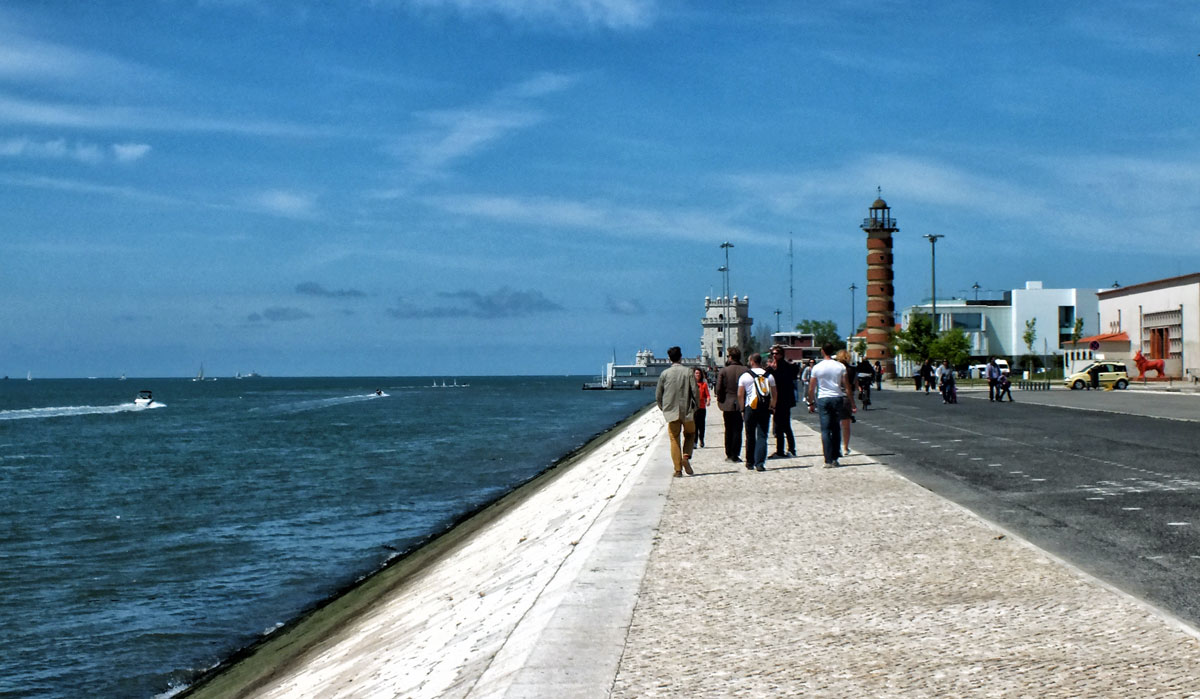
And there is a lovely walkway alongside the River Tagus to the Belém Tower,
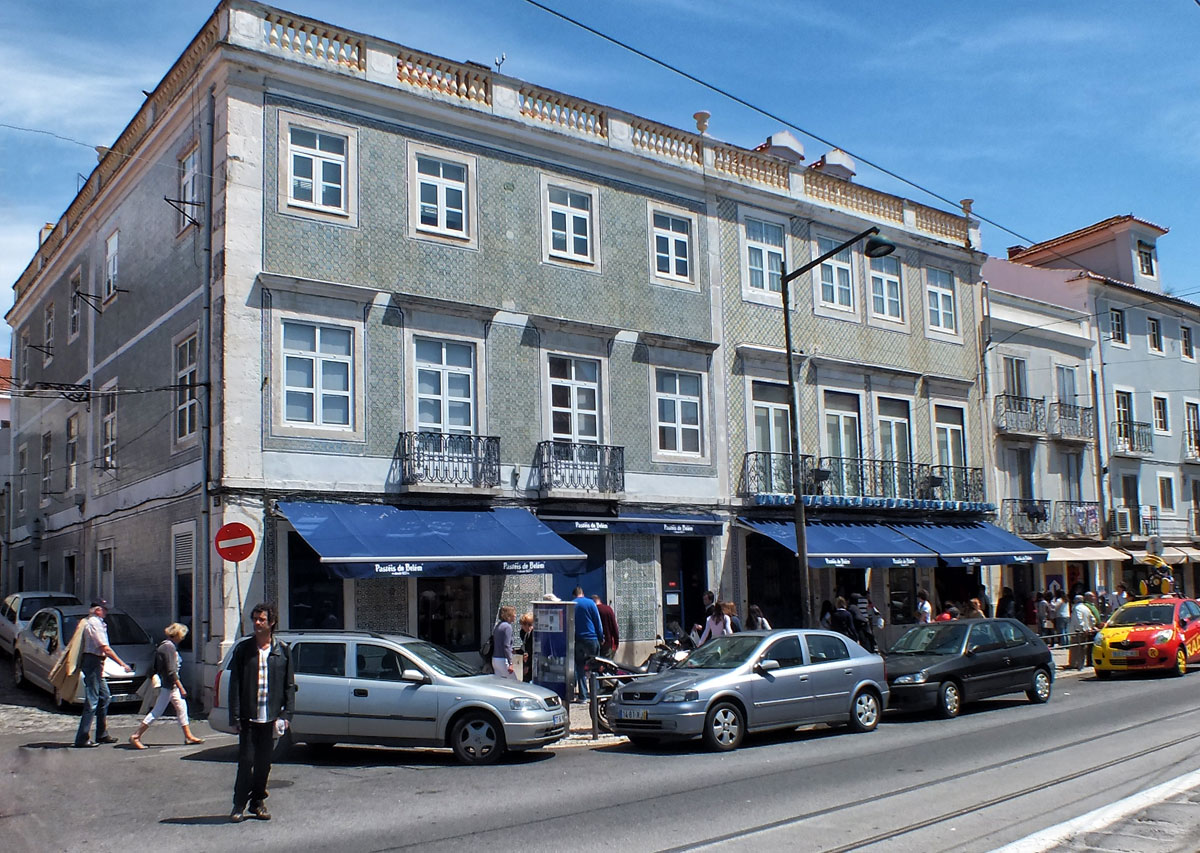
Of course our last stop was to the popular Pastéis de Belém patisserie which is the original home of the delicious Pasteis de Nata or Pasteis de Belém (custard tarts). Good coffee too.
Postcards from Around the World

The first thing my daughter and I did on arrival in Barcelona (after dropping our cases off at the hotel) was to join a free walking tour starting from Plaça de Catalunya and finishing at the waterfront. Of course a free walking tour is not exactly free, you are expected to offer a donation at the end of the tour, which in this case was well worth it.

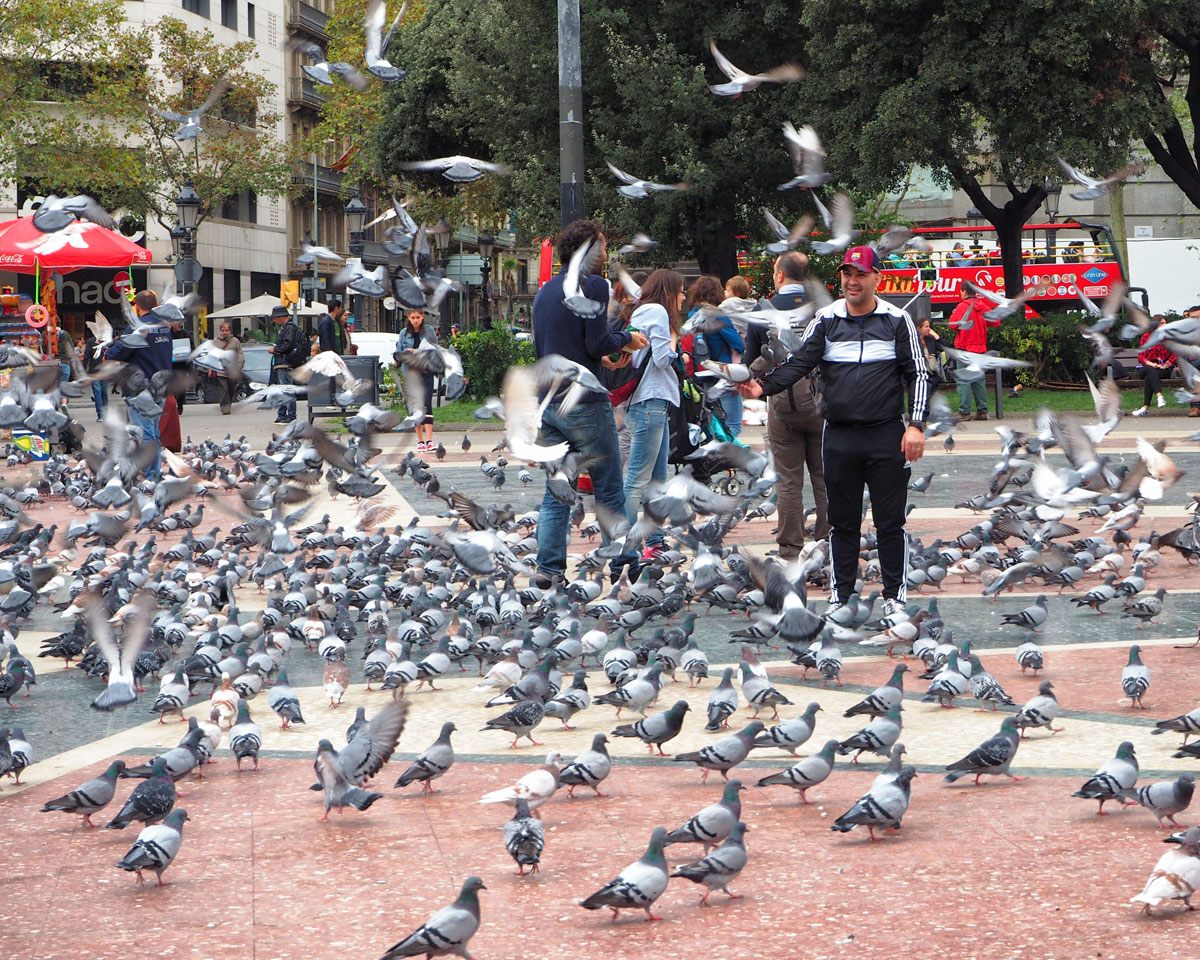
Feeding the pigeons in Plaça de Catalunya

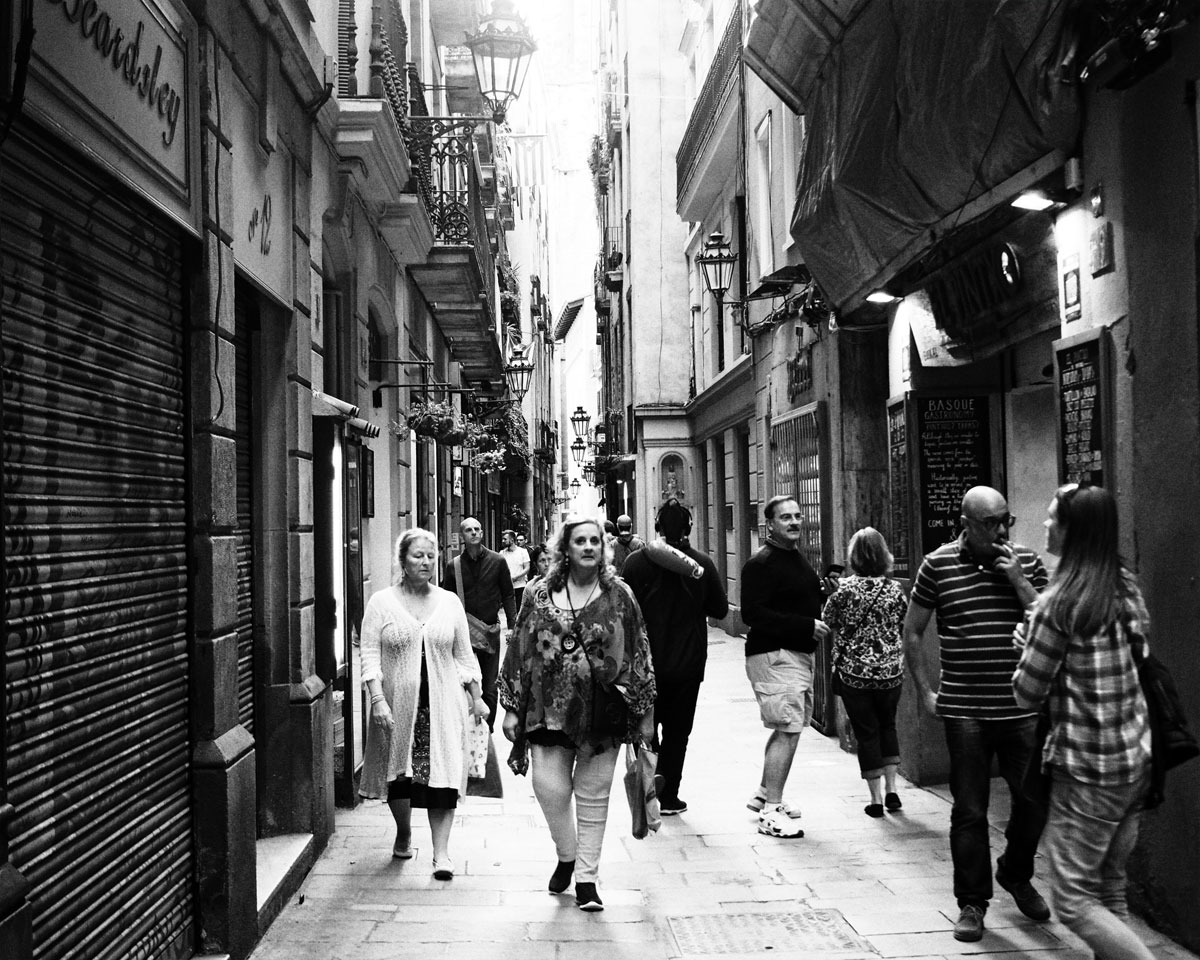
We wandered around the many back streets and the Gothic Quarter a stone’s throw from La Rambla and believe me there are so many narrow alleyways that when we tried to find some of the places later on by ourselves, we got completely lost.

Carrer Petritxol, in Barcelona’s Gothic Quarter – it has a lot of shops, murals, and art – and home to one of Barcelona’s most delectable treats: the perfect hot chocolate and churros.

Just about every shuttered doorway is covered in murals and graffiti and I was frantically snapping shots as we moved on.

Barcelona is a shopaholic’s paradise as well as being full of historical buildings and art. I was fascinated by these tiled murals that decorate the walls in this narrow pedestrian street, Carrer Petritxol, in Barcelona’s Gothic Quarter.  It runs from Portaferissa to Plaça del Pi, not far from La Rambla. The murals tell stories of past events and famous residents or visitors.

There are several art galleries along this street as well as shoe shops, soap shops and chocolate shops!

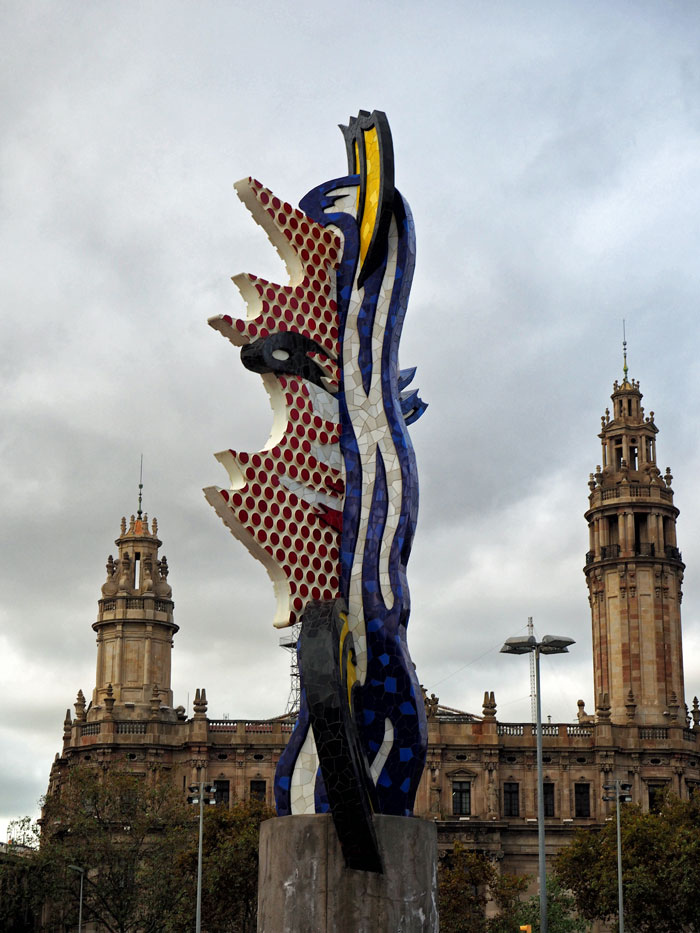
The end of the tour was at El Cap de Barcelona from where we headed down to the beach and the Makamaka restaurant for cocktails and some food.

Created in 1992, the Head of Barcelona is a 64-ft. abstract statue by American Roy Lichtenstein.

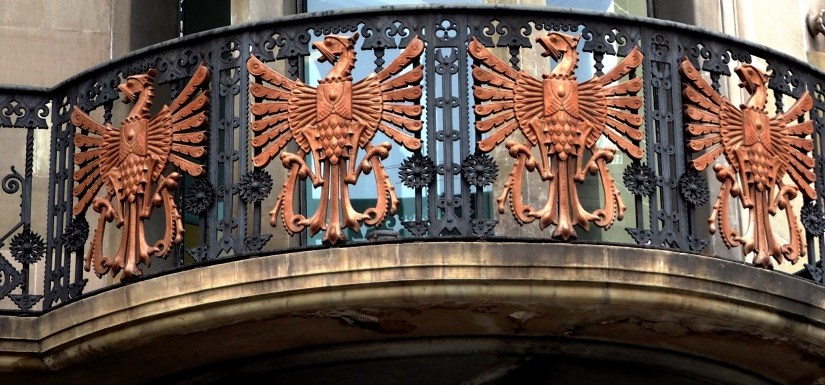
(The header photo is the balcony detail on the Casa Pia Batlló, which is located on the corner of Rambla Cataluña and Gran Vía de les Corts Catalanes. The building is in the Modernist style, built between 1891 and 1896 by the architect Josep Vilaseca i Casanovas.)

Postcards from Around the World

There hasn’t been an awful lot of travelling for this blog in recent years and whilst stuck at home during the dreadful wet weather I have been sorting through my photos. A very slow task! But I realised how many photos have never made it onto a blog post, so my idea for this year (2024) is to pick out some of my unused images for a journey around the world.

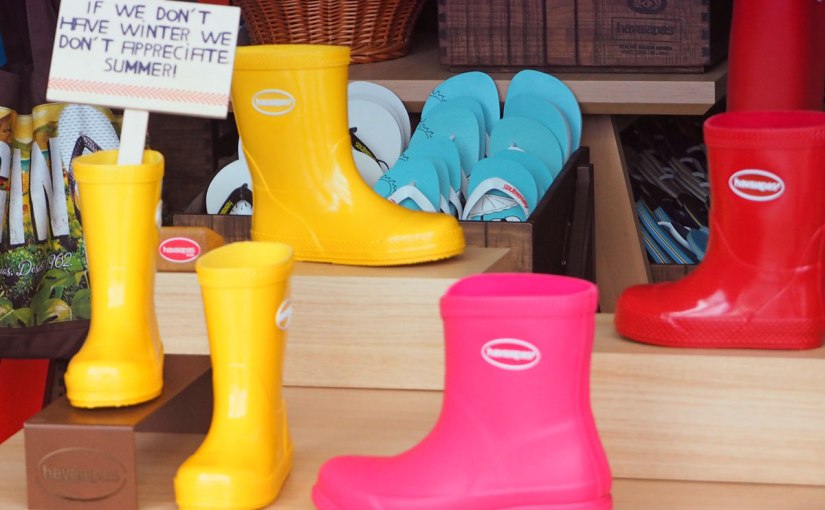
We’ll begin with this very apt photo of a shoe shop in Barcelona. Though I think you’d need rather longer boots to cope with our rainfall!

A – Z of Locations: V is for Vrynwy

During this year I shall be posting photographs from places around the UK, many of which have not been published before. Where I have previously blogged about a location I will provide a link to the post, though you won’t be able to comment on it as I restrict comments to six months.

V is for Vrynwy (Lake)

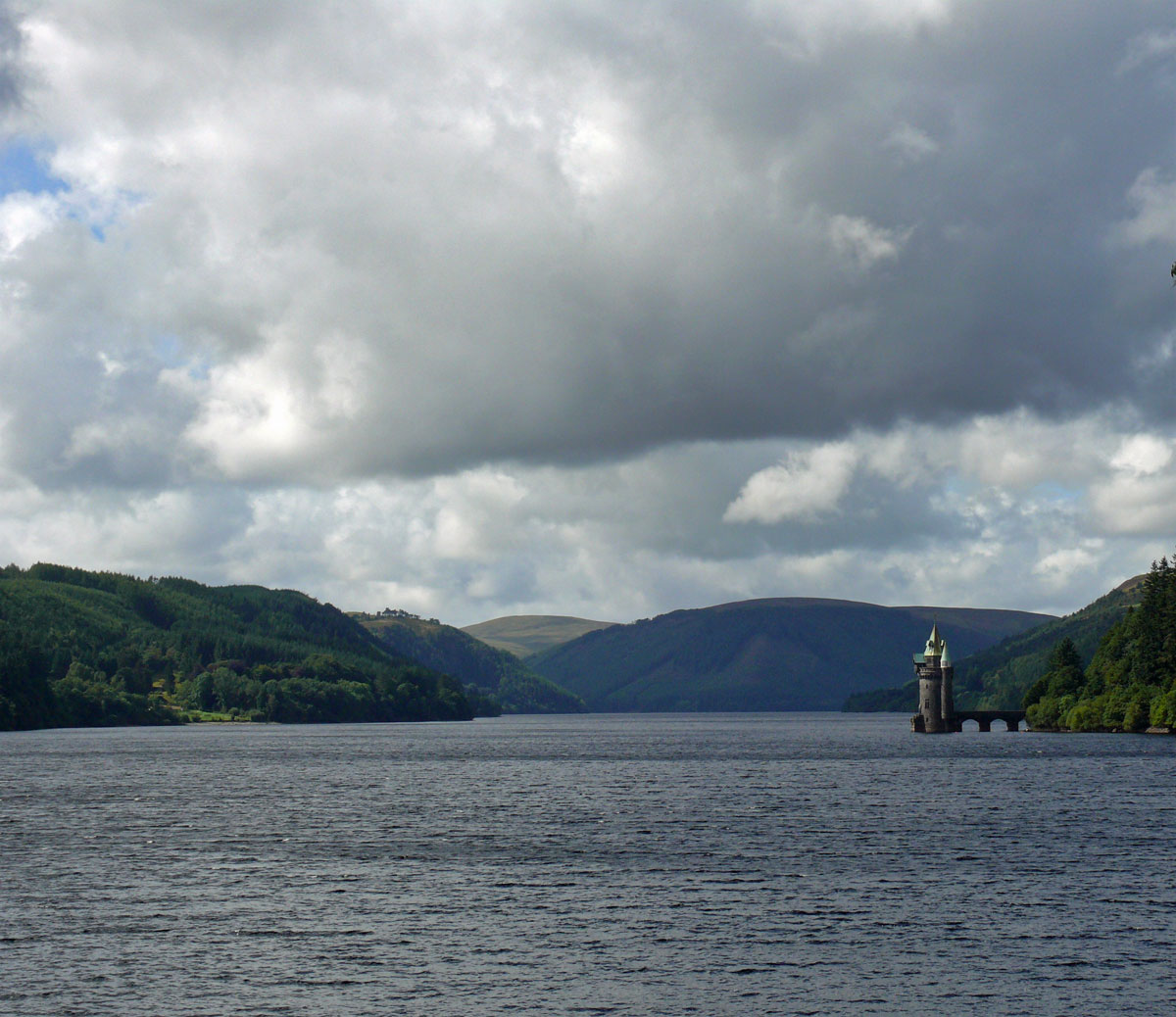
Lake Vyrnwy (pronounced Vernwee) is a reservoir in Powys, Wales, built in the 1880s for Liverpool Corporation Waterworks to supply Liverpool with fresh water. Just on the edge of the Snowdonia National Park and south of Lake Bala, Lake Vyrnwy is set amidst the remote and beautiful Berwyn Mountains. It’s a short drive from the Shropshire border (The Welsh Marches).

View of the lake from the dam bridge.
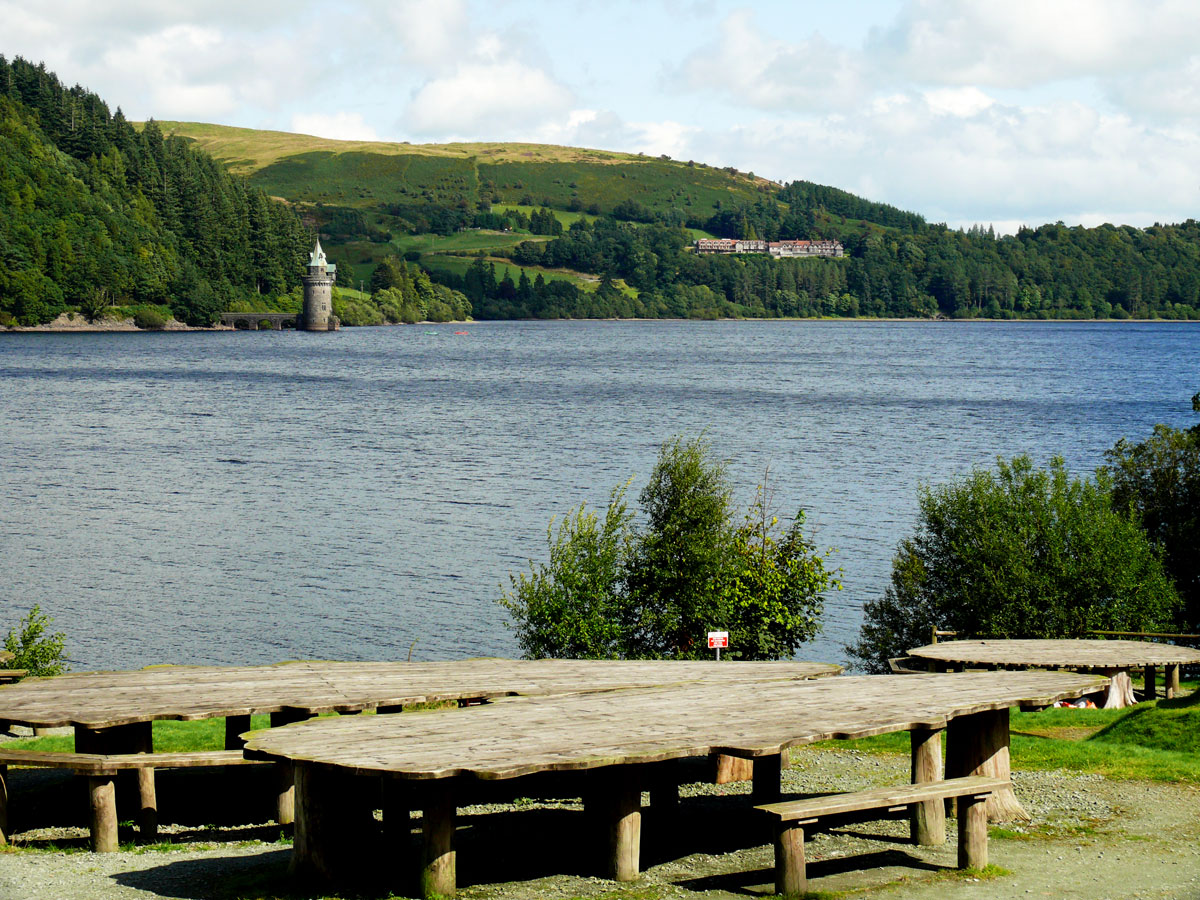
Picnic Tables
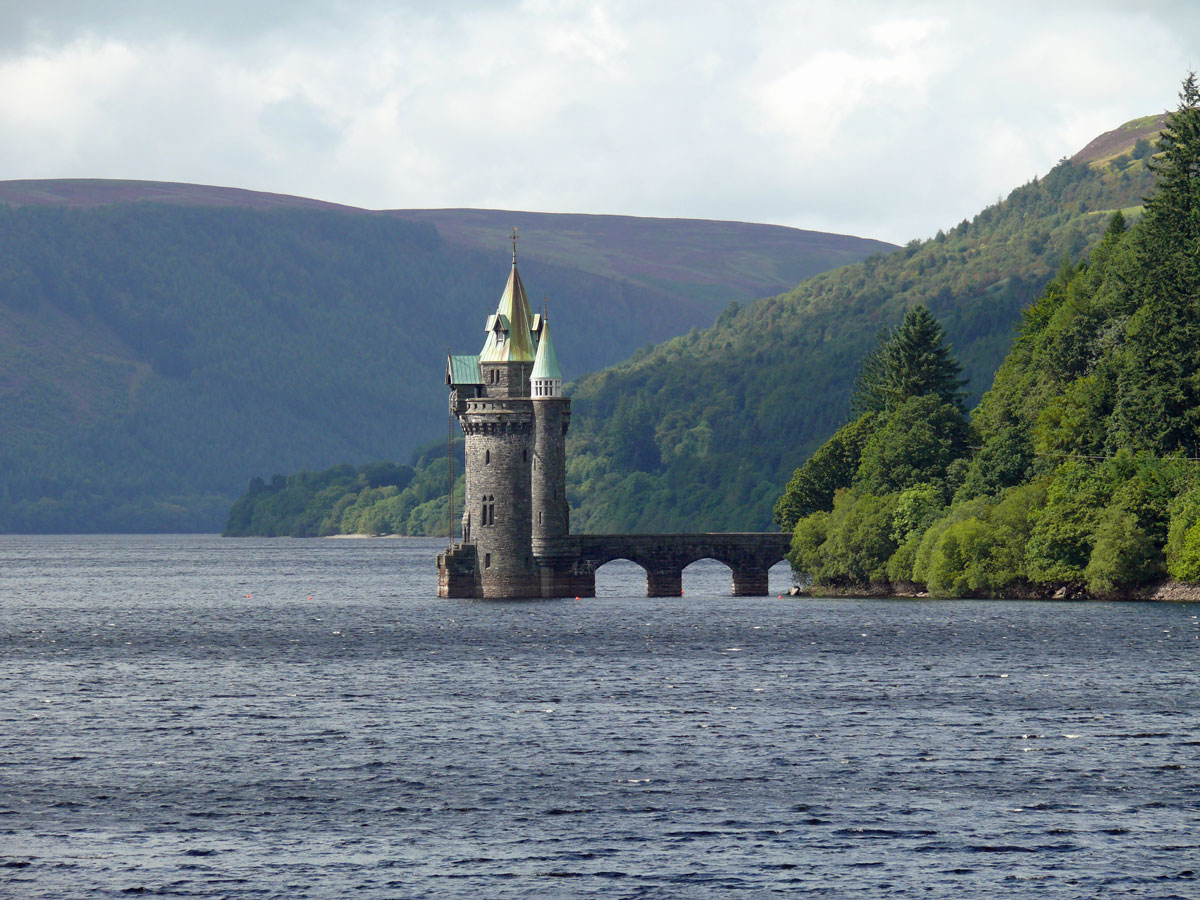
The Straining Tower at Lake Vyrnwy is an intake tower built to extract water from the lake.

There are lots of trails and walks around the 5 mile long lake with several picnic spots and viewpoints and bird hides from which to watch the variety of birdlife in the area.

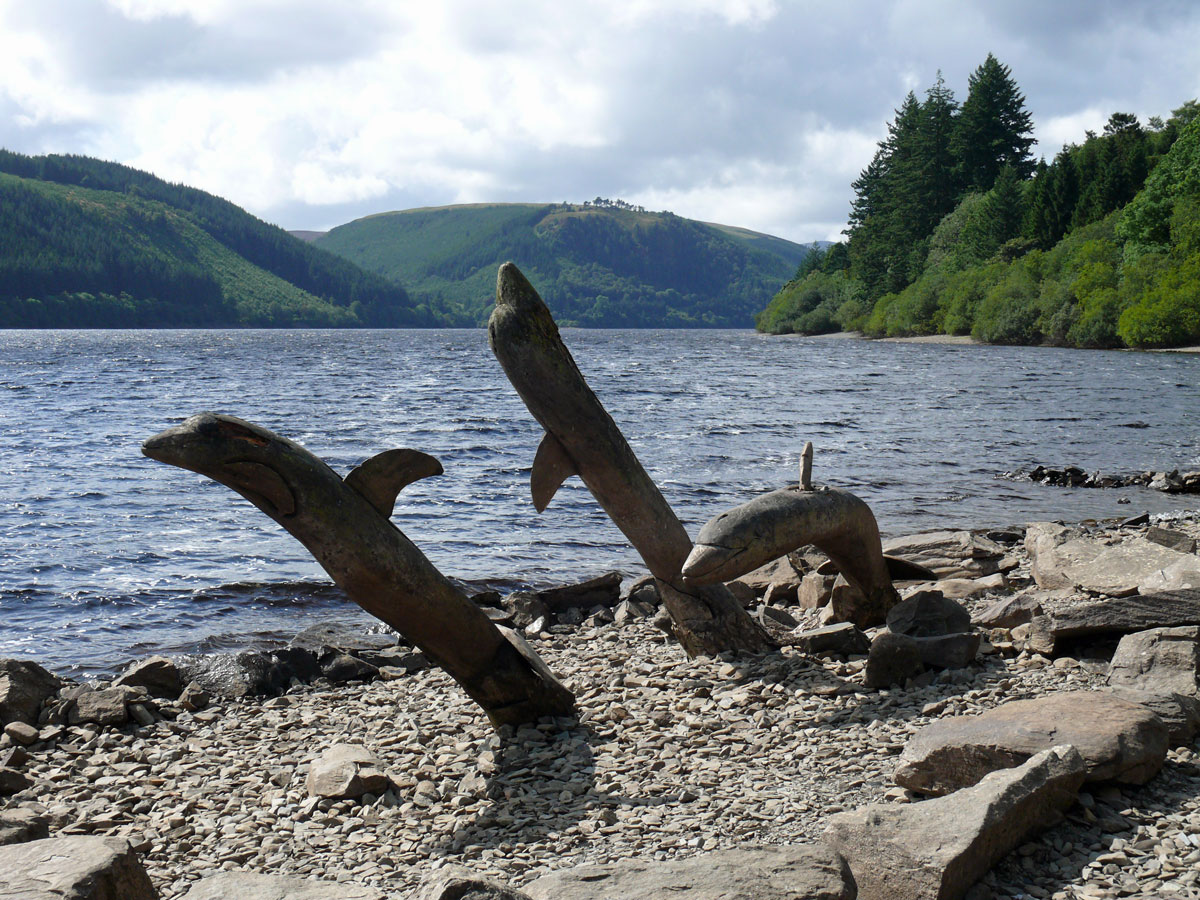
Dolphins carved from driftwood

There are many other activities too including sailing, fishing and mountain biking. Visitors can embark on a relatively easy 12-mile bike ride around the lake or hike one of the many walking trails, such as the Rhiwagor Trail or the Craig Garth Bwlch Trail.

A – Z of Locations: S is for St Bride’s Bay

During this year I shall be posting photographs from places around the UK, many of which have not been published before. Where I have previously blogged about a location I will provide a link to the post, though you won’t be able to comment on it as I restrict comments to six months.

S is for St Bride’s Bay and Skomer and Skokholm Islands

Another one from Wales, this time in Pembrokeshire.

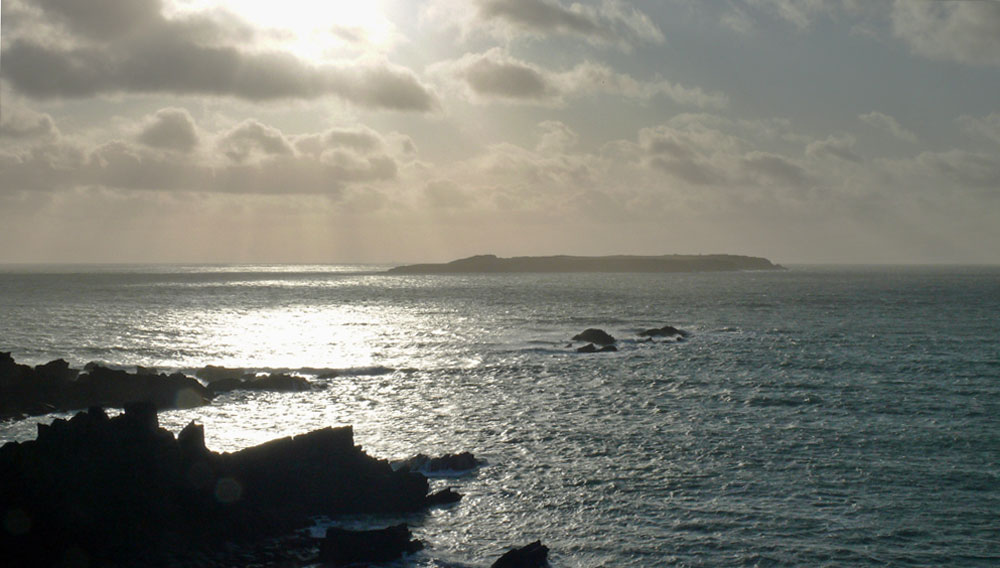
Lying in the Celtic Sea two miles off the southwest Pembrokeshire coast, Skokholm has its own charm and sense of remoteness with tall, sandstone cliffs and a wild landscape

In the warmer months Skokholm is colonised by tens of thousands of nesting seabirds. By day there is frenetic activity among the puffins, razorbills, guillemots and gulls – and by night there is more commotion from the Manx shearwaters and storm petrels! (Source: Welsh Wildlife Trust)

Skomer Island is less than a mile off the beautiful Pembrokeshire coast.

Between April and July, Skomer is well known for its puffins, but there is so much more to this National Nature Reserve – including Manx shearwaters, dolphins, seals, razorbills, and so much more! You can visit for just a day  or even stay overnight in a hostel. (Source: Welsh Wildlife Trust)

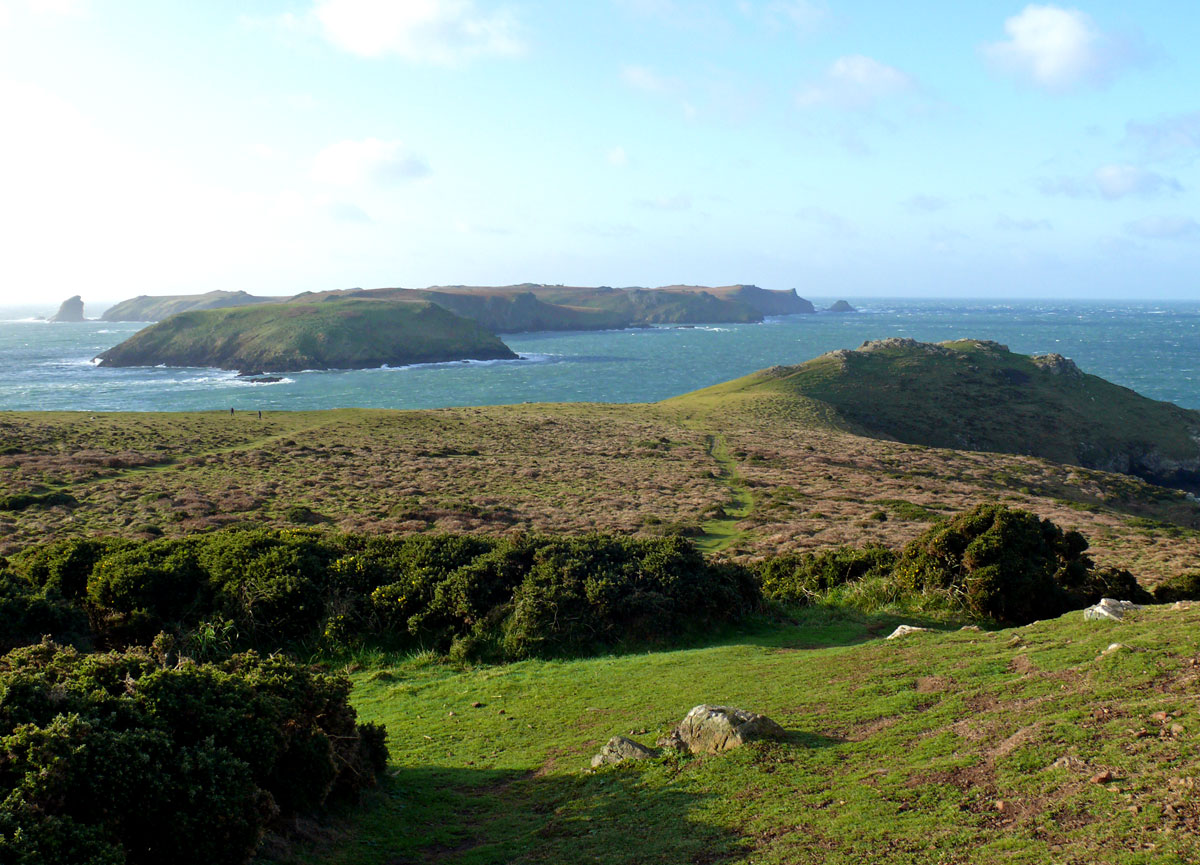
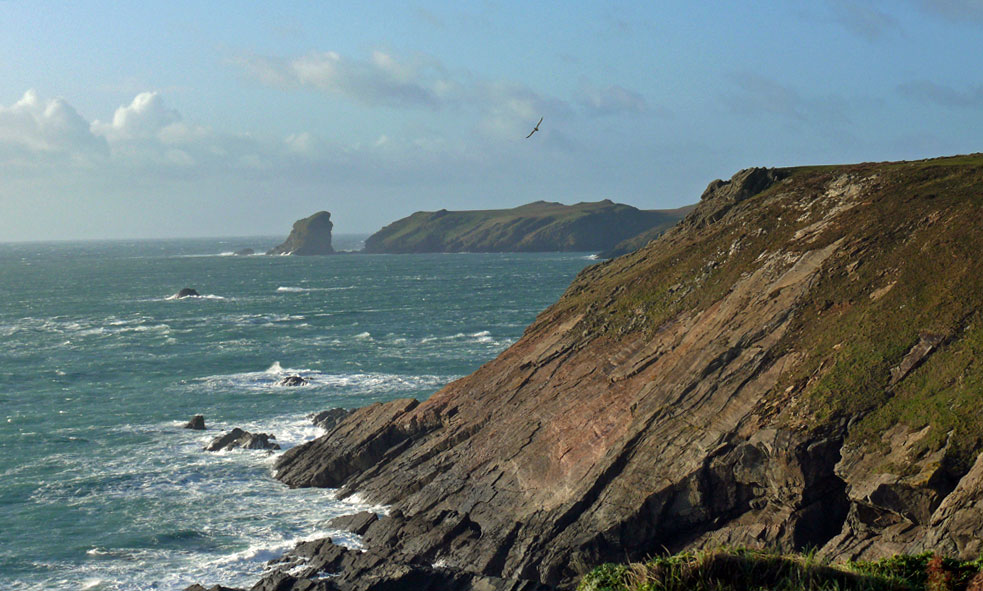
Incredible views from the top of Wooltack Point

Our visit was on the last day of our family Christmas holiday in Wales in 2011. We stayed in a former pub near Rosebush and well remembered for being absolutely freezing cold all week with rain and/or fog every day bar this one! Whilst the children and grandchildren went off to visit Pembroke Castle, the OH and I decided to have a little road trip around the Pembrokeshire coast first to Fishguard then on to St David’s (the smallest city in Wales) before following the coast down to Marloes and St Brides.

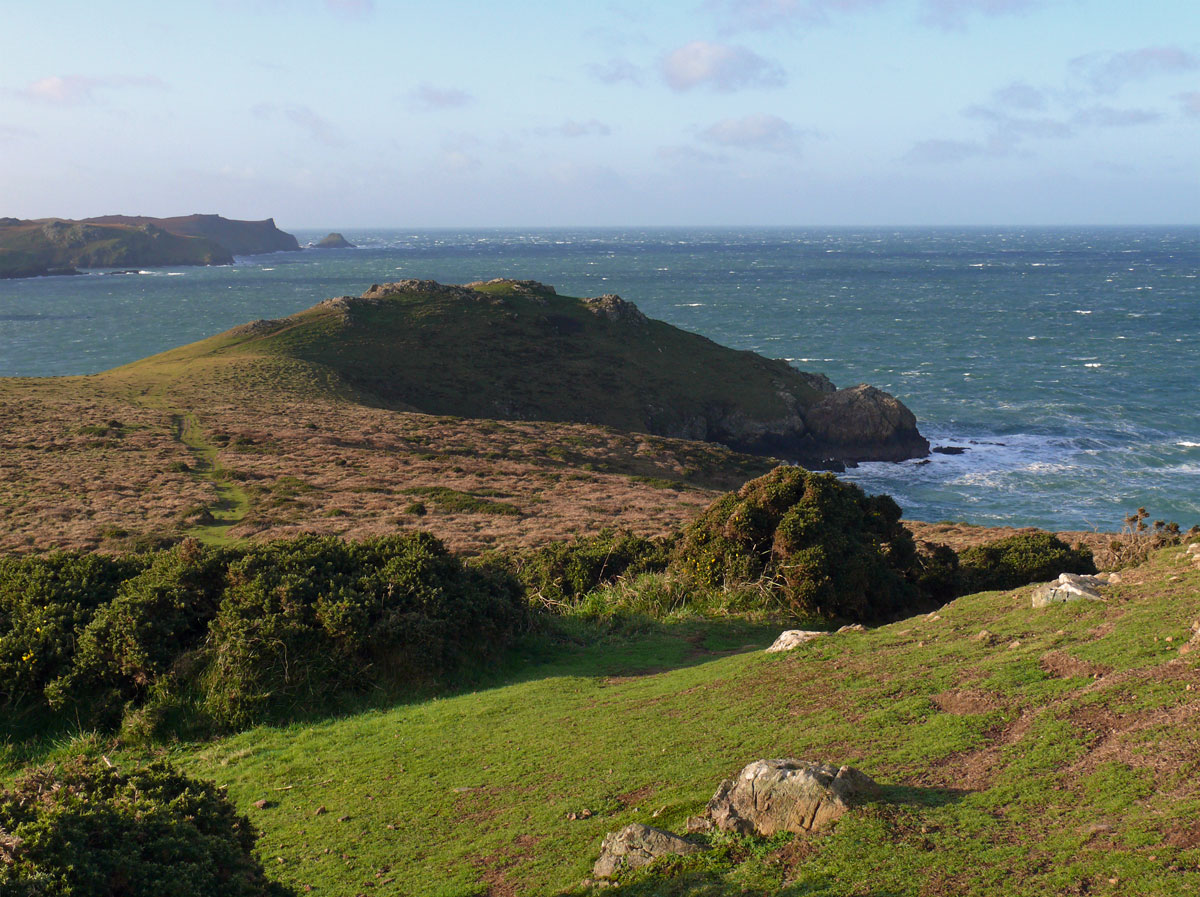
Wild white-capped waves

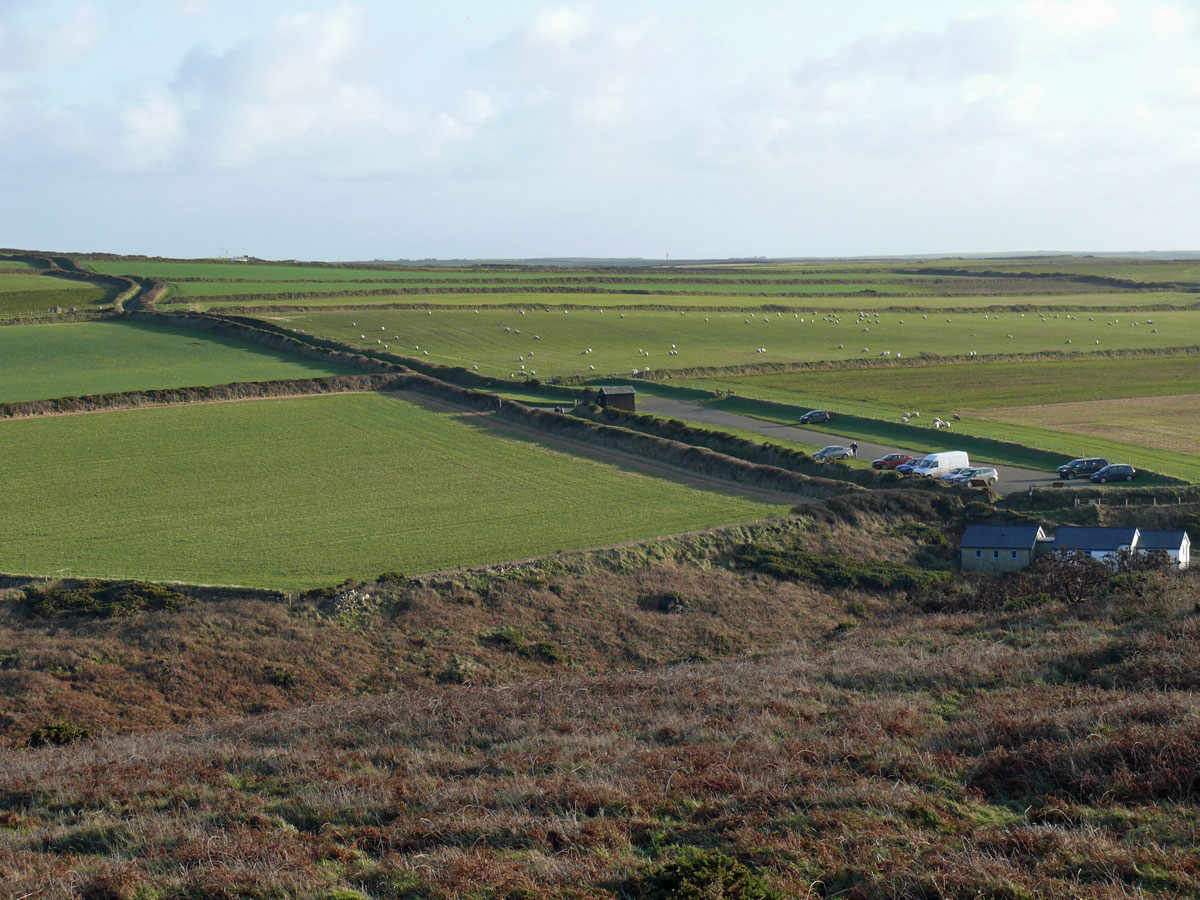
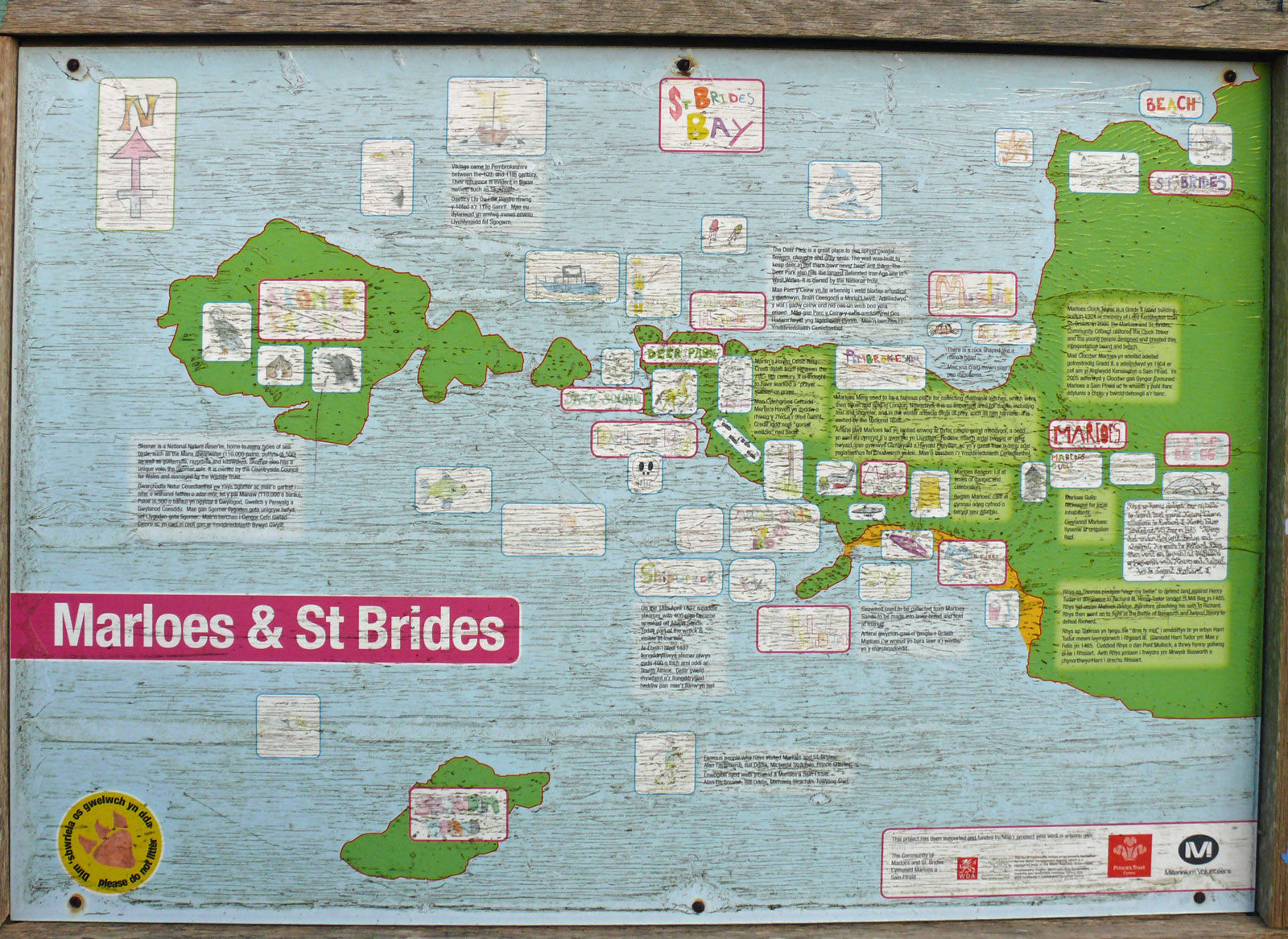
We parked at Martin’s Haven close to the Deer Park for a walk and to get a glimpse of the islands. Although it was a dry and sunny day the wind was fierce so it was a very quick walk.

The car park at Martin’s haven (the end of the road)

From here we returned to Marloes for some lunch and then a quick drive to Dale which is on the Milford Haven Waterway, an estuary forming a natural harbour that has been used as a port since the Middle Ages, before dashing back north to catch the sunset at the Pentre Ifan Burial Chamber in the Preseli Hills.

If you haven’t already visited Pembrokeshire then I recommend that you do. It has an amazing landscape with towering cliffs, pristine beaches, rolling moorlands rich with wildlife and history, beautiful coastal towns like Tenby (equivalent to Cornwall’s St Ives) and Britain’s smallest city, St Davids with its Cathedral and the ruin of The Bishops Palace.