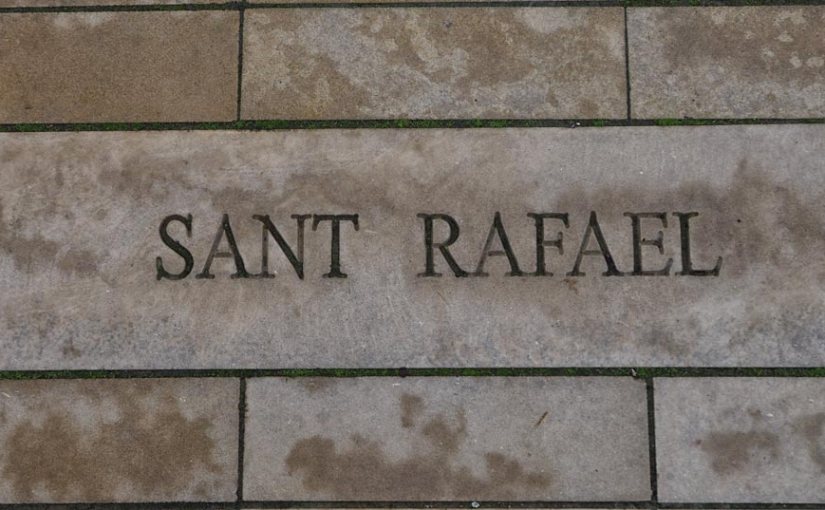
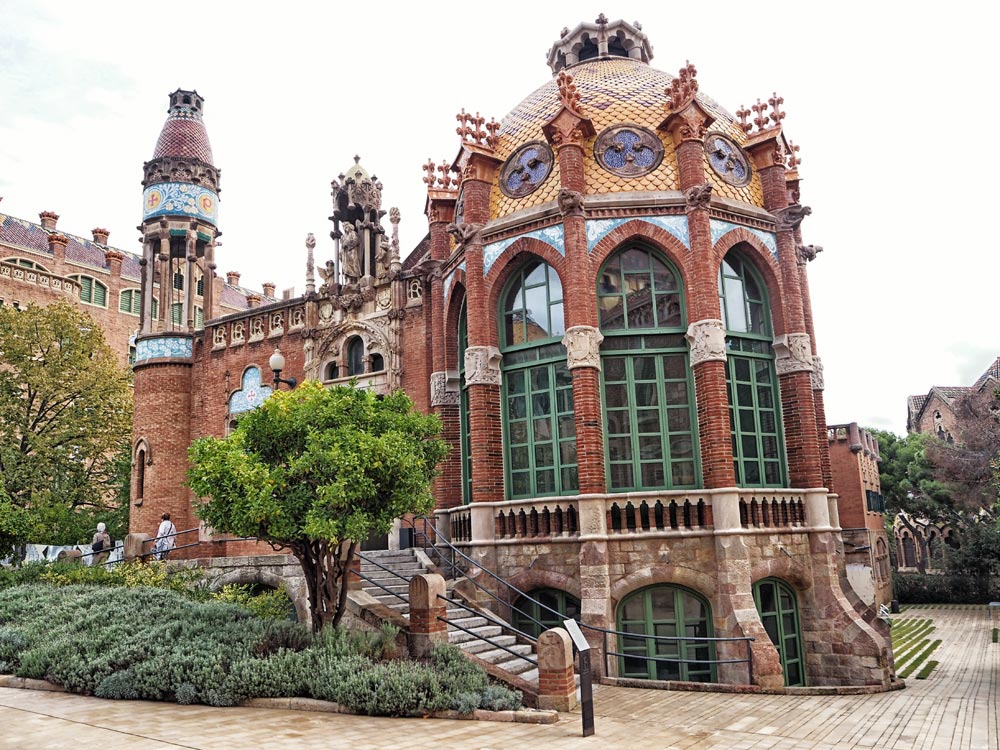
Sant Rafael Pavilion is one which you can enter. It was built between 1914 and 1918 and was initially the trauma ward then became used for internal medicine and infectious diseases.
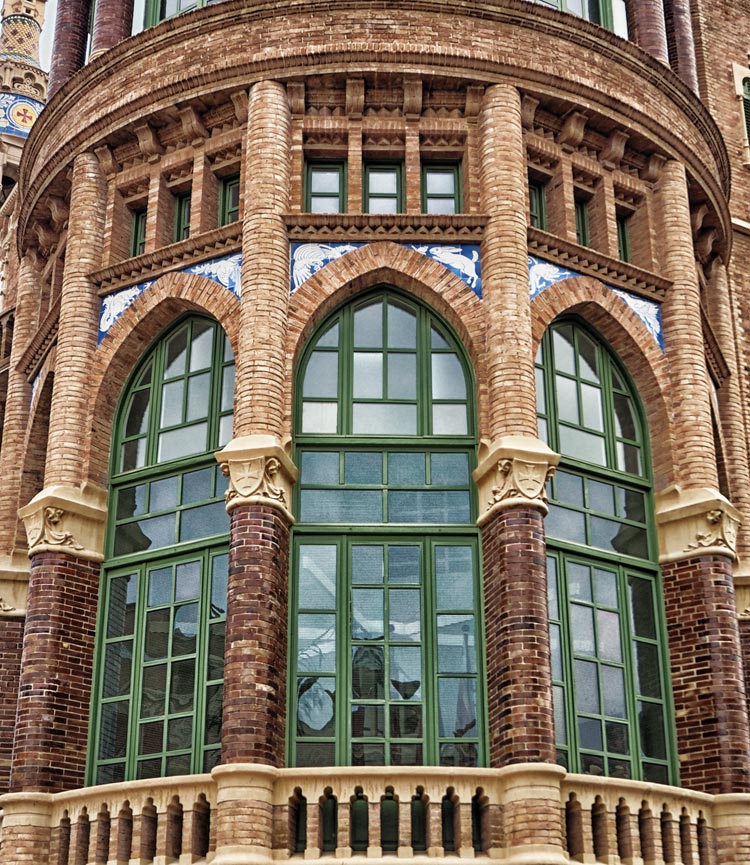
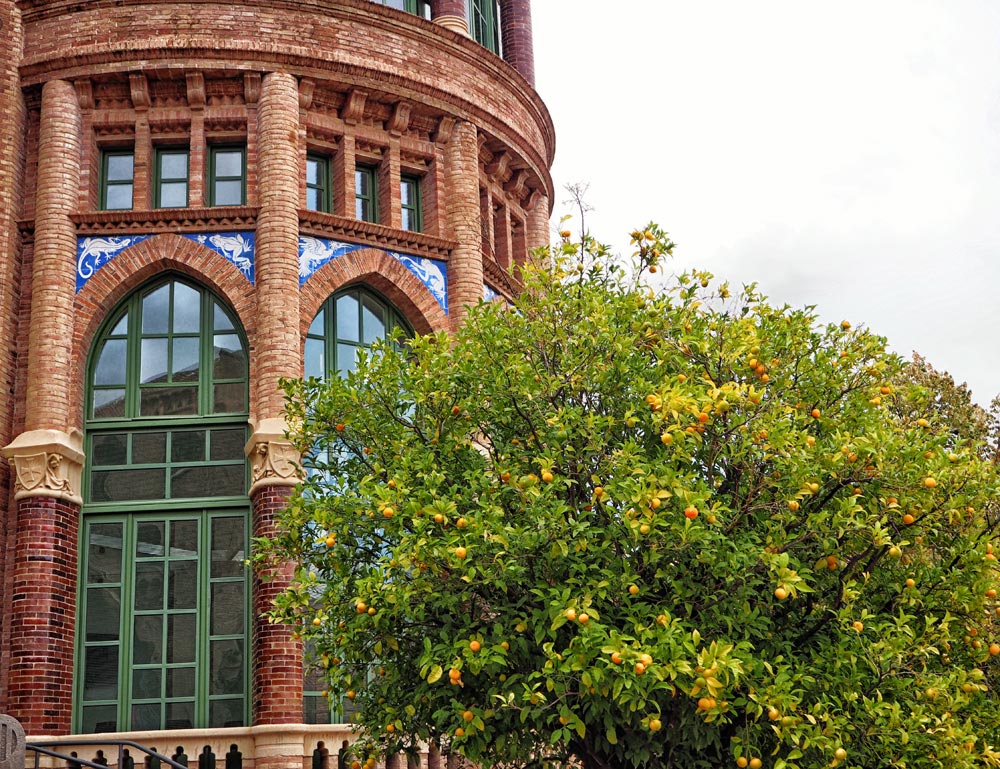
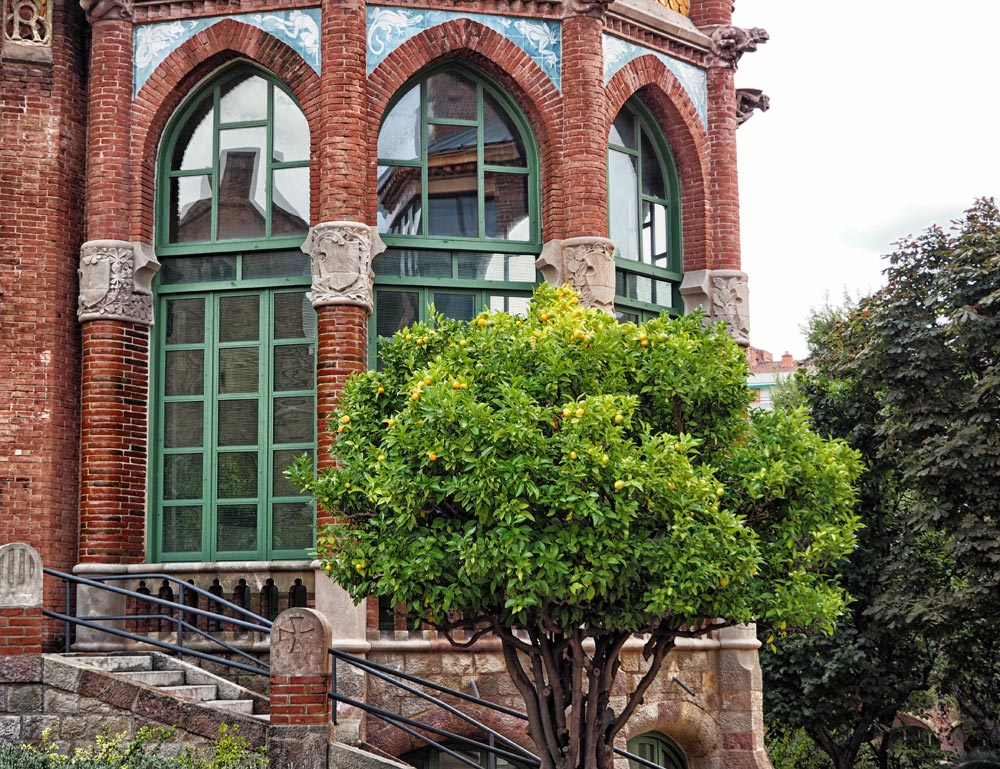
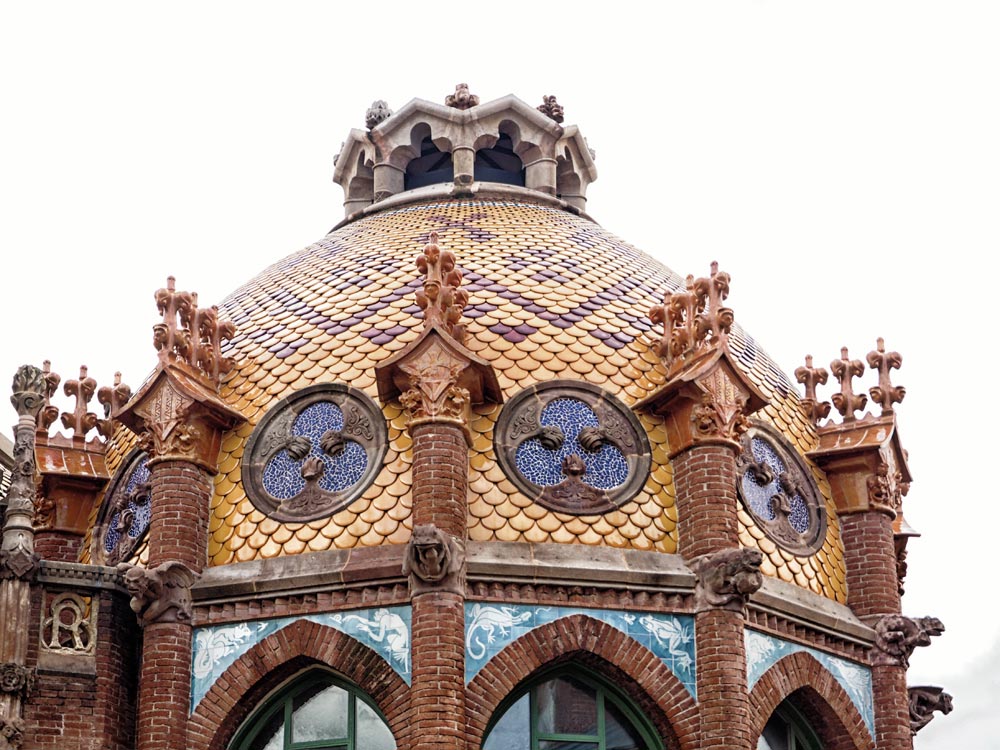
The adoption of flora and fauna as ornamental decorations (see above the windows and the decorative capitals) both in ceramics and sculpture are not only decorative, but also infer healing and regeneration, positive over negative and life above death.
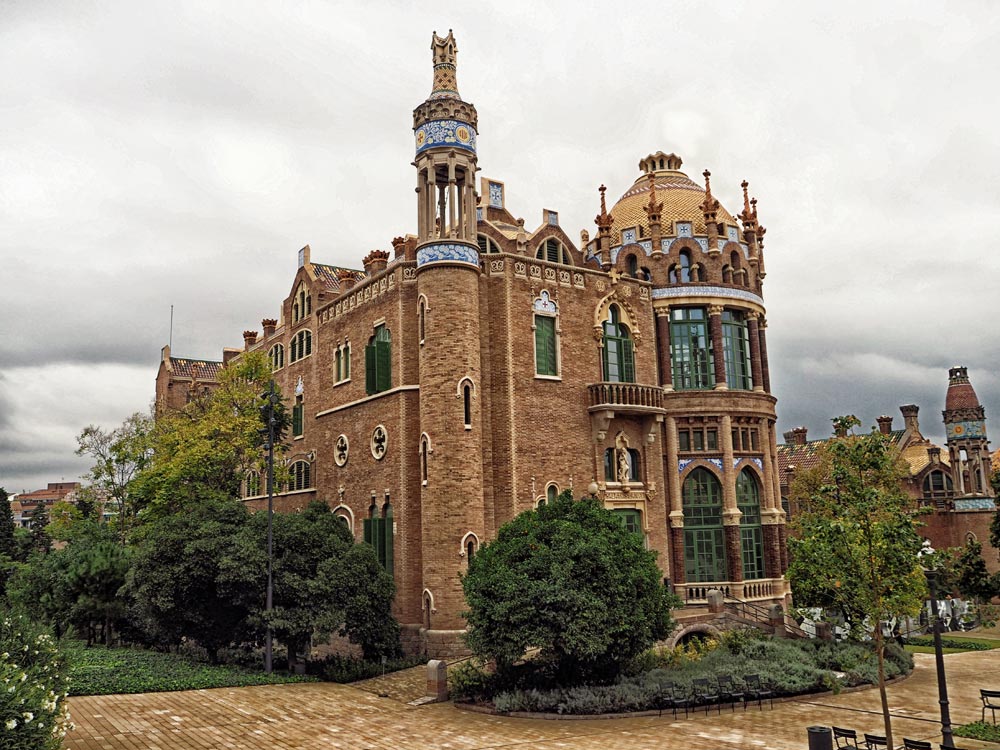
The roofs also feature ventilation shafts surmounted by either glazed ceramic or decorated stone and ornamental pinnacles also in glazed ceramic. Above you can see the patterns created using the scales in different colours on the day room domes.
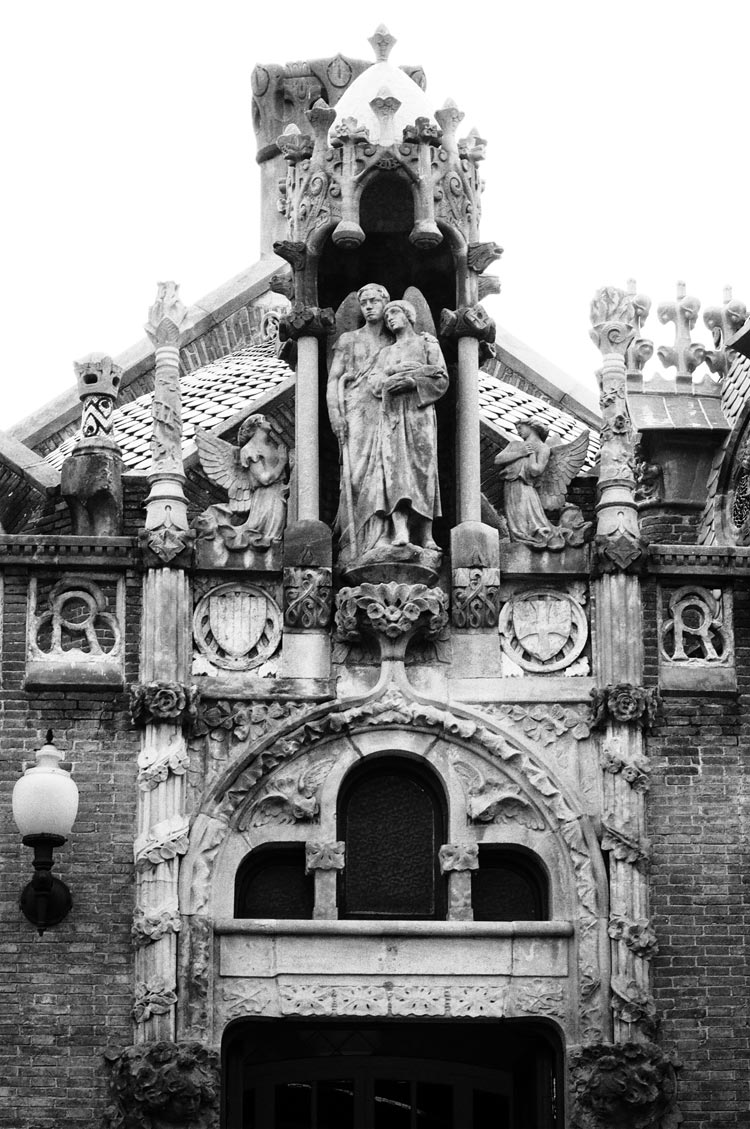
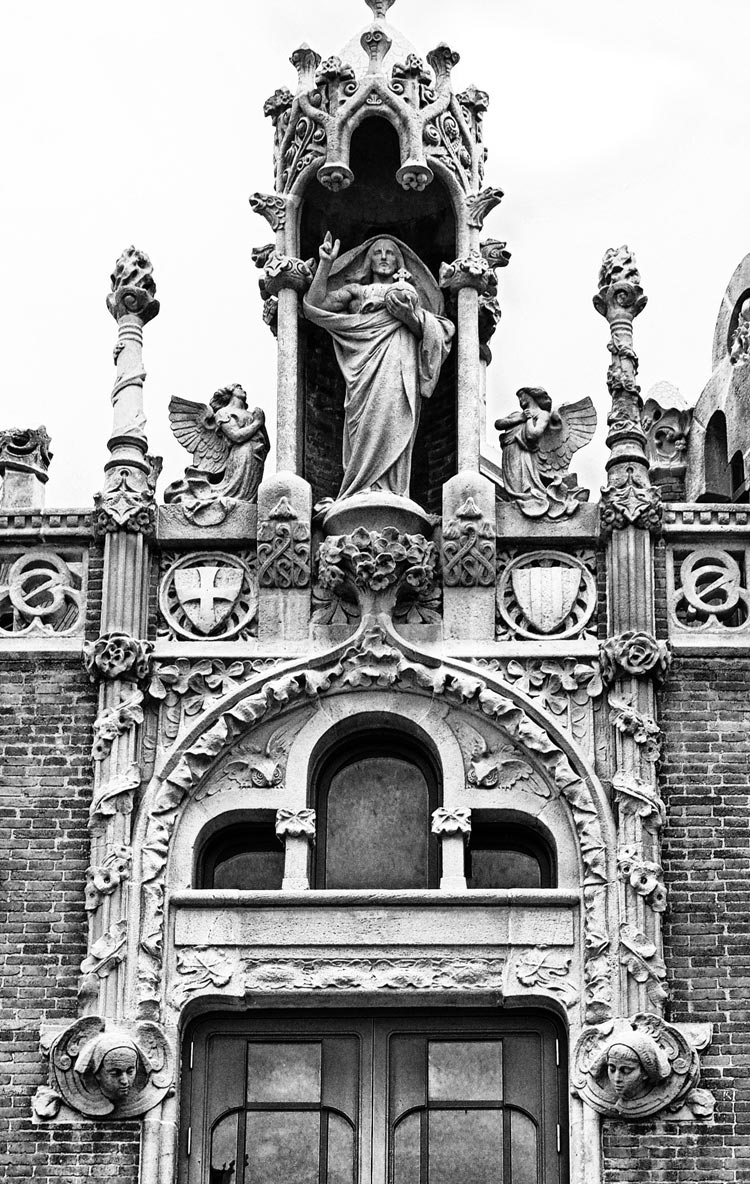
Eusebi Arnau was responsible for the sculptures of all the saints and virgins on the pavilions.
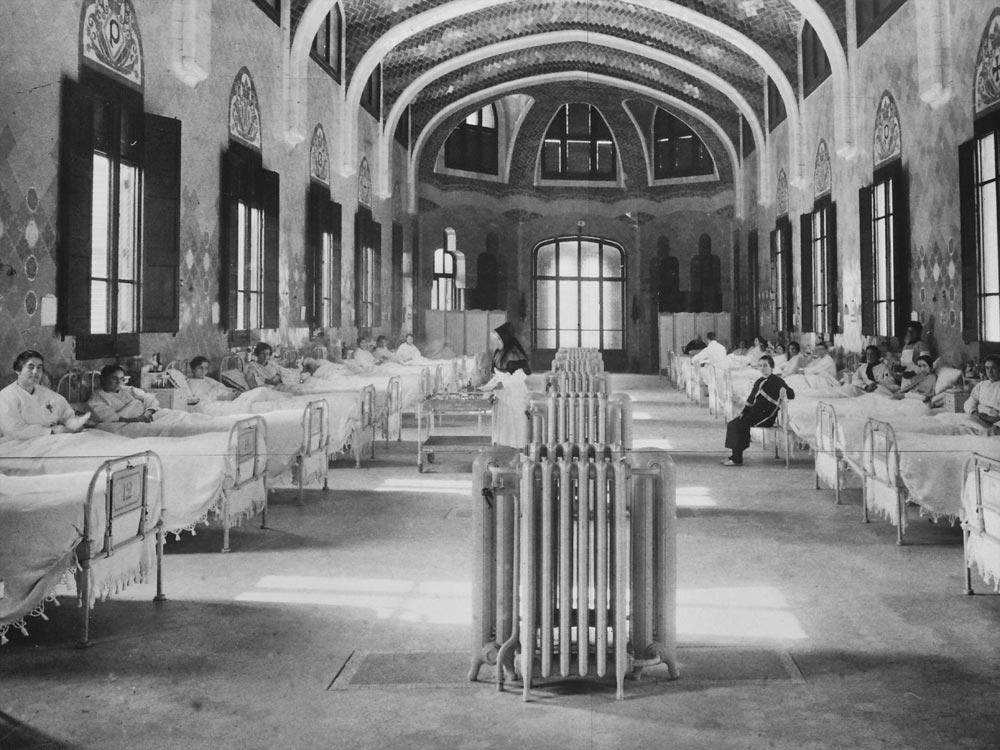
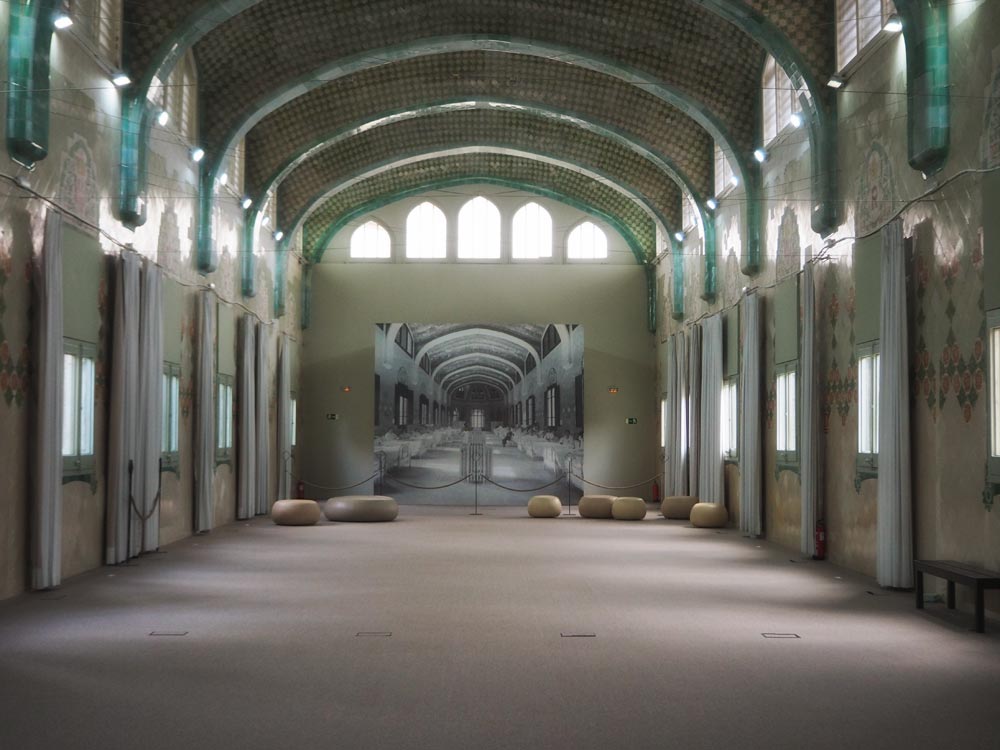
Inside Sant Rafael you can see an example of what the former infirmary pavilions were like. Each one consisted of a broad lengthwise ward for 28 beds along with a circular ‘day-room’ in which those patients not confined to bed could spend time with their families.
Old Photograph of the pavilion in use
The pavilion walls and ceilings have yet to be refurbished, only additions over the years have been removed to show the original volume.
Ceramics were used inside too as they are easy to clean and therefore guaranteed hygiene. The gentle colours served a therapeutic purpose.
The pavilion was named after Rafael Rabell, who along with his daughter, Concepció Romaguera funded the construction and you can see that both the outside and inside have been decorated with a letter R in his honour.
Source: All the information in these Sant Pau posts is taken from the admission booklet.
How to get there: Metro: L5 Sant Pau / Dos de Maig or L2 to Sagrada Familia and walk up Avenue de Gaudi Bus: H8, 19, 20, 45, 47, 50, 51, 92, 117, 192
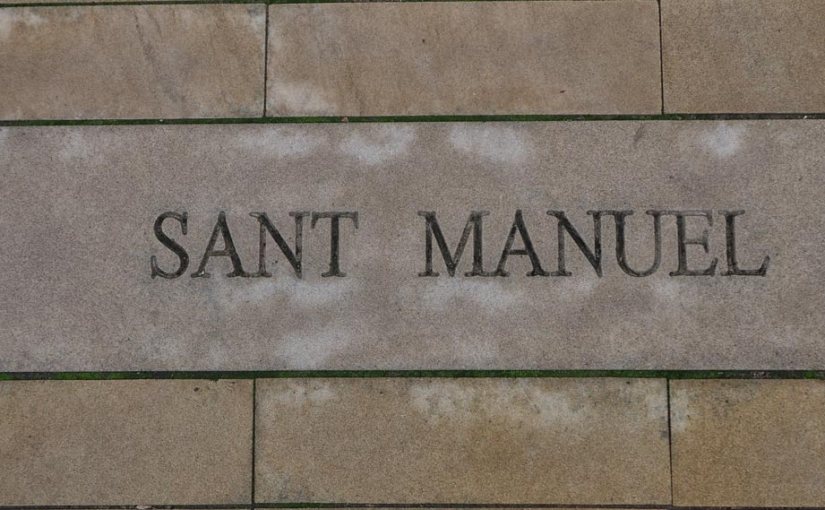
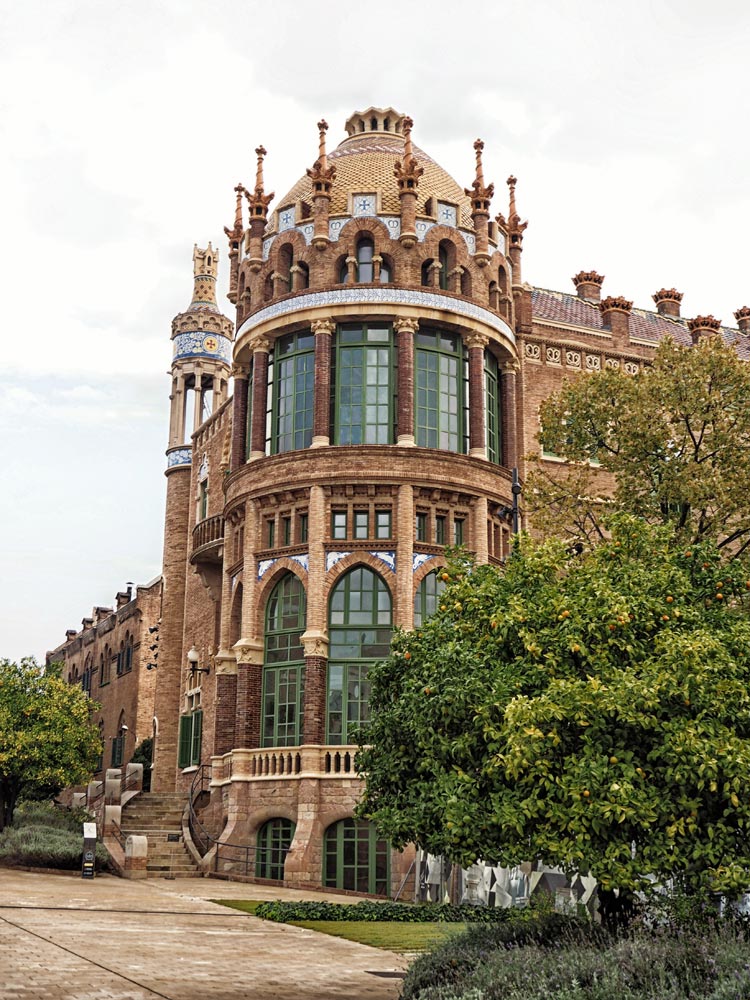
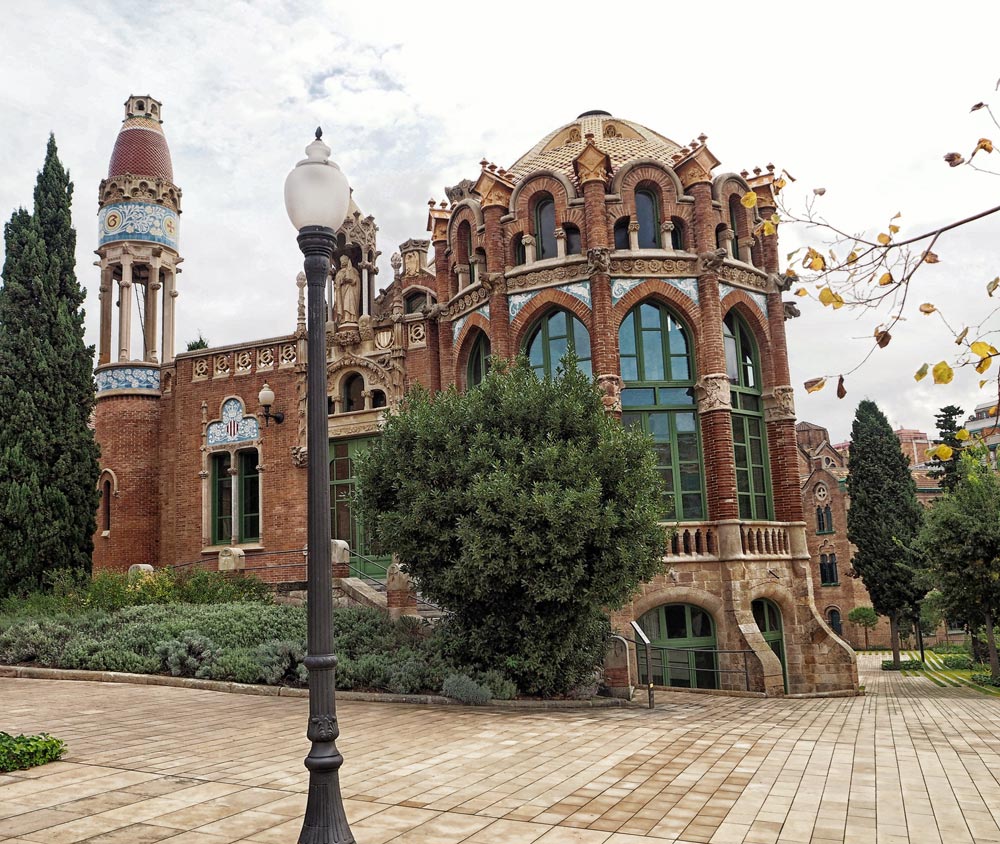
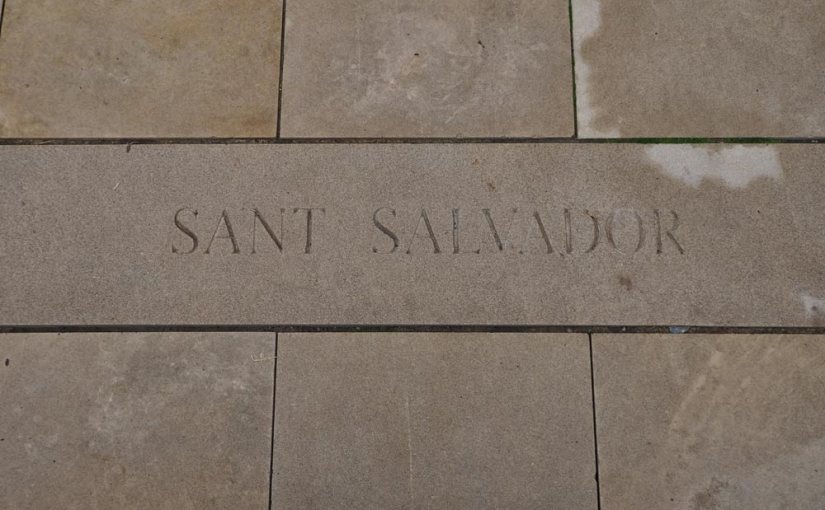
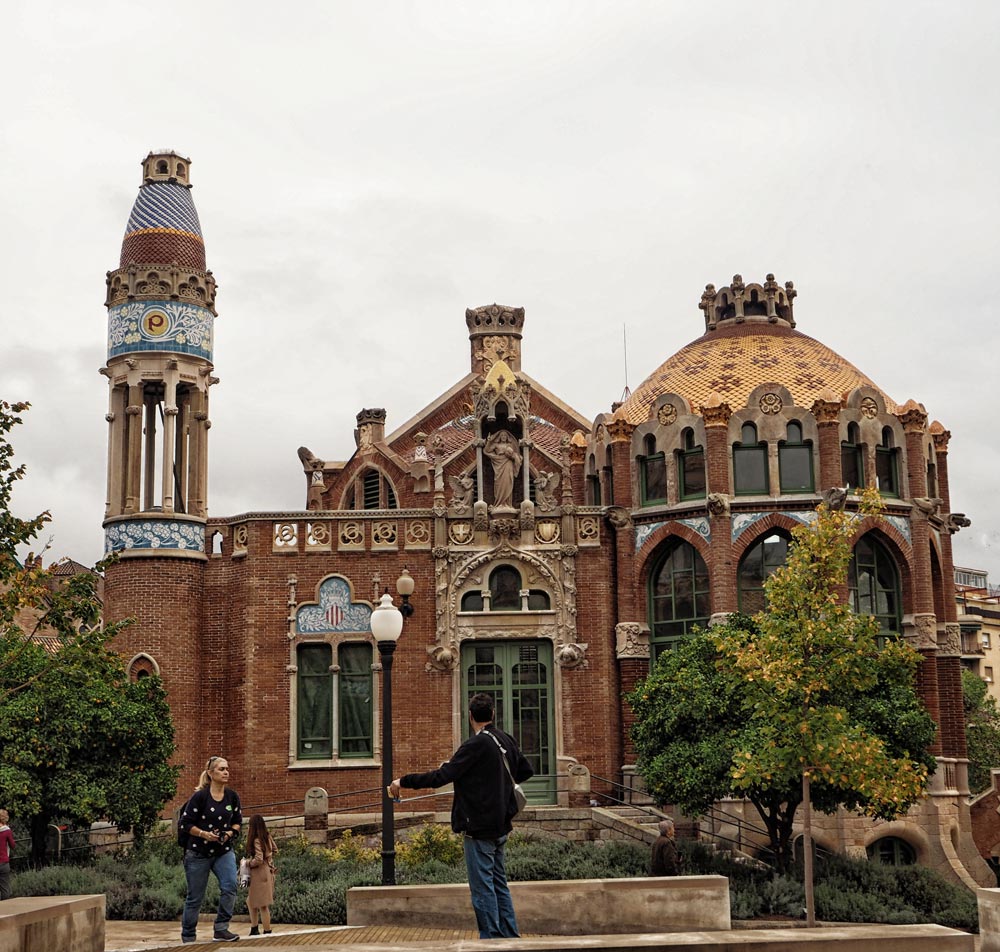
Sant Salvador was the first pavilion to enter service in 1916. Built between 1905 – 1912 it was used as the Female Medical ward. Later uses were General Surgery, Ophthalmology and subsequently an intensive care and semi-critical unit.
The materials for the pavilions were the most durable including red brick; stone, used for all the decorative architectural details as well as reliefs and sculptures; ceramics used to clad domes, roofs and decorative panels both inside and outside; ceramic mosaic; wood; marble; glass; metal and iron.
All the buildings are red brick. The gable roofs covered in semi-cylindrical Spanish monochrome clay tiles in a variety of colours which have been placed to create a pattern or section. Each pavilion has a different patterned roof.
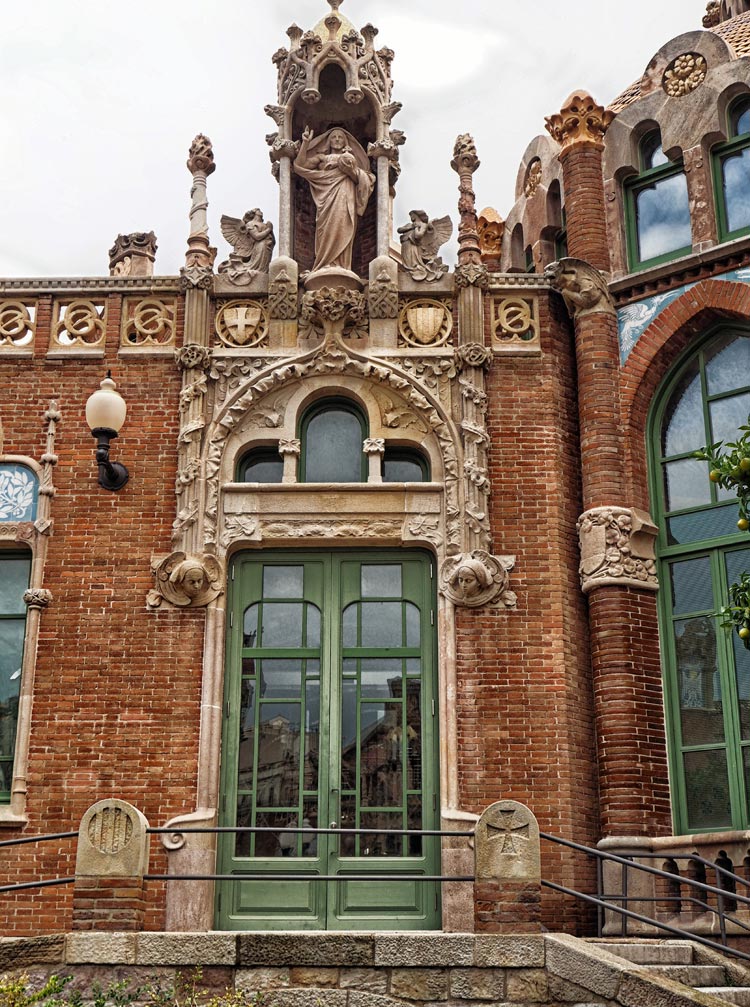
Saint Salvador and Angel Guardians
Individual pavilions were given the name of their own patron saint, who presides over their respective entrance. Those on the right were reserved for men and those on the left for women and the corresponding saints were male or female. (Though this pavilion is on the right and has a male saint it appears to have been used initially for female patients.)
Source: All the information in these Sant Pau posts is taken from the admission booklet.
How to get there: Metro: L5 Sant Pau / Dos de Maig or L2 to Sagrada Familia and walk up Avenue de Gaudi Bus: H8, 19, 20, 45, 47, 50, 51, 92, 117, 192
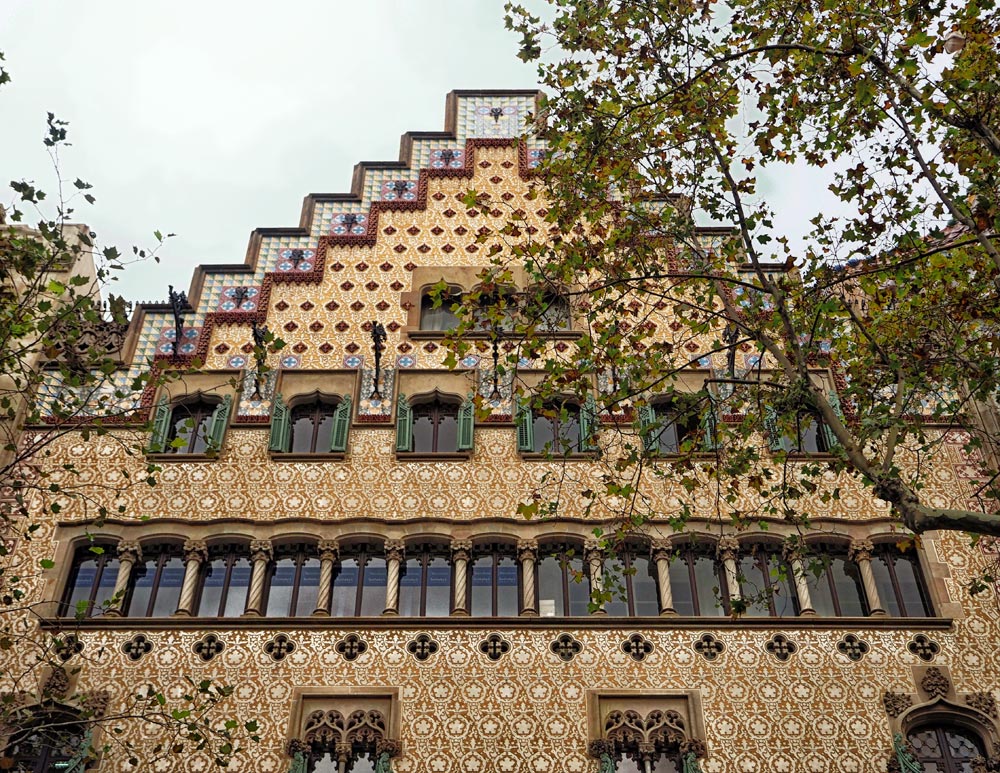
Casa Amatller (Josep Puig i Cadafalch) is next door to two other Art Nouveau houses on Passeig de Gràcia, between Aragó and Consell de Cent streets in the Eixample district of Barcelona.
On the left is the Lleó i Morera House by Lluís Domènech i Montaner – he of the Sant Pau complex that I am currently blogging about, and on the right is the Batlló House by Antoni Gaudí.
Mansana de la Discòrdia or Block of Discord, is the name given to the block, (click on the link to discover the reason) where these exquisite examples of Modernist architecture are located.
I felt that this beautiful building with its projecting balconies and gargoyles and arresting stone sculptures and ceramic tiles would be perfect for Paula’s Word challenge this week.
I’ll try and find an excuse to post some pictures of the other house, but if you want to have a look inside as well as out then visit Casa Lleó i Morera .






 TRAVEL WORDS