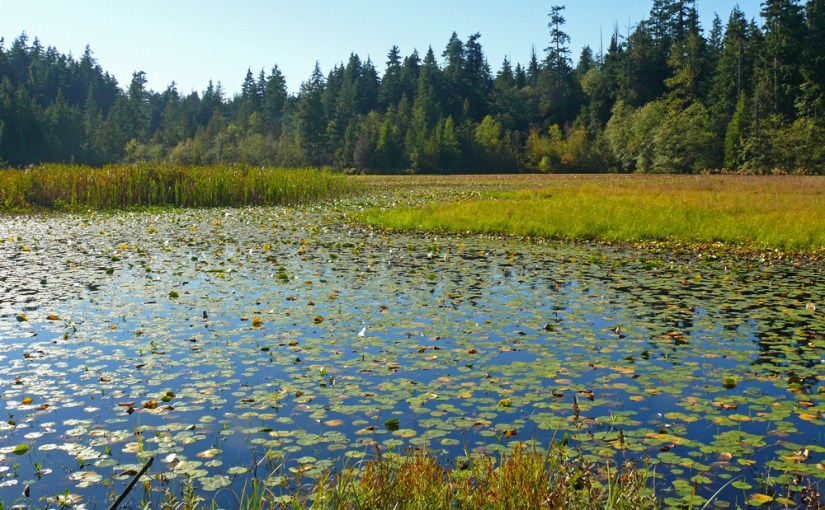
Today I decided to spend walking around Stanley Park which covers 1,000 acres at the tip of downtown Vancouver. There is so much to see in the park from the seawall walk (8.8 km), several beaches, Beaver Lake and the Lost lagoon, ‘monument’ trees and many trails amongst cedar, hemlock, and fir trees which lead you away from the madding crowds into the cool quiet forest. Continue reading Vancouver: Stanley Park
Category: Food and Drink
Vancouver: Art, History and Nature
On my own today, so I walked along the seawall down to Canada Place along Coal Harbour where the Harbour Air Seaplanes are based with stunning views across Burrard Inlet. Vancouver is filled with hundreds of pieces of public art; everywhere you go you find odd sculptures or examples of Chinook phrases, and since 1998 they have the International Sculpture Biennale with temporary exhibits from all over the world.
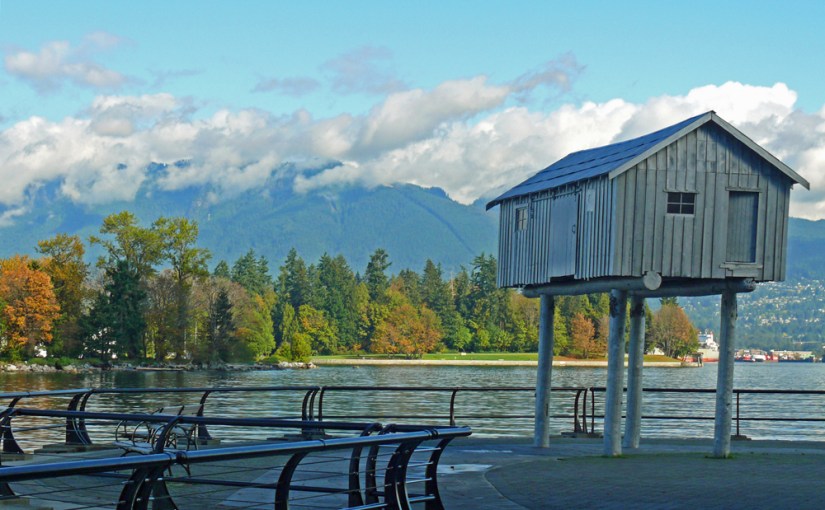
At Harbour Green Park you will see the “Light Shed” which imitates the simple boat-sheds that stood along the harbour over a century ago. Poised on log stilts, this aluminium-coated shed is particularly lustrous after dark when a dim, moving light shines from within. The park itself is a lovely shady area which seems to float at the edge of the harbour and it has plenty of benches from where you look at the appealing views and watch the float planes arrive and take off. It contains a variety of European Beech, Northern Red Oak and London Plane trees. This was going to be a long, slow walk….
Further along I came to the Vancouver Convention Centre West. A fascinating building as it appears to lean out over the harbour and resembles the prow of a ship. It has huge glass windows that reflect the view (on this day lovely clouds over the North Vancouver Mountains). Also along the seawall are railings similar to those you find on a ship and there are lots of interesting information plaques telling you the stories of different people who came to BC and what they did. What a wonderful way to learn history. All the photos come from the BC Museum in Victoria. (Another must-see museum).
Finally you come to an impressive blue bulbous sculpture “The Drop” by Inges Idee. The west building has a 6 acre living roof with 400, 000 indigenous plants and 4 beehives and 40% of the building juts out over the water. An impressive building. You then arrive at the distinctive Canada Place with the five sails that dominate the Vancouver Downtown skyline and which is home to the Vancouver Convention Centre East and the cruise ships terminal, and if you look up West Hastings Street you will see an impressive example of art deco, the Marine Building, which was built during the great Depression and was the tallest building in the British Empire in 1930.


Gourmet Capital in the Western Cape
The final part of our South African trip took us back towards Cape Town along the N2 through George, Mosselbaai and Swellandam where we stopped for a light lunch and to stretch our legs. There is a lovely Dutch Reformed Church and an interesting museum so Swellandam would make a good place to stopover en route to the Garden Route. 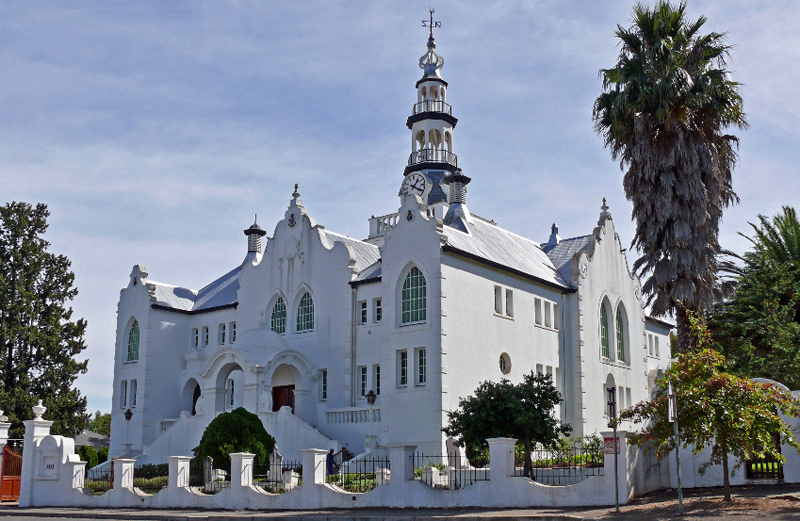 After Botsrivier we turned off onto the R321 towards Villiersdorp, a winding road with beautiful views across the Helderberg (formerly known as Hottentots Holland) Nature Reserve and around the Theeswaterkloof Dam.
  Here we turned onto the R45 up through the Franschhoek Pass and stopping for an awe-inspiring view from the top of the Cat’s Road which is a series of hairpin bends winding itself down to the Franschhoek Village like a sleeping serpent. As you drive over the pass on the R45 from Theewaterskloof Dam, you have no idea of that beautiful valley ahead of you.
  Franschhoek has always been a huge favourite of mine. Back in the 1970s it already had a reputation for award-winning restaurants and wine estates, top class boutique hotels, auberges, and guest houses (many located on working vineyards) and speciality shops. Then however, I didn’t have the means to take advantage of what it had to offer, but the surrounding landscapes have always been free.
This magnificent valley with its huge towering mountains on either side with spectacular vineyards that clad the mountain slopes has the most breath-taking scenery in the Western Cape (if not the whole of South Africa).
The valley was settled more than 300 years ago by the Huguenots, who brought with them their French culture and wine growing skills when they fled their homeland after Protestantism was outlawed.
Some arrived at the Cape of Good Hope and were given land by the Dutch government in a valley called Oliphantshoek (Elephant’s Corner) so named because of the vast herds of elephants that roamed the valley. Soon after the Huguenots settled here it became known as Franschhoek (French Corner).


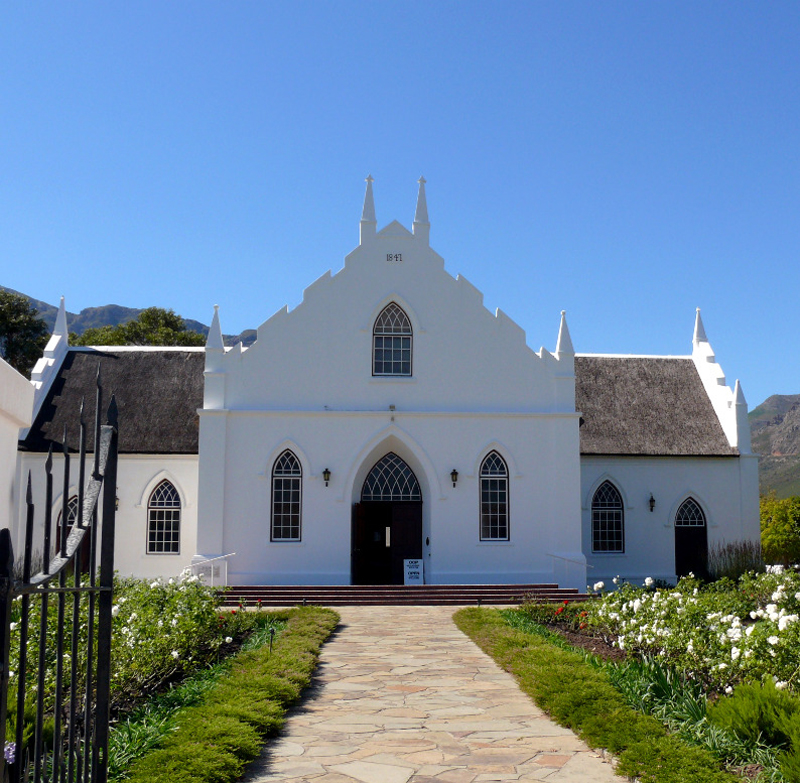
As you drive into the village from the south you will notice the Huguenot monument, and close by the museum, which chronicles the history of those brave pioneers and the original Huguenot farms.
It is well worth visiting the museum to get an understanding of the history of the region. You will also notice that many of the farms still bear French names and are often resplendent with a spectacular Cape Dutch homestead, towering oak trees and vast vineyards.


We stayed at Auberge la Dauphine (Klein Daupine), on the outskirts of the village. A beautiful spot, ringed by the Hottentots Holland Mountains, and with its own dam and summerhouse where you can sit with a bottle of inexpensive sparkling wine and watch the sun go down turning the tops of the mountains pink and the sky ink blue.
On our first night we ate at “French Connection” having West Coast mussels, crispy duck with raspberry sauce, potatoes dauphinoise and stir fried vegetables (cut beans, carrots, courgette and mange tout), washed down with a superb bottle of Shiraz from one of the nearby cellars – Porcupine Ridge. The following day we went back up the hill to Haute Carbière for their cellar tour and wine tasting which was pretty good and very cheap (R30) to taste five wines. 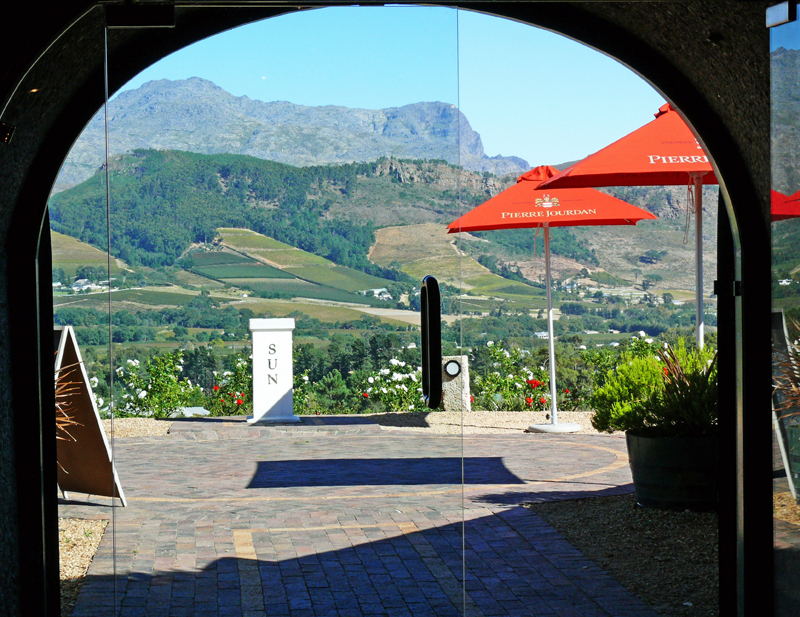 Carbière belonged originally to a French Huguenot farmer, Pierre Jourdan who was given the land in 1694. In 1982 the vineyards were replanted in the tradition of the Champagne, and focus on Pinot Noirs and Chardonnay cultivars.
“Come quickly, I’m tasting the stars” is a quote attributed to Dom Pérignon when tasting the first champagne. Pierre Jourdan’s distinguished dry elegance reminds us with every tiny bubble gently exploding like a feather on the tongue to re-look at how exciting life can be… ~ Achim von Arnim, cellar-master of Haute Carbière
We bought a bottle of the sparkling, champagne-like ‘Blanc de Blancs’ (R98) to put into our fridge and booked a table in their gourmet restaurant for that night before heading back into the village to have a good wander around.
A host of shops and galleries line Main Street with antiques, artwork, bookshops and bric-a-brac. There are several specialist shops including a chocolatier, where we bought some hand-made Belgian style chocolates (R26), and a fromagerie.


Don’t restrict your wandering to the main Street though as it is rather pleasant to walk along the streets behind where you can see some lovely Cape Dutch and Victorian architecture.

After a light lunch (salad) in the village we returned to the auberge to rest.  Dinner at Carbière was, frankly, out of this world. All their items on the menu are available in half or full portions so you can have as many different dishes as you like. They also do tasting menus, pairing wines with each course.
  We had the Cuvée Belle Rose (100% Pinot Noir fruit portraying elegant sophistication) with our starters of prawn rolls with chilli jam and herb salad / pea, leek and asparagus tart with herb salad – the pastry was so light it practically melted in your mouth; for mains we both had the chicken stuffed with a layer of lentils and served on a bed of tagliatelle, spinach, spiced cubes of butternut squash and very firm asparagus tips with rocket and chorizo jus which was accompanied with a Brut Sauvage (yeasty with a creamy finish, wild and elegant mystique); dessert was a meringue with raspberries, raspberry coulis and strawberry yoghurt ice-cream (all delicious) and my husband had a most unusual looking desert consisting of 3 tiny sweet spring rolls stuffed with hot dark chocolate and served with a shot-glass of a white chocolate milkshake – exquisite – and this came with a glass of the sparkling Blanc de Blancs.
The whole lot came to R550 (around £40 at the time) plus a R5 tip for the car guard. Currently there are lots of menu options, including wine pairing, from R295 per person .
On our last day in the valley we decided to have a look at a few other vineyards in the area such as Grande Provence, Boschendal, and Glenwood and then drive over the mountains to look around the university town of Stellenbosch. Grande Provence is lovely and has a fabulous setting for their restaurant, Glenwood is in the little valley of Robertsvlei and surrounded by outstanding natural beauty.
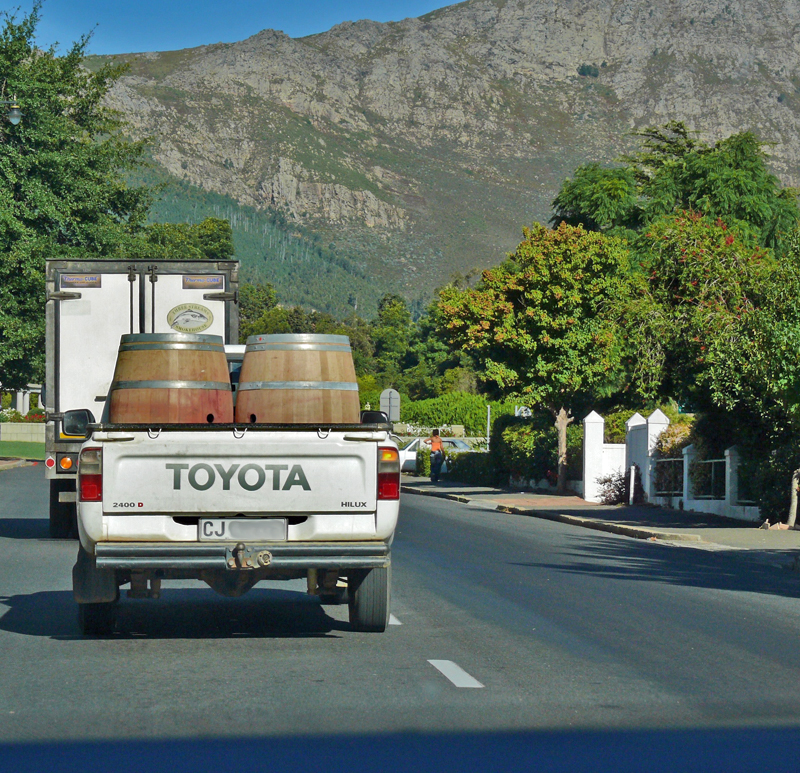 Stellenbosch however, defeated us as we could not find anywhere to park! We drove around for a while but the centre was absolutely packed so we had a look at it from the car, admire the beautiful Cape Dutch-style homesteads, the university and the tree-lined streets.
On the drive over to Franschhoek from Stellenbosch on the R310 – Helshoogte Road look out for Tokara Winery which is famous as an olive oil producer and located right at the top of Helshoogte Pass. Passing a village called Languedoc you come to Boschendal one of the most famous wineries with exceptional grounds.  The farm Boschendal means “wood and dale” and was granted to Jean de Long in 1685. A fellow Huguenot, Abraham de Villiers bought it in 1715 and was responsible for the buildings you can see today. Boschendal is famous for its “picque-nique” (mid Oct to April only) which you can buy in a basket and then eat in their gorgeous grounds.

You can visit the delightful manor house with yellow wood ceilings, floorboards and doors set in teak frames and stroll around the delightful gardens, including a very fragrant herb garden.


Naturally, food was not far from our minds and we bought a glass of real lemonade and a chocolate and coffee ice-cream sundae from the Café (formerly slave quarters), sitting under the shade of the lovely oaks in the grounds and watching the white ducks (pure Jemima Puddleducks) strutting around looking for titbits.

Our final dinner in South Africa was at the “French Connection” again. We had the mussels as a starter (from Walvis Bay) followed by sole and couscous with butternut squash, feta cheese, courgette and a pesto sauce. Finished off with a Dom Pedro Kahlua, double espresso and an amaretto. Sublime!
Need a reason to visit Franschhoek? Believe me when I say it is one of the most beautiful wine valleys in the world. And the food and wine ain’t half bad either.
Cape Town Revisited
When I met my OH twelve years ago we each had a different favourite city in the world, which the other had not visited, so we made a promise to see each place together. In 2005 I went to Vancouver, his choice, and a very good one too, this is the story of my choice – Cape Town, South Africa.
I lived in Cape Town between 1973 and 1984 and fell in love with this beautiful city. I was eager to return with my (new) husband to show him my favourite parts. It had been over eight years since my last visit to the Mother City and a lot longer since I had travelled along the Garden Route, so I was keen to explore old and new places and show him what I thought made this the best city in the world. On arrival at the politically neutral named Cape Town International airport we picked up the VW Polo hire car and drove to our first destination in Constantia. We were staying in a lovely, welcoming bed and breakfast close to the beautiful Kirstenbosch National Botanical Gardens.
The only slightly off-putting aspect was the electric fencing surrounding the property and the guard at the entrance of the electronic gates. Oh, how things have changed, and not necessarily better for anyone. I was concerned that this might put my husband off. He already had some misgivings about visiting the country because of its notorious crime rate. Seeing the neighbourhood covered in ‘Armed Response’ signs wasn’t going to appease him.
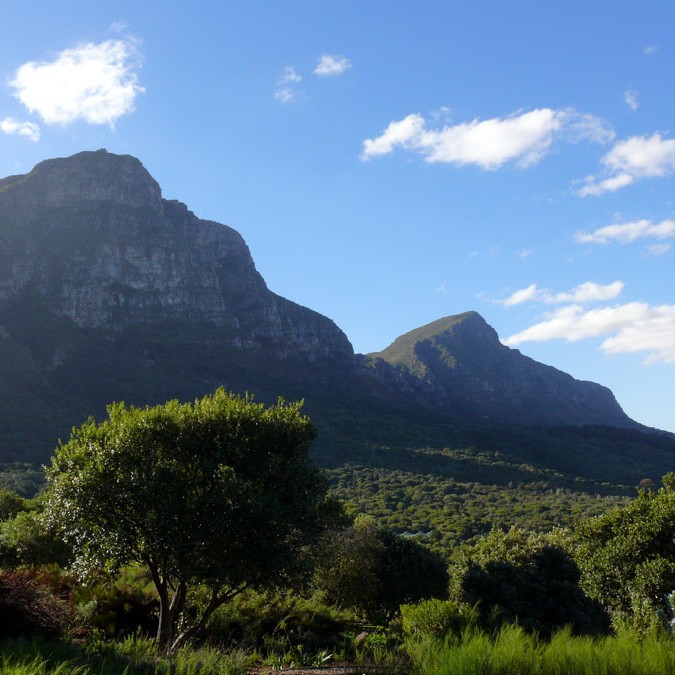
The weather on the other hand was perfect with azure blue skies, a soft, gentle breeze and it was pleasantly warm. Having unpacked in our large bright bedroom, overlooking gardens to the front and rear, we strolled up to Kirstenbosch to stretch our legs after the long flight from London, via Windhoek and get some well-needed sunshine.
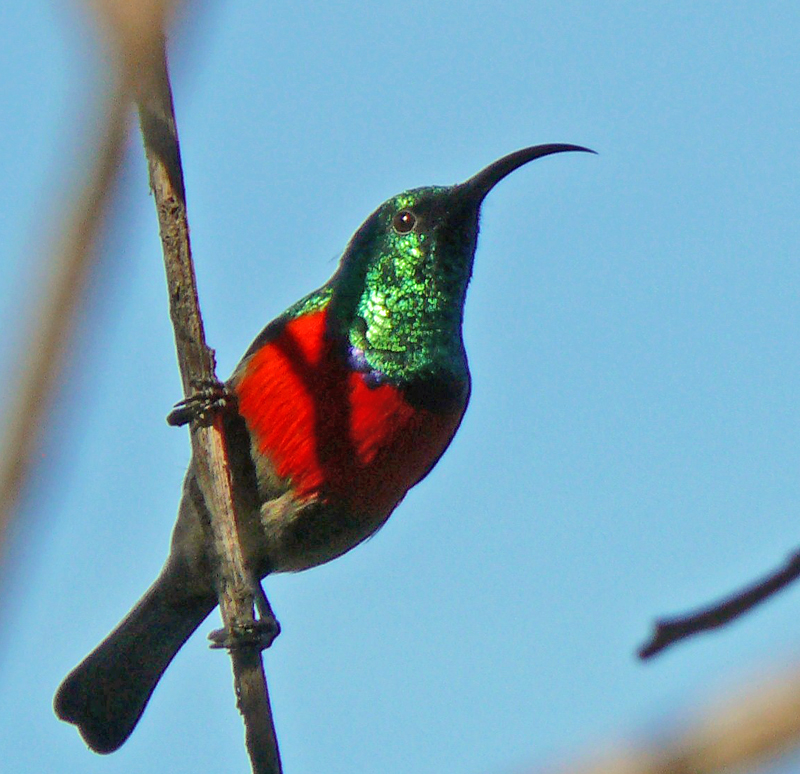
This botanic garden is so tranquil and the backdrop of Table Mountain is so dramatic I could have stayed here for the entire trip photographing the many spectacular proteas and sunbirds. It became a regular evening walk during our stay.

Organic Shape


Later we drove over Constania Nek and down to Hout Bay and along the coast road to Llandudno hoping to see a decent sunset, but cloud on the horizon put paid to that idea. As we drove back to the B&B we called in for a meal of Kingklip, a firm white, buttery, local fish and chips at the Constantia Nek Hotel and Pub. Continue reading Cape Town Revisited
 TRAVEL WORDS