Road Trip: USA California – The Big Sur

On a visit to California, a few years ago, we had to travel to San Diego from San Francisco and decided that it might be fun to drive down the coast using the PCH rather than fly between the two cities. So from that decision a little road trip was born.

This is the second section between Carmel-by-the-Sea and San Simeon.

Distance: 100 miles
Time: 2 hours 30 minutes without stopping

The route from Monterey to Morro Bay with its landmark Morro Rock is designated an All-American Road and is amongst the nation’s most scenic. This twisting coast-hugging 123 miles long road along the central coast takes about five hours to complete passing through the Big Sur and San Luis Obispo. It climbs higher than 1000 feet above the sea and beaches are generally hard to reach. The road is extremely narrow in places with hair-raising drop-offs to the Pacific Ocean so alertness is advised. In the wet and mist even more care should be taken and rock-falls or mudslides are not unknown.

We were heading for San Simeon at the southern end of the Big Sur where we had booked a tour at Hearst Castle, home to William Randolph Hearst the man immortalized by Orson Welles in Citizen Kane, and an overnight stop at the Best Western Plus Cavalier Oceanfront Resort. Having been told that whales* pass by along this coastline we peered optimistically through the windscreen in hope of seeing something in the mist and gloom, but not a hope in hell of seeing a whale, though possibly a cypress or two.
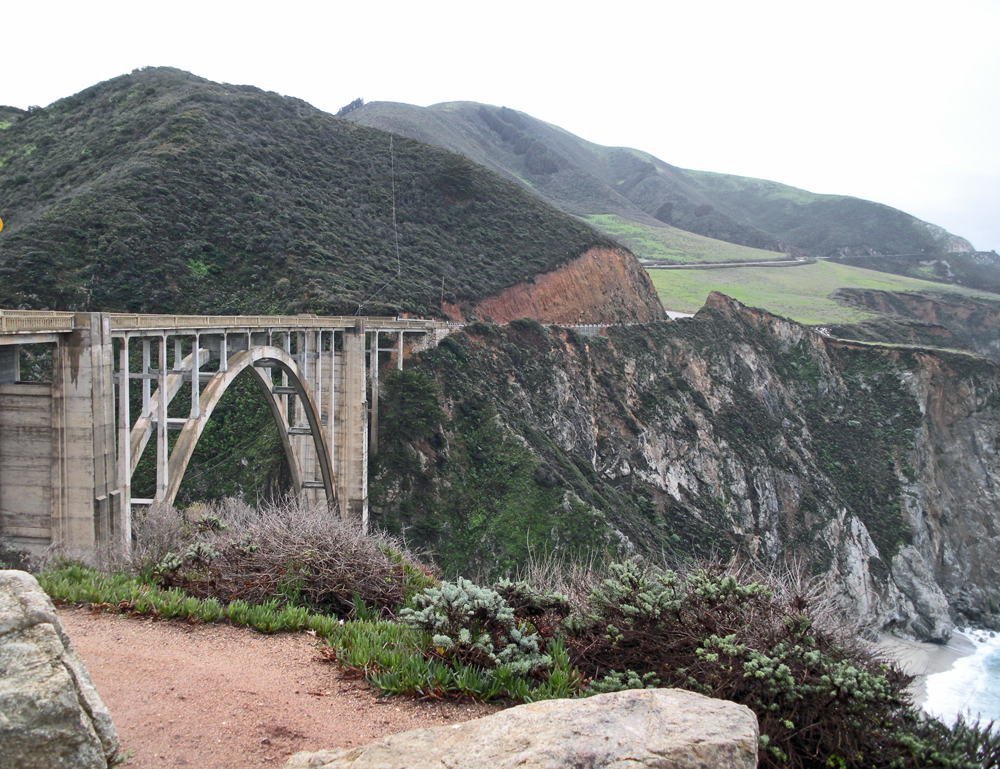
bixby bridge south copyEn route to Bixby Bridge, a much-photographed single-span arch more than 260 feet high and 700 feet long is the 11 miles unpaved Old Coast Road that ends in Andrew Molera State Park offering the most dramatic view of the bridge from behind. This road is impassable when it is raining, so we had to give it a miss.
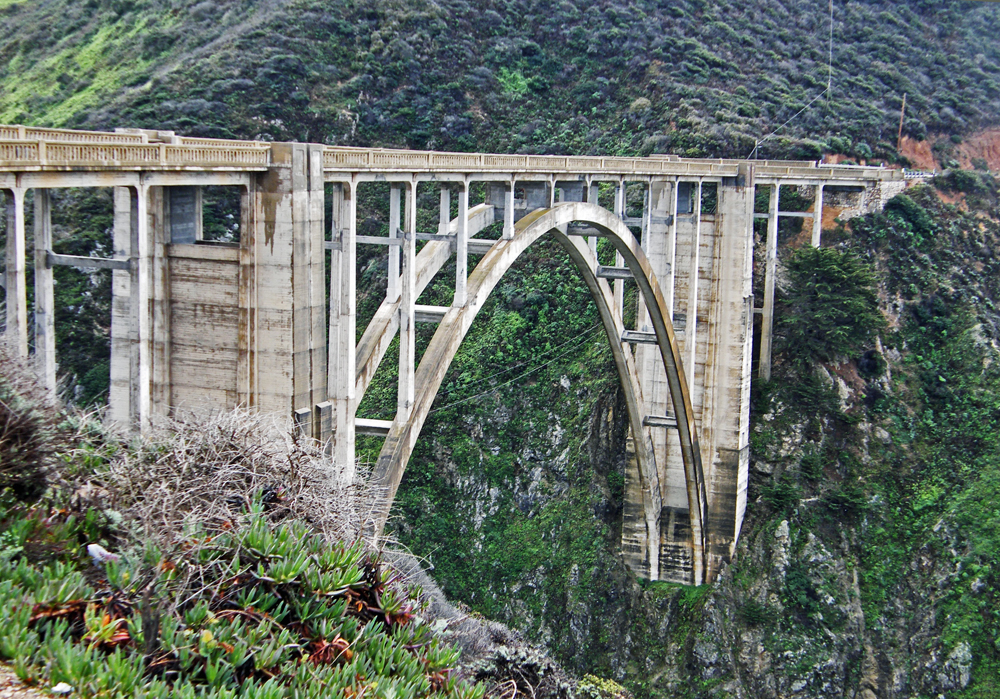
Bixby Bridge copyJust before Bixby is the Rocky Creek Bridge, another stunning bridge. Naturally when we were there it was raining – hard – again. We took it in turns to brave the wild, wet and windy weather to attempt a couple of photos, but our success rate was not very high. Bixby Bridge is important historically as it introduced automobile travel to the Big Sur.
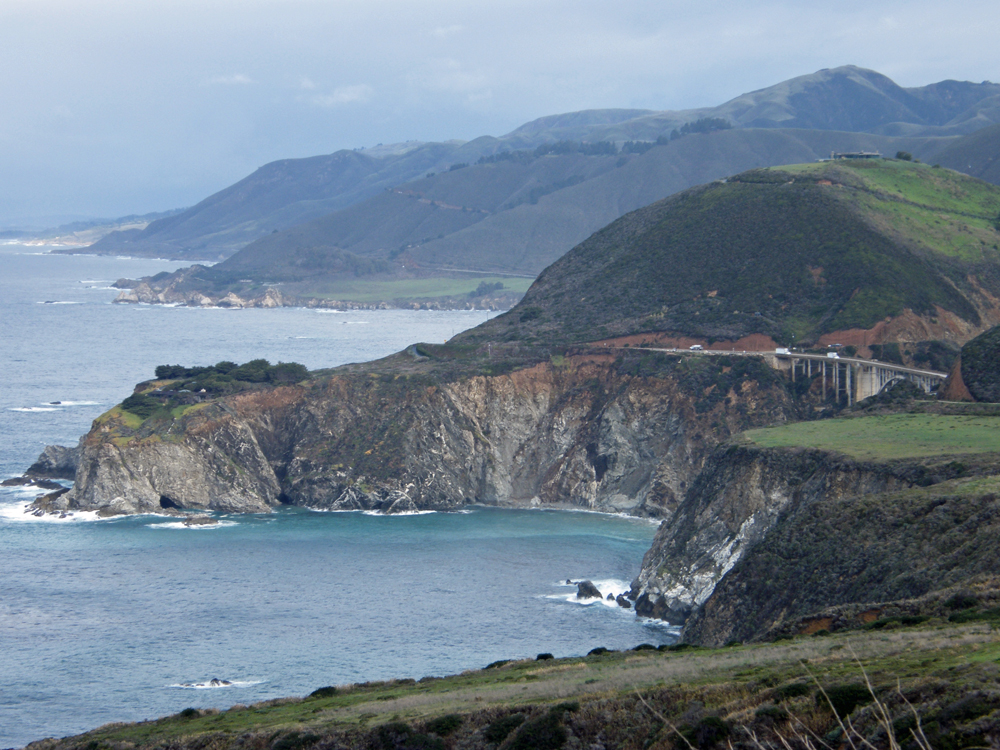
Bixby bridge northCrossing Bixby Creek the highway then climbs to Hurricane Point which is a place of high winds and big views before descending to the mouth of the Little Sur River. We can only guess at the ‘big views’ as visibility was becoming increasingly worse and unless you count viewing the road in front of us we could hardly see a thing.

Sand dunes soon appeared out of the mist rolling towards Point Sur Light Station. At 19 miles south of Carmel it sits 361 feet above the surf on a large block of volcanic rock that was the site of several disastrous shipwrecks before the lighthouse was built in 1887-1889. It is the only intact light station along the Californian coast open to the public every Saturday. Each tour takes 2-3 hours and involves a steep 1½ hour hike each way with a 300 feet climb in elevation. Thankfully this wasn’t a Saturday so we didn’t feel obliged to stop.
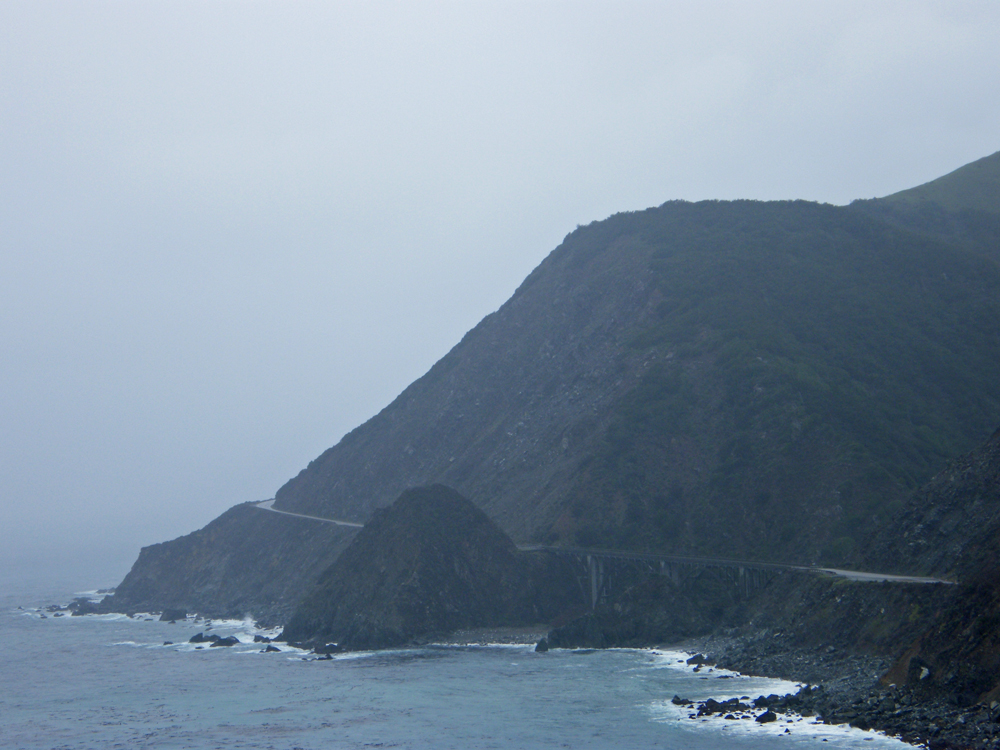
big sur Between Nepenthe – an indoor-outdoor restaurant perched 800 feet above the sea and famous for its views, though not today, and Deetjens – you will find the Henry Miller Memorial Library, a place out of time like much of Big Sur, where you can relax among the redwoods and get a free coffee. Unfortunately it is closed in February so we continued to Deetjens where we had planned on having a late breakfast of Eggs Benedict with loads of fresh coffee. Breakfast, in my opinion, is the only meal that Americans do well; oh and cocktails, but you can’t really live on cocktails alone although by the time you get to the end of this trip you may well feel that we do!
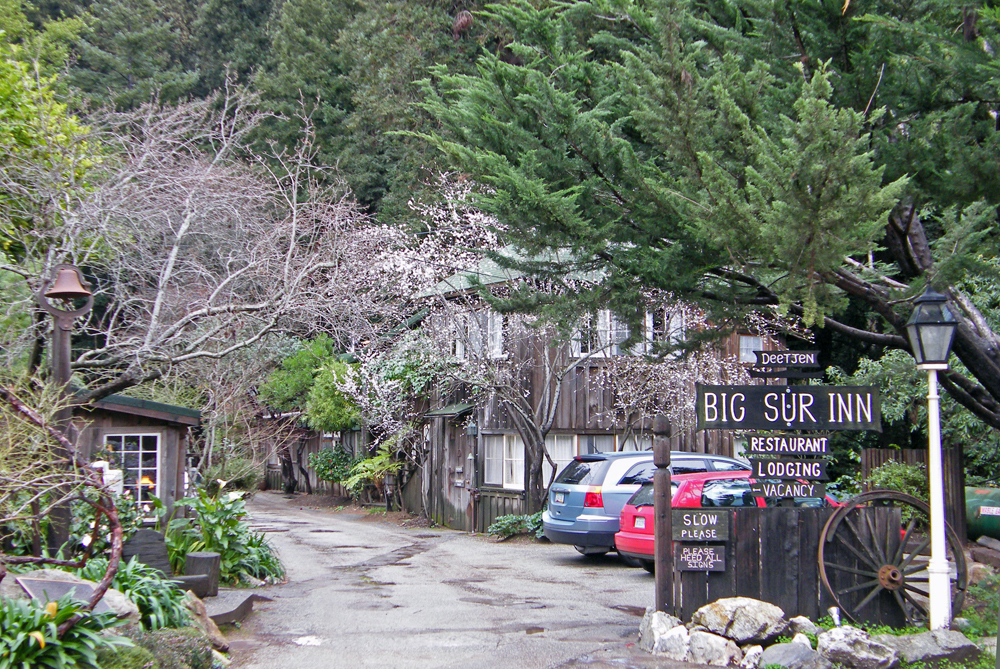
DeetjensDeetjens is about 28 miles south of Carmel and a charming, offbeat place offering lodging in unique cottages strewn among the redwoods and oaks that clothe the land-side of the road. If you have the time I recommend staying in this area. There are more conventional places to stay plus several campgrounds and cabins and several State Parks with trails, fishing, waterfalls and even hot springs to explore. Having taken our fill of fresh golden eggs, spinach and ham, freshly squeezed orange juice and several free refills of good black coffee we headed off into the storms once again. Eight miles on is Julia Pfeiffer Burns State Park with a short trail along the seaside bluff to see McWay Falls pour 100 feet into a picturesque cove. Ahead lay the southern stretch of the Big Sur.
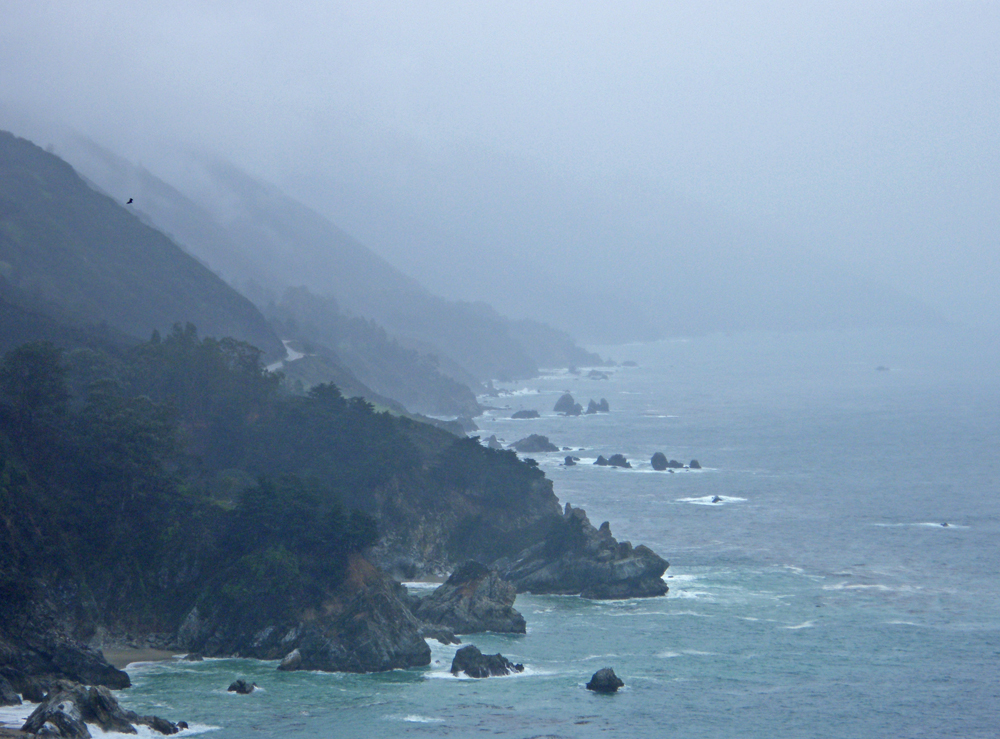
big surHere the road clings to the precipitous coastline and there are few settlements along the next 40 miles. If you have better weather than we had then stop off at Sand Dollar Beach or Jade Beach (south of Lucia and north of Gorda) then just past Ragged Point you come to hills and pastureland and in the distance you can see the Piedras Blancas Lighthouse on a point supposedly named in 1542 by the Spanish explorer Juan Rodriguez Cabrillo for its white rocks (stained with bird droppings).

elephant seal copyWe stopped at the Elephant Seal rookery before reaching San Simeon and saw several large bulls with their proboscises with hundreds of cows and calves. The males are very large and noisy and the way they charge around looking for a fight it is a wonder that any of the calves survive being squashed.
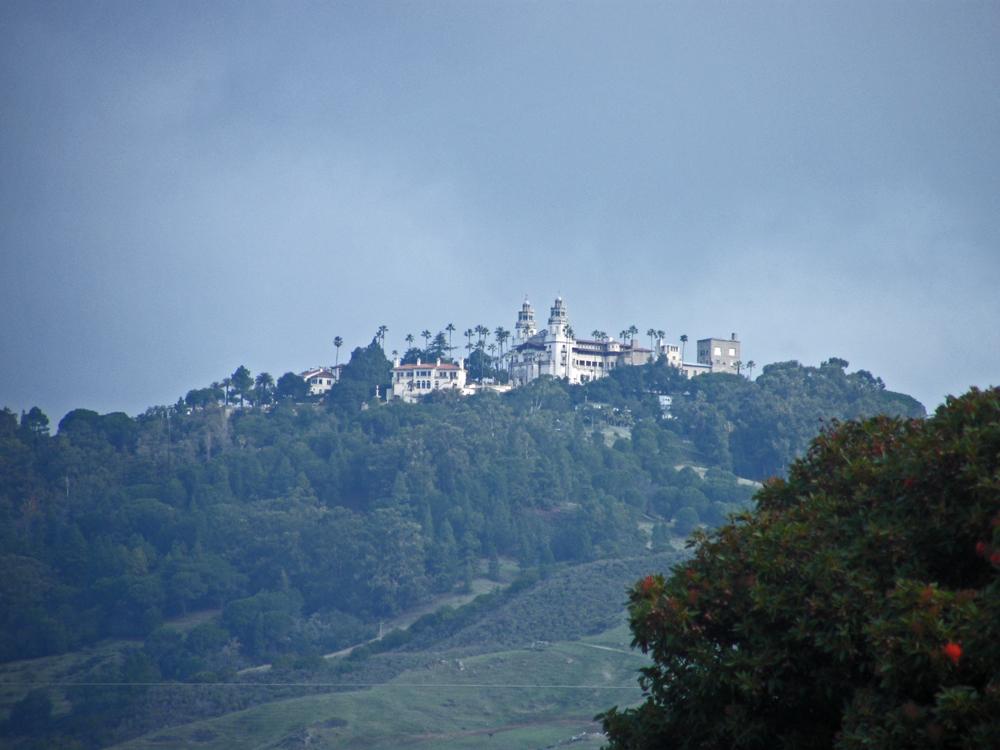
hearst castleNot far from here is the parking area for the five miles bus ride up to the very unique Hearst Castle begun in 1919 by newspaperman William Randolph Hearst.

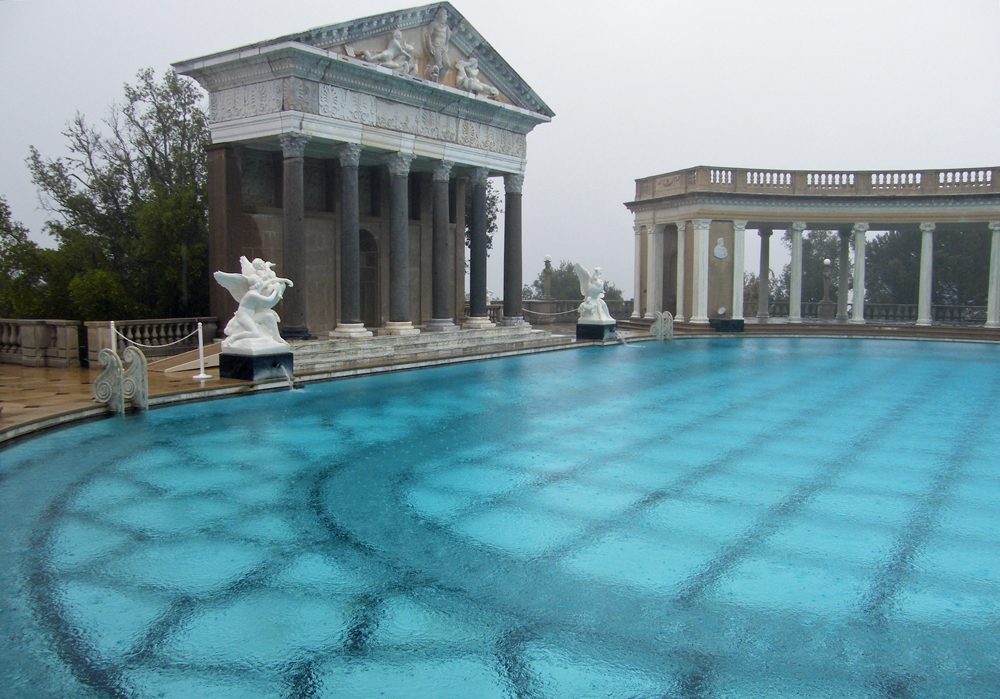
The hilltop castle set on 250, 000 acres is one of the most extravagant houses in the world. Guests included Winston Churchill, Charlie Chaplin, Joan Crawford, Cary Grant and Charles Lindbergh. This outrageous home is known locally as ‘Enchanted Hillhearst castle poolWe had booked onto the Grand Rooms Tour at 15:00 at a cost of USD 25.00 each. Unfortunately by the time we reached the car park the rain had really set in and although we enjoyed looking around this fascinating country house, we were disappointed not to experience the breath-taking views or the beautiful grounds – another reason to come back in a different more clement season. After the tour and back at the car park we went in to watch the National Geographic film ‘Hearst Castle – Building the Dream.’
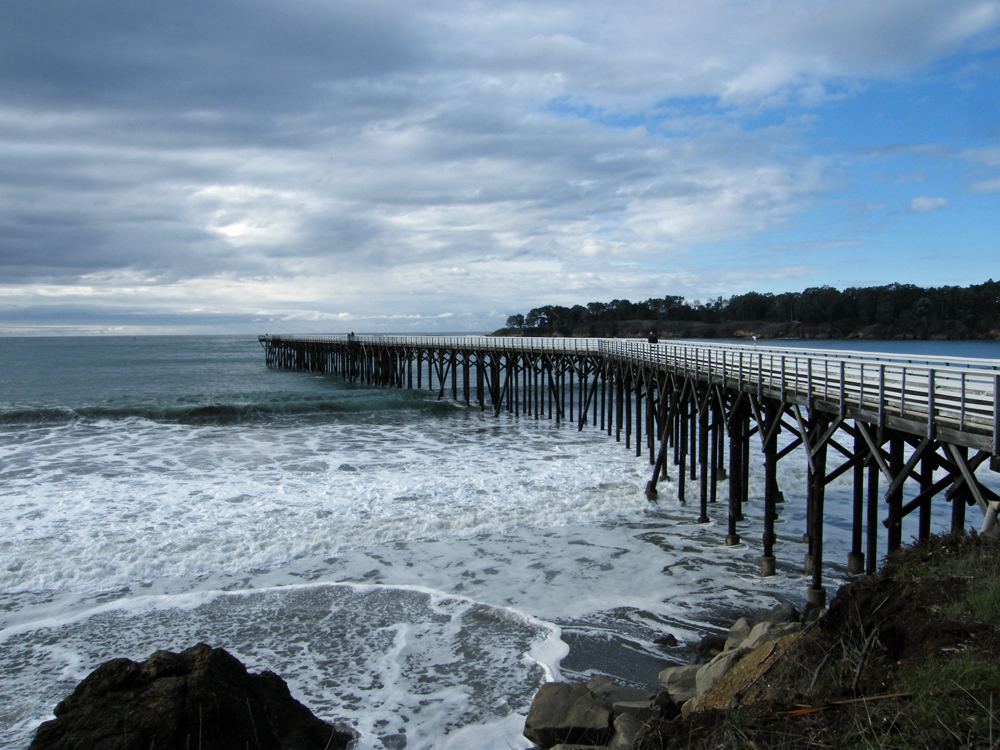
san simeon pierThat evening we stayed close by in San Simeon which only appears to have hotels and little else, but the Best Western was fine. A pity it was still raining though as they have fire pits on the beach (the beauty of this hotel/motel is that is right on the beach). Still we had a wood-burner in the large room with patio doors out to a pool and hot-tubs and they also thoughtfully provide binoculars in the room and huge telescopes on the beach to view passing whales etc.

*California Grey Whales can be seen along the Big Sur coastline between December and April. December to early February they are migrating south; beginning February you can see them migrating back to Alaska with new-born babies by their sides and this is the best time to see them as they are moving slowly, because of the babies, and nearer to the shore to prevent attacks from Great White Sharks.

We were there at the right time of year for this spectacle, but visibility was against us.

We found an Italian restaurant close by and had a decent, if not great, pizza and a couple of great, if not decent, margaritas before calling it a night. Did I mention that Americans make good cocktails?
Road Trip: USA California – San Fran to Carmel

On a visit to California, a few years ago, we had to travel to San Diego from San Francisco and decided that it might be fun to drive down the coast using the PCH rather than fly between the two cities. So from that decision a little road trip was born.

This is the first section between San Francisco and the lovely town of Carmel-by-the-Sea.

Distance: 133 miles via Halfmoon Bay, Santa Cruz
Time: 3 hours without stopping

The PCH (Pacific Highway) is one of those iconic drives that should be done in a pink Cadillac convertible with the top down making the most of the azure blue skies and brilliant Californian sunshine with plenty of Beach Boys and Mamas and Papas CDs on board. In reality this was February and an open top car was not an option. We ended up with a Chevvy, but a poor imitation of the Chrysler PT Cruiser with black tinted windows; the skies were gun-metal grey. Not the ideal start, but hey it felt good to be on the road.

We began our journey in San Francisco and immediately headed southwest on to the Cabrillo Highway at Pacifica to follow it south to Monterey and Carmel – our first stop. This is not a long section, but it can take a long time, as there are plenty of scenic viewpoints to stop off at on your way down the coast and in the summer there are several roadside food stalls to entice you.

Half Moon BayThe section between Pacifica and Half Moon Bay in San Mateo County is prone to periodic landslides and road closures and one stretch is known as the Devil’s Slide*. This particular stretch of road reminded me of Chapman’s Peak Drive in the Cape Peninsula, South Africa, as it hugs a similar steep promontory with equally stunning vistas. We stopped at Half Moon Bay to admire the surfers and the beautiful beach until the rain sent us scudding back to the car.

*(This stretch of the Cabrillo Highway has since been replaced by a road tunnel).

Don’t forget to stop at the family run Duartes Tavern in Pescadero which is a little further south and only 2 miles off the state road; it is still run by the 4th generation of Duartes and home to the worlds most divine Olallieberry Pie, world-famous Cream of Artichoke Soup, and Crab Cioppino. We, on the other hand have had a full breakfast there and no complaints. In this small town you can also find interesting craft shops, artichoke bread and a goat dairy. If you have the time a stroll along the Pescadero State Beach back at the junction with Highway One may bring you into contact with harbour seals among the sand dunes.

Passing through several State Beaches and State Parks the road becomes the Coast Road as you enter into Santa Cruz County. If you want to stretch your legs visit the Natural Bridges State Park or if you’re after more thrills perhaps pop into the Santa Cruz Beach Boardwalk where you can find the world-famous Giant Dipper, the classic wooden roller-coaster which opened in 1942.

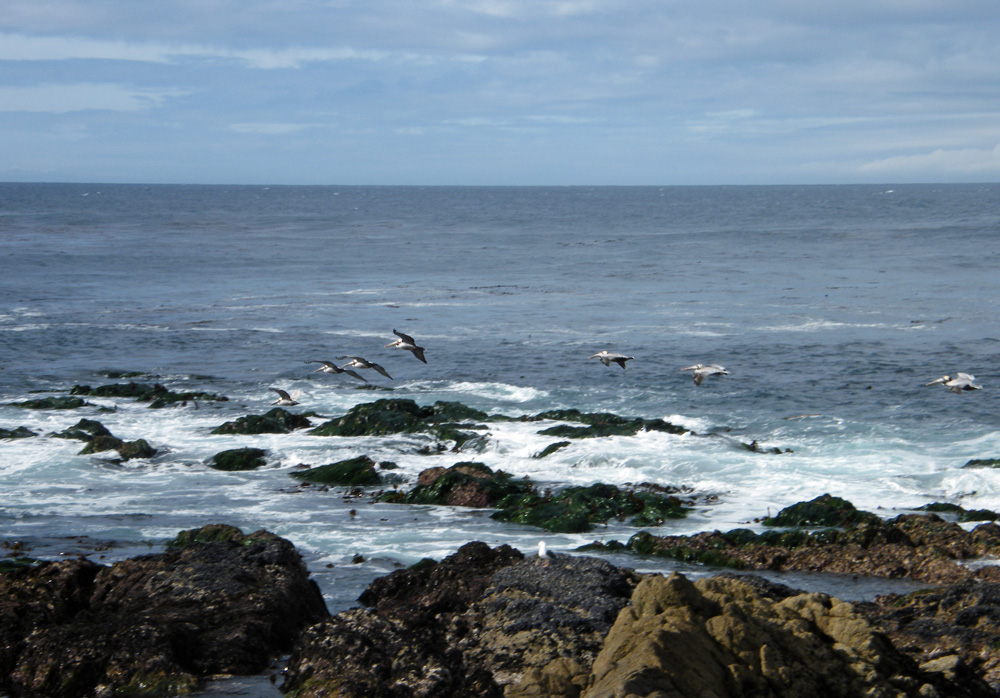
pelicans-smallAt this point the highway swings away from the coast and heads inland for a while before re-joining the coast at Moss Landing State Beach, another popular surf beach which is good for bird-watching too. Turn right at Jetty Rd and follow the road as it curves between the Elkhorn Slough estuary and the sand dunes.

Continuing south you pass between fields of artichokes, a Monterey County favourite and where Marilyn Monroe gained fame as the Artichoke Queen, before they change to mountainous sand dunes and the Monterey State Beach which is apparently the number one spot for kite-flying.

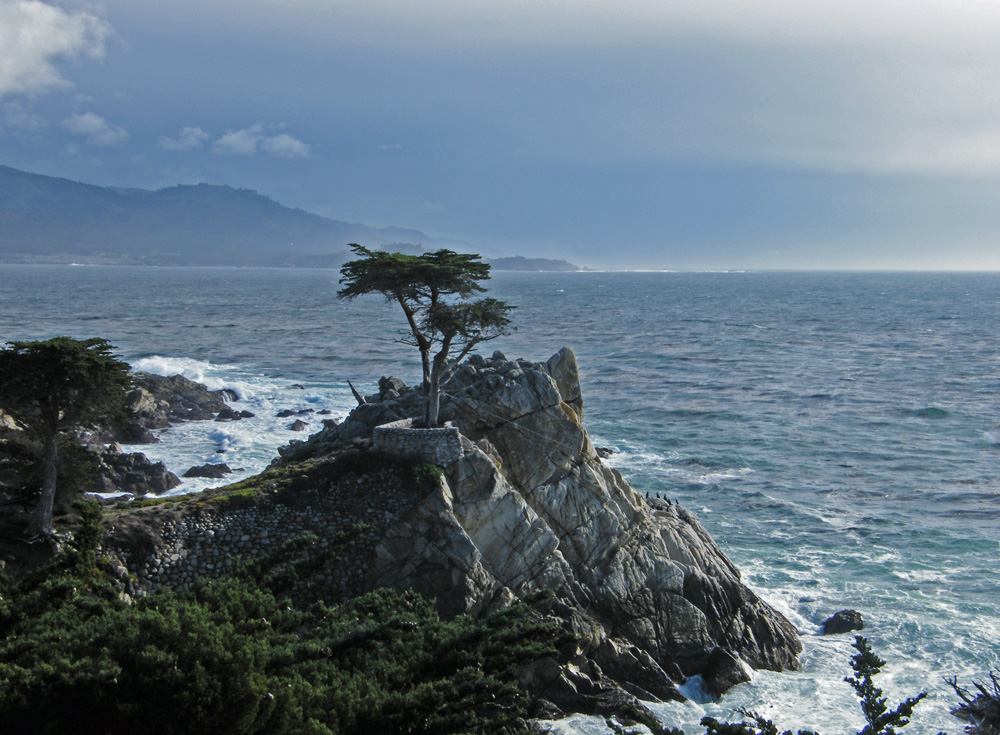
lone-cypressCalifornians will tell you that you “must” go on the 17 Mile Drive at Monterey a scenic toll road through the Del Monte Forest that leads to The Lone Cypress, Seal and Bird Rocks, Fanshell Beach, Point Joe and the colliding currents of The Restless Sea. It all sounds very romantic. Along the way you pass through emerald-green fairways of famous golf courses such as ‘The Links’ at Spanish Bay, Spyglass Hill and Pebble Beach. You may see black cormorants, brown pelicans, California sea otters, harbour seals and sea-lions in their natural habitat and colourful native wildflowers among the preserved dunescape, or like us, you may not. I’m still not convinced it was worth the toll to drive around what is essentially a series of golf courses, but the coffee was good at the Pebble Beach resort.

We entered at Highway 68 Gate and exited at Carmel Gate to explore the much photographed fairy-tale cottages, twee teashops and boutique shops of the legendary artists’ colony Carmel-by-the-Sea. We didn’t spot Clint though (the Mayor in 1986-88).

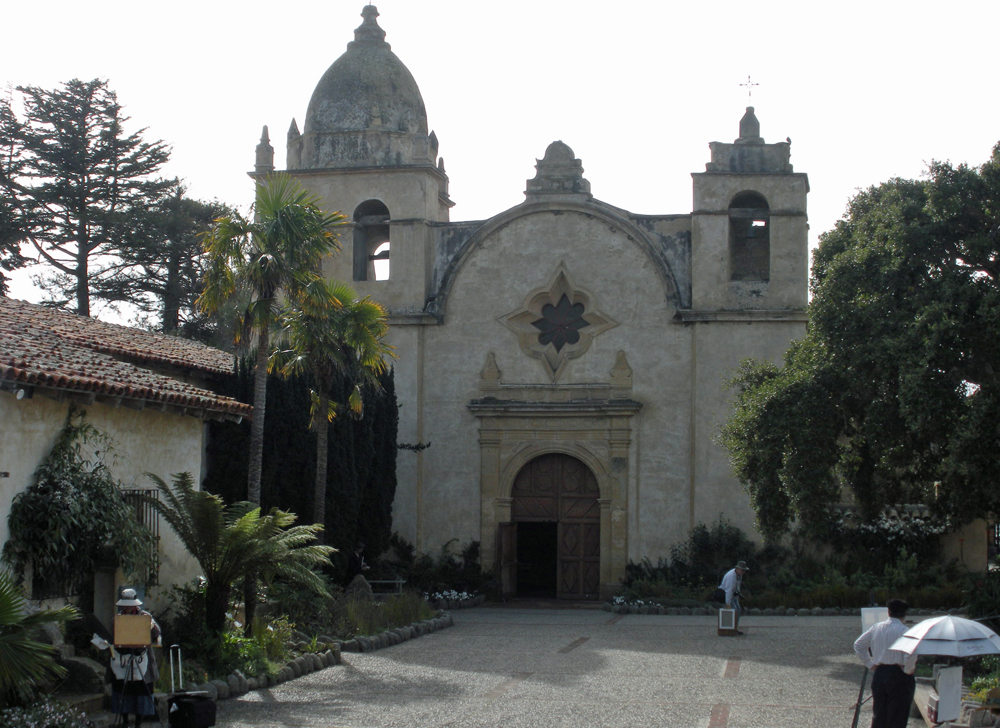
Carmel MissionI recommend a visit to one of the great old Spanish Missions, San Carlos Borroméo del Río Carmelo, second of the California missions founded by Padre Junípero Serra in 1770. Known as the Carmel Mission a visit to the grounds is like travelling back in time with the gardens equally as beautiful as the 18th century baroque church and three museums. It presents the complete quadrangle courtyard typical of mission architecture which is Moorish in design and the façade holds a star-shaped window directly above the main entrance. The gardens include culinary and medicinal herbs, citrus and olive trees, roses, Mexican sage and Bougainvillea. It is an obvious attraction for artists several of which had set up their easels in the yard.

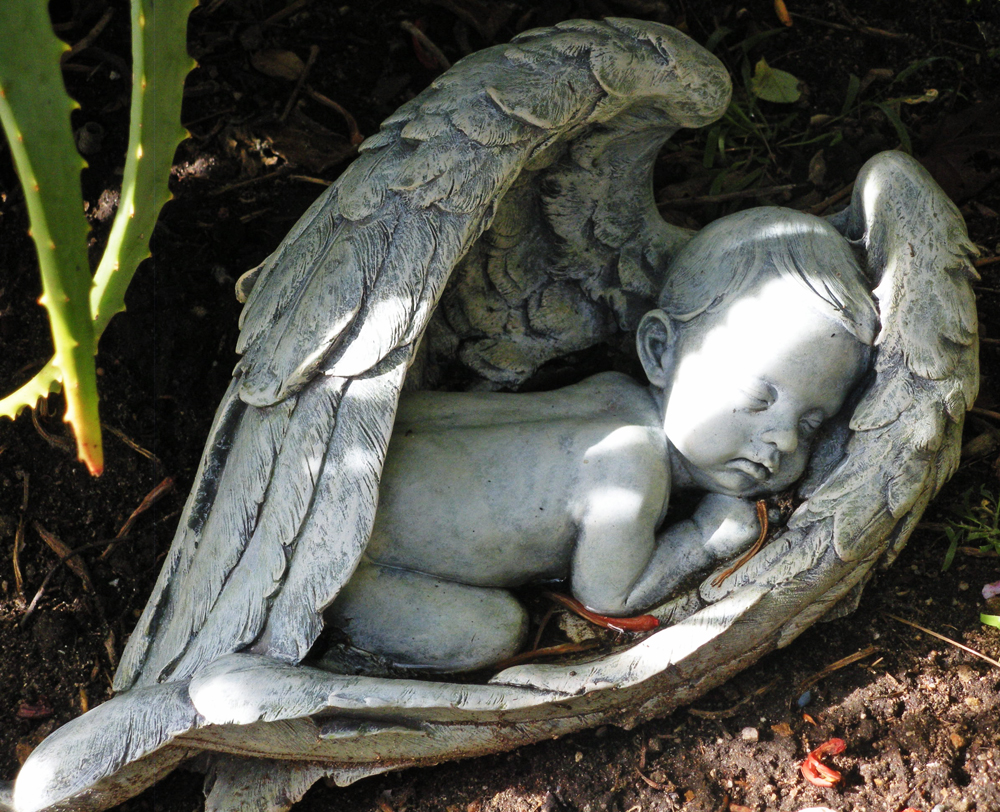
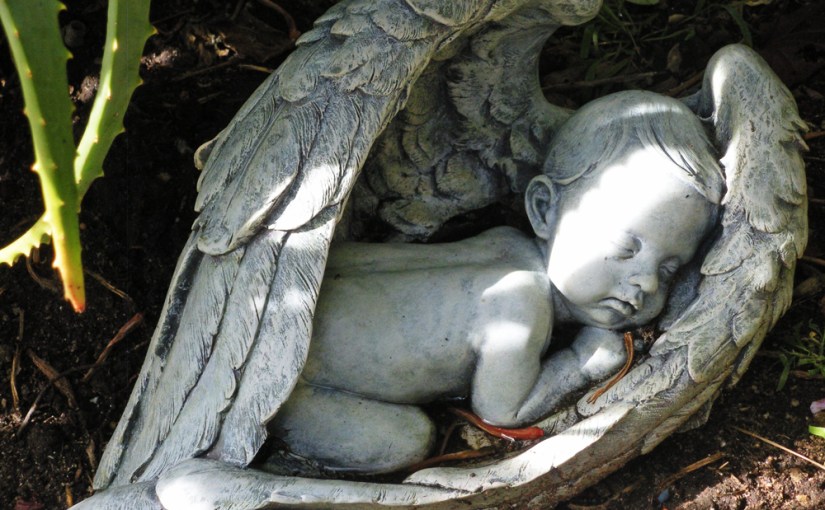
angel I love the Spanish names found all over California reflecting its Spanish heritage and to be honest I have become slightly obsessed with the 21 Spanish missions along the historic trail located near Highway 101 which roughly traces the Royal Road “El Camino Real” from San Diego in the south to Sonoma in the north.

The Old Fisherman’s Wharf in Monterey is iconic and if you get there early in the morning it will be people free. Allow a couple of hours to visit the world-class Monterey Bay Aquarium and apparently there are twenty golf courses in Monterey County so if you like swinging a club this must be paradise to you.

Either Monterey or Carmel is a good spot to stop for the night. We stayed in a bland, but cheap motel just outside Carmel and headed across the road for dinner at a grill house. We both had potato and fennel soup followed by a good steak burger (OH) and Mahi Mahi (dolphin fish) for me. Not bad, though I must confess to being rather unimpressed by Californian food as it is often too bland and/or salty for me. No complaints about the margaritas though 🙂

Gourmet Capital in the Western Cape

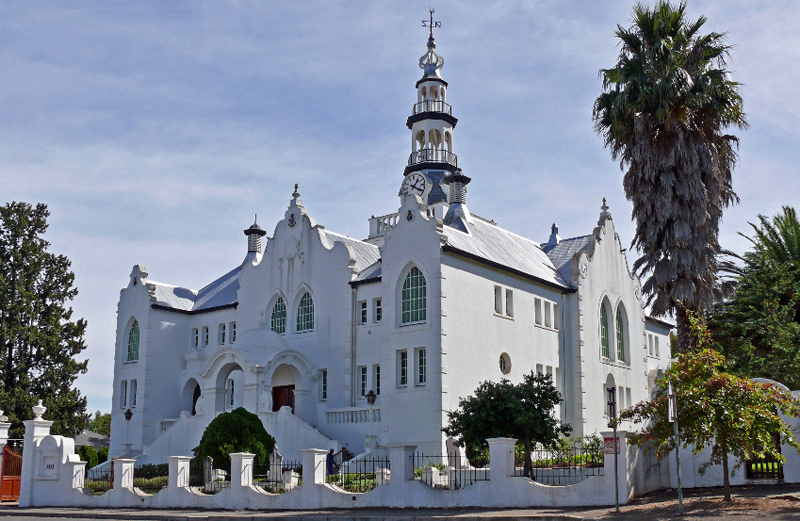
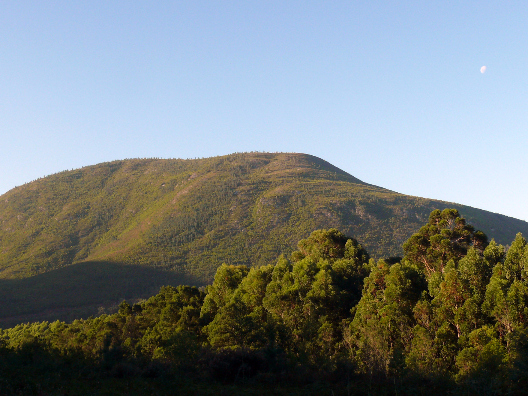
The final part of our South African trip took us back towards Cape Town along the N2 through George, Mosselbaai and Swellandam where we stopped for a light lunch and to stretch our legs. There is a lovely Dutch Reformed Church and an interesting museum so Swellandam would make a good place to stopover en route to the Garden Route. Dutch Reformed church Swellendam After Botsrivier we turned off onto the R321 towards Villiersdorp, a winding road with beautiful views across the Helderberg (formerly known as Hottentots Holland) Nature Reserve and around the Theeswaterkloof Dam. P1130713 Here we turned onto the R45 up through the Franschhoek Pass and stopping for an awe-inspiring view from the top of the Cat’s Road which is a series of hairpin bends winding itself down to the Franschhoek Village like a sleeping serpent. As you drive over the pass on the R45 from Theewaterskloof Dam, you have no idea of that beautiful valley ahead of you. P1130745 Franschhoek has always been a huge favourite of mine. Back in the 1970s it already had a reputation for award-winning restaurants and wine estates, top class boutique hotels, auberges, and guest houses (many located on working vineyards) and speciality shops. Then however, I didn’t have the means to take advantage of what it had to offer, but the surrounding landscapes have always been free. mountains2

This magnificent valley with its huge towering mountains on either side with spectacular vineyards that clad the mountain slopes has the most breath-taking scenery in the Western Cape (if not the whole of South Africa).

The valley was settled more than 300 years ago by the Huguenots, who brought with them their French culture and wine growing skills when they fled their homeland after Protestantism was outlawed.

Some arrived at the Cape of Good Hope and were given land by the Dutch government in a valley called Oliphantshoek (Elephant’s Corner) so named because of the vast herds of elephants that roamed the valley. Soon after the Huguenots settled here it became known as Franschhoek (French Corner).

As you drive into the village from the south you will notice the Huguenot monument, and close by the museum, which chronicles the history of those brave pioneers and the original Huguenot farms.

It is well worth visiting the museum to get an understanding of the history of the region. You will also notice that many of the farms still bear French names and are often resplendent with a spectacular Cape Dutch homestead, towering oak trees and vast vineyards.

We stayed at Auberge la Dauphine (Klein Daupine), on the outskirts of the village. A beautiful spot, ringed by the Hottentots Holland Mountains, and with its own dam and summerhouse where you can sit with a bottle of inexpensive sparkling wine and watch the sun go down turning the tops of the mountains pink and the sky ink blue.

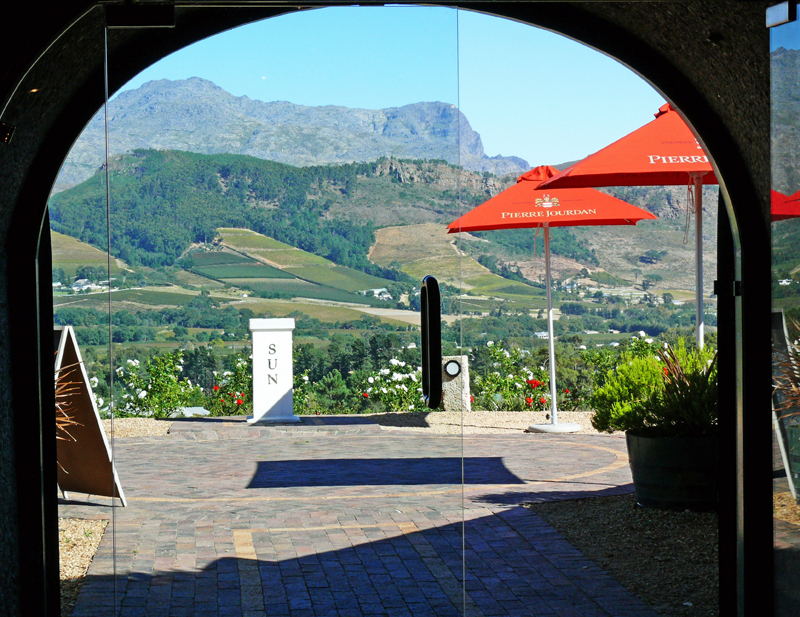
On our first night we ate at “French Connection” having West Coast mussels, crispy duck with raspberry sauce, potatoes dauphinoise and stir fried vegetables (cut beans, carrots, courgette and mange tout), washed down with a superb bottle of Shiraz from one of the nearby cellars – Porcupine Ridge. The following day we went back up the hill to Haute Carbière for their cellar tour and wine tasting which was pretty good and very cheap (R30) to taste five wines. View from Haute Carbiere Carbière belonged originally to a French Huguenot farmer, Pierre Jourdan who was given the land in 1694. In 1982 the vineyards were replanted in the tradition of the Champagne, and focus on Pinot Noirs and Chardonnay cultivars.

“Come quickly, I’m tasting the stars” is a quote attributed to Dom Pérignon when tasting the first champagne. Pierre Jourdan’s distinguished dry elegance reminds us with every tiny bubble gently exploding like a feather on the tongue to re-look at how exciting life can be… ~ Achim von Arnim, cellar-master of Haute Carbière

We bought a bottle of the sparkling, champagne-like ‘Blanc de Blancs’  (R98) to put into our fridge and booked a table in their gourmet restaurant for that night before heading back into the village to have a good wander around.

A host of shops and galleries line Main Street with antiques, artwork, bookshops and bric-a-brac. There are several specialist shops including a chocolatier, where we bought some hand-made Belgian style chocolates (R26), and a fromagerie.

Don’t restrict your wandering to the main Street though as it is rather pleasant to walk along the streets behind where you can see some lovely Cape Dutch and Victorian architecture.

A Cape Dutch Style House
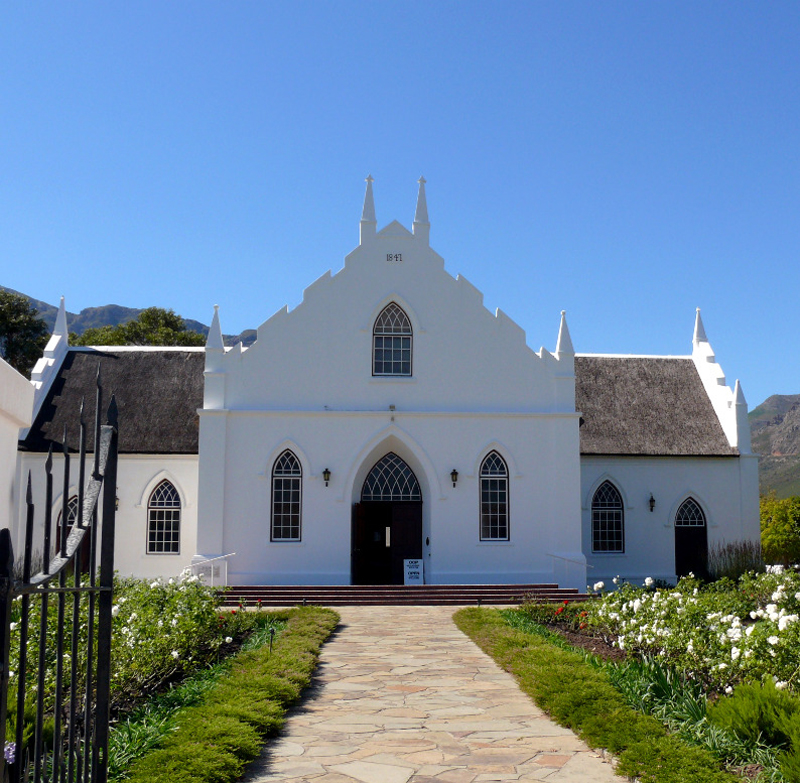
dutch reformed church

After a light lunch (salad) in the village we returned to the auberge to rest. Vineyards and Mountains Dinner at Carbière was, frankly, out of this world. All their items on the menu are available in half or full portions so you can have as many different dishes as you like. They also do tasting menus, pairing wines with each course. haute carbiere We had the Cuvée Belle Rose (100% Pinot Noir fruit portraying elegant sophistication) with our starters of prawn rolls with chilli jam and herb salad /  pea, leek and asparagus tart with herb salad – the pastry was so light it practically melted in your mouth; for mains we both had the chicken stuffed with a layer of lentils and served on a bed of tagliatelle, spinach, spiced cubes of butternut squash and very firm asparagus tips with rocket and chorizo jus which was accompanied with a Brut Sauvage (yeasty with a creamy finish, wild and elegant mystique); dessert was a meringue with raspberries, raspberry coulis and strawberry yoghurt ice-cream (all delicious) and my husband had a most unusual looking desert consisting of 3 tiny sweet spring rolls stuffed with hot dark chocolate and served with a shot-glass of a white chocolate milkshake – exquisite – and this came with a glass of the sparkling Blanc de Blancs.

The whole lot came to R550 (around £40 at the time) plus a R5 tip for the car guard. Currently there are lots of menu options, including wine pairing, from R295 per person .

On our last day in the valley we decided to have a look at a few other vineyards in the area such as Grande Provence, Boschendal, and Glenwood and then drive over the mountains to look around the university town of Stellenbosch. Grande Provence is lovely and has a fabulous setting for their restaurant, Glenwood is in the little valley of Robertsvlei and surrounded by outstanding natural beauty.

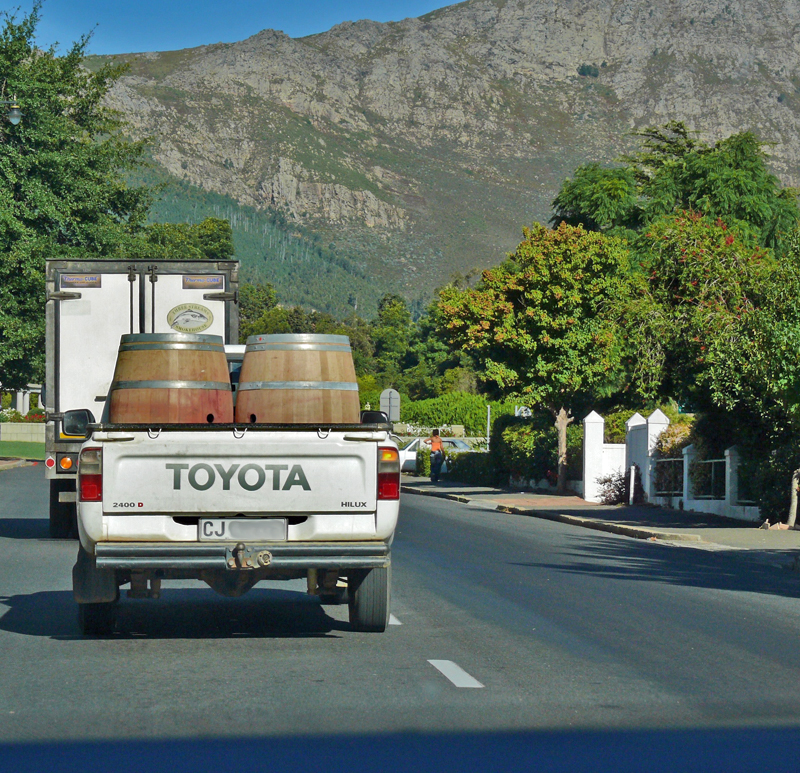
wine carrier Stellenbosch however, defeated us as we could not find anywhere to park! We drove around for a while but the centre was absolutely packed so we had a look at it from the car, admire the beautiful Cape Dutch-style homesteads, the university and the tree-lined streets.

On the drive over to Franschhoek from Stellenbosch on the R310 – Helshoogte Road look out for Tokara Winery which is famous as an olive oil producer and located right at the top of Helshoogte Pass. Passing a village called Languedoc you come to Boschendal one of the most famous wineries with exceptional grounds. manor house boschendal The farm Boschendal means “wood and dale” and was granted to Jean de Long in 1685. A fellow Huguenot, Abraham de Villiers bought it in 1715 and was responsible for the buildings you can see today. Boschendal is famous for its “picque-nique”  (mid Oct to April only) which you can buy in a basket and then eat in their gorgeous grounds.

Yellow wood and Stinkwood Armoire

You can visit the delightful manor house with yellow wood ceilings, floorboards and doors set in teak frames and stroll around the delightful gardens, including a very fragrant herb garden.

Naturally, food was not far from our minds and we bought a glass of real lemonade and a chocolate and coffee ice-cream sundae from the Café (formerly slave quarters), sitting under the shade of the lovely oaks in the grounds  and watching the white ducks (pure Jemima Puddleducks) strutting around looking for titbits.

franschhoek town hall

Our final dinner in South Africa was at the “French Connection” again. We had the mussels as a starter (from Walvis Bay) followed by sole and couscous with butternut squash, feta cheese, courgette and a pesto sauce. Finished off with a Dom Pedro Kahlua, double espresso and an amaretto. Sublime!

Need a reason to visit Franschhoek? Believe me when I say it is one of the most beautiful wine valleys in the world. And the food and wine ain’t half bad either.

The Tsitsikamma Forest

After Addo we retraced our steps along the Garden Route towards Cape Town deciding to stop over at another place I have always wanted to visit, primarily because I love the name Tsitsikamma National Park.

Tsitsikamma is a khoi word meaning “place of abundant or sparkling water” and the beautiful indigenous forest protected by the State, is home to centuries old trees such as Yellowwood, Stinkwood, Hard Pear, Ironwood, Kamassi and many others.

Of course those ofyou who are extreme sports fanatics (you know who you are) will no doubt of heard of this region as it is famous for the world’s highest bridge bungee jump from the dizzying Bloukrans Bridge on the old road, zip-lining through the canopy of the trees or going down the Storm’s River itself on a rubber tube! It is well-known for the Otter trail a spectacular trail between Nature’s Valley and the Storm River and many other hiking trails in the Tsitsikamma Mountains amongst mountain fynbos and indigenous forests with wonderful river gorge and mountain scenery. There are plenty of rivers, streams and rock pools for swimming and swinging rope suspension bridges slung near the waters for walkers.

“J-BAY”
After leaving Addo by the Colchester exit we joined the N2 and drove east past the Sundays River. The San people originally named this river Nukakamma (Grassy Water) because the river’s banks are always green and grassy despite the arid terrain that it runs through. It looked a very pleasant spot to visit, but I wanted to pop into Jeffrey’s Bay – a long time favourite surf spot in the 1970s.

On entering Jeffrey’s Bay from Port Elizabeth you drive along the Kabeljous Estuary and Nature Reserve which is a walk-about reserve and has a safe swimming beach. It is an excellent fishing and bird-watching area so it’s probably worth staying near ‘J Bay’ for this alone. The Noorsekloof Nature Reserve (near the golf course) has a 3km trail running alongside a stream from which you can see many species of bird and some small buck and if it is bird-watching you are after then the Seekoei River Estuary, as you enter the main town, is the place to go. There is an abundance of water fowl and a hide overlooking the river.

Kabeljous
Kabeljous

“J-Bay” as it is known to the locals, brings to mind surfing, sunshine and beautiful beaches – and you’d be right. Home to the Billabong Surfing Festival every July and rated among the ten best surfing spots in the world, surfers from across the globe come to enjoy the rolling breakers. As often happens I was disappointed with what I found there. It does have a lovely long and sandy beach, though at the time of our visit a distinct lack of surf, and therefore a deficit of surfers. There is apparently a Surf Museum and a Shell Museum which unfortunately we didn’t know about at the time as they would have been intriguing to visit.

Surfing in 'J Bay'
Surfing in ‘J Bay’

All I saw was a depressingly long Main Street lined with identical shopping malls and boring holiday resorts. On reflection after the open wilderness of Addo all these signs of humanity were a little bit too overwhelming at the time.

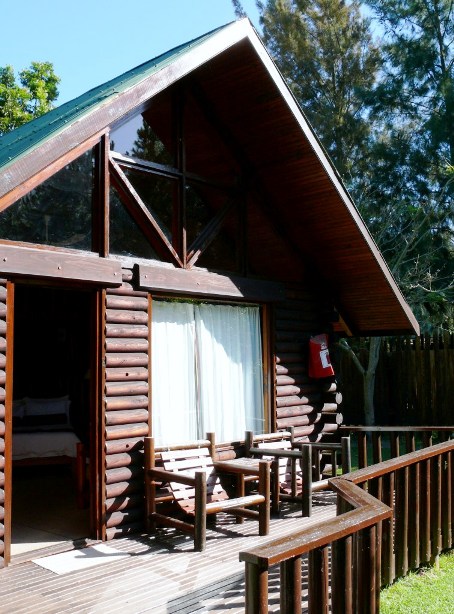
Tsitsikamma P1120992We continued onto the R102 to Humansdorp before re-joining the N2 and making our way to the Tsitsikamma Lodge where we had booked a delightful log garden cabin complete with spa bath!  Slightly more luxurious than the rondavel  in Addo.

P1120922

It felt good to be sitting outside on the private deck having a couple of Castle lagers and updating my travel journal before heading off for a stroll in the beautiful surrounding forest. P1120954 Dinner at 7 p.m. that night was in the lodge restaurant – a set menu – broccoli soup followed by fish and salad, roast leg of lamb and seasonal vegetables, desserts and cheese and biscuits. We didn’t quite make it to the end and were in fact in bed by 9 p.m.

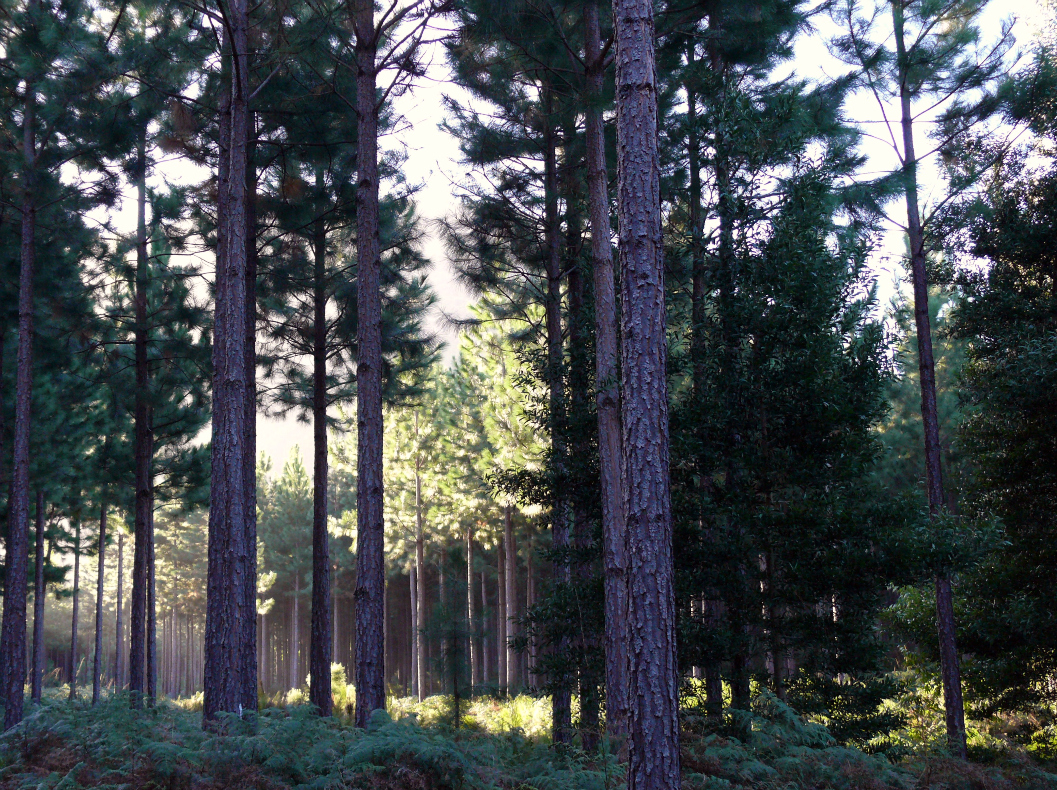
Tsitsikamma Forest
Tsitsikamma Forest

Nature’s Valley
The following day we headed out to Nature’s Valley, the plan being to make our way back to the lodge from there stopping at various sites. Unfortunately we had to go along the N2 and therefore through the toll plaza between The Crags and Storm River as there was no alternative route due to the R102 being blocked by the flooding in December (remember the tjoe-tjoe?). Chris from the lodge said that the problem was that local government was waiting for the national government to declare it a disaster area so that they will pay for it. Meanwhile until someone decides who has to pay for the repairs nothing is done!

Natures Valley
Natures Valley

Nature’s Valley is incredible – far nicer than Jeffrey’s Bay – in my opinion. Wide, white sands, a safe lagoon for swimming and all in peaceful, natural surroundings. No shopping malls and no garish developments, just a small community with one pub/shop/restaurant at the far end and some local pink-bottomed baboons! urban baboonThis is one end of the otter trail which is considered to be one of the best trails in the world. It is not an easy trail; it is 42.5 km long and takes five days to complete. It follows the rugged coastline and cliffs returning to the shore line to cross rivers. Many years ago my sister-in-law did the trail and considered it one of the best things she ever did in her life. Sadly I have not done it and probably never will now given the steep descents, difficult river crossings and dangerous rock scrambles. We ventured a little way along the Salt River Walk which starts from the shop at Nature’s Valley and is around 9 km long. It takes a circular route along the beach and into the scrub forest. beach to the eastWe followed the route in the opposite direction, along the beach until it wound up into the bush and became too steep to continue. I often get quite annoyed with myself at not being able to do the things I took for granted thirty years ago. Joints too stiff, overweight and under-fit, nervous of slippery slopes and sudden drops are the curses of becoming older and spending too much time working on computers.

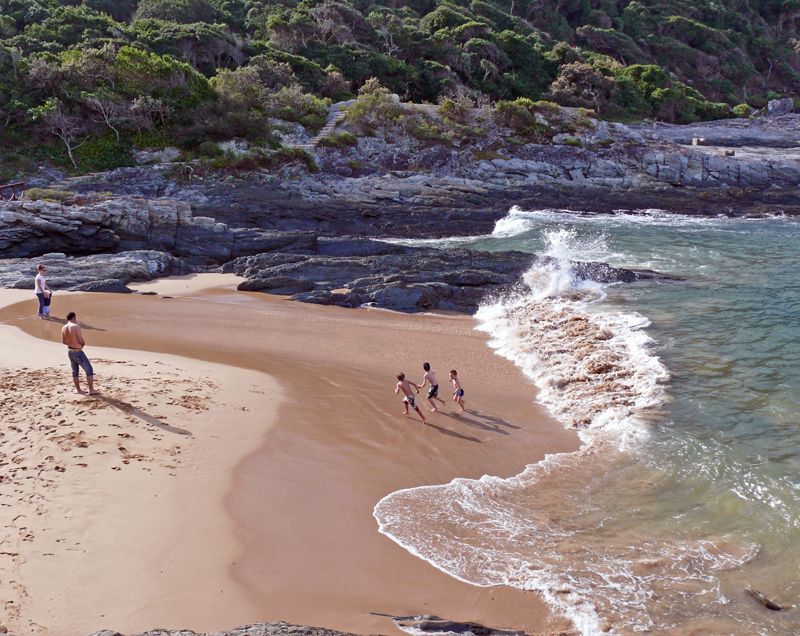
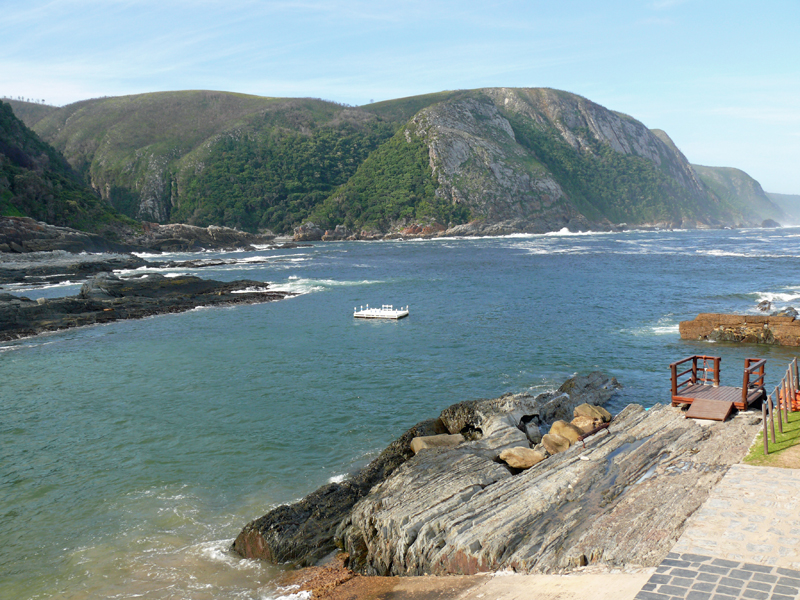
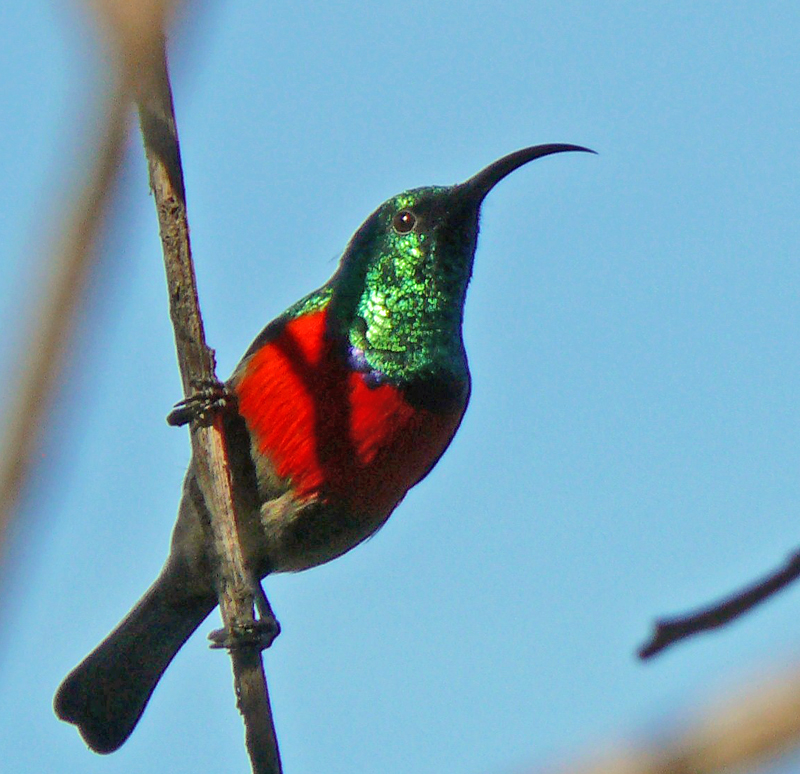
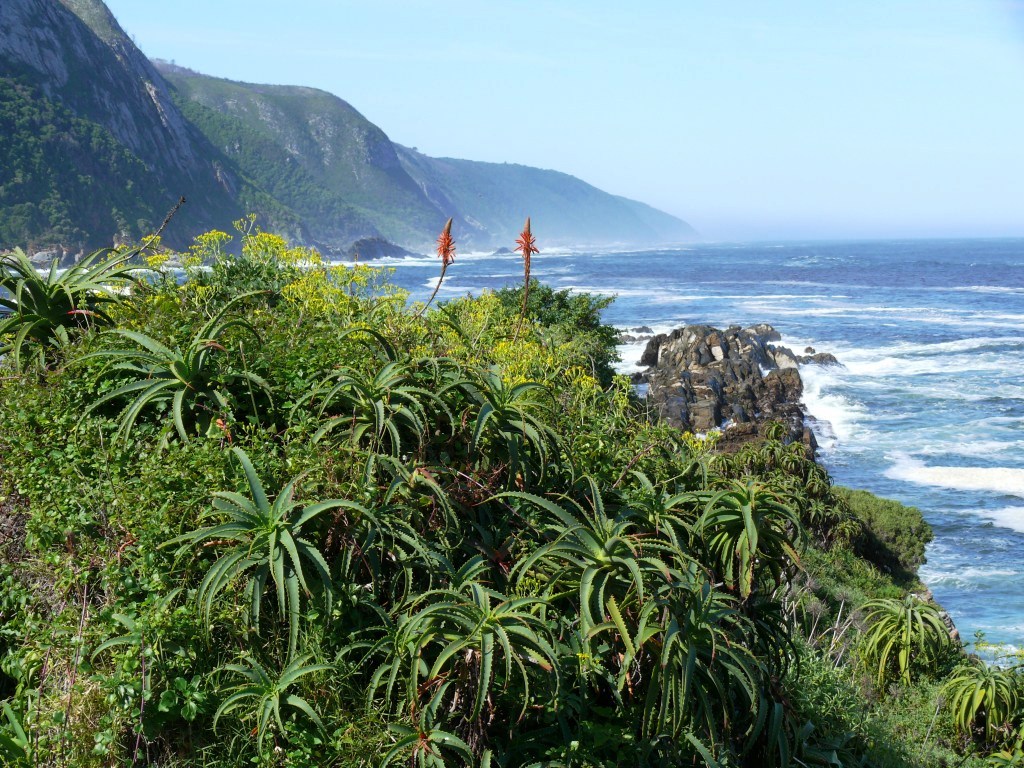
Storm’s River Mouth escaping the waves on MooibaaiOn the way back to the lodge we drove down to Storm River’s Mouth. What a spot! Wild and windy, with huge waves crashing on the rocks, such raw beauty! There is a lovely restaurant “Tigers Eye” overlooking the river mouth and small sandy beaches – Mooibaai and Sandbaai and jewel-like sunbirds flittering in the trees.

view towards the river mouth

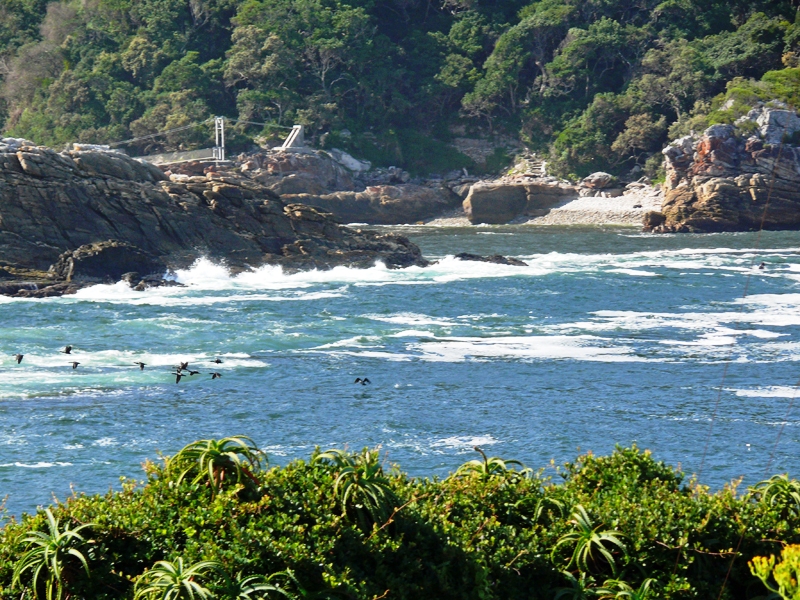
We could have taken a boat into the gorge itself, which looks pretty amazing, but getting on and off the boats looked a little tricky in the considerable swell of the ocean so we decided against it.  By the way, the ‘black water‘ colour of the Storm River is caused by tannin leaching out of plant matter; much like tea. sunbirdWe wandered a little way along the Mouth Trail up to Strandloper Cave and along to the rope suspension bridge and lookout point. Unfortunately we couldn’t go onto the bridge itself because the final part of the boardwalk leading to it had been burned in a fire – it was being repaired though so hopefully open again by now. Though working on African time, you never know!

storms river dryfhoutbaai

Whilst we were exploring a sudden sea fret descended turning everything into one of those eerie sets out of a horror movie – all ghostly shadows and shapes amid the constant boom of the ocean.

wild weather approaching

waves breaking

storms river mouth

I was mesmerised by the surging waves coming in and breaking on rocks only metres away from the car with such force and incredible energy. And right next to the shore a group of rock hyrax (dassies) were having their supper. Next time I am in this region I shall book a forest cabin right on this shore. (Book through SanParks).

rock dassies

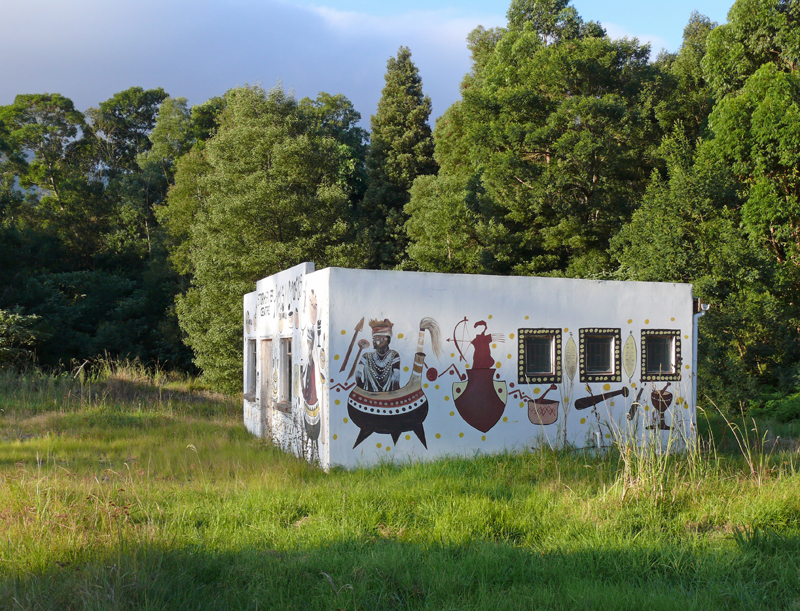
Our final stop was at Storm River Village where you can do a Fern Tree Walk, but we were all walked out by then so instead we opted to retreat to our log cabin for a very large vodka and tonic and a welcome soak in the spa bath! Luxury!

storms river village hut
Storms River Village

The Garden Route

Probably the most famous drive in South Africa, and certainly the Cape, the Garden Route offers beautiful stretches of coastline, lakes, mountains and giant trees. The route is sandwiched between the Outeniqua and Tsitsikamma mountains and the Indian Ocean and although extremely busy in the peak summer season, is a lovely region to visit in the autumn when the weather is still warm enough for outdoors activities, especially hiking.

George to Knysna
We joined the route at George (see Road Trip: Route 62) and made our way through the traffic to connect with the N2 from Cape Town to Port Elizabeth. After the tranquillity of the Klein Karoo, it was a bit of a shock to hit commuter traffic once again. Driving through the Kaaiman’s River Pass along the N2 to Wilderness and seeing the string of lakes I was already regretting my decision not to stay in this lovely area as it looked fantastic and an obvious spot for bird watching. Anyway, another excuse to return to South Africa. Sedgefield is the next village en route and another lovely place among the lakes and sand dunes. This whole area is quite sensational.

Leisure Isle

Knysna
We arrived in Knysna at around 5:30 p.m. staying on the Leisure Isle on the edge of the lagoon with views to the Knysna Heads. OK, so maybe this wasn’t a bad decision after all!

If you have read my previous postings about this trip, (Cape Town Revisited and Route 62), you will have realised that I am no stranger to these parts of South Africa. Though saying that, I have also only ever stopped overnight once along the Garden Route and that was in Plettenberg Bay.

I travelled along this route many times during the 1970s and 1980s on account of us living on the Western Cape Peninsula and my in-laws in the Eastern Cape. Except for a coffee and a brief stretch of the legs Knysna has always been a town that we passed through, but I have always wanted to see more of this region hence the reason to stop here on this visit.

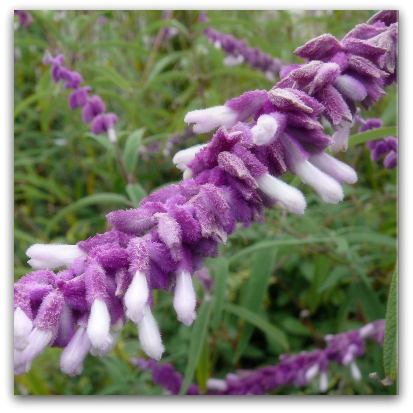
Salvia leucantha
Salvia leucantha

A town that has always attracted artists and hippies as well as bird watchers (Knysna Loerie, Woodpeckers etc) Knysna has been a popular tourist spot and has grown quite a lot since the 1980s with the addition of a new waterfront complex. I was determined on this visit to actually have a chance to look around the town, and I wasn’t disappointed. After settling into our lovely B&B on the edge of the lagoon we walked to the centre of the Leisure Isle to a restaurant called “The Tides” which had an extraordinary chef. Dinner was calamari, prawns and our first Dom Pedro! We were hooked. Forget Irish coffees from now on we wanted Dom Pedros (preferably the Amarula variety), which are basically grown-up milk shakes. Seriously you have to try one. Knysna lagoon tide outWalking back from the restaurant we were struck by the fact that it was the first time on our holiday that we felt safe out walking at night, (this may have had something to do with the security guard at the entrance onto the island). It is not generally a good idea to walk anywhere in South Africa and especially not at night. The fantastically clear sky with millions of stars above us was stunning. A perfect end to a perfect day.

One other thing to add about South Africa is the load shedding, which means that on certain days and at specific times, there is no electricity. I can’t say that it affected us in any major way, but you have to get used to the idea that there may not be electricity when you want a shower, but hey, showering by candlelight is fun! Sometimes you may not get a cooked breakfast, and sometimes you will find traffic cops directing traffic through towns as the robots (traffic lights) aren’t operating, but on the whole it just adds to the fact that you are somewhere different. I am not sure how I’d feel if I was trying to run a business though!

A Lazy Day Around Knysna
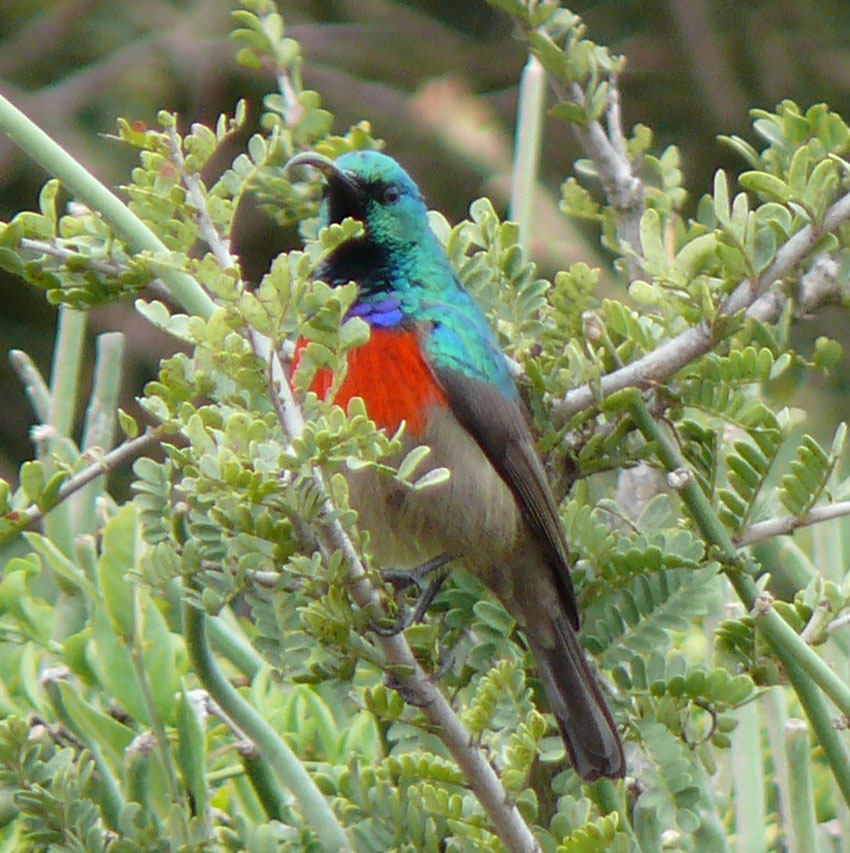
After the effort of driving all day yesterday from Cape Town to Knysna, around 500 km, we decided to take it easy today. It started out fairly cloudy with a little bit of blue sky which disappeared over a perfect breakfast. We first took a stroll around Leisure Isle to walk off the impressive breakfast and also to see if we could spot any birds. scarlet-chested-sunbirdWe did manage to snap a couple including this lovely tiny Scarlet-chested sunbird right in the garden where we were staying. We then drove into the town and to the Waterfront. We first went to the station to see if we could get tickets for the Outeniqua Choo Tjooe, the steam train that runs between George and Knysna, but unfortunately all we could tell was that it didn’t appear to have been running for a while as there were no signs of a timetable or any notice saying when the next train would be and no-one in the ticket office.

We spotted a meter lady (lots of car parks in South Africa employ parking officers who take a fee for parking as there are no self-service machines) and asked her if she knew what was happening with the train; she told us that it had stopped running because of the flood. [1] Another reason to come back – I have always wanted to do this train journey as the rails cross over the lagoon, pretty spectacular!

The Oystercatcher

We went for a stroll around the Waterfront instead, which has the usual souvenir shops and restaurants (but much, much smaller than the one at Cape Town) and by this time the sun had broken through the cloud and it was pretty hot.

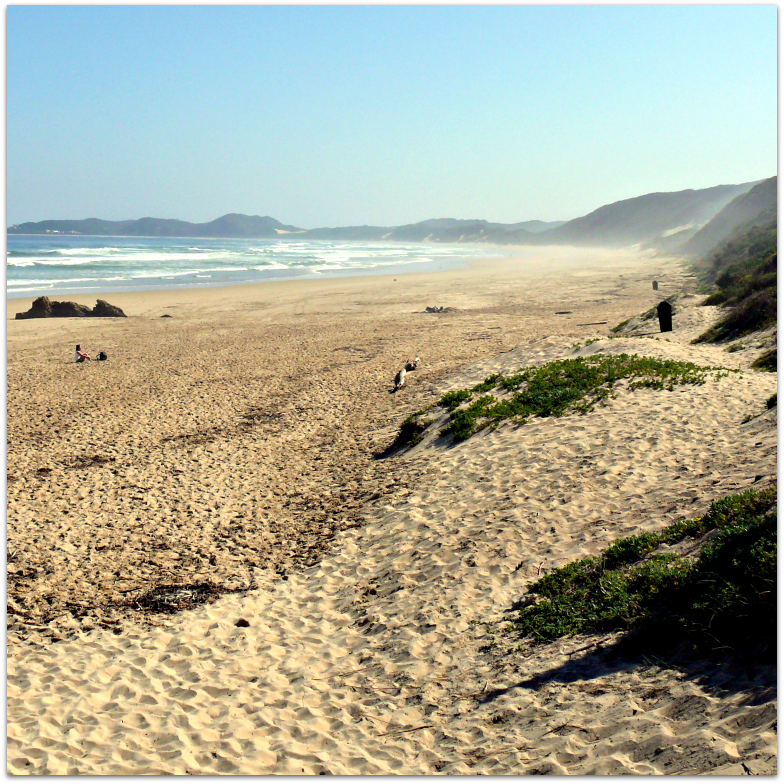
[1] (We later discovered that it was not running due to heavy flooding which had happened seven months ago!) knysna marinaAfter taking some photos of the lagoon, a very noisy duck, a heron and the Waterfront, we drove to Brenton-on-Sea, a place I had heard about, but never visited and I’m not sure I want to share it with you either! It is such a lovely place. To get there you go back along the N2 towards George, but immediately after the White Bridge turn off and go under the N2. brenton beachBrenton has such a fantastic sandy beach with rock pools and unusual sandstone rock formations  at one end (similar to Kenton-on-Sea, which is a lovely resort between the cities of Port Elizabeth and East London). You can walk along this beach to Buffalo Bay – which is a popular spot for surfers; it is around 7km return.

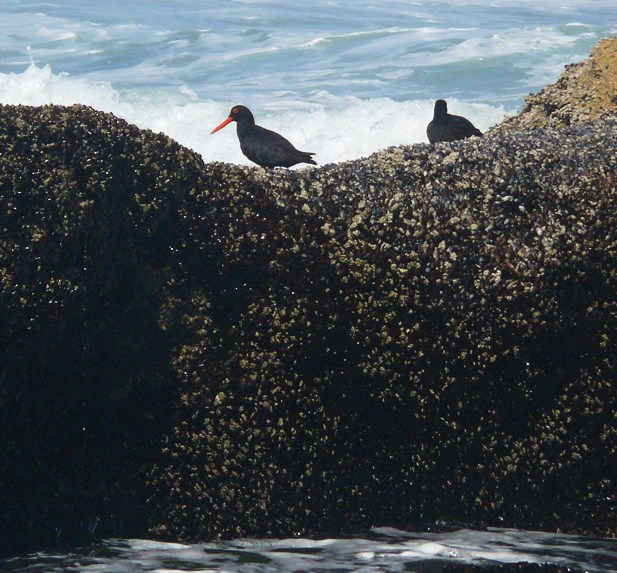
Since we were still feeling tired from yesterday’s driving we decided not to do the walk, but still ended up wandering leisurely along the beach for an hour or so and saw several oyster-catchers on the shoreline. Glimpsed lovely views over the lagoon on the way back to Knysna. african black oystercatcher (Food note: On the Brenton road look out for Pembrey, a lovely country restaurant) lagoon to the headsWe returned to the lodge and whilst my husband had a rest, I went wandering in the lagoon which was now a sandy beach as the tide was out. This spot is fantastic for families and young children as it is so safe and the water is shallow and warm. I did get a bit wet when I waded through to the shoreline and hit a shelf: the water went from ankle to thigh deep!

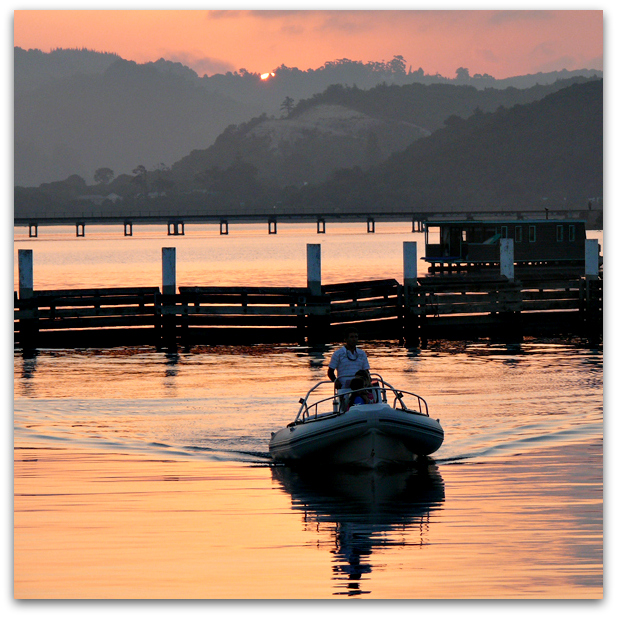
We returned to the Waterfront for dinner at “The Dry Dock“. Food was OK, slightly “Nouvelle cuisine” so small portions, which was fine by us. I had a Wanton Vegetable Melangee to start with followed by Linefish, Aubergine, Avocado and Grapefruit, and my husband had mussels and calamari followed by Linefish with Prawns. We should really have had oysters as Knysna is famous for them, but unless they are cooked we actually don’t like them. Finished with Dom Pedro Amarula again – I told you, they can become addictive and I don’t even like ice cream! sunset-over-KnysnaOh, and did I mention the incredible sunset? The whole lagoon turned orange – beautiful! I just had to leave my meal to dash to the balcony edge and capture this scene.

We finished the day sitting outside our room in the warmth of the evening listening to the sound of cicadas and the gentle lapping of the waves in the lagoon – so peaceful, I could get used to this.