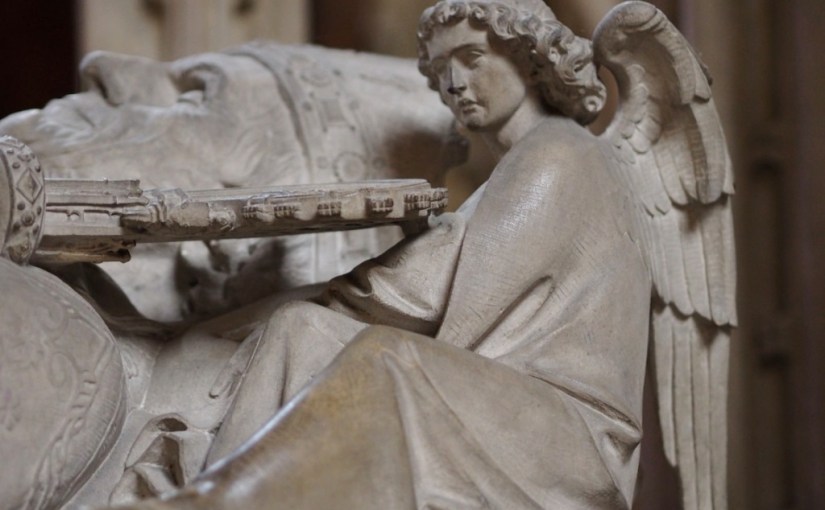
Lincoln Cathedral: Interior

“I have always held and proposed against all comers to maintain that the Cathedral of Lincoln is out and out the most precious piece of architecture in the British Isles” – John Ruskin.

After circumnavigating the cathedral at least twice by day and night, it was time to venture inside. Unlike Norwich it is not free to enter, but you can buy a combination ticket with the castle and the admission includes a floor tour. Originally built by the Normans after the defeat in 1066, Lincoln cathedral was consecrated in 1092. The diocese stretched from the Humber in the north to the Thames in the south, and after an earthquake in 1185 only the west front remains from the Norman period.

Inside, it is filled with light from the many stained-glass windows. (You guessed it, a separate post will follow)

Nave
Nave with the impressive choir screen and Willis organ in the background

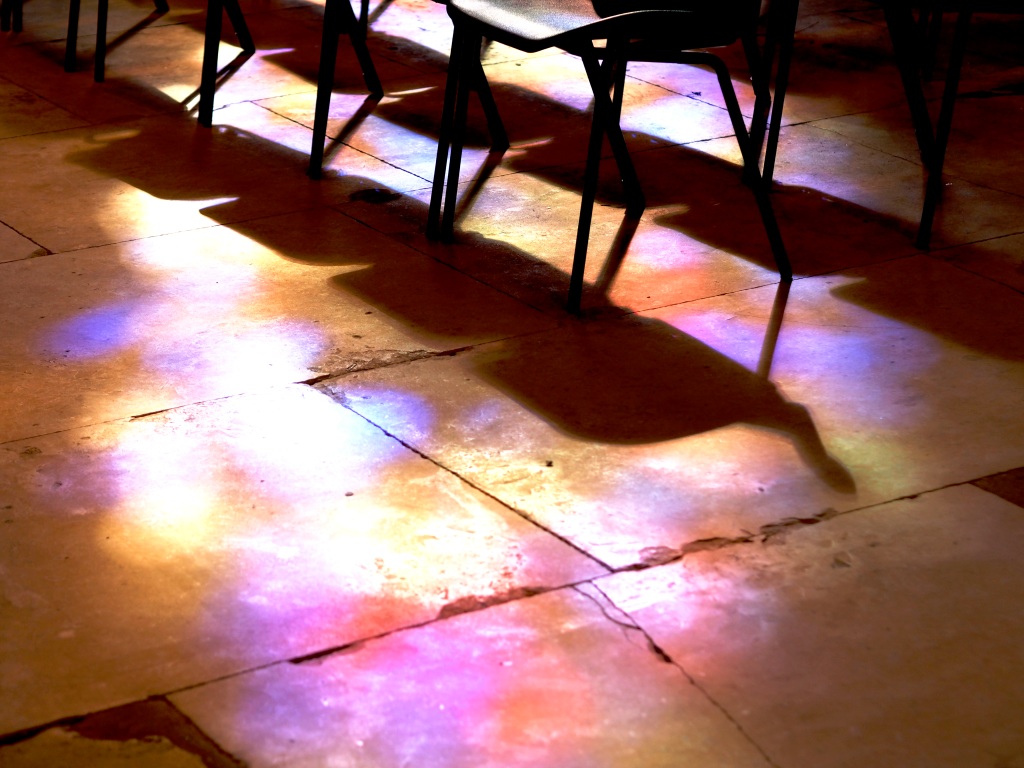
Depressingly filled with light-sucking dark plastic chairs. Originally the space would have been empty and the spaces used for markets. When people gathered for services they would have stood.
OLYMPUS DIGITAL CAMERA

A pilgrimage is a special kind of a journey

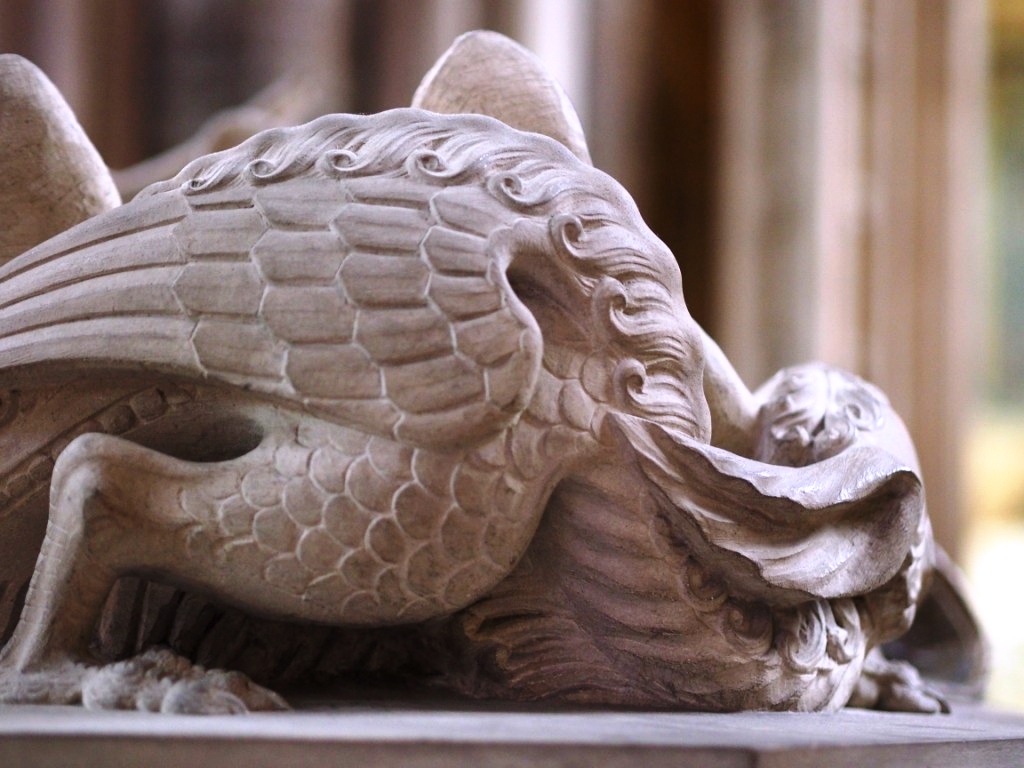
The font is made of a black carboniferous limestone from France, waxed and polished to resemble marble. Its sides are carved with mythical beasts of good and evil fighting.

West face of the font

To your left is the art work of William Fairbank, “The Forest Stations” which show Jesus’s journey to the Crucifixion and Resurrection, carved from many different types of wood.

At the crossing you can see that the church was built in the shape of a cross. Huge rose windows face each other from the north and south transepts.

I’ll go into more detail about the windows in a separate post. In the north transept you find the Service Chapels – for remembering soldiers, sailors and airmen. Lincoln cathedral is especially connected with those who served in the Bomber Command during WWII.

OLYMPUS DIGITAL CAMERA

As usual in English cathedrals, the full vista of the nave is blocked, and the choir – in this case St Hugh’s Choir which is almost a church within a church – is hidden from view. However, in this case the screen is exquisitely beautiful. Carved in stone and originally painted in bright colours, some of which can be still seen in faded glory, it was built in 1330 to separate the clergy, their assistants and the choir from the congregation.
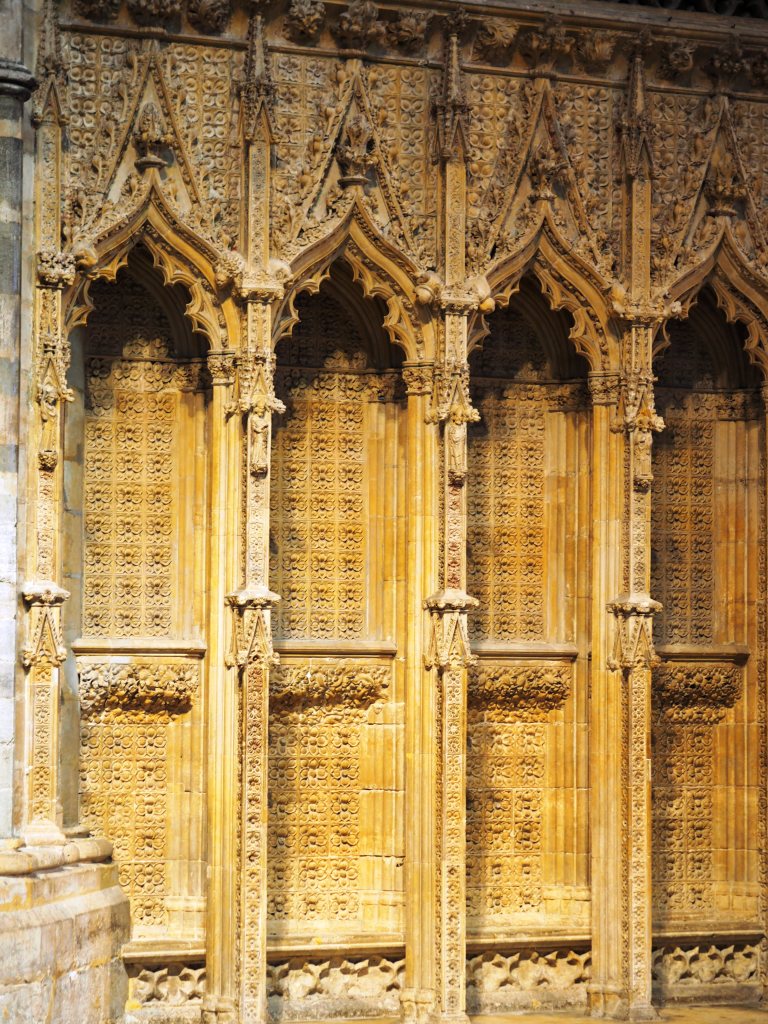
The Choir Screen
The Choir Screen

I was so taken by the carvings on this screen that I will make a separate post showing the details.

OLYMPUS DIGITAL CAMERA
North Transept

At the far end of the nave is the Angel Choir where you will find several tombs and the infamous Lincoln Imp, if you look closely enough. Legend has it that he caused so much chaos one of the angels turned him to stone.

Eleanor of Castile (1241 – 1290) was the Queen Consort of Edward I. Her entrails were buried in a visceral tomb to avoid the unpleasant smells of moving her body to Westminster Abbey. When she died, near Lincoln, her husband famously ordered a stone cross to be erected at each stopping-place on the journey to London, ending at Charing Cross. (The Eleanor Crosses)
Tomb details
Tomb details

As usual I was particularly interested in the choir area. Lincoln has some delightful misericords, unfortunately all the seats were down ready for Evensong when we entered, and on gently raising one to see what lay beneath I was verbally assaulted by one of the clergymen. Despite the fact that the seats are raised daily and sat upon he proceeded to lecture me loudly and publicly about the damage I could cause to the medieval hinges (?) – I politely pointed out that there is no notice or ropes to indicate that one should not look at the seats, but he was not in any mood to listen. A nearby fellow photographer hastily withdrew from the choir, and my OH was almost shaking with anger.  The altercation did somewhat sour our visit and I was saddened not to have at least seen the carvings in person.
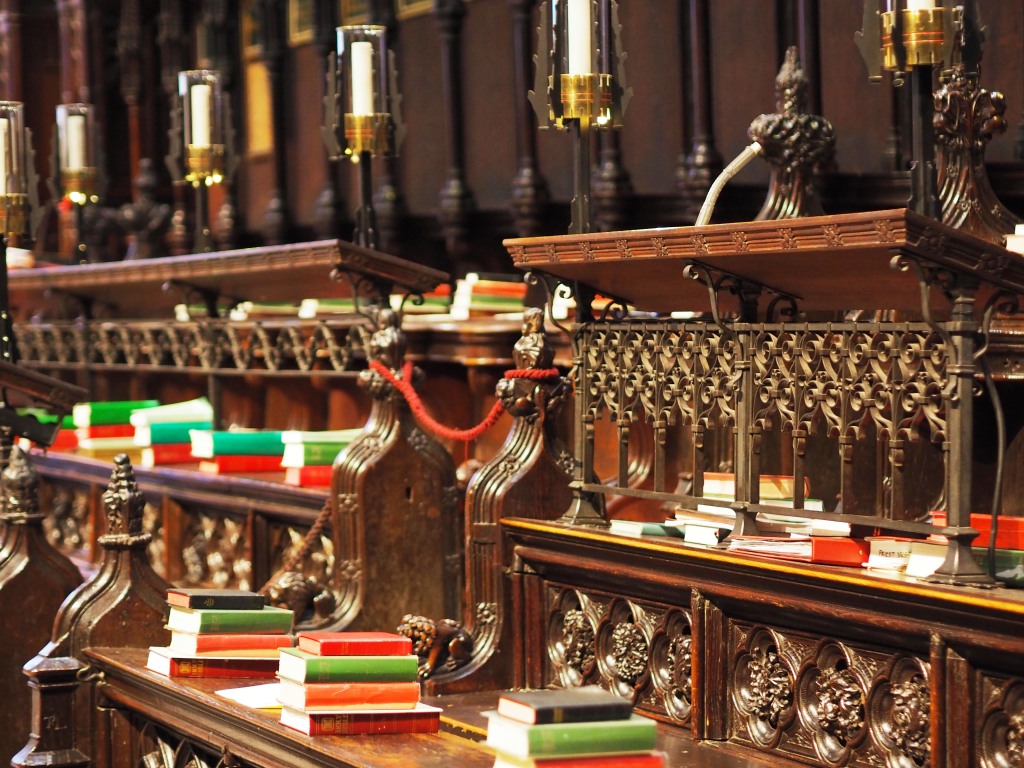
St Hugh's Choir
St Hugh’s Choir

However, do not let my mishap deter you from visiting the Choir as it is very beautiful and is where the Bishop’s throne – cathedra – is located.
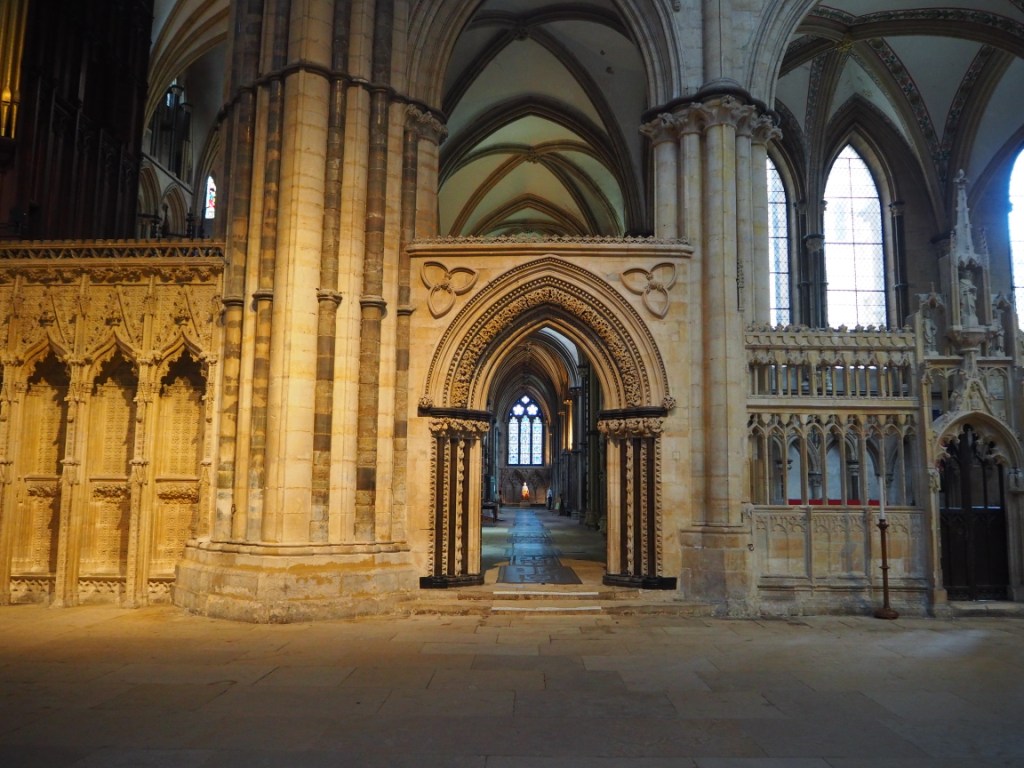
OLYMPUS DIGITAL CAMERA
The South Transept entrance

Lincoln cathedral does have a cloister, but much smaller than that of Norwich, built around 1296 and unusually on the north side.

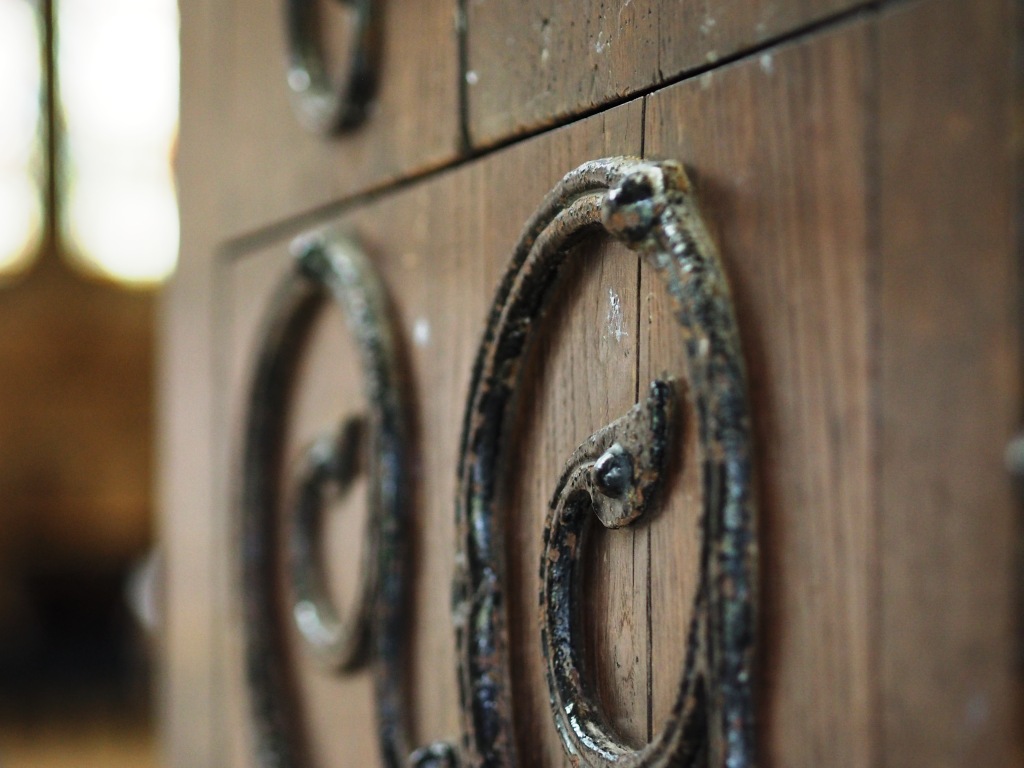
p9120193The cloisters are reached down the north east transept (Slype corridor) and through a heavy wooden door.
OLYMPUS DIGITAL CAMERA

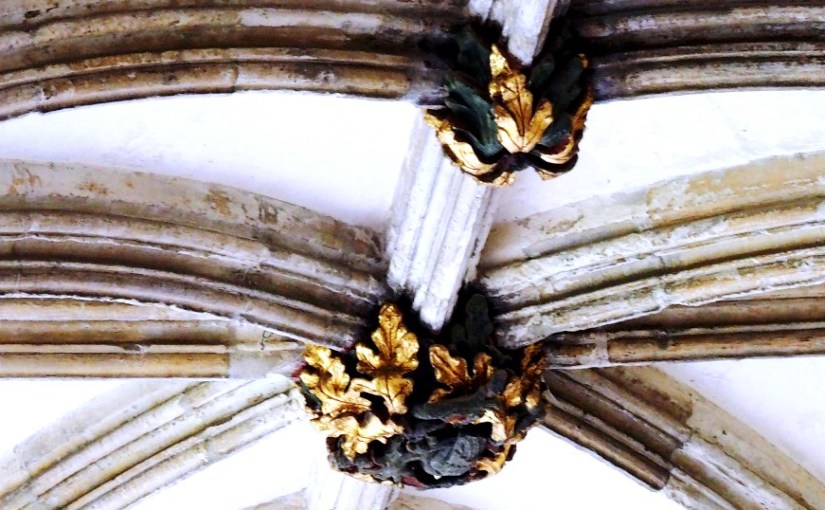
Three sides are †13c. They have a wooden ceiling with carved bosses and Gothic arches.

Wooden vault
Wooden vault

We’ll have a look at the carvings in the next post.
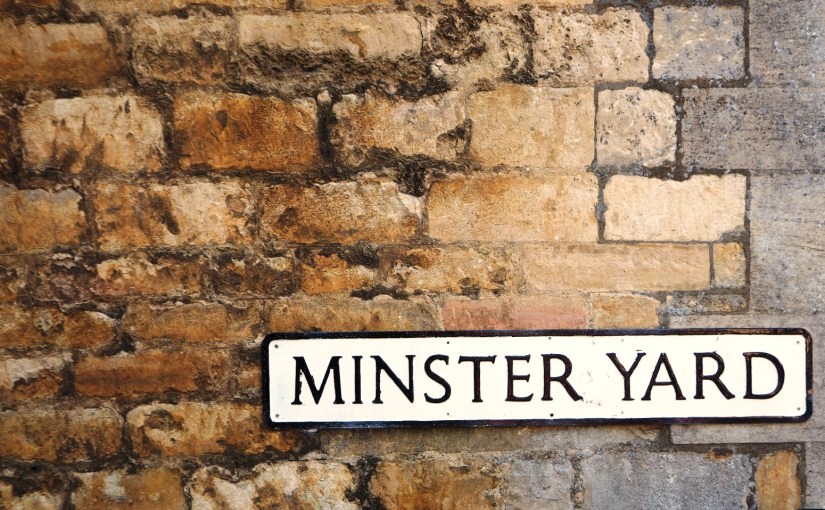
Lincoln’s Minster Yard

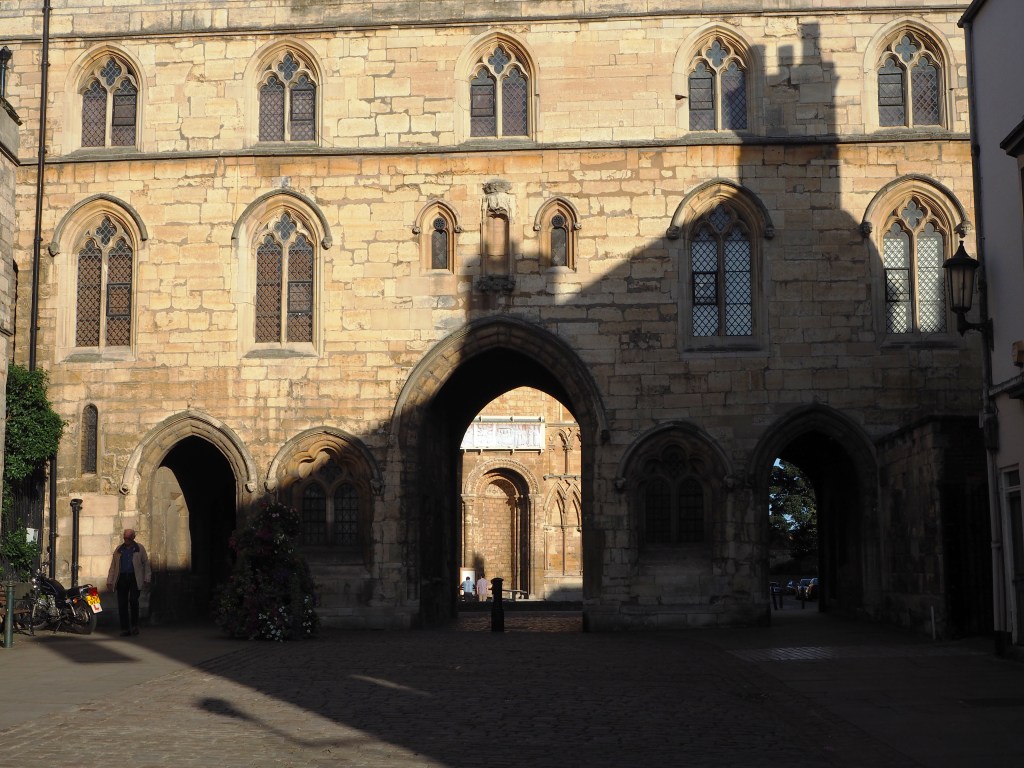
Following on from our stroll in uphill Lincoln we entered through the †14C Exchequer Gate into Minster Yard which is contained within the remains of its medieval gates and walls. Most of the houses are medieval and were built for the clergymen and associated workers who maintain the life of the cathedral.

Exchequer Gate
Exchequer Gate

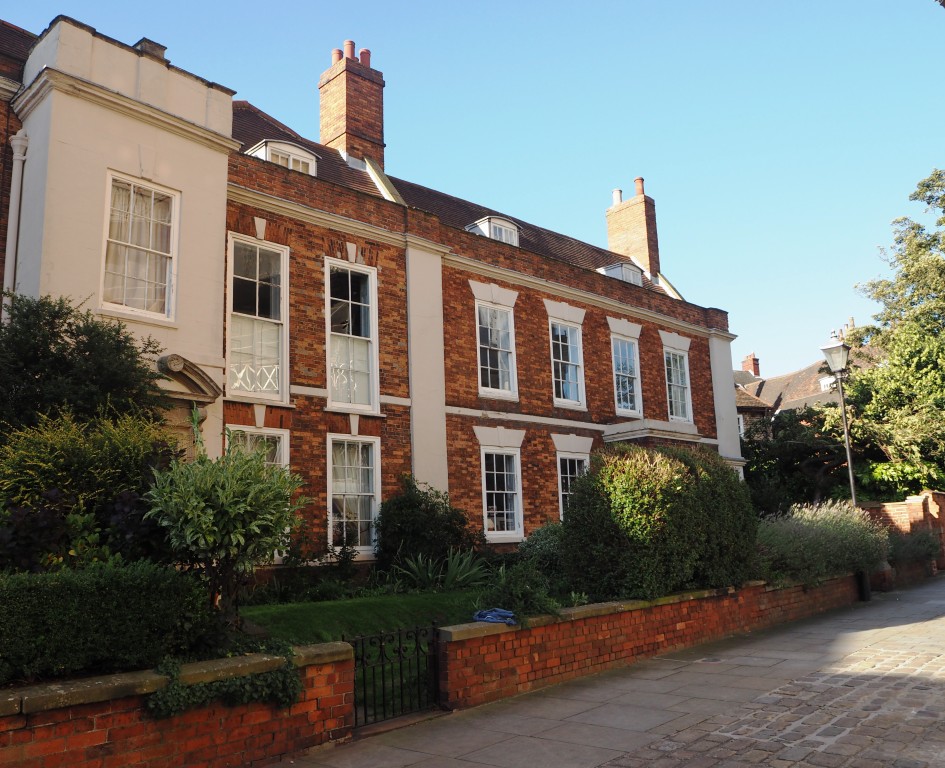
Facing the cathedral are four Georgian houses, 20 – 23, referred to as the ‘Number Houses‘ as they are believed to be the first houses in England to be given numbers. (So why start at #20?) Built in 1740 by Precentor Trimnell on the site of a blacksmith’s shop and other buildings. Number 19 was the birth place of the painter William Logsdail (1859-1944), a prolific English landscape, portrait, and genre painter. His father was a verger at the cathedral.

OLYMPUS DIGITAL CAMERA

OLYMPUS DIGITAL CAMERA

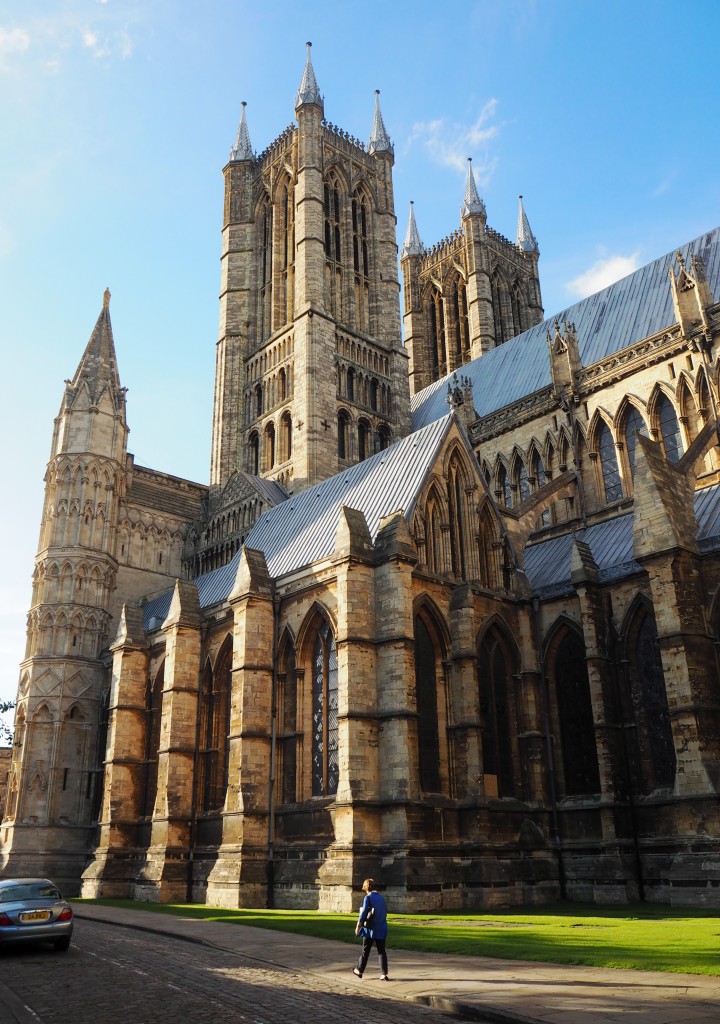
Moving in a clockwise direction we encircled the cathedral, looking back across its Norman west frontage, the only part remaining after an earthquake in 1185.

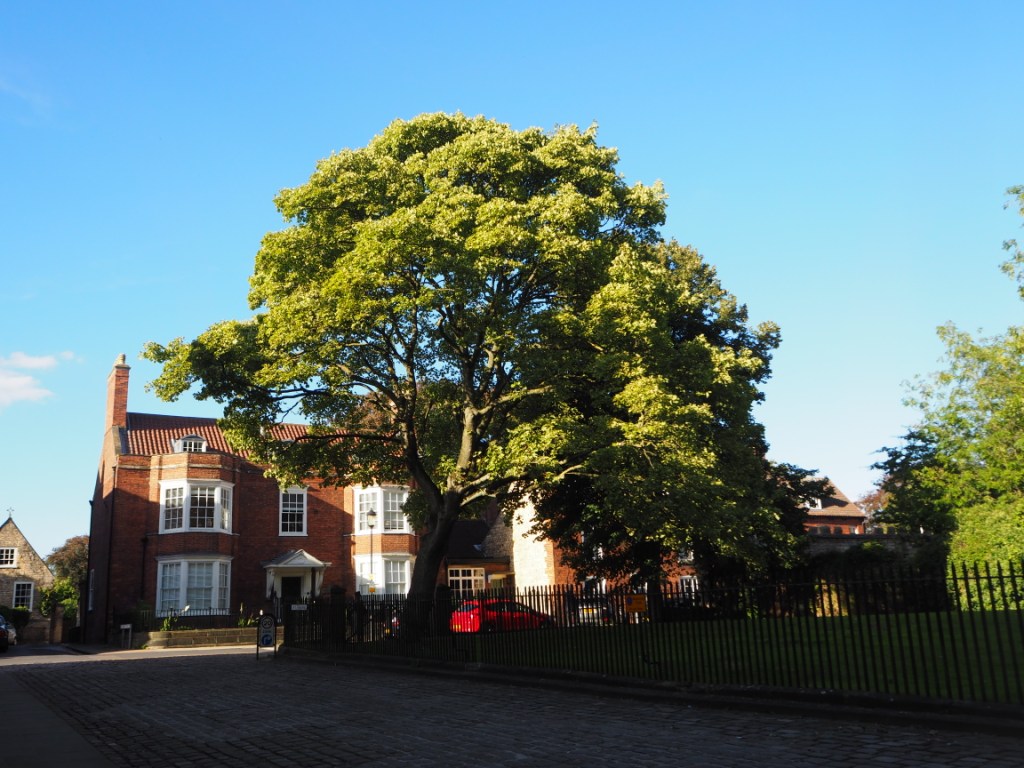
The houses facing are for Cathedral dignitaries – formerly the Deanery and the ‘Old Subdeanery’. This corner of the cathedral is notorious for the wind whipping around it and has the name ‘Kill Canon Corner’.

OLYMPUS DIGITAL CAMERA

EastgateFrom the northern side, along Eastgate, you get a view of the towers.

A short walk down James Street also provides views of the cathedral. As well as lovely golden stone walls. An area where the Burghersh family served the Chantry House founded in the mid †14c.

We returned to Eastgate and carried on walking around the cathedral grounds.

Atherstone House
Atherstone House

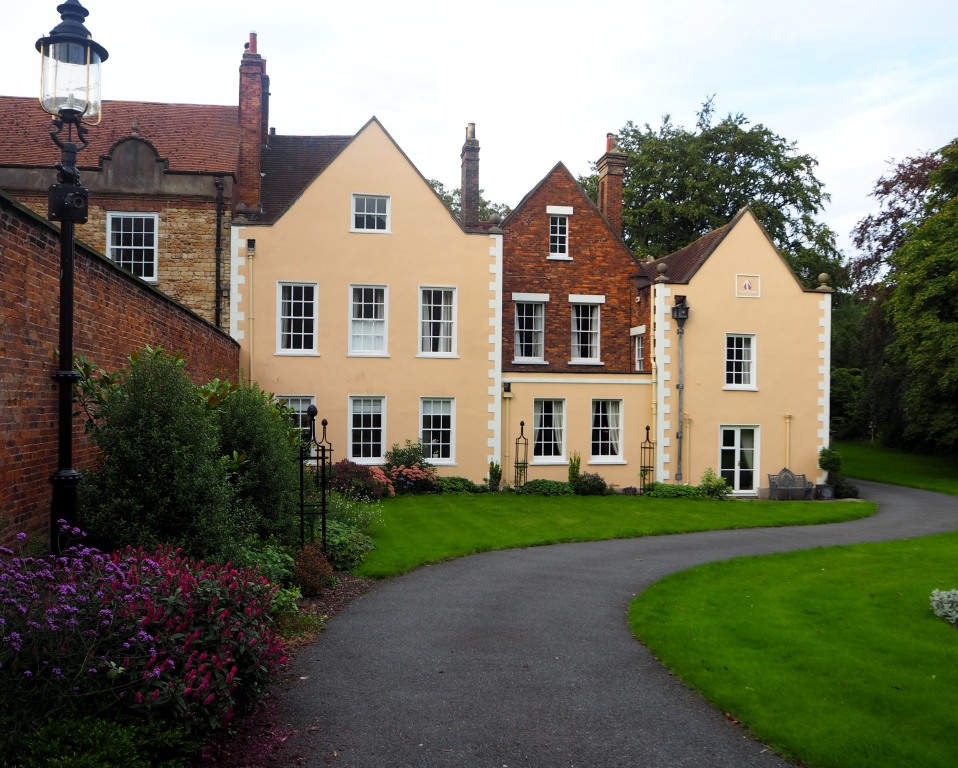
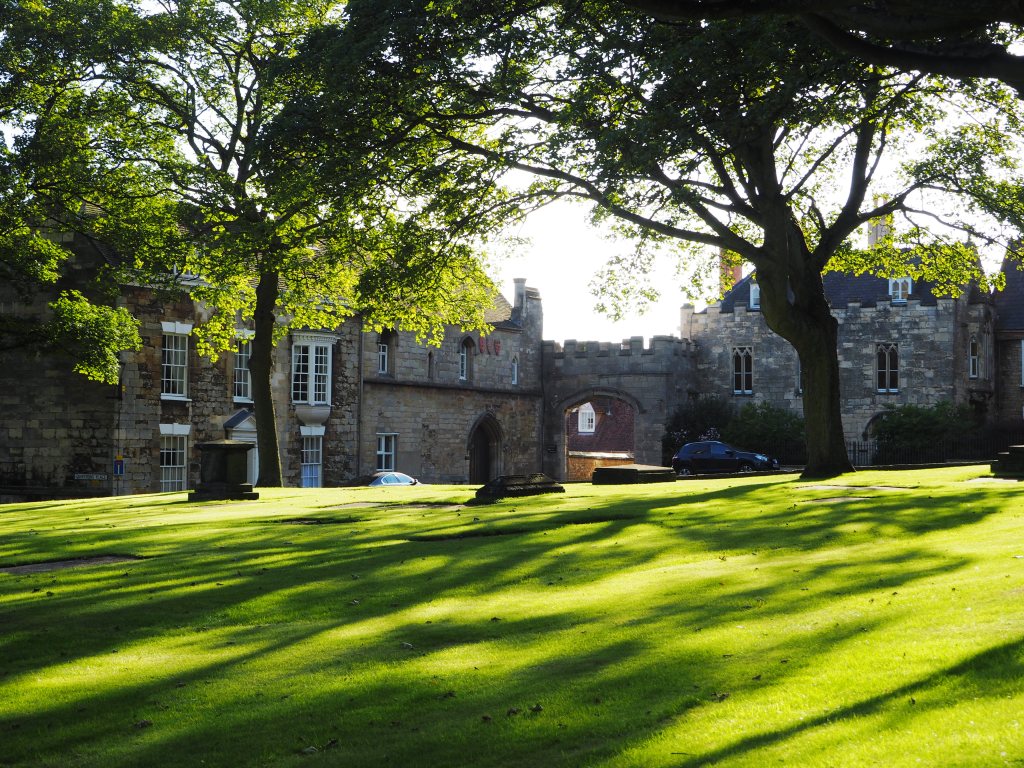
Passing the Bishop’s House, Deanery and Minster School which are all part of a medieval house built around a courtyard, you come back onto Minster Yard through the Priory Gate, or, like us, over the lawn.

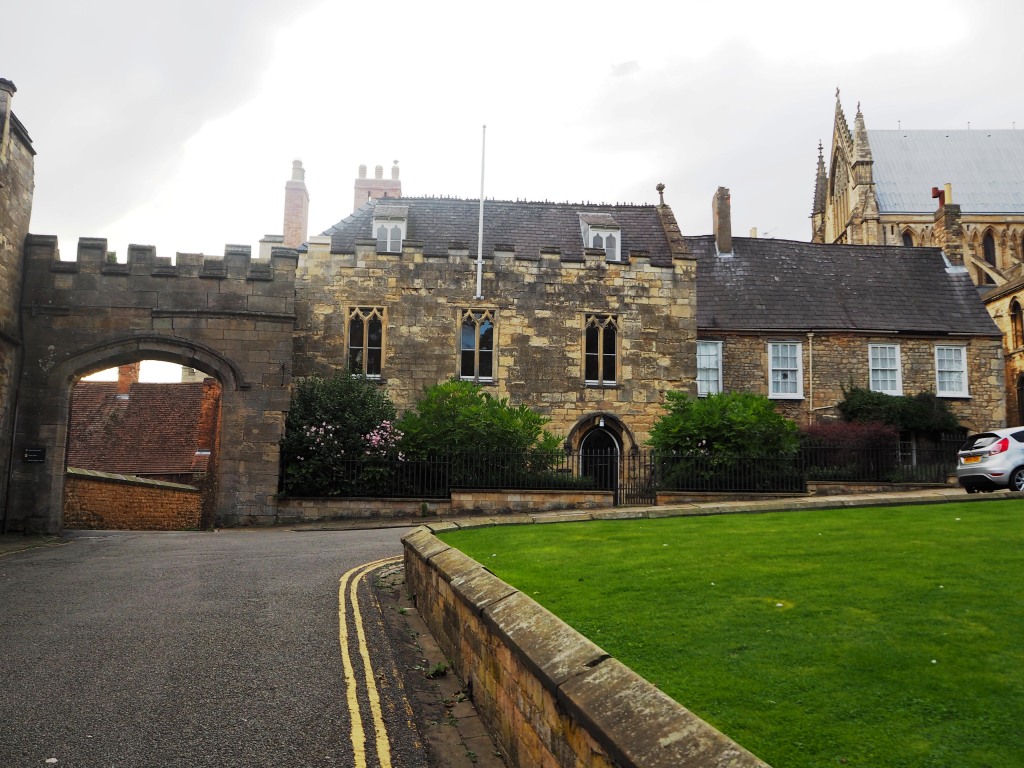
Potter Gate
Potter Gate

To get a decent photo of the medieval Potter Gate meant standing in the centre of the road as it is now straggling a traffic island. Fortunately in the evening this was fairly quiet. Lovely Georgian and medieval houses line this road.
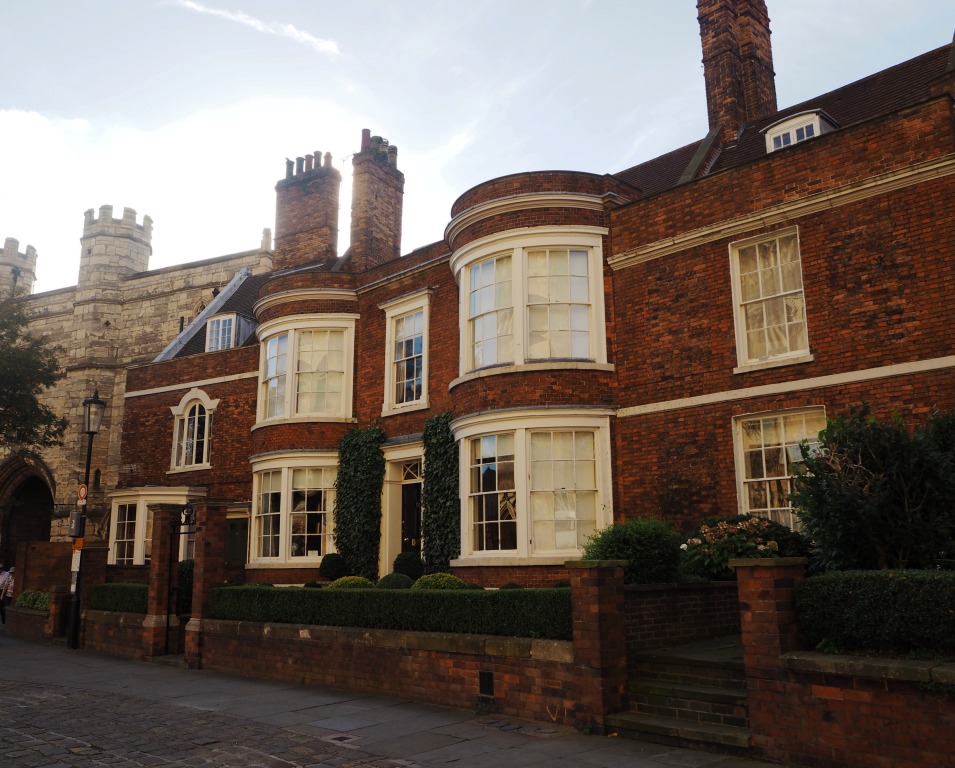
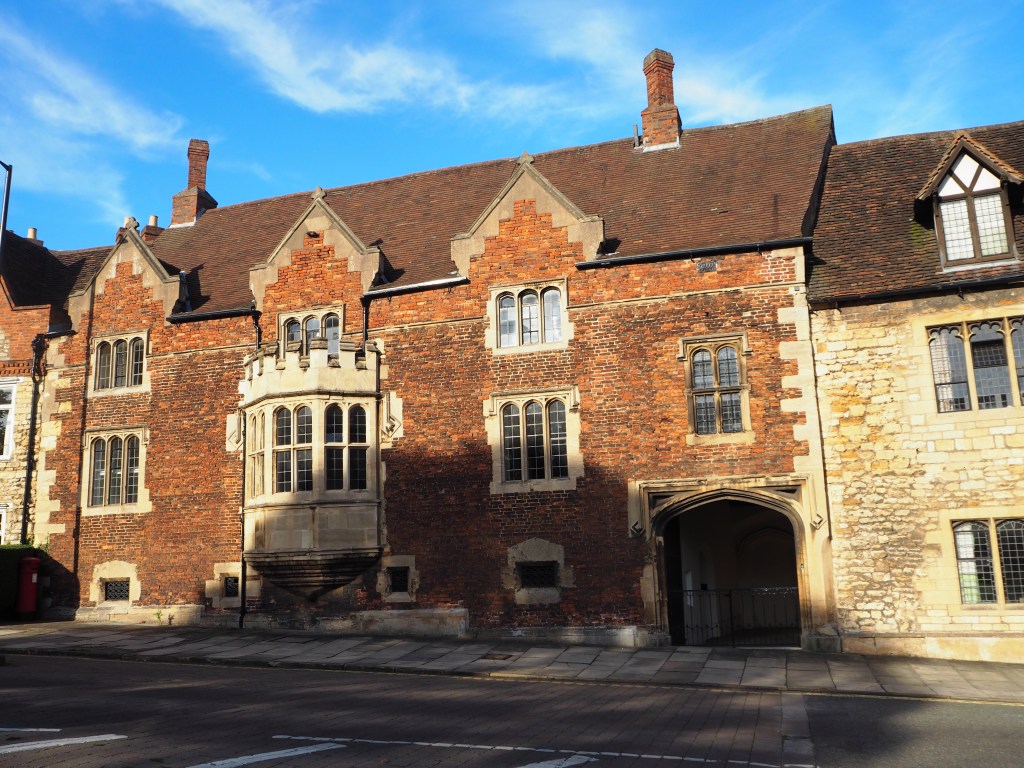
The Chancery
The Chancery

The Chancery is probably the prettiest with its red-brick facade and oriel window in the centre.

Choristers' House
Choristers’ House
OLYMPUS DIGITAL CAMERA
Vicars’ Court and Palace Gate

“To see it [Lincoln cathedral] in full perfection, it should be in the red sunshine of an autumnal evening, when the red roofs and red brick houses would harmonise with the sky and with the fading foliage”
~ Robert Southey, poet (1774 – 1843)

Precentory, Cantilupe Chantry

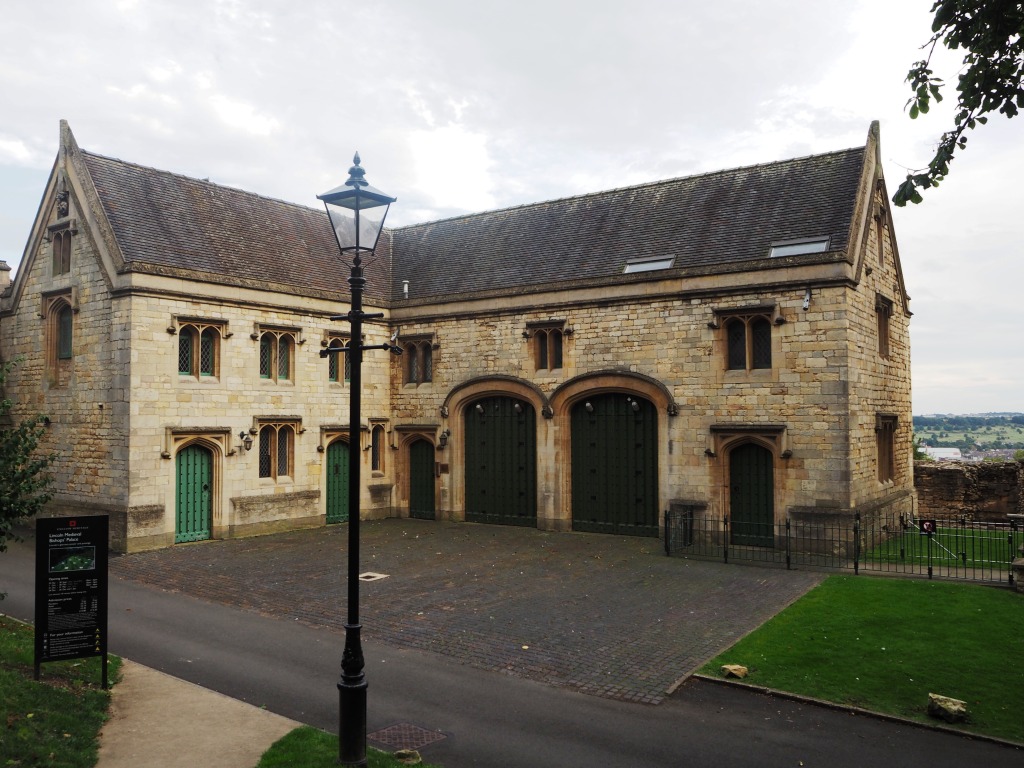
Through the Palace Gate the road leads down to the Medieval Bishop’s Palace which was unfortunately closing as we approached (an English Heritage site) and the Bishop’s Palace and Alnwick Tower. This was the home of the Bishop of Lincoln from 1886 until 1942 and was converted into a 16 room bed and breakfast establishment in 2009, with prices for a double room from £85 and views of the cathedral, this is a perfect place to stay.

OLYMPUS DIGITAL CAMERA
The Old Bishop’s Palace (EH)
The Old Palace B&B
The Old Palace B&B

A pathway led back up to the cathedral and there are some good views of the south side of the cathedral including the great rose window which contains fragments of medieval glass.

OLYMPUS DIGITAL CAMERA

The South Transept
The South East Transept and Judgement Porch
Back to Exchequer Gate

Next time we’ll have a look inside the cathedral.

IF YOU ENJOY A WALK, LONG OR SHORT, THEN HAVE A LOOK AT JO’S SITE WHERE YOU ARE WELCOME TO JOIN IN WITH HER MONDAY WALKS.

Norwich Cathedral Part V: Windows

Finally, the windows. I am only going to show you a few glimpses of some of the windows, to be honest it is was quite dark inside this cathedral on this day (it was raining) and not easy to photograph the stained-glass. There are some lovely pieces so if you are able to visit then make sure you examine the windows or visit the Norfolk Stained Glass site which provided much of the information about the windows in Norwich Cathedral.

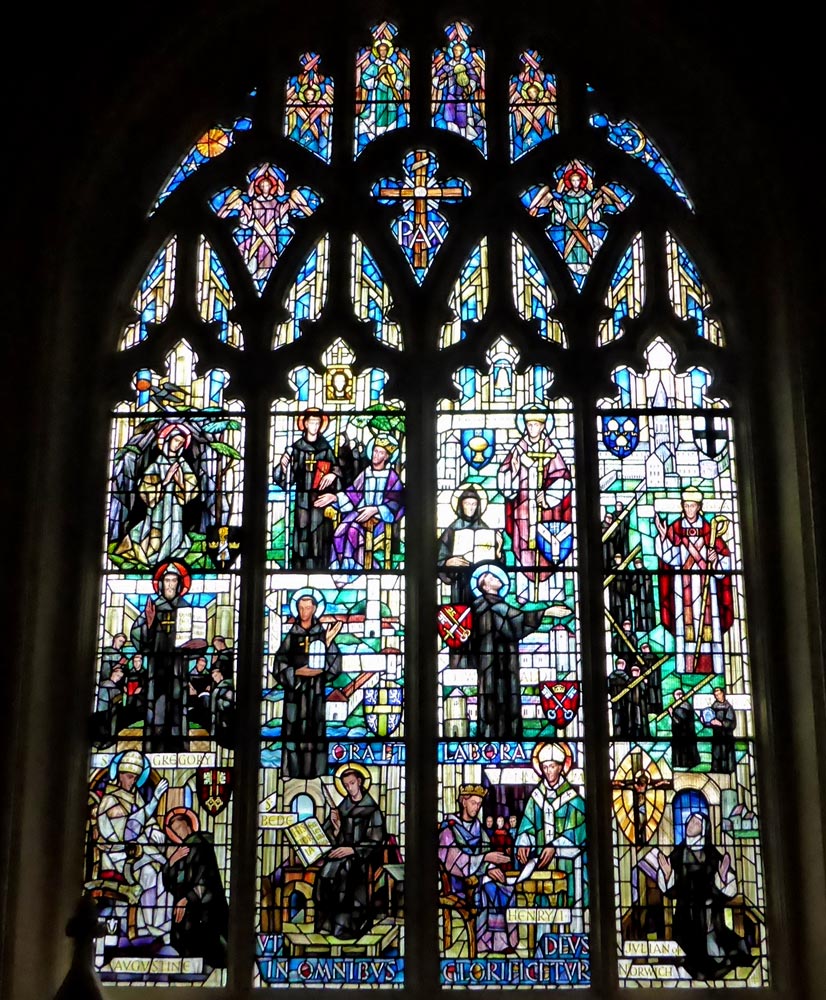
bauchon-windowThe Bauchon Window was designed by Maria Forsyth and made by Dennis King of G King & Son in 1964. The window given in honour of Julian of Norwich is in memory of Harriet Mabel Campbell (1874 – 53). The main lights depict Julian of Norwich, unusually dressed as a Benedictine nun, together with another eleven Benedictine Saints and other personages.

The tracery lights contain angels (some playing musical instruments) flanking a cross proclaiming “Pax.”

Continue reading Norwich Cathedral Part V: Windows

Norwich Cathedral Part IV: Cloisters

At the south east corner of the nave, next to the south transept, is the more spectacular of two doors leading from the priory cloisters into the cathedral church. This is called the Prior’s Door.  The door dates to about 1300 and has a finely carved arch decorated with thin piers at its sides and decorated recesses in the arch. These recesses contain statues of Christ at the top, John the Baptist and possibly Aaron to the left, and David and Moses bearing a scroll detailing the Ten Commandments to the right. To the right of the doorway are three sedilia, or seats, recessed into the wall of the cloister. The wear and polishing of the stone from feet and bottoms is very noticeable!

p1310130

Continue reading Norwich Cathedral Part IV: Cloisters

Norwich Cathedral Part III: Bosses

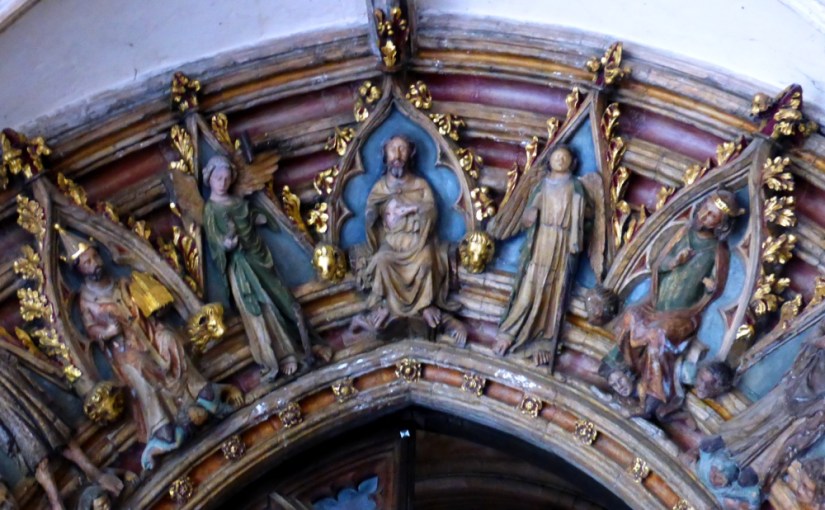
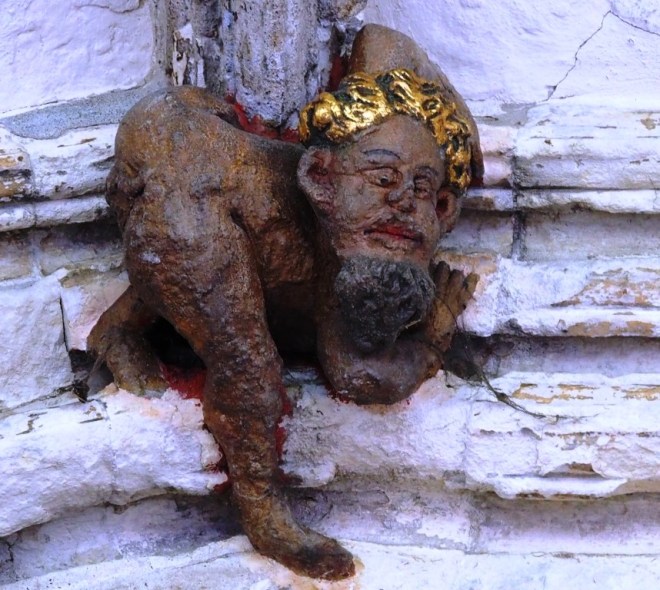
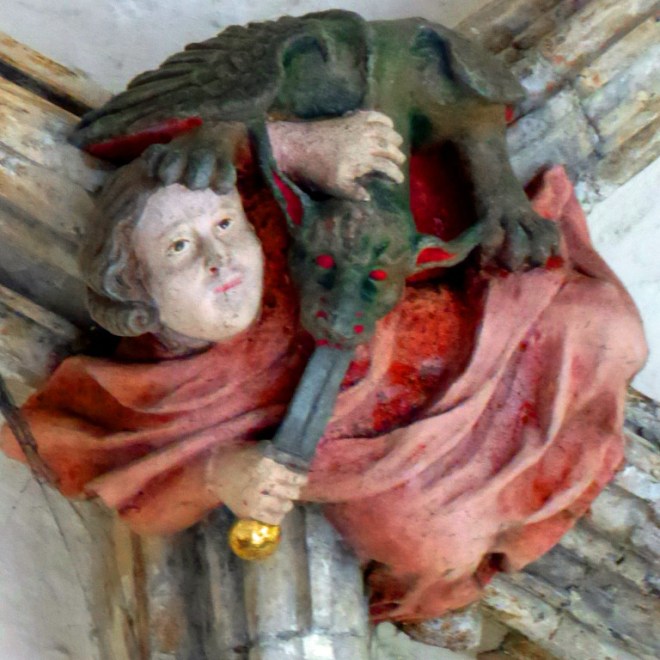
Norwich Cathedral has more bosses than any other cathedral worldwide: some 1106, including those of Lyhart’s nave roof; those of the presbytery vault, added in 1480 by Bishop Goldwell; those of the transept vaults, added in 1509 by Bishop Nykke after a further fire; and those in the cloister. The bosses represent the largest collection of decorative roof bosses in Christendom, and depict scene from both the old and new testaments. Carved into the stone vaulting and then painted, each boss would have taken almost two weeks to complete. They represent a Christian view of the history of the world including carvings of Noah and the flood, the Nativity, the Crucifixion, the end of the world and the tales of judgement day.

There are some good examples of medieval art.

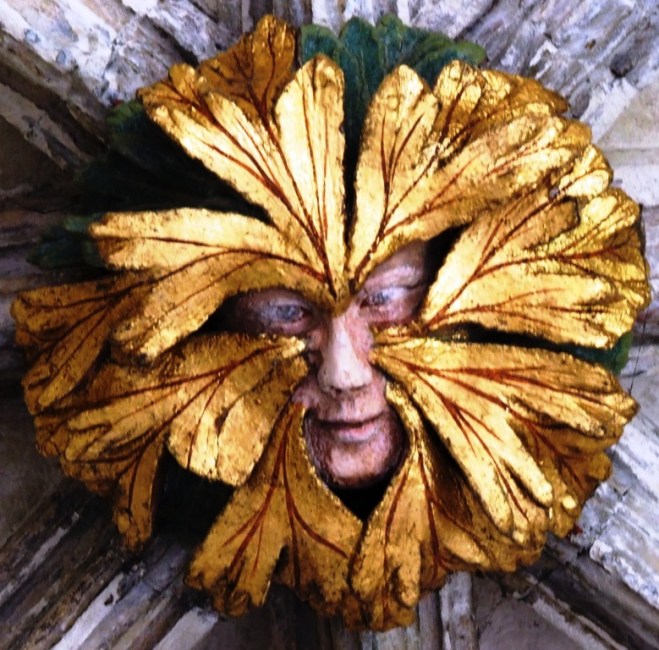
There are also bosses depicting mythical beasts and figures like the Green Man. It is thought that roof bosses such as these provided one of the earliest forms of theological education, at a time when illiteracy was high.

"The Green Man" 14th century boss in the east walk of the cloister.
“The Green Man” 14th century boss in the east walk of the cloister.
OLYMPUS DIGITAL CAMERA
The Naked Moor
"Man fights Dragon"
“Man fights Dragon”

The east walk was built first in 1297, and aside from a Passion sequence and the Evangelists at the north end has mostly foliage bosses. Continue reading Norwich Cathedral Part III: Bosses