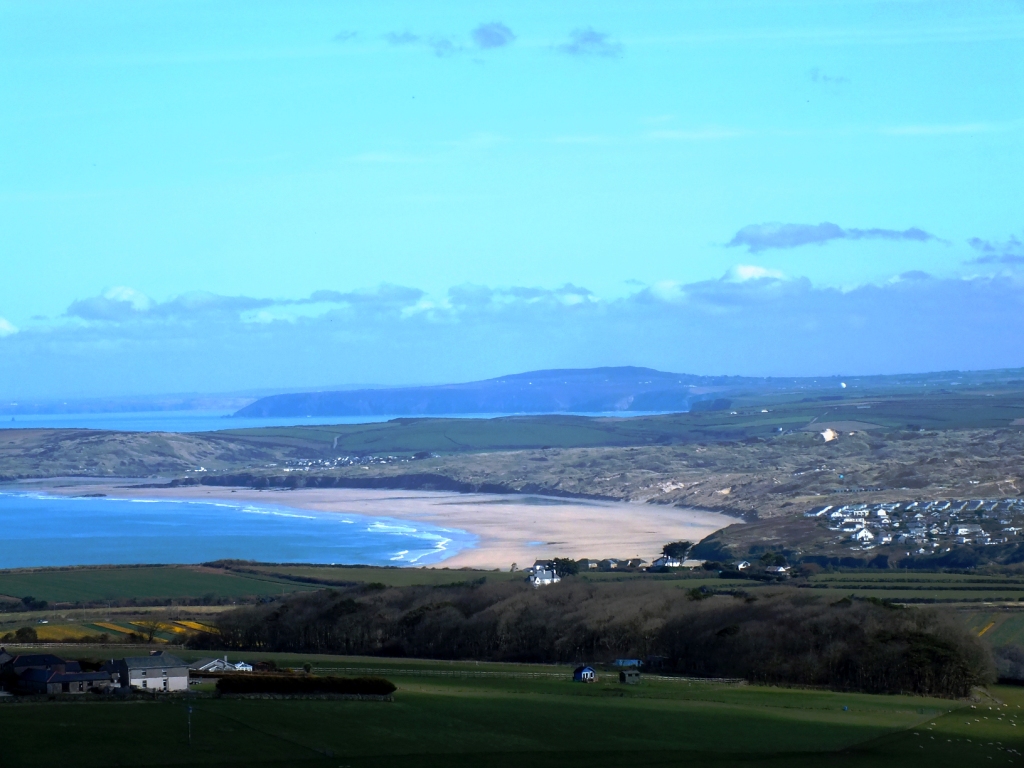
Not quite there yet, but light at the end of the tunnel and a visit to our new house last weekend was full of sunshine and blue skies. So nice that it seemed a shame to stay in the house and clean and plan, so we didn’t! Friday morning dawned bright and blue and we headed for the nearby Trencrom hill where you can get a view of both coasts. Mount’s Bay with the iconic St Michael’s Mount to the east and St Ives Bay with the Godrevy lighthouse to the west. And a view north along the coast as far as Padstow on a clear day.
Hayle beaches and the coastline to the north
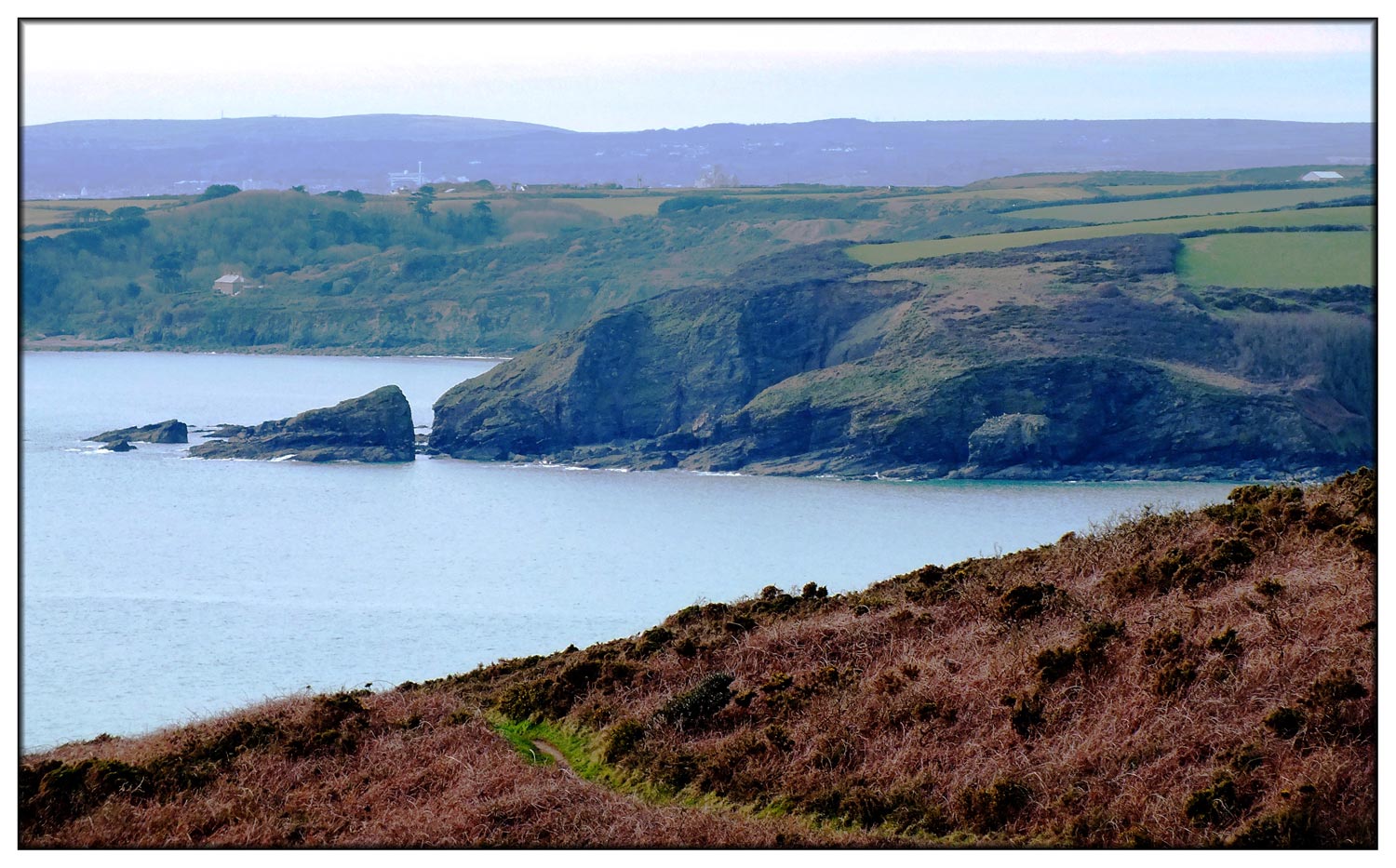
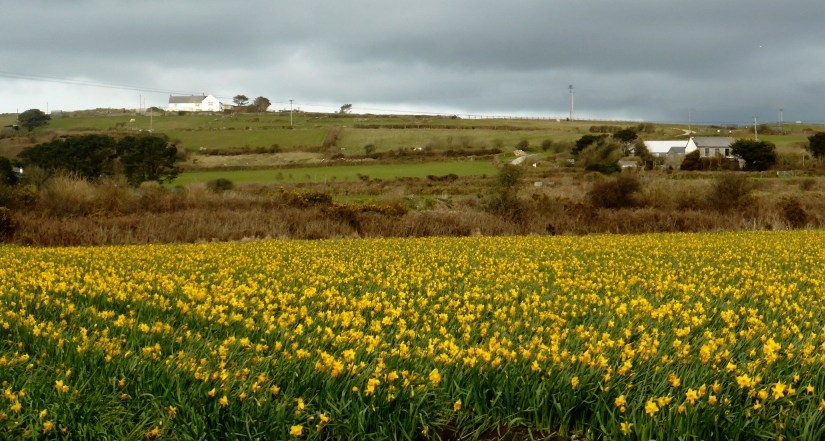
Spying a field full of daffodils in the distance made me want to go and photograph one (field that is not a single daffodil) so we clambered back down the hill and got in the car and drove to one place where I remembered seeing daffodils a couple of years ago near Rinsey Head.
A bowl of chowder for lunch in the delightful village of Porthleven was followed by a walk to the Wheal Prosper engine house. A sunny day in Cornwall and all the stress melted away…
The Cardinal is continuing his photo project throughout 2016 – a blogging event, a monthly photo challenge. Read his blog for the new rules this year (he is running two versions) and to view his interpretation and those of other participants.
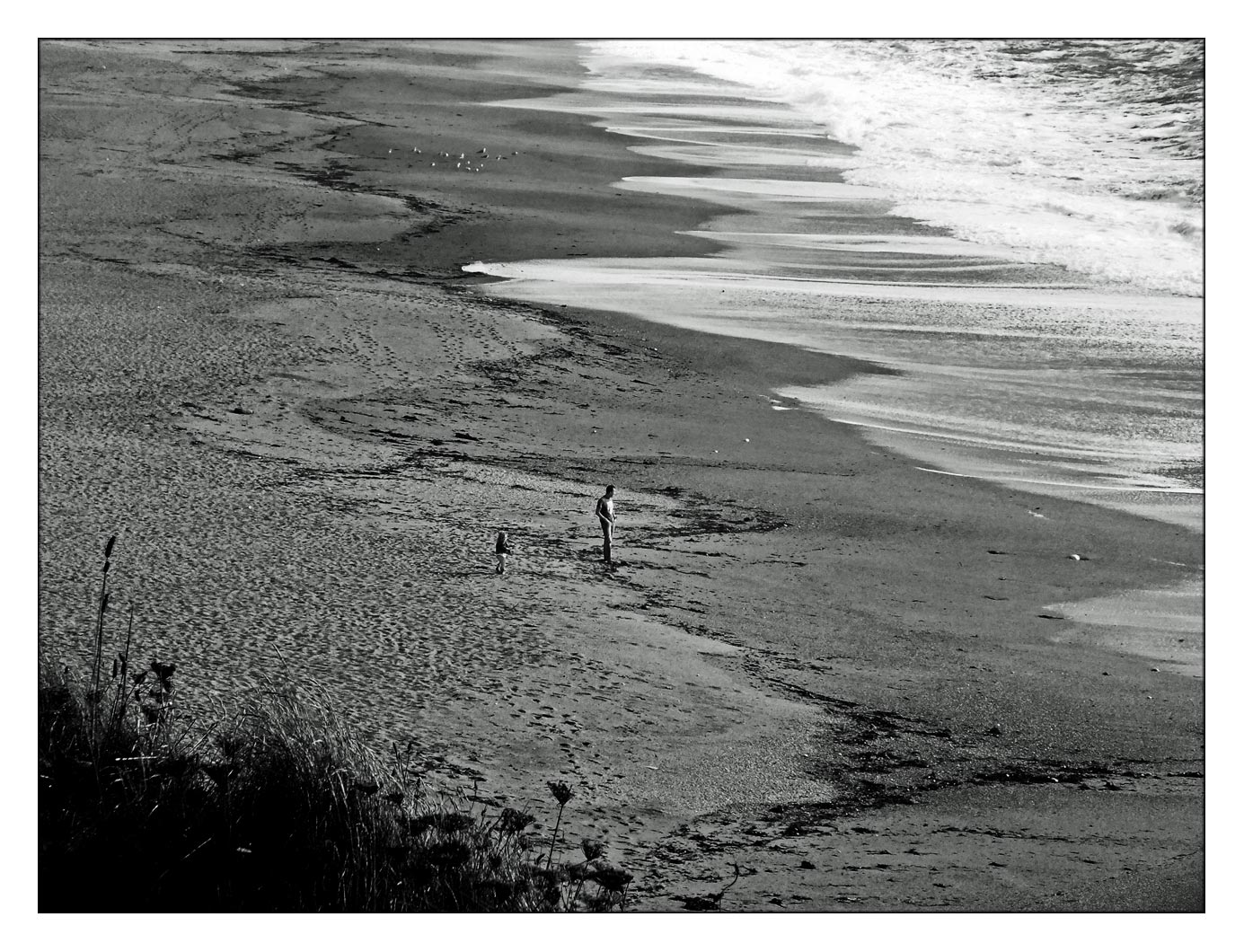
Paula over at Lost in Translation runs a weekly Black and White Sunday challenge. Sorry to hear she is feeling rather stressed and poorly this week. I wish her a speedy recovery and time to rest.
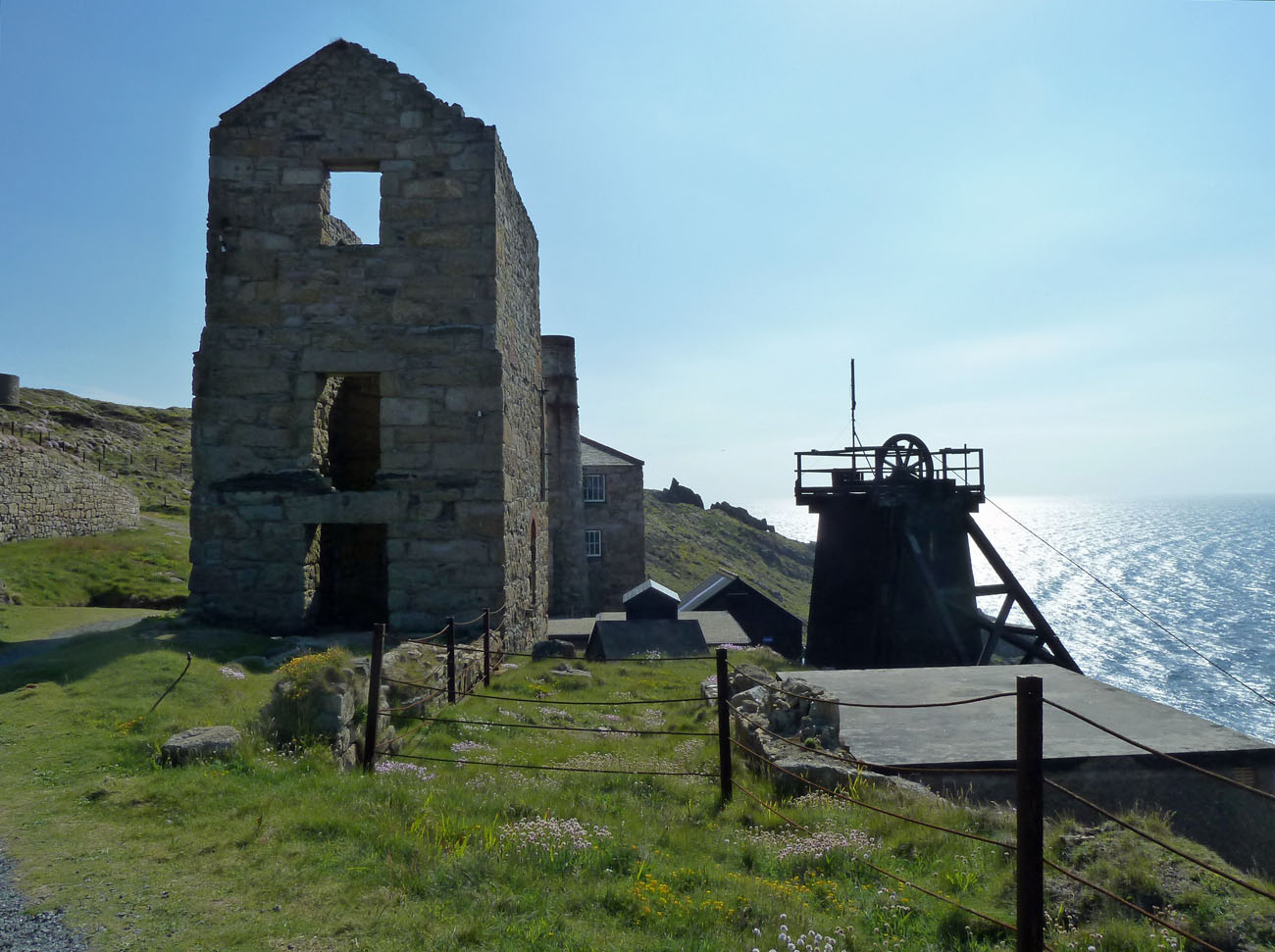
The site of the Levant Mine is truly splendid, perched as it is on the edge of the Atlantic coast in the south-west. Man has mined here since the Bronze Age. A copper mine was around in 1670 followed by the profitable tin mine in 1850. It was one of the top ten mines in Cornwall and shafts were sunk deeper and further under the sea. It was finally closed in 1930 partially brought about through the Man Engine* disaster in 1919.
TheLevant Beam Engine is still steamed up on selected days from April to October and guided tours of the site are available or you can do a self-guided trail. The site is under the control of the National Trust.
The stamps engine house
Another remaining chimney
The stamps inclined tramway tunnel
Mine shaft with protective wall
Geevor Mine in the distance
The Miner’s Dry is the site of the former washrooms and the tunnel to the Man Engine is at the bottom of the spiral staircase in the corner. It was here that a man ran in 1919 crying out “the engine’s gone!” Continue reading The Levant Mine
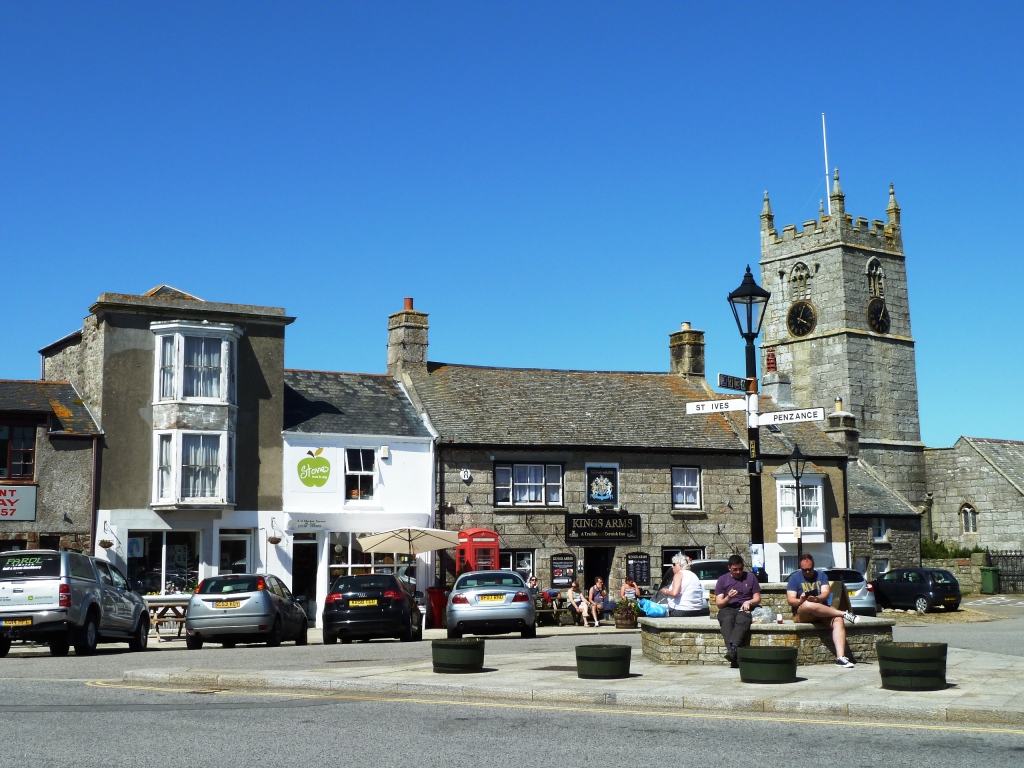
St Just in Penwith, shaped by its industrial mining past, is the most westerly town in England and began as a medieval settlement called Lafrowda. It is surrounded by dramatic landscapes of wild moorland, wind-shaped carns and Bronze Age remains. The town made its fortune from tin and the marks left by the boom of the mid-1800s still dominate. There are two squares – Bank (with its 1931 clock tower) which was the business centre (and where the miners would have collected their wages) and Market where the shops and pubs are located (and where the miners would have spent their wages).
Market SquareBank Square
The grass amphitheatre behind the clock tower is Plen-an-Gwary (Old Cornish for ‘playing place’) where Miracle plays would have been performed 500 years ago. In more recent times it has been used to stage the full cycle again in 2004 and also to hold the Gorsedd, an important Cornish festival. Continue reading St Just in Penwith




 TRAVEL WORDS