This year I am going to revive some of my older posts which I think are still worth reading.During the month of March my travel posts will focus on Paris.
Almost five years ago I published a post about exploring Paris, France. It wasn’t a very popular post as it was at the start of my blogging journey and I had very few followers.
Paris is a large city and there are a lot of iconic tourist places to visit. On this occasion though I decided to spend time exploring different parts, the first being the wonderful island in the River Seine to seek out some of the interesting details that we often miss. I hope that you will join me this week in revisiting the lovely “La Ville-Lumière” : City of Lights
Home thoughts from abroad is a new series on Travel Words featuring a single photograph(s) that reminds me of a country visited and showing something that uniquely identifies it as being ‘abroad’.
La Pagode
Wandering around the 7th arrondissement of Paris I stumbled across this unusual building partially hidden by bamboos and wisteria. The director of the department store Bon Marché had it constructed as a gift for his wife in 1896. La Pagode became a cinema in 1931 and has played a big part in presenting cutting edge French cinema to the public. Jean Cocteau held the premiere of Testament d’Orphée here in 1959 and La Pagode Cinema played an important part in promoting the films of Ingmar Bergman and Sergei Eisenstein in France. Now it shows Art-house, foreign, cult and independent new releases. It is not uncommon for the cinema to hold retrospectives for directors such as Woody Allen and Alfred Hitchcock.
There is a tea house where you can grab a cuppa and chew over the fat in the rather small, but very pretty Japanese garden where you can get a glimpse of La Pagode and the beautiful details of colourful painted flowers, carved dragons, flowers and birds in jade or ivory and large stained glass windows with geometric panes. It sounds as if it could be quite kitsch, but in reality it is an impressive building. I did not go inside, but apparently it is equally surprising.
I only hope that someone carries out some repairs on this extraordinary building, so that it is not lost.
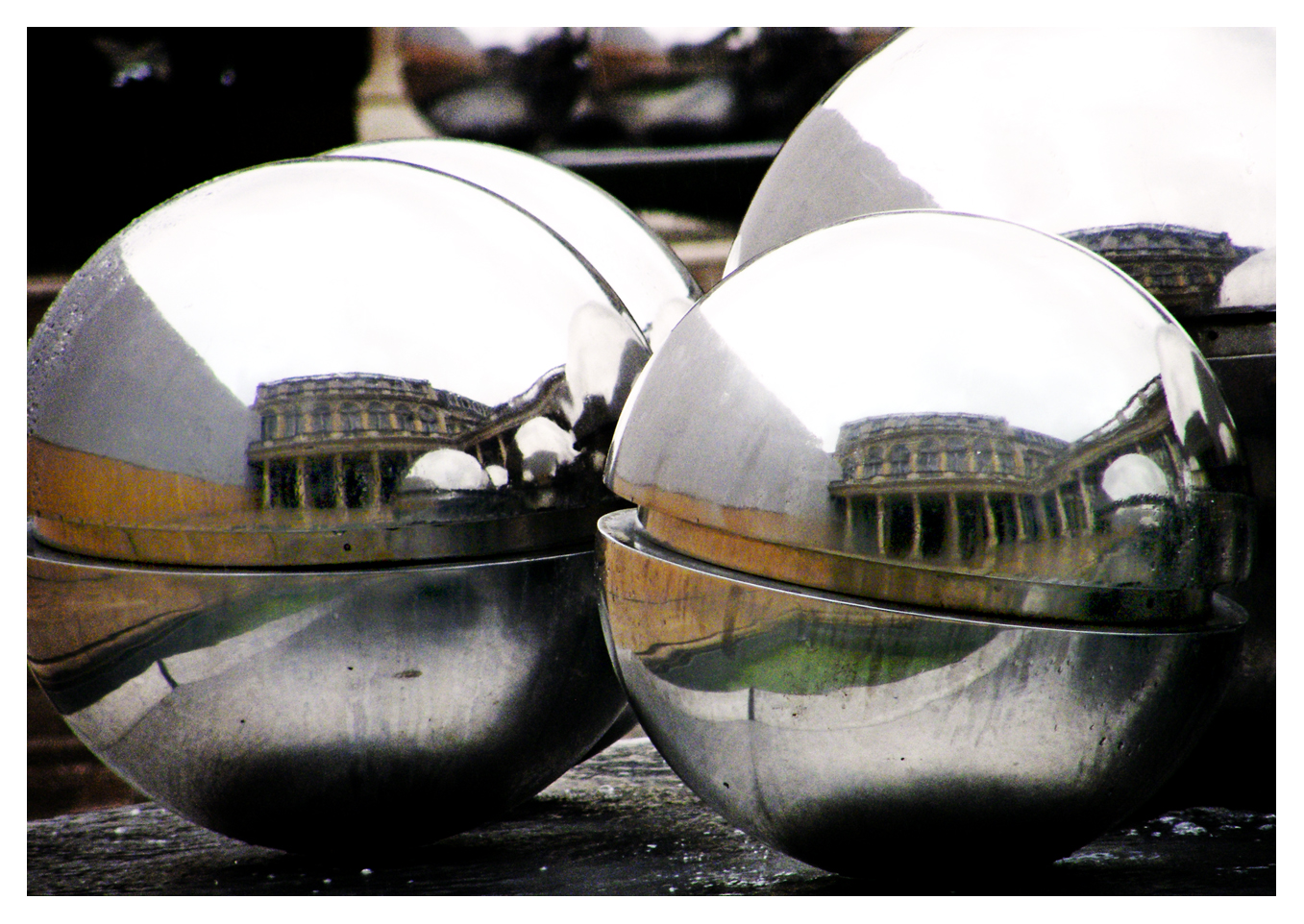
This elegant urban space is fronted by the neoclassical Palais Royal (closed to the public), constructed in 1633 by Cardinal Richelieu but mostly dating to the late 18th century. Louis XIV hung out here in the 1640s; today it is home to the Conseil d’État .
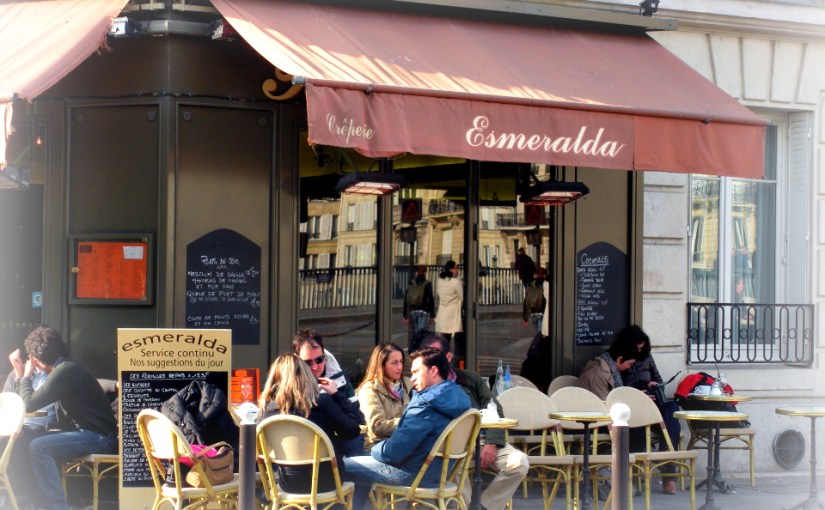
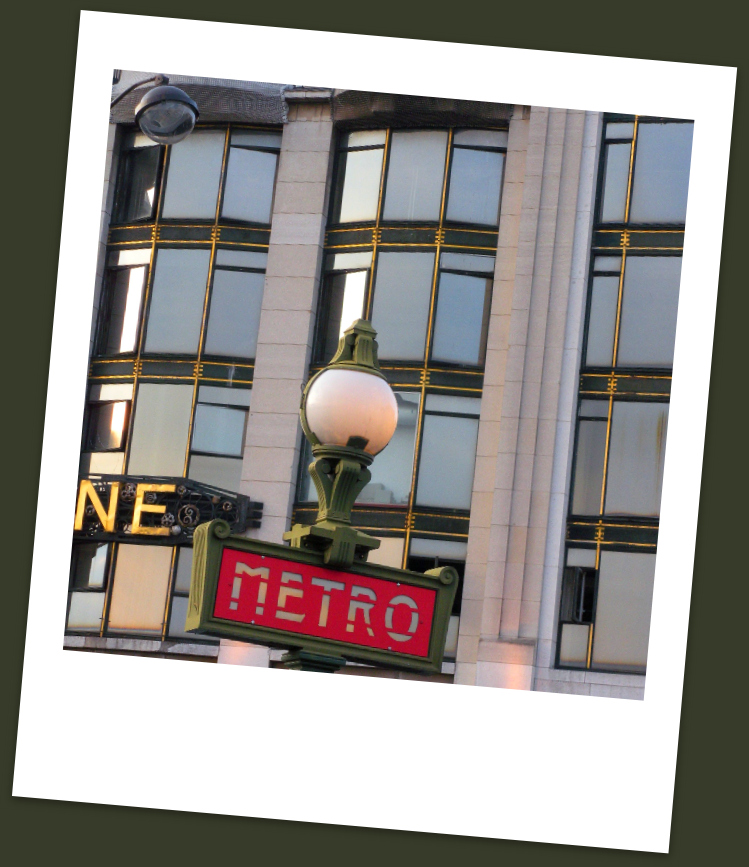


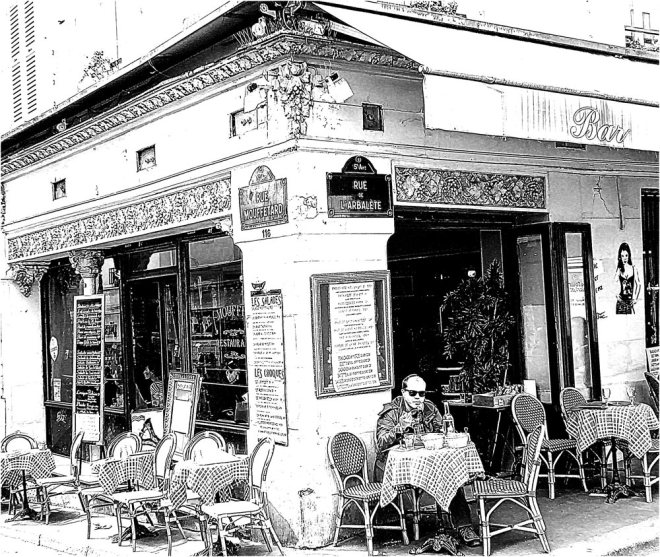
 All the above images have been edited using a sketch tool ‘pen and ink‘ in grey tones.


 TRAVEL WORDS