I have lived in the UK for most of my life, but when young I definitely had wanderlust and even ended up living in South Africa for several years which was a wonderful experience. I now look forward to a long and leisurely retirement doing what I like most - gardening, photography, walking and travelling.
Ailsa of “Where’s My Backpack?” is tickled PINKthis week. If you would like to join in with her challenge then please do. Everyone is welcome.
(Above: pink flamingo at San Diego zoo)
50 shades of pink
Pink is not a colour that I wear or normally buy, though I confess to having a soft-touch pink mouse attached to this laptop. Not by design, it was the only colour they had in stock. As the only girl-child in my family I was enforced to spend my childhood in a pink room (Dawn Pink) which was quite a subtle pink if I remember correctly, but pink all the same. As a teenager I rebelled and went for purple!
Anyway, obviously the same distaste doesn’t stop me from photographing things that are pink, so here are a few of my discoveries made on my travels.
THIS WEEK, IN A POST CREATED SPECIFICALLY FOR THIS CHALLENGE, SHOW US AN IMAGE THAT SAYS REFLECTION.
I have blogged about Yosemite before; it is a place where I felt the opportunity to reflect on life. It seems appropriate to use this image for this week’s photo challenge.
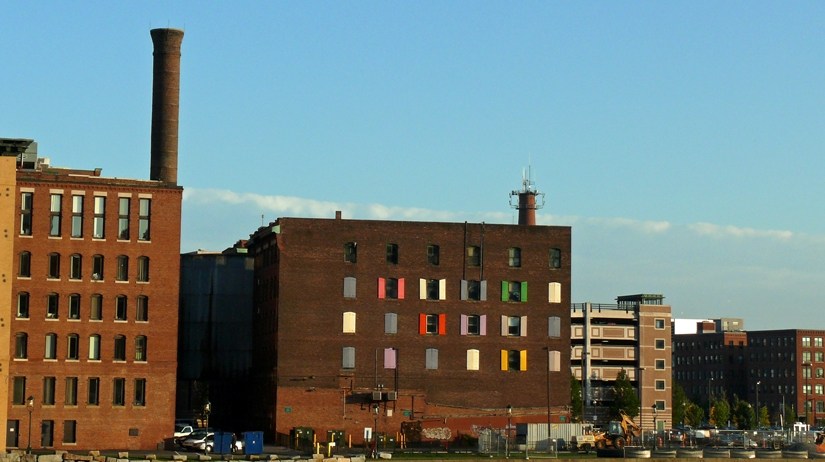
I have no idea whether or not this warehouse in the Boston Wharf Industrial Real Estate area has been converted to apartments or not, but from the opposite side of the Fort Point Channel and close to Boston South Railway Station, this building with its colourful shutters caught my photographer’s eye.
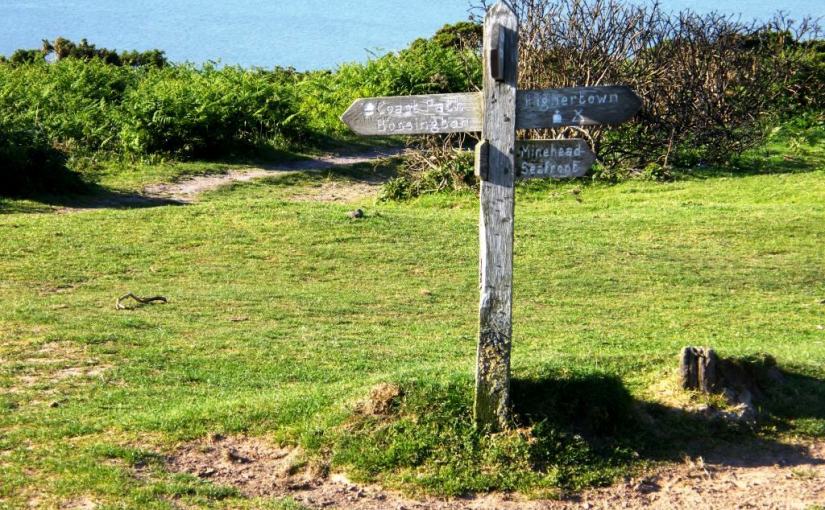
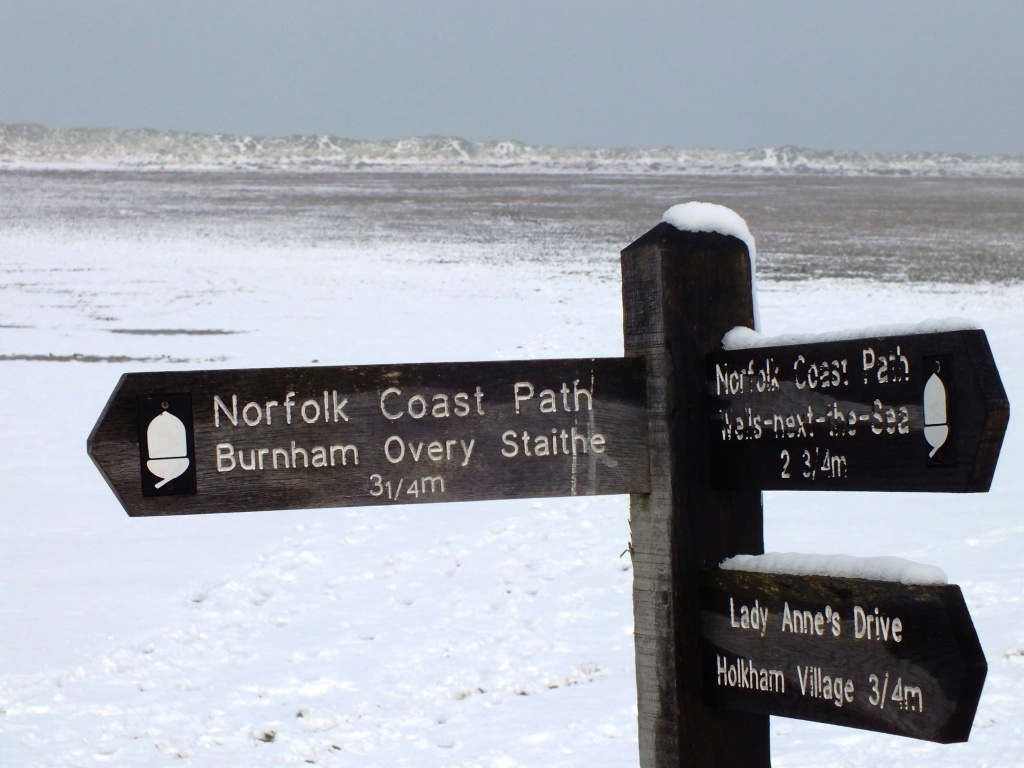
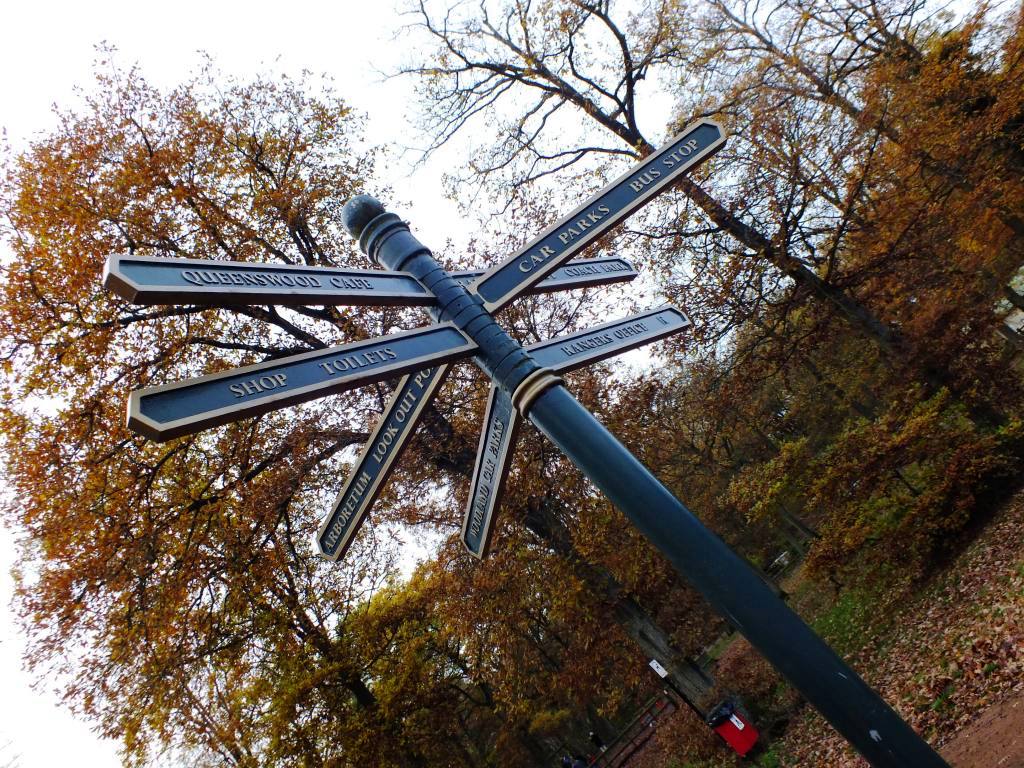
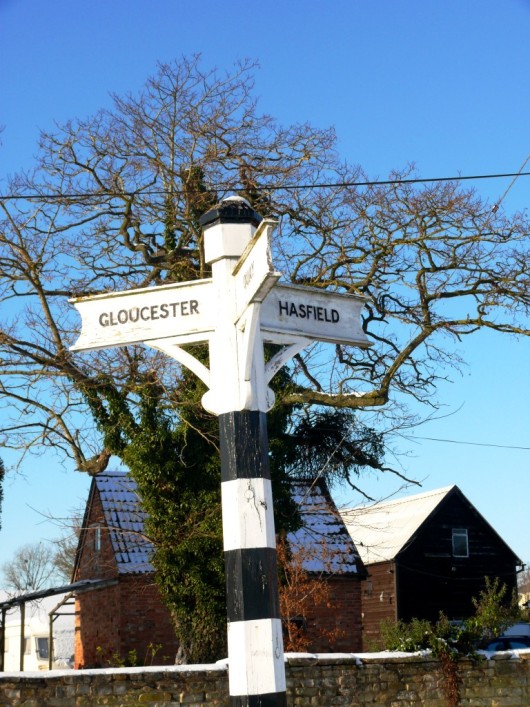
A fingerpost (sometimes referred to as a guide post) is a traditional type of sign post in the United Kingdom and Ireland, consisting of a post with one or more arms – known as fingers – pointing in the direction of travel to places named on the fingers. The posts have traditionally been made from cast iron or wood, with poles painted in black, white or grey and fingers with black letters on a white background, often including distance information in miles. In most cases, they are used to give guidance for road users, but examples also exist on the canal network and walking trails for instance.
Wooden finger post with mileage on the Coastal Path in NorfolkModern Finger post in cast iron in a park in Herefordshire
There was plenty of scope for distinctive spread of designs which remains to today. Roundel designs can include the junction name, a village name, highway authority names in full or initials, and some can include grid numbers.
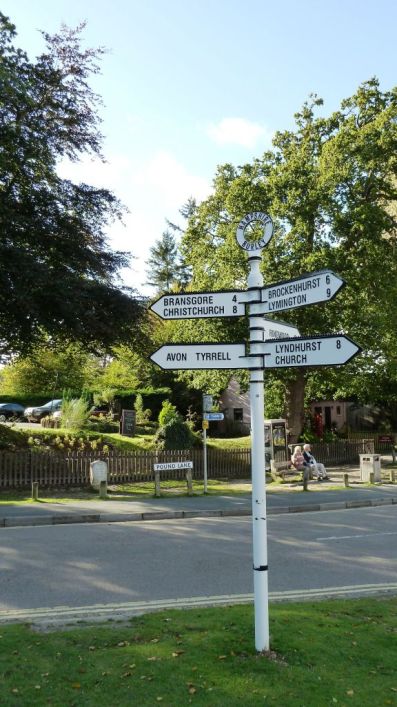
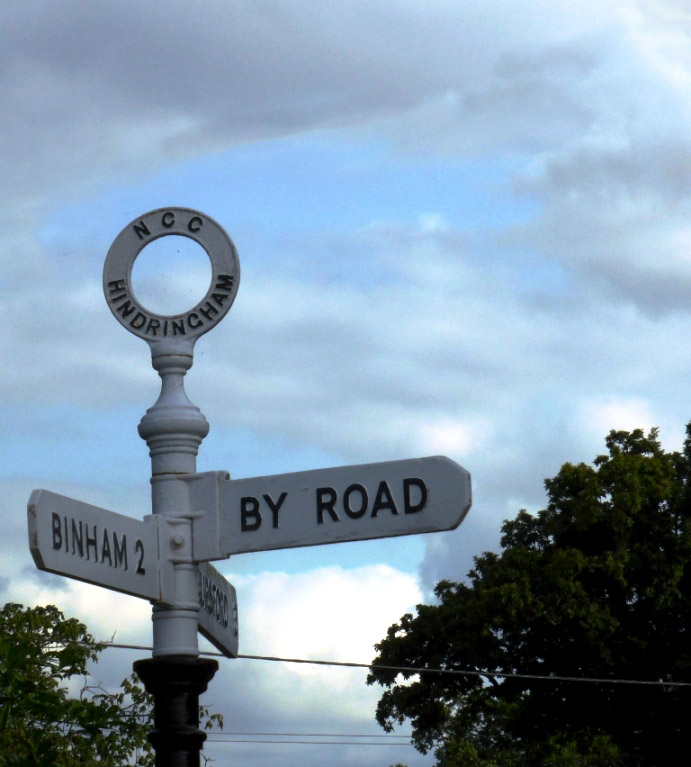
Roundel in Hampshire with the village name of BurleyA Roundel in Norfolk with the village name of Hindringham
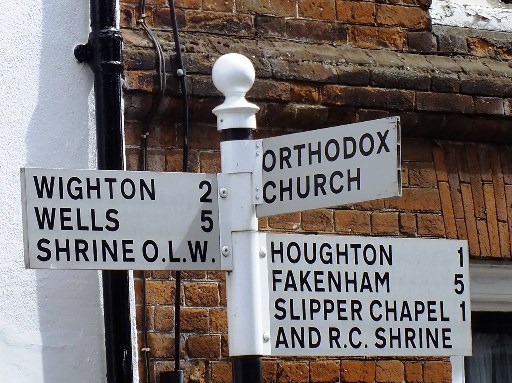
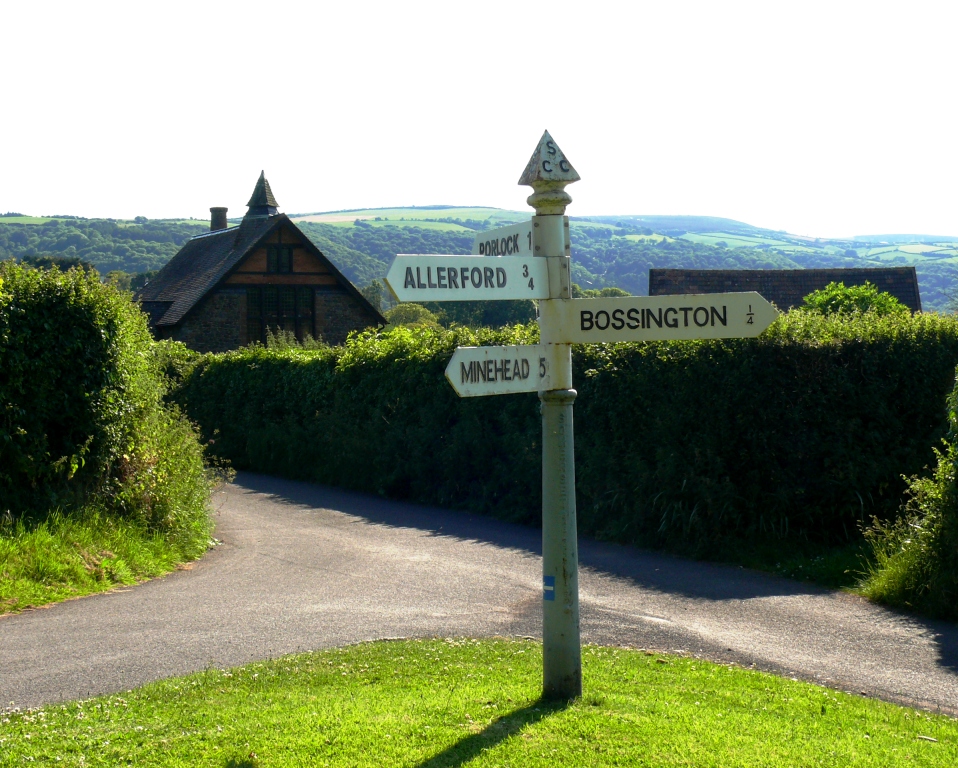
The fingers also vary with some (Cornwall and Devon) being square ended, Dorset is curved and Somerset triangular ended. Note the different shapes at the top of the column too.
Triangular in SomersetSquare in NorfolkCurved in Gloucestershire
And note the mileage information in this post in Somerset. We were parked in Bossington, so only had 1/4 mile to walk back to the car.
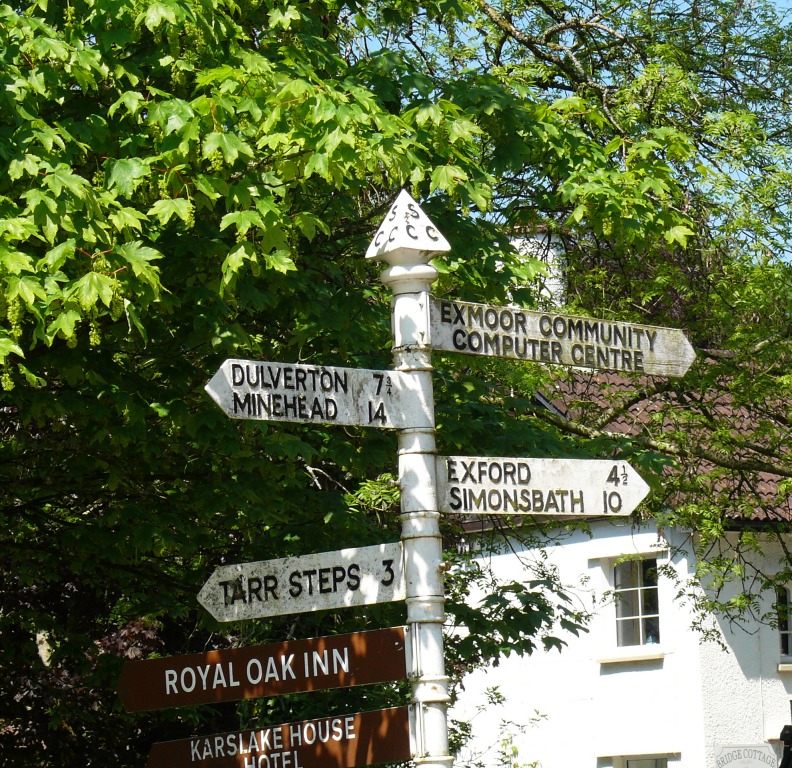
Somerset County Council (SCC) with the triangular top
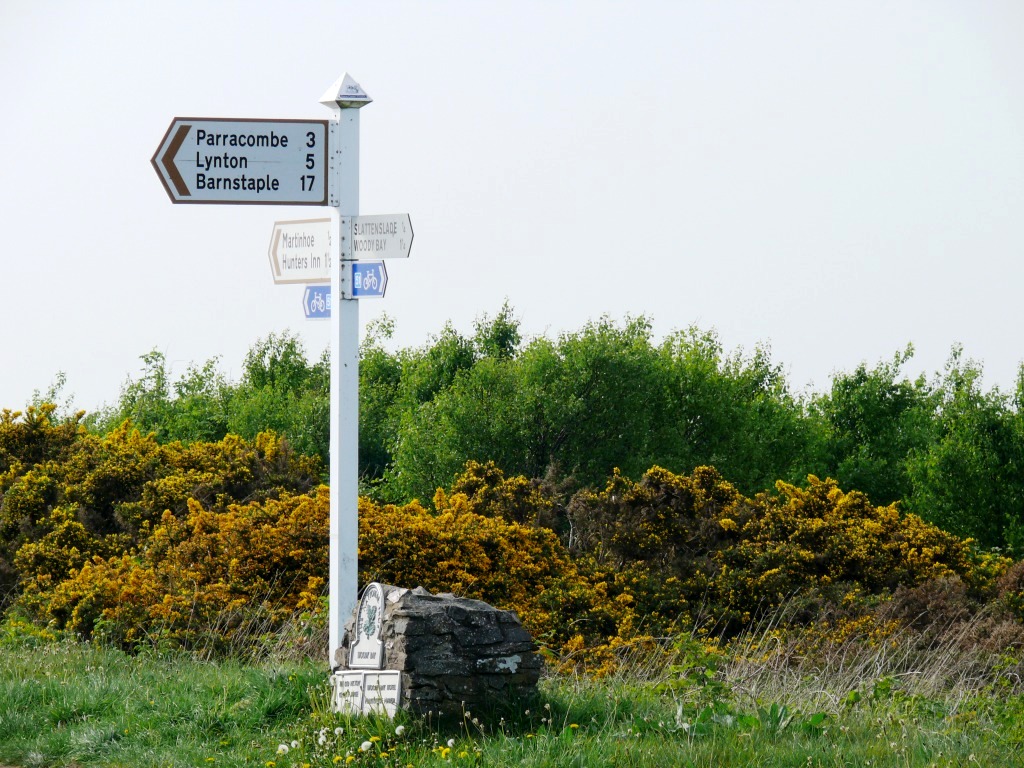
Most finger posts are coloured white, black and grey, but there are others. Red ones are seen in Dorset and you may find green ones that indicate a minor road or ‘drift’ road. Brown signs (below) indicate a tourist site or location and blue signs indicate a cycle network. These are more recent.
So, have you seen any unusual finger posts on your travels? If you have then I’d like to hear about them.
Description: Every Tuesday I offer the “A to Z challenge”, walking step by step through the alphabet.
If you would like to join in then please click here.
This exhibition on the life and work of Prague’s most famous literary son, entitled ‘City of K’, is the third in a series of exhibitions about world writers and their cities. It explores the intimate relationship between the writer and the city that shaped him through the media of documents, photography and video.
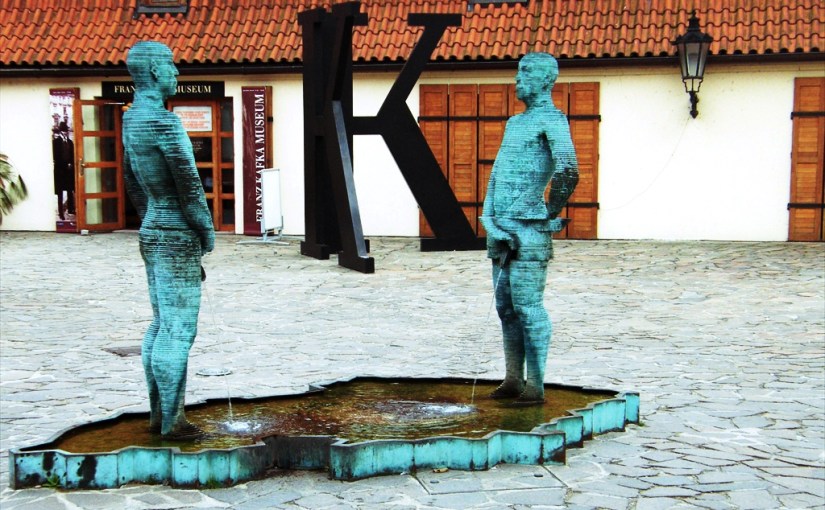
The fountain in the courtyard of the Franz Kafka Museum in the Lesser Quarter, is created by artist David Černý. Two urinating men stand opposite one another above a lake in the shape of the Czech Republic. An electronic device turns their hips and raises their penises in a way that the flow of water traces the letters of several quotes on the water’s surface. But since Kafka wrote in German I’m afraid that aspect of the fountain passed me by.
I find it very amusing, but I’m sure some people are extremely shocked when they suddenly find themselves face to face with this – what do you think?