THIS WEEK, IN A POST CREATED SPECIFICALLY FOR THIS CHALLENGE, SHARE A PHOTO SHOWING FAMILY.
After the Storm
If you would like to see what others have come up with for this challenge then go to the Daily Post @ WordPress Weekly Photo Challenge
At the Waterhole – Addo
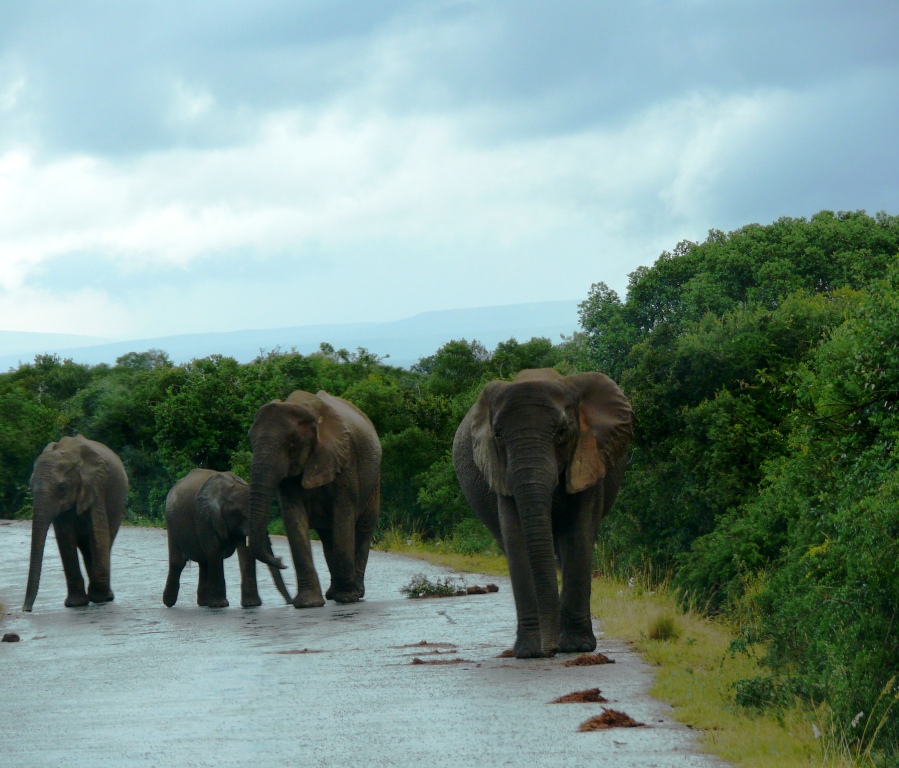
Well, I don’t like posting family photos publicly, and this is essentially a travel blog after all, so my family photos are of my favourite wild animal, Elephants. We all know from the many wildlife programs that they display complex social and emotional behaviour and are said to value their families more than most animals.
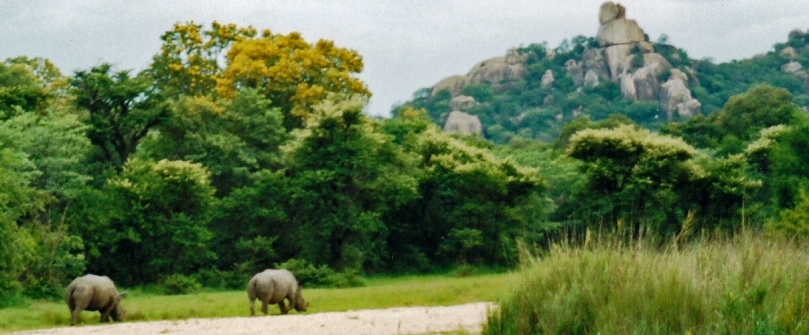
Friday: back into the wilderness as we said a sad goodbye to our luxury inn and set off for Hwange, famous for large herds of elephants and over 400 species of bird. We took a game drive with Moses, a black Zimbabwean guide, who was extremely knowledgeable. This park is bursting with elephants, zebra, wildebeest, springbok, kudu and giraffe; towards the end, as dusk was falling, we held our collective breath as a white rhino and an elephant came face to face – they both stopped dead in their tracks, eyed one another up and then the elephant turned around and disappeared back into the bush. Game over. A spring hare and a duiker were the last animals we saw before darkness fell. Continue reading Rocks, Rock Art and Rock Music: Snippets from an African Diary
December 2000. As far as I was concerned this was the time to celebrate the millennium. When 2000 rolls over into 2001. Last Christmas and New Year I was unable to take any leave because I worked in IT and because the whole world was obsessed with the effect Y2K would have on all our computers. Working practically around the clock to ensure nothing disastrous would happen to the 1000 plus machines the department I worked in was responsible for was manic and being ‘on call’ for the 1st Jan was annoying in the least. I had dreamed of visiting my son in Sydney to see the 20th century disappear over the Harbour Bridge watching the firework display that the Aussies are famous for. It wasn’t to be.
So now, at the beginning of December, a 26 day camping journey around South Africa, Namibia, Botswana and Zimbabwe awaited me as I stepped off the plane at the politically neutral named Cape Town International Airport. I couldn’t wait. After living in South Africa for 12 years in the ‘70s and ‘80s I was more than ready to explore the dramatic landscapes surrounding my beloved country.
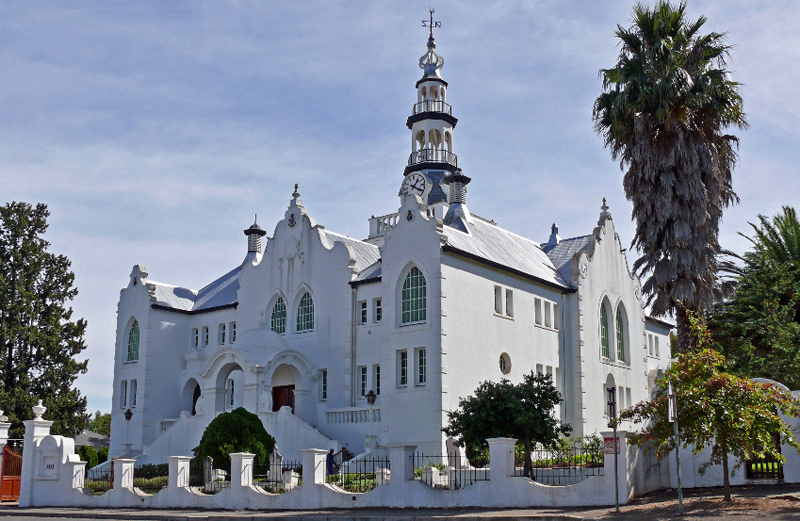
The final part of our South African trip took us back towards Cape Town along the N2 through George, Mosselbaai and Swellandam where we stopped for a light lunch and to stretch our legs. There is a lovely Dutch Reformed Church and an interesting museum so Swellandam would make a good place to stopover en route to the Garden Route. After Botsrivier we turned off onto the R321 towards Villiersdorp, a winding road with beautiful views across the Helderberg (formerly known as Hottentots Holland) Nature Reserve and around the Theeswaterkloof Dam. Here we turned onto the R45 up through the Franschhoek Pass and stopping for an awe-inspiring view from the top of the Cat’s Road which is a series of hairpin bends winding itself down to the Franschhoek Village like a sleeping serpent. As you drive over the pass on the R45 from Theewaterskloof Dam, you have no idea of that beautiful valley ahead of you. Franschhoek has always been a huge favourite of mine. Back in the 1970s it already had a reputation for award-winning restaurants and wine estates, top class boutique hotels, auberges, and guest houses (many located on working vineyards) and speciality shops. Then however, I didn’t have the means to take advantage of what it had to offer, but the surrounding landscapes have always been free.
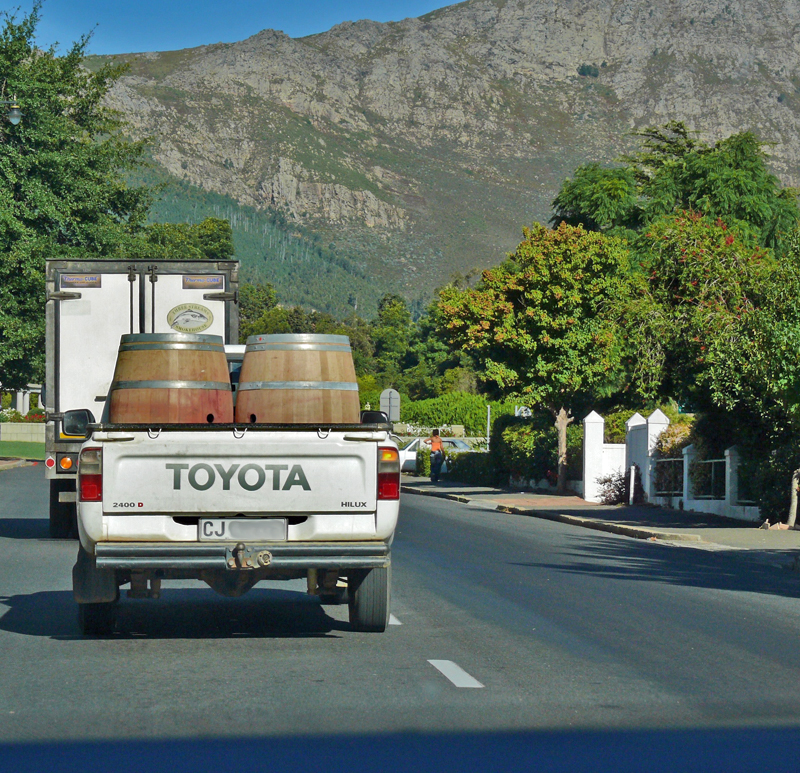
This magnificent valley with its huge towering mountains on either side with spectacular vineyards that clad the mountain slopes has the most breath-taking scenery in the Western Cape (if not the whole of South Africa).
The valley was settled more than 300 years ago by the Huguenots, who brought with them their French culture and wine growing skills when they fled their homeland after Protestantism was outlawed.
Some arrived at the Cape of Good Hope and were given land by the Dutch government in a valley called Oliphantshoek (Elephant’s Corner) so named because of the vast herds of elephants that roamed the valley. Soon after the Huguenots settled here it became known as Franschhoek (French Corner).
As you drive into the village from the south you will notice the Huguenot monument, and close by the museum, which chronicles the history of those brave pioneers and the original Huguenot farms.
It is well worth visiting the museum to get an understanding of the history of the region. You will also notice that many of the farms still bear French names and are often resplendent with a spectacular Cape Dutch homestead, towering oak trees and vast vineyards.
We stayed at Auberge la Dauphine (Klein Daupine), on the outskirts of the village. A beautiful spot, ringed by the Hottentots Holland Mountains, and with its own dam and summerhouse where you can sit with a bottle of inexpensive sparkling wine and watch the sun go down turning the tops of the mountains pink and the sky ink blue.
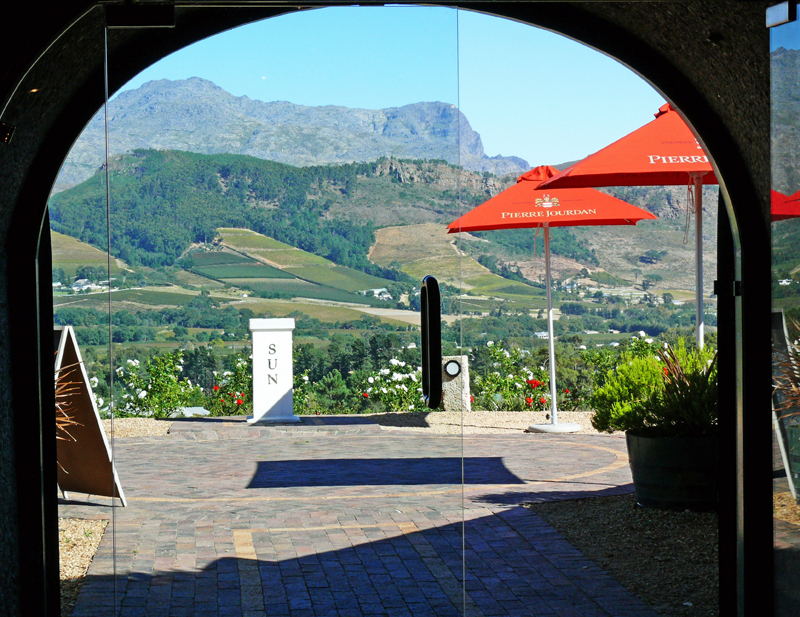
On our first night we ate at “French Connection” having West Coast mussels, crispy duck with raspberry sauce, potatoes dauphinoise and stir fried vegetables (cut beans, carrots, courgette and mange tout), washed down with a superb bottle of Shiraz from one of the nearby cellars – Porcupine Ridge. The following day we went back up the hill to Haute Carbière for their cellar tour and wine tasting which was pretty good and very cheap (R30) to taste five wines. Carbière belonged originally to a French Huguenot farmer, Pierre Jourdan who was given the land in 1694. In 1982 the vineyards were replanted in the tradition of the Champagne, and focus on Pinot Noirs and Chardonnay cultivars.
“Come quickly, I’m tasting the stars” is a quote attributed to Dom Pérignon when tasting the first champagne. Pierre Jourdan’s distinguished dry elegance reminds us with every tiny bubble gently exploding like a feather on the tongue to re-look at how exciting life can be… ~ Achim von Arnim, cellar-master of Haute Carbière
We bought a bottle of the sparkling, champagne-like ‘Blanc de Blancs’ (R98) to put into our fridge and booked a table in their gourmet restaurant for that night before heading back into the village to have a good wander around.
A host of shops and galleries line Main Street with antiques, artwork, bookshops and bric-a-brac. There are several specialist shops including a chocolatier, where we bought some hand-made Belgian style chocolates (R26), and a fromagerie.
Don’t restrict your wandering to the main Street though as it is rather pleasant to walk along the streets behind where you can see some lovely Cape Dutch and Victorian architecture.
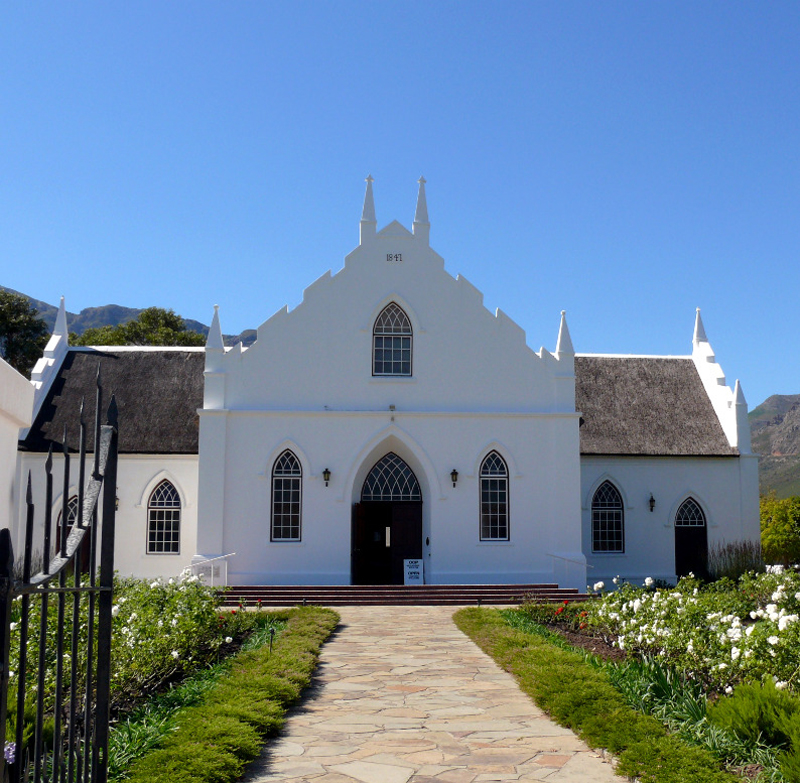
A Cape Dutch Style Housedutch reformed church
After a light lunch (salad) in the village we returned to the auberge to rest.Dinner at Carbière was, frankly, out of this world. All their items on the menu are available in half or full portions so you can have as many different dishes as you like. They also do tasting menus, pairing wines with each course. We had the Cuvée Belle Rose (100% Pinot Noir fruit portraying elegant sophistication) with our starters of prawn rolls with chilli jam and herb salad / pea, leek and asparagus tart with herb salad – the pastry was so light it practically melted in your mouth; for mains we both had the chicken stuffed with a layer of lentils and served on a bed of tagliatelle, spinach, spiced cubes of butternut squash and very firm asparagus tips with rocket and chorizo jus which was accompanied with a Brut Sauvage (yeasty with a creamy finish, wild and elegant mystique); dessert was a meringue with raspberries, raspberry coulis and strawberry yoghurt ice-cream (all delicious) and my husband had a most unusual looking desert consisting of 3 tiny sweet spring rolls stuffed with hot dark chocolate and served with a shot-glass of a white chocolate milkshake – exquisite – and this came with a glass of the sparkling Blanc de Blancs.
The whole lot came to R550 (around £40 at the time) plus a R5 tip for the car guard. Currently there are lots of menu options, including wine pairing, from R295 per person .
On our last day in the valley we decided to have a look at a few other vineyards in the area such as Grande Provence, Boschendal, and Glenwood and then drive over the mountains to look around the university town of Stellenbosch. Grande Provence is lovely and has a fabulous setting for their restaurant, Glenwood is in the little valley of Robertsvlei and surrounded by outstanding natural beauty.
Stellenbosch however, defeated us as we could not find anywhere to park! We drove around for a while but the centre was absolutely packed so we had a look at it from the car, admire the beautiful Cape Dutch-style homesteads, the university and the tree-lined streets.
On the drive over to Franschhoek from Stellenbosch on the R310 – Helshoogte Road look out for Tokara Winery which is famous as an olive oil producer and located right at the top of Helshoogte Pass. Passing a village called Languedoc you come to Boschendal one of the most famous wineries with exceptional grounds. The farm Boschendal means “wood and dale” and was granted to Jean de Long in 1685. A fellow Huguenot, Abraham de Villiers bought it in 1715 and was responsible for the buildings you can see today. Boschendal is famous for its “picque-nique” (mid Oct to April only) which you can buy in a basket and then eat in their gorgeous grounds.
Yellow wood and Stinkwood Armoire
You can visit the delightful manor house with yellow wood ceilings, floorboards and doors set in teak frames and stroll around the delightful gardens, including a very fragrant herb garden.
Naturally, food was not far from our minds and we bought a glass of real lemonade and a chocolate and coffee ice-cream sundae from the Café (formerly slave quarters), sitting under the shade of the lovely oaks in the grounds and watching the white ducks (pure Jemima Puddleducks) strutting around looking for titbits.
franschhoek town hall
Our final dinner in South Africa was at the “French Connection” again. We had the mussels as a starter (from Walvis Bay) followed by sole and couscous with butternut squash, feta cheese, courgette and a pesto sauce. Finished off with a Dom Pedro Kahlua, double espresso and an amaretto. Sublime!
Need a reason to visit Franschhoek? Believe me when I say it is one of the most beautiful wine valleys in the world. And the food and wine ain’t half bad either.
After Addo we retraced our steps along the Garden Route towards Cape Town deciding to stop over at another place I have always wanted to visit, primarily because I love the name Tsitsikamma National Park.
Tsitsikamma is a khoi word meaning “place of abundant or sparkling water” and the beautiful indigenous forest protected by the State, is home to centuries old trees such as Yellowwood, Stinkwood, Hard Pear, Ironwood, Kamassi and many others.
Of course those ofyou who are extreme sports fanatics (you know who you are) will no doubt of heard of this region as it is famous for the world’s highest bridge bungee jump from the dizzying Bloukrans Bridge on the old road, zip-lining through the canopy of the trees or going down the Storm’s River itself on a rubber tube! It is well-known for the Otter trail a spectacular trail between Nature’s Valley and the Storm River and many other hiking trails in the Tsitsikamma Mountains amongst mountain fynbos and indigenous forests with wonderful river gorge and mountain scenery. There are plenty of rivers, streams and rock pools for swimming and swinging rope suspension bridges slung near the waters for walkers.
“J-BAY” After leaving Addo by the Colchester exit we joined the N2 and drove east past the Sundays River. The San people originally named this river Nukakamma (Grassy Water) because the river’s banks are always green and grassy despite the arid terrain that it runs through. It looked a very pleasant spot to visit, but I wanted to pop into Jeffrey’s Bay – a long time favourite surf spot in the 1970s.
On entering Jeffrey’s Bay from Port Elizabeth you drive along the Kabeljous Estuary and Nature Reserve which is a walk-about reserve and has a safe swimming beach. It is an excellent fishing and bird-watching area so it’s probably worth staying near ‘J Bay’ for this alone. The Noorsekloof Nature Reserve (near the golf course) has a 3km trail running alongside a stream from which you can see many species of bird and some small buck and if it is bird-watching you are after then the Seekoei River Estuary, as you enter the main town, is the place to go. There is an abundance of water fowl and a hide overlooking the river.
Kabeljous
“J-Bay” as it is known to the locals, brings to mind surfing, sunshine and beautiful beaches – and you’d be right. Home to the Billabong Surfing Festival every July and rated among the ten best surfing spots in the world, surfers from across the globe come to enjoy the rolling breakers. As often happens I was disappointed with what I found there. It does have a lovely long and sandy beach, though at the time of our visit a distinct lack of surf, and therefore a deficit of surfers. There is apparently a Surf Museum and a Shell Museum which unfortunately we didn’t know about at the time as they would have been intriguing to visit.
Surfing in ‘J Bay’
All I saw was a depressingly long Main Street lined with identical shopping malls and boring holiday resorts. On reflection after the open wilderness of Addo all these signs of humanity were a little bit too overwhelming at the time.
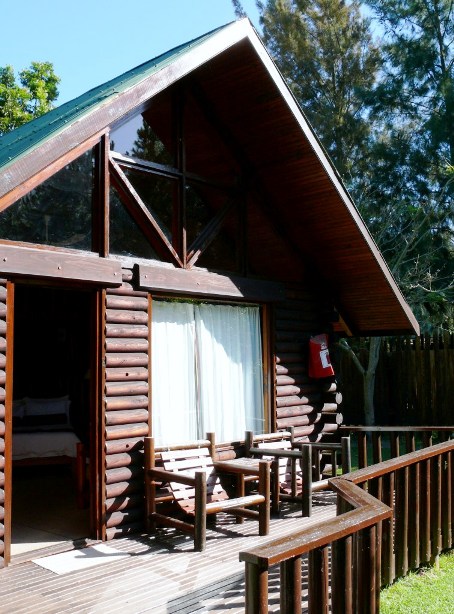
TsitsikammaWe continued onto the R102 to Humansdorp before re-joining the N2 and making our way to the Tsitsikamma Lodge where we had booked a delightful log garden cabin complete with spa bath! Slightly more luxurious than the rondavel in Addo.
It felt good to be sitting outside on the private deck having a couple of Castle lagers and updating my travel journal before heading off for a stroll in the beautiful surrounding forest. Dinner at 7 p.m. that night was in the lodge restaurant – a set menu – broccoli soup followed by fish and salad, roast leg of lamb and seasonal vegetables, desserts and cheese and biscuits. We didn’t quite make it to the end and were in fact in bed by 9 p.m.
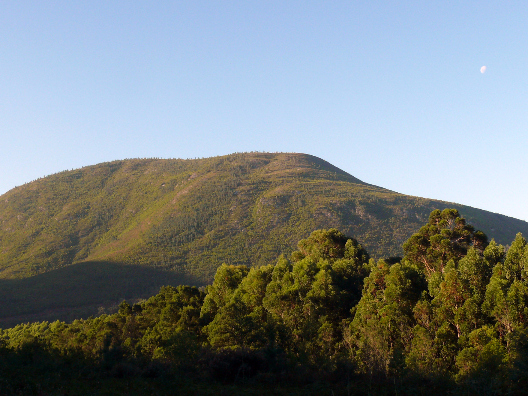
Tsitsikamma Forest
Nature’s Valley The following day we headed out to Nature’s Valley, the plan being to make our way back to the lodge from there stopping at various sites. Unfortunately we had to go along the N2 and therefore through the toll plaza between The Crags and Storm River as there was no alternative route due to the R102 being blocked by the flooding in December (remember the tjoe-tjoe?). Chris from the lodge said that the problem was that local government was waiting for the national government to declare it a disaster area so that they will pay for it. Meanwhile until someone decides who has to pay for the repairs nothing is done!
Natures Valley
Nature’s Valley is incredible – far nicer than Jeffrey’s Bay – in my opinion. Wide, white sands, a safe lagoon for swimming and all in peaceful, natural surroundings. No shopping malls and no garish developments, just a small community with one pub/shop/restaurant at the far end and some local pink-bottomed baboons! This is one end of the otter trail which is considered to be one of the best trails in the world. It is not an easy trail; it is 42.5 km long and takes five days to complete. It follows the rugged coastline and cliffs returning to the shore line to cross rivers. Many years ago my sister-in-law did the trail and considered it one of the best things she ever did in her life. Sadly I have not done it and probably never will now given the steep descents, difficult river crossings and dangerous rock scrambles. We ventured a little way along the Salt River Walk which starts from the shop at Nature’s Valley and is around 9 km long. It takes a circular route along the beach and into the scrub forest. We followed the route in the opposite direction, along the beach until it wound up into the bush and became too steep to continue. I often get quite annoyed with myself at not being able to do the things I took for granted thirty years ago. Joints too stiff, overweight and under-fit, nervous of slippery slopes and sudden drops are the curses of becoming older and spending too much time working on computers.
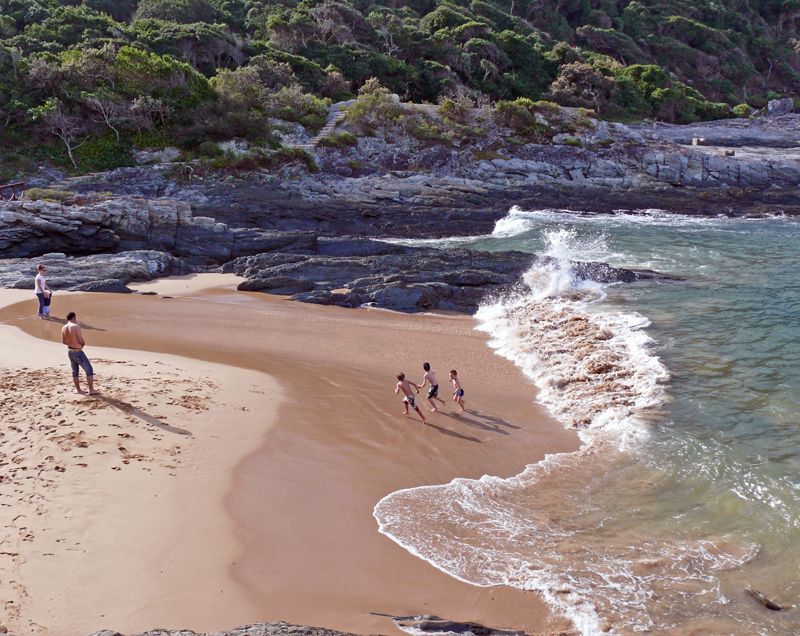
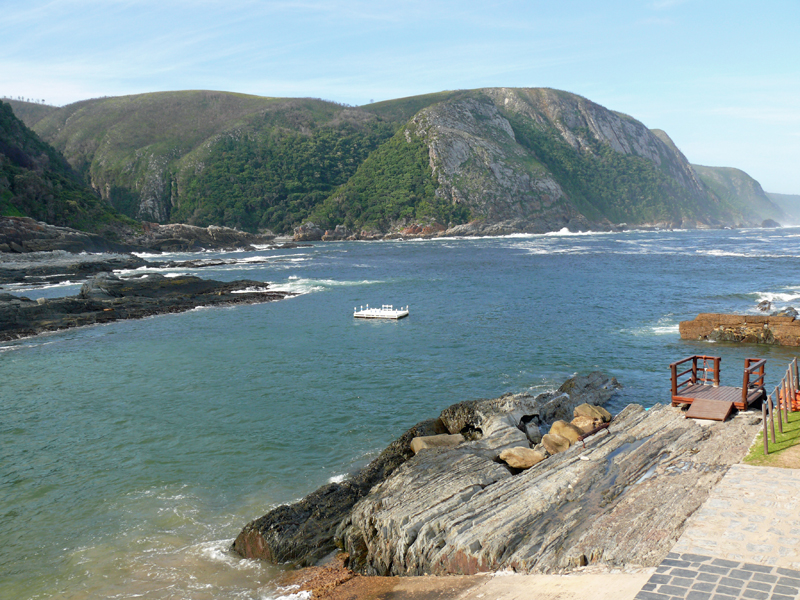
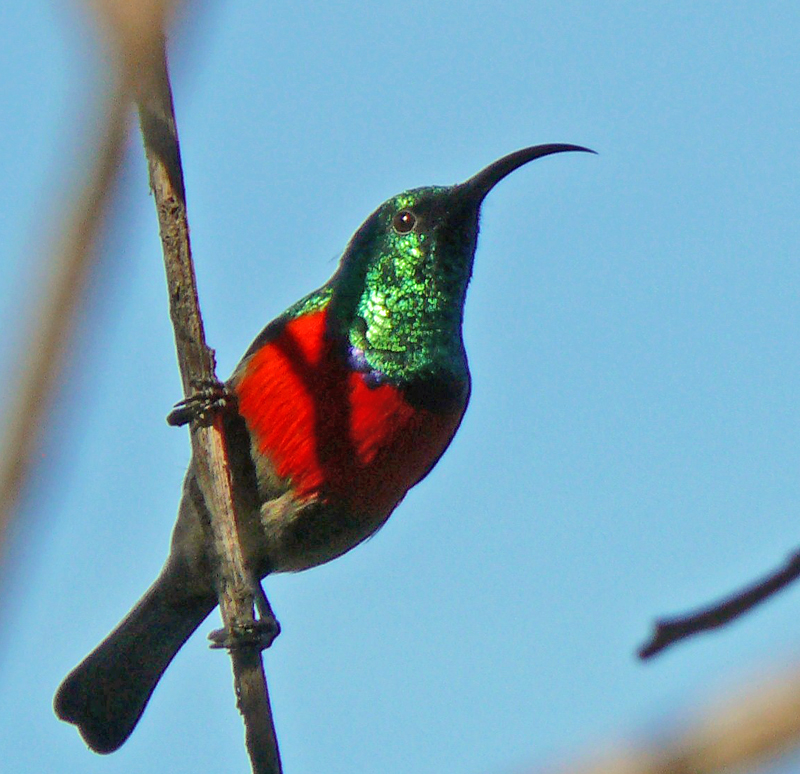
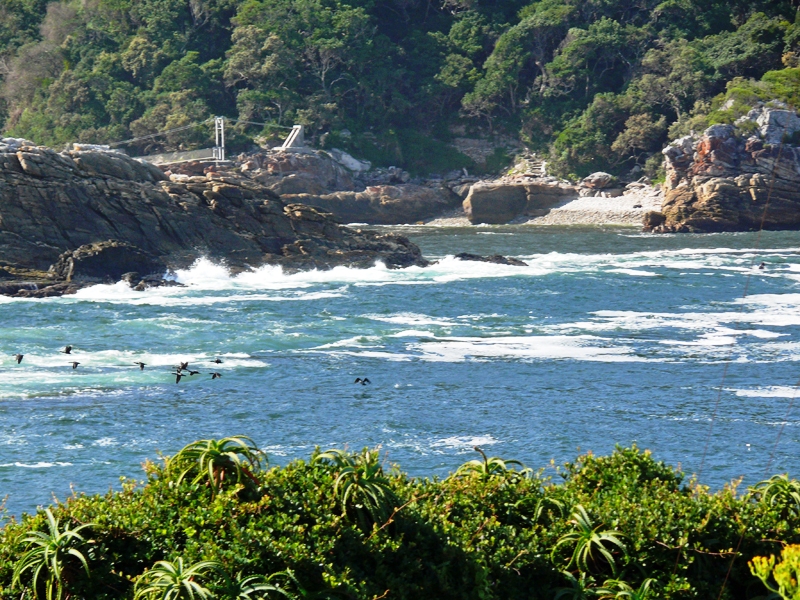
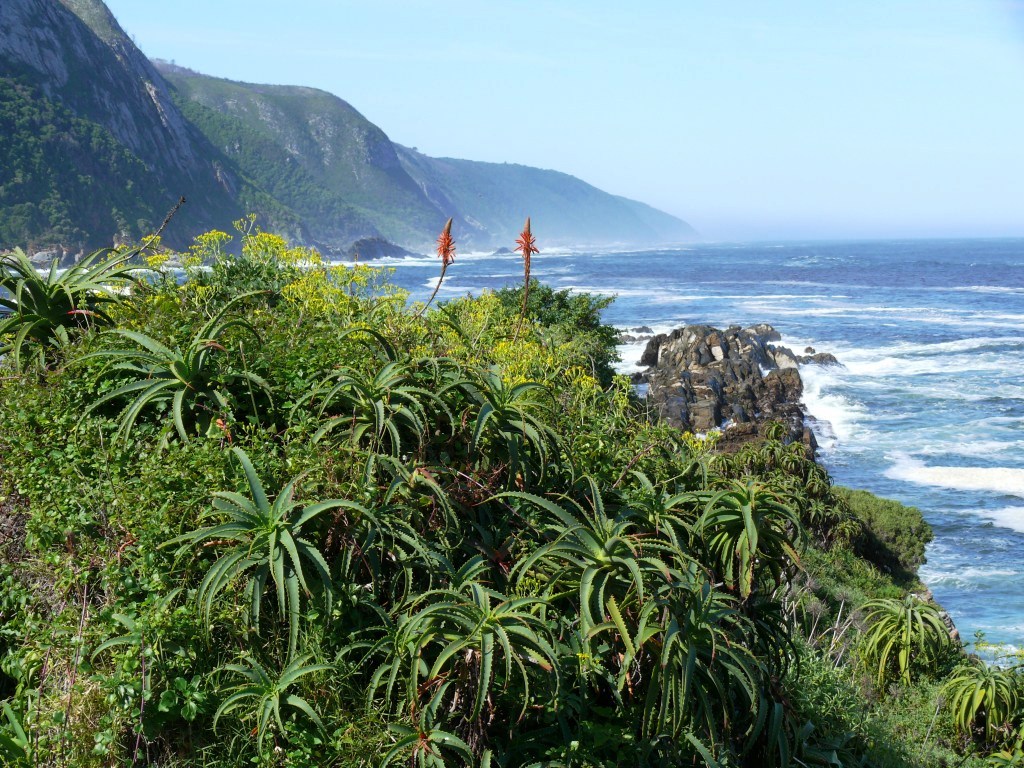
Storm’s River MouthOn the way back to the lodge we drove down to Storm River’s Mouth. What a spot! Wild and windy, with huge waves crashing on the rocks, such raw beauty! There is a lovely restaurant “Tigers Eye” overlooking the river mouth and small sandy beaches – Mooibaai and Sandbaai and jewel-like sunbirds flittering in the trees.
We could have taken a boat into the gorge itself, which looks pretty amazing, but getting on and off the boats looked a little tricky in the considerable swell of the ocean so we decided against it. By the way, the ‘black water‘ colour of the Storm River is caused by tannin leaching out of plant matter; much like tea. We wandered a little way along the Mouth Trail up to Strandloper Cave and along to the rope suspension bridge and lookout point. Unfortunately we couldn’t go onto the bridge itself because the final part of the boardwalk leading to it had been burned in a fire – it was being repaired though so hopefully open again by now. Though working on African time, you never know!
Whilst we were exploring a sudden sea fret descended turning everything into one of those eerie sets out of a horror movie – all ghostly shadows and shapes amid the constant boom of the ocean.
I was mesmerised by the surging waves coming in and breaking on rocks only metres away from the car with such force and incredible energy. And right next to the shore a group of rock hyrax (dassies) were having their supper. Next time I am in this region I shall book a forest cabin right on this shore. (Book through SanParks).
Our final stop was at Storm River Village where you can do a Fern Tree Walk, but we were all walked out by then so instead we opted to retreat to our log cabin for a very large vodka and tonic and a welcome soak in the spa bath! Luxury!

















 TRAVEL WORDS