Category: England
Isabella’s Plantation
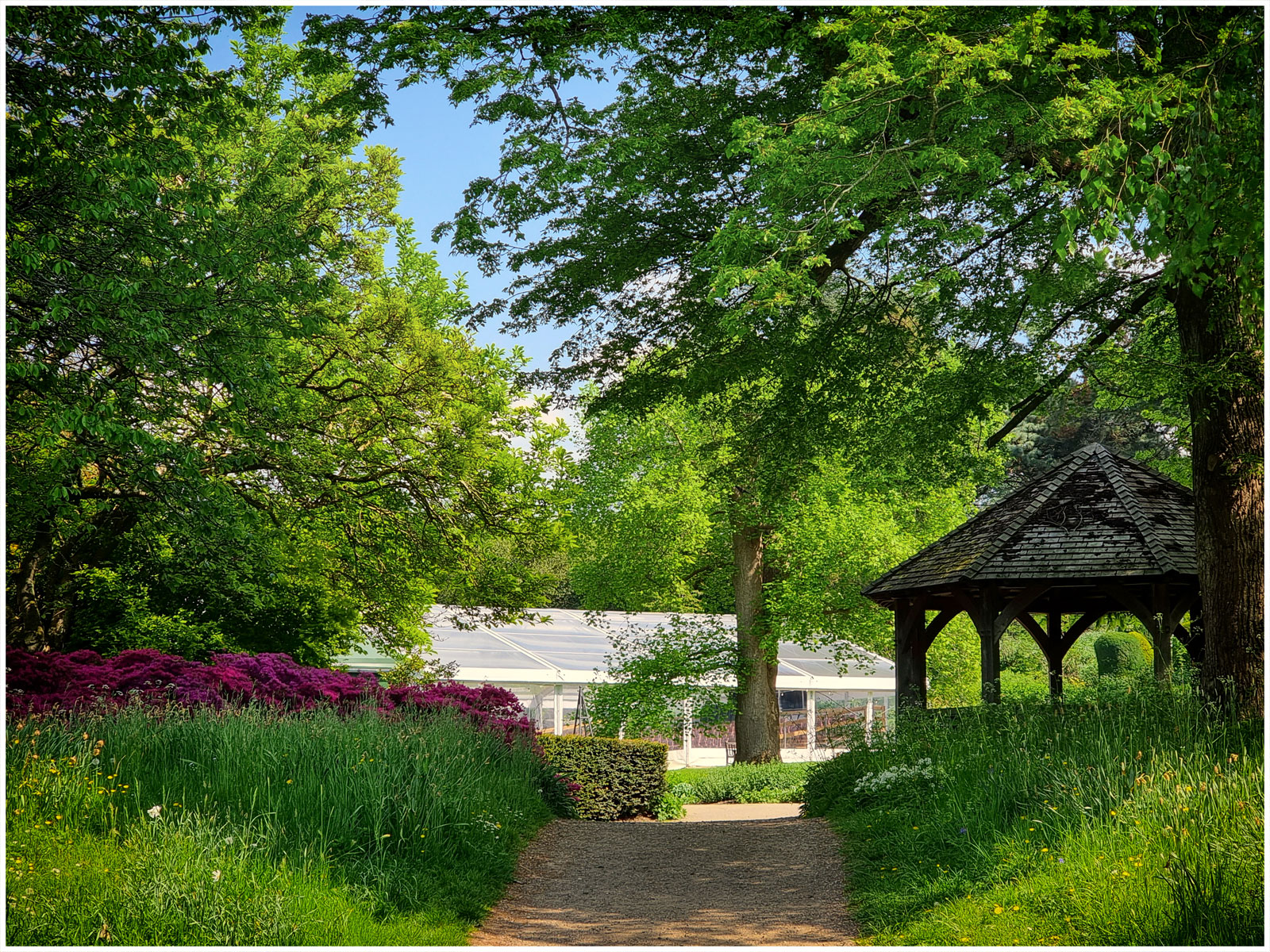
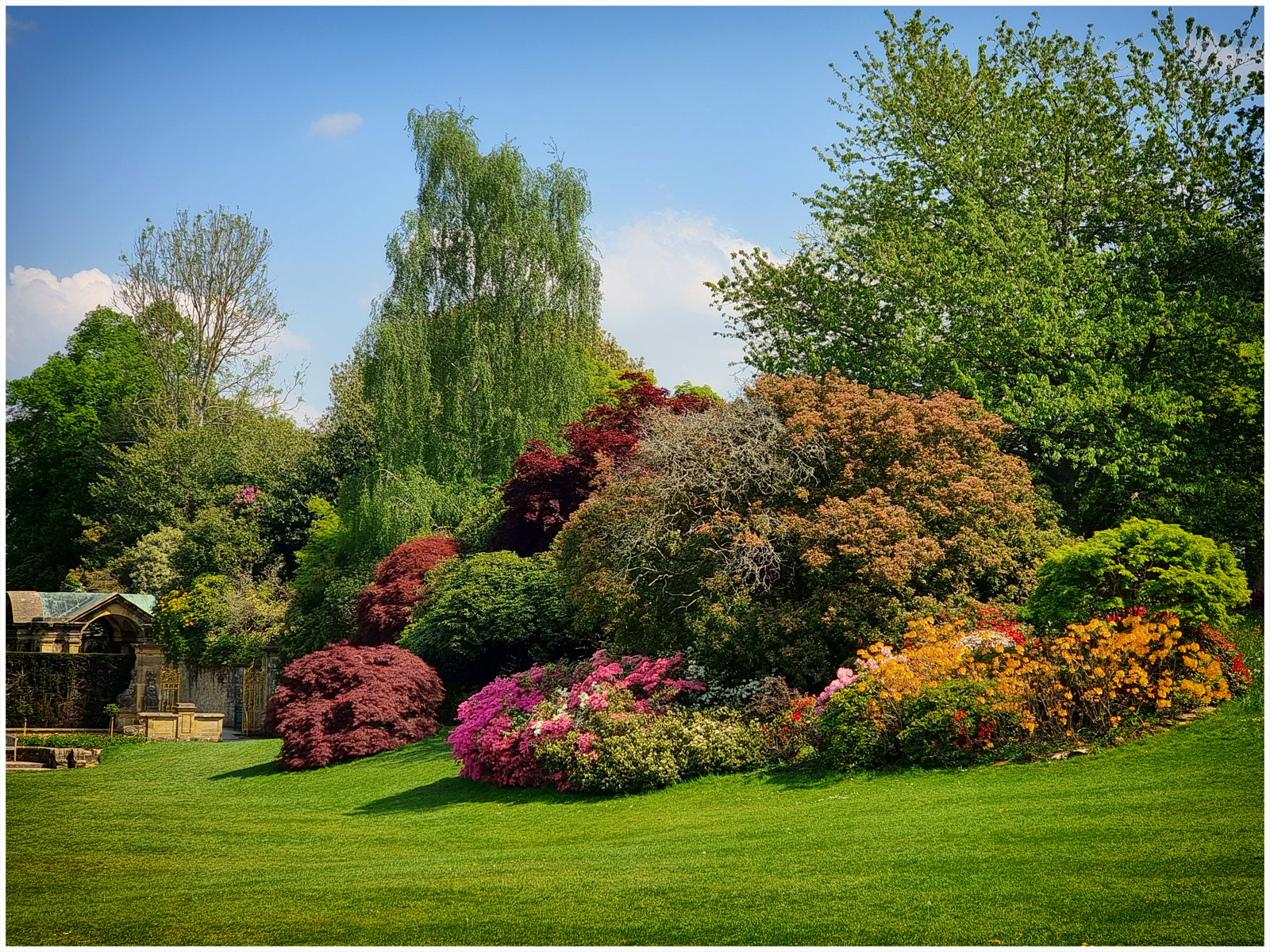
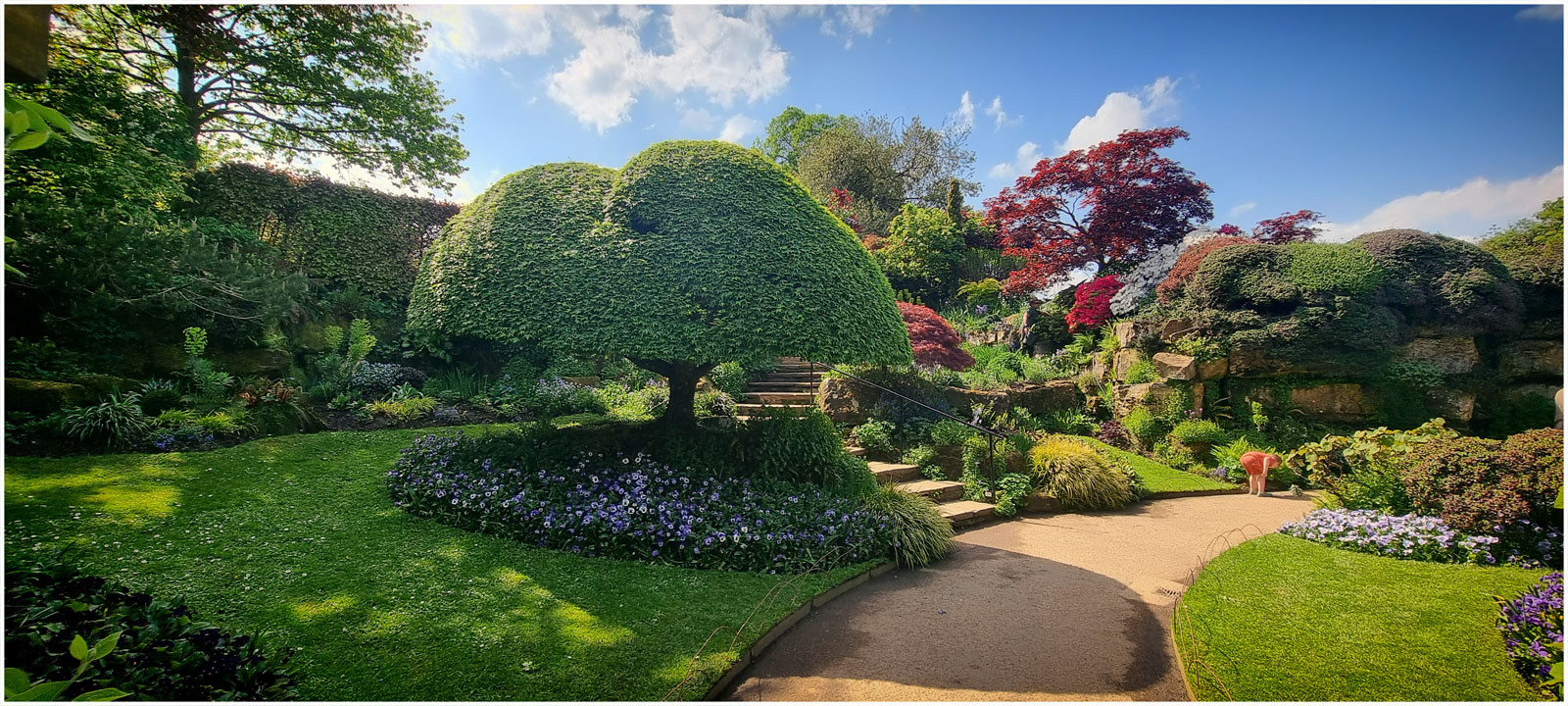
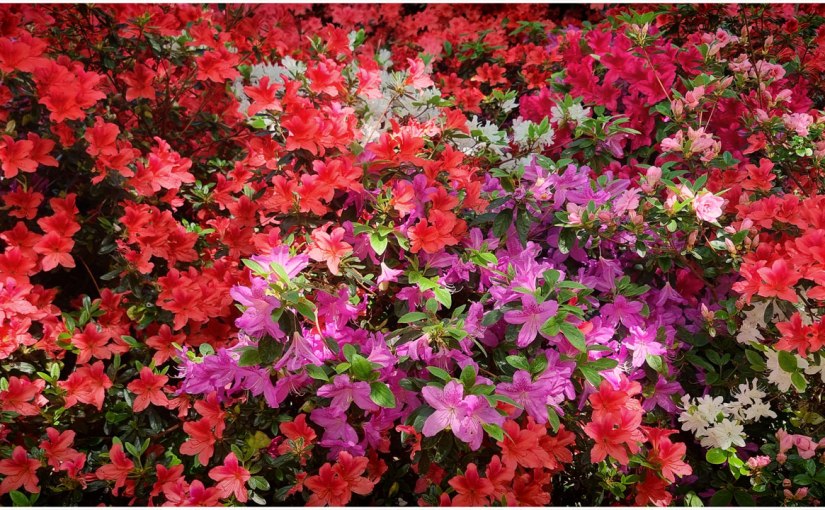
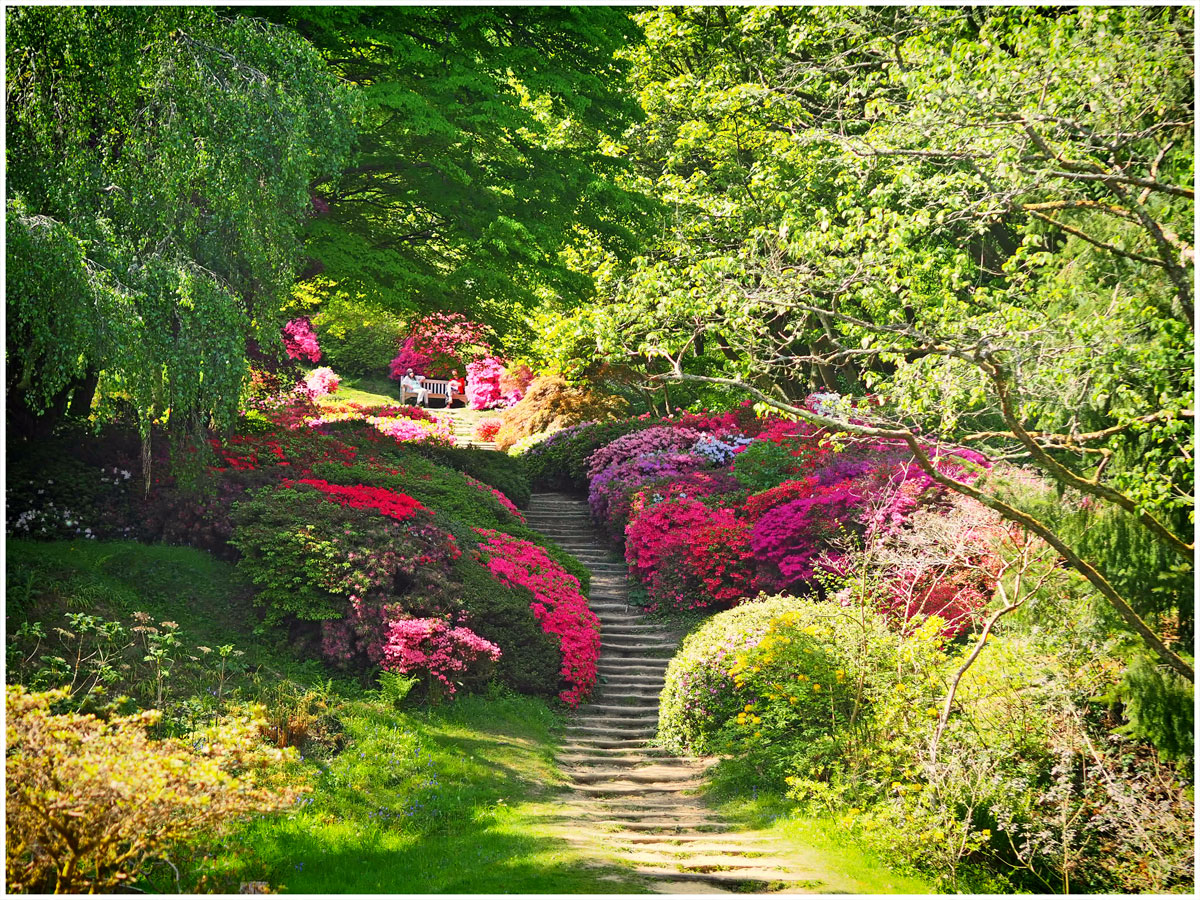
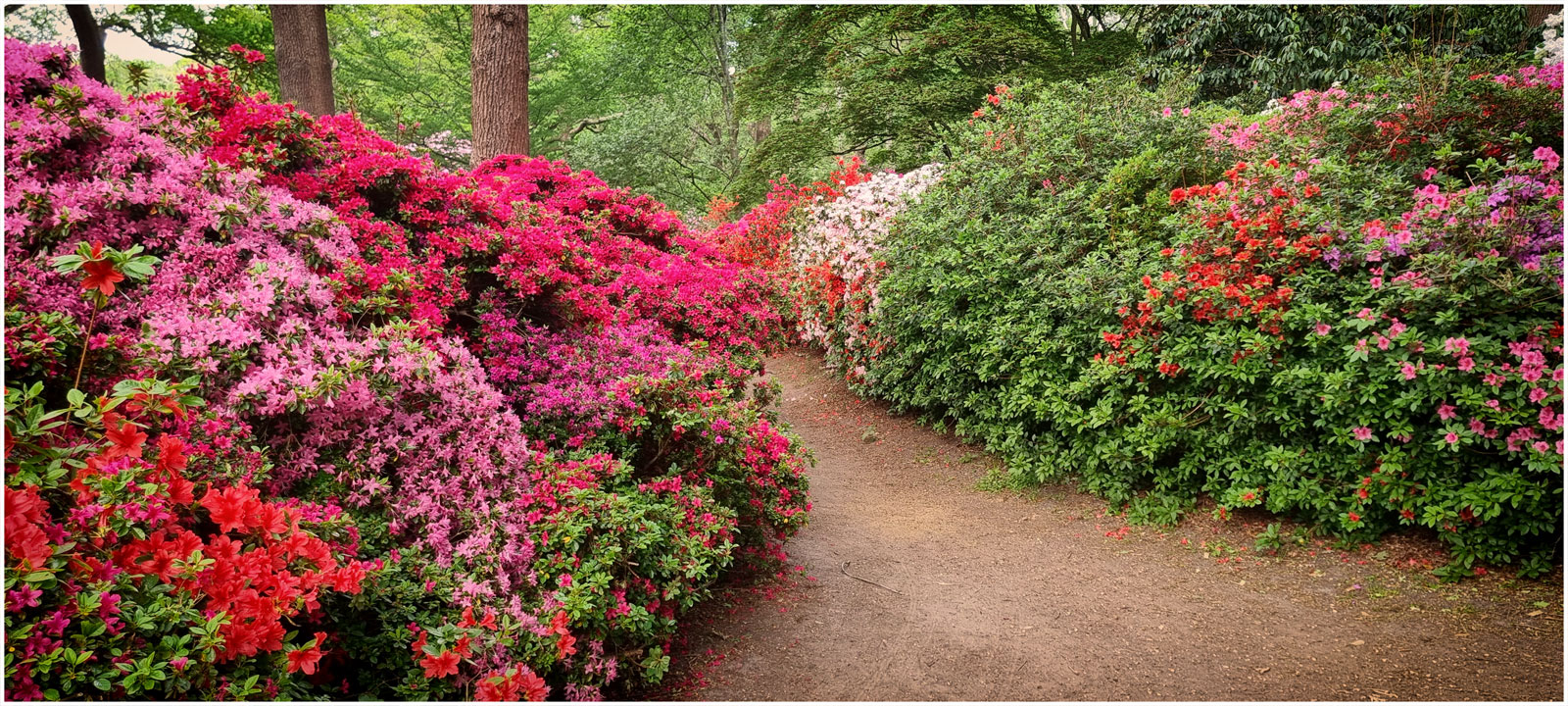
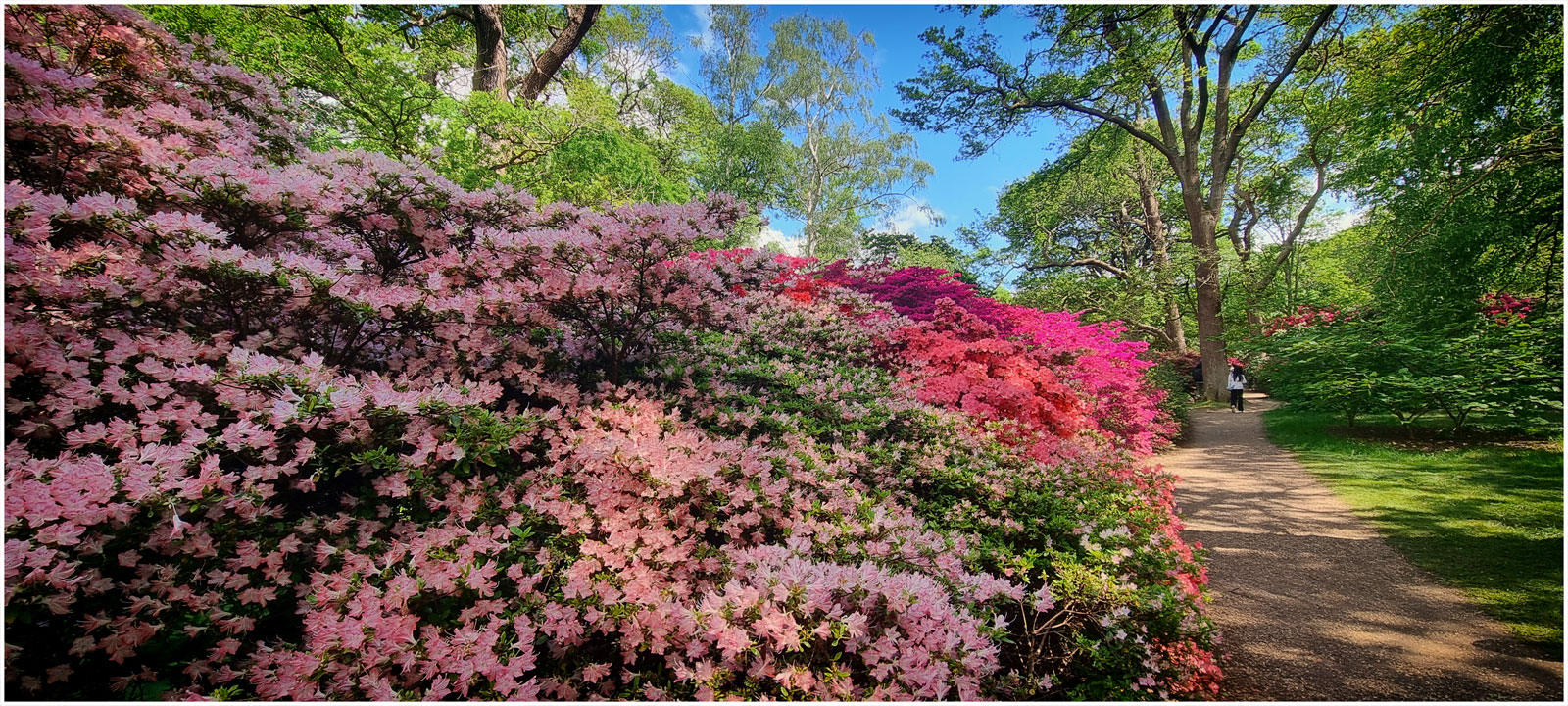
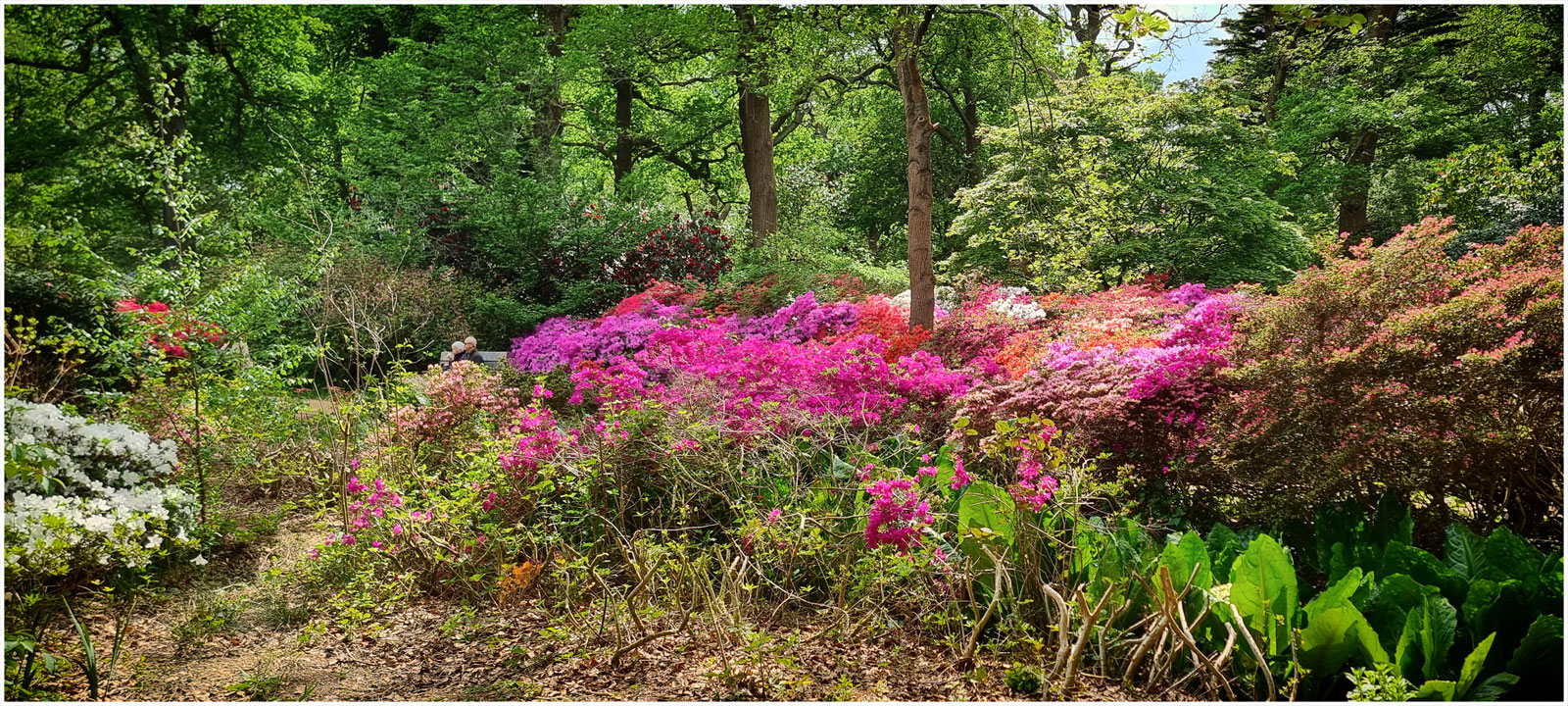
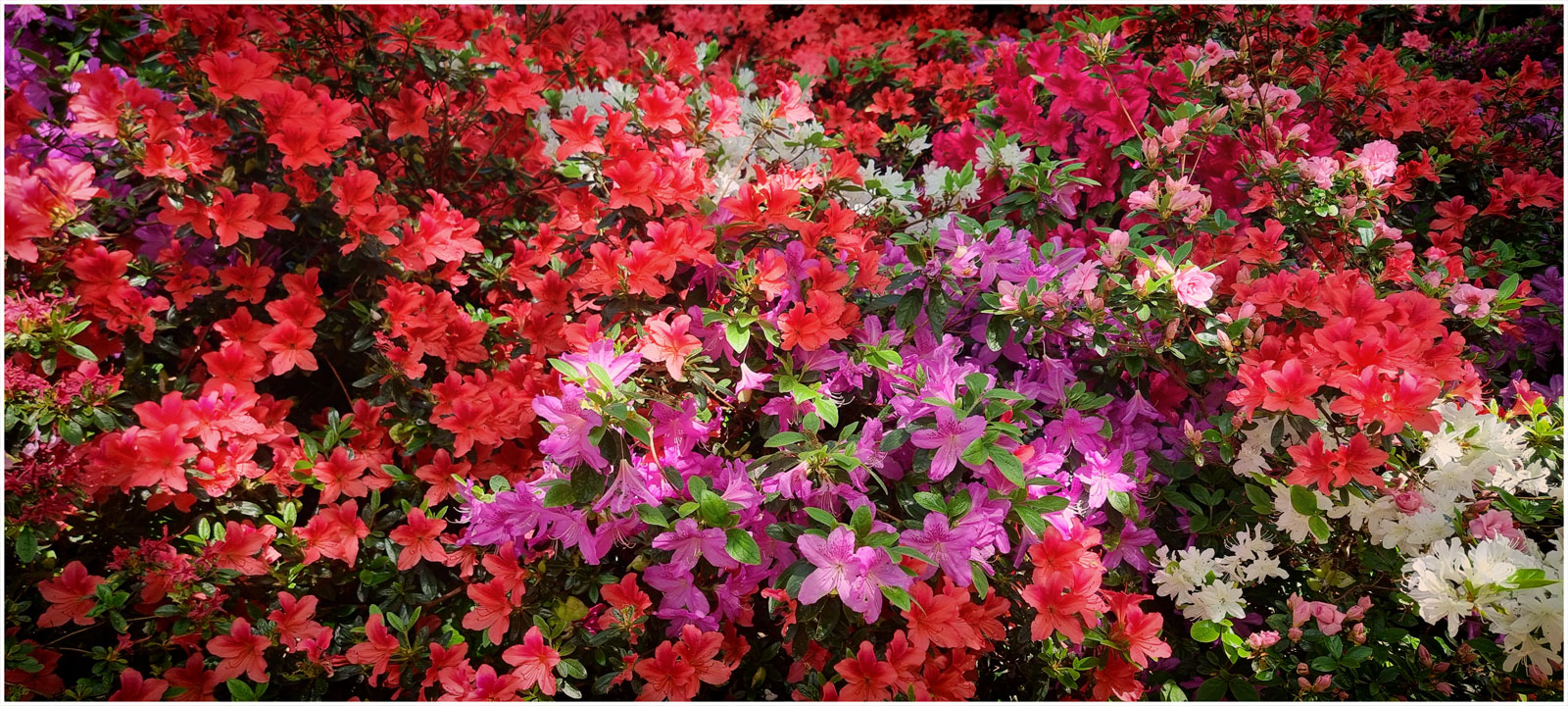
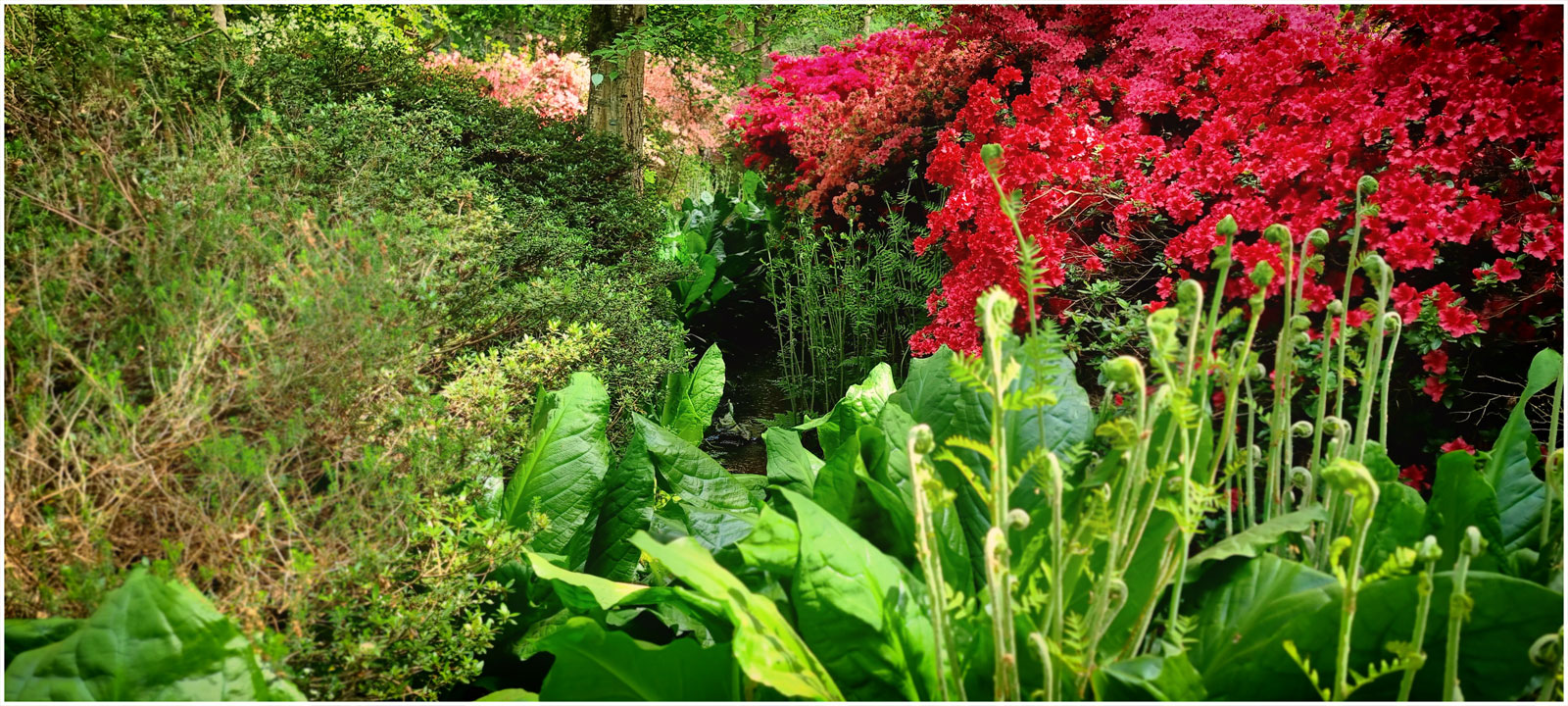
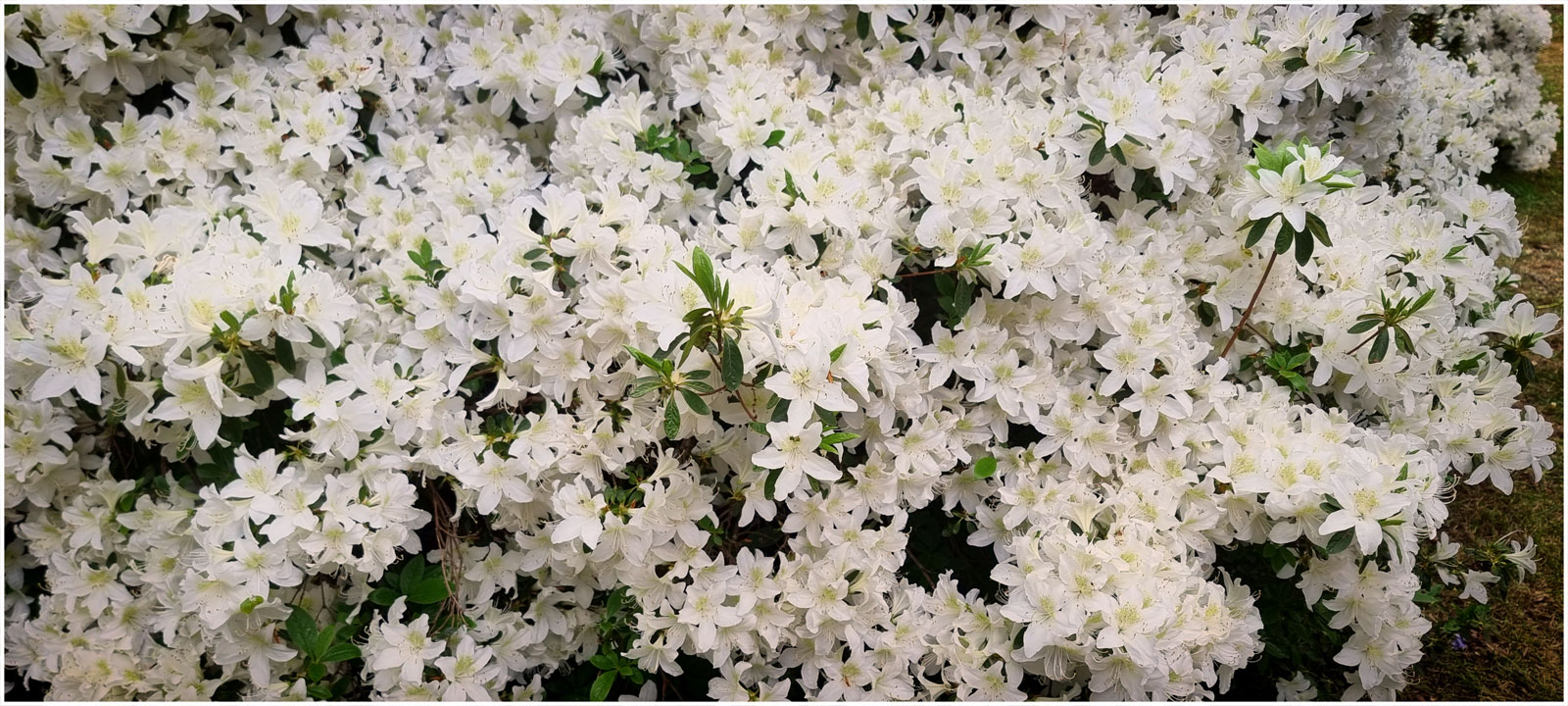
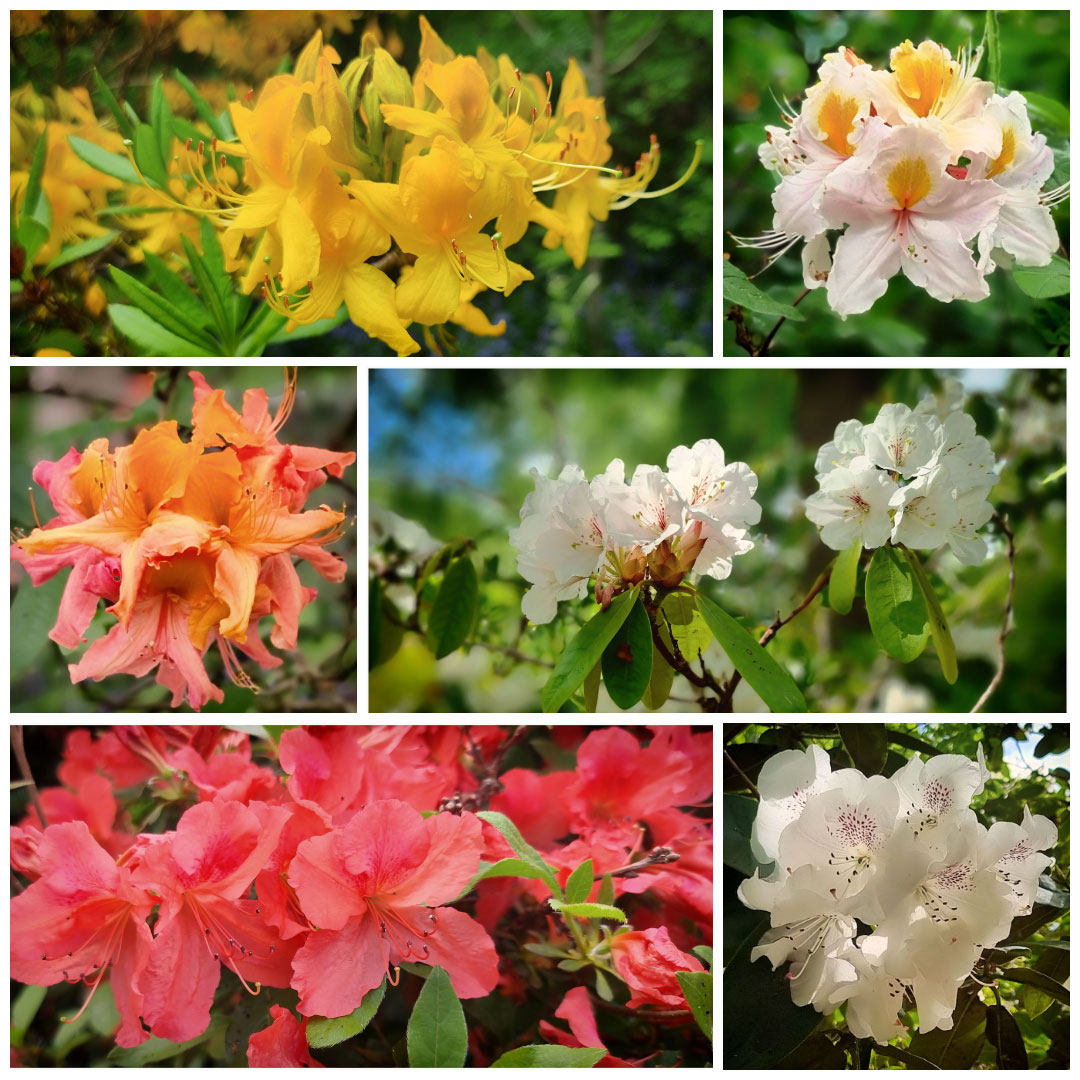
The Isabella Plantation in Richmond Park, Surrey, is a 40 acre woodland garden set within a Victorian woodland plantation planted in the 1830’s. First opened to the public in 1953, it is best known for its evergreen azaleas, which line the ponds and streams and at their peak of flower in late April and early May.
My previous visit was in late August 2022 and the floral offerings were somewhat disappointing although it was still a lovely place for a walk. The timing was perfect this month though, as the long queue to the car park indicated.
Let’s take a walk and immerse ourselves in the glorious colours of this garden.


Especially for Jo (I know she loves rhodies!) and her Jo’s Monday Walks
Just Back From… Surrey
During another brief stay with my daughter in Surrey over the early spring bank holiday I took the opportunity to visit some different places in the region. First of all we decided to break up the journey by overnight stops each way. Although it can take as little as 5 hours, with unexpected traffic delays it can be much longer and by breaking up the journey we only had fairly short drives.

Hindon
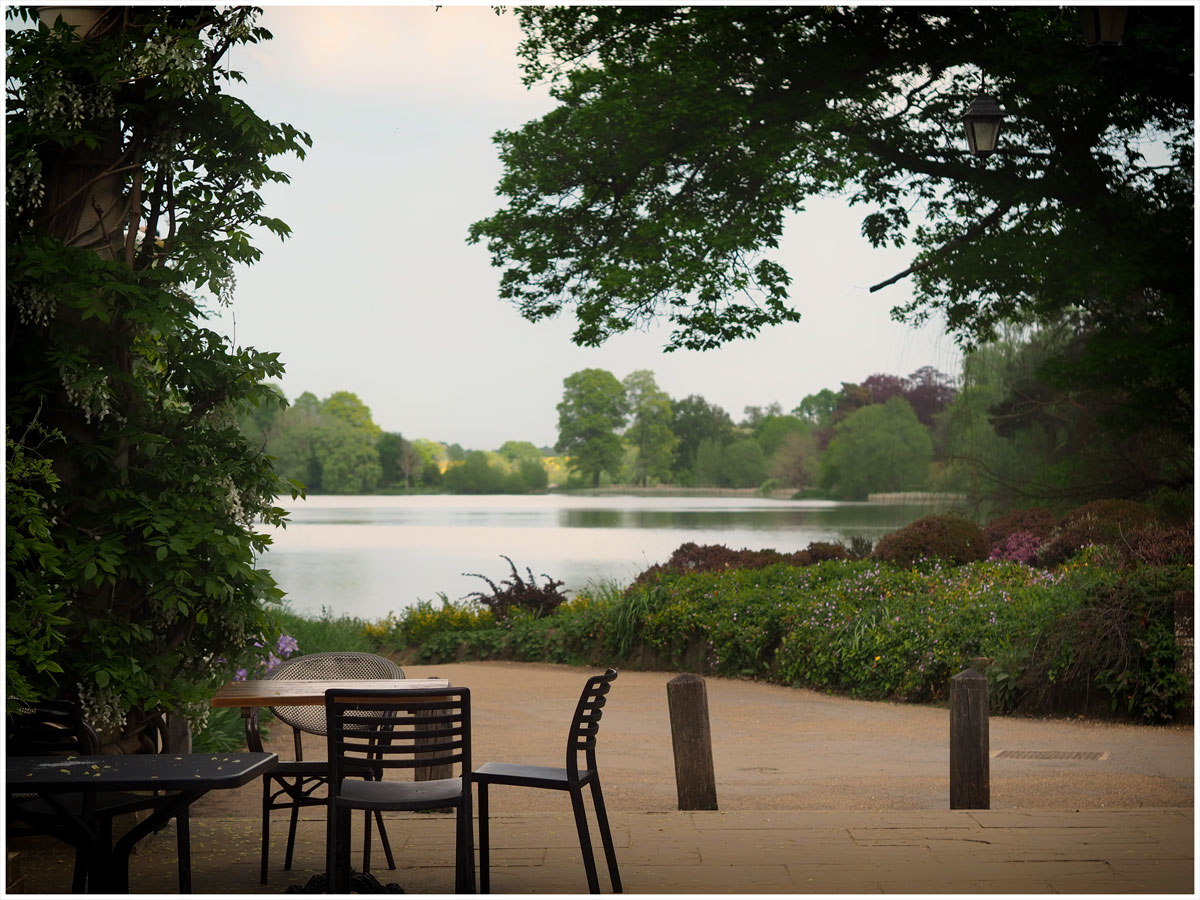
First stop was at The Lamb in Hindon, Wiltshire. Just over 3 hours away. We went for a meal there last year during our Wiltshire holiday and liked it. The village is very pretty and close to the A303 so not far off route. The first thing we did after checking in was to get a couple of (very expensive) G&Ts and sit outside on a very warm day! Luckily we found some shade. Then before dinner we had a stroll up past the church. The room itself was one of those with wonky floors so you always feel as though you are on a boat. The stairs leading up were steep and narrow, not the best for elderly folk carrying a suitcase. I was surprised that the (young) chap taking us up didn’t offer to carry one! Dinner was okay, again expensive, but this area does seem to cater for weekenders from London (only 1½ hours away).

Winkworth Arboretum
As my daughter works on a Thursday I took myself to the arboretum in Surrey, not far from Guildford though my Google map seemed to take me the most long-winded route through narrow lanes and little villages I have never heard of despite living in the area for 7 years. The bluebells were looking good and probably what attracts people to this place at this time of year. I had forgotten how steep the land is and fell foul of an ongoing issue with my right knee which has started to lock when going downhill which is very painful and makes it difficult to continue walking. On a very hot afternoon I was most grateful for the shade of the trees.


Hever Castle and Gardens
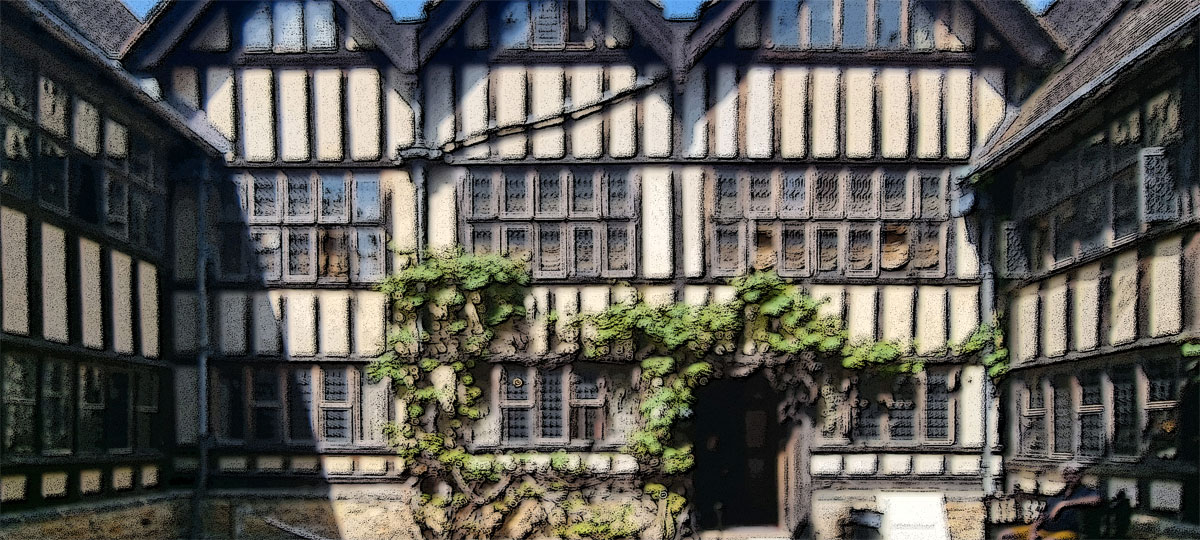
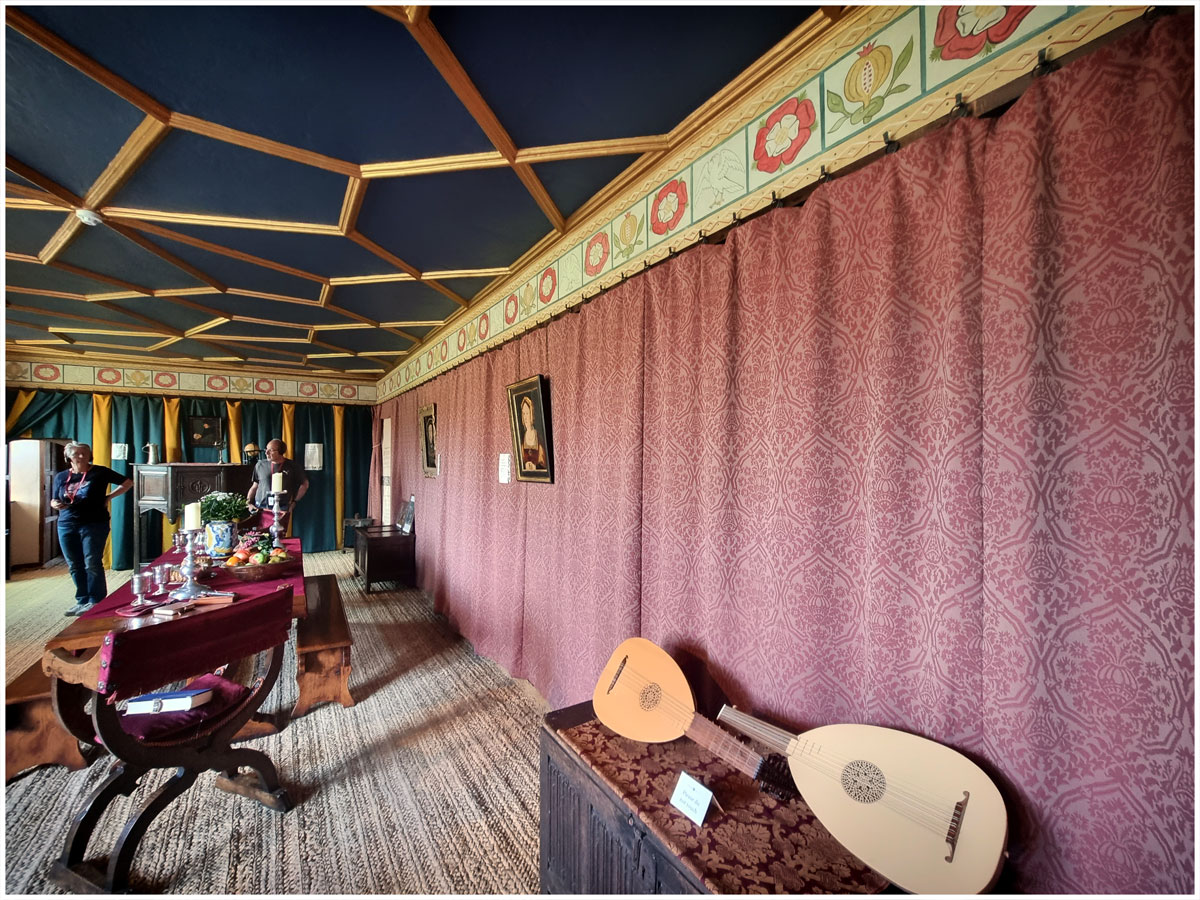
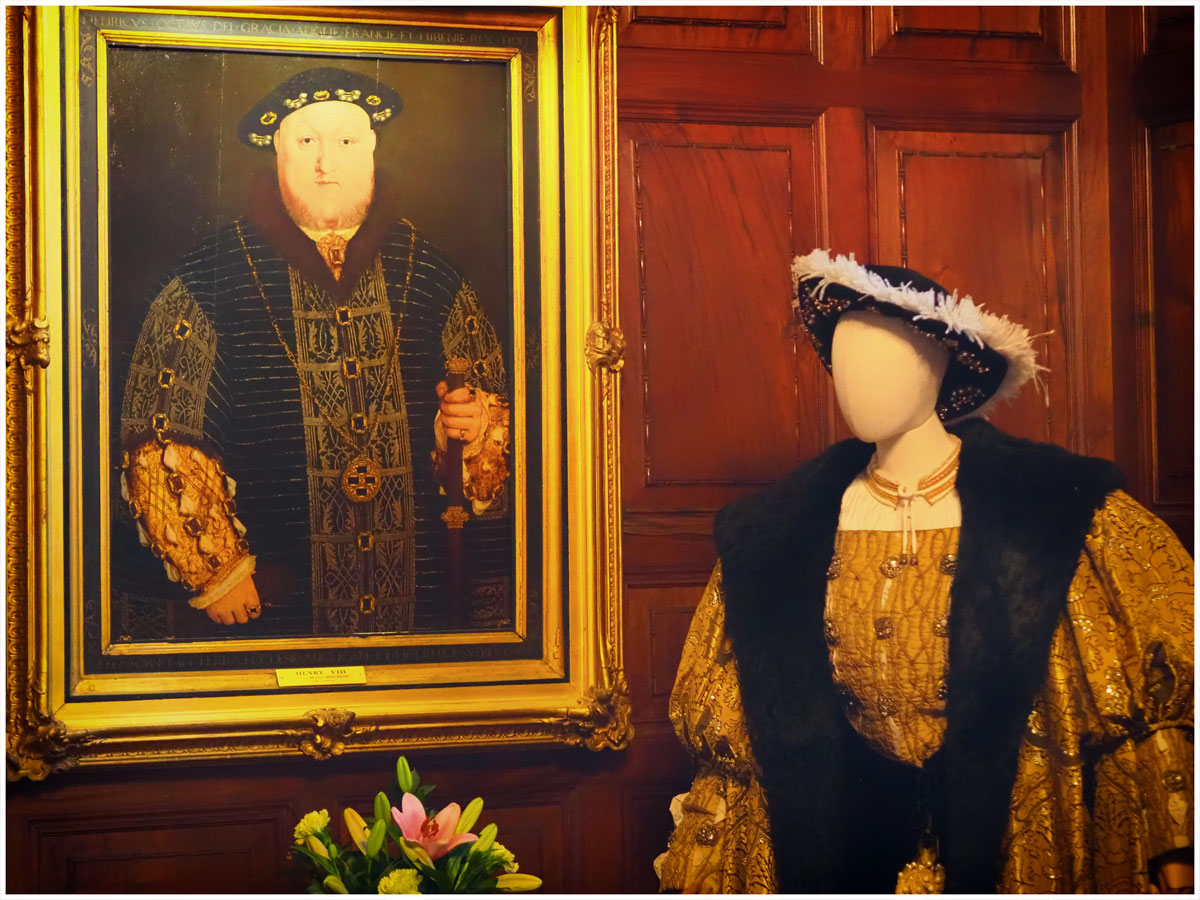
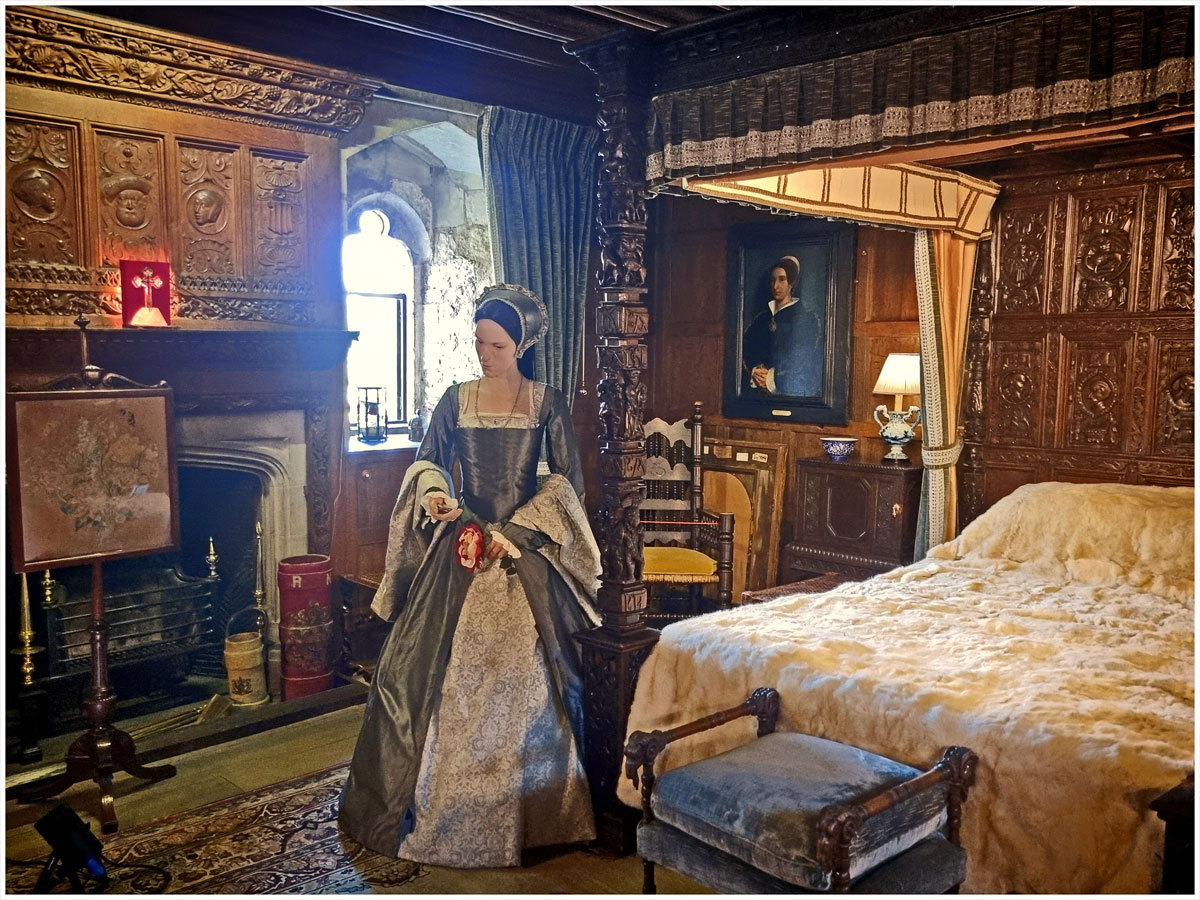
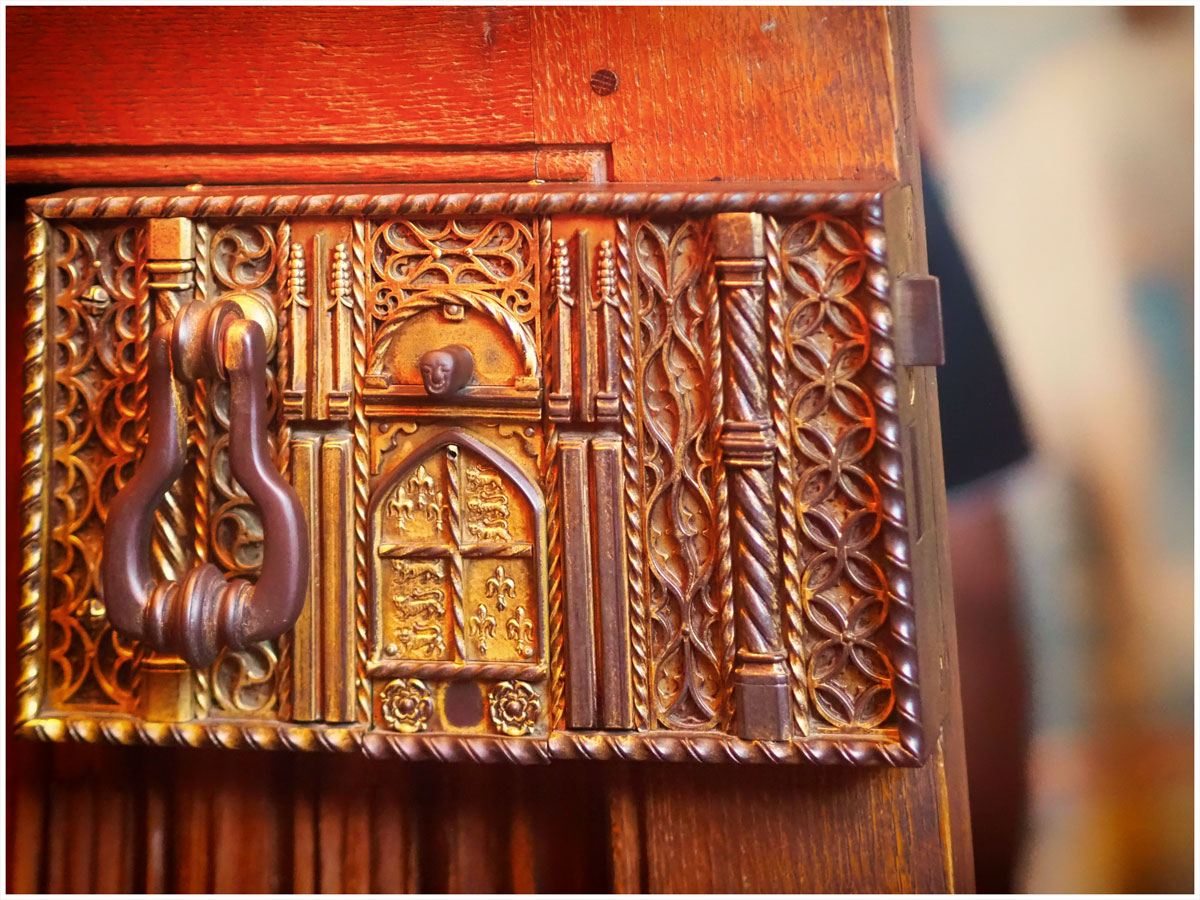
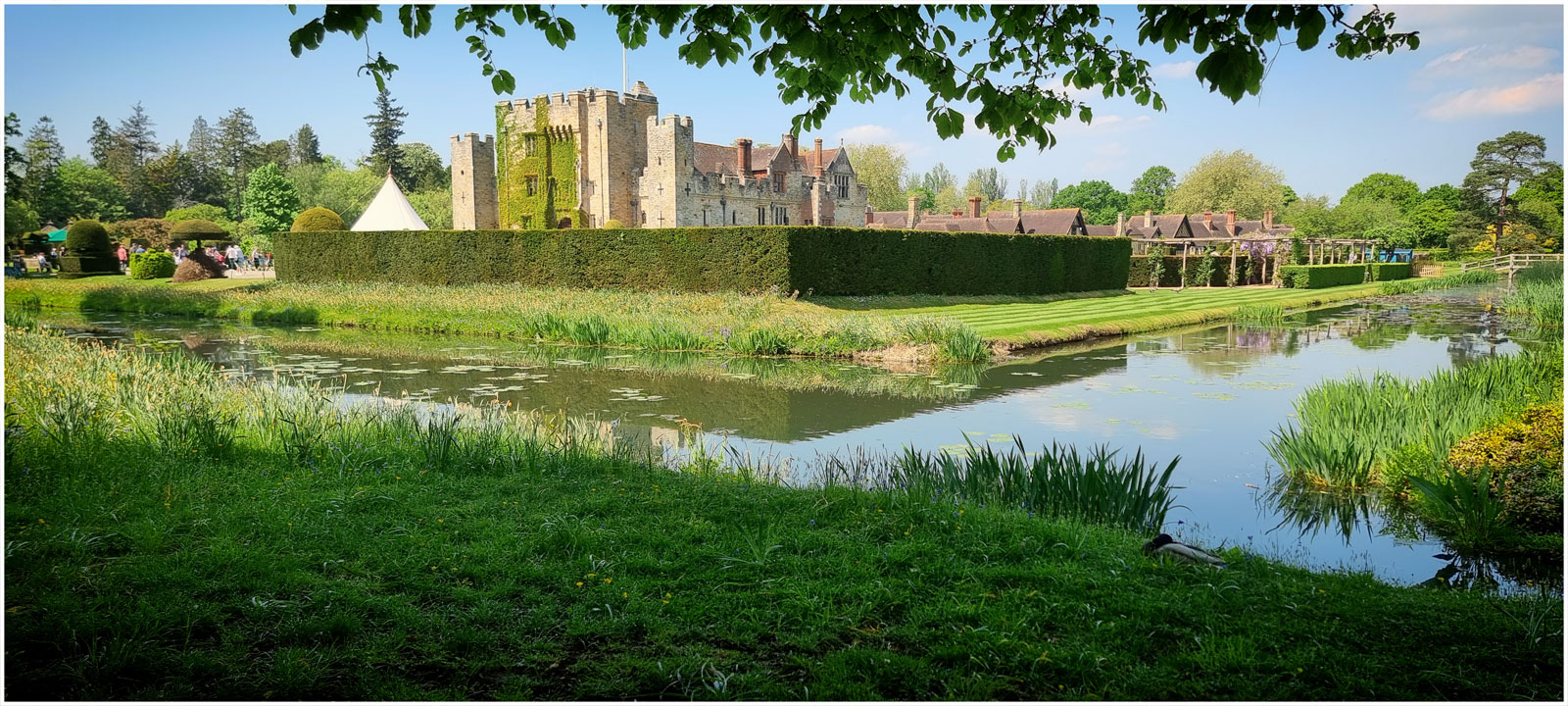
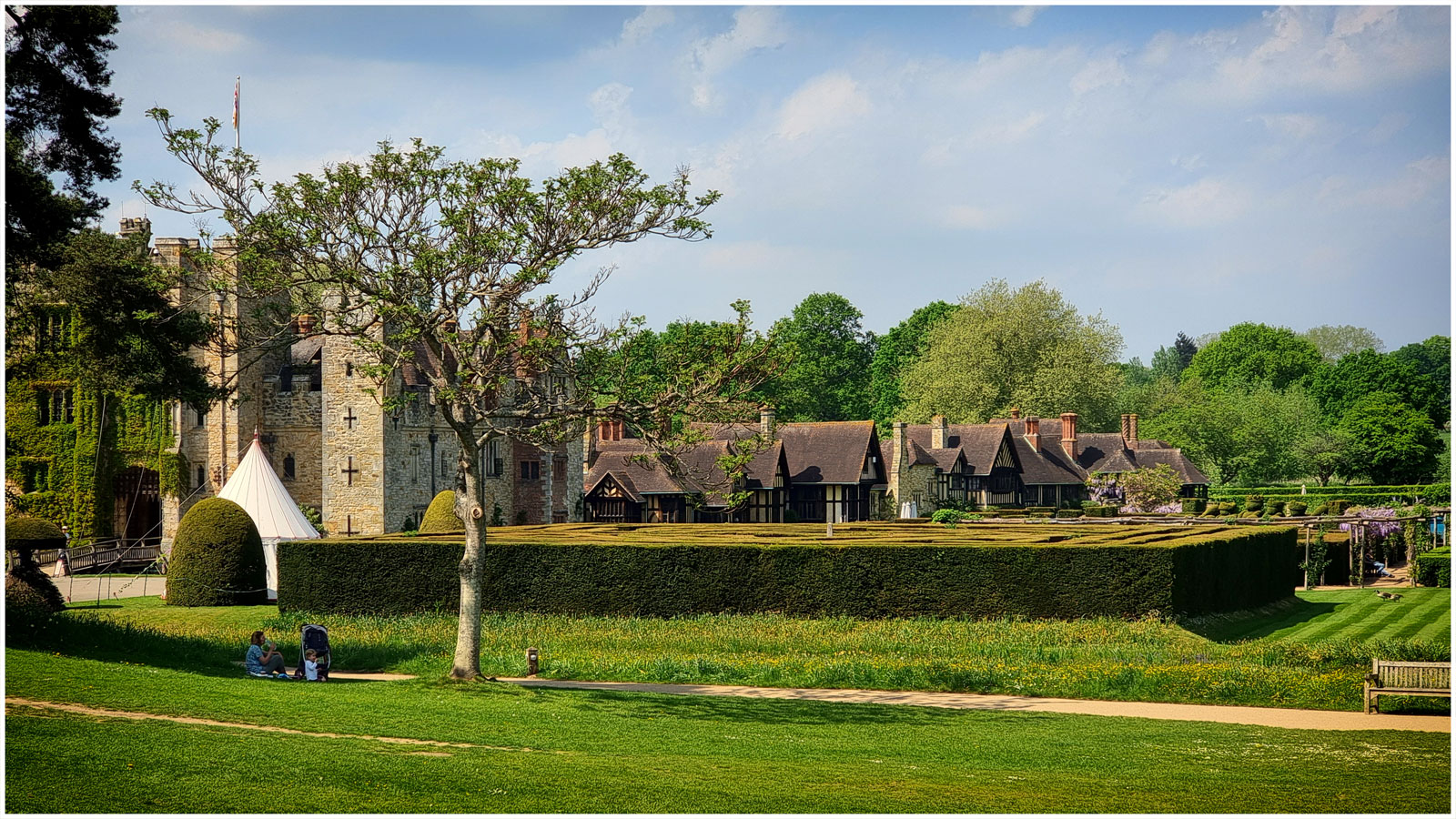
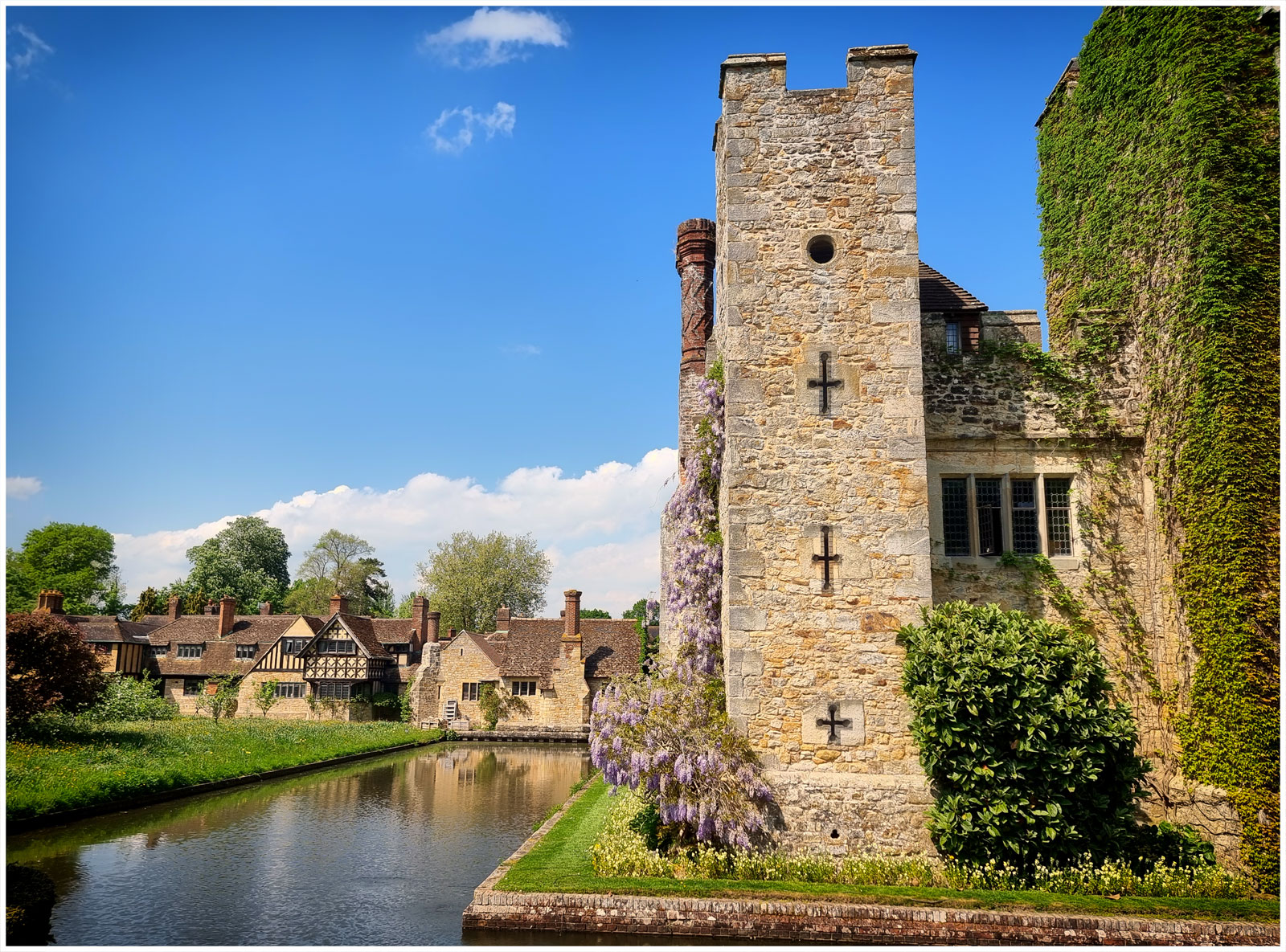
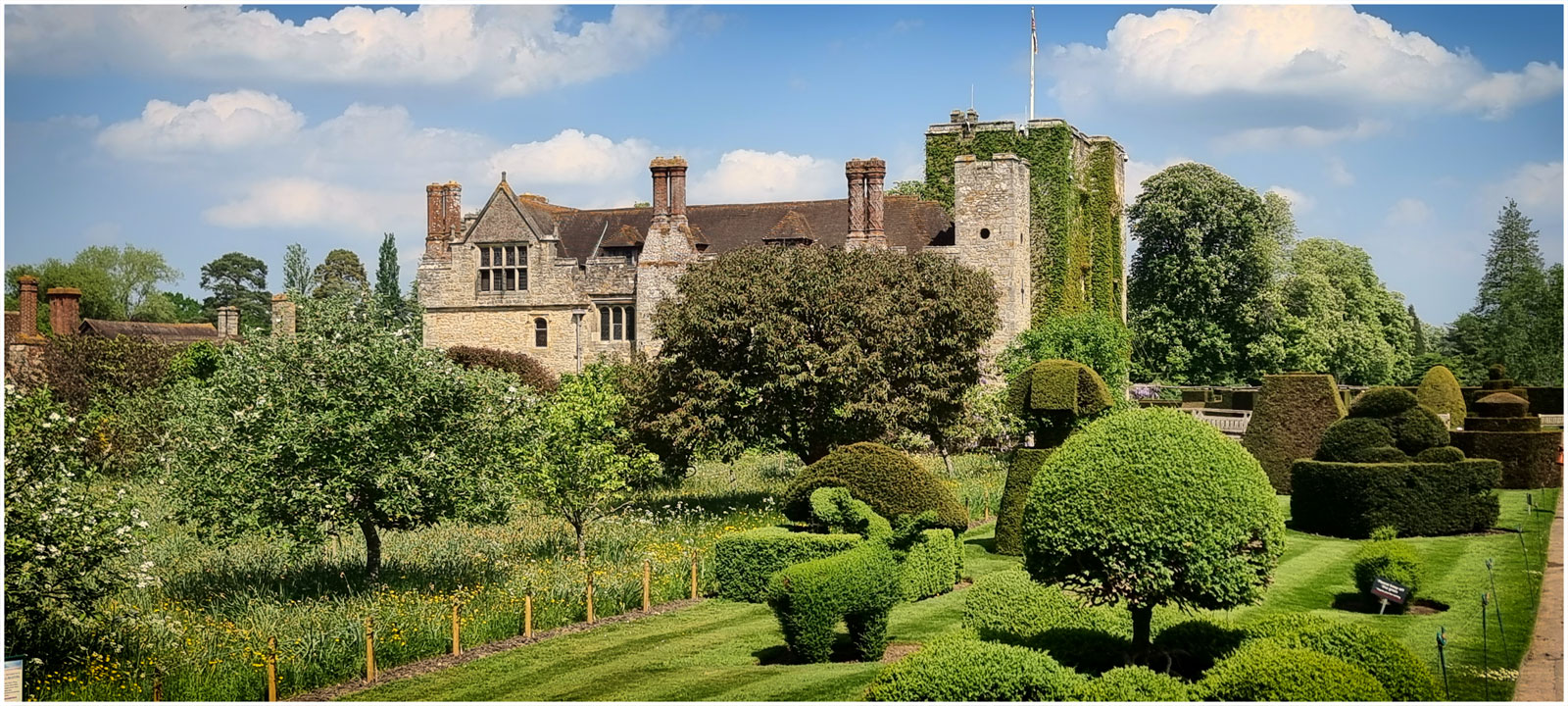
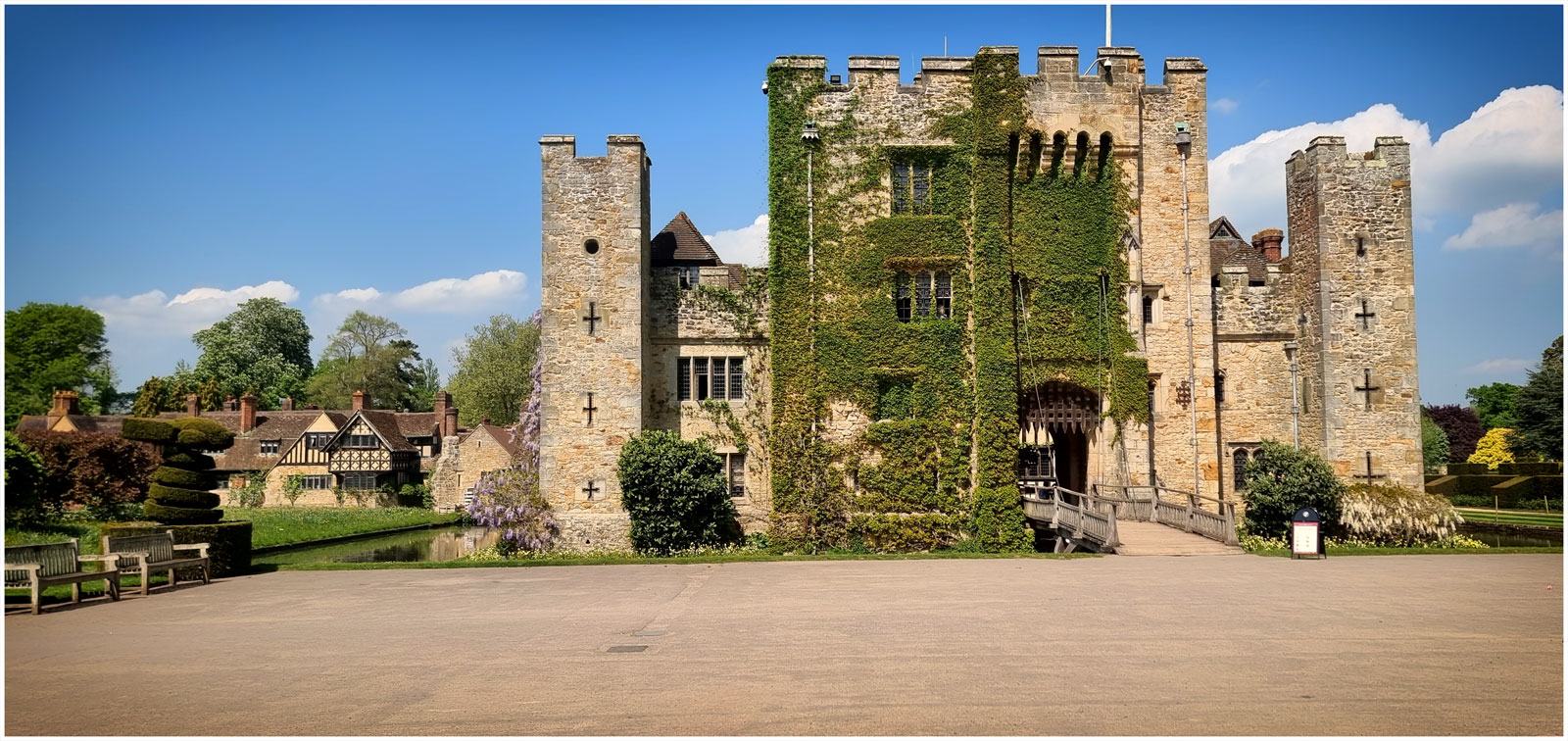
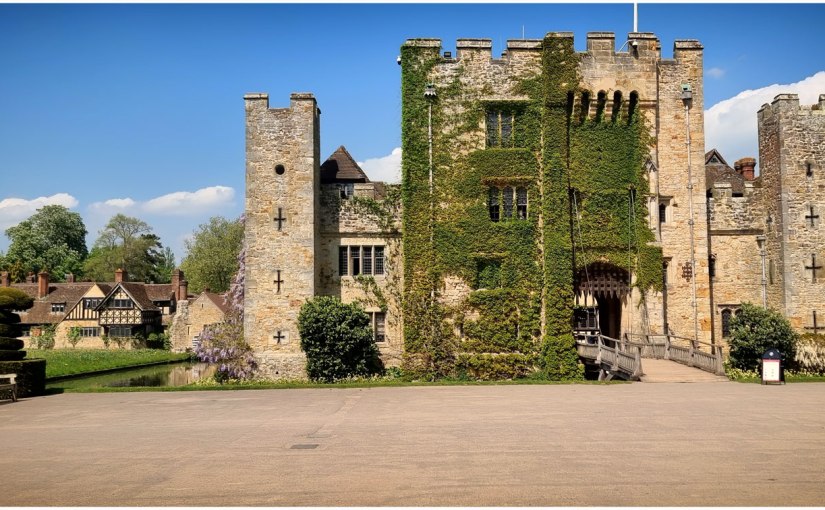
Childhood home to Anne Boleyn this place in Kent was added to and changed over the centuries. In 1903 it was bought by William Waldorf Astor and the castle was restored and the pleasure grounds created. My daughter and I had a lovely afternoon exploring the gardens and the castle. More about this place soon.


Isabella’s Plantation in Richmond Park
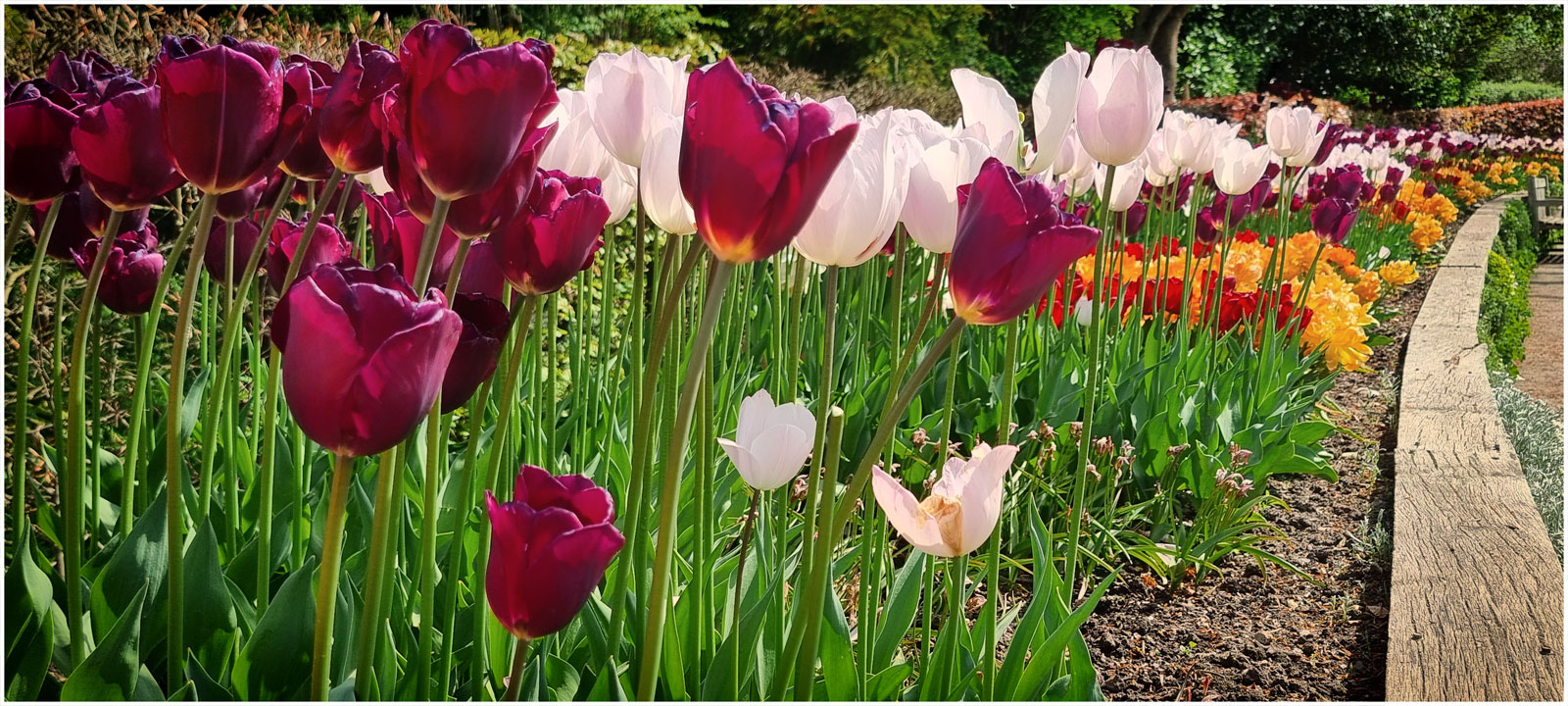
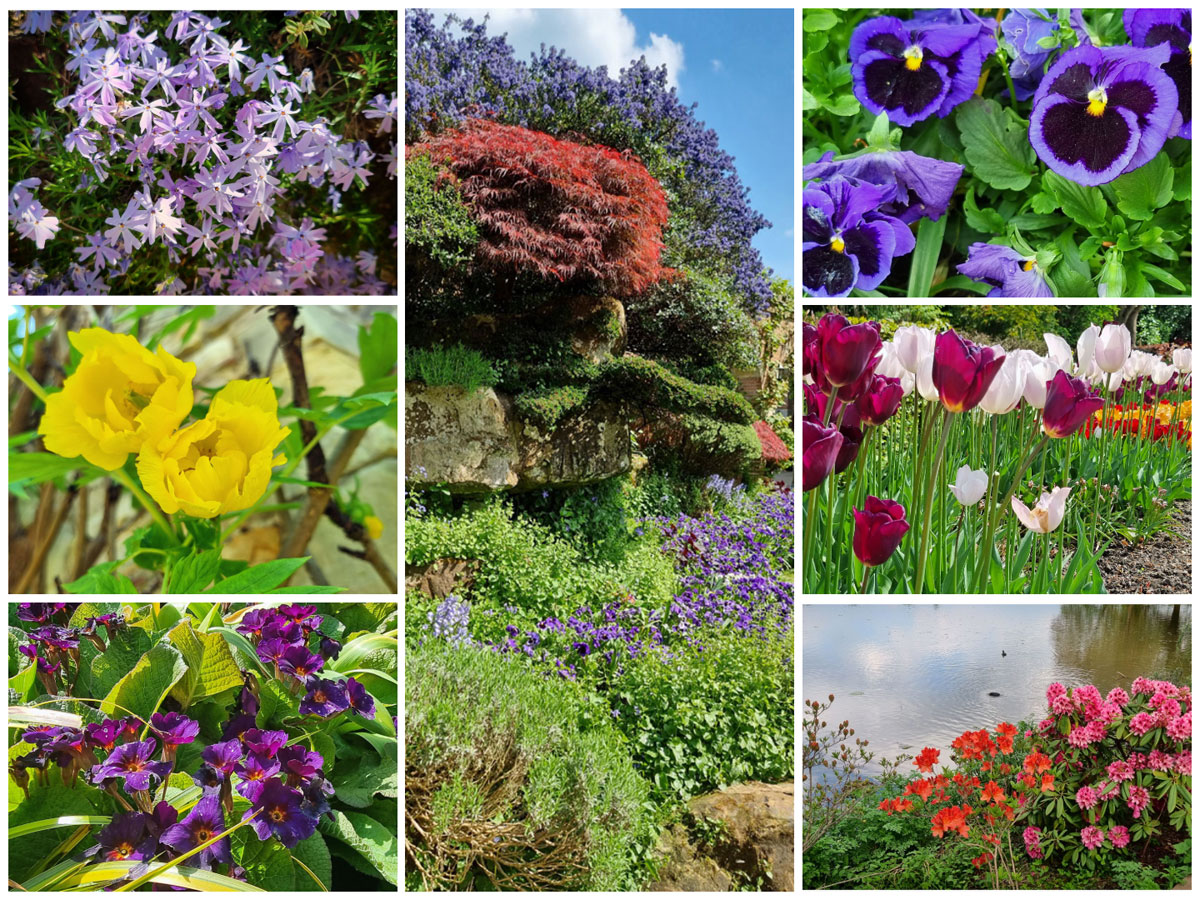
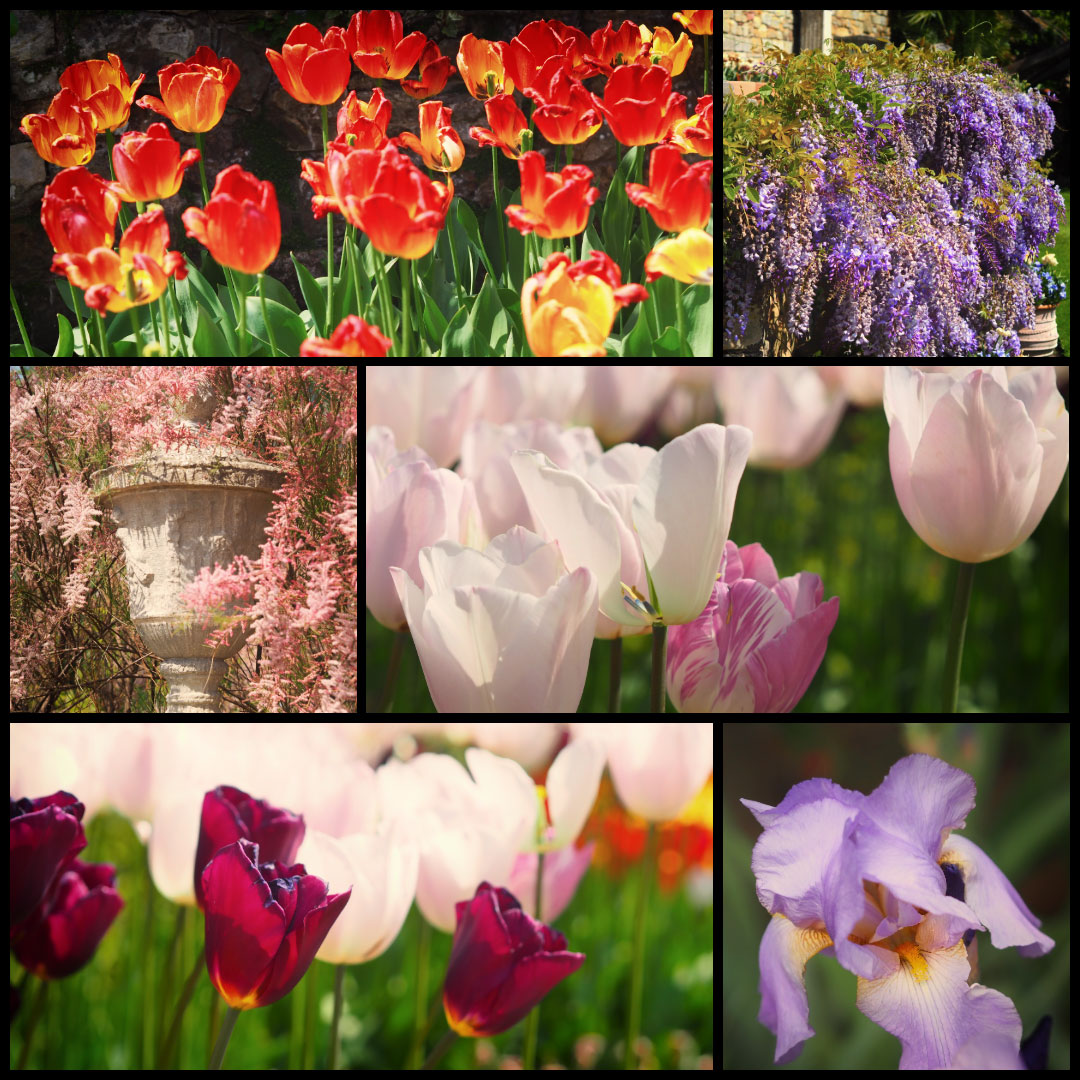
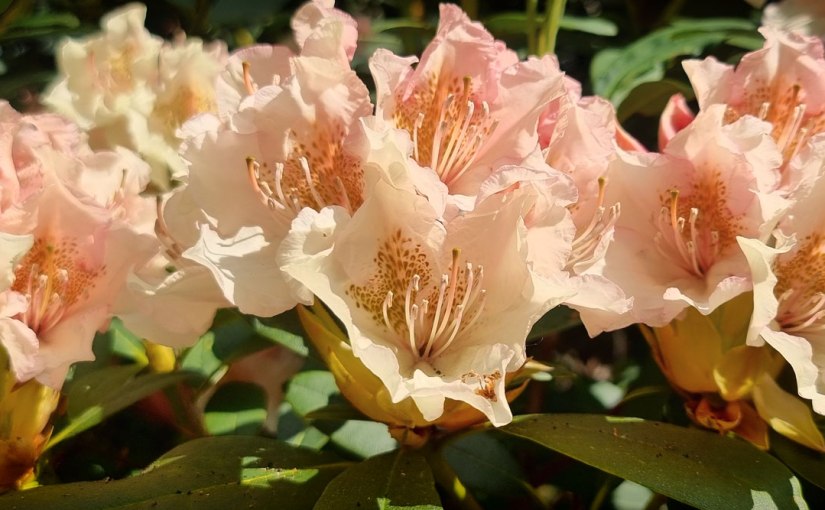
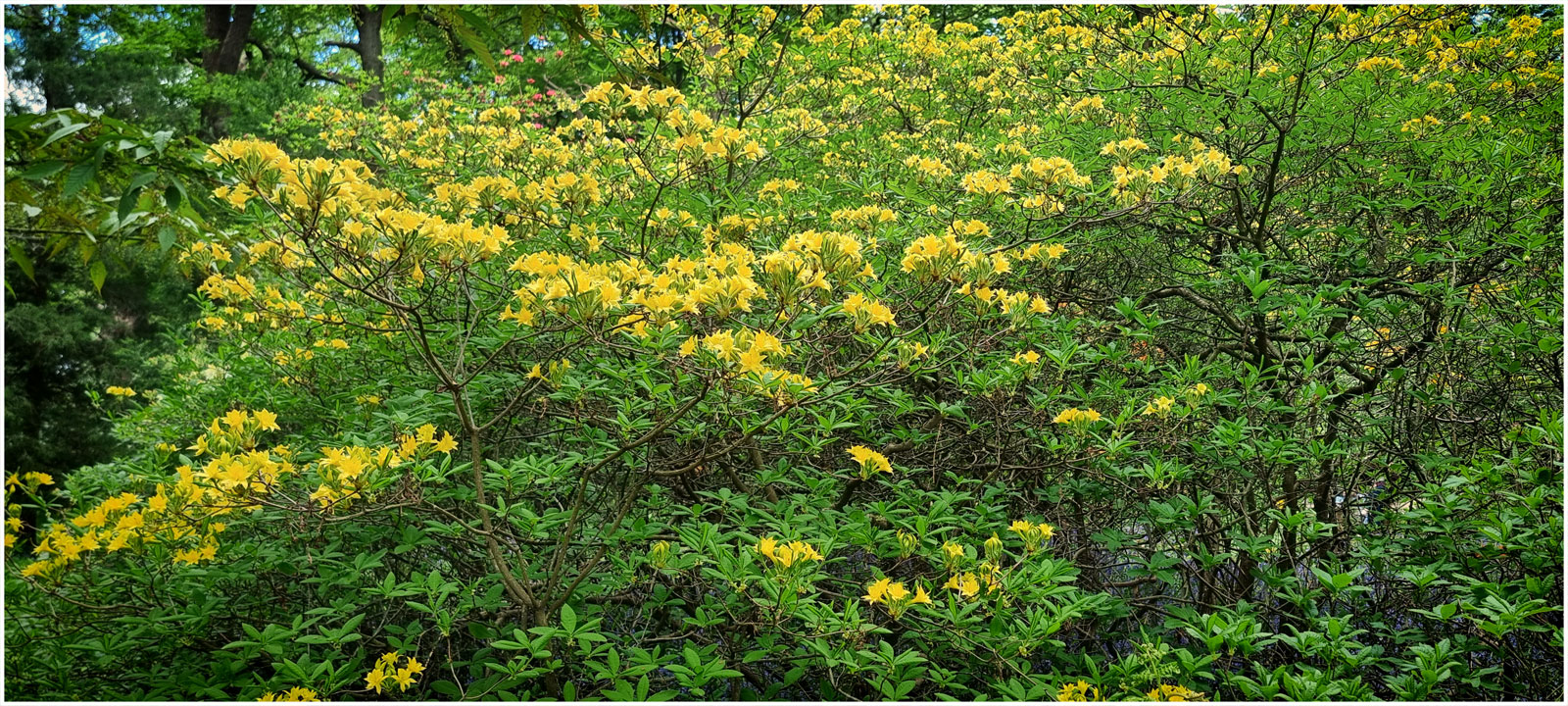
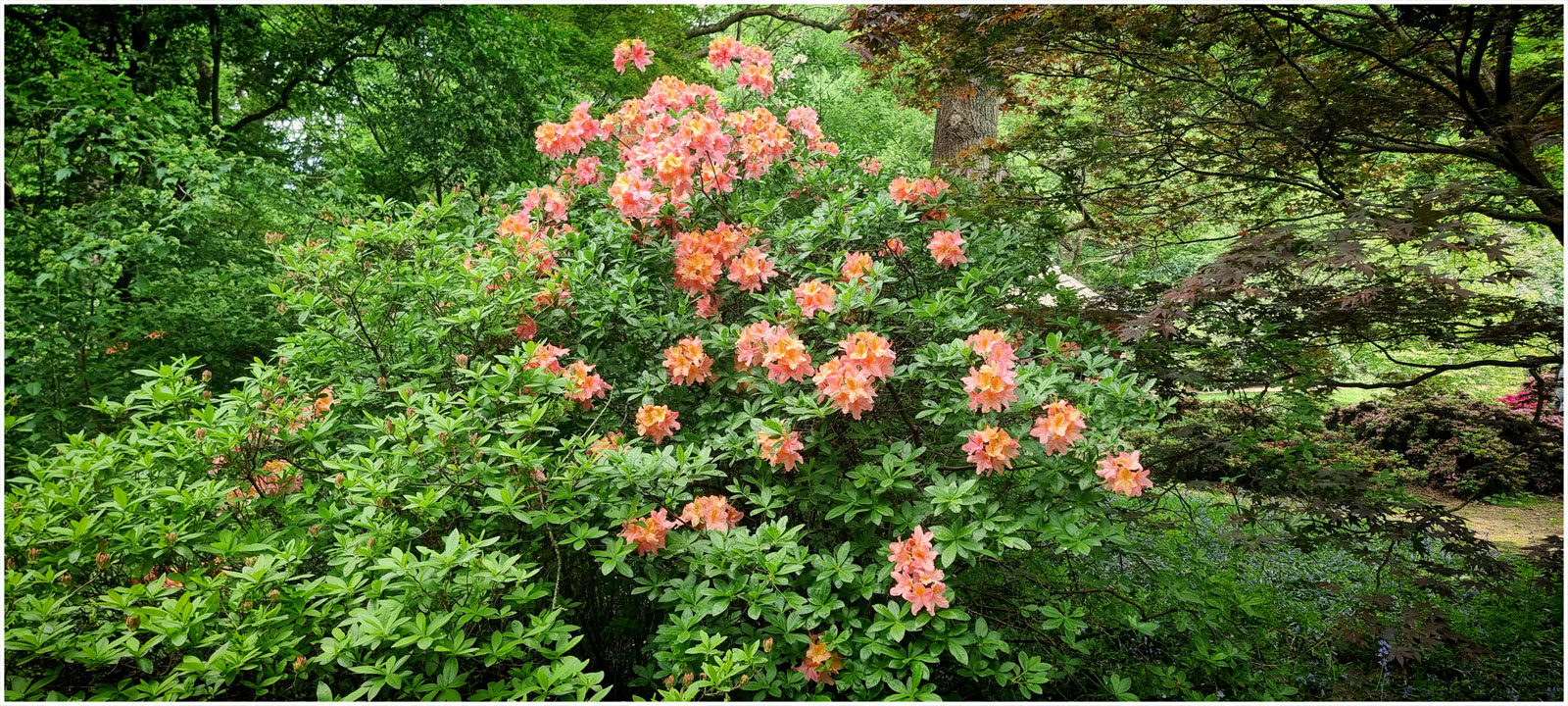
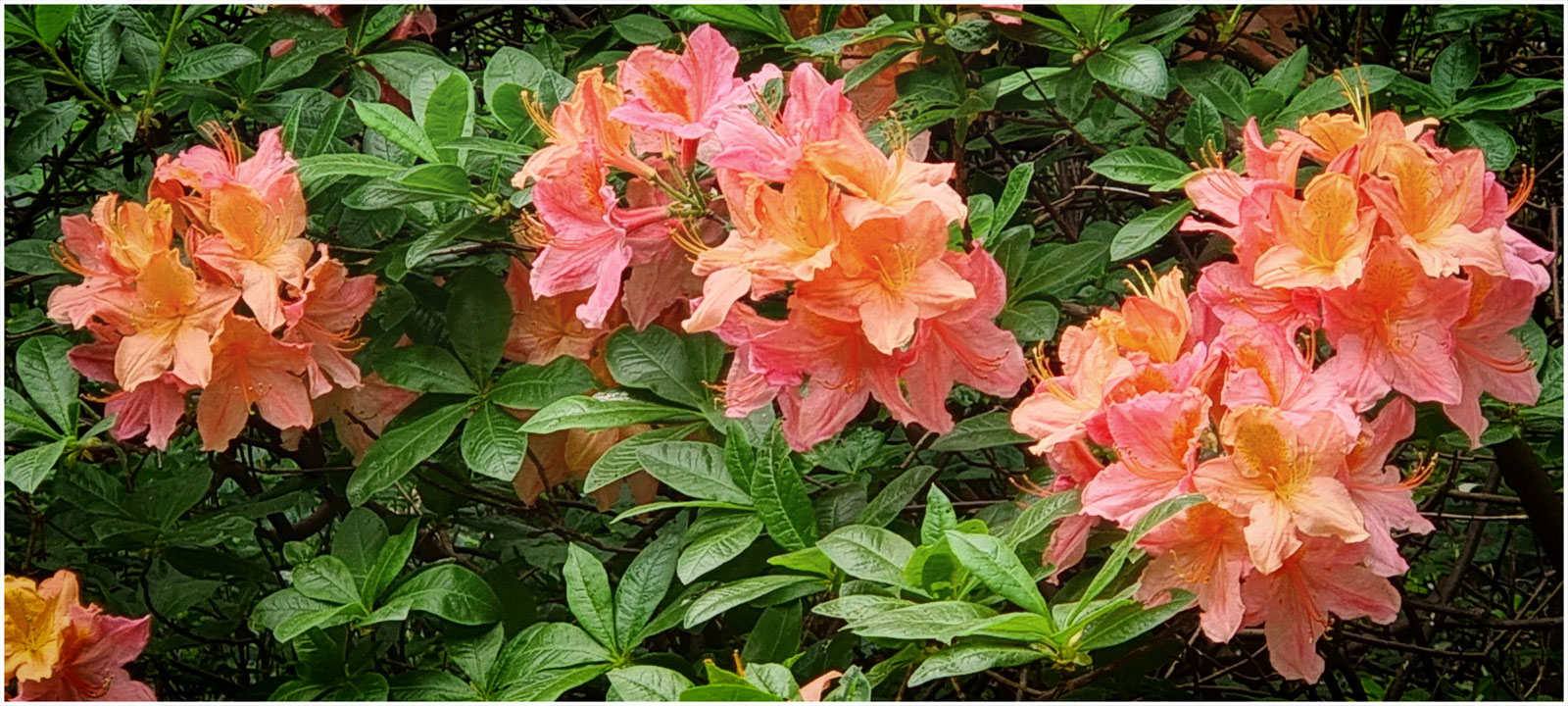
Spring is the time to visit this place. It is a riot of colour with banks of azaleas and rhododendrons. No wonder then it was full of visitors. Here’s a few of the amazing blooms, but I will do another post with more photos.
Of course time was spent with the family, visiting a garden centre and choosing plants for my daughter’s front garden, helping in the garden, sharing meals and best of all talking. I even saw something of the grandchildren this time!
Returning home our overnight stop was in Ilminster which is practically half way. We didn’t arrive until evening and ate at a local brewery chain so we didn’t explore the town and no photos were taken even though the hotel was pretty enough and our room had lovely views over the surrounding countryside. After breakfast we decided to head straight home.
All in all a good trip with pleasant driving conditions and mostly decent weather.
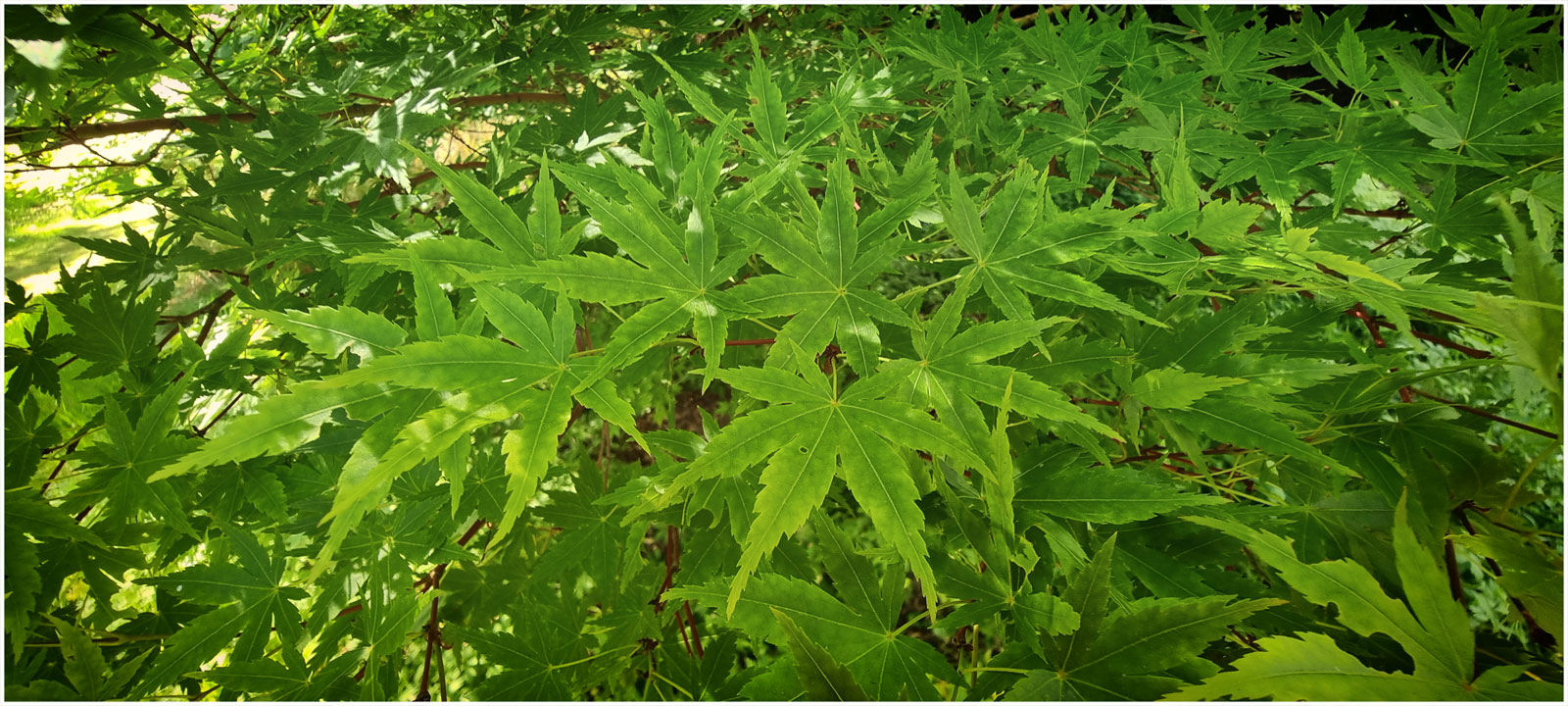
Spring Greens

Lens-Artists Photo Challenge #348 | Serenity
Truro Cathedral: Stained Glass
It was the largest stained glass project ever executed and has some of the finest Victorian stained glass in the country, produced by the leading company of the time: Clayton and Bell. The scheme has three big themes: the Trinity, Biblical stories and the history of the English church. Alongside these are three lesser themes: Cornwall, baptism and St Mary’s aisle.
There is a recommended route, so that the interrelationships between the windows in each part of the Scheme can be explored, but of course I hadn’t realised that. Now that I do it may be a good reason to return to the cathedral and be more observant.
The rose windows
The greatest windows are the three great rose windows which reflect the Trinity;
God the Father/Creator appears in the great West window which is divided into seven sections for the seven days of creation

Jesus, the Son of God, is at the heart of the North transept rose surrounded by the prophets and his antecedents: Jacob, Isaac, Judah and Abraham, leading through to Mary and Joseph.

The Holy Spirit is at the centre of the South window with the twelve apostles around the edge.

The biblical stories
The biblical stories are told in and around the quire. The great east windows tell the story of Christ and his Passion.
The Deposition. The angels at the top hold the Crown of Thorns and the nails with which Jesus was fixed to the Cross


The history of the church
The choices reflect the late Victorian sensibilities and the enthusiasms of the two creators, like, for instance, the execution of King Charles I which I didn’t see. There is a flow to the sequence that does make sense. The theme starts in the South transept through to the retro-quire and quire. This section begins with St Peter receiving the keys from Christ and ends with St Benedict though my photos are rather more random.


In the foreground are eight boys kneeling and looking at Colet. The scene refers to the end of the preface to the Latin grammar that he wrote for the school: “And lift up your little white hands for me, which prayest for you to God … ” There is a picture of the Child Jesus in the background. In the rear at the High Master’s desk is the celebrated scholar William Lily, the first High Master of the school.


Margaret Godolphin, née Blagge, of Godolphin House between Helston and Penzance was a Lady in Waiting to the Queen at the court of Charles . She was a vigorous opponent of the lax moral tone of the court and resigned her position there in protest. She died in and is buried in Breage Church near Helston.


He is dressed in Masonic regalia and holds a maul. He is surrounded by a number of other figures associated with the occasion and the Cathedral, including the Princess of Wales, John Loughborough Pearson (Architect), Prince George and Prince Albert Victor. The background features scaffolding and other evidence of building work.
The other themes
Cornwall’s industry is included in the west nave windows, which feature mining and fishing through images of miners, fishermen, Newlyn harbour and Dolcoath mine.


And finally, there are the windows in St Mary’s aisle, which has some mid-Victorian windows from the original St Mary’s church on traditional biblical subjects, as well as some medieval fragments.


Each light shows a main figure above a related scene, and all are connected by the imagery and symbolism of water. This was, and still is, the baptistry area for the old parish church.
- In the first light, Noah, holding a model of the Ark and a leaf to represent the one the dove brought back to the Ark, is placed above a scene with Noah, his wife and sons supervising the entry of the animals (including giraffe and lion) into the Ark. (I appear to have unfortunately cut this one in half).
- In the second, Moses is shown carrying the two tablets of the Ten Commandments above a scene in which he leads the Israelites across the Red Sea.
- St John the Baptist, holding in his left hand a staff to which is attached a banner on which is written Ecce agnus Dei (Behold the lamb of God) above the scene of the Baptism of Christ.
- St Peter holding his keys and a clasped book above a scene of his baptism of Cornelius.
- Finally, St Philip holding a scallop shell is shown above a scene of his baptism of the Ethiopian eunuch, whose chariot and horse are in the background.
The six south wall windows are all by William Warrington. They are typical examples of his use of bold primary colours, strong leading, dramatic design, and heavy painted shading.

It’s obvious that I need to return!