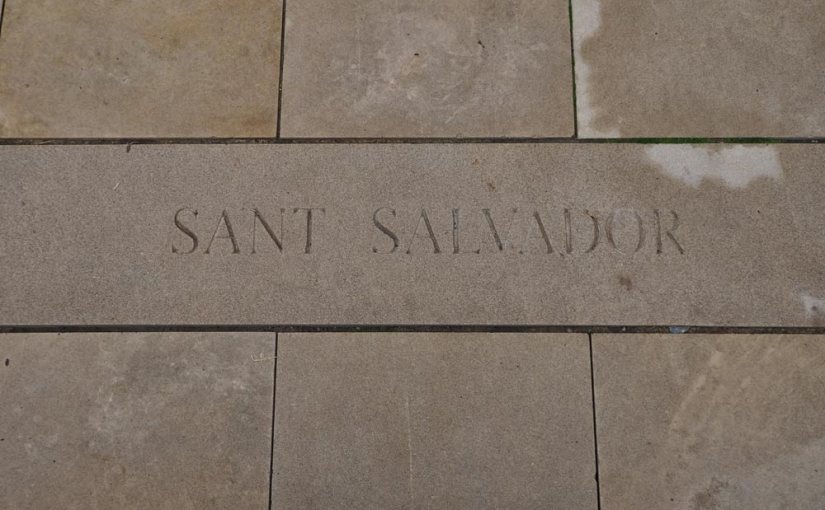
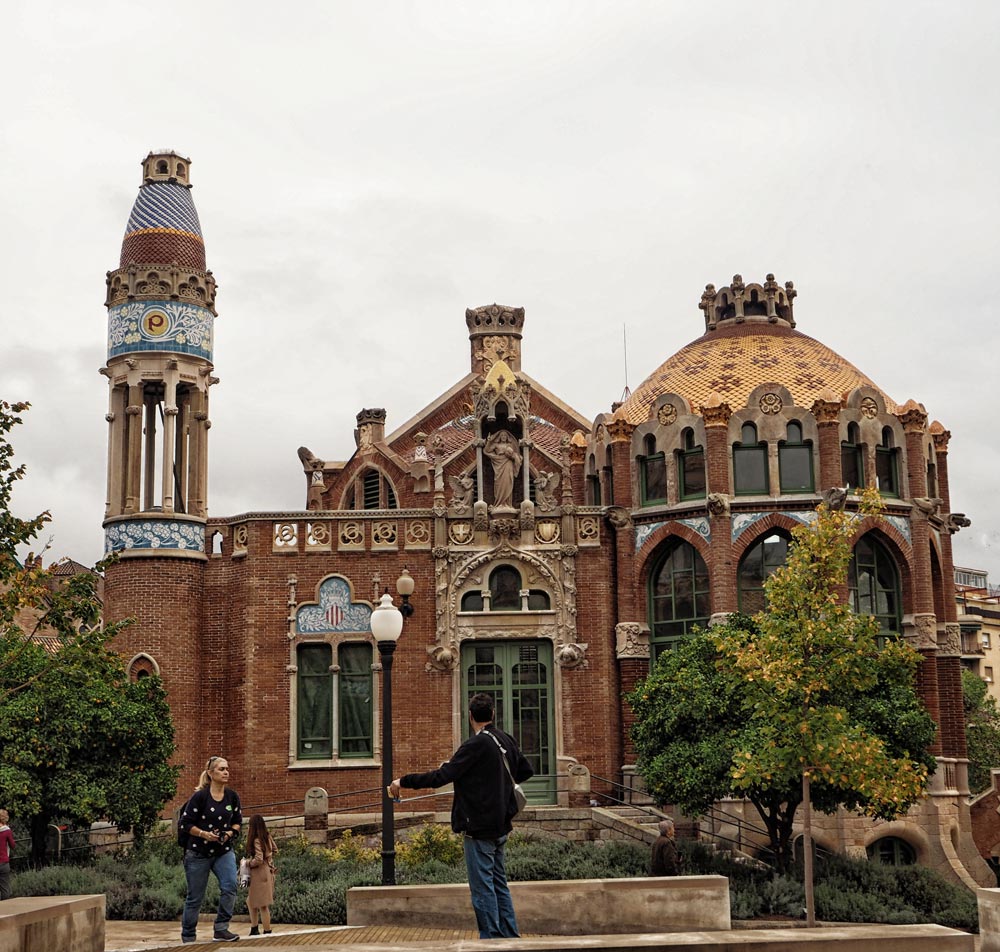
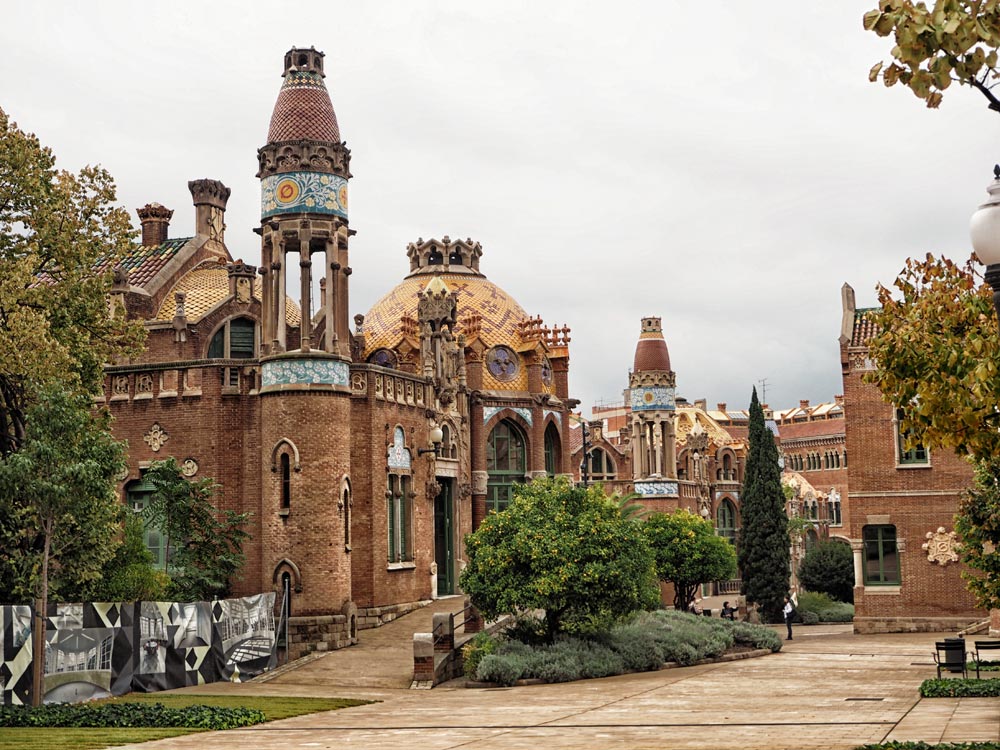
Sant Salvador was the first pavilion to enter service in 1916. Built between 1905 – 1912 it was used as the Female Medical ward. Later uses were General Surgery, Ophthalmology and subsequently an intensive care and semi-critical unit.
The materials for the pavilions were the most durable including red brick; stone, used for all the decorative architectural details as well as reliefs and sculptures; ceramics used to clad domes, roofs and decorative panels both inside and outside; ceramic mosaic; wood; marble; glass; metal and iron.
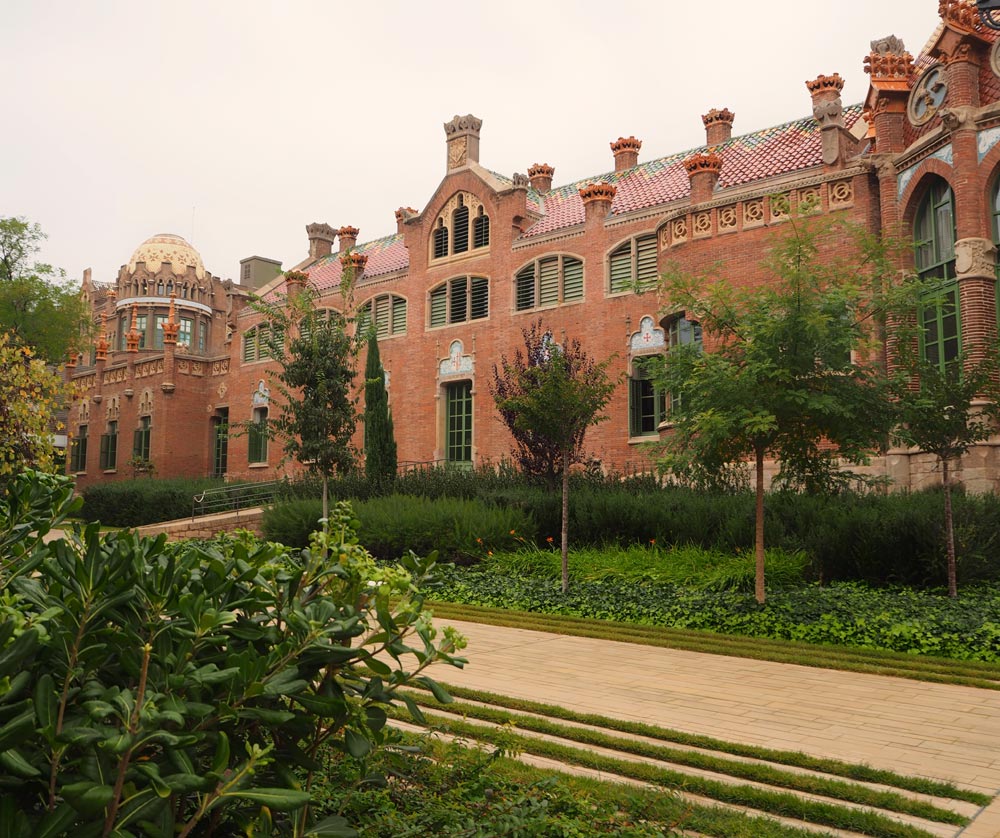
All the buildings are red brick. The gable roofs covered in semi-cylindrical Spanish monochrome clay tiles in a variety of colours which have been placed to create a pattern or section. Each pavilion has a different patterned roof.
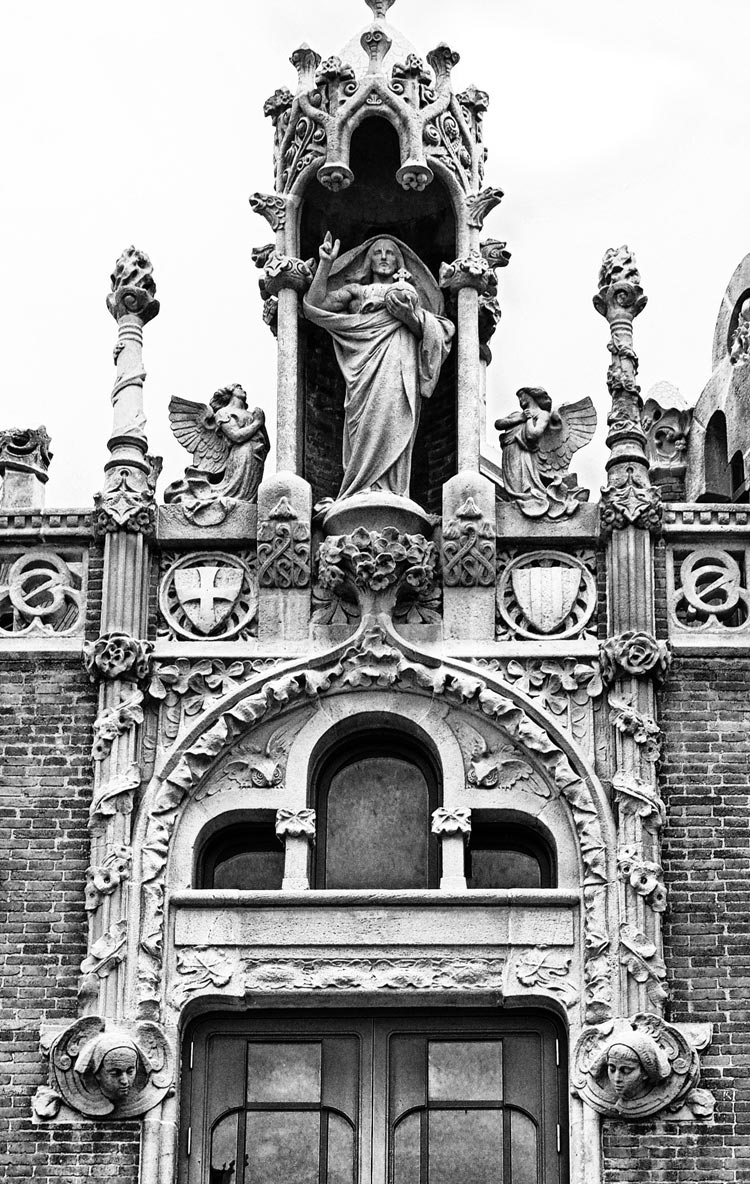
Saint Salvador and Angel Guardians
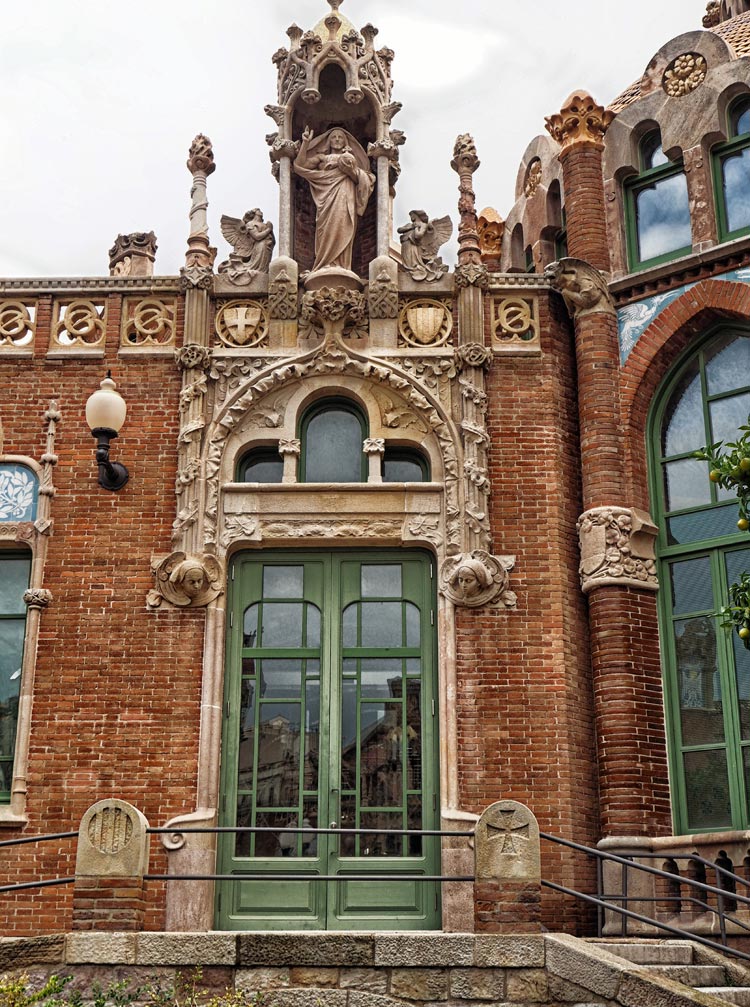
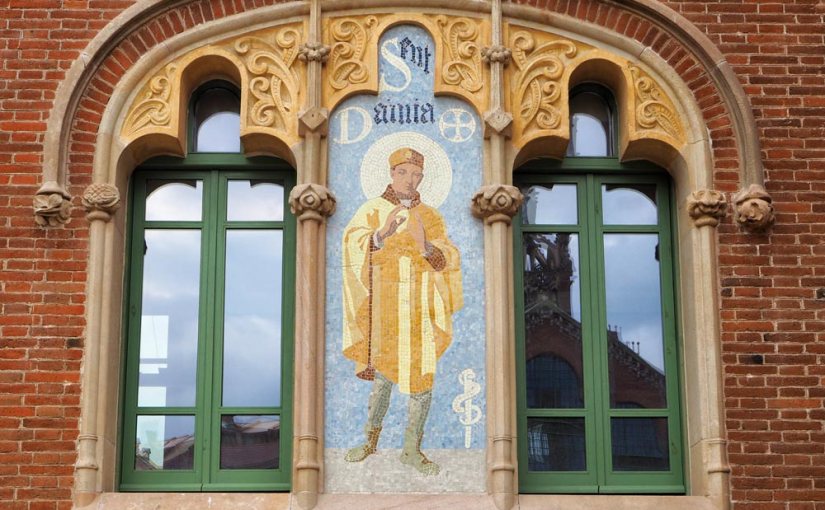
Individual pavilions were given the name of their own patron saint, who presides over their respective entrance. Those on the right were reserved for men and those on the left for women and the corresponding saints were male or female. (Though this pavilion is on the right and has a male saint it appears to have been used initially for female patients.)
Source: All the information in these Sant Pau posts is taken from the admission booklet.
How to get there: Metro: L5 Sant Pau / Dos de Maig or L2 to Sagrada Familia and walk up Avenue de Gaudi Bus: H8, 19, 20, 45, 47, 50, 51, 92, 117, 192
This breathtaking site is full of wonderful mosaics, colours, sculptures, windows, artistic design and architectural details from the modernist era.
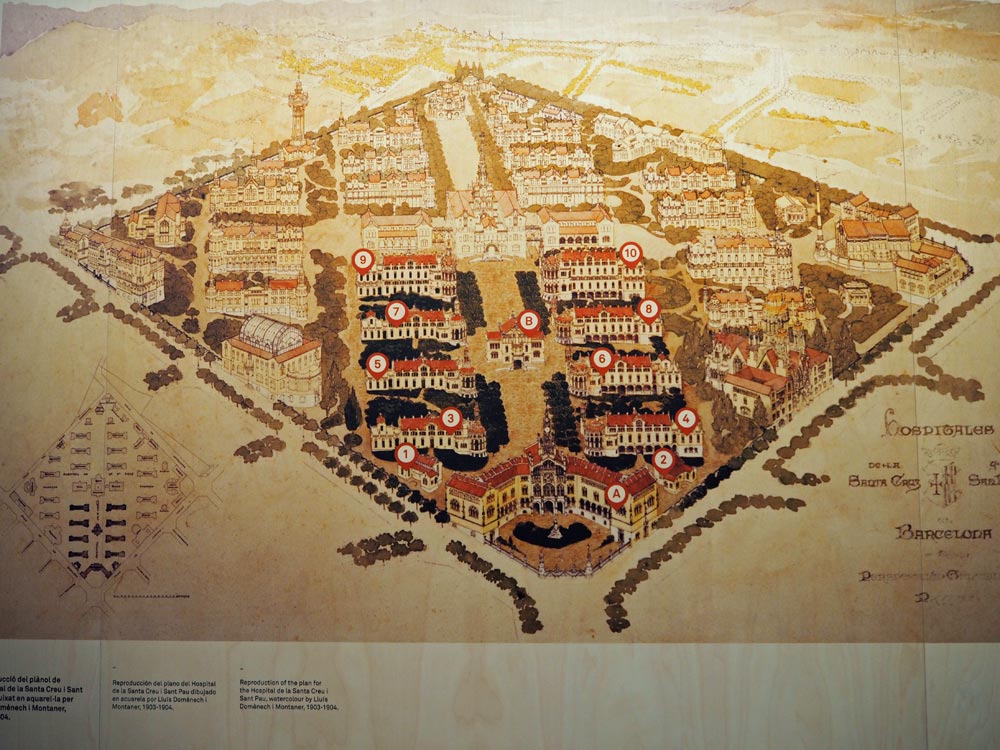
First I will show you the map of the site again so you can see where the pavilions are situated and then we’ll take a stroll around the site.
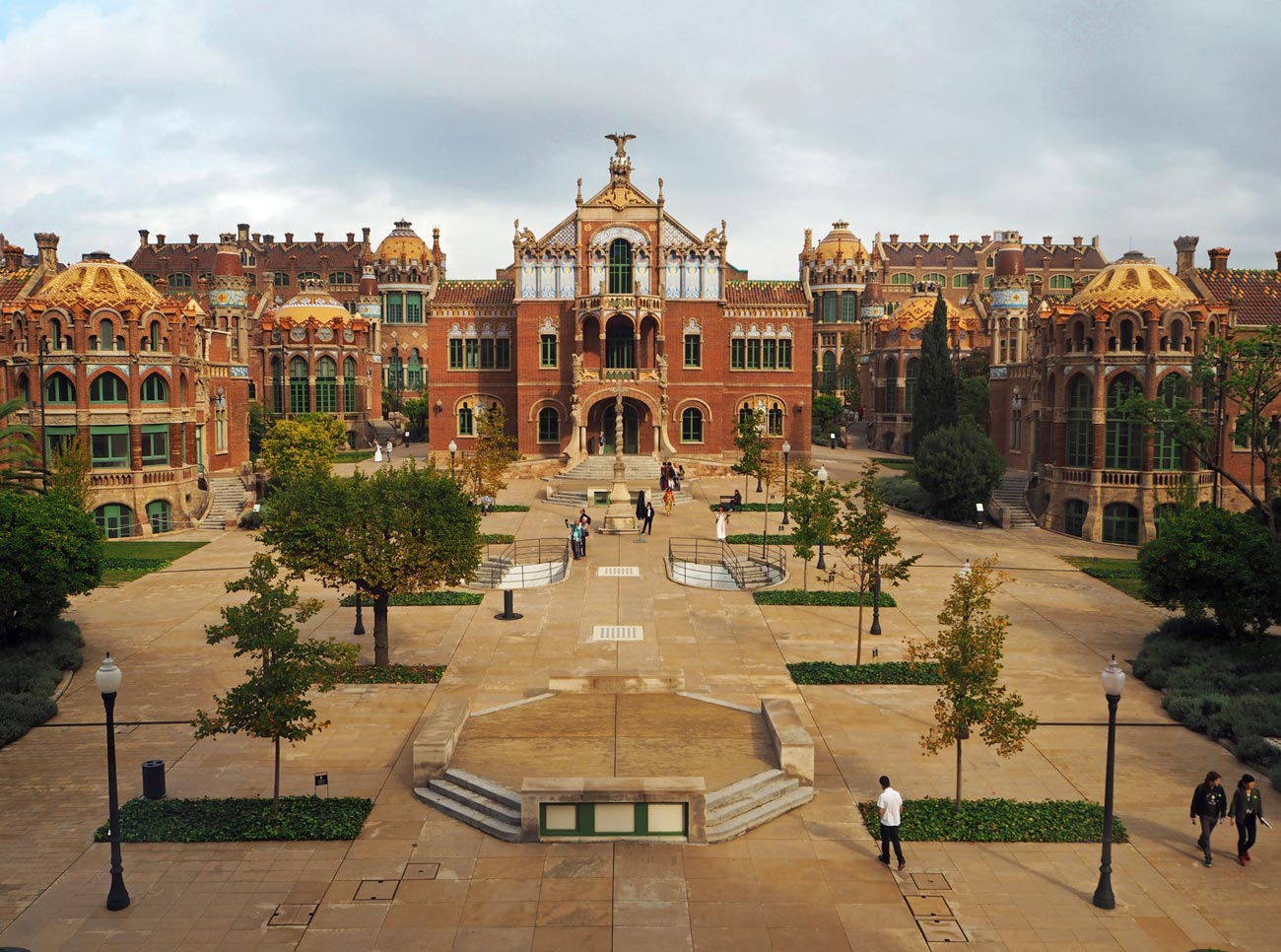
View from the Administration Pavilion (Building A on the map) looking at the Operations building (B) in the centre
After going through the entrance gate with our pre-booked tickets we found ourselves following the underground tunnel which brought us out just in front of the Casa D’Operacions (Sant Cosme and Sant Damia). For what felt like an eternity both my daughter and I were stunned into silence as we gazed around us. From the front we were already in awe of the craftsmanship we had seen, but we didn’t expect such beauty to continue so meticulously.
The grounds are so well laid out with lots of lovely planting of citrus trees, lavender, horse chestnut trees, lindens and deciduous trees all providing shade in the summer and warmth in the winter. Few of the original trees remain except for a couple of date palms. Bay, rosemary and lemon verbena and other medicinal plants grow in the parterres. The gardens were created to provide a pleasant space that would alleviate pain and suffering of the patients and their families. The plants helped to purify the air, fight bacteria, dust and toxic gases and shelter the exposed area from the weather. An idea hospitals of today would do well to replicate.
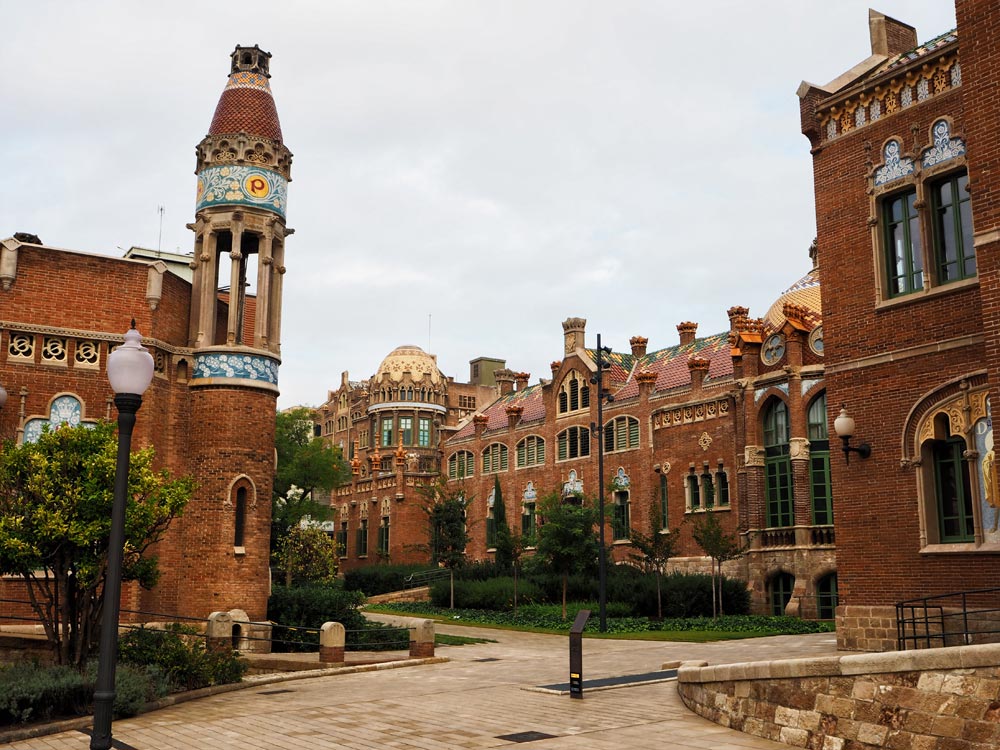
It was hard to know where to look. The symmetry of each building, the mosaic patterns on the roofs and domes, the elaborately decorated water turrets, the sculptures, the window shapes and the art nouveau style…
You can enter the operations building, but there is not much inside and the only other one that you can enter is Sant Rafael which shows how it was used as a ward. There is much to see externally though and each pavilion although built in the same style and using the same materials with the purpose of creating pleasant and natural surroundings for the patients have their differences.
Of the twelve main pavilions six have been finished and two are currently undergoing restoration. You can see how beautifully the work has been carried out when you see parts of the site still requiring refurbishment.
Next post we will visit the individual pavilions to take a look at the materials used and the differences which make them unique.
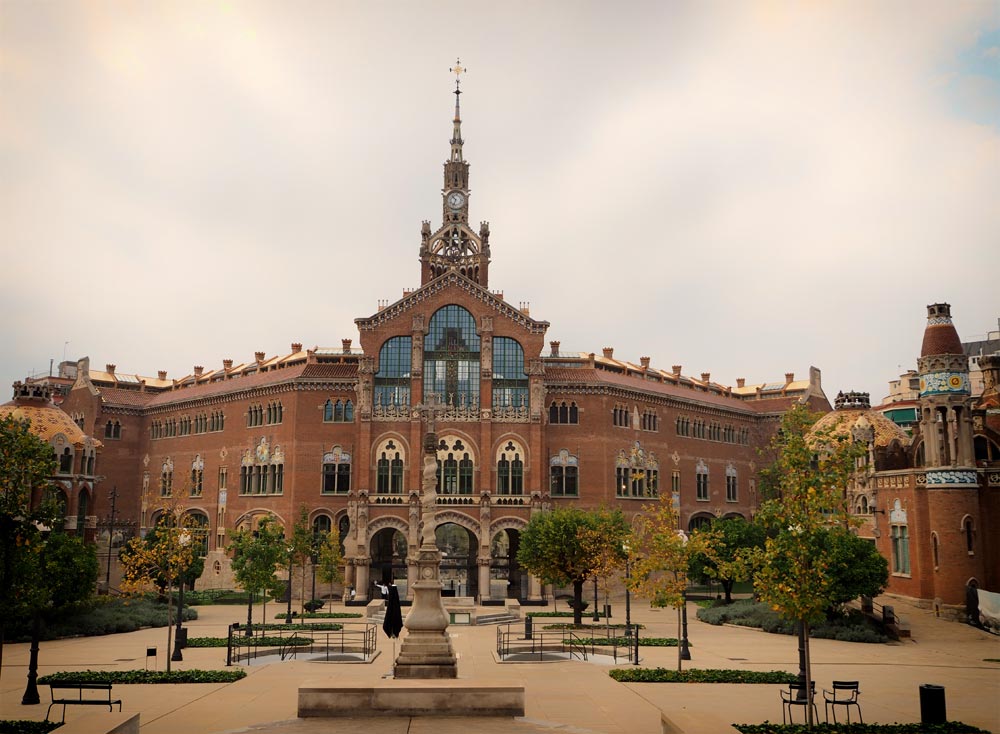
View of the Administration Pavilion (A) from the Operations building (B)
(In all of these posts I advise you to click on the photos to enlarge them as only then will you appreciate the incredible artistic detail. )
Source: All the information in these Sant Pau posts is taken from the admission booklet.
How to get there: Metro: L5 Sant Pau / Dos de Maig or L2 to Sagrada Familia and walk up Avenue de Gaudi Bus: H8, 19, 20, 45, 47, 50, 51, 92, 117, 192
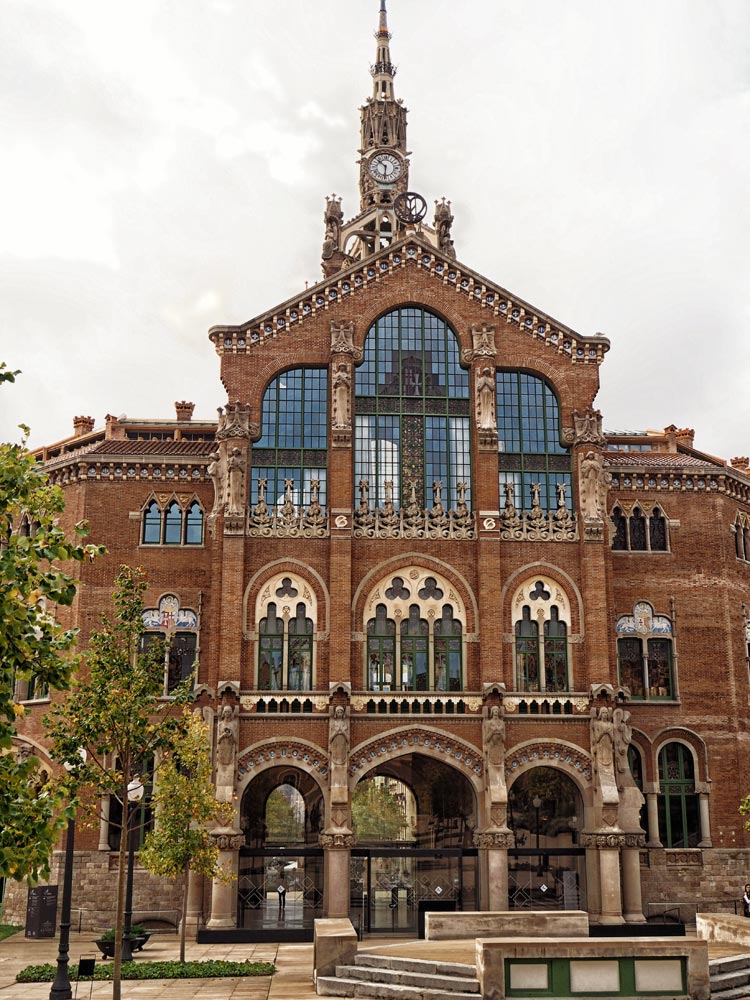
It was my friend Jo who pointed out this place in Barcelona. When she visited the site was still undergoing renovation, but knowing how much I love Art Nouveau she prompted me to seek it out during my visit to the city last October. So I did. And I loved it. So much so that I am going to have to break a post about the site into several parts as there is so much to share. To begin with we will take a look at the entrance to the site. The Administration Pavilion.
The entrance to the site is at the end of Avenue de Gaudi and at the other end the Sagrada Familia is situated. It was designed as a monumental altarpiece with one central and two lateral components in the form of a great ‘supreme being’ who welcomes with open arms, those who visit the site.
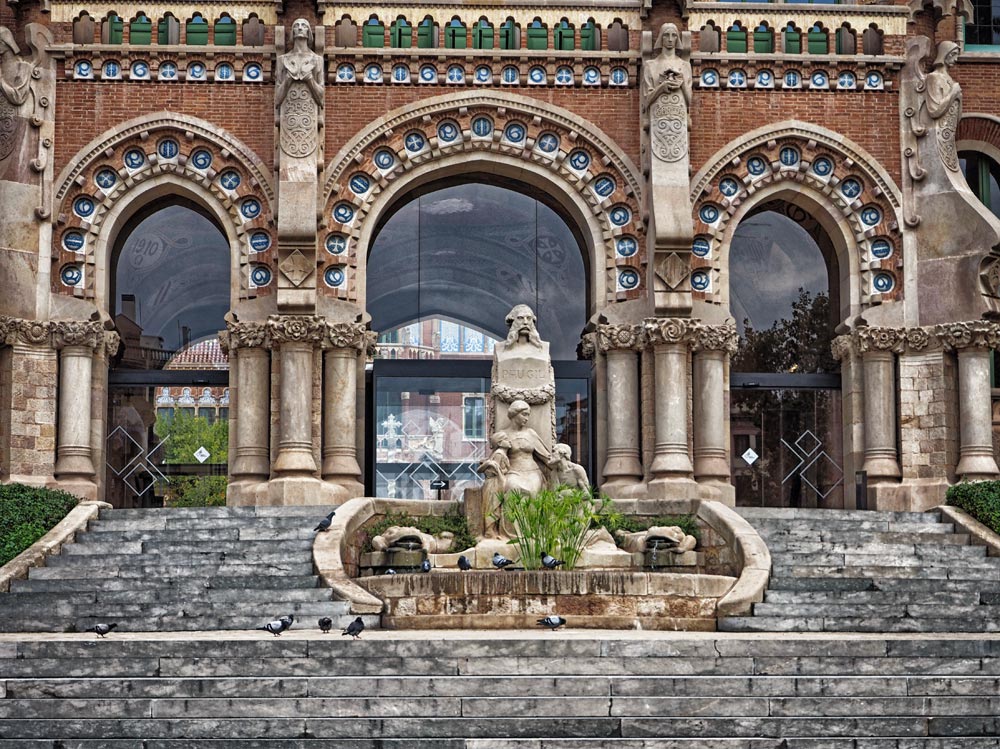
The origins of the Hospital de la Santa Creu i Sant Paul date back to 1401 when six Barcelona hospitals were merged. In 1902 work began on a new hospital to serve the growing needs of the city and the architect Lluis Domenech i Montaner was commissioned to build the new hospital which opened in 1930. It was funded by a legacy from banker Pau Gil whose statue adorns the front staircase.
Pau Gil (the banker who funded the building)
Designs by Francesc Labarta and mosaics by Marius Maragliano run around the facade.
Murals
Murals
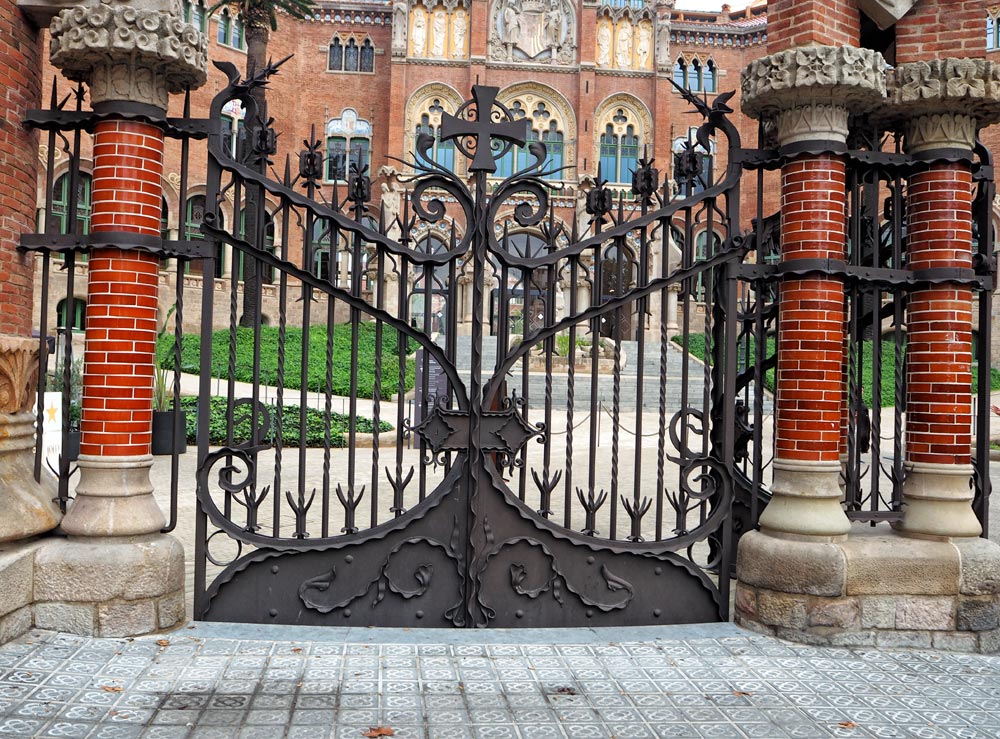
Entrance
It is a masterpiece of Catalan Modernism and a city within a city, with separate pavilions for the different medical specialities and landscaped gardens. Twenty-seven pavilions were built, sixteen of which are modernist. The buildings are linked by underground tunnels.
The pavilions are arranged along two main north/south and east/west axis 500m x 50m wide and adjacent streets 300m x 30m wide. The buildings are symmetrical which may be one reason that I find them appealing. And to visually even out their heights some are one storey and others two storeys above a basement.
From within the site you can see that the rear of the Administration Pavilion is as charming as the front. It was built between 1905 and 1910 and is the most ornate (wait until you see the interior), and was designed to be the main entrance as well as administration and hospital admission offices.
Entrance
Floral capitals
The rear view
Mosaics
The Art Nouveau site was officially opened at the end of February 2014 after four years of refurbishment work. Of the twelve pavilions, six have been finished and two are ongoing. The completed pavilions will be used as functional work spaces.
I hope this has whetted your appetite as next time we are going to have a look inside the site.
Source: All the information in these Sant Pau posts is taken from the admission booklet.
How to get there: Metro: L5 Sant Pau / Dos de Maig or L2 to Sagrada Familia and walk up Avenue de Gaudi Bus: H8, 19, 20, 45, 47, 50, 51, 92, 117, 192
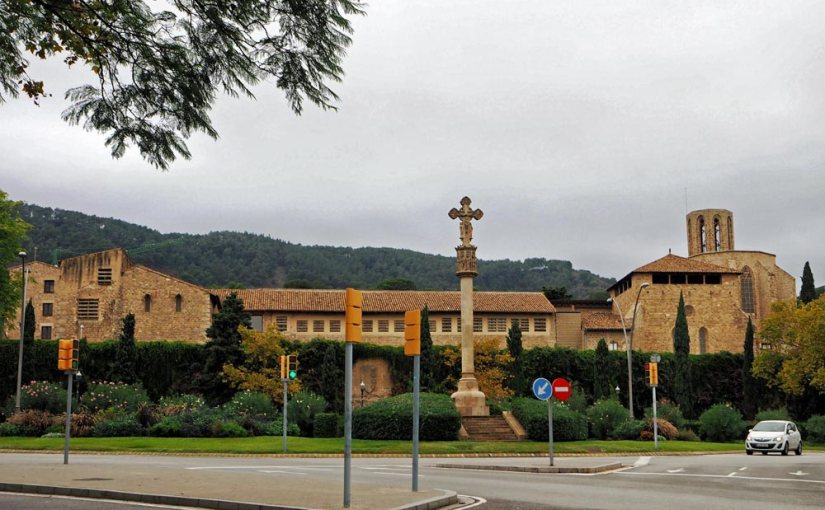
On a rather damp and grey day in Barcelona my daughter and I decided to take the Tourist Bus and see the city at leisure. One place we wanted to stop off at and have a look was the Monastery or Reial Monestir de Santa Maria de Pedralbes in the north-west of the city. Due to road closures we had to disembark at the Palau Reial-Pavellons Guell and walk up the Avenue Pedralbes to the monastery. No great hardship.
The Royal Monastery of St Mary of Pedralbes, founded by Queen Elisenda de Montcada in 1327, stands as a unique historical and cultural testament to the Poor Clare community who lived there continuously from 1327 until just recently.
The different rooms are grouped around the three-storey Gothic cloister. They include St Michael’s Chapel, the dormitory, refectory, kitchen, infirmary, storerooms, abbey room and chapter house, plus various day cells.
Capitals supporting the pointed arches are decorated with highly stylized leaves
The chapel of St Michael is decorated with a magnificent series of murals, which according to two contracts dating from 1343 and 1346 were a commission given to the painter Ferrer Bassa by the Abbess Francesa ça Portella, who wanted to make the room her private cell. They have recently been re-opened to the public after a ten year period of restoration.
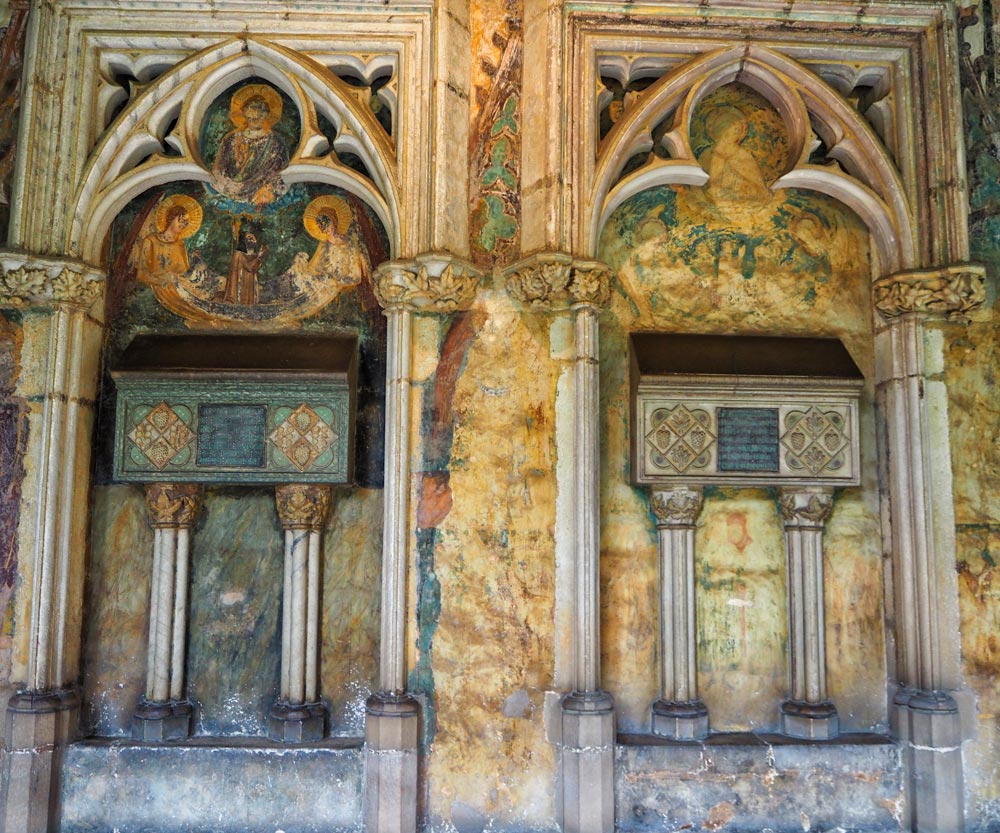
The Sepulchre of Queen Elisenda de Montcada (c. 1292-1364), consists of a marble, two-sided tomb occupying two storeys of the cloister within an arcosolium (an arched recess used as a place of entombment).
Also in the cloister, next to the sepulchre of Queen Elisenda, there are three sepulchres of three Catalan noblewomen.
By the queen’s feet and head there are two kneeling thurifer angels, burning incense.
The sepulchre is supported by three golden lions
The medicinal garden of the cloister is a representation of how the medieval herb garden would have looked. Considered the world’s largest Gothic cloister, it has two galleries with twenty-six columns on each side made of nummulitic stone – limestone containing fossil remains – from Girona, and a third upper gallery added later.
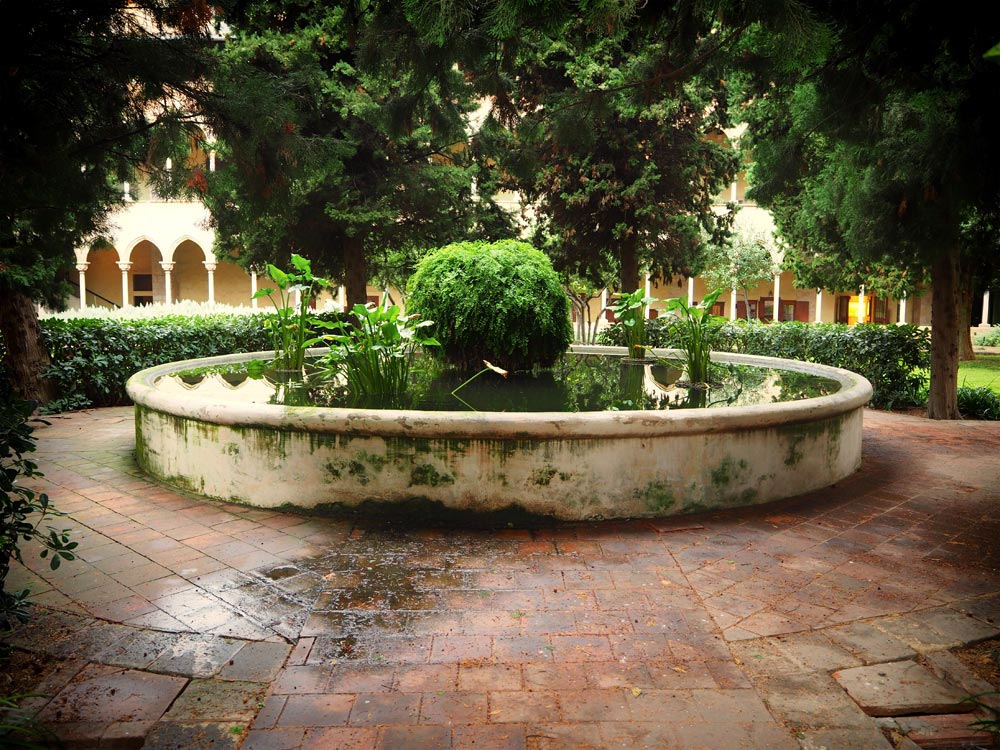
The Angel fountain
The Angel fountain
The well
The exhibition “The Monastery of Pedralbes – The Monastery Treasures” is located in the old dormitory. I will show some of the exhibits in a separate post as they are quite unique.
There is so much to see including the abbey room and the refectory, that we could have stayed much longer. I would recommend that you make time to visit this wonderful place if you are in Barcelona. There is much more to the city than Gaudí .
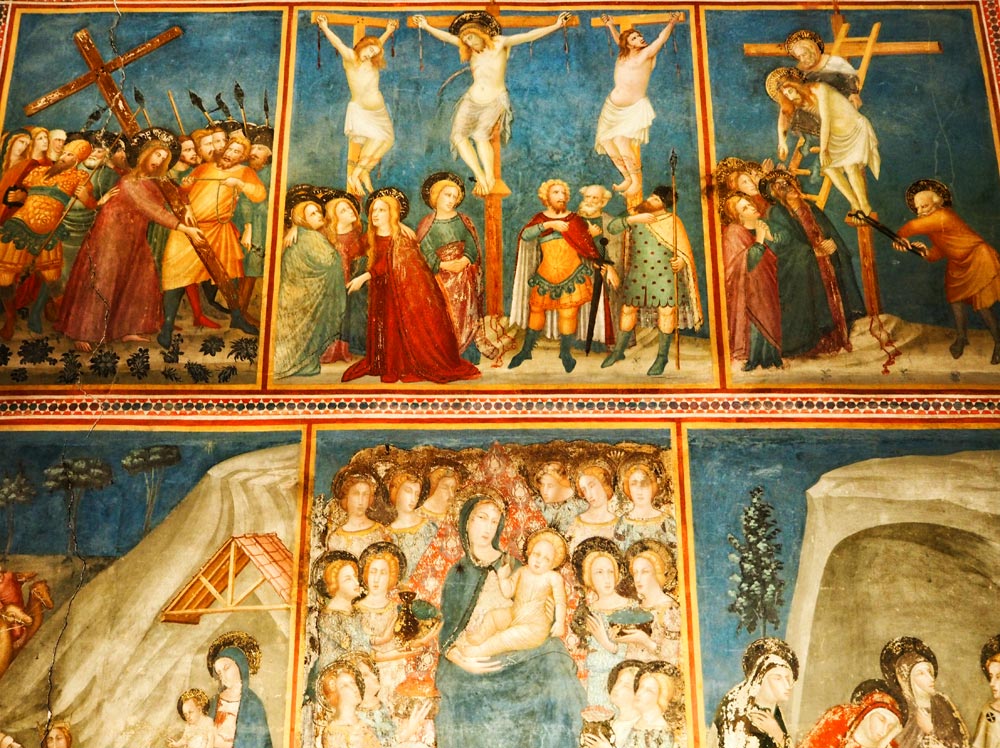
Crucifixion in the Abbey room
Painting depicting draperies in the Abbey room
Tiled unit in the refectory
It is easy to reach by public transport, buses H4, 63 and 78, as well as the Blue Tourist Bus.
The Monastery of Pedralbes site gives you a lot more information about the monastery and Queen Elisenda de Montcada.
After two lovely sunny days in Lincoln we were ready to carry on northwards. Instead of heading for the A1 immediately we decided to drive through the Lincolnshire countryside via Gainsborough and Bawtry and get onto the A1 near Doncaster. A lot of this region is familiar to me as I grew up in Retford (Notts), Scunthorpe (Lincs) and then moved to Doncaster (S. Yorks) on my return from South Africa. I still managed to get confused on the outskirts of Doncaster though as many of the road routes have altered since I was last there. And then we hit an accident on the A1 and were at a standstill for about an hour!
Eventually though we were about to hit Durham, another city that although I have passed by many times I have never actually visited. My intention was to find the park ‘n ride and bus into the city, but obviously my directional awareness was totally absent on this day as I couldn’t find the site and finished up almost in the city centre where more roadworks were taking place. Heading back out of the city we eventually found the right road (it is next to the A1 but not very well signed) and caught a bus back into the city. It was a very hot day and by the time we had walked up to the castle and cathedral area we were feeling very warm!
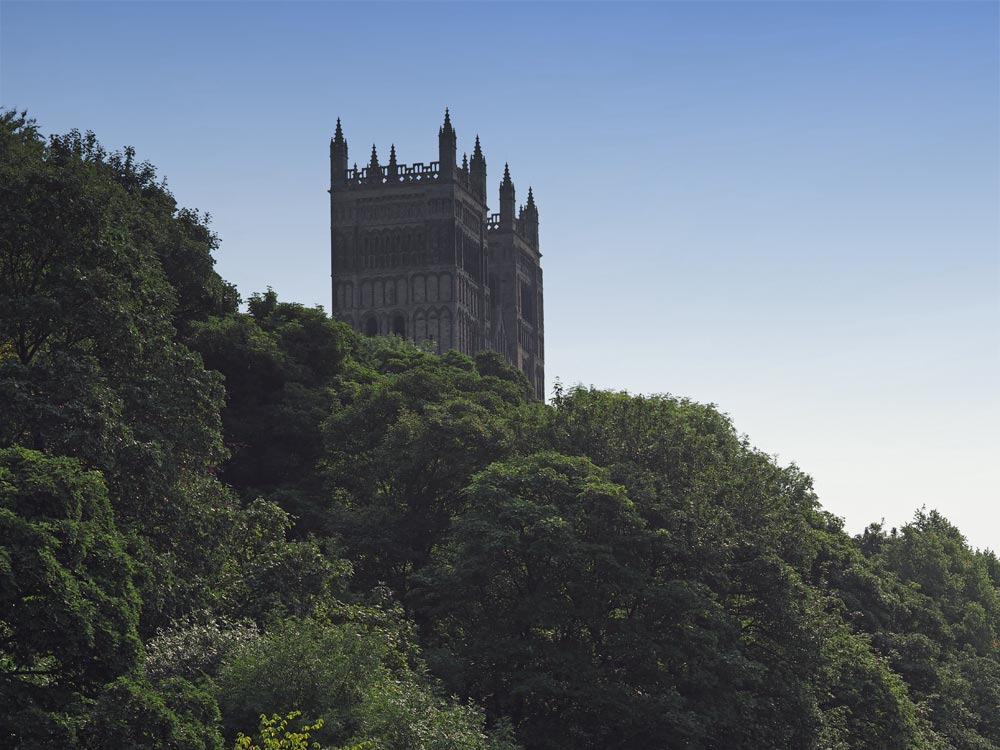
Cathedral view from the river
First stop was to get some lunch and relax! We saw a nice looking café on the Palace Green and found a table outside. After 10 minutes we moved inside to get out of the heat. Now bear in mind this was mid-September in the north-east of the country!
Durham Castle – opposite the cathedral
Lunch menu
Autumn gold
Cosin’s Hall
Spires
The story of the Dun Cow, as depicted in an eighteenth-century panel on the north facade of Durham Cathedral.
The Pemberton Building
You are not charged to enter the cathedral, though a donation is suggested, and you are not allowed to take photographs inside either, which was rather disappointing. I did see a few people surreptitiously taking a few shots with their phones and a couple who had cameras were approached, rather more gently than my Lincoln experience.
I did make a few notes and sketches though: Prior Castell’s clock – a highly decorative wooden clock; the shrine of St Cuthbert; huge pillars carved in a diamond or chevron pattern in the nave; coloured marble floors and a lectern stand with pink and green marble pillars and heraldic lions at the base. Inserts of patterned marble and bands adorn the upper columns. Shrines with traces of the medieval paint in red and blue… Lindisfarne Gospels
Cloisters – the windows would once have contained clear and stained glass
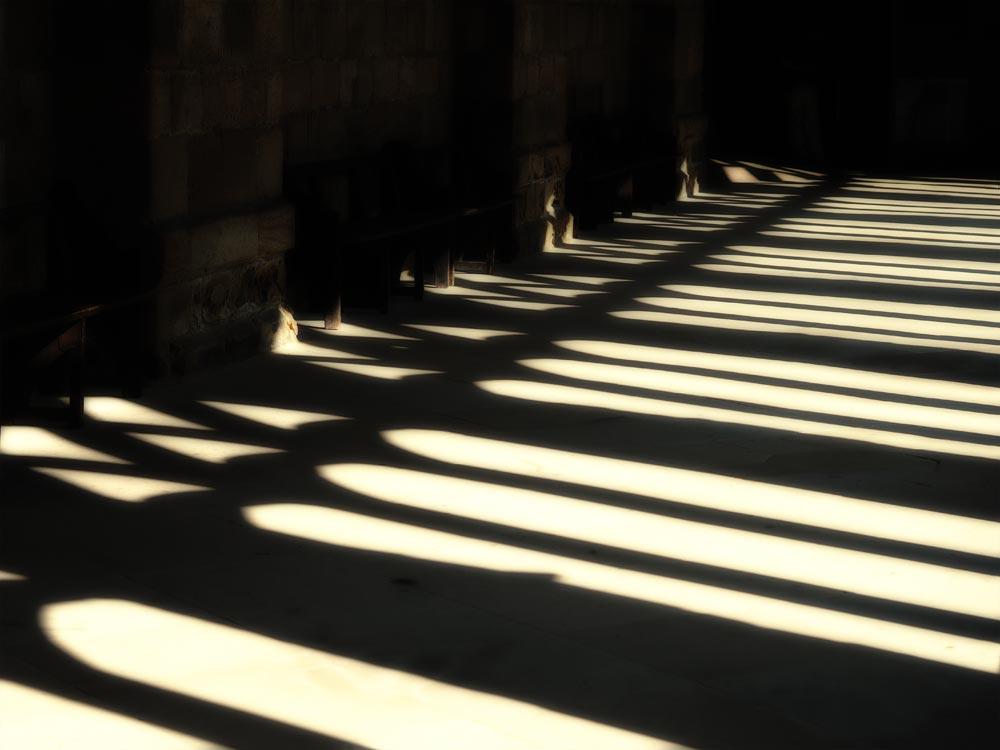
On entering the cloisters, where the monks would have once passed daily on their way to the Chapter House, the Monk’s Dormitory, Scriptorium, Refectory and Great Kitchen, I decided the photography rules no longer applied. The shadows on the stone slabs were far too tempting and how could I resist the flat wooden ceiling with shields at the intersections of each cross beam and the golden angels near the Chapter House.
More notes: Arched shadows form on the wide stone floor as the hot sun beams down on the cloisters. Wooden pews line the walls and marks in the stonework indicate that possibly a recess has been blocked up. Maybe where the monks stored their books? A pipistrelle bat flies down the passageways and surprises me – I have never seen one at this time of day before. Maybe the darkness in here confuses it into thinking it is dusk. Dust motes float in the air and I can almost imagine the slapping of the sandals of the monks from distant times in the all-pervading silence.
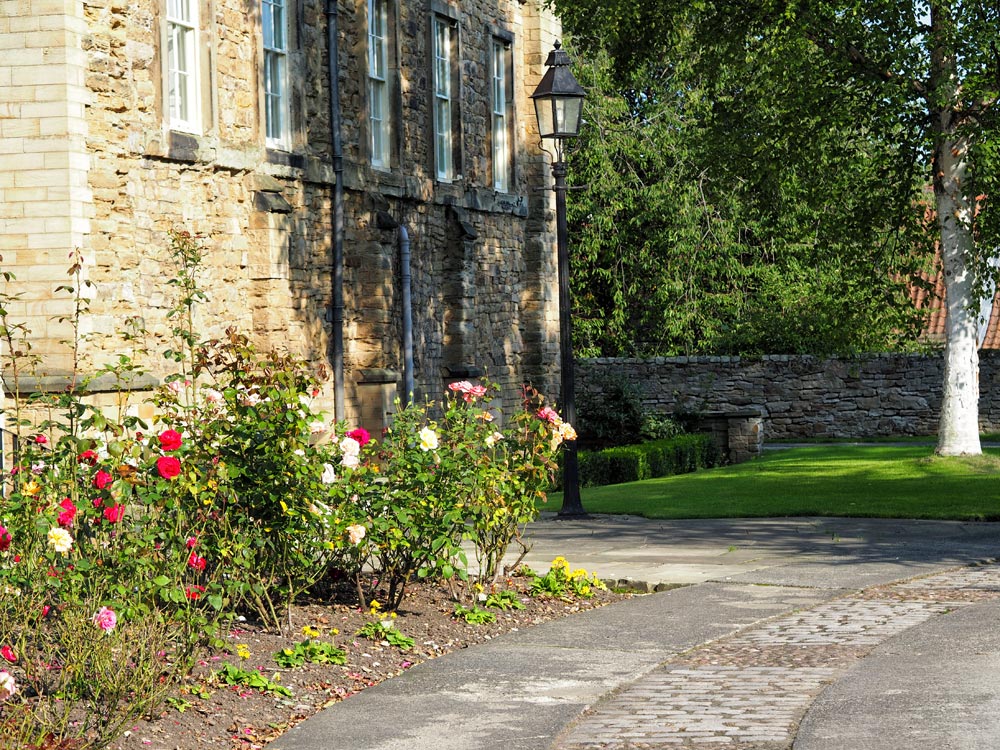
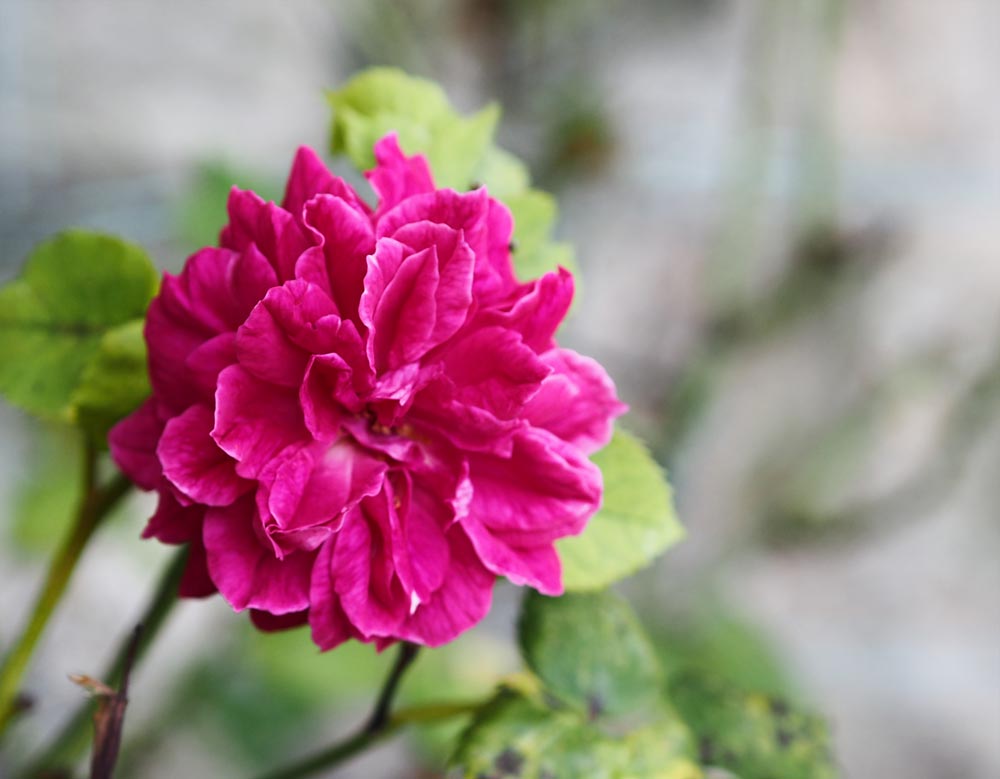
We exited the cloisters into a Memorial Garden which stands on the site of the Monastic buildings. A young lad sat peacefully on the bench studying his text book in the sunshine whilst we soaked in the colour and the beauty of the roses still flowering in September.
The Ypres Rose
Brought back from Ypres in 1917 by Lieutenant H J W Scott 5th BN:DLI. Since then it has travelled with the Scott family from Essex to Surrey and to Cornwall. Presented to this garden of remembrance by his son Mr O T Scott. Planted on Remembrance Sunday 1978.
College Green is a quiet area on the south side of the cathedral, it has a very beautiful secluded village like quality to it, with the houses being the home to members of Durham’s Dean and Chapter. Many of the buildings surrounding the Green originated in the Middle Ages.
An arched gateway on the east side known historically as the Abbey Gates also called Prior Castell’s Gatehouse of 1495-1519 leads into the street called the Bailey. The gate is still locked each night. It has some delightful carvings on the ceiling.
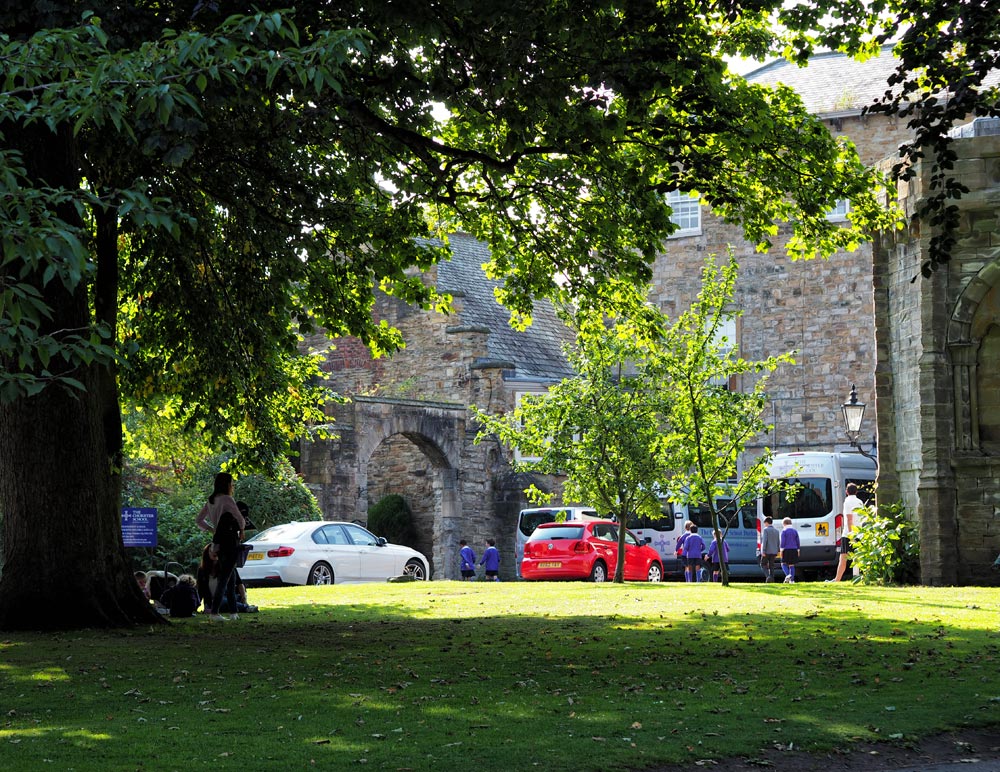
The south western corner of the College is the home to the Durham Chorister School. This was originally established as a song school around 1390. Former pupils of this school have included the former Prime Minister Tony Blair and the actor, Rowan Atkinson most noted for his role in the BBC comedy Blackadder and as the comedy character Mr Bean.
The Abbey House
As usual, colourful doors and interesting windows caught my eye as we made our way back to the Palace Green where we could catch the cathedral bus back to the Park ‘n Ride stop.
For some inexplicable reason I failed to get a shot of the full west face of the cathedral (I have a vague recollection that there was scaffolding around some of it). To see some images of the cathedral then please visit this site.
These memorial crosses near the cathedral did manage to catch my eye. I was particularly drawn to the rather arts and crafts style of carving on the larger cross.
IF YOU ENJOY A WALK, LONG OR SHORT, THEN HAVE A LOOK AT JO’S SITE WHERE YOU ARE WELCOME TO JOIN IN WITH HER MONDAY WALKS.



























 TRAVEL WORDS