Lincoln Cathedral: Interior

“I have always held and proposed against all comers to maintain that the Cathedral of Lincoln is out and out the most precious piece of architecture in the British Isles” – John Ruskin.

After circumnavigating the cathedral at least twice by day and night, it was time to venture inside. Unlike Norwich it is not free to enter, but you can buy a combination ticket with the castle and the admission includes a floor tour. Originally built by the Normans after the defeat in 1066, Lincoln cathedral was consecrated in 1092. The diocese stretched from the Humber in the north to the Thames in the south, and after an earthquake in 1185 only the west front remains from the Norman period.

Inside, it is filled with light from the many stained-glass windows. (You guessed it, a separate post will follow)

Nave
Nave with the impressive choir screen and Willis organ in the background

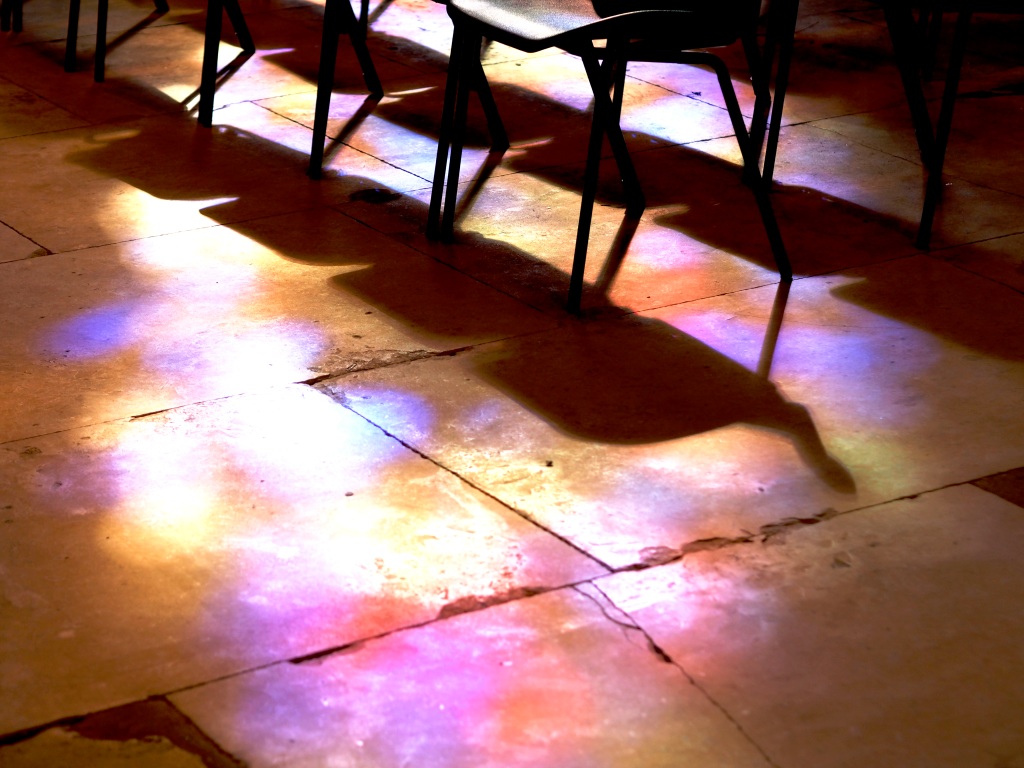
Depressingly filled with light-sucking dark plastic chairs. Originally the space would have been empty and the spaces used for markets. When people gathered for services they would have stood.
OLYMPUS DIGITAL CAMERA

A pilgrimage is a special kind of a journey

The font is made of a black carboniferous limestone from France, waxed and polished to resemble marble. Its sides are carved with mythical beasts of good and evil fighting.

West face of the font

To your left is the art work of William Fairbank, “The Forest Stations” which show Jesus’s journey to the Crucifixion and Resurrection, carved from many different types of wood.

At the crossing you can see that the church was built in the shape of a cross. Huge rose windows face each other from the north and south transepts.

I’ll go into more detail about the windows in a separate post. In the north transept you find the Service Chapels – for remembering soldiers, sailors and airmen. Lincoln cathedral is especially connected with those who served in the Bomber Command during WWII.

OLYMPUS DIGITAL CAMERA

As usual in English cathedrals, the full vista of the nave is blocked, and the choir – in this case St Hugh’s Choir which is almost a church within a church – is hidden from view. However, in this case the screen is exquisitely beautiful. Carved in stone and originally painted in bright colours, some of which can be still seen in faded glory, it was built in 1330 to separate the clergy, their assistants and the choir from the congregation.
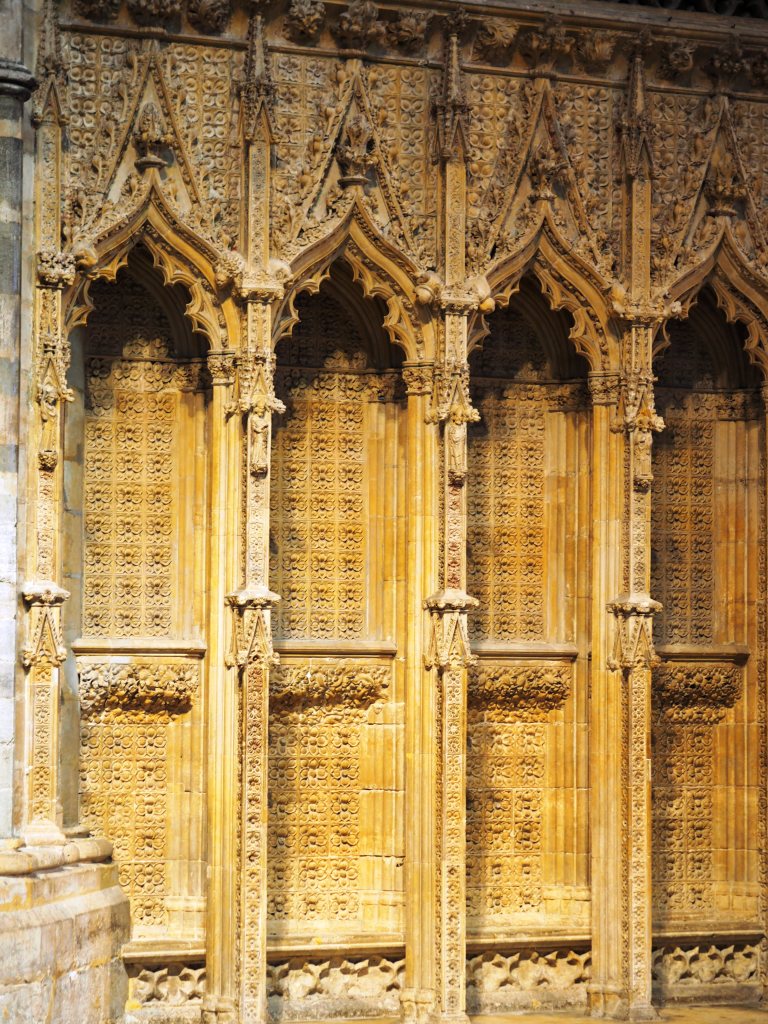
The Choir Screen
The Choir Screen

I was so taken by the carvings on this screen that I will make a separate post showing the details.

OLYMPUS DIGITAL CAMERA
North Transept

At the far end of the nave is the Angel Choir where you will find several tombs and the infamous Lincoln Imp, if you look closely enough. Legend has it that he caused so much chaos one of the angels turned him to stone.

Eleanor of Castile (1241 – 1290) was the Queen Consort of Edward I. Her entrails were buried in a visceral tomb to avoid the unpleasant smells of moving her body to Westminster Abbey. When she died, near Lincoln, her husband famously ordered a stone cross to be erected at each stopping-place on the journey to London, ending at Charing Cross. (The Eleanor Crosses)
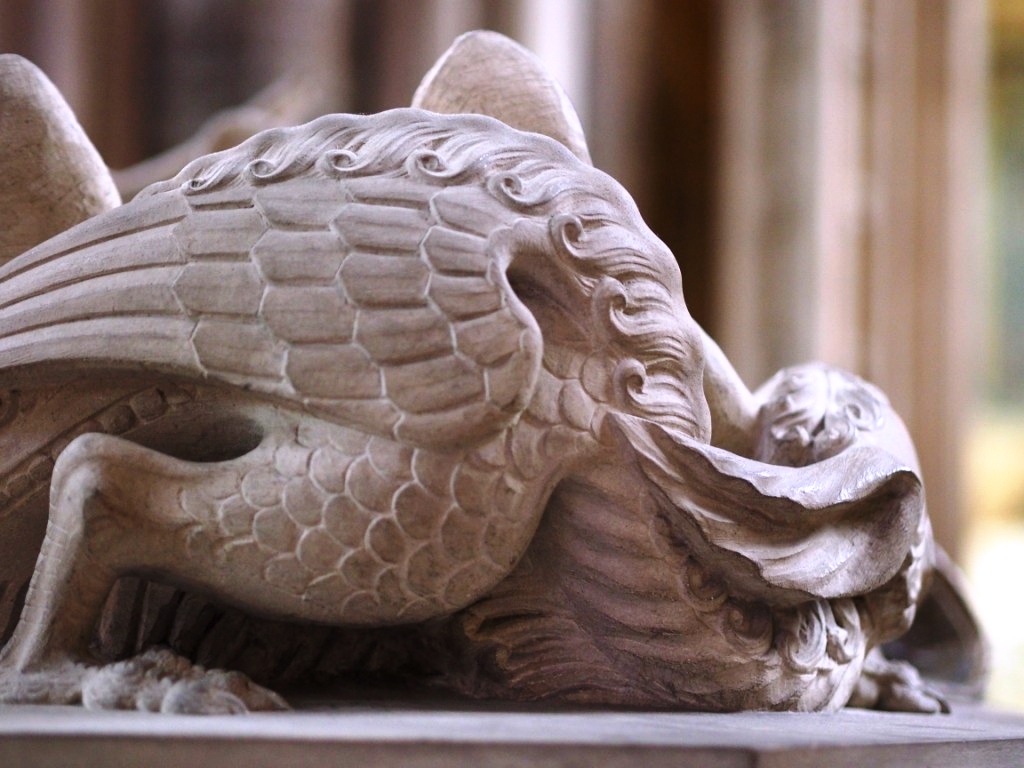
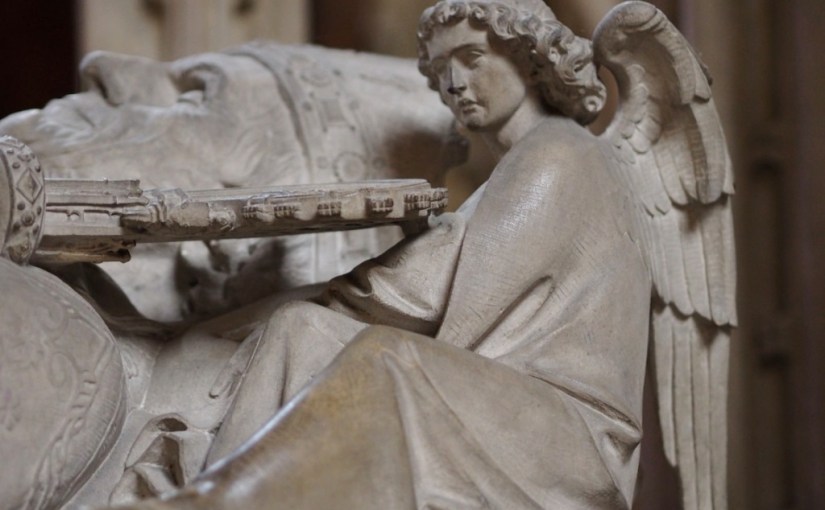
Tomb details
Tomb details

As usual I was particularly interested in the choir area. Lincoln has some delightful misericords, unfortunately all the seats were down ready for Evensong when we entered, and on gently raising one to see what lay beneath I was verbally assaulted by one of the clergymen. Despite the fact that the seats are raised daily and sat upon he proceeded to lecture me loudly and publicly about the damage I could cause to the medieval hinges (?) – I politely pointed out that there is no notice or ropes to indicate that one should not look at the seats, but he was not in any mood to listen. A nearby fellow photographer hastily withdrew from the choir, and my OH was almost shaking with anger.  The altercation did somewhat sour our visit and I was saddened not to have at least seen the carvings in person.
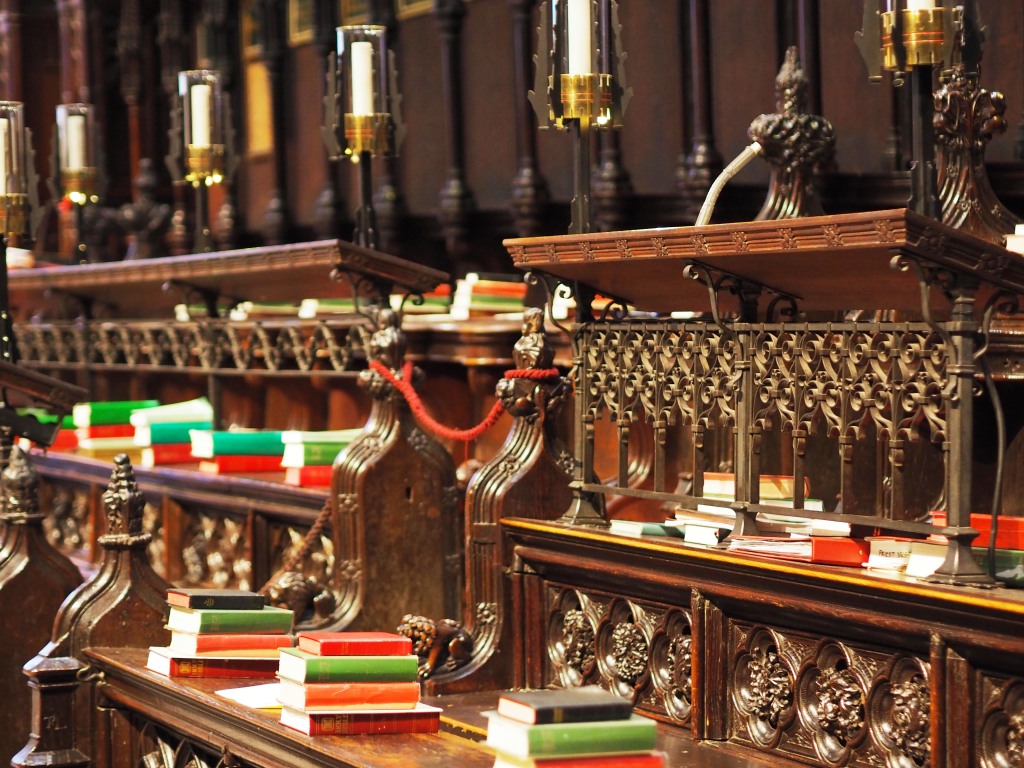
St Hugh's Choir
St Hugh’s Choir

However, do not let my mishap deter you from visiting the Choir as it is very beautiful and is where the Bishop’s throne – cathedra – is located.
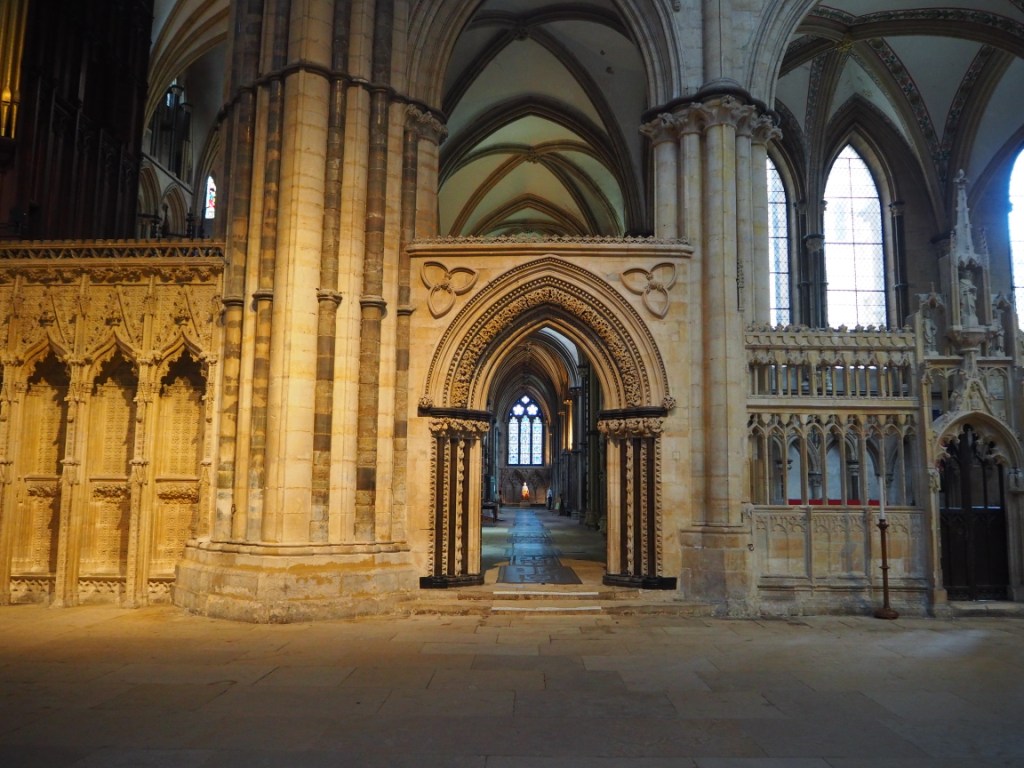
OLYMPUS DIGITAL CAMERA
The South Transept entrance

Lincoln cathedral does have a cloister, but much smaller than that of Norwich, built around 1296 and unusually on the north side.

p9120193The cloisters are reached down the north east transept (Slype corridor) and through a heavy wooden door.
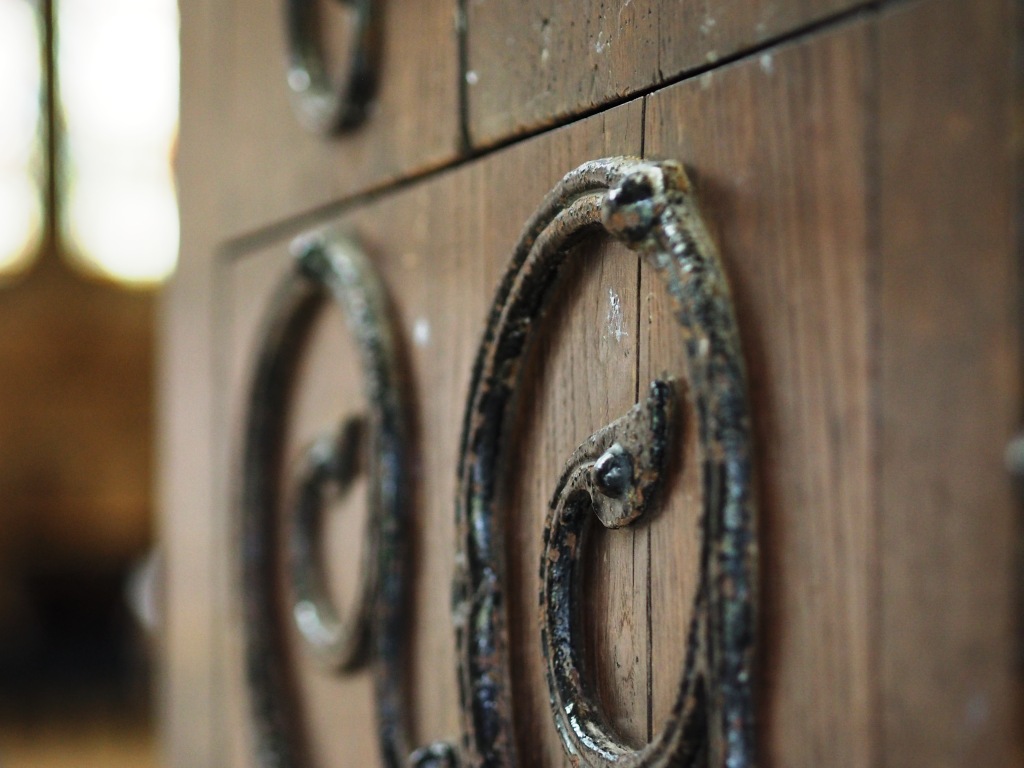
OLYMPUS DIGITAL CAMERA

Three sides are †13c. They have a wooden ceiling with carved bosses and Gothic arches.

Wooden vault
Wooden vault

We’ll have a look at the carvings in the next post.
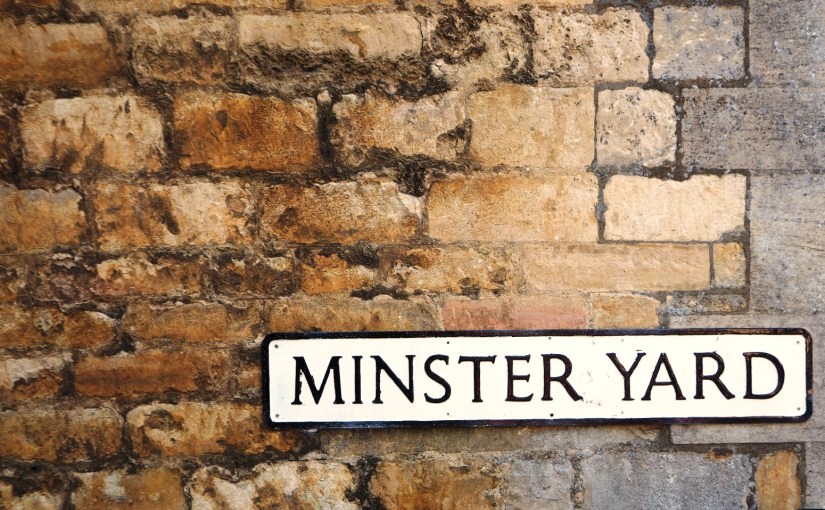
Lincoln’s Minster Yard

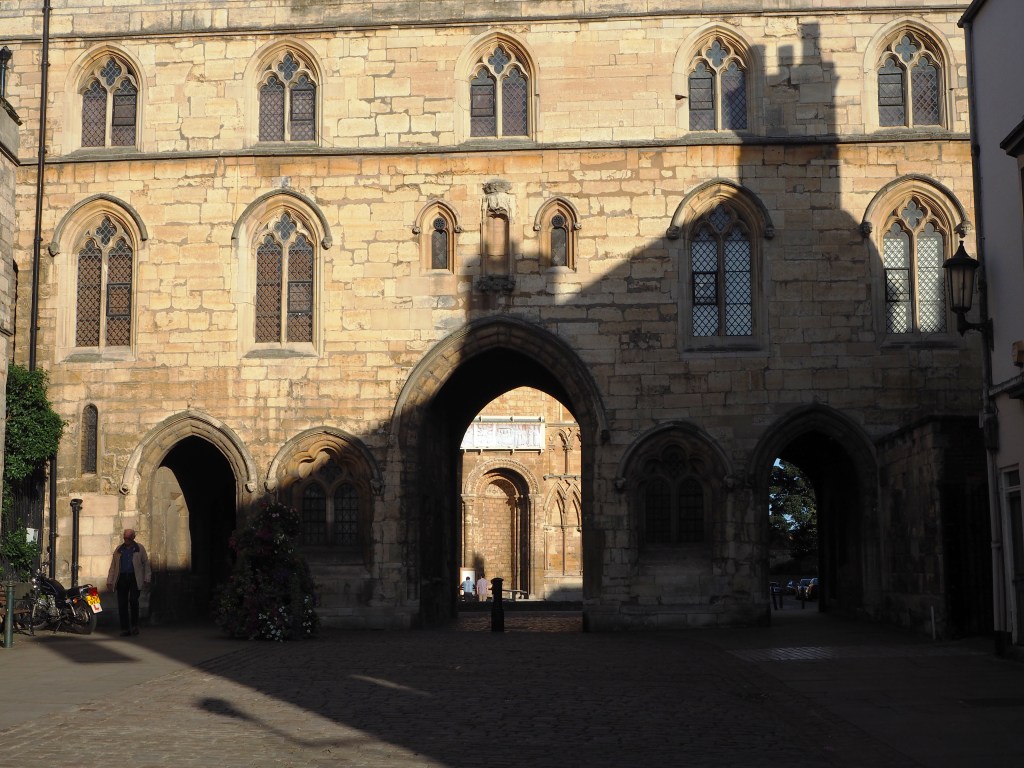
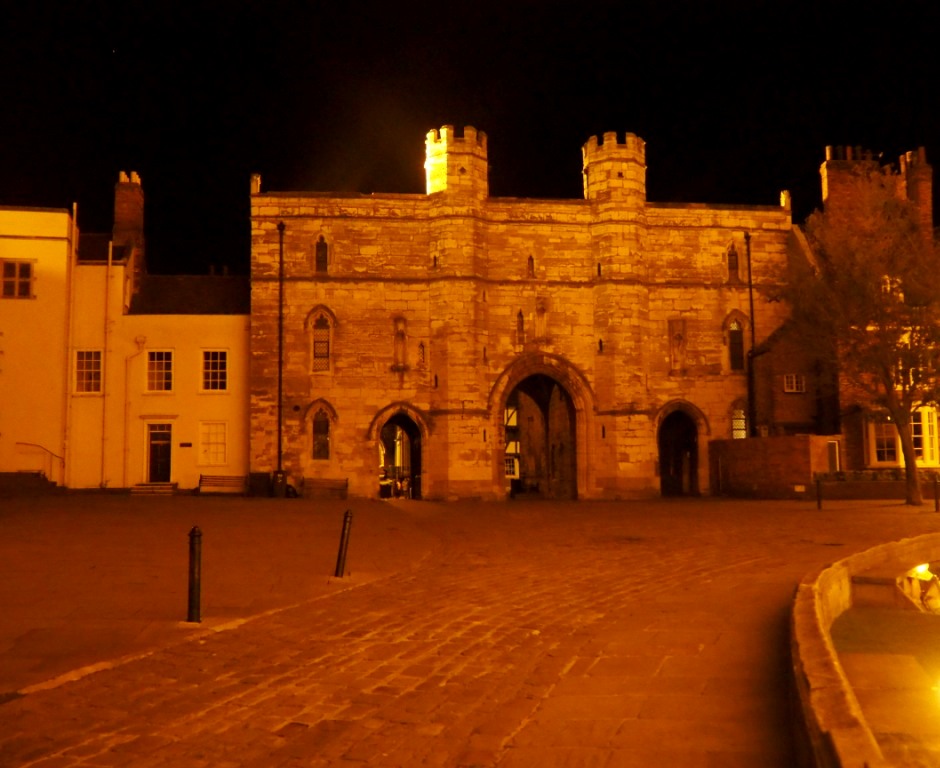
Following on from our stroll in uphill Lincoln we entered through the †14C Exchequer Gate into Minster Yard which is contained within the remains of its medieval gates and walls. Most of the houses are medieval and were built for the clergymen and associated workers who maintain the life of the cathedral.

Exchequer Gate
Exchequer Gate

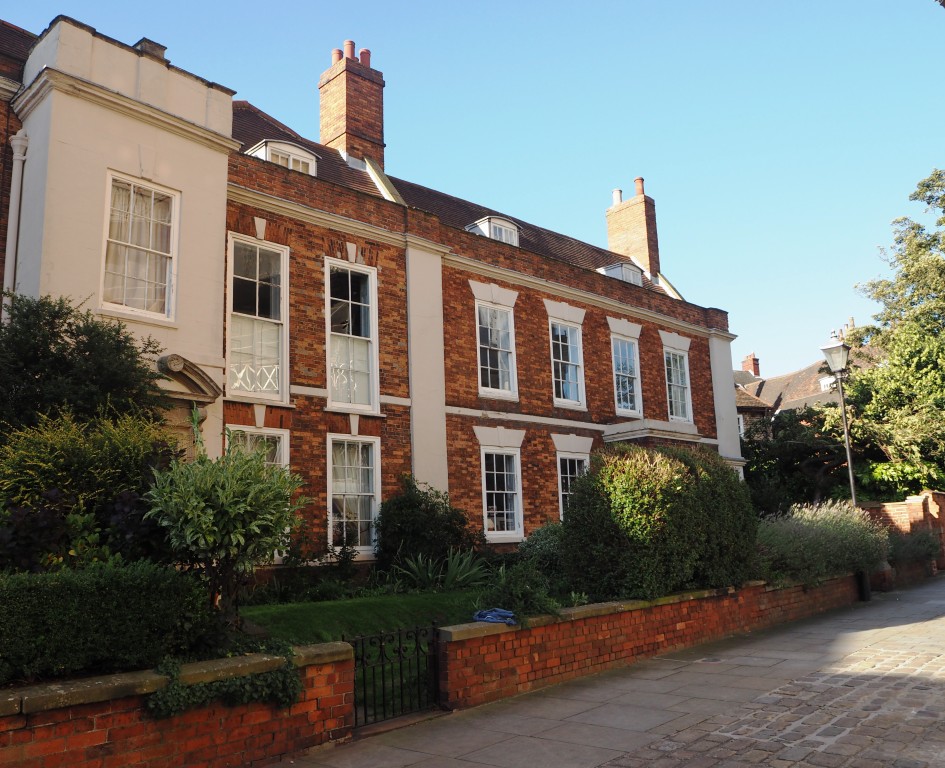
Facing the cathedral are four Georgian houses, 20 – 23, referred to as the ‘Number Houses‘ as they are believed to be the first houses in England to be given numbers. (So why start at #20?) Built in 1740 by Precentor Trimnell on the site of a blacksmith’s shop and other buildings. Number 19 was the birth place of the painter William Logsdail (1859-1944), a prolific English landscape, portrait, and genre painter. His father was a verger at the cathedral.

OLYMPUS DIGITAL CAMERA

OLYMPUS DIGITAL CAMERA

Moving in a clockwise direction we encircled the cathedral, looking back across its Norman west frontage, the only part remaining after an earthquake in 1185.

The houses facing are for Cathedral dignitaries – formerly the Deanery and the ‘Old Subdeanery’. This corner of the cathedral is notorious for the wind whipping around it and has the name ‘Kill Canon Corner’.

OLYMPUS DIGITAL CAMERA

EastgateFrom the northern side, along Eastgate, you get a view of the towers.

A short walk down James Street also provides views of the cathedral. As well as lovely golden stone walls. An area where the Burghersh family served the Chantry House founded in the mid †14c.

We returned to Eastgate and carried on walking around the cathedral grounds.

Atherstone House
Atherstone House

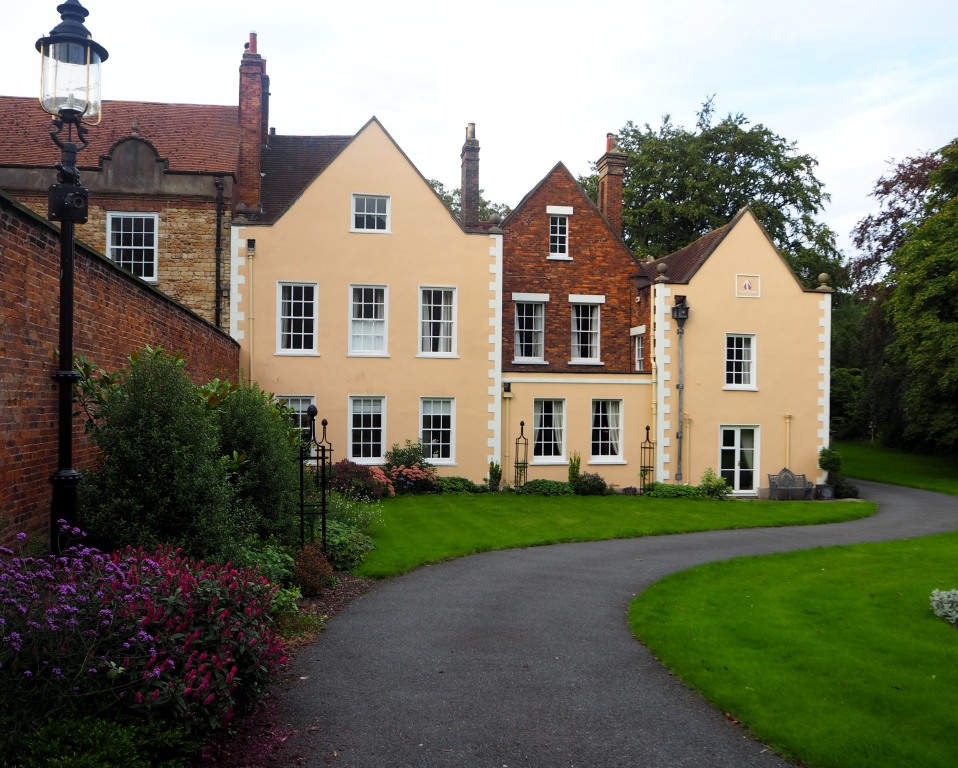
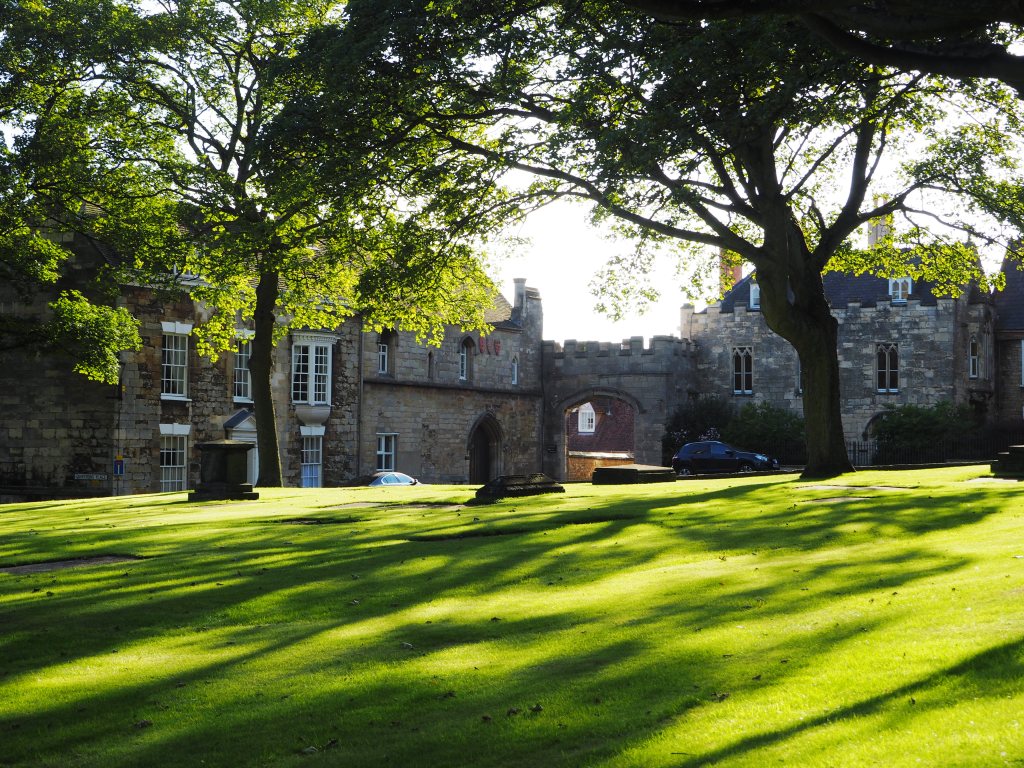
Passing the Bishop’s House, Deanery and Minster School which are all part of a medieval house built around a courtyard, you come back onto Minster Yard through the Priory Gate, or, like us, over the lawn.

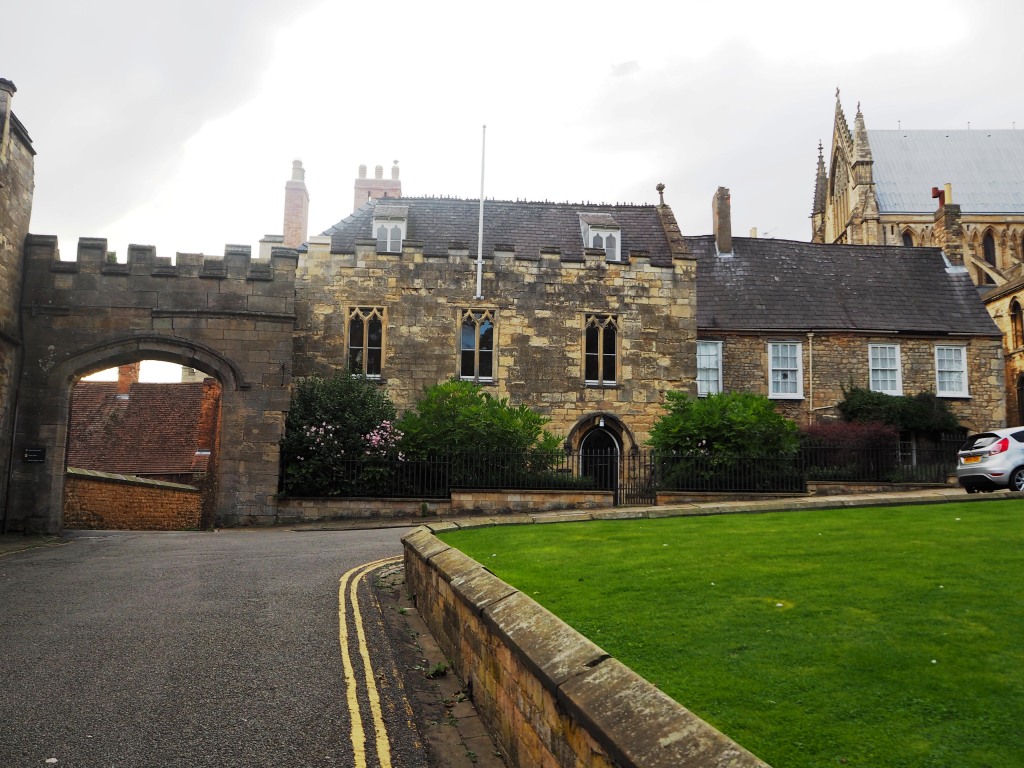
Potter Gate
Potter Gate

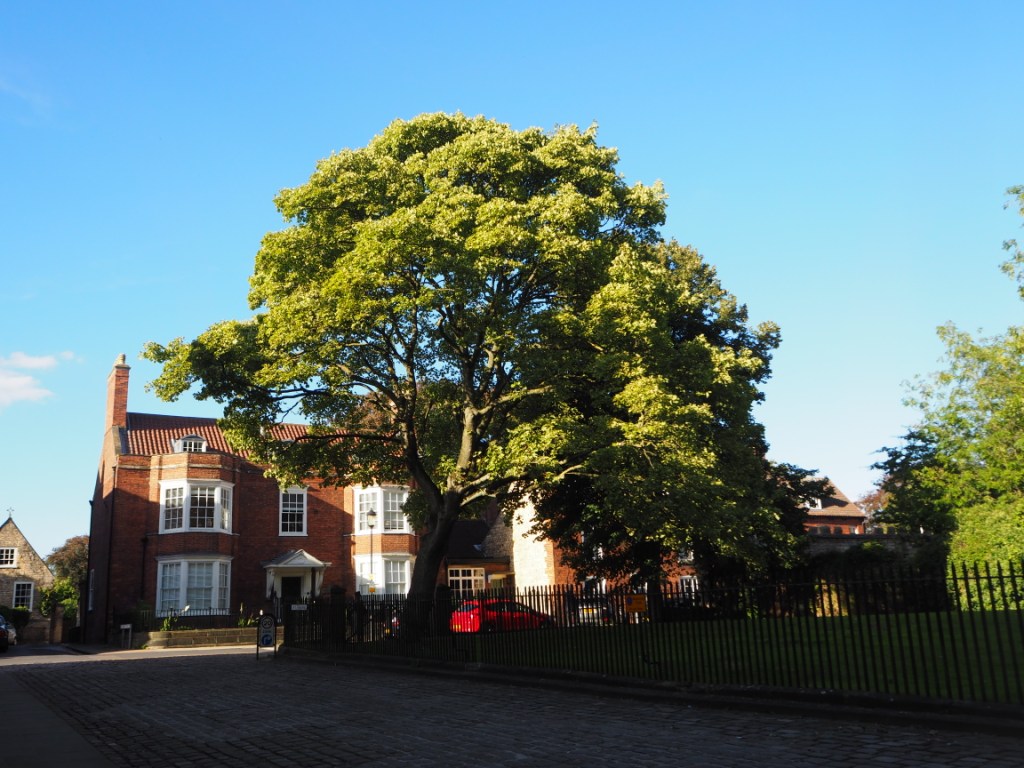
To get a decent photo of the medieval Potter Gate meant standing in the centre of the road as it is now straggling a traffic island. Fortunately in the evening this was fairly quiet. Lovely Georgian and medieval houses line this road.

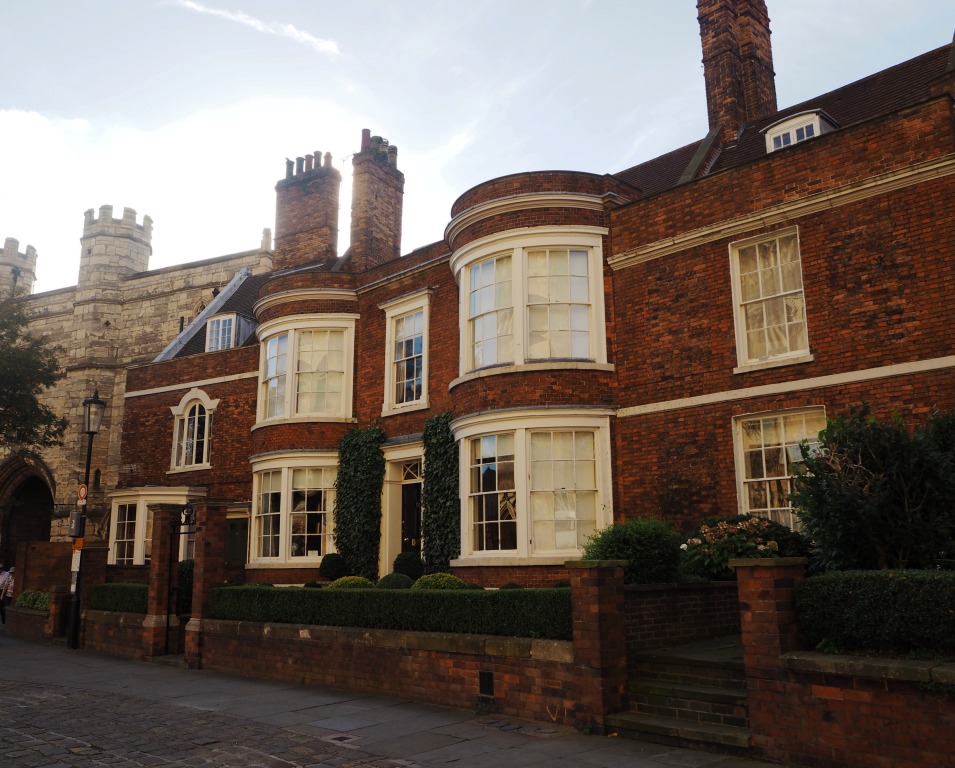
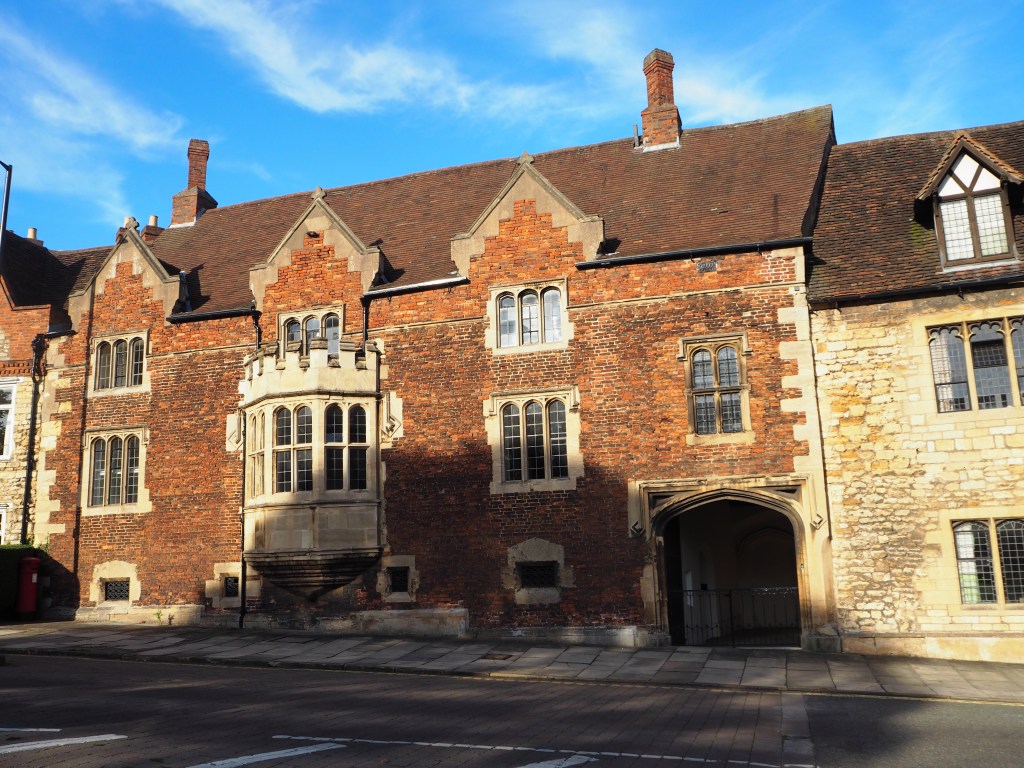
The Chancery
The Chancery

The Chancery is probably the prettiest with its red-brick facade and oriel window in the centre.

Choristers' House
Choristers’ House
OLYMPUS DIGITAL CAMERA
Vicars’ Court and Palace Gate

“To see it [Lincoln cathedral] in full perfection, it should be in the red sunshine of an autumnal evening, when the red roofs and red brick houses would harmonise with the sky and with the fading foliage”
~ Robert Southey, poet (1774 – 1843)

Precentory, Cantilupe Chantry

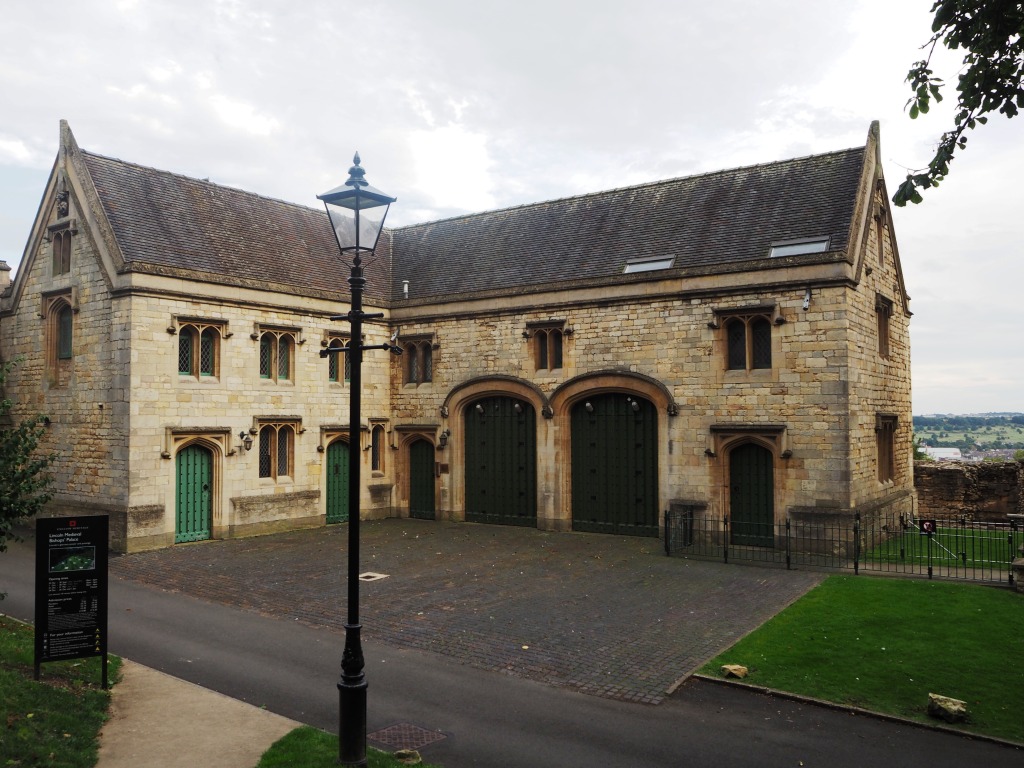
Through the Palace Gate the road leads down to the Medieval Bishop’s Palace which was unfortunately closing as we approached (an English Heritage site) and the Bishop’s Palace and Alnwick Tower. This was the home of the Bishop of Lincoln from 1886 until 1942 and was converted into a 16 room bed and breakfast establishment in 2009, with prices for a double room from £85 and views of the cathedral, this is a perfect place to stay.

OLYMPUS DIGITAL CAMERA
The Old Bishop’s Palace (EH)
The Old Palace B&B
The Old Palace B&B

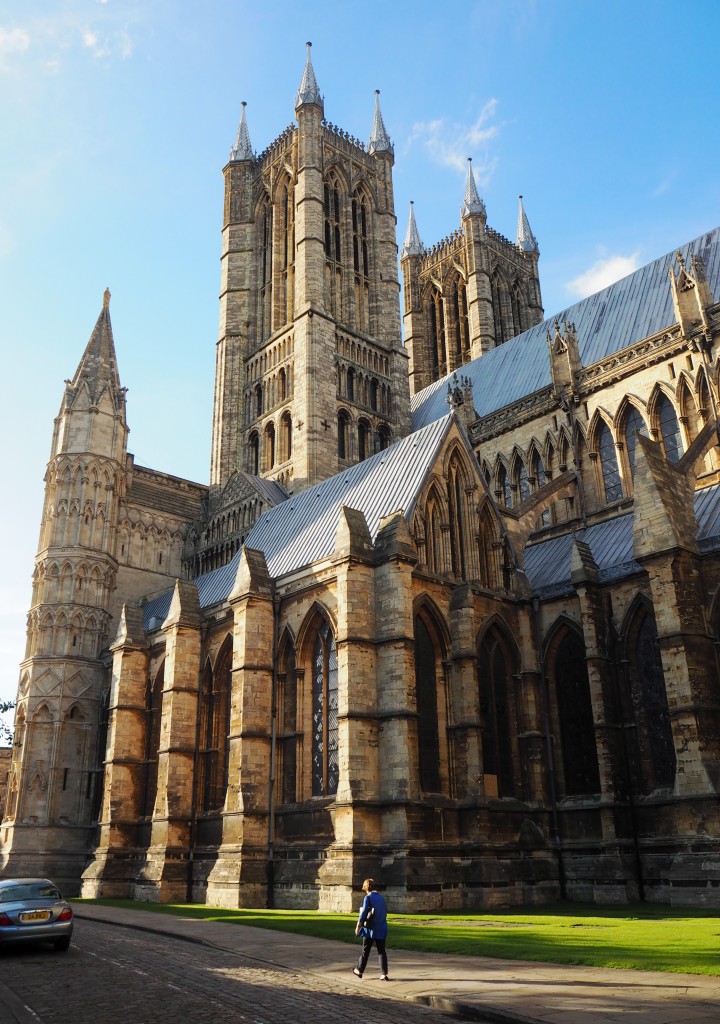
A pathway led back up to the cathedral and there are some good views of the south side of the cathedral including the great rose window which contains fragments of medieval glass.

OLYMPUS DIGITAL CAMERA

The South Transept
The South East Transept and Judgement Porch
Back to Exchequer Gate

Next time we’ll have a look inside the cathedral.

IF YOU ENJOY A WALK, LONG OR SHORT, THEN HAVE A LOOK AT JO’S SITE WHERE YOU ARE WELCOME TO JOIN IN WITH HER MONDAY WALKS.

Uphill Lincoln at Night

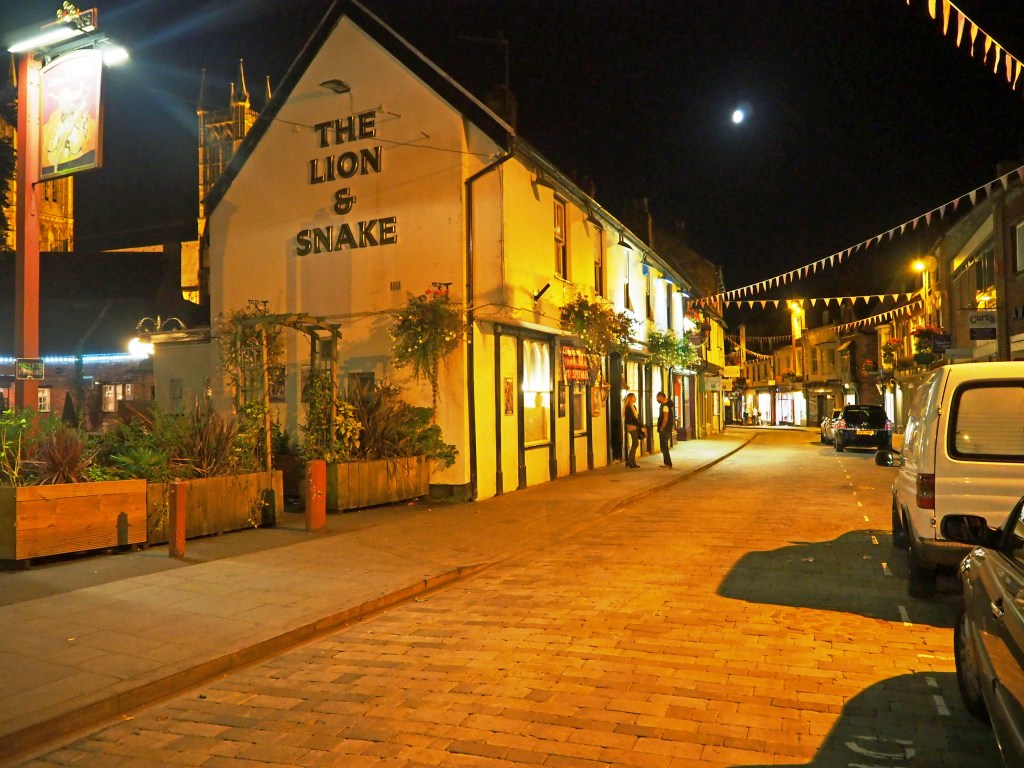
Given that the cathedral quarter is lit at night it seemed a perfect opportunity to grab some night shots. A full moon helped too.

OLYMPUS DIGITAL CAMERA

Bailgate was very quiet at 9 p.m. on a Sunday night.

and the golden towers of the cathedral were clearly visible.

OLYMPUS DIGITAL CAMERA
Exchequer Gate and Cathedral
Castle Gate and Cannon

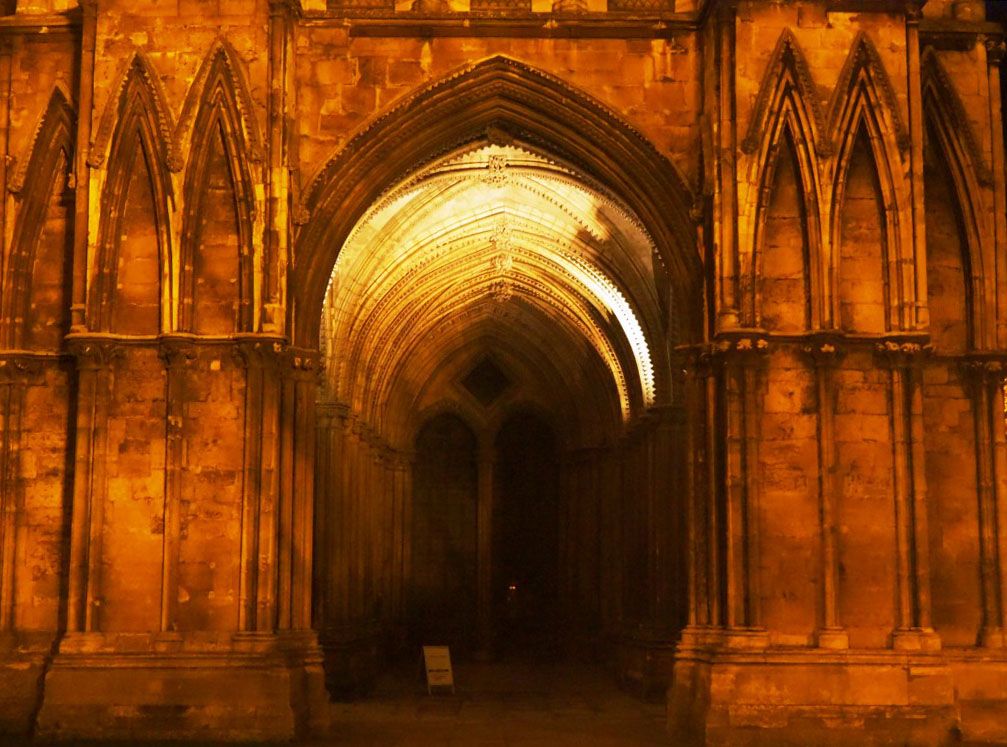
The details of the cathedral’s west front were highlighted in golden-yellow light.

Whereas the south side was more in darkness and shadow.

OLYMPUS DIGITAL CAMERA
South Transept
Exchequer Gate
Exchequer Gate

Inside the unfinished temple

On 11 July 2010, the Sagrada Familia was consecrated by Pope Benedict XVI and elevated to the status of a basilica. It is not, as some assume, a cathedral as it is without a bishop’s headquarters. But the huge dimensions of the interior is worthy of that status.

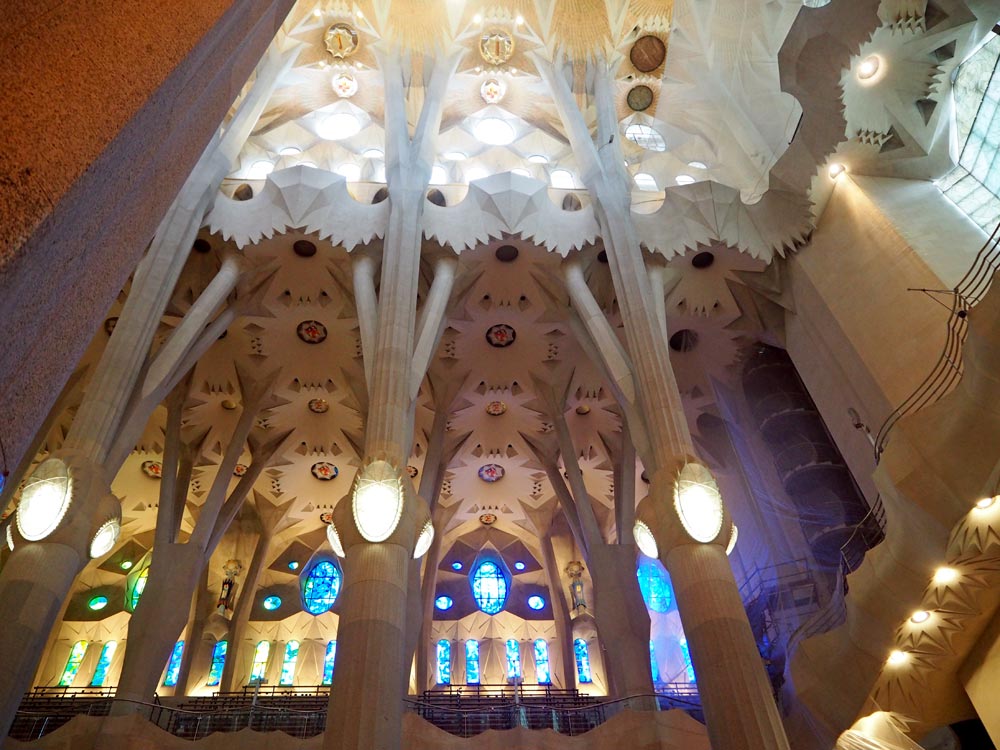
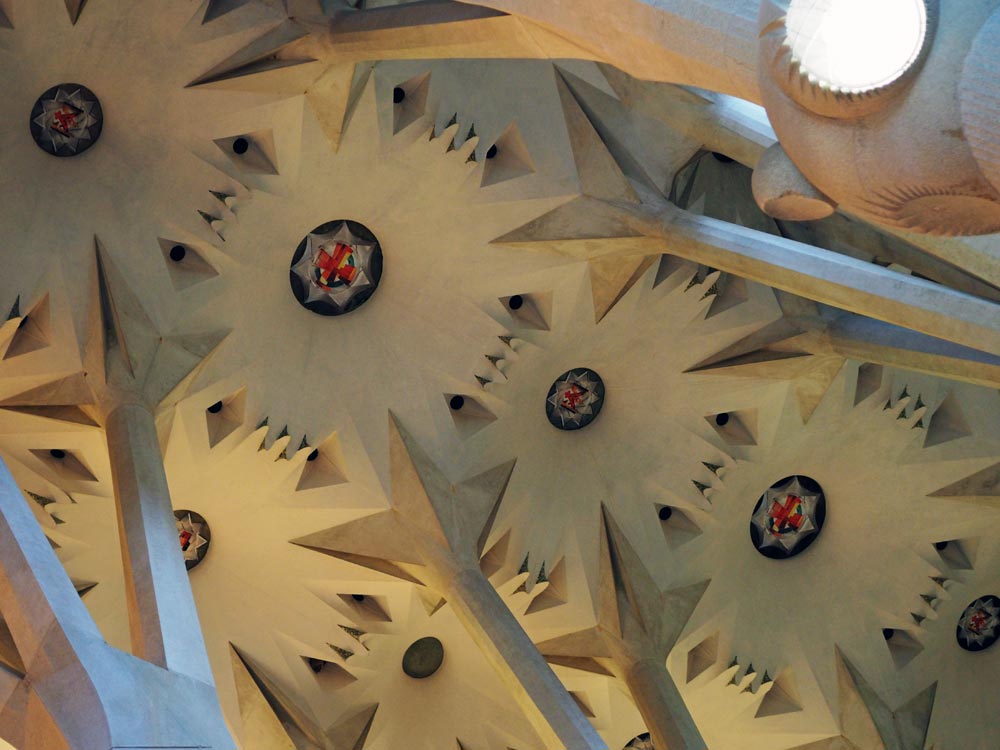
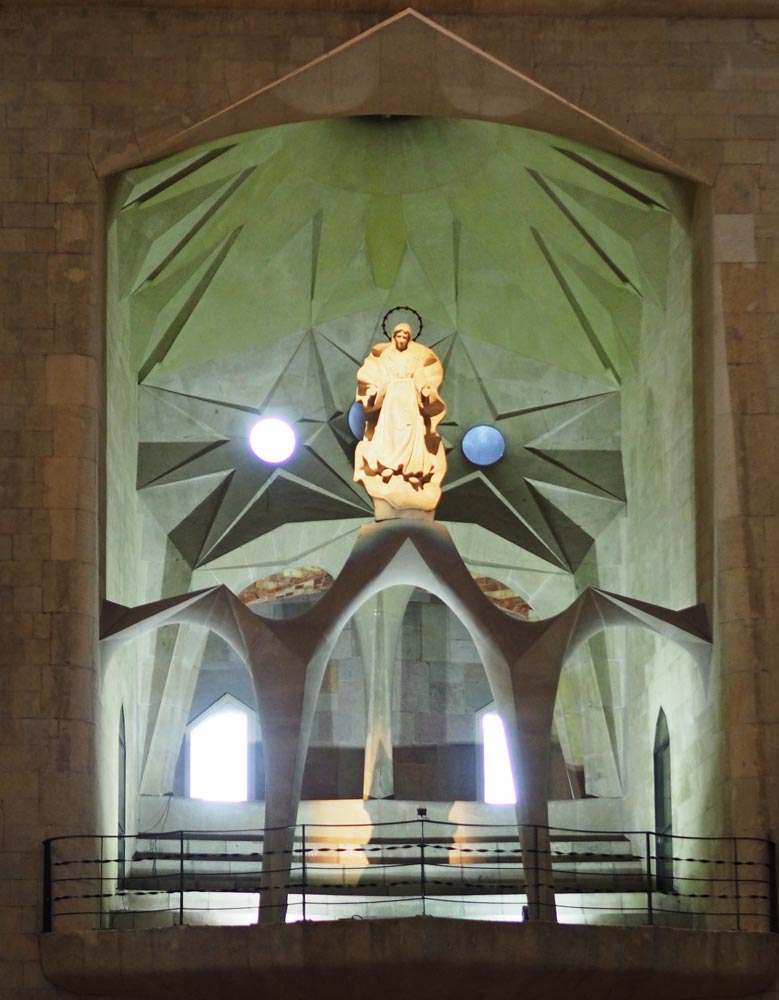
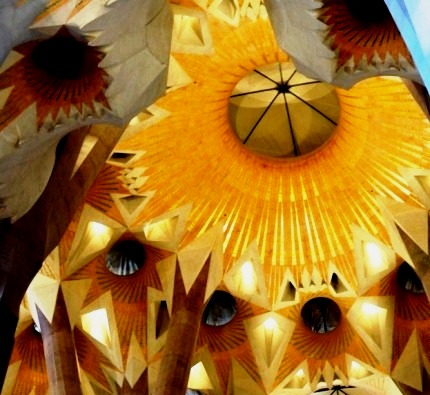
Stepping inside the Basílica i Temple Expiatori de la Sagrada Família is like stepping into an enchanted forest. Tall trees towering above us; their branches creating a canopy. The streams of coloured light; the verticality and the enormous, seemingly empty space takes your breath away. At first I didn’t know what to look at, where to begin the tour, what to focus my camera on. Double-storey height windows flood the space with a light never before seen within a church.

pa210119

The nave is a sight to behold. A work of mathematical genius with natural light flooding in through clear glass leaded panels to allow as much light in as possible.

pa210124

The columns are modelled after a forest and form a light canopy of palm leaves.

ceiling

I’m not going to go into all the symbolism of the basilica, you can find that out for yourself, instead I shall just let you have a look at some of the bits that caught my eye and where I could actually get a shot without dozens of people in the way.

pa210078

OLYMPUS DIGITAL CAMERA

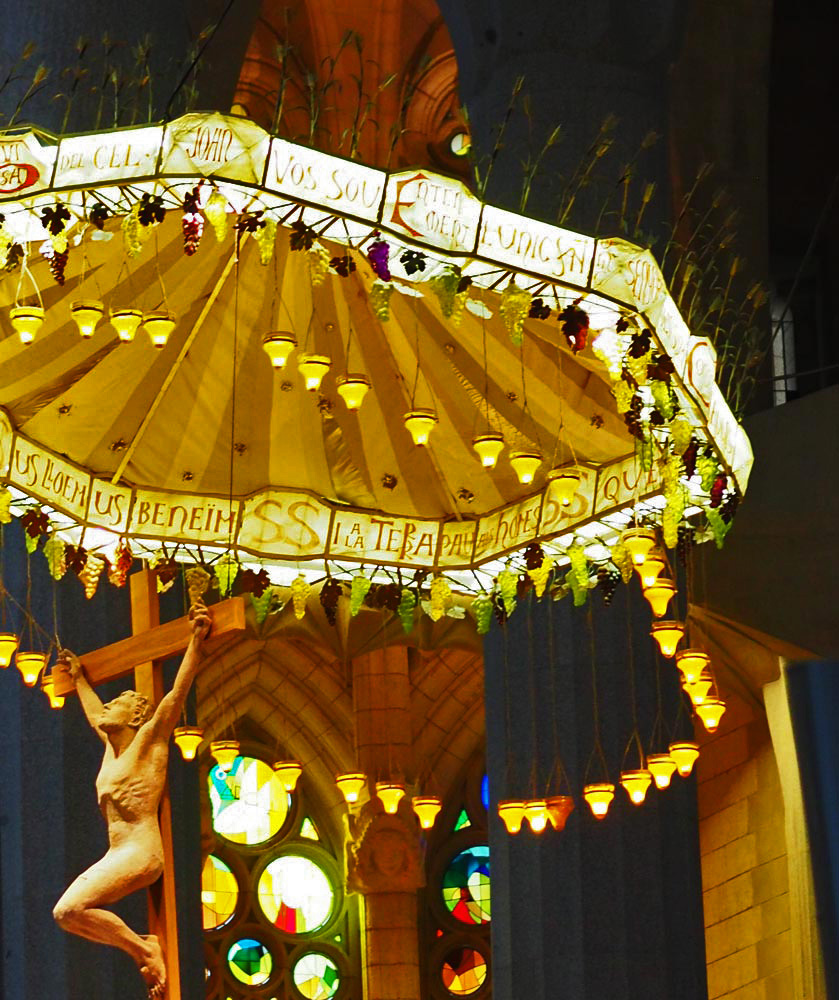
OLYMPUS DIGITAL CAMERAThe apse contains the altar, but this section was being worked on so we couldn’t get too close. Your eyes are drawn to the dramatic suspended crucifixion with a large ‘parachute’ dome from which artificial grape bunches and wheat stalks hang as symbols of the Eucharist, in which wine and bread are consecrated as religious symbols.

altar

pa210077

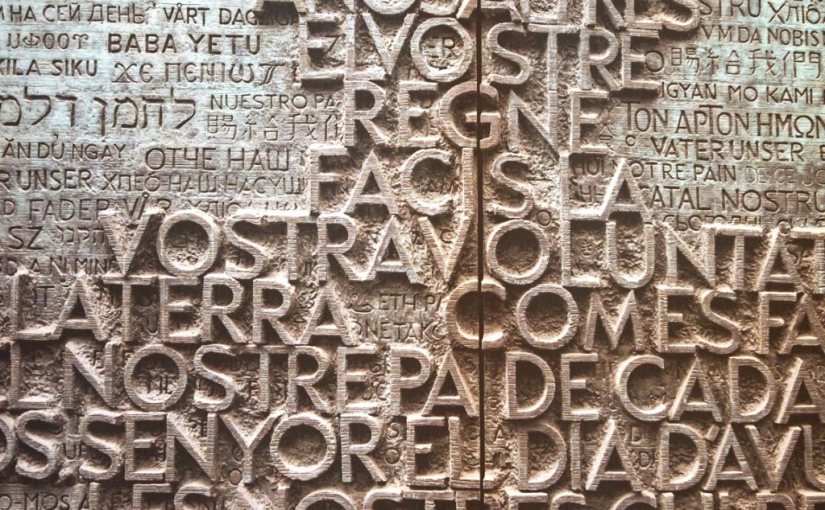
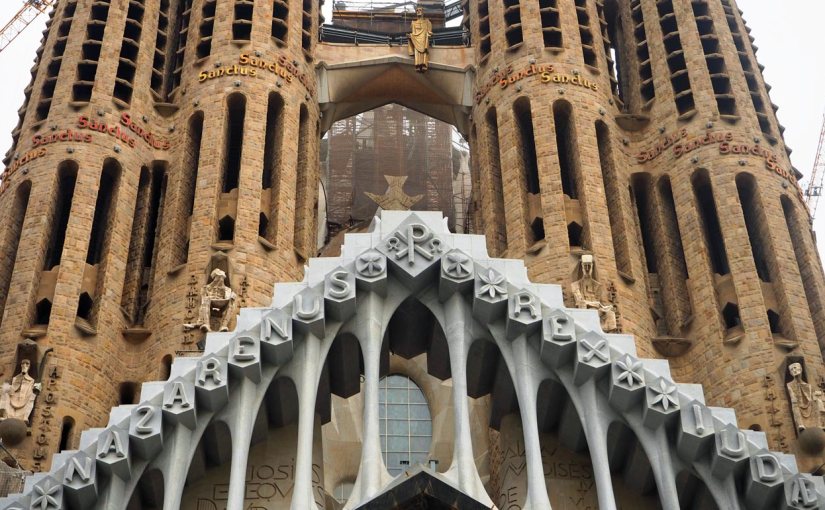
The main access bronze door that Josep M. Subirachs created for the Glory façade is a masterpiece of using typography as art.

OLYMPUS DIGITAL CAMERA

OLYMPUS DIGITAL CAMERA

The centre of the Prayer Door is inscribed with the Lord’s Prayer in Catalan with relief letters, and highlights the fragment ‘Give us, o Lord, our daily bread‘  (Translation from original Catalan: ‘el nostre pa de cada dia doneu-nos-el avui‘) and 49 other languages

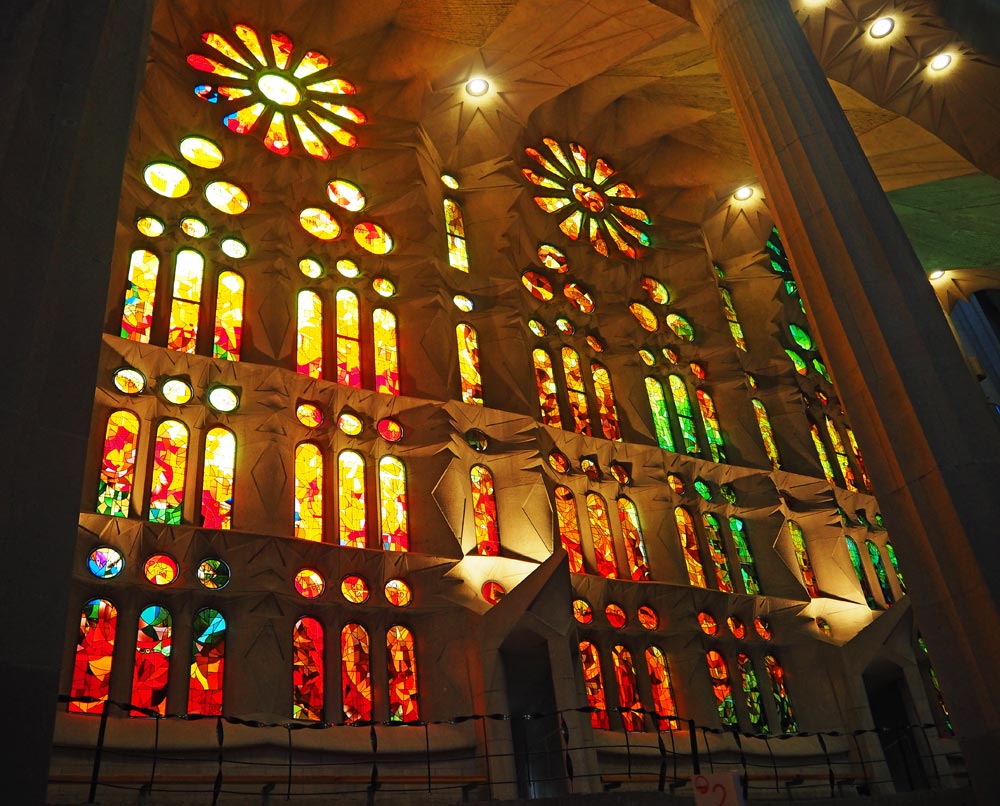
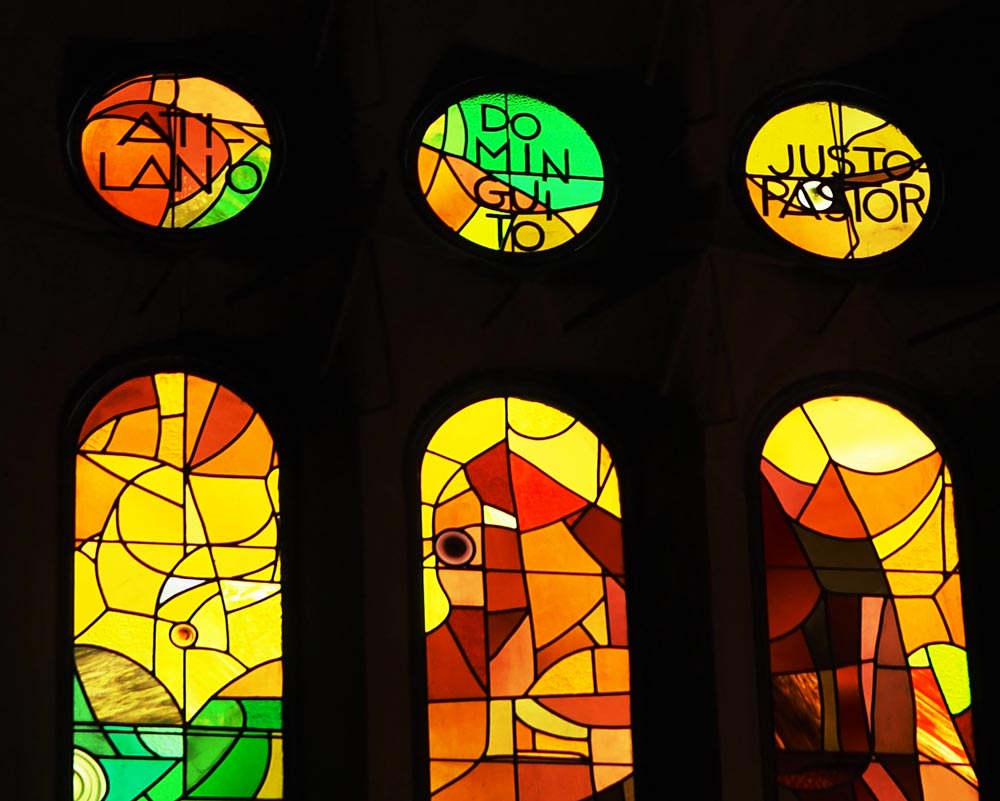
The greens, blues, yellows and reds of the light coming through Joan Vila Grau’s stained-glass windows form shifting patterns of light and colour across the stone.  Gaudí left several documents explaining how the stained glass windows should be arranged in order to achieve a symphony of evocative light and colour.

Gaudí said that colour was the expression of life.

pa210068

The stained-glass features modern geometric shapes are sometimes overlaid with the names of saints. The windows on the lower part of the side aisles are brightly coloured, whereas those on the upper half are in lighter, almost translucent colours.

pa210090a

The windows on the Facade of the Passion, which are dedicated to water, light and the Resurrection are mostly blues, yellows and greens.

The windows on the Nativity facade allude to the birth of Christ, poverty and life and are mostly reds and yellow.

pa210080

A pretty clam-shell font containing holy water rests on curved wrought-iron supports. Everything here is considered,

OLYMPUS DIGITAL CAMERA

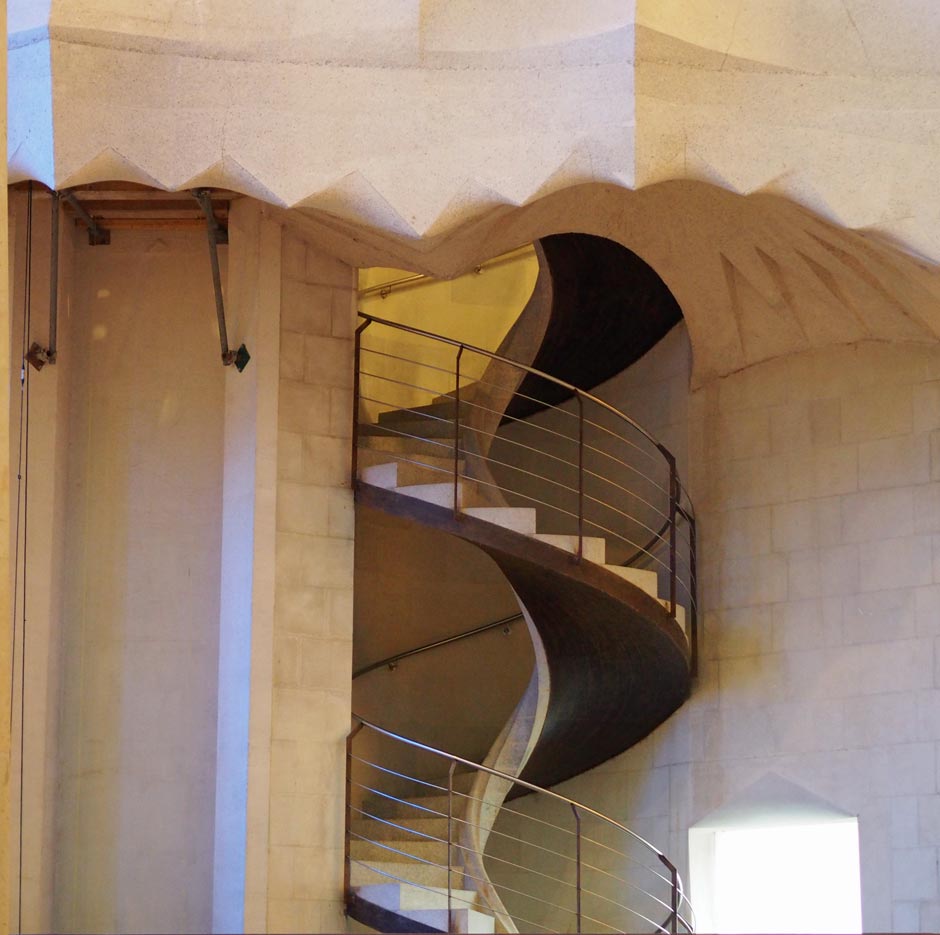
even the curve of a spiral staircase leading to the upper floors.

pa210101

The basilica is a continuing work of art; the culmination of many years by many talented architects, sculptors and master craftsmen following Gaudí’s instructions. You could spend countless hours, days, even years studying the details of the Familia Sagrada and still not discover everything about it.

One has to wonder what Gaudí himself would think about it today? And what does it now represent?

An unfinished temple

I’m taking a short break from the UK trip and English cathedrals and going back to October and my first visit to Barcelona where I continue in the cultural vein. First the Basílica i Temple Expiatori de la Sagrada Família which probably needs no introduction to most of you. Famous as Antoni Gaudi’s last and greatest masterpiece, it is hoped that it will finally be finished in 2026 to mark the centenary of his death. Maybe, with a bit of luck, I will be able to visit it again then.

“My client is not in a hurry…”

pa230315
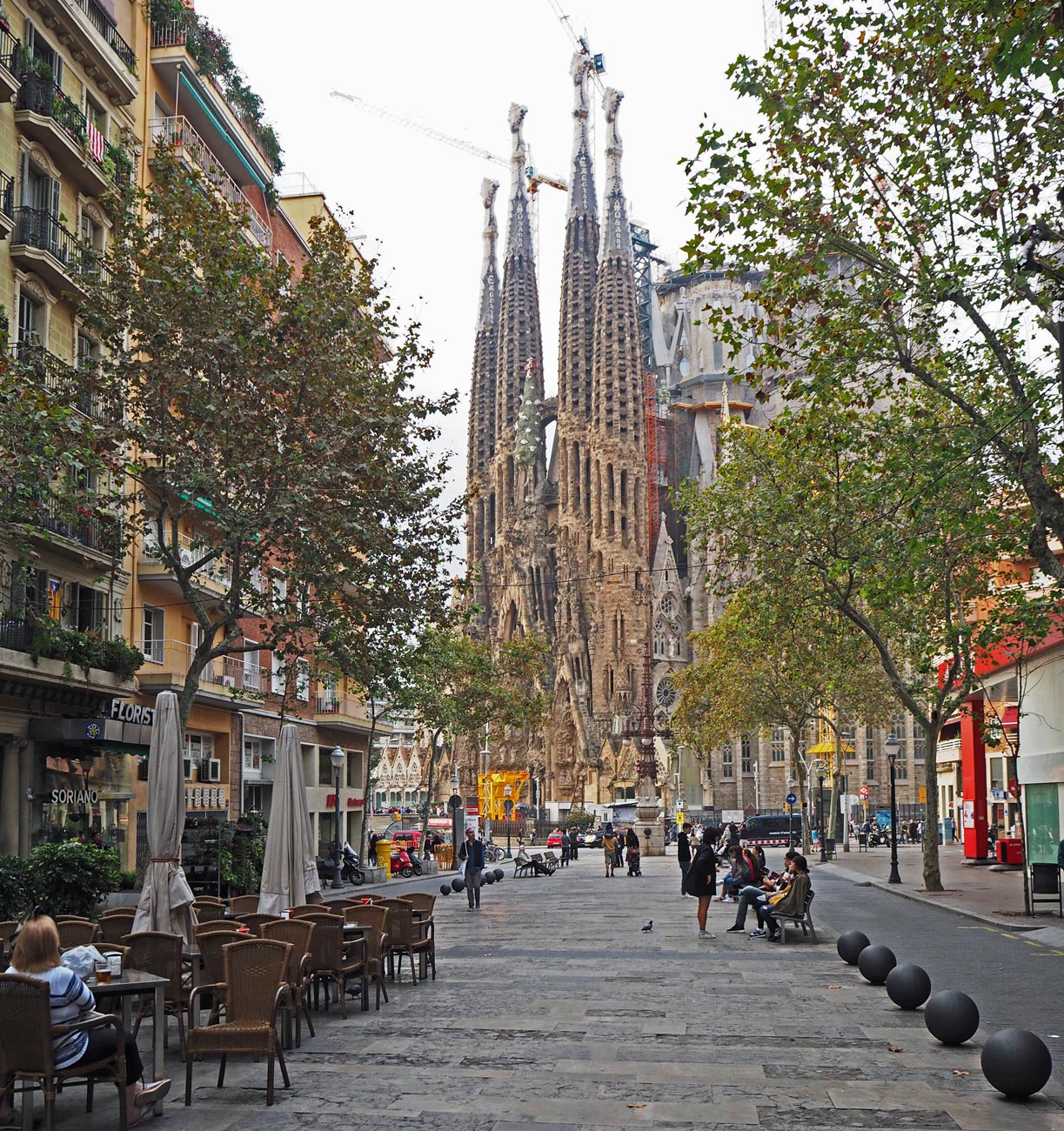
View from Avenue de Gaudi

The Sagrada Familia is an international centre for spirituality which, in an exceptional setting, invites people of all backgrounds and faiths to share in a sense of life based on love, harmony, good, generosity and peace.

pa210028
Passion façade

Before going in to the building we took a wander around the outside. Although there is a lot of construction going on and cranes, scaffolding etc. in the way, it is possible to see a lot of the recent work.

The sculptures on the Passion façade (Western side) are very different to those on the Nativity side. It is austere, plain and simple, with ample bare stone, and is carved with harsh straight lines to resemble the bones of a skeleton. Although I’m not keen on the sculptures, they do convey the feeling of despair and deep suffering. The building itself is supposed to represent ribs and muscles.

Please consult Wikipedia for more information about the façades

In contrast the Nativity façade is much more decorative and characteristic of Gaudi’s naturalistic style. It faces the rising sun to the north-east to represent the birth of Christ and divided into three porticos – Faith, Hope and Charity – and a tree of life.

pa210003
The tree of life

“It is probably impossible to find a church building anything like it in the entire history of art”
~ art critic Rainer Zerbst

pa210005
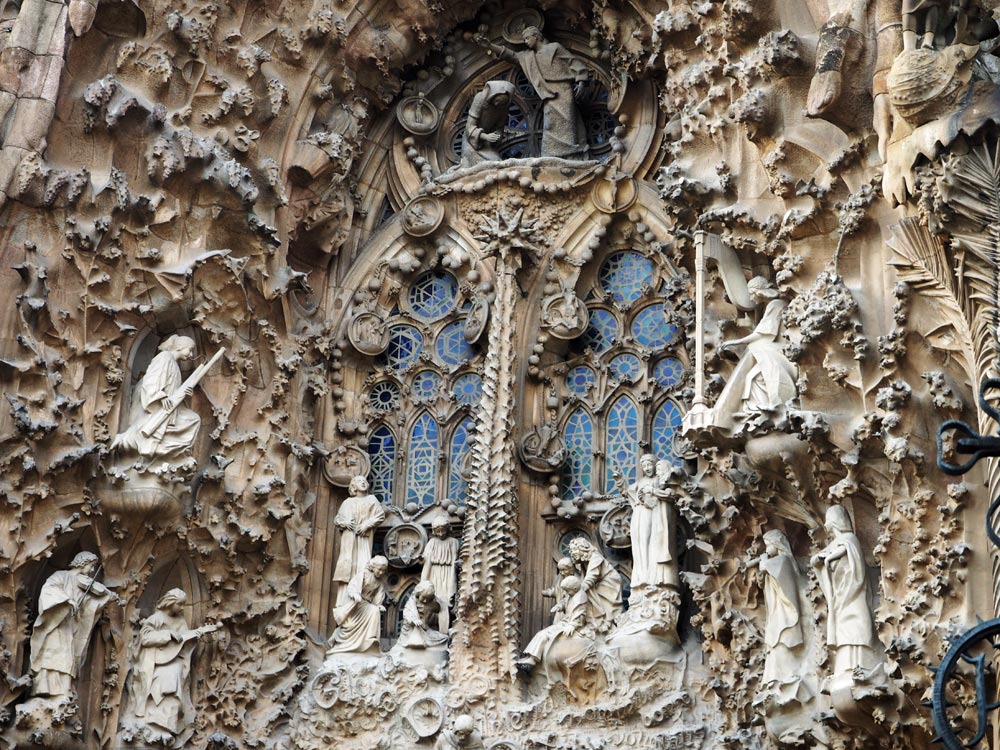
The scene of the birth of Jesus with musicians and singers

“The most extraordinary personal interpretation of Gothic architecture since the Middle Ages.”
~ Paul Goldberger

You could spend an awfully long time looking at the stories and all the little details on the façades and one of my favourite parts was actually the doors – about which I will create a separate post.

If you are going to visit the Sagrada Familia then I would recommend that you buy your timed tickets online before you go to avoid the long queues, and also choose the audio tour. This gives you so much information about what it is you are seeing and you can do the tour in your own time and route. I would imagine trying to hear a tour guide in among all the crowds must be pretty difficult.

Next will be the interior which is like no other interior of a church ever seen.