Reculver Towers and Roman Fort

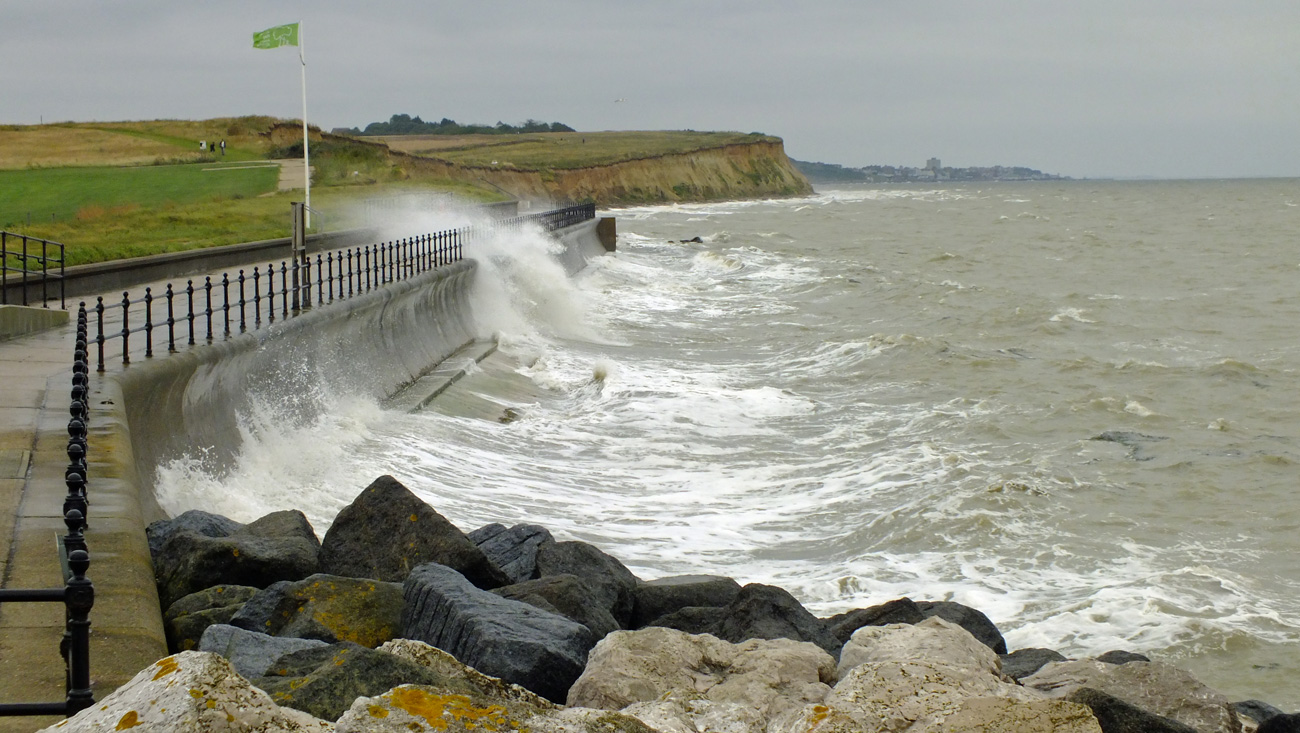
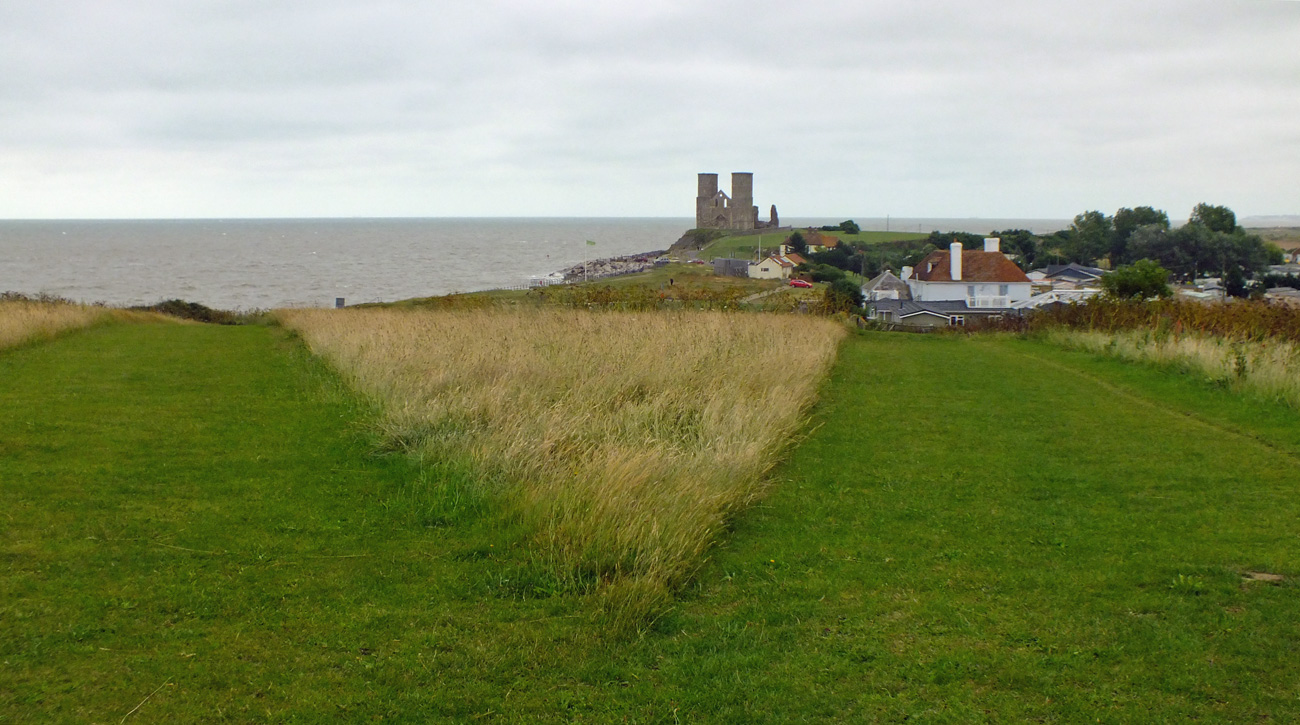
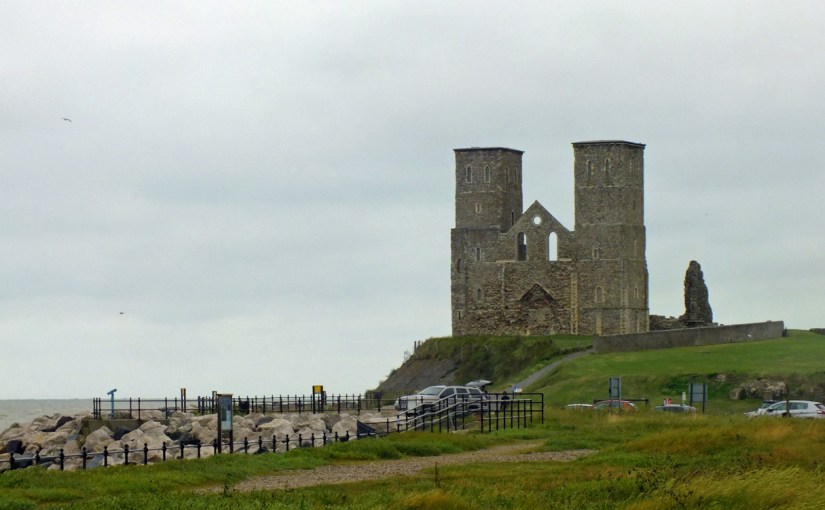
It was a cold, grey day in June when I ventured out to the North Kent coast to visit a building that had intrigued me when I first glimpsed it in the distance from Herne Bay a few years ago. Twin towers that looked as though they rose from the sea itself.

DSCF0485

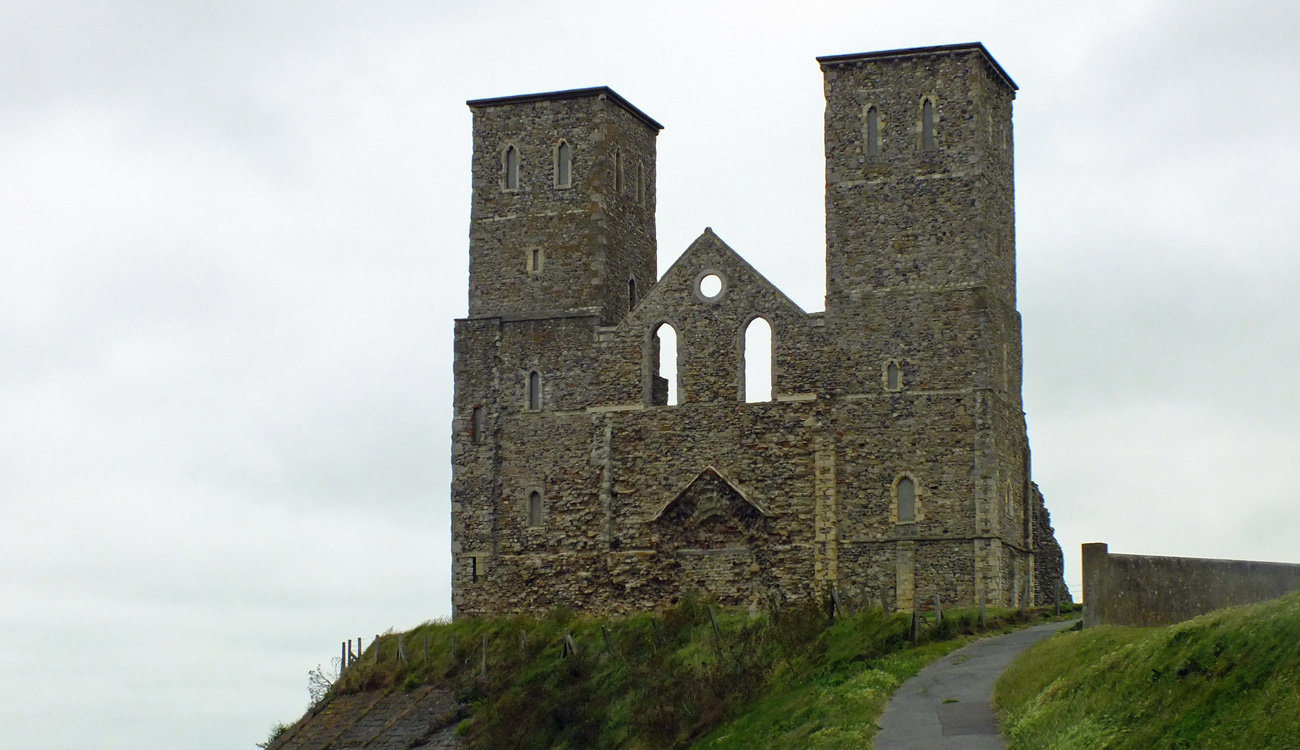
An imposing landmark, the twin 12th-century towers of the ruined church stand amid the remains of an important Roman ‘Saxon Shore’ fort and a Saxon monastery.
DSCF0486

It wasn’t always on the beach – coastal erosion has caused much of this site to be lost to the sea, so if you want to visit I suggest you don’t leave it too long.

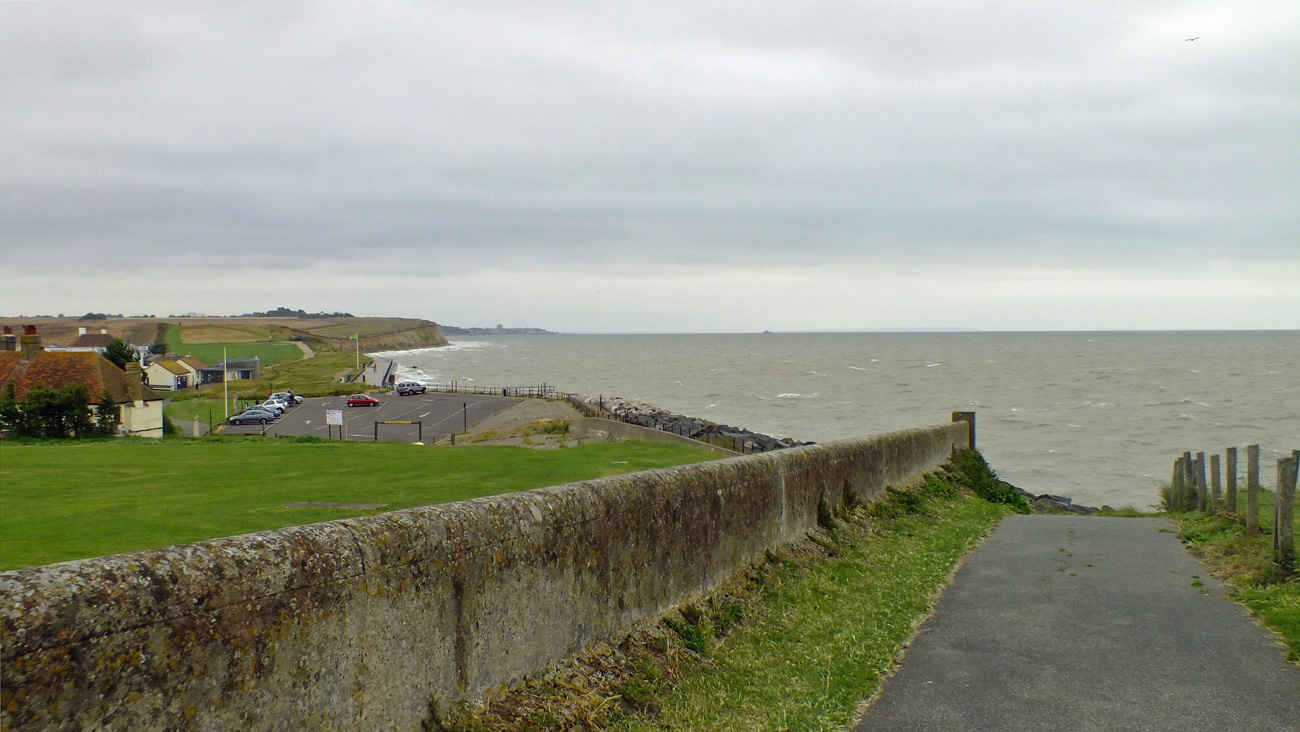
From the car park it is a very short walk to the site ruins, but you can continue to walk along the coast through the Reculver Country Park to Herne Bay (west) along the Wantsum Way, or towards Margate (east). Given the blustery, wet weather I’m afraid I didn’t venture too far along this coastal path, but in sunnier weather I imagine it is a very nice place to walk or cycle in.

Looking West
DSCF0496

DSCF0525

DSCF0533You can see the path leading away on the left-hand side, but this promenade obviously wasn’t the best route forward. I was constantly wiping the camera lens already!

DSCF0552If you enjoy a walk, short or long, then you may enjoy visiting Jo’s Monday Walk where you are in for a treat.


Bodiam Castle

In the south-eastern corner of England you can find several impressive castles – Hever, Leeds, Dover, Rochester, Deal and Bodiam amongst them. Historically the region has always been vulnerable to attack from foreign shores.

information

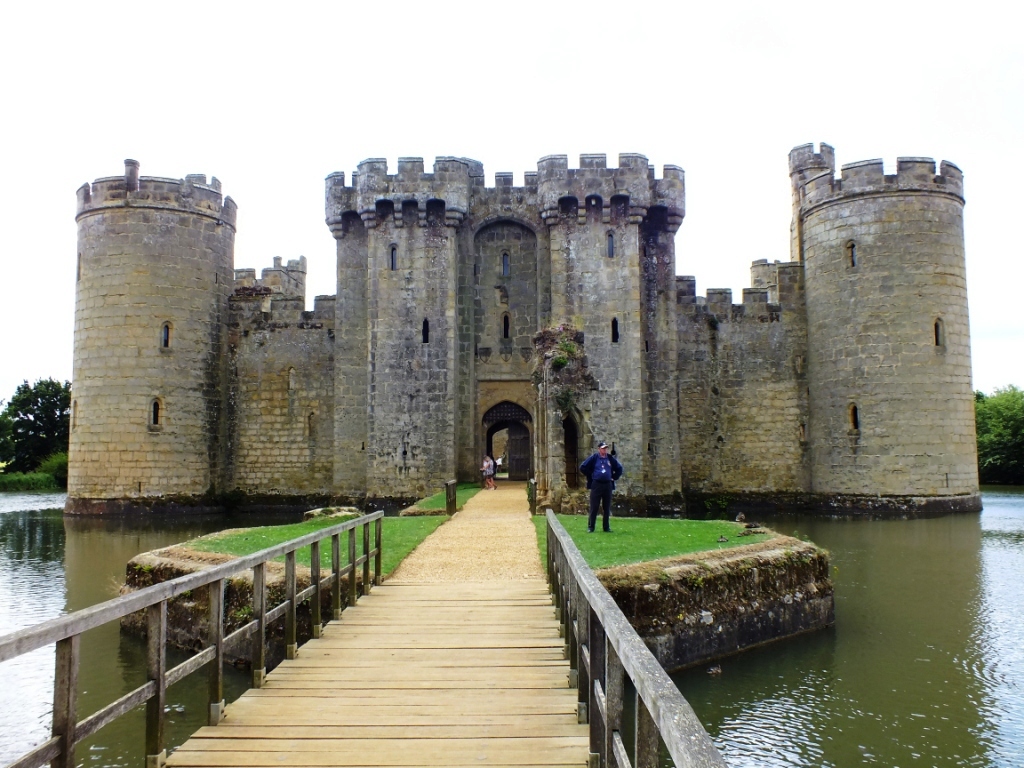
As we were staying in the Weald of Kent for a few days, which is on the East Sussex border, we decided to take the historic steam train from Tenterden to Bodiam and walk to the moated castle, often glimpsed from the road when passing by. We could have driven there in about 10 minutes, but sometimes it is nice to take things slowly and enjoy the journey as much as the destination.

6619

In 1377 French ships raided the Sussex coast, causing widespread damage and panic among the local population which led to the building of nearby Scotney Castle. The French later raided nearby Winchelsea in 1380, so when a new French invasion threatened in 1385 Sir Edward Dalyngrigge (one of Edward III’s knights) applied to King Richard II for a license to fortify and strengthen the existing hall he lived in.

DSCF2544

Having been granted permission he decided to build a new sandstone fortress near the River Rother, which at that time was navigable to the coast. Though its primary aim was defense, Dalyngrigge made sure that Bodiam was also a comfortable abode, as much a fortified residence as a military stronghold. And of course a visual symbol of his wealth.

DSCF2560

Bodiam Castle is considered to be the finest example of  medieval, moated, military architecture in Britain.

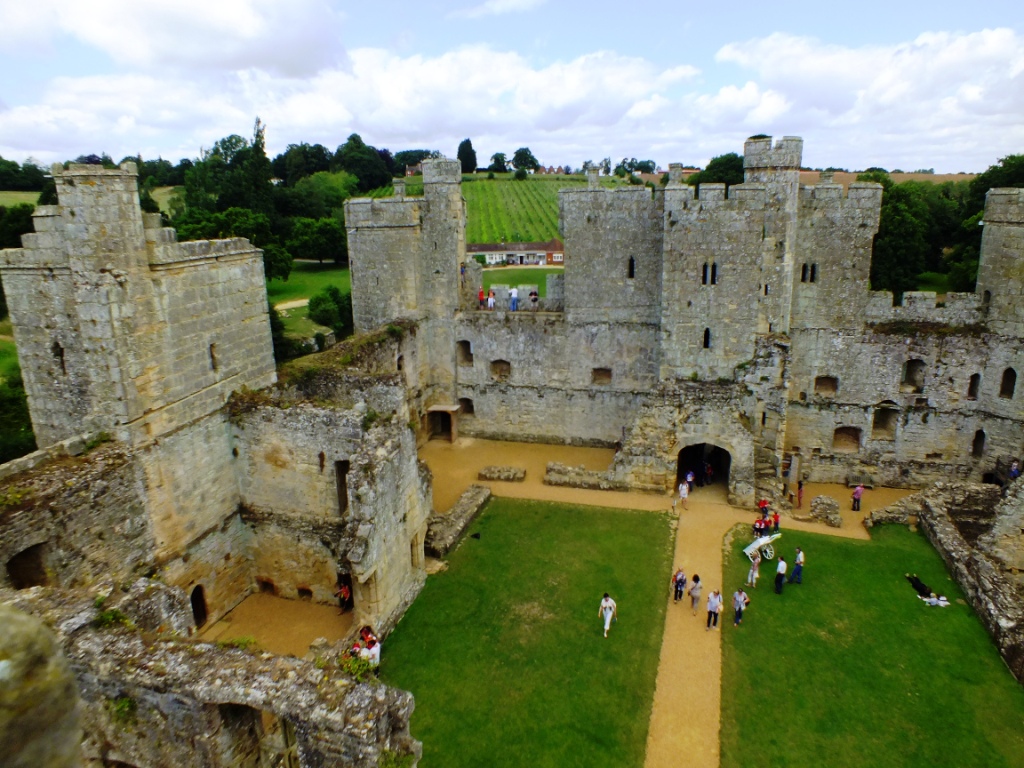
The interior from the Postern Tower

The French invasion never took place, and Bodiam’s impressive defenses were never tested until 1484 when the castle fell to a siege by Richard III.

Do you have a favourite castle?

Cathedral of the Weald

DSCF2143

If you read about my recent visit to the delightful Weald town of Cranbrook you will have seen my reference to St Dunstan’s church which is known as the ‘Cathedral of the Weald’. Wealth from the cloth industry enabled successive enlargements of the medieval church in the 15th and 16th century.

This delightful church is well worth a more detailed look around, so let’s go inside.

DSCF2134

Around the church are information panels providing details about particular interesting objects within.

The Font

DSCF2077

This font is Victorian from 1852, and example of early Victorian Gothic and made of Caen stone. The white marble carved figure behind commemorates Thomas Webster, an artist, and the Alexander Window above was installed by Col Alexander in memory of his wife and three children.

 The Green Man

DSCF2084

Although of pagan origin it is not unusual to find carvings of the Green Man inside a Christian church, even Canterbury Cathedral has 80 of them. When this church was built Cranbrook was surrounded by dense forest – the Weald. Four circular oak shields depicting these fierce-looking woodland spirits can be found here.

The church contains some splendid stained-glass windows

DSCF2112

The St Thomas Chapel

DSCF2126

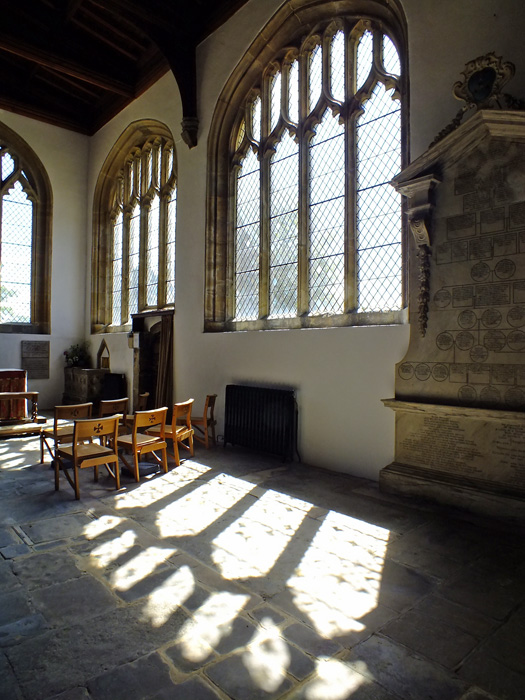
This beautiful serene corner of the church is named after St Thoma a Beckett, who by the 15th century had replaced St Dunstan as England’s most popular saint. I loved the light flooding through the clear leaded windows.

The South Porch

This porch was built around 1390. The wooden door added in 1569 at a cost of 17 shillings and 7 pence (£2k today). On the ceiling is a stone-carved Green Man.

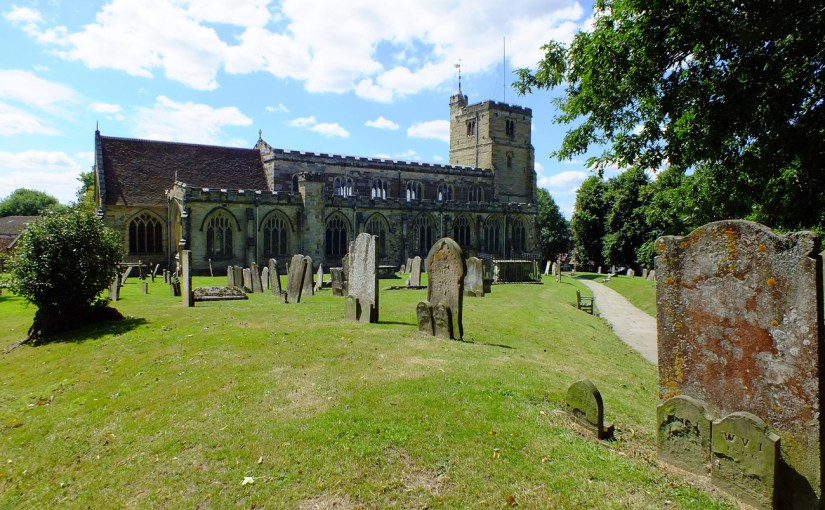
And a final look at the church surrounded by the old graveyard with interesting headstones.

If your interest is windows then Dawn from ‘The Day After’  invites participants to post pictures of any windows that  they find curious, inviting, photogenic, or in some way tell a story.

New Abbey Buildings

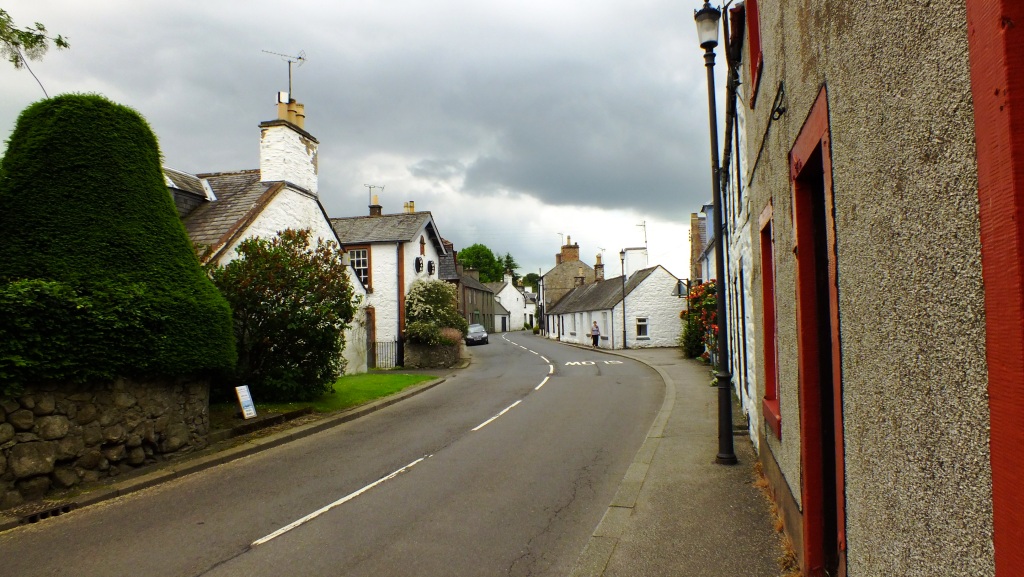
Although the main reason for visiting New Abbey was the delightful Sweetheart Abbey, we also took a stroll along the main street to the Corn Mill at the bottom. There are some interesting houses and windows that I thought I’d share with you.

DSCF0330

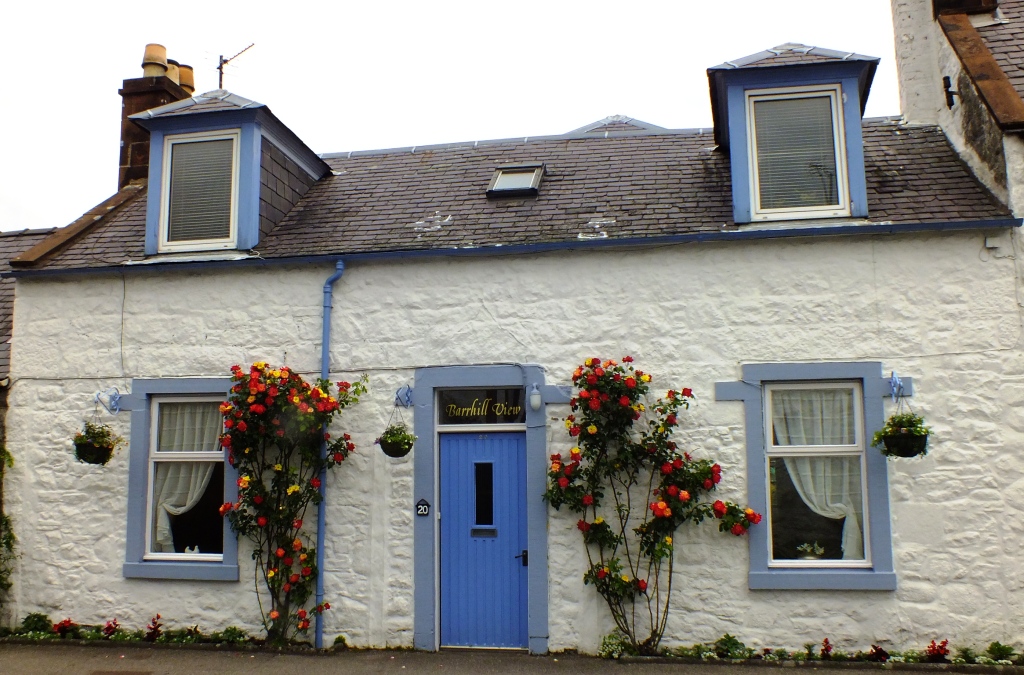
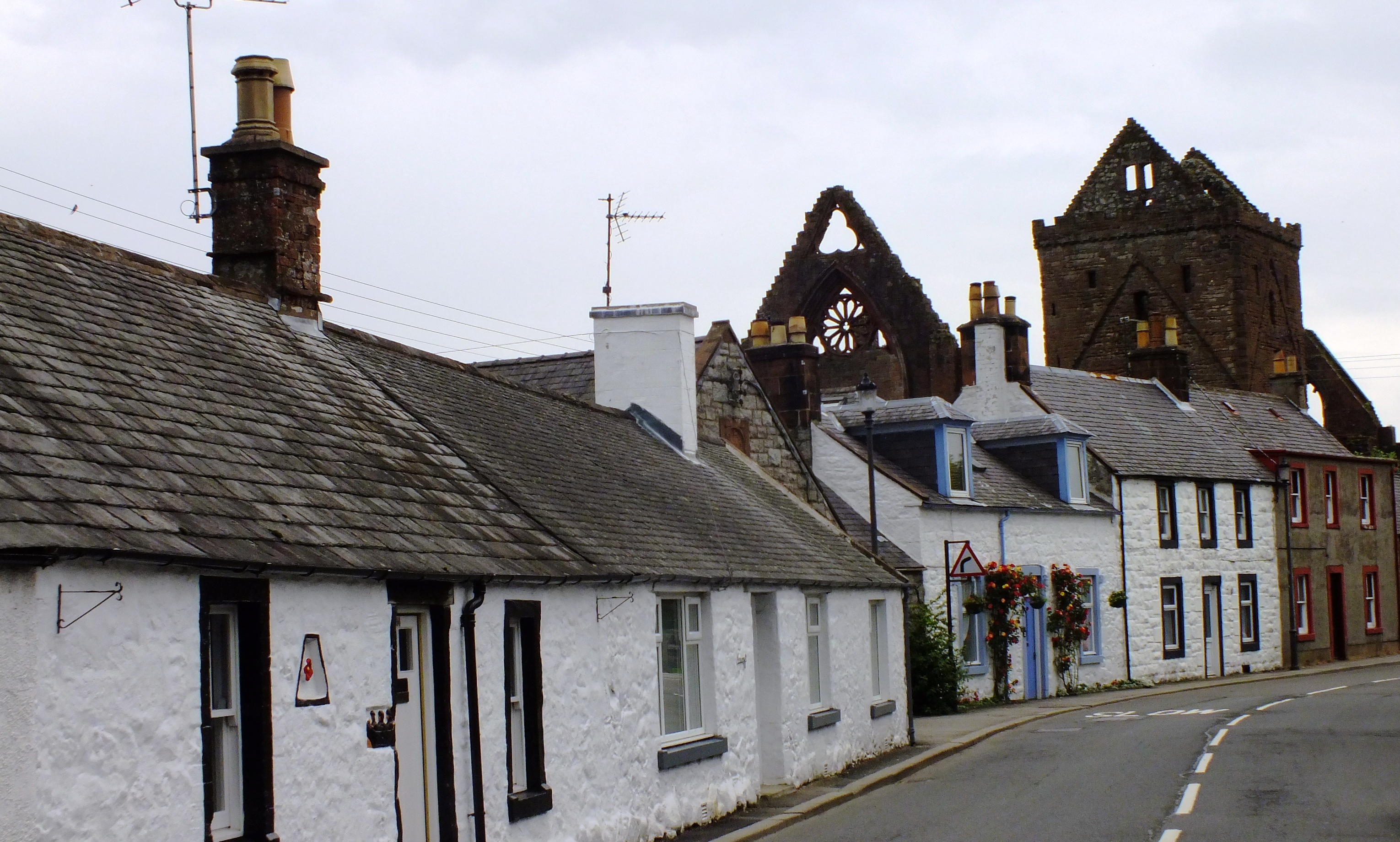
From the carpark at the Sweetheart Abbey head back to the road and turn right through the village down to the working Corn Mill. Pass several single-storey rubble-stone, whitewashed cottages like this pretty blue-painted framed openings with roses around the door.

DSCF0332

Rosewall

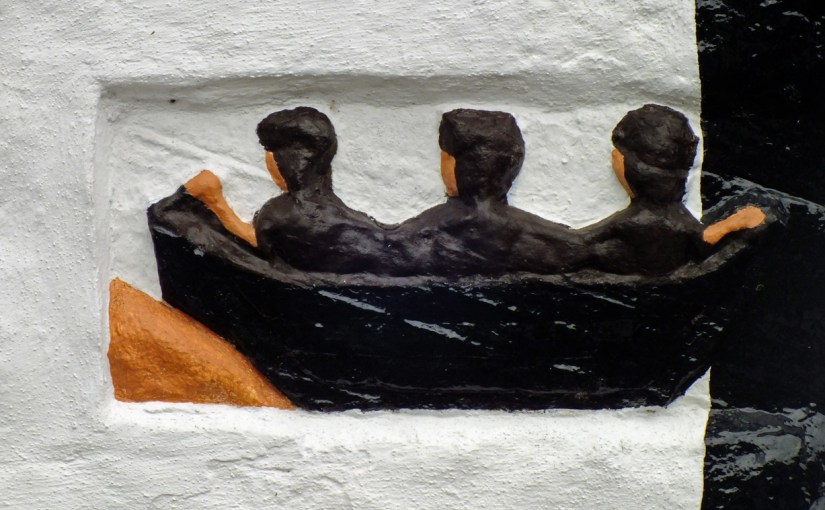
Mid/late 18th century. Single storey 3-bay cottage with central door and 2 carved stones incorporated. Carved stones represent a) 3 men in a boat, b) rose motif in incomplete pediment.

The Port House

Probably late 16th/17th century, but heightened late in 18th or in first quarter of 19th century, and openings altered.

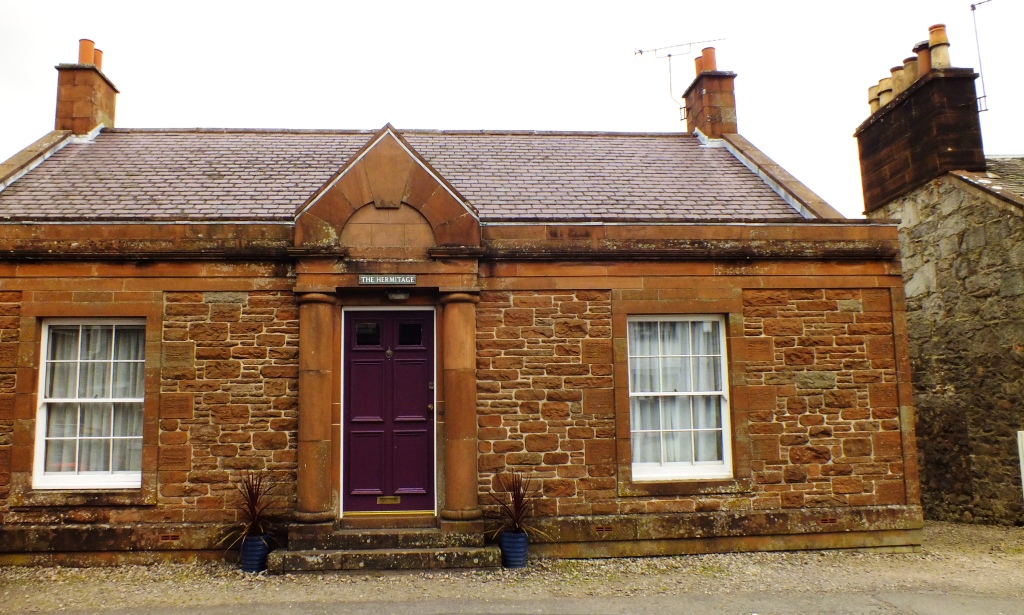
The Hermitage

DSCF0341

Windows filled with interesting old glass bottles.

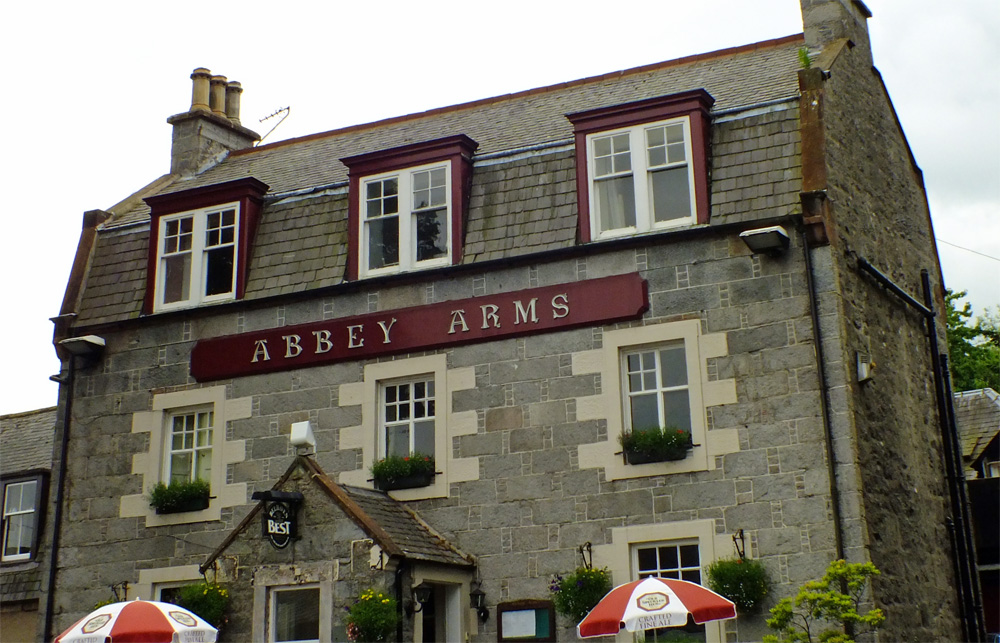
And two village pubs facing each other across the square.

DSCF0348

and another house with an interesting plaque

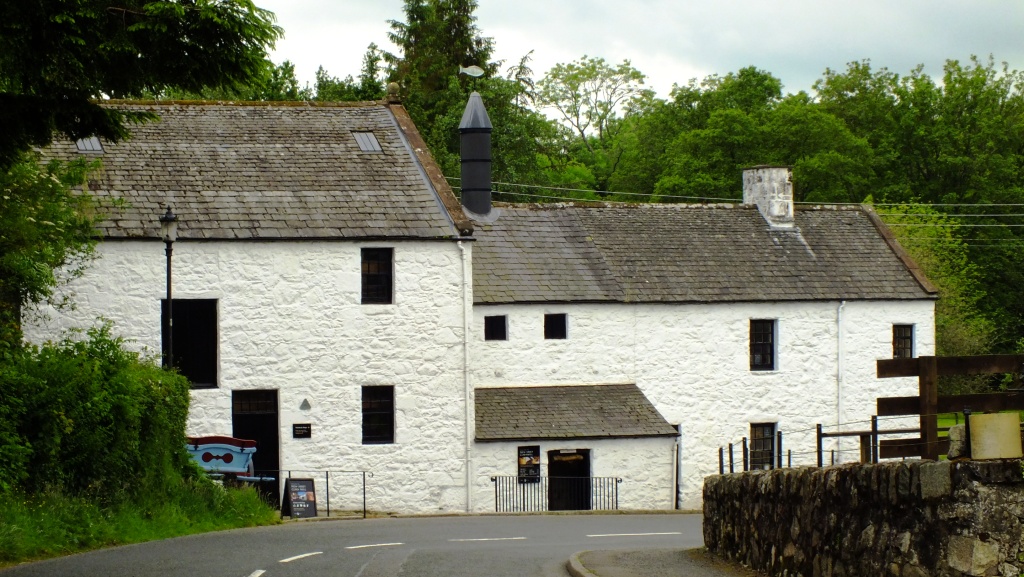
And finally the Corn Mill

DSCF0344

Now under the care of Historic Scotland, this three-storey whitewashed mill building was built towards the end of the 18th century by the Stewarts of nearby Shambellie House. However, it is thought that it reaches back much later than that, perhaps to as early as the late 13th century, when the Cistercian monks established their monastery of Dulce Cor (‘Sweet Heart’ ) at the far end of the village;  today the mill is still known locally as ‘Monks’ Mill’.

Behind the mill is an 1806 Masonic Lodge converted to church hall 1887; now a dwelling house.

New Abbey must rank amongst the prettiest settlements in the area with its whitewashed cottages overlooked by the Abbey ruins.

DSCF0336

If you enjoy a walk, short or long, then you may enjoy visiting Jo’s Monday Walk where you are in for a treat.

Or if your interest is windows then Dawn from ‘The Day After’  invites participants to post pictures of any windows that  they find curious, inviting, photogenic, or in some way tell a story.

The Lewis Chessmen

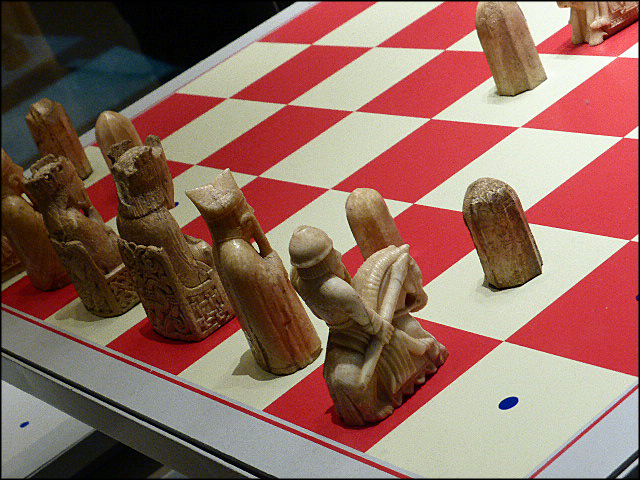
P1090676In 1831 a remarkable hoard of carved walrus ivory was discovered on the Isle of Lewis in the Western Isles, Scotland. It included 78 chessmen reflecting medieval Europe.

P1090682

Kings with swords on their laps, queens resting their chins in their hands, bishops dressed for Mass, knights on horseback and infantrymen (rooks) on foot. The rooks biting their shields depict fictional heroes of great ferocity known from Norse saga as Berserkers.  (Probably made in Scandinavia, thought to be Norway, about AD 1150-1200 | Found on the Isle of Lewis, Outer Hebrides, Scotland)
Information from the British Museum

Wouldn’t you love to hold one of these pieces in your hand?