#303 Connections

It’s been a while since I joined in with the Lens-Artists photo challenge, but the number 303 leapt out at me this week as I have just come back from a holiday based close to the A303 in Wiltshire so I thought it would be interesting to find connections between the sites we visited in and around that area.

Family Connections

The A303 is one of the main routes from London to the Southwest and a route I have travelled many, many times to visit my youngest son who is based in Wiltshire (military) and my daughter who lives in Surrey. It’s also famous for passing by the World Heritage site of Stonehenge, the world’s most famous prehistoric monument.

History

Stonehenge (2500 BC) is not the largest henge though, that title goes to Avebury and together they form the heart of a World Heritage Site which also includes Silbury Hill. We didn’t visit Stonehenge as we have done so not long ago, but we drove past it a few times this week so had a few sneaky glances! Instead we opted for a visit to Avebury.

Stonehenge

Avebury (2850 – 2200 BC): the henge survives as a huge circular bank and ditch, encircling an area that includes part of Avebury village. Within the henge is the largest stone circle in Britain – originally of about 100 stones – which in turn encloses two smaller stone circles.

A double avenue of stones leads away from the southern entrance towards the Sanctuary stone circles on Overton Hill, about a mile to the south-east. Unlike Stonehenge, this site is free to visit though you will have to pay for parking unless you are a National Trust or English Heritage member.

More recent history can be found at Old Sarum, an iron age hill fort dating back to 400 BC. Later occupied by the Romans during their conquest of Britain in AD 43, where perhaps a military fort was set up. It was during William the Conqueror’s reign that the strategic advantage of this place was recognised and a motte and bailey castle built.

Later, stone buildings were erected and in 1078-99 a cathedral was built after the 1075 Council of London decreed that the see should be moved from Sherborne to Old Sarum. Dissatisfaction with the site and poor relations with the garrison in the castle caused the cathedral to be moved to its present site in Salisbury (New Sarum) in 1220 and much of the stone from the old cathedral was used to build the new one.

Site and excavation of the old cathedral

Salisbury Cathedral is built in the shape of a cross. It boasts Britain’s tallest spire (123m tall) and contains the oldest working mechanical clock in the world as well as the Magna Carta (great charter) written in 1215 about the rights of the English people against the severe rule of King John. It also contains blue Prisoners of Conscience Window and the Amnesty International candle burning for oppressed people around the world.

Salisbury New Cathedral (spire) from the Watermeadows

The soul should always stand ajar.
That if the heaven inquire,
He will not be obliged to wait,
Or shy of troubling her.

Emily Dickinson, Time and Eternity

The Blue Windows

Often my favourite part of visiting cathedrals is the cloisters. Providing a place of calm and  contemplation the cloisters here are Britain’s largest and look out onto two cedar trees, planted more than 150 years ago to commemorate Queen Victoria’s accession to the throne.

Cloisters and Cedar trees

Gardens

Which leads me to my last connection. Gardens. And there are several signposted from the A303. But first let’s revisit Avebury, where Benedictine monks once walked the ground that is now Avebury Manor Gardens.

The Monks’ Garden

There are traces of the work of later owners, from the 17th century orchard, the warm red brick of 18th century walls and elaborate topiary of 20th century owners.

Climbing roses

Talking of Benedictine Monks reminded me that Shaftsbury Abbey, a mere 15 minute drive from the A303, was once home to Benedictine nuns who were responsible for providing medical care for themselves and the wider community and did so by gathering local plants and those grown specially in the garden. In AD 888, King Alfred the Great founded in Shaftesbury the first great abbey just for women. By the time of Henry VIII this had become the wealthiest and most important Benedictine nunnery in England, dominating and serving the town and lands around. It was the last abbey to be destroyed by Henry VIII in 1539.

Signposted off the A303 is another garden designed by a woman, Tintinhull House and Garden. Built in 1630 the house was bought by Captain and Mrs Reiss in 1933, when Phyllis decided to create a garden that she described as her ‘happy place’.

Now I can totally relate to that. A connection to Salisbury cathedral? There is an area called Cedar Court – once containing a Cedar of Lebanon now full of ornamental trees including beautiful magnolias.

Cedar Court
Fountain Garden

Another garden signposted off the A303 is Lytes Cary Manor. Created by the Lytes family over five centuries they gave up the estate in the 18th century due to financial difficulties.

Lytes Cary Manor

After 150 years of neglect it was bought by the Jenner family who restored the manor and created an Arts and Crafts inspired garden.

Which leads me to my final connection. Flowers. And specifically Roses. June is rose month and where better to go than Mottisfont walled garden which is home to the National Collection of Old English Roses (pre 1900). So many wonderful colours and forms and scents.

Not just roses, but companion planting too makes the most wonderful colourful beds.

So there you have it. Who knew there could be so many connections with one road that connects the Southeast to the Southwest of England.

Lens-Artists Photo Challenge #303 | Connections
Just Back From… Dartmoor

In the spring of 2017 we had a week’s holiday in the neighbouring county of Devon. South Devon to be precise because it was one area that we hadn’t explored much in many decades. Although we had a wonderful week we never had time to go into Dartmoor National Park so we were determined to go back. A lot has happened since then, but finally last week we did manage a short break.

Great Staple Tor

We based ourselves in Tavistock on the western edge of the park and for once we booked into a hotel with bed, breakfast and dinner included so we didn’t have to think about anything other than where we were going to go each day. I prefer holiday cottages but they are never a proper holiday for me.

The weather was a bit iffy – sunshine and showers forecast throughout the 4 days, but we didn’t do too badly. On the rainiest day we went into Exeter to tick off yet another cathedral from our list. And of course there had to be one garden visit.

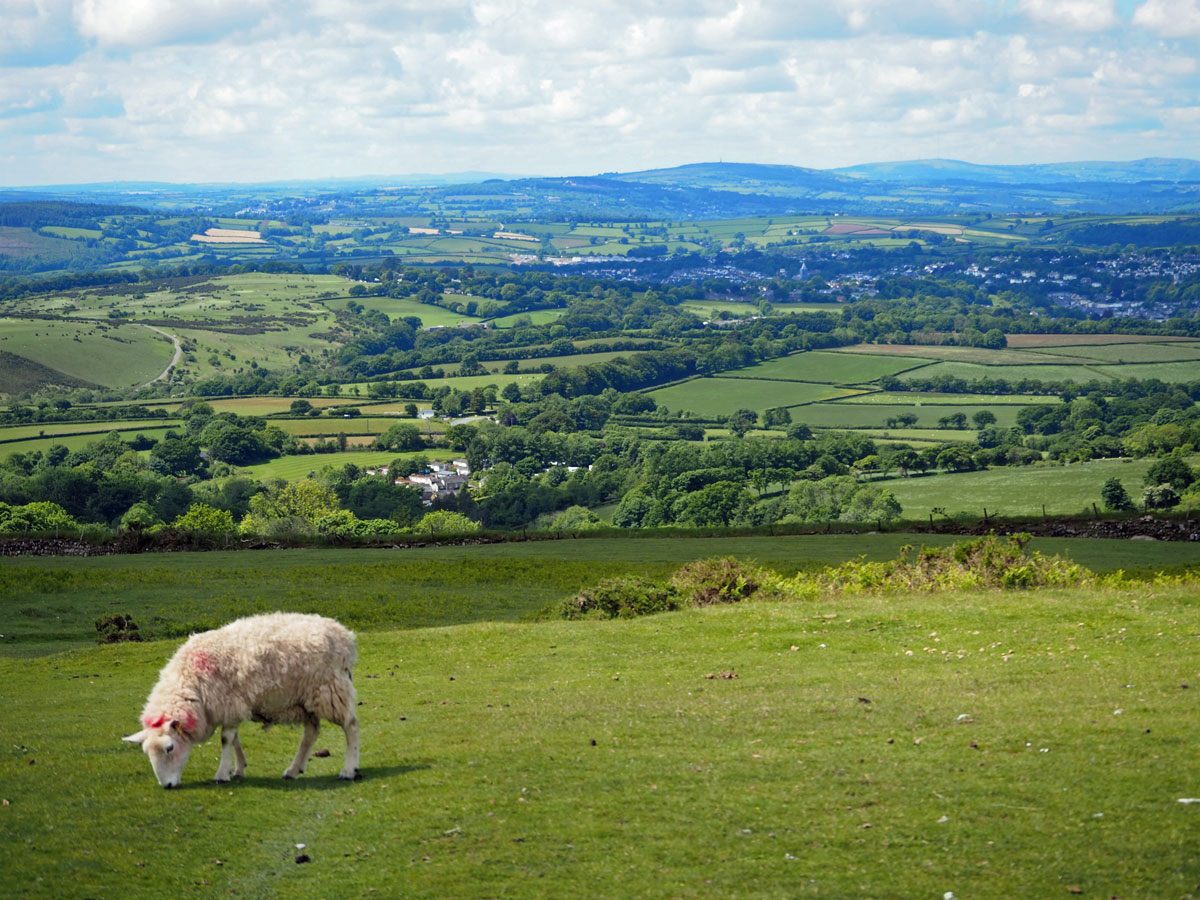
Views over towards Tavistock

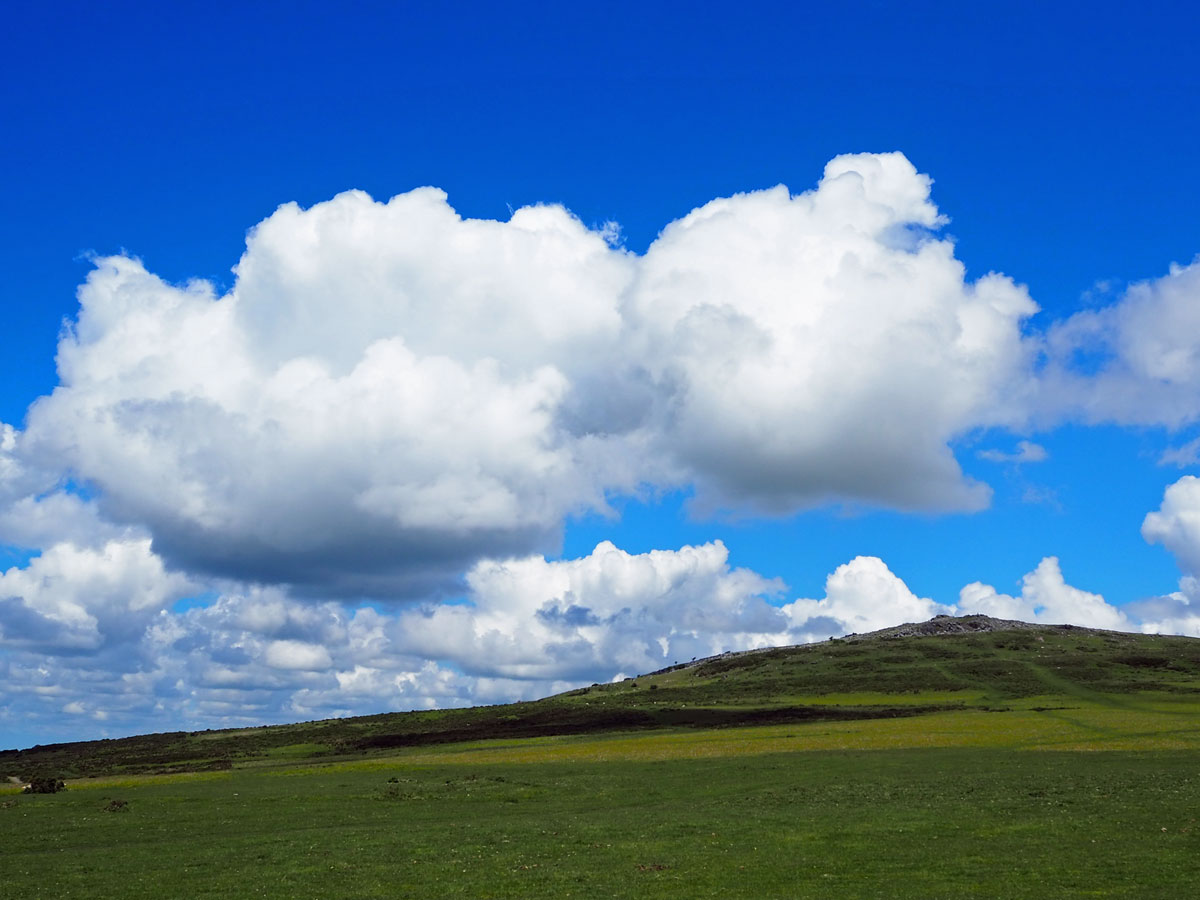
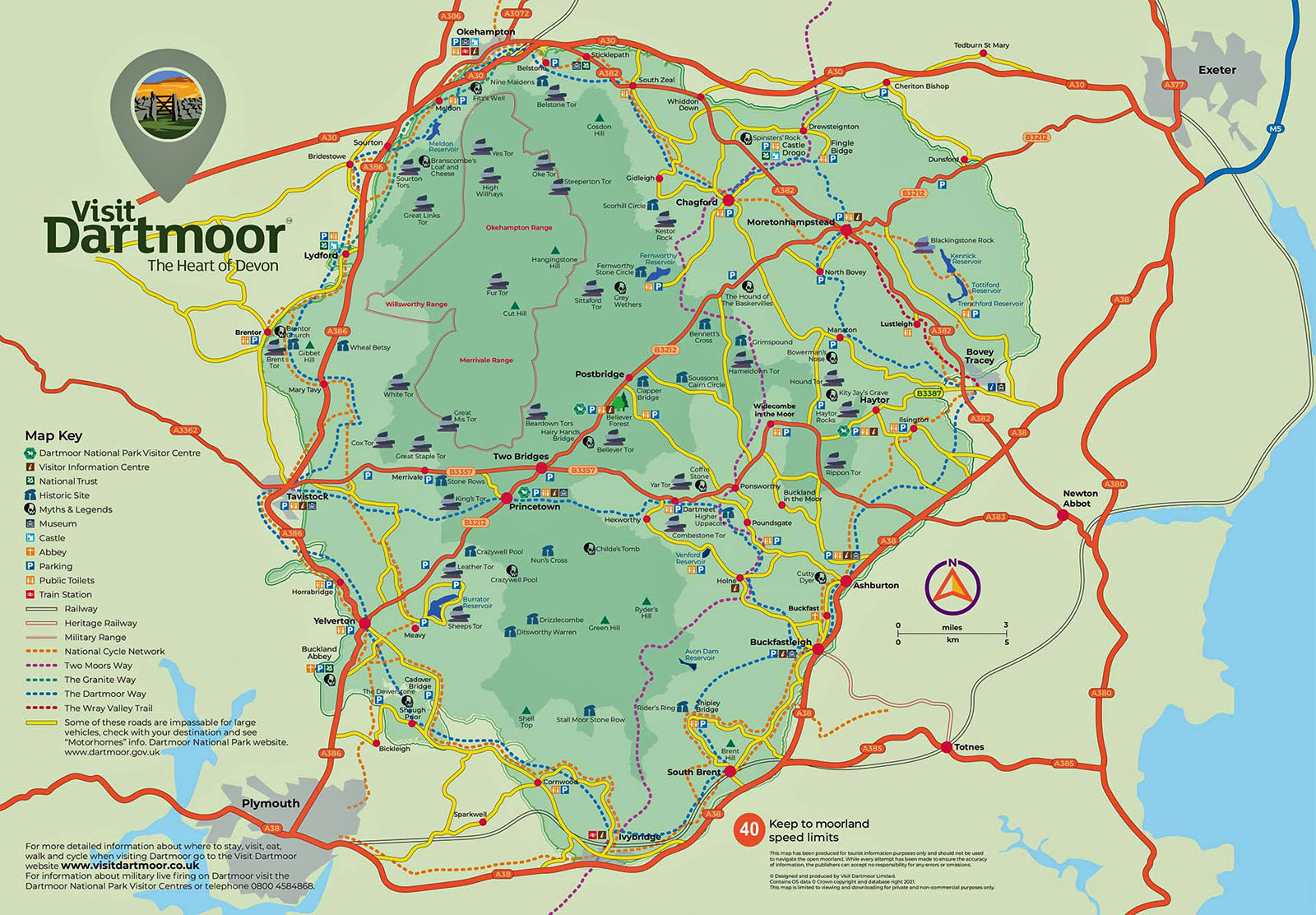
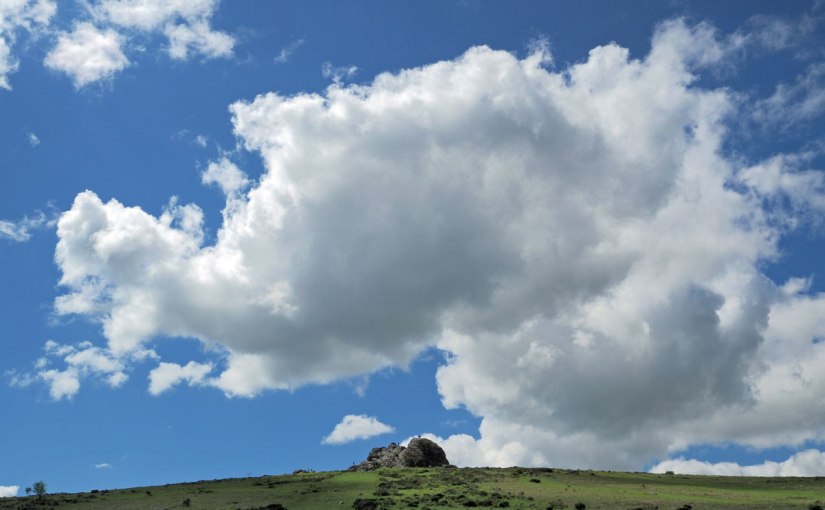
I planned a circular drive around Dartmoor with several stops to have a walk, enjoy the views and on the OH’s birthday we had a perfect day for it with blue skies, sunshine and wonderful fluffy white clouds. Our first stop was just inside the park, a bare 4 miles from Tavistock, at Pork Hill car park where you have amazing views over Tavistock and towards Plymouth to the south. Loads of parking and a good place for several walks / hiking trails / tors.

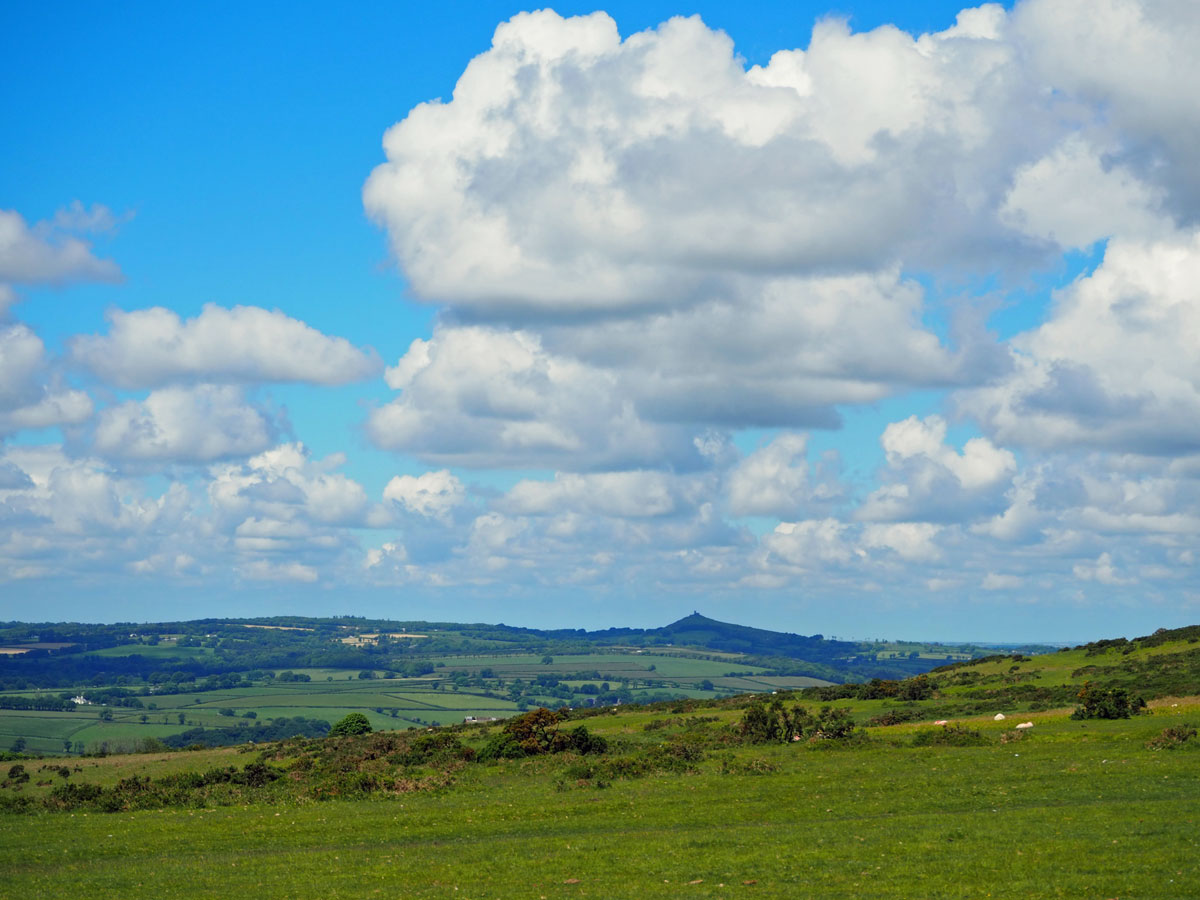
Brent Tor is one of the most impressive rock outcrops in Dartmoor. With St Michael’s Church at its top, it makes a distinctive and famous silhouette on the Dartmoor skyline.

And an ice-cream van. Though too early in the day for us.

Onwards to our next stop at Postbridge where you will find a large car park and toilets. There is a small museum and and exhibition about the local area which helps to explain the development of the moors and a shop selling books, maps, information leaflets to help you explore the area, including the Walks around Postbridge leaflet as well as local crafts and gifts. The staff are very welcoming and friendly too.

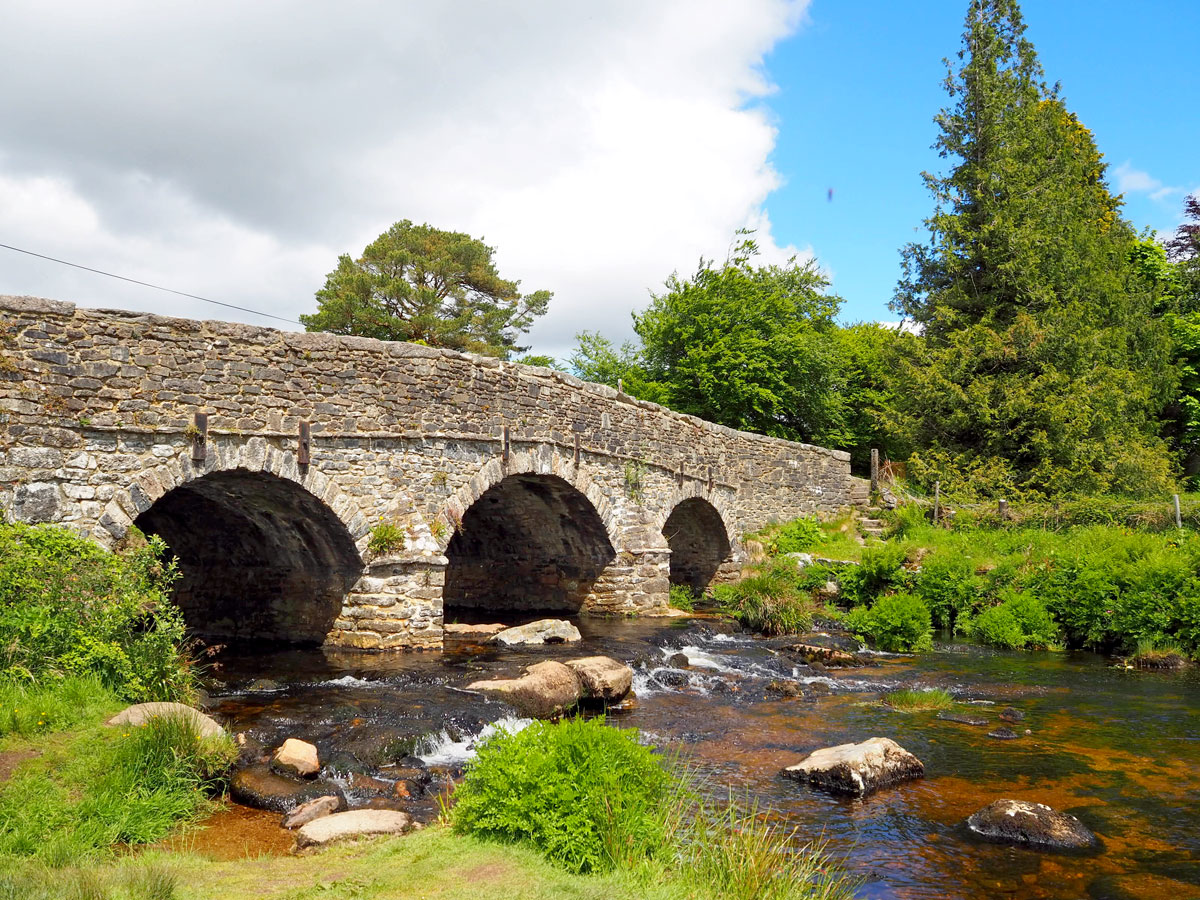
The ‘new’ bridge over the East Dart River

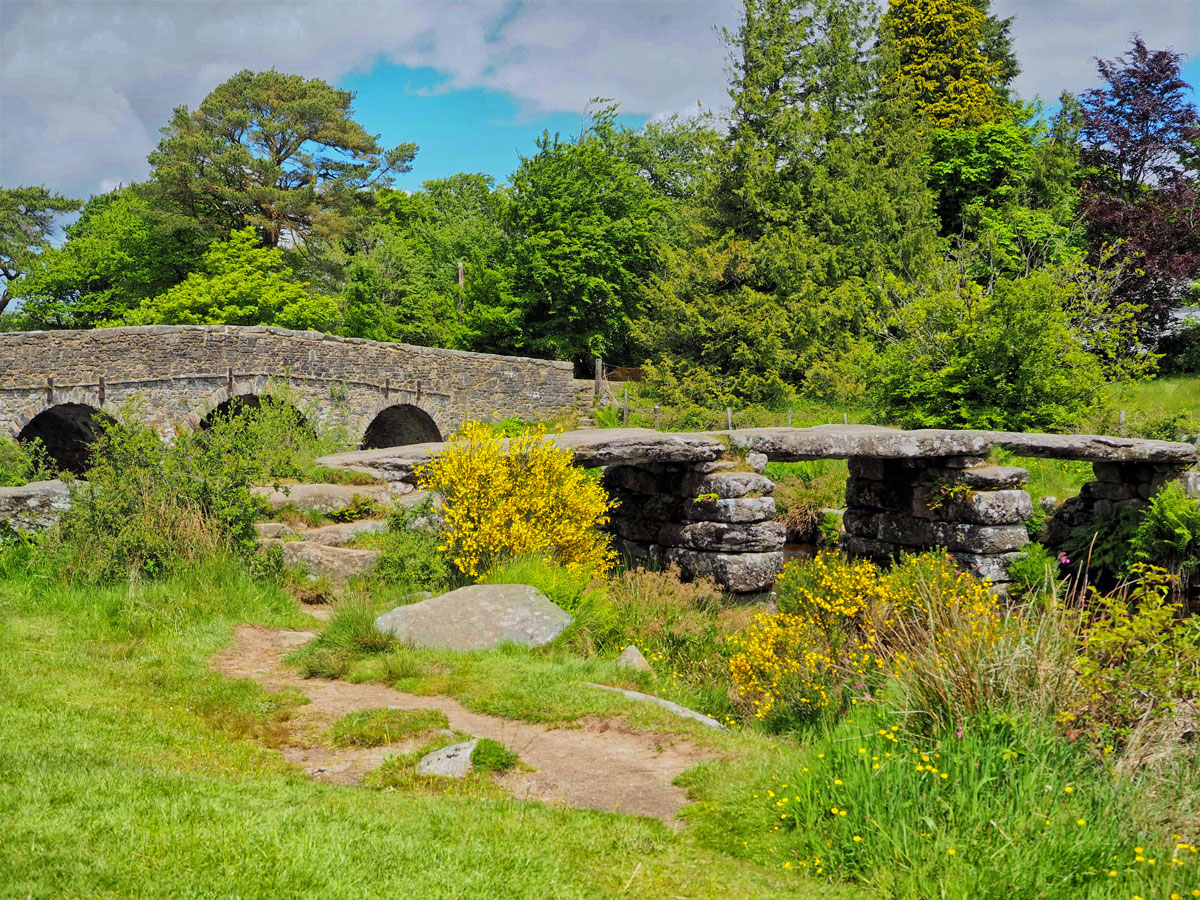
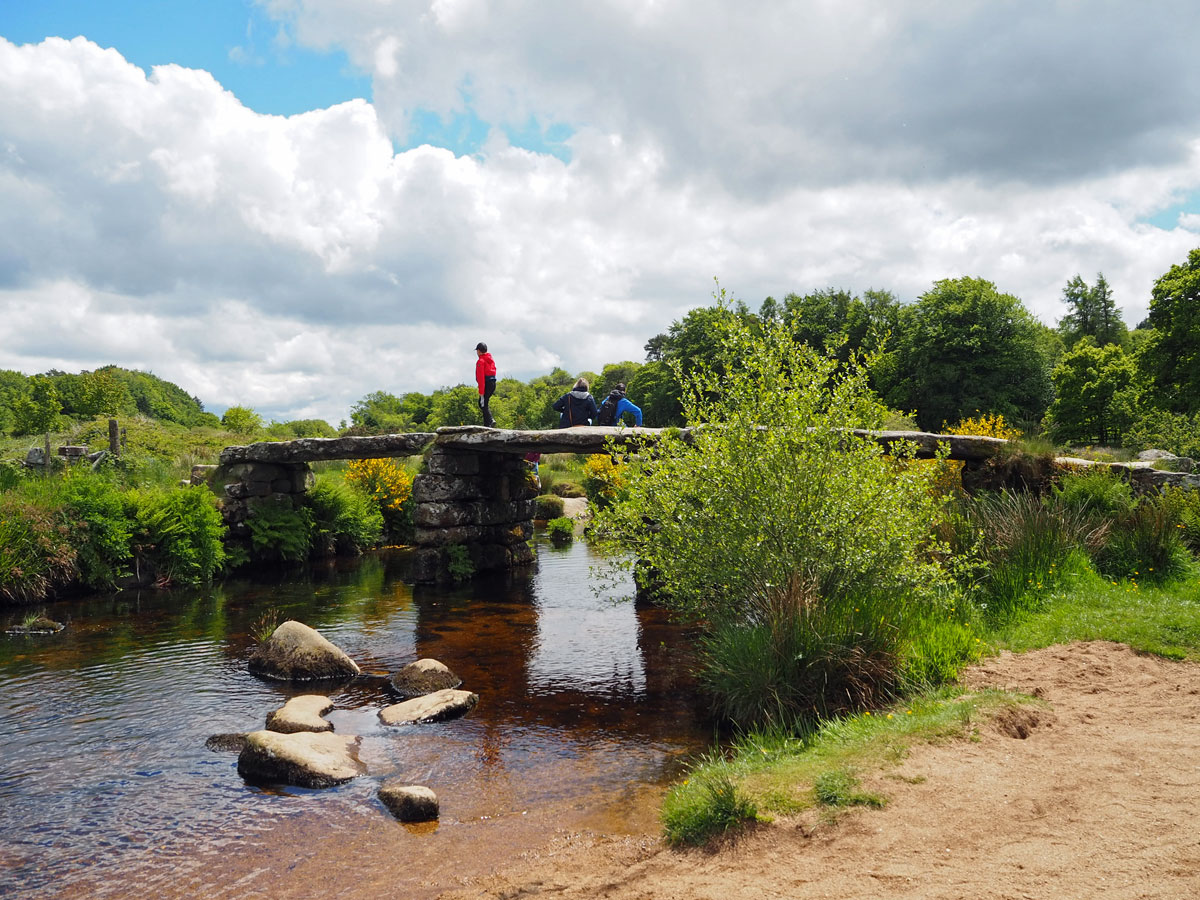
Close by you will find one of the best examples of an iconic clapper bridge. It is believed to date back to medieval times and would probably have replaced stepping stones to help packhorses cross the river. The bridge has two central piers spanned by three large granite slabs, or clappers.

New bridge and the ancient clapper bridge

The word clapper is thought to derive from the Anglo-Saxon word ‘cleaca’, meaning stepping stones, or ‘bridging the stepping stones’.

The clapper bridge

It’s a very popular place for families who love to paddle in the river with fishing nets for pond dipping (not sure what they can find) and also picnic in the meadow close by.

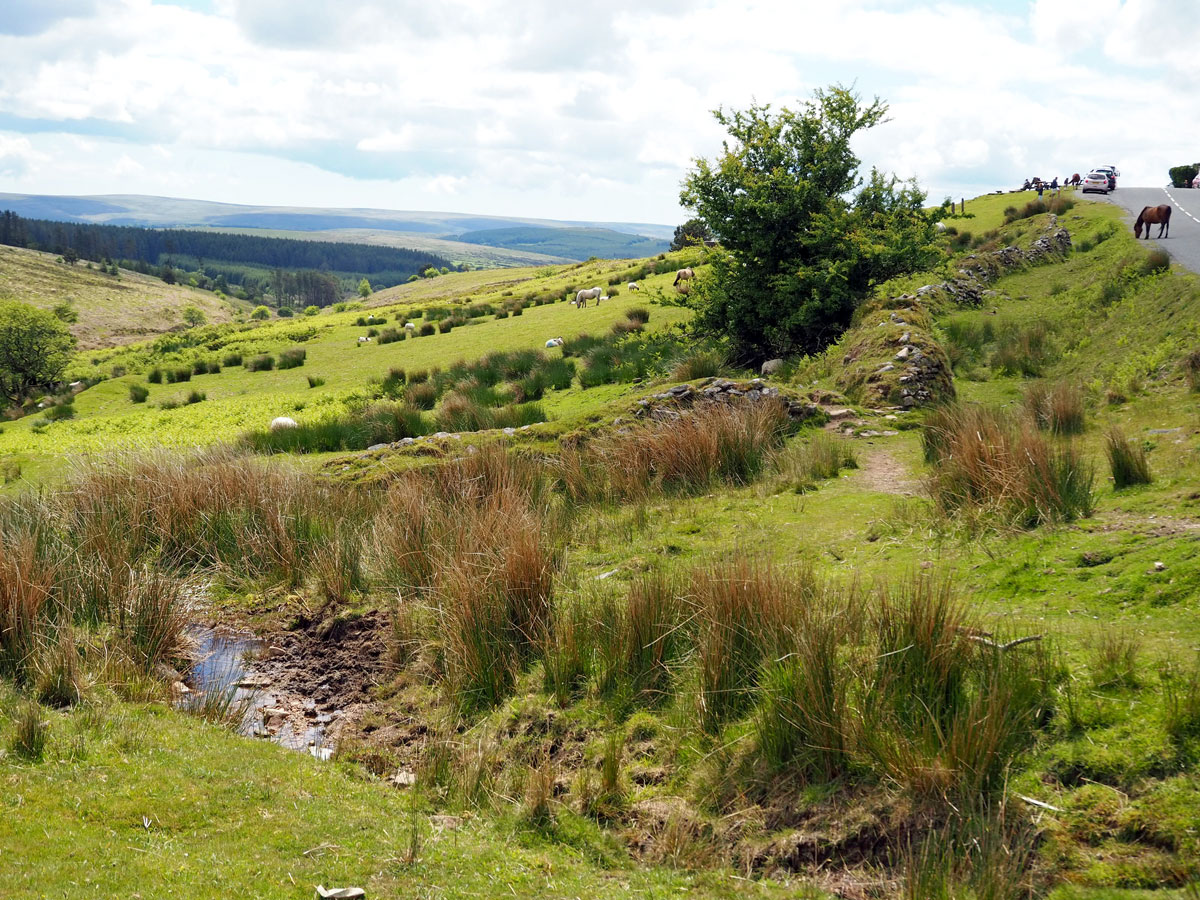
One of the nicest things about driving through the park is the sense of space. Despite it being the school half term holidays the park wasn’t very busy and most of the many car parks (usually free) were relatively empty which meant we could stop when and where we liked.

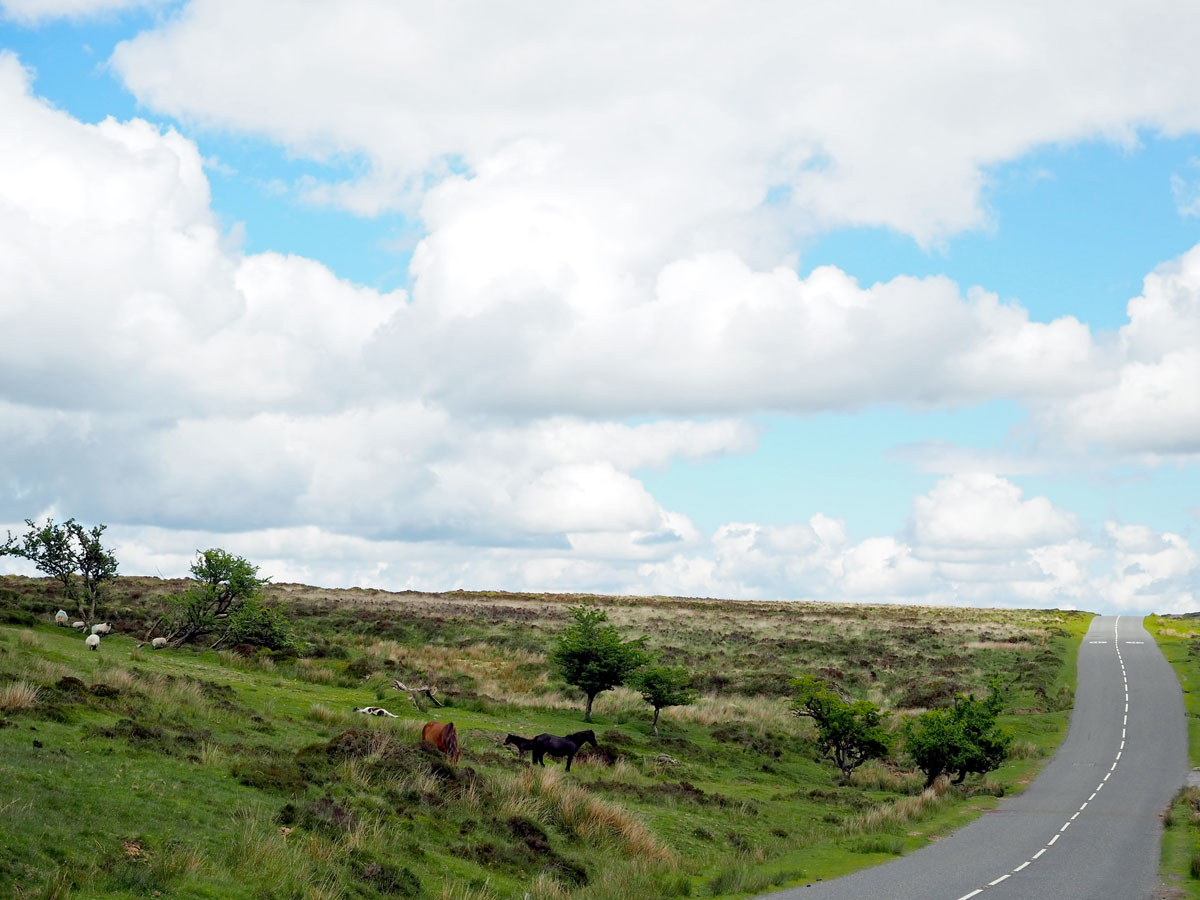
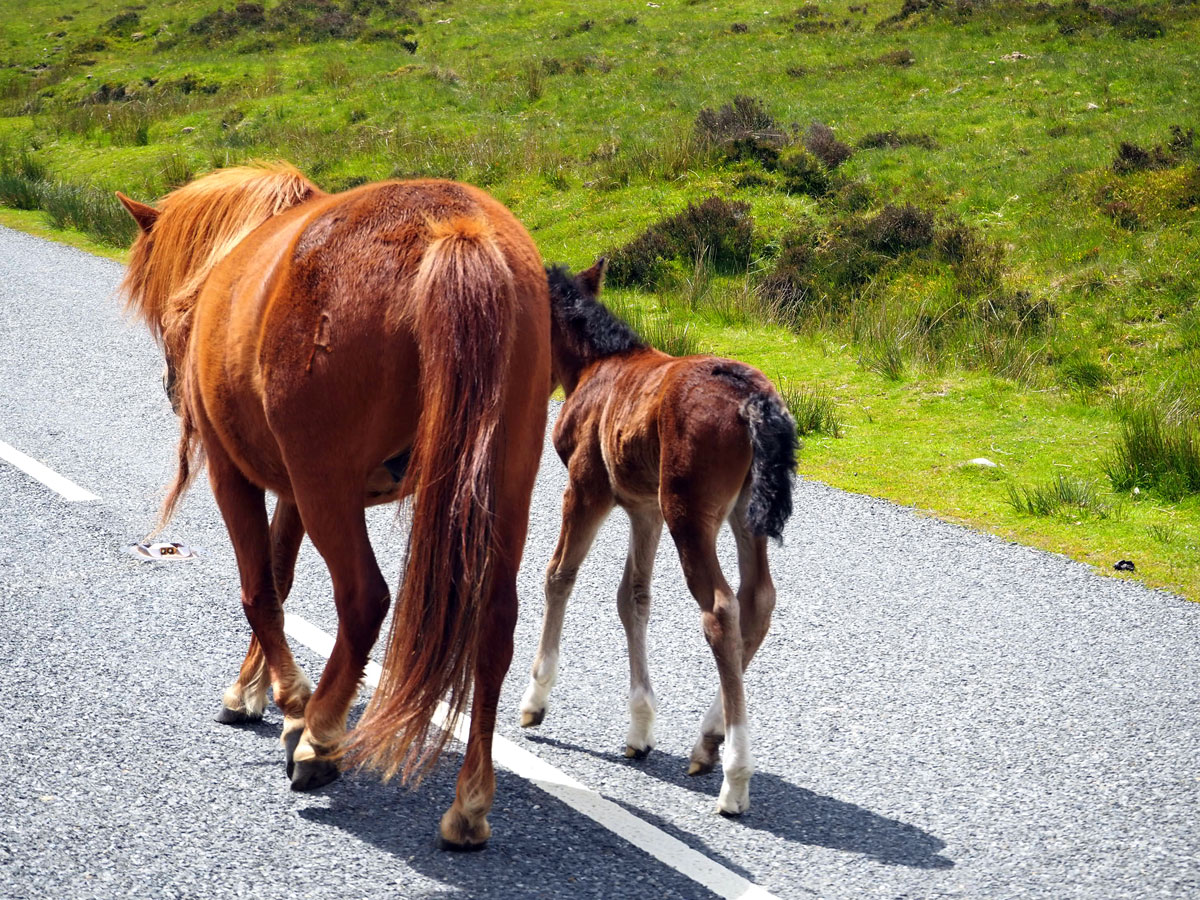
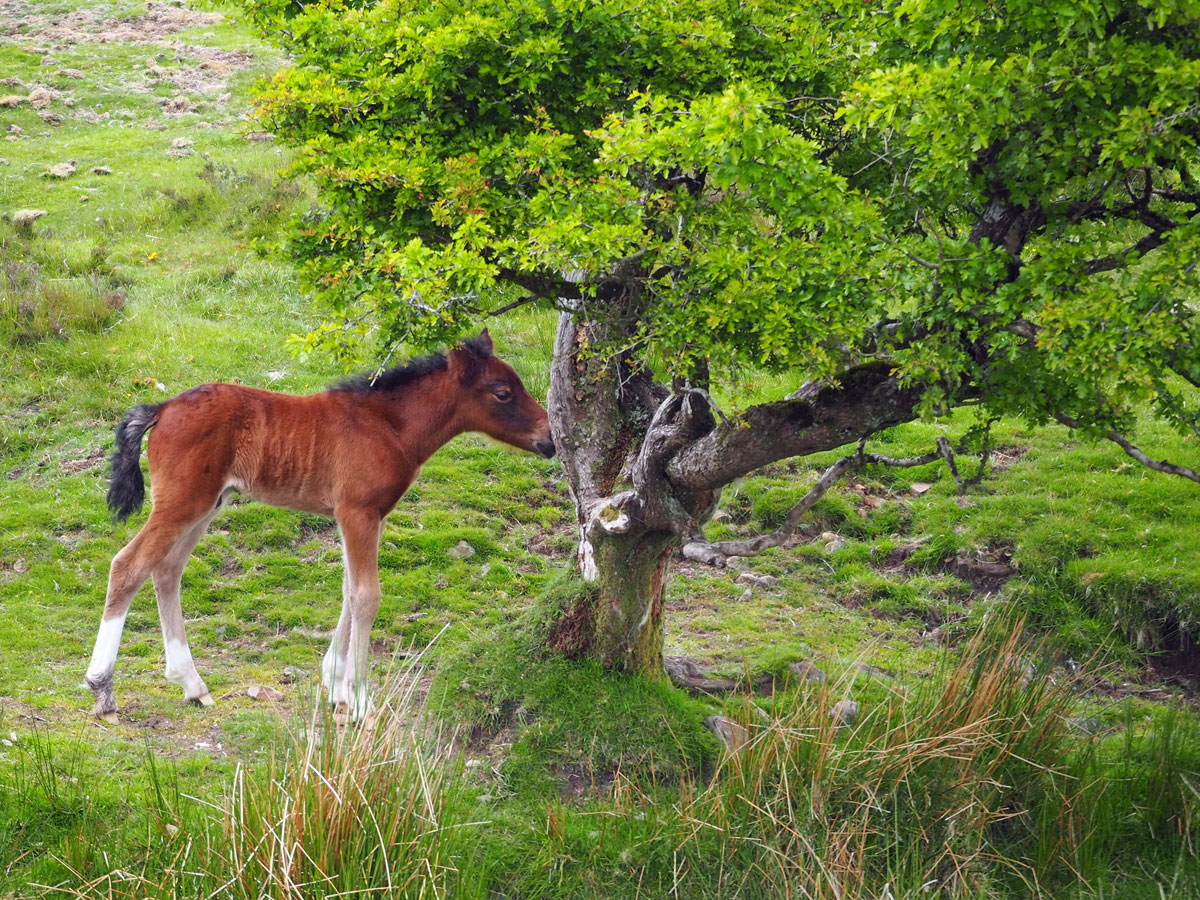
Of course stopping to look at the ubiquitous Dartmoor ponies was a must. The speed limit with the park is 40mph – but you always have to keep your eyes open for sheep, ponies and even cattle crossing or walking in the road. Slow travel at its best.

Is this edible?

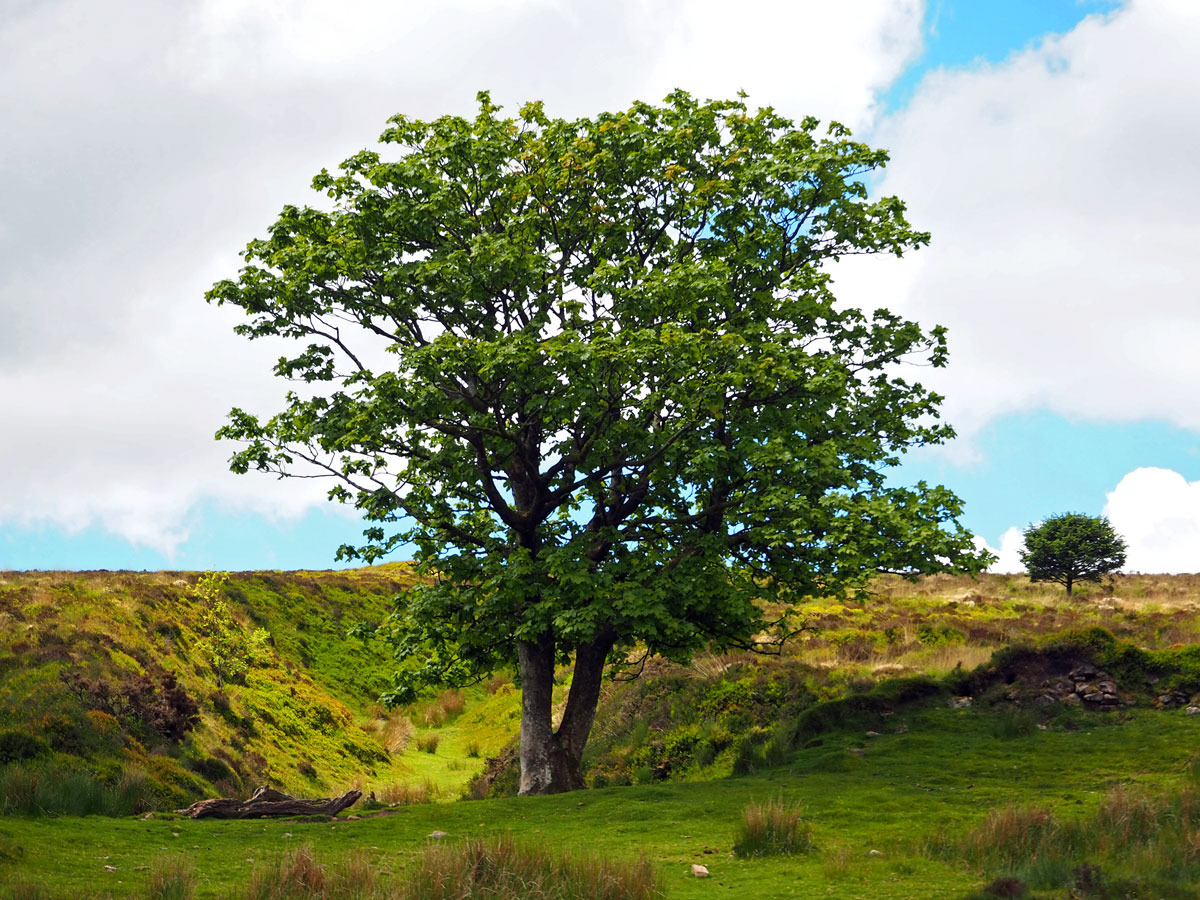
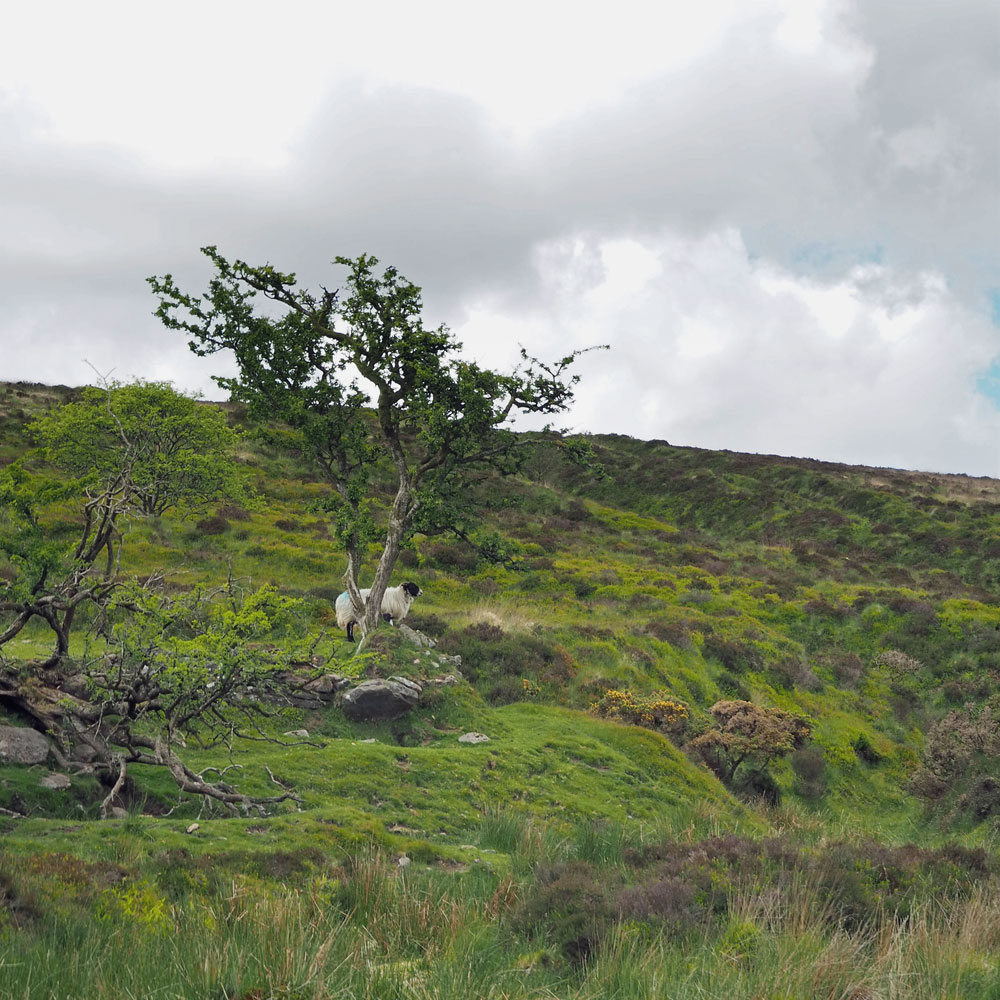
I was thinking about what makes Dartmoor different to other similar places I have visited, such as Exmoor, North Yorkshire, the Brecon Beacons. It seems a lot bleaker and desolate with so much space and very few signs of human habitation and perhaps a sense of history from Early Neolithic to the much more recent tin mining. The big skies and on this day, the clouds, are pretty amazing too though I wouldn’t want to be up here in the mist and rain.

Sheep terrain
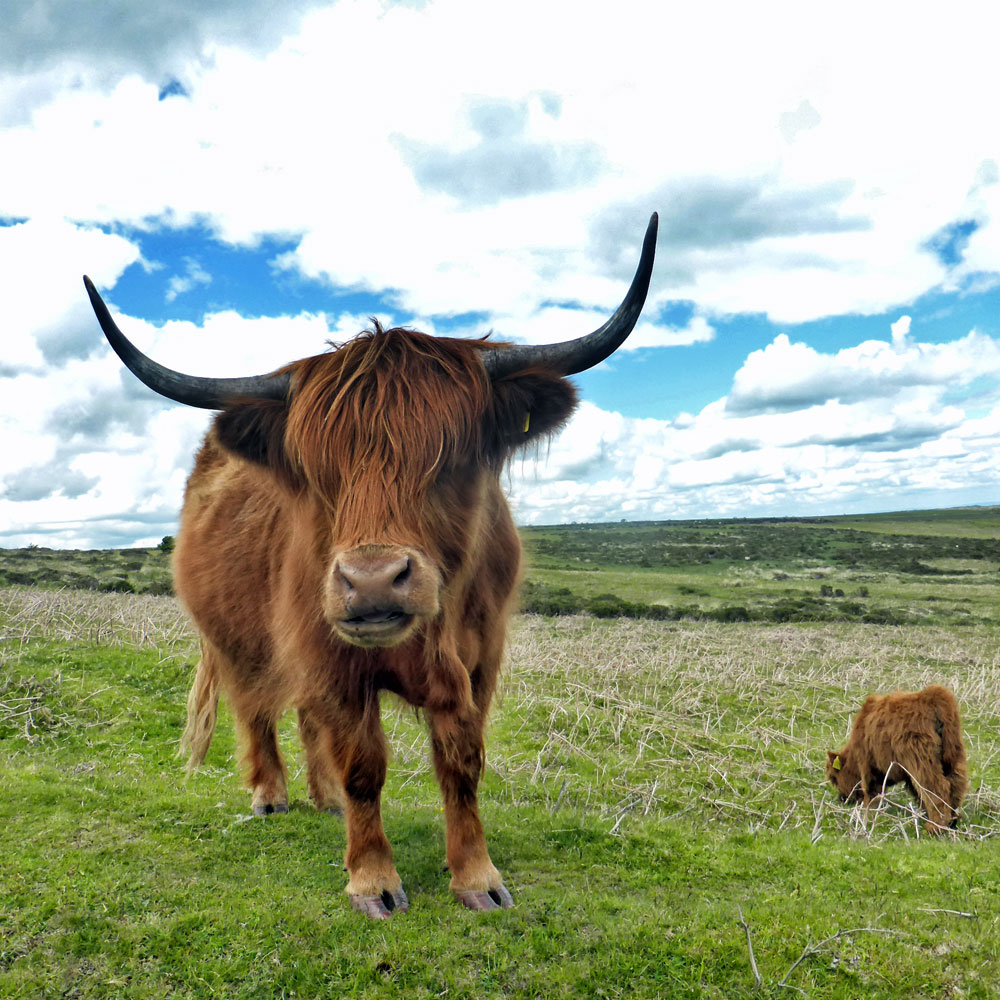
Inquisitive McMoos

Wending our way around the park via Moretonhampstead and Bovey Tracey our next port of call was the famous Haytor which lies between Bovey Tracey and Widdecombe in the Moor.

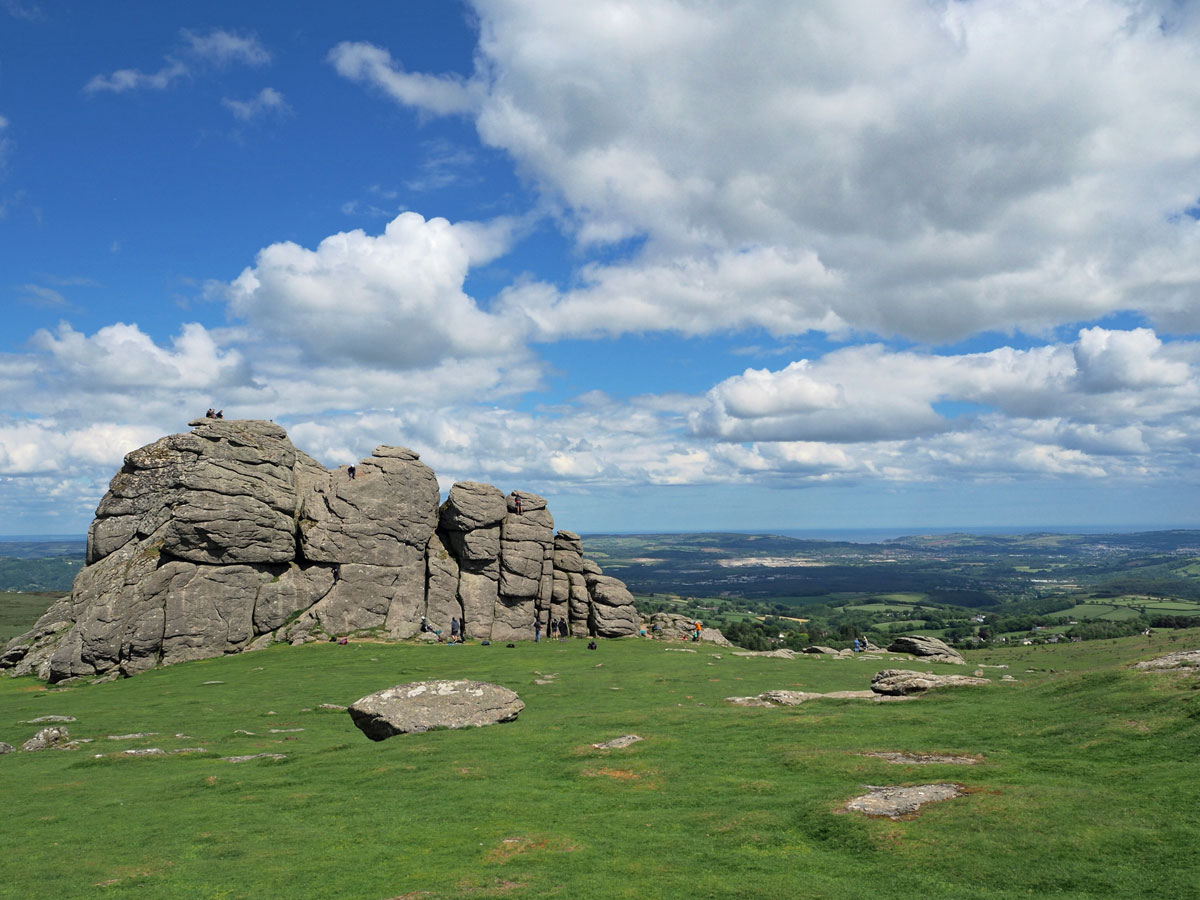
Haytor and the South Devon coast in the distance

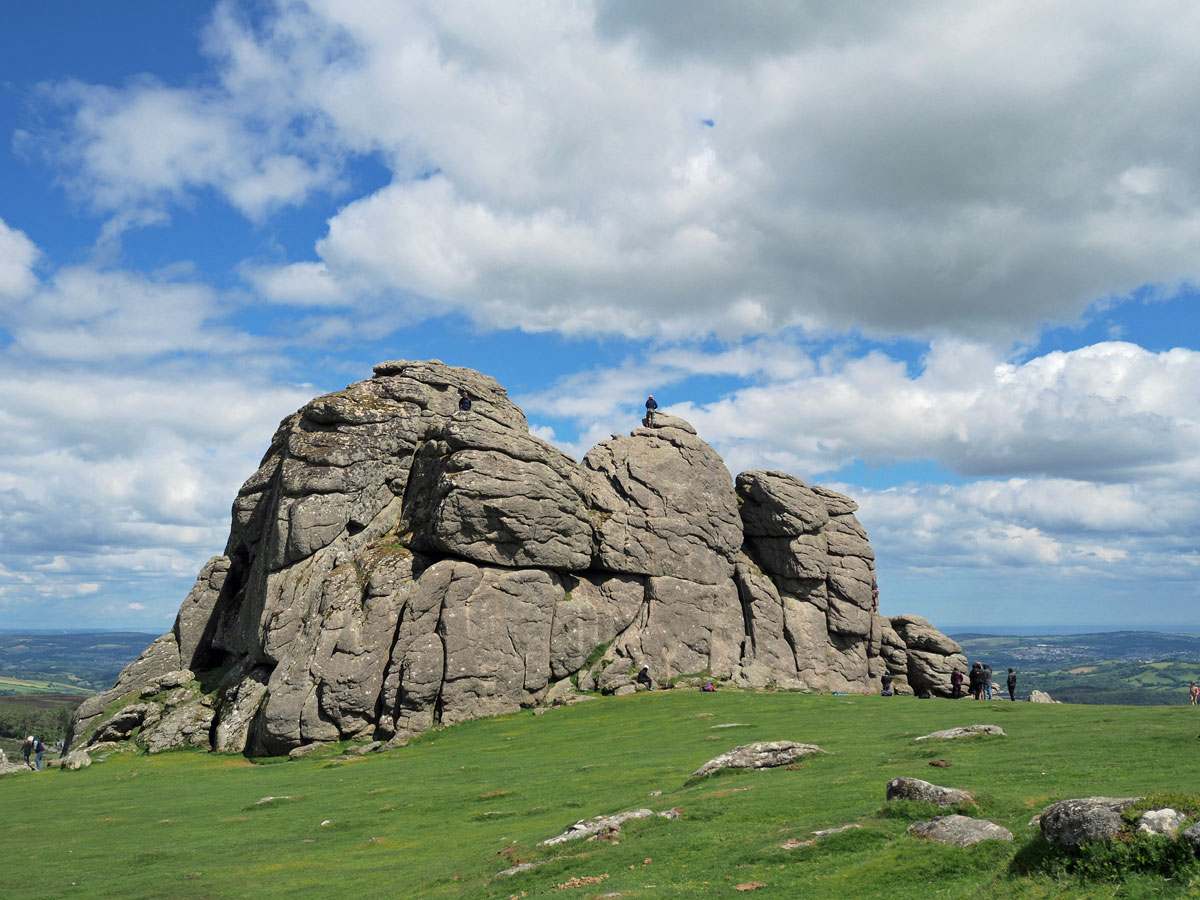
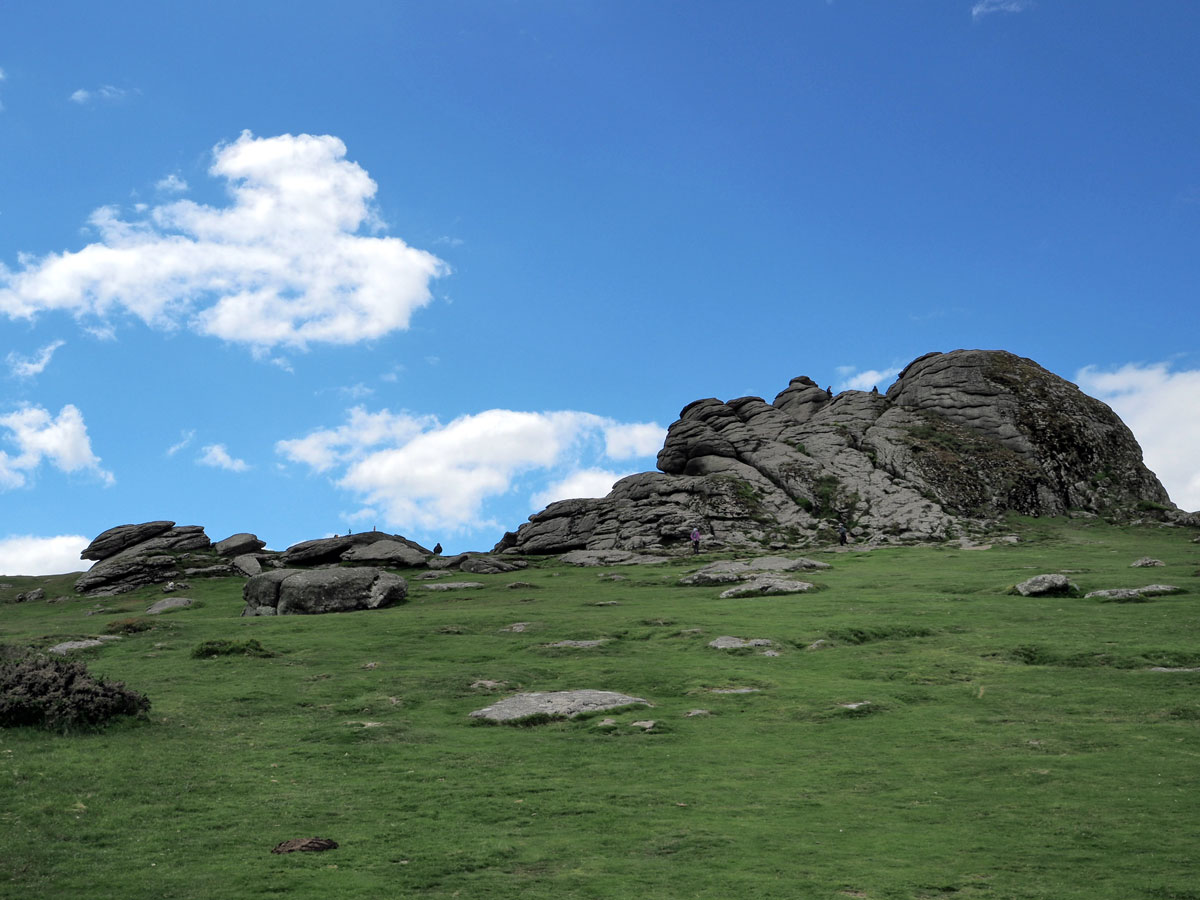
Haytor is perhaps the most easily accessible tor and has spectacular views across Dartmoor and the South Devon coast. I think we chose the steepest path up to the rocks though, but we made it!

The rocky granite outcrops (tors) that dominate the landscape were formed over 280 million years ago. People have been here for over 4,000 years, you will see the remains of prehistoric round houses, field boundaries and burial cairns.

It was the busiest place we came across during the day with a lot of people rock climbing and bouldering. There is a Visitor Centre here too where you can buy a ‘Walks around Haytor’ leaflet or the ‘Haytor’ booklet.

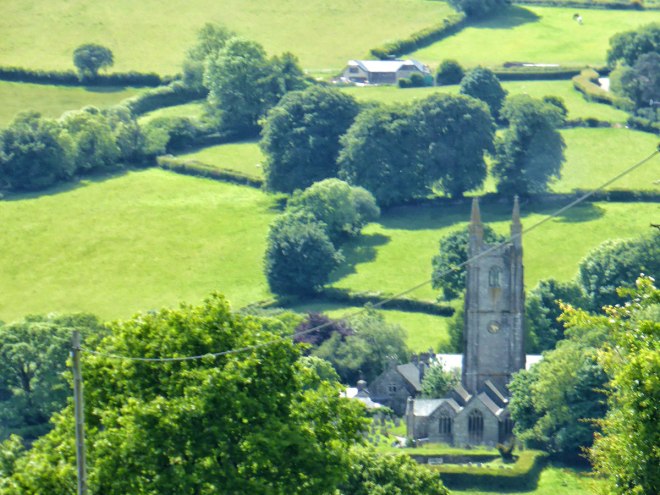
We didn’t stop in Widdecombe in the Moor which is famous for two things; The Church of St Pancras, colloquially known as the Cathedral of the Moors in recognition of its 120-ft tower, stands over the village green — helping to make Widecombe one of the most beloved villages on Dartmoor

and the folk song “Widecombe Fair” which immortalises the tale of Tom Pearce and the death of his horse at the famous annual fair which is held on the second Tuesday in September. It is a classic agricultural fair with horse jumping, rural crafts, a dog show and much more.
“Tom Pearce, Tom Pearce, lend me your grey mare.
All along, down along, out along lea.
For I want for to go to Widecombe Fair,
With Bill Brewer, Jan Stewer, Peter Gurney,
Peter Davy, Dan’l Whiddon, Harry Hawke,
Old Uncle Tom Cobley and all,
Old Uncle Tom Cobley and all.”

The roads here are quite narrow so there is much stopping and reversing and squeezing into passing places so not for the faint-hearted driver. I had planned my route to avoid the narrowest of roads, but some are unavoidable. All I can advise is to take your time and don’t panic!

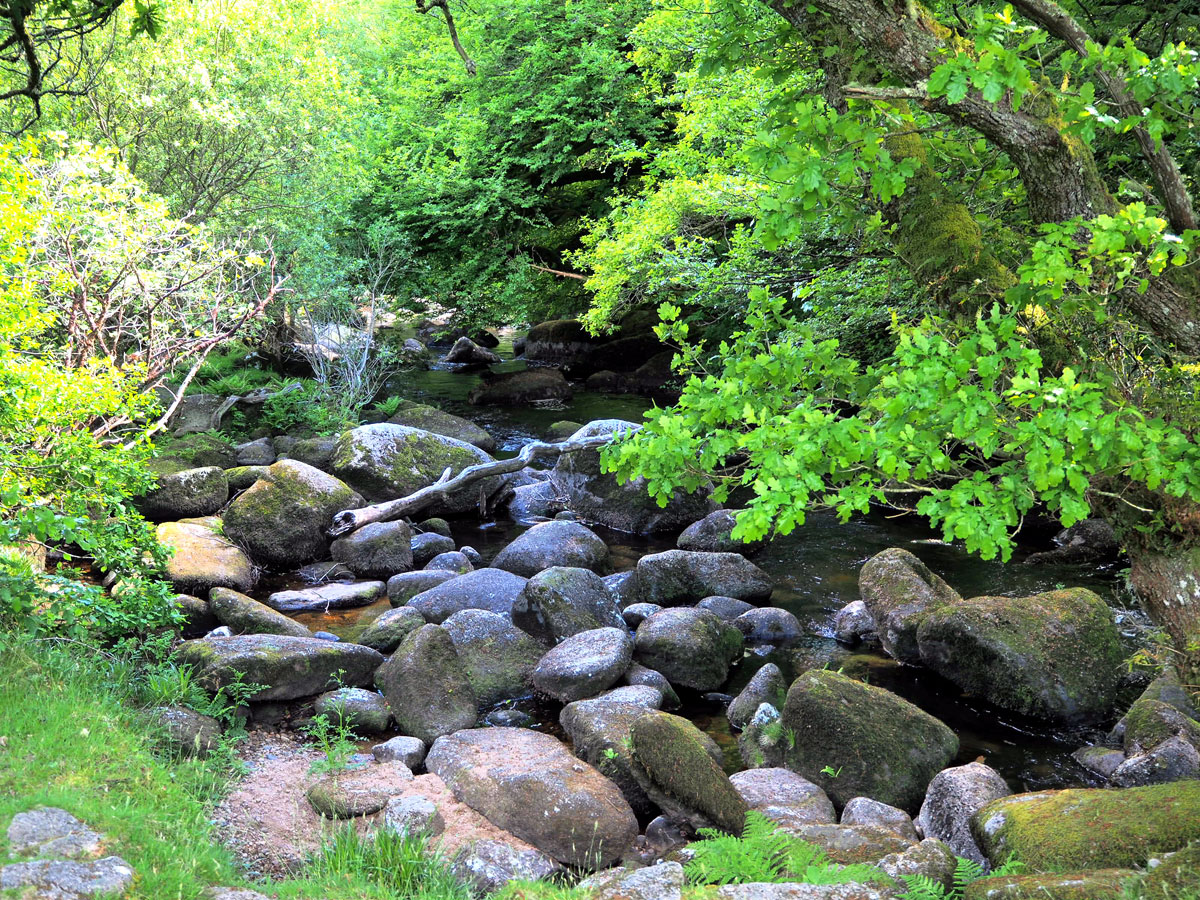
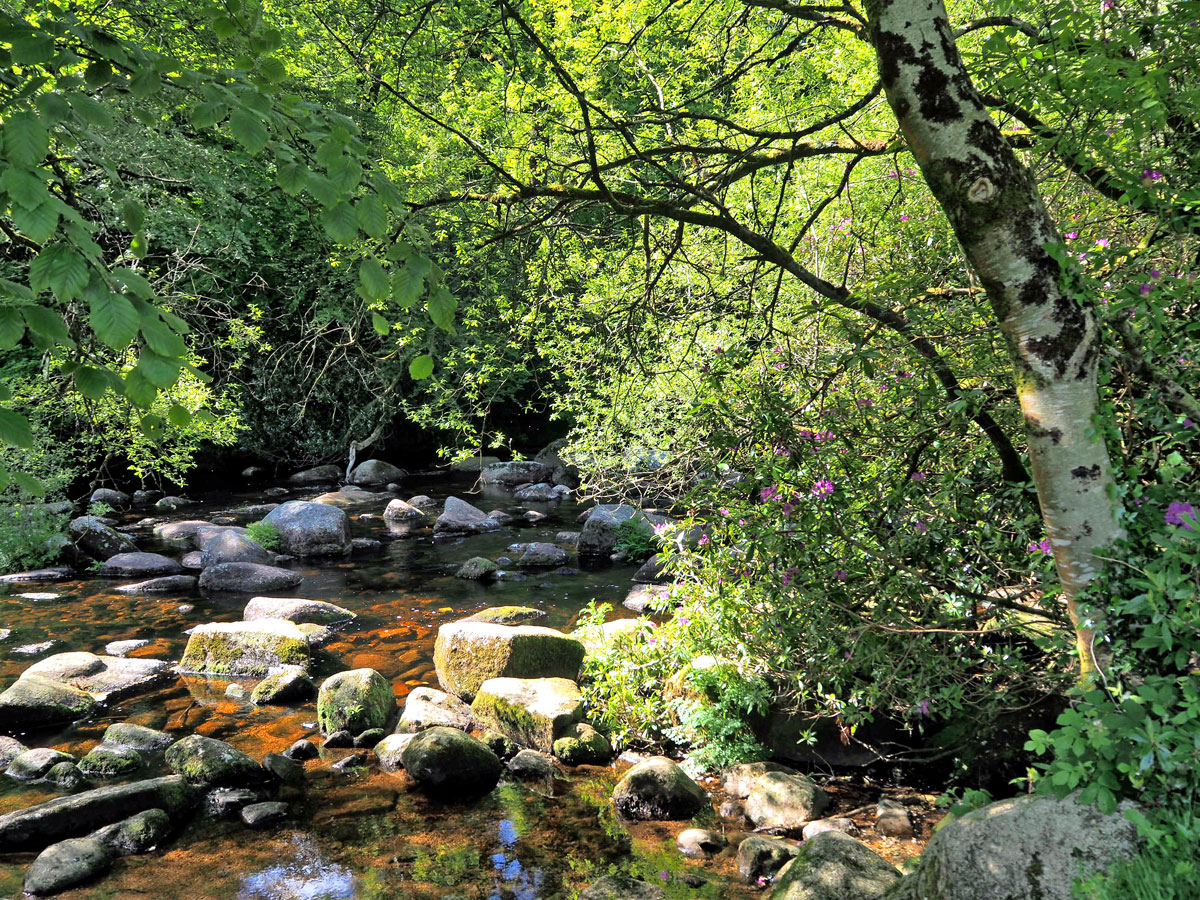
Boulders on the East Dart River
East Dart River walk

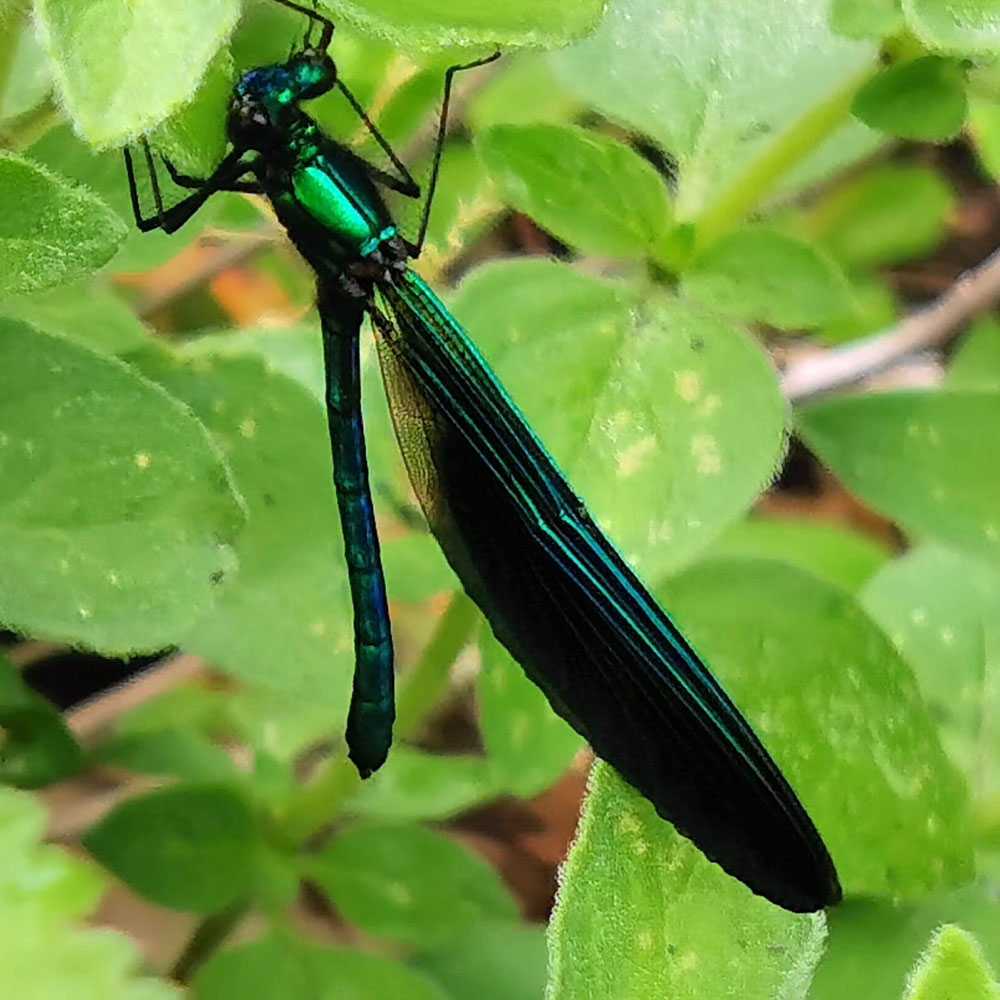
Our final stop was at Dartmeet where two rivers – the East Dart and the West Dart converge. After a short stroll along the banks of the river looking for damselflies, dragonflies and Kingfishers we called it a day once the route became too rocky for comfort.

A beautiful female Demoiselle which has metallic green-bronze body with translucent pale brown wings.

All in all a great day out, though to really make the most of Dartmoor you probably need to explore on foot and spread out the walks over several days.

Just Back From… Surrey

Travelling from the far west of Cornwall means that you don’t reach another county for a good hour and a half. So we haven’t been very far over the last couple of years since the first lockdown. Last week though we headed east to celebrate a significant birthday – that of our second eldest granddaughter who turned 18. I was there at her birth, though only just made it as she was over her due date and I had to return home to begin my final term of teaching practice for my PGCE. Oh, how long ago that time seems.

The ‘Out of Order’ installation, which consists of twelve tumbling telephone boxes, has been in place on Kingston’s lovely Old London Road since it was first installed in 1989. The piece was created by David Mach, one of the UK’s most successful artists and a former lecturer at Sculpture School in Kingston.

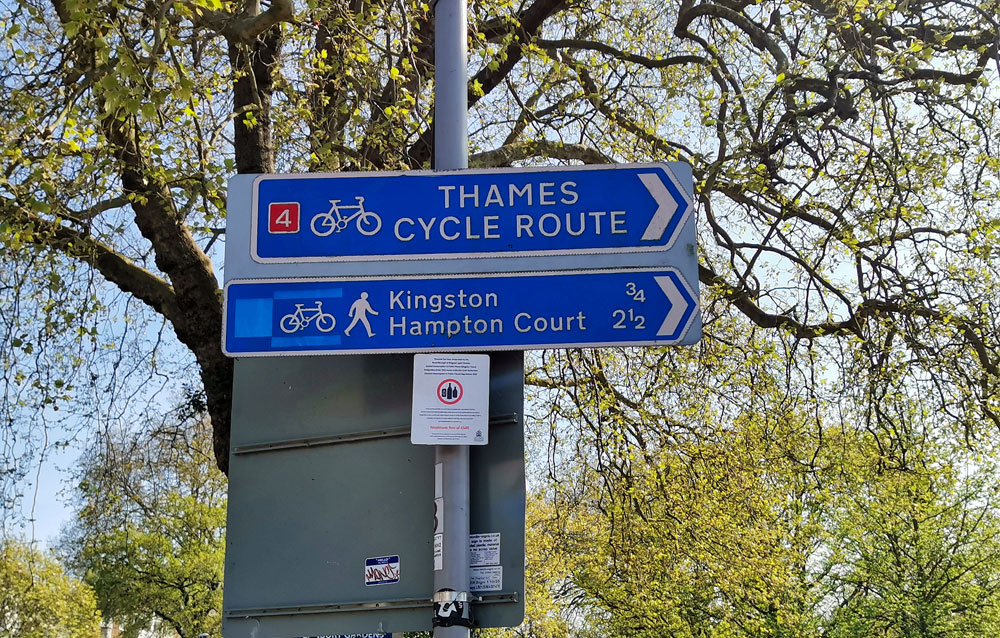
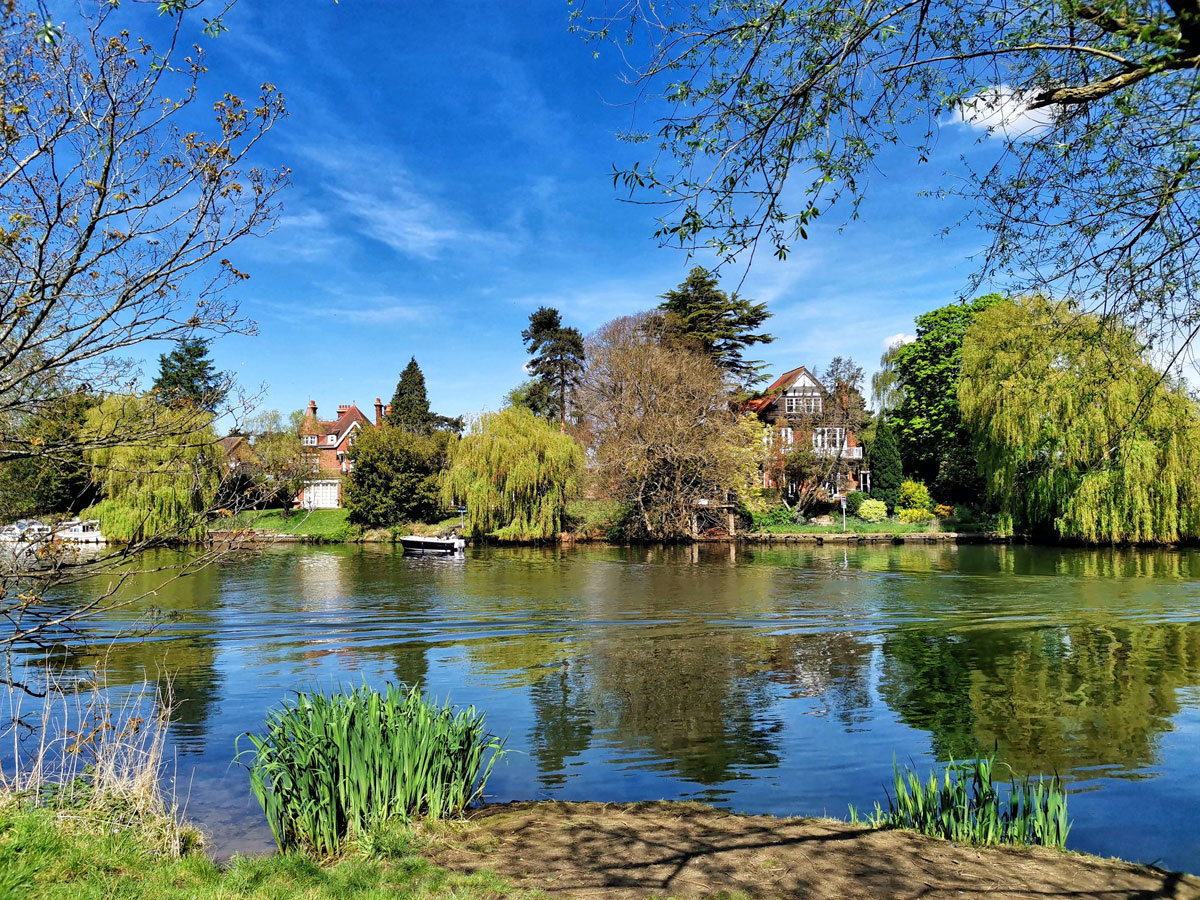
Whilst in the south-east I managed to visit a few of my favourite places in the area (we lived on the Hampshire/Surrey/West Sussex border for seven years back in the 2000s) and enjoy a few walks with my daughter along the River Thames. As usual the weather there was several degrees warmer than it ever is in Cornwall, the sun shone, the sky was blue, there was chocolate cake and I did a lot of walking!

River Thames Walks

I was surprised at how countrified the towpath along the river can be once you are away from the suburbs. We strolled towards Sunbury from Hurst Park / Meadows in Moseley where the river was busy with paddleboarders, kayakers and canoeists plus the inevitable rowers, with plenty of swans, ducks and geese.

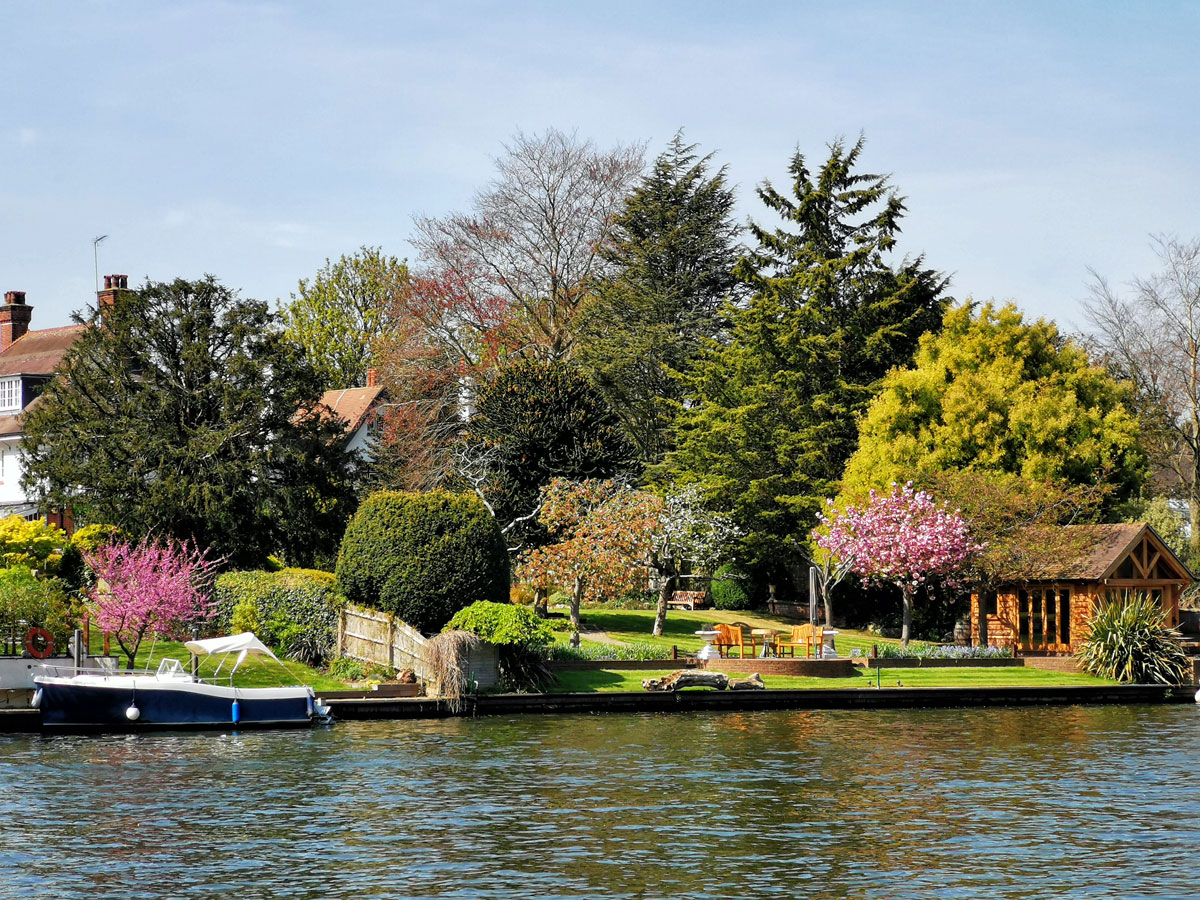
Multimillion £ houses along the River Thames in Hampton.

On the towpath towards Ham from Kingston it was much busier and noisier due to the low-flying aircraft overhead. But once again after leaving the delightful Canbury Park towards Teddington Lock it feels like you are almost in the country. Stunning houses along the river front once again. And so much blossom!

Houses along the Thames in Teddington

RHS Wisley Gardens

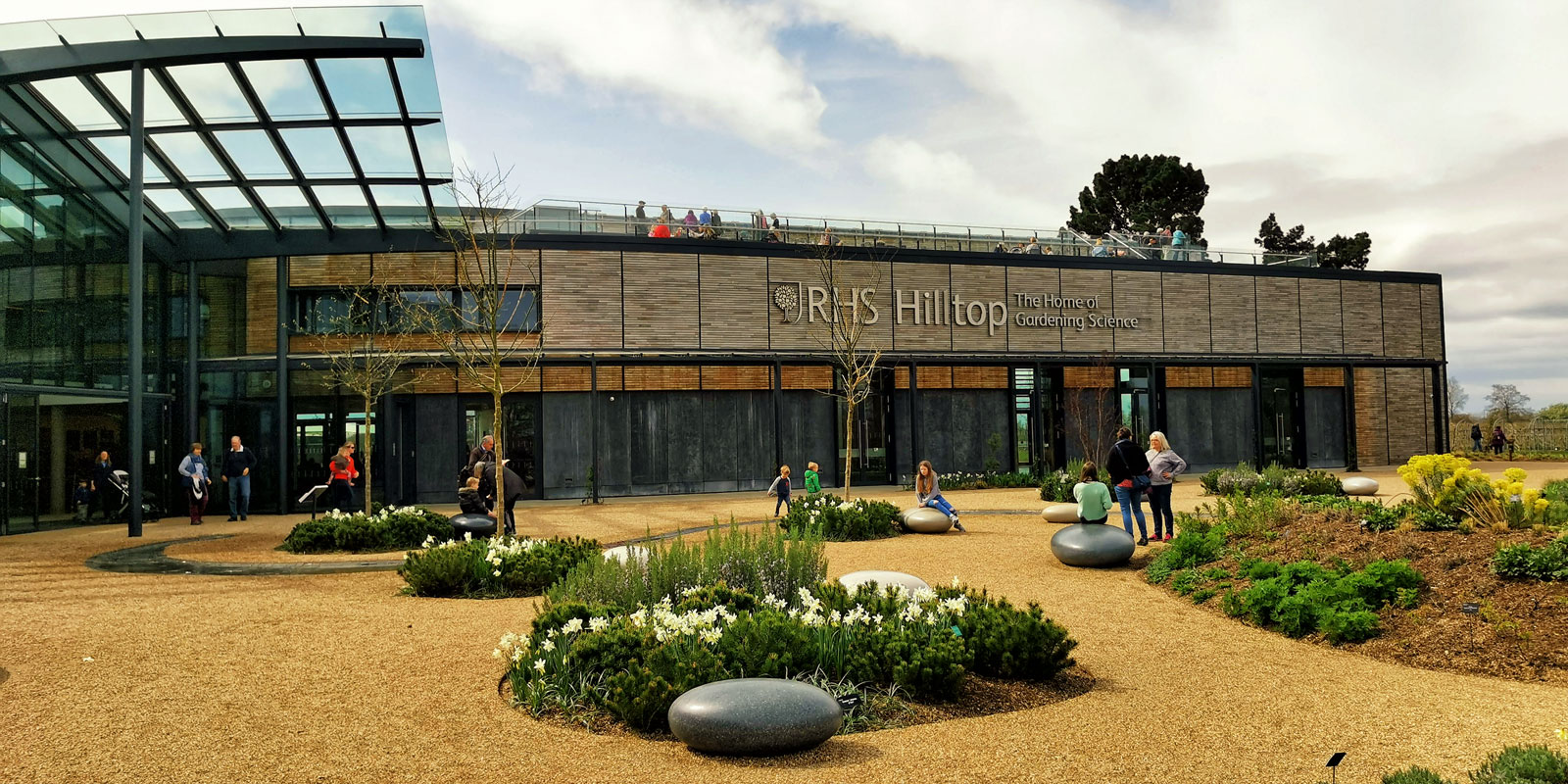
Hilltop – The Home of Gardening Science

The flagship gardens of the Royal Horticultural Society are at Wisley in Surrey, very close to the M25 motorway Junction 10 with the A3. It has been transformed since my last visit in 2015 and is extremely busy, especially when events like an Easter Egg hunt is on. The main changes are at the Welcome entrance and at Hilltop which is where the model gardens and allotments used to be. Now it is a centre for gardening science with a library and three new gardens surrounding it. There is a permanent exhibition that demonstrates the benefits of gardens for wellbeing and gives tips for creating garden spaces that improve the natural environment in a changing climate and a series of free talks, demonstrations and interactive sessions are offered daily.

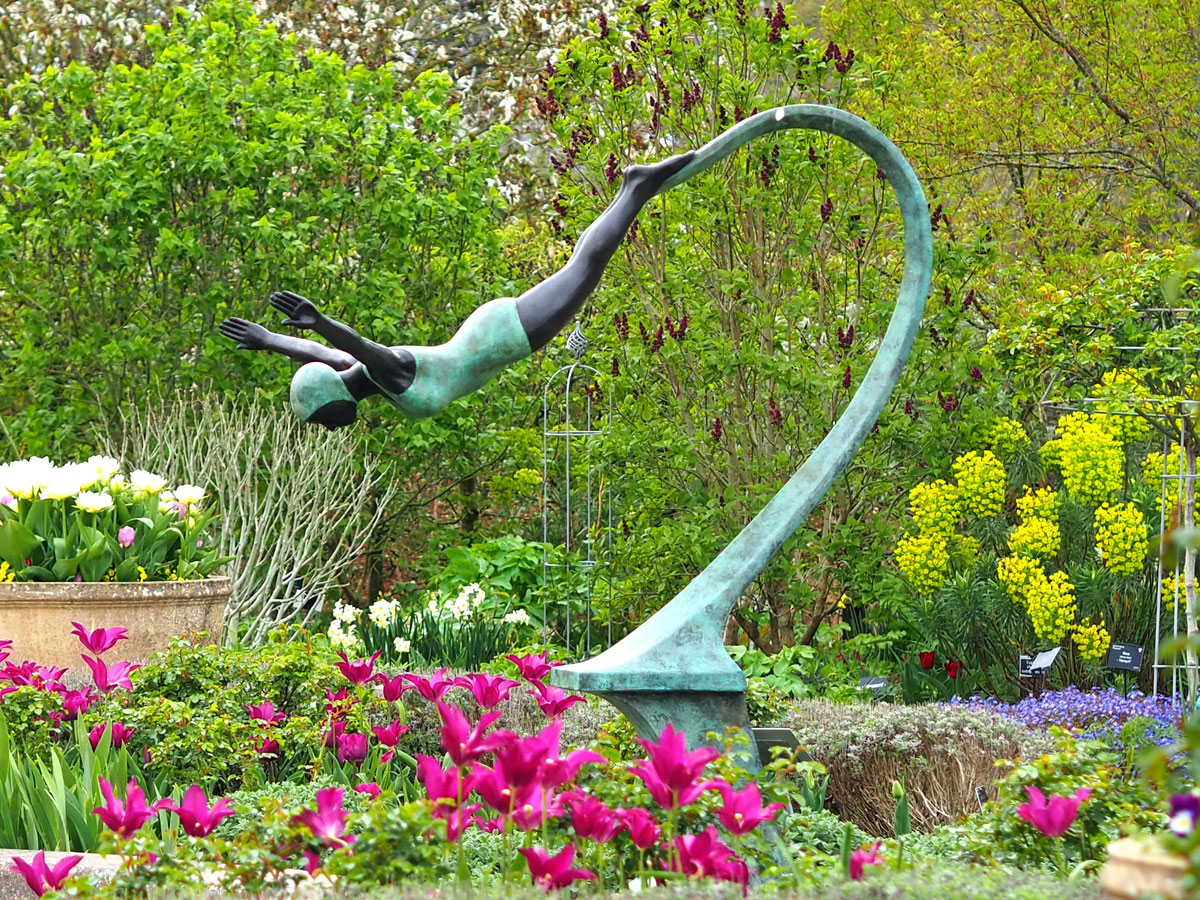
Naturally I cannot resist photographing the beautiful plants and flowers, but it was lovely to see a variety of sculptures around the garden, including this one in the Cottage Garden.

Diva by Mark Swan

Devil’s Punch Bowl

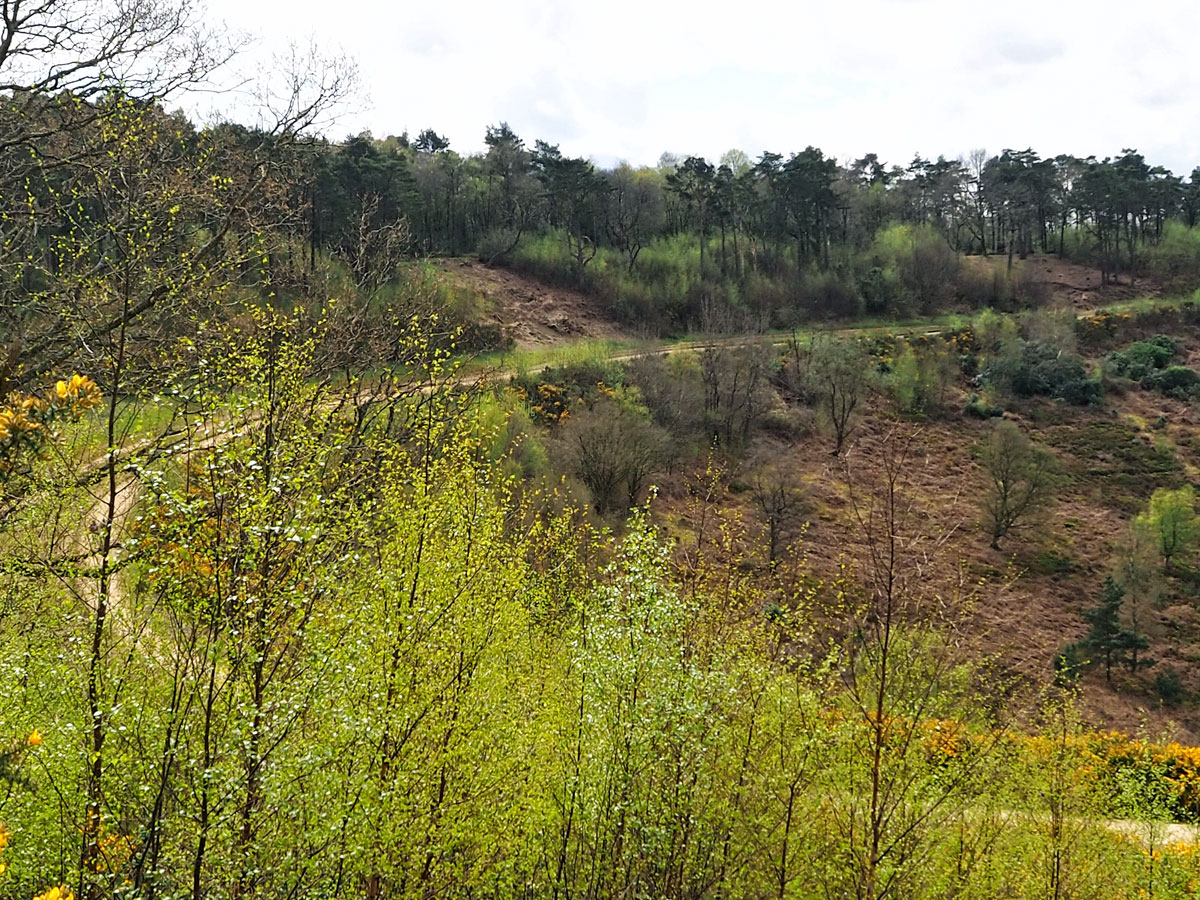
The Old A3 road around the Devil’s Punch Bowl at Hindhead

Once upon a time I used to drive along the old A3 all the time as we lived close by to Hindhead. We lived there in fact the entire 5 years it took for the A3 tunnel to be built and suffered the long delays caused by the roadworks. However now it has been dug up and a lovely all-weather circular path (2.5 miles) made along the former road joins the Devil’s Punch Bowl to the Hindhead Common where the Celtic Cross and the Sailor’s Stone can be found. I stood looking at the sweep of the track trying to work out my bearings, but it was very confusing. Chatting to a chap coming the other way, who also used to drive along this road we both agreed that it all looked very different.

Watts Chapel

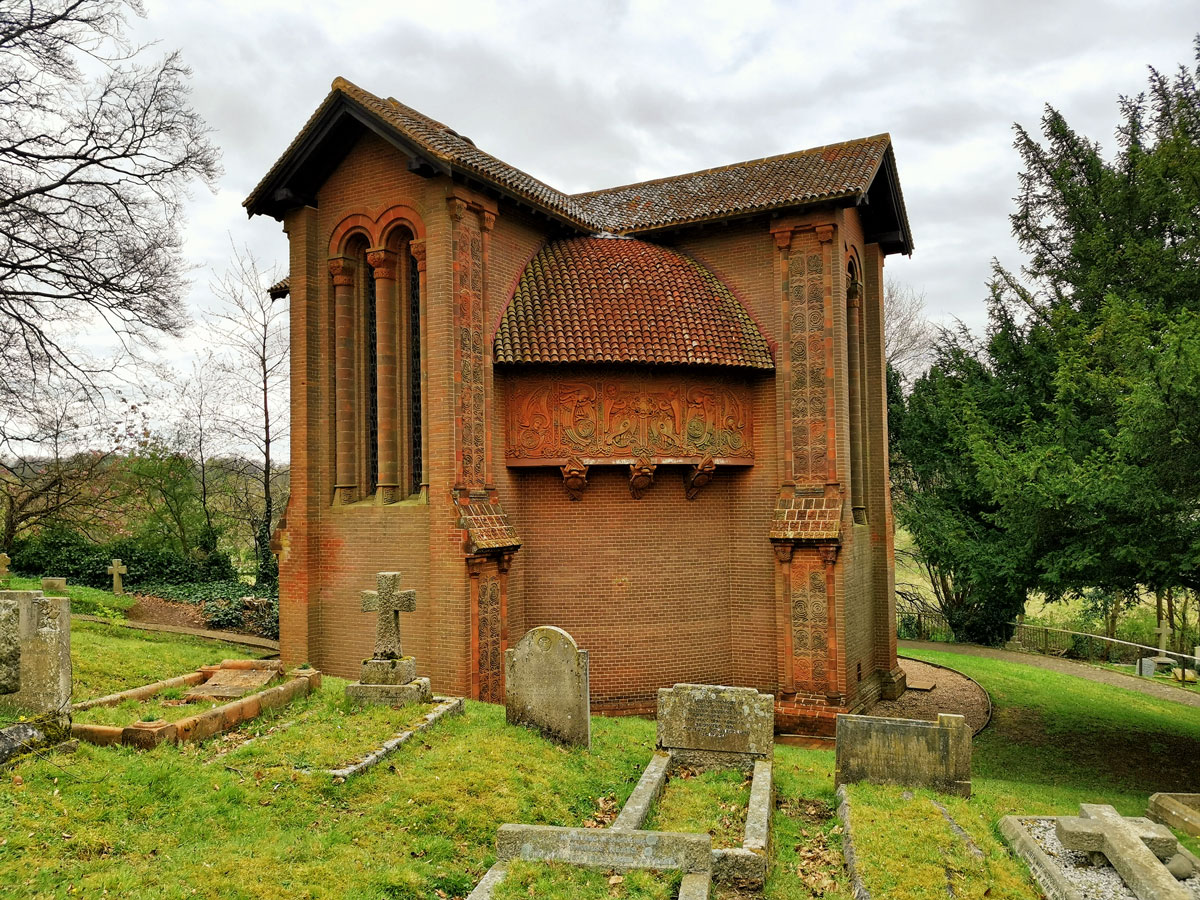
On the way to the Devil’s Punch Bowl I stopped off at Watts Chapel. I have posted about this delight before (click on the link), but I had missed one of the friezes (Owl) around the chapel so I wanted to go back and find it.

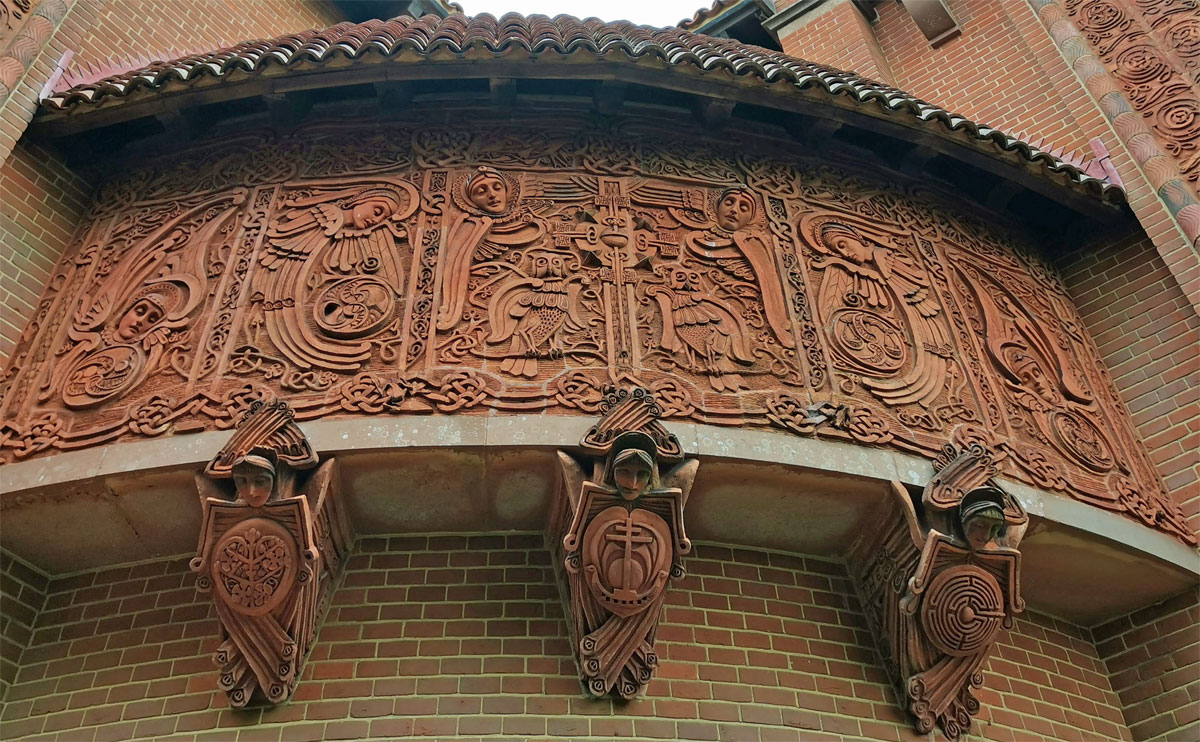
The outside of the building is made up of four large friezes which represent in turn Hope, Truth, Love and Light. Symbolic birds are represented by the peacock (Hope), the owl (Truth), the pelican (Love) and the eagle (Light). Surrounding these are attendant spirits depicted as angel heads holding symbolic discs.
Watts Cemetery Chapel – Designed and decorated by Mary Seton Watts this example of Art Nouveau was completed in 1904.

The light wasn’t much better than on my previous visit, but at least it wasn’t raining. I took very similar photos as before, but here are a few more details I captured this time round.

Kingston Street Art

Coming back into Kingston we found some hoardings that had been creatively covered with street art.

Of course I cannot finish this post without showing you the marvellous cake created by the 18 year old for her birthday, it tasted as good as it looks.

18th birthday cake

Flashback Friday #36

This post was written in 2013 after a lovely holiday in Norfolk. We did actually consider moving to Norfolk as we really enjoyed our time there, but soon realised that the part we loved the most (north coast) was prohibitively expensive. Hard to believe this was 8 years ago!


Just Back From… North Norfolk

We managed a little getaway break in the windmill at Cley-next-the-sea back in January just as the snow arrived across the country. Literally snowed in we could only venture a little way along the windswept, wild north coast so promised ourselves a return in less inclement weather. The upside was that the coast was practically deserted apart from a few hardy twitchers, and we saw lots of wild geese flying overhead in formation.

We returned for two weeks in mid-August, not the period I had visualised because I feared the north coast would be over-run with families during the school holidays, but life conspired against me to sort anything out in June. At least it would give us a fair impression of what life is like there in the hustle and bustle of the summer. With the temperature and humidity soaring, sun shining and the big, blue skies you associate with Norfolk it felt like the driest county in the UK, though rivals have sprung up to dispute this. Whatever, it was dry enough whilst we were there other than one day of persistently heavy showers.

Landscapes

What is so special about North Norfolk? Well it has to be the sheer openness of the countryside – the peace and solitude found away from the major arterial roads – where you can stop and observe cornfields and church towers poking up into the wide sky. The landscapes and the seascapes are calming and you feel as though you have space to breathe under that big Norfolk sky.

Driving along those narrow roads and single lanes is not for the faint-hearted though as some idiot usually in a huge 4WD is likely to come flying around a blind bend in the middle of the road and scowl at you as if you have no right to be there. Several times I was thankful that I had practically crawled around such a bend because at least one of us could hit the brakes and stop before a collision. My rather low-slung VW Jetta however, is not really built for the off-roading that she was forced to do on so many occasions and has returned slightly worse for wear.

Continue reading Flashback Friday #36

Flashback Friday #24

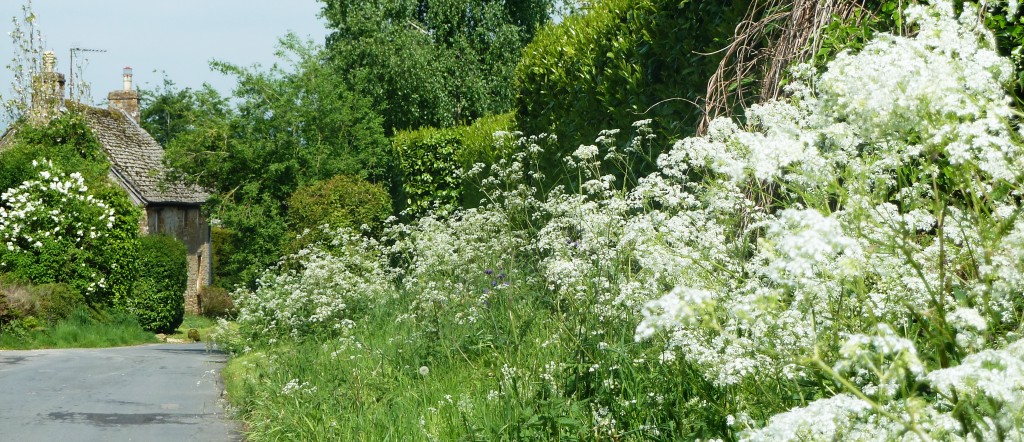
Just Back From… the Cotswolds was written in June 2013 after a lovely spring break to celebrate the OH’s birthday. Spring was a little late that year.


the old post officeWhen you think of the Cotswolds it is the warm honey-coloured limestone and cute thatched cottages inviting romance and tranquillity that spring to mind and where market towns (formerly centres of the wool trade) have wide squares and streets and are the centres of activity. Brooks and rivers bridged by tiny stone arches  meander through the hidden villages in the rolling hills and farmland where country pubs have flagstone floors, beamed ceilings and inglenook fireplaces with log fires.

You may also think about crowds of tourists and visitors up from London for the day, often on large touring coaches; ancient churches and manor houses; picture-book tea-rooms; expensive antique, retro and vintage shops. You’d be right about all of these things, but there is another side to the Cotswolds to be explored if you look.

The Cotswolds district is mainly in the counties of Oxfordshire and Gloucestershire with parts of Warwickshire, Wiltshire, Worcestershire and Somerset at the edge. It is an area filled with hundreds of small towns and villages that don’t appear on the calendars and book covers or hog the limelight, but are equally attractive. Discover them by driving along the plethora of narrow, winding roads which often provide the most amazing views over the Wolds and the valleys. There are public footpaths, national trails and bridleways galore. Find yourself in a charming and unspoilt village away from the main tourist spots and walk around listening to the birdsong and admiring the chocolate box cottages and striking parish church. In the late spring sunshine, with so many shades of green it is impossible to count, you may stumble across a woodland carpeted with bluebells.

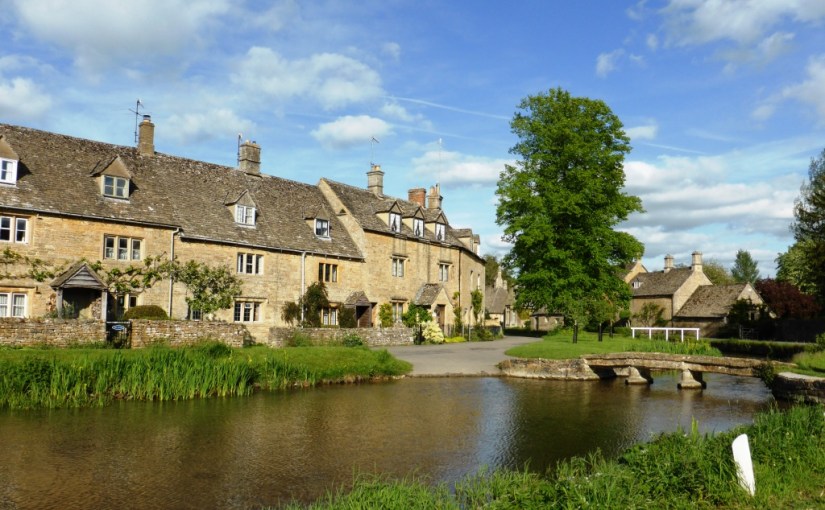
adlestrop laneIn the north of the region take a romantic circular drive from Moreton-in-Marsh to Stow-on-the-Wold stopping at Broadway Tower and Country Park for a picnic with a view, Broadway village with its wide main street, Snowshill Manor with its collection by the eccentric Charles Paget Wade, Snowshill Lavender farm in the summer, and Hailes Cistercian Abbey ruins, a most peaceful spot on the Cotswolds Way. Continue through Guiting Power with the ‘Hollow Bottom Inn’ and the picturesque Lower Slaughter with the tiny River Eye running through it.

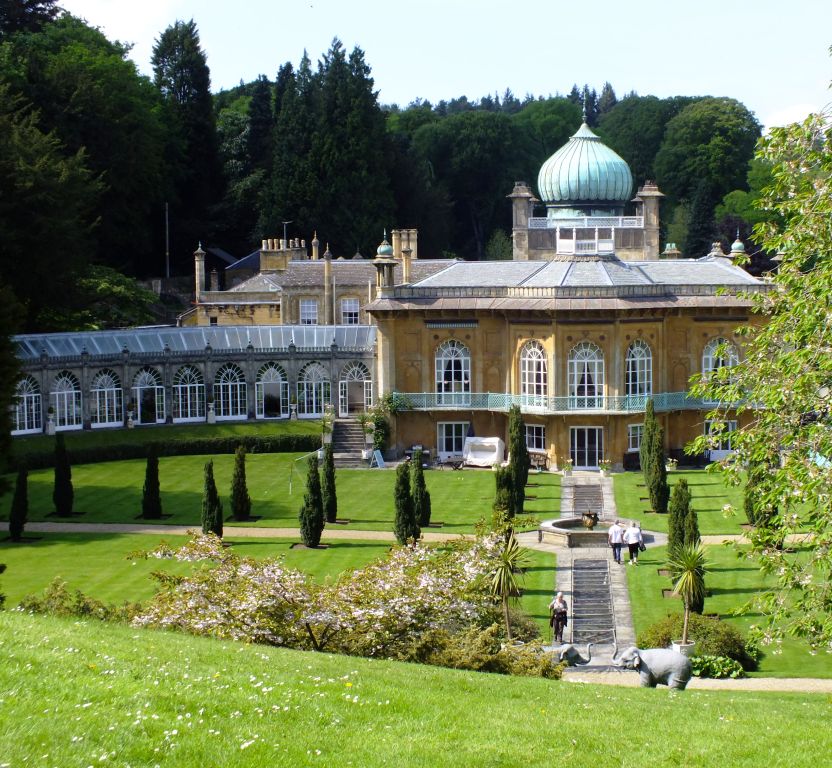
There are dozens of lovely homes and gardens for you to visit, some owned by the National Trust, others in private ownership. Some are large estates such as Sezincote or Hidcote and attract the coach parties, others are smaller and often quieter. All are worth a visit.

sezincote

The Cotswolds is a vast region and requires several days to explore it thoroughly. We only touched on a small part in four days; there is a lot more to discover.


This post is a contribution to Fandango’s Flashback Friday. Have you got a post you wrote in the past on this particular day? The world might be glad to see it – either for the first time – or again if they’re long-time loyal readers.