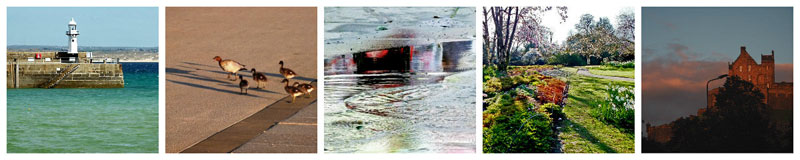
2020 Photo Challenge #20

May’s theme / technique: It’s all about the Light

The six visual keys to a great photograph are:

    • Patterns
    • Texture
    • Lines
    • Light
    • Depth of field
    • Space

Being Creative with light. Photography literally means writing with light which immediately tells you how important lighting is. And with light comes shadows. Another important feature. An appreciation of light is crucial to making great photographs.

The qualities of light that affect a photograph are:

    1. brightness of light
      this is fairly easy to understand; it is the intensity of light.
    2. lighting contrasts
      is the difference between highlights and shadows in a scene
    3. specular light
      or hard light can be explained by thinking how sunlight strikes an object on a bright and clear day. One side will be lit up, the other in dark shadow.
    4. diffused light
      on the other hand when it is an overcast day the sun lights the clouds and they become the source of light. Light wraps itself around the subject and reflects light into the shadows. The light is soft or diffused.
    5. direction of light
      creating depth in photographs relies on knowing the source of the light. Front light comes from behind the camera and strikes the front of the scene, usually producing a 2-dimensional image. Use bold colours or a strong colour contrast to replace the lack of shadows. Sidelight is most apparent when the sun is low and shadows are long separating foreground from the background and giving a 3-dimensional look. Backlight comes from behind the subject and can create depth and shape. If a subject is transparent then backlighting is a way to make them glow.
    6. colour of light
      Sometimes you can actually see the colour of light. The so-called ‘magic hours‘ before sunrise or after sunset can produce coloured air which can be pink or orange or golden. Everything seems to change colour. There is also the question of white balance (WB). A setting on your camera that makes things that are supposed to be white really look white. This setting can be changed either in the camera, or if you shoot in RAW, in processing.

As I have previously said, I am not an expert in the technicalities of photography. I tend to use auto settings most of the time. I have altered the white balance occasionally when it has been cloudy or when photographing snow, to prevent that blueness you often get. But by all means experiment to see what difference the presets in your camera make.

This week's assignment - Create one image using strong lighting which creates strong shadows and emphasises contrasts in tones and one image with much lighter tones. If you have post-processing software try experimenting with 'low key' and 'high key'effects.
    • The visual effect of deliberately shifting the key tone (the one which lies near the mid-point between the darkest and lightest tones) is not to make the image lighter or darker overall, but to signal a mood or feeling in the viewer.
    • The mood of low-key images becomes more sombre and metaphorically darker, with more drama implied.
    • High-key overcomes shadows and signals a style full of light and air. Look for subjects with a relatively small difference between the brightest and darkest parts.

Continue reading 2020 Photo Challenge #20

2020 Photo Challenge #19

May’s theme / technique: It’s all about the Light

The six visual keys to a great photograph are:

    • Patterns
    • Texture
    • Lines
    • Light
    • Depth of field
    • Space

Being Creative with light. Photography literally means writing with light which immediately tells you how important lighting is. And with light comes shadows. Another important feature. An appreciation of light is crucial to making great photographs.

The qualities of light that affect a photograph are:

    1. brightness of light
      this is fairly easy to understand; it is the intensity of light.
    2. lighting contrasts
      is the difference between highlights and shadows in a scene
    3. specular light
      or hard light can be explained by thinking how sunlight strikes an object on a bright and clear day. One side will be lit up, the other in dark shadow.
    4. diffused light
      on the other hand when it is an overcast day the sun lights the clouds and they become the source of light. Light wraps itself around the subject and reflects light into the shadows. The light is soft or diffused.
    5. direction of light
      creating depth in photographs relies on knowing the source of the light. Front light comes from behind the camera and strikes the front of the scene, usually producing a 2-dimensional image. Use bold colours or a strong colour contrast to replace the lack of shadows. Sidelight is most apparent when the sun is low and shadows are long separating foreground from the background and giving a 3-dimensional look. Backlight comes from behind the subject and can create depth and shape. If a subject is transparent then backlighting is a way to make them glow.
    6. colour of light
      Sometimes you can actually see the colour of light. The so-called ‘magic hours‘ before sunrise or after sunset can produce coloured air which can be pink or orange or golden. Everything seems to change colour. There is also the question of white balance (WB). A setting on your camera that makes things that are supposed to be white really look white. This setting can be changed either in the camera, or if you shoot in RAW, in processing.

As I have previously said, I am not an expert in the technicalities of photography. I tend to use auto settings most of the time. I have altered the white balance occasionally when it has been cloudy or when photographing snow, to prevent that blueness you often get. But by all means experiment to see what difference the presets in your camera make.

This week's assignment - Study light throughout the day from one location / or one object returning to see how light changes and affects it. Compile 6 shots. Which is your favourite?

Continue reading 2020 Photo Challenge #19

2020 Photo Challenge #18

May’s theme / technique: It’s all about the Light

If you want to see what this month’s assignments are in advance then please click here. All the assignments are available from the menu on the left under the 2020 Photo Challenge / Assignments.

The six visual keys to a great photograph are:

    • Patterns
    • Texture
    • Lines
    • Light
    • Depth of field
    • Space

Being Creative with light. Photography literally means writing with light which immediately tells you how important lighting is. And with light comes shadows. Another important feature. An appreciation of light is crucial to making great photographs.

The qualities of light that affect a photograph are:

    1. brightness of light
      this is fairly easy to understand; it is the intensity of light.
    2. lighting contrasts
      is the difference between highlights and shadows in a scene
    3. specular light
      or hard light can be explained by thinking how sunlight strikes an object on a bright and clear day. One side will be lit up, the other in dark shadow.
    4. diffused light
      on the other hand when it is an overcast day the sun lights the clouds and they become the source of light. Light wraps itself around the subject and reflects light into the shadows. The light is soft or diffused.
    5. direction of light
      creating depth in photographs relies on knowing the source of the light. Front light comes from behind the camera and strikes the front of the scene, usually producing a 2-dimensional image. Use bold colours or a strong colour contrast to replace the lack of shadows. Sidelight is most apparent when the sun is low and shadows are long separating foreground from the background and giving a 3-dimensional look. Backlight comes from behind the subject and can create depth and shape. If a subject is transparent then backlighting is a way to make them glow.
    6. colour of light
      Sometimes you can actually see the colour of light. The so-called ‘magic hours‘ before sunrise or after sunset can produce coloured air which can be pink or orange or golden. Everything seems to change colour. There is also the question of white balance (WB). A setting on your camera that makes things that are supposed to be white really look white. This setting can be changed either in the camera, or if you shoot in RAW, in processing.

As I have previously said, I am not an expert in the technicalities of photography. I tend to use auto settings most of the time. I have altered the white balance occasionally when it has been cloudy or when photographing snow, to prevent that blueness you often get. But by all means experiment to see what difference the presets in your camera make.

This week's assignment - Look for shadows. Strong light, casting well-defined shadows, can create interesting abstract images. Layering light and shadows brings a sense of depth to an image and can convey mystery.

Tip: Shadows are more dramatic when the sun is lower to the horizon

Continue reading 2020 Photo Challenge #18

2020 Photo Challenge #17

April’s theme / technique: Being Creative with Lines

The six visual keys to a great photograph are:

    • Patterns
    • Texture
    • Lines
    • Light
    • Depth of field
    • Space

Lines are everywhere in our world. Just look around you. Seek them out to add visual impact to your photographs (in fact Becky ran a Square Challenge in October 2019 purely on lines – check out some of my entries for that if you want ideas) There are lines within nature which can be straight or curved, and man-made lines are everywhere in buildings and roads and even cars. Even a human arm is a line.

    • choose a subject and then look for lines in the scene that lead the viewer to it
    • find an interesting line then decide what your subject is going to be
    • start making looking for lines a part of every photographic outing and develop an eye for finding and placing lines in your composition.

Lines and perspective – Parallel lines  never meet or touch but as they disappear an impression is given that they do. This is what fools the eye and brain into believing that there is distance in the image.  It is best illustrated when using a wide angle lens. Be sure though to include the focal point which is also known as the vanishing point, which is the point where the lines disappear into nothing.

Diminishing Lines – Diminishing perspective of scale refers to the appearance of size that our eyes see. Take for example a row of telephone poles disappearing into the distance. Our brain tells us that they all should be the same height. But, because they are all gradually getting smaller the brain says they must be getting further apart. If you use this sense of perspective you will find it extremely effective in giving depth to your images. So when you are trying to achieve this, look for fences, trees, telephone poles, and similar repeated objects to include in your photo which will help create the depth.

Diagonal Lines – lead the eye from one part of an image to another and impart more energy than horizontals. It allows the viewer to scan the picture sweeping naturally through the frame.

Implied Lines – Are where there are no distinct lines but they are clearly part of the composition. Think about a line of people in a queue, a row of flowers, birds on the seashore.

This month's final assignment - Curved lines. Curved lines allow the viewer to explore an entire image, meandering from one part to another. S curves divide an image into equal parts and lead your eye through the image.

Continue reading 2020 Photo Challenge #17

2020 Photo Challenge #16

April’s theme / technique: Being Creative with Lines

The six visual keys to a great photograph are:

    • Patterns
    • Texture
    • Lines
    • Light
    • Depth of field
    • Space

Lines are everywhere in our world. Just look around you. Seek them out to add visual impact to your photographs (in fact Becky ran a Square Challenge in November purely on lines – check out some of my entries for that if you want ideas) There are lines within nature which can be straight or curved, and man-made lines are everywhere in buildings and roads and even cars. Even a human arm is a line.

    • choose a subject and then look for lines in the scene that lead the viewer to it
    • find an interesting line then decide what your subject is going to be
    • start making looking for lines a part of every photographic outing and develop an eye for finding and placing lines in your composition.

Lines and perspective – Parallel lines never meet or touch but as they disappear an impression is given that they do. This is what fools the eye and brain into believing that there is distance in the image.  It is best illustrated when using a wide angle lens. Be sure though to include the focal point which is also known as the vanishing point, which is the point where the lines disappear into nothing.

Diminishing Lines – Diminishing perspective of scale refers to the appearance of size that our eyes see. Take for example a row of telephone poles disappearing into the distance. Our brain tells us that they all should be the same height. But, because they are all gradually getting smaller the brain says they must be getting further apart. If you use this sense of perspective you will find it extremely effective in giving depth to your images. So when you are trying to achieve this, look for fences, trees, telephone poles, and similar repeated objects to include in your photo which will help create the depth.

Diagonal Lines – diagonal lines lead the eye from one part of an image to another and impart more energy than horizontals. It allows the viewer to scan the picture sweeping naturally through the frame.

Implied Lines – are where there are no distinct lines but they are clearly part of the composition. Think about a line of people in a queue, a row of flowers, birds on the seashore.

This week's assignment - Converging lines. These convey a sense of depth and distance, try to have something of interest at the point where they appear to meet. Or position them on the diagonal to infer motion.

Continue reading 2020 Photo Challenge #16