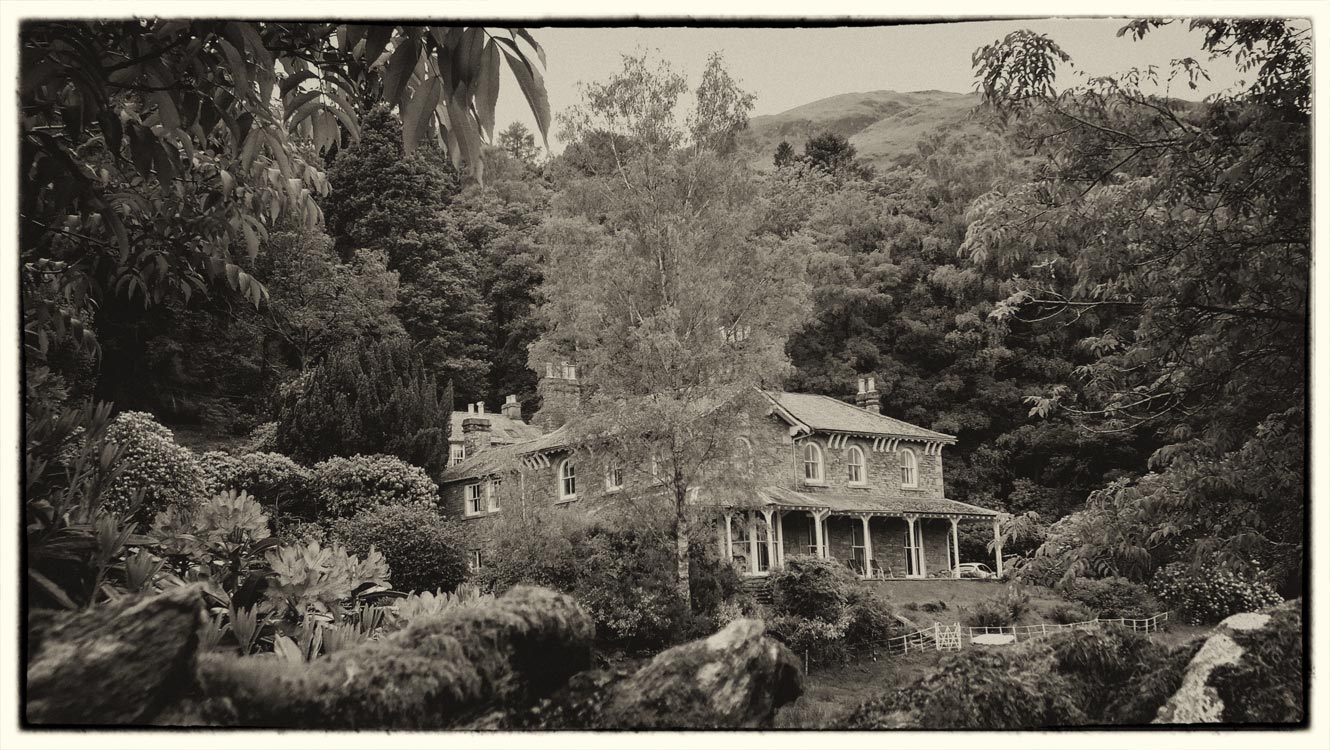
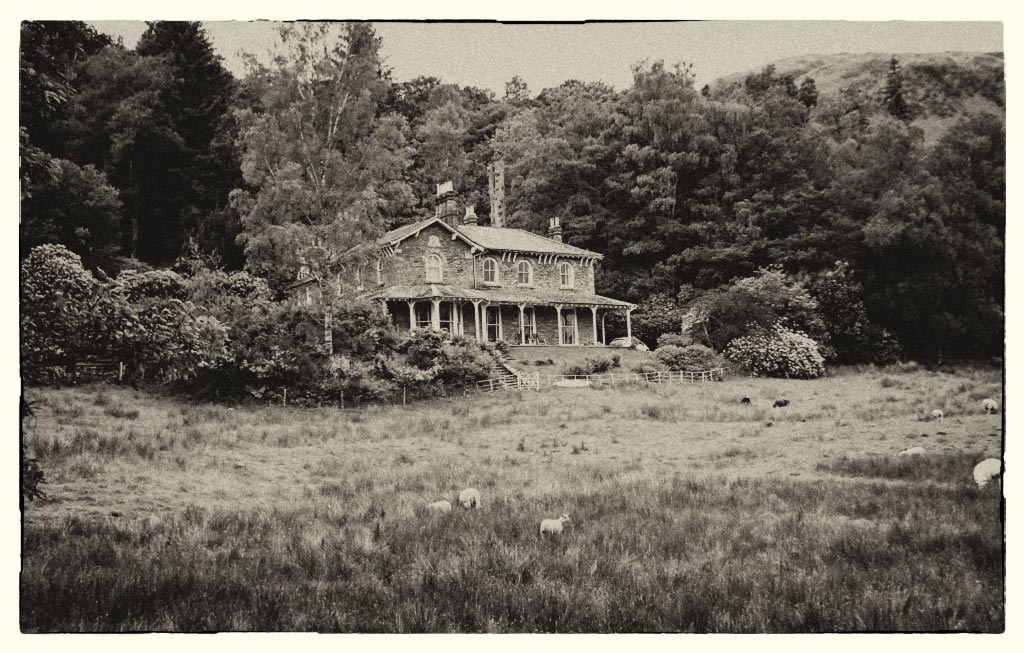
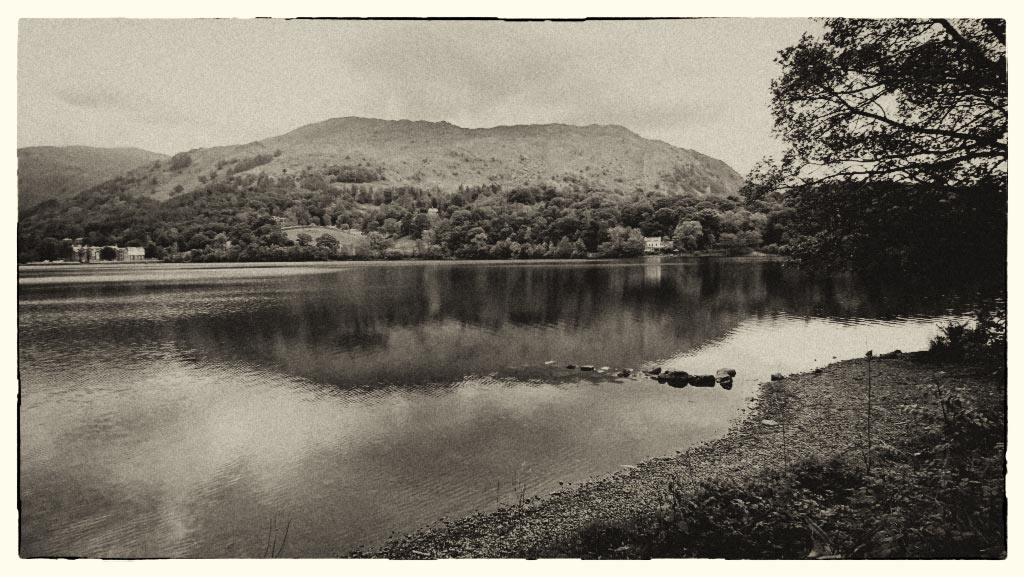
The Lake District lies in north-west England and is one of the most beautiful regions in the country, if you like lakes and hills. High hills as seen behind this pretty house which is located on the banks of Grasmere lake. Surrounded by a pretty woodland garden, this sturdy stone-built house has curved sash windows, an extended roofline and a covered verandah. I could see myself sitting on that verandah on a swing seat piled high with cushions, a cat curled up in the sunny spot, a table cluttered with garden magazines, potted plants and coffee cups…
Lambs gambolling in the fields
…admiring the view
Lake Grasmere
Please visit Paula to see other representations of this week’s challenge.
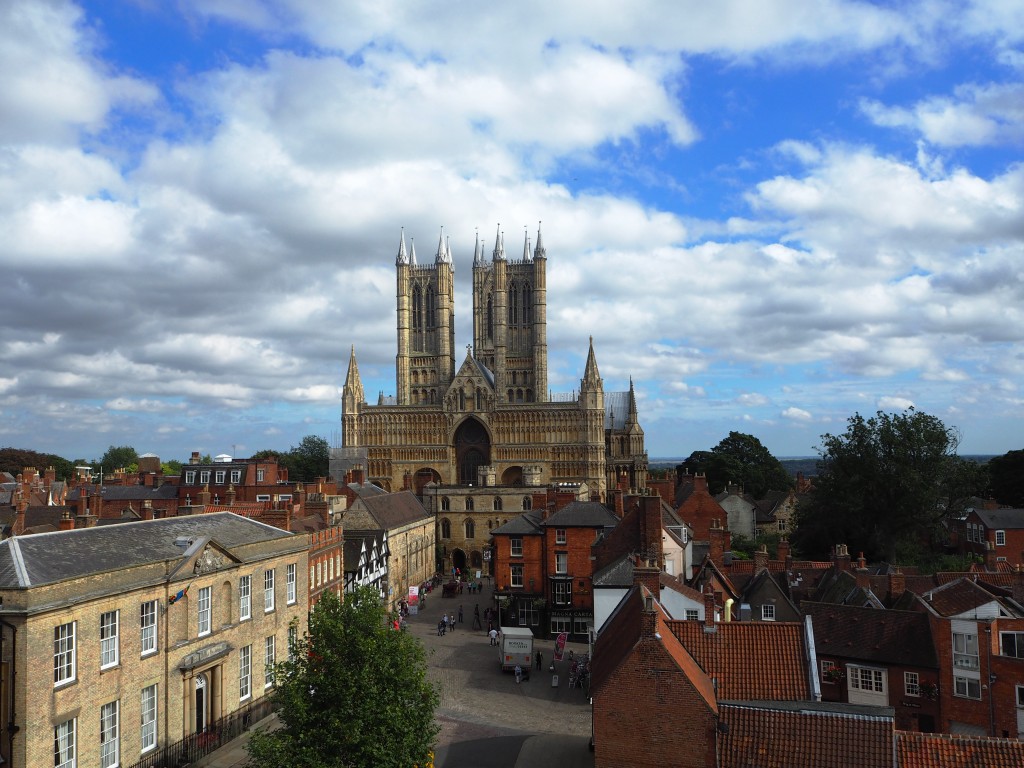
Lincoln has a magnificent cathedral, but practically opposite there is the castle. Not any old ruin, but a grand Norman castle with two keeps and a complete curtain wall. Its highly strategic position has given it continuing historical importance – the site of many battles, sieges, medieval wheeling and dealing and it houses one of the four surviving examples of that monumental document – the Magna Carta.
The castle faces the cathedral and market place in the upper town
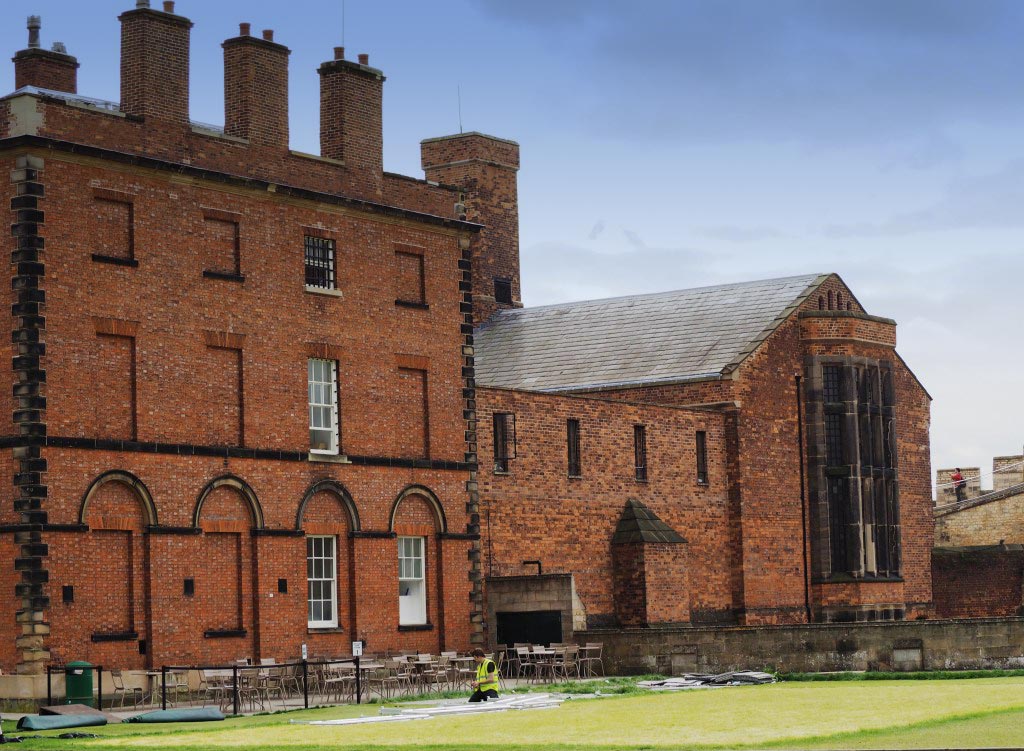
Nowadays it is a wonderful museum telling the stories of life as both Georgian and Victorian prisons, the rebellions, the Battle of Lincoln in 1141, which came about because of the struggle for the throne between Matilda, the daughter and chosen heir of Henry I and her cousin Stephen; the siege of Lincoln 1191; the Magna Carta, 1206, and the civil war siege in 1644. From 1660 it ceased to be a military stronghold and became a jail and courthouse.
Georgian and Victorian prisons
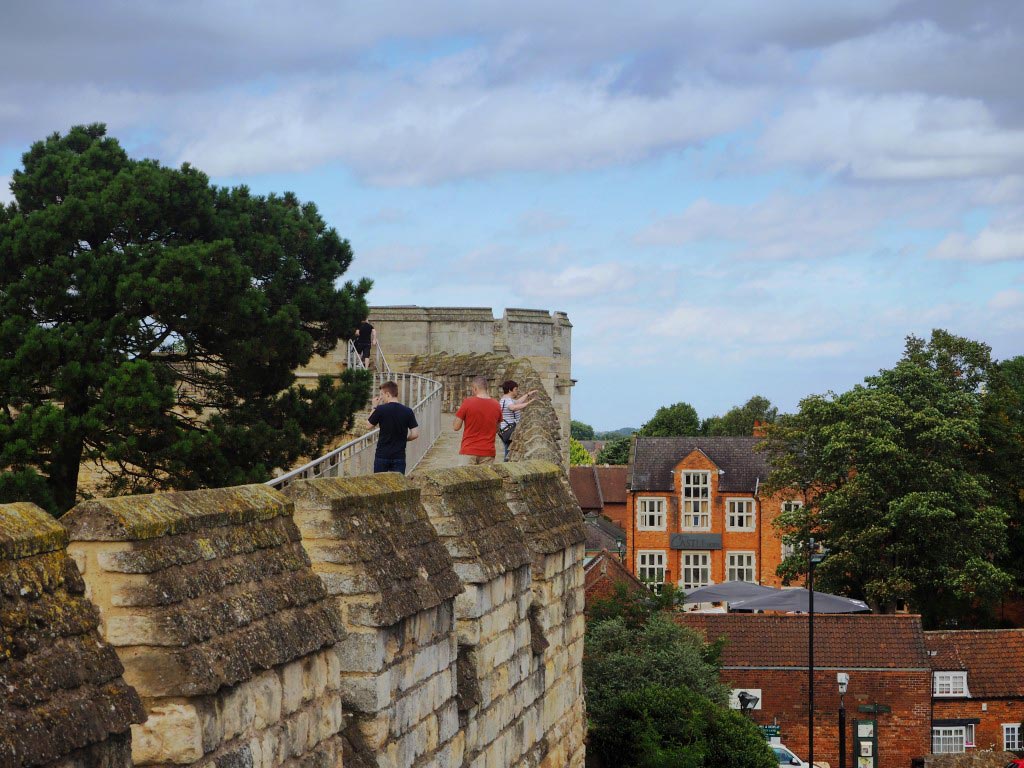
We decided to join a free tour of the castle and grounds which was very interesting and we learned a lot about the history of the site. Afterwards we wandered around the prison cells where they have short films telling the story of individuals and why they were in prison and also went to have a look at the ‘Magna Carta’ and the ‘Charter of the Forest’. Then I left OH resting on a bench in the sunshine whilst I walked around the Medieval Wall Walk.
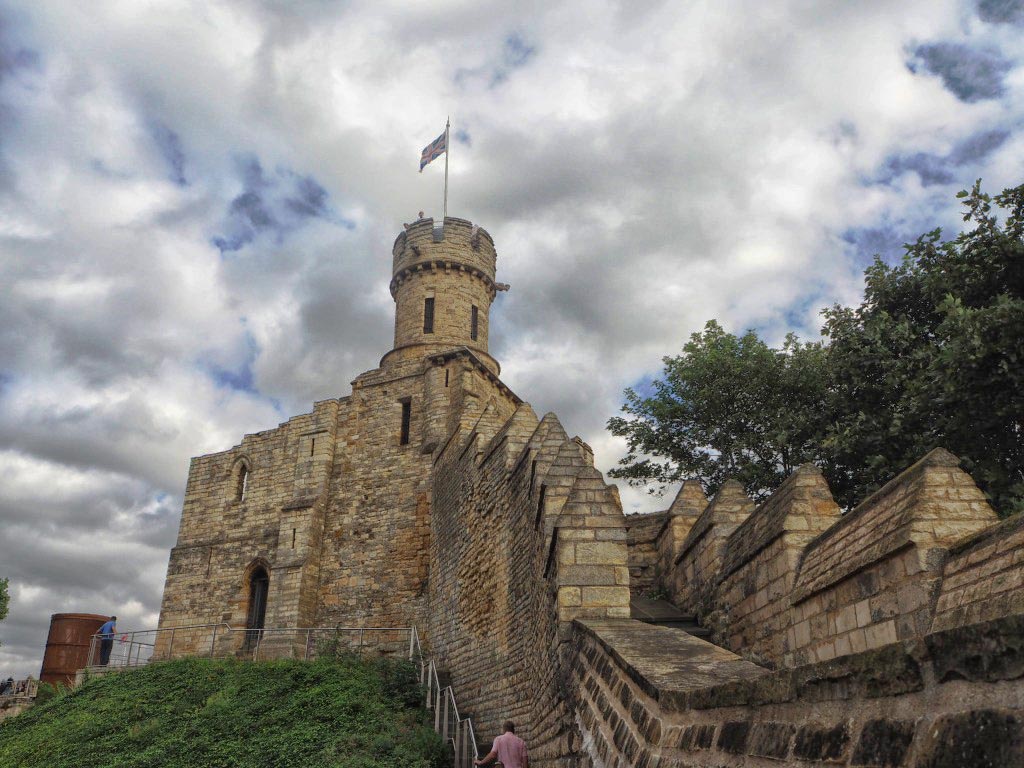
Cobb Hall
Cobb Hall is the latest of the three towers, estimated to have been built between 1190 and 1220. The tower defended the castle’s north-east quarter. Although flat on this side, externally it is rounded and inside the walls have been carved with graffiti by prisoners and bored guards. Between 1817 and 1859, 38 prisoners were hanged on a wooden gallows from the top of this tower.
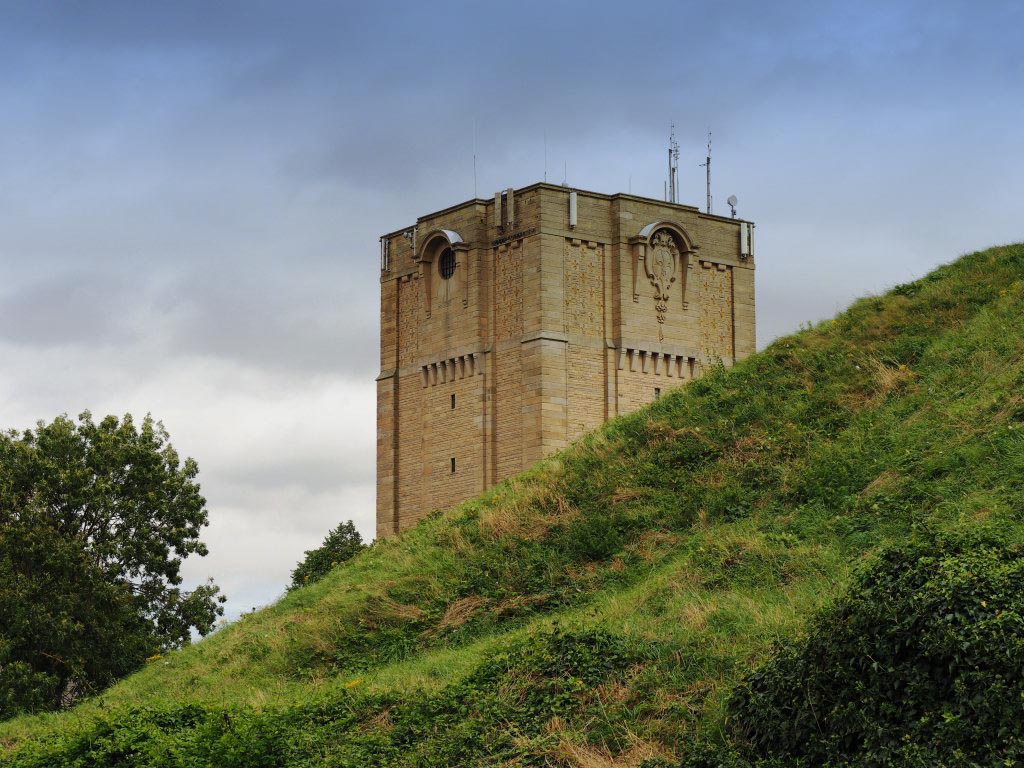
On the wall heading to Cobb TowerWater Tower built in 1911 after a typhoid epidemic.
Although outside the castle walls you cannot avoid noticing this impressive tower. The 120-foot-tall building was constructed a result of a Typhoid epidemic in Lincoln that started in late 1904. 113 people died from the outbreak which was one of the city’s biggest peacetime disasters. The building was completed in 1911, decorated with the fleur-de-lys – the symbol of Lincoln Cathedral’s Patron Saint, Mary Mother of Jesus. It is supplied by piping water from a reservoir 22 miles away at Elkesly, Nottinghamshire.
The new Lincolnshire flagAnd whilst we are talking about the fleur-de -lys, it is also present on the newly designed flag which was unveiled in 2005 to promote the county’s profile.
The red cross is the Saint George’s Cross representing England. Yellow represents the crops grown in the county, as well as the nickname “Yellowbellies” given to people born and bred in Lincolnshire. Blue represents both the sea of the East coast and the wide skies of Lincolnshire, and green symbolises the rich lushness of fenland fields. The fleur de lys is a recognised symbol of the City of Lincoln.
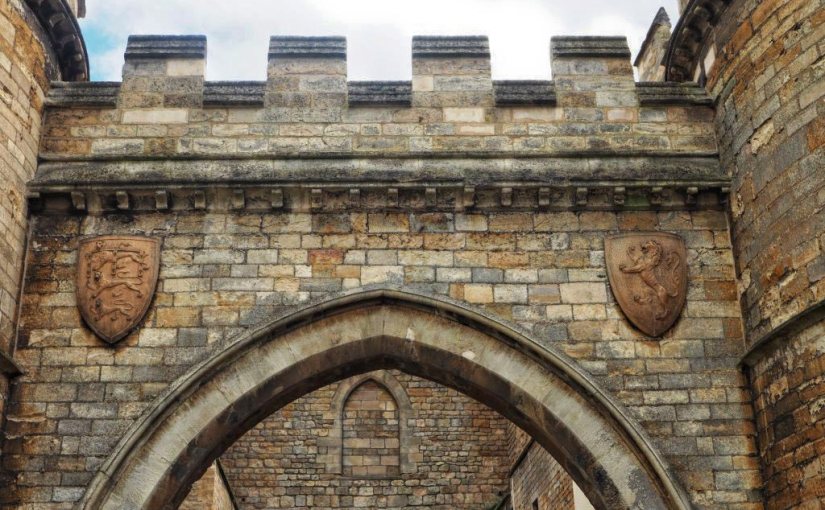
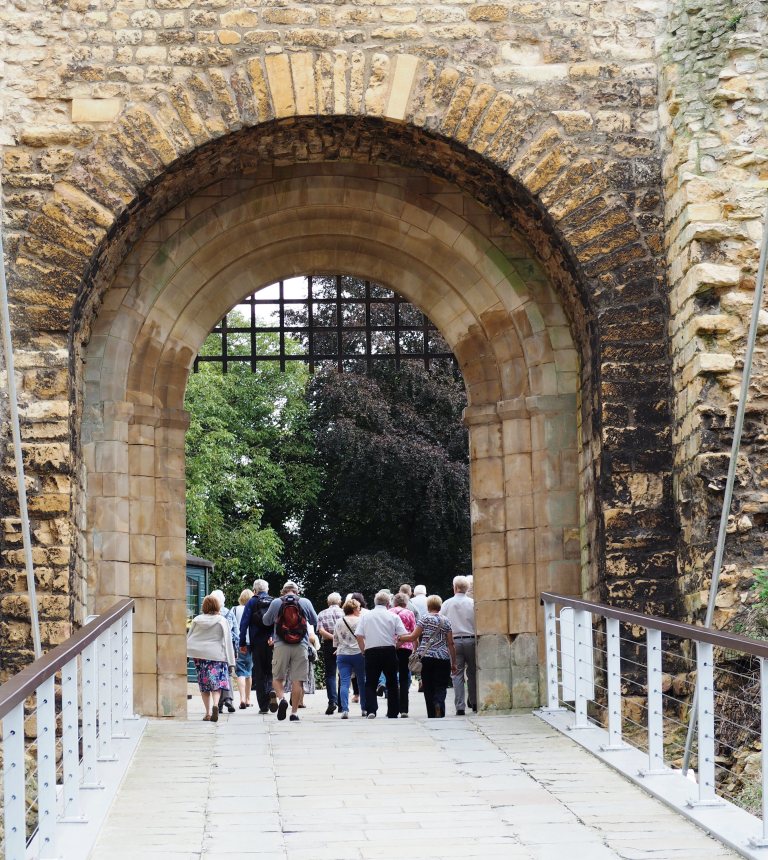
The East Gate
The East Gate
Row of terrace houses on the east side
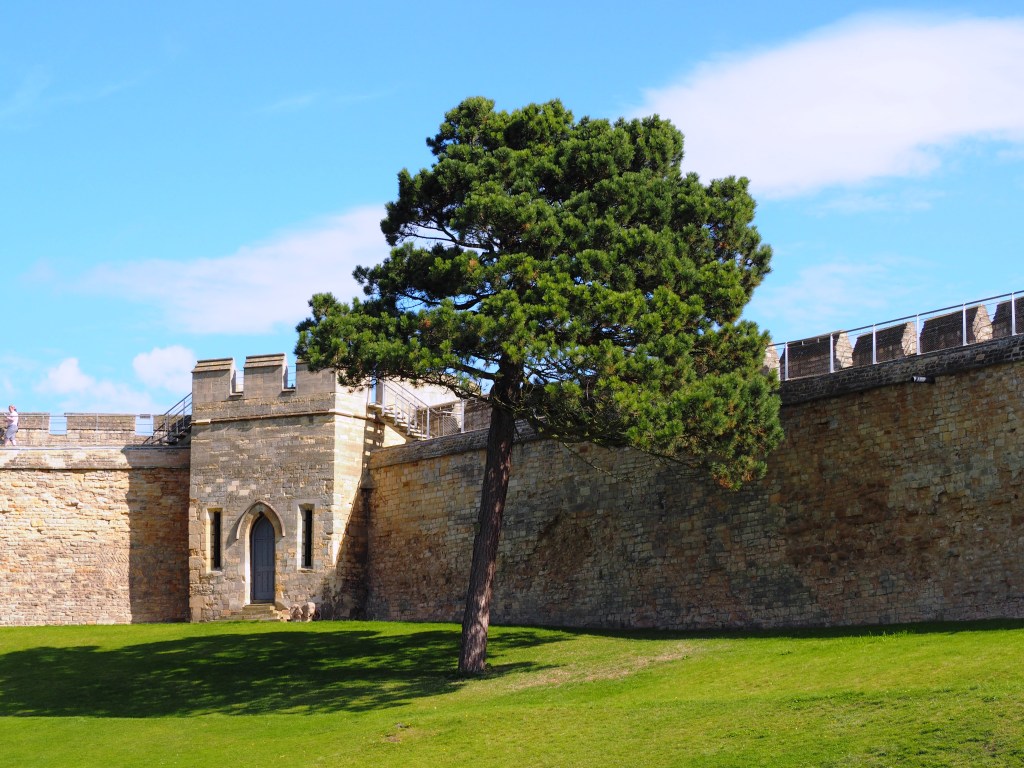
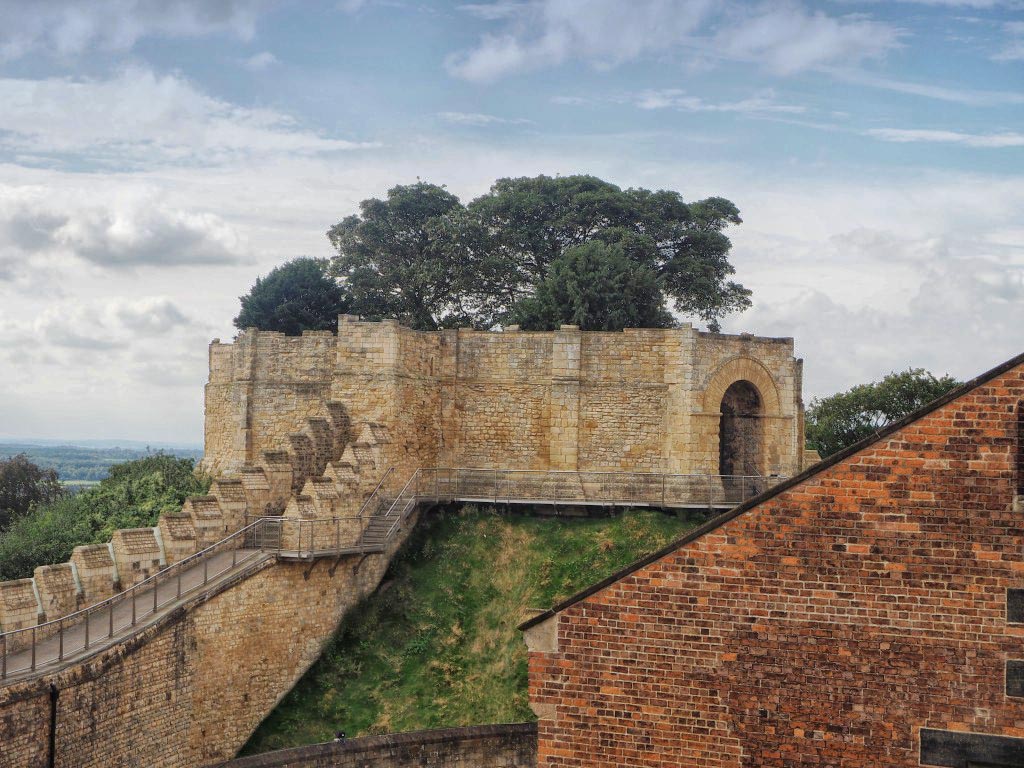
Motte and Bailey – Lucy’s Tower
Another view of the prisons
Sculpture of George III
The Lucy Tower
The Lucy Tower is named after one of the formidable women linked to the castle. It was built on top of its Norman mound and is a polygonal shell keep, the internal space was kept open.
Observatory Tower
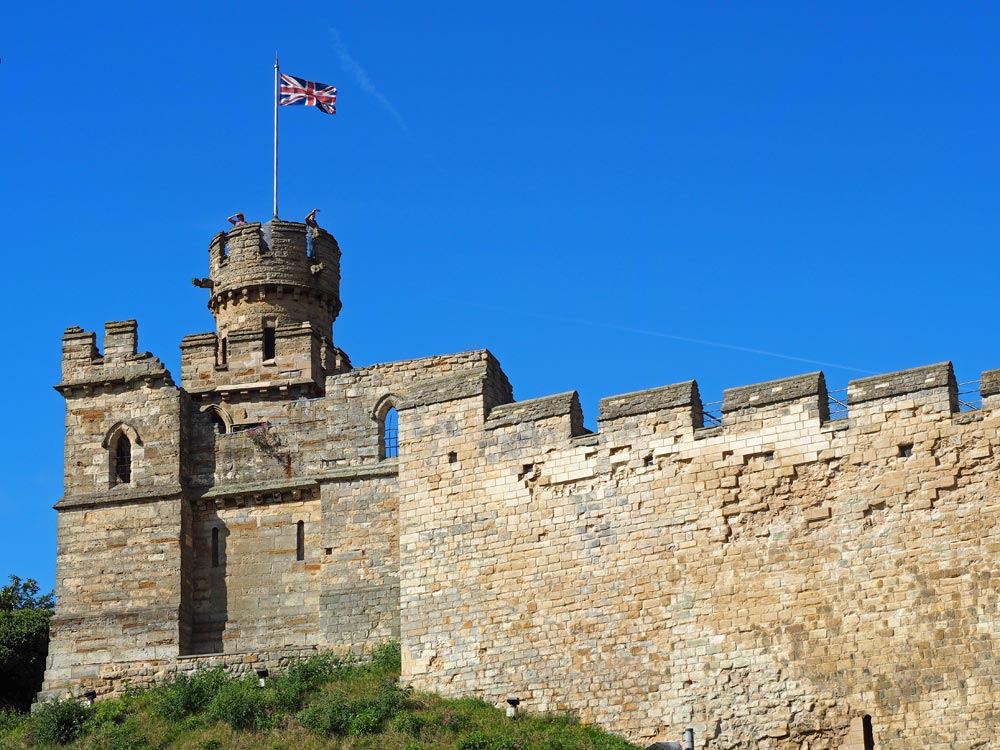
The wall walk continues around the back of the Victorian prison to the Observatory tower which was built on the smaller of the two mounds that join the south curtain wall. The additional tower was added in early †19C by prison governor John Merryweather who was a keen amateur astronomer.
The Observatory Tower
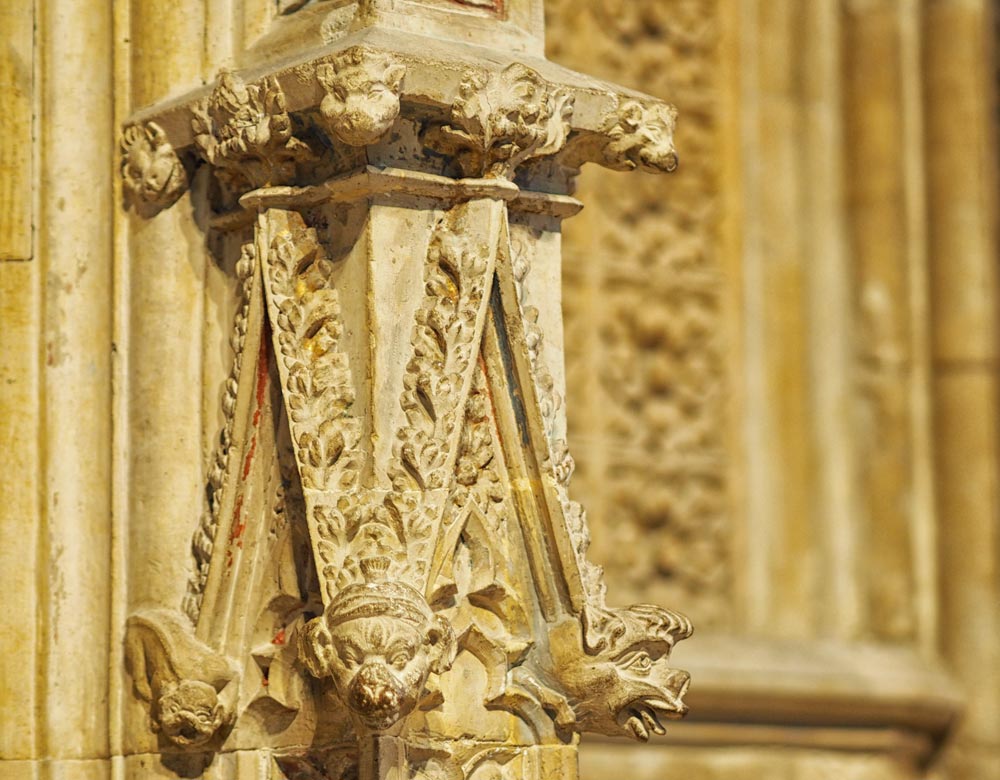
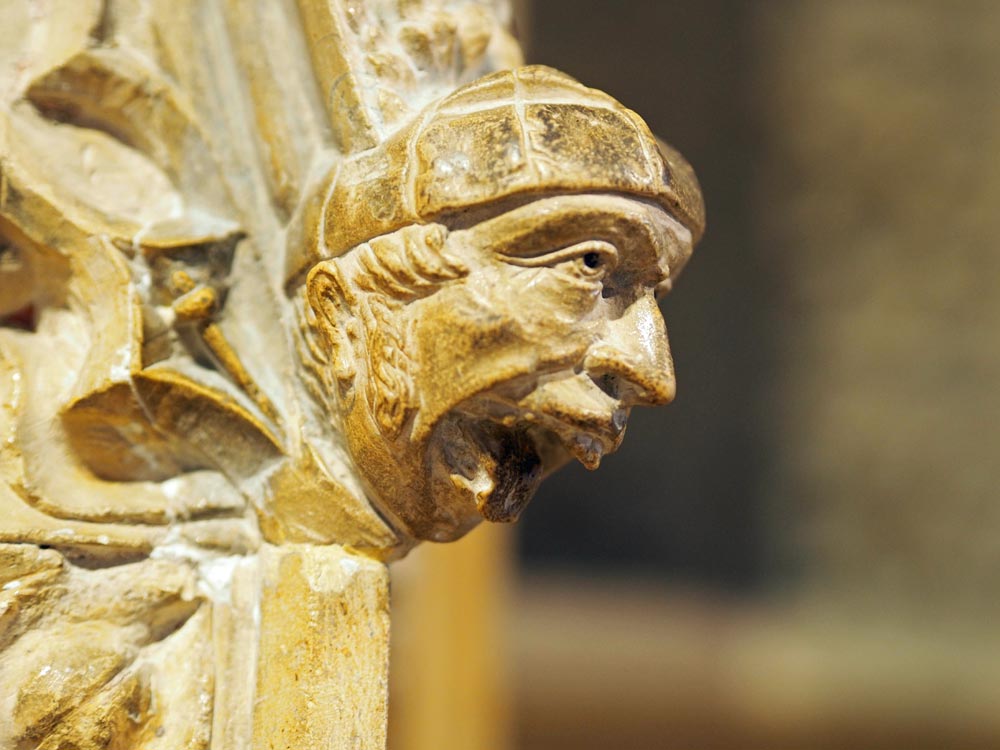
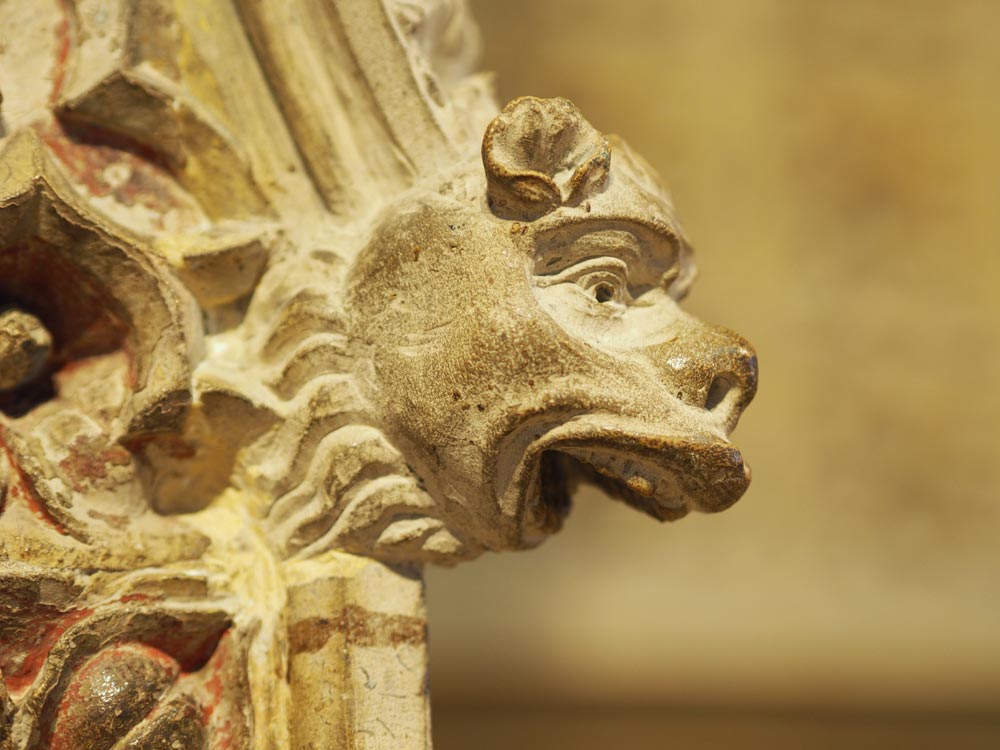
Grotesque
East Gate from inside the walls
East Gate
Oriel Window – East Gate
Entrance and lift to the wall walk
View onto Bailgate
IF YOU ENJOY A WALK, LONG OR SHORT, THEN HAVE A LOOK AT JO’S SITE WHERE YOU ARE WELCOME TO JOIN IN WITH HER MONDAY WALKS.
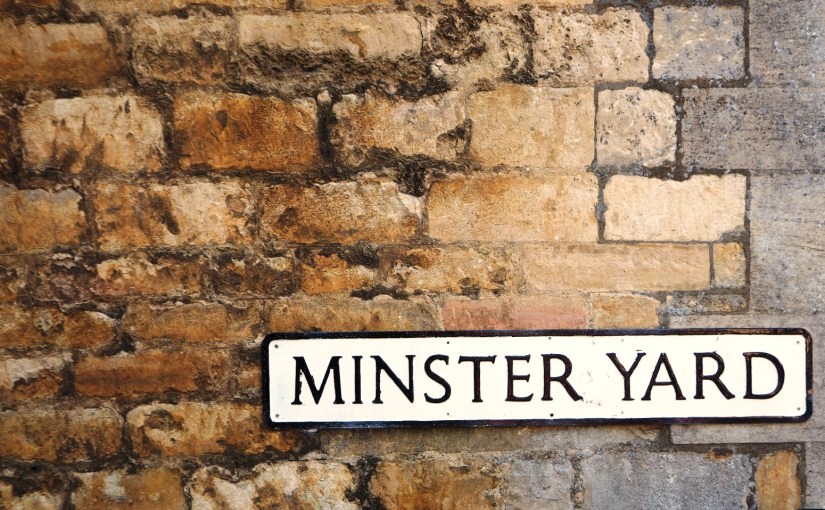
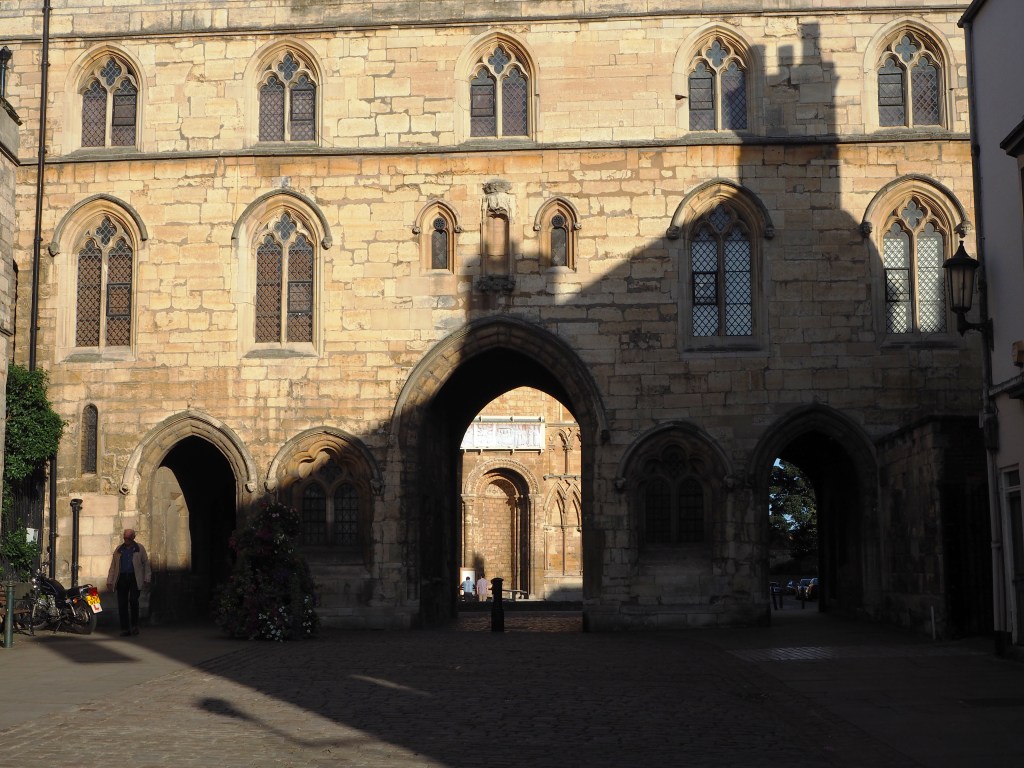
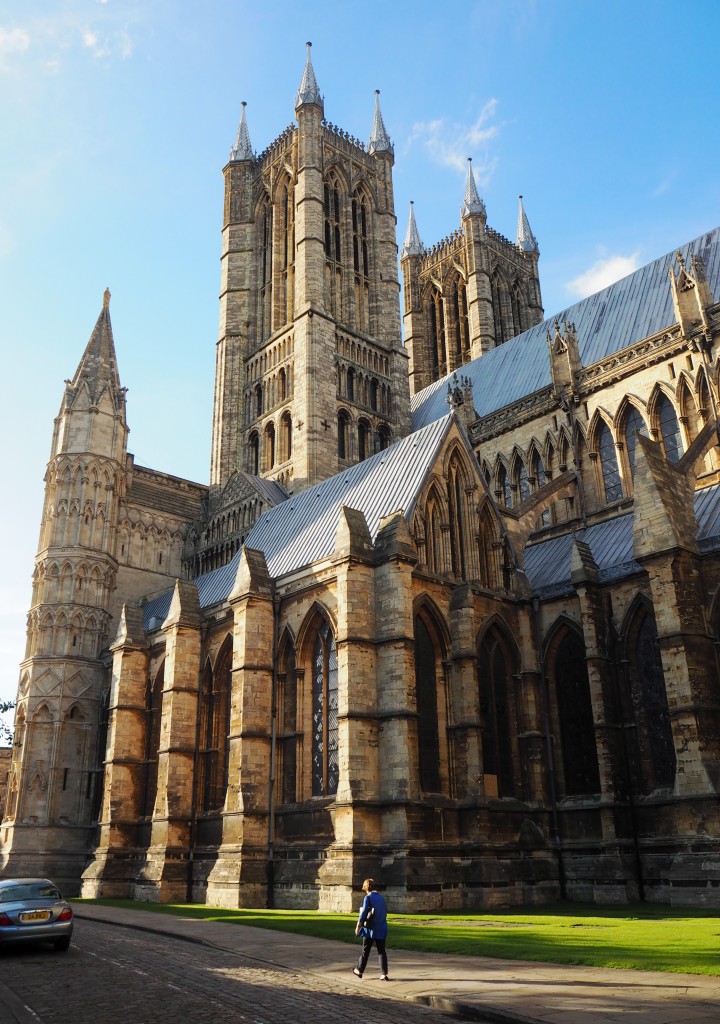
Following on from our stroll in uphill Lincoln we entered through the †14C Exchequer Gate into Minster Yard which is contained within the remains of its medieval gates and walls. Most of the houses are medieval and were built for the clergymen and associated workers who maintain the life of the cathedral.
Exchequer Gate
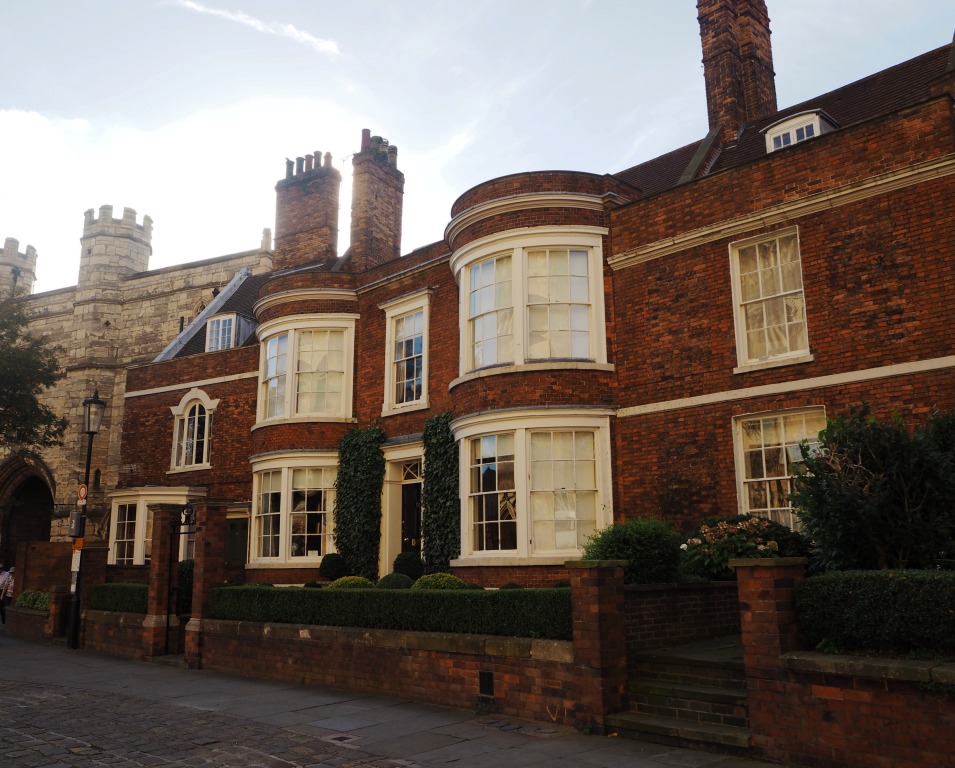
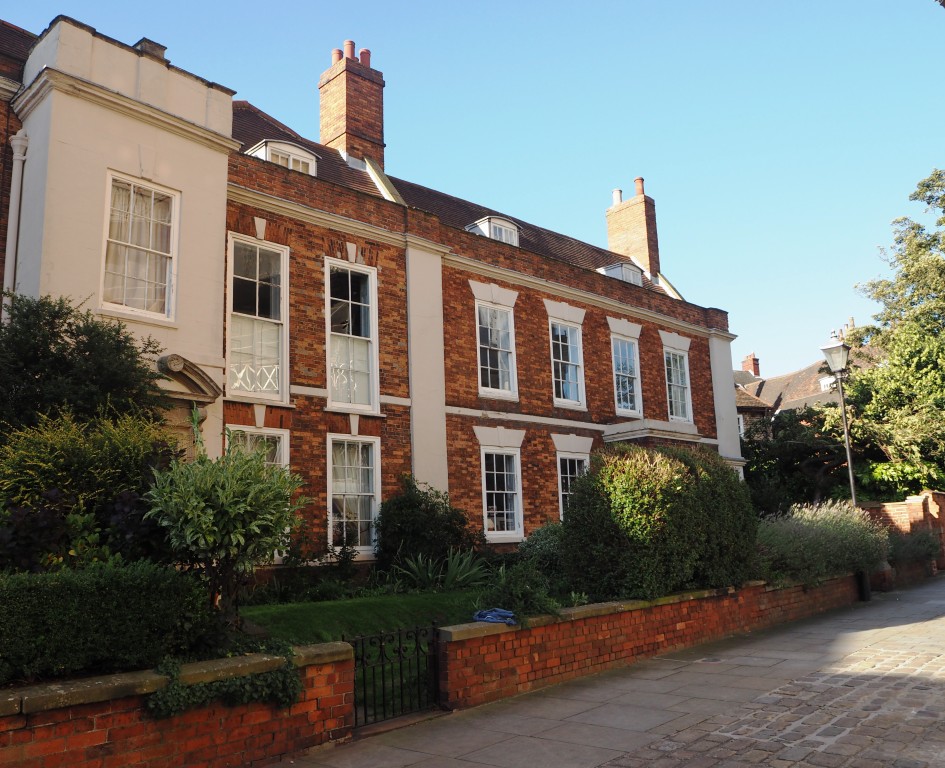
Facing the cathedral are four Georgian houses, 20 – 23, referred to as the ‘Number Houses‘ as they are believed to be the first houses in England to be given numbers. (So why start at #20?) Built in 1740 by Precentor Trimnell on the site of a blacksmith’s shop and other buildings. Number 19 was the birth place of the painter William Logsdail (1859-1944), a prolific English landscape, portrait, and genre painter. His father was a verger at the cathedral.
Moving in a clockwise direction we encircled the cathedral, looking back across its Norman west frontage, the only part remaining after an earthquake in 1185.
The houses facing are for Cathedral dignitaries – formerly the Deanery and the ‘Old Subdeanery’. This corner of the cathedral is notorious for the wind whipping around it and has the name ‘Kill Canon Corner’.
From the northern side, along Eastgate, you get a view of the towers.
Minster Yard / Eastgate
A short walk down James Street also provides views of the cathedral. As well as lovely golden stone walls. An area where the Burghersh family served the Chantry House founded in the mid †14c.
Burgersh Chantry House
We returned to Eastgate and carried on walking around the cathedral grounds.
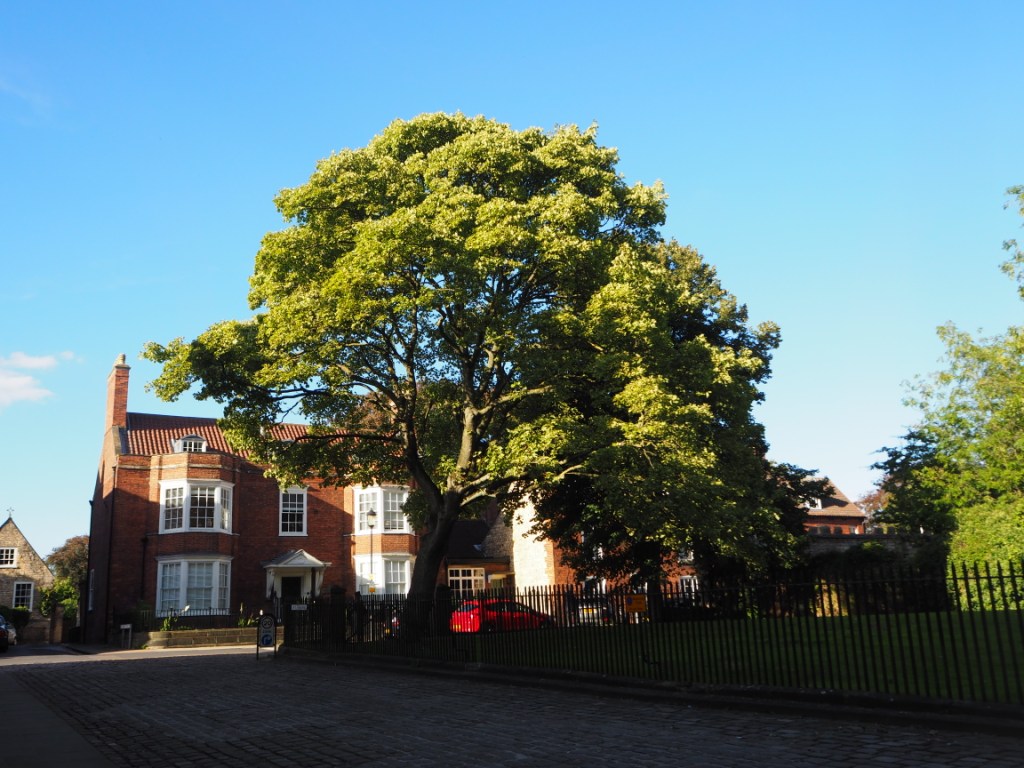
Atherstone House
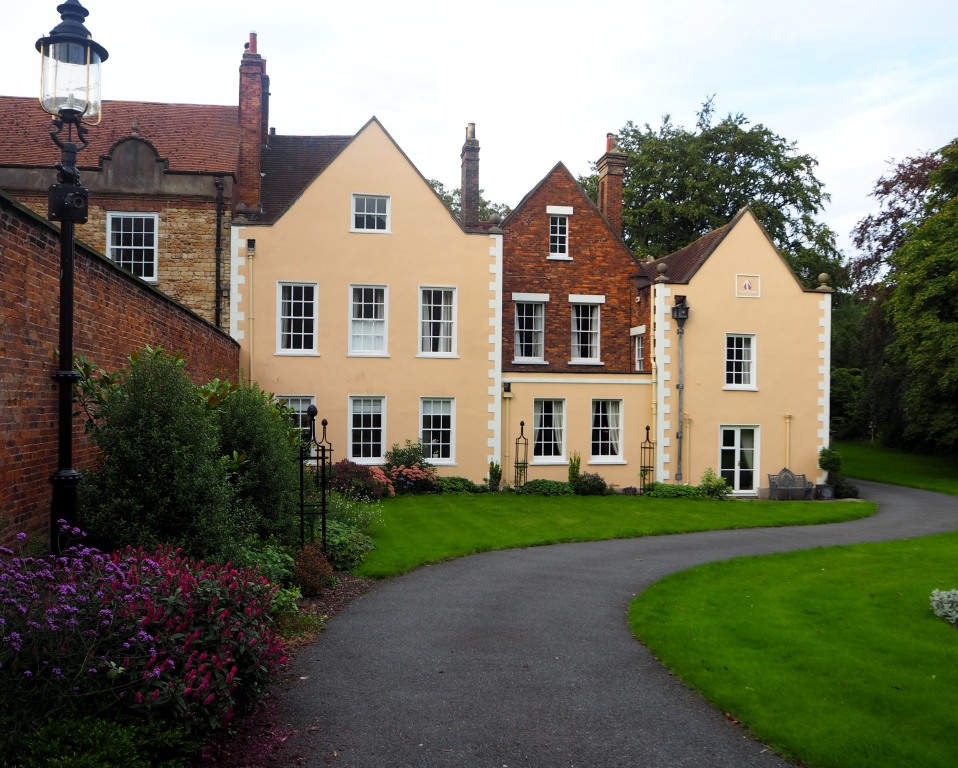
Passing the Bishop’s House, Deanery and Minster School which are all part of a medieval house built around a courtyard, you come back onto Minster Yard through the Priory Gate, or, like us, over the lawn.
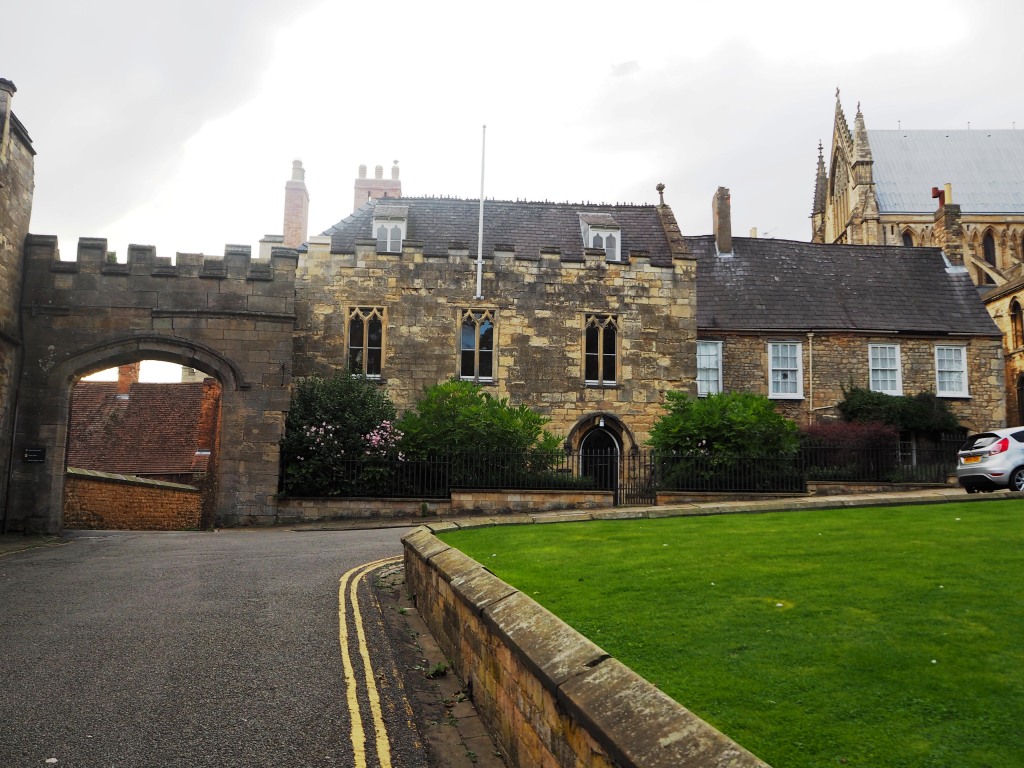
Priory Gate
Potter Gate
To get a decent photo of the medieval Potter Gate meant standing in the centre of the road as it is now straggling a traffic island. Fortunately in the evening this was fairly quiet. Lovely Georgian and medieval houses line this road.
The Chancery
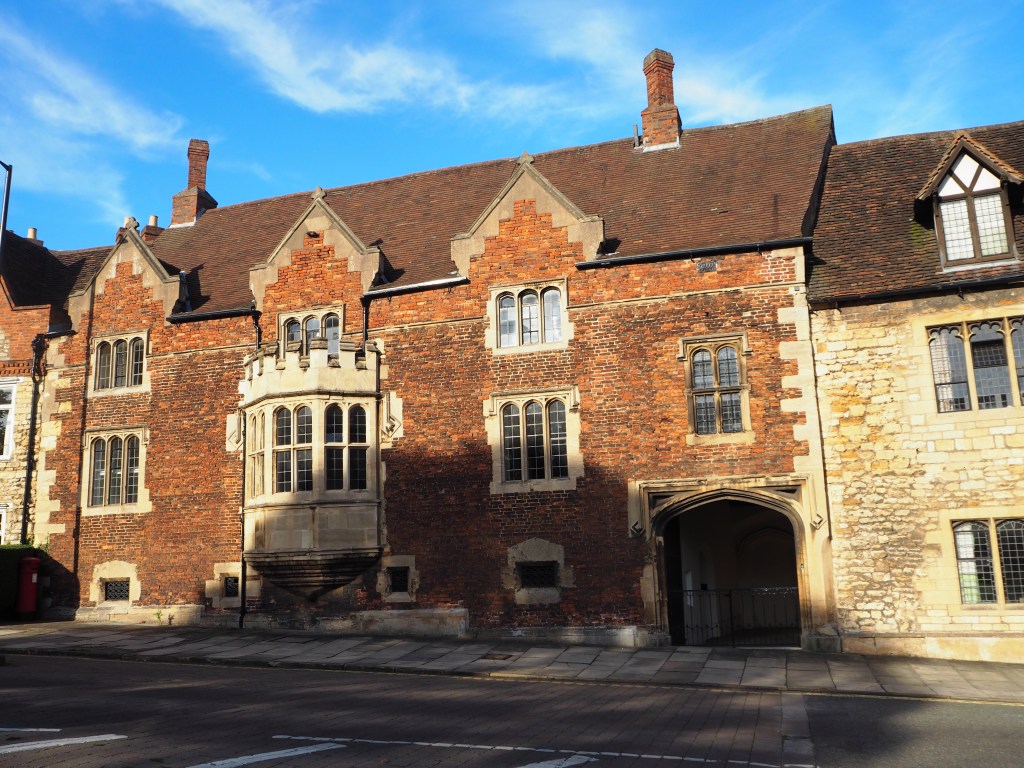
The Chancery is probably the prettiest with its red-brick facade and oriel window in the centre.
Choristers’ House
East Window
Lord Tennyson
Library and Coffee House
The Chapter House
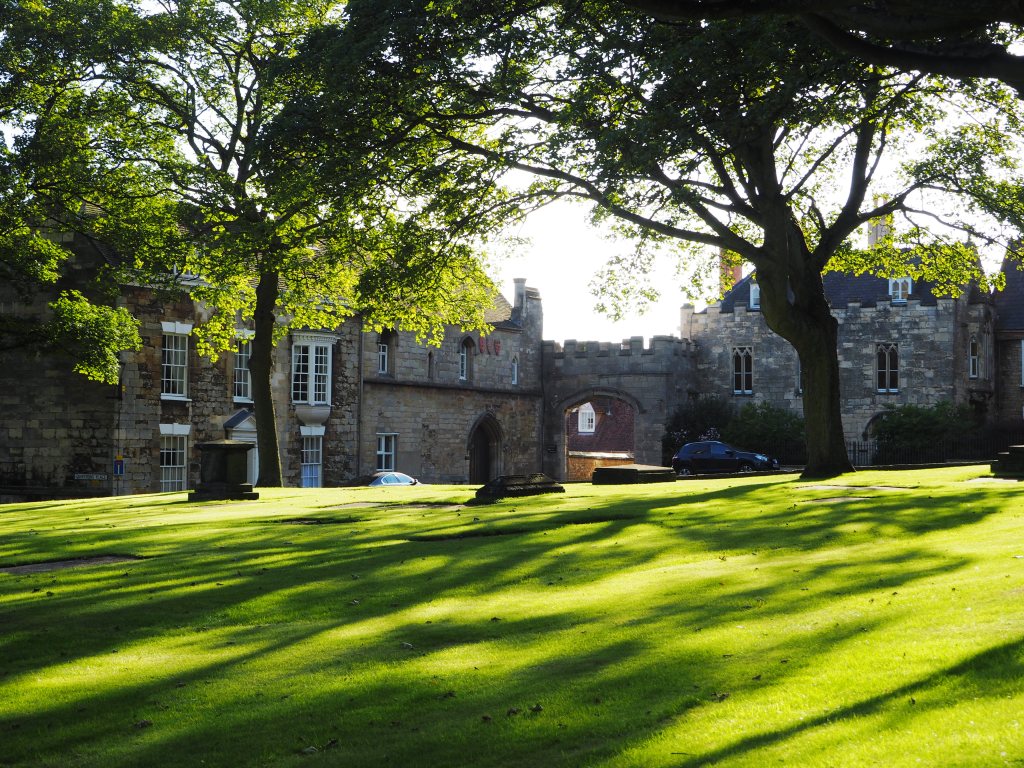
Minster lawn
Vicars’ Court and Palace Gate
“To see it [Lincoln cathedral] in full perfection, it should be in the red sunshine of an autumnal evening, when the red roofs and red brick houses would harmonise with the sky and with the fading foliage” ~ Robert Southey, poet (1774 – 1843)
Precentory, Cantilupe Chantry
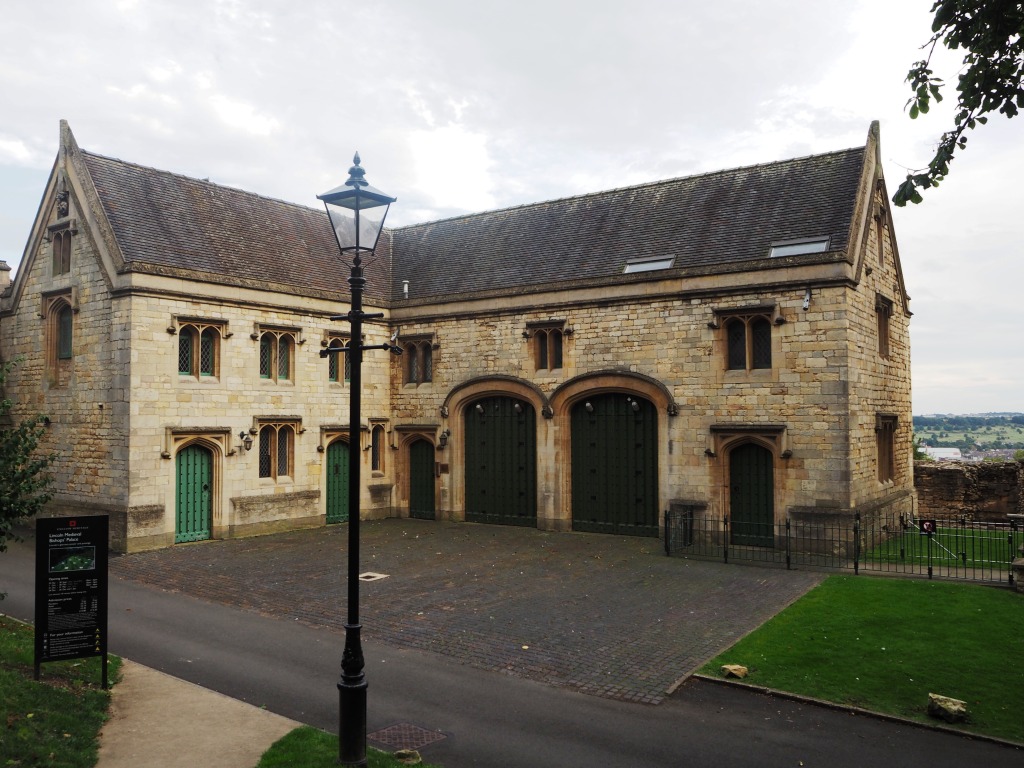
Through the Palace Gate the road leads down to the Medieval Bishop’s Palace which was unfortunately closing as we approached (an English Heritage site) and the Bishop’s Palace and Alnwick Tower. This was the home of the Bishop of Lincoln from 1886 until 1942 and was converted into a 16 room bed and breakfast establishment in 2009, with prices for a double room from £85 and views of the cathedral, this is a perfect place to stay.
The Old Bishop’s Palace (EH)The Old Palace B&B
A pathway led back up to the cathedral and there are some good views of the south side of the cathedral including the great rose window which contains fragments of medieval glass.
The Bishop’s Eye – rose window
The South East Transept and Judgement PorchBack to Exchequer Gate
Next time we’ll have a look inside the cathedral.
IF YOU ENJOY A WALK, LONG OR SHORT, THEN HAVE A LOOK AT JO’S SITE WHERE YOU ARE WELCOME TO JOIN IN WITH HER MONDAY WALKS.