The Cape Doctor is the local name for the strong south-eastern wind – also known as the South-Easter – that blows from False Bay and funnels through to Cape Town and Blouberg during the hot summer months. It is said to clear all pollution in the city and across the Cape Flats, offering an amazing clear sky and view of the Mother City.
The wind picks up moisture from False Bay and pushes it up against the flanks of Table Mountain, creating clouds (and rain) along the eastern slope. This phenomenon is locally known as ‘the Table cloth’: the top of Table Mountain is enveloped in a huge cloud, dripping over the mountainside.
For the month of May I’m looking for benches at the beach
Looking out at Manly Wharf, NSW, Australia
If you would like to join in with the Bench photo challenge then please take a look at my Bench Series page. No complicated rules, just a bench and a camera required 🙂
Create your own post and title it Bench Series: May
Include a link to this page in your post so others can find it too
Add the tag ‘bench series’ so everyone can find the benches easily in the WP Reader
Get your post in by the end of the month, as the new bench theme comes out on the first Sunday in June.
My Picks of the Week:
Aletta is in one of my favourite parts of the Cape. Tgeriatrix has more benches in Belgium – now why does it feel so flat there? Anabel takes us for a stroll around Dunbar, you’ll need a sit on that bench after this. Pauline is waiting for the sun to rise. Well at least that’s what I think she is doing here. And Debbie takes us to Broadstairs this week. There is a very good ice-cream parlour in Broadstairs if you happen to be that way. If you saw Mary Berry’s program on Friday night (UK) you will have seen it (and the knickerbocker glory). When I was a kid I dreamed of having one of those. Unfortunately a 99 was the most my parents could afford.
I looked for a boater in my Cambridge, Oxford and even Venice photos, but not one! So here are some hats for sale in a darling little courtyard in Franschhoek, South Africa. And if you haven’t been there then you are missing a real treat.
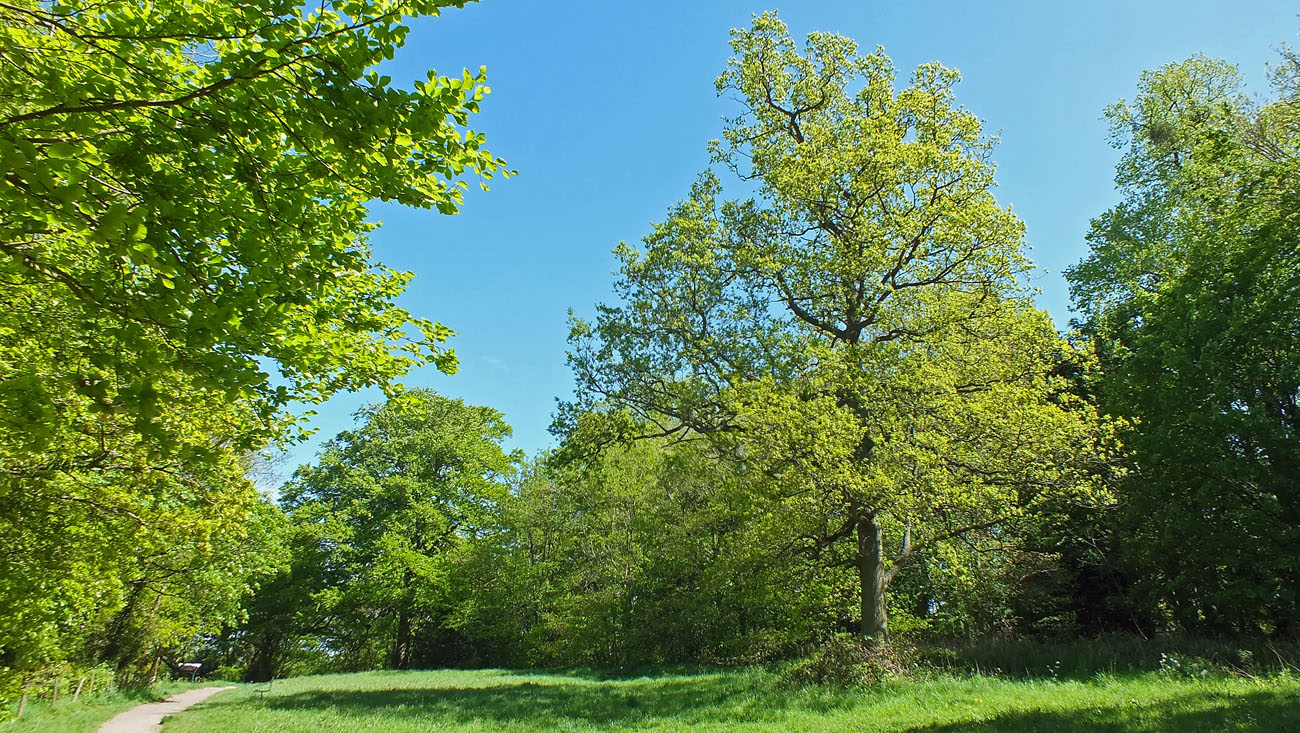
I will refer to this month as the ‘Green Month‘ as after a warm spell everything appears to have burst into colour – mostly myriad shades of green. The May fair has been and gone with the usual closure of all the streets in the old part of the town and the spring food festival completely passed me by this year. Apparently it was held last weekend. Which may explain the arrival of more tourists walking around with a camera slung around their necks.
The lime trees are bursting into leaf and various shrubs around the castle grounds now display colour, but I am too late for the cherry blossom and magnolia. The fresh green leaves are very welcome though.
Date: May 12 2015 Weather: sunshine, cloud and very windy Temperature: Warm (14°C) Time: 12:30 – 14:30 PM
Heading back down Dinham I notice the lawns outside St John’s Chapel are full of daisies and dandelions. Gone are the snowdrops and daffodils of previous months. The magnolia still has flowers, though it is not easy to see them through the leaves. Further down an enormous burgundy-red Norway Maple (possibly ‘Crimson King’) rises above the town walls and I can see the splash of purple of a lilac tree. Edit: I think the red tree is actually a copper beech. I need to try and get a closer look at the leaf.
Lilac (May)
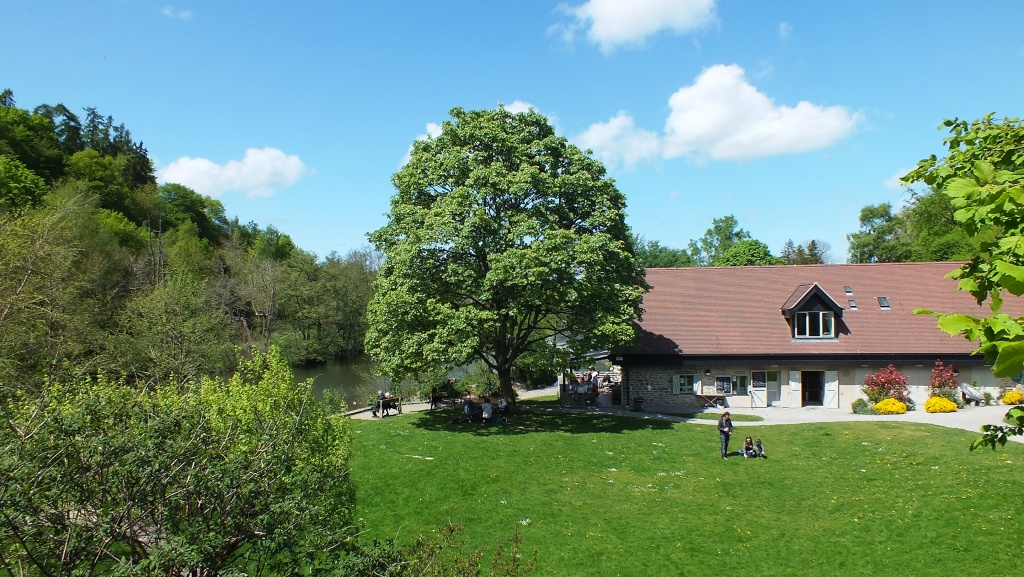
There are more people on the Millennium Green this month, some picnicking on the lawn, others sitting on a bench and lapping up the sunshine and quite a few enjoying lunch on the patio of the Green Café with its beautiful views of the Teme. I scan the weir for a heron, but am out of luck. A few ducks vie for attention around the path, but no signs of ducklings as yet. The castle begins to be hidden behind all the foliage.
More notices catch my attention and I see that I missed the ‘Storm the Castle Duathlon’ on 19 April when Ludlow was full of cyclists/runners.
This inaugural run/bike/run course runs through the market town of Ludlow and the surrounding countryside of Shropshire and Herefordshire. Sections of rolling hillside mixed with seriously steep sections make this arguably the UK’s toughest duathlon.
I know two or three of my blogging friends would have been very interested in this had they been in this country at the time. Maybe next year ladies?
Shame I missed the ultimate challenge
Dinham bridge and Ludlow Castle (May)
Dandelions
Cow Parsley
Fresh green
Forget-me-not (May)
Crab-apple blossom?
Path through the woodland
For a change I take the Donkey Steps among clouds of flying insects through the green tunnels of broadleaf woodland, enjoying the warmth now that I am out of the wind, though I can still hear it whispering through the leaves and it makes photographing the wild flowers rather more difficult. Along with dandelions, alexanders, alkanet, forget-me-nots, cow parsley, stinging nettles alongside dock leaves and honesty I find what appears to be a crab apple tree, the pinky-white flowers drawing my attention from a distance amongst all the greenery (see the header photo).
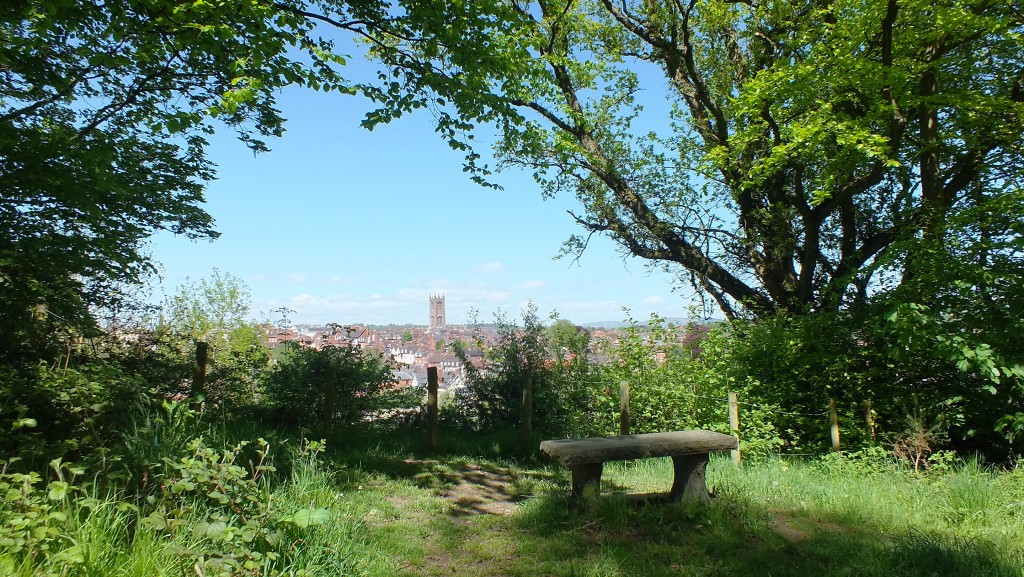
Emerging from the woodland I am struck by the light. The open space has been transformed. I sit for a while on a bench overlooking the town. Swifts scream through the sky in front of me. A robin sings above my head and a blackbird sources nesting material by my feet. The river Teme rushes over the Mill weir below me and leaves ripple and dance in the wind sounding like waves lapping on the shore (though any shore around here has long since gone). It is very relaxing with only the sounds of nature to disturb me. I keep a careful eye out as sulphur-yellow brimstone and orange-tipped butterflies encircle me, hoping one might land nearby, but when a group of elderly hikers pass by I get up to leave.
Sitting on a bench admiring the view with St Laurence in the distance
My final stretch is along Lower Broad Street where I see that the cherry tree I wasn’t sure actually was a cherry tree flaunts very distinctive cherry blossom. Some gaudy yellow tulips and a Solanum crispum ‘Glasnevin’ add to the increased vibrancy of this street garden.
Solanum (May)
…did anyone spot the swift?
The Cardinal has decided to have a photo project going throughout 2015 – a blogging event, a monthly photo challenge. Find a location near your home, take somewhere between 5-20 photos and post them in a gallery in your blog. Continue to do this every month. The idea is to capture all the changes: the seasons, the weather, different times of the day, some night photography perhaps?
The rocks of Cornwall have an amazing story to tell. They have been on a journey of 8,000 miles in just 400 million years. This journey has included tropical seas, deserts, volcanic eruptions and hot granites, mineral vapours rich in tin and copper and ever-changing climate and sea levels. (Cornish Geology)
Cornish geology typically consists of black, folded slates and pale grey, blocky granites. But there are exceptions:
Polzeath Beach (north coast on the Camel estuary): Stripy slate formations in purple and pale greens.
Kynance Beach (south-west on the Lizard peninsula): Serpentinite cliffs are made up of dark green and red rocks, polished by thousands of years of crashing waves to look like shiny snakeskin.
Up on the cliffs by ChapelPorth on the north coast the rocks were lighter and redder.
And at Boscastle (north coast, north Cornwall) I was intrigued by huge lumps of marble-like granite rocks along the pathway and on tops of Cornish stone walls.

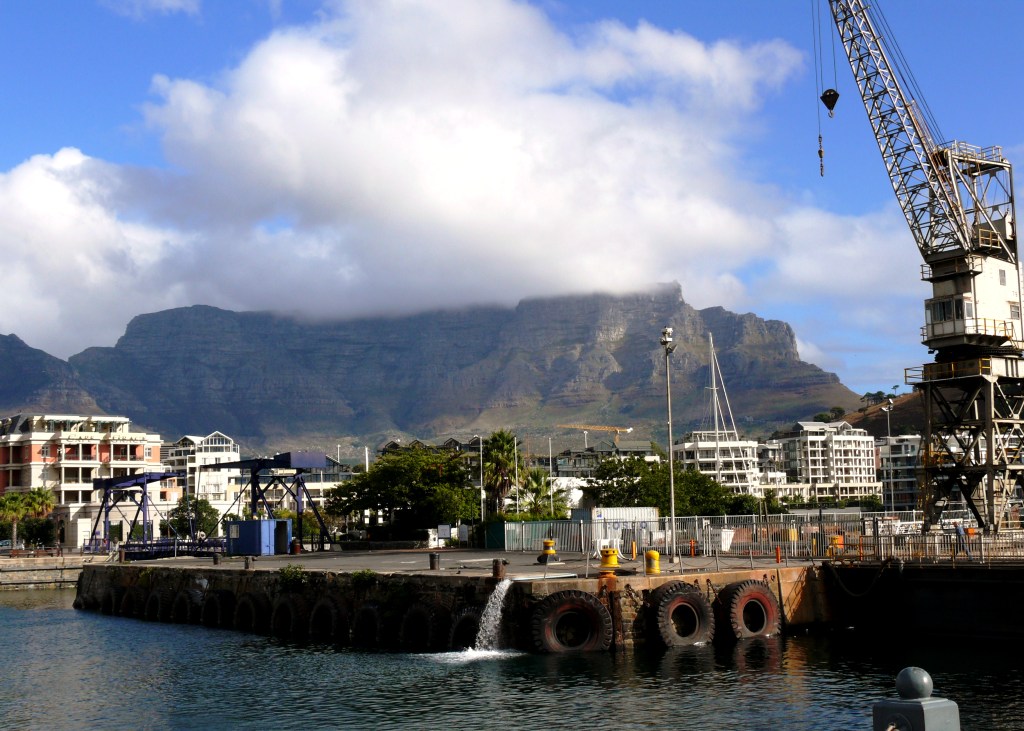 The wind picks up moisture from False Bay and pushes it up against the flanks of Table Mountain, creating clouds (and rain) along the eastern slope. This phenomenon is locally known as ‘the Table cloth’: the top of Table Mountain is enveloped in a huge cloud, dripping over the mountainside.








 TRAVEL WORDS