Having received this photo today from New Zealand of my youngest grandson (four months old today) I have to share it with you as he decided to join in with this week’s theme.

Challenges from the Wordpress Community
Having received this photo today from New Zealand of my youngest grandson (four months old today) I have to share it with you as he decided to join in with this week’s theme.
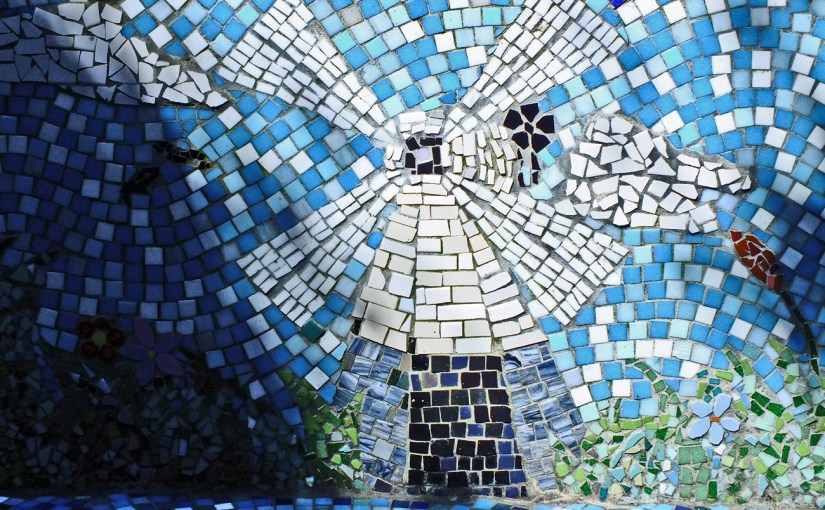
Let me introduce you to one of the prettiest towns in the Kent High Weald, only three miles from the famous Sissinghurst Gardens created by Vita Sackville-West. You may enjoy the many types of weather-boarding and architecture, independent shops, the narrow medieval streets and some interesting buildings all within an easy walk of each other including a beautiful church and a smock windmill. It is the picture of a small English town and on a warm summer’s day with church bells chiming and white sails shimmering, let’s go for a stroll around Cranbrook.

Cranbrook means ‘brook frequented by cranes or herons’. The name is first recorded as Cranebroca in the Domesday Monachorum of 1070, but as the name of a stream, not a settlement.
Leave the car in one of the free car parks and head down the High Street to the Vestry Hall built in 1859 as Cranbrook’s court-house with the Old Fire Station below. Now the Weald Information Centre.

Head up the steps on the left to St Dunstan’s Church. Outside on the tower is a carved figure of Father Time. Local legend says that he comes down every night and scythes the churchyard grass to keep it neat and tidy.


Opposite the church is Church House, formerly Dence’s School, which was built in 1567 by Alexander Dence. It was used as an elementary school for 300 years.
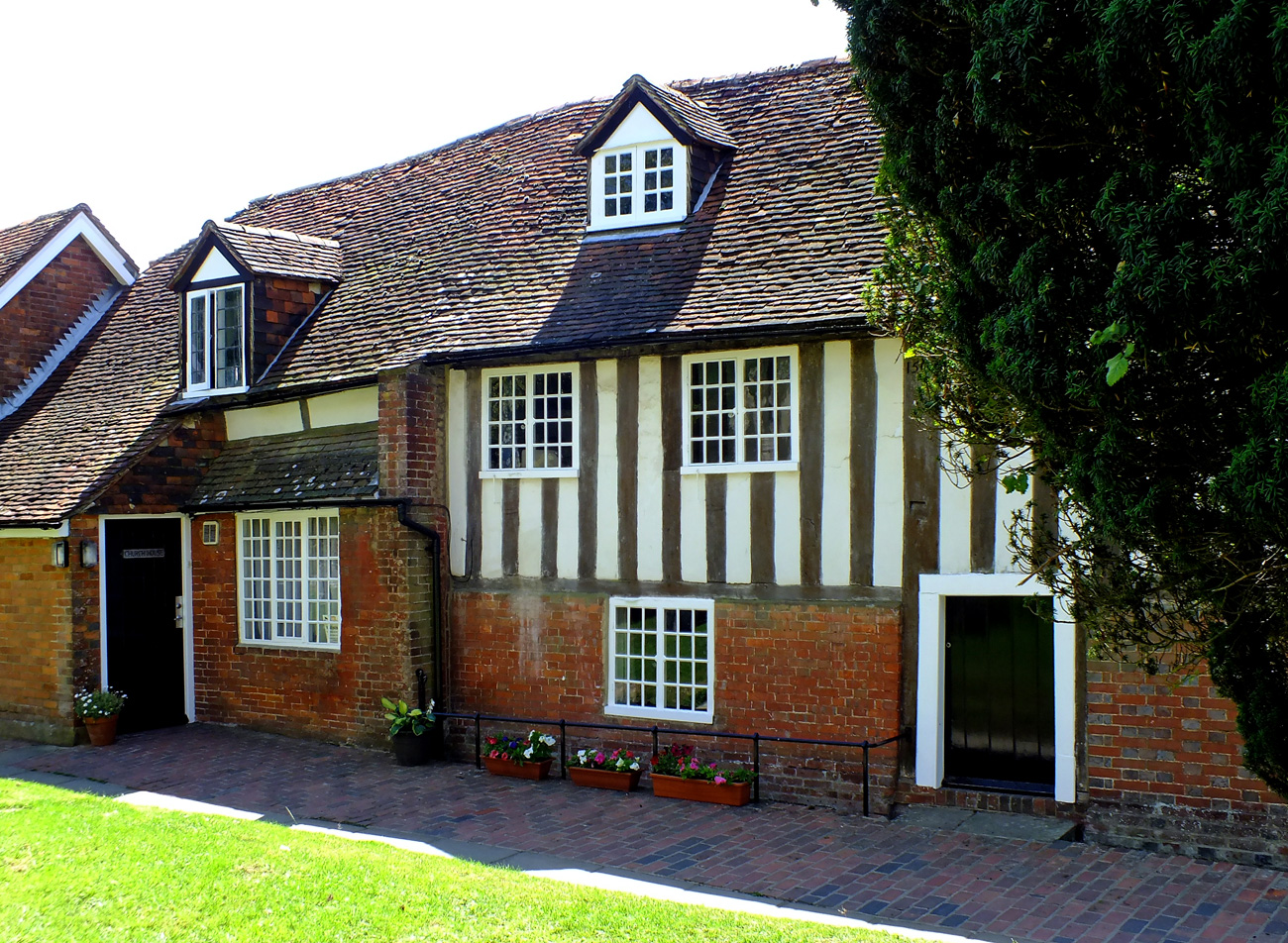
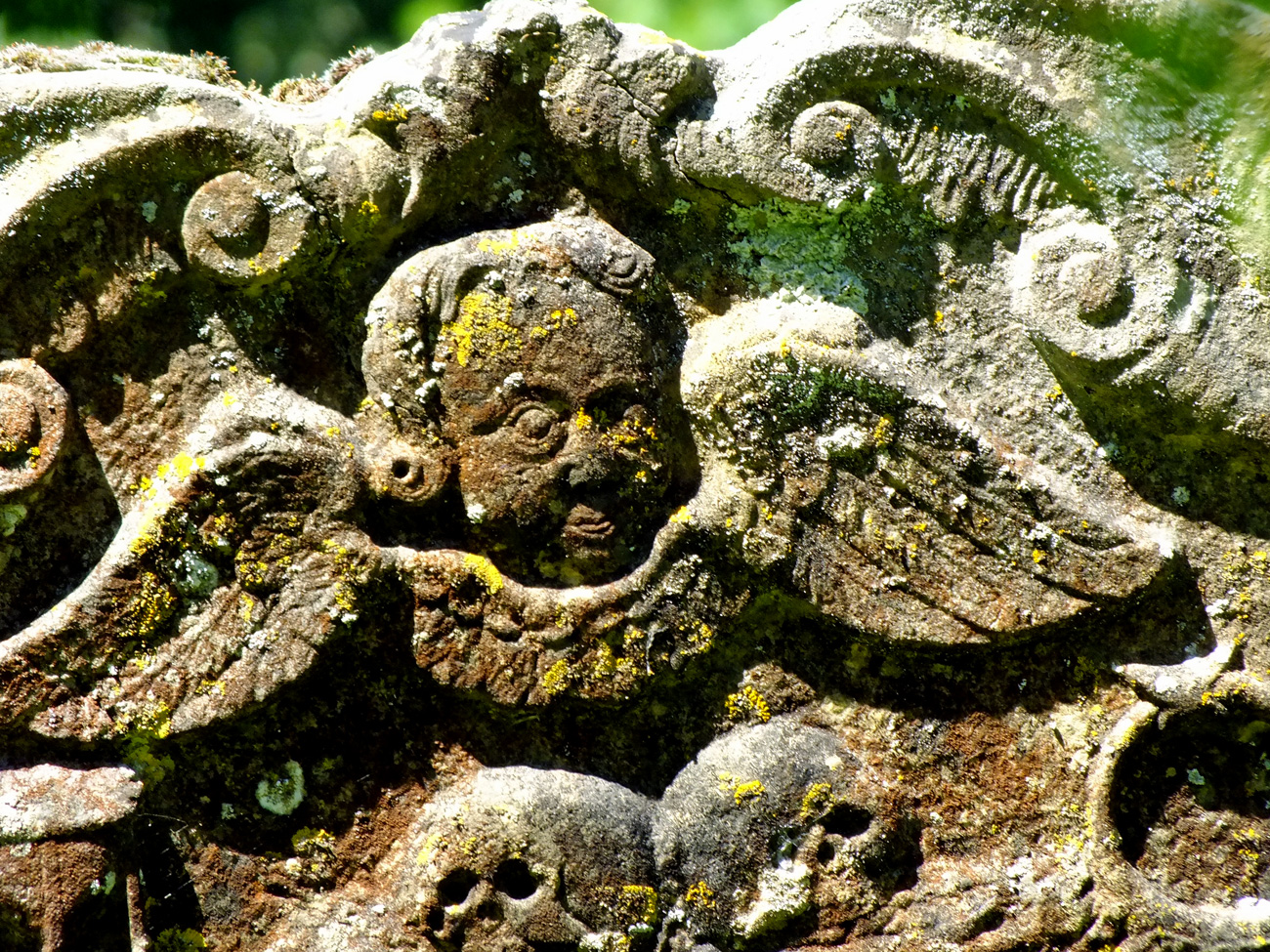
Carry on around the church and through the churchyard which leads into another small car-park and back into the town.
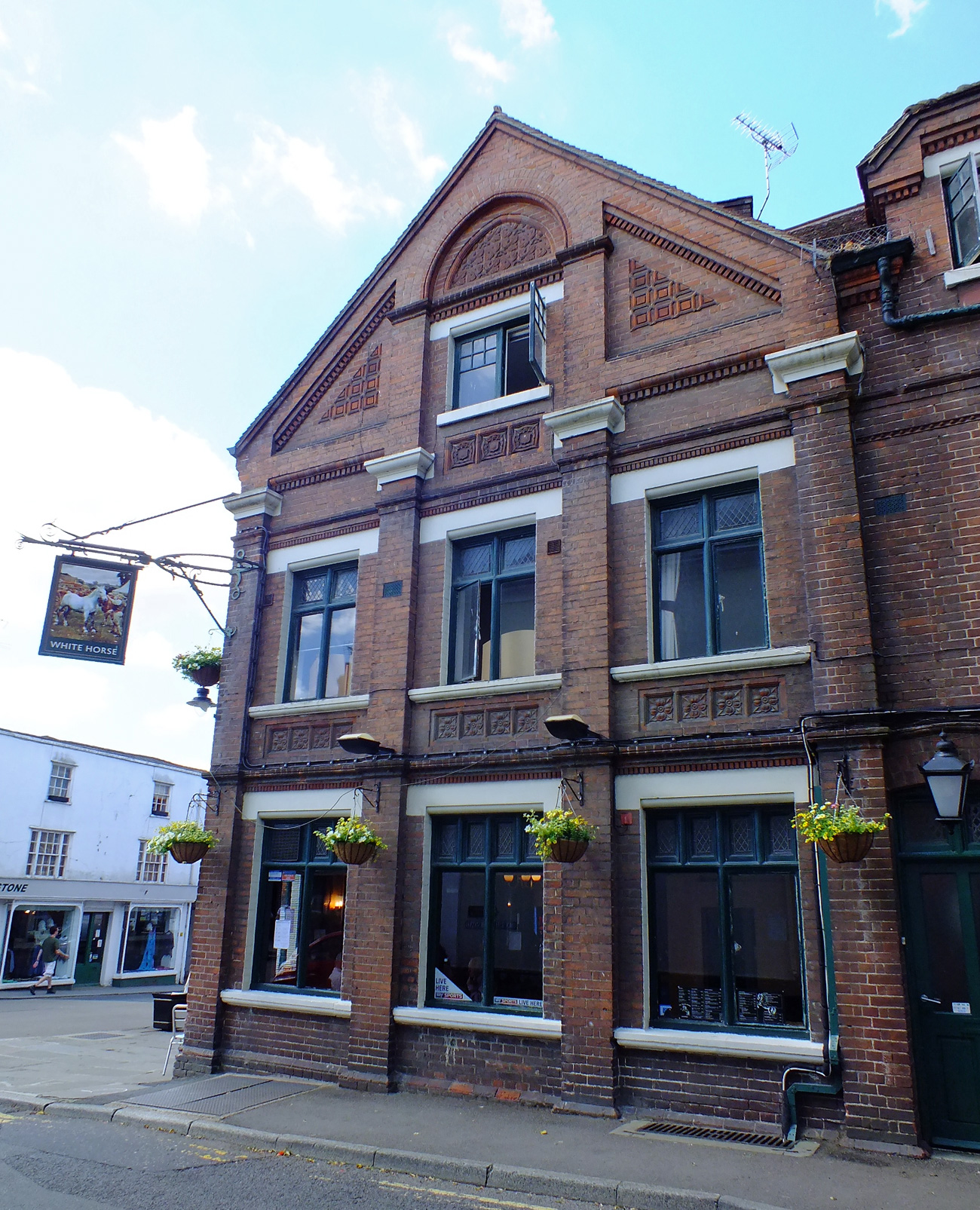
Stop to look at the decorative bricks of the White Horse public house on the corner.

Straight on down Stone Street you will catch glimpses of the windmill ahead of you.

and lots of lovely shops…


On the right hand side several narrow passageways lead off Stone Street. One passage passes Hatter’s cottage, which was William Tooth’s water-powered hat factory.

Pop around the corner to see Cranbrook School. John Blubery (d 1518) bequeathed funds for “a frescole howse for all the poor children of the towne”. The school received a charter from Queen Elizabeth I in 1574. It is now a co-educational grammar boarding and day school and still State-funded.


Retrace your steps and turn left onto St David’s Bridge where you will find a delightful Arts and Crafts House which used to be a restaurant. Originally a temperance coffee house with reading room the Old Coffee Tavern was built in 1890 by Clement Cramp (1816-1894) for working men.


Opposite is a row of white weatherboarded houses and The Chapel of Strict and Particular Baptists. Built in 1785, this is the oldest existing place of worship for Dissenters in the Parish.


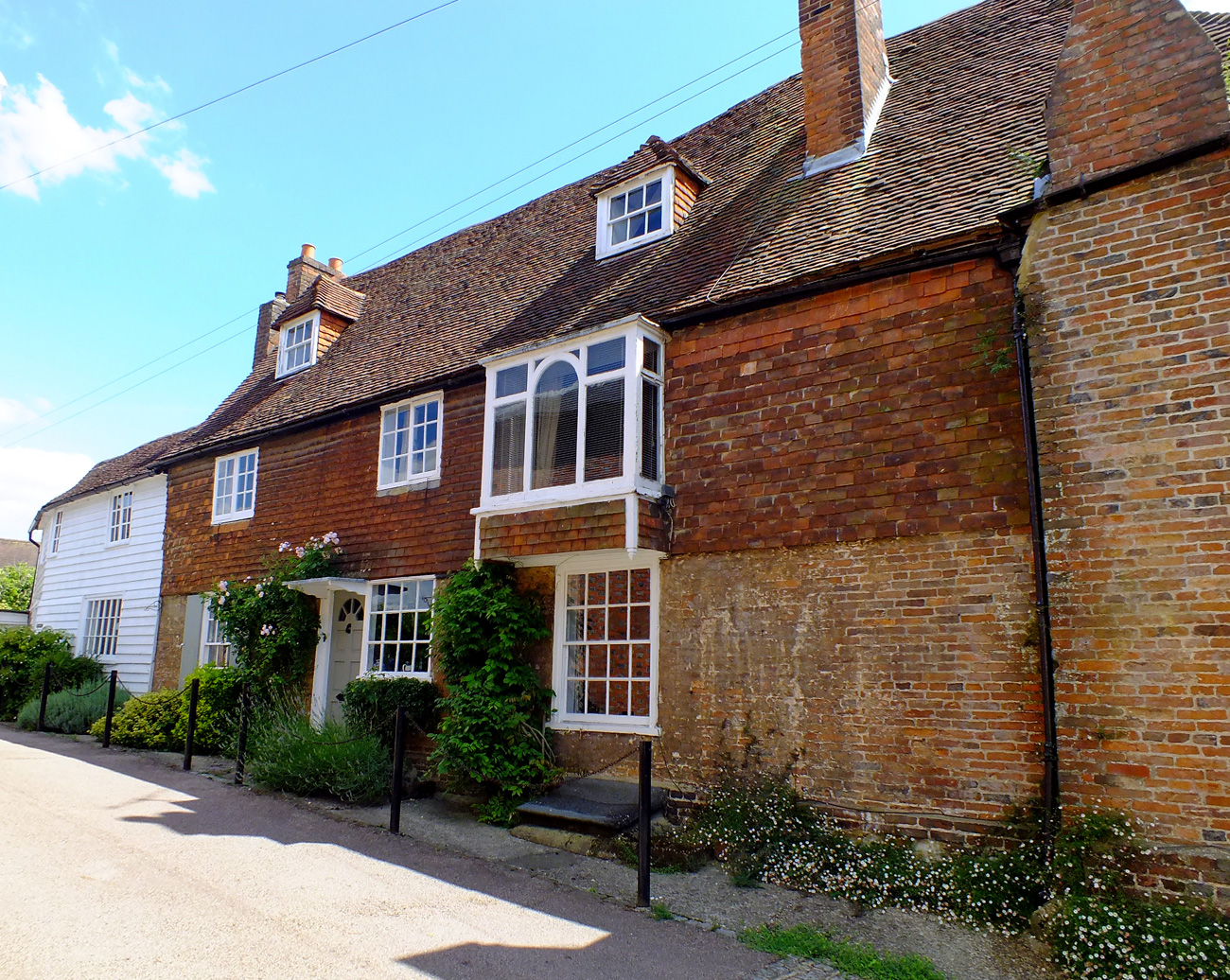
Continuing up Hill Road with Hill House on the right. Dating from the late middle ages, when the town was the centre of a thriving woollen industry, Hill House is a medieval clothier’s house. Note its lovely door.


We have now arrived at Cranbrook’s windmill which is the tallest surviving smock mill in the British Isles. Built in 1814 it dominates the town. It is still in working order, grinding wheat regularly to produce wholemeal flour which can be purchased from the mill shop. The Windmill is usually open Saturday, Sunday and Wednesday afternoons in the summer. Note: not on a Monday.


Stepping into Cranbrook is like stepping back in time.


If you enjoy a walk, short or long, then you may enjoy visiting Jo’s Monday Walk where you are in for a treat.
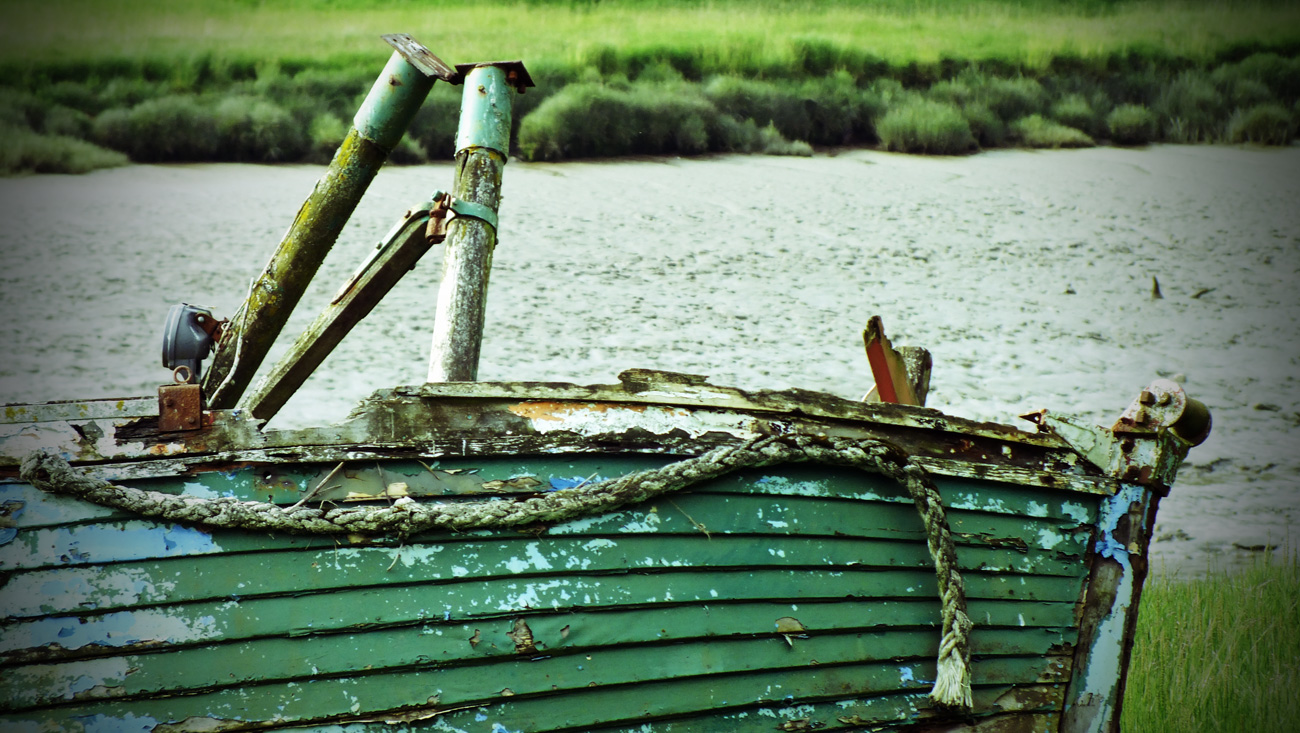
| synonyms: | unravel, wear, wear thin, wear out, wear away, wear through, become worn, become threadbare, become tattered, become ragged, go into holes, go through |
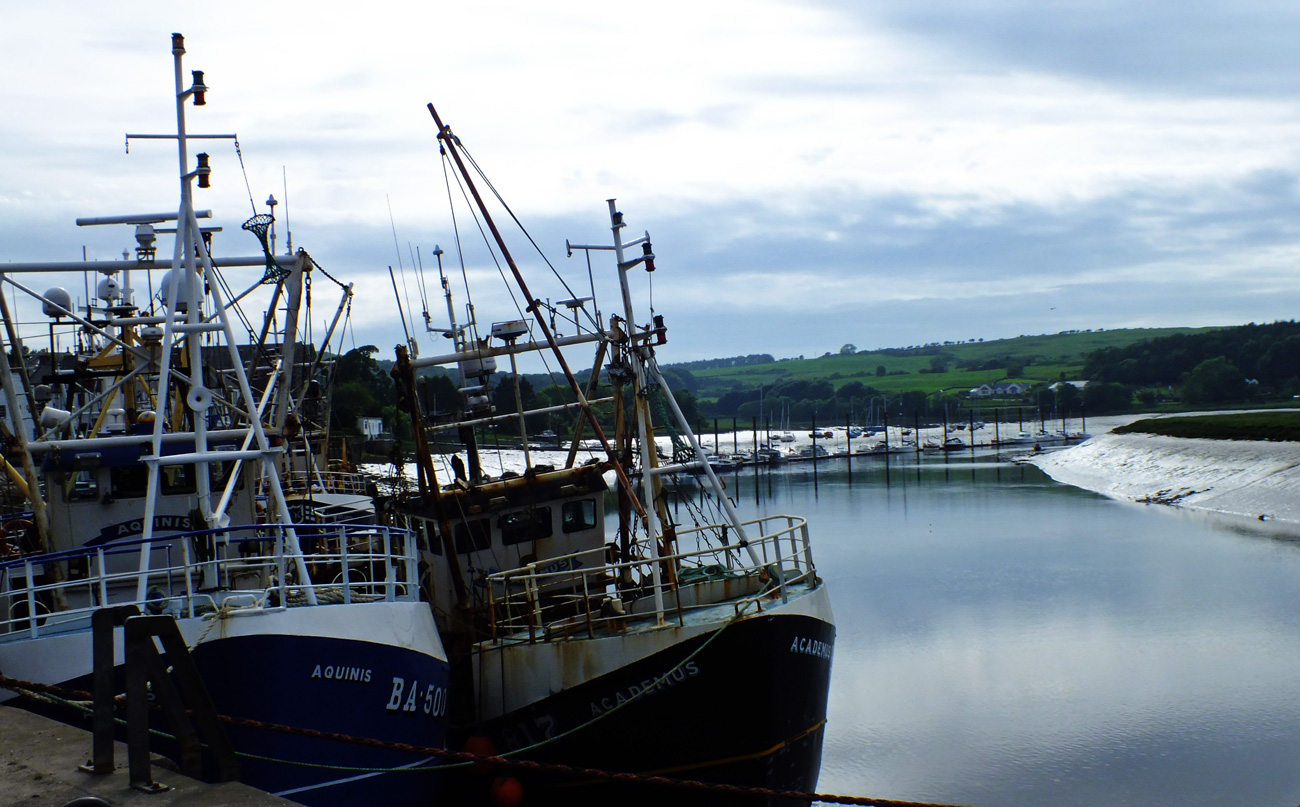
I love the coast. I love what you can find at the coast. From typical bucket and spade beaches to wild unpopulated coastlines. And the variety of photographs that can be taken. Although I am a terrible sailor (just looking at waves can make me sea-sick) I like to wander near fishing harbours for scenes to snap, boats and ropes, lobster pots, chains and winches. I also like to look for flotsam and jetsam, driftwood and frayed rope.


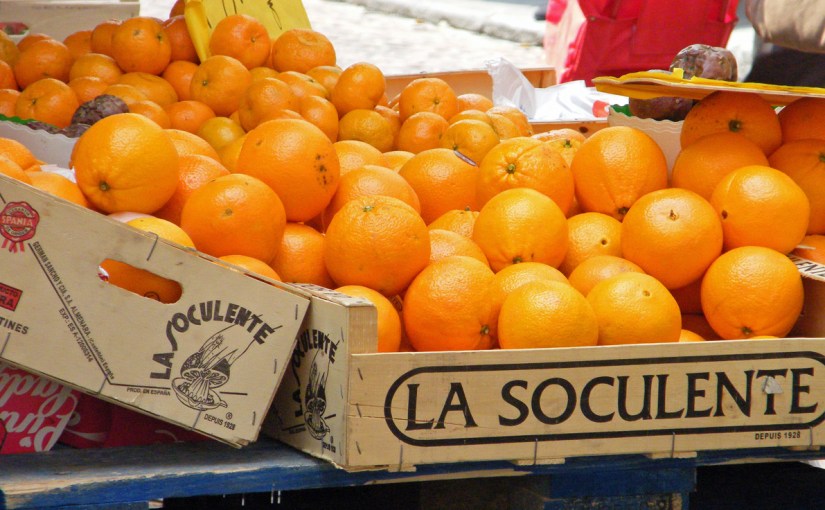
Orange is the colour of saffron, pumpkins and apricots. It is between red and yellow on the spectrum of light, and in the traditional colour wheel used by painters. Its name is derived from the orange fruit.
In traditional colour theory, orange is a range of colours between red and yellow

“Kleurenovergang van rood naar geel” by Original uploader was Wilinckx at nl.wikipedia. Licensed under CC BY-SA 3.0 via Wikimedia Commons.


It was another lovely evening and time for some exercise. We decided to take the riverside walk following the tidal waters of the River Dee up to Tongland Bridge. A three and a half mile stroll along a level path felt doable and would take us around a couple of hours if we didn’t stop too many times to take photos.
“While looking towards the north the scene is truly delightful, the banks of the river, from Tongland to the sea, being peculiarly rich in natural beauty. In the foreground is the river sparkling in the sun’s rays, and winding like a silver thread among the green meadows; while the grounds around Compstone, sloping gently to the river’s margin, are clothed with plantations of great freshness and beauty.”
~ Rambles in Galloway, by M. McL., Harper.1876.
The tree-lined Dee Walk begins at the end of the Kirkcudbright bridge and continues upstream alongside the river.

At the end of the walk several paths lead off back into town, but carry on across the open grass and then after crossing a wooden footbridge (3/4 mile) turn left and walk along the flood embankment by the riverside hedgerow.


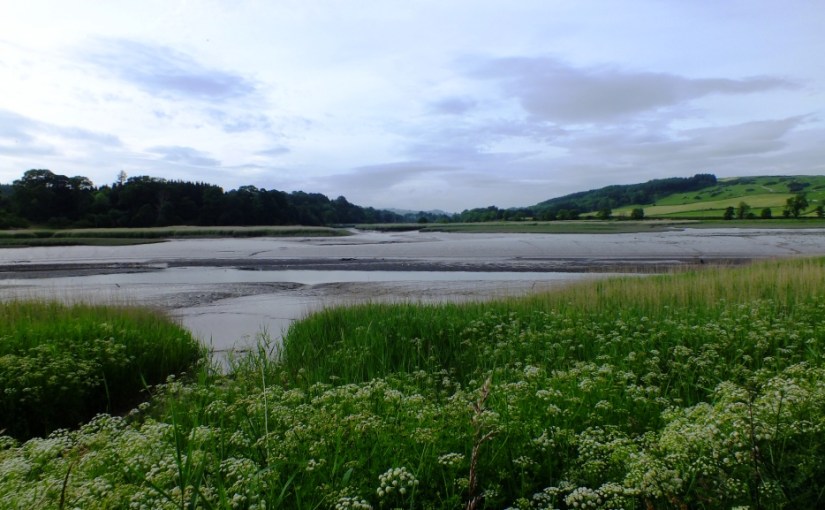
Unfortunately it was low tide, so the walk wasn’t as picturesque as it may be when the river is in full flow. Mud banks aren’t the prettiest of things, but still it was a lovely sunny evening and the wet mud glistened silver in the late sunlight.


Several abandoned boats provided photo opportunities


And a cormorant standing out on the sand bank drying his wings

There are good views over the reed beds and the odd bench provides a rest and chance to look back at the town.


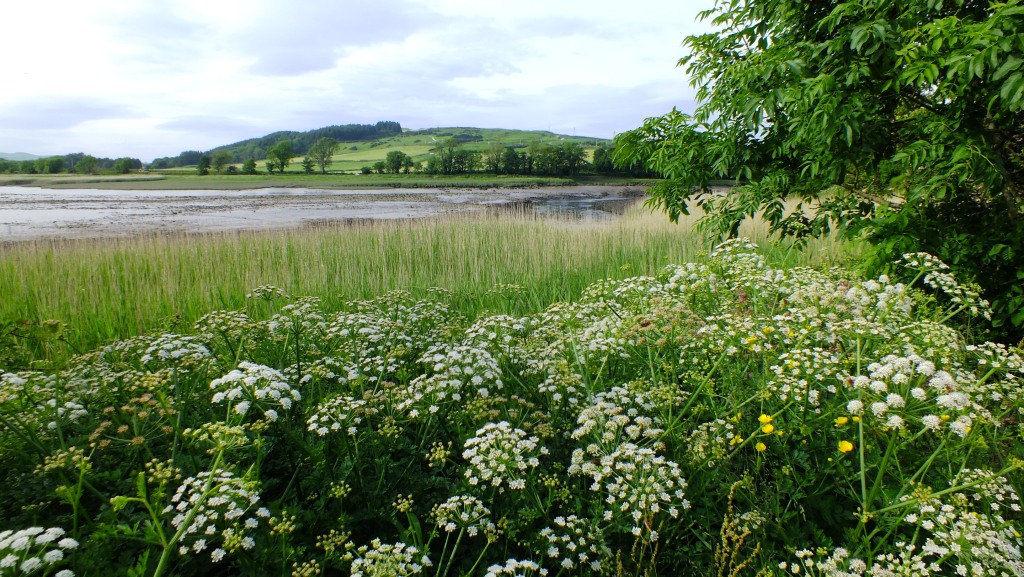
Just before the Bridge, there is an attractive strip of deciduous woodland, with some steep drops by the river side.


And finally we reached the bridge. Which proved very difficult to photograph because of all the trees and scrub in front of it. This is a Thomas Telford design with three Gothic-pointed arches. The crenellated towers and the corbelled parapets are the work of Alexander Nasmyth.


We returned to the town by retracing our steps, though we could have followed the road back as there is a roadside footpath. There we picked up some excellent fish and chips from Polarbites and took them back to our cottage to eat.
If you enjoy a walk, short or long, then you may enjoy visiting Jo’s Monday Walk where you are in for a treat.

 TRAVEL WORDS