A Mermaid in a Church?

That’s right. You didn’t misread the title. There is a little church in Zennor, west-Cornwall that is home to a mermaid.

Why a mermaid?

Before the Christian era, mermaids were one of the symbols for Aphrodite, Goddess of the sea and of love. In one hand she held a quince (love apple) and in the other a comb. Later the quince was changed to a mirror, symbol of vanity and heartlessness.

P1210747

In the Middle Ages, when Cornish mystery plays were performed, the mermaid was used as a symbol to explain the two natures of Christ. She was both human and a fish. He was both a man and god.

Mermaid frescoes are found in other Cornish churches – Breage, Poughill and Altarnun – but Zennor is the only one with a carving.

P1210752

The mermaid reminds us that St Senara also came by sea and founded a church at Zennor more than 1400 years ago.

The Legend of the Chair

The only remaining Medieval bench ends carved over 500 years ago are linked to the chorister Matthew Trewhella who, it is said, was lured into the sea at Pendour Cove by a mermaid who came into the church to hear his beautiful singing.

source: Zennor Church

Dawn of Lingering Look at Architecture has churches as the topic for the month of June so I am linking this post to her challenge.

And I shall link it to Paula’s Thursday Special too as she is interested in things from the past this week.

Cornish Engine Houses

If you have ever visited Cornwall, or if you have watched Poldark, then you will be aware that the county is littered with the remains of abandoned engine houses and chimney stacks. It would be remiss of me not to show some of these, though I didn’t venture down the one open to the public (Geevor Mine above) as I suffer from mild claustrophobia and can’t stand being in the dark.

The engine houses were built to provide a framework for the steam-pumping engine and more beam engines were installed in Cornwall and west Devon than any other mining region of the world: it is thought that around 3,000 engine houses were built in total to house them of which 200 still remain. They stand adjacent to where the main mine shafts were and provide one of the most distinctive displays of industrial buildings anywhere in the world.

P1210722

Near Pendeen
Near Pendeen

The strength and size of the structures, usually built out of local stone and granite with brick detailing over the windows, arches and topmost chimney stack, is the principle reason that so many have survived. They are quite appealing to a photographer, but beware of getting too close as there might be a danger of falling stonework, hidden holes and stones and deep drops.

And of course they often provide an excellent subject for a silhouette.

Just Back From… West Penwith

P1200996 - CopyWe transferred to Bojewyan, slightly north of Pendeen on Friday 5 June from Penzance. Initially we’d only booked for a one week holiday/house-hunting trip, but at the last minute I managed to find an extension. I was looking forward to exploring the coastline in this wild region of West Penwith. It has a very different character to the rest of Cornwall; it feels almost like an island. Remote villages and hamlets are strung along one of the most beautiful roads in the land  between St Just and St Ives. Travelling by road is slow, tractors, trucks, German campervans, French motorhomes, sharp bends, drystone granite walls, abandoned tin mines, carns, views across the patchwork arable fields, bleak moorland, gravel lay-bys barely big enough to fit two cars in to, a maze of hidden lanes and paths and tiny trout streams trickling down to the aquamarine coloured coast. Continue reading Just Back From… West Penwith

Monthly Photo Challenge: The Changing Seasons #6

Midsummer: Why midsummer? Here in the northern hemisphere summer has only just begun (1 June according to meteorological terms, 21 June in astronomical) so midsummer should surely be mid to late July? However, it actually refers to the summer solstice and is regarded as a very important holiday in the Scandinavian countries – 24 June this year in case you are interested.

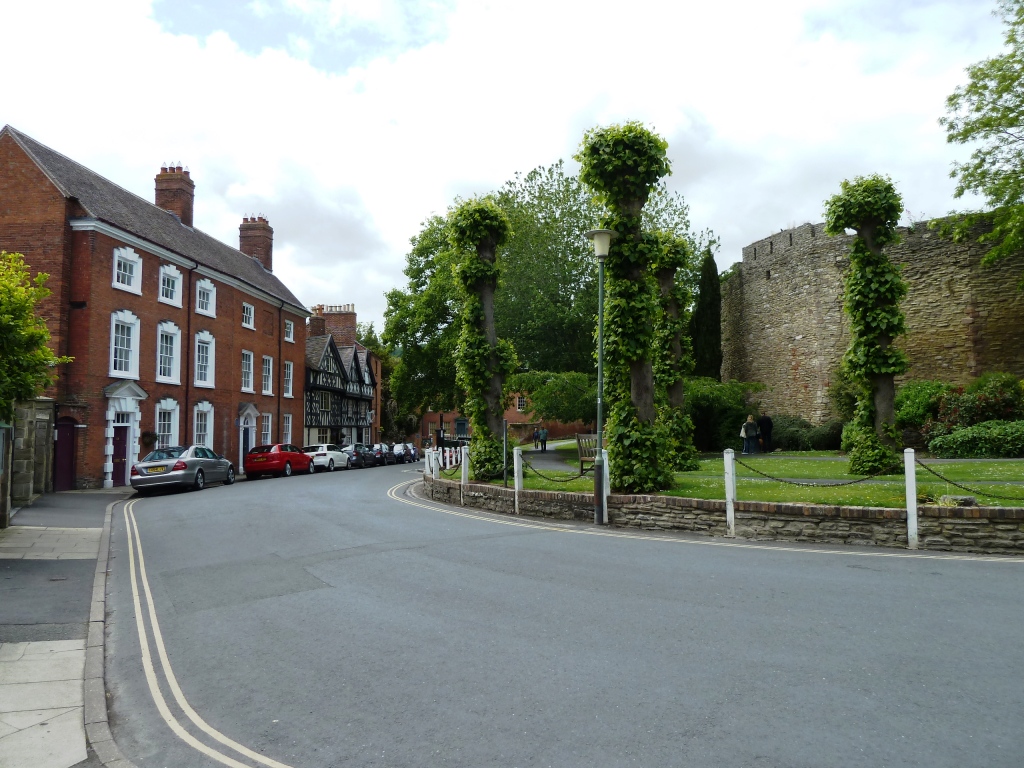
Tourists have arrived now in their hundreds. Usually during this month the Ludlow Arts Festival is held, but due to economic reasons there isn’t one this year, a shame as I always enjoy the outdoor Shakespearian play. However there is a Fringe Festival so all sorts of odd things are going on around town.

P1210802

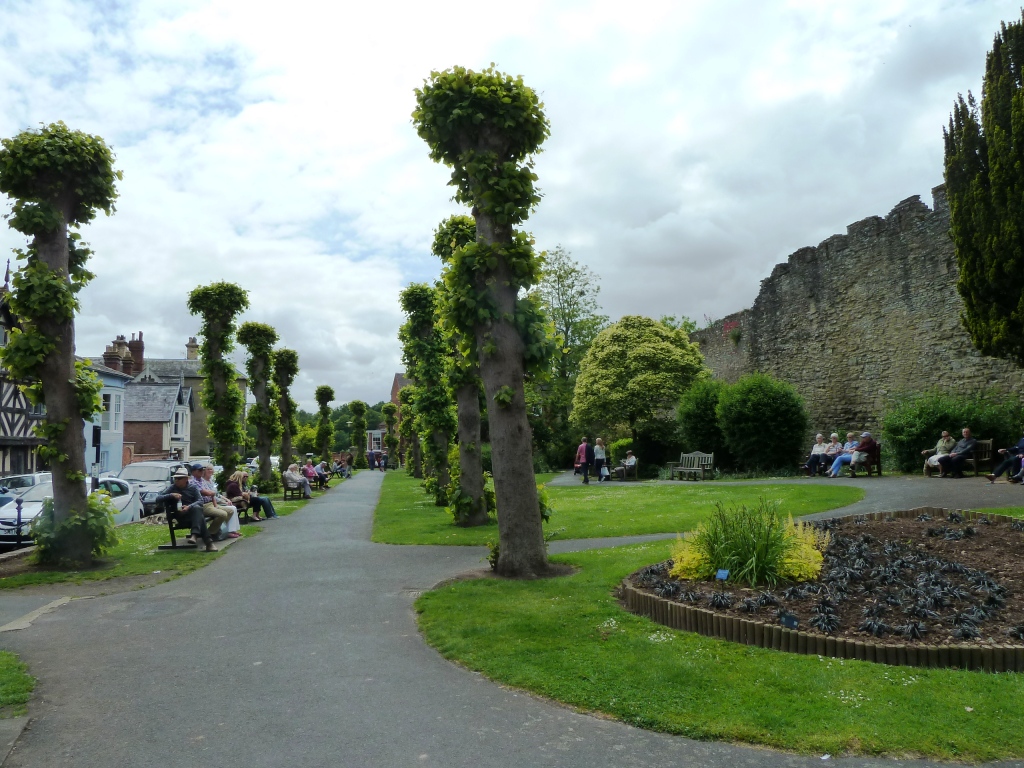
The lime trees are fully in leaf now and you will notice that the benches are quite crowded today.

P1210806Date: June 14 2015
Weather: sunshine, cloud, thundery
Temperature: Warm (18°C)
Time: 13:30 – 18:00 PM

We’re going on a slightly different ‘walk’ today as it is the Secret Gardens opening and, as many of you will already know, I crave a garden so how can I resist a nosey into the backyards of my fellow Ludlovians? You may recognise parts of previous posts as the route covered some of the same ground, just not around the river.

Millennium Green is very busy. Children paddling in the water (on Ludlow Beach) many others sprawled on the lawn where some arty thing is going on. I couldn’t quite make out what was being built, but it was sure colourful.

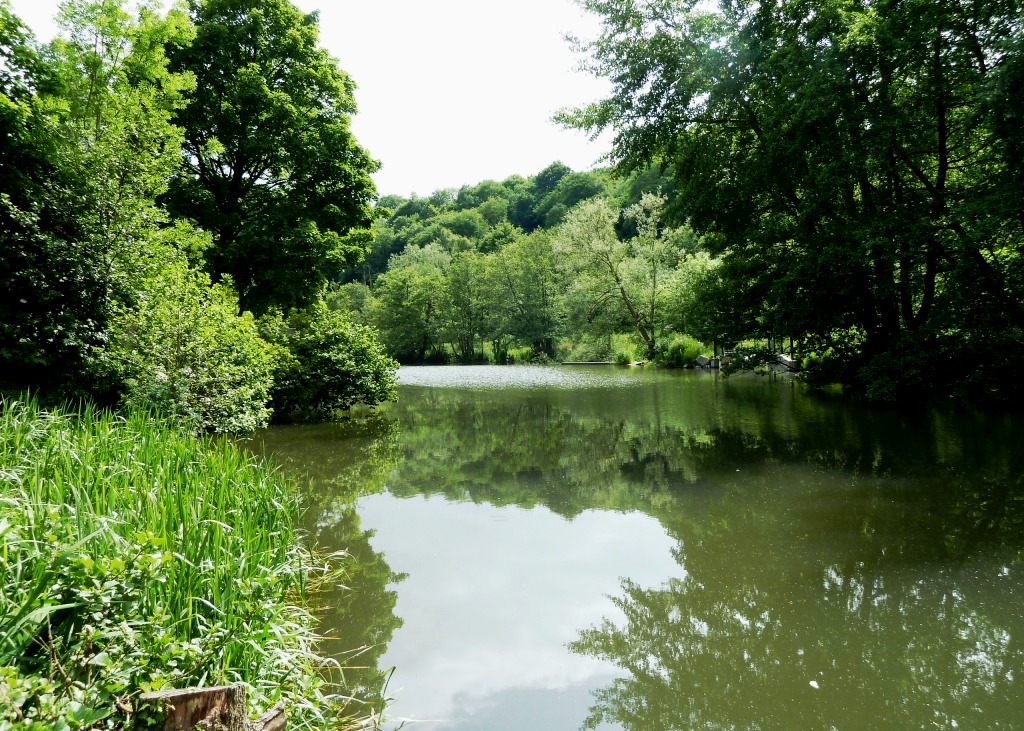
And I can show you a different view of the river as I am in a garden which backs onto it. A bit too close for comfort in my opinion as this river does flood on occasions.

P1220062

Some of the lovely summer blooms I encountered.

My final stretch is along Mill Street this time where I find an interesting statue and more evidence of the love of flowers people living here seem to have, as more containers line the front of their houses.

The Cardinal has decided to have a photo project going throughout 2015 – a blogging event, a monthly photo challenge. Find a location near your home, take somewhere between 5-20 photos and post them in a gallery in your blog. Continue to do this every month. The idea is to capture all the changes: the seasons, the weather, different times of the day, some night photography perhaps?