Road Trip: USA California – The Big Sur

On a visit to California, a few years ago, we had to travel to San Diego from San Francisco and decided that it might be fun to drive down the coast using the PCH rather than fly between the two cities. So from that decision a little road trip was born.

This is the second section between Carmel-by-the-Sea and San Simeon.

Distance: 100 miles
Time: 2 hours 30 minutes without stopping

The route from Monterey to Morro Bay with its landmark Morro Rock is designated an All-American Road and is amongst the nation’s most scenic. This twisting coast-hugging 123 miles long road along the central coast takes about five hours to complete passing through the Big Sur and San Luis Obispo. It climbs higher than 1000 feet above the sea and beaches are generally hard to reach. The road is extremely narrow in places with hair-raising drop-offs to the Pacific Ocean so alertness is advised. In the wet and mist even more care should be taken and rock-falls or mudslides are not unknown.

We were heading for San Simeon at the southern end of the Big Sur where we had booked a tour at Hearst Castle, home to William Randolph Hearst the man immortalized by Orson Welles in Citizen Kane, and an overnight stop at the Best Western Plus Cavalier Oceanfront Resort. Having been told that whales* pass by along this coastline we peered optimistically through the windscreen in hope of seeing something in the mist and gloom, but not a hope in hell of seeing a whale, though possibly a cypress or two.
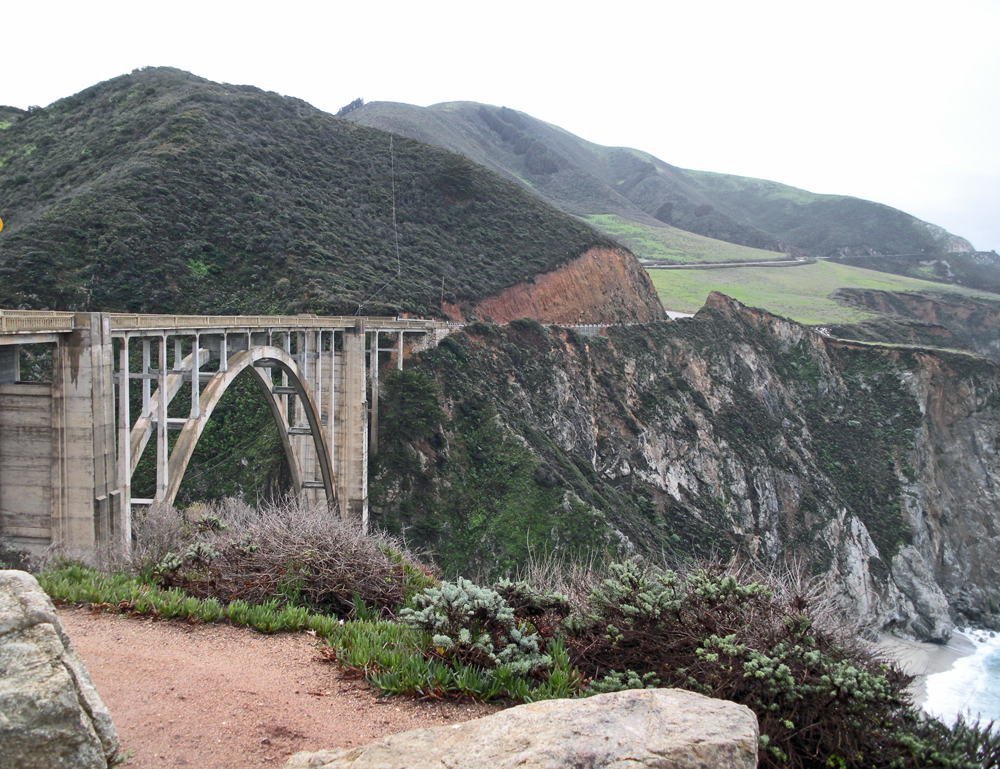
bixby bridge south copyEn route to Bixby Bridge, a much-photographed single-span arch more than 260 feet high and 700 feet long is the 11 miles unpaved Old Coast Road that ends in Andrew Molera State Park offering the most dramatic view of the bridge from behind. This road is impassable when it is raining, so we had to give it a miss.
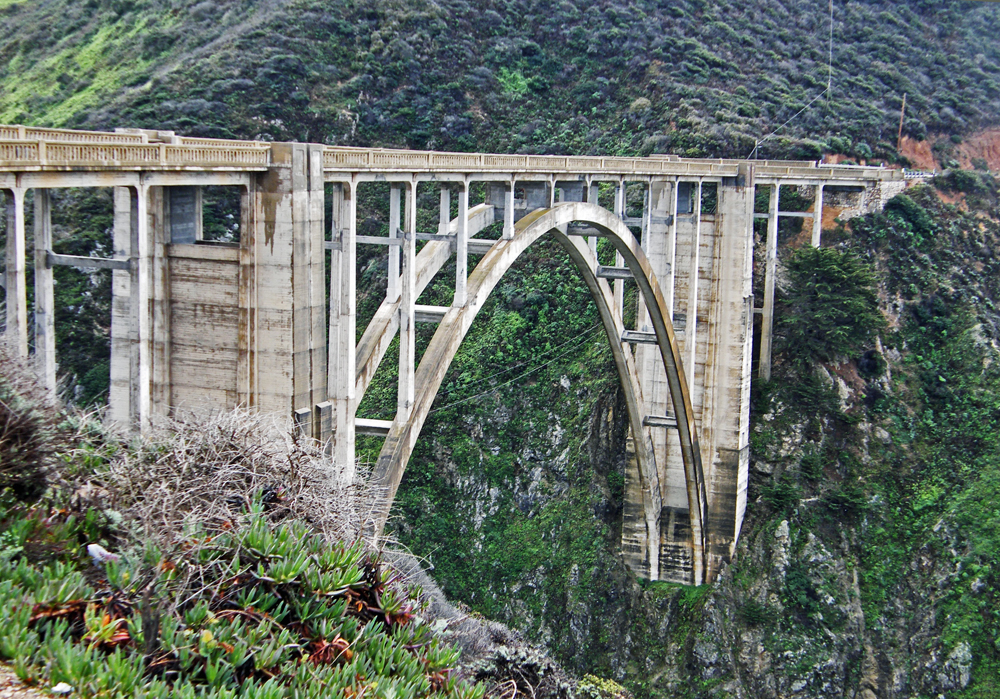
Bixby Bridge copyJust before Bixby is the Rocky Creek Bridge, another stunning bridge. Naturally when we were there it was raining – hard – again. We took it in turns to brave the wild, wet and windy weather to attempt a couple of photos, but our success rate was not very high. Bixby Bridge is important historically as it introduced automobile travel to the Big Sur.
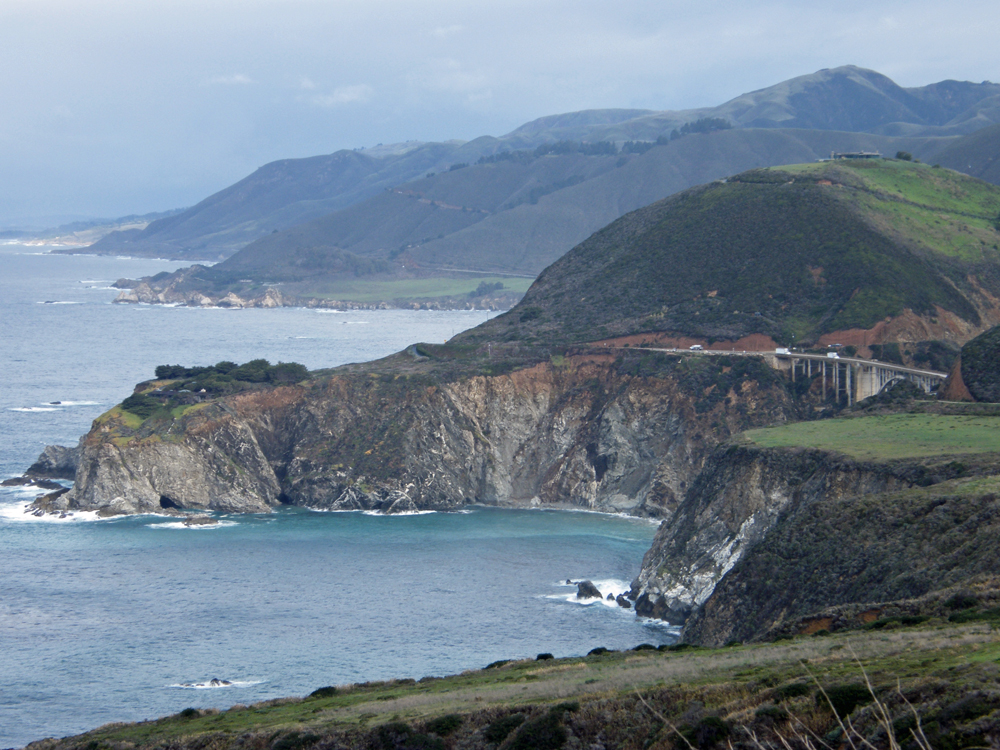
Bixby bridge northCrossing Bixby Creek the highway then climbs to Hurricane Point which is a place of high winds and big views before descending to the mouth of the Little Sur River. We can only guess at the ‘big views’ as visibility was becoming increasingly worse and unless you count viewing the road in front of us we could hardly see a thing.

Sand dunes soon appeared out of the mist rolling towards Point Sur Light Station. At 19 miles south of Carmel it sits 361 feet above the surf on a large block of volcanic rock that was the site of several disastrous shipwrecks before the lighthouse was built in 1887-1889. It is the only intact light station along the Californian coast open to the public every Saturday. Each tour takes 2-3 hours and involves a steep 1½ hour hike each way with a 300 feet climb in elevation. Thankfully this wasn’t a Saturday so we didn’t feel obliged to stop.
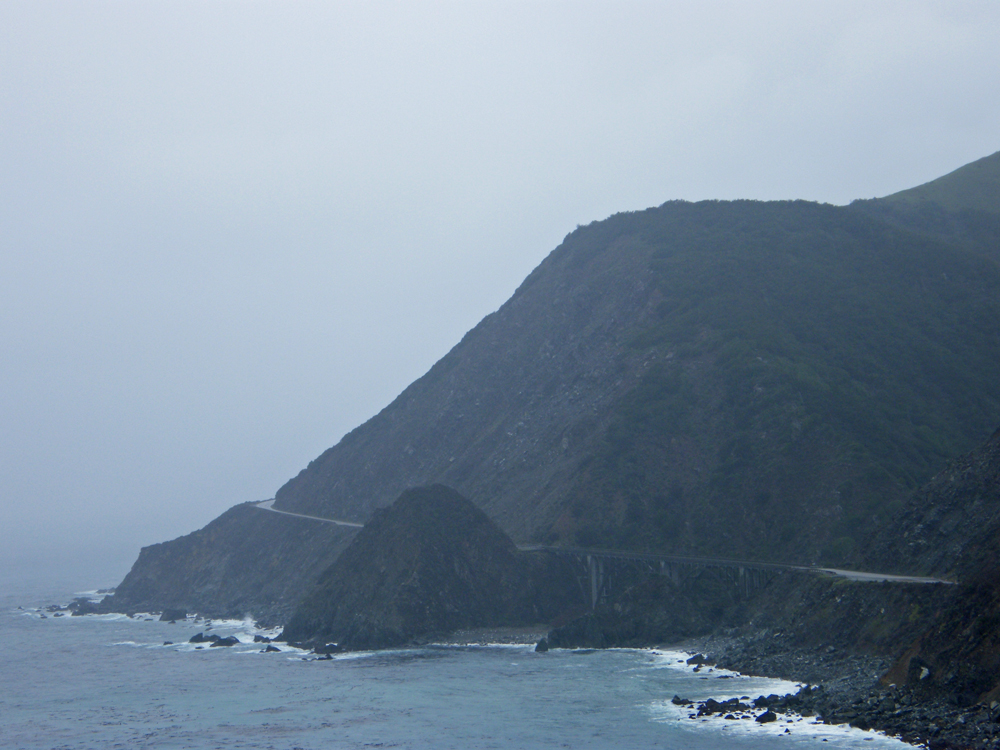
big sur Between Nepenthe – an indoor-outdoor restaurant perched 800 feet above the sea and famous for its views, though not today, and Deetjens – you will find the Henry Miller Memorial Library, a place out of time like much of Big Sur, where you can relax among the redwoods and get a free coffee. Unfortunately it is closed in February so we continued to Deetjens where we had planned on having a late breakfast of Eggs Benedict with loads of fresh coffee. Breakfast, in my opinion, is the only meal that Americans do well; oh and cocktails, but you can’t really live on cocktails alone although by the time you get to the end of this trip you may well feel that we do!
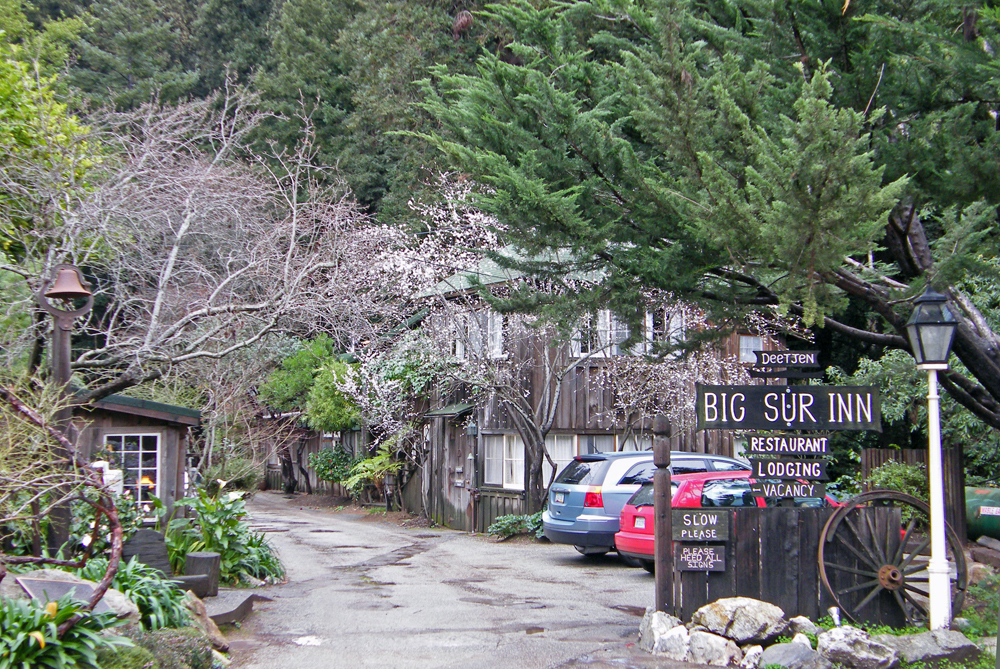
DeetjensDeetjens is about 28 miles south of Carmel and a charming, offbeat place offering lodging in unique cottages strewn among the redwoods and oaks that clothe the land-side of the road. If you have the time I recommend staying in this area. There are more conventional places to stay plus several campgrounds and cabins and several State Parks with trails, fishing, waterfalls and even hot springs to explore. Having taken our fill of fresh golden eggs, spinach and ham, freshly squeezed orange juice and several free refills of good black coffee we headed off into the storms once again. Eight miles on is Julia Pfeiffer Burns State Park with a short trail along the seaside bluff to see McWay Falls pour 100 feet into a picturesque cove. Ahead lay the southern stretch of the Big Sur.
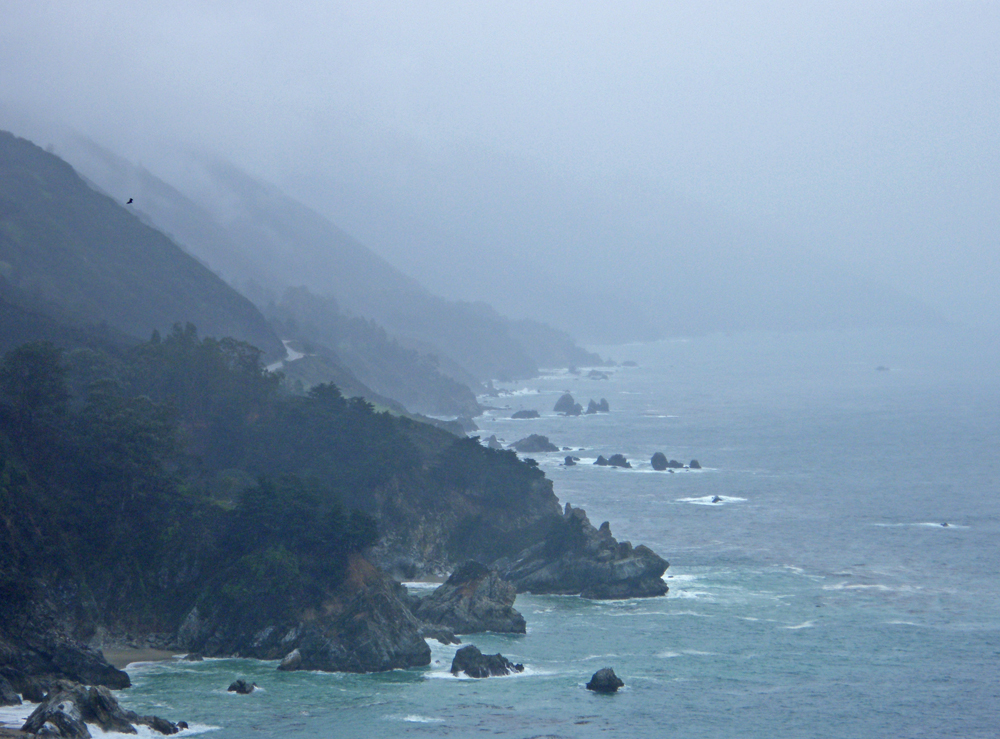
big surHere the road clings to the precipitous coastline and there are few settlements along the next 40 miles. If you have better weather than we had then stop off at Sand Dollar Beach or Jade Beach (south of Lucia and north of Gorda) then just past Ragged Point you come to hills and pastureland and in the distance you can see the Piedras Blancas Lighthouse on a point supposedly named in 1542 by the Spanish explorer Juan Rodriguez Cabrillo for its white rocks (stained with bird droppings).

elephant seal copyWe stopped at the Elephant Seal rookery before reaching San Simeon and saw several large bulls with their proboscises with hundreds of cows and calves. The males are very large and noisy and the way they charge around looking for a fight it is a wonder that any of the calves survive being squashed.
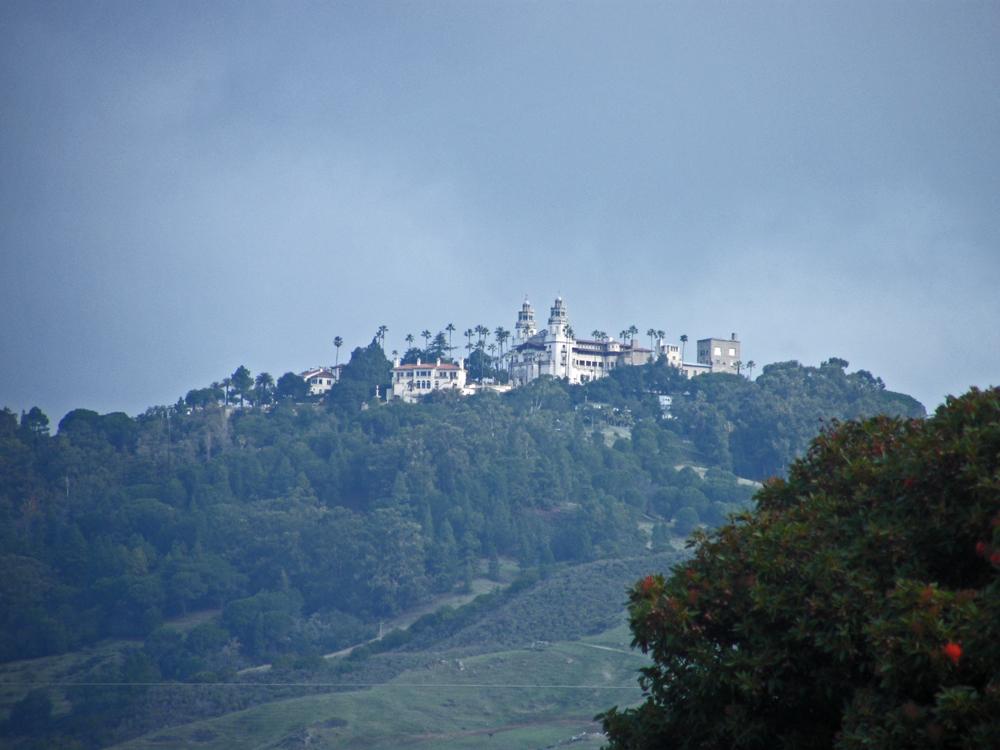
hearst castleNot far from here is the parking area for the five miles bus ride up to the very unique Hearst Castle begun in 1919 by newspaperman William Randolph Hearst.

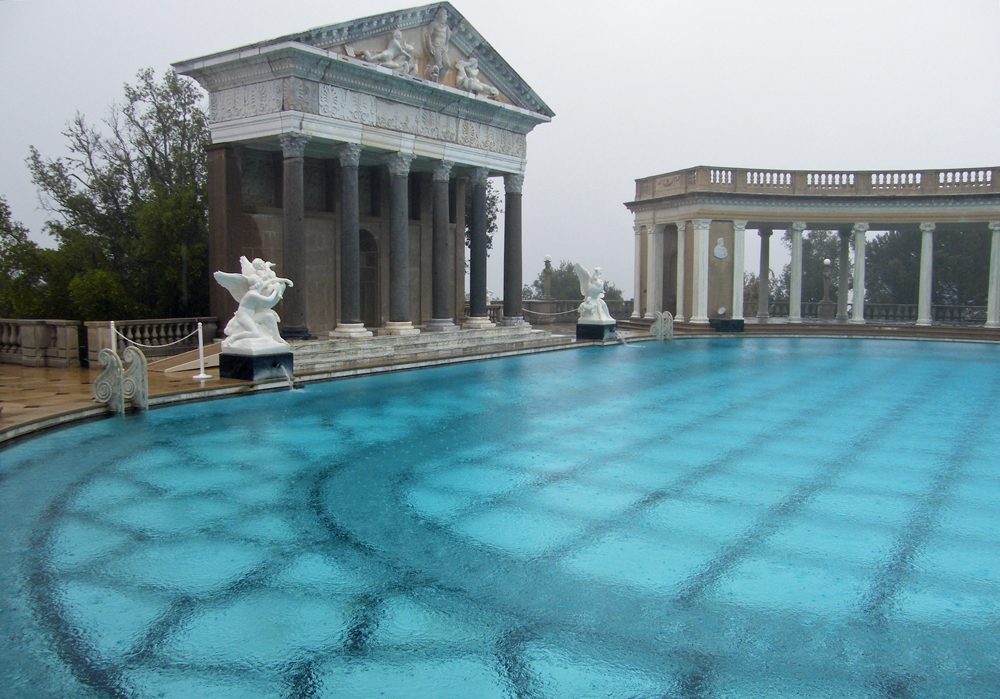
The hilltop castle set on 250, 000 acres is one of the most extravagant houses in the world. Guests included Winston Churchill, Charlie Chaplin, Joan Crawford, Cary Grant and Charles Lindbergh. This outrageous home is known locally as ‘Enchanted Hillhearst castle poolWe had booked onto the Grand Rooms Tour at 15:00 at a cost of USD 25.00 each. Unfortunately by the time we reached the car park the rain had really set in and although we enjoyed looking around this fascinating country house, we were disappointed not to experience the breath-taking views or the beautiful grounds – another reason to come back in a different more clement season. After the tour and back at the car park we went in to watch the National Geographic film ‘Hearst Castle – Building the Dream.’
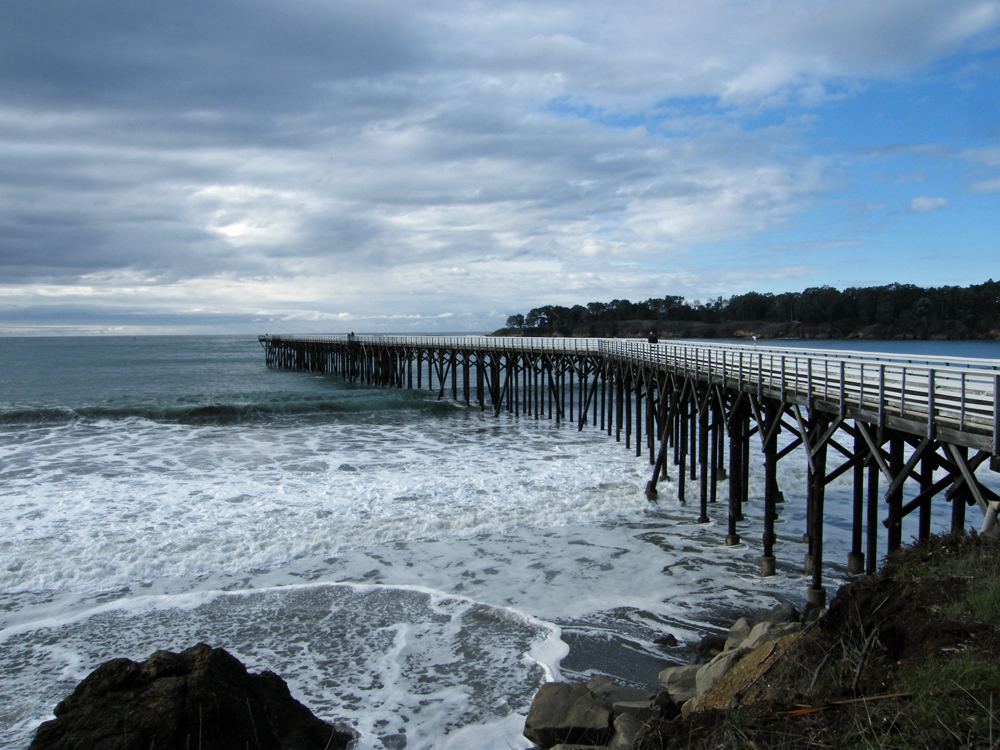
san simeon pierThat evening we stayed close by in San Simeon which only appears to have hotels and little else, but the Best Western was fine. A pity it was still raining though as they have fire pits on the beach (the beauty of this hotel/motel is that is right on the beach). Still we had a wood-burner in the large room with patio doors out to a pool and hot-tubs and they also thoughtfully provide binoculars in the room and huge telescopes on the beach to view passing whales etc.

*California Grey Whales can be seen along the Big Sur coastline between December and April. December to early February they are migrating south; beginning February you can see them migrating back to Alaska with new-born babies by their sides and this is the best time to see them as they are moving slowly, because of the babies, and nearer to the shore to prevent attacks from Great White Sharks.

We were there at the right time of year for this spectacle, but visibility was against us.

We found an Italian restaurant close by and had a decent, if not great, pizza and a couple of great, if not decent, margaritas before calling it a night. Did I mention that Americans make good cocktails?
Road Trip: USA California – San Fran to Carmel

On a visit to California, a few years ago, we had to travel to San Diego from San Francisco and decided that it might be fun to drive down the coast using the PCH rather than fly between the two cities. So from that decision a little road trip was born.

This is the first section between San Francisco and the lovely town of Carmel-by-the-Sea.

Distance: 133 miles via Halfmoon Bay, Santa Cruz
Time: 3 hours without stopping

The PCH (Pacific Highway) is one of those iconic drives that should be done in a pink Cadillac convertible with the top down making the most of the azure blue skies and brilliant Californian sunshine with plenty of Beach Boys and Mamas and Papas CDs on board. In reality this was February and an open top car was not an option. We ended up with a Chevvy, but a poor imitation of the Chrysler PT Cruiser with black tinted windows; the skies were gun-metal grey. Not the ideal start, but hey it felt good to be on the road.

We began our journey in San Francisco and immediately headed southwest on to the Cabrillo Highway at Pacifica to follow it south to Monterey and Carmel – our first stop. This is not a long section, but it can take a long time, as there are plenty of scenic viewpoints to stop off at on your way down the coast and in the summer there are several roadside food stalls to entice you.

Half Moon BayThe section between Pacifica and Half Moon Bay in San Mateo County is prone to periodic landslides and road closures and one stretch is known as the Devil’s Slide*. This particular stretch of road reminded me of Chapman’s Peak Drive in the Cape Peninsula, South Africa, as it hugs a similar steep promontory with equally stunning vistas. We stopped at Half Moon Bay to admire the surfers and the beautiful beach until the rain sent us scudding back to the car.

*(This stretch of the Cabrillo Highway has since been replaced by a road tunnel).

Don’t forget to stop at the family run Duartes Tavern in Pescadero which is a little further south and only 2 miles off the state road; it is still run by the 4th generation of Duartes and home to the worlds most divine Olallieberry Pie, world-famous Cream of Artichoke Soup, and Crab Cioppino. We, on the other hand have had a full breakfast there and no complaints. In this small town you can also find interesting craft shops, artichoke bread and a goat dairy. If you have the time a stroll along the Pescadero State Beach back at the junction with Highway One may bring you into contact with harbour seals among the sand dunes.

Passing through several State Beaches and State Parks the road becomes the Coast Road as you enter into Santa Cruz County. If you want to stretch your legs visit the Natural Bridges State Park or if you’re after more thrills perhaps pop into the Santa Cruz Beach Boardwalk where you can find the world-famous Giant Dipper, the classic wooden roller-coaster which opened in 1942.

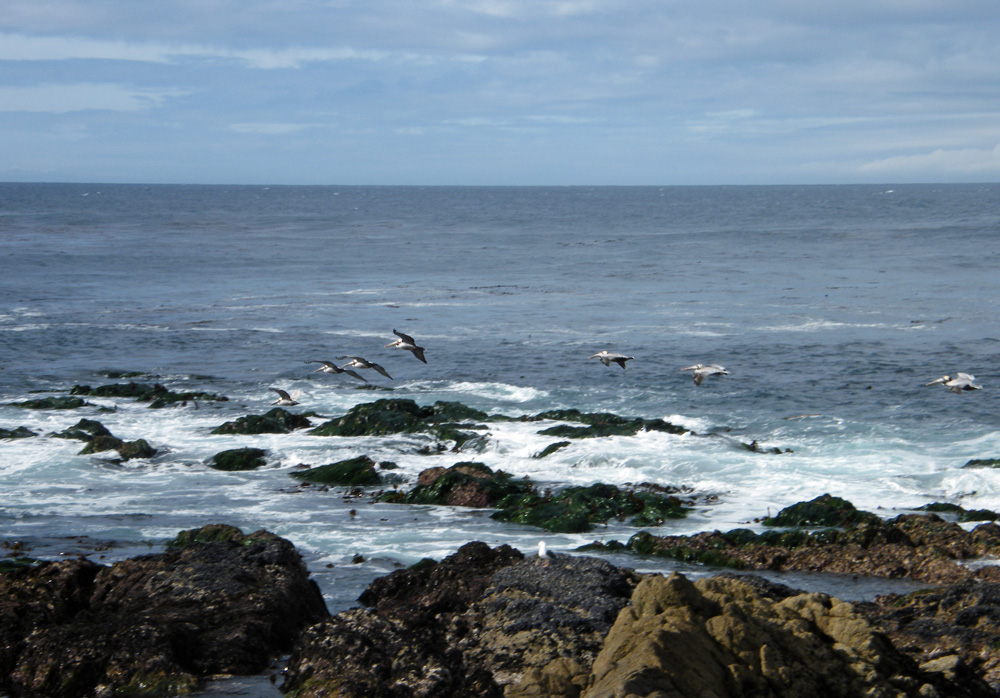
pelicans-smallAt this point the highway swings away from the coast and heads inland for a while before re-joining the coast at Moss Landing State Beach, another popular surf beach which is good for bird-watching too. Turn right at Jetty Rd and follow the road as it curves between the Elkhorn Slough estuary and the sand dunes.

Continuing south you pass between fields of artichokes, a Monterey County favourite and where Marilyn Monroe gained fame as the Artichoke Queen, before they change to mountainous sand dunes and the Monterey State Beach which is apparently the number one spot for kite-flying.

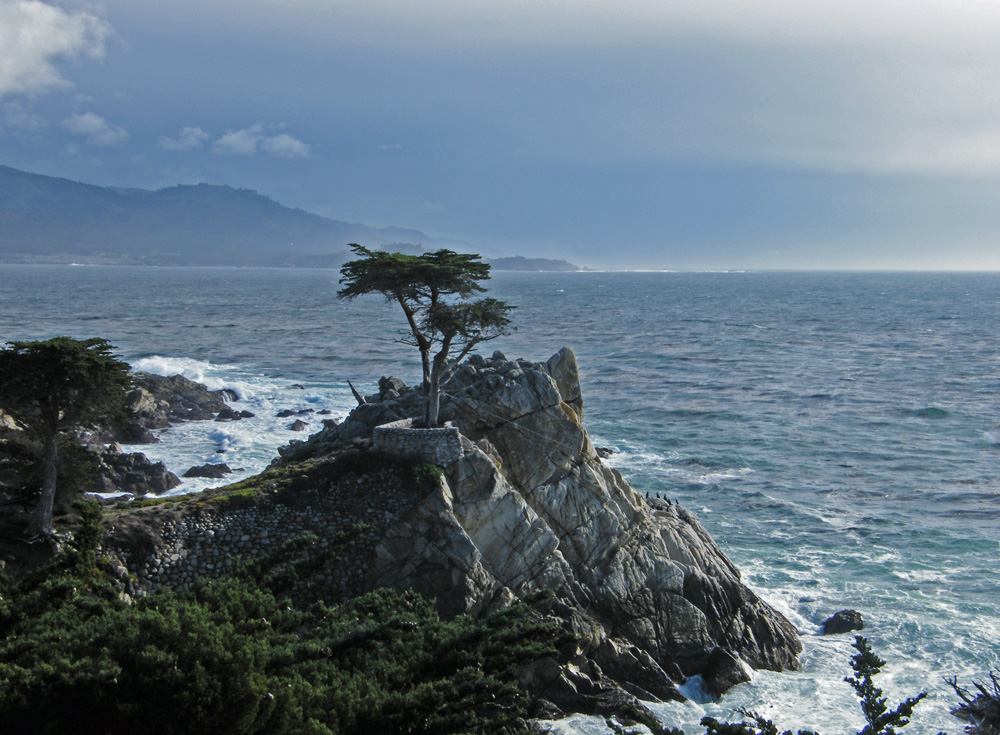
lone-cypressCalifornians will tell you that you “must” go on the 17 Mile Drive at Monterey a scenic toll road through the Del Monte Forest that leads to The Lone Cypress, Seal and Bird Rocks, Fanshell Beach, Point Joe and the colliding currents of The Restless Sea. It all sounds very romantic. Along the way you pass through emerald-green fairways of famous golf courses such as ‘The Links’ at Spanish Bay, Spyglass Hill and Pebble Beach. You may see black cormorants, brown pelicans, California sea otters, harbour seals and sea-lions in their natural habitat and colourful native wildflowers among the preserved dunescape, or like us, you may not. I’m still not convinced it was worth the toll to drive around what is essentially a series of golf courses, but the coffee was good at the Pebble Beach resort.

We entered at Highway 68 Gate and exited at Carmel Gate to explore the much photographed fairy-tale cottages, twee teashops and boutique shops of the legendary artists’ colony Carmel-by-the-Sea. We didn’t spot Clint though (the Mayor in 1986-88).

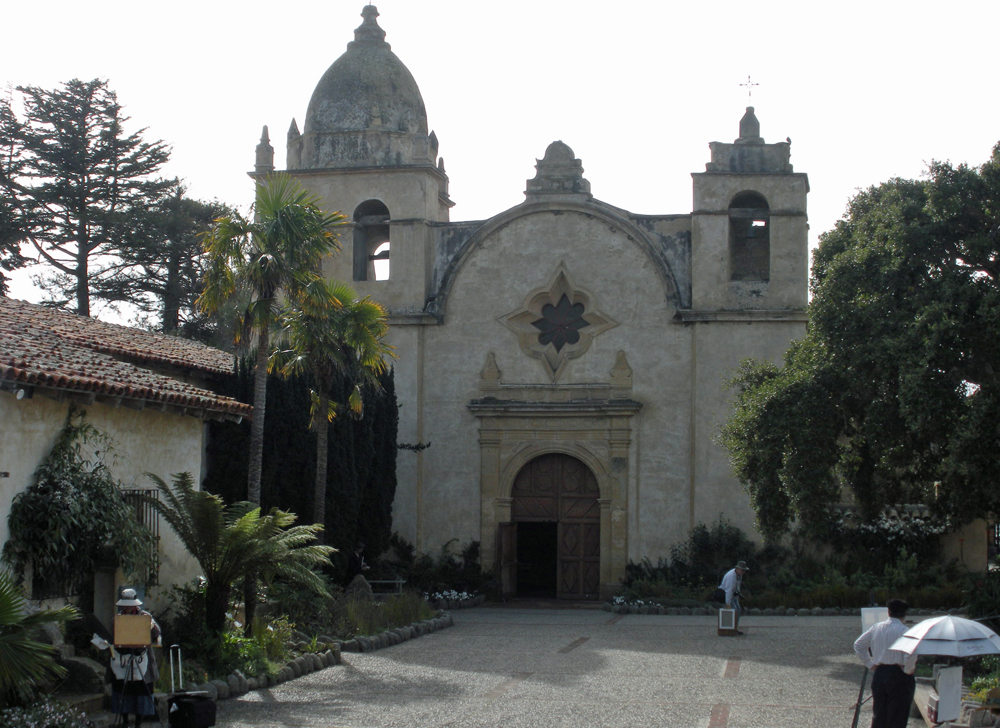
Carmel MissionI recommend a visit to one of the great old Spanish Missions, San Carlos Borroméo del Río Carmelo, second of the California missions founded by Padre Junípero Serra in 1770. Known as the Carmel Mission a visit to the grounds is like travelling back in time with the gardens equally as beautiful as the 18th century baroque church and three museums. It presents the complete quadrangle courtyard typical of mission architecture which is Moorish in design and the façade holds a star-shaped window directly above the main entrance. The gardens include culinary and medicinal herbs, citrus and olive trees, roses, Mexican sage and Bougainvillea. It is an obvious attraction for artists several of which had set up their easels in the yard.

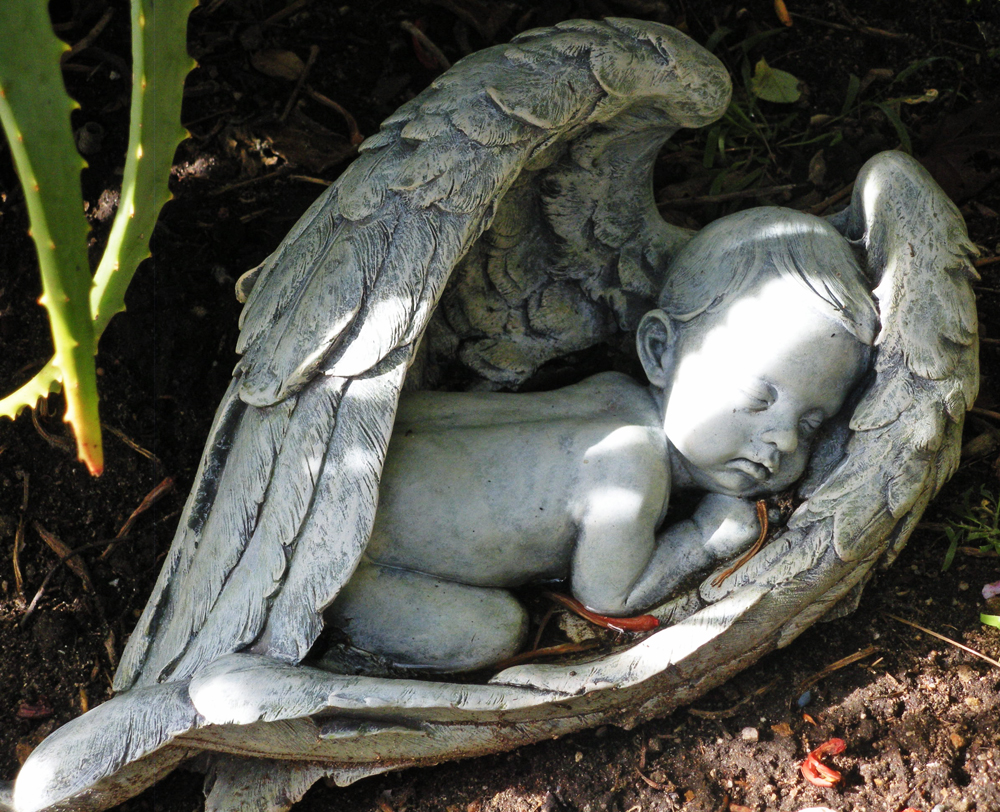
angel I love the Spanish names found all over California reflecting its Spanish heritage and to be honest I have become slightly obsessed with the 21 Spanish missions along the historic trail located near Highway 101 which roughly traces the Royal Road “El Camino Real” from San Diego in the south to Sonoma in the north.

The Old Fisherman’s Wharf in Monterey is iconic and if you get there early in the morning it will be people free. Allow a couple of hours to visit the world-class Monterey Bay Aquarium and apparently there are twenty golf courses in Monterey County so if you like swinging a club this must be paradise to you.

Either Monterey or Carmel is a good spot to stop for the night. We stayed in a bland, but cheap motel just outside Carmel and headed across the road for dinner at a grill house. We both had potato and fennel soup followed by a good steak burger (OH) and Mahi Mahi (dolphin fish) for me. Not bad, though I must confess to being rather unimpressed by Californian food as it is often too bland and/or salty for me. No complaints about the margaritas though 🙂

Just Back From… Cornwall

March 2013 will probably go down as one of the coldest on record. The usual cheery daffodils that dance in the spring sunshine around Mother’s Day were noticeable by their absence. My pots full of spring bulbs planted carefully in layers last September were full of frozen earth, the winter pansies and violas shrivelled and sad. A few tentative tips had pushed their way to the surface, but it didn’t look like anything would happen any time soon. Continue reading Just Back From… Cornwall

Road Trip: Route 62 – Wine and Roses

The “longest wine route in the world”, otherwise known as the Route 62 is known for its delicious wines and brandies. Route 62 meanders through incredible rock formations and narrow mountain passes

The second part of my trip to South Africa in 2008 was to drive along the Garden Route and visit Addo Elephant Park – well at least it used to be an elephant park, but there is so much more there now including lions. As I never like to do the same journey there and back I decided that on the outward journey we would drive through the Klein (Little) Karoo along Route 62 and then at Oudtshoorn make for George via the Outeniqua Pass. I always think that the Garden Route really only starts at George and ends at Storm River, although this is hotly disputed and some say it starts at Heidelberg. We would do that stretch twice, but stop in different areas on the way.

Leaving Cape Town

After another great breakfast and leaving the Cape Peninsula behind us we headed for the N1 towards Paarl, getting stuck in two traffic jams on the way. As we limped past Century City (don’t go there) I vaguely wondered about bypassing the Huguenot tunnel, a toll road through the Klein Drakenstein (Little Dragon Stone) mountains, and drive instead on the R301 up to Wellington and then across the R303 through Bain’s Kloof Pass to Breerivier and then the R43 back towards the N1 at Worcester.

This is a route that I have done several times before, including on my previous visit to the Cape in 2000 and it is one of the most picturesque passes in the Cape. I may be biased as I find most routes in the Cape to be pretty impressive, but this is undeniably scenic following the Witte River with rapids and rock pools where you can bathe and picnic by the side of waterfalls.

However, I had never driven through the tunnel before as this wasn’t built when I lived in the Cape and the usual way out was up and over Du Toitskloof Pass which was often very unstable with regular rockfalls and incredibly scary at night. Given the amount of driving that we had to do and the time already lost in the traffic jams, we decided to use the tunnel. It is a fine tunnel, as tunnels go, and we quickly  emerged at the other side to some incredible views over the Breede River valley and the Hex River Mountains in the background.

(Apologies for the poor quality of some of these images, but they were taken through an increasingly dirty windscreen)Breede-Valley

Valley of Wine and Roses

We stopped off at the Worcester Ultra City to fill up and then left the N1 (so unfortunately missed the Hex River Valley, another stunning area especially in the autumn for the colours of the vineyards) and followed the N15 to Robertson.

kogmans-kloof (One important fact about driving in South Africa is that you have to pay cash at filling stations – they do not take cards. A very nice aspect though is that you get excellent service, someone fills up the car, your windows get cleaned and they  will even check oil and tyres for you! All for a few Rands as a tip. I must admit though that I was nervous about carrying large amounts of cash with us, so I tended to fill up quite often to avoid this.)

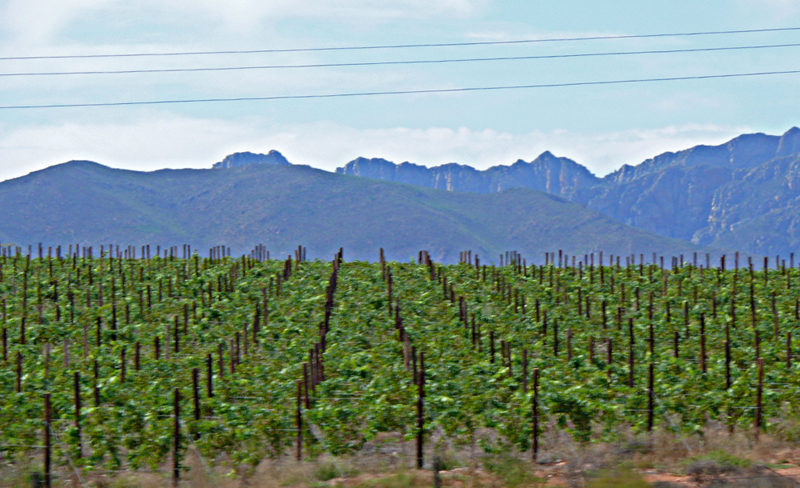
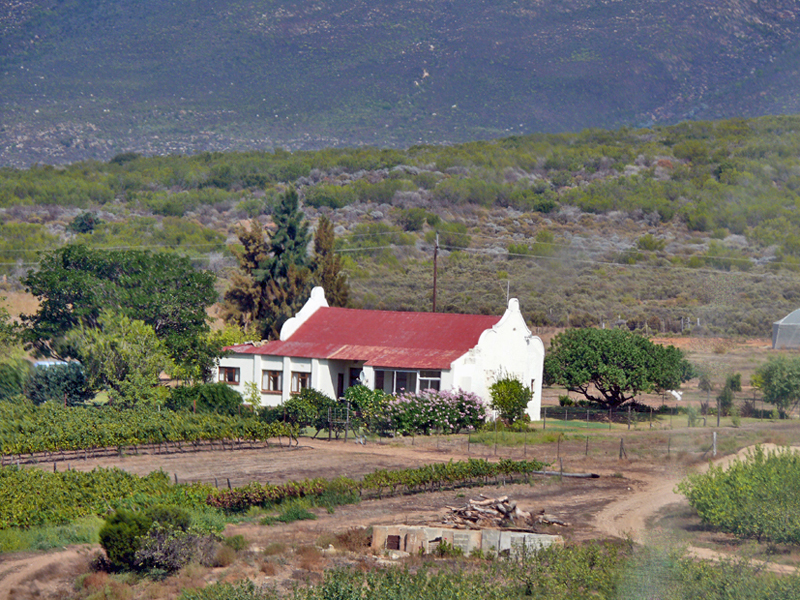
Driving to Robertson was a surprise as there are now a plethora of wineries, and it is known as the valley of wine and roses. I hadn’t realised that there were so many vineyards, including Graham Beck, as I remembered it as mainly for fruit-growing. Yes I know, grapes are fruit, but I was thinking of orchards. wineries-nr-robertson

Klein Karoo

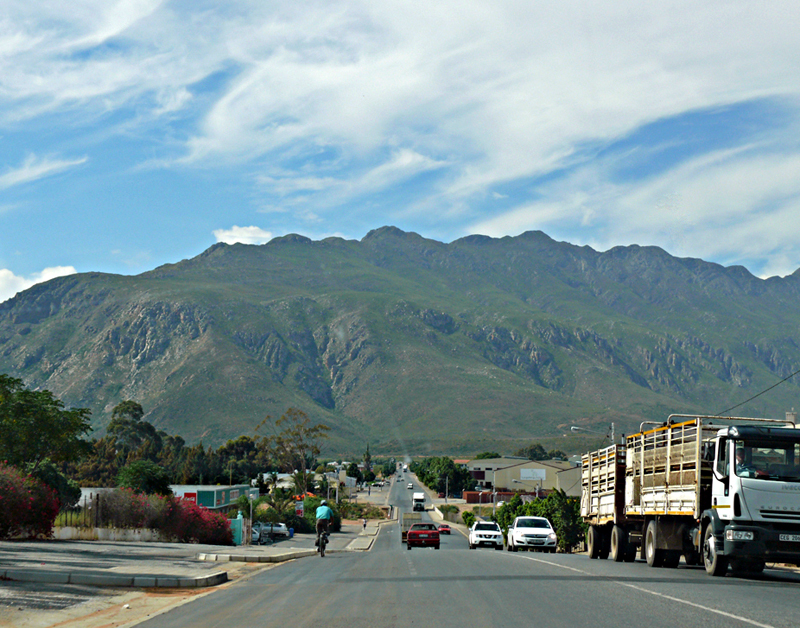
Leaving Robertson towards Ashton and Montague we hit Route 62 and followed this to Ladismith at the foot of the Klein Swartberg range where we stopped for coffee. In fact as you drive into the town, you feel as though you are driving straight into the Towerkop (Bewitch Peak) which is famous for its cleft peak!

Ashton
Ashton

(Another driving fact – watch out for speed cameras! I never saw any on this trip, but there were many times when I wasn’t sure of the speed limit as signage is not always very prominent. On my return to the UK I had collected 3 speeding tickets! I have never had one in the UK so I was not expecting them in rural areas. According to ‘Seth Efrikan’ legend you generally pay more for the speeding tickets and toll roads than you do for your holiday!)

Toverkop-from-Ladismith
Ladismith and Towerkop in the background

From Ladismith it is onwards to Zoar and Calitzdorp. There is lovely Victorian and Edwardian architecture in Calitzdorp and several wine cellars. Near Zoar is an interesting place called Ronnie’s Sex Shop –

Ronnie painted the name Ronnie’s Shop on a cottage next to the R62, planning to open a farm stall to sell fresh produce and fruit. His friends played a prank on him by changing the name to Ronnie’s Sex Shop. Initially angry about the involuntary name change, Ronnie left the name and continued fixing the dilapidated building. His friends would stop by for a chat, having a few beers and throwing a couple of chops on the fire. During one of these evenings, someone suggested: “Why don’t you just open a pub?”

Now it is a pitstop for visitors from all over the world as well as local farmers – to be honest there is very little else on this road to stop at! We were doing this drive in the South African autumn but it was still rather warm so thank goodness for air con! I have driven through here in the mid summer when temperatures rise to 40 C and no air con – and it does get extremely hot! Once, long ago, I went through here in a VW kombi (campervan) and being air-cooled – well, yes, you see the problem – hot air does not make a very efficient cooling system and we broke down several times en route having to wait (in baking heat) at the side of the road until the van had recovered sufficiently to carry on a bit further. Very annoying in the days when petrol stations closed at 6 pm because of the oil shortage.

Ostriches

After Calitzdorp comes Oudtshoorn, the largest town in the Klein Karoo and famous for Ostrich farms and the Cango Caves. Well, it is supposedly famous for ostrich, but we didn’t see a single one! Even when we passed the Safari show farm on the way out of town – not one ostrich to be seen. Oudtshoorn is completely surrounded by mountains so whichever way you approach it is quite stunning. Another place to stay overnight but not on this occasion. We continued along the R62 to Zebra (and annoyingly once again I didn’t manage to get a photo of the building on the side of the road which is painted with zebra stripes), in fact that is the only building I have ever seen in Zebra!

cottage-near-montagu
Cottage nr Montague

Outeniqua Pass

Finally we left the R62  (N12) and went into the Outeniqua mountains, still the N12 / N9, and through the Outeniqua Pass. Unfortunately for us, clouds and thick fog had formed over the mountains and the views were not as striking as they can be in clear weather, but dramatic all the same. We wound our way down the serpentine curves to the town of George and the coast, silenced by the breathtaking mountains surrounding us. cloud-in-the-outeniqua b&w Route 62 may not be the quickest way to reach the Garden Route, but it beats the N2 any day if you have the time. I just want to do it again only with time to linger longer in the towns of the Klein Karoo, so I guess I shall be back.

Victorian-architecture-Geor
George

Road Trip: Cape Town to Hermanus


Distance: 280 km via Muizenberg, False Bay, Pringle Bay, Betty’s Bay, Hermanus, Botrivier and Sir Lowry’s Pass. Time: 4 hours without stopping

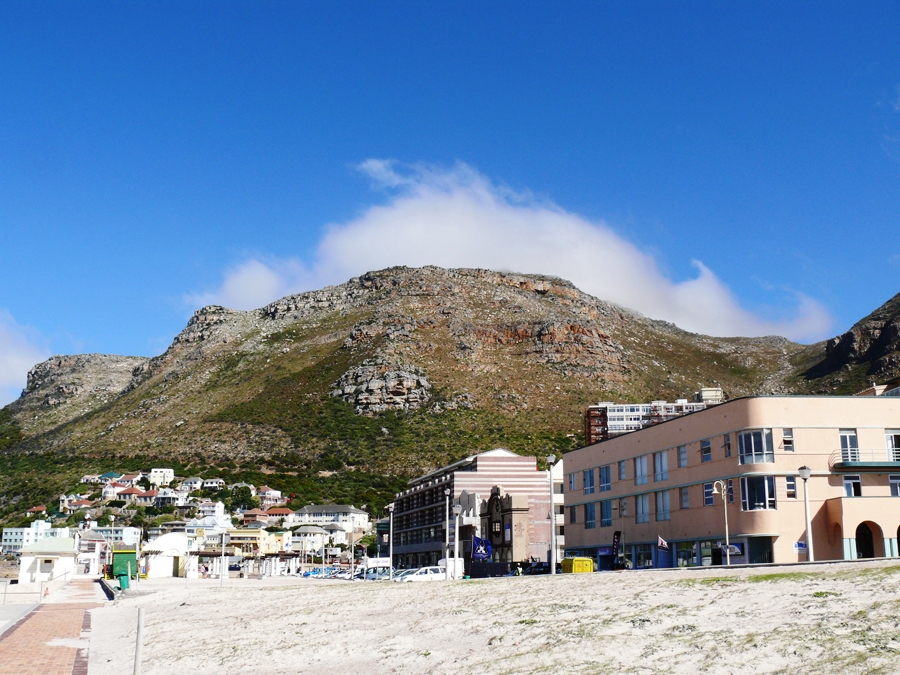
On our final day in Cape Town we decided to drive around the False Bay coast eastwards to Betty’s Bay and on to Hermanus (a good spot in the winter months for whale watching from land) and it turned out to be one of the best drives of the trip. Our first stop was in Muizenberg where I had lived for several years in the 1970s and 1980s well before it went through a period of crime and deprivation which almost ruined it. P1110194 Now it appears to be on the up with lots of investment in the region including new housing developments around the village and the beach which is very popular with surfers and the longest and most spectacular in the peninsula.

Muizenberg
Muizenberg

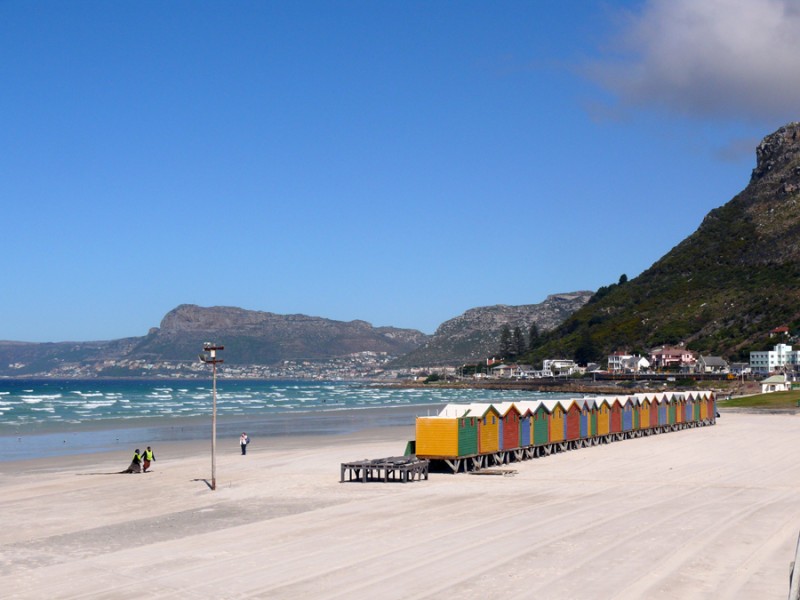
Even the iconic Victorian beach huts have been spruced up and rearranged into uniform lines so hopefully tourists will be encouraged back here. And although it lacks the turquoise waters and dramatic boulders of Clifton or Llandudno it is one of the best beaches in the peninsula with its sugar soft white sand dunes to the eastern edge and child-friendly rock pools to the west and warm waters to swim or body-surf in. Wandering around this little village you will see examples of Victorian, Edwardian and Art Deco architecture. The lovely Edwardian-era red-brick railway station which opened in 1913  with its arched sandstone entrances and beautiful teak clock tower is reminiscent of the golden days of Muizenberg. 310 Begin the trip by driving eastwards along Baden-Powell Drive (the R310) towards the Strand following closely the shoreline of False Bay, another amazing drive as sea-spray and sand blow over the road you are that close to the ocean. One that is often overlooked by visitors, believing that Chapman’s Peak Drive is the only one to do.

Baden Powell Drive is one of those areas ‘highly vulnerable’ to a rise in sea level with the advent of climate change. Even now it is regularly blocked by blowing sand and the city may well decide in the near future that it can no longer afford to maintain the road, and to reinstate a dune system here. So drive it whilst you can.

Stop at Gordon’s Bay, which huddles beneath the sheer mountains of the Helderberg (formerly known as the Hottentots-Holland range) that provide shelter for the bay, to check the views back towards the other side. It is a busy summer destination with Bikini Beach popular with the younger population who want to play volleyball, sunbathe and surf. The sea temperature is warmer here and the main beach is safe for swimming and has sheltered rock pools for exploring.You’ll know when you’ve entered Beach Road – the sea will be on one side and the retro character of the town on the other. It’s lined with little shops and cafés – not the trendy sort you’ll find in Camps Bay, but old seaside-village types oozing home-grown character.

Kogelbaai
Kogelbaai on R44

Continue along the R44 (Clarence Drive) where around the corner you will find Kogel Bay (Cool Bay) which is essentially a surfers beach but has a long stretch of white sand and a couple of exciting caves. This scenic coastal road meanders between Gordon’s Bay and Betty’s Bay offering some of the best designated whale watching spots on the coast and magnificent views over the bay to Cape Point. Pass through tiny Rooiels and Pringle Bay, a little seaside village nestled at the foot of the Hangklip Mountain, which is very secluded and unspoilt. The Hangklip marks the south-eastern point of False Bay and is about an hours drive from Cape Town. There are also many hiking trails through the Kogelberg Nature Reserve.

Stony Point
Stony Point, Betty’s Bay

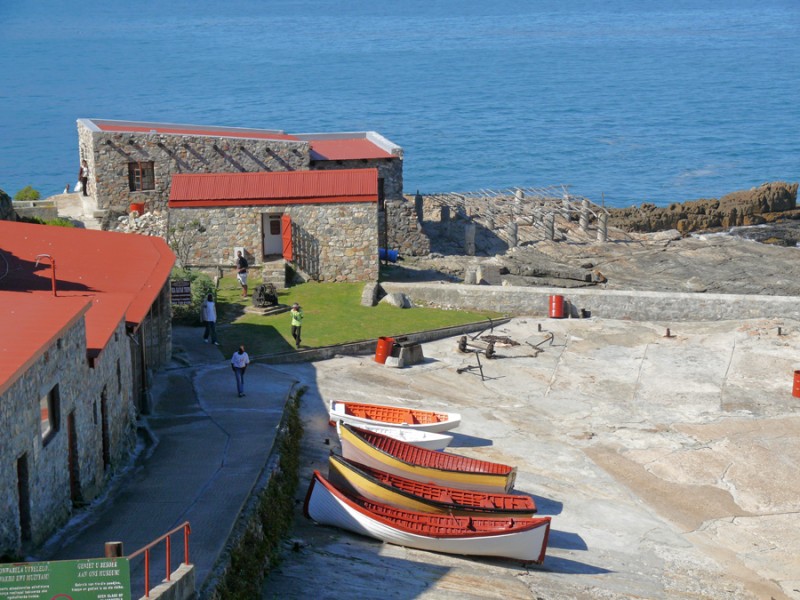
At Betty’s Bay, another picturesque village positioned in a narrow strip of land between the Kogelberg Mountains and the Atlantic Ocean, you will find the Harold Porter Botanical Gardens. From October to February you will find a glorious array of gladioli, watsonias and rare red disas on display. There is another smaller colony of African penguins at Stony Point, Betty’s Bay and the remnants of an old whaling station.

Stony Point
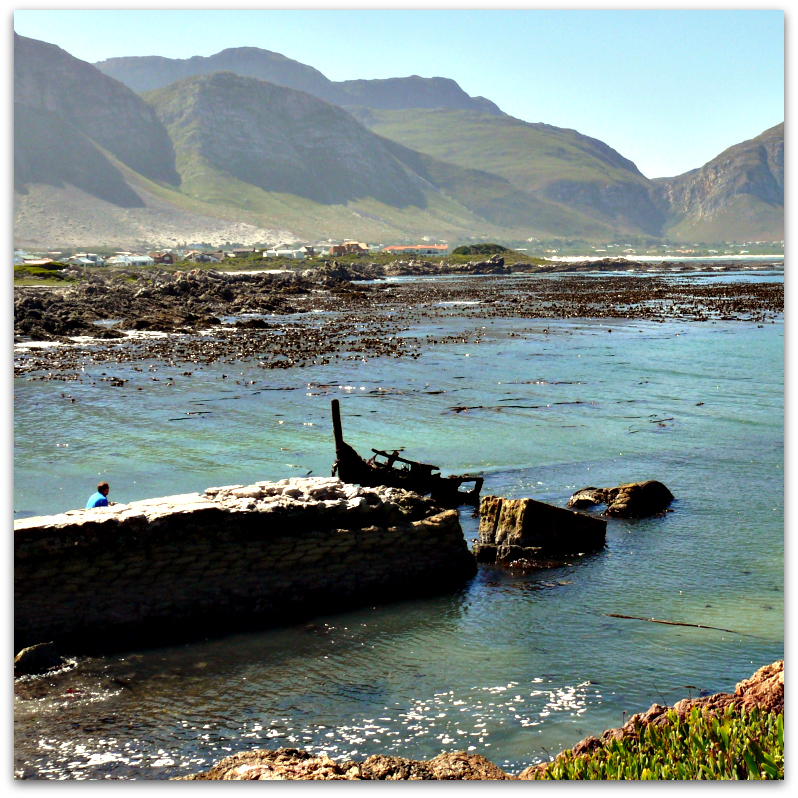
The Old Whaling Station at Stony Point, Betty’s Bay

Further on you come to Kleinmond which lies on a lagoon at the small mouth of the Bot River between the Palmiet Mountains and the Atlantic. It is another quiet place offering good walking, hiking and bird-watching activities. Now take the R43 through Vermont, to Hermanus our destination. We parked in the Square in Hermanus and had a wander around this lovely little town which is quite charming though no longer the quiet fisherman’s village it once was. Hermanus is often described as the ‘Riviera of the South’ with its mild climate and is a popular weekend destination for the residents of Cape Town.

Old Harbour Hermanus

Make sure you get a parking ticket from the meter inspector, who you will find walking about somewhere in the area, to avoid a parking fine. There are no self-ticket machines.

The Old Harbour complex offers an insight into its past and where you will find Bientang’s Cave, a restaurant on the shores of Walker Bay serving seafood only. It really is in a cave. July is the best time to see the Southern Right Whale as they frolic in Walker Bay in easy view of the cliff path and during the summer months the white sandy beaches, such as Grotto beach, are filled with holiday makers enjoying the sunny weather. And if you want to partake in white shark cage diving then carry on to Gansbaai around the bay.

Further on is Cape Agulhas the most southerly point of Africa and officially the point where the Atlantic and Indian Oceans meet. This point is about a 2 hours direct drive from Cape Town.

We headed back along the R43 from Hermanus up to Botrivier, a small picturesque village with a lagoon and wetlands; then we joined the N2 over the Helderberg (Clear Mountain) back to Cape Town. Stop off at the viewpoint at the summit of  ‘Sir Lowry’s Pass’ (420m) for a bird’s eye view of False Bay and across the Cape Flats to Table Mountain, but keep an eye out for the sign as you have to turn left off the road almost immediately, it is very easy to miss the turn-off.

You may see baboons here, but whatever you do, do not feed them, and it’s also used as a paragliding jump point. Watch them drift languorously to the coast below you.

Kite Surfing
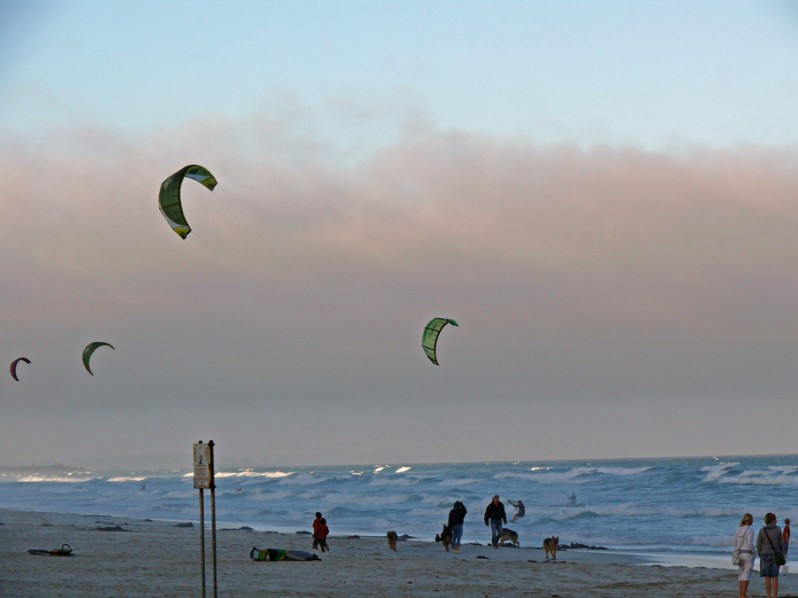
Kite Surfing at Sunset Beach, Muizenberg, False Bay

You can continue along the N2 past the international airport all the way to the city, but we returned along the Baden-Powell Drive to make one last stop at Sunrise Beach near Muizenberg to watch people kite-surfing in the late evening sunlight. From here you can easily return to Cape Town along the M3.