Abandoned Architecture

Dawn of “The Day After” runs a monthly architecture challenge as well as her windows, I haven’t joined in for a while, but thought it would be a good opportunity to share some photos of Tintern Abbey. Long since abandoned.

exterior view from across the road

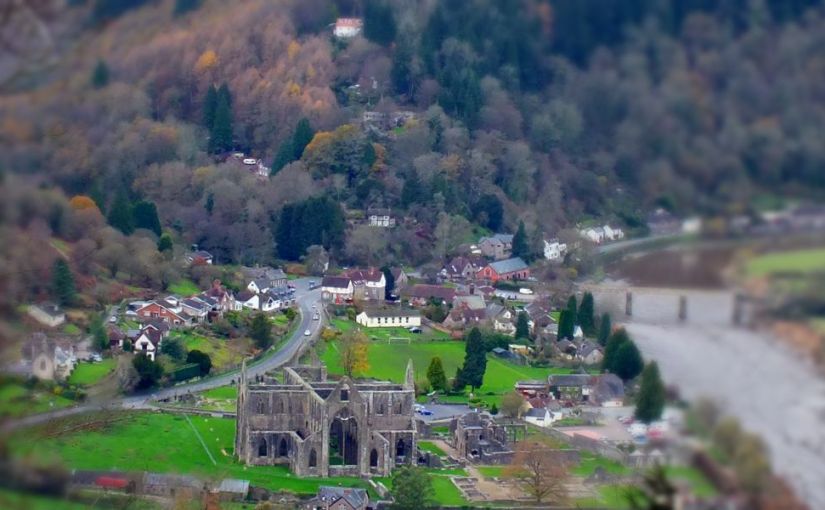
the Cistercian abbey of Tintern is one of the greatest monastic ruins of Wales. It was only the second Cistercian foundation in Britain, and the first in Wales, and was founded on 9 May 1131 by Walter de Clare, lord of Chepstow.

Exterior view from the south

In the 1500s monastic life in England and Wales was brought to an abrupt end by the political actions of King Henry VIII. The Dissolution of the Monasteries was part of the king’s policy to establish total control over the church in his realm.

Nave's west window
Nave’s west window

Tintern Abbey was surrendered to the king’s visitors on 3 September 1536. With the roofs gone and windows smashed it was destined to fall into decay, but was rediscovered in the late 18th century and became a fashionable place to visit by many people wanting to discover a wild and romantic place including the artist JMW Turner and the poet William Wordsworth.

Since the early twentieth century the abandoned ruin has been cared for and restored so that it will remain the perfect ruined abbey for many years to come. If you would like to read more about the abbey then please visit Castle Wales.

three things I love about my favourite city

Cape Town. The Mother City. Crouching beneath the majestic backdrop of Table Mountain in the south-west corner of Africa. Once a tiny stopover for fresh supplies along the trading route between Europe and the Far East, now a buzzing metropolis where the Rainbow Nation welcome visitors with open arms and huge smiles, lots of good food and great wine. You haven’t been there? What are you waiting for?

What do I love most about this city ?

1. The Views

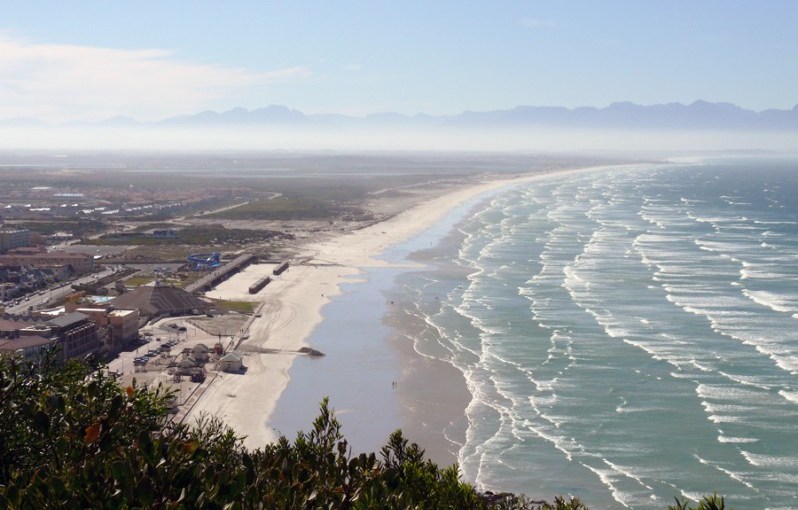
View to Cape Point
View to Cape Point

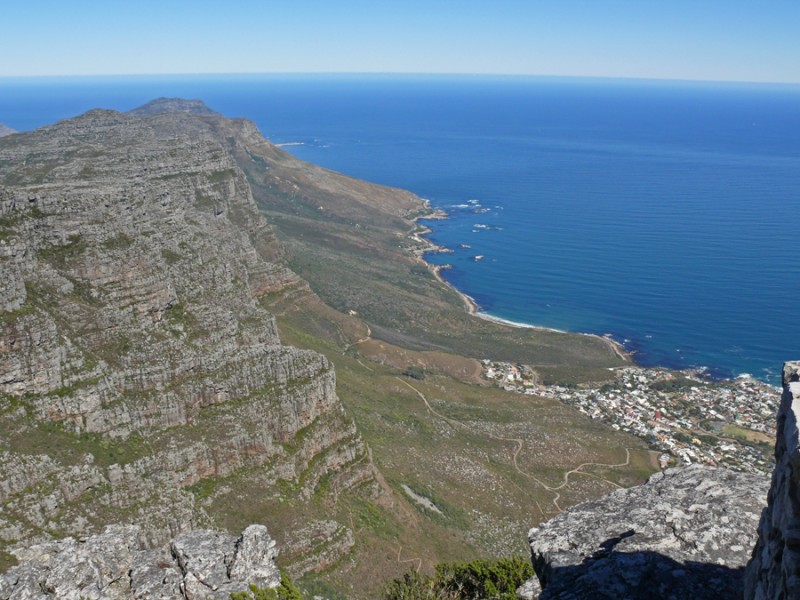
whether it be the sensational all round city and peninsula views you get from taking a cable car ( or climbing if you have the energy) up to the top of Table Mountain, the dizzying view of the coast from the impressive 9km Chapman Peak Drive, with its 114 curves,  where you literally hang off the cliff or the wide-open view of False Bay from Boyes Drive down in the Cape Peninsula, you cannot get enough of the scenic landscapes that this city has to offer. It must be one of the most scenically situated cities in the world.

2. The Beaches

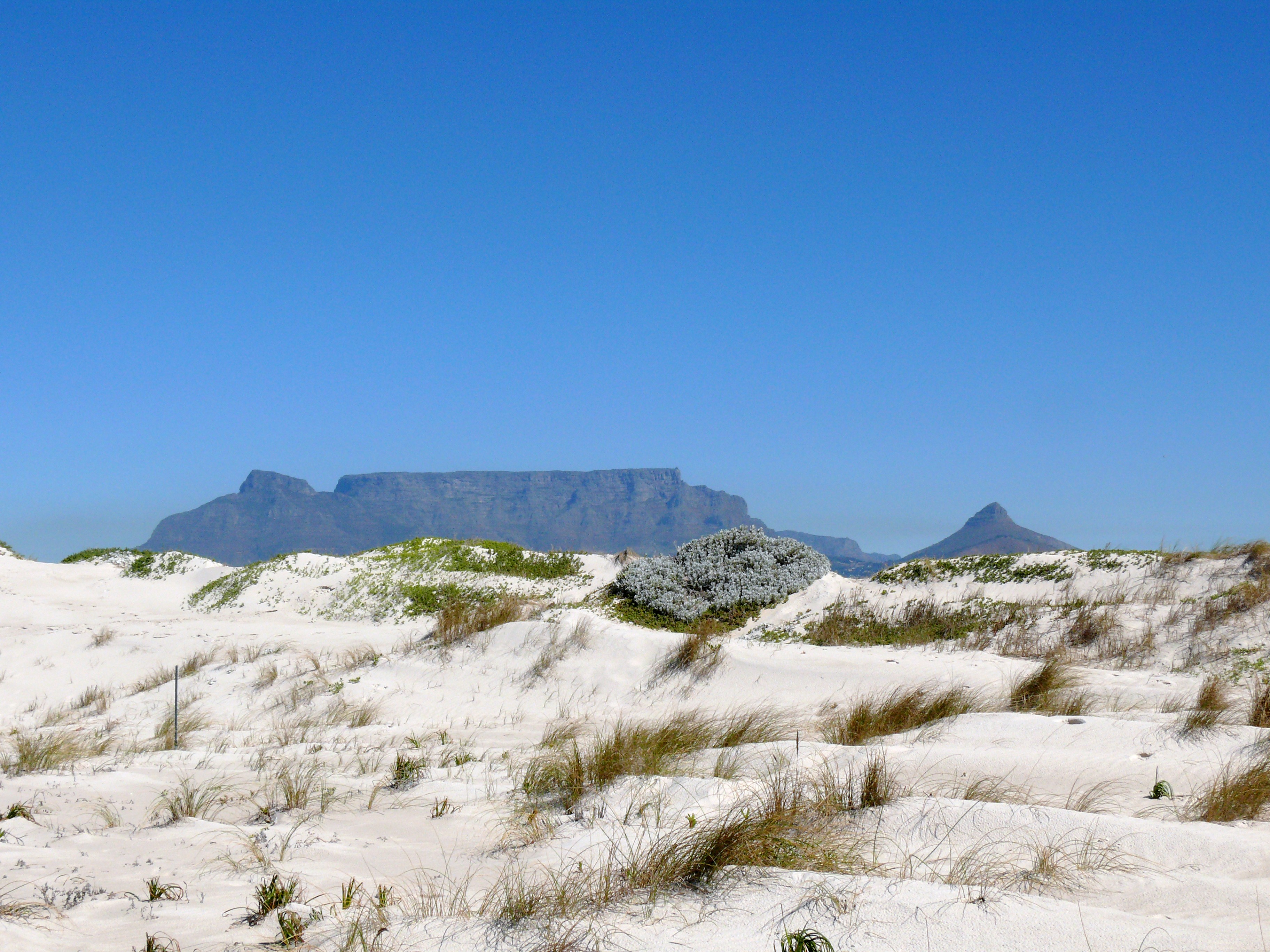
Table Mountain
Table Mountain from Bloubergstrand

now personally I can think of nothing worse than lying on a beach and baking in the sun, but I know many people do like to do that and Cape Town  has the most incredible beautiful beaches all around – it is on a peninsula – so you get northern beaches where the wind whips the sand into a frenzy, so perhaps best suited to wind-surfing than sun-bathing; the western beaches which are on the frigid Atlantic coastline so these attract the ‘in’ people who strut their stuff along Camps Bay or Clifton, occasionally playing Frisbee, or volley-ball or more likely be supping bold espressos in the bars lining the beachfront (that’s if you can get parking) OR the fabulous Indian Ocean beaches where the water is warmer and when the surf is up is filled with surfing dudes, wind-surfers, kite-surfers (they stay on the sand not the water) and people like me, who just want a long beach to stroll along. And then there’s the penguins. Now tell me, where else in the world can you visit a beach with resident penguins? And not freeze.

3. Nature

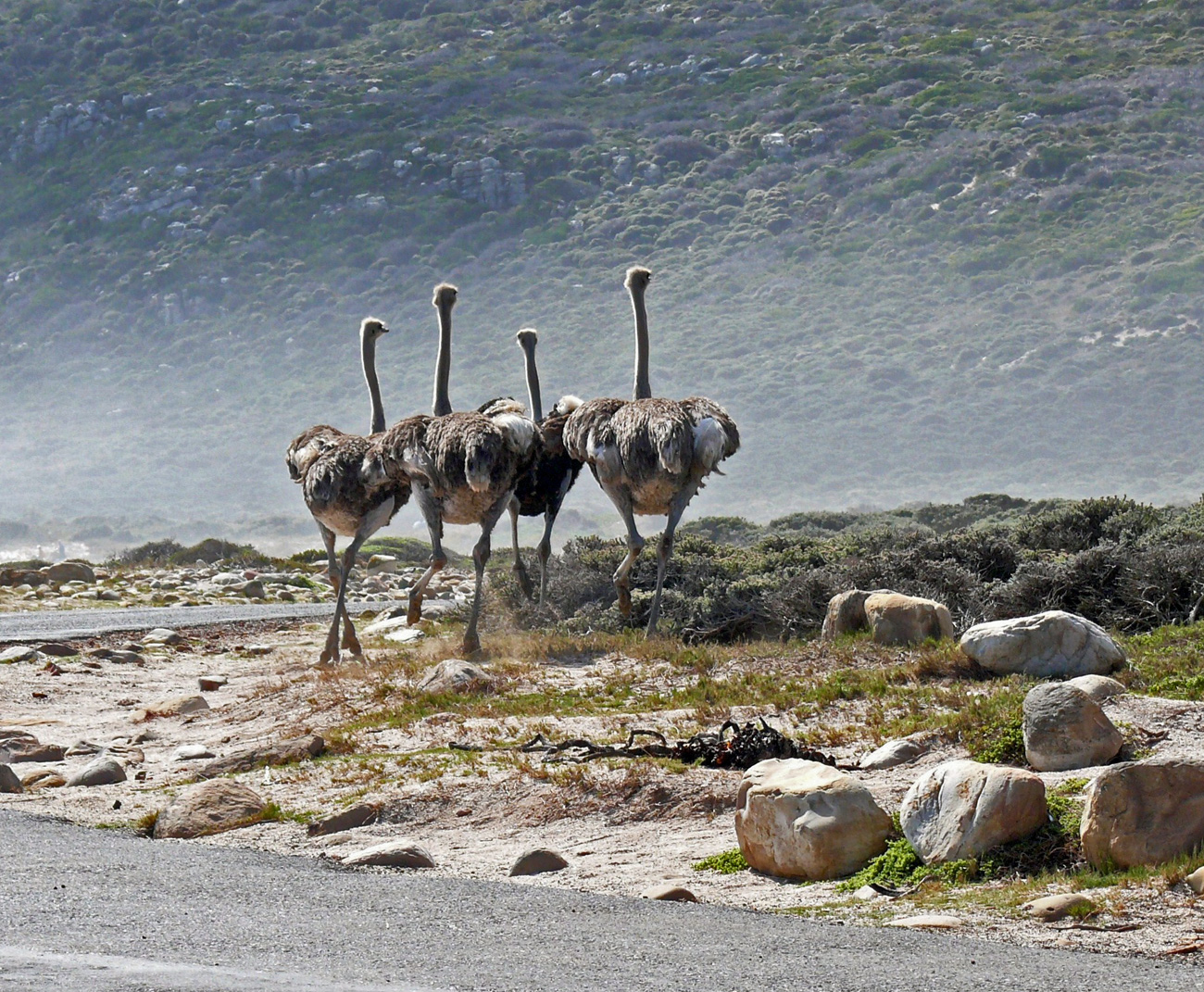
ostriches
Ostriches at Cape of Good Hope

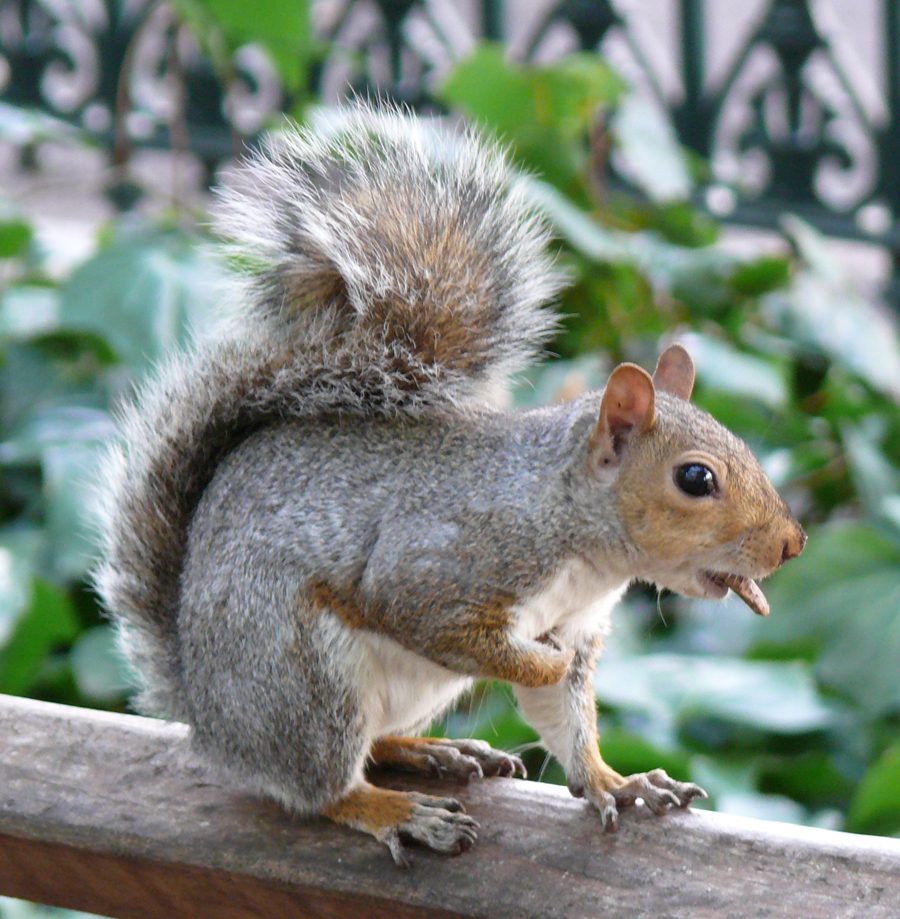
even in the heart of the city you will find the Company’s Gardens. Once literally an allotment where fruit and vegetables were grown to feed the visiting traders, now a little oasis in the city bowl. A serene place to wander through, full of trees and plants, European squirrels and native birds. And the view of that mountain behind you. No-one should come to Cape Town and not wander through this garden. And if you are not a fan of gardens then this is where you will find the ‘Tuynhuys‘ which is used by the President on state occasions (and not open to the public), the ‘Delville Wood Memorial’ and the ‘Rutherfoord Fountain’. This area is known as ‘Museum Mile’ in that the vast majority of Cape Town’s museums are concentrated into the same small space around Government Avenue including the South African Museum and National Gallery and The Iziko Slave Lodge which lies just outside the entrance.

Cheeky Grey Squirrel

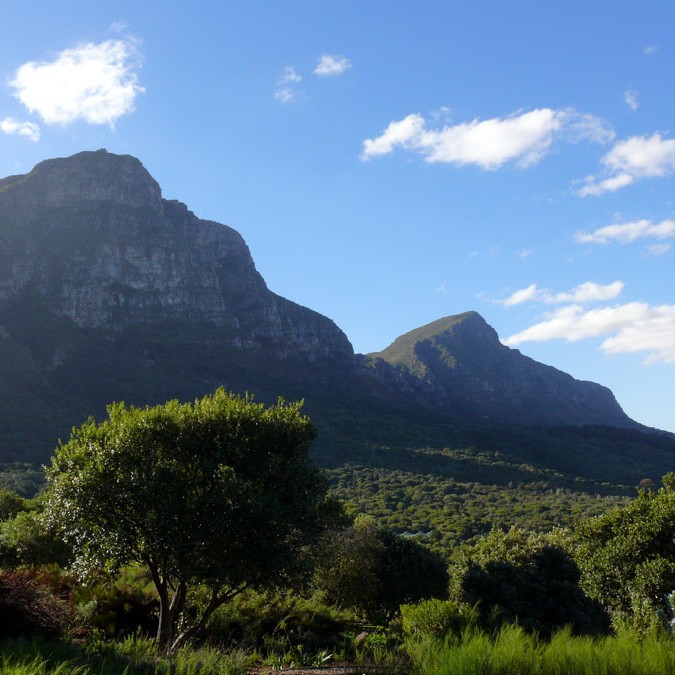
A little further south is Kirstenbosch Botanical Garden. A must see. And you can climb up to the top of Table Mountain from here up through Skeleton Gorge. If that is too much, then feel free to wander around the acres of native flora – proteas, restios, pelargoniums. Did I tell you that the Cape is home to more than 9,000 plant species? No? Well it is.

Table Mountain
Table Mountain from Kirstenbosch

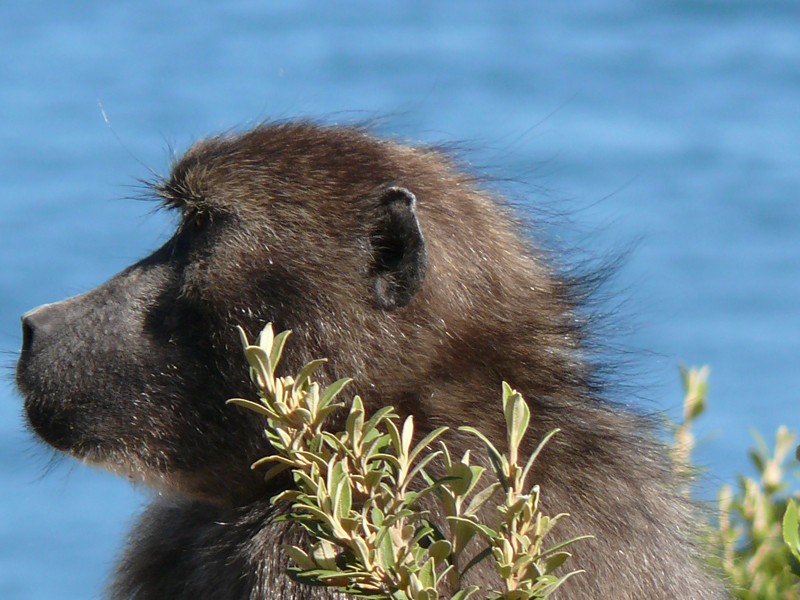
And finally, the Cape Point reserve. Where the Indian and Atlantic Oceans meet and the waters surge and crash together making it one of the world’s most dangerous routes to navigate round. The reserve is full of the fynbos that the Cape is known for, it is also home to ostrich, kudu and sable antelope, and baboons. Watch out for the baboons!

Baboon
Baboon at Cape Point

So that’s that. My favourite city and three reasons why I like it. No make that LOVE it. Cape Town. The pearl in the African Crown.

Accor Hotels are running a competition to find your favourite city. Cape Town is mine. Which one is yours?

R G Menzies Evening Walk

During my trip to Australia I managed to have a couple of days in Canberra, Australia’s capital city, though many people think that it is Sydney. Canberra gets a bad deal I think, from a tourism POV, mainly because it is full of politicians and museums! But the attraction for me (apart from having a granddaughter living there), is the chance to wander around the many galleries and museums scattered around the lovely Lake Burley Griffin, named after Walter Burley Griffin, the American architect who won the competition to design the city of Canberra.
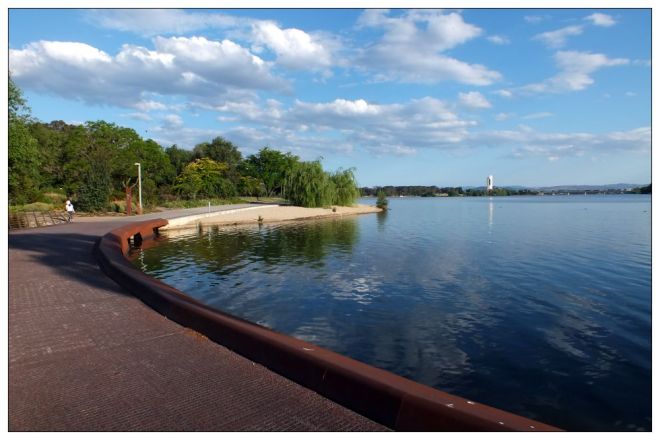
DSCF8513

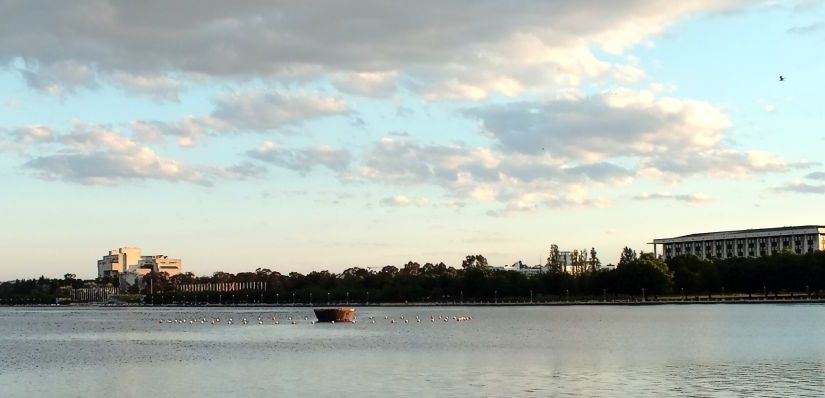
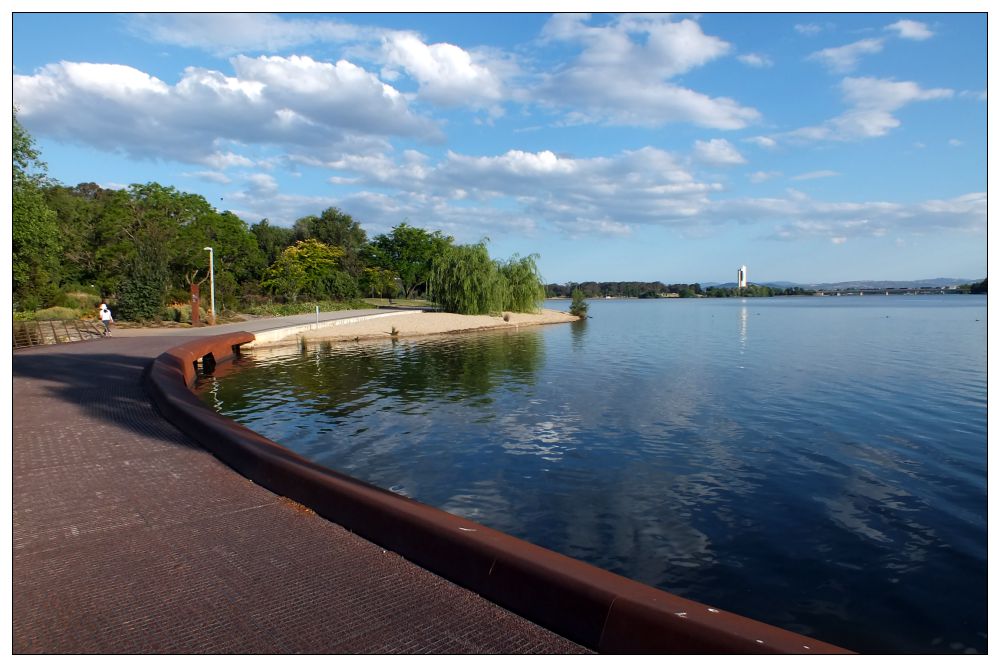
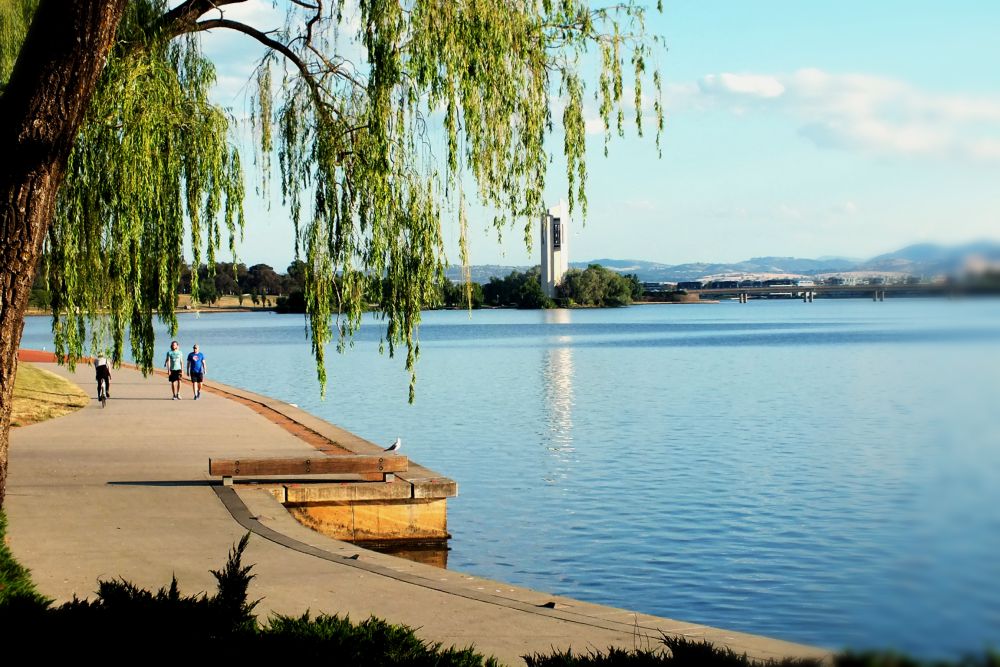
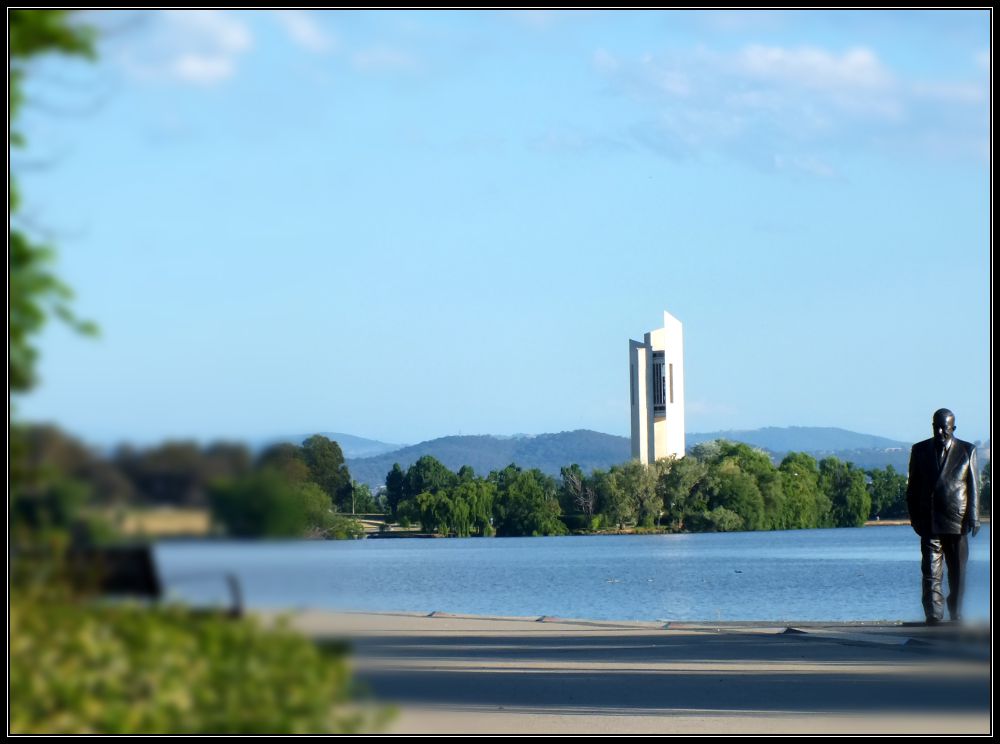
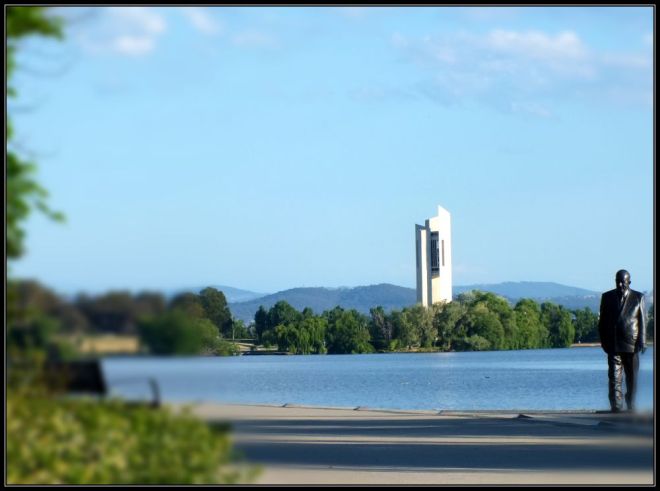
On our arrival in the city, my son and I stretched our legs by walking a short distance around the lake and enjoying the early evening sunshine. We parked at one end of the R G Menzies Walk and set off towards the National Carillon. You can see it in the distance, situated on Aspen Island.

 ‘I cannot honestly say that I liked Canberra very much; it was to me a place of exile; but I soon began to realize that the decision had been taken, that Canberra was and would continue to be the capital of the nation, and that it was therefore imperative to make it a worthy capital; something that the Australian people would come to admire and respect; something that would be a focal point for national pride and sentiment. Once I had converted myself to this faith, I became an apostle …’

Sir Robert Menzies – Senate Select Committee Report,
‘Development of Canberra’, September 1955
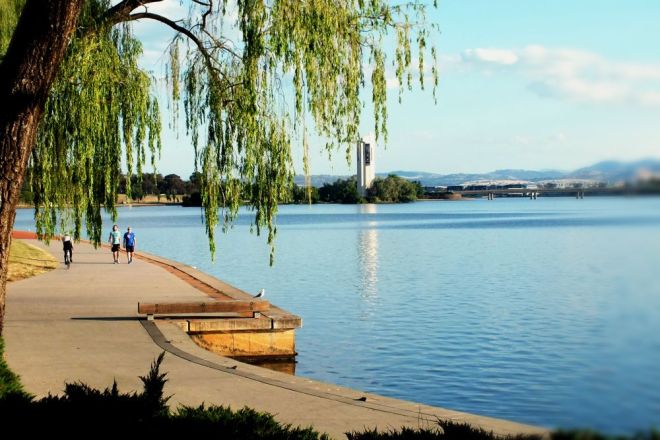
DSCF8538

The R.G. Menzies Walk was named in acknowledgement of Sir Robert Menzies’ crucial contribution to the development of the nation’s capital, Canberra. During his second term as Prime Minister (1949–66), he committed his government to the task of creating a capital worthy of the nation.
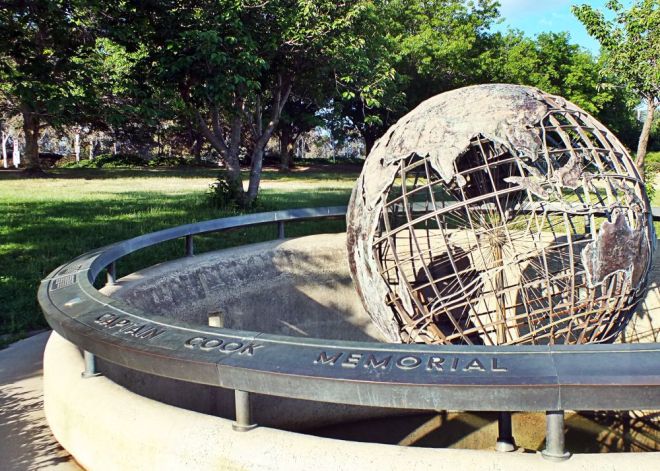
DSCF8506

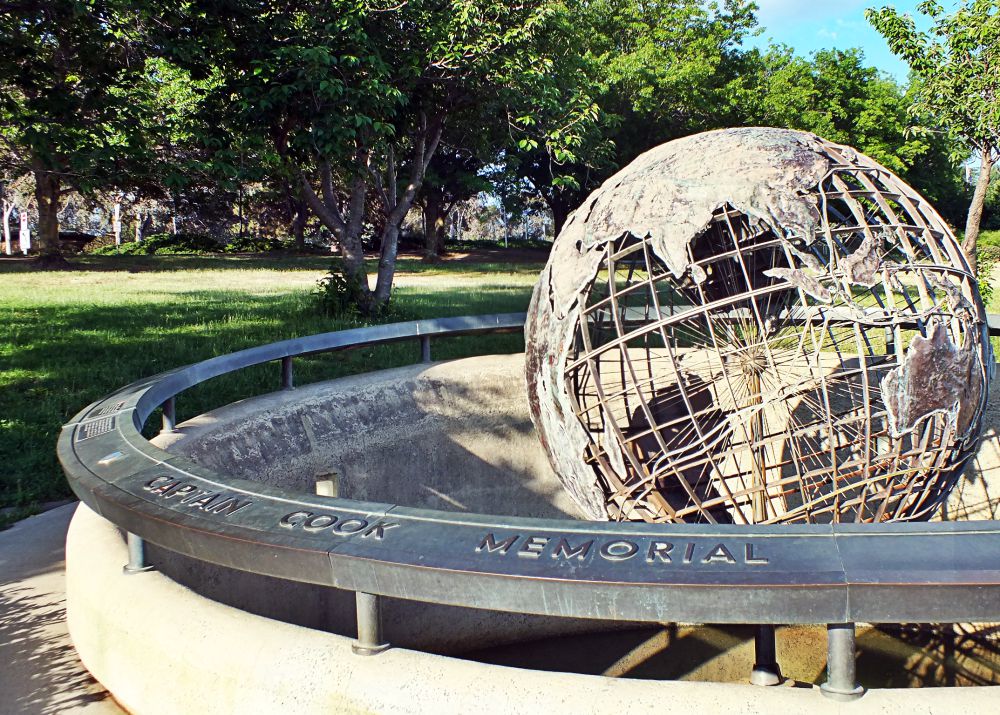
The Captain Cook Memorial Globe uses meridians of longitude and parallels of latitude to form an open-cage globe, with landmasses depicted in beaten bas-relief copper. The three routes of Cook’s voyages, with explanations of ports of call, are inscribed on the surrounding handrail.
DSCF8515

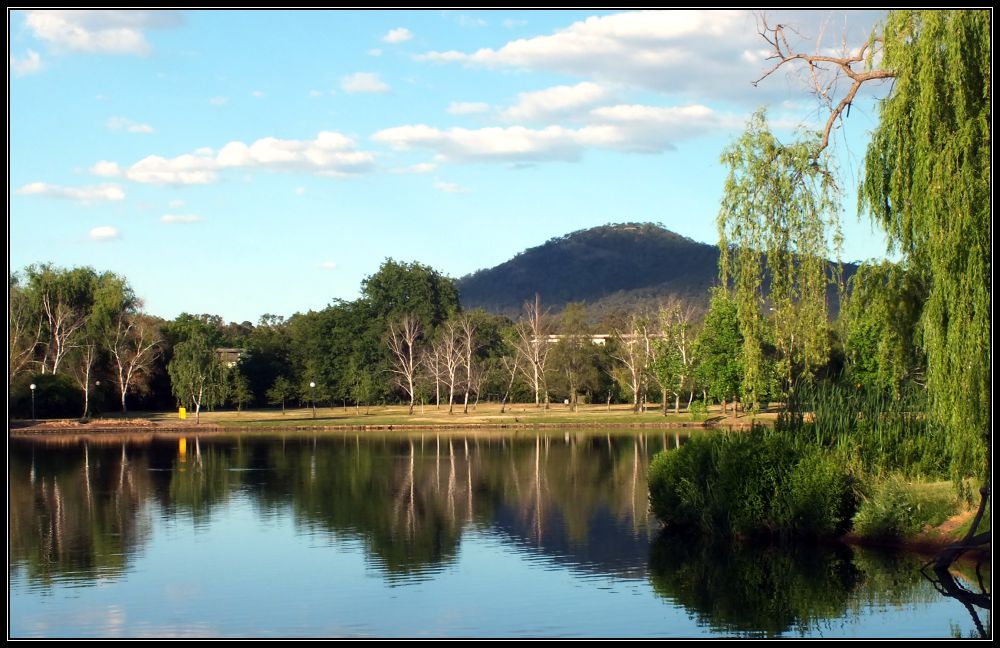
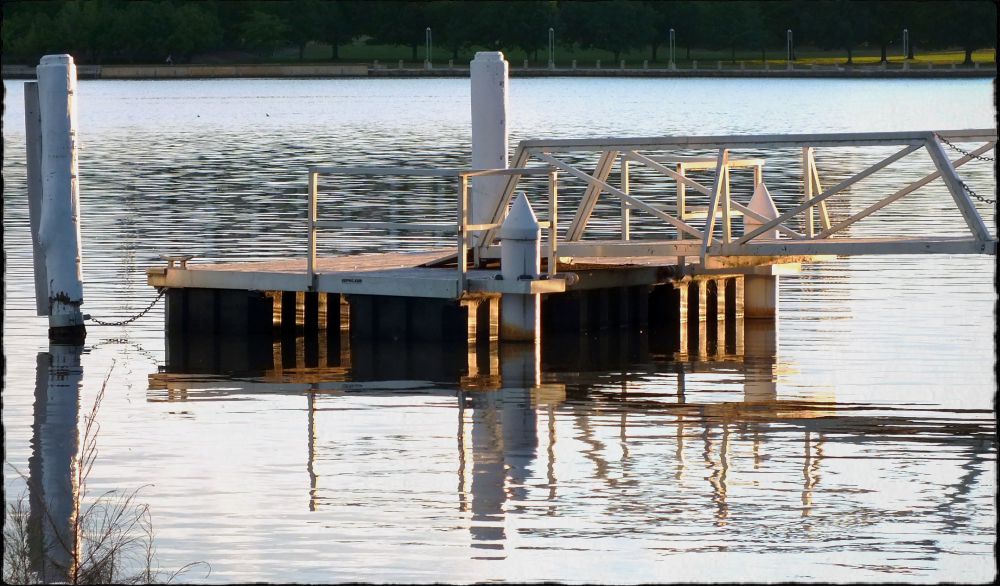
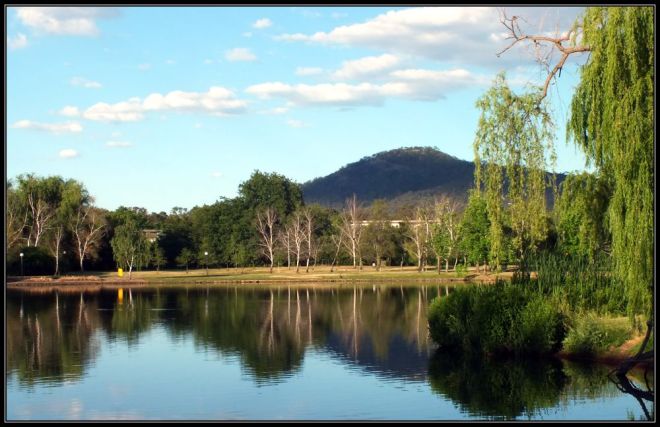
At the Nerang Pool we wandered away from the lakeside path and into the bush and marshland around the pool where we viewed wonderfully clear reflections of the white gum trees in the early evening light, found some stepping-stones leading to a ‘waterfall’, wandered past a pretty ‘Smoke Tree’ and watched a colony of rabbits nibbling at the lawns.

Looping back onto the lakeside path we came across a statue of Menzies on the foreshore and a convenient bench to sit and admire the view across the lake to the National Library, Questacon, National Gallery and the Kings Avenue Bridge.
DSCF8517 The path is used by walkers, joggers, cyclists and skateboarders, so watch out when taking photos or you might lose a limb! If you look carefully at the duck photo you will see that the female leading her chicks back to the grass is hissing at a passing cyclist. The light was truly lovely at this time of the day with lengthening shadows and golden light.

This walk is only about 5 km return and took us about an hour and a half. It is easy-going, being quite flat and most of the route is accessible by wheelchair. There are many other interesting things to see on this side of the lake including statues, sculptures and memorials and also the National Bonsai and Penjing Collection, and it is the site of the annual Floriade, a major flower festival held each spring. (And those of you who know me know how much I’d love to be here then!)
DSCF8574

[The lake is nine kilometres long and the lakeshore is 40.5 kilometres in length. Yass-Canberra was chosen as the site for the national capital on 8 October 1908. The city owes its origins to an international design competition won in 1912 by the American architect, Walter Burley Griffin. Today, Canberra is known as one of the world’s great planned national capitals, along with Washington DC, Ottawa and Brasilia.]

If you enjoy a walk, long or short, then have a look at Jo’s site where you are welcome to join in.
Hills Road Walk

I have still got a few posts left in me about my travels at the end of last year – feels odd writing that as I haven’t yet acclimatised to being back in the UK. I keep expecting to see my grandson having breakfast, or being able to go for a walk along a beach. Sigh!

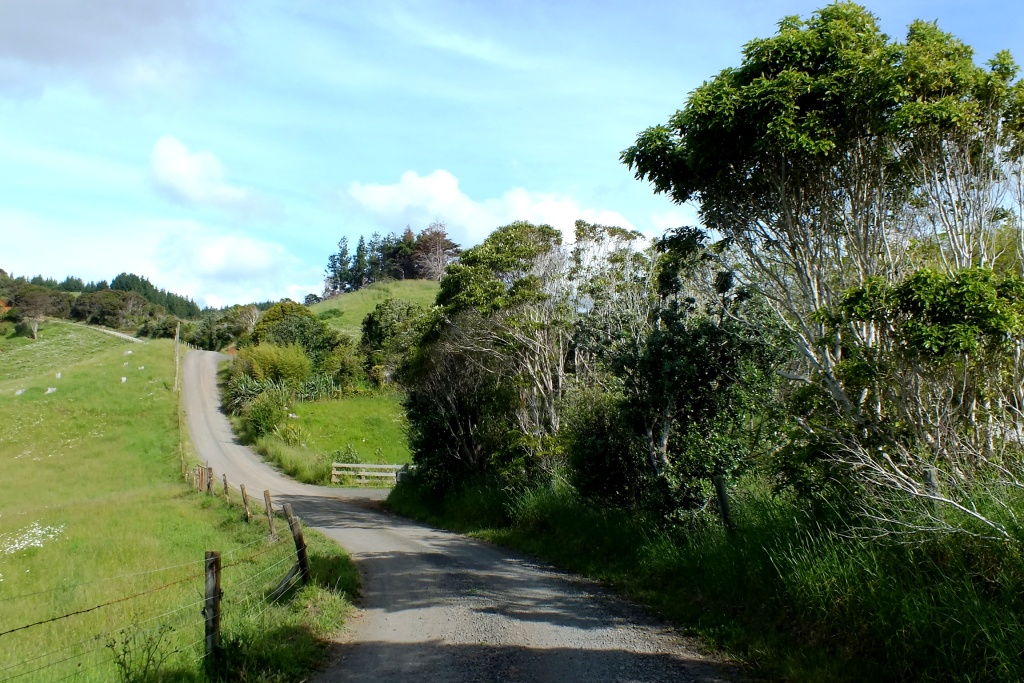
One reason for visiting New Zealand was to meet my son’s partner’s family and in particular, her parents who live in the delightful surfing town of Raglan on the black sands of the west coast of the South Island, about 2 hours south of Auckland. This is the Waikato region; a landscape formed by volcanoes creating a lush, fertile green pastoral heaven. It is no wonder that Peter Jackson picked this region for the home of the Hobbits (Matamata).

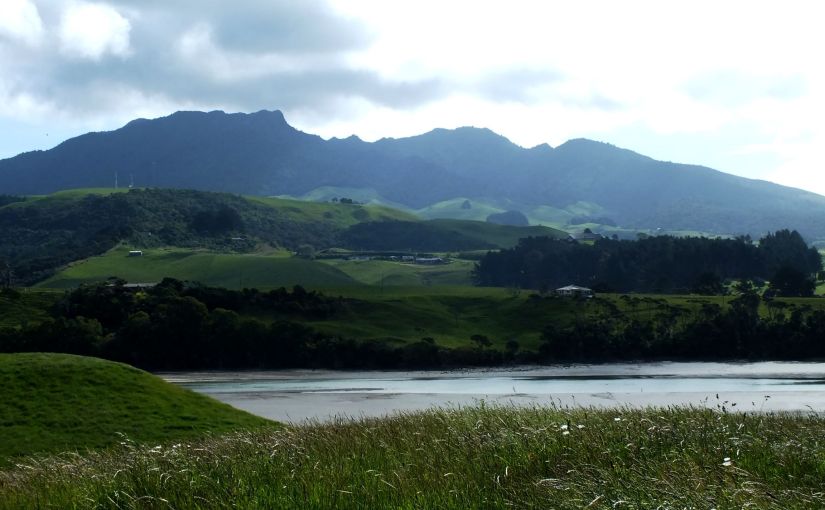
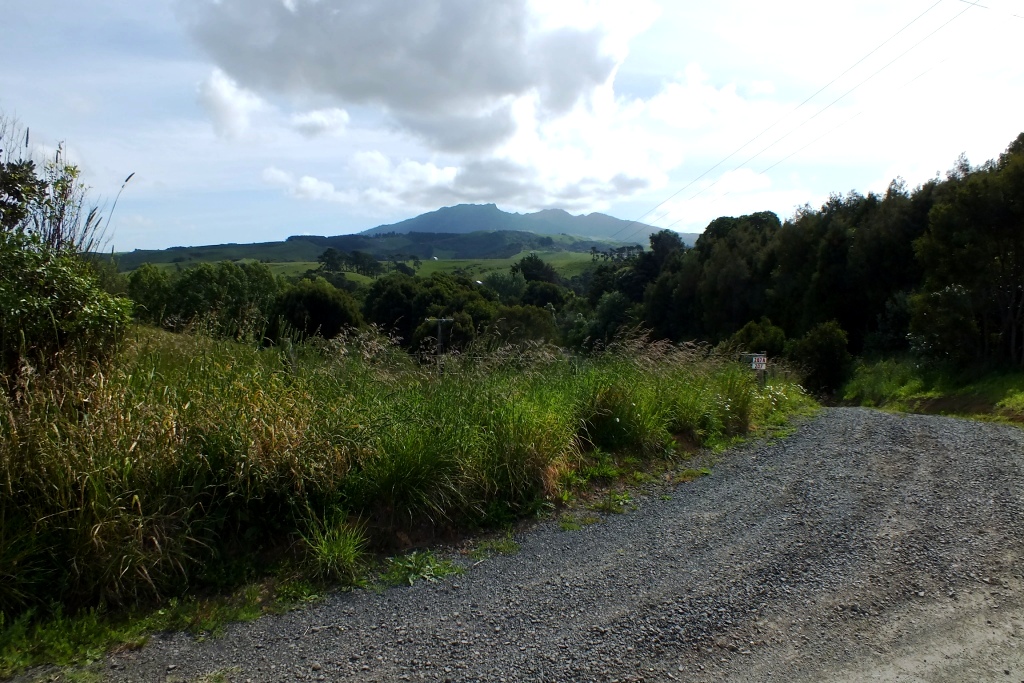
Raglan is overlooked by Mount Karioi in the Pirongia forest park, an extinct volcano. Although it would have been amazing to trek into the forest and among the Podocarps, such as rimu and totara which are found at lower altitudes, along with tawa and tree-ferns, the weather was against us, being too wet a lot of the time. I did manage a short walk along Hills Road, where the ‘in-laws’ live, with views towards Mount Karioi and Whaingaroa Harbour. Join me on this walk and enjoy the wonderful views all around in this picturesque part of the country.

DSCF9144
Mount Karioi in the background

DSCF9176

If you enjoy a walk, short or long, then you may enjoy visiting Jo’s Monday Walk where you are in for a treat.