As I mentioned previously the cloisters in this cathedral are quite small. The interesting and unusual feature is the wooden vault.
Wooden vault
And the wooden bosses. Of the original one hundred roof bosses, one in each of its bays, there are now just sixty remaining. These bosses fall into five categories: religious and secular figures, heads, animals and foliage.
Toothache Man
An arcaded passageway leads to the chapter house. This has darker columns with carved capitals of foliage set under pointed arches (as in the first image and below).
On the other passage there are some odd stone grotesques hidden next to the foliage – possibly stonemasons’ identification? I haven’t been able to find out much about these, but tongue-pullers are thought to a sign of a journeyman mason as St Blaise, who is the saint associated with diseases of the throat and mouth, is also the patron saint of masons. Hair-pullers like the bearded man, serpents and monsters are most likely there to frighten worshippers and remind them that the world is a sinful place. These over-imaginative human and animal forms often distort the natural into ugliness or a caricature.
The cloisters also provide a quiet space for a rest (and get a phone signal perhaps!)
And the stone carvings are magnificent in their detail. As always you have to look up and pause to admire the beauty of this historic craftsmanship.
“I have always held and proposed against all comers to maintain that the Cathedral of Lincoln is out and out the most precious piece of architecture in the British Isles” – John Ruskin.
After circumnavigating the cathedral at least twice by day and night, it was time to venture inside. Unlike Norwich it is not free to enter, but you can buy a combination ticket with the castle and the admission includes a floor tour. Originally built by the Normans after the defeat in 1066, Lincoln cathedral was consecrated in 1092. The diocese stretched from the Humber in the north to the Thames in the south, and after an earthquake in 1185 only the west front remains from the Norman period.
Inside, it is filled with light from the many stained-glass windows. (You guessed it, a separate post will follow)
Nave with the impressive choir screen and Willis organ in the background
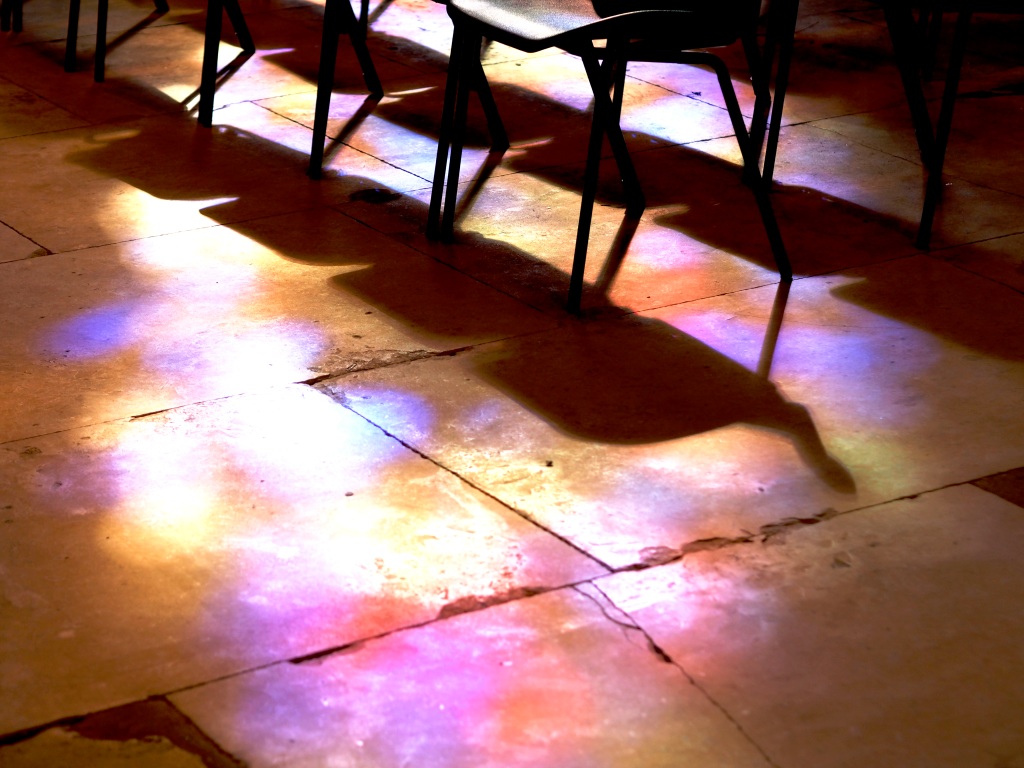
Depressingly filled with light-sucking dark plastic chairs. Originally the space would have been empty and the spaces used for markets. When people gathered for services they would have stood.
A pilgrimage is a special kind of a journey
The font is made of a black carboniferous limestone from France, waxed and polished to resemble marble. Its sides are carved with mythical beasts of good and evil fighting.
West face of the font
To your left is the art work of William Fairbank, “The Forest Stations” which show Jesus’s journey to the Crucifixion and Resurrection, carved from many different types of wood.
At the crossing you can see that the church was built in the shape of a cross. Huge rose windows face each other from the north and south transepts.
The Dean’s Eye
The Bishop’s Eye
I’ll go into more detail about the windows in a separate post. In the north transept you find the Service Chapels – for remembering soldiers, sailors and airmen. Lincoln cathedral is especially connected with those who served in the Bomber Command during WWII.
The Soldier’s Chapel dedicated to St George
The Airmen’s Chapel dedicated to St Michael
The Seamen’s Chapel dedicated to St Andrew
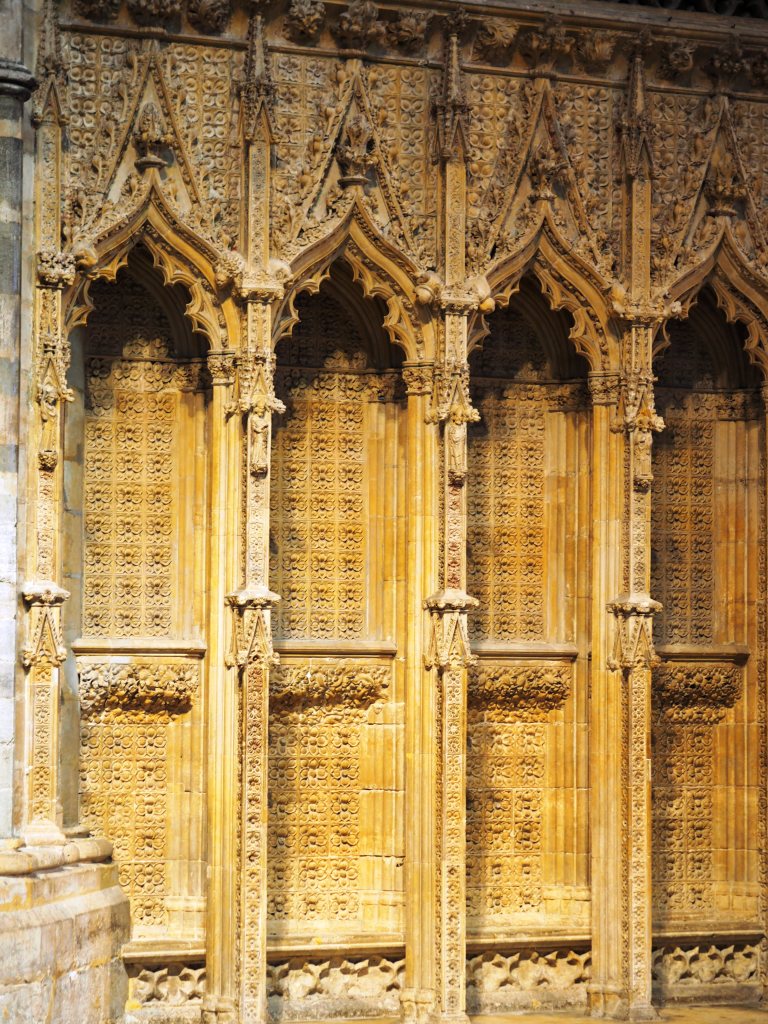
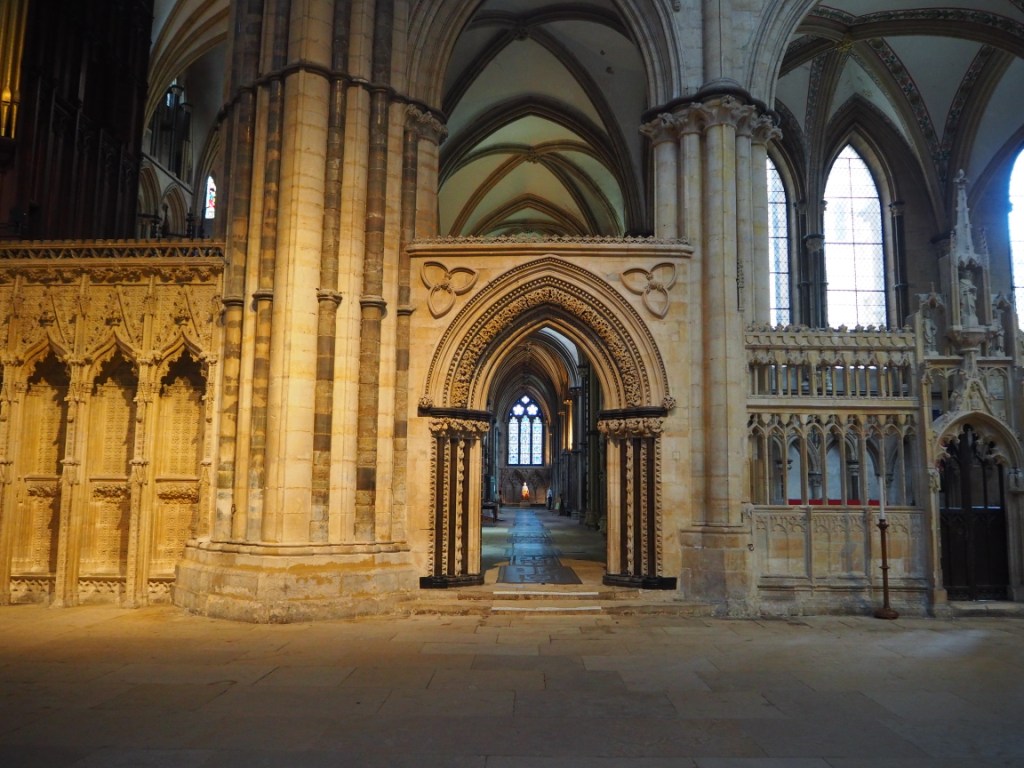
As usual in English cathedrals, the full vista of the nave is blocked, and the choir – in this case St Hugh’s Choir which is almost a church within a church – is hidden from view. However, in this case the screen is exquisitely beautiful. Carved in stone and originally painted in bright colours, some of which can be still seen in faded glory, it was built in 1330 to separate the clergy, their assistants and the choir from the congregation.
The Choir Screen
I was so taken by the carvings on this screen that I will make a separate post showing the details.
North Transept
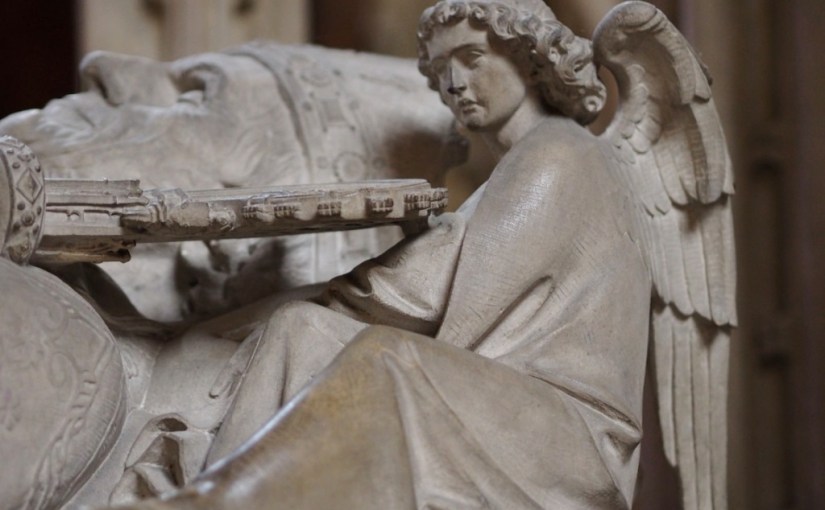
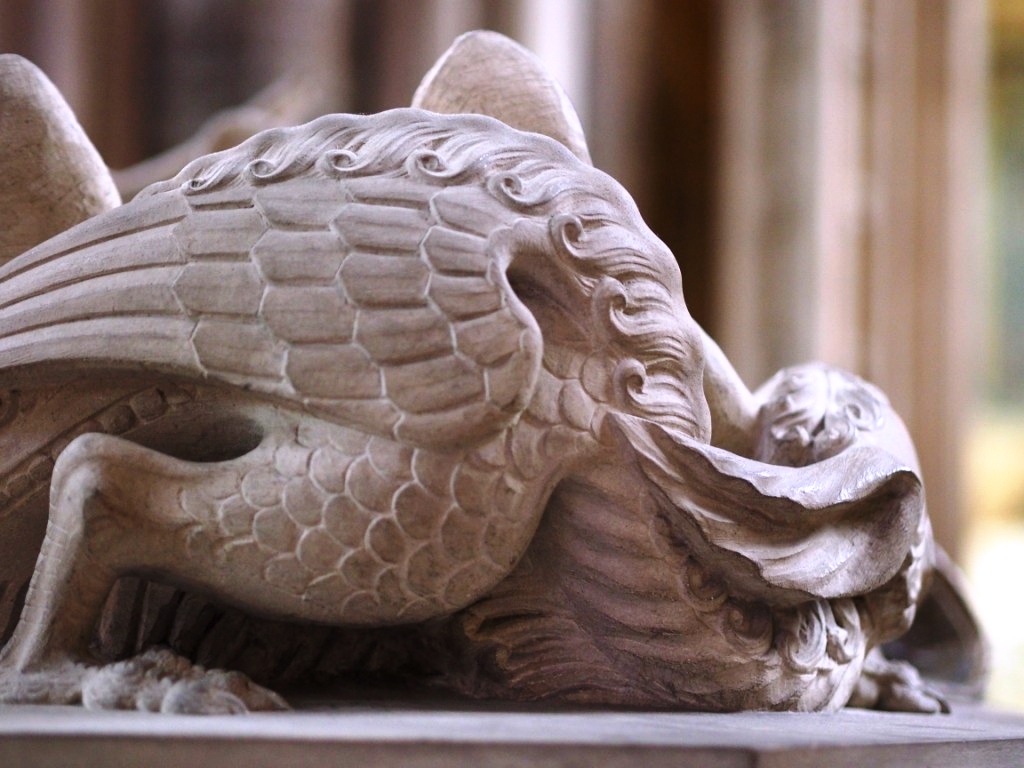
At the far end of the nave is the Angel Choir where you will find several tombs and the infamous Lincoln Imp, if you look closely enough. Legend has it that he caused so much chaos one of the angels turned him to stone.
St Hugh’s Shrine
Eleanor of Castille
Lincoln Imp
Eleanor of Castille
Eleanor of Castile (1241 – 1290) was the Queen Consort of Edward I. Her entrails were buried in a visceral tomb to avoid the unpleasant smells of moving her body to Westminster Abbey. When she died, near Lincoln, her husband famously ordered a stone cross to be erected at each stopping-place on the journey to London, ending at Charing Cross. (The Eleanor Crosses)
Tomb details
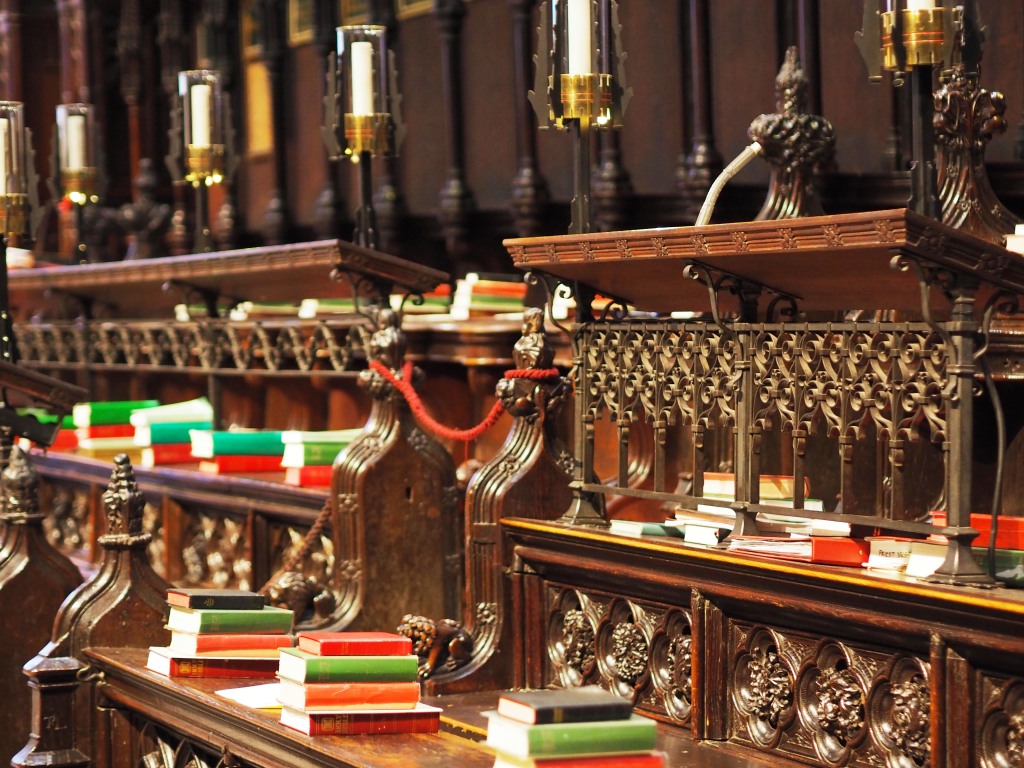
As usual I was particularly interested in the choir area. Lincoln has some delightful misericords, unfortunately all the seats were down ready for Evensong when we entered, and on gently raising one to see what lay beneath I was verbally assaulted by one of the clergymen. Despite the fact that the seats are raised daily and sat upon he proceeded to lecture me loudly and publicly about the damage I could cause to the medieval hinges (?) – I politely pointed out that there is no notice or ropes to indicate that one should not look at the seats, but he was not in any mood to listen. A nearby fellow photographer hastily withdrew from the choir, and my OH was almost shaking with anger. The altercation did somewhat sour our visit and I was saddened not to have at least seen the carvings in person.
St Hugh’s Choir
However, do not let my mishap deter you from visiting the Choir as it is very beautiful and is where the Bishop’s throne – cathedra – is located.
The South Transept entrance
Lincoln cathedral does have a cloister, but much smaller than that of Norwich, built around 1296 and unusually on the north side.
The cloisters are reached down the north east transept (Slype corridor) and through a heavy wooden door.
Three sides are †13c. They have a wooden ceiling with carved bosses and Gothic arches.
Wooden vault
We’ll have a look at the carvings in the next post.
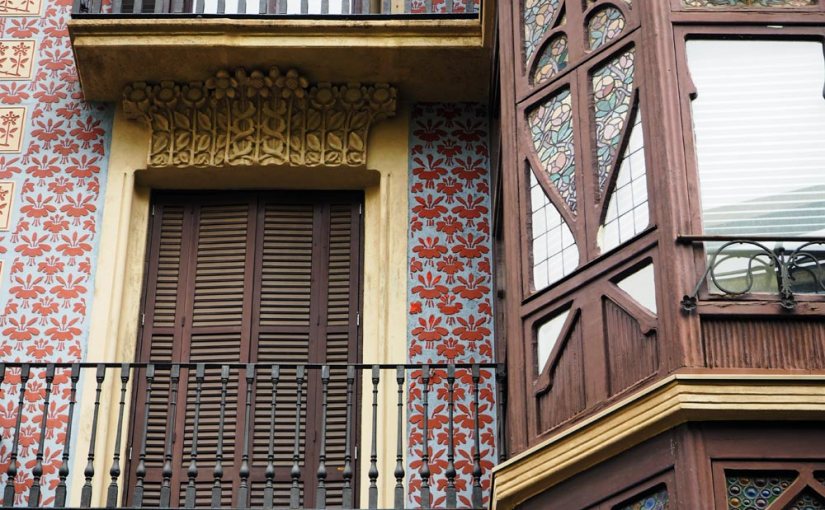
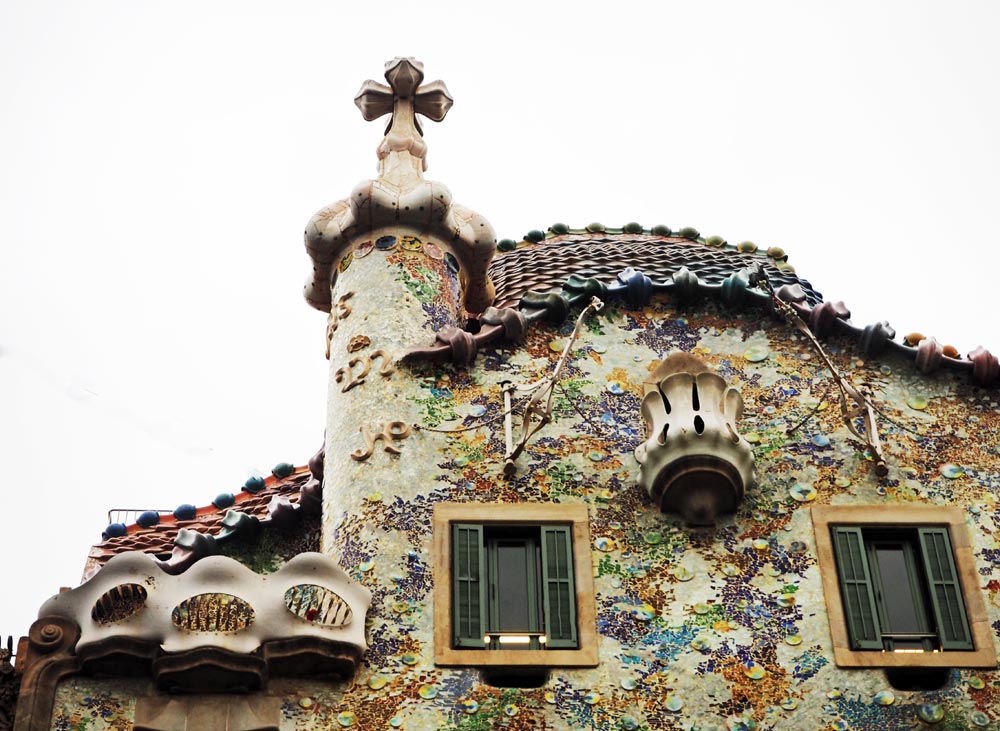
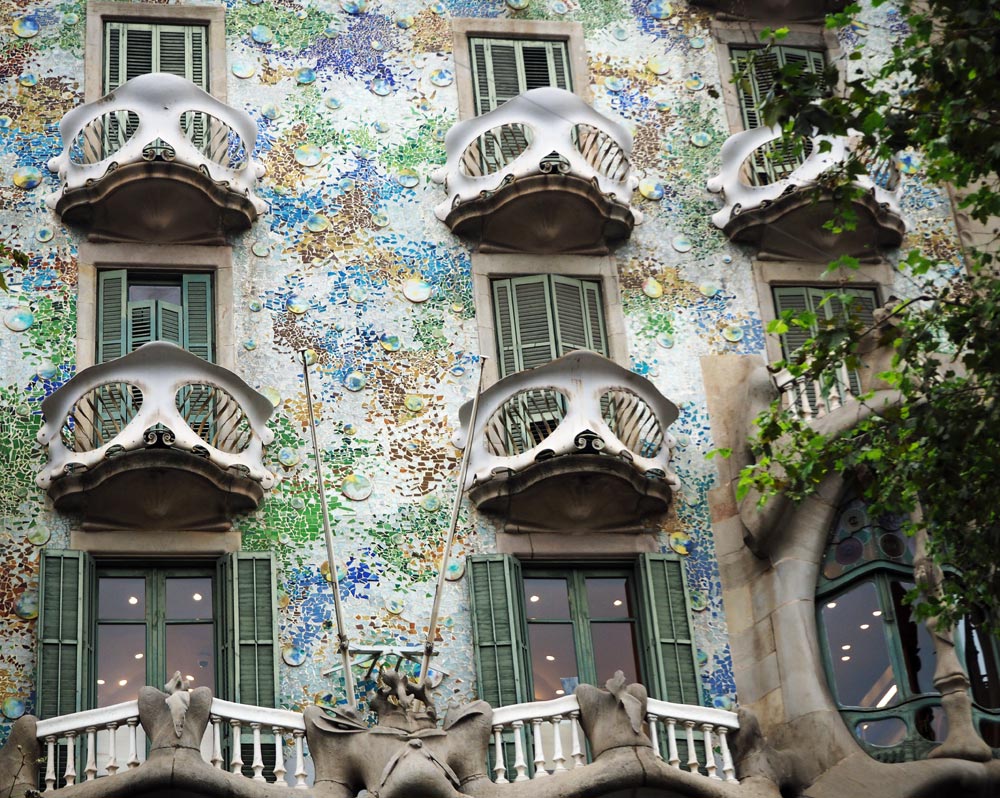
This week Paula has five more words to choose from. Any or all. Your choice Mine is frontal / facade of this beautiful modernist architecture in Barcelona. Exquisite stained-glass, decorative tiles, shaped panels and the nature inspired wrought-ironwork of the balconies.
From the not too distant past this masterpiece, designed by Antoni Gaudí, attracts a lot of attention.
Formerly an apartment block, (who wouldn’t want to live there?) now a museum, it is rather expensive to visit and another place you might want to book online beforehand to avoid the queues.
Casa Batlló is located at 43 Passeig de Gràcia, in easy walking distance of Plaça de Catalunya. There are two other modernistic buildings in this block which are equally impressive, though perhaps not as eccentric as this one.
Construction started in 1877 and is a remodel of a former house. Also known as the house with the dragon roof, or even ‘house of bones’ the facade is covered in colourful tiles.
One of the strangest residential buildings in Europe, this is Gaudí at his hallucinatory best. The facade, sprinkled with bits of blue, mauve and green tiles and studded with wave-shaped window frames and balconies, rises to an uneven blue-tiled roof with a solitary tower.
On 11 July 2010, the Sagrada Familia was consecrated by Pope Benedict XVI and elevated to the status of a basilica. It is not, as some assume, a cathedral as it is without a bishop’s headquarters. But the huge dimensions of the interior is worthy of that status.
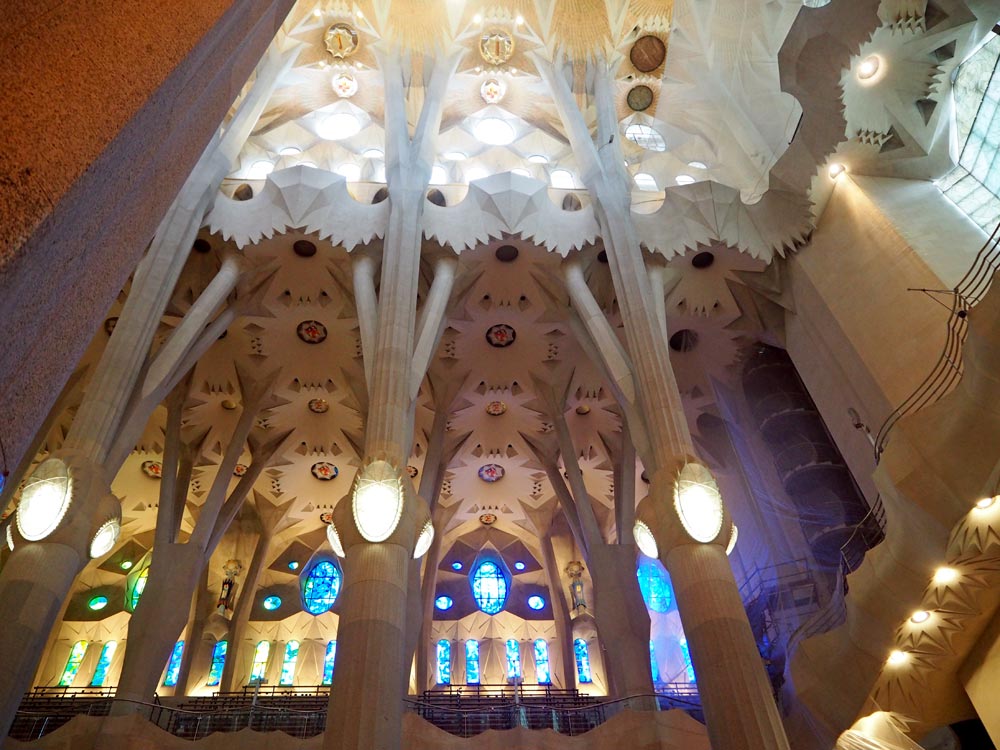
Stepping inside the Basílica i Temple Expiatori de la Sagrada Família is like stepping into an enchanted forest. Tall trees towering above us; their branches creating a canopy. The streams of coloured light; the verticality and the enormous, seemingly empty space takes your breath away. At first I didn’t know what to look at, where to begin the tour, what to focus my camera on. Double-storey height windows flood the space with a light never before seen within a church.
The nave is a sight to behold. A work of mathematical genius with natural light flooding in through clear glass leaded panels to allow as much light in as possible.
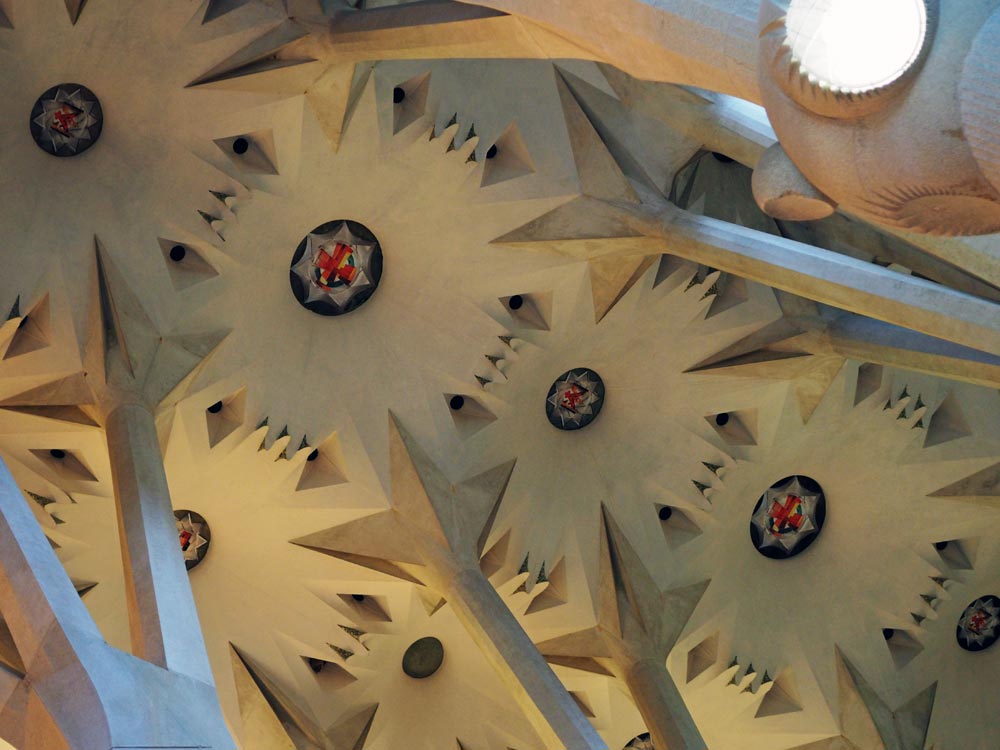
The columns are modelled after a forest and form a light canopy of palm leaves.
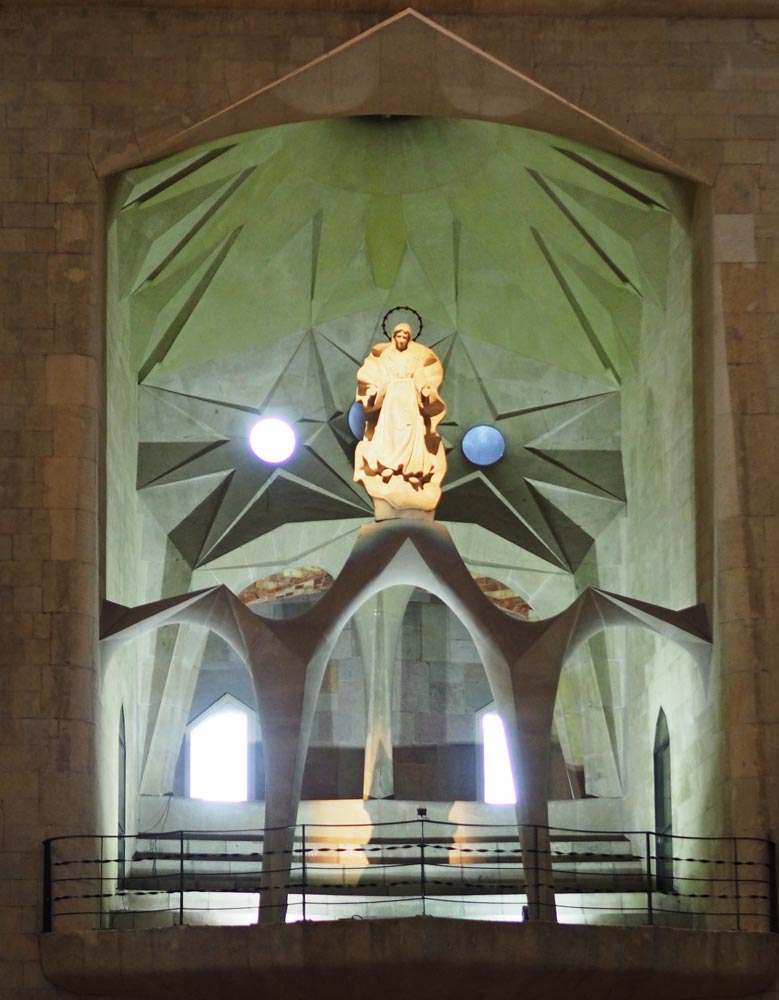
I’m not going to go into all the symbolism of the basilica, you can find that out for yourself, instead I shall just let you have a look at some of the bits that caught my eye and where I could actually get a shot without dozens of people in the way.
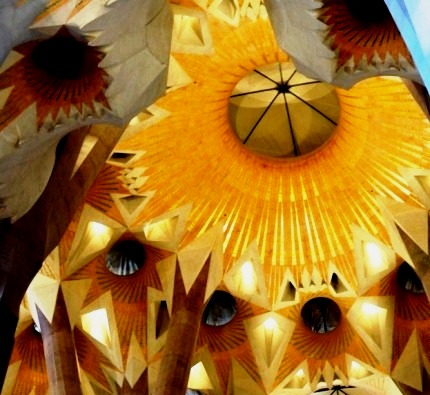
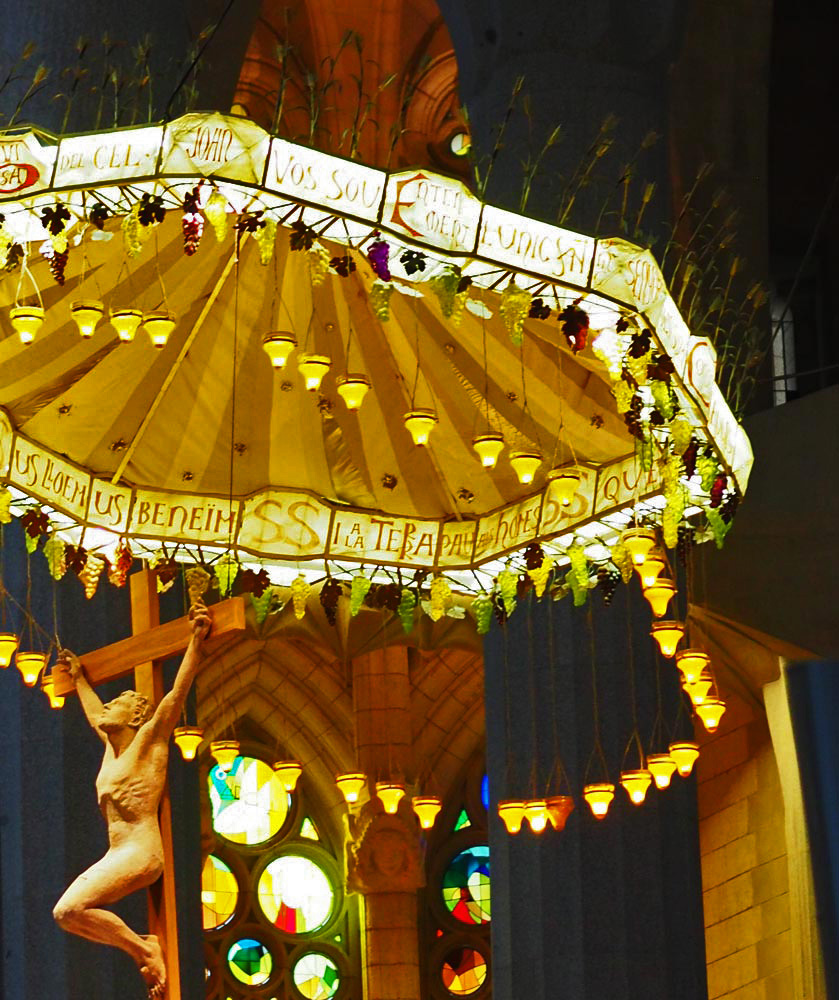
The apse contains the altar, but this section was being worked on so we couldn’t get too close. Your eyes are drawn to the dramatic suspended crucifixion with a large ‘parachute’ dome from which artificial grape bunches and wheat stalks hang as symbols of the Eucharist, in which wine and bread are consecrated as religious symbols.
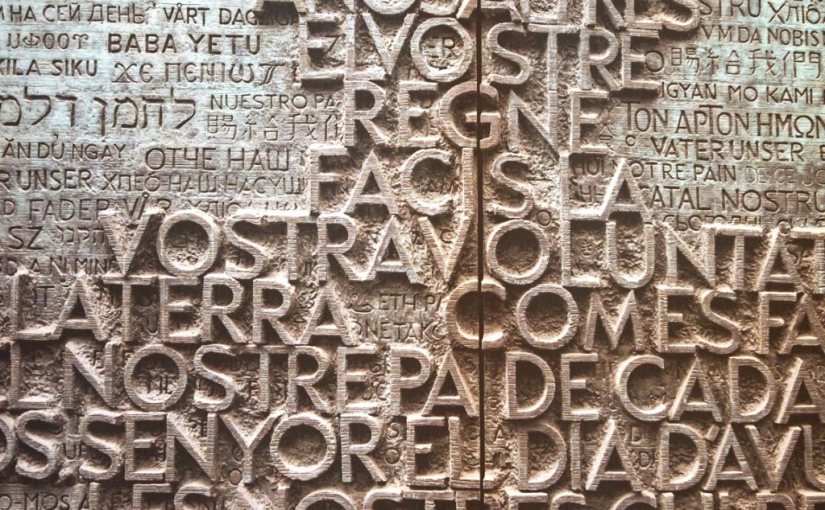
The main access bronze door that Josep M. Subirachs created for the Glory façade is a masterpiece of using typography as art.
The centre of the Prayer Door is inscribed with the Lord’s Prayer in Catalan with relief letters, and highlights the fragment ‘Give us, o Lord, our daily bread‘ (Translation from original Catalan: ‘el nostre pa de cada dia doneu-nos-el avui‘) and 49 other languages
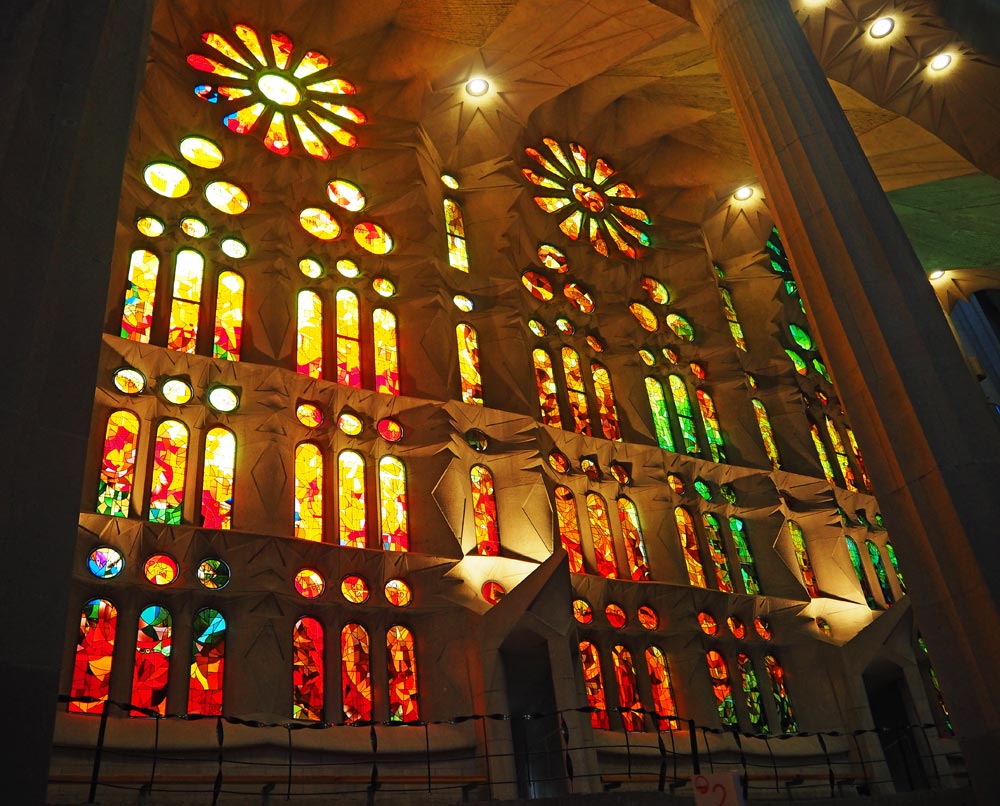
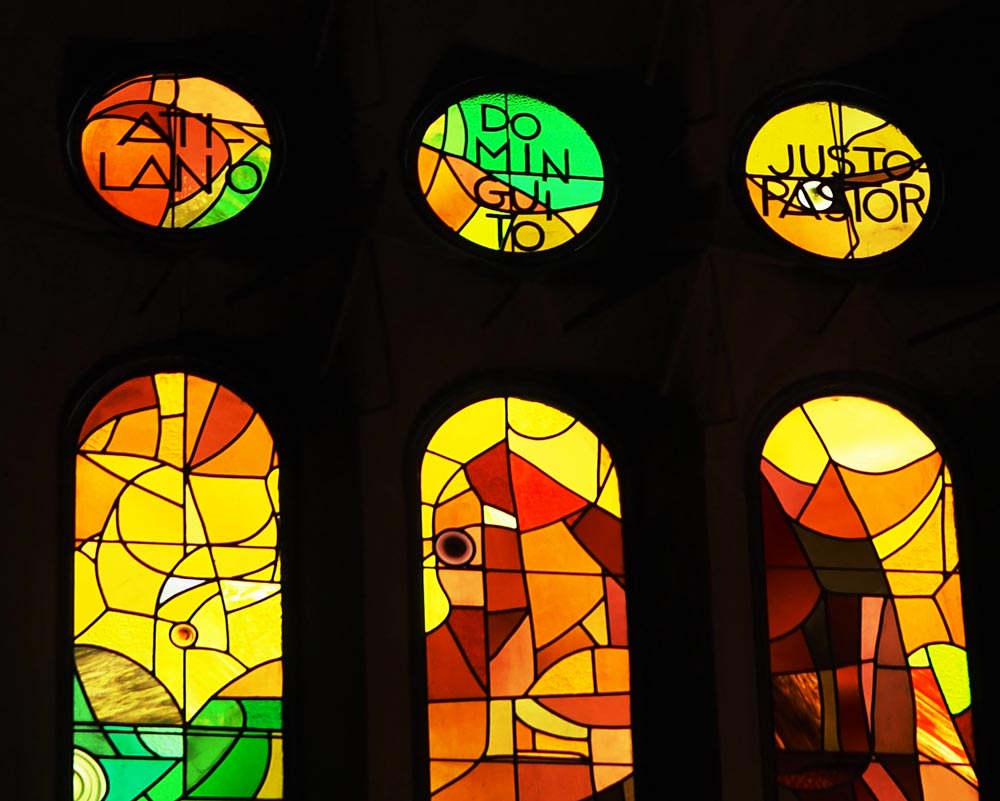
The greens, blues, yellows and reds of the light coming through Joan Vila Grau’s stained-glass windows form shifting patterns of light and colour across the stone. Gaudí left several documents explaining how the stained glass windows should be arranged in order to achieve a symphony of evocative light and colour.
Gaudí said that colour was the expression of life.
The stained-glass features modern geometric shapes are sometimes overlaid with the names of saints. The windows on the lower part of the side aisles are brightly coloured, whereas those on the upper half are in lighter, almost translucent colours.
The windows on the Facade of the Passion, which are dedicated to water, light and the Resurrection are mostly blues, yellows and greens.
The windows on the Nativity facade allude to the birth of Christ, poverty and life and are mostly reds and yellow.
A pretty clam-shell font containing holy water rests on curved wrought-iron supports. Everything here is considered,
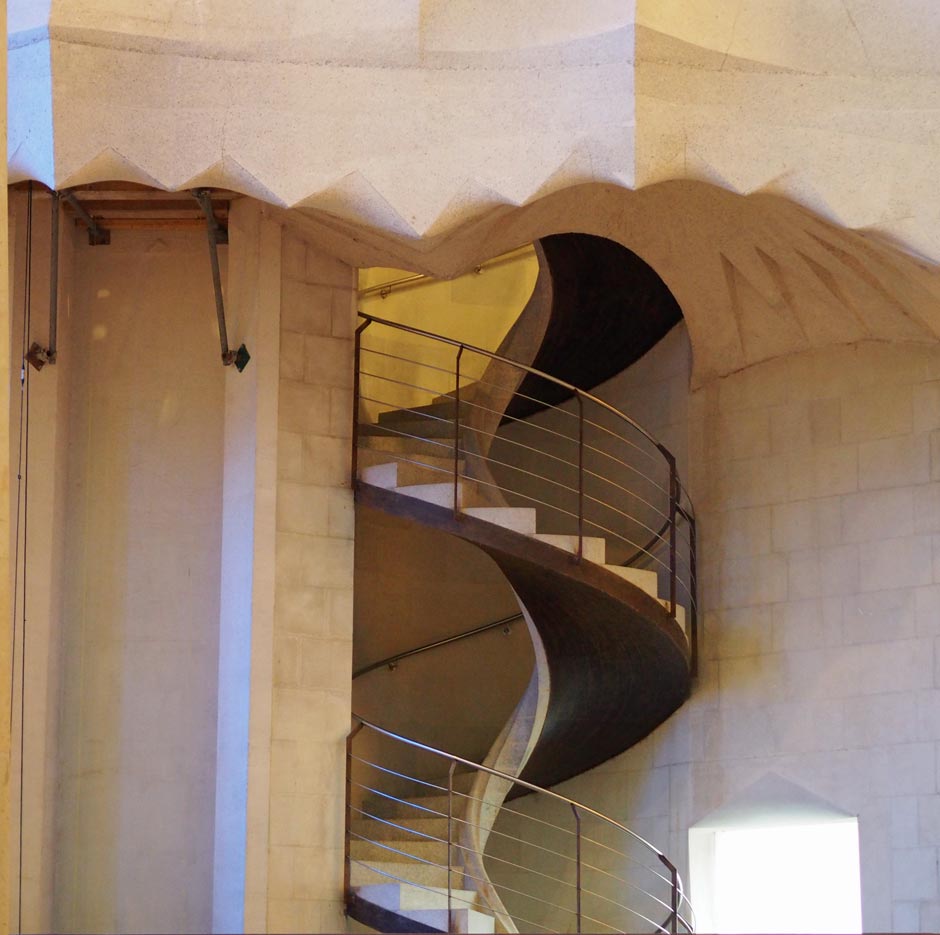
even the curve of a spiral staircase leading to the upper floors.
The basilica is a continuing work of art; the culmination of many years by many talented architects, sculptors and master craftsmen following Gaudí’s instructions. You could spend countless hours, days, even years studying the details of the Familia Sagrada and still not discover everything about it.
One has to wonder what Gaudí himself would think about it today? And what does it now represent?
























 TRAVEL WORDS