Exeter Cathedral

Exeter Cathedral was founded in 1050 with the enthronement of the first Bishop of Exeter and construction began in 1114, initially in the Norman (Romansque) style. The two towers are from this period. A major rebuild was done between 1270 and 1350.
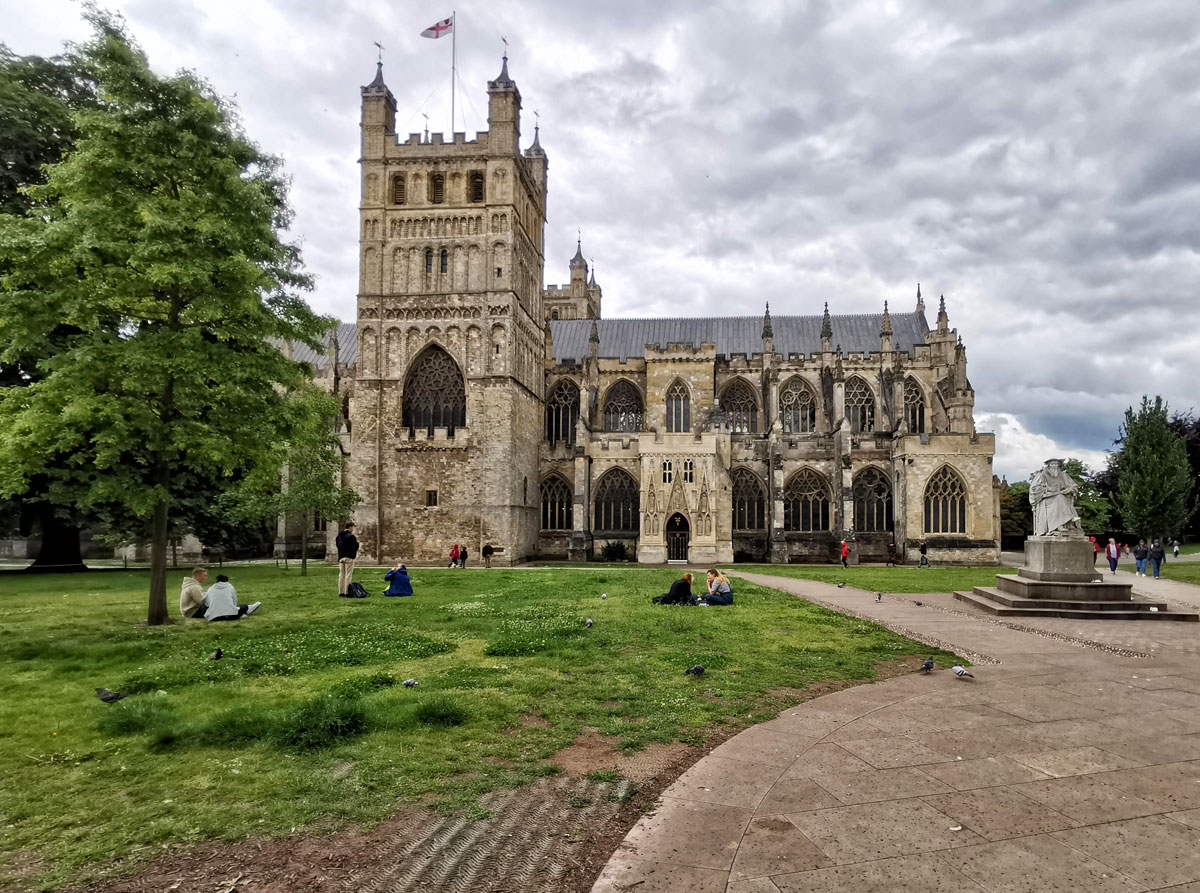
The north side of Exeter Cathedral, properly known as the Cathedral Church of Saint Peter in Exeter, is an Anglican cathedral, and the seat of the Bishop of Exeter, in the city of Exeter, Devon, in South West England.

Although it is 18 months since my visit to this cathedral I didn’t get around to posting about it. You may wonder why someone who is nonreligious enjoys visiting churches and other religious buildings. I can’t help admiring the craftsmanship that goes into these religious buildings. And of course they are a big part of our history.
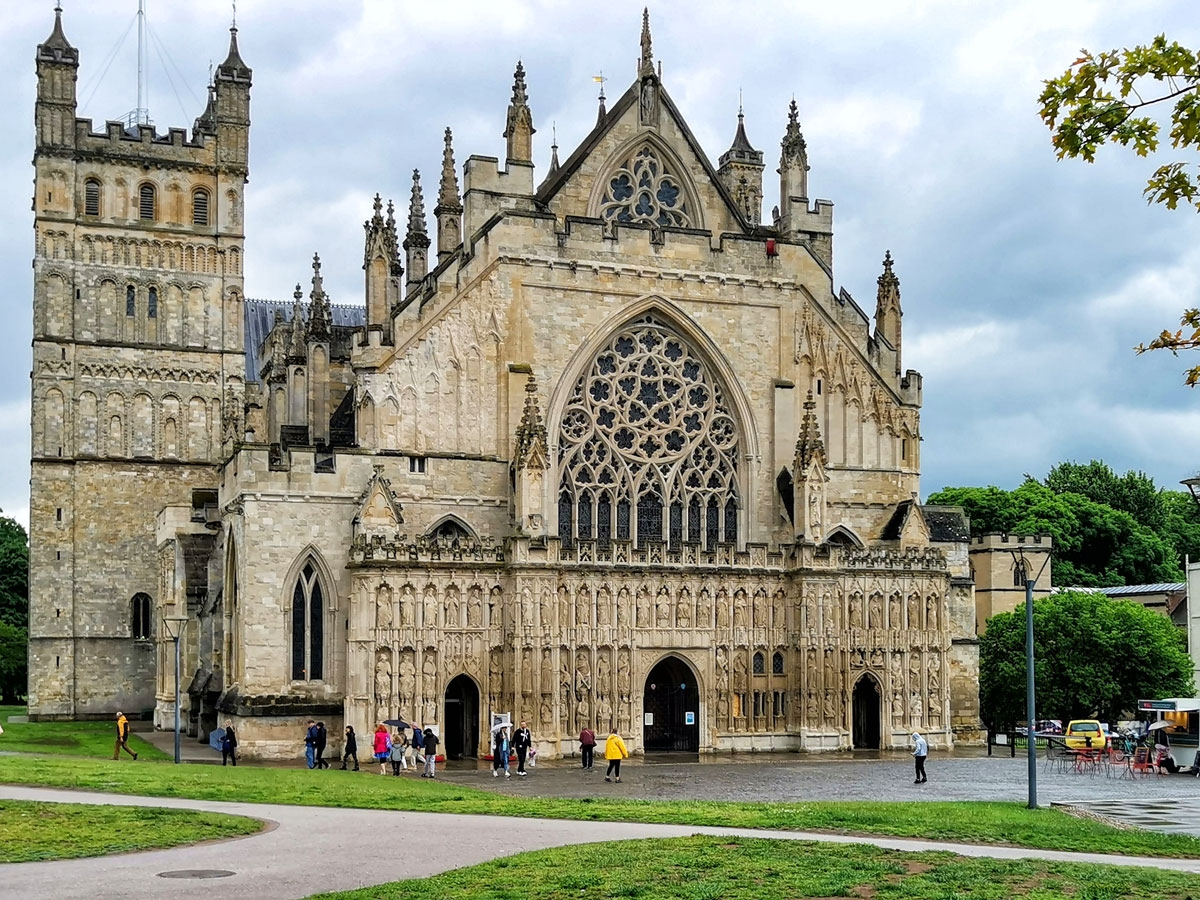
The view from the west shows what appears to be a single tower on the left (north) side, but there is another one on the south.

White and honey stone was used to face the building, brought from quarries along the East Devon coast. Above the rows of statues is the beautiful 14th century tracery of the great west window and high up in a niche at the top of the west front is a modern statue of St Peter, the patron saint of the cathedral, depicted as a naked fisherman

Let’s head inside.
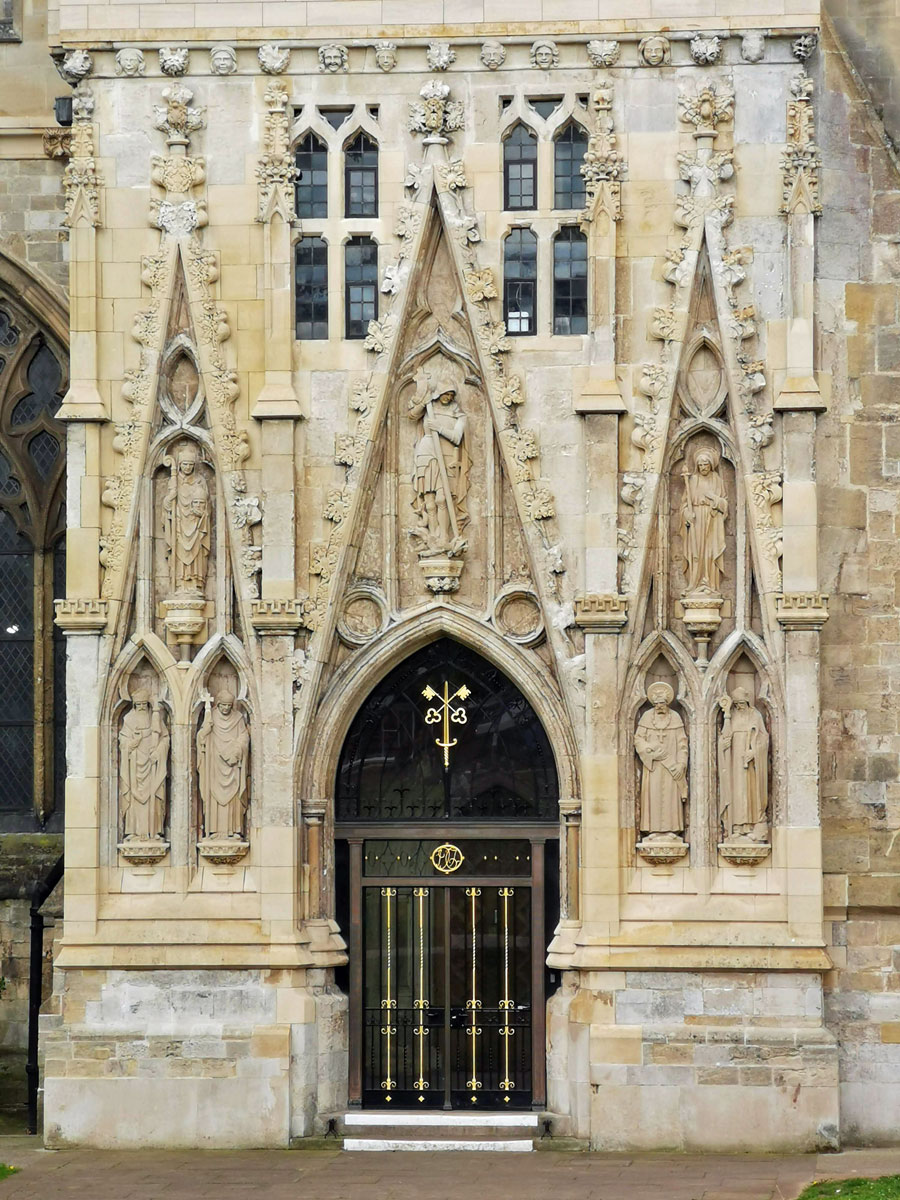
North side

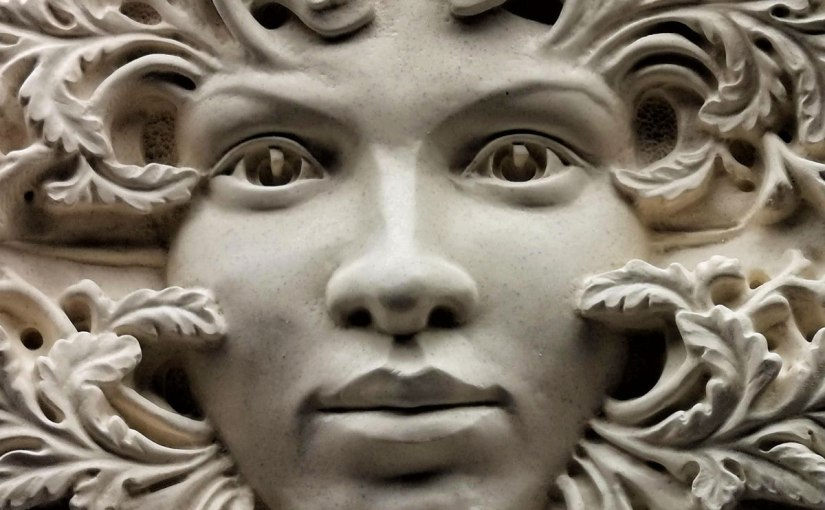
Measuring approx. 96m in length, Exeter Cathedral’s ceiling is the longest continuous medieval stone vault in the world. This style of vaulting is known as tierceron. The round stones (bosses) of the vault act as keystones and there are more than 400 of them carved with a variety of Gothic images including plants, animals, heads, figures and coats of arms.
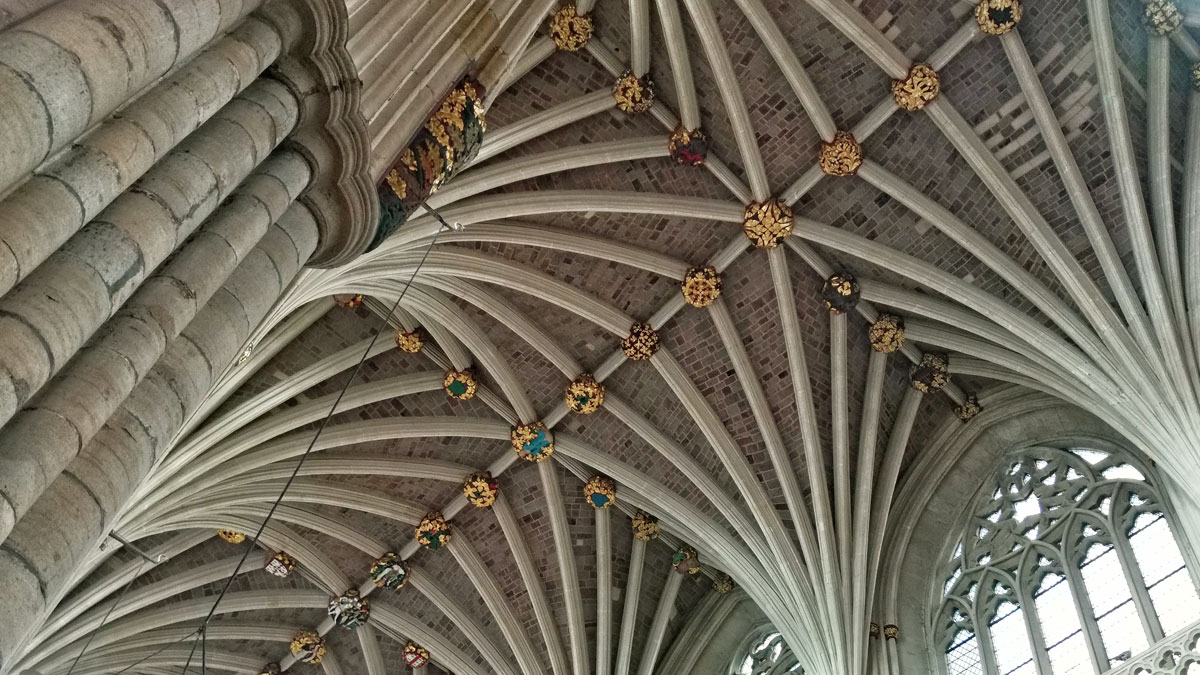
One of the bosses shows the murder of Thomas Becket, Archbishop of Canterbury by King Henry II’s knights. It is a rare survival as Henry VIII proclaimed in 1538 that all images of Becket were to be destroyed. Unfortunately I didn’t manage to photograph that one.
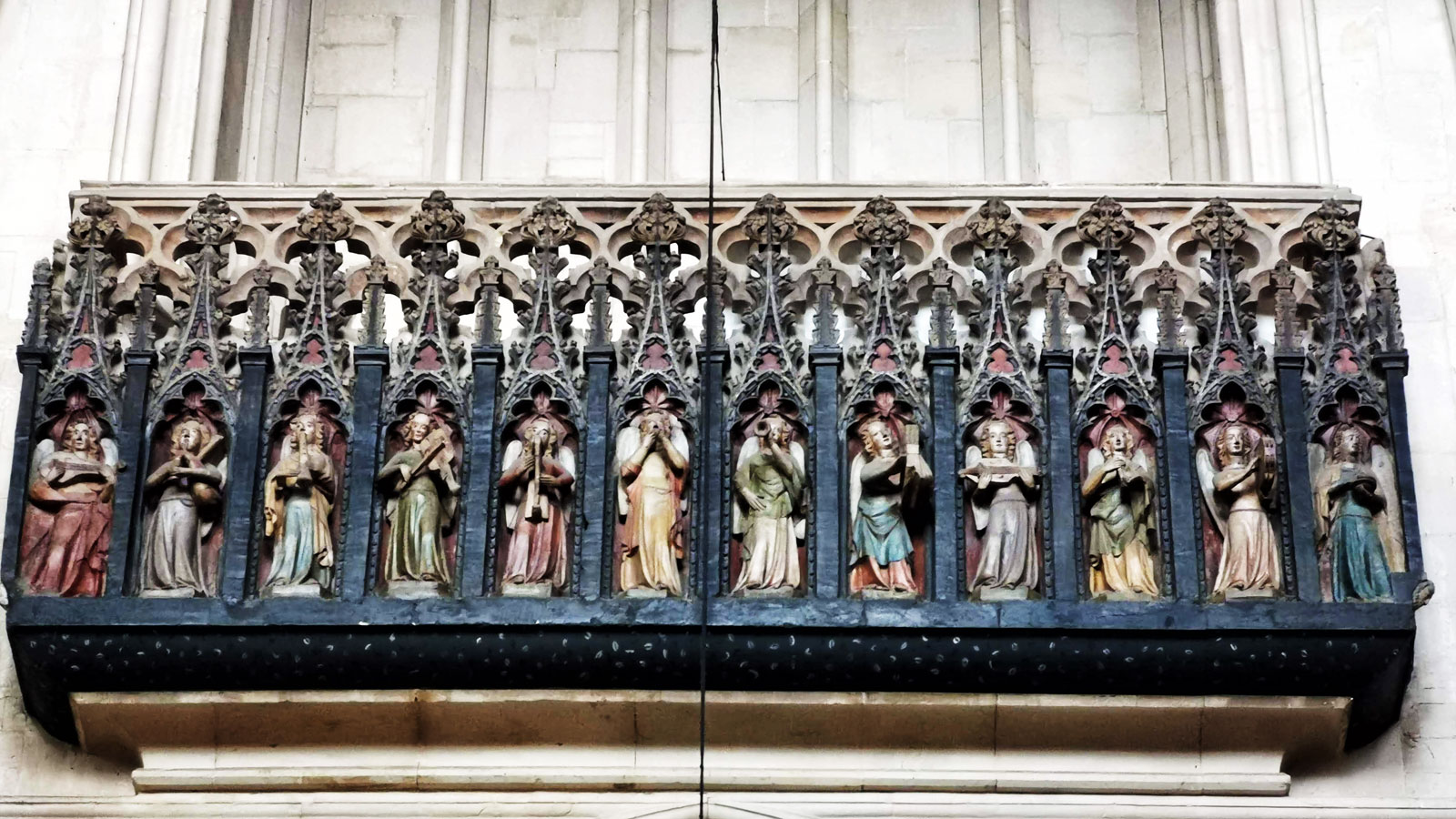
The Minstrels Gallery

Overlooking the nave is this unique 14th century Minstrels’ Gallery. The purpose of it is uncertain; its name derives from the 12 angels along the front, all playing medieval musical instruments including the cittern, bagpipe, hautboy, crwth, harp, trumpet, organ, guitar, tambourine and cymbals.
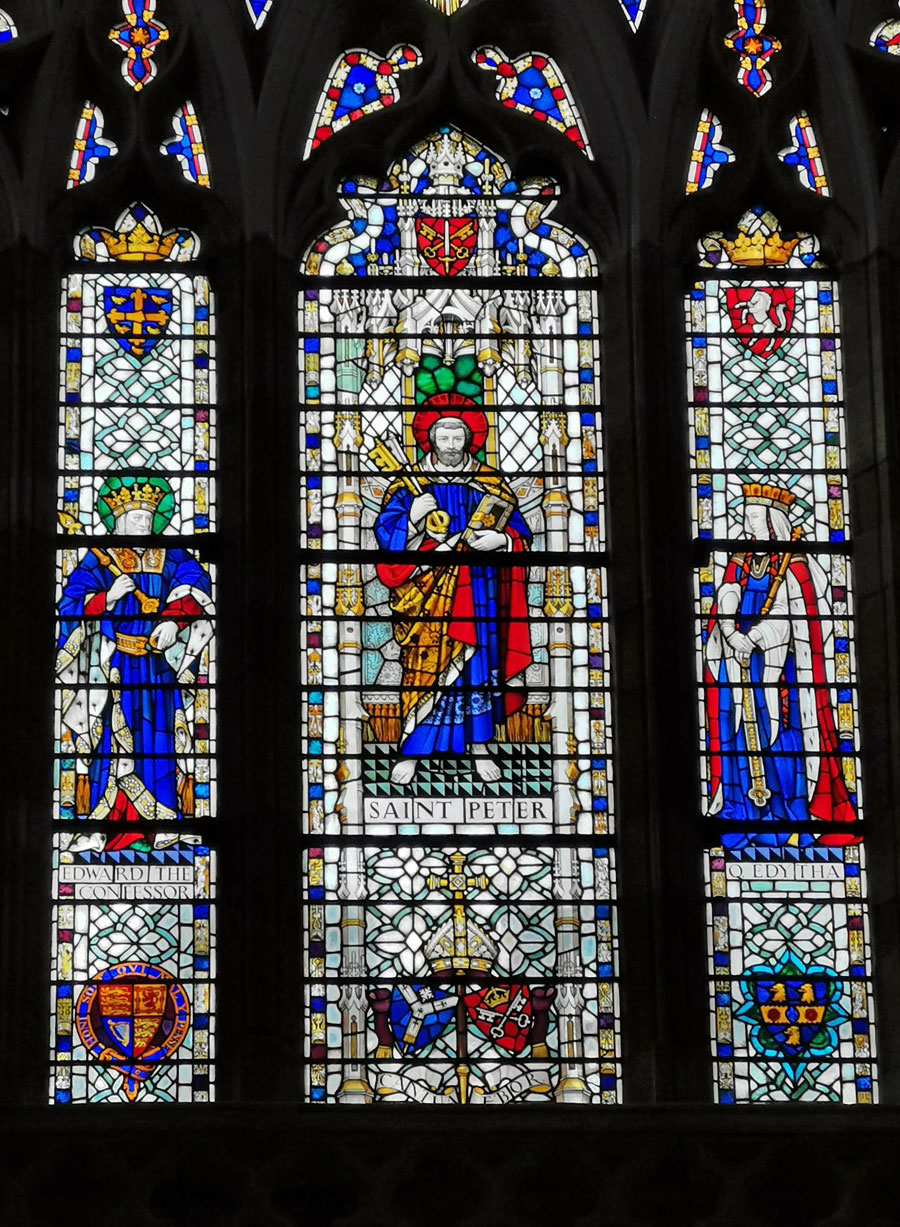
Part of the great west window, by Reginald Bell and Michael Farrar-Bell c.1950 depicts figures from the history of the cathedral. The central figure of St Peter is flanked by the cathedral’s founder, King Edward the Confessor and his queen.
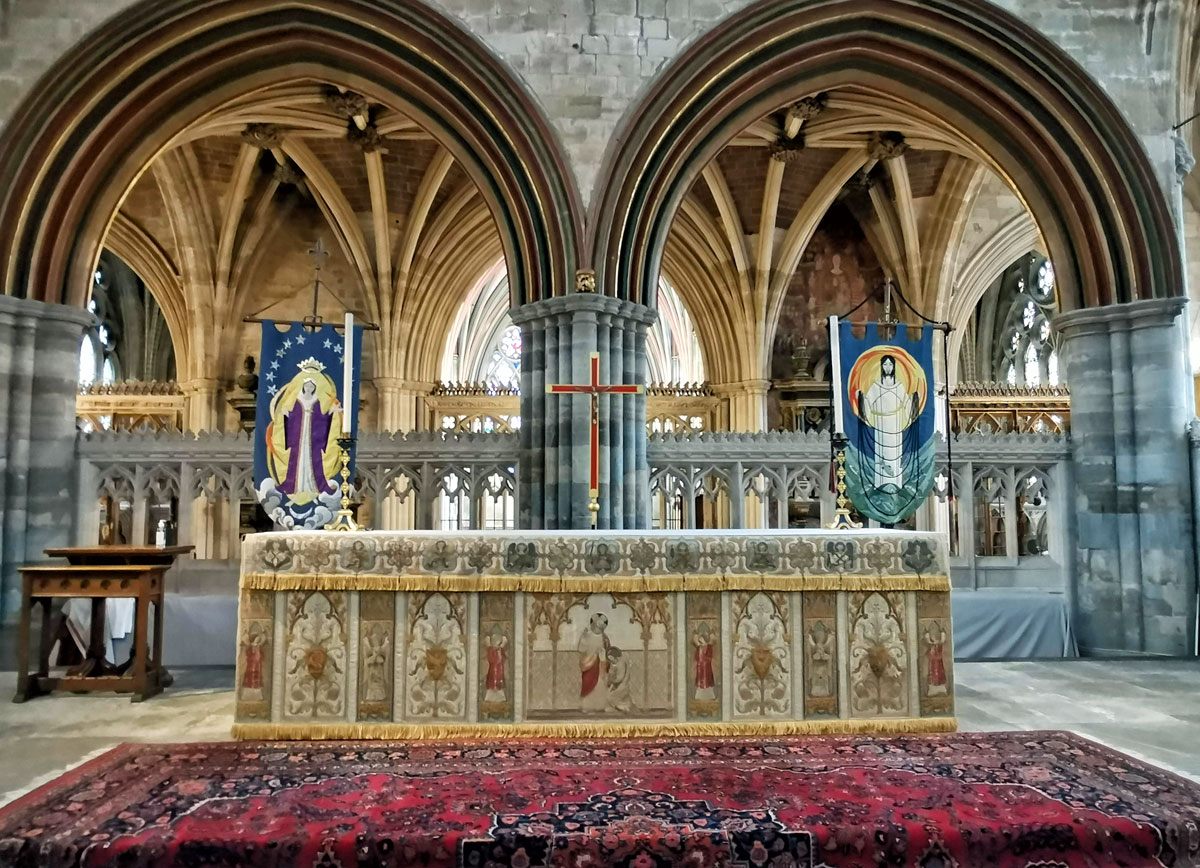
High Altar and double arches below the Great East Window.
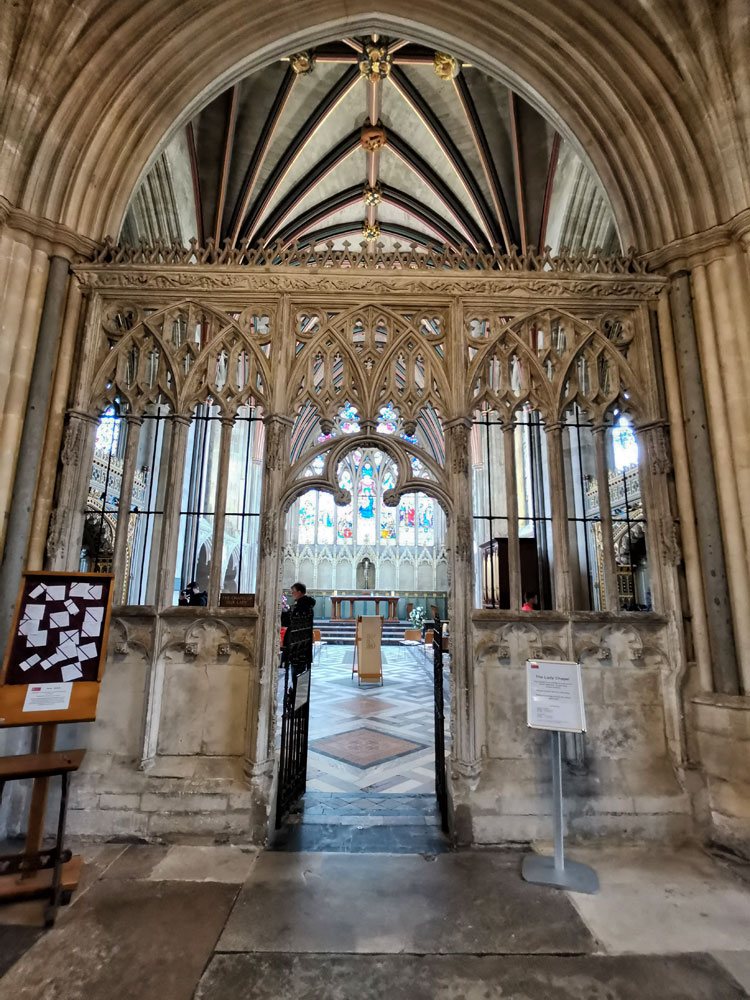
The Lady Chapel
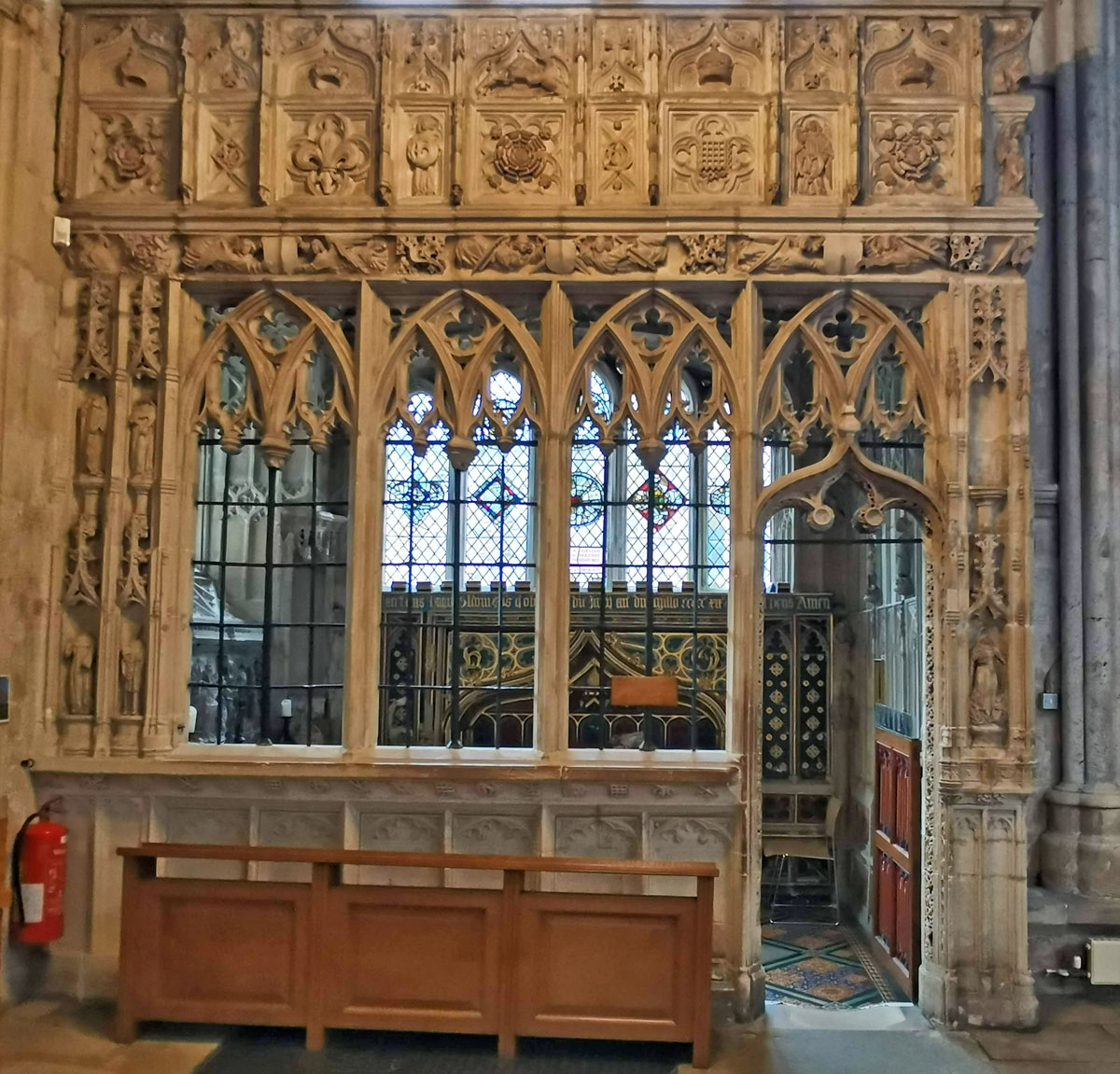
The Chapel of St Saviour and St Boniface or Bishop Oldham’s Chantry.

As is the norm in any cathedral you will find a number of tombs.

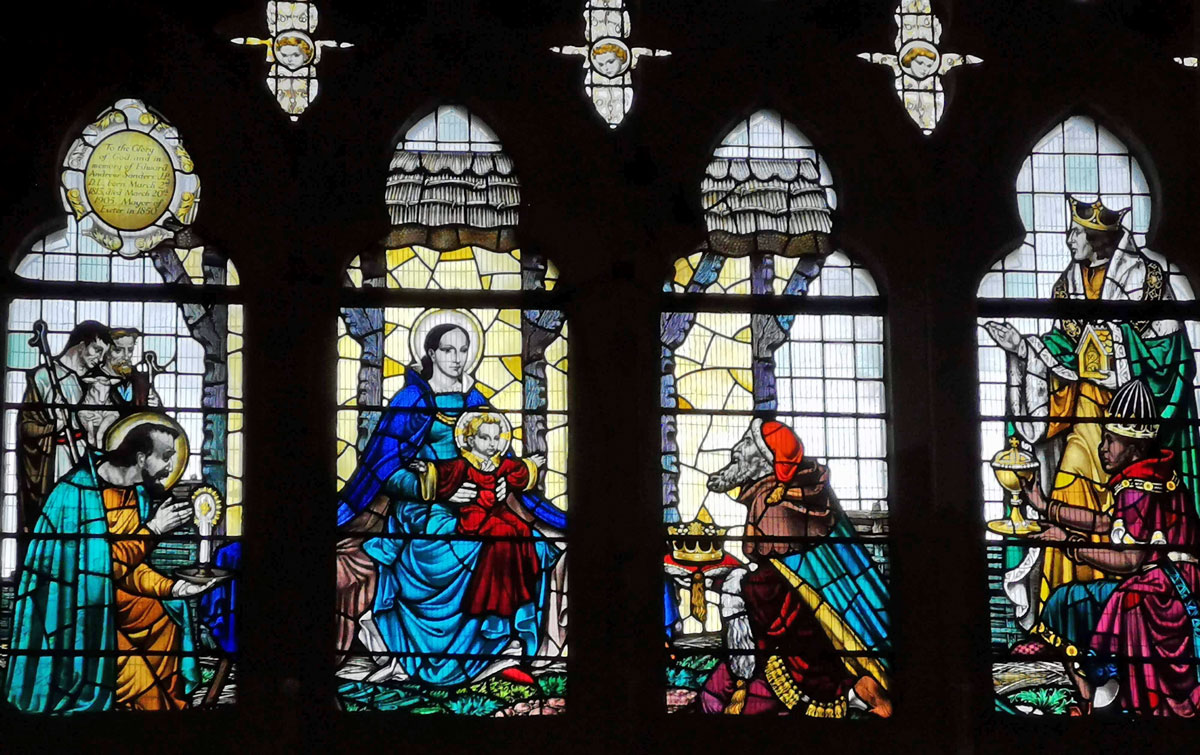
Adoration of the Magi

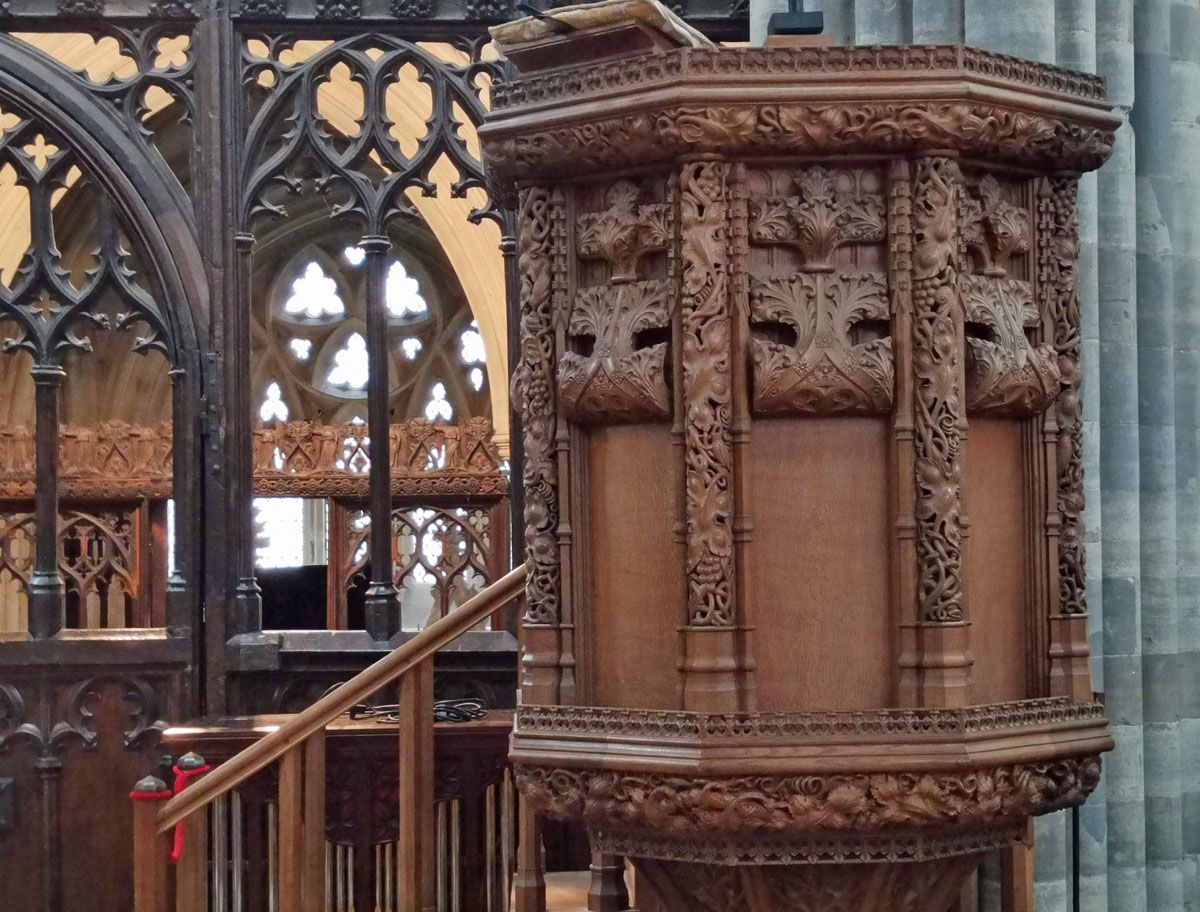
Stories of Christian martyrdom through the ages are depicted in the stone panels of the 19th century Martyrs’ Pulpit. Designed 1876-7 by George Gilbert Scott, it shows the martyrdoms of St Alban, St Boniface and the Victorian missionary bishop, John Coleridge Patteson.

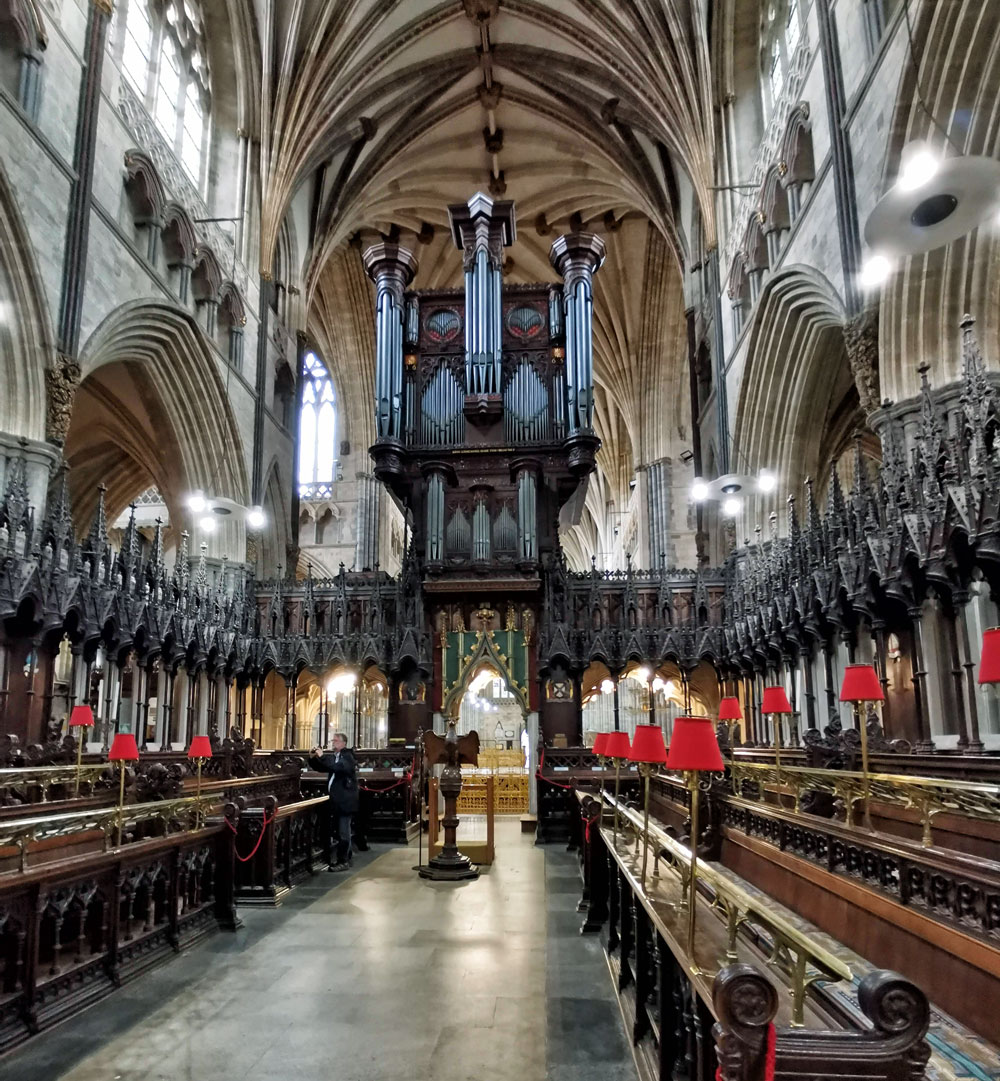
Choir Stalls by Sir George Gilbert Scott completed in 1876, with John Loosemore’s 1665 organ case
The wooden pulpit in the quire

The Quire stalls were installed by Sir George Gilbert Scott in 1876 during a 19th century restoration of the cathedral. It is uncertain when the medieval choir stalls were removed,  but the seats in the back row incorporate one of the oldest sets of misericords. Unfortunately they are not in good condition and only one is on display.
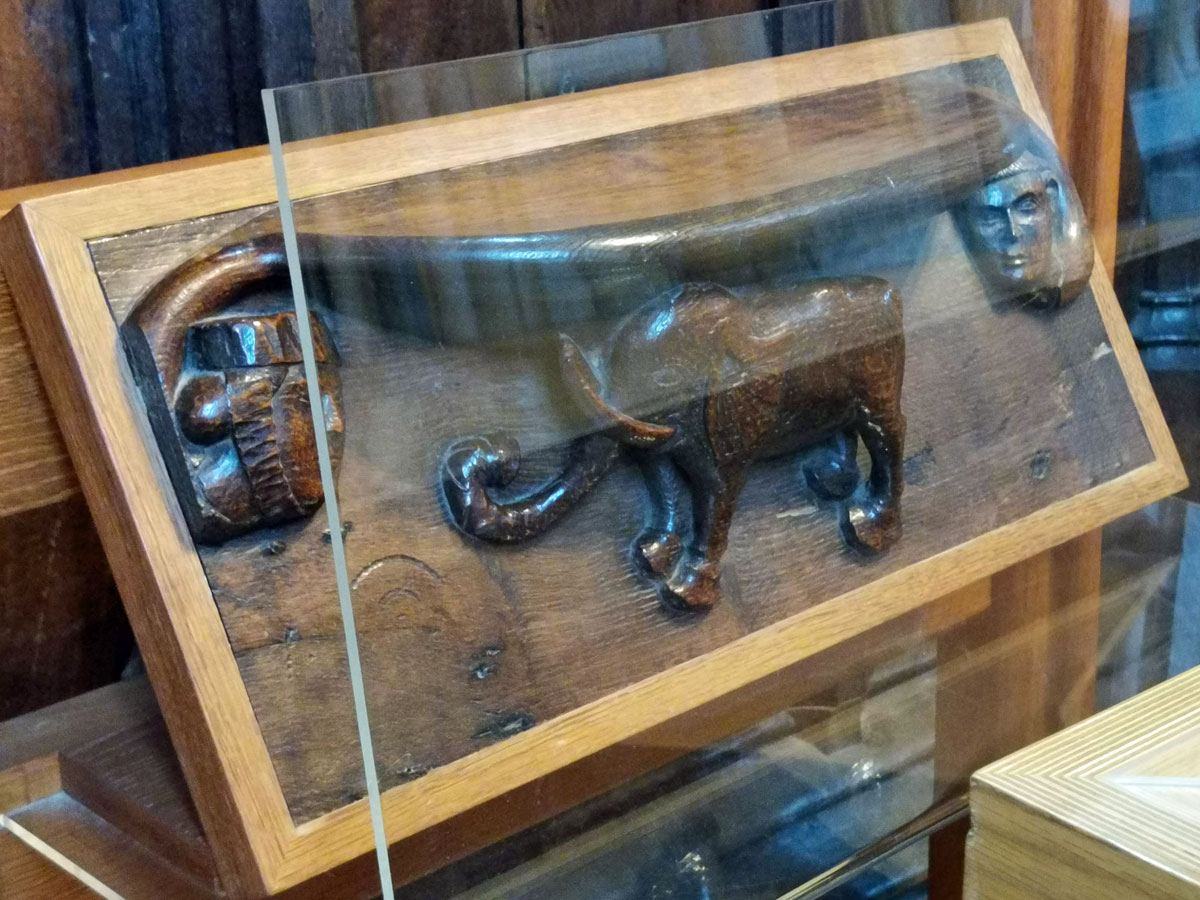
The Elephant Misericord

The Elephant Misericord is the most famous of a complete set surviving from the 13th century under the Prebendaries’ stalls. The carving may have been done from a drawing of the animal given as a present to Henry III
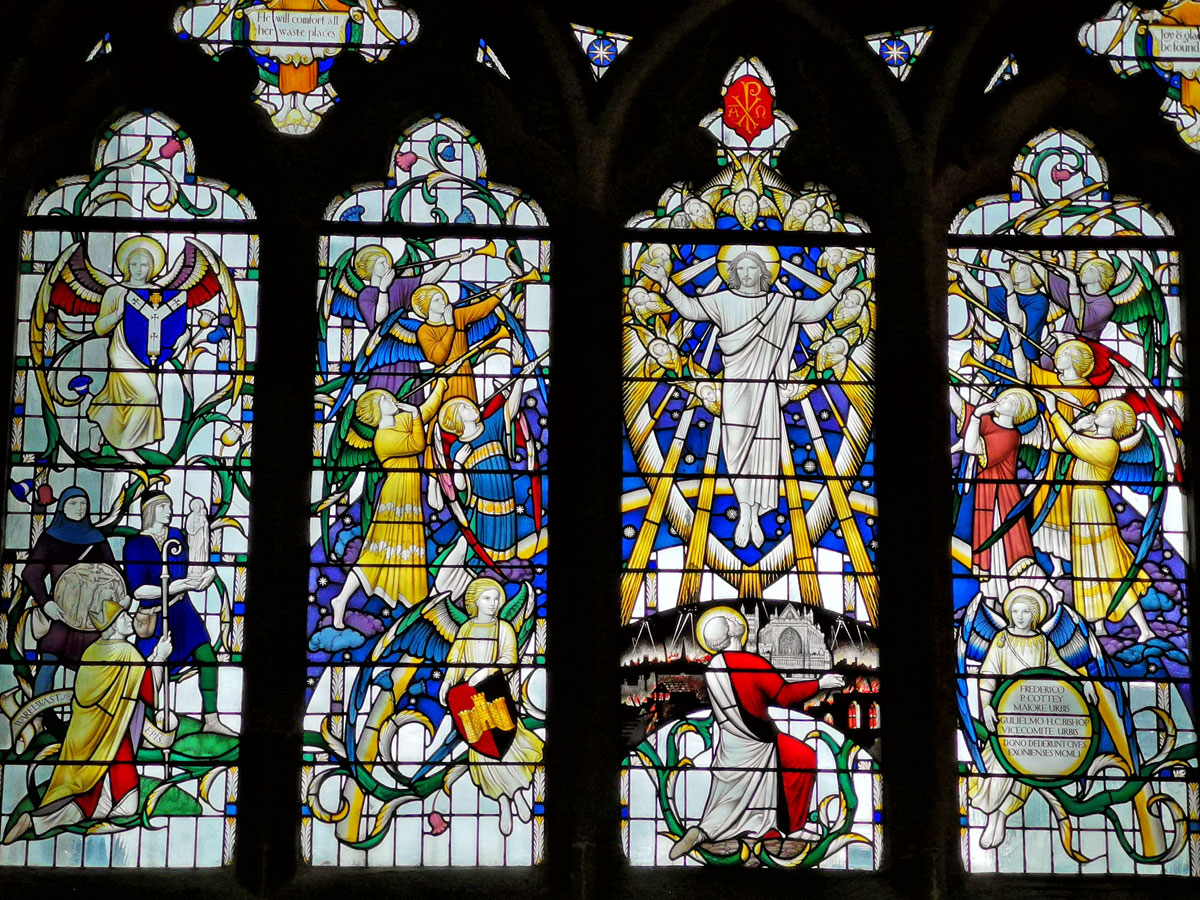
Window by Christopher Webb (1886-1966) commemorating the bombing of Exeter in May 1942.

The clock in the north tower is an early attempt to represent the relationship of the earth, moon and sun.

A hole at the bottom of the tower door in the north transept of Exeter Cathedral for the Cathedral Cat. The cat kept down the population of rats and mice and had a recognised position as a member of staff, with salary of 13d a quarter or 4s. 4d. a year. (s = shillling and d = penny)
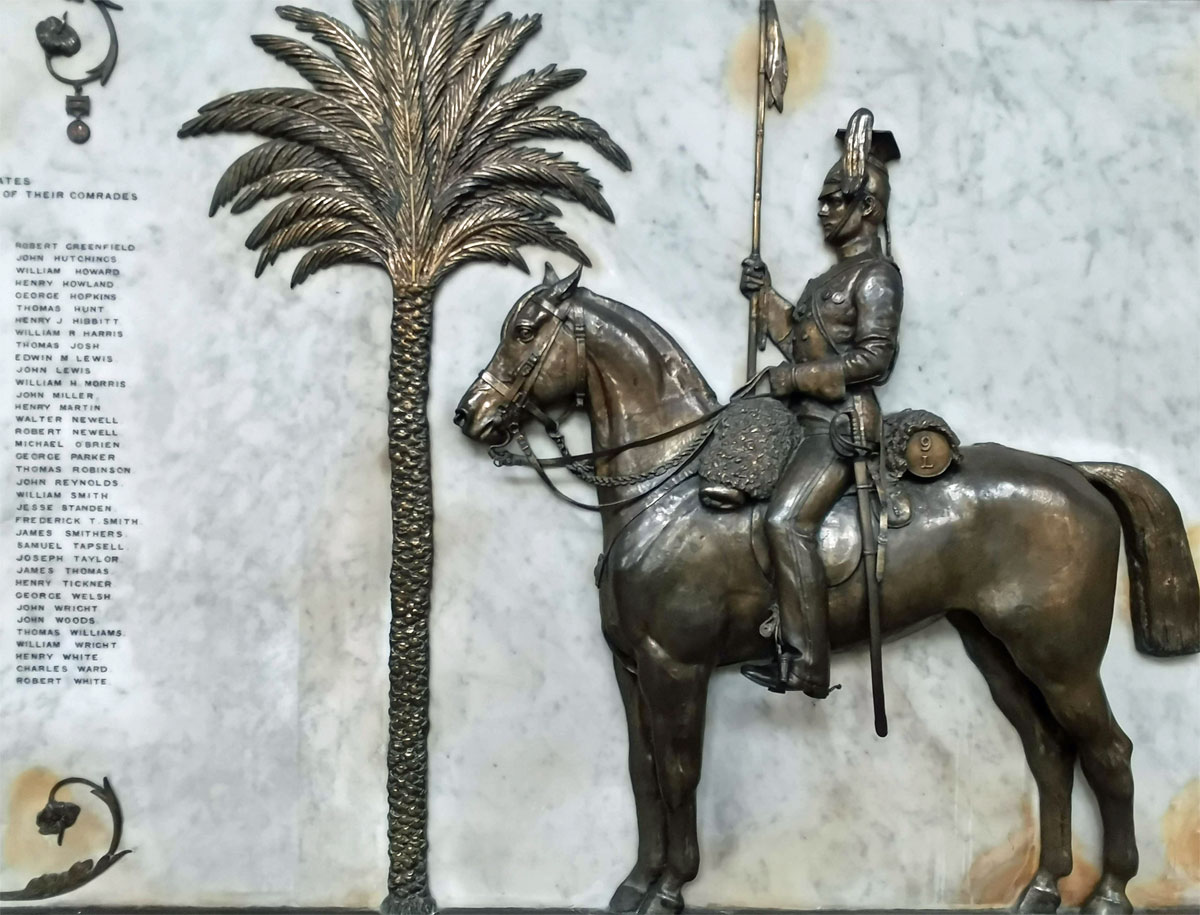
Memorial to the men of the 9th Queen’s Royal Lancers who died in India

Also in the Nave is a memorial to the Polish 307 Squadron night-fighters who fought the Luftwaffe over the skies in Britain. On 15th November 1942 they helped protect Exeter from potential destruction. It was dedicated on the 15th November 2017, the 75th anniversary of the day that the squadron presented the city with the Polish flag as a sign of international co-operation.

Outside the cathedral, situated on the Exeter Cathedral Green, a statue of Richard Hooker dates from 1907 and is sculpted from white Pentilicon marble from Greece. Born in Heavitree in 1554, Hooker became an Anglican priest and influential theologian. Hooker was exceptional in promoting religious tolerance.
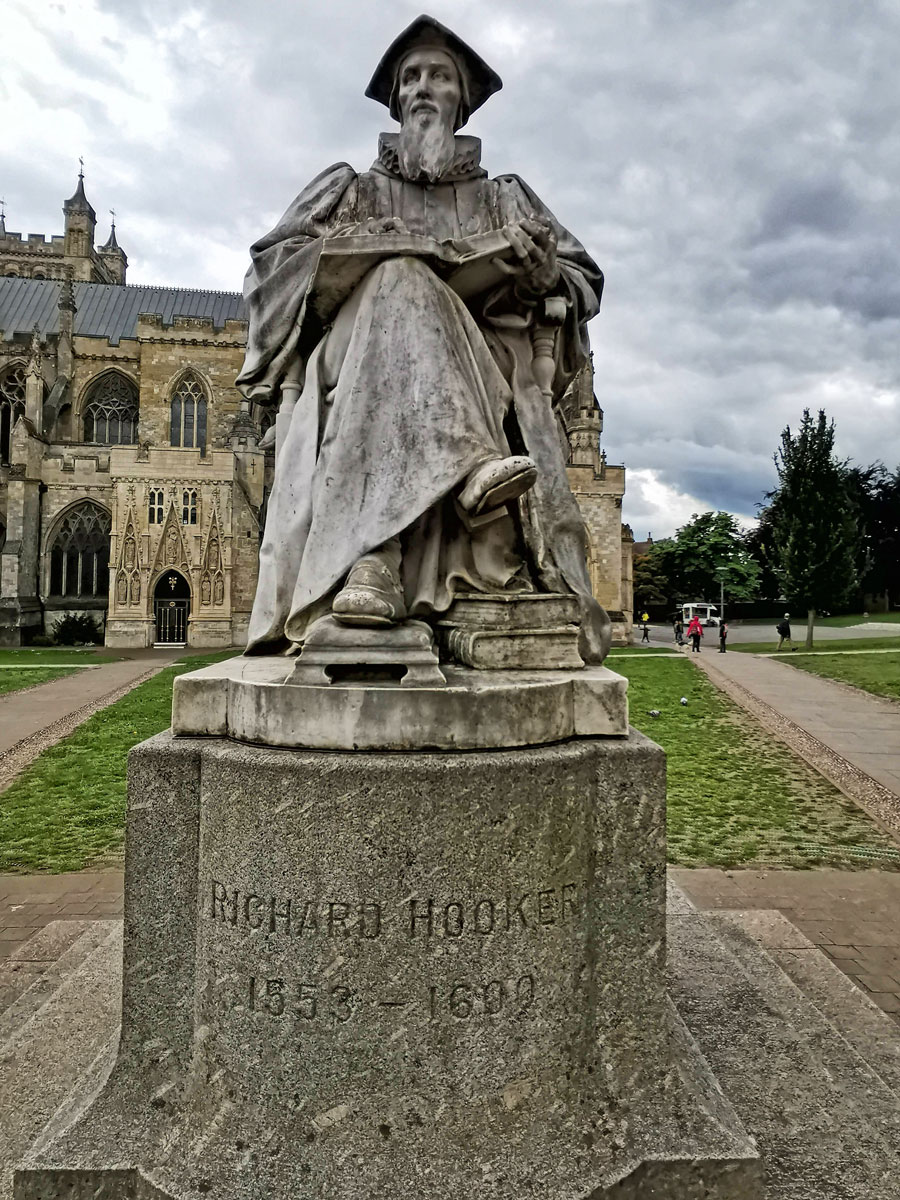
Richard Hooker

If the world should lose her qualities. If the celestial spheres should forget their wonted motions. If nature should intermit her course and leave altogether the observations of her own laws. If the moon should wander from her beaten way, the times and seasons blend themselves by disordered and confused mixture, what shall become of man who sees not plainly that obedience unto the law of nature is the stay of the whole world?

The quotation, from Hooker’s masterwork, Of The Laws of Ecclesiastical Politie
Postcards from Around the World
Leaf Peeping in New England

[Leaf peeping is an informal term in the United States and Canada for the activity in which people travel to view and photograph the fall foliage in areas where leaves change colours in autumn, particularly in northern New England]

When I was teaching it meant holidays could only be taken during the school holidays when it was more expensive and busy. And I couldn’t tag on to the OH’s conferences either. Which is why during one October half term we decided to do a fly drive holiday to the eastern side of the USA and do a spot of leaf peeping.

We began our trip in Boston where we stayed in a city hotel for a couple of nights before returning to the airport to pick up the hire car.

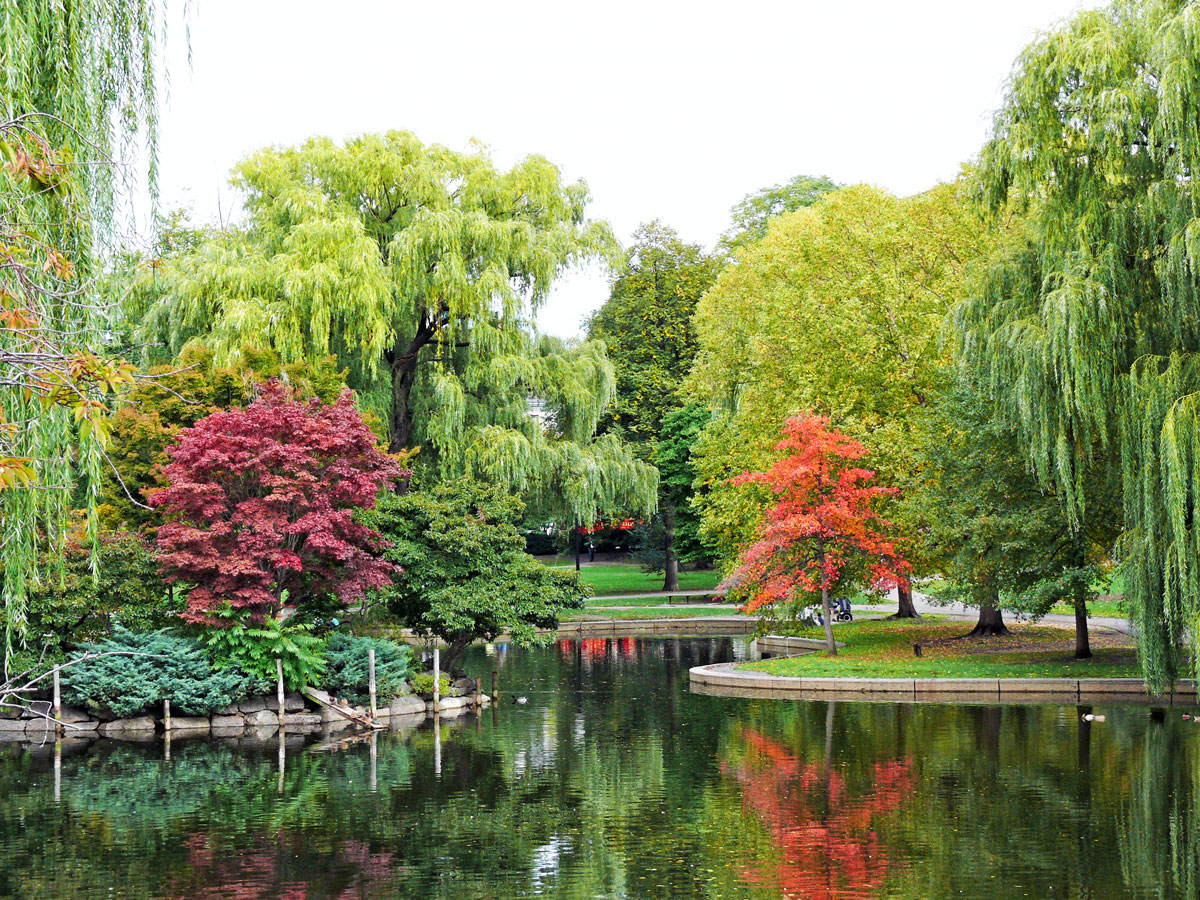
Public Garden

We arrived late on the Friday – just before midnight and were shown to a very second rate room as although we had specified a late arrival it seemed our actual room had been given to someone else.  We were moved to a much better room in the morning and after breakfast we headed out to explore the city, beginning with the famous Public Garden where we had hoped to see the Swan Boats, but they were closed for the season, and we completely missed the ‘Make Way for Ducklings’ sculptures. I remember reading the book of the same name by Robert McCloskey to my daughter when she was a child.

Public Gardens
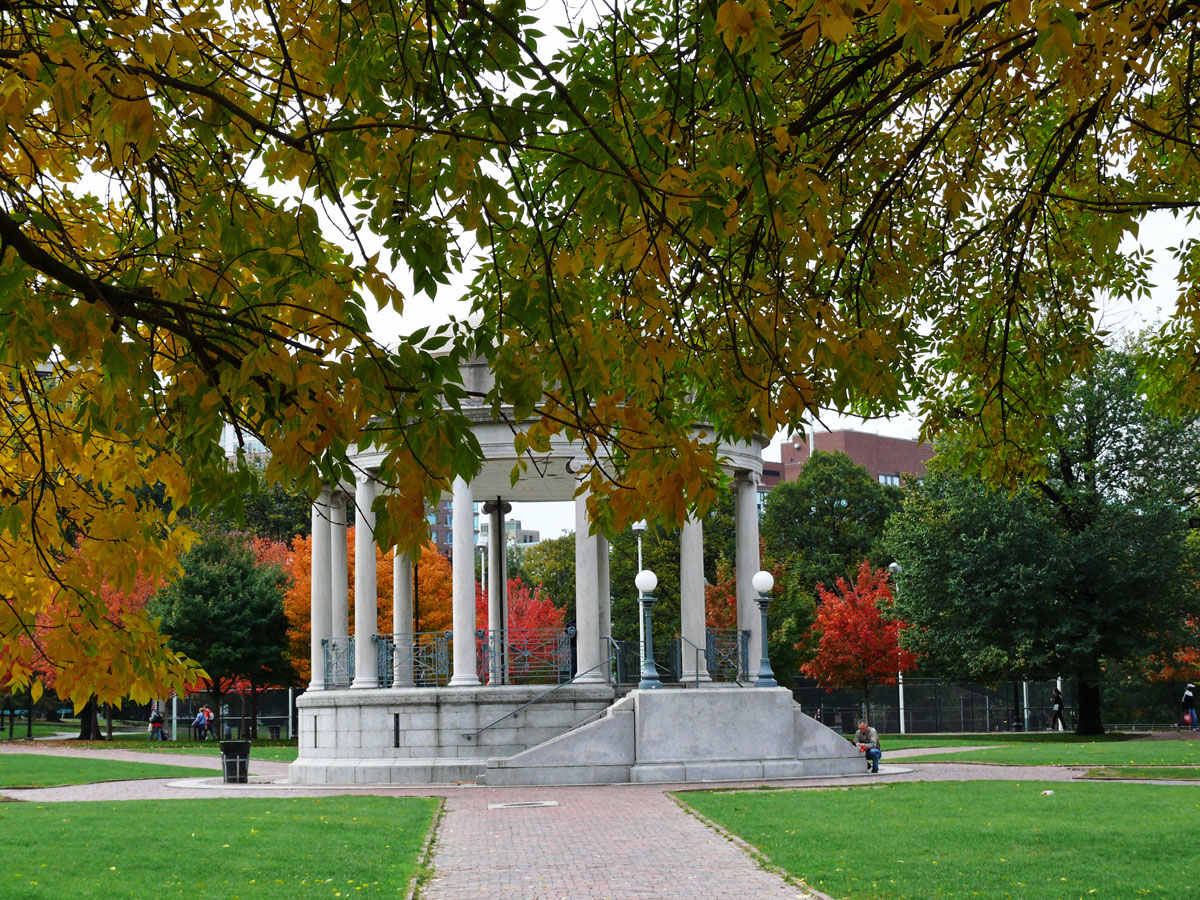
The Parkman Bandstand. Named for George F. Parkman, the bandstand was constructed following his death in 1908, in honour of a $5 million donation he had willed for the care of the Boston Common and other city parks.
Beacon Hill

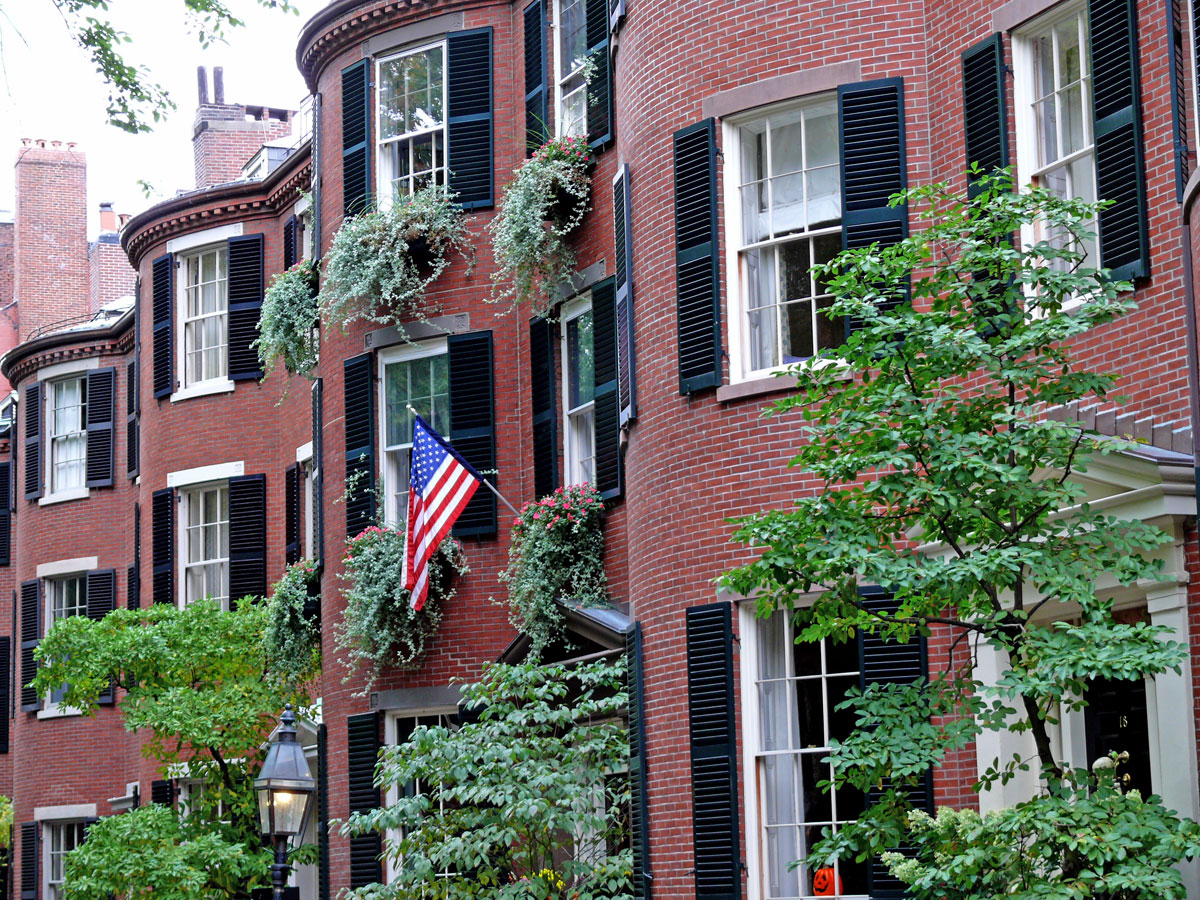
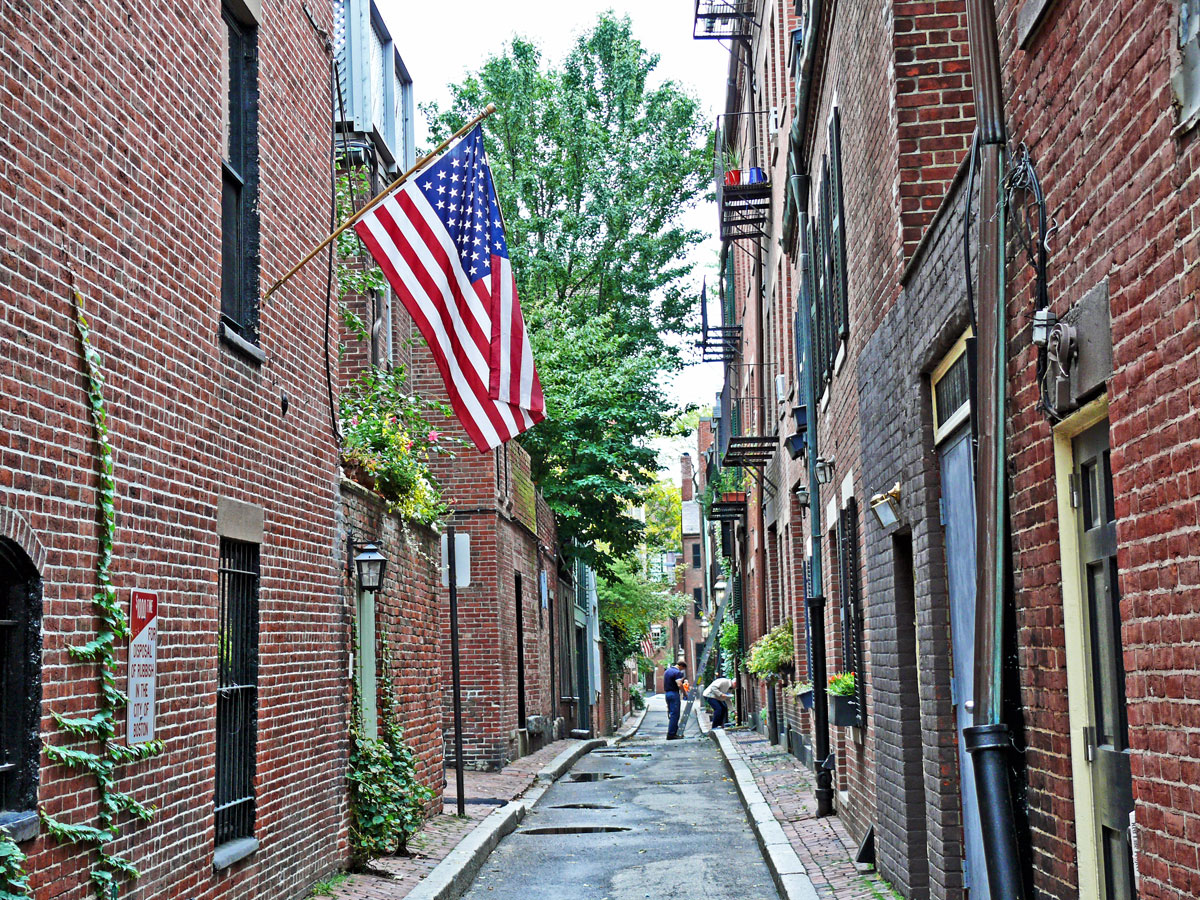
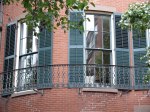
From there we wandered around the Beacon Hill area, one of Boston’s oldest neighbourhoods and  full of charming, narrow cobblestone streets, federal style row houses and gaslit streetlamps.

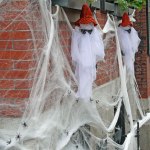
And as our visit was shortly before Halloween it was decorated with pumpkins and skeletons and all things ghostly!

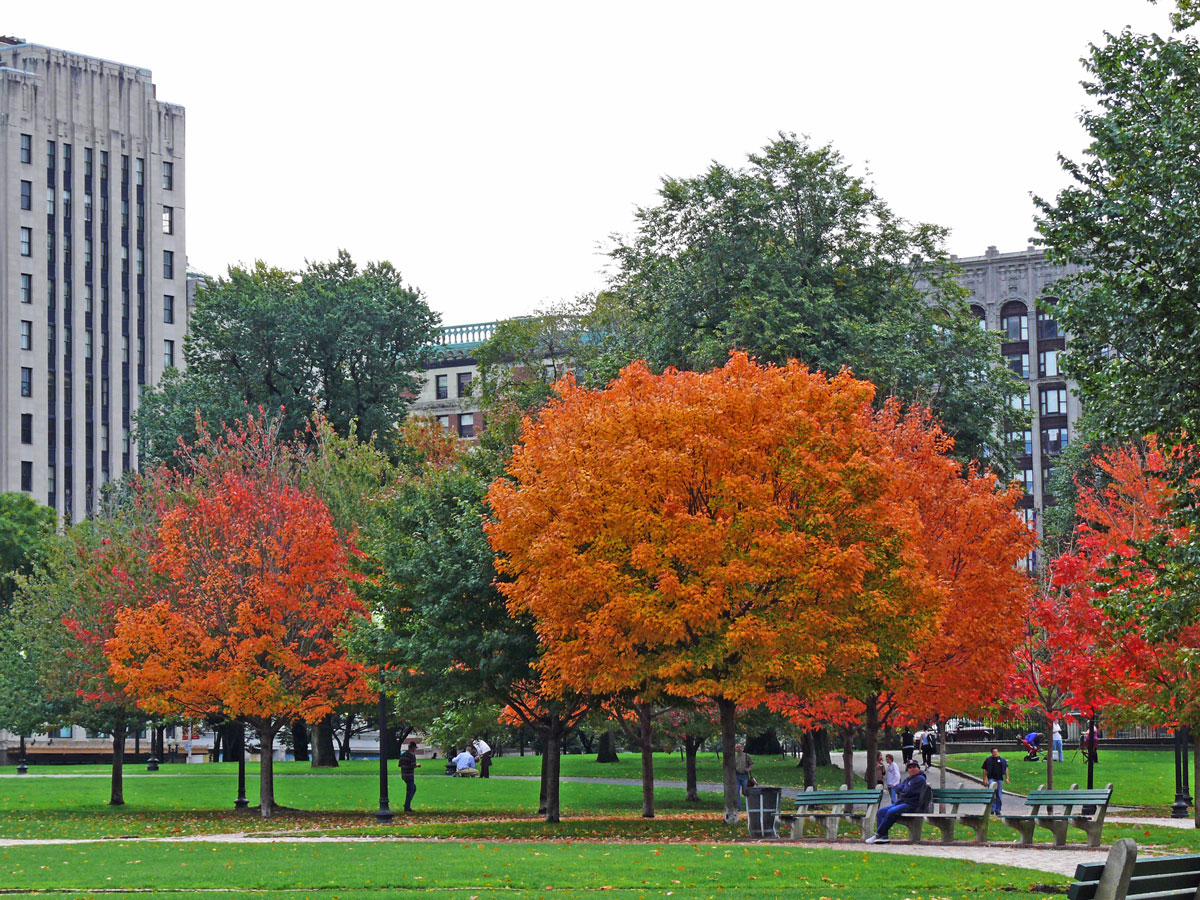
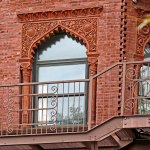
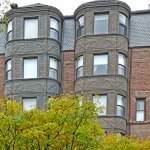
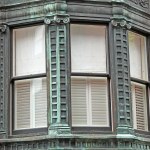
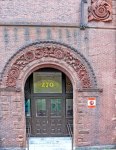
It takes time to walk a block in Boston, there is so much architectural detail to see. There are a lot of tree-lined streets and parks. And cars.

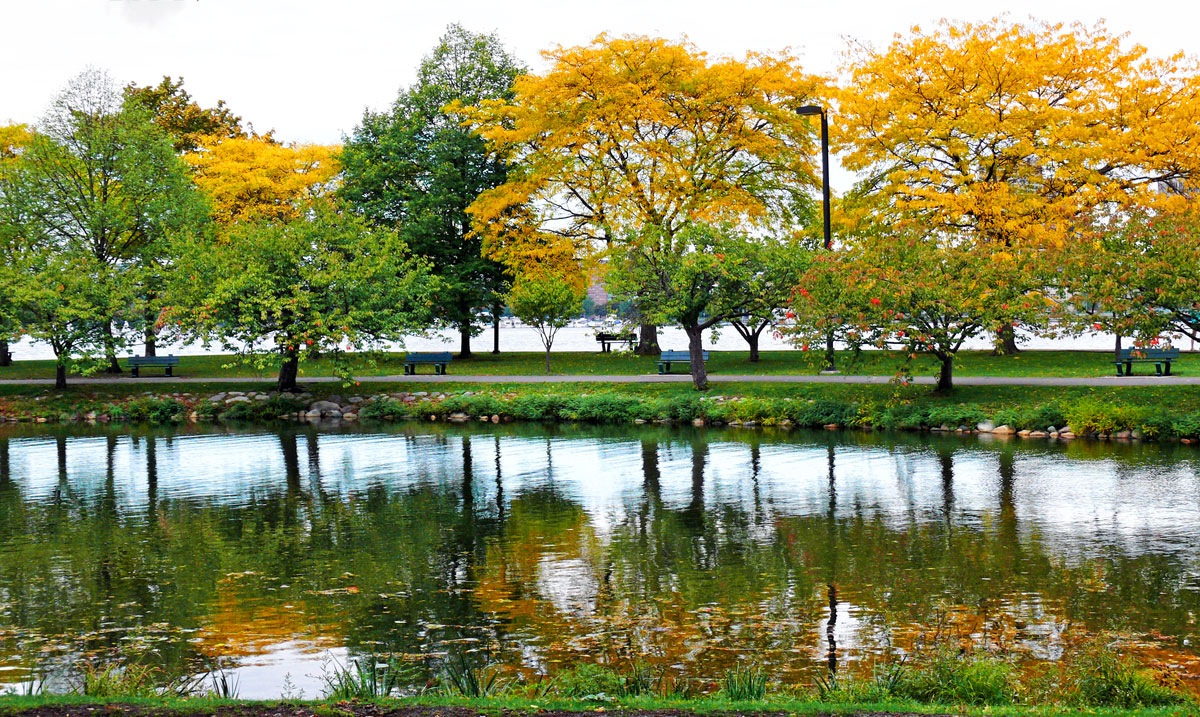
Storrow Lagoon (on the Charles River)

After dinner we set off to find the Old State House and wander down to the harbour where we followed the harbour walk as far as the Boston Tea Party museum, which was closed, before heading back to the hotel.

A lot of this will have changed by now (this visit was in 2007) I know that the Northern Avenue bridge was in danger of being demolished along with the rundown Tender’s House next to it. The bridge is unique in that it is a rotating swing bridge built in 1908.

(It was closed in December 2014. Apparently there were plans to reconstruct it as a pedestrian/cycle only bridge, but because of Covid the project came to a halt in 2020. The Tender’s House was partially demolished in 2008. The boarded up and rambling structure served for nearly a century as a home for the keepers of the rotating swing bridge – who had to be available, night and day, to let ships through. As one local said “This is demolition by neglect” )

Boston is an interesting city, though I would not like to drive in the city centre, even driving through the tunnels (a later post) was enough to give me nightmares.

Postcards from Around the World

Architecture of the Gaslamp Quarter San Diego

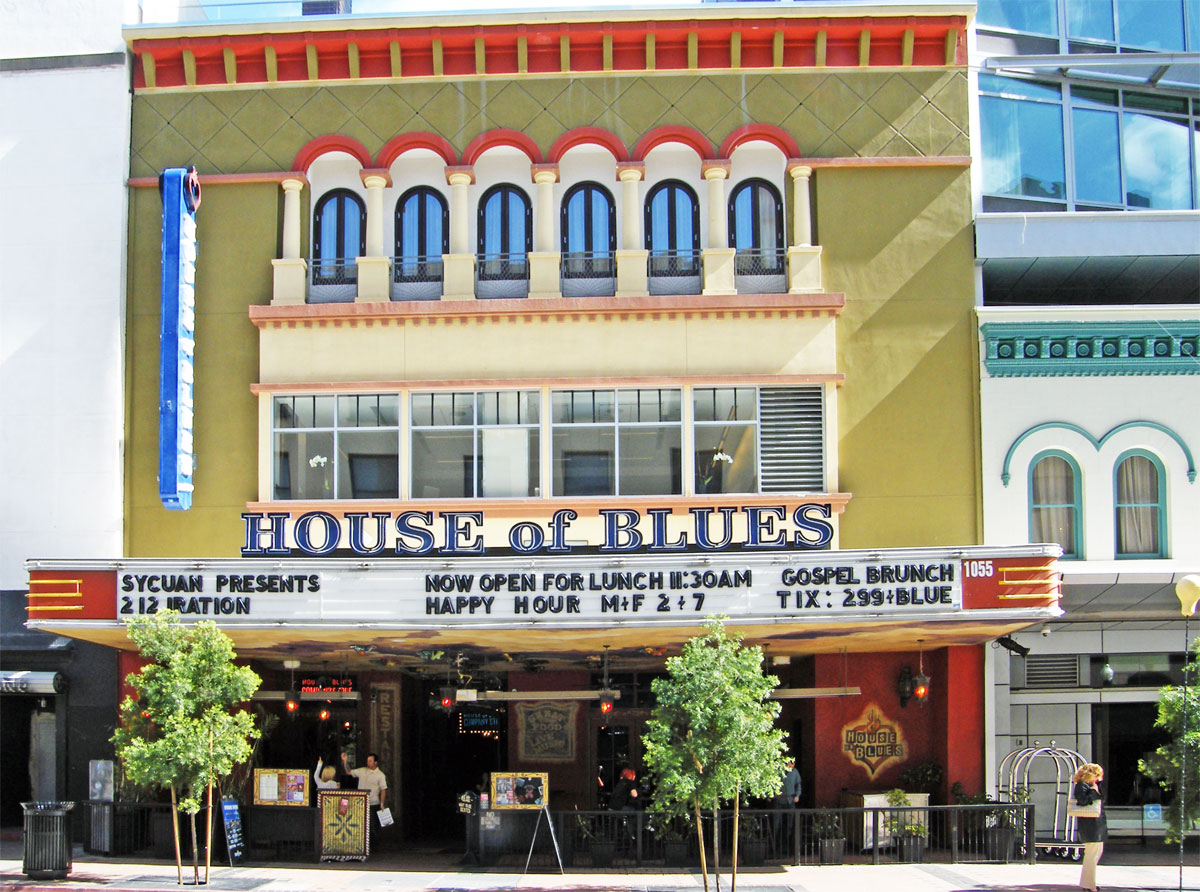
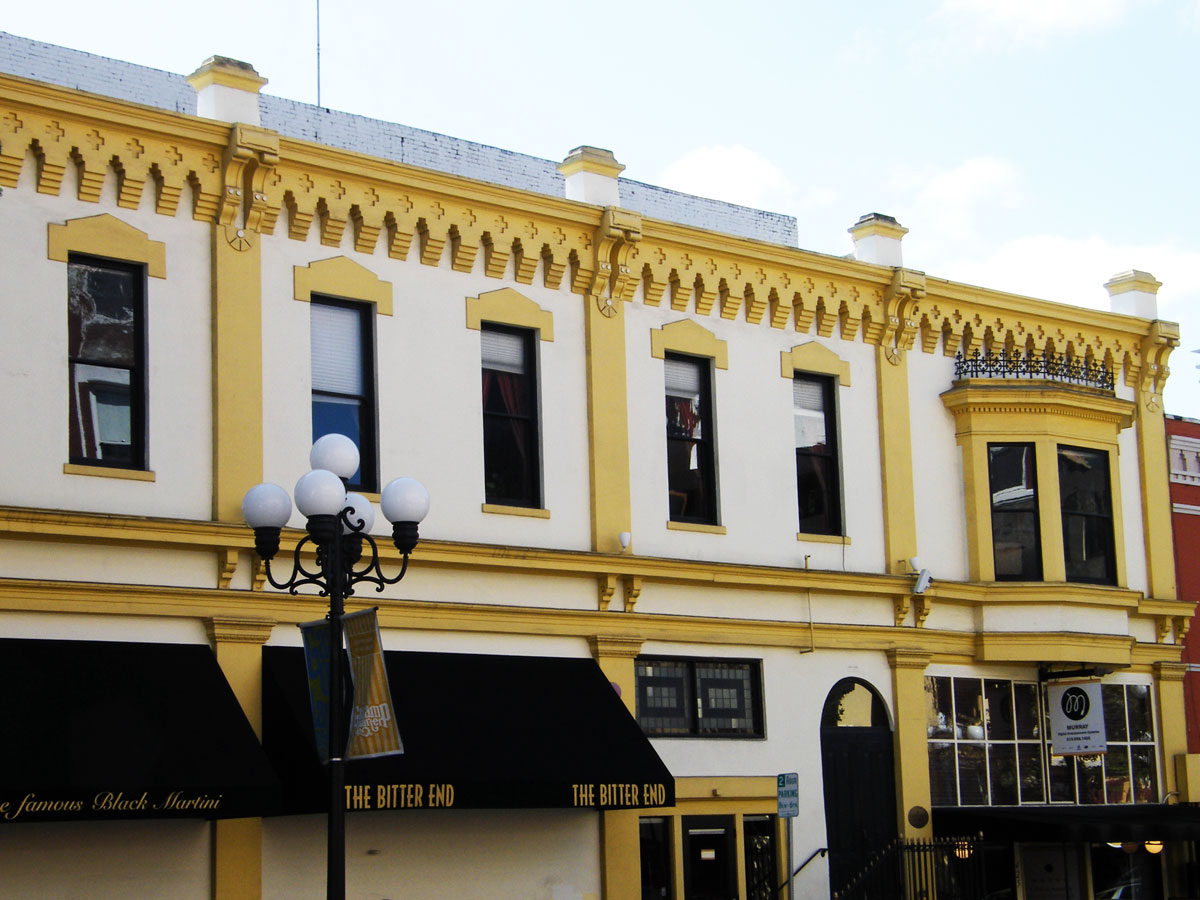
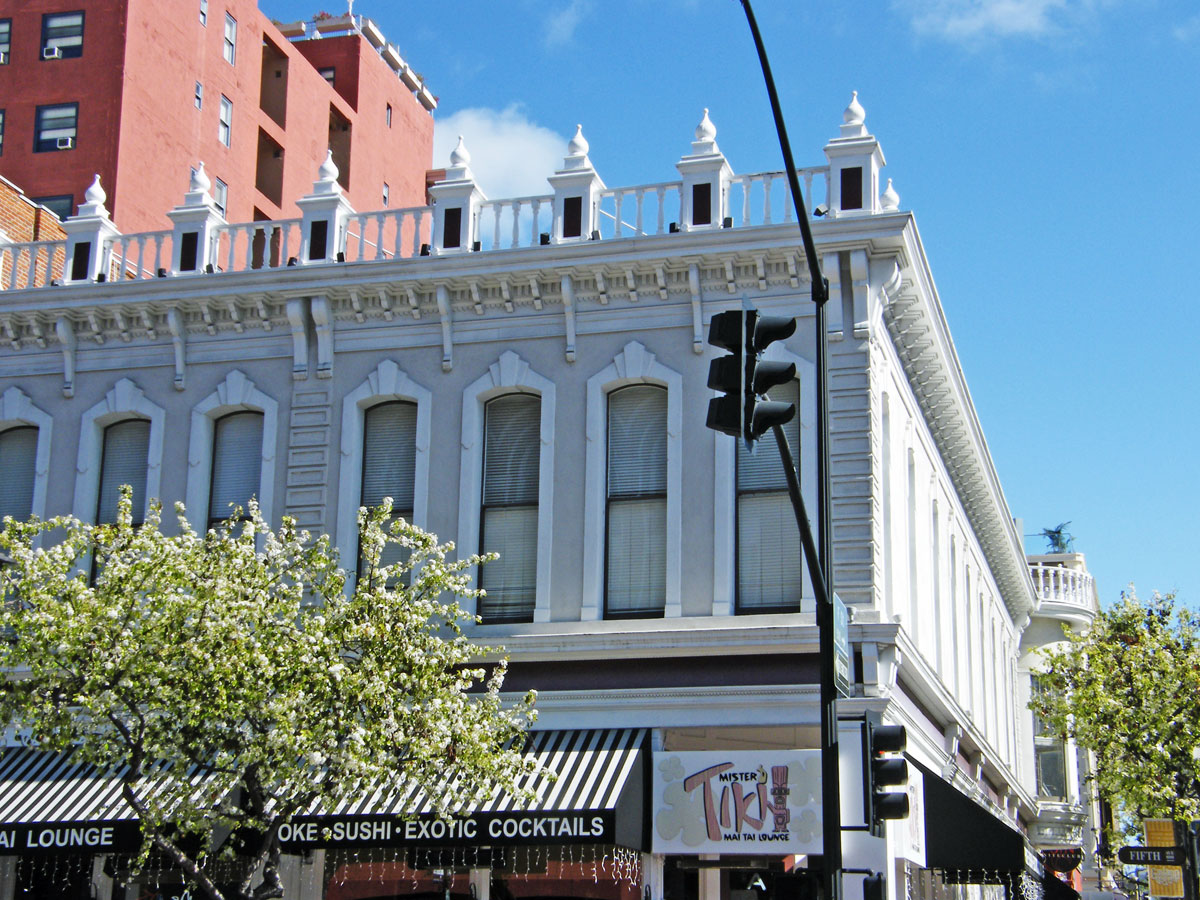
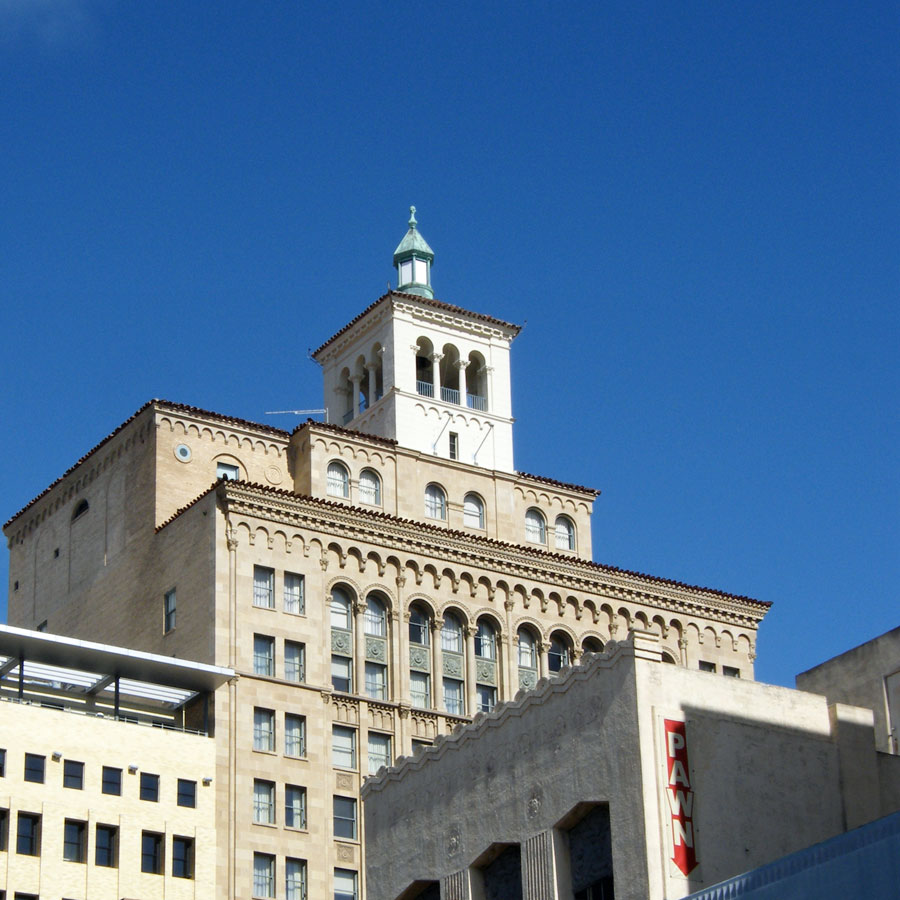
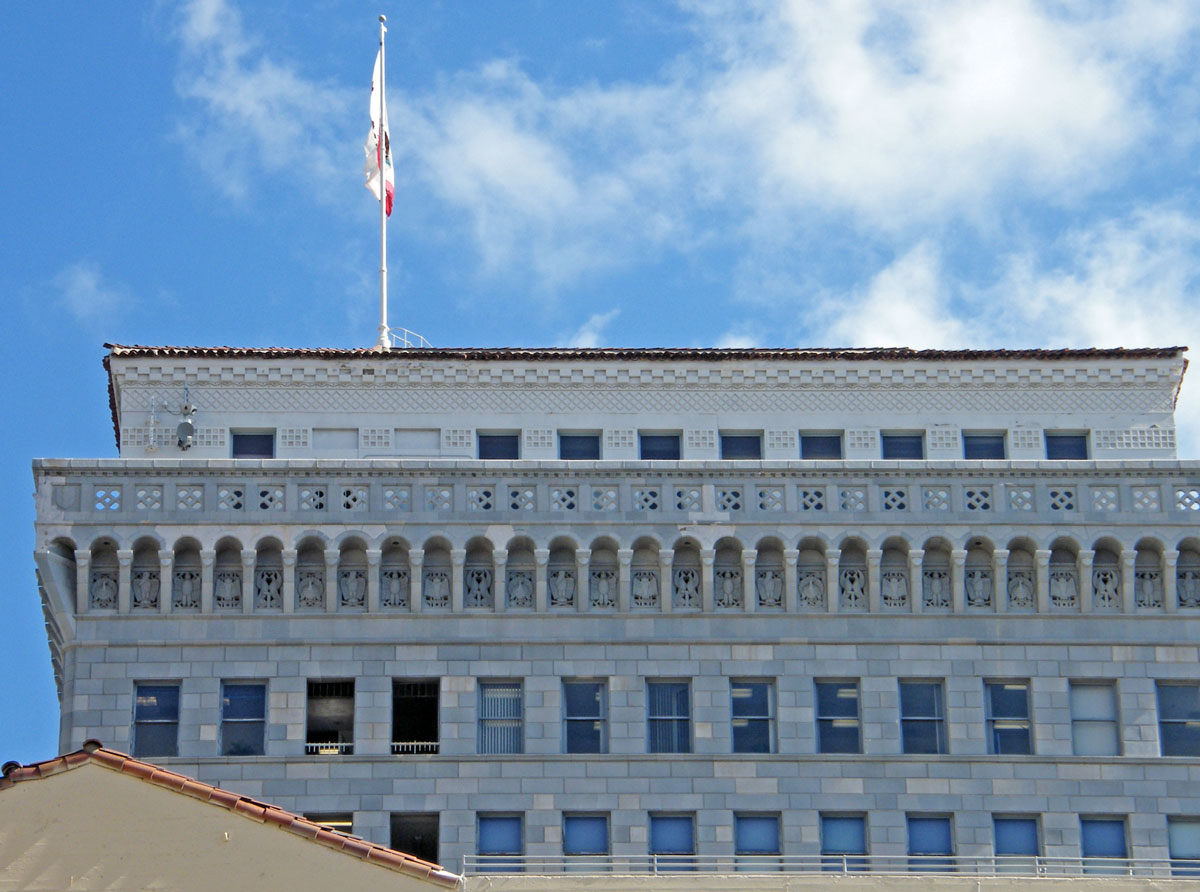
Another interesting district in San Diego is the Gaslamp Quarter. In the 1860s, the area was known as New Town, in contrast to Old Town, the original Spanish colonial settlement. San Diego has tried hard to protect and preserve the architecture of times gone by and the district features one of the largest collections of Victorian Era commercial architecture in the western US, comprising 94 historic buildings, many of which are in still use as restaurants, shops, entertainment venues, and nightclubs.

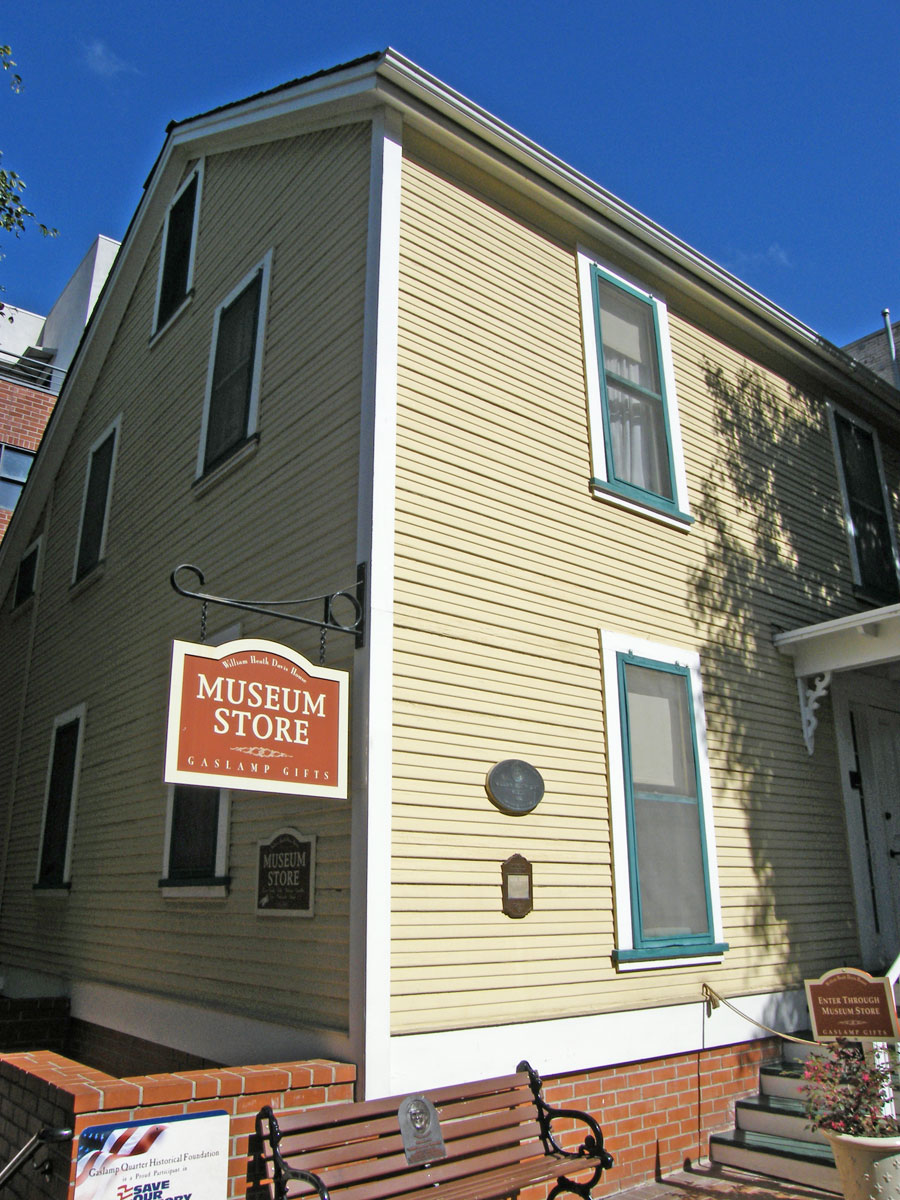
My first stop was the Gaslamp Museum at the Davis-Horton House which depicts the story of the downtown area’s early settlers. The Davis House (1850)is the oldest surviving structure from San Diego’s New Town. It is an example of a prefabricated, “salt-box” style home. Built on the East Coast, shipped around Cape Horn, and assembled in San Diego.

Museum

Located across the street from the Gaslamp Museum is the Horton Grand Hotel, a restoration of two historic hotels – the Grand Horton and the Brooklyn-Kahle Saddlery – both built around 1887. The Grand Horton was of Italianate design and more of a luxury hotel, whereas the Brooklyn-Kahle Saddlery was a less formal hotel that combined Western/Cowboy and Victorian styles.

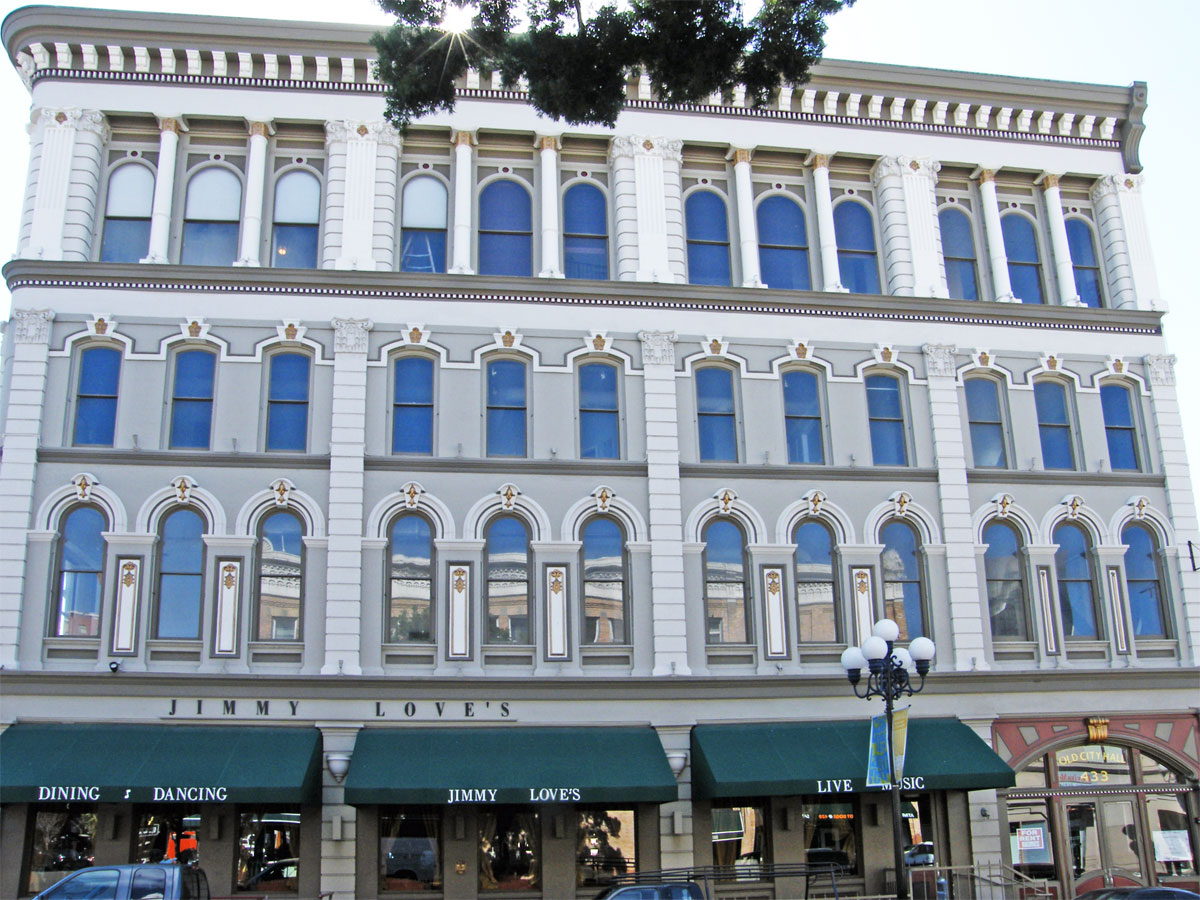
The Old City Hall is a beauty, a classic example of Florentine-Italianate architecture. Originally two-story structure was built in 1874, but 13 years later two more floors were added to accommodate the San Diego Public Library.

The Louis Bank of Commerce is a historic building which dates back to 1887. Reputed to be the most photographed building in the Gaslamp, this stately, four-story, twin-towered Queen Anne (Baroque Revival)-style structure possesses so many noteworthy and elaborate architectural features that it has been nicknamed “The Queen of the Gaslamp.”

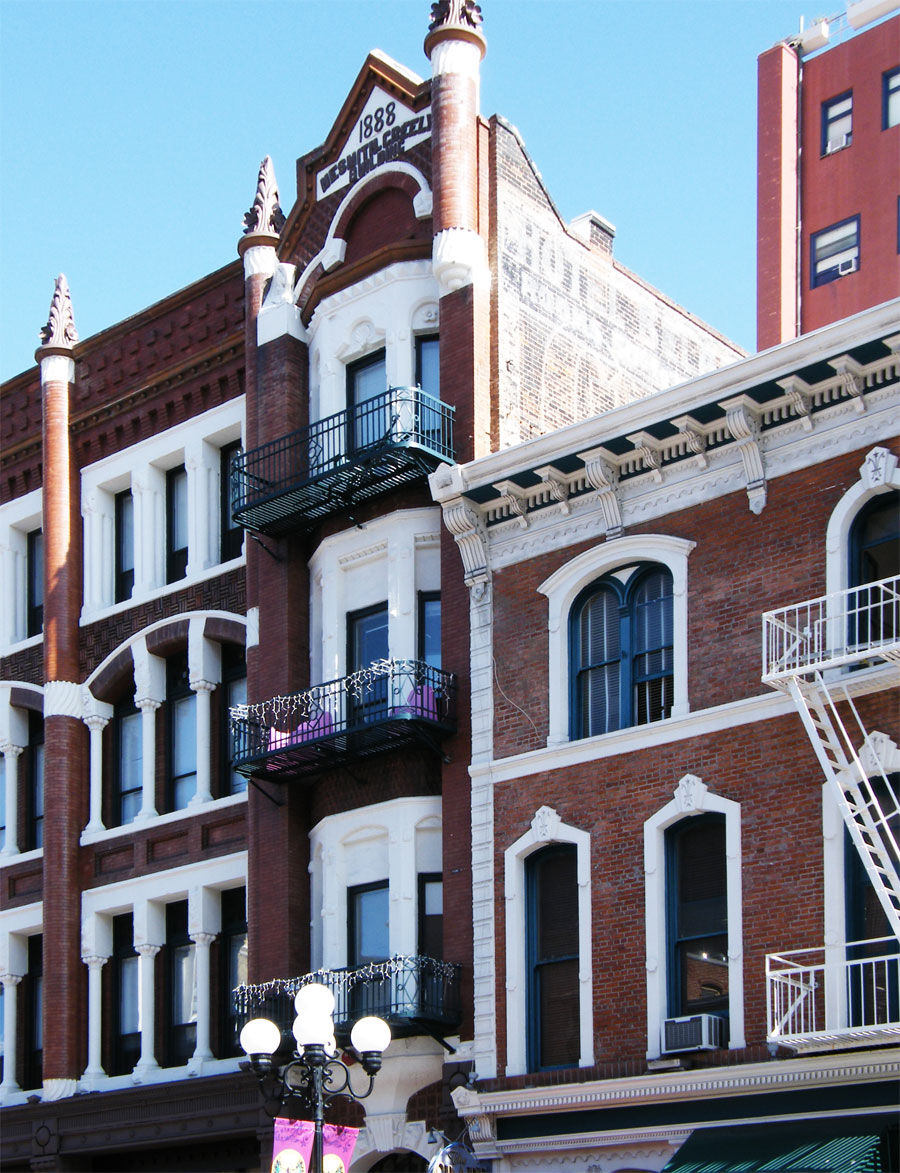
The Nesmith–Greely Building is a four-story historic structure located at 825 5th Avenue next to the Louis Bank of Commerce. Built in 1888 in the Romanesque Revival style the building is named for Thomas Nesmith, President of the Bank of San Diego, and Major General Adolphus Washington Greely. . The Hubbell building is on the right (1886) constructed in the Victorian style.

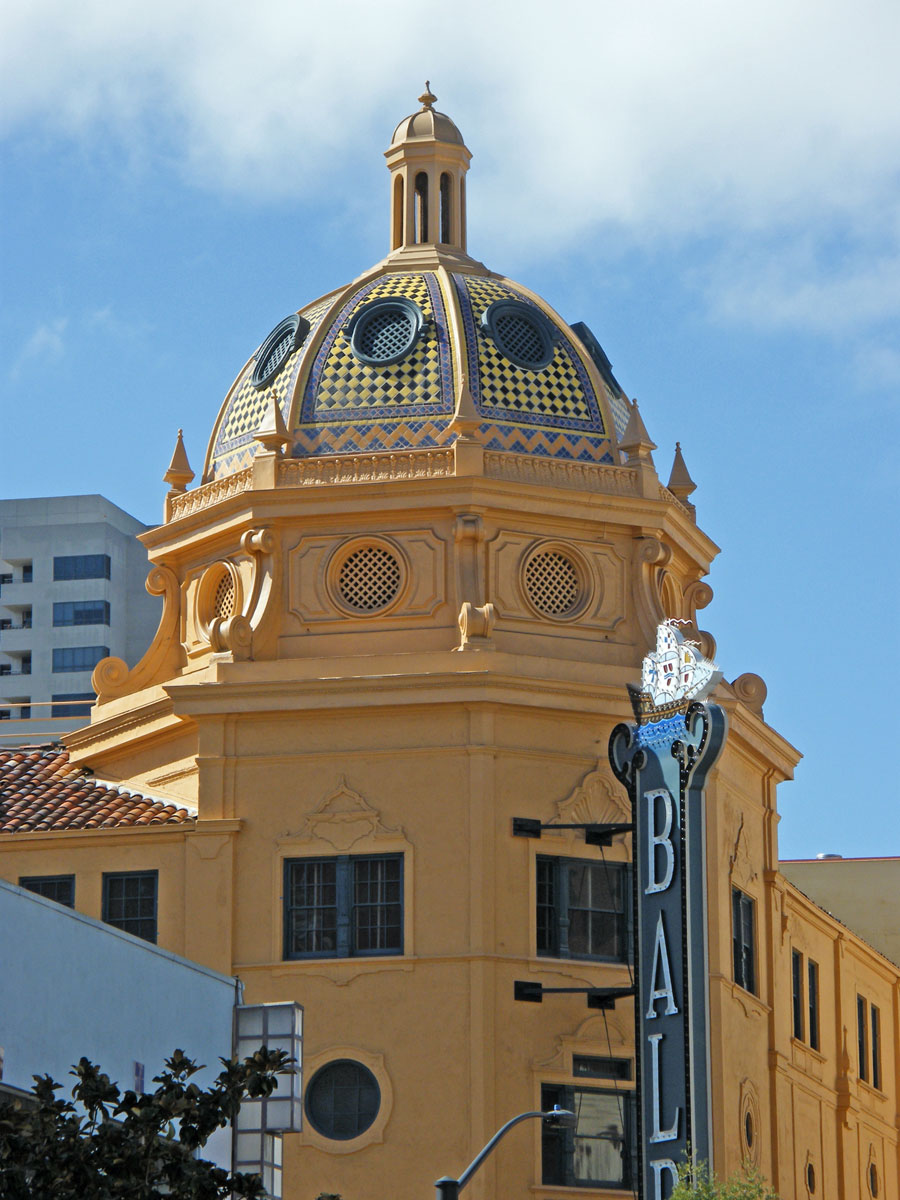
The Balboa Theatre in San Diego’s Downtown area blends Moorish and Spanish Revival architectural styles and was built in 1924.

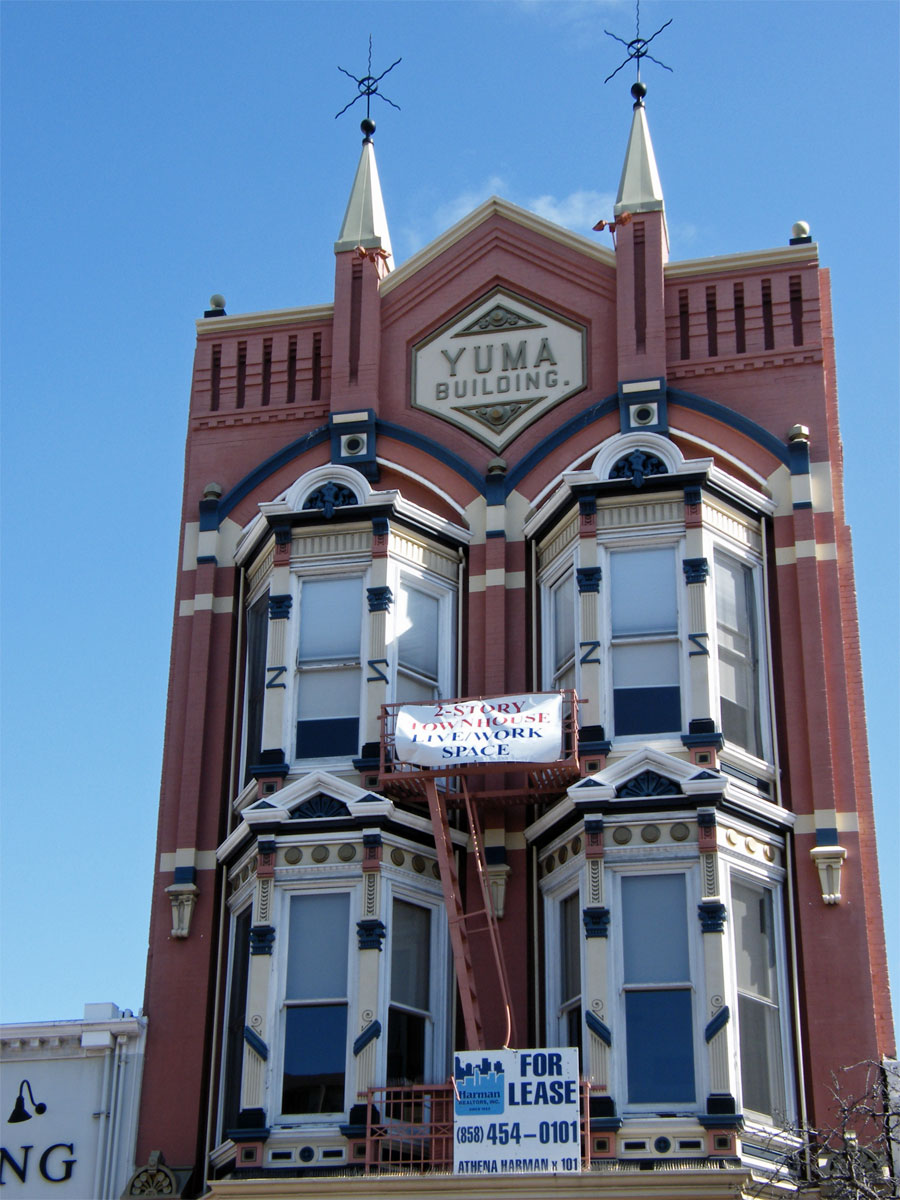
The Yuma Building, 1882, was one of downtown’s first brick structures, and was owned by Captain Wilcox who arrived in 1849 at the helm of the U.S. Invincible. The building is called the Yuma because of Wilcox’s business connections in the Arizona town.

The Spencer Ogden Building, 1874. The second floor was added in 1885, and the original ironwork of this French Renaissance-style building was replaced with newer material.

Marston’s department store (1881-1896) Marston’s was one of Southern California’s finest emporiums and a genteel social hub for all ages. During the early 20th century, it was the region’s exclusive source of Gustav Stickley’s prestigious Arts & Crafts oak furniture. With the building of the fifth store in 1912, the store soon grew to 500 employees, in a progressive environment where women held senior positions and salaries provided a living wage.

Construction of the San Diego Trust & Savings Bank building occurred in 1927 and is generally regarded as a fine example of the Italian Romanesque Revival style. From 1928 until March 18, 1994, the building at Sixth & Broadway served as the headquarters for San Diego Trust & Savings Bank. It was then repurposed as a Courtyard-Marriott Hotel.

Spreckels Building 625 Broadway was San Diego’s very first high-rise building and one of the last buildings constructed by John D. Spreckels in 1926. Now converted into luxury loft apartments.

Historic theatre (Reading Cinemas Gaslamp 15)

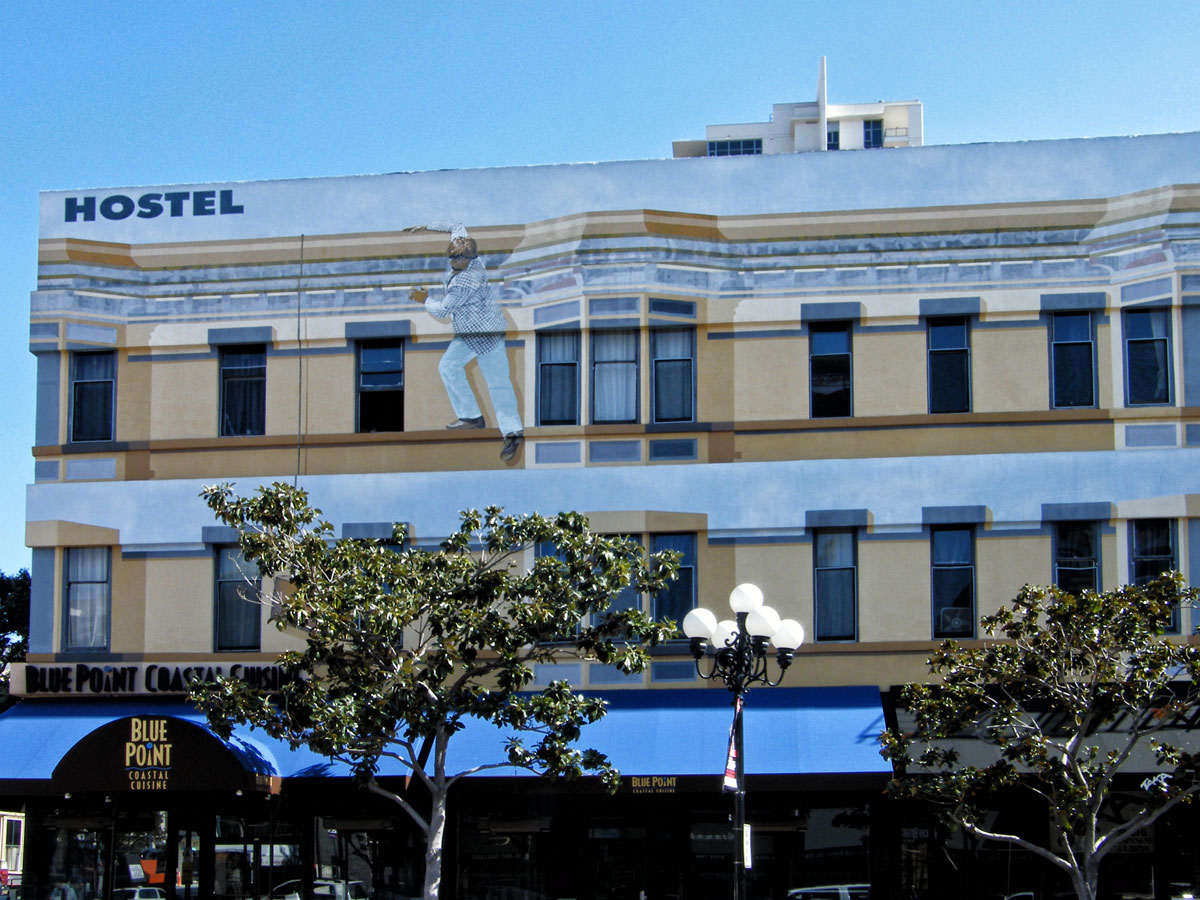
Downtown Hostel
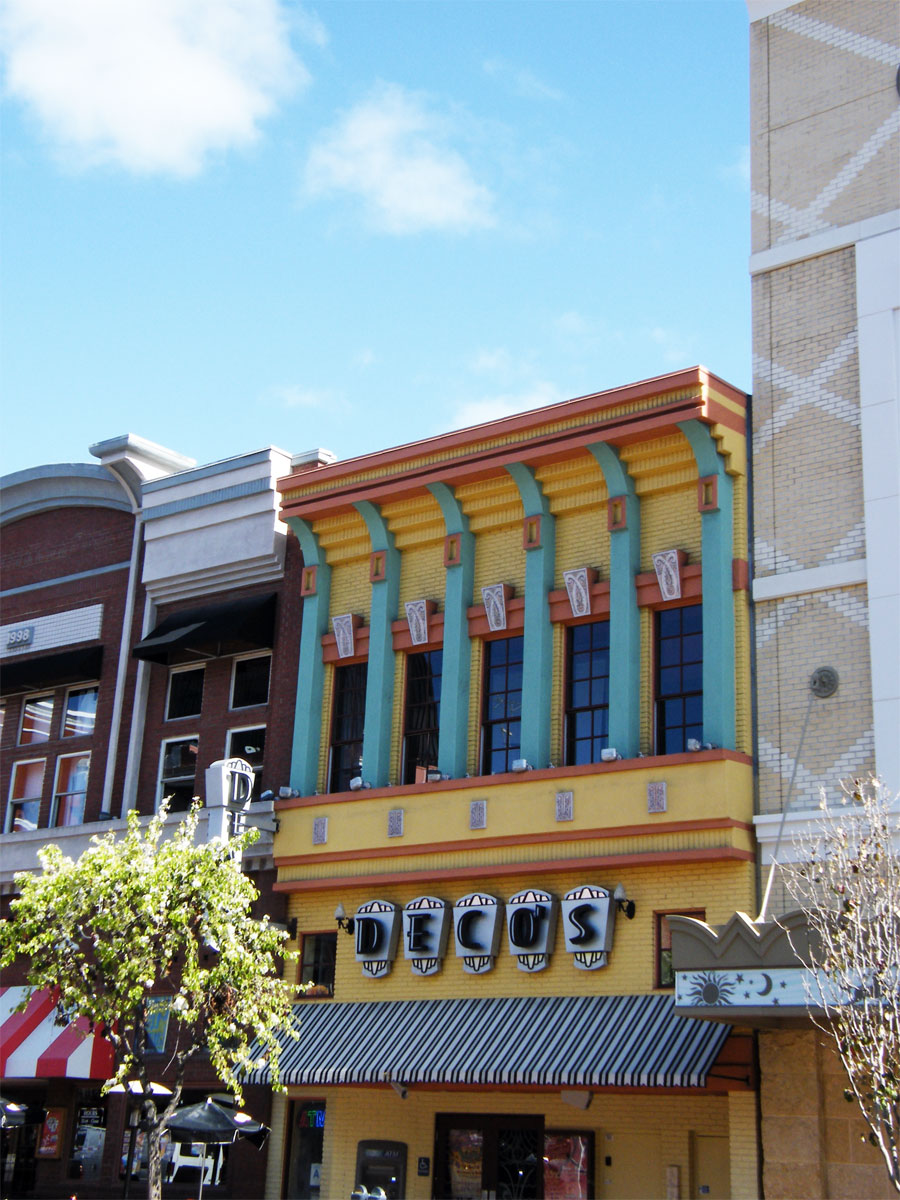
Art Deco buildings on 5th Ave

Although often difficult to photograph these buildings without the horrid perspective distortion it is an interesting district to wander about in with lots of history although I was unable to discover much information about the art deco style buildings.

Postcards from Around the World

Adjacent to the Old Town San Diego State Historic Park is nearby Heritage County Park which features several restored Victorian homes and the city’s first synagogue. Several of the exteriors of the Victorian architecture of wealthy San Diego residents in the late 1880s-1890s have been restored although the interiors are currently undergoing improvements.

The Historic Buildings at Heritage County Park

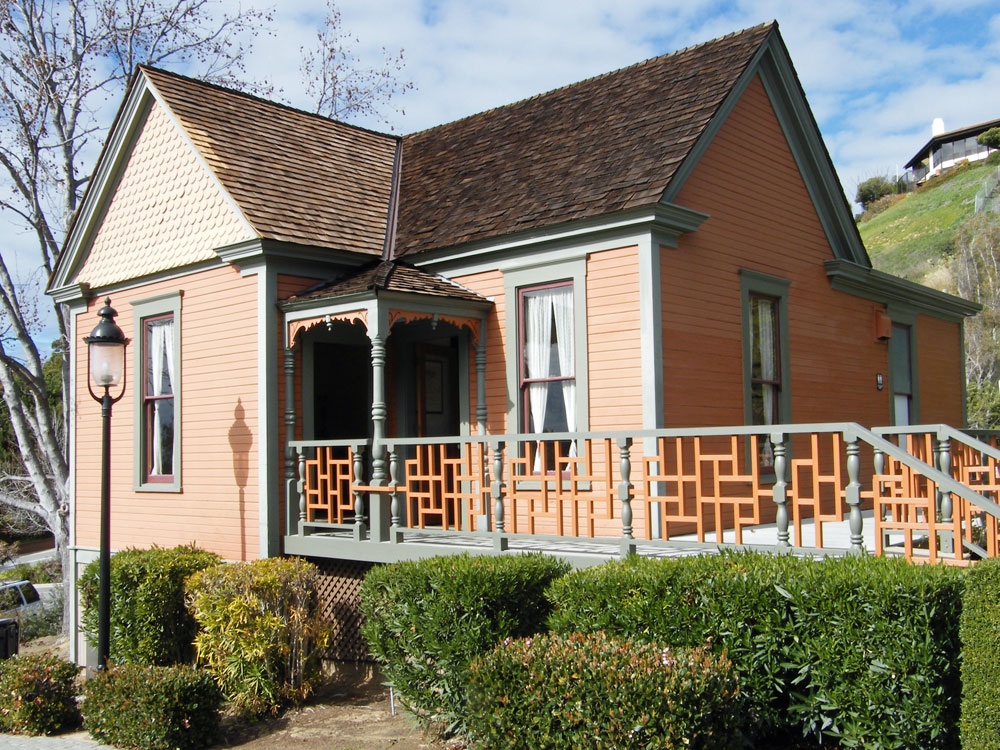
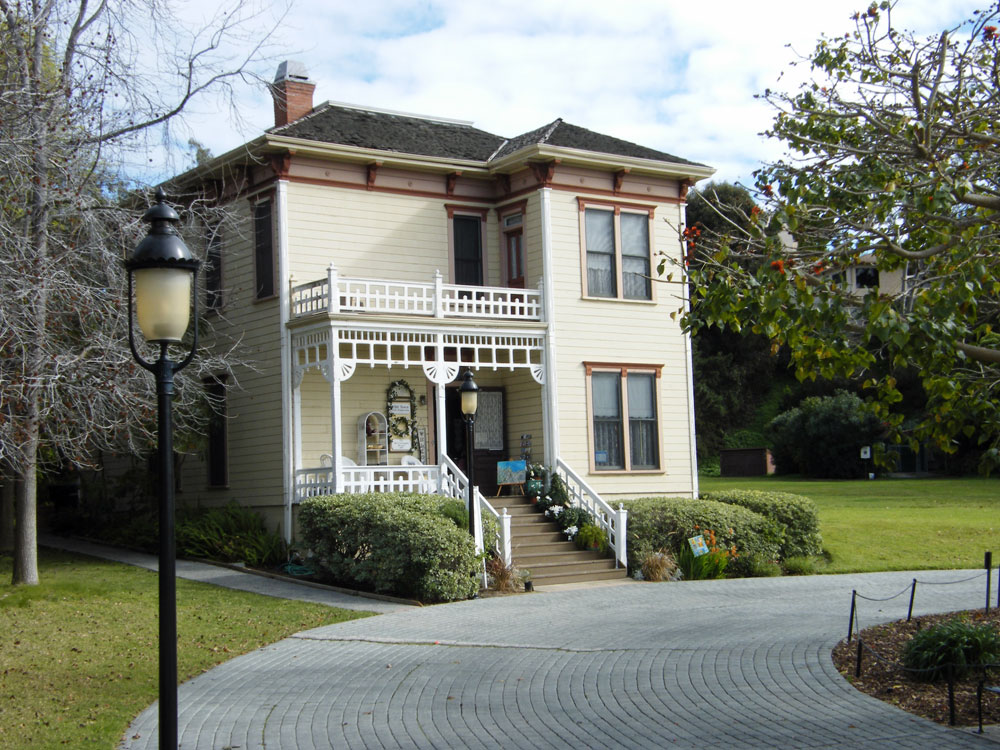
Senlis Cottage: 1896, moved to Heritage County Park in 1981 (Queen Anne Cottage)

Built in 1896, this modest four-room dwelling was home to gardener Eugene Senlis and his wife Lena. Eugene was employed by Kate Sessions, a renowned San Diego nurserywoman and horticulturalist.

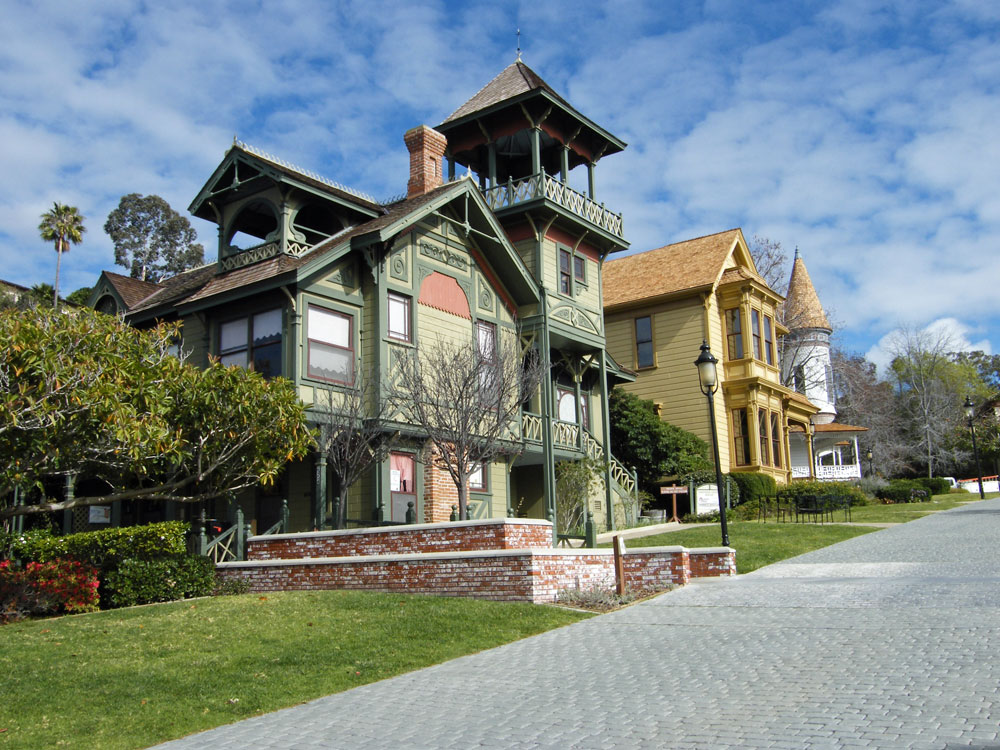
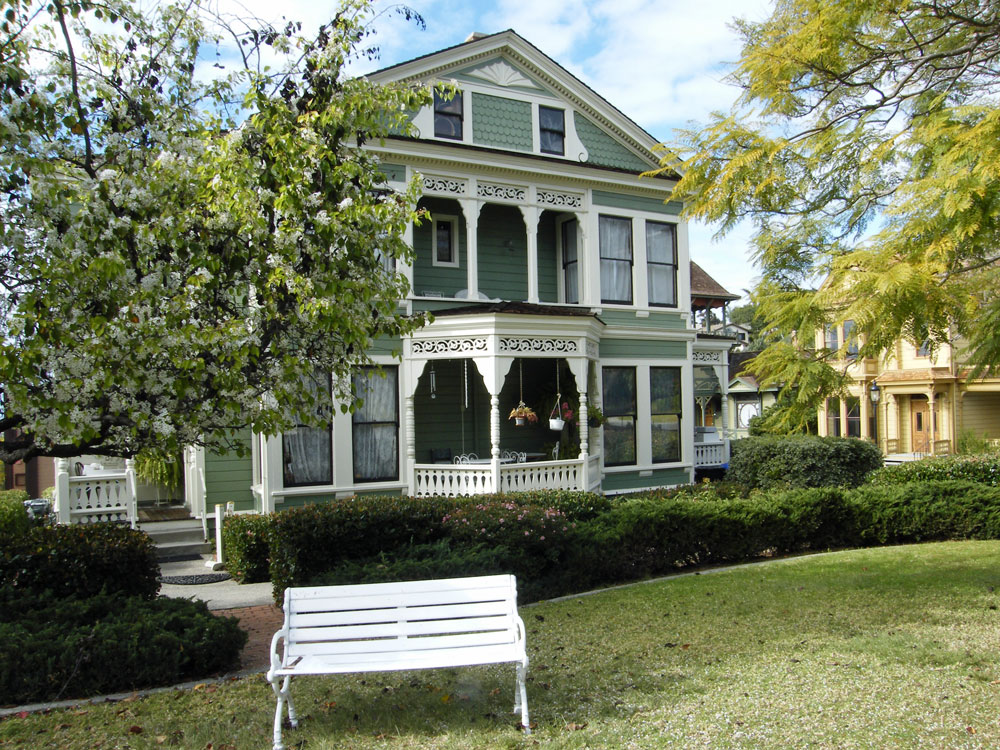
Sherman-Gilbert House: 1887, moved to Heritage County Park in 1971 (Stick Eastlake Style)

The Sherman-Gilbert House, recognized by its central tall square tower and abundance of millwork details, was originally built and owned by John Sherman who is deemed a master builder.

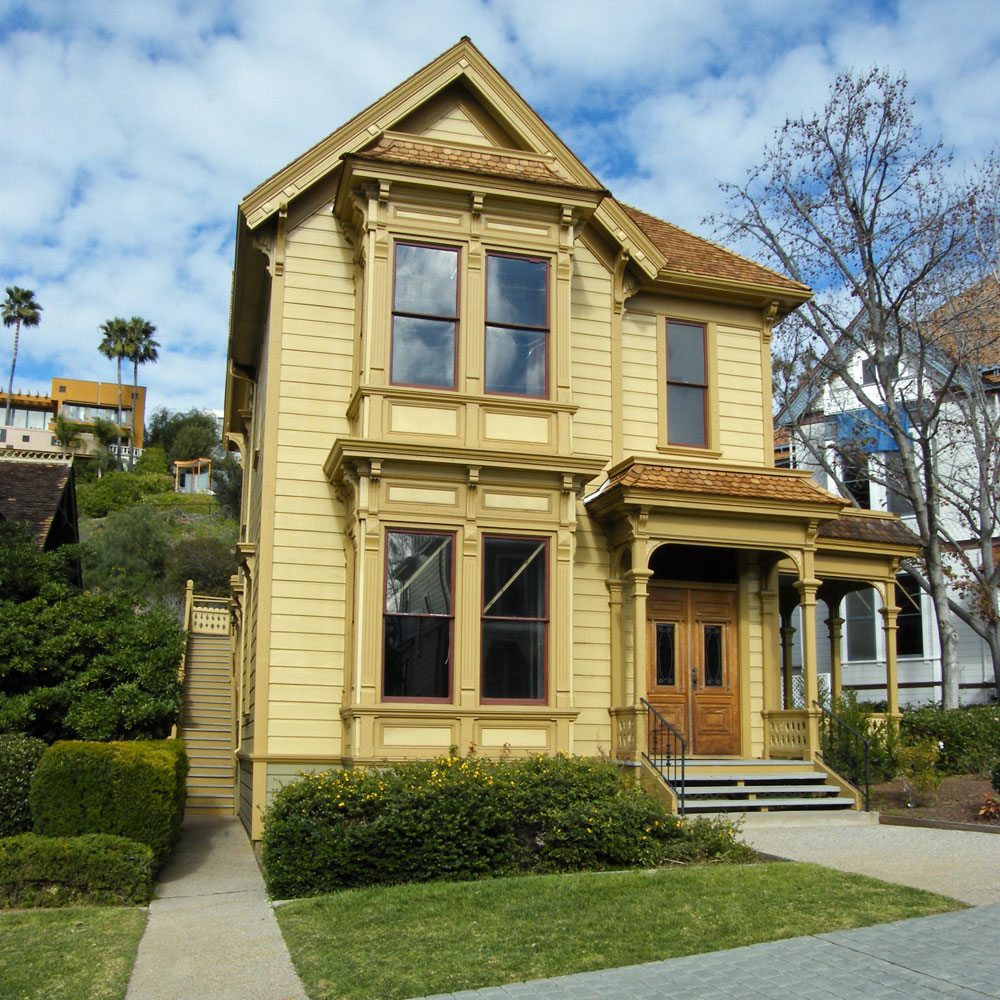
Bushyhead House: 1887, moved to Heritage County Park in 1976 (Eastlake Style)

This cheery yellow Eastlake style home, marked by a two-story projecting bay window and a richly ornamented porch, was built in 1887 by Edward Wilkerson Bushyhead.

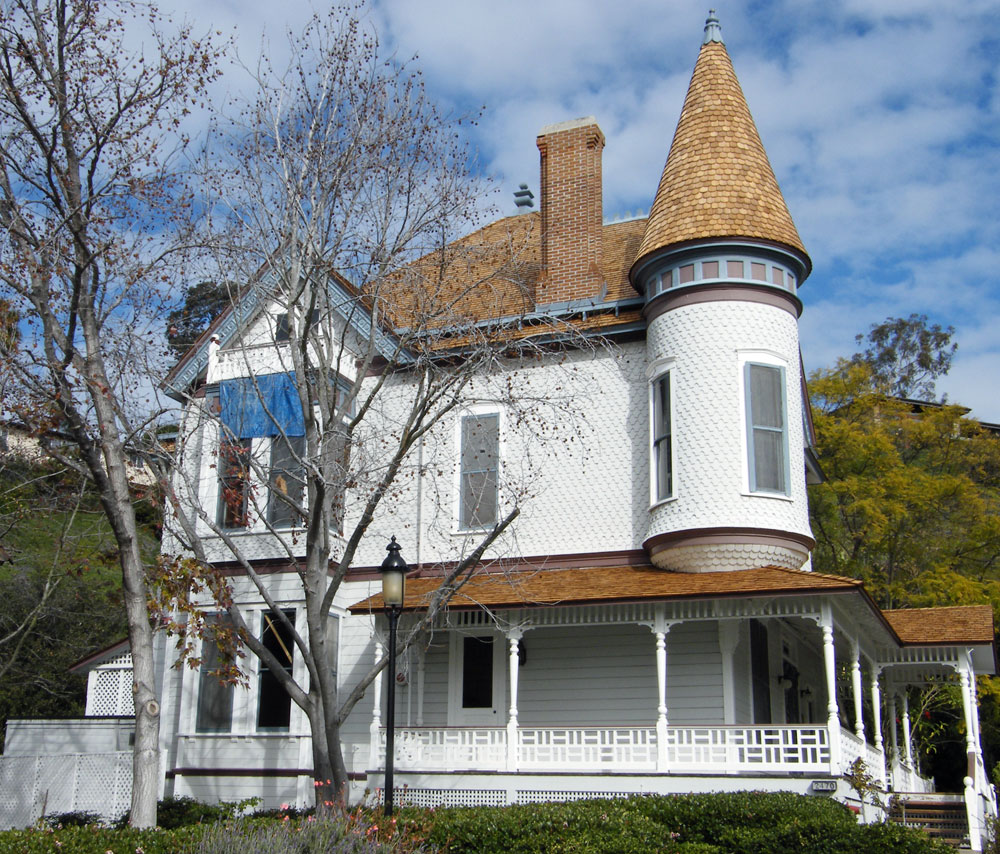
Christian House: 1889, moved to Heritage County Park in 1976 (Queen Anne style)

Boasting an extensive wrap-around porch, tall corner tower, and scalloped siding cladding the second floor, the Christian House is a vibrant example of a Queen Anne Victorian home, a style known for its decorative layers and variations. This home was owned by Harfield Timberlake Christian and his wife Myrtle.

McConaughy House: 1887, moved to Heritage County Park in 1981 (Italianate Style)

The home’s original owner and builder, John McConaughy, was renowned in San Diego for founding the area’s first cargo and passenger service, which operated between the city and the backcountry town of Julian.

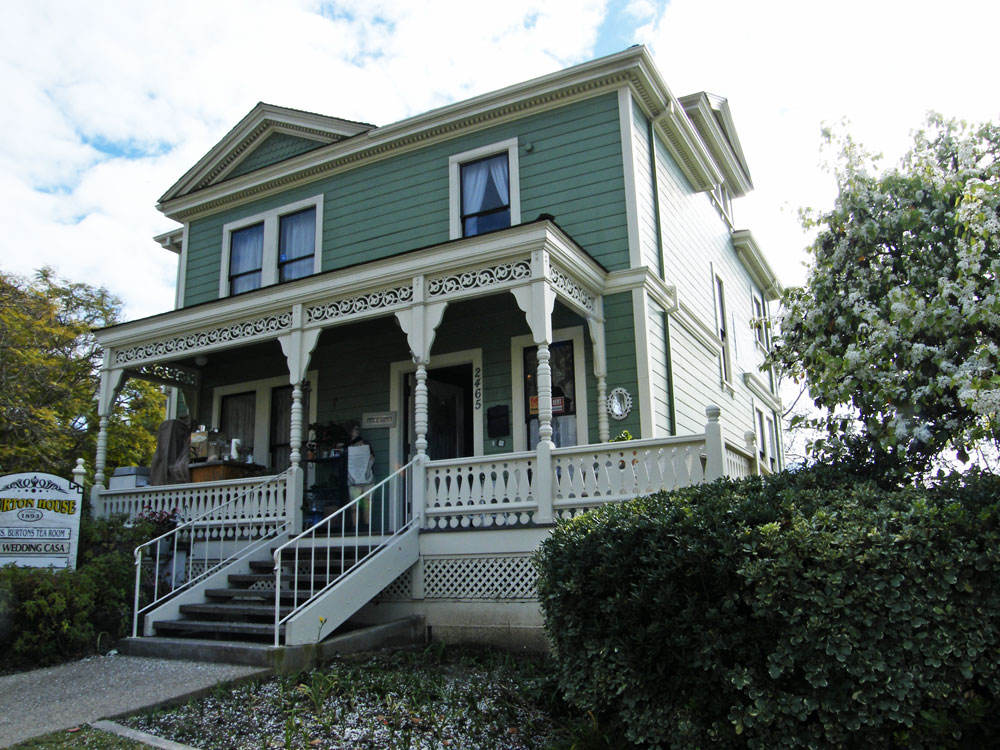
Burton House: 1893, moved to Heritage County Park in 1976 (Classic Revival Style)

Henry Guild Burton, the home’s original owner, was a retired Army physician who served in the Second Seminole War, Mexican-American War, and the American Civil War

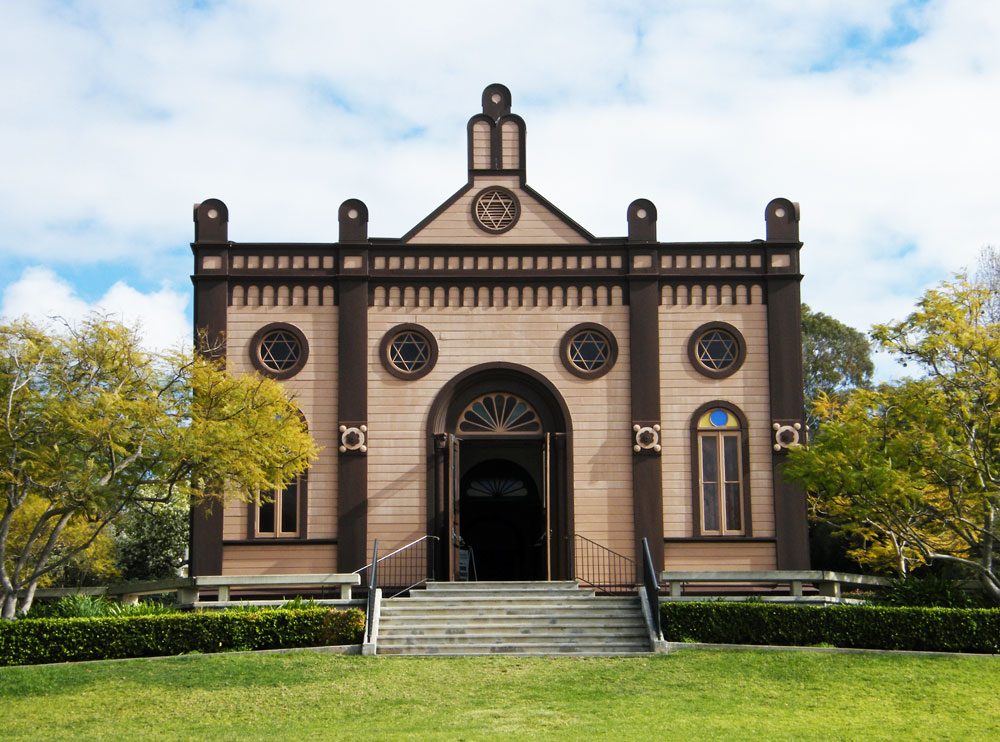
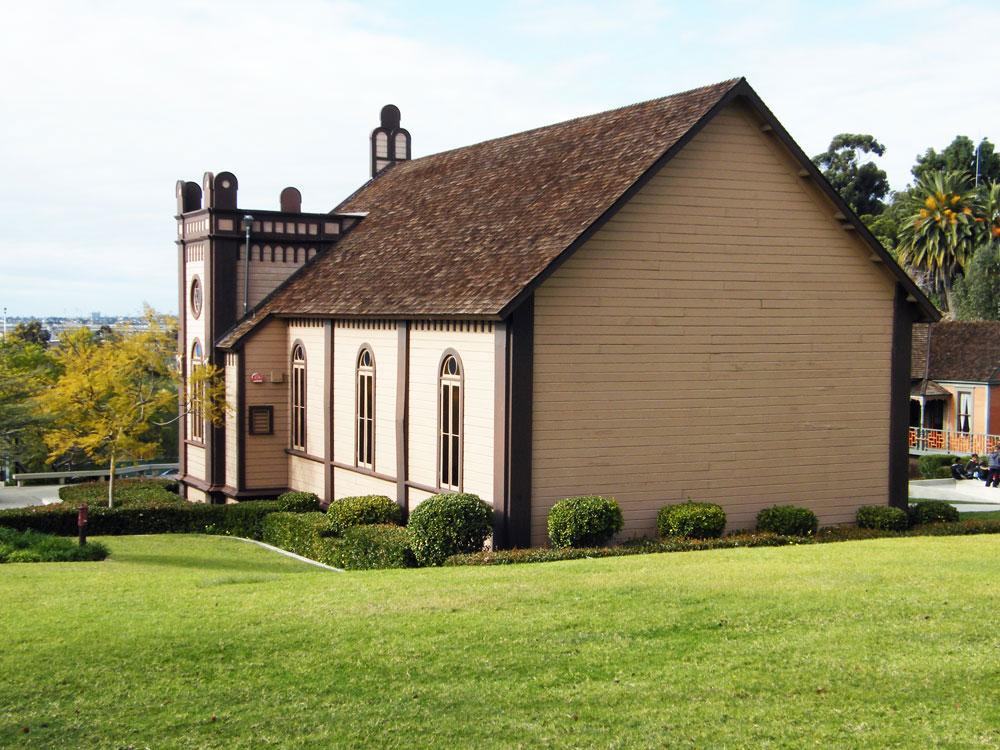
Temple Beth Israel: 1889, moved to Heritage County Park in 1978 (Synagogue architecture)

Constructed as San Diego’s first synagogue and the second oldest extant in the Western United States, Temple Beth Israel originally stood at the corner of Second Avenue and Beech Street downtown.

Heritage County Park arose from County Parks’ commitment to the preservation of San Diego’s cultural as well as natural resources. The park is a joint project with the Save Our Heritage Organisation.

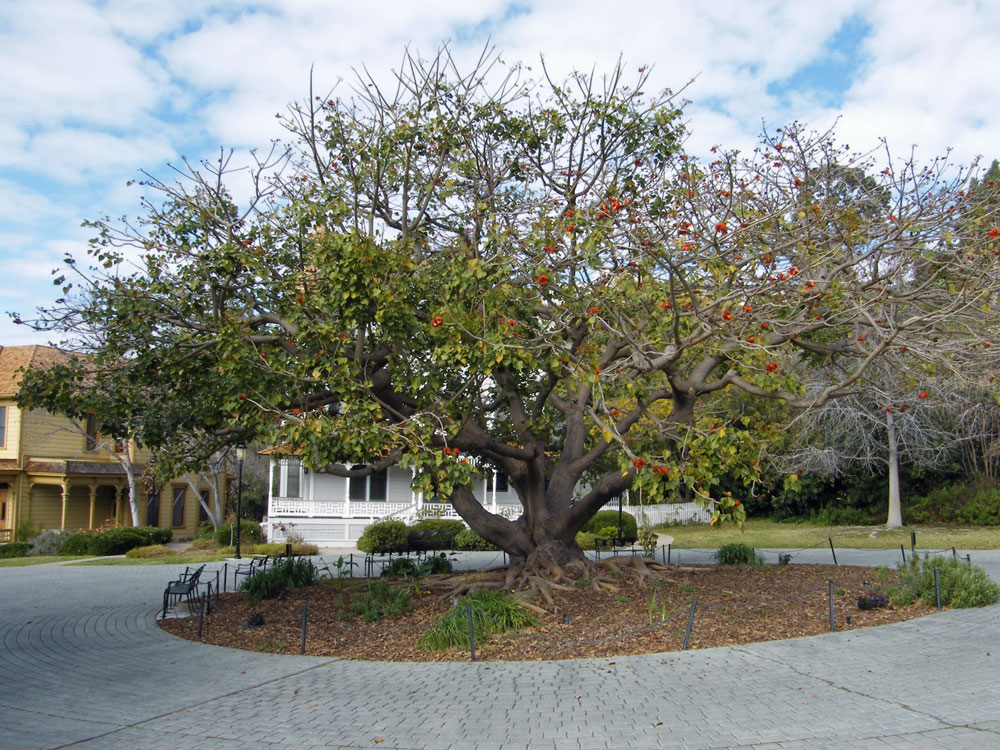
Brisbane Coral Tree – Erythrina x sykesii (Australia)

A document with more information by SOHO can be found here. San Diego Parks & Recreations have more recent information here

Note that my photos are from February 2009 and that the exterior colour of these houses may well have altered.

Postcards from Around the World

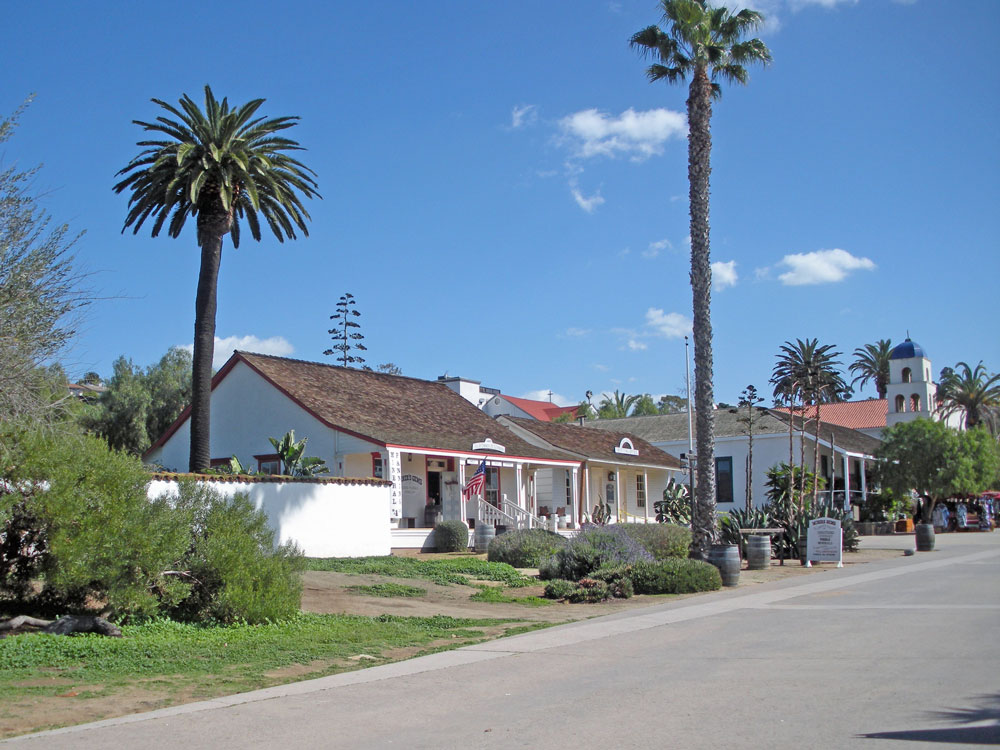
Established in 1968, the Old Town San Diego State Historic Park is a living history museum that commemorates and preserves numerous historic buildings and recreates Old Town as it existed during the Mexican and early American periods, from its settlement in 1821, through 1872 when it lost its dominant position to Downtown.

The McCoy House was originally built in 1869, and was home to California’s first sheriff. It has been reconstructed. Prior to 1851 the land belonged to Maria Eugenia Silvas.

Five original adobe buildings are part of the complex, which includes shops, restaurants and museums. Other historic buildings include a schoolhouse, a blacksmith shop, San Diego’s first newspaper office, a cigar and pipe store, houses and gardens, and a stable with a carriage collection.

Casa de Estudillo

Constructed in 1825 as the home of Don Jose Antonio de Estudillo, a Spanish aristocrat. It became a sanctuary for women and children during the American occupation in 1846. For a number of years it was incorrectly identified as “Ramona’s Marriage Place” from Helen Hunt Jackson’s “Ramona”. The adobe structure is considered to be one of Old Town’s outstanding show places.

Casa de Estudillo

Church of the Immaculate Conception

Begun in 1868 by Father Antonio D. Ubach. Due to the boom that set in for the New San Diego, the church was not completed and dedicated until 1919.

Colorado House

Originally a hotel, now houses the Wells Fargo Museum. The building is a reconstruction of the 1860 original. The Wells Fargo Museum is a historically furnished Wells Fargo agent’s office, including one of the famous 30 Coaches shipped to Wells Fargo in 1867

Whaley House

One of the most historic buildings in Old Town San Diego, the Whaley House was built in 1857 by Thomas Whaley, a San Diego pioneer, as his family home. Over the course of history the Whaley House has served as a general store, county courthouse and theatre. Apparently known as the most haunted house in America and after-hours they run paranormal tours.

Whaley House

Robinson-Rose House

James Robinson built this two-story structure in 1853 as his family residence and as the home of the San Diego Herald, the San Diego and Gila Railroad office and other private offices.

Robinson-Rose House

San Diego Union Newspaper

This wood-frame structure was prefabricated in Maine and shipped around the Horn in 1851. This first office of the San Diego Union newspaper is restored as it was when the Union printed its first edition on October 10, 1868.

SD Union Newspaper (on the left)

Mason Street Schoolhouse

Built in 1865, the Schoolhouse was the first publicly owned school in San Diego County. The building was a one-room, wood-frame, shingle-roofed structure with a ten foot high ceiling. A pot-bellied iron stove heated the room, and a water bucket and dipper provided the only indoor plumbing. All eight grades were taught in the single room.

School House

Although it seems a little bit like a film set, it is still an interesting place to visit. And admission is free. Next time I will show you some of the more colourful aspects of this open museum.

Source of information from Old Town San Diego guide.