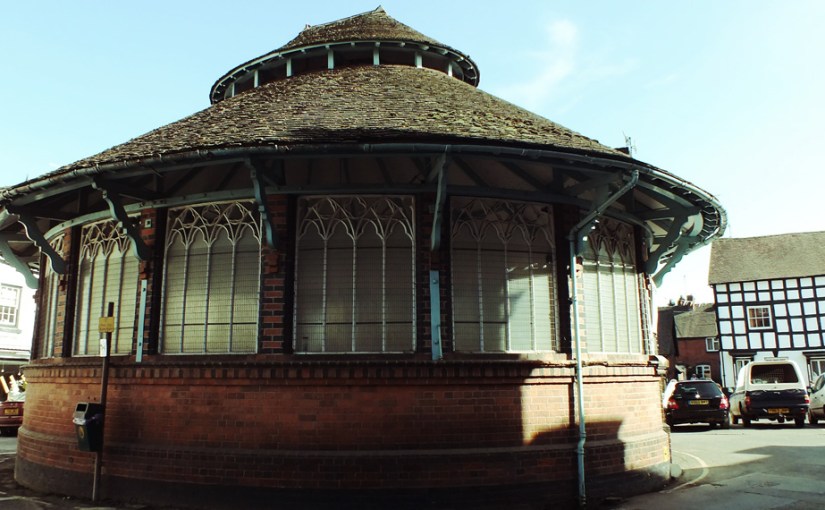
When visiting Tenbury (Wells) we grabbed a Tenbury Heritage Trail map from the tourist office and set off to admire the buildings from Tenbury’s past. After looking around the Pump Rooms (last week’s post) we carried on into Market Street, which leads into Market Square and where we discovered another unusual building that was also built by James Cranston.
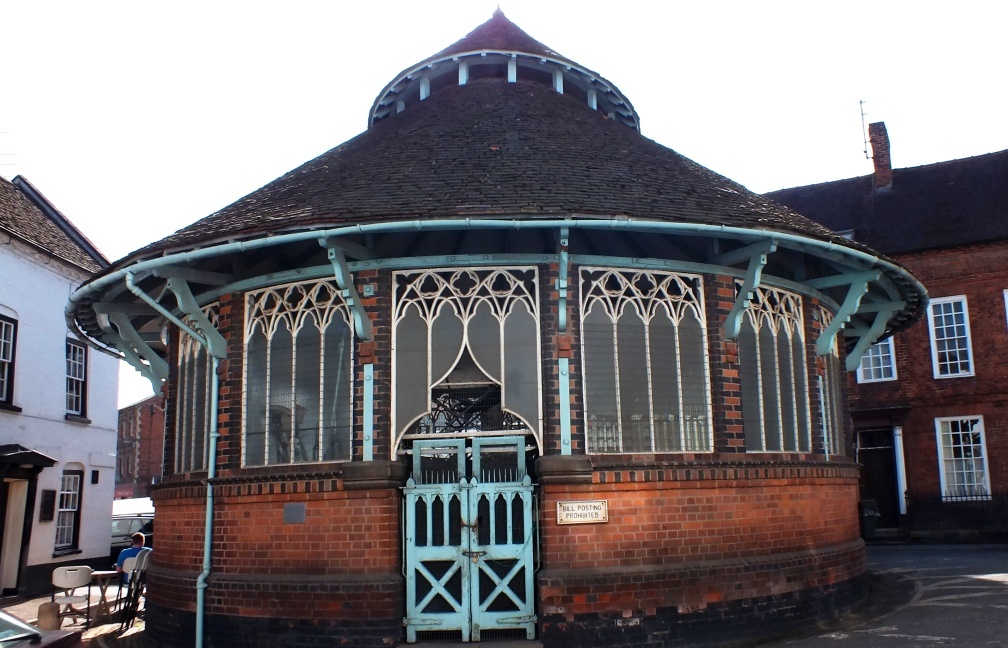
The Round Market (which is actually oval) was built to enable the farmers’ wives to sell their butter and poultry inside, with walls to keep out the wind and rain. Market Days are still held on Tuesday, Friday and Saturday.
But as usual I was drawn to the wonderful windows – just look at the shapes above the gateway! And the trefoils and quatrefoils at the top of each window (click image to enlarge). Divine.
(source of information from Tenbury Tourist Information Centre )
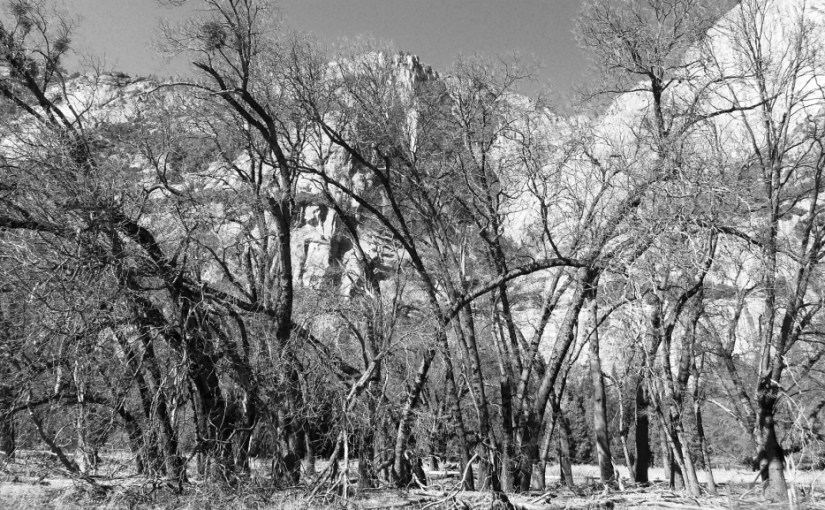
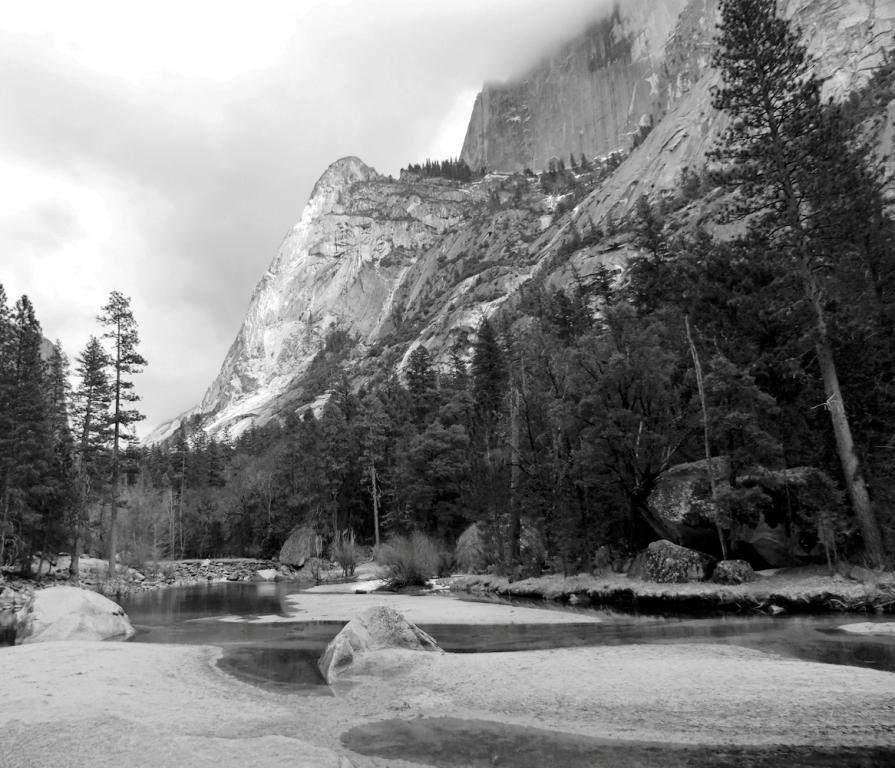
Cee’s Black & White Challenge: This black and white challenge is topic related and this week the theme is Found in Nature.
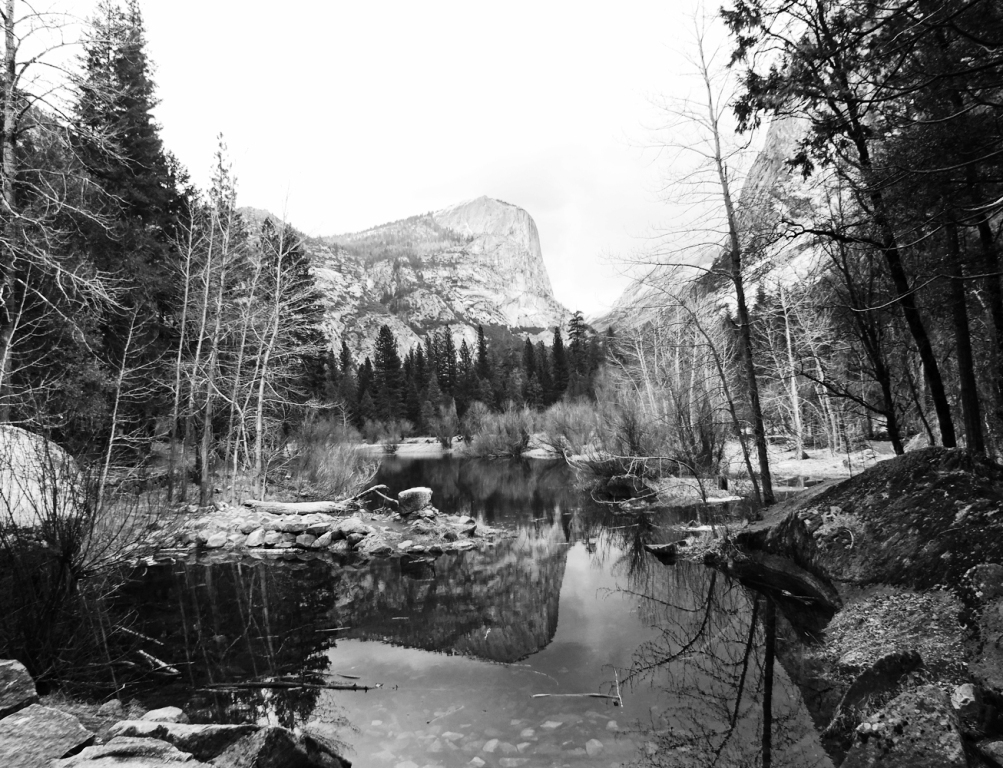
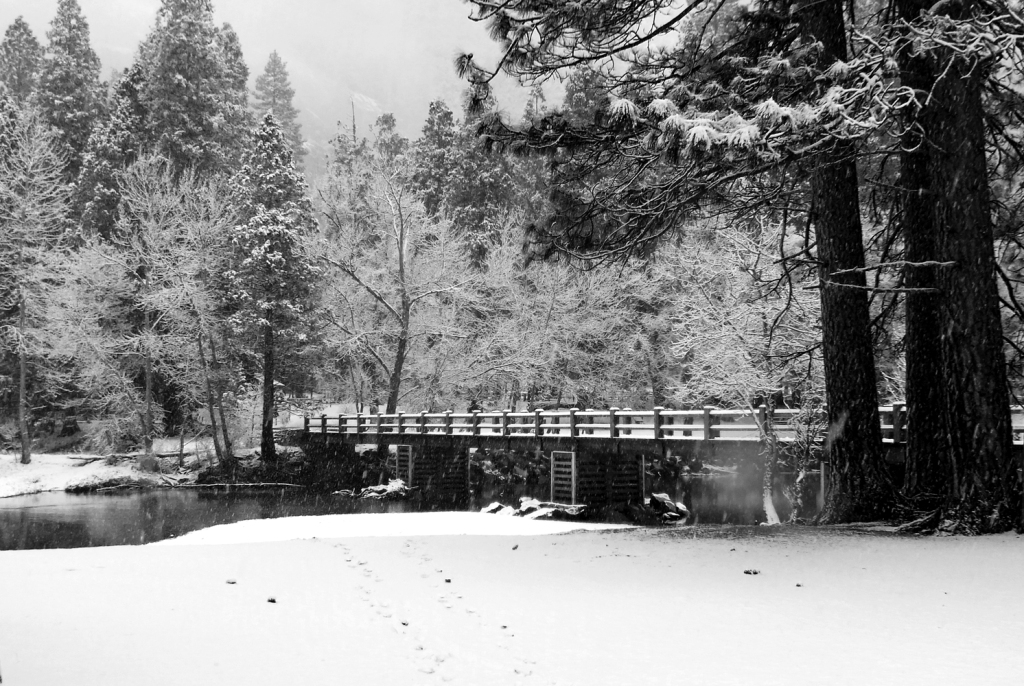
One of the most amazing places that I have been to is Yosemite Valley. The incomparable scenery, soaring cliffs, spectacular views and cascading waterfalls moved me so much that I wrote this piece about my feelings.
(click any image to enlarge and see the details)
Valley View.
Here are a few photos from that natural wonder. I hope they make as much an impression on you as they did on me.
awiyah-pointRiver Merced in the SnowMount Watkins Reflection at Mirror LakeThe Swinging Bridge in Snow
Description: Every Tuesday I offer the “A to Z challenge”, walking step by step through the alphabet.
If you would like to join in then please click here
The Taj Mahal, still one of the Seven Wonders of the World, attracts millions of visitors each year. The traditional southern view of the white domed mausoleum doesn’t always demonstrate the sheer scale of the building, nor take into affect the remainder of the integrated structures on the complex and its harmonious proportions.
Jawab – facing west
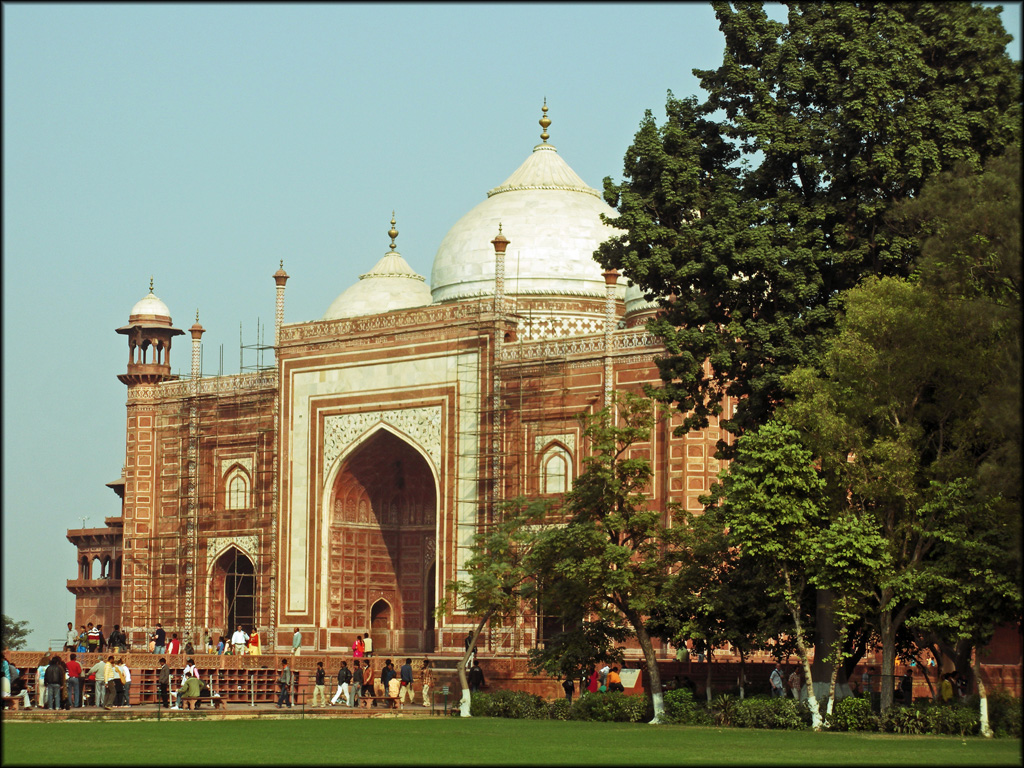
At the far end of the complex, there are two grand red sandstone buildings that are open to the sides of the tomb. These identical buildings flank the main tomb effectively and help to present the white marble monument in an aesthetic setting and form an integral part of the Taj design.
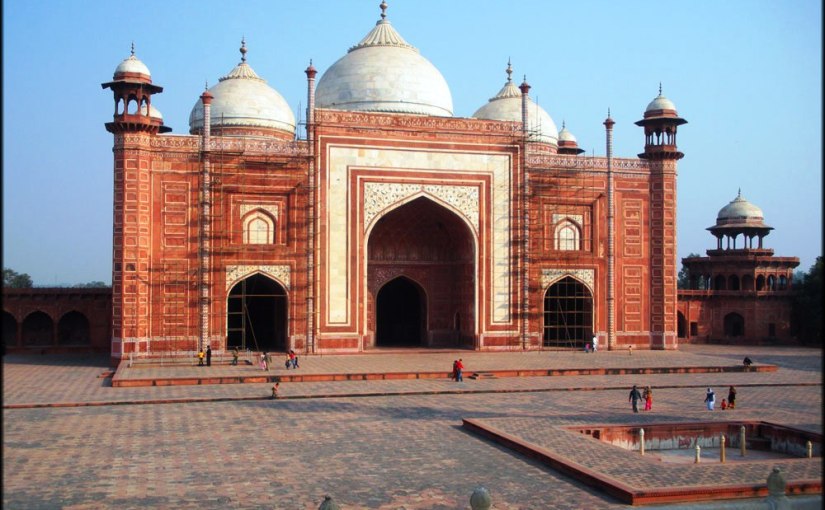
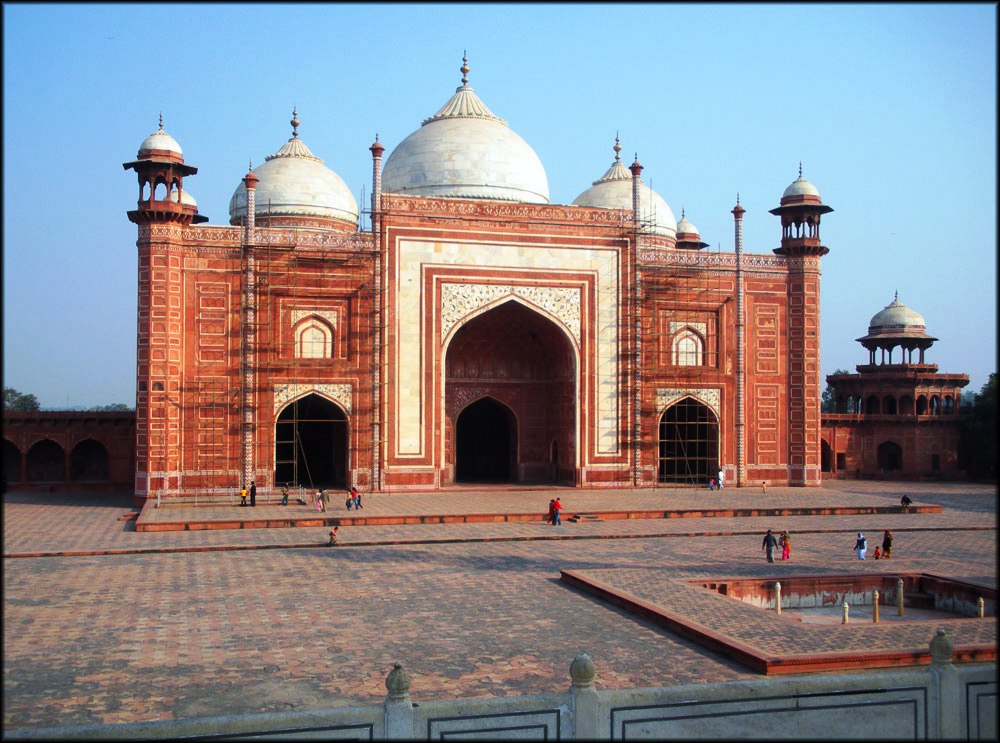
At the western side is the mosque (masjid) facing east, reported to have been built by Isa Muhammed 1631-1648. More about this when we reach M. On the eastern side is the Jawab (literally “answer”; a building mirroring the mosque) and providing aesthetic balance to the site. At the time of my visit the Jawab was covered in scaffolding, so I wasn’t able to go inside.
Jawab
One of the most beautiful structural compositions in the world, the Taj Mahal was designated a UNESCO World Heritage site in 1983.
This week’s photo challenge is about perspective: post a photo which is not what it seems to be.
For those who are looking for an extra bit of challenge, show us two photos, each one showing a different angle or interpretation of the same subject:
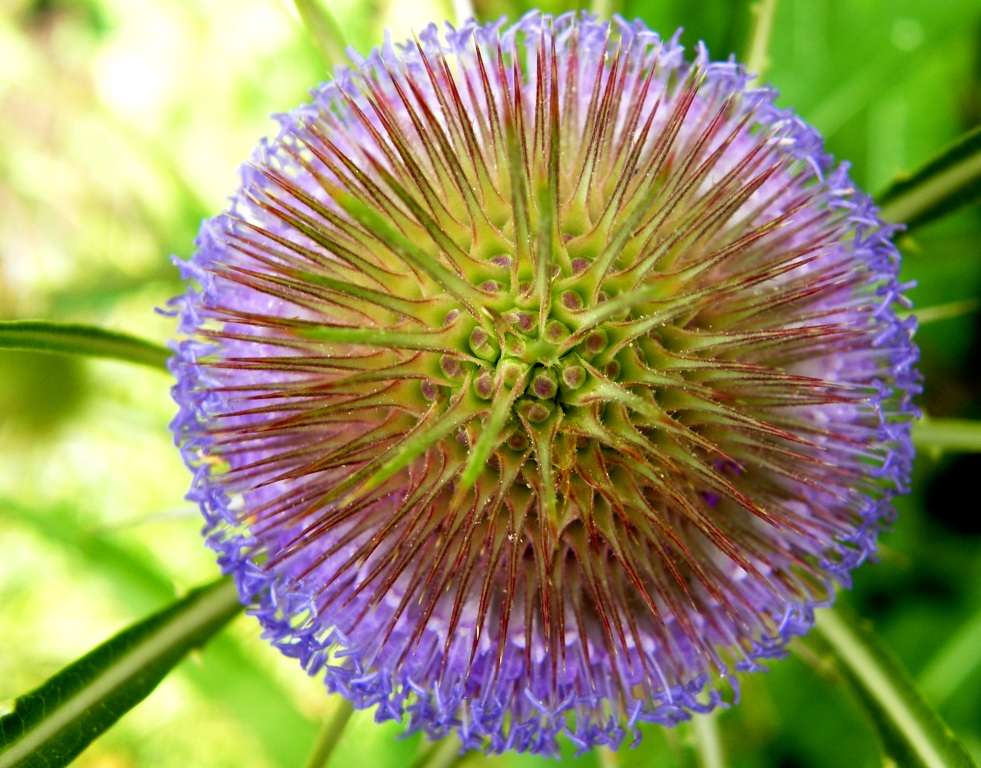
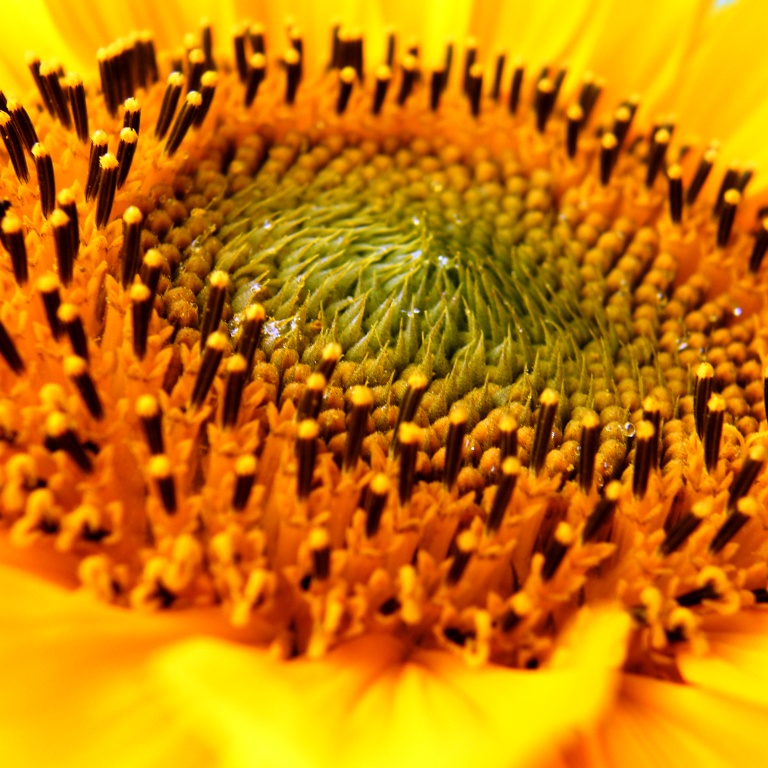
Well I am always photographing the same subject at different angles, especially with flowers, where the shape or texture changes.
Thistle flower from above – spherical and smoothThistle flower from the side – oval and spikySunflower – a bee’s perspectiveSunflower – the human perspective
and often with architectural details where distortion is inevitable
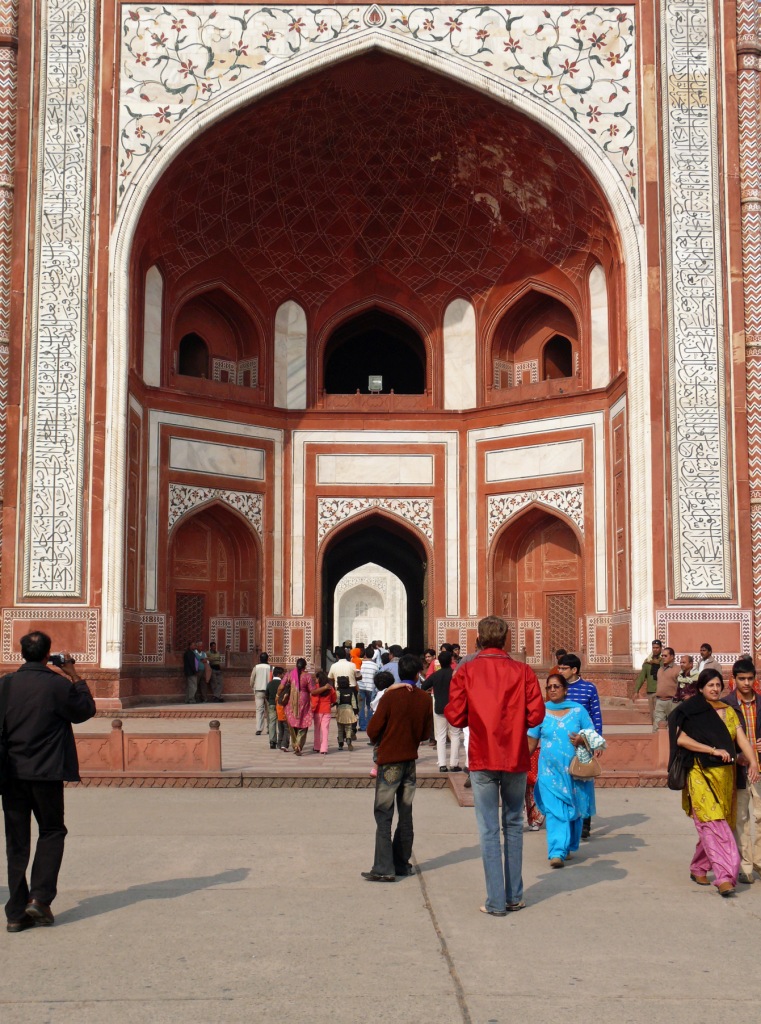
Looking up – Incised Geometric Painting inside the Main Gate (Taj Mahal)The Main Gate from a distance
or unusual
What do you see?Street Art – white paint on top of an advertisement
If you would like to see what others have come up with for this challenge then go to the Daily Post @ WordPress Weekly Photo Challenge
A Road Trip through California, Arizona, Utah and Nevada
Itinerary
The Grand Circle is known as one of the best road trips in the US. Taking a minimum of ten days, starting and ending in Las Vegas, you circle round some of the most spectacular landscapes in the world: Grand Canyon, Zion, Bryce, Capitol Reef, Arches, Canyonlands, and Monument Valley. We only had six days in which to visit so it was difficult working out what to leave out. It was early March and not unlikely that we’d hit snow somewhere on route which was a factor in our final decision and starting from San Diego in the south-west corner of California also meant a bit of a trek to get into the region and would mean a further overnight stop so we really only had five days. Pouring over maps, and reading reviews of hotels, motels and B&B accommodation we eventually decided on our trip.
Buy an America the Beautiful – The National Parks and Federal Recreational Lands Annual Pass ($80) at the first park you enter to save you money.
San Diego to Sedona
It would be a long drive to our first overnight stop in Sedona. But a fairly easy route along Interstate 8 to Yuma, which immediately started us thinking about film and song titles we knew about the US, left at Gila Bend up onto the Interstate 10 and then skirting Phoenix on Interstate 17 and finally up towards Flagstaff, finally getting off the highways and onto the State Route 179 (also known as Red Rock Scenic Byway, an “All-American Road”[1]).
South Arizona Sand-dunes
We expected the journey to be fairly mundane as it was almost entirely on highways, but since it was the first time we’d driven this route there were several surprises along the way, not least the huge sand-dunes somewhere close to Yuma I think, where we spotted dune buggies and dune boards. The traffic was sparse until the Phoenix area when it was much more dense until we had passed the Phoenix Cardinals Stadium in Greendale. And the sight of the ‘three-armed cactus’ – Saguaro Cactus – alongside the road made us feel as though we were in a Western movie. Fully expecting Red Indians to come over the ridge! Unsurprisingly the flower of this plant is the state flower of Arizona.
Saguaro Cactus
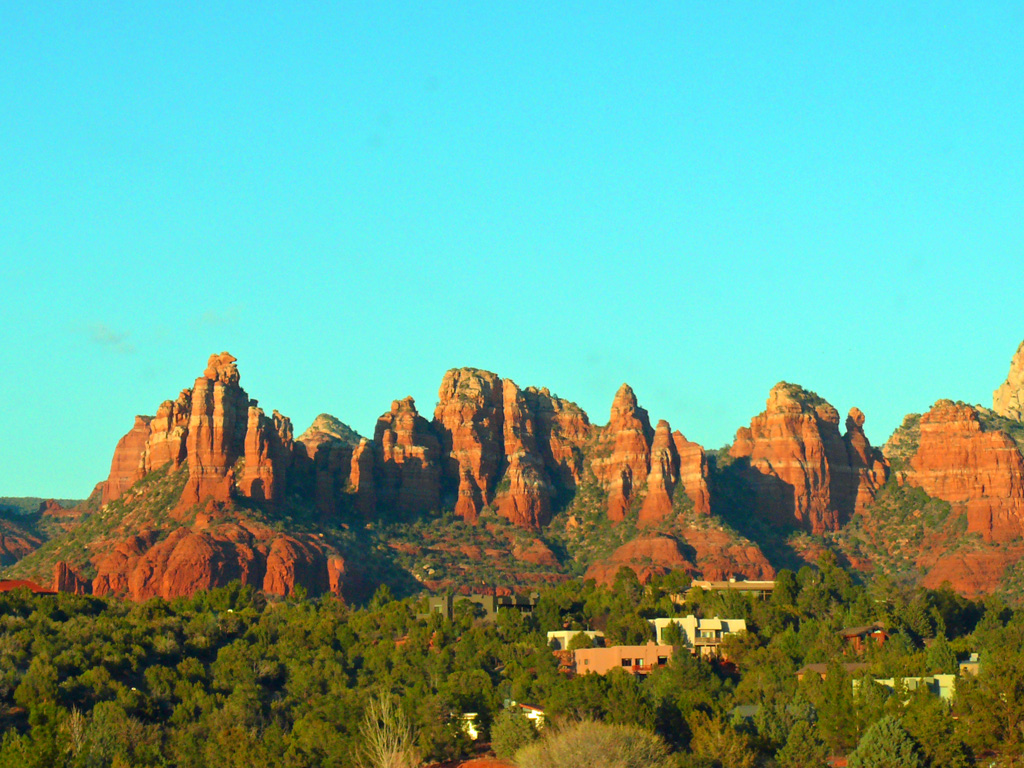
But the most exciting views were when we turned off Interstate 17 and onto 179 where the road winds through the pinion-covered Coconino National Forest with views of spectacular red rock buttes and mesas jutting out from the earth with names like Coffeepot, Cathedral and Thunder Mountain (you can see where they got the roller coaster idea from). We stopped off at a couple of the scenic pull-outs to take some photos around Bell Rock and stretch our legs around the Courthouse Butte Loop before driving on and through Sedona, known for the spiritual and metaphysical as well as hundreds of miles of hiking and biking trails, the red rock vistas and scenic drives and on to the 89A to our B&B for the night in Oak Creek Canyon close to Slide Rock State Park.
Thunder MountainEntering Sedona (Oak Creek Valley)
Shortly before our arrival there had been a fall of snow in the region and on entering Oak Creek Canyon we were surprised to see it lying all around, though thankfully the road was completely clear. Because of the weather and the fact it was almost dark, we didn’t venture back down into Sedona, but had an early night, looking forward to the drive to Grand Canyon and hoping that the snowfall wouldn’t be a problem.
(click an image to enlarge)
Cathedral Rock
Bell Rock
Courthouse Butte and Bell Rock
Astonishingly I had never heard of Sedona before I started planning this trip. How on earth has it stayed such a secret to us Brits? It is definitely a place to spend more time in and explore.
[1] There are 27 of these designated by the US Department of Transport, for their exceptional and unique recreational, natural and scenic qualities.











 TRAVEL WORDS