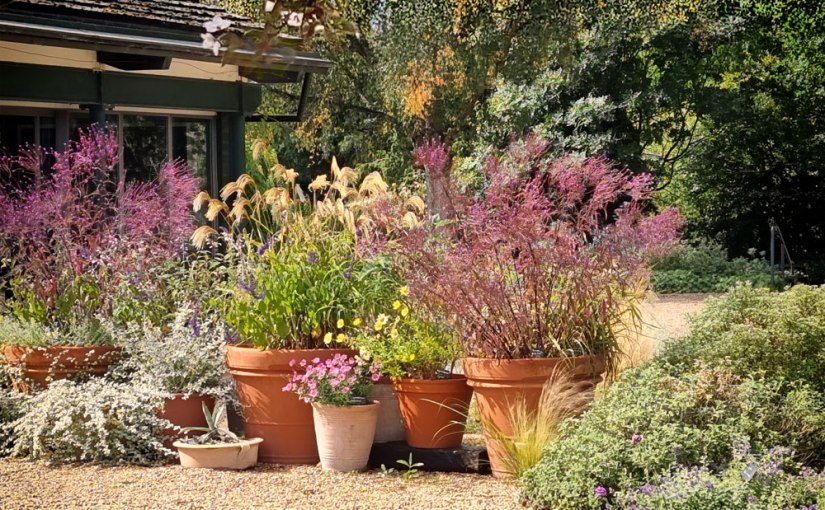

Beth Chatto transformed an overgrown wasteland deemed unfit for fruit farming, into a series of informal gardens. As the conditions within the garden vary widely, five distinct areas have been created providing useful examples of working with nature to find the right plant for the right place.

The world-famous drought-resistant Gravel Garden, created in 1992, began as an experiment to replace sun-scorched grass with a living garden of drought-tolerant plants.


The Gravel Garden, once a car park, was originally planted by Beth and her team as an experiment to test a range of drought-tolerant plants. The garden is famous for the fact that it is never watered, despite being situated in one of the driest parts of the country and having naturally occurring, free-draining soil.


 TRAVEL WORDS