Postcards from Around the World

This week we are remaining in Slovenia, but heading to the capital city the delightfully named Ljubljana, the city of the dragons. And there are literally dragons everywhere: guarding the bridges, flying high on the city’s official flag, and even adorning the drain covers throughout the city.

Not to mention bridges. There are in fact 17 bridges crossing the Ljubljanica River.
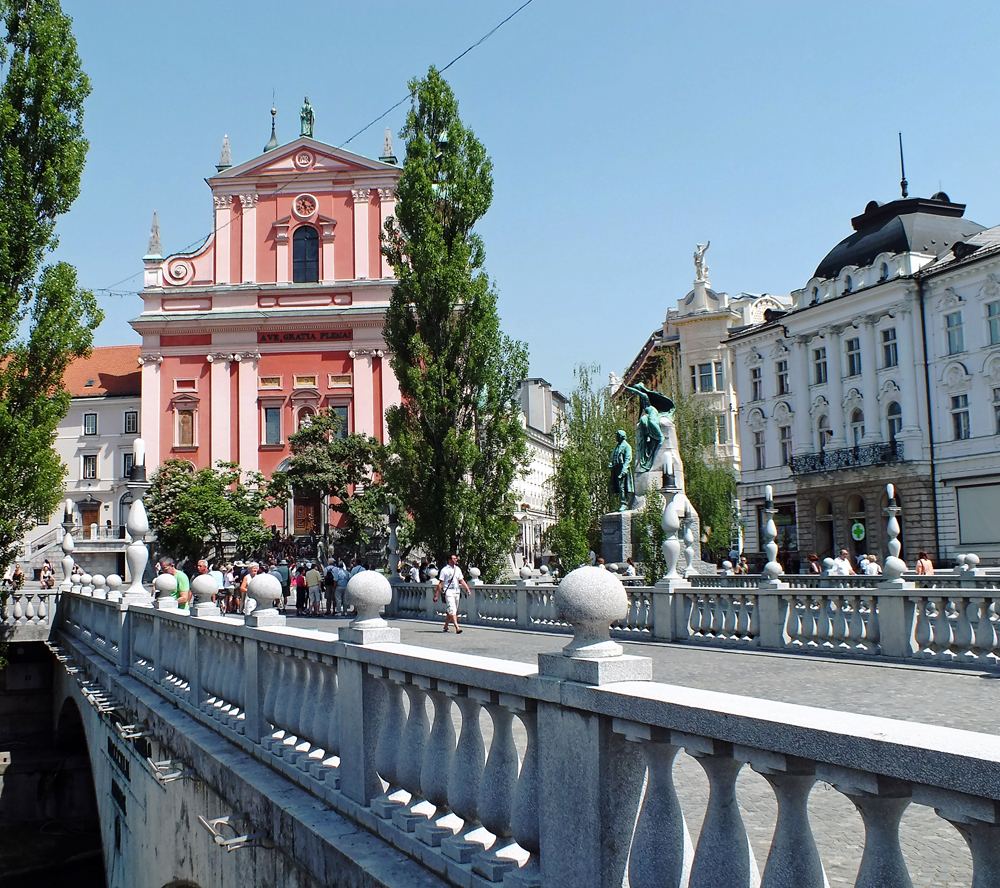
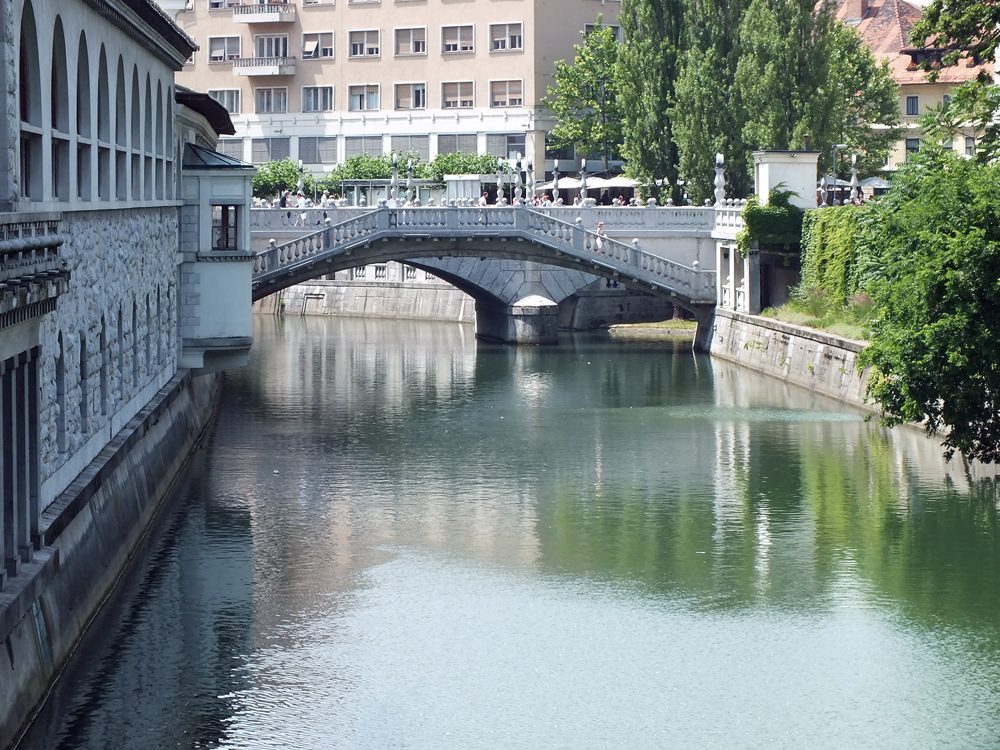
Triple bridge – Prešeren Square which is actually oval shaped and the centre of the historic old town. The pink church is the Franciscan Church of Annunciation.
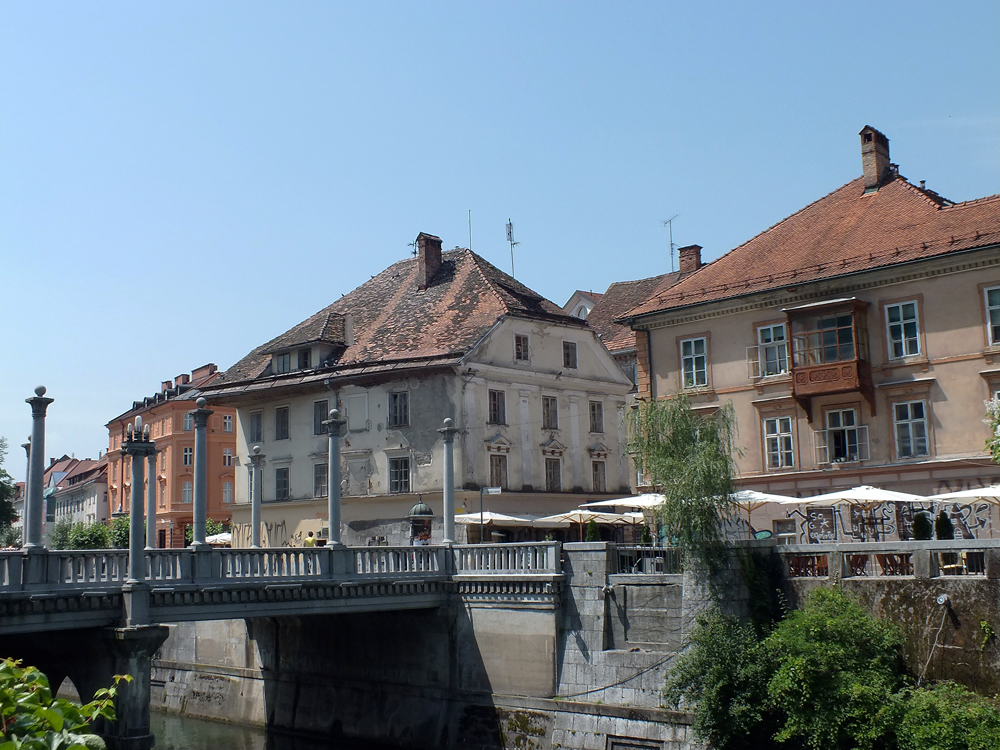
Cobbler’s bridge built by the architect Jože Plečnik between 1931 and 1932, was formerly occupied by a covered wooden bridge connecting the Mestni trg and Novi trg squares, two major parts of medieval Ljubljana. The bridge provided space for cobblers’ workshops – hence the name Cobblers’ Bridge. 
Triple Bridge. Between 1929 and 1932, the side bridges, intended for pedestrians, were added to the original stone bridge to a design by the architect Jože Plečnik, who thus created a unique architectural gem of Ljubljana.

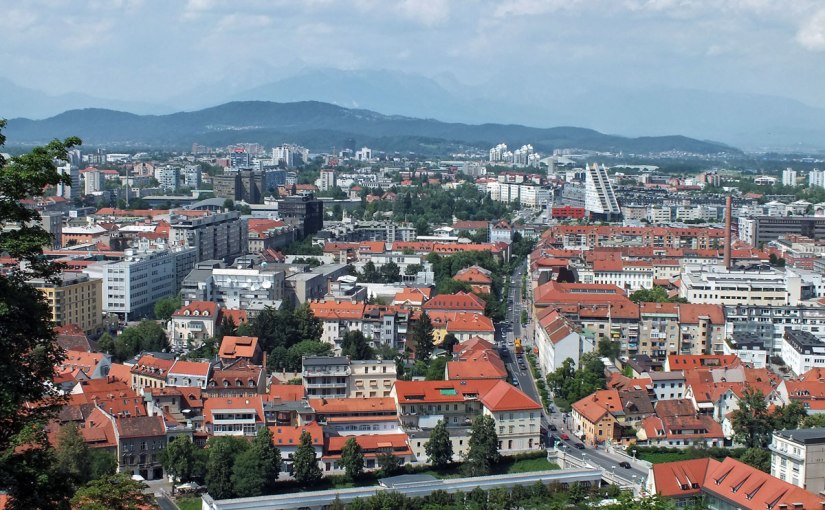
Between Castle Hill and the Ljubljanica River is the city’s Old Town, defined by three ‘squares’, which are actually more like narrow, cobbled streets. The whole area is pedestrianised and easily walkable with lots of charm and history.
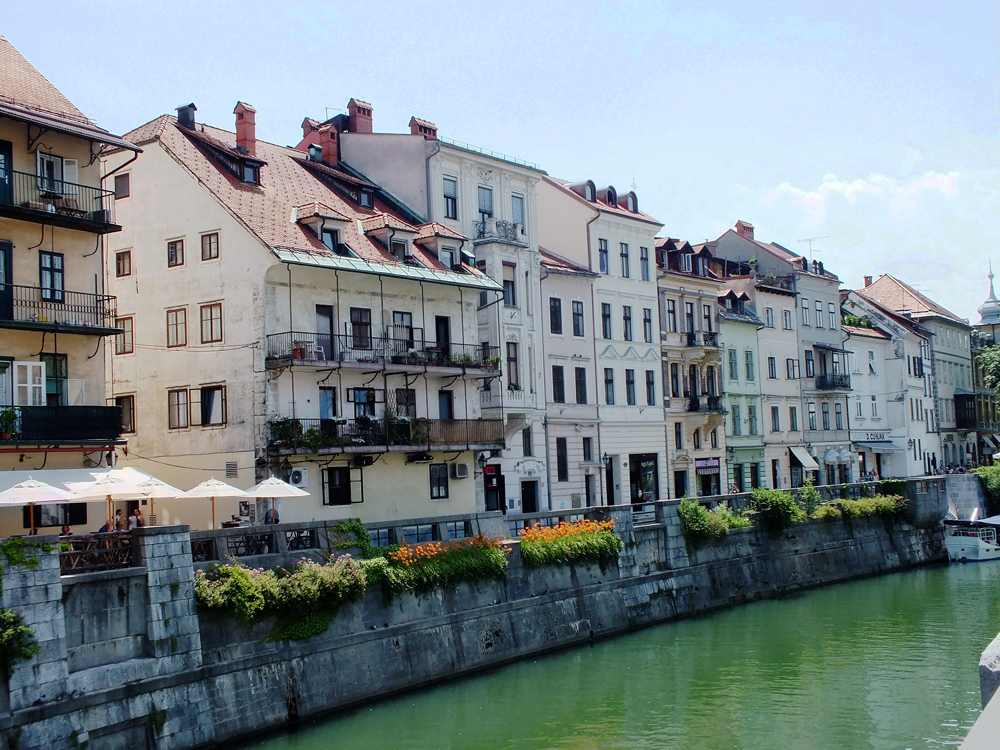
I have blogged about this city before, but let me introduce you to some more of the interesting and quirky sights on my wander around.
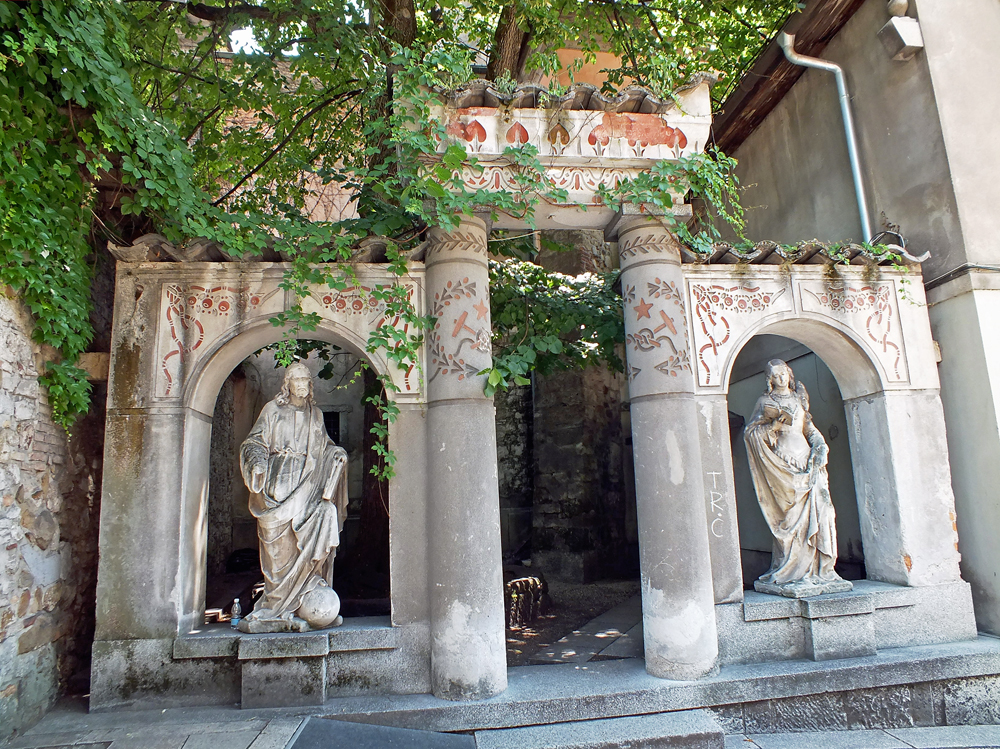
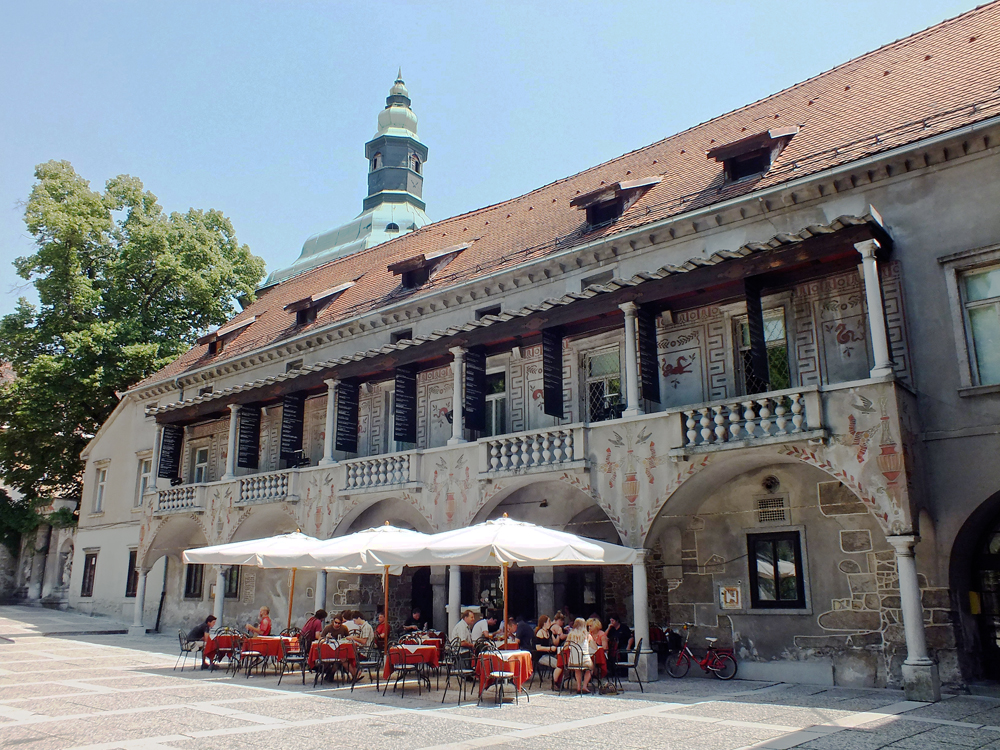
Križanke – Knights of the Cross monastery. The architectural complex of Križanke is a popular open-air venue for performing arts in Ljubljana. The architect Jože Plečnik converted this former monastery between 1952 – 1956. The conversion of the Križanke complex was Plečnik’s last project.
The Križanke Summer Theatre with a capacity of 1,400, regularly hosts concerts of various types and is one of the main venues for the summer Ljubljana Festival.

 “Locksmith Street,” is a narrow alley in the medieval old town in the Slovenian capital city. The entrance is marked by a key. In the middle of the cobblestoned street is a gully that appears to be flowing with hundreds of strange little faces. Some happy, some sad, some rather strangely distorted. There are 700 of these bronze faces running through the centre of the alley, culminating in a drinking fountain and a couple other odd sculptures, namely a bronze hand and a skeleton trapped in a cage.
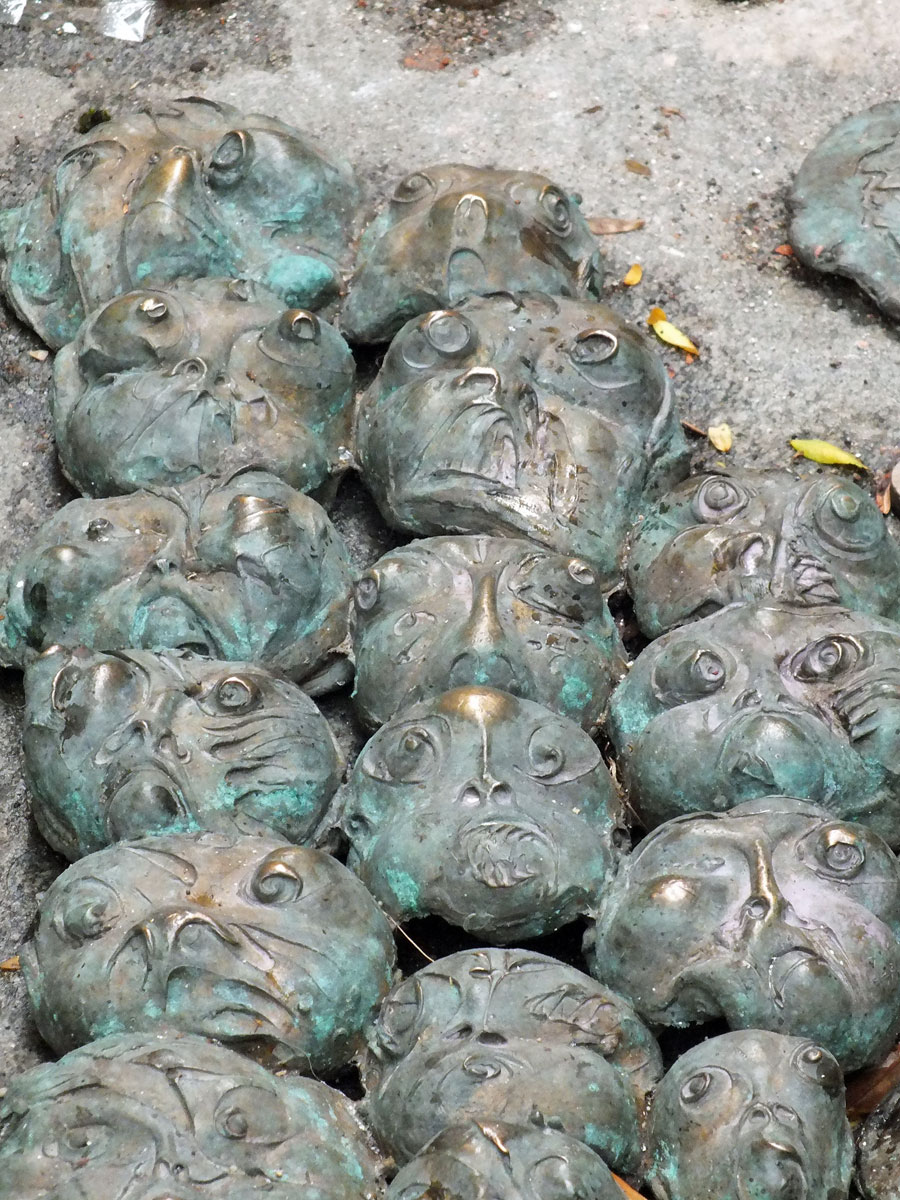
Faces by Slovenian sculptor Jakov Brdar

Ljubljana Grad, is the castle on top of the hill in the centre of the city. It was originally constructed in the 11th century as a medieval fortress, but most of the current structure dates back to the early 16th century, when most of the castle was rebuilt after a devastating earthquake. It’s been used for everything from a military defence fortress to an army hospital and even a prison; as late as the 1960s it was even used as public housing.
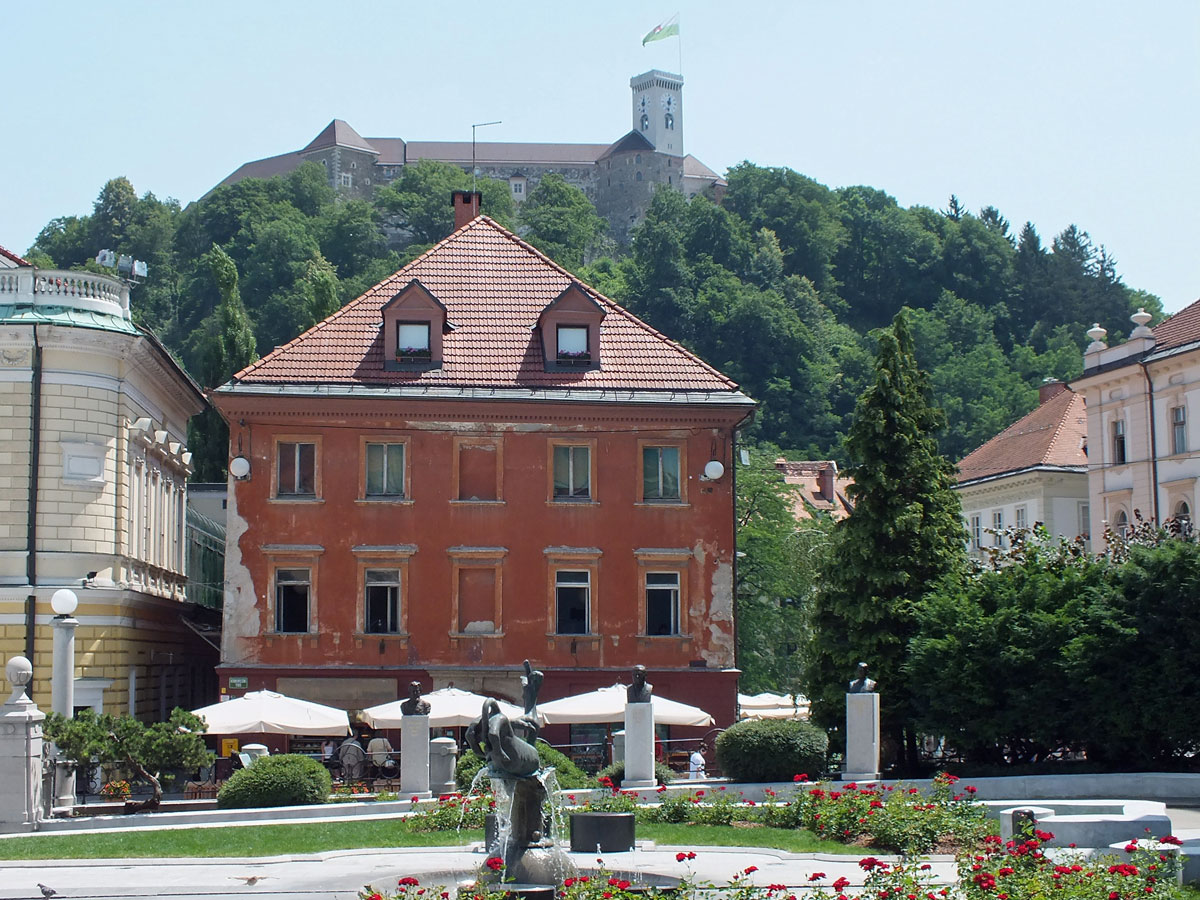
Ljubljana Grad / Castle

A good thing about this European city is that it is not overrun with passengers from cruise ships so although there are tourists it still very much feels like a city where locals live and work and have fun.
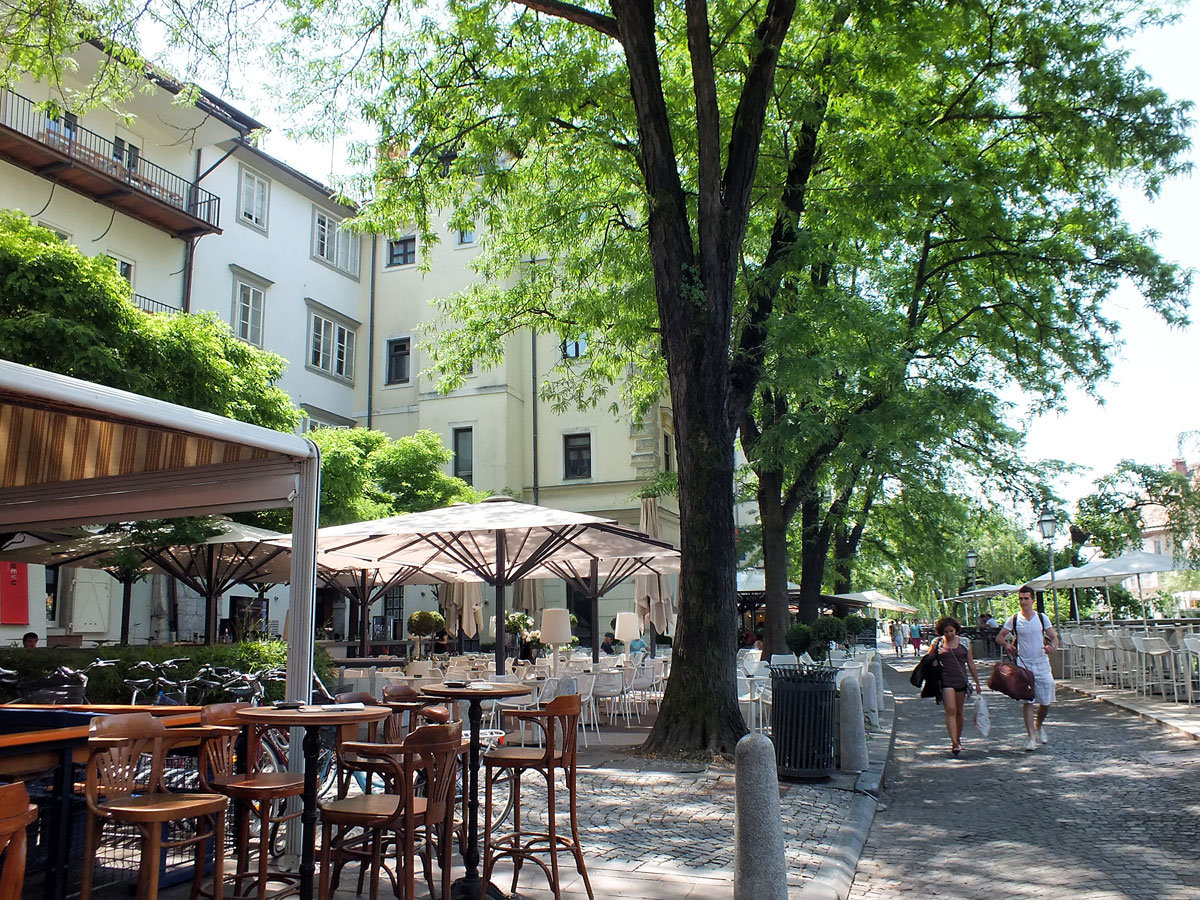
Along the Ljubljanica

The city has a vibrant café scene and one of the best places to be on a sunny day is sitting outdoors by the riverside watching the world go by. It feels a bit Mediterranean crossed with eastern European with street cafés, bars and restaurants, lovelocks, open air markets and Viennese Secessionist architecture and 19th-century wooden shop fronts, quiet courtyards and cobblestone passageways.
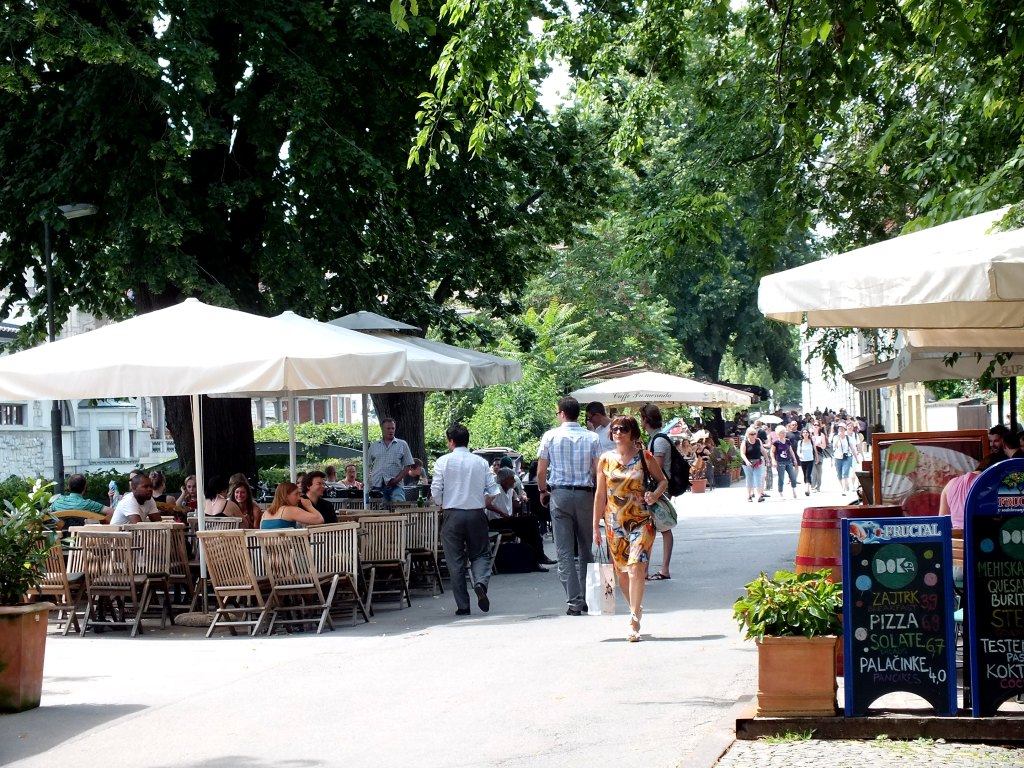
Travel Photo #6

Café Culture – Ljubljana, Slovenia

Su Leslie (aka Zimmerbitch) invited me to join her and other bloggers posting a travel photo a day for ten days. The deal is I also invite someone else each day to join in, and ping-back to my post. But as several bloggers I know are already busy with the challenge I am going to resort to inviting “anyone who feels like joining in”

Square September: Pink

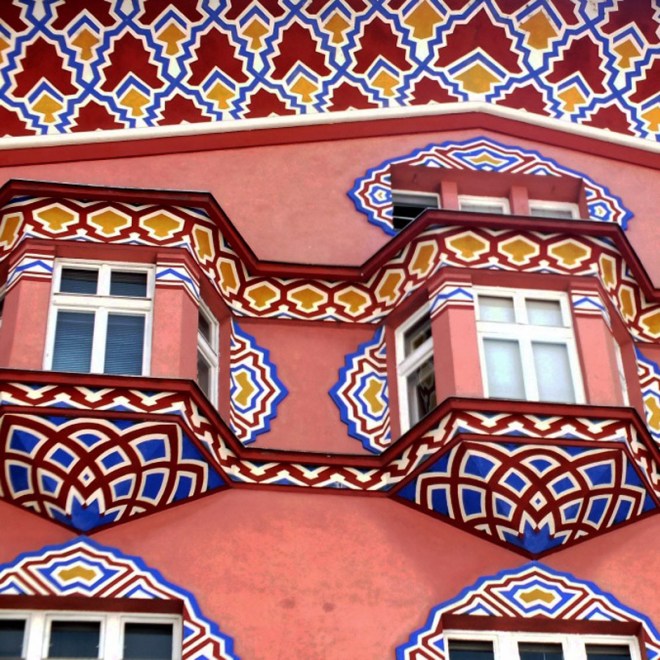
Becky’s September square photo challenge Day four!  She would like us to share photos which embrace ‘pink’ –  there could be pink in the photo, the subject or photographer could be ‘tickled pink’*, or indeed looking ‘in the pink’*.  A photo that manages to do all three things is the ultimate offering.

Vurnik House or the Cooperative Business Bank building Ljubljana – outrageously pink.

*in the pink’ means in perfect condition, or in good health, and ‘tickled pink’ means delighted.

September Squares | Pink

U for Ursuline Monastery

frizztext hosts a weekly A – Z Challenge

A_Z logo

Event Type: General Blogging

Start Date: Tuesdays, recurring weekly

Description: Every Tuesday I offer the “A to Z challenge”, walking step by step through the alphabet.

If you would like to join in then please click here

ursuline-monastery-1

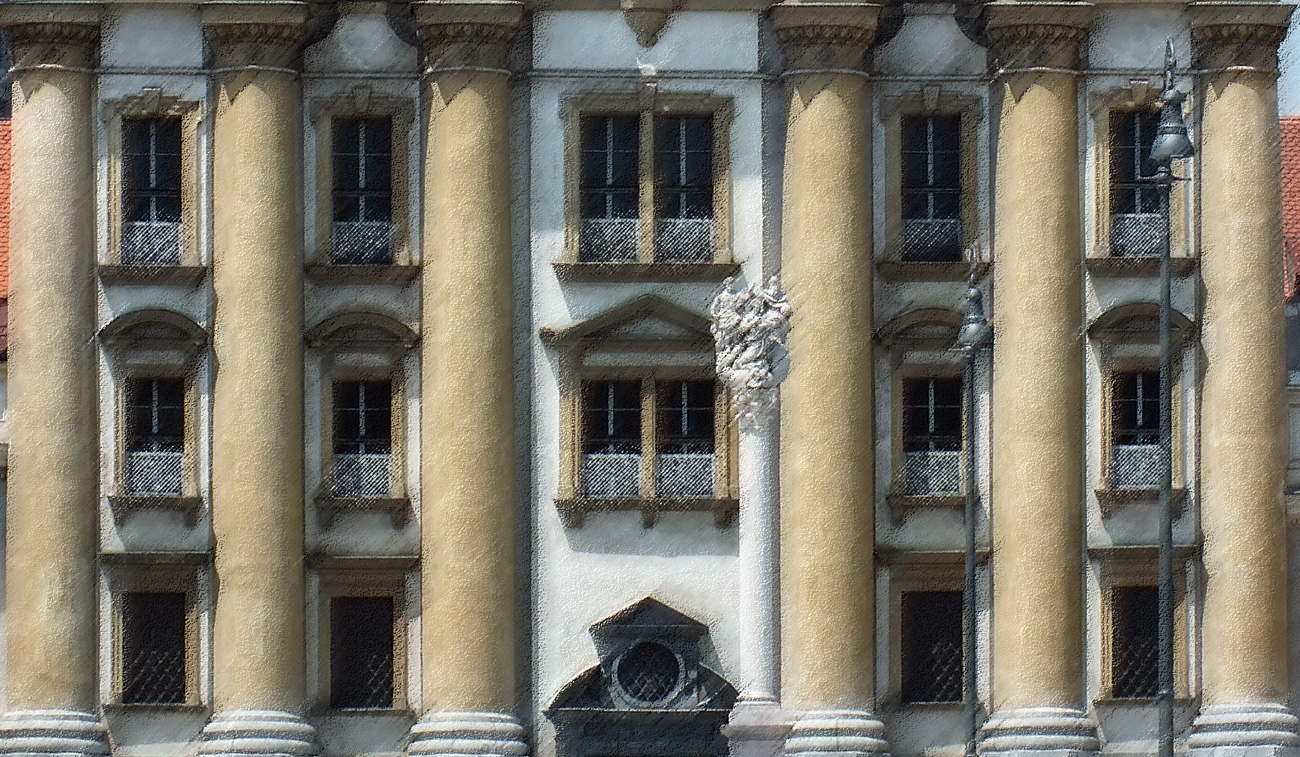
The Ursuline Monastery in Solvenia’s young capital, Ljubljana and the Holy Trinity Parish Church  was commissioned by Jakob Schell von Schellenburg, a wealthy local merchant and financier, and his wife Ana Katarina. During the construction of the Trg republike square, the Monastery underwent a thorough reconstruction and its garden was completely destroyed. 

Its undulating façade enhanced by semi-columns and a characteristic gable inspired by the famous Roman architect Francesco Borromini make it one of Ljubljana’s most beautiful and extraordinary example of Baroque architecture.

U---ursuline-monastery-2

In front is the Holy Trinity Column erected in 1693 as a thanks offering for the city having been spared from the plague.

U---Ursuline-Monastery-rough-pastelsand given the number of windows in this beautiful building I am linking this to Dawn’s Lingering Windows Challenge.

N for Narodna in univerzitetna knjižnica

frizztext hosts a weekly A – Z Challenge

A_Z logo

Event Type: General Blogging

Start Date: Tuesdays, recurring weekly

Description: Every Tuesday I offer the “A to Z challenge”, walking step by step through the alphabet.

If you would like to join in then please click here

or National and University Library, Ljubljana, Slovenia.

N - national library in Ljubljana

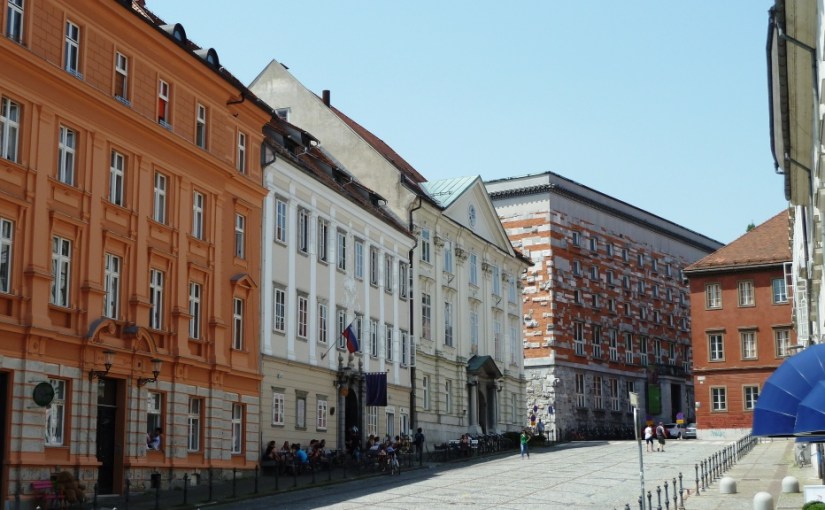
It is located in the centre of Ljubljana, between Turjak Street (Turjaška ulica), Gentry Street (Gosposka ulica), and Vega Street (Vegova ulica), in a building designed by the architect Jože Plečnik in the years 1930–31 and constructed between 1936–41. The building is considered one of the greatest achievements by Plečnik. Wikipedia

 “From the twilight of ignorance to the light of knowledge and enlightenment”

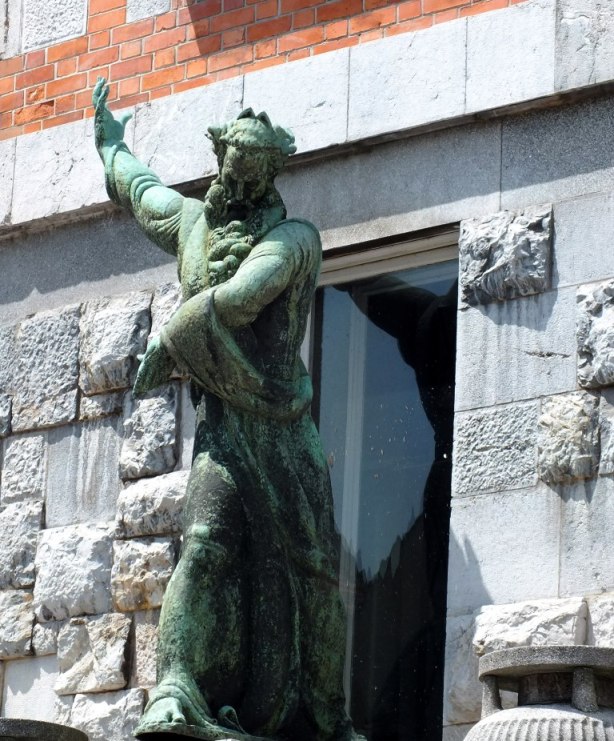
The building has a square ground plan and is a massive block with a court. The front façade, oriented toward Turjak Street, was designed as a combination of brick and stone embeddings, some of them archaeological remains from the place. It was modelled in the manner of the Italian palazzo and the handles of the main door end with a little head of Pegasus. The side entrance from the Lord Street is decorated with a sculpture of Moses, created by Lojze Dolinar.

N

Unfortunately we were being guided through the town by a friend so didn’t have a chance to get up close to this unusual building, nor go inside.  So if you have seen the interior I’d love to know what it is like.