
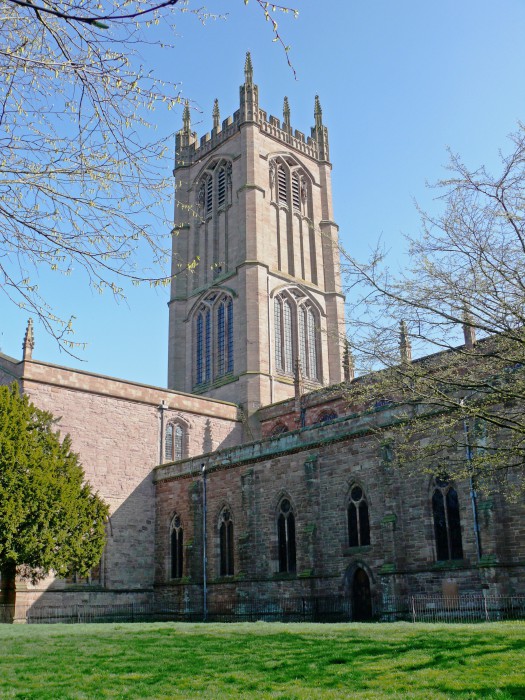
Ludlow’s church can be seen from miles around due to its large tower. The original church was started in 1199 and added to in the fourteenth century with a decorated hexagonal porch. The chancel and the nave were built in the perpendicular style in the early 15th century. It was one of only 18 churches given a five-star rating in England’s Thousand Greatest Churches by Simon Jenkins (1999) and is described as the “Cathedral of the Marches”
An important body in the town was the Palmers’ Guild which began around 1250 as a mutual benefit society, but later concerns were with provision for the after-life. By using the name Palmer, the Guild associated itself with pilgrimage to the Holy Land and a window in the Guild’s own chapel of St John the Evangelist depicts a legend that attributes the foundations of the Guild to Edward the Confessor. The town’s economy and medieval prosperity came from wool.
I have been promising to show more images of the interior so let’s have a look around and you will see why I find this building so beautiful and how it connects the present town of Ludlow to its historical political importance (Wars of the Roses) and economical past.


Five hundred years ago the church would have looked very different inside. Instead of bare stone the walls would have been brightly painted, but only a small portion of barley-twist striped paint can be seen on the column near the lectern. And there were no pews then, people stood in the Nave for services. About 450 years ago all chapels in churches had to be removed and the wall-paintings white-washed over. In some churches statues and windows were broken.
I have a separate post about some of the wonderful windows inside this building, but I shall do another more detailed post on them, plus the historic misericords that exist in the chancel. Some are from the late fourteenth century, but most around 1447.


There are now three chapels. St John’s, where the entrance to the tower can be found and also the beautiful Palmers’ window telling the story of their pilgrimage to Jerusalem;


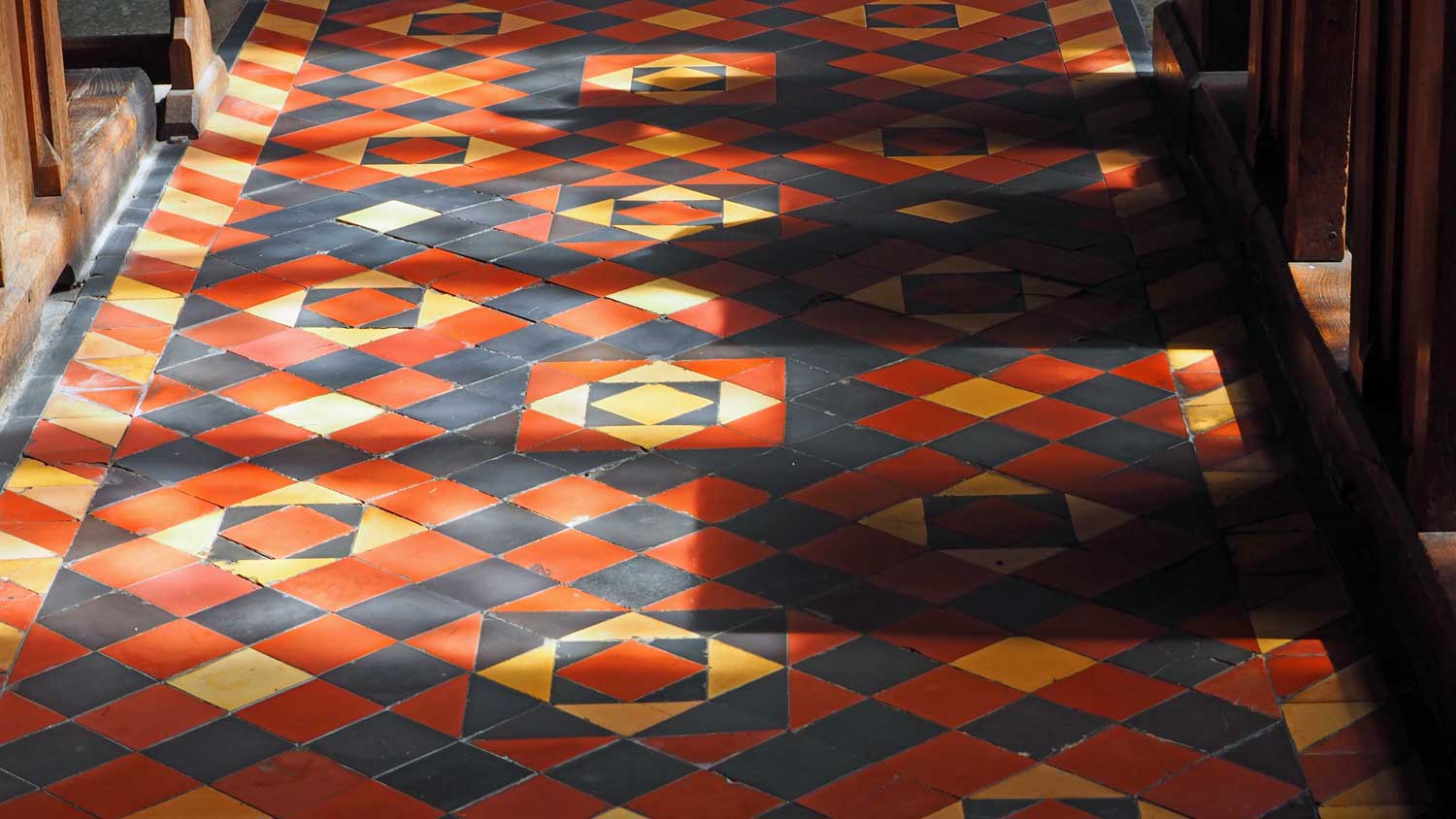
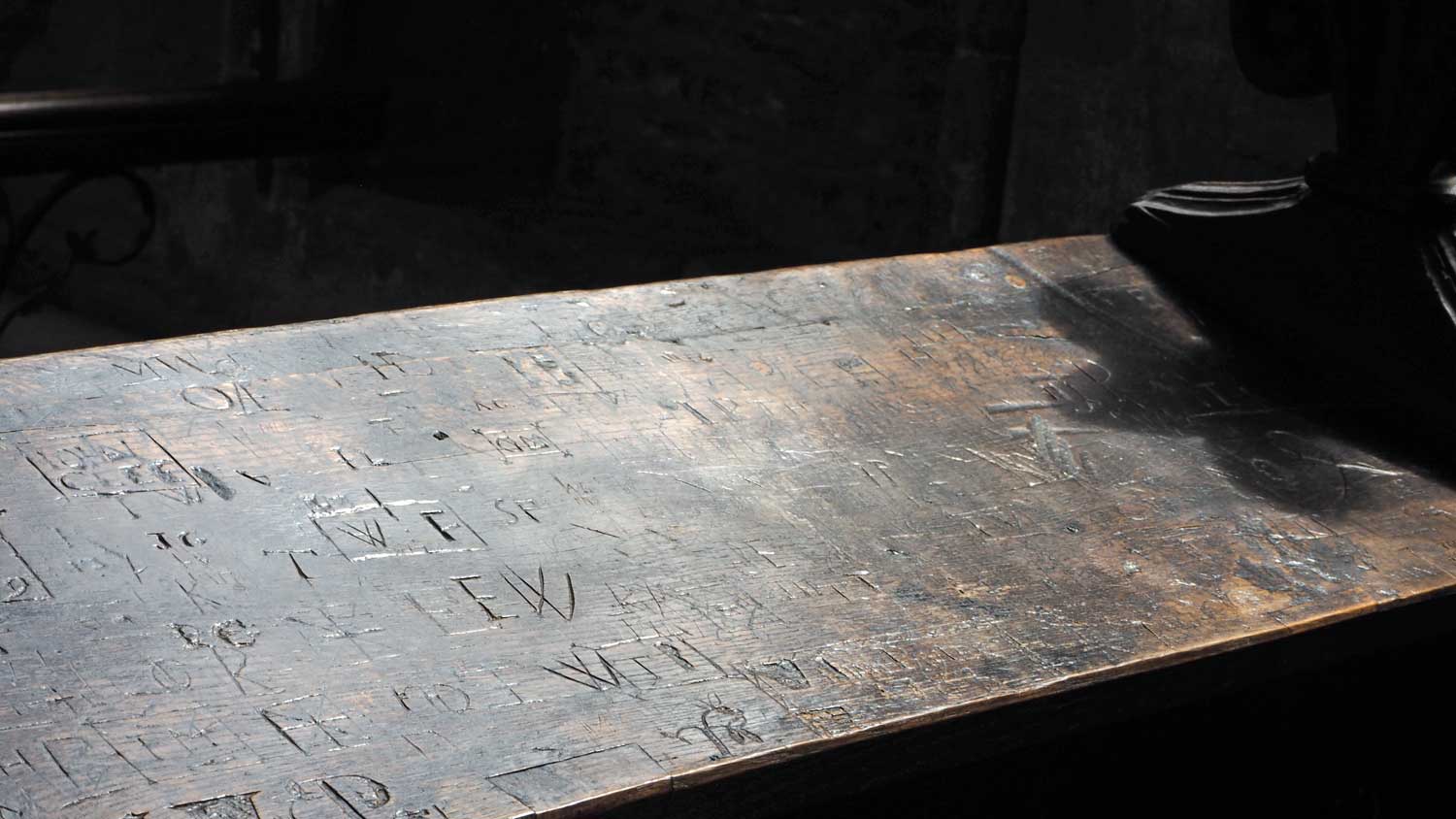
Lady Chapel (named after Mary, mother of Jesus with a marvellous Jesse Window) has beautiful tiles on the floor and was once used as a school. You can still see carvings on the desks done by the pupils;
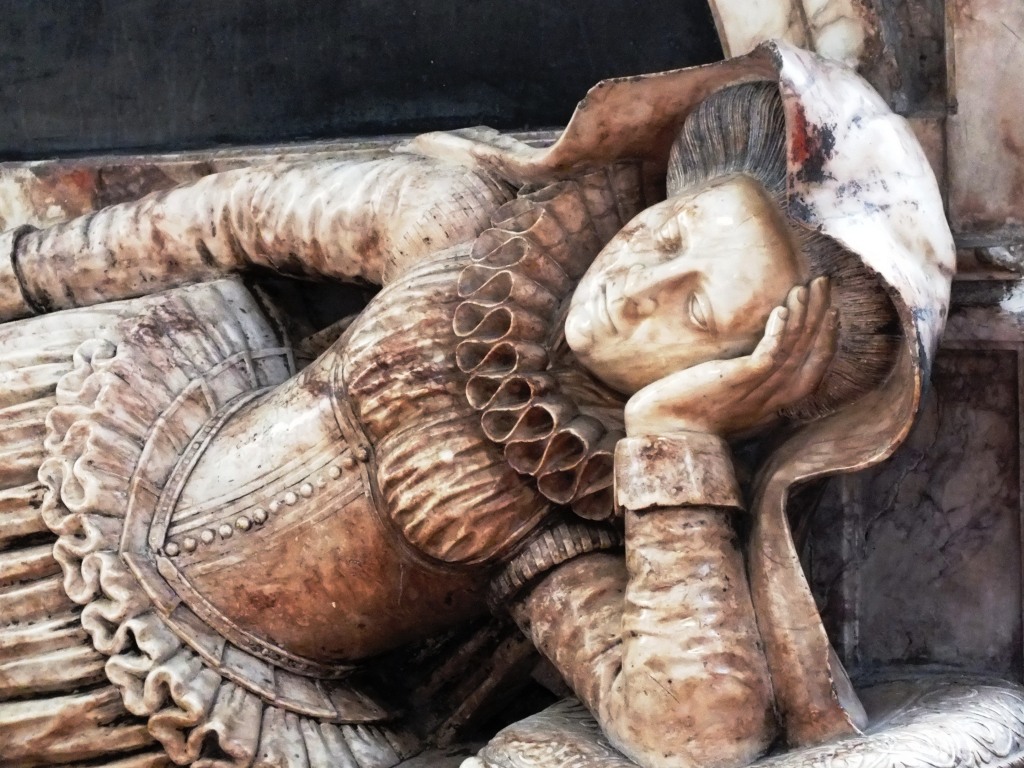
and St Catherine’s Chapel where there is a flag from the HMS Ludlow named after Ludlow in Shropshire and Ludlow in the USA. The monument here is unusual as the lady is carved on her side. The chapel was used for meetings by two of Ludlow’s craft guilds: the Weavers and the Shoemakers.
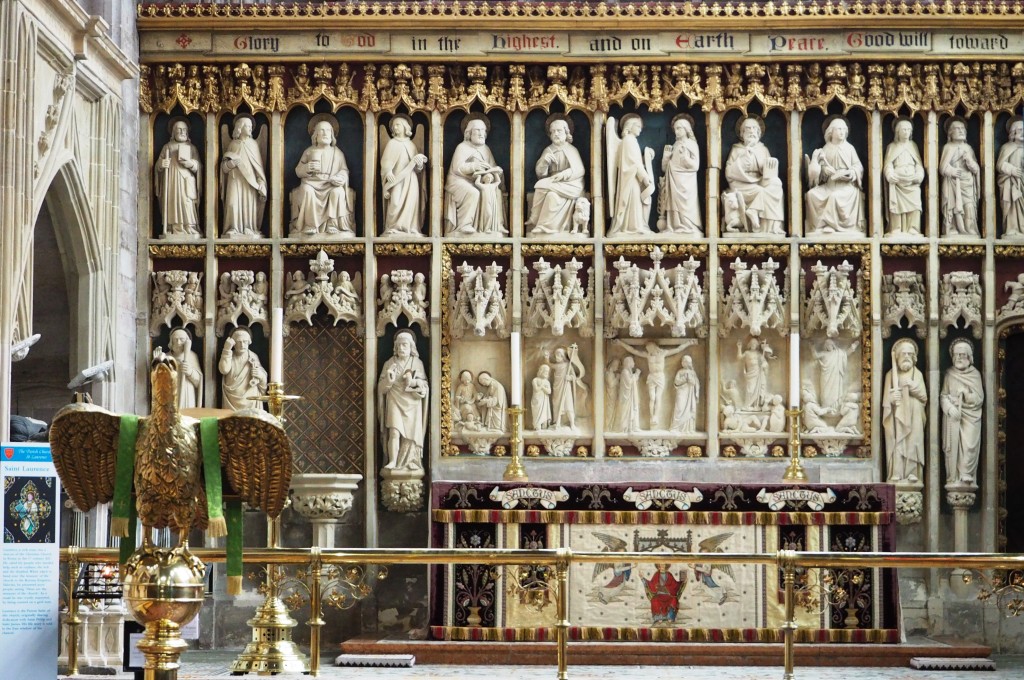
The Chancel is the most beautifully decorated part of the church and because it was the most important part many people wanted to be buried here.


The large coloured tomb by the altar table is that of Sir Robert Townshend and his wife Dame Alice. They died in the reign of Elizabeth I and the tomb is surrounded by small figures of all their children.


An unusual addition on my recent visit was this beautiful example of a Medieval Organ built by organ builders Goetze and Gwynn for the medieval church of St Teilo, being reconstructed as it was c.1520 in St Fagan’s National History Museum Wales. The new organ shows some influence from the Old Radnor case, reflecting a Welsh character; the pipework was modelled on the earliest West Country survivals from the mid 17th century (source: Bangor University Religion & Society)


Enjoy this beautiful place.


Gorgeous! The tiled floor has such rich colours – that’s a lovely photo Jude
My favourite one too! I just caught the light right.
The Parish Church of St Laurence in Ludlow is indeed beautiful, Jude. Great photos displaying the outstanding interior.
Love from the Alps, Dina
Thank you Dina. It is a fascinating source of social history. Every time I go inside I notice something different. Hope you are enjoying the Alps – French ones I am guessing?
Gorgeous photos, Jude and lots of interesting tidbits. Larry’s certainly got a beautiful church. But what’s the story with the blue porcupine?
Ah, you are a clever thing MOSY, to identify it as a porcupine. Answer and link below in Meg’s reply. Henry Sidney’s coat of arms.
Mystery solved! I do love a tidbit of trivia. Thanks, Jude. 🙂
I really enjoyed this, what a spectacular church, it certainly deserves the title of Cathedral of the Marches. Love the angels on the ceiling and the Lady Chapel floor 🙂
Thanks Gilly. I had to go back inside with my new camera as I have taken photos before, but never been happy with most of them and I wanted a reminder of how beautiful it is.
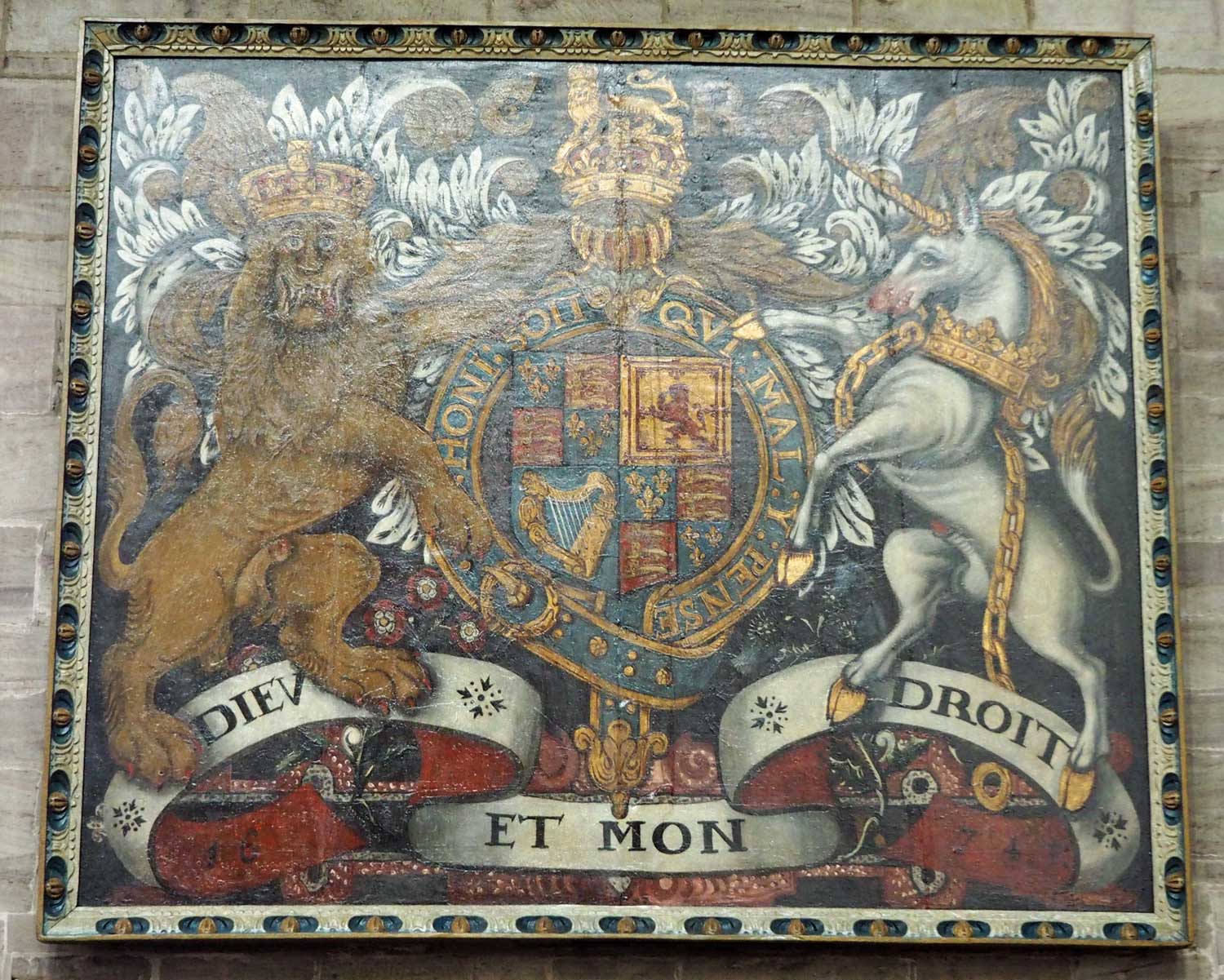
Ludlow is a Tardis in both senses of the word: a time machine, and bigger by far on the inside. You keep on unveiling treasures, and treasures within treasures. I’m glad you photographed the church with bare trees, and showed the barley sugar column. You have captured wonderful detail – oddly, the most evocative are the schoolboy (presumably) carvings on the desk. The lady on her side is quite disturbing, because it’s not the traditional pose, and her face is so visible and real. The skull was a startlement. Tell me please, is that a hedgehog in chains – if not, what is it? And if so, why??? Impressive photography -clear and sharp.
Ludlow was a very important town in the past, much more important than I ever realised. The castle was used by royalty then much as Sandringham and Balmoral are today. Every time I go inside the church I notice something different, visual art, religious and social history , it has it all. The lady on her side was carved as such to save space! And the hedgehog? I have been puzzling over that one for a while. I don’t know what it represents, but I shall try to find out.
OK. It is part of the coat of arms of Henry Sidney and it is a porcupine.
Henry died in Ludlow and was a companion of Prince Edward / Edward V1
Henry Sidney
I must stop going in there as I always come out with more questions! But thank you for your interest. I love finding out about historical events / people.
The details are lovely – I can see why you like it so much. I am surprised, for some reason, about how colourful it is inside.
There are so many colourful tombs and the ceiling in the chancel is amazing! These churches must have looked incredible back in the medieval period.
Imagine them lit by candlelight too, and the effect would be completely different from our electric light.
So much to see and absorb, no wonder you need to keep going back. Lovely photos and so much detail.
One thing leads to another… comments about the blue hedgehog/porcupine led me to Henry Sidney’s story and once again I find myself intrigued by medieval times. I am going to have to find a good history book or two!
History bored me at school (maybe it was the teacher) but now I find it fascinating. (maybe an age thing too!!!)…
…as in old things attract other ancient things?
Too true….
I love learning the history of gorgeous places like this. Thanks for sharing.
You are most welcome. I love finding out about these things that have such a history behind them.
It does look beautiful Jude. I’m just having a quick look while Mick puts his foot down cos there’s lots to do when I get back.
I assume you are referring to Mick’s driving, not him admonishing you. Too much concentration on the misericords 😉
Thanks for the tour.
You are welcome. Churches can tell us so much about social history.