An unfinished temple

I’m taking a short break from the UK trip and English cathedrals and going back to October and my first visit to Barcelona where I continue in the cultural vein. First the Basílica i Temple Expiatori de la Sagrada Família which probably needs no introduction to most of you. Famous as Antoni Gaudi’s last and greatest masterpiece, it is hoped that it will finally be finished in 2026 to mark the centenary of his death. Maybe, with a bit of luck, I will be able to visit it again then.

“My client is not in a hurry…”
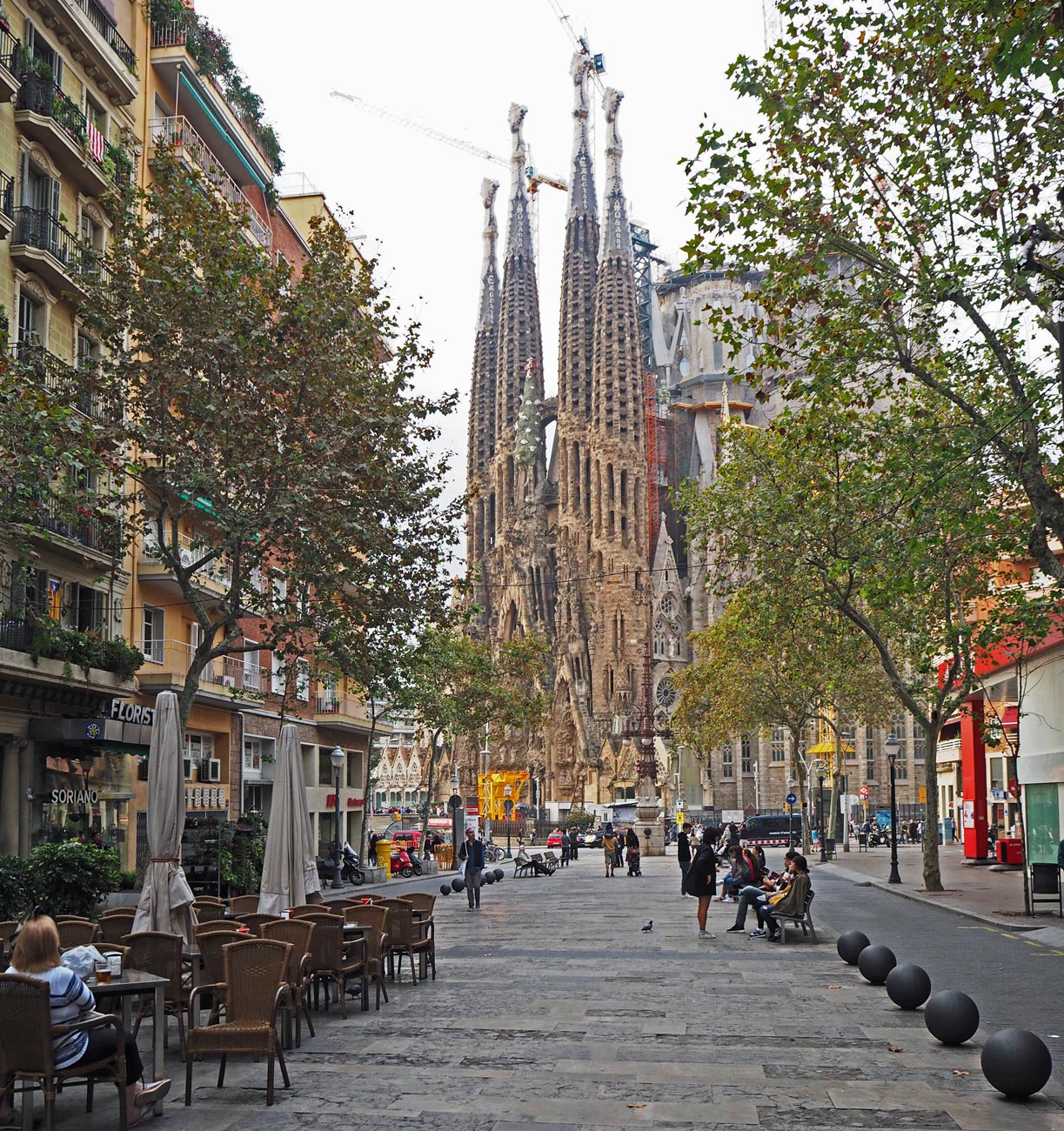
pa230315
View from Avenue de Gaudi

The Sagrada Familia is an international centre for spirituality which, in an exceptional setting, invites people of all backgrounds and faiths to share in a sense of life based on love, harmony, good, generosity and peace.

pa210028
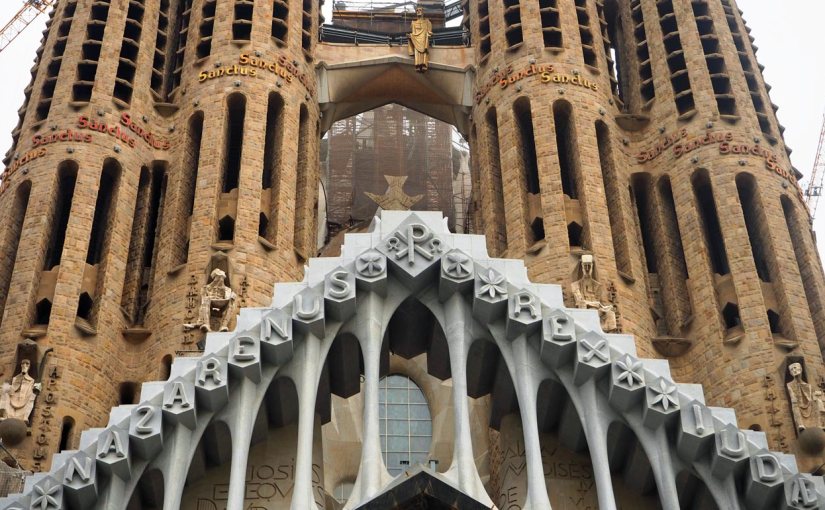
Passion façade

Before going in to the building we took a wander around the outside. Although there is a lot of construction going on and cranes, scaffolding etc. in the way, it is possible to see a lot of the recent work.

The sculptures on the Passion façade (Western side) are very different to those on the Nativity side. It is austere, plain and simple, with ample bare stone, and is carved with harsh straight lines to resemble the bones of a skeleton. Although I’m not keen on the sculptures, they do convey the feeling of despair and deep suffering. The building itself is supposed to represent ribs and muscles.

Please consult Wikipedia for more information about the façades

In contrast the Nativity façade is much more decorative and characteristic of Gaudi’s naturalistic style. It faces the rising sun to the north-east to represent the birth of Christ and divided into three porticos – Faith, Hope and Charity – and a tree of life.

pa210003
The tree of life

“It is probably impossible to find a church building anything like it in the entire history of art”
~ art critic Rainer Zerbst
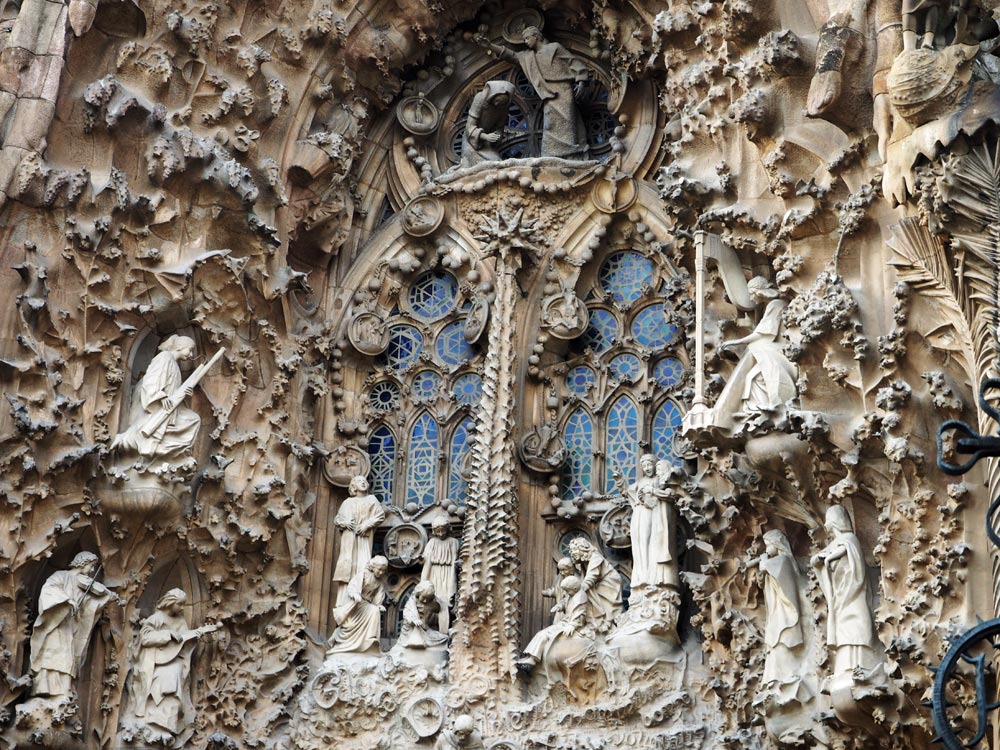
pa210005
The scene of the birth of Jesus with musicians and singers

“The most extraordinary personal interpretation of Gothic architecture since the Middle Ages.”
~ Paul Goldberger

You could spend an awfully long time looking at the stories and all the little details on the façades and one of my favourite parts was actually the doors – about which I will create a separate post.

If you are going to visit the Sagrada Familia then I would recommend that you buy your timed tickets online before you go to avoid the long queues, and also choose the audio tour. This gives you so much information about what it is you are seeing and you can do the tour in your own time and route. I would imagine trying to hear a tour guide in among all the crowds must be pretty difficult.

Next will be the interior which is like no other interior of a church ever seen.
ambience and atmosphere

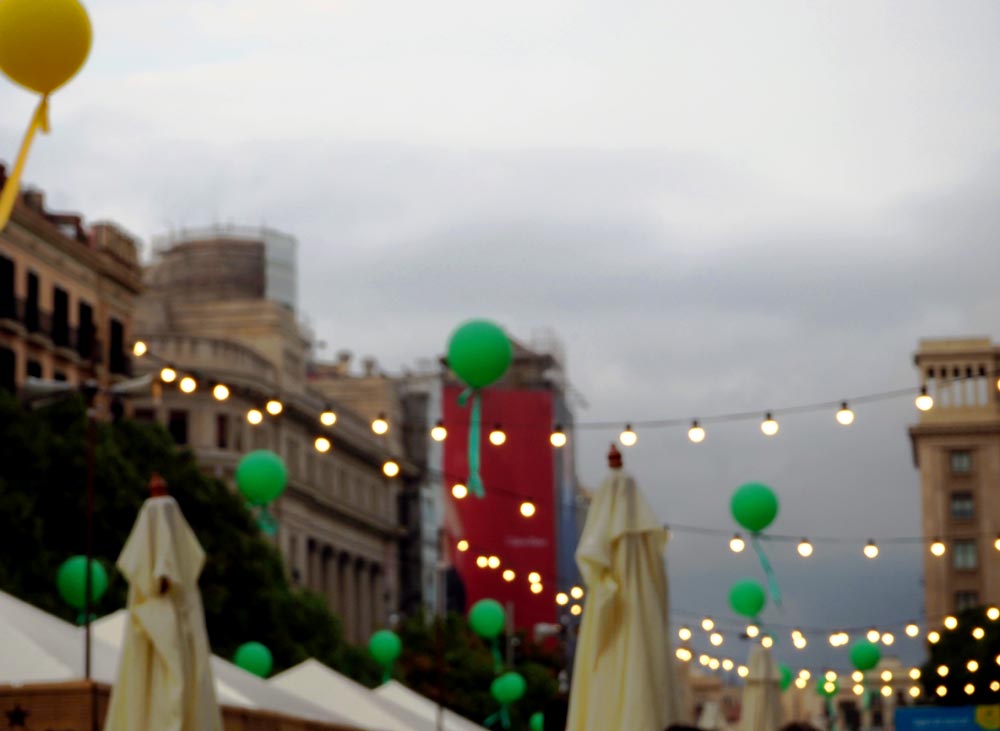
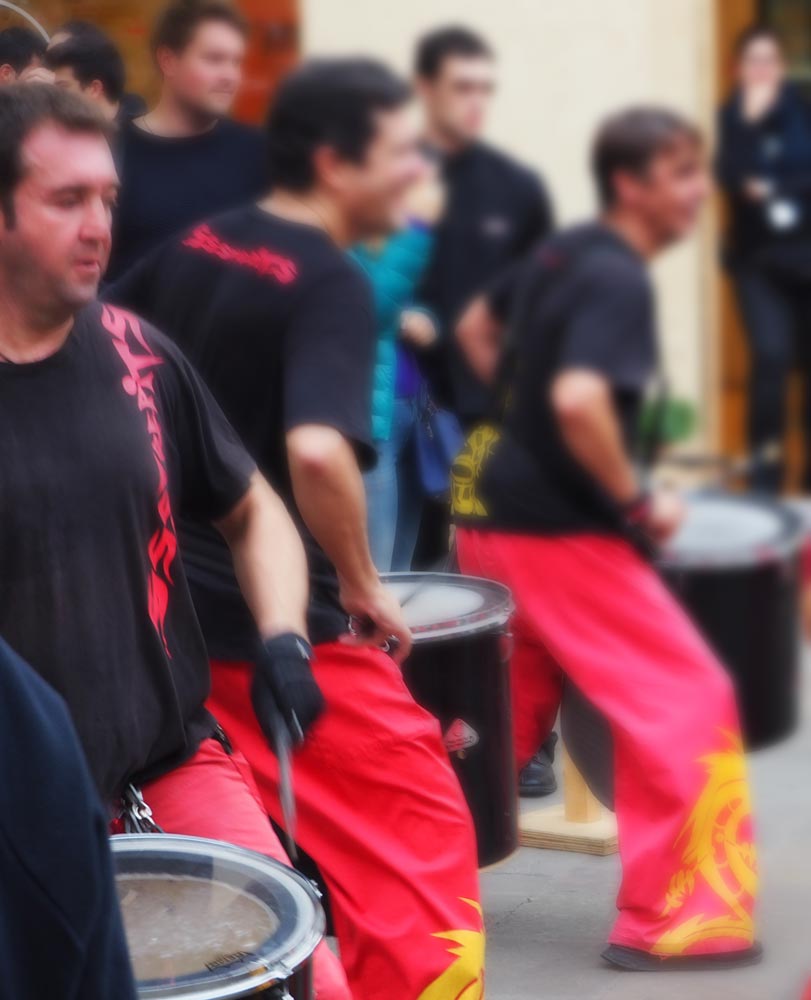
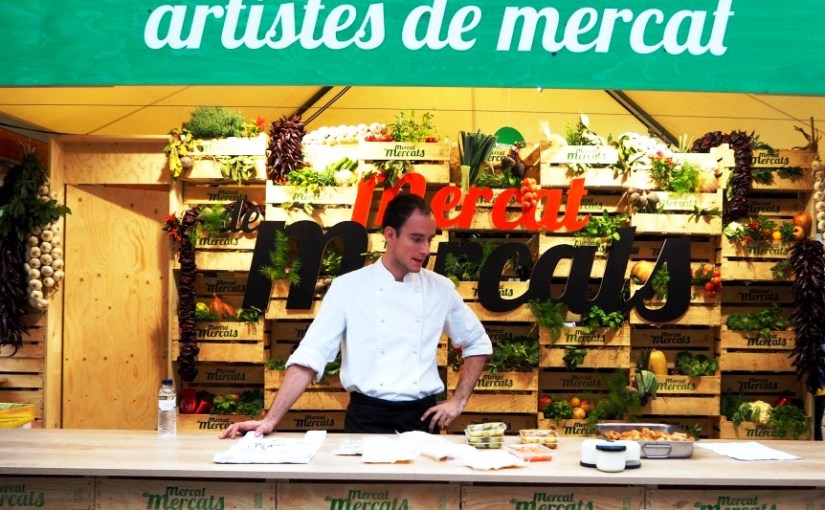
The street market in Barcelona, close to the cathedral, was buzzing with mid-afternoon crowds. Fairy lights and coloured balloons created a party atmosphere and the throb of the Barcelona street drummers, the whistles and cheers of the crowd, all added to the ambience. You could hear and smell this place before you arrived.

ambience

ambience2

But let’s get down to the food:

naughty chocolates and pretty macarons (though I have to confess to never having tasted one)

OLYMPUS DIGITAL CAMERA
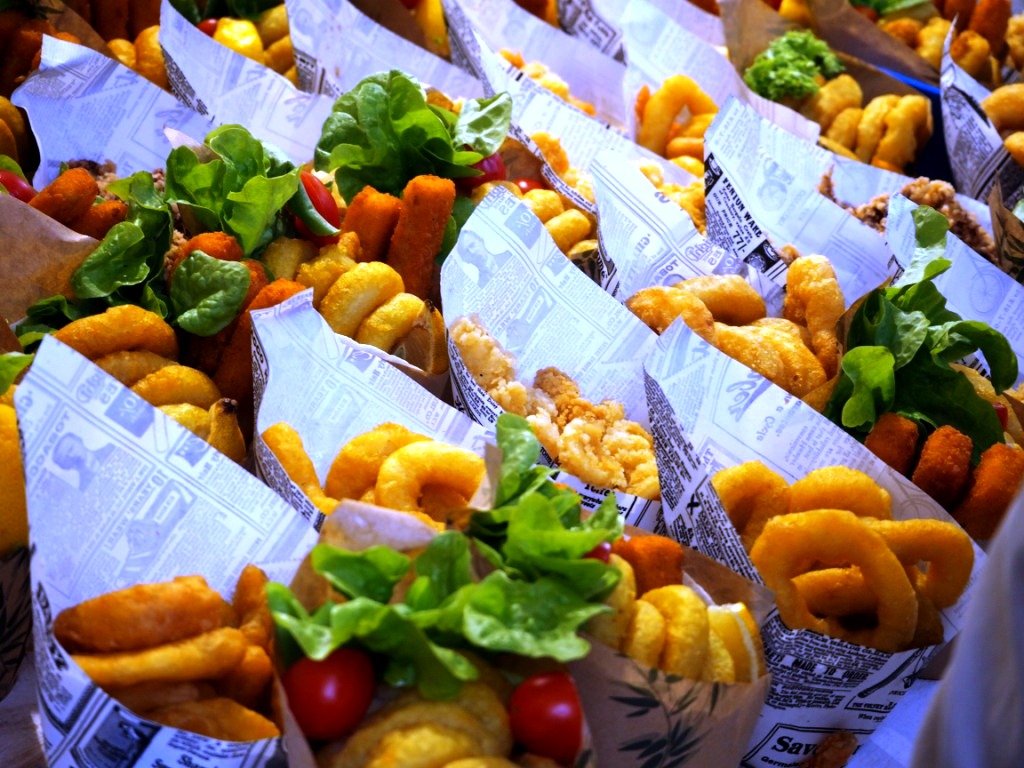
Calamari anyone?

tempting offerings from the sea, wrapped in newsprint

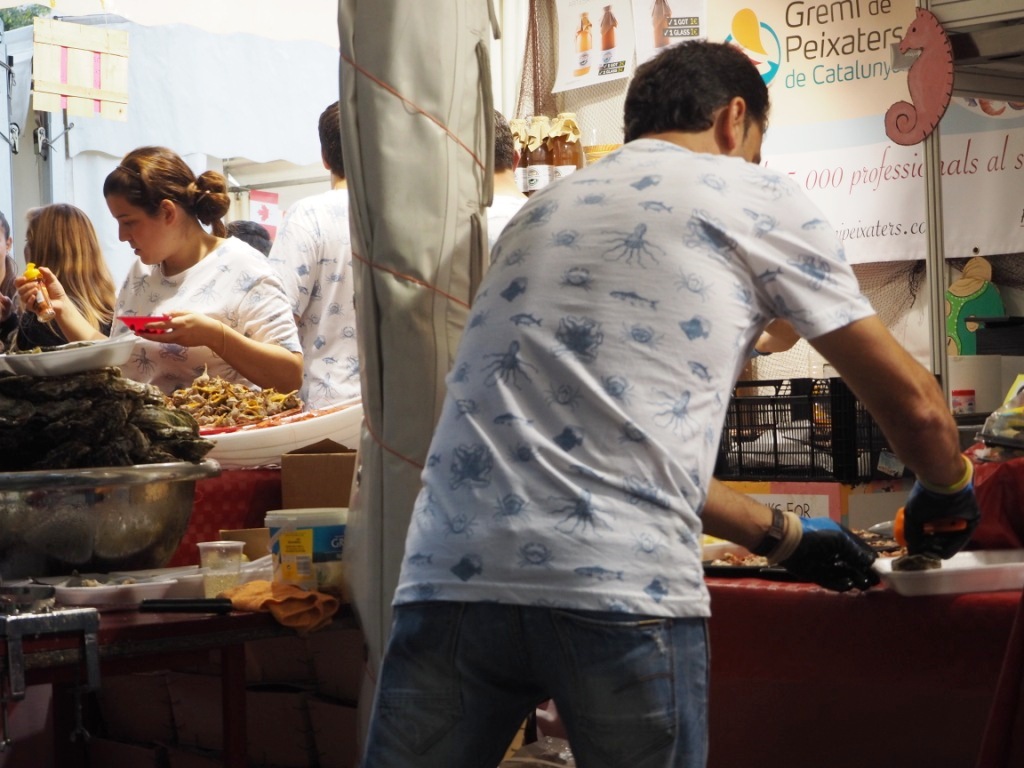
and busy, busy stall-holders serving out their goods

OLYMPUS DIGITAL CAMERA

We came across the food market accidentally, but so glad we did! There is nothing better than a good surprise.

Black and White Sunday: Passage

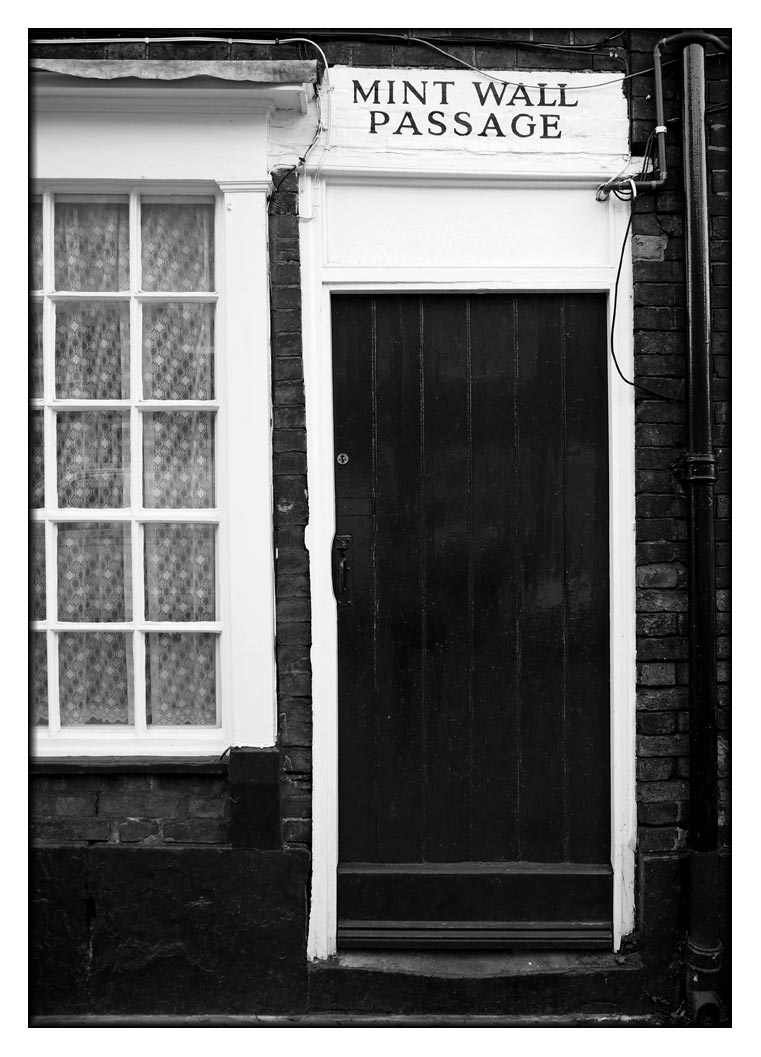
passage
Passage as in Passageway.

A literal interpretation. Mint Wall Passage on the Bailgate, Lincoln, England. Doors are often found alongside cottages in medieval towns leading to a passageway from which entrances to hidden houses or gardens are found.

In Shropshire such passageways or alleys are known as ‘shuts’, in Scotland and possibly north-east England they call them ‘wynds’, in Yorkshire I used to know them as ‘ginnels’ but ‘snicket’ and ‘gennel’ is also used. What unusual name is used in your region for a passageway or alley?

Please visit Paula to see other representations of this week’s challenge.

Norwich Cathedral Part V: Windows

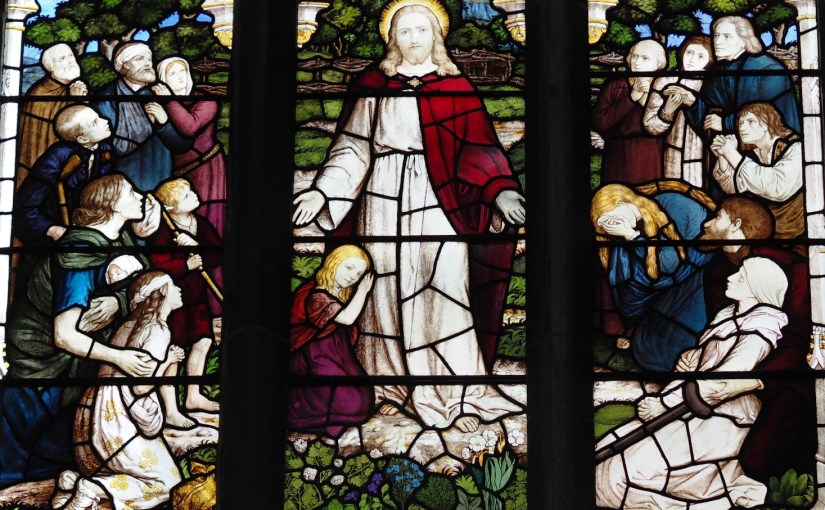
Finally, the windows. I am only going to show you a few glimpses of some of the windows, to be honest it is was quite dark inside this cathedral on this day (it was raining) and not easy to photograph the stained-glass. There are some lovely pieces so if you are able to visit then make sure you examine the windows or visit the Norfolk Stained Glass site which provided much of the information about the windows in Norwich Cathedral.

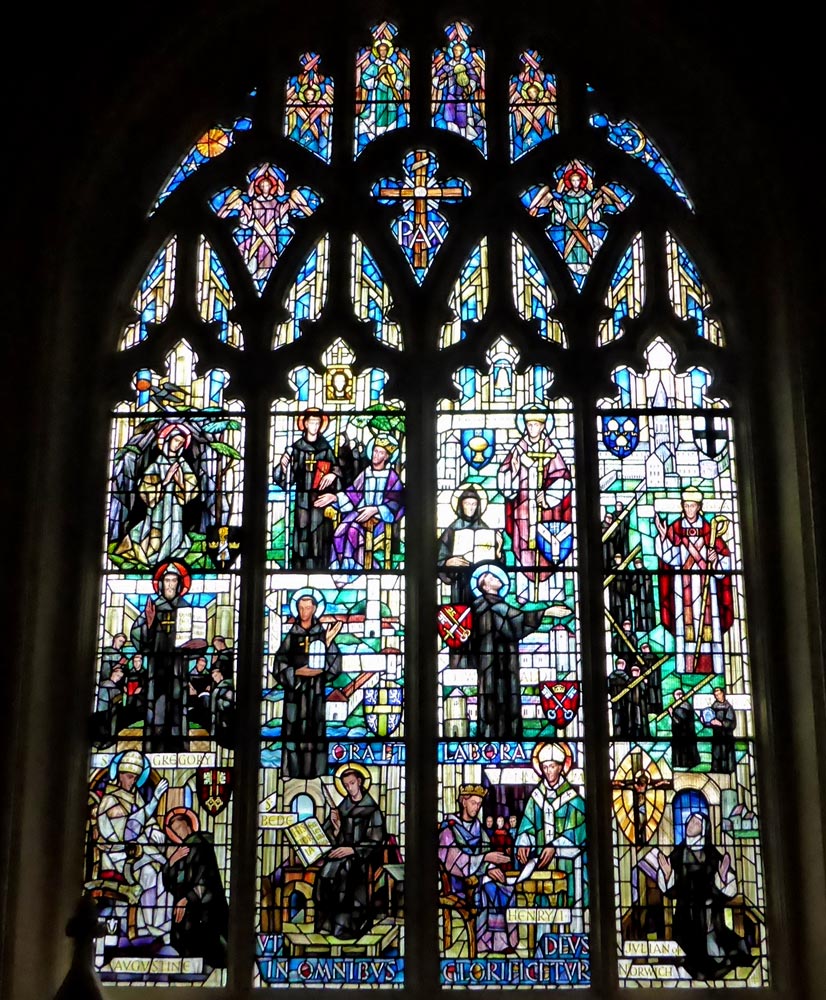
bauchon-windowThe Bauchon Window was designed by Maria Forsyth and made by Dennis King of G King & Son in 1964. The window given in honour of Julian of Norwich is in memory of Harriet Mabel Campbell (1874 – 53). The main lights depict Julian of Norwich, unusually dressed as a Benedictine nun, together with another eleven Benedictine Saints and other personages.

The tracery lights contain angels (some playing musical instruments) flanking a cross proclaiming “Pax.”

Continue reading Norwich Cathedral Part V: Windows

Thursday’s Special

Paula (Lost in Translation) has developed a liking for the unfocused in photography. I must confess that this is something that I didn’t like myself several years ago, but like her I have become attracted to blurred backgrounds, bokeh, tilt and shift experimentation and creating movement.

movement

This was an accidental photo – I was going for the vibrancy of the artwork on the security shutters of this shop in Barcelona. A couple of years ago I would have binned this shot, but now I love the movement of the passers-by and especially the pink and blue suitcases that match colours in the painting. Hope you love them too!