I have lived in the UK for most of my life, but when young I definitely had wanderlust and even ended up living in South Africa for several years which was a wonderful experience. I now look forward to a long and leisurely retirement doing what I like most - gardening, photography, walking and travelling.
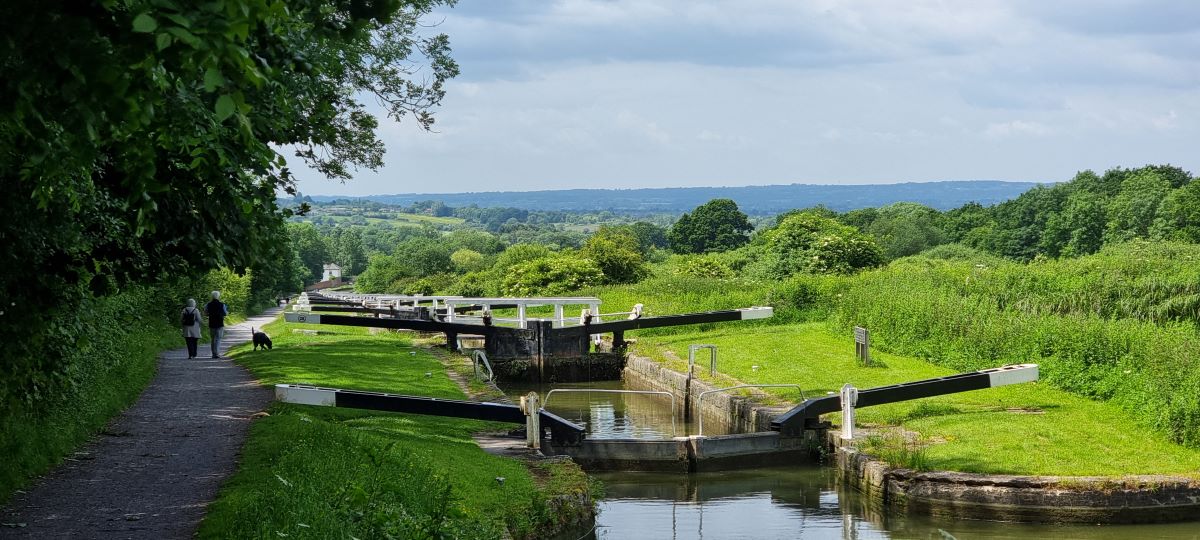
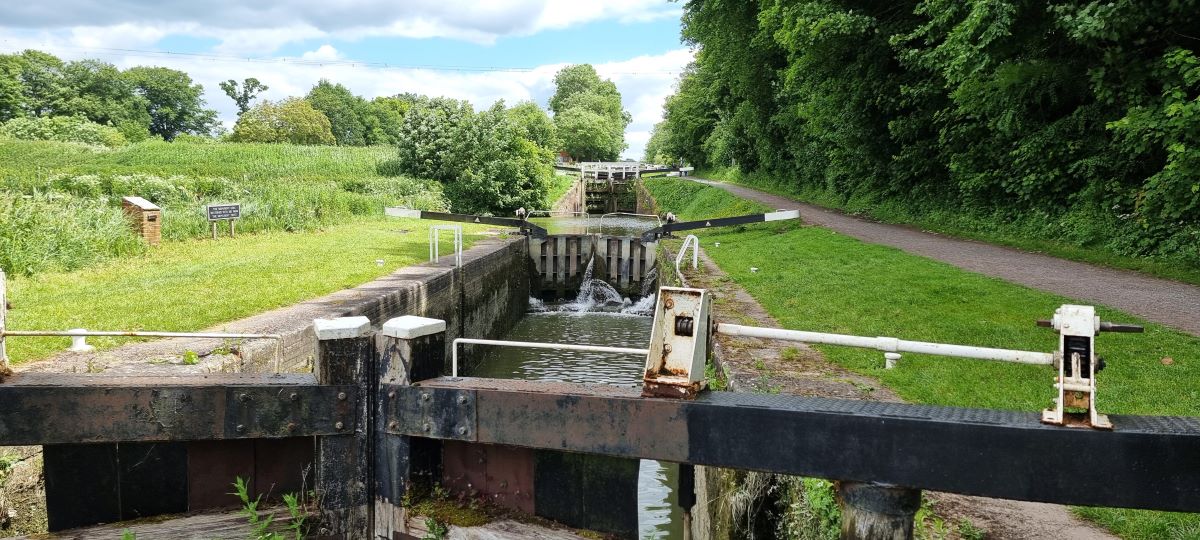
Caen Hill Locks are the longest continuous straight flight of locks in the country. Completed in 1810 by the famous canal engineer John Rennie.
The 16 locks that take boaters up the steepest part of the flight are a scheduled ancient monument.
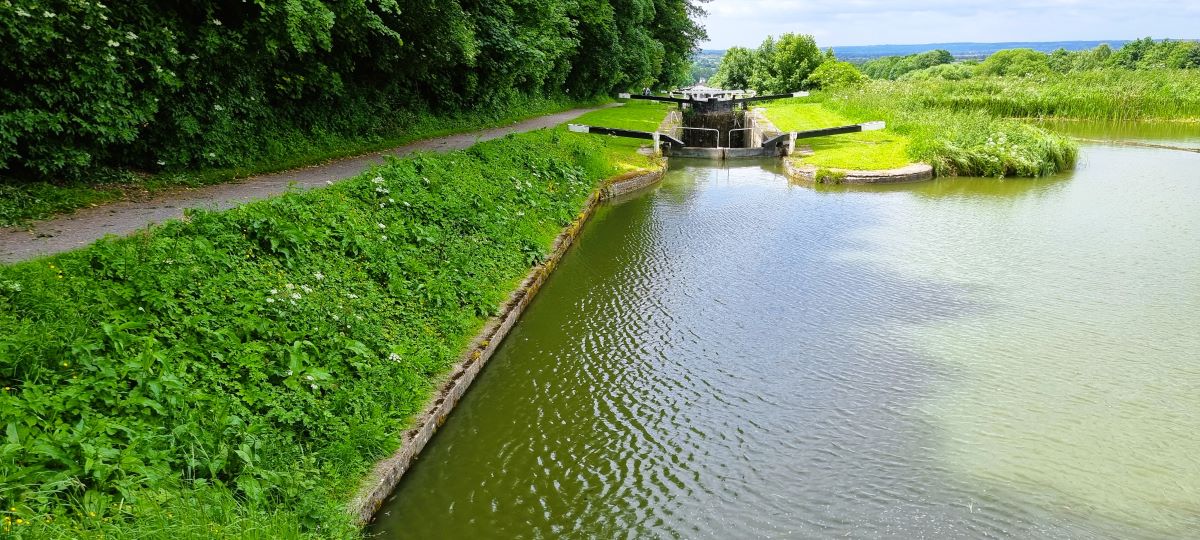
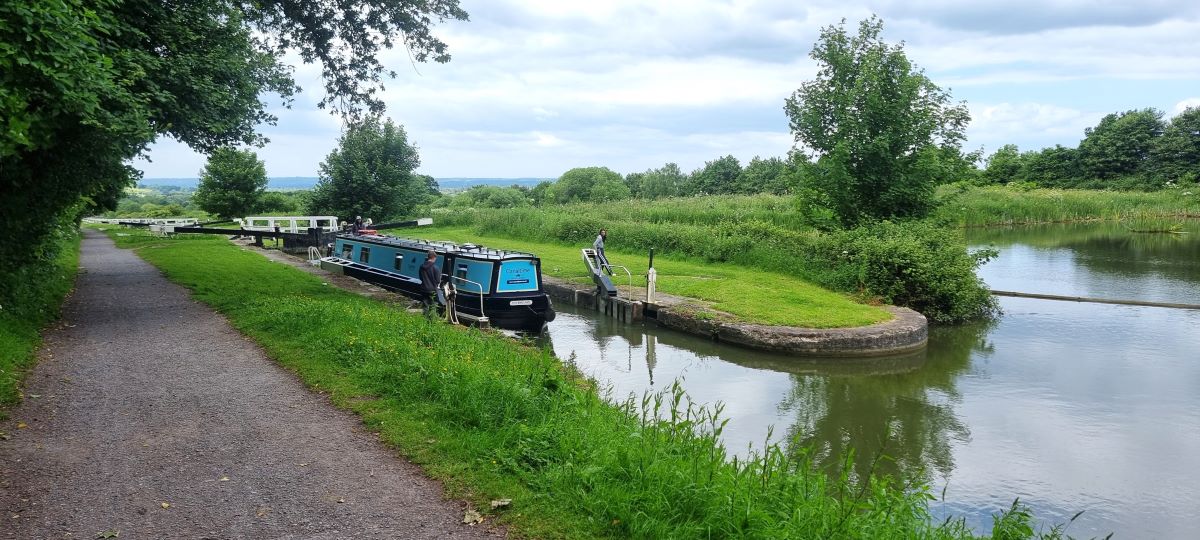
In order that boats could climb or descend the steep hill, 29 locks were built between Town Bridge and the bottom lock at Lower Foxhangers. In the middle of this is the ‘staircase’ of 16 locks known as Caen (pronounced cane) Hill with enormous side pounds that hold water to fill the locks. It has a rise of 237 feet in 2 miles.
The side ponds keep it topped up with water – each holds 1 million gallons.
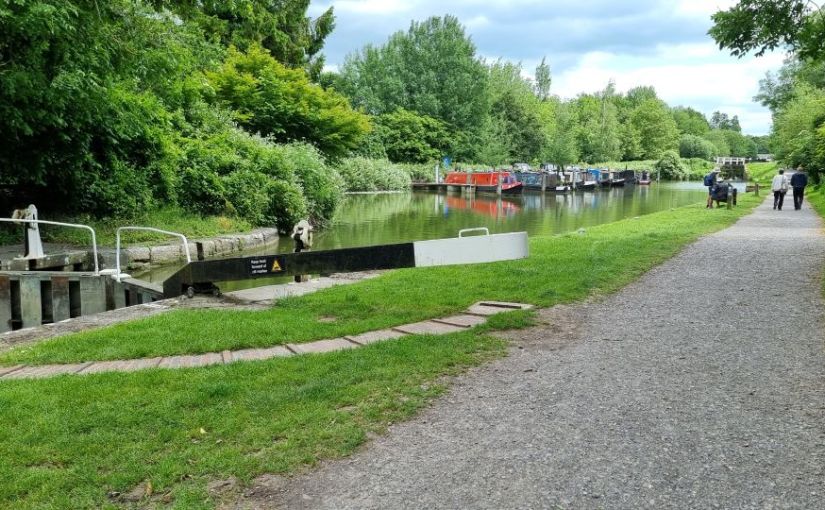
Lock and side pond
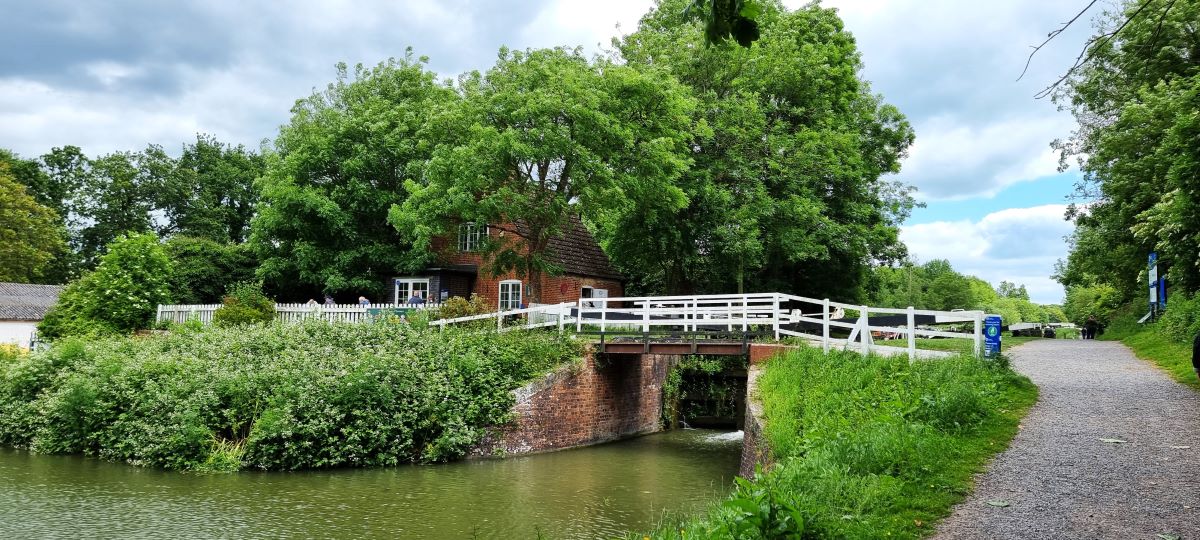
There is a café at lock 44 and mooring between locks 44 and 45.
Lock 44 and caféHard work operating those locks! It takes 4 – 5 hours to navigate the entire flight. There are volunteer lock keepers to assist, but we didn’t see anyone on the small section we walked by.
The Kennet & Avon Canal runs all the way from the River Thames to the River Avon, connecting the town of Reading with the World Heritage Site of Bath and Bristol. It is 87-miles (140km) long and is made up of two lengths of navigable river linked by a 57-mile (92km) canal section.
The Canal & River Trust cares for 2,000 miles of canals and rivers across England and Wales.
[Leaf peepingis an informal term in the United States and Canada for the activity in which people travel to view and photograph the fall foliage in areas where leaves change colours in autumn, particularly in northern New England]
When I was teaching it meant holidays could only be taken during the school holidays when it was more expensive and busy. And I couldn’t tag on to the OH’s conferences either. Which is why during one October half term we decided to do a fly drive holiday to the eastern side of the USA and do a spot of leaf peeping.
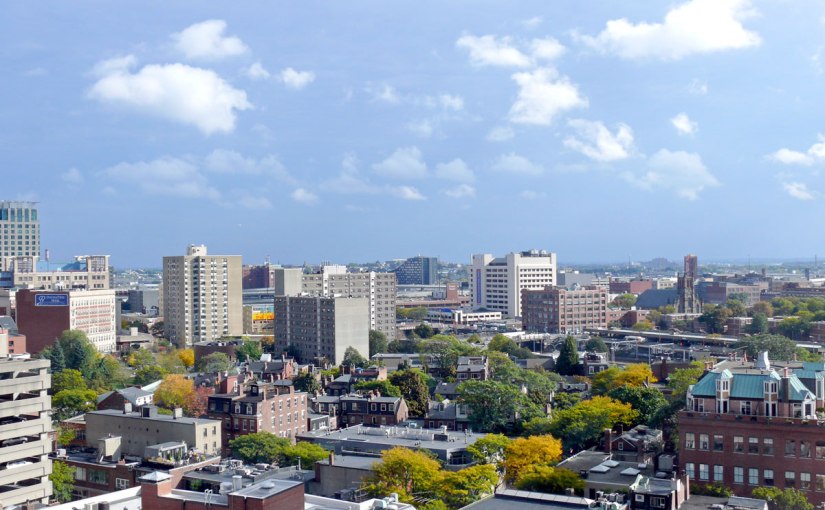
We began our trip in Boston where we stayed in a city hotel for a couple of nights before returning to the airport to pick up the hire car.
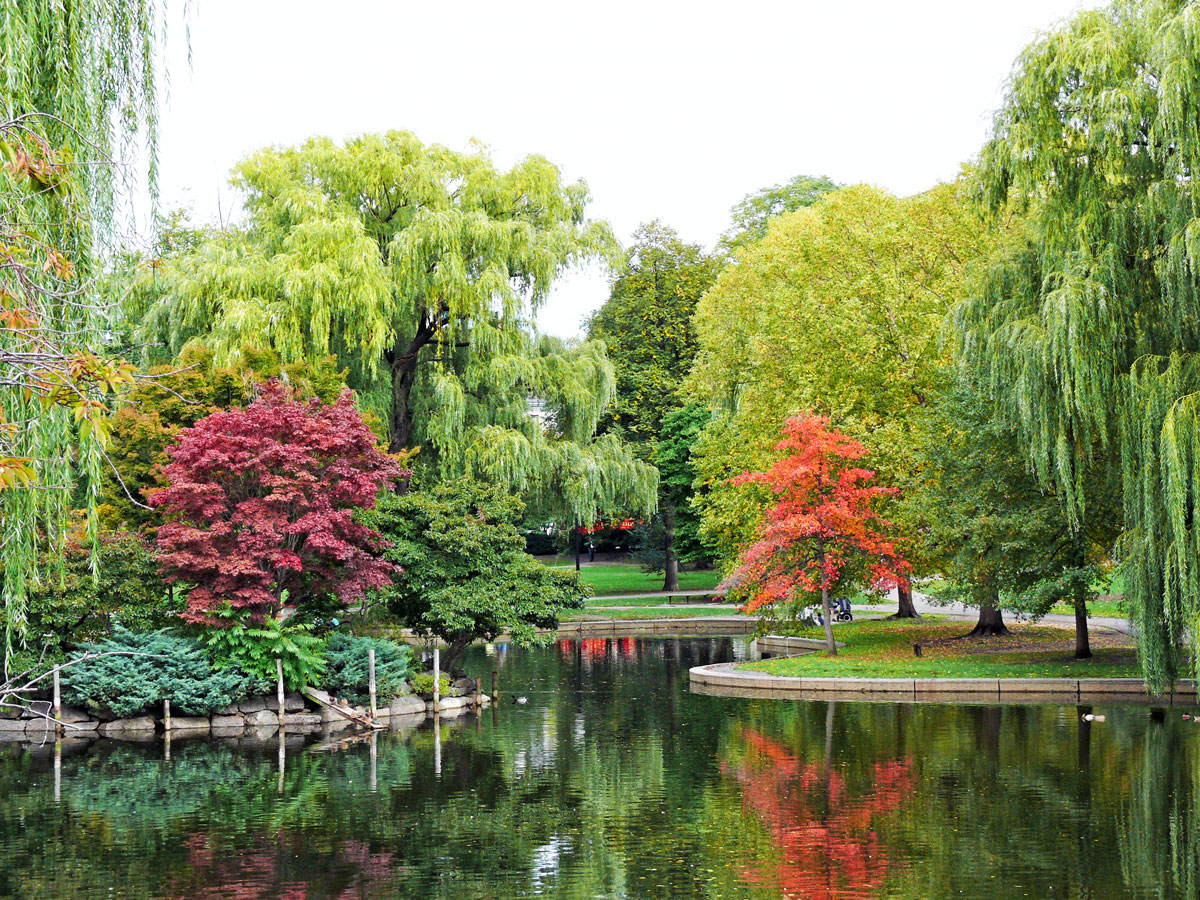
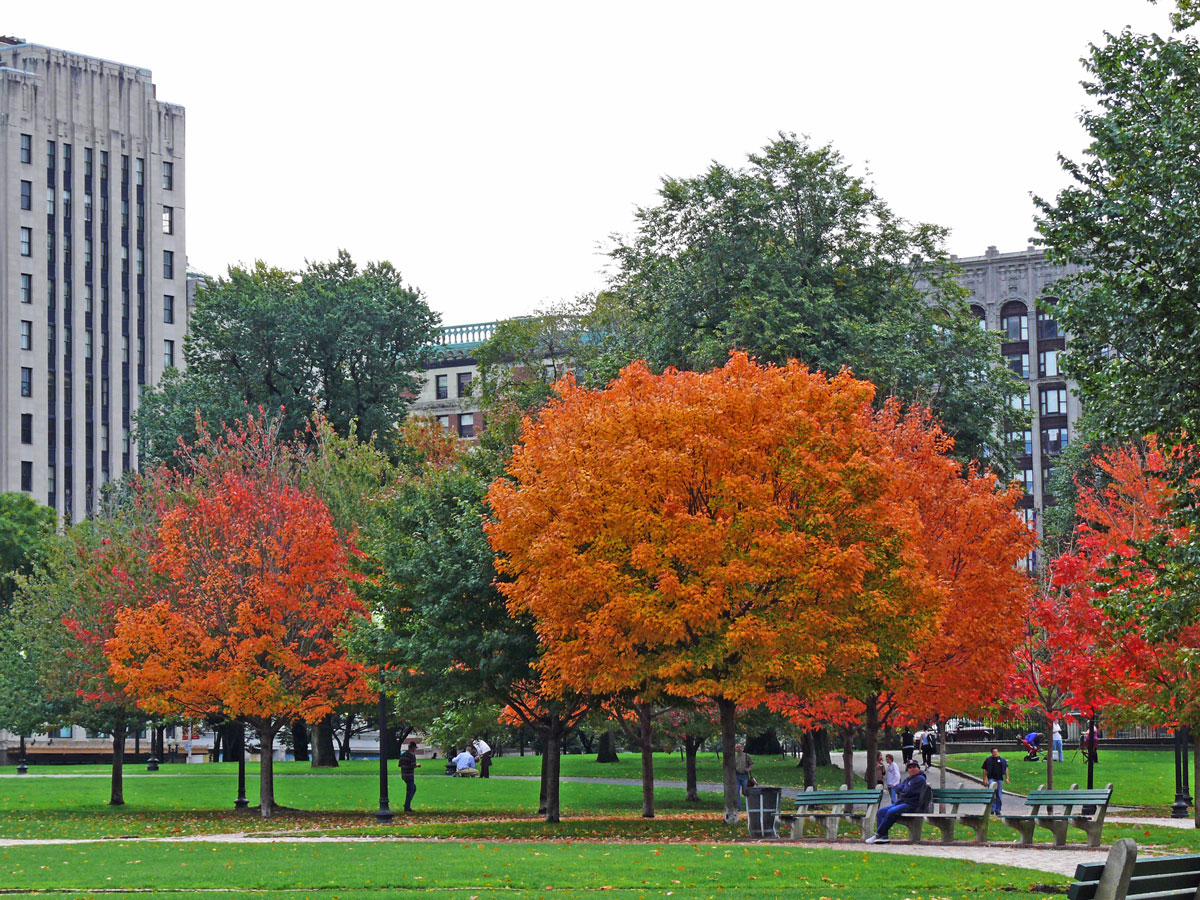
Public Garden
We arrived late on the Friday – just before midnight and were shown to a very second rate room as although we had specified a late arrival it seemed our actual room had been given to someone else. We were moved to a much better room in the morning and after breakfast we headed out to explore the city, beginning with the famous Public Garden where we had hoped to see the Swan Boats, but they were closed for the season, and we completely missed the ‘Make Way for Ducklings’ sculptures. I remember reading the book of the same name by Robert McCloskey to my daughter when she was a child.
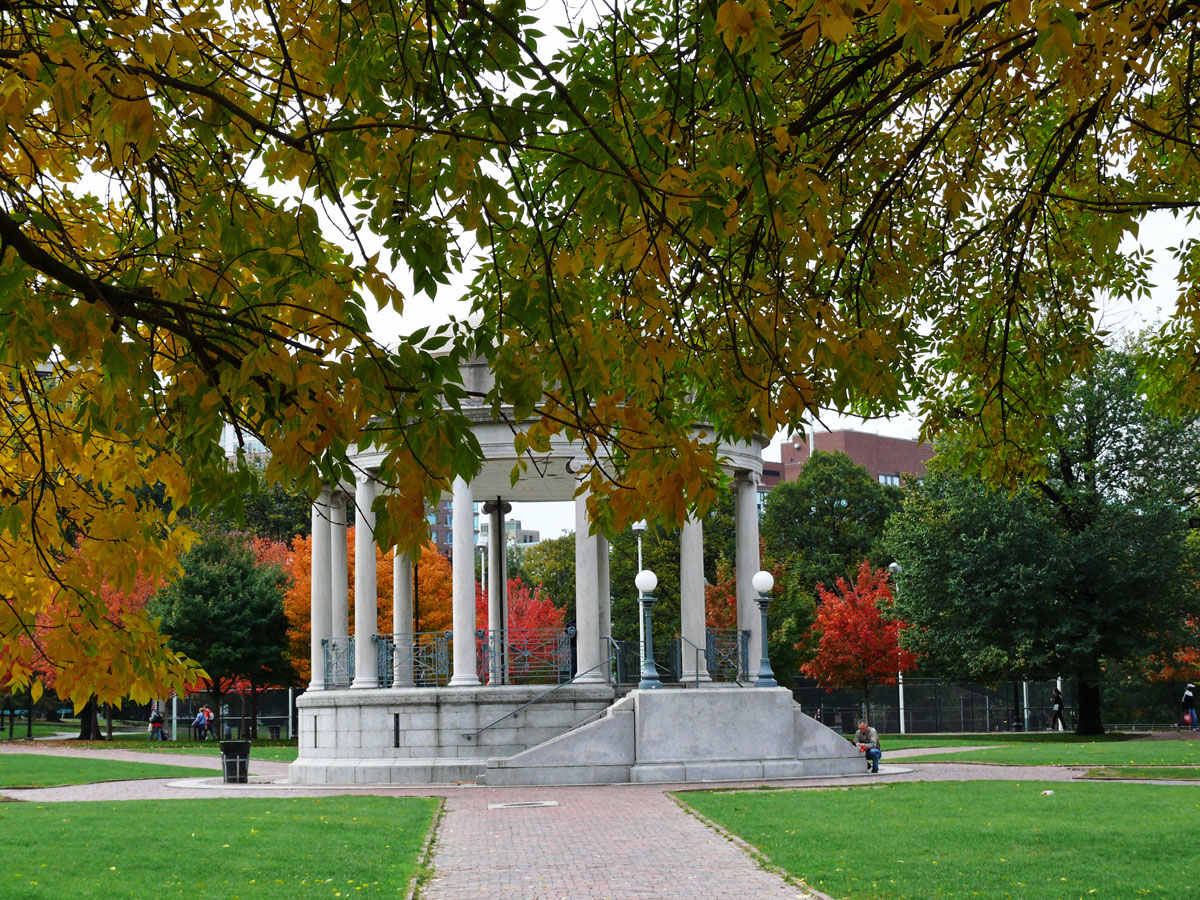
Public GardensThe Parkman Bandstand. Named for George F. Parkman, the bandstand was constructed following his death in 1908, in honour of a $5 million donation he had willed for the care of the Boston Common and other city parks.Beacon Hill
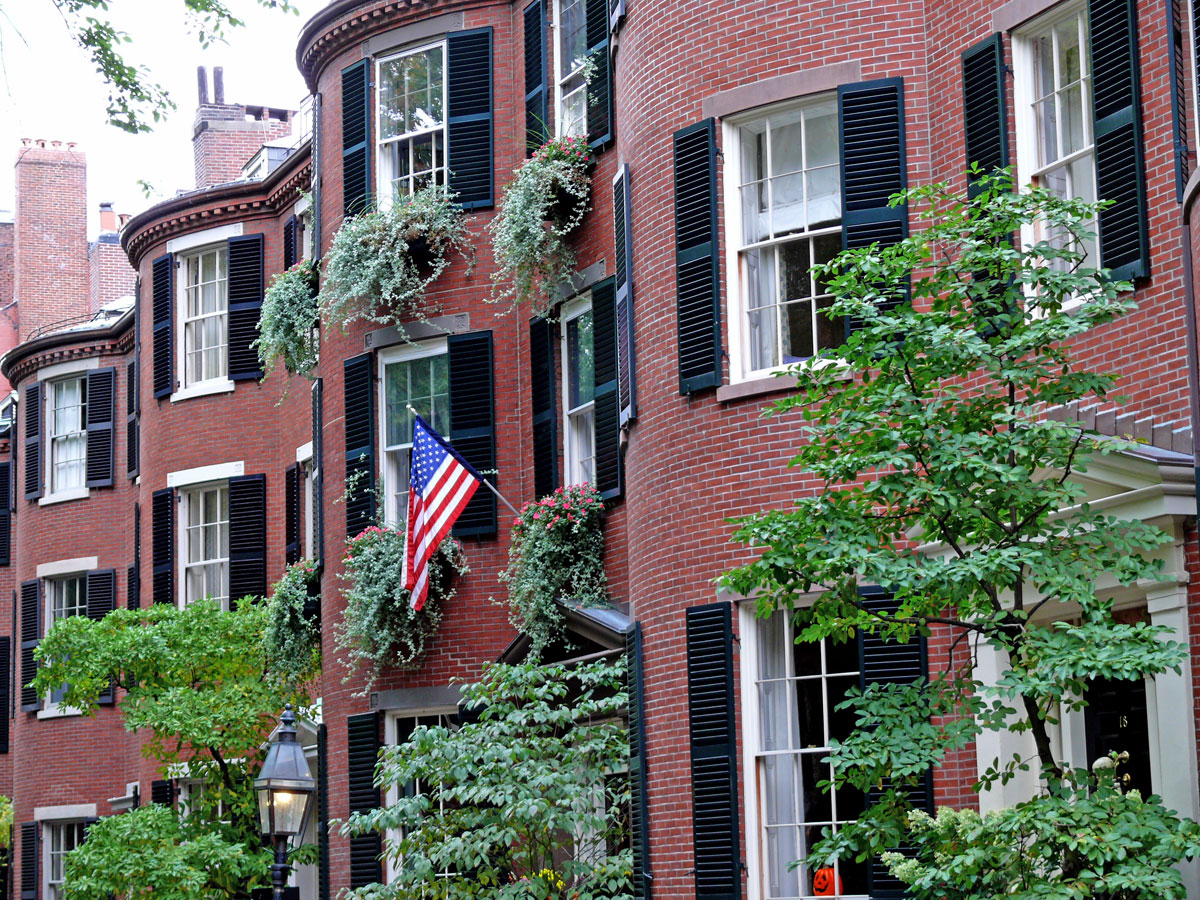
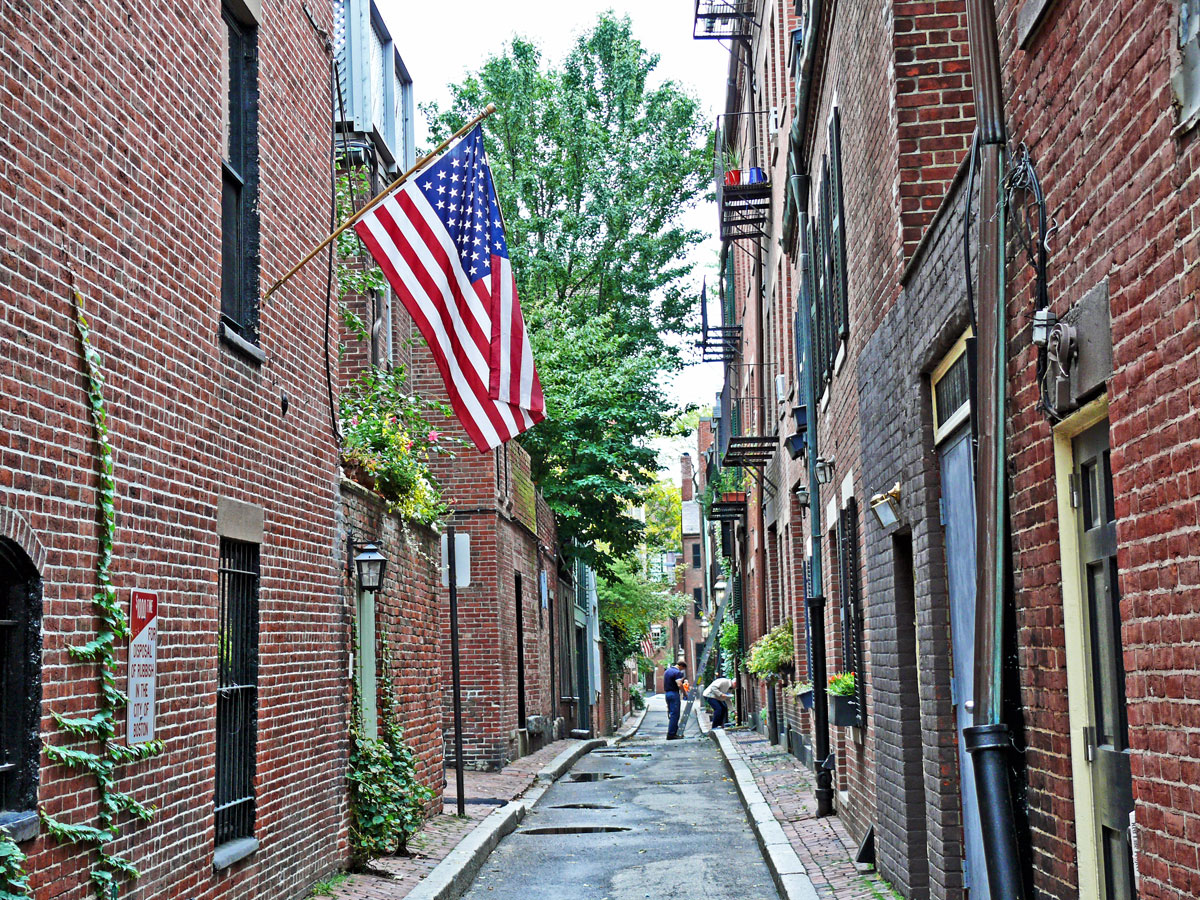
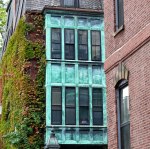
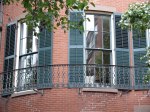
From there we wandered around the Beacon Hill area, one of Boston’s oldest neighbourhoods and full of charming, narrow cobblestone streets, federal style row houses and gaslit streetlamps.
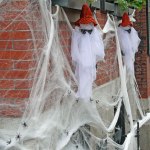
And as our visit was shortly before Halloween it was decorated with pumpkins and skeletons and all things ghostly!
It takes time to walk a block in Boston, there is so much architectural detail to see. There are a lot of tree-lined streets and parks. And cars.
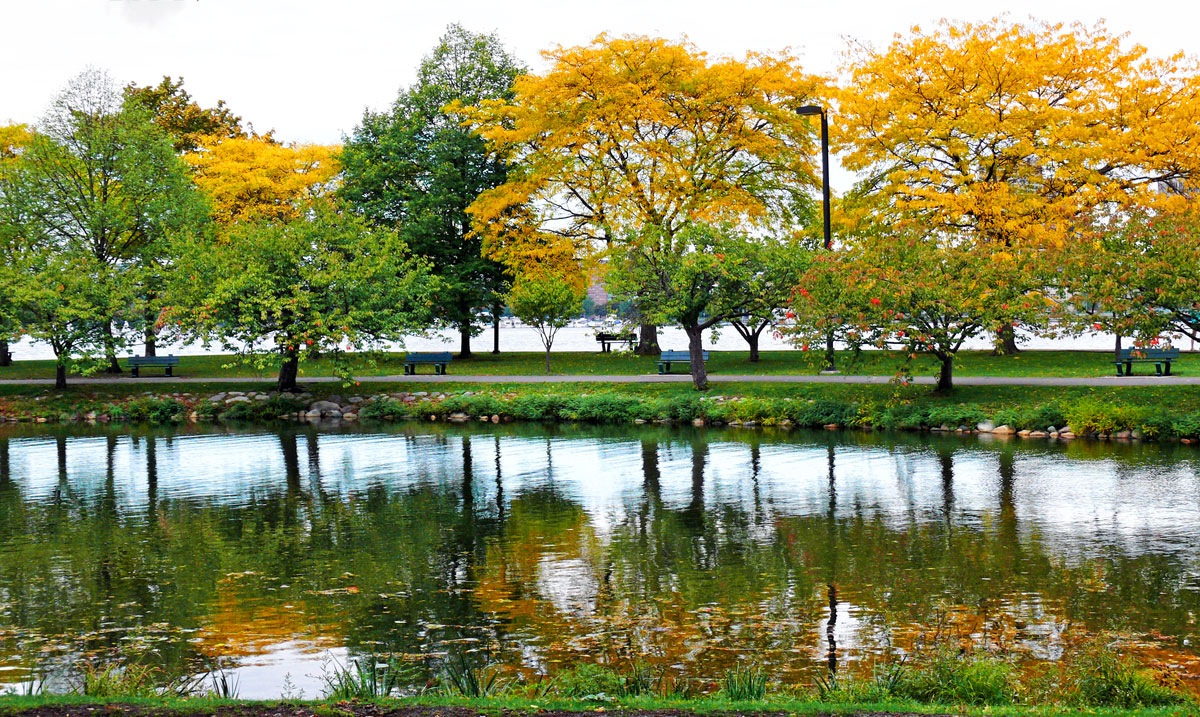
Storrow Lagoon (on the Charles River)
After dinner we set off to find the Old State House and wander down to the harbour where we followed the harbour walk as far as the Boston Tea Party museum, which was closed, before heading back to the hotel.
Tall Ship
Wharfs along Fort Point Channel
The ‘Tender’s House’ demolished in 2008
Northern Avenue bridge, closed 2014
The Custom House Tower is a skyscraper in McKinley Square
Massachusetts State House
Old State House nestled among the towering skyscrapers of Downtown Boston
Old South Church an ornate, 1875 church housing a congregation founded in 1669
Old South Church
Along the Harbour walk
Boston Tea Party
Northern Avenue bridge, closed 2014
A lot of this will have changed by now (this visit was in 2007) I know that the Northern Avenue bridge was in danger of being demolished along with the rundown Tender’s House next to it. The bridge is unique in that it is a rotating swing bridge built in 1908.
(It was closed in December 2014. Apparently there were plans to reconstruct it as a pedestrian/cycle only bridge, but because of Covid the project came to a halt in 2020. The Tender’s House was partially demolished in 2008. The boarded up and rambling structure served for nearly a century as a home for the keepers of the rotating swing bridge – who had to be available, night and day, to let ships through. As one local said “This is demolition by neglect” )
Boston is an interesting city, though I would not like to drive in the city centre, even driving through the tunnels (a later post) was enough to give me nightmares.
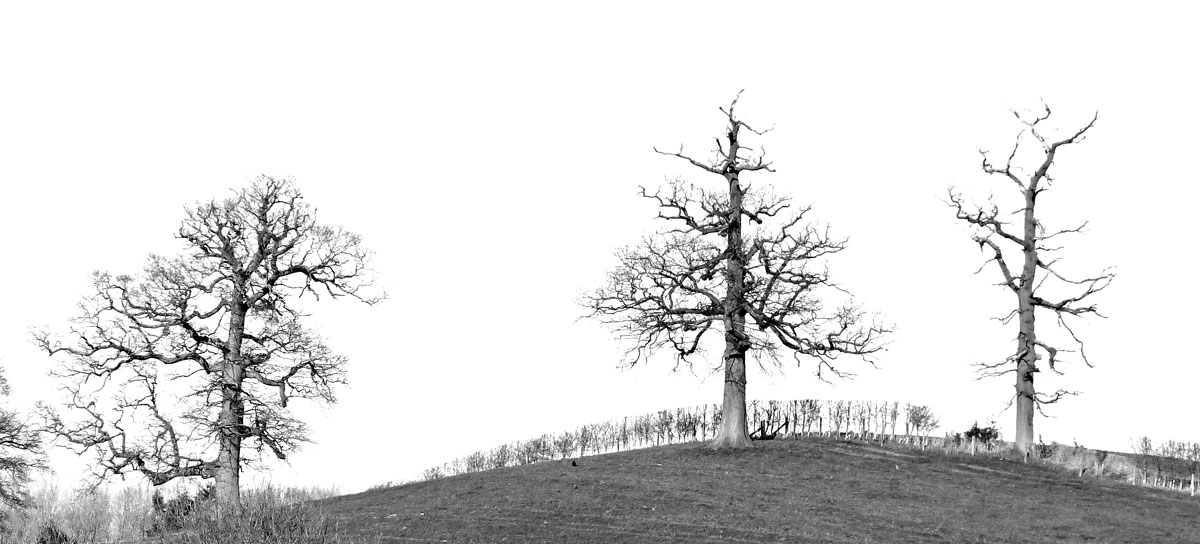
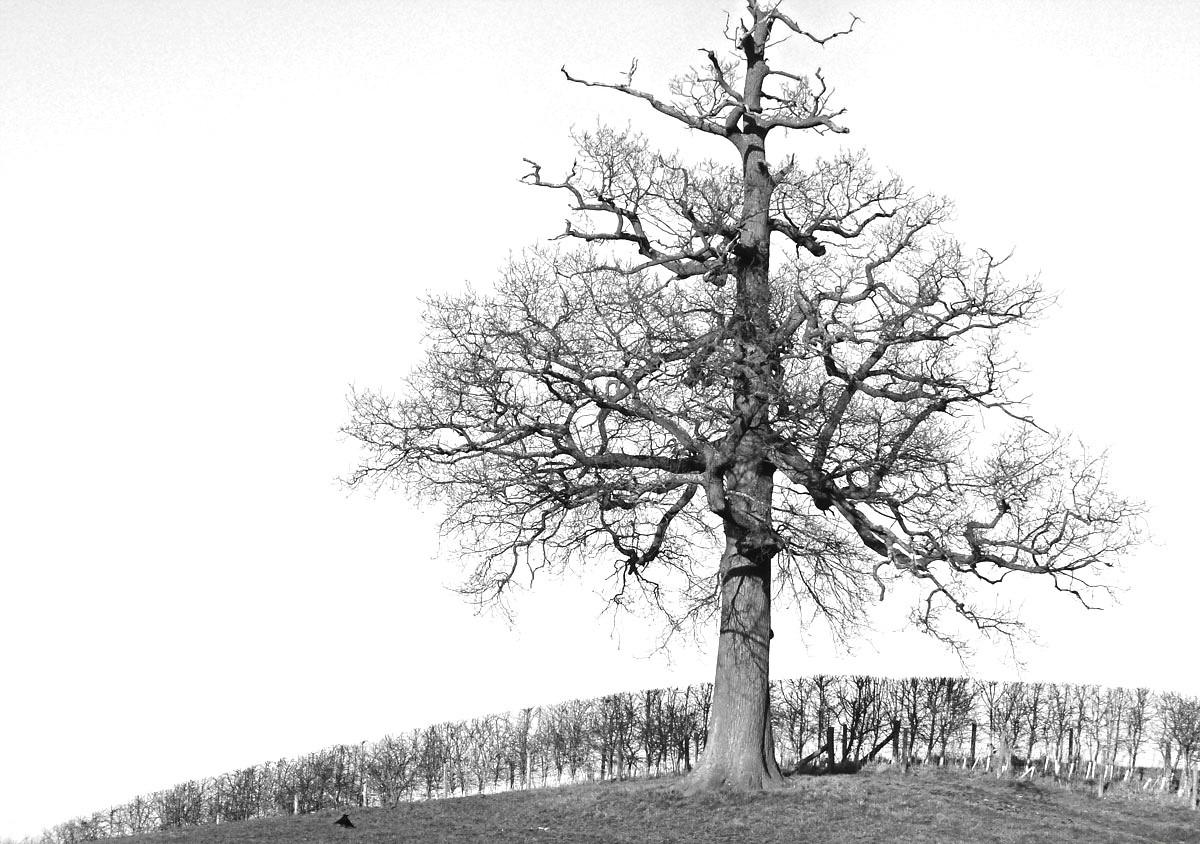
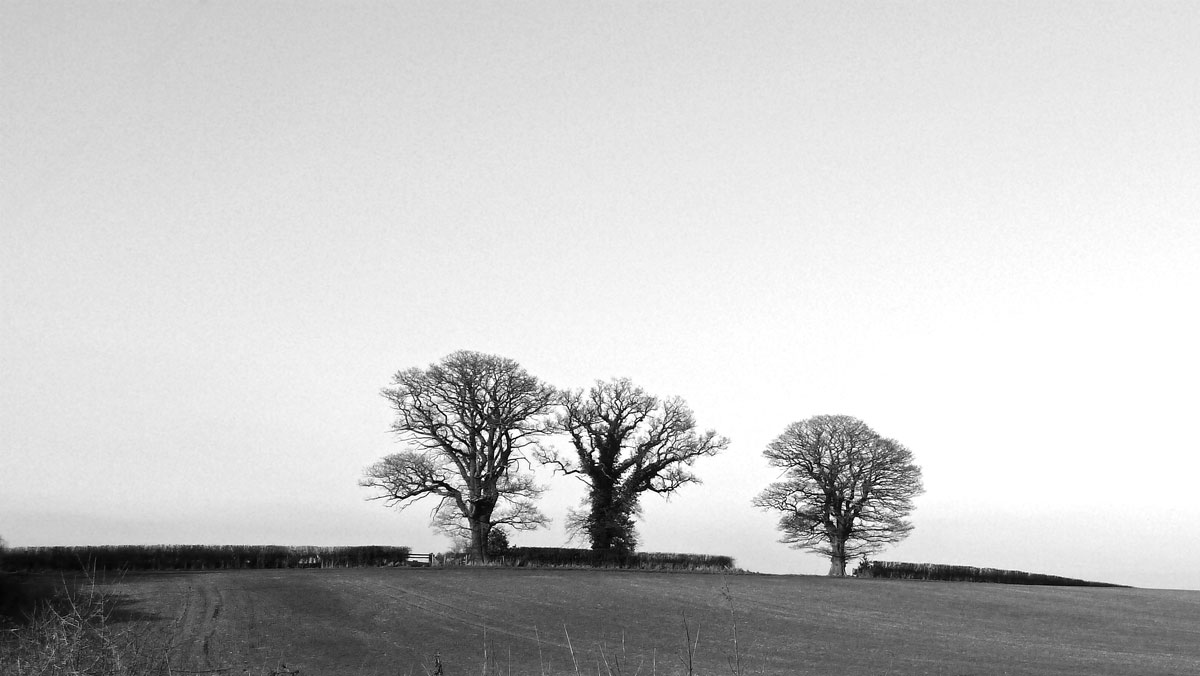
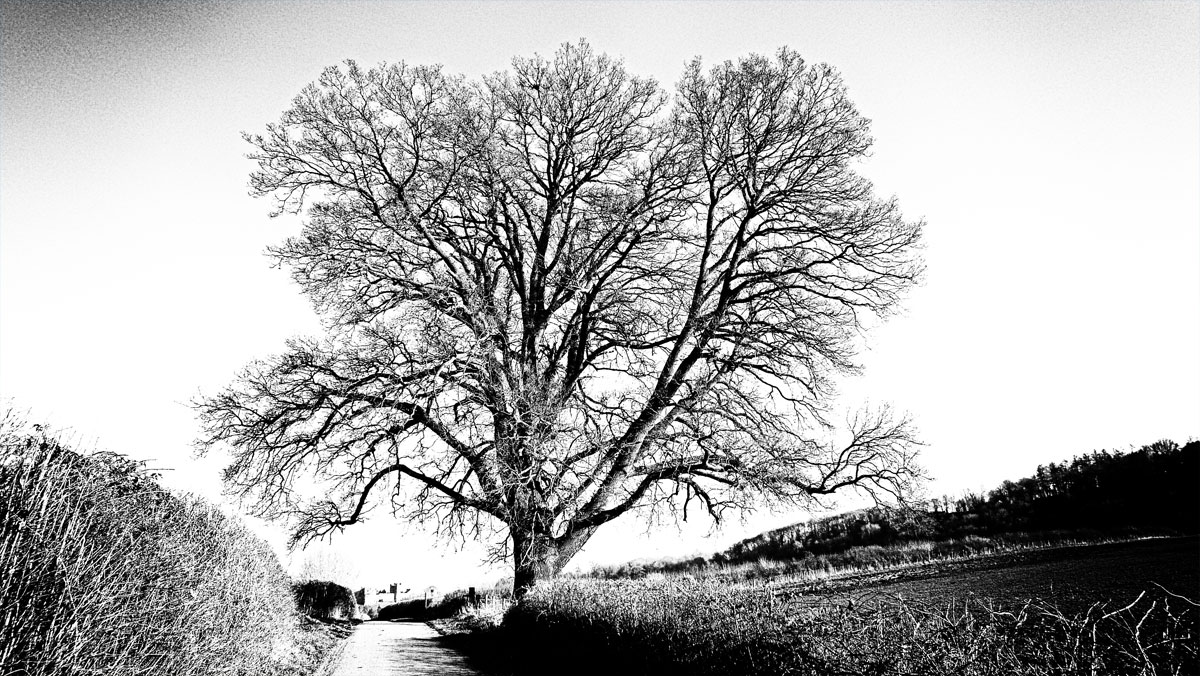
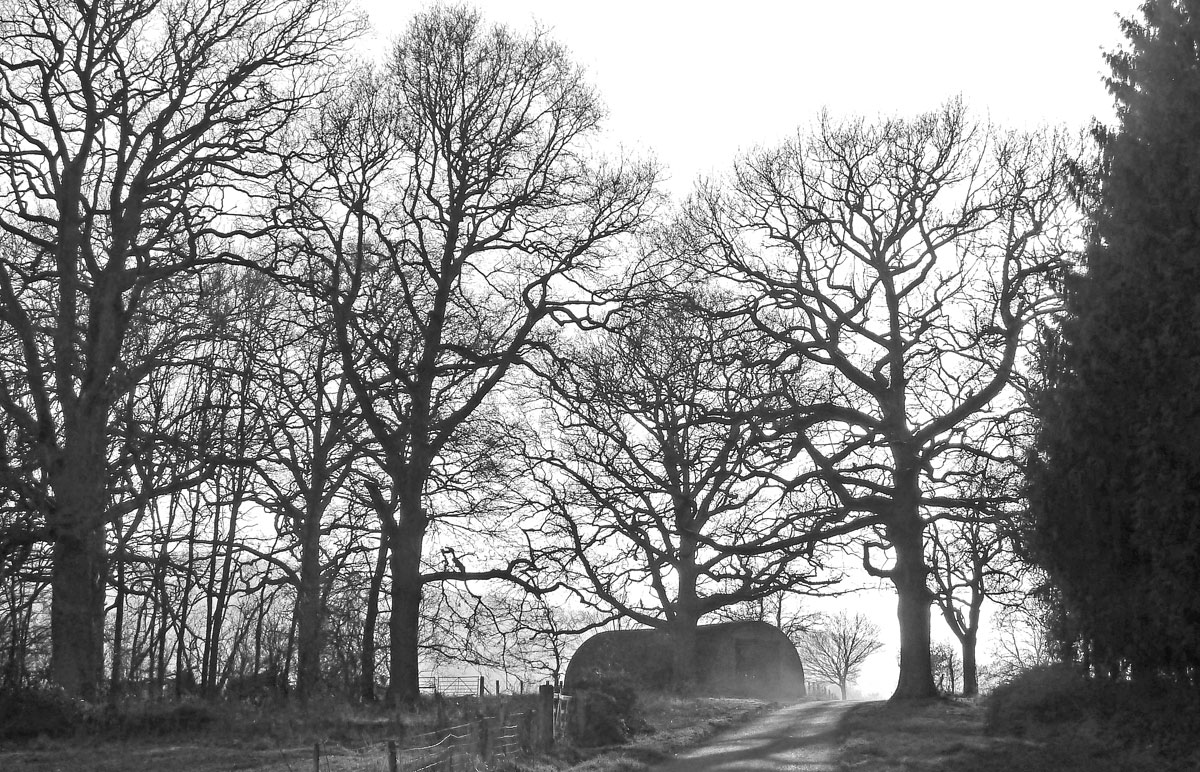
One thing that I noticed whilst living in Shropshire was the way the trees looked, especially in winter. Weirdly shaped limbs reaching for the sky, often looking as though they were leaning over to have a conversation. I called them my Ent trees.
Ents are a species of sentient beings in J. R. R. Tolkien’s fantasy world of Middle-earth who closely resemble trees; their leader is Treebeard of Fangorn forest. Their name is derived from an Old English word for “giant”.
I always thought Shropshire and the Welsh Marches were the inspiration behind Tolkien’s novels.
Join in with Sarah this week if you have some black and white trees to share.
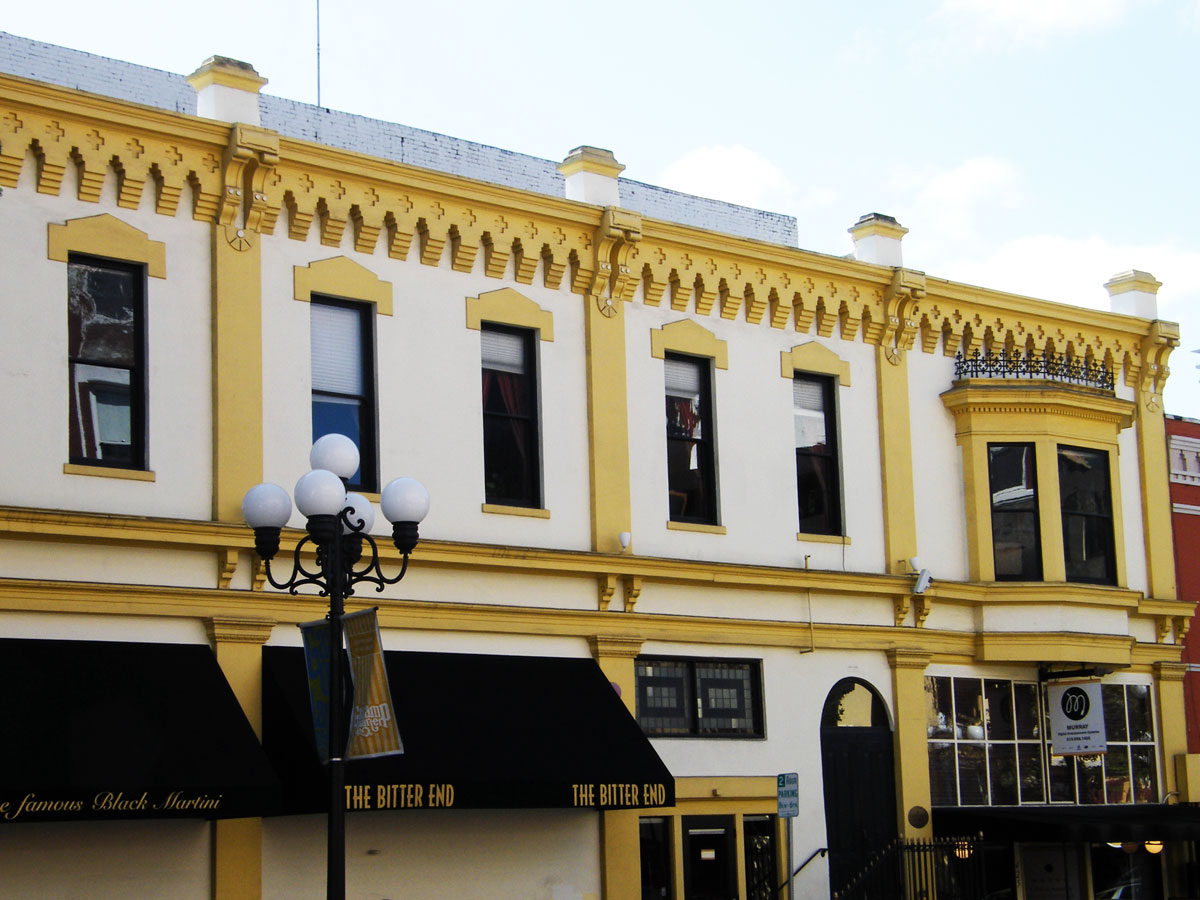
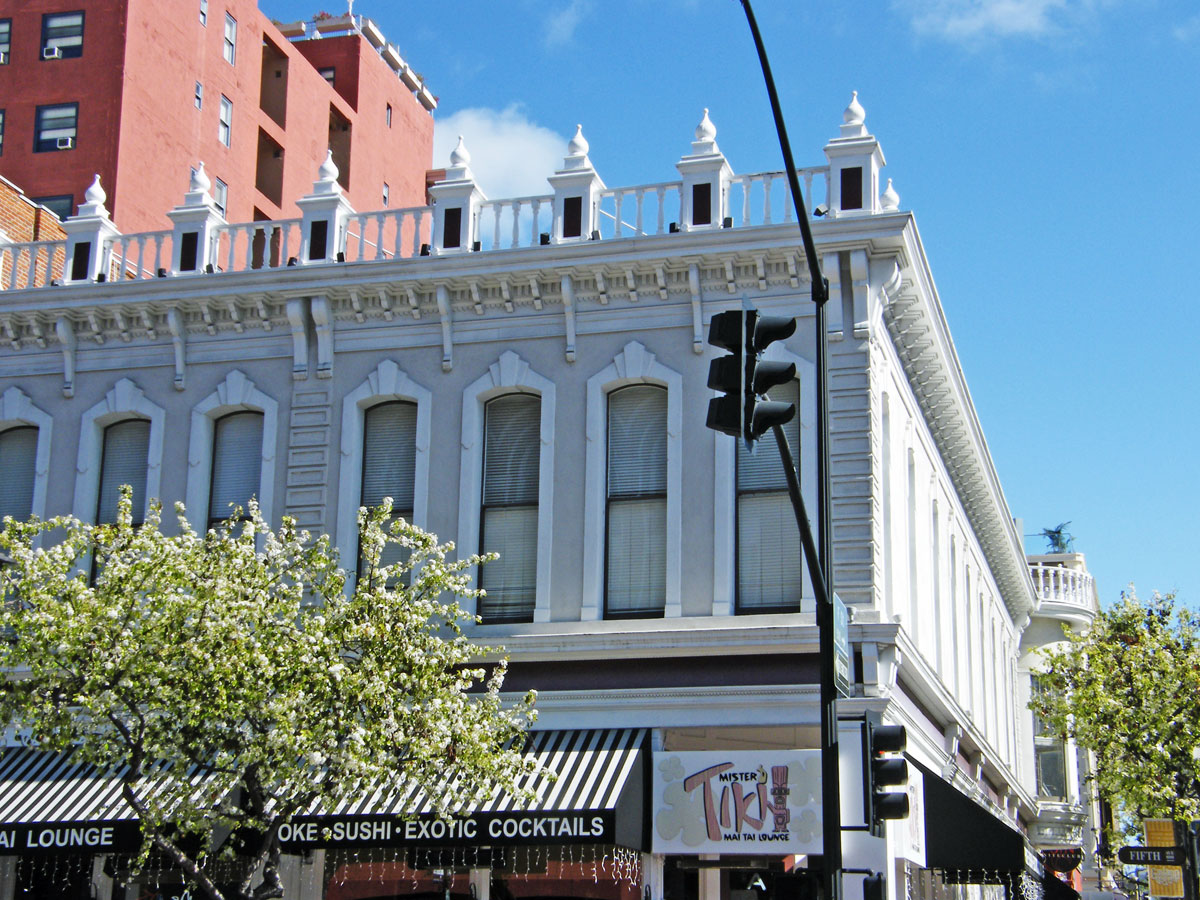
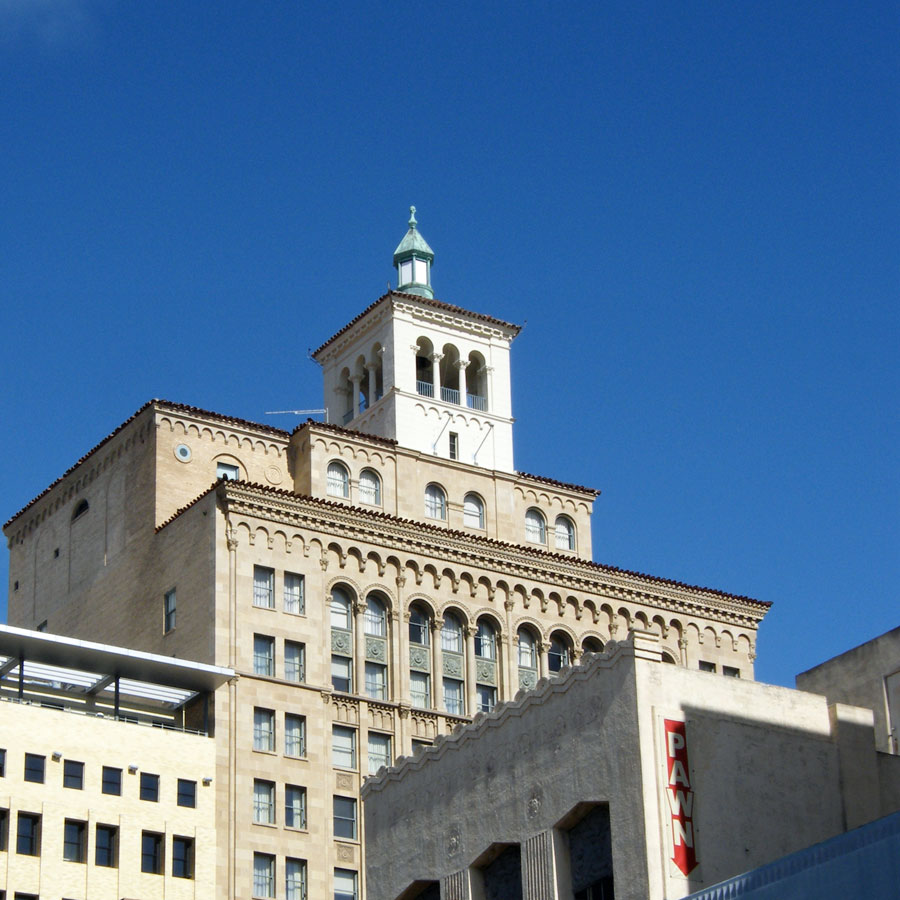
Another interesting district in San Diego is the Gaslamp Quarter. In the 1860s, the area was known as New Town, in contrast to Old Town, the original Spanish colonial settlement. San Diego has tried hard to protect and preserve the architecture of times gone by and the district features one of the largest collections of Victorian Era commercial architecture in the western US, comprising 94 historic buildings, many of which are in still use as restaurants, shops, entertainment venues, and nightclubs.
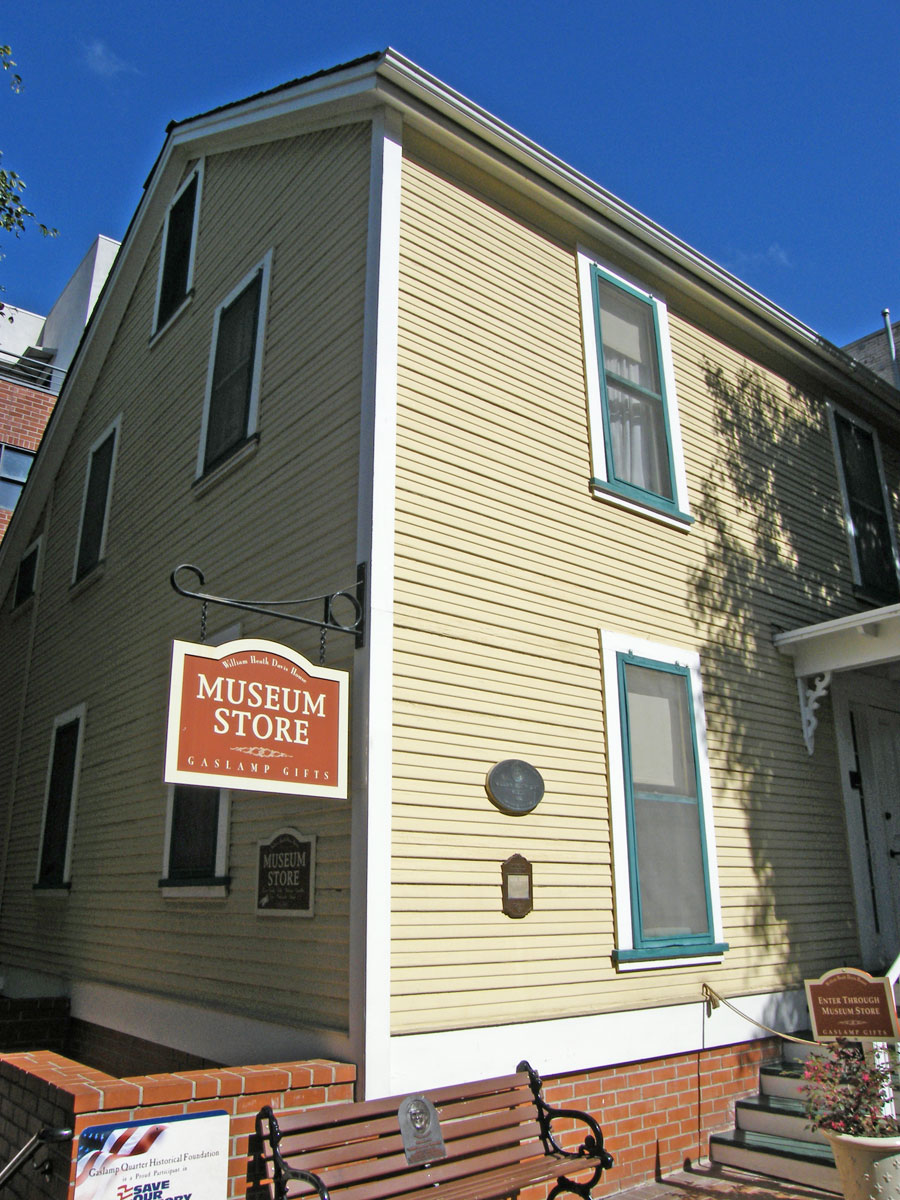
My first stop was the Gaslamp Museum at the Davis-Horton House which depicts the story of the downtown area’s early settlers. The Davis House (1850)is the oldest surviving structure from San Diego’s New Town. It is an example of a prefabricated, “salt-box” style home. Built on the East Coast, shipped around Cape Horn, and assembled in San Diego.
Museum
Located across the street from the Gaslamp Museum is the Horton Grand Hotel, a restoration of two historic hotels – the Grand Horton and the Brooklyn-Kahle Saddlery – both built around 1887. The Grand Horton was of Italianate design and more of a luxury hotel, whereas the Brooklyn-Kahle Saddlery was a less formal hotel that combined Western/Cowboy and Victorian styles.
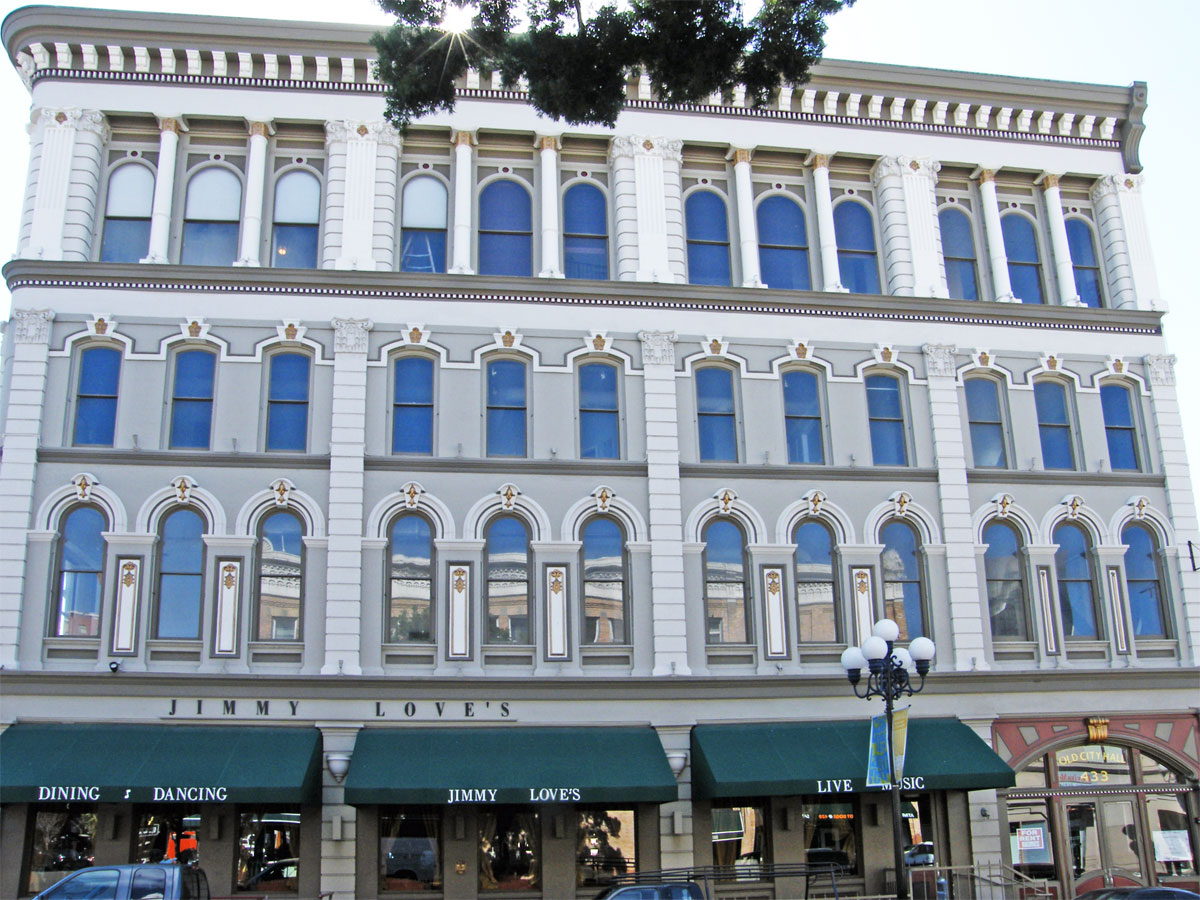
The Old City Hall is a beauty, a classic example of Florentine-Italianate architecture. Originally two-story structure was built in 1874, but 13 years later two more floors were added to accommodate the San Diego Public Library.
The Louis Bank of Commerce is a historic building which dates back to 1887. Reputed to be the most photographed building in the Gaslamp, this stately, four-story, twin-towered Queen Anne (Baroque Revival)-style structure possesses so many noteworthy and elaborate architectural features that it has been nicknamed “The Queen of the Gaslamp.”
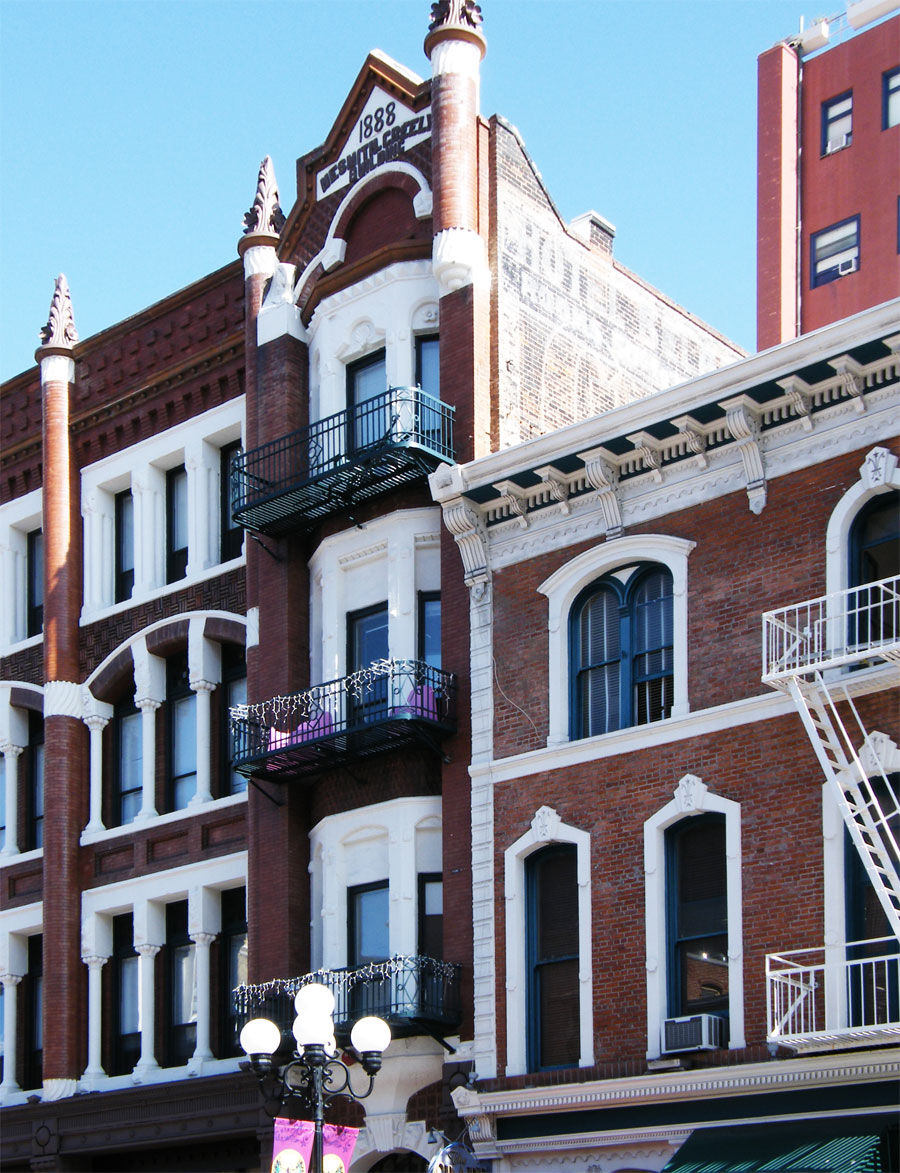
The Nesmith–Greely Building is a four-story historic structure located at 825 5th Avenue next to the Louis Bank of Commerce. Built in 1888 in the Romanesque Revival style the building is named for Thomas Nesmith, President of the Bank of San Diego, and Major General Adolphus Washington Greely. . The Hubbell building is on the right (1886) constructed in the Victorian style.
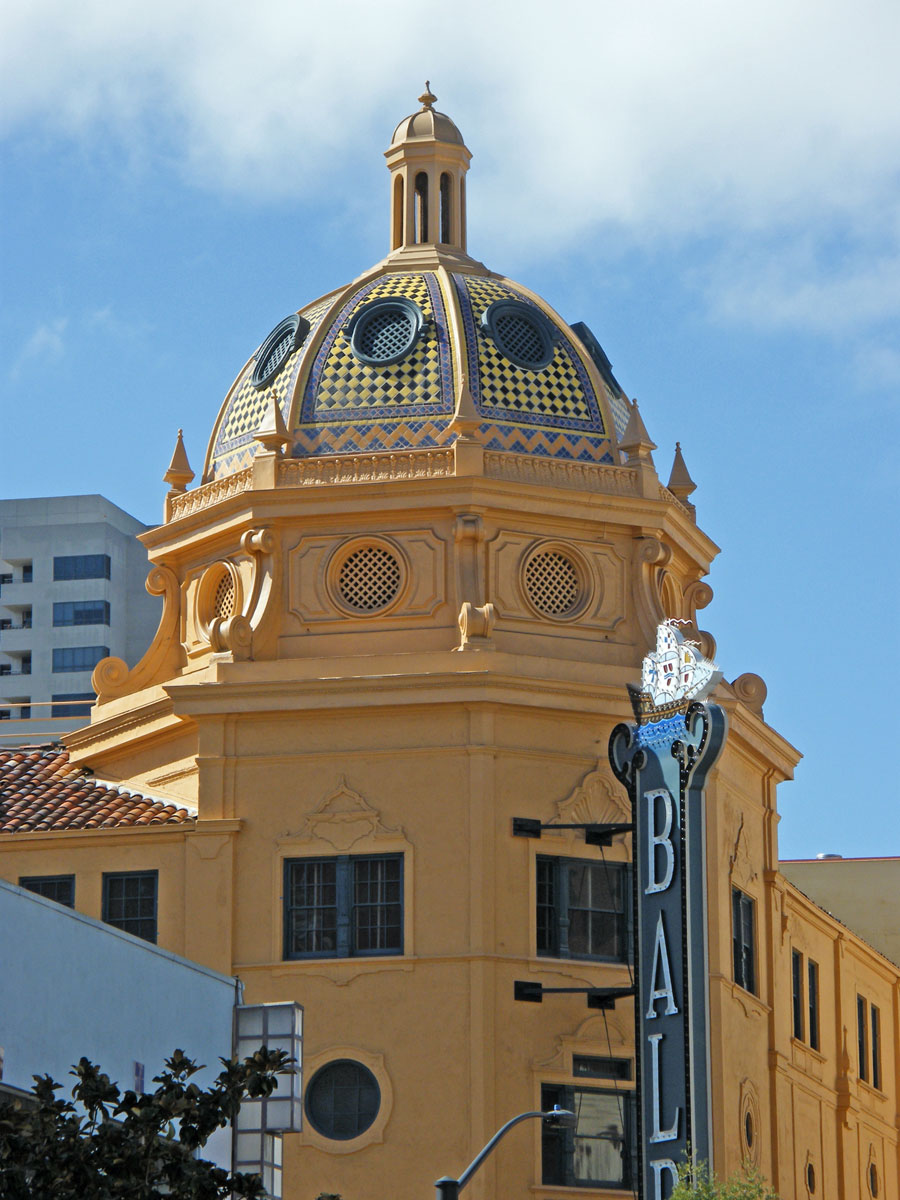
The Balboa Theatre in San Diego’s Downtown area blends Moorish and Spanish Revival architectural styles and was built in 1924.
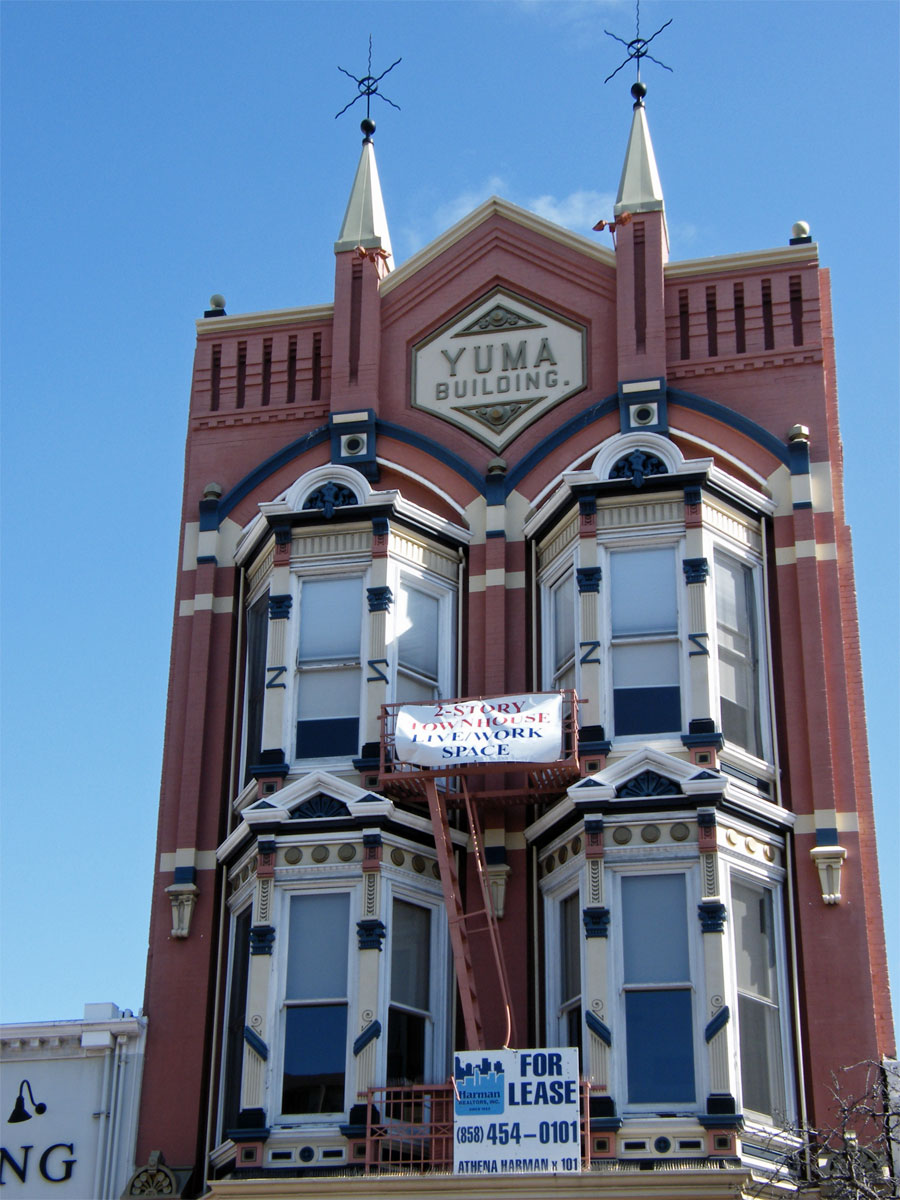
The Yuma Building, 1882, was one of downtown’s first brick structures, and was owned by Captain Wilcox who arrived in 1849 at the helm of the U.S. Invincible. The building is called the Yuma because of Wilcox’s business connections in the Arizona town.
The Spencer Ogden Building, 1874. The second floor was added in 1885, and the original ironwork of this French Renaissance-style building was replaced with newer material.
Marston’s department store (1881-1896) Marston’s was one of Southern California’s finest emporiums and a genteel social hub for all ages. During the early 20th century, it was the region’s exclusive source of Gustav Stickley’s prestigious Arts & Crafts oak furniture. With the building of the fifth store in 1912, the store soon grew to 500 employees, in a progressive environment where women held senior positions and salaries provided a living wage.
Construction of the San Diego Trust & Savings Bank building occurred in 1927 and is generally regarded as a fine example of the Italian Romanesque Revival style. From 1928 until March 18, 1994, the building at Sixth & Broadway served as the headquarters for San Diego Trust & Savings Bank. It was then repurposed as a Courtyard-Marriott Hotel.
Spreckels Building 625 Broadway was San Diego’s very first high-rise building and one of the last buildings constructed by John D. Spreckels in 1926. Now converted into luxury loft apartments.
Historic theatre (Reading Cinemas Gaslamp 15)
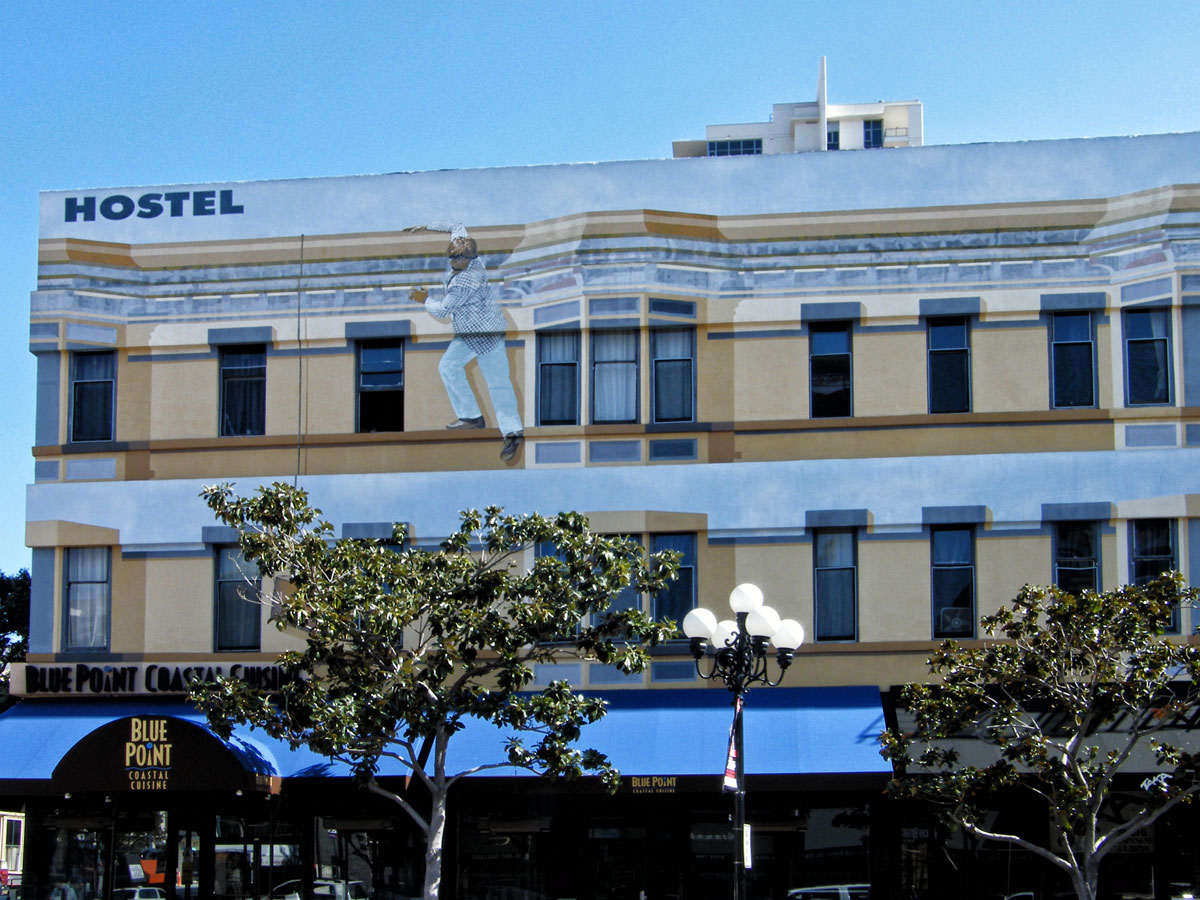
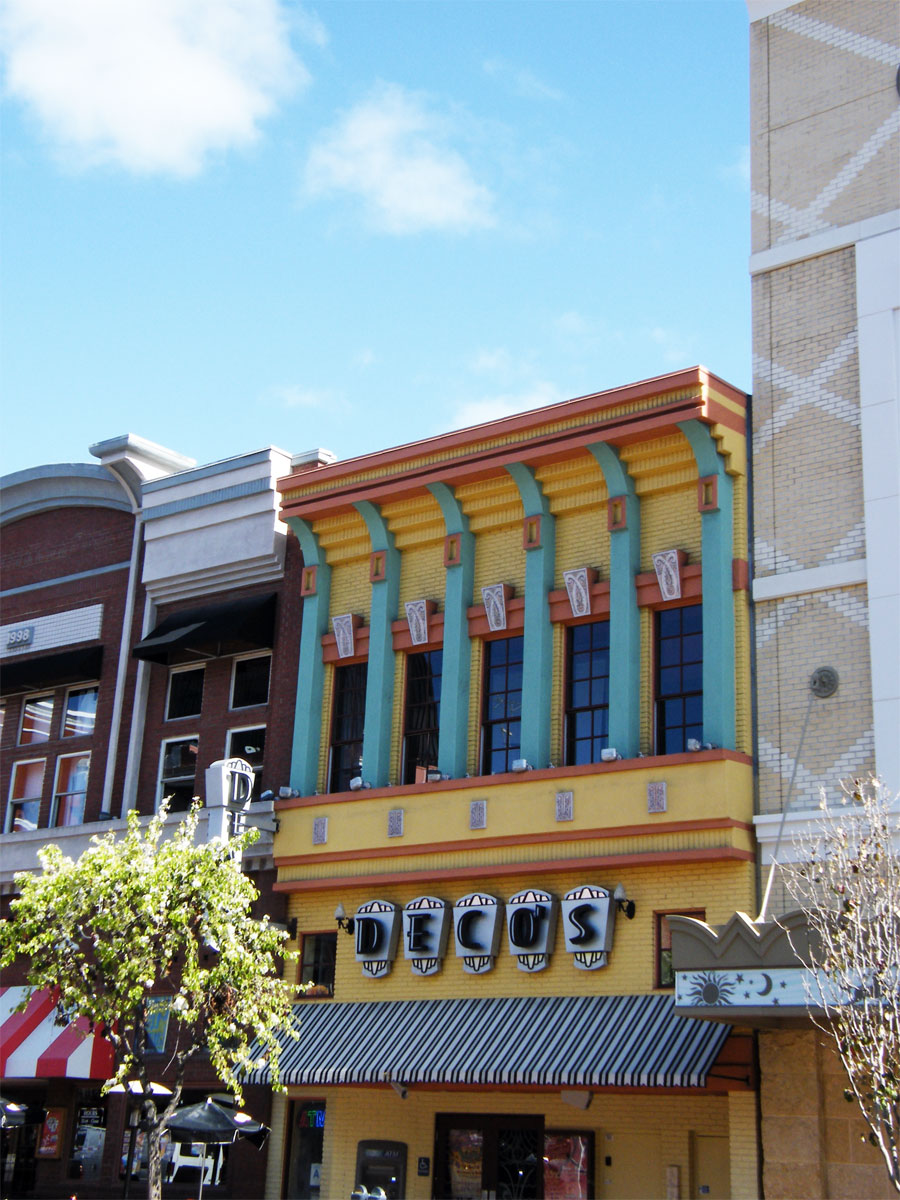
Downtown HostelArt Deco buildings on 5th Ave
Although often difficult to photograph these buildings without the horrid perspective distortion it is an interesting district to wander about in with lots of history although I was unable to discover much information about the art deco style buildings.









 TRAVEL WORDS