Azulejo is a form of Portuguese or Spanish painted, tin-glazed, ceramic tilework. There are some exquisite examples of these on the exterior of houses and other buildings in Lisbon. But sadly there are many broken tiles to be seen.


Azulejo is a form of Portuguese or Spanish painted, tin-glazed, ceramic tilework. There are some exquisite examples of these on the exterior of houses and other buildings in Lisbon. But sadly there are many broken tiles to be seen.
As waves curve along the beach they also pick up the finest bits of marble; this creates sediment plumes that follow the curve of the beach with the direction of the waves giving the water the most inviting shade of turquoise.

Myrtos has been described as “one of the most dramatic beaches in Greece”, with its “mile-and-a-half long arc of dazzling white pebbles.”
It was used as the location for the mine explosion episode in the film Captain Corelli’s Mandolin ~Wikipedia


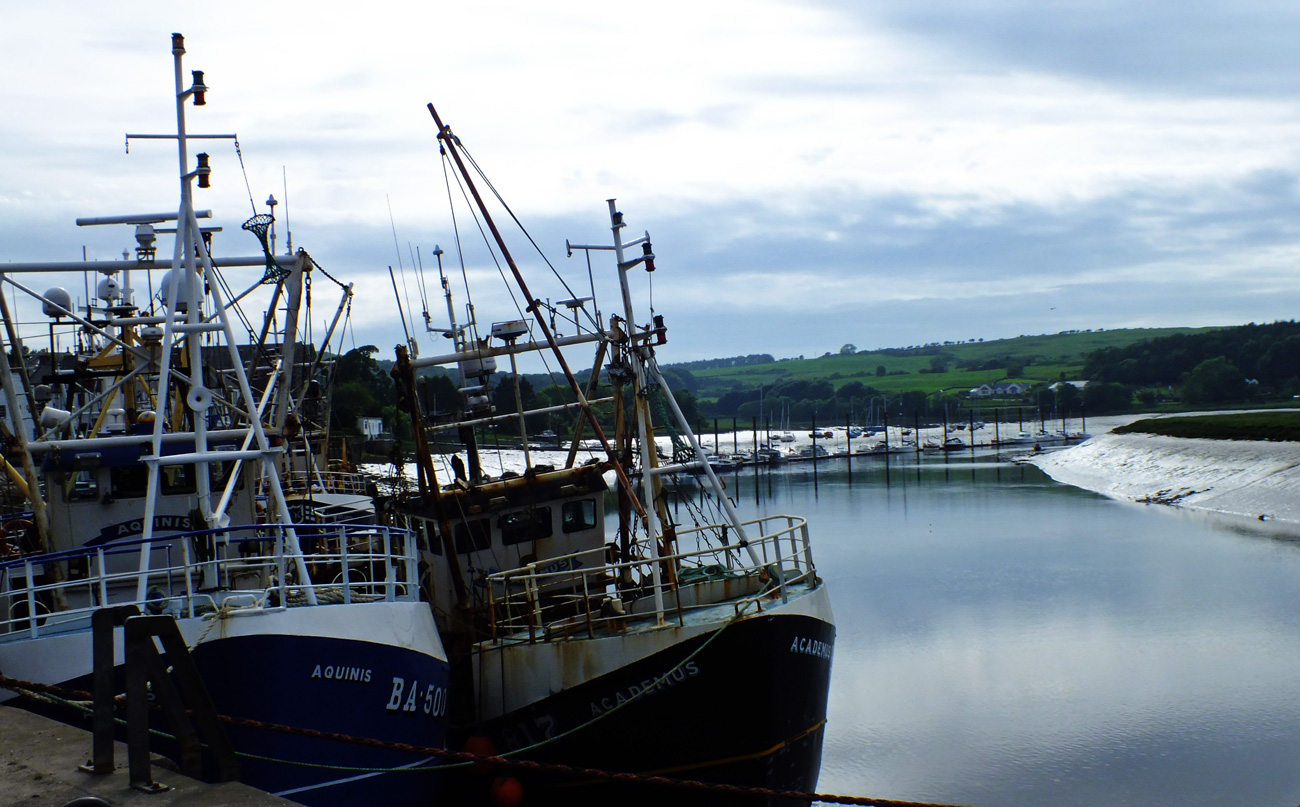
The fishing fleet in Kirkcudbright provided me with plenty of photos for this week’s word challenge, those ‘torture instruments’ are used for dredging scallops – I think!

It was another lovely evening and time for some exercise. We decided to take the riverside walk following the tidal waters of the River Dee up to Tongland Bridge. A three and a half mile stroll along a level path felt doable and would take us around a couple of hours if we didn’t stop too many times to take photos.
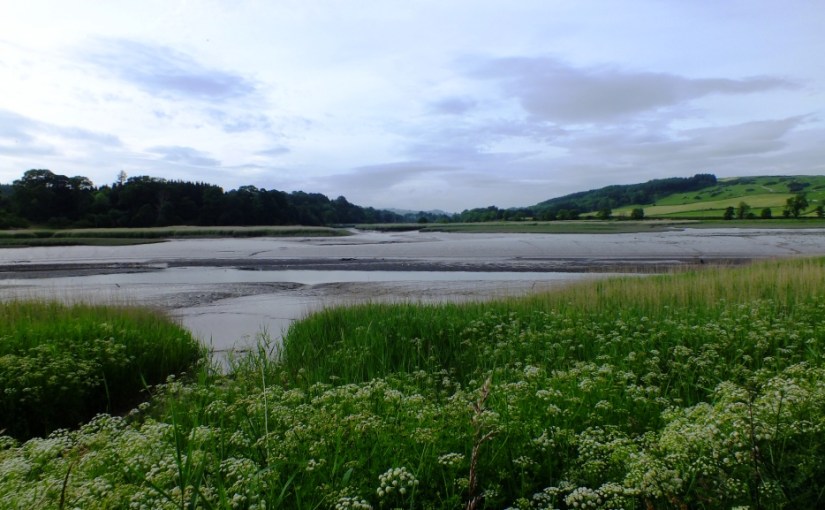
“While looking towards the north the scene is truly delightful, the banks of the river, from Tongland to the sea, being peculiarly rich in natural beauty. In the foreground is the river sparkling in the sun’s rays, and winding like a silver thread among the green meadows; while the grounds around Compstone, sloping gently to the river’s margin, are clothed with plantations of great freshness and beauty.”
~ Rambles in Galloway, by M. McL., Harper.1876.
The tree-lined Dee Walk begins at the end of the Kirkcudbright bridge and continues upstream alongside the river.

At the end of the walk several paths lead off back into town, but carry on across the open grass and then after crossing a wooden footbridge (3/4 mile) turn left and walk along the flood embankment by the riverside hedgerow.


Unfortunately it was low tide, so the walk wasn’t as picturesque as it may be when the river is in full flow. Mud banks aren’t the prettiest of things, but still it was a lovely sunny evening and the wet mud glistened silver in the late sunlight.


Several abandoned boats provided photo opportunities


And a cormorant standing out on the sand bank drying his wings

There are good views over the reed beds and the odd bench provides a rest and chance to look back at the town.


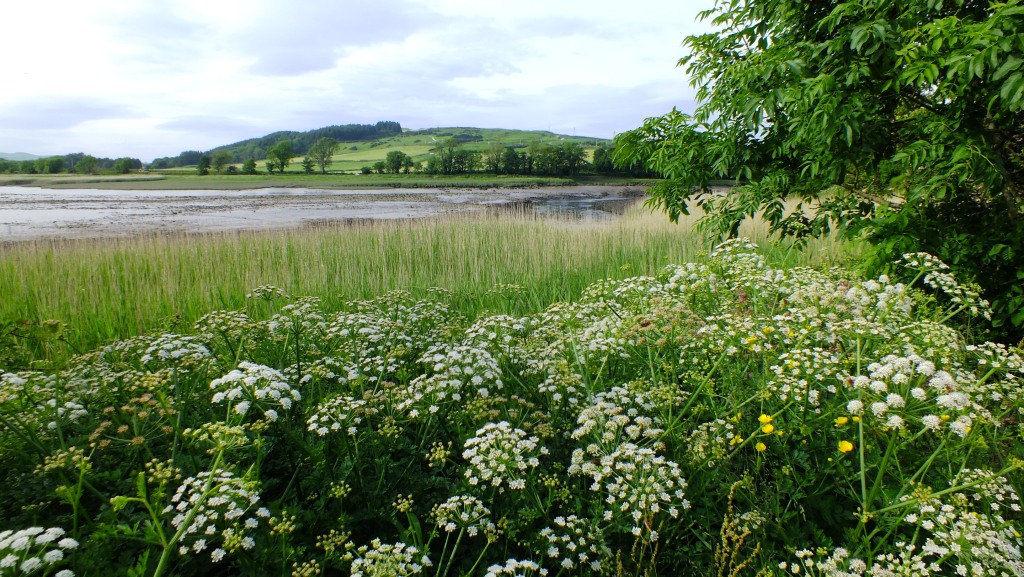
Just before the Bridge, there is an attractive strip of deciduous woodland, with some steep drops by the river side.


And finally we reached the bridge. Which proved very difficult to photograph because of all the trees and scrub in front of it. This is a Thomas Telford design with three Gothic-pointed arches. The crenellated towers and the corbelled parapets are the work of Alexander Nasmyth.


We returned to the town by retracing our steps, though we could have followed the road back as there is a roadside footpath. There we picked up some excellent fish and chips from Polarbites and took them back to our cottage to eat.
If you enjoy a walk, short or long, then you may enjoy visiting Jo’s Monday Walk where you are in for a treat.
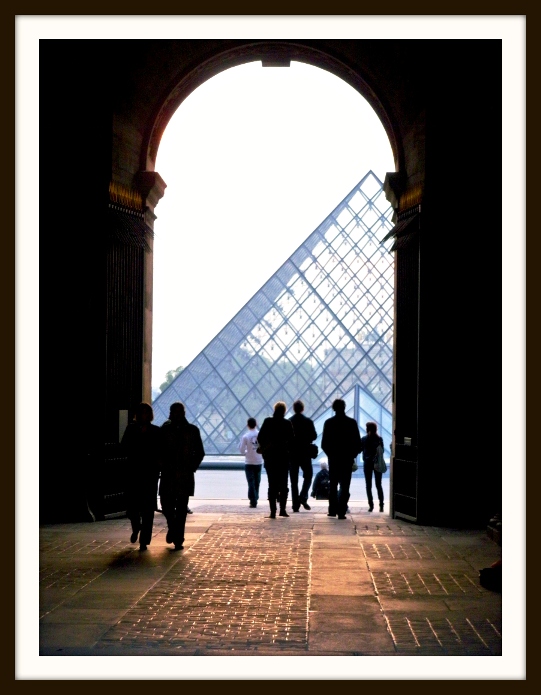
produces backlighting of the subject. This effect usually hides details, causes a stronger contrast between light and dark, creates silhouettes and emphasizes lines and shapes. The sun, or other light source, is often seen as either a bright spot or as a strong glare behind the subject.