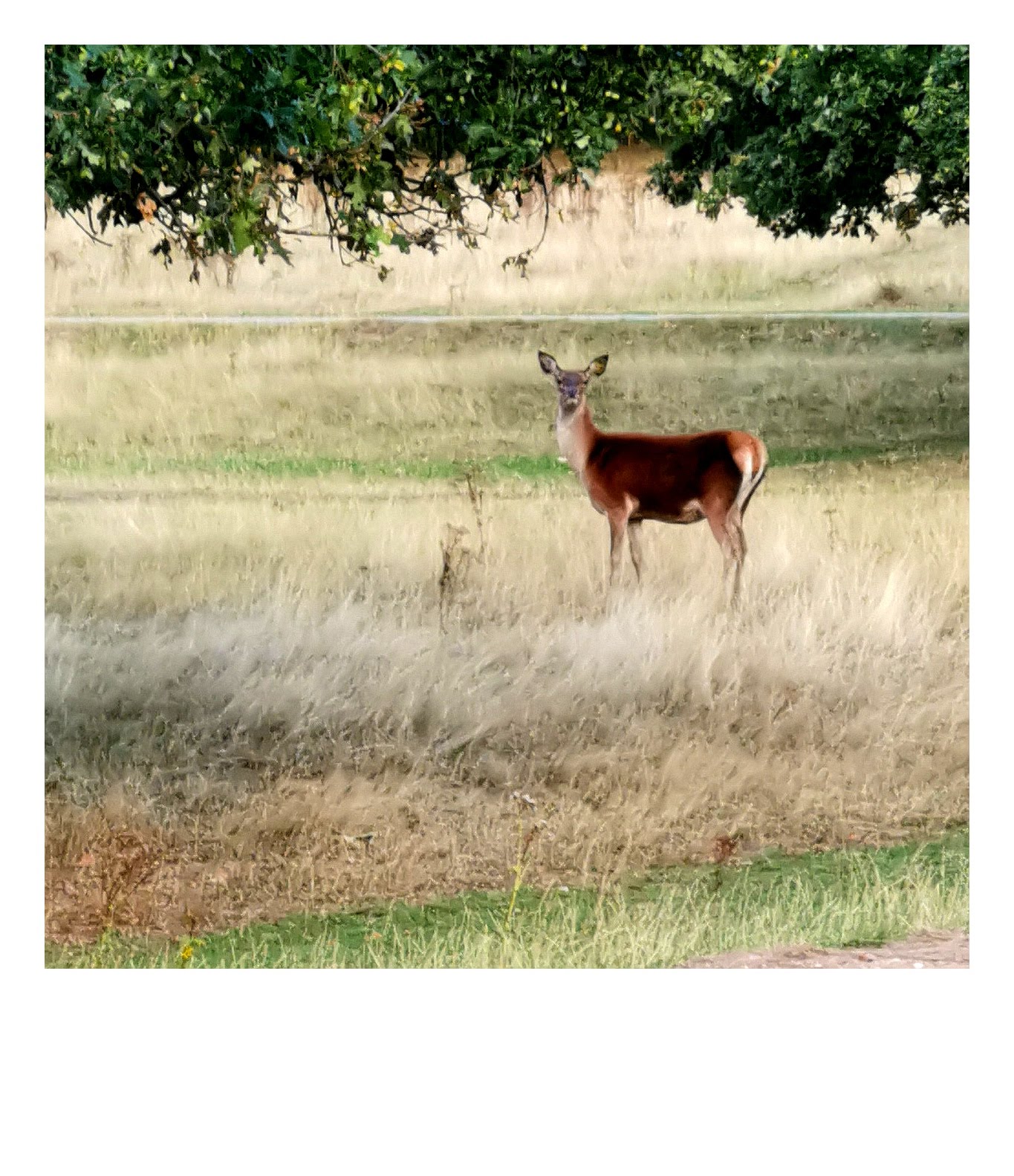
Richmond Park

Tavistock is an ancient stannary town on the border of Devon and Cornwall and supposedly the home of the cream tea. Once home to the wealthiest Benedictine abbey in Devon founded in 974 it grew to become a market town (named after the river Tavy and ‘stoc’ which is an Old English word for settlement) and a significant producer of woollen cloth.


After the Dissolution of the Monasteries in 1539, Henry VIII transferred the abbey and most of its assets to John Russell, the first in a succession of Earls and Dukes of Bedford to own most of the town. In the 19th century Tavistock’s economy and society were transformed by the expansion of metal mining, mainly for copper, around the town and in the Tamar Valley.
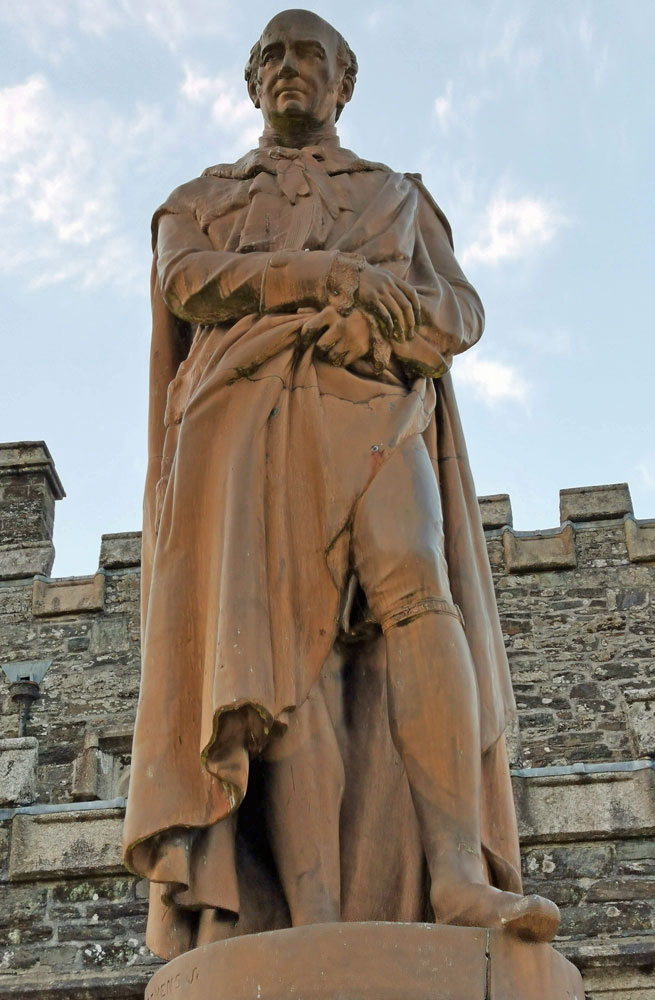
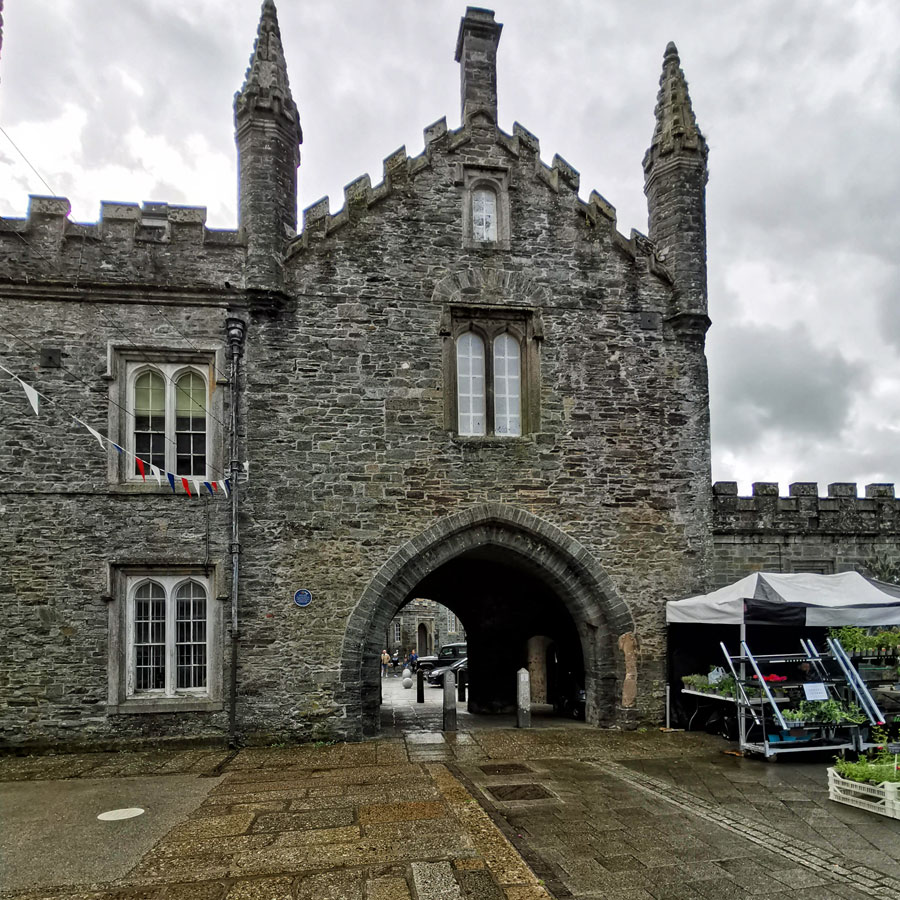
The 6th and 7th Dukes used the revenues from copper mines on their land to redevelop the town centre, provide fine public buildings including the Guildhall and Pannier Market, and erect ‘model’ cottages for industrial workers. The Pannier market has different themed markets throughout the week and you can find unusual crafts, second-hand items and clothing. Shops and cafés line the outside pedestrian walk.


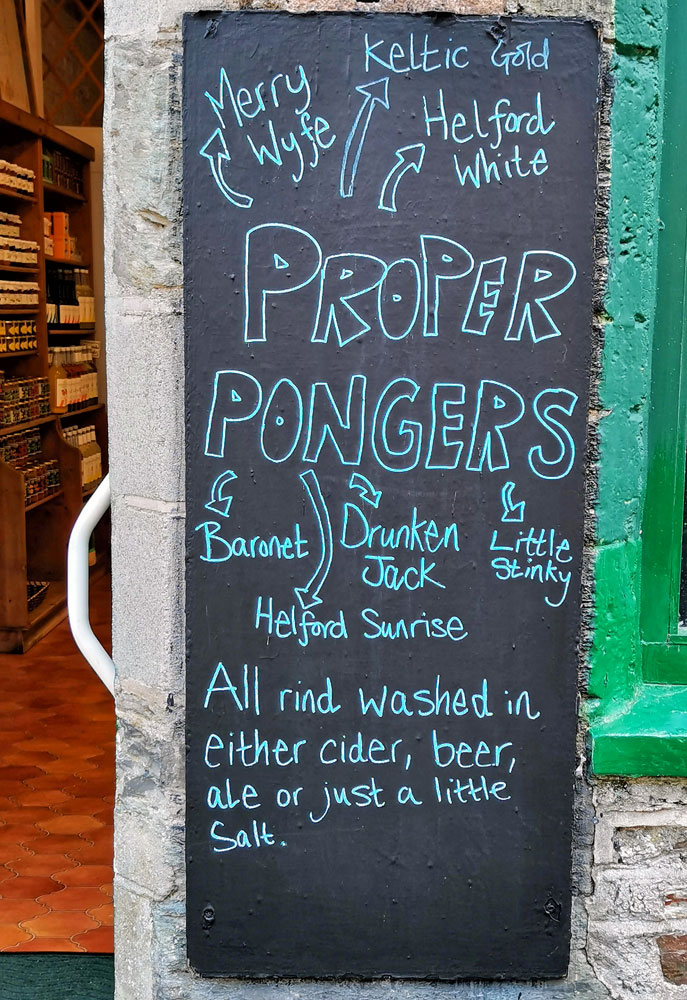
We selected the town as a base to explore this western part of Devon as it is on the doorstep of Dartmoor National Park. Tavistock is especially rich in independent stores: a brilliant bookseller and music shop, butchers, an award-winning cheesemonger, clothiers, a fine delicatessen, framers, fruit and veg shops, hardware, lighting, and stationers, among others.
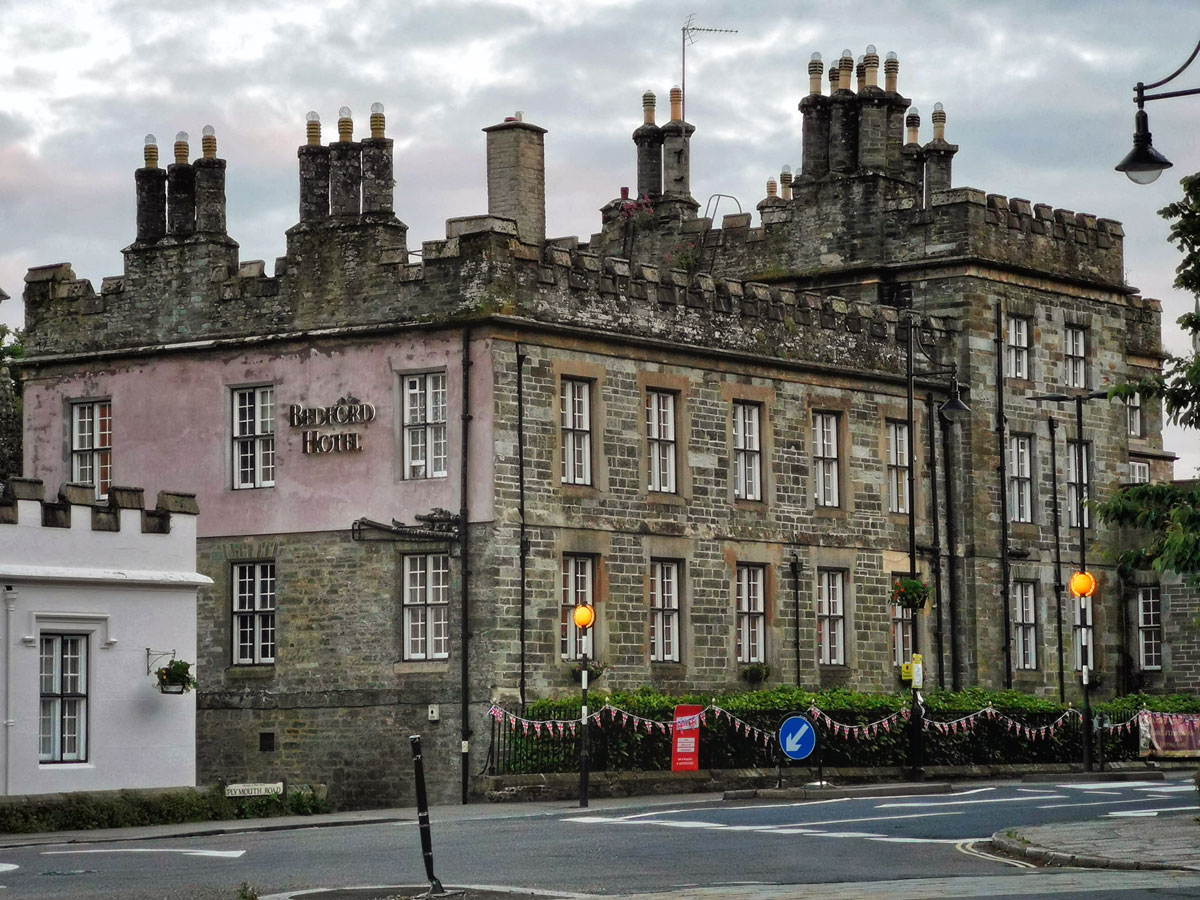
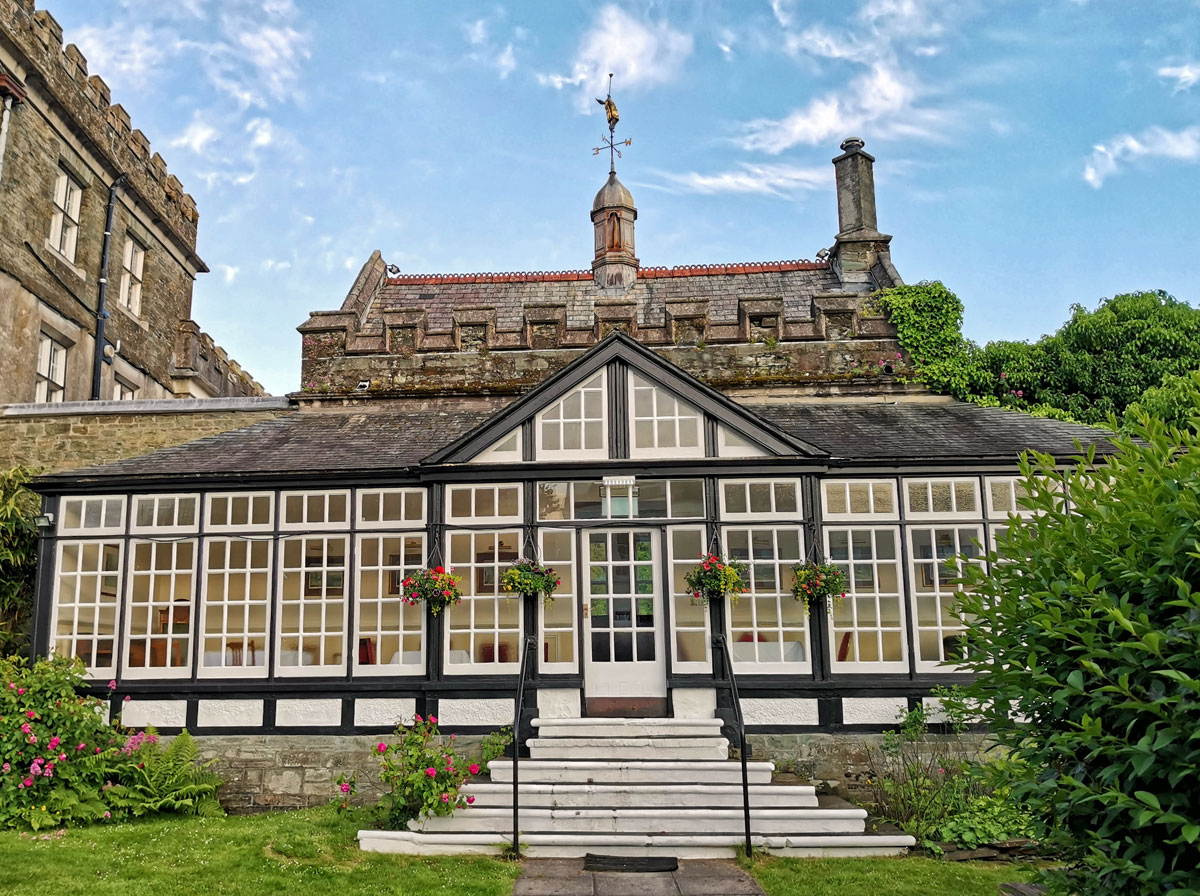
We stayed in the unusual looking Bedford Hotel which is opposite the Parish Church and close to the impressive Guildhall. The Bedford Hotel takes its name from the Duke of Bedford, who appointed the architect Jeffry Wyatt (who was also responsible for the transformation of Windsor Castle in 1824) to transform the inn into The Bedford Hotel which was completed in 1822, and a ballroom was added in 1830. Although somewhat old-fashioned we enjoyed our stay there, the room was rather tired, though clean, and on the 3rd floor (no lift) but the food was excellent and it is in a perfect location for exploring the town and the area.
At the back of the hotel is a rather lovely secret walled garden. We didn’t manage to sit out in there, but on a warm evening it is probably a lovely spot to take a bottle of wine and relax and smell the many beautiful roses.


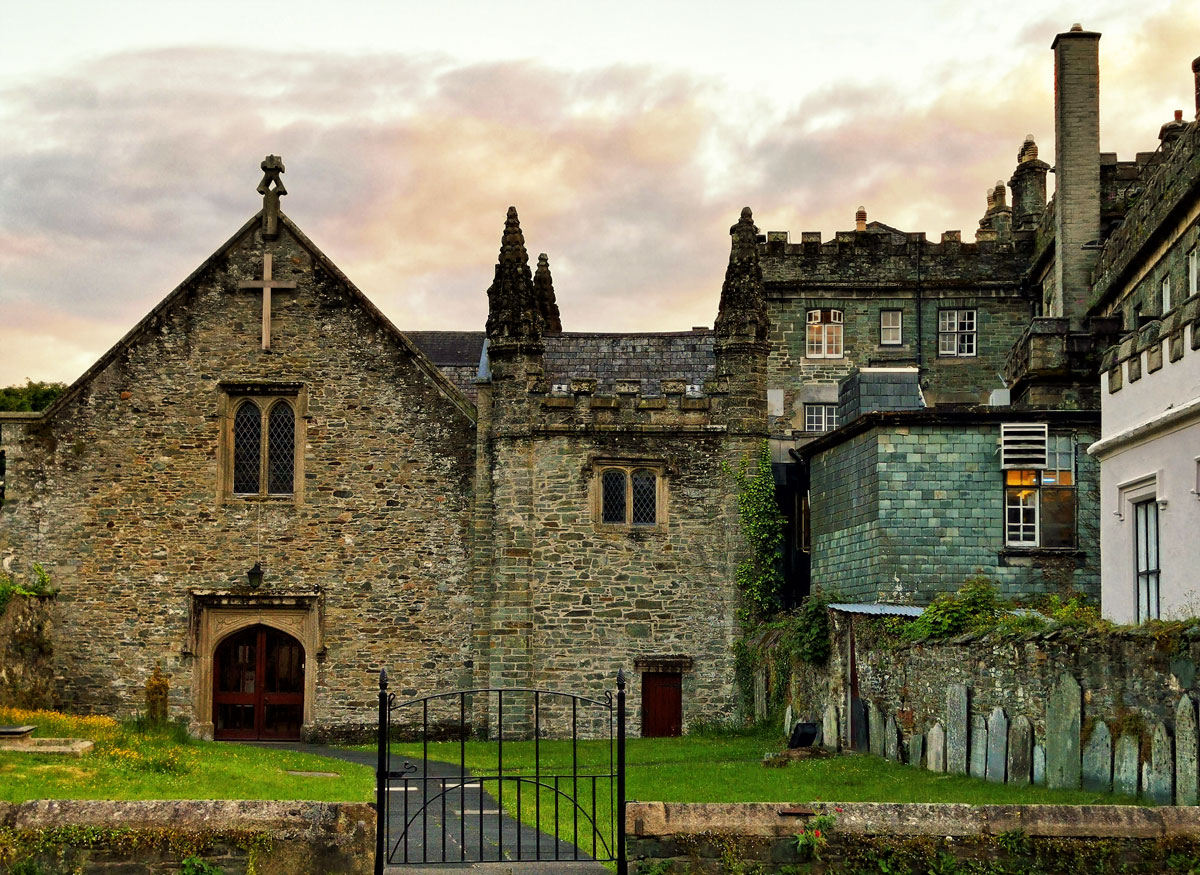
Remains of the cloister of Tavistock Abbey, destroyed during Henry VIII’s dissolution of the monasteries, can be seen in the churchyard of the rather beautiful St Eustachius church which is directly opposite the hotel.
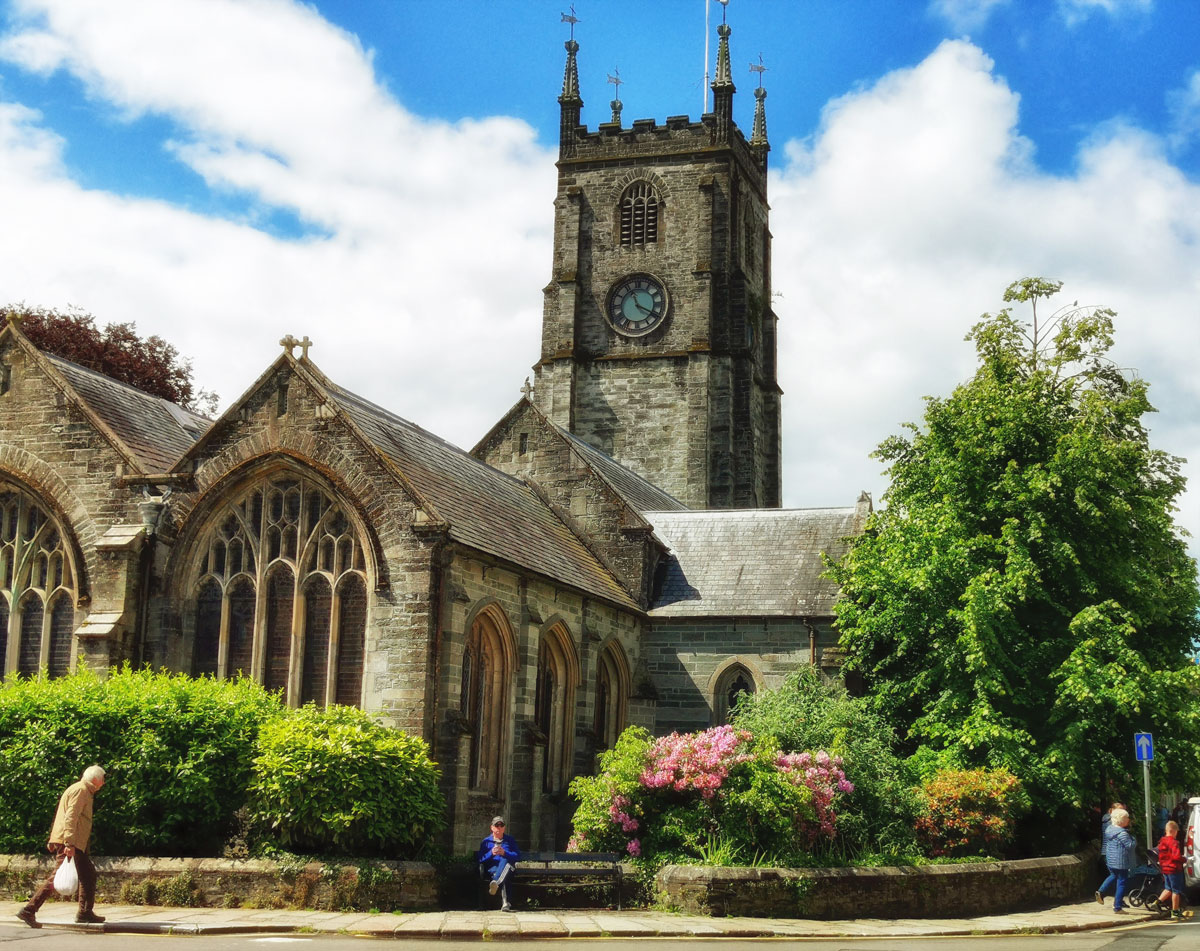


The church is well worth visiting though we never managed the time to revisit and use the helpful information leaflet to guide us around.
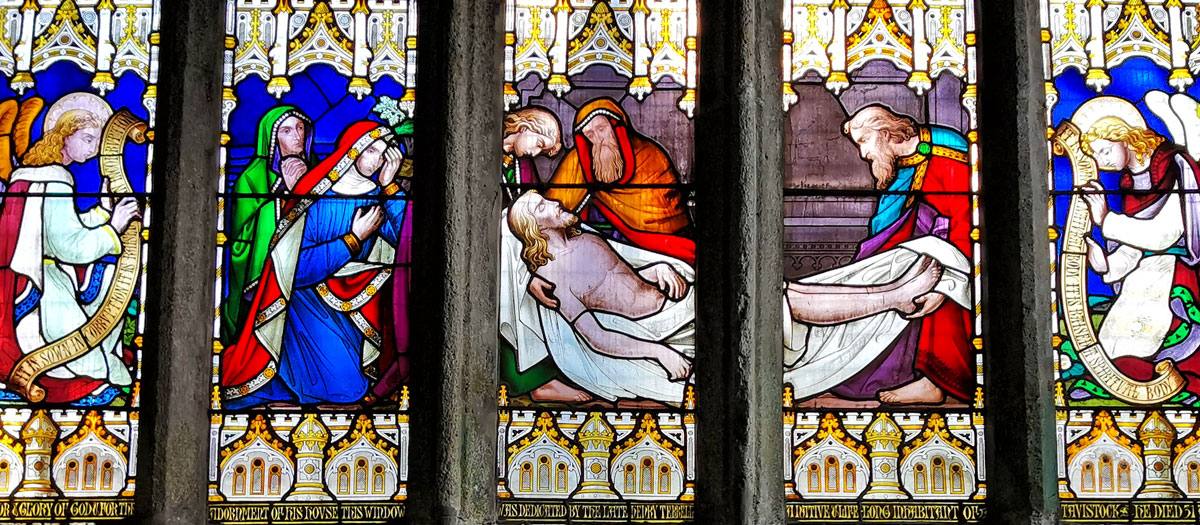
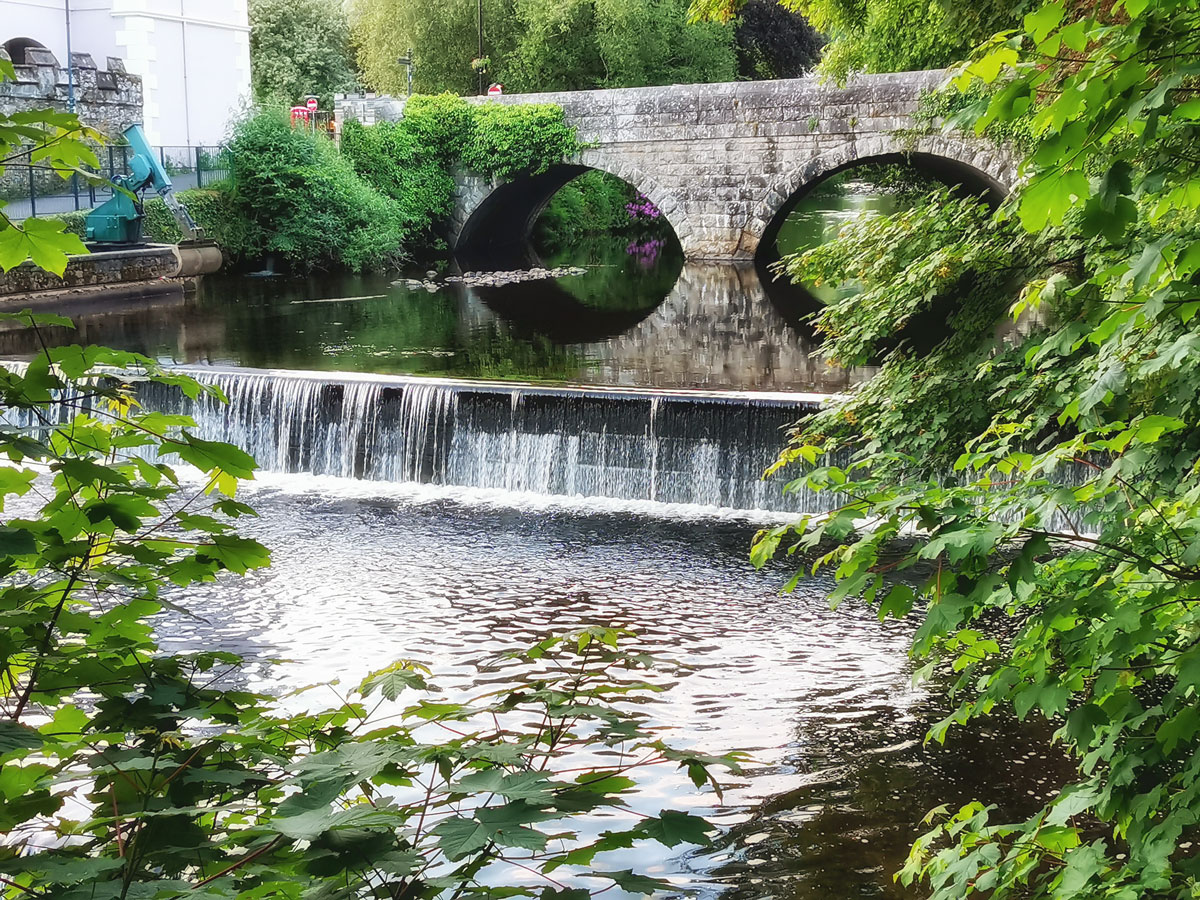
There are lovely walks alongside the River Tavy as it meanders softly over granite pebbles and slate stones beside the Abbey walls and the nearby canal, which was created (most of the labour being performed by French prisoners of war from the Napoleonic Wars) to carry copper to Morwellham Quay on the River Tamar, where it could be loaded into sailing ships weighing up to 200 tonnes.


Another interesting find was Betsy Grimbal’s Tower, one of the entrances to the Abbey, which dates from the fifteenth century. Its popular name is probably a corruption of Blessed Grimbald, a ninth century saint revered by the Benedictine monks.
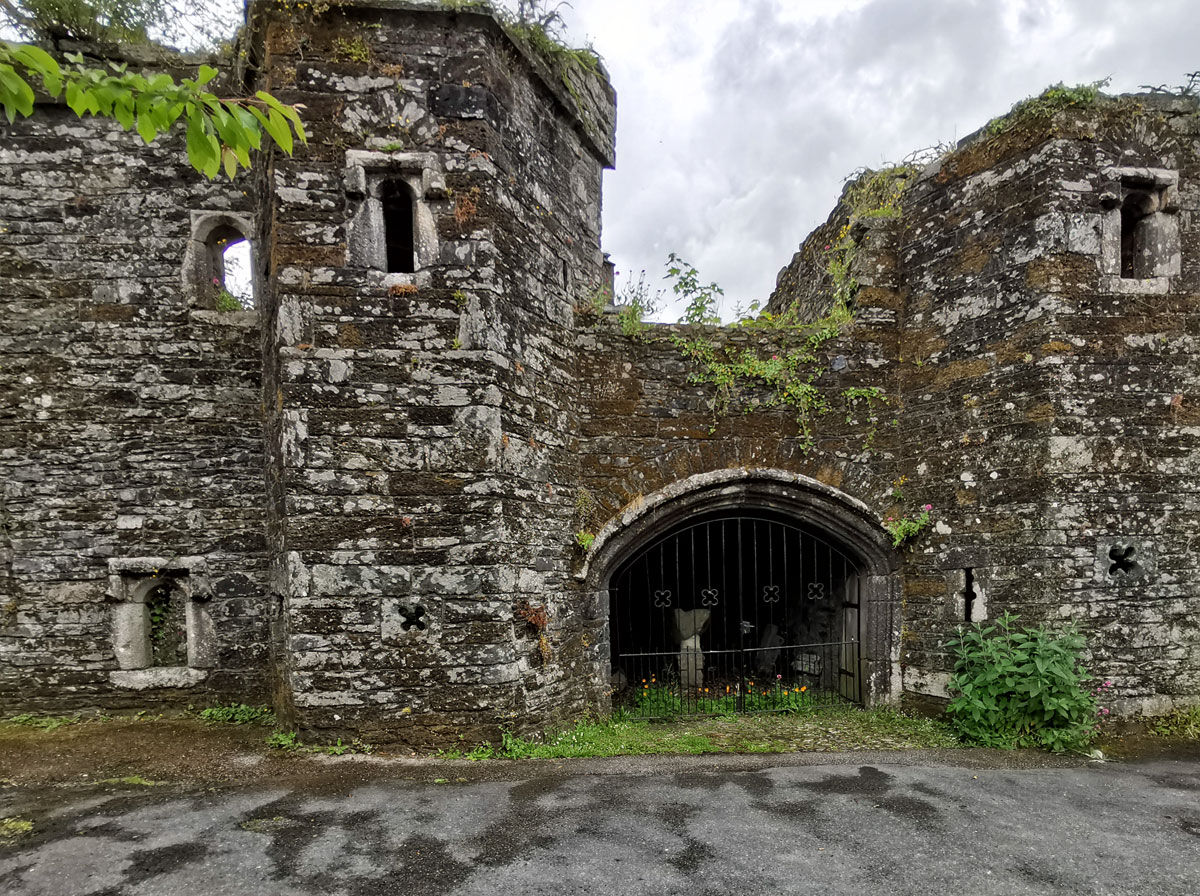
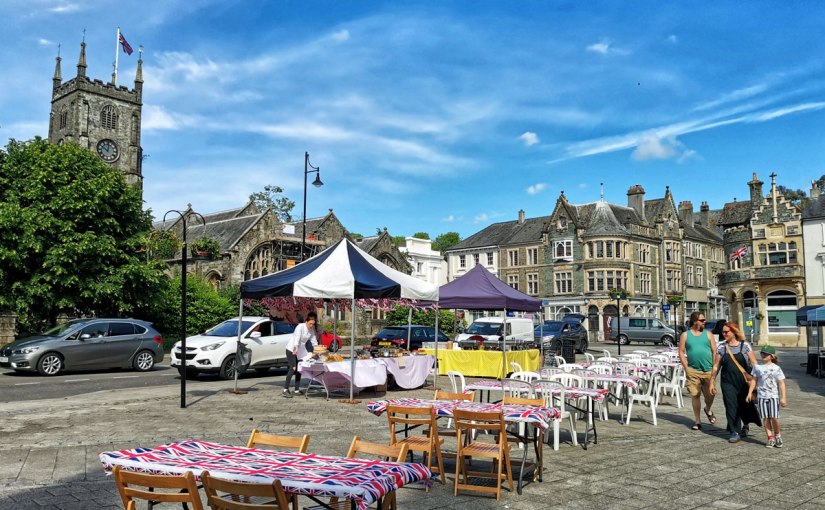
The buildings around Bedford Square (header image) are quite unusual. Here you will find the Guildhall and the Pannier Market and this gateway.
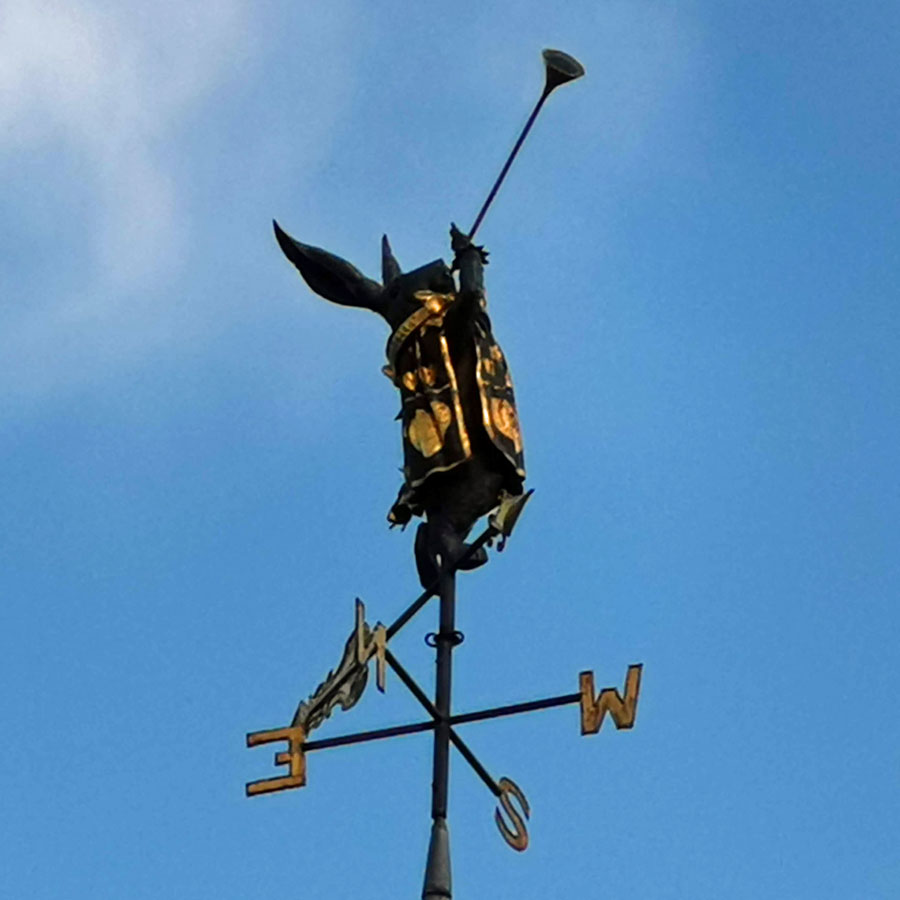
An unusual weathervane on the Bedford Hotel sits above a turret over the Portrait Room. It’s not old, it was created in copper in 2001 by Greens Weathervanes, who at that time had a workshop at Tor Royal in Princetown.
Based in design upon the White Rabbit, Herald to the Queen of Hearts, drawn by Sir John Tenniel for Lewis Carroll’s Alice’s Adventures in Wonderland, the vane is a veritable work of art.
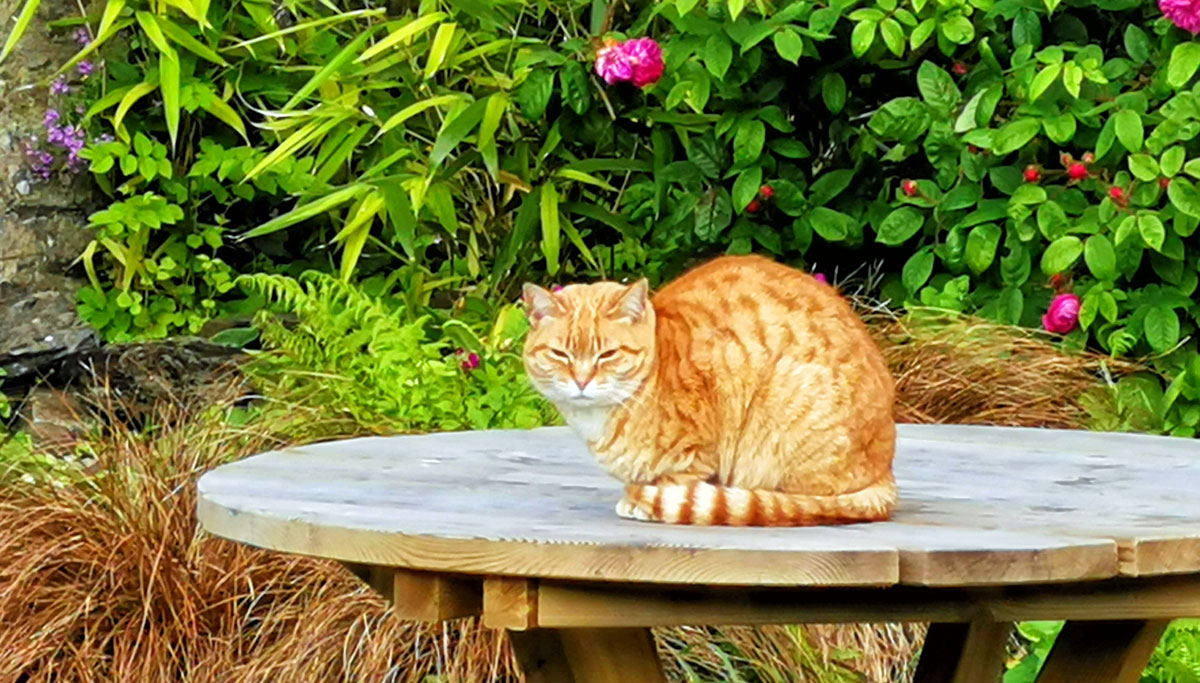
And I even managed to capture a Cheshire Cat…
Tavistock is definitely a town worth visiting and there are plenty of pubs, restaurants and cafés to enjoy as well as walks to discover the many medieval remains and the newly opened Guildhall Gateway Centre formerly a courtroom and police station. And in the autumn the famous Goose Fair is held on the second Wednesday of every October and sees fair rides, stalls and activities take place. The fair dates back to the 12th Century, when a Michaelmas Fair was held every 29 September.
We could be back.
It was one of those days where you are not quite sure whether the sun will come out or it will pour with rain all day. Whilst having breakfast we watched the rain come down, but according to my phone weather app it was supposed to clear by 11 am. We took the opportunity to pop over to the famous Pannier Market in Tavistock and have a look around the stalls whilst waiting for the sun to emerge.
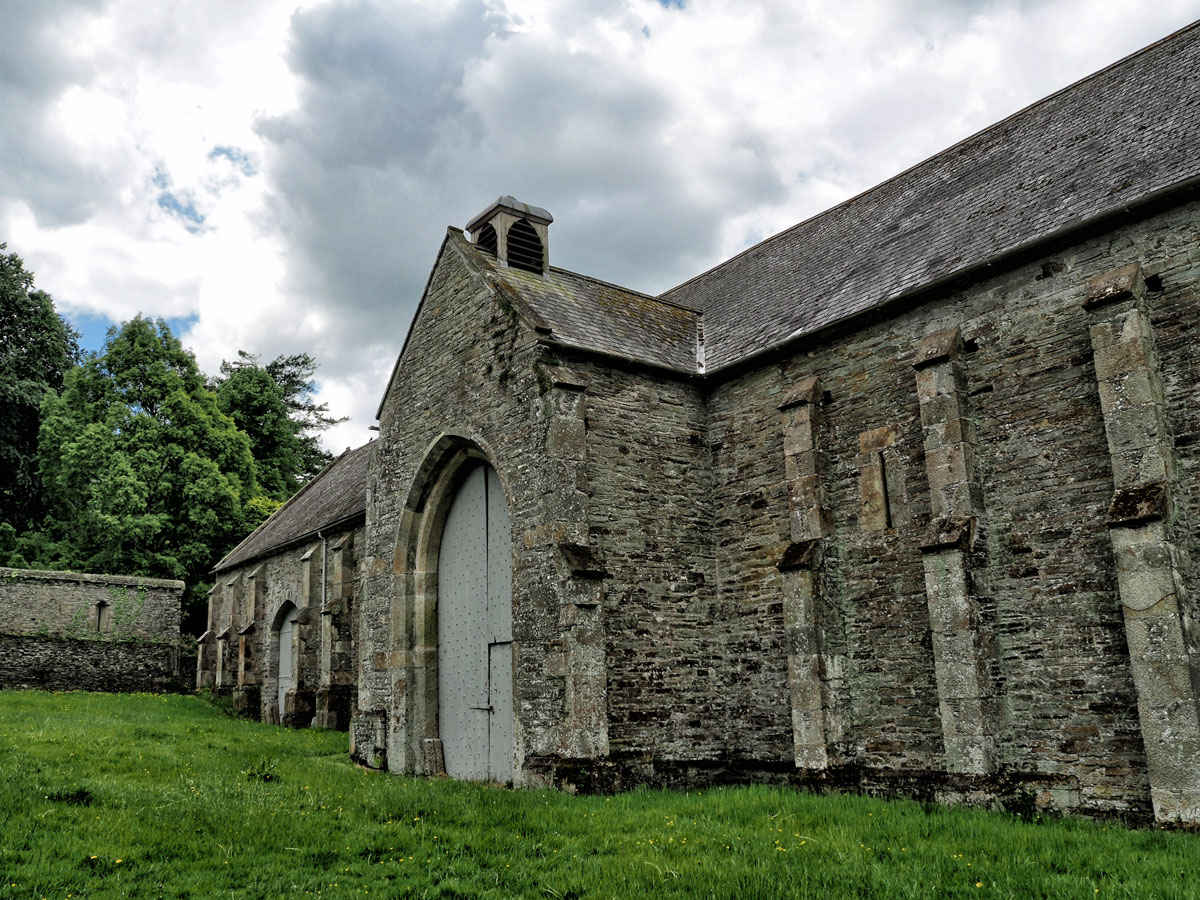
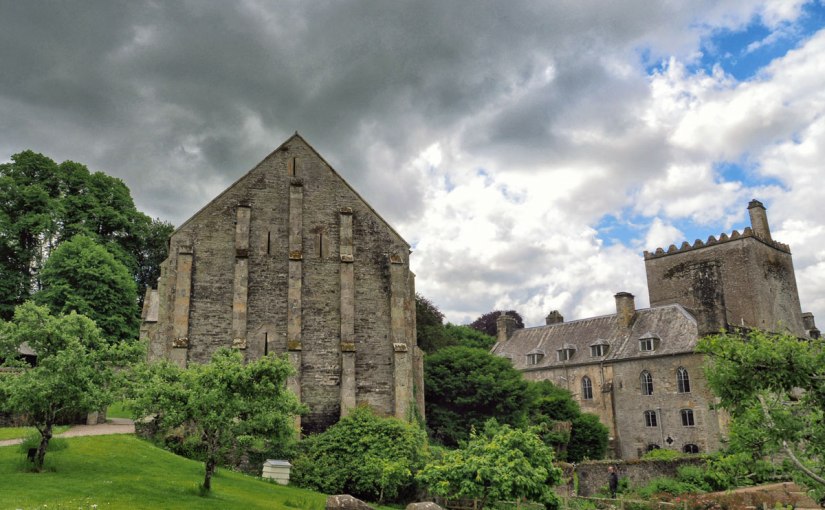
It was our final day in the area so we decided (well I did) to visit the lovely Garden House only a short distance away near Yelverton and since it was only an extra 5 minutes away we drove down a very narrow road (due to road closures) to visit Buckland Abbey, once home to the infamous Sir Francis Drake.
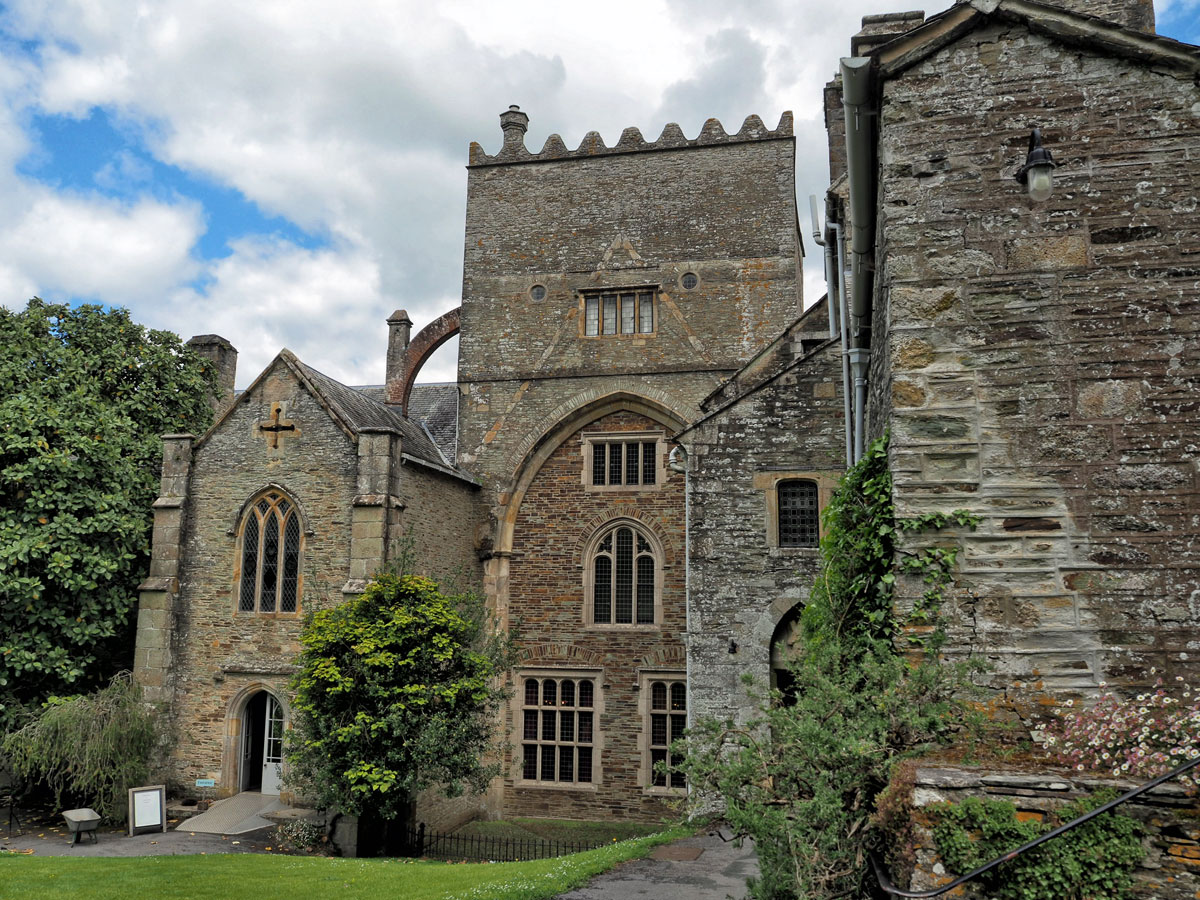
The dissolution of the Abbey in 1539 saw a new owner, Sir Richard Grenville, purchase the Abbey and some of the estate from the Crown for his son Roger. However Roger’s ownership was brief, and it was his son, also called Richard, who made many of the alterations that are still evident today. Grenville decided instead to convert the abbey church into a house, in the process creating a cosy and intimate home. He retained the church tower and inserted three floors in the church interior.
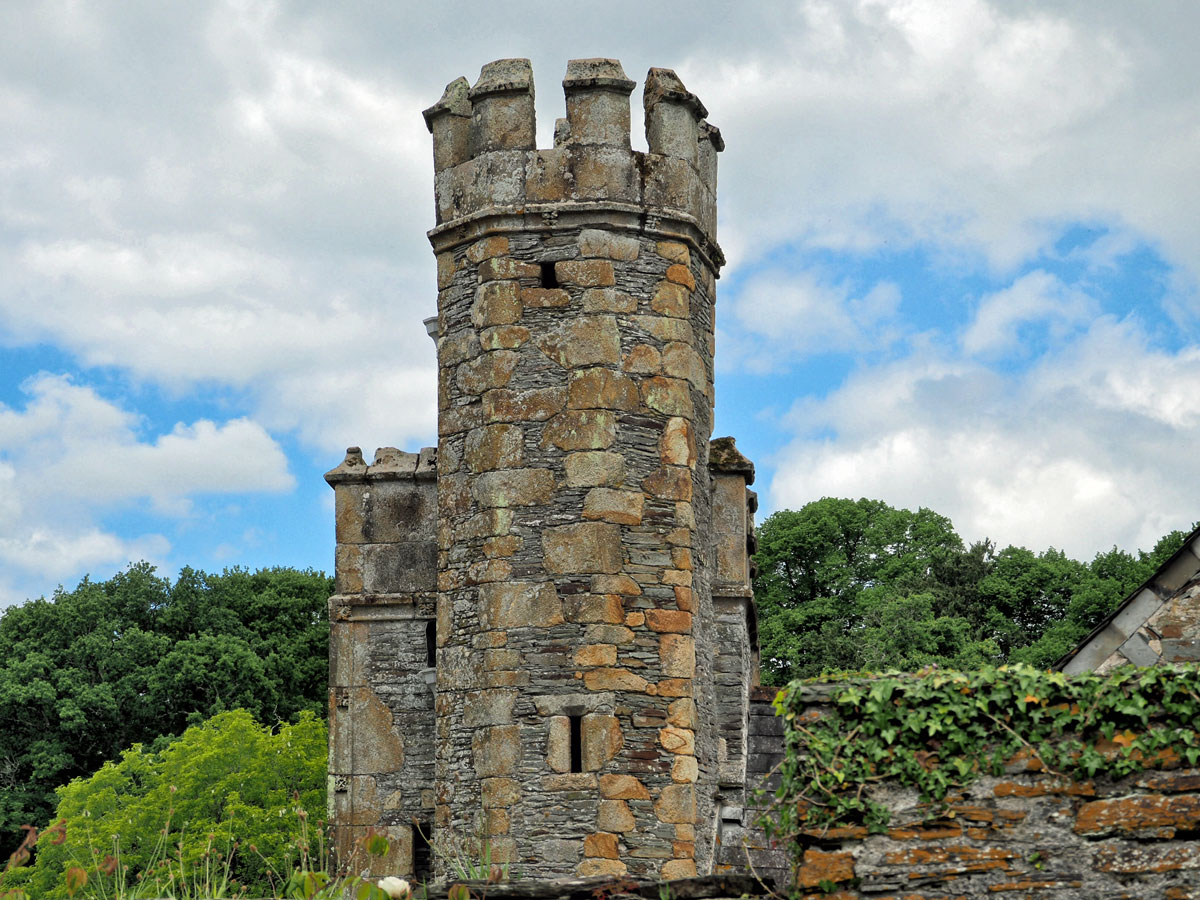
Richard decided to sell the Abbey in 1580 to Sir Francis Drake, privateer, who made it his home after returning to England after his three-year circumnavigation of the globe on The Golden Hind. [source: NT Website]
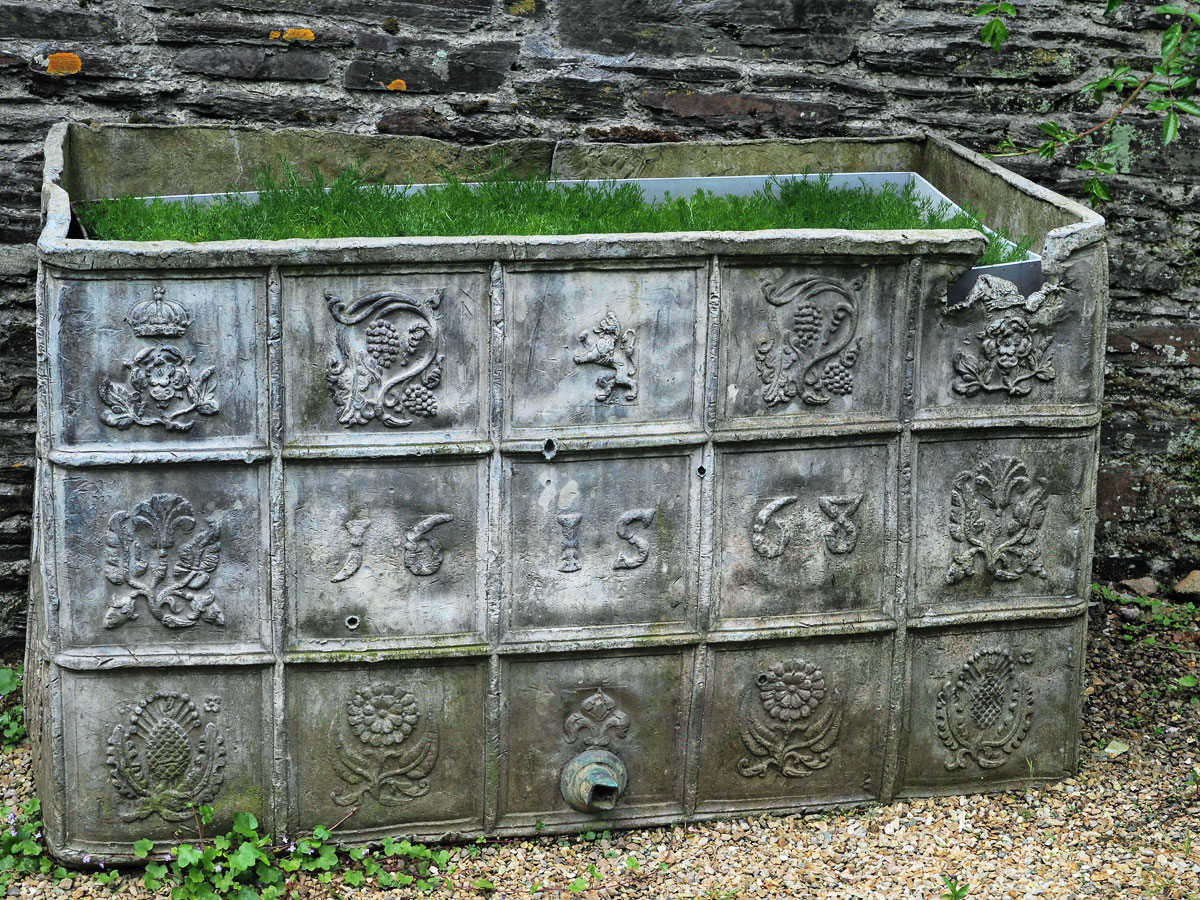
I’m not a huge fan of NT houses, some of the history is fascinating, but there is only so much ostentatious wealth I can stomach. I much prefer the exteriors of the buildings and of course, the gardens.
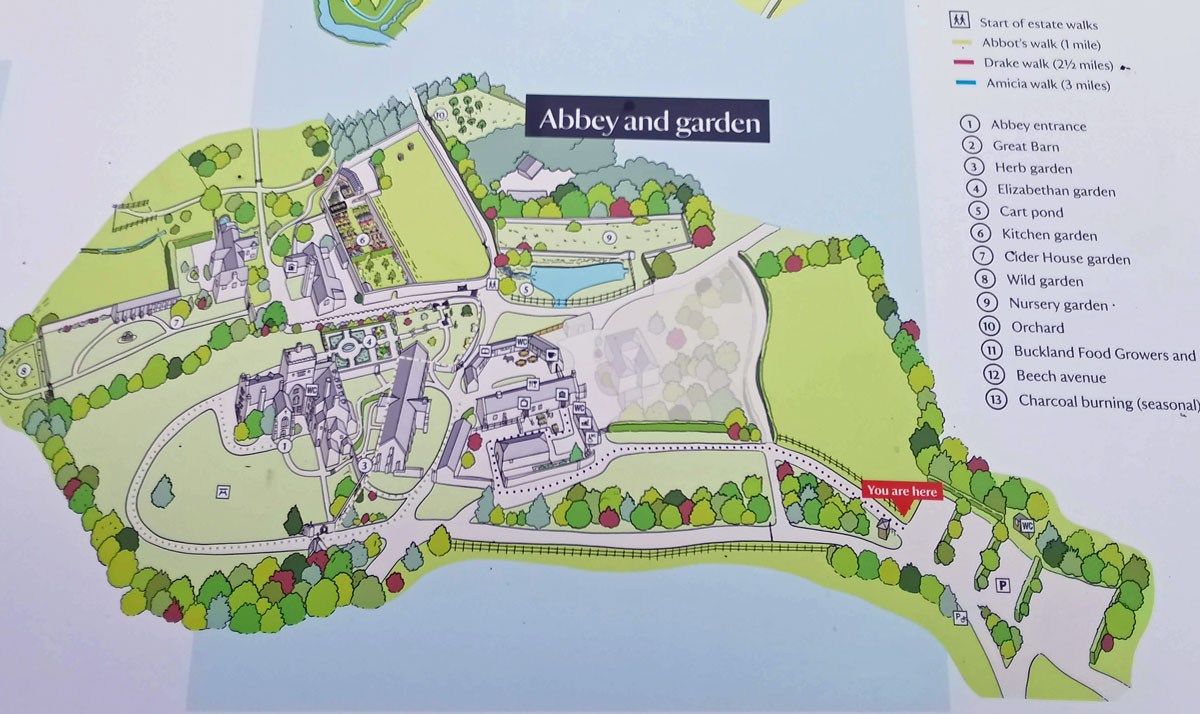
Every English person over a certain age will have studied those enterprising explorers during ‘The Age of Exploration’, or ‘Age of Discovery’, including Sir Francis Drake, though his life has been somewhat sanitised (being depicted still as a ‘great British hero’) as he commanded a ship as part of a fleet bringing African slaves to the “New World”, making one of the first English slaving voyages.
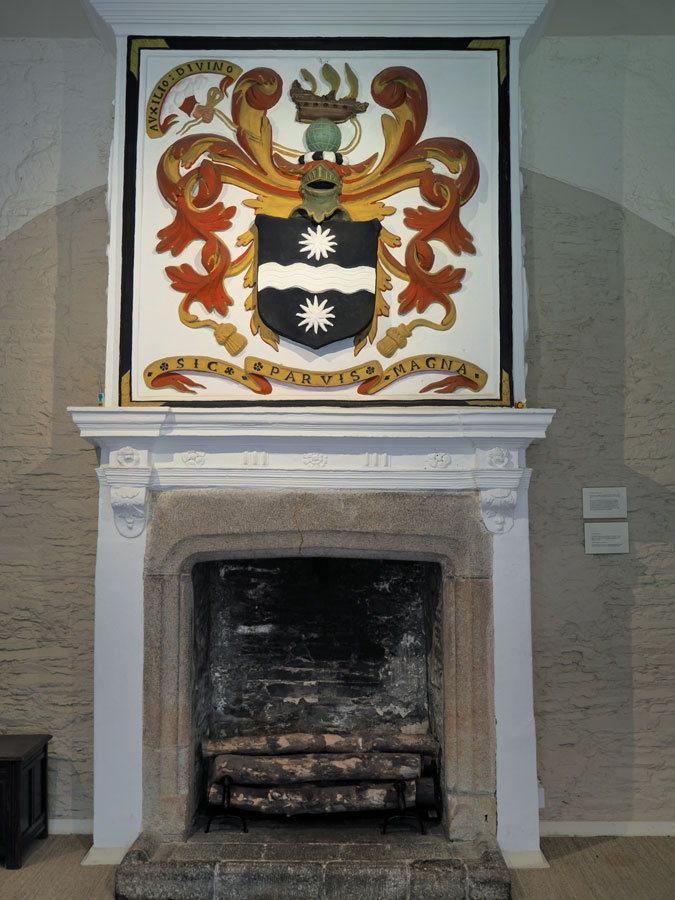
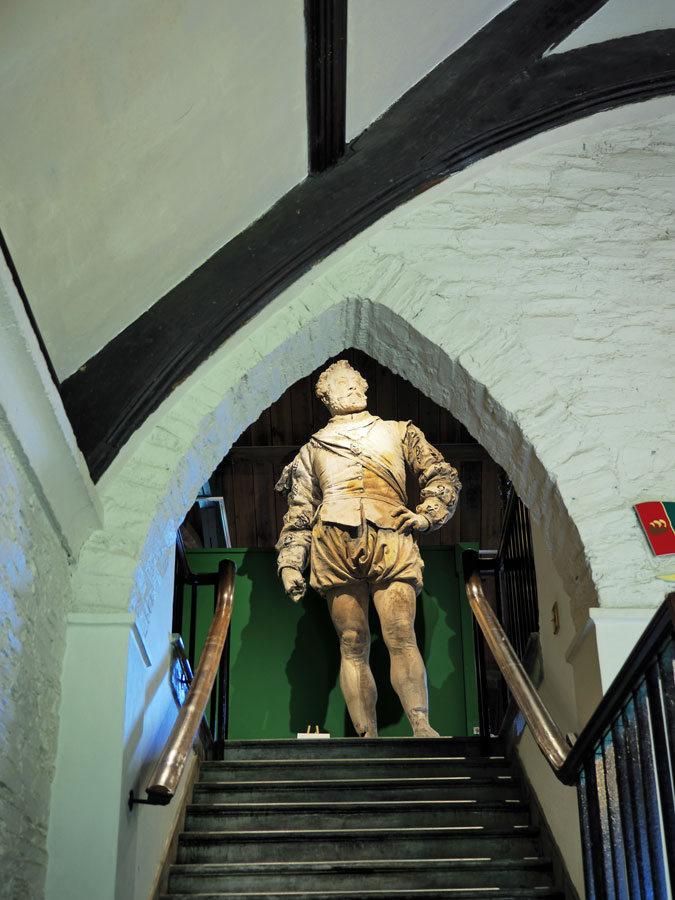
Inside the former abbey the Great Hall has the original magnificent Tudor floor and an elaborate plastered Elizabethan ceiling. The upper floor has the Long Gallery which is dominated by a huge statue of Sir Francis Drake. This long, open space was used in Tudor times for the inhabitants to get some indoor exercise and we found information about life on board the ships that Drake might have sailed and the lives of the Cistercian monks. Much of the display relates to the Armada’s defeat.
In 1988 four stained glass windows were installed in the windows of the stairwell to commemorate the 400th anniversary of the defeat of the Spanish Armada.
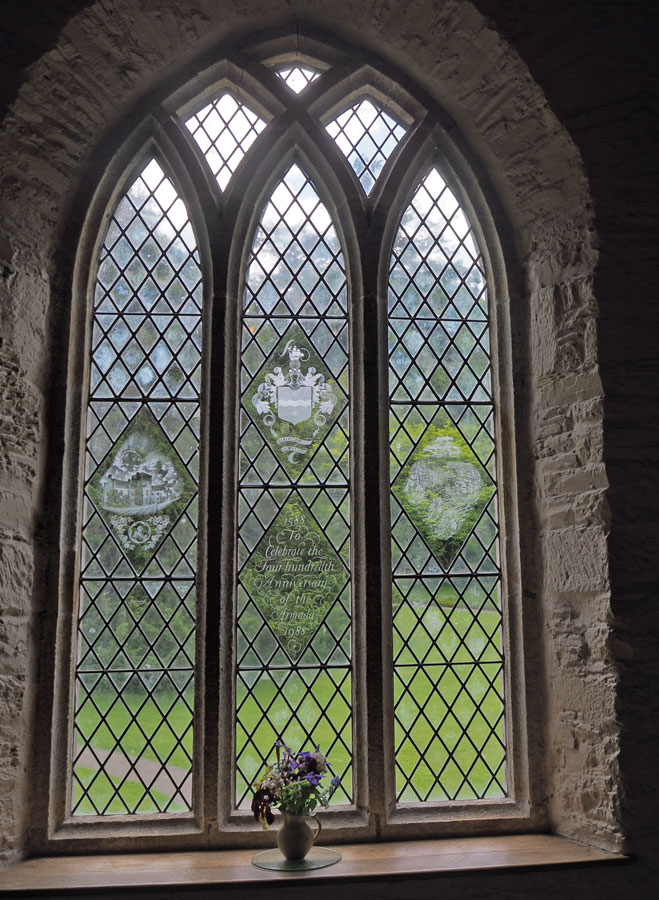
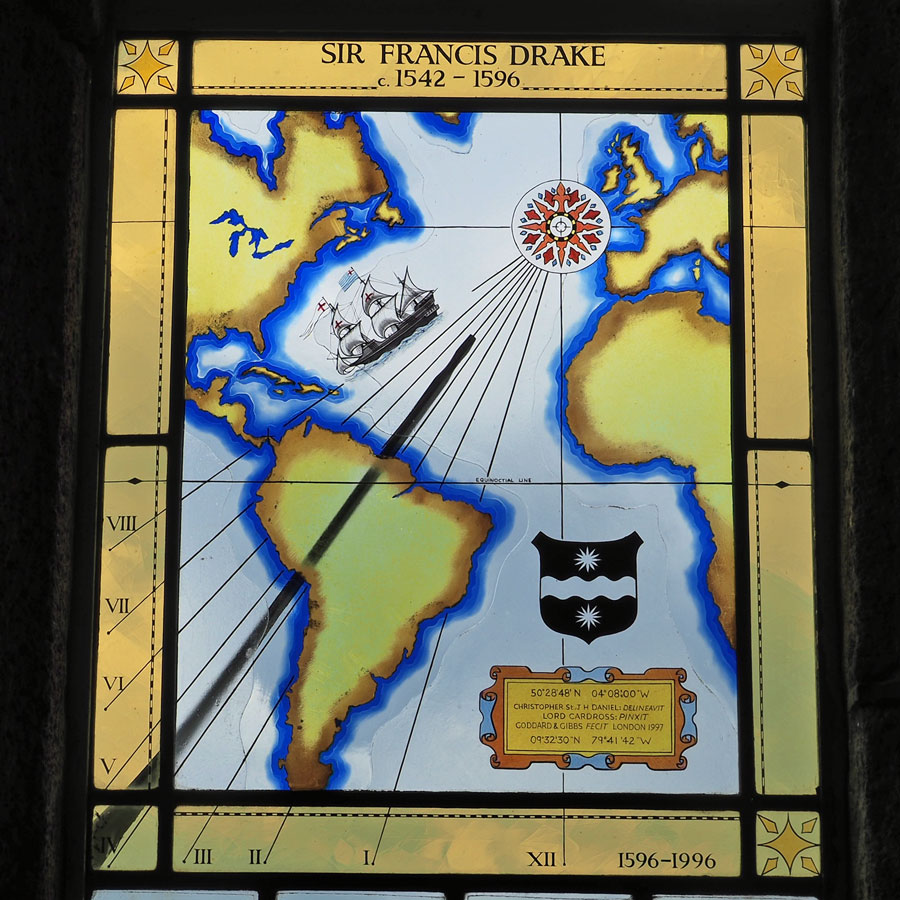
Back on the ground floor are the Tudor kitchens, laid out with 18th century cooking utensils and foods as if preparing for the dinner party upstairs.
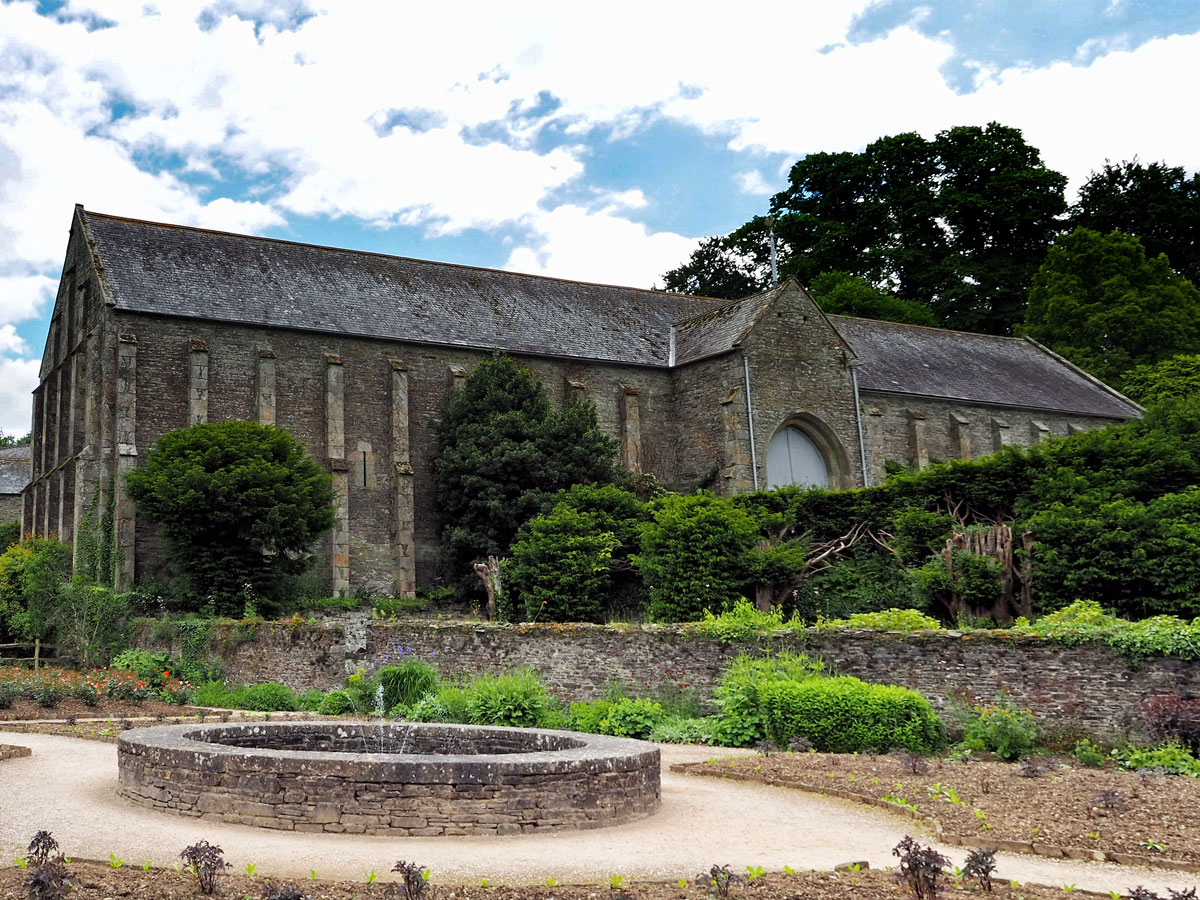
There is an impressive great barn which was used by the monks for the storage and winnowing of corn. Now used for apple pressing.
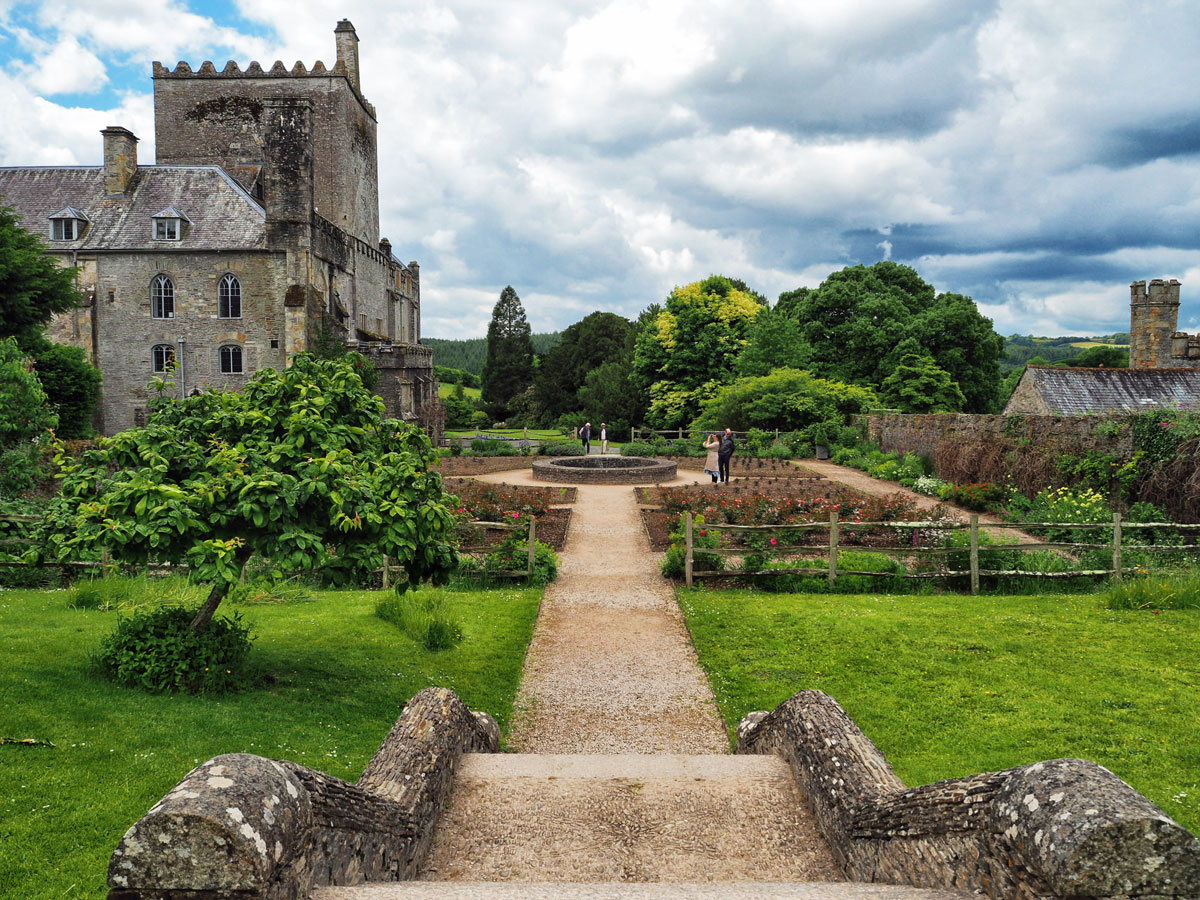
And outside are Herb Gardens and an Elizabethan garden in front of the abbey. Not the most interesting of NT gardens I have to say. I was disappointed with the planting of both the herb garden and the Elizabethan garden. Being the first of June I expected both to be quite floriferous.


Since we were heading off to visit the nearby Garden House we opted not to do any of the walks in the grounds or visit the café.
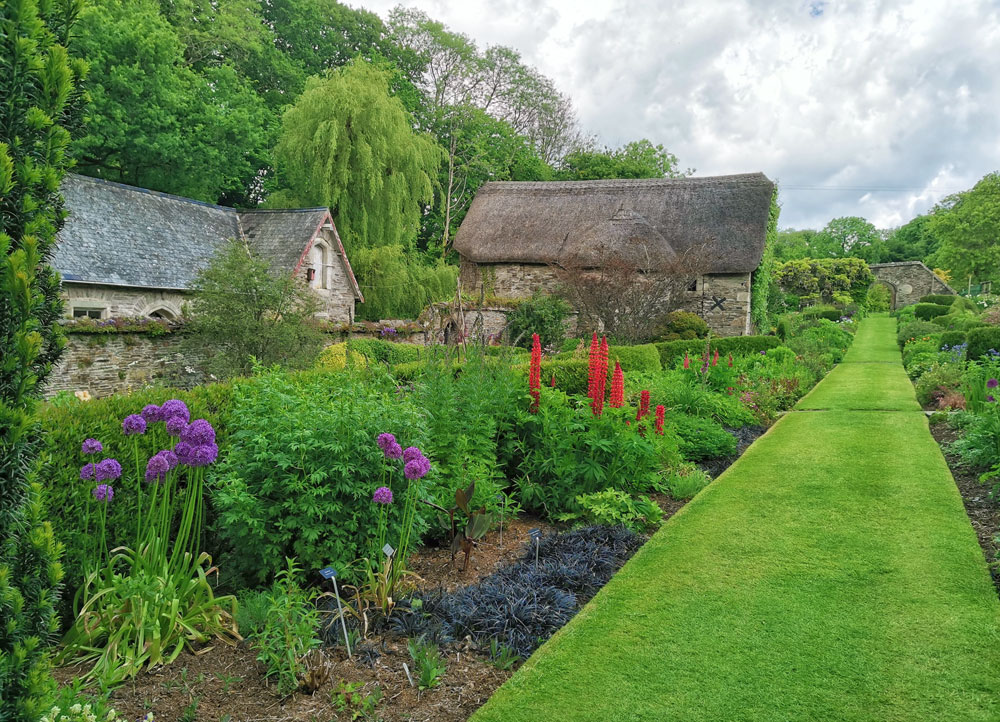 The second part of my visit to The Garden House is of the Walled Garden and the terraced areas leading up to the Café.
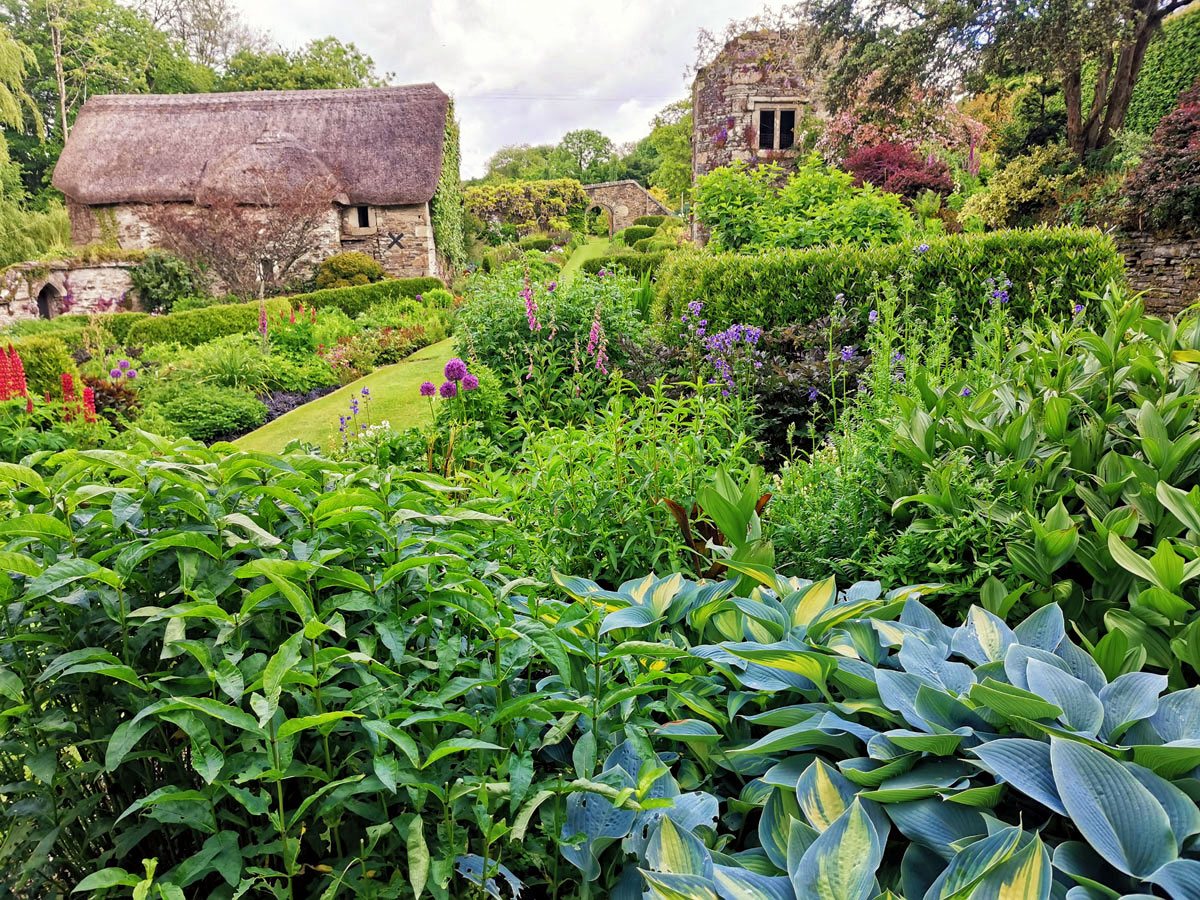
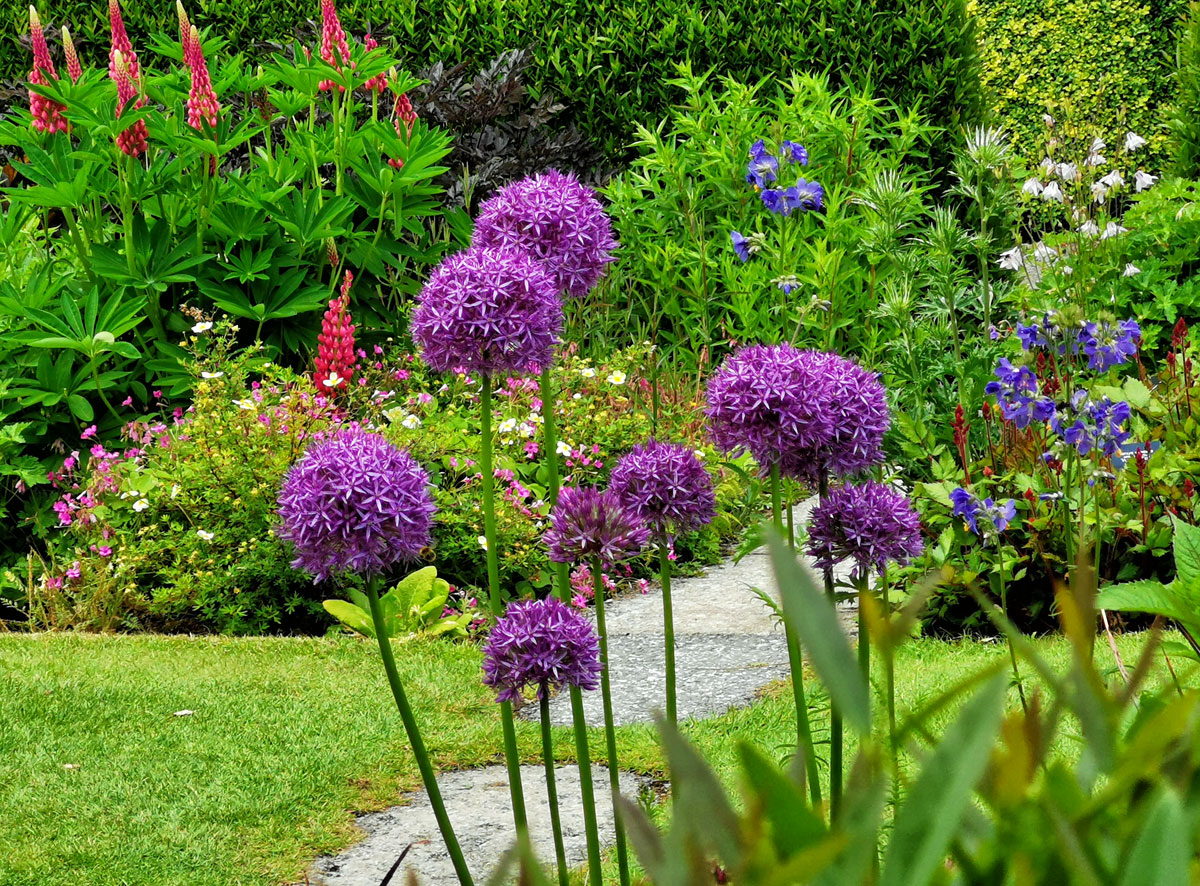
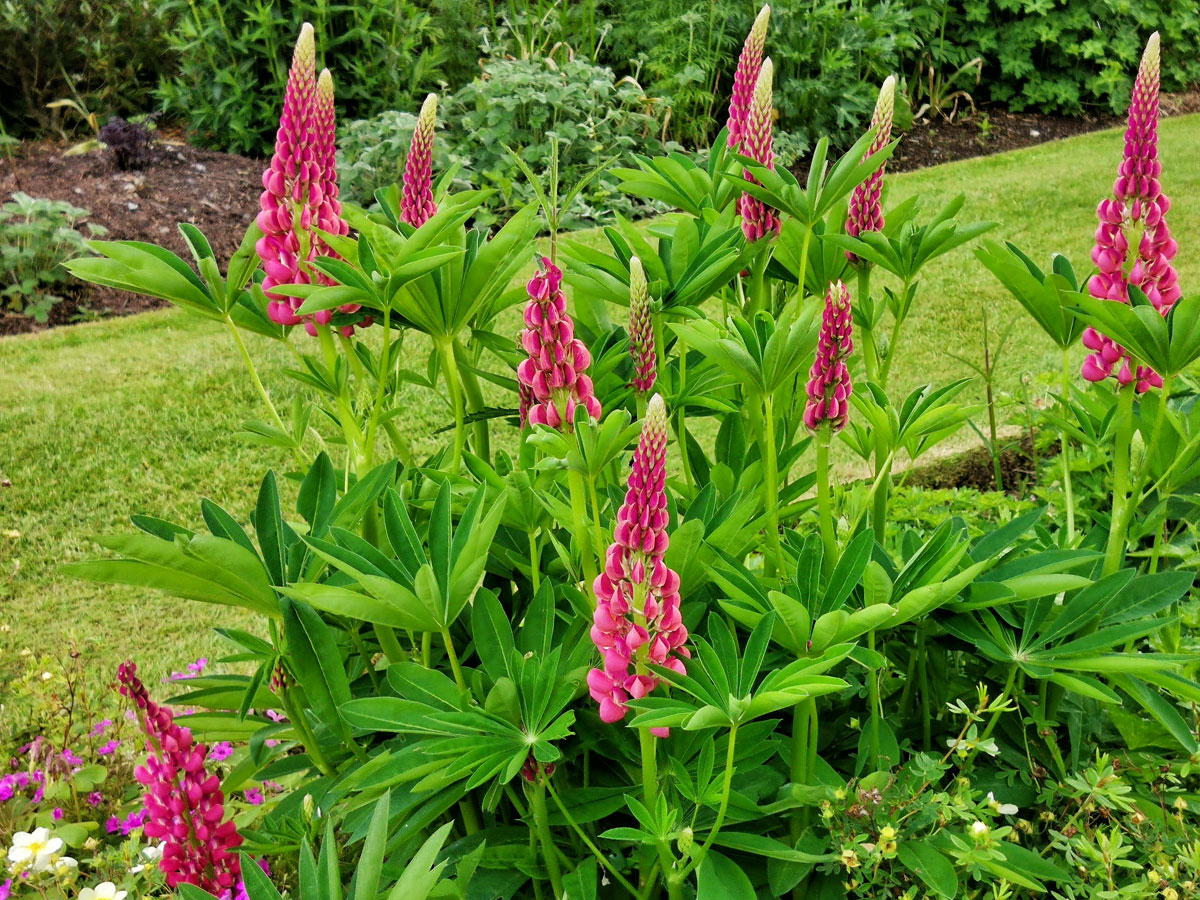
On both sides of a very neatly mown grass path, which seemed far too good to actually walk on, there are deep double herbaceous borders, filled in late May with swathes of Alliums, Peonies, Lupins, Aconites, Wisteria and lots of other perennials just beginning to emerge.


More wisteria, bronze fennel, grasses and architectural plants such as the Melianthus major, Hostas and Ligularia.
Eventually we made our way up to the Lower terrace and lawns to the café.
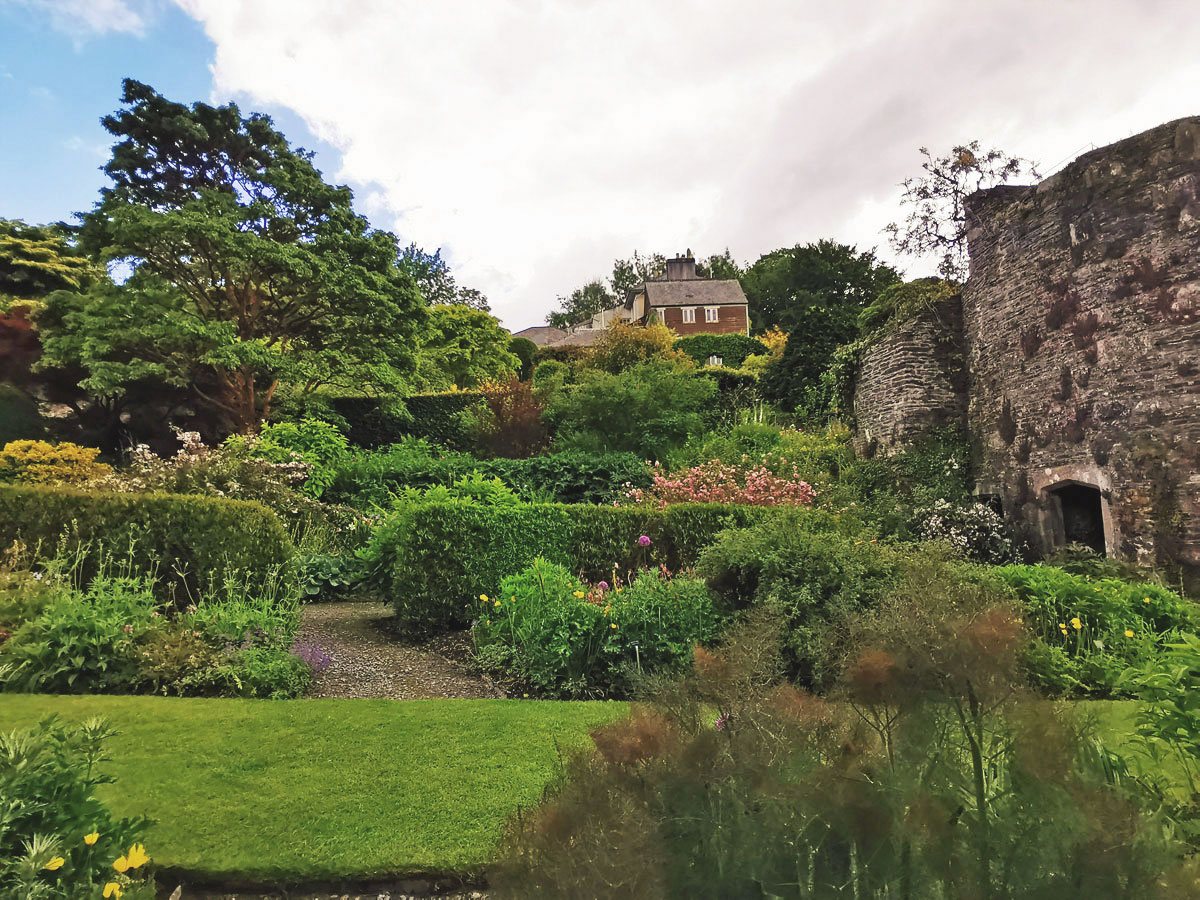
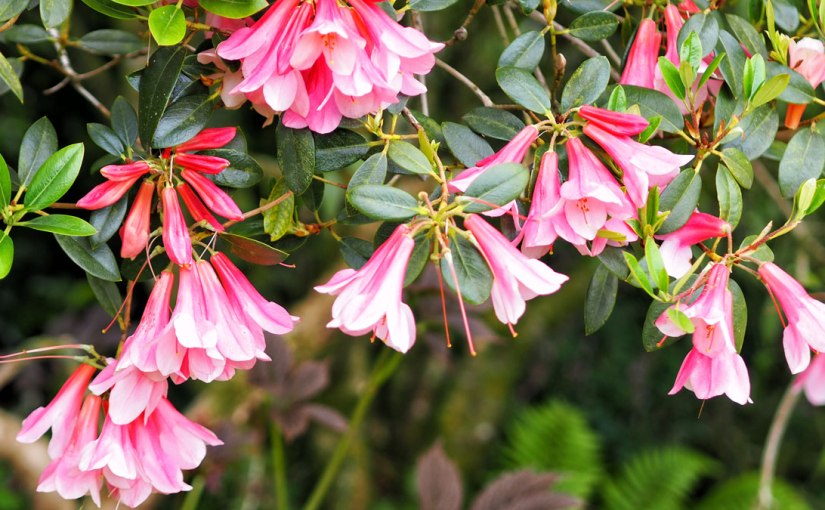
Behind the borders are more winding pathways among colourful shrubs and trees.
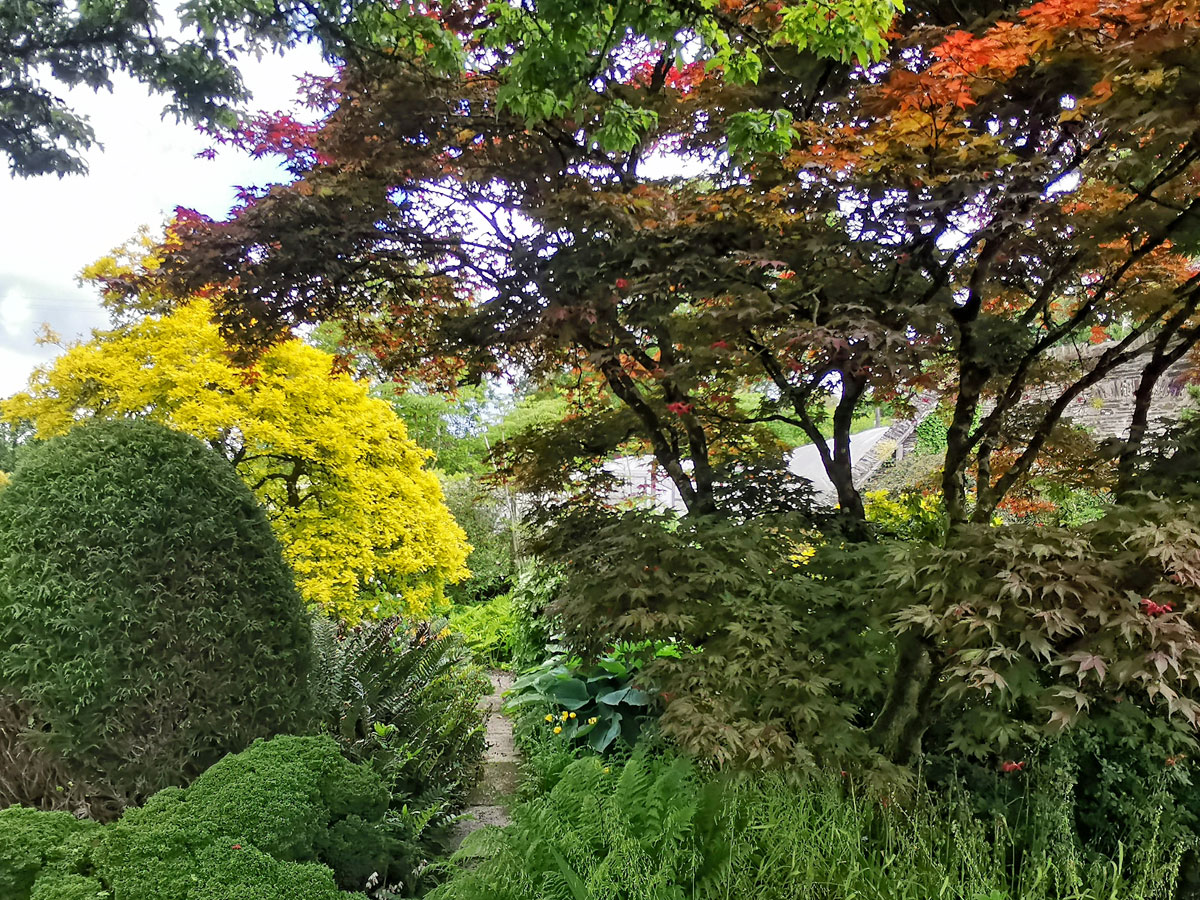


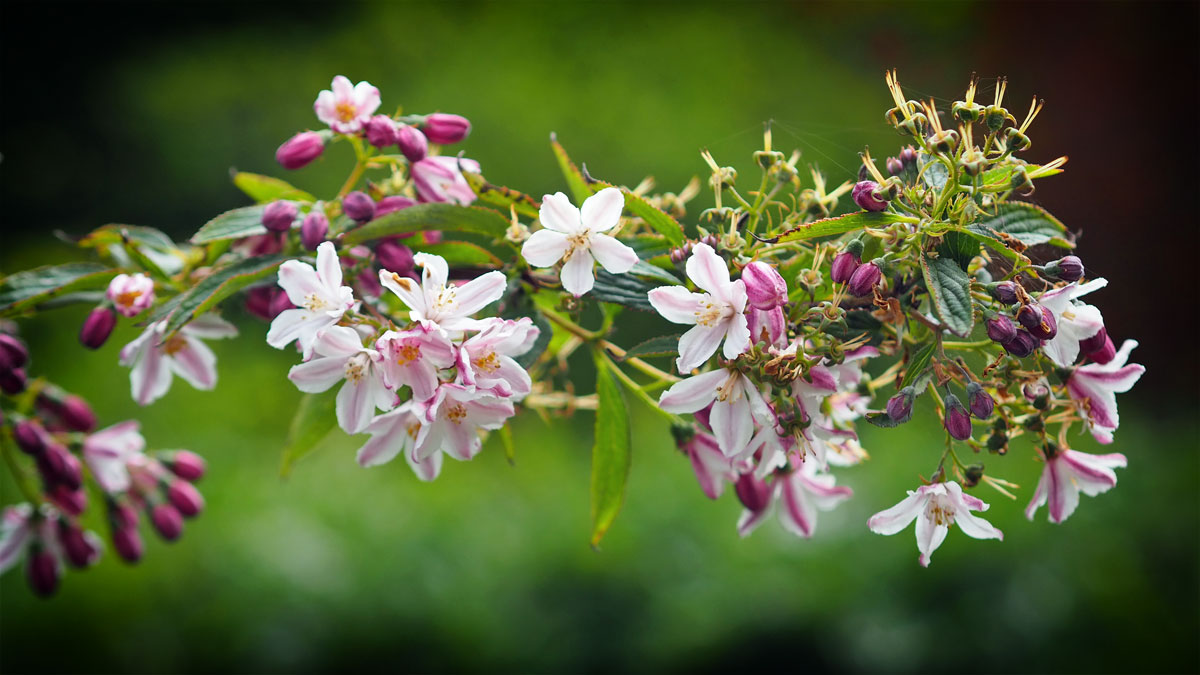
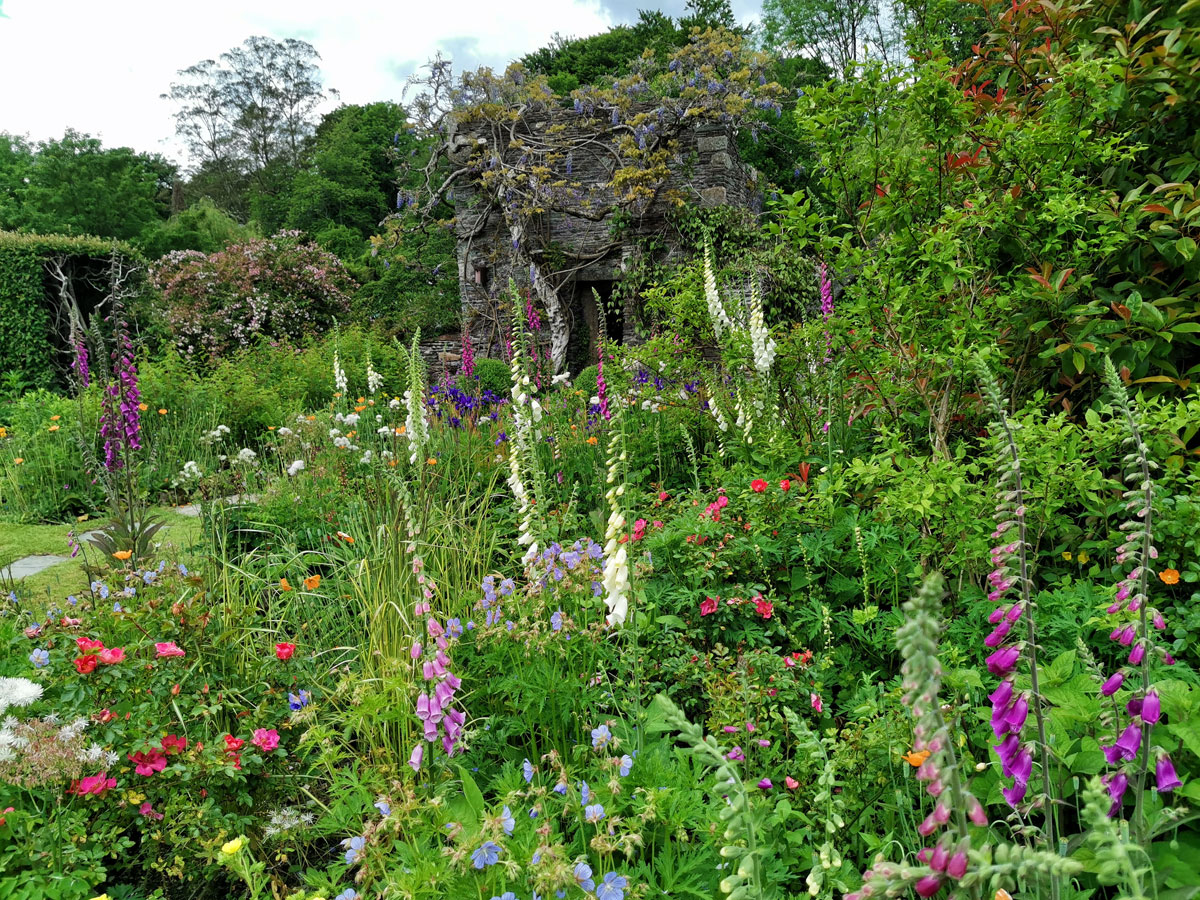
On every level there was planting to admire.
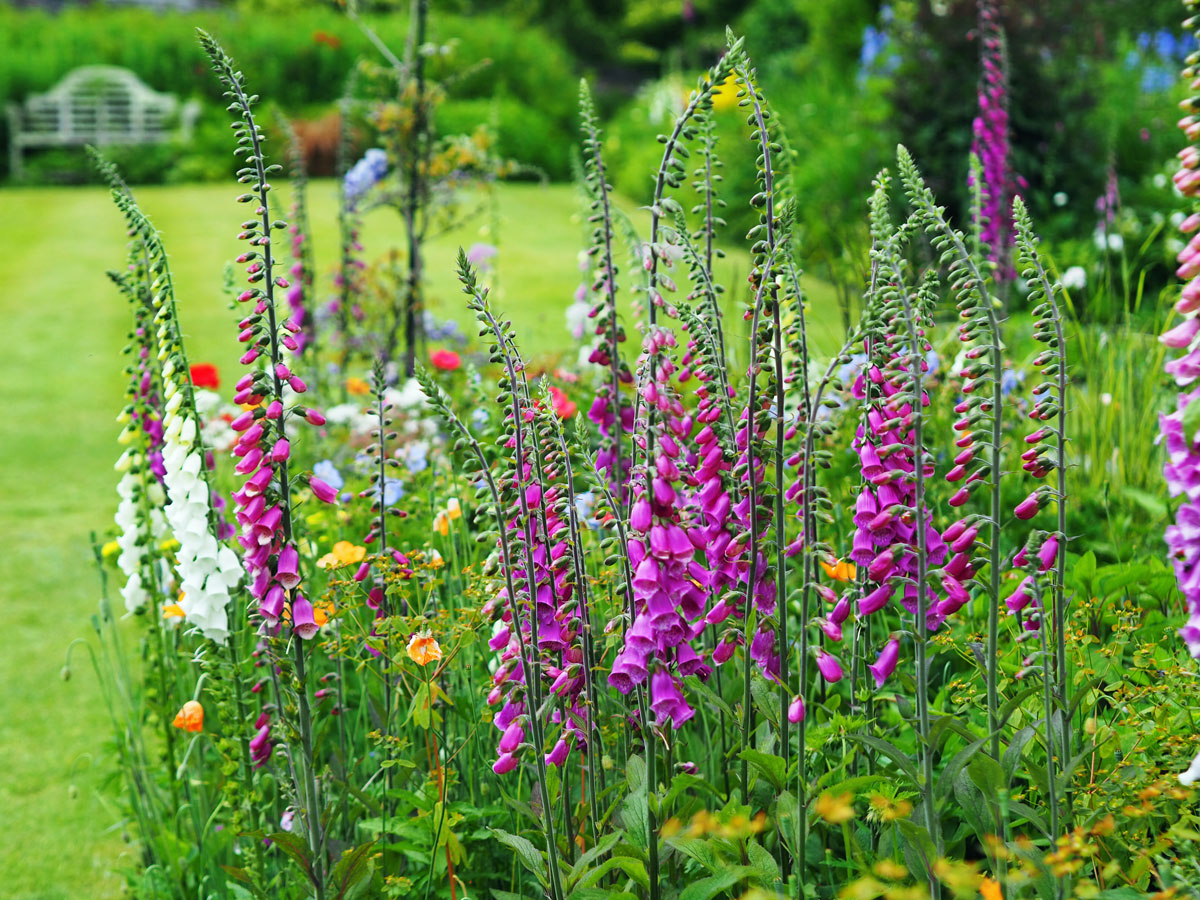
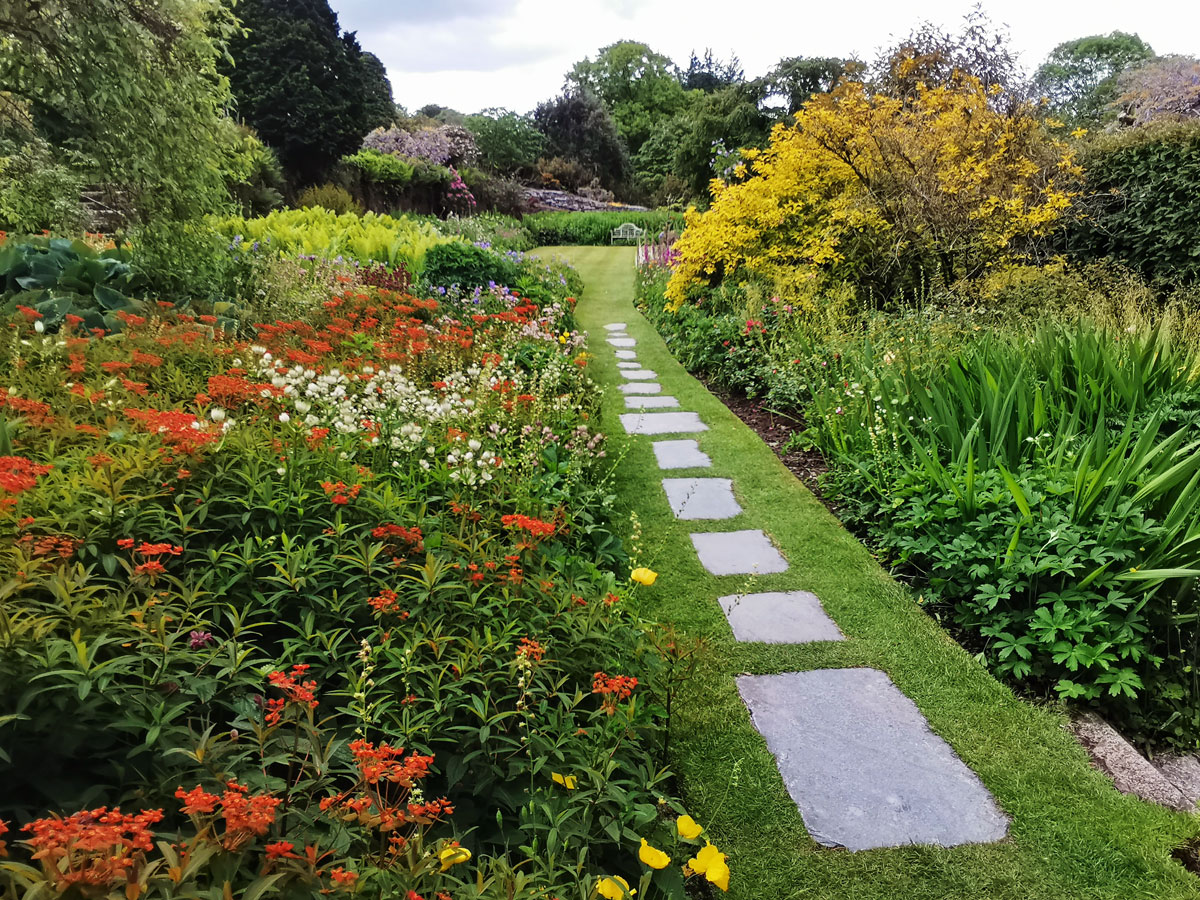
We didn’t have time to explore the lake and arboretum, as we wanted to have one last birthday treat and enjoy a Cream Tea – the Cornish way!
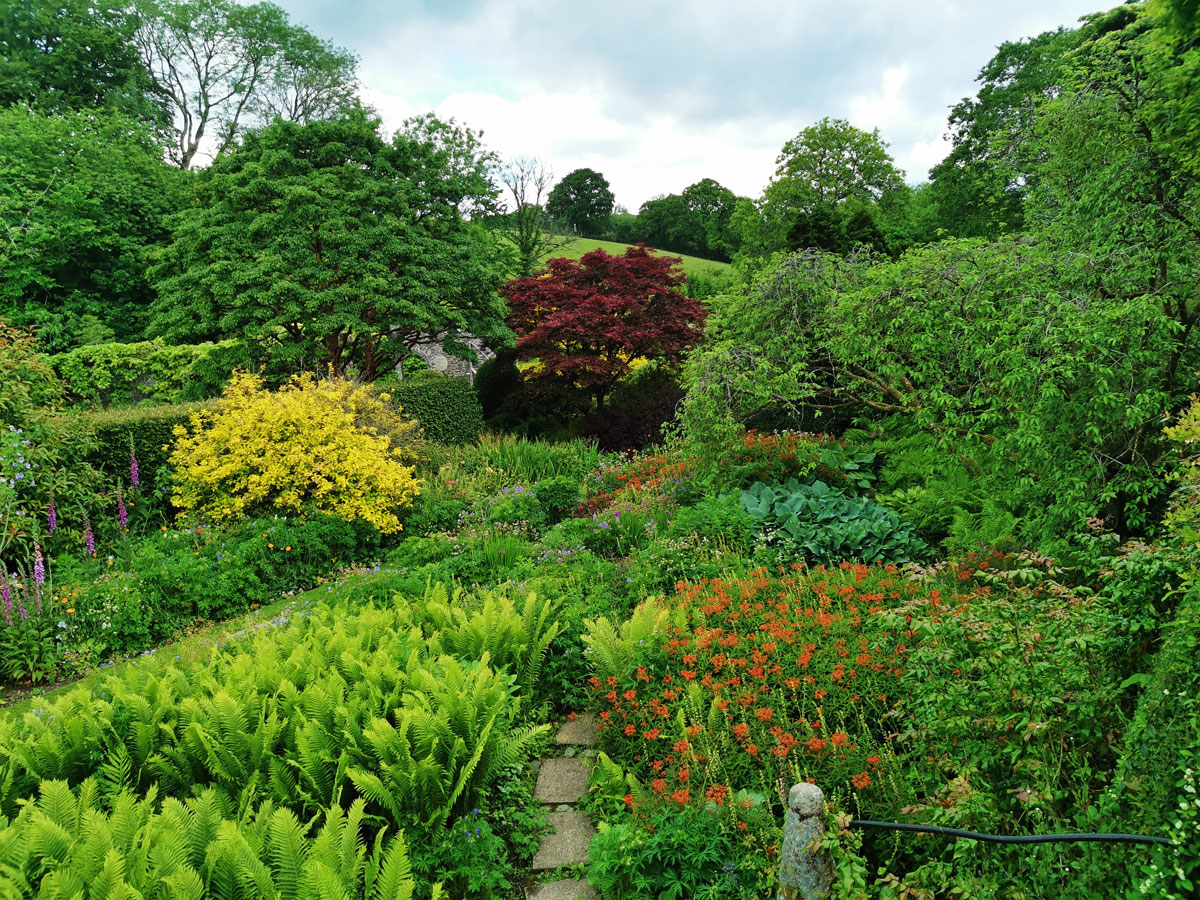
Naturally it was far too tempting not to have a look at the plant sales although I did intend only to look up the names of a geranium I fancied. However, resistance is futile and I walked away with a couple of new Hydrangea plants for the dappled shade border.
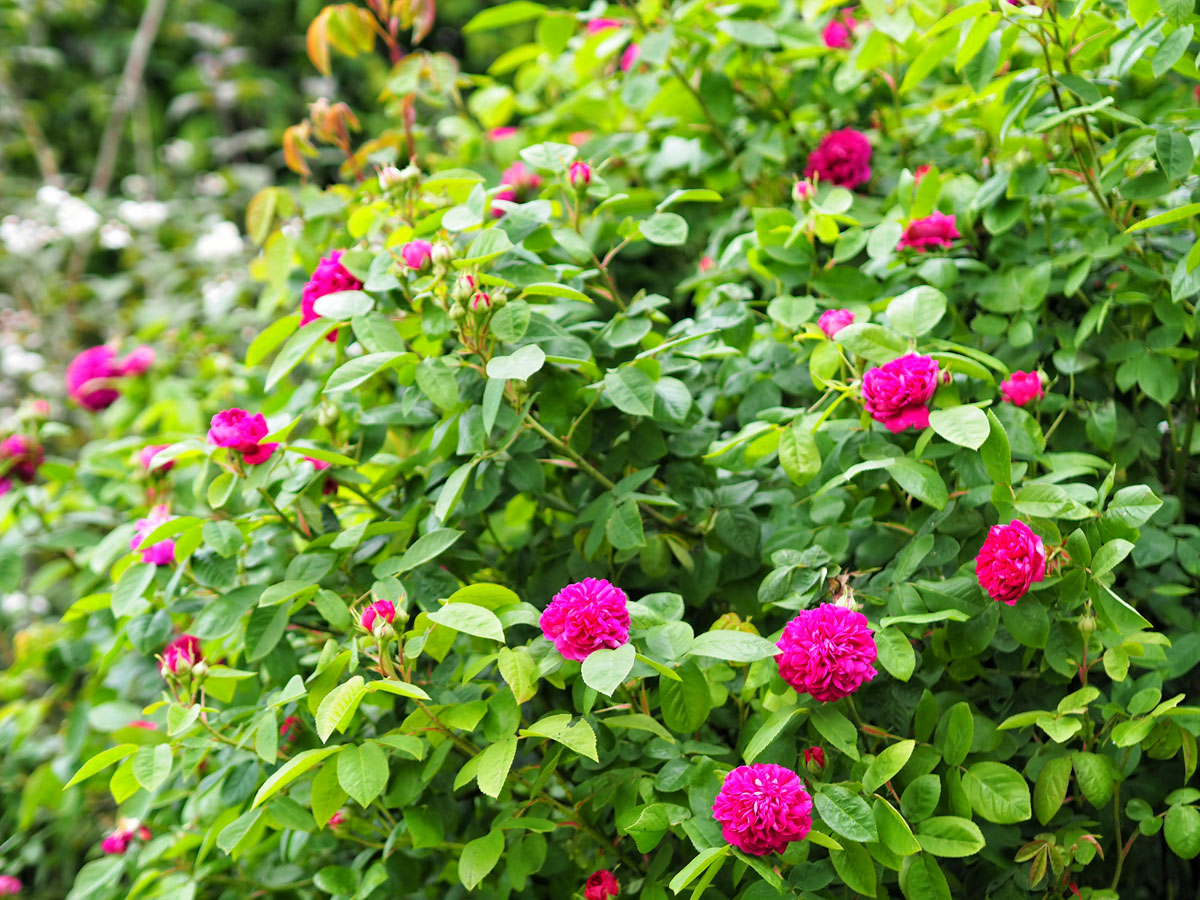
It is a garden I would love to go back to in a different season and being less than 2 hours from home it is entirely possible that we can do it on a day out.
 TRAVEL WORDS