I meant to return to the Stiperstones in Shropshire during August when the hills would be a purple haze. Unfortunately the damp weather conspired against me but on a gloriously clear day in mid-September I did go back. The Stiperstones is a spectacular 10-kilometre ridge in south-west Shropshire rising to 536 metres above sea level.
Information
We started the walk this time from the Knolls car park which lies between the Bog Visitor Centre and the hamlet of Bridges at the base of the Long Mynd. There is a fairly short all-ability trail on a broad, level, well-surfaced track running along the southern edge of the Reserve.
All Ability Trail
There are resting perches and a tapping rail as well as plenty of benches providing views over the area, although the actual quartzite tors are only just visible. There are no benches on top so make the most of these. Continue reading A Walk on a Wild Ridge
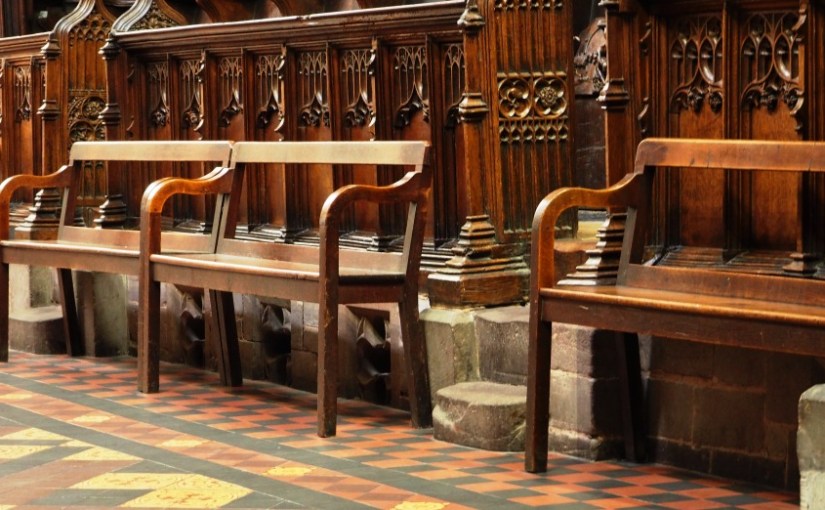
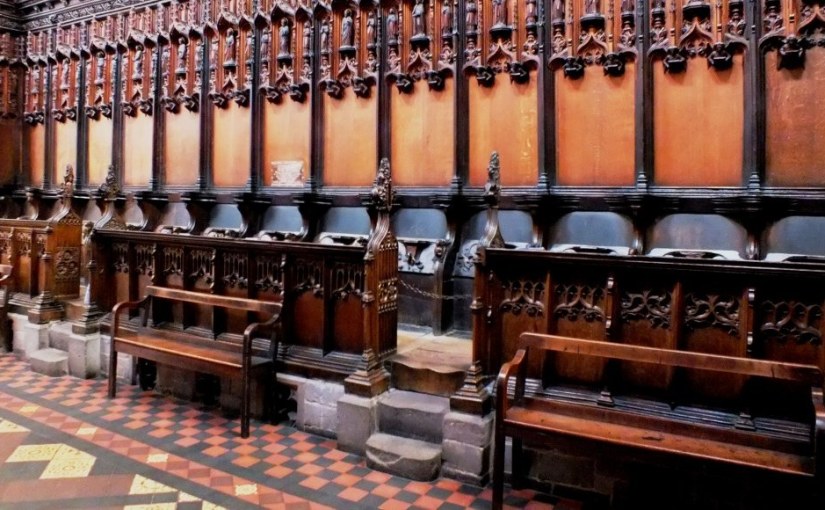
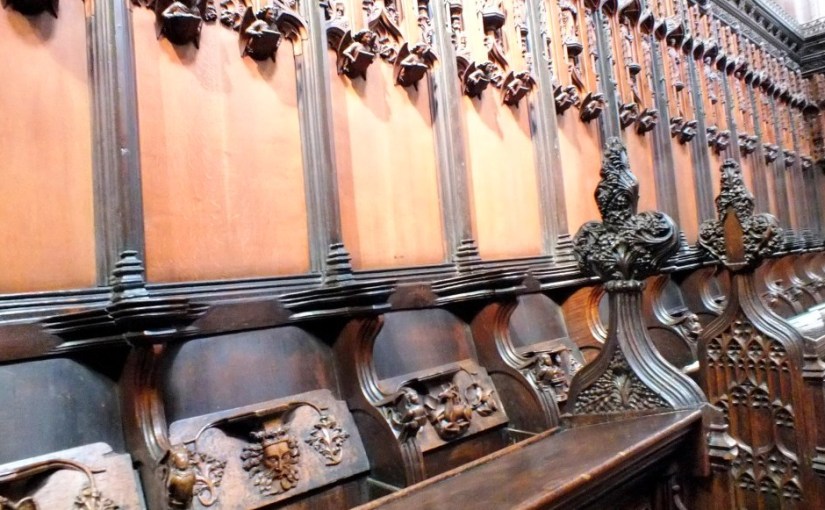
The Parish Church in Ludlow is famous for its 15th century misericords in the chancel stalls. These ignored carvings are found underneath choir stall seats and are mostly found in areas of the country whose wealth came from the medieval wool trade. The largest collection is housed at Salisbury Cathedral (106) compared to Hereford Cathedral (40) and the 28 intricately carved designs here in Ludlow.
Finally I have managed to get some decent photos of them all, so let me introduce you to them:
South Side 11 – 15
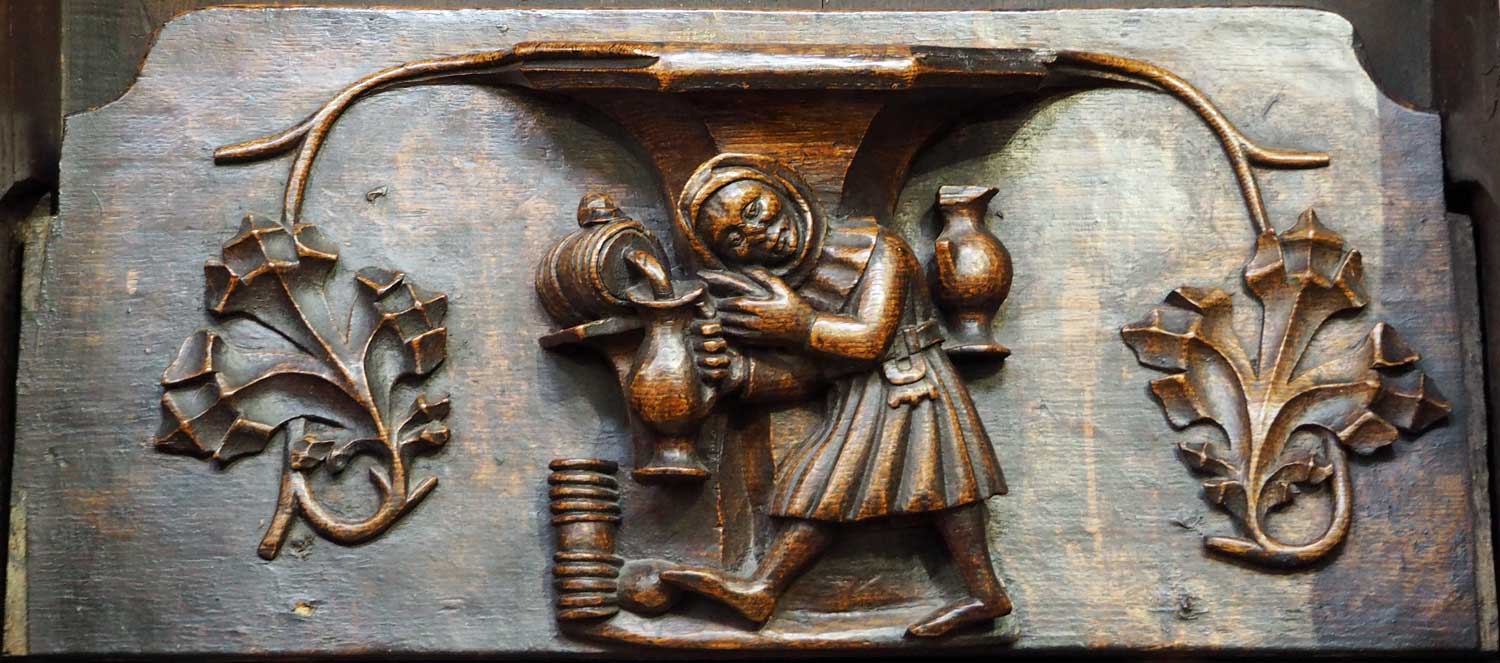
S11: This is another famous misericord showing a drunken tapster drawing wine from a cask while holding the bung in his left hand. It shows the trusted servant who abuses his trust and was a well-known moral tale about a monk who grew addicted to the wine and ale under his charge.
S11
S12: This one appears to be a celebration of the wine barrel, but is likely to be a homily on the perils of drink. The detail is exquisite – the diamond-shaped purses, the brass pots and jugs and the barrels with the wooden hoops.
S12
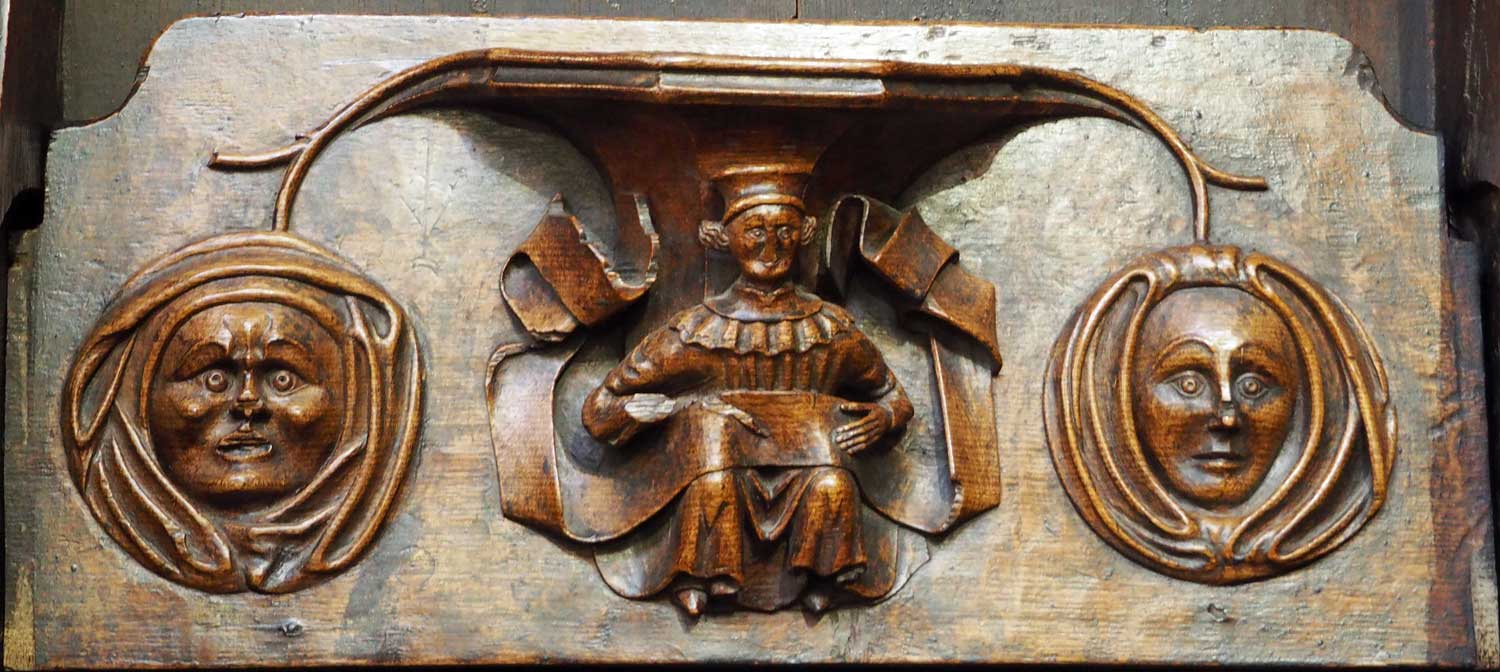
S13: The figure here is either a pupil or schoolmaster at the school run by the Palmers Guild, which later became the Grammar School in Ludlow. The hooded masks at either side are puzzling. One male the other female which may indicate parents.
S13
S14: Plain
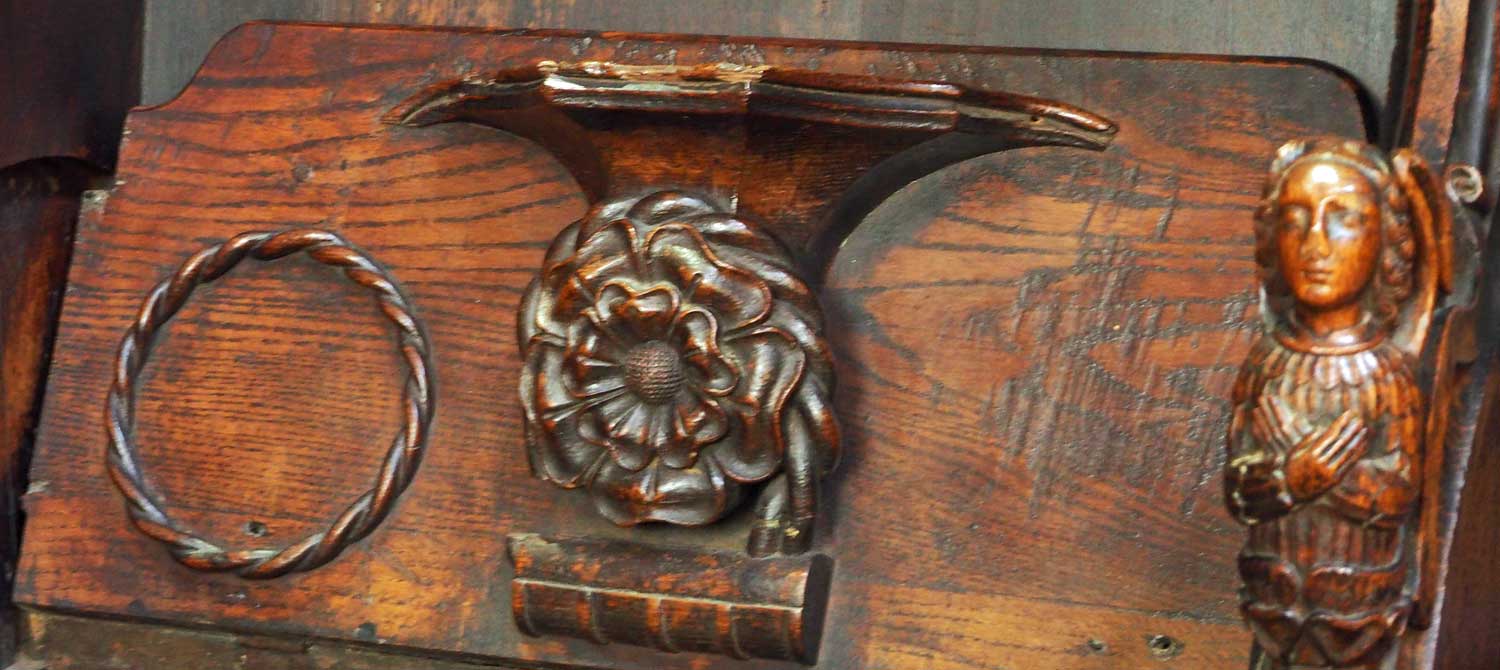
S15: This appears to have been reconstructed from fragments and attached to a new seat, perhaps around the church’s restoration in 1860. The centre corbel is almost intact with a finely carved rose and fetterlock – an obvious Yorkist badge – by the same carver as N15. The single twisted ring may have been part of a garland of flowers representing York’s Garland which was too damaged to salvage.
S15
Source of text: Historic Ludlow ” The Misericords and Choir Stalls” by Peter Klein (1986)
The Parish Church in Ludlow is famous for its 15th century misericords in the chancel stalls. These ignored carvings are found underneath choir stall seats and are mostly found in areas of the country whose wealth came from the medieval wool trade. The largest collection is housed at Salisbury Cathedral (106) compared to Hereford Cathedral (40) and the 28 intricately carved designs here in Ludlow.
Finally I have managed to get some decent photos of them all, so let me introduce you to them:
South Side 6 – 10
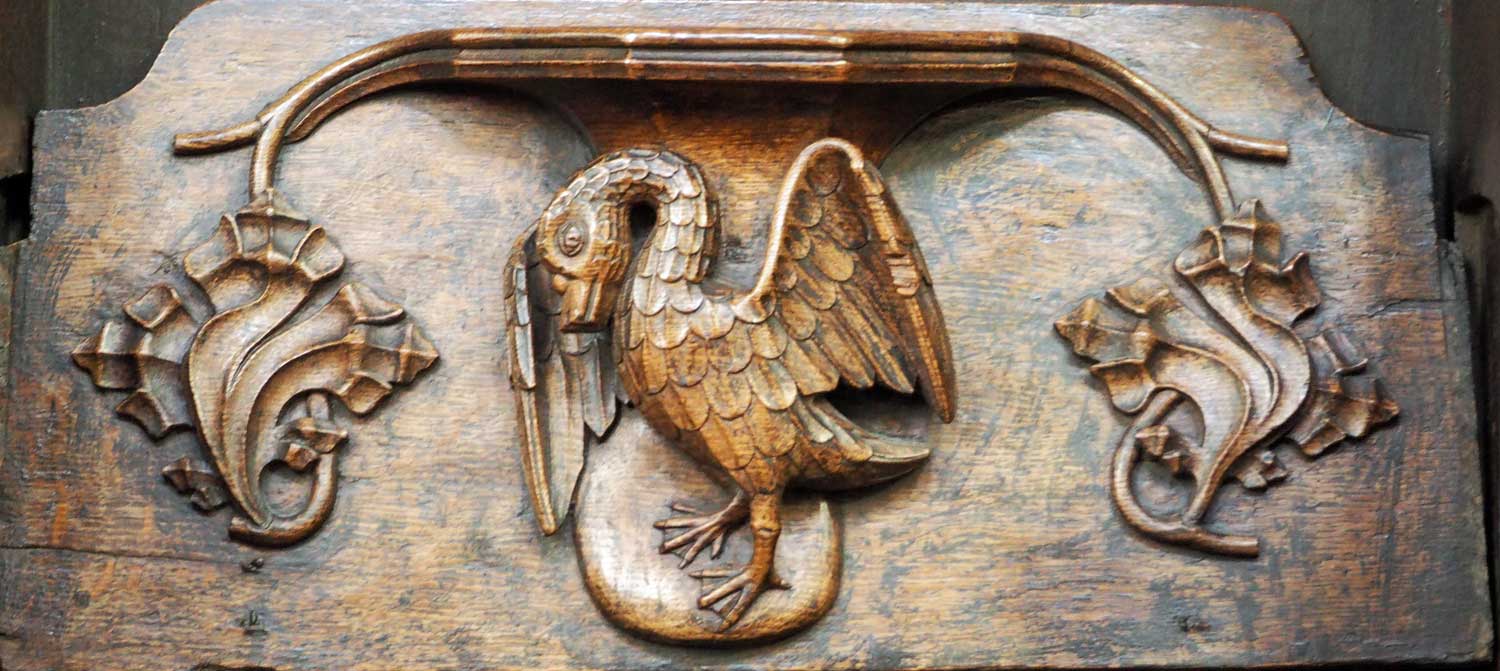
S6: Again flanked by two leaves, the swan was the badge of the Bohun family, although here it lacks the crown around its neck. Mary de Bohun married Henry Bolingbroke, later Henry IV who perhaps also used it.
S6
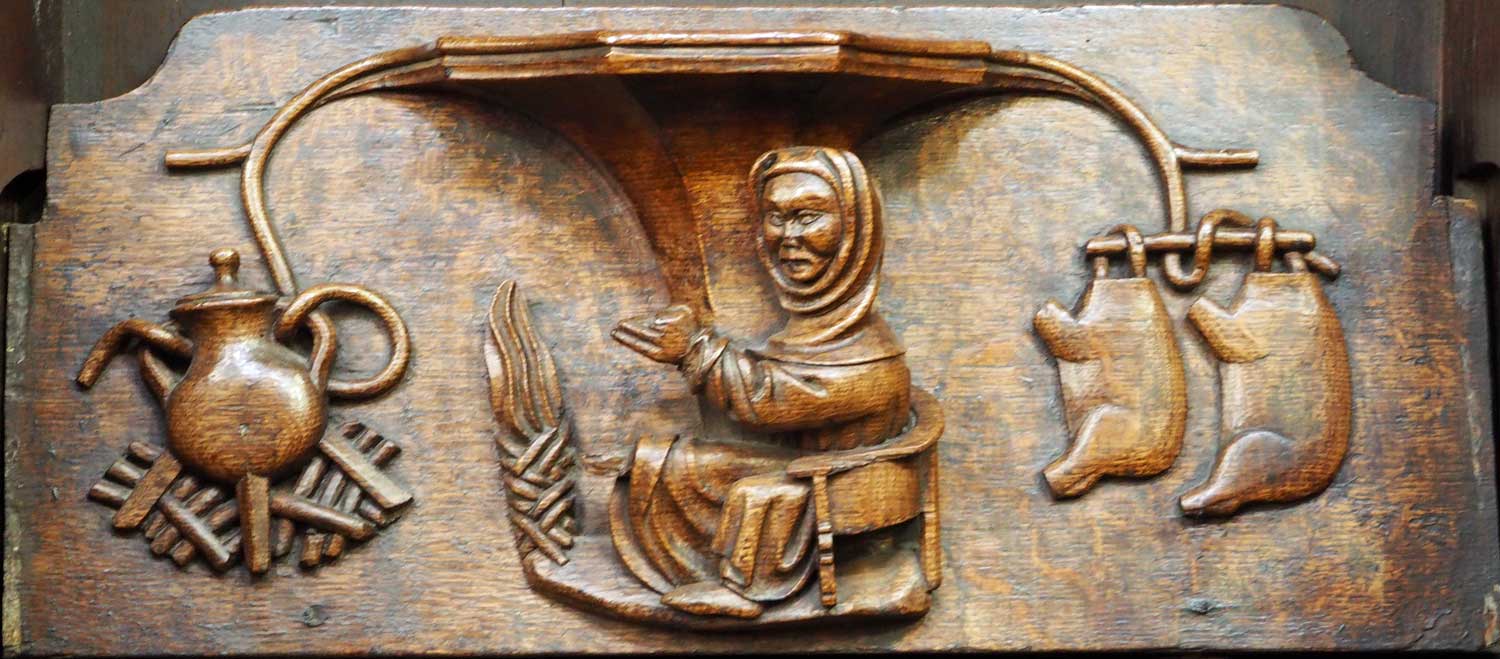
S7: Some series of misericords represents the seasons and this one looks to be from January or February as it shows the finely depicted countryman at home by the fire and his stores nearby (the bacon hanging in the larder).
S7
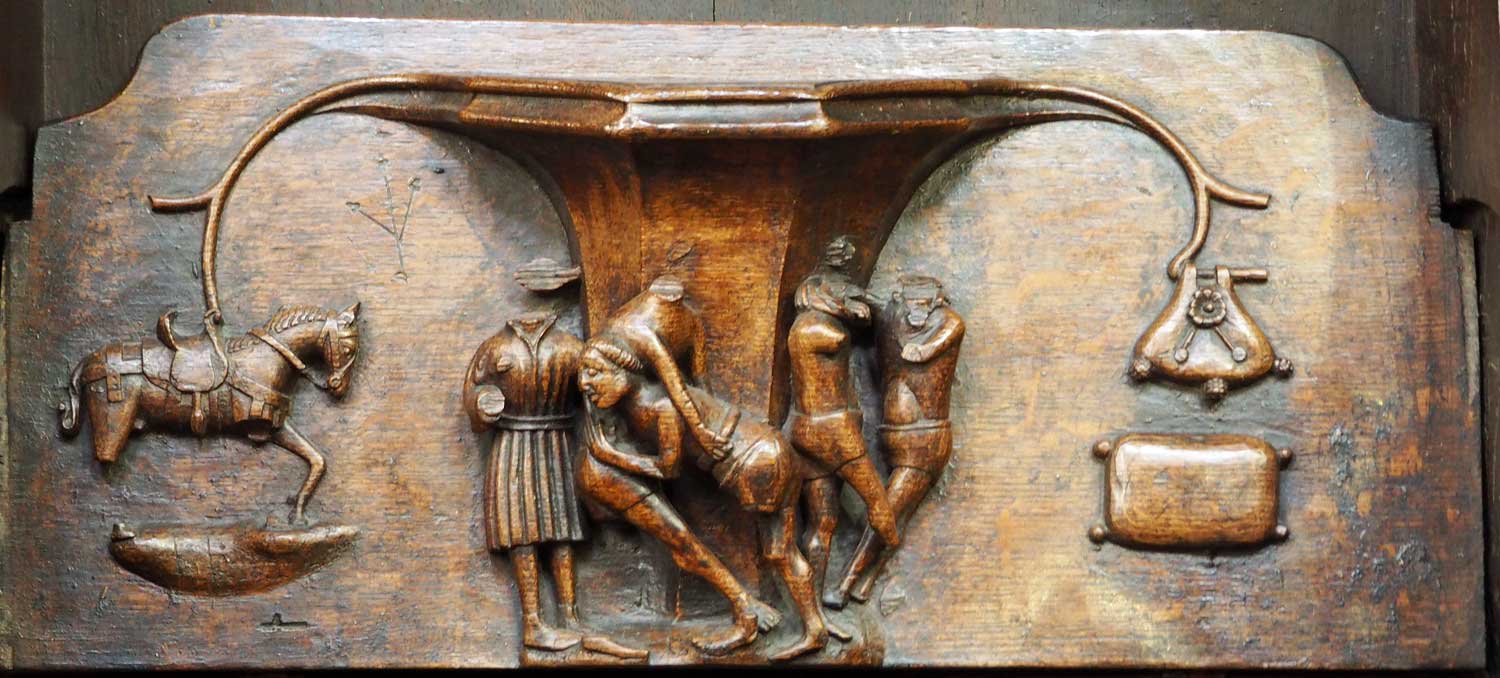
S8: This scene represents the medieval sport of wrestling, although it has been badly mutilated. On the right hangs a purse of money with a woolpack beneath; on the left is a saddled horse. Both would be prizes.
S8
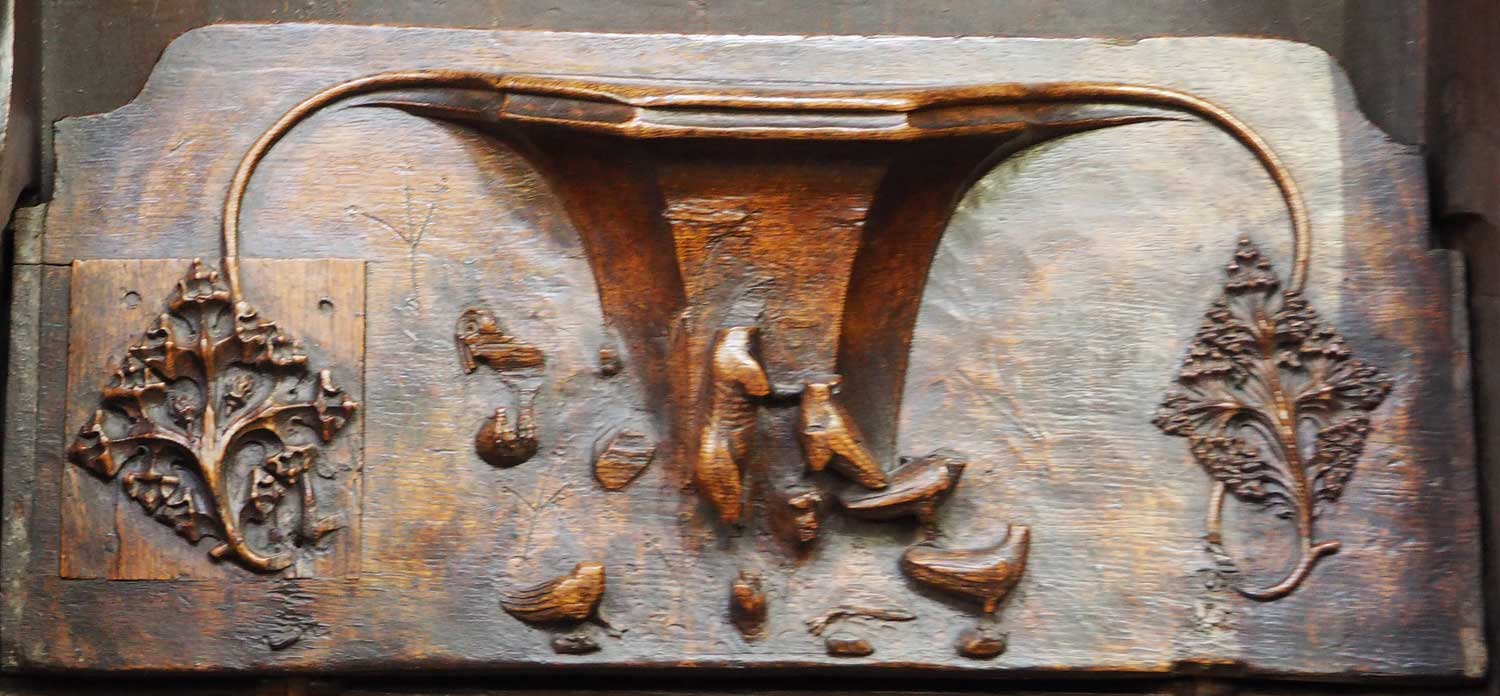
S9: This particular misericord is so badly mutilated that it is difficult to interpret. It appears to show the body of a fox surrounded by birds and possibly a scene from Reynard the Fox, which was popular during the Middle Ages.
S9
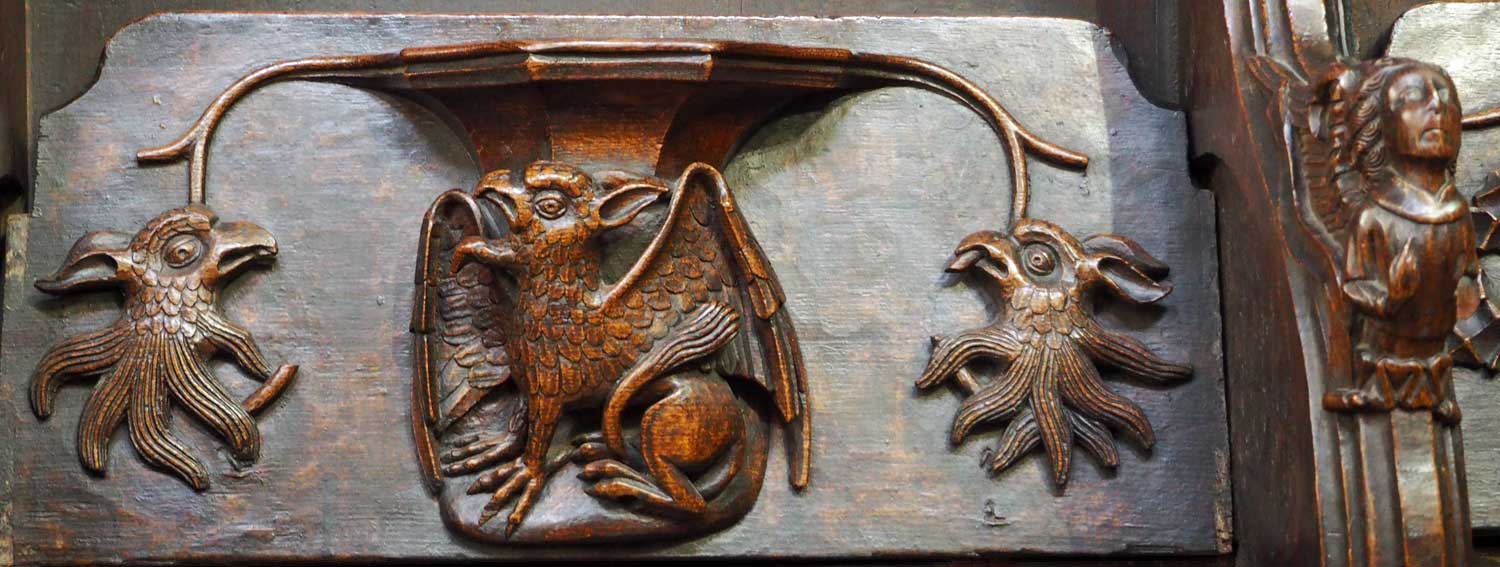
S10: A beautifully carved Griffin is supported by griffin heads on either side. This creature is said to be the offspring of a lion and an eagle and said to watch over hidden treasures. It was adopted by Edward III as his badge, though in French moral tales the creature is symbolic of the Devil.
S10
Source of text: Historic Ludlow ” The Misericords and Choir Stalls” by Peter Klein (1986)
The Parish Church in Ludlow is famous for its 15th century misericords in the chancel stalls. These ignored carvings are found underneath choir stall seats and are mostly found in areas of the country whose wealth came from the medieval wool trade. The largest collection is housed at Salisbury Cathedral (106) compared to Hereford Cathedral (40) and the 28 intricately carved designs here in Ludlow.
Finally I have managed to get some decent photos of them all, so let me introduce you to them:
South Side 1 – 5
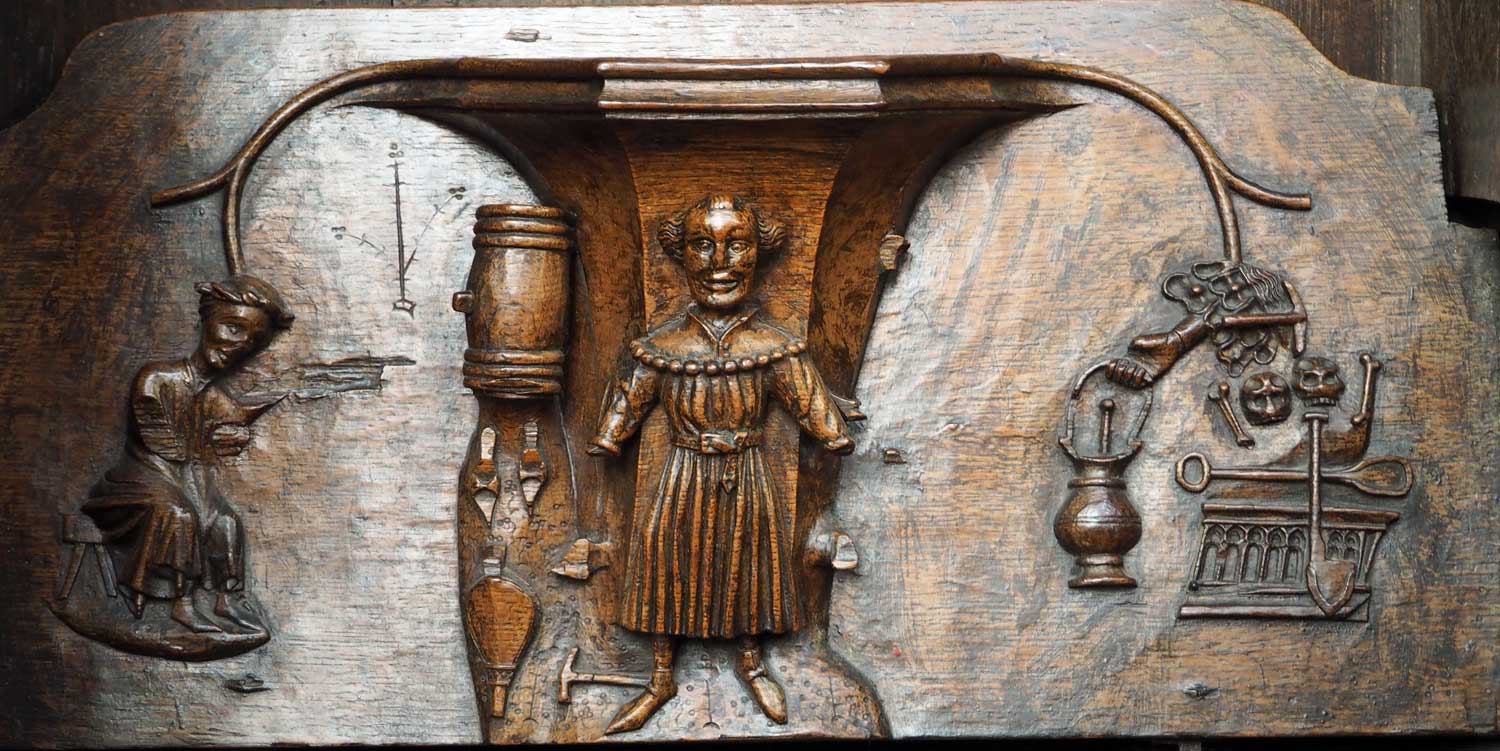
S1: One of the most famous of the Ludlow carvings and one that much speculation has been made about. The central figure is obviously a successful tradesman surrounded by his tools. The figure on the left is damaged but appears to be pointing to the right where we find symbols of the grave. The simple message being that no matter how wealthy and successful you are in life, death comes to us all.
S1
S2: Simply a decorative arrangement of leaves with the distinctive rippling surface texture seen also on the poppy-heads of the north choir stalls.
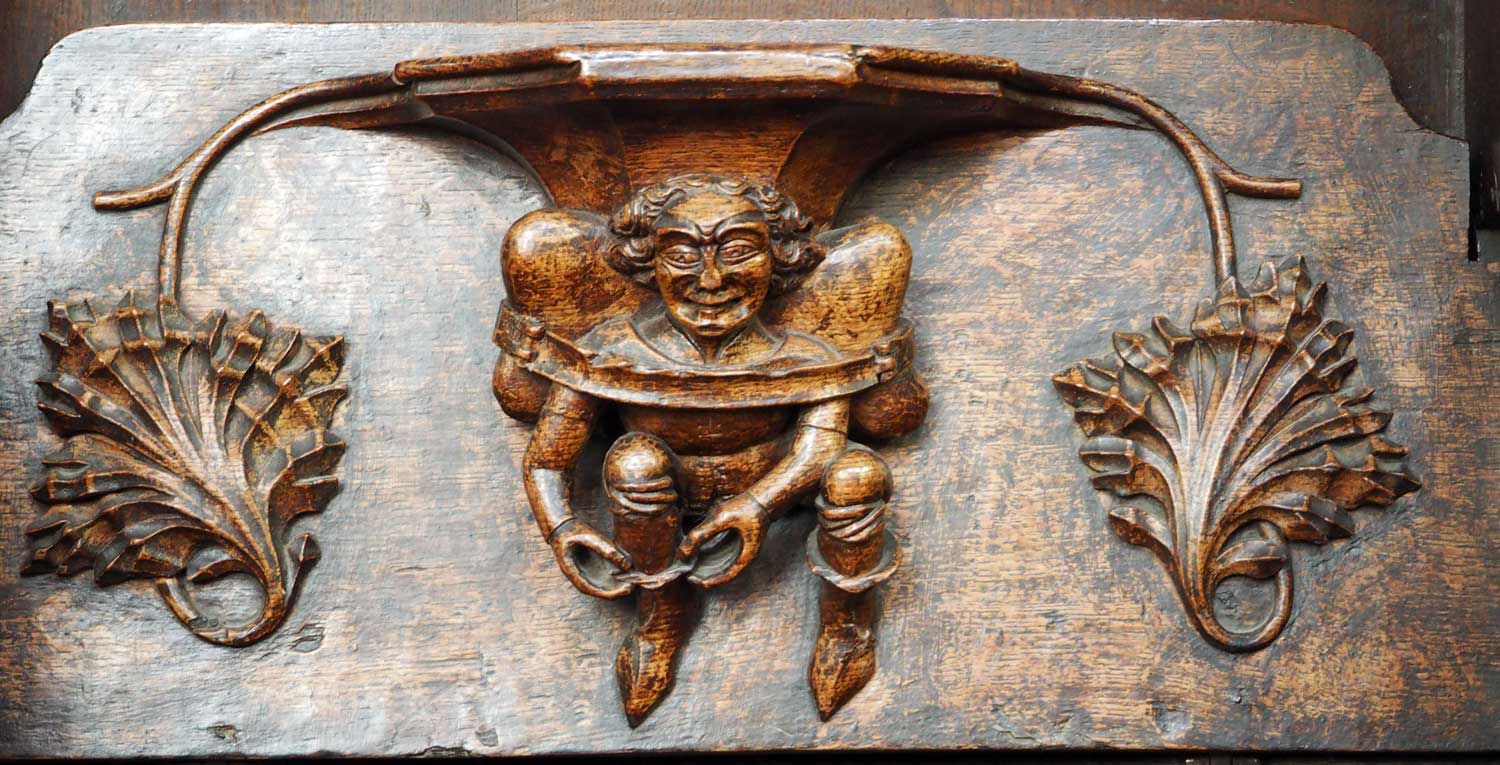
S3: Flanked again by leaves on either side this central character could be a porter or a peddlar putting on his boot and preparing for the road, perhaps with a bale of cloth on his back. Bales of white woollen cloth known as ‘Ludlow Whytes’ were well known in London and fetched good prices there.
S3
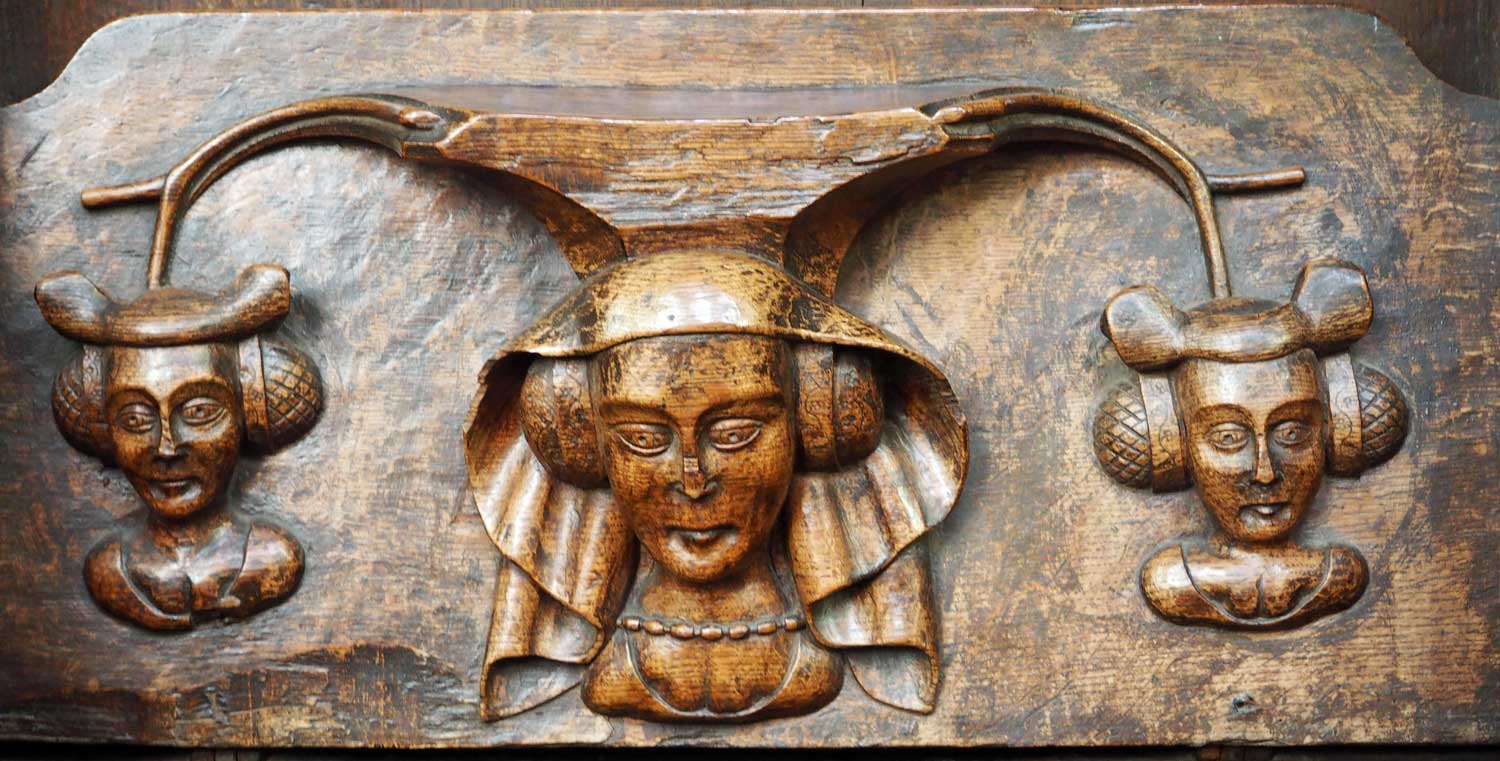
S4: For once the carving of womanhood appears to have been done with affection. The suggestions are that it may show a woman and her daughters, or married and unmarried women.
S4
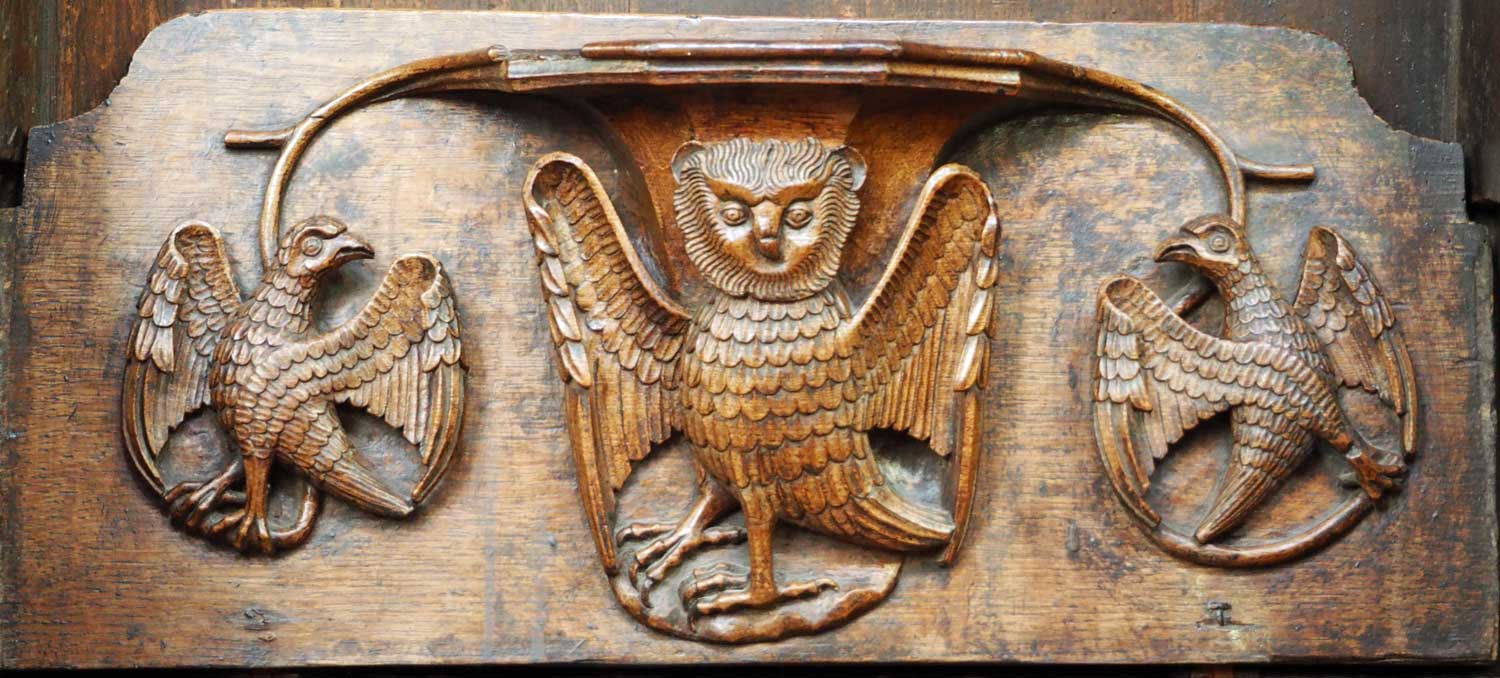
S5: The owl is a medieval symbol representing ignorance not the wise old bird we think of today. In fact it was seen as a creature of the dark, shunning the light of the Gospel. It is being mobbed by two carved birds their necks twisted inwards.
S5
Source of text: Historic Ludlow ” The Misericords and Choir Stalls” by Peter Klein (1986)
The Parish Church in Ludlow is famous for its 15th century misericords in the chancel stalls. These ignored carvings are found underneath choir stall seats and are mostly found in areas of the country whose wealth came from the medieval wool trade. The largest collection is housed at Salisbury Cathedral (106) compared to Hereford Cathedral (40) and the 28 intricately carved designs here in Ludlow.
Finally I have managed to get some decent photos of them all, so let me introduce you to them:
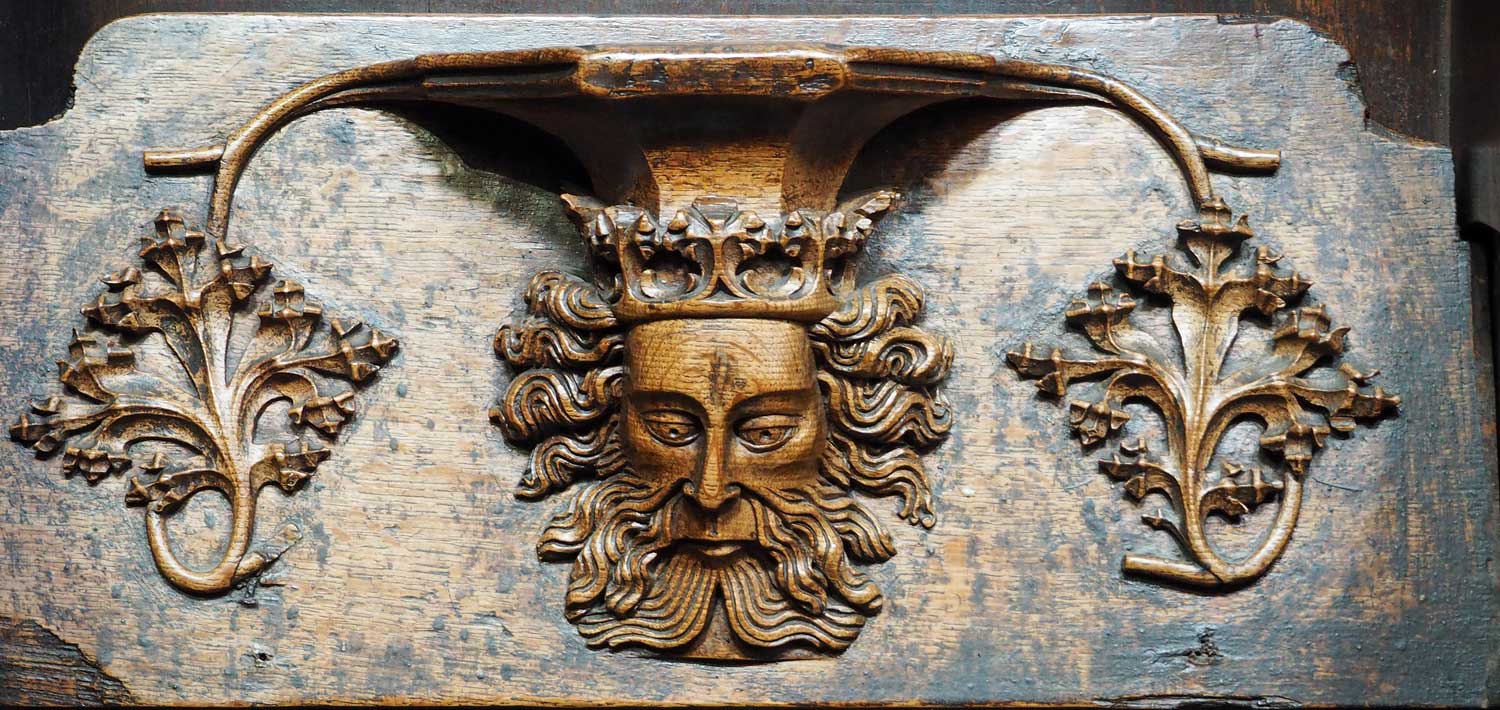
N11: Another one that is thought to have links with the Duke of York’s antecedents. This portrait of a king is similar to Edward III in old age, but as heads of kings are common on misericords and church carvings it could well be David or some other biblical king.
N11
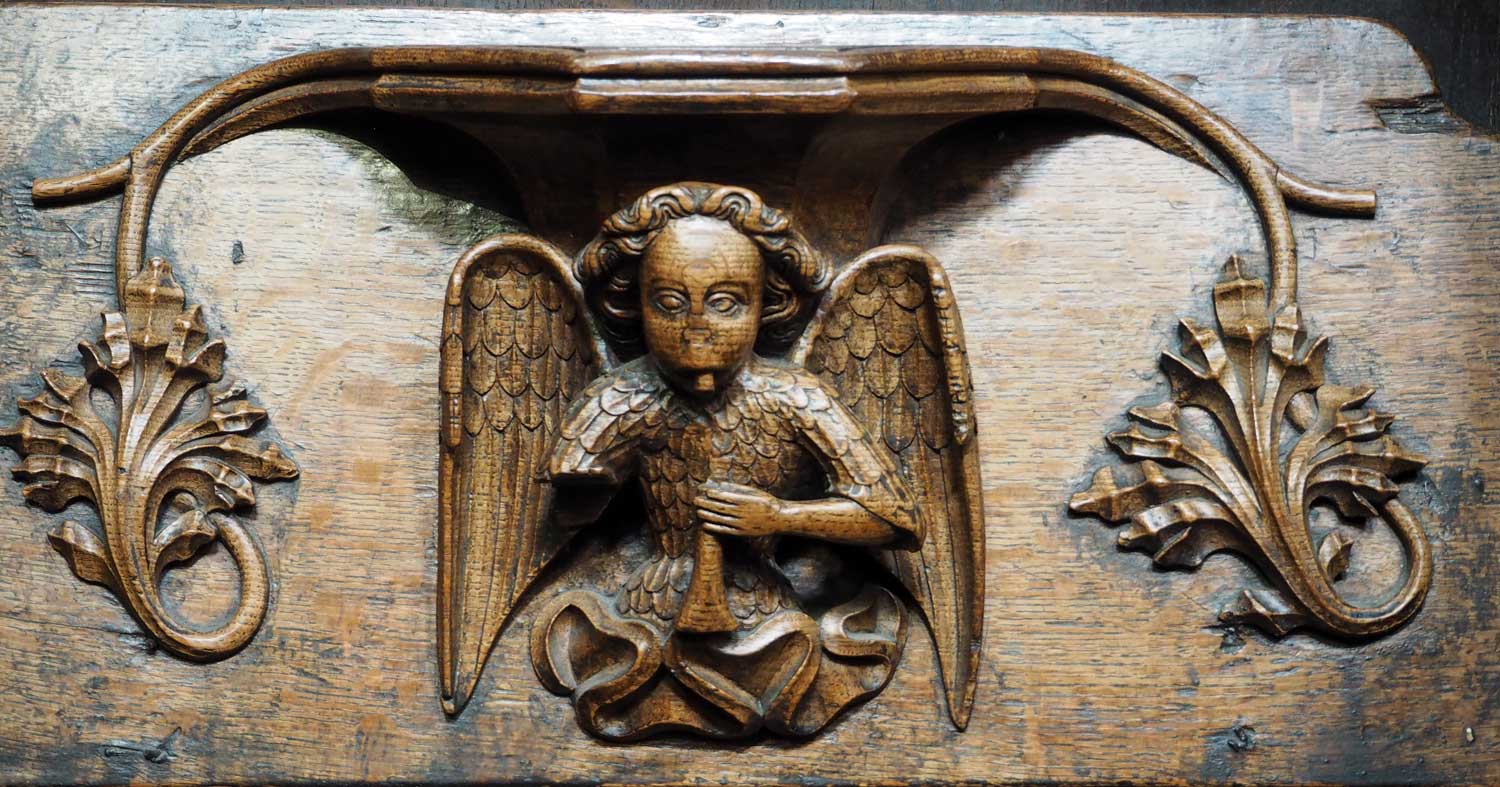
N12: An Angel blowing on a shawm with the upper part of the instrument missing from the right arm. Angels playing instruments are a common feature in medieval churches.
N12
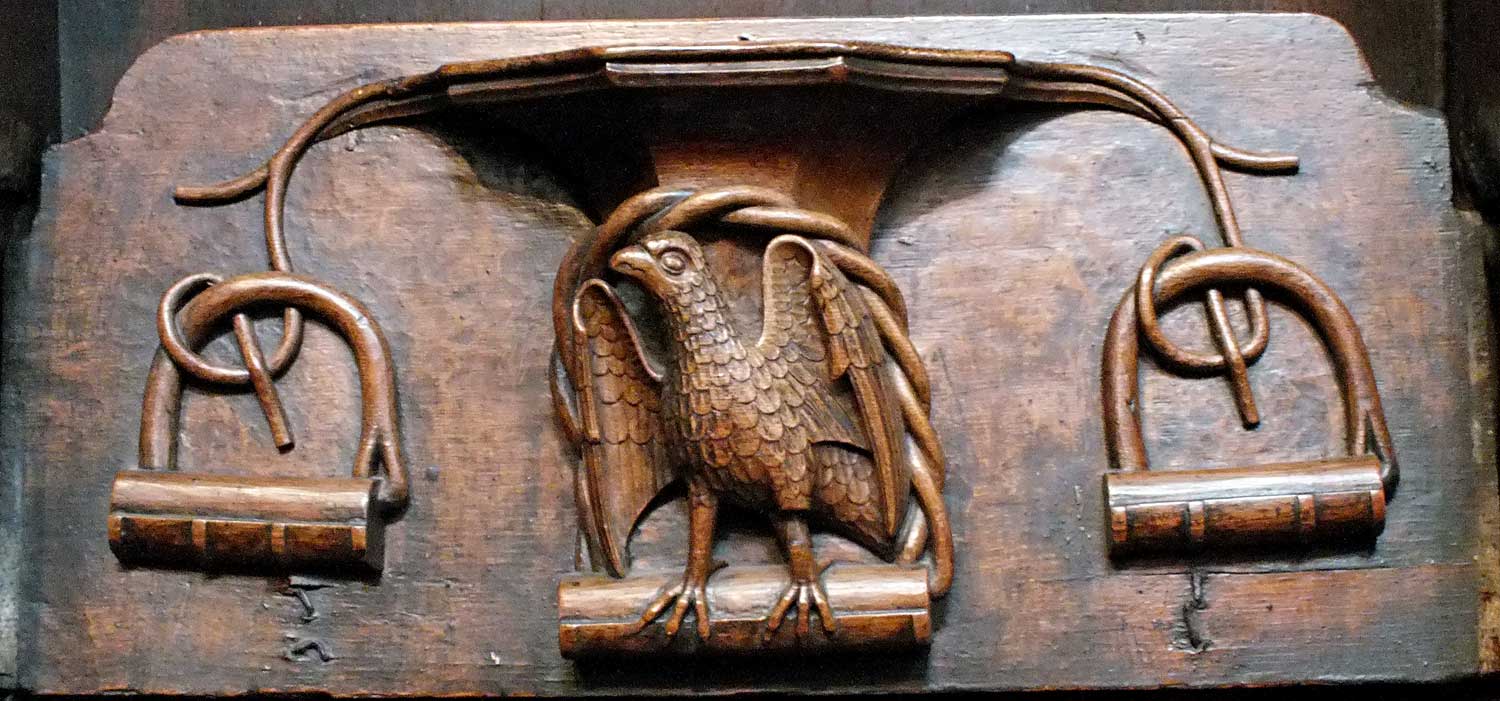
N13: The personal badge of Richard, Duke of York (1411-1460) is the Falcon and the Fetterlock. He was the manorial lord of Ludlow and owner of the castle.
N13
N14: Plain
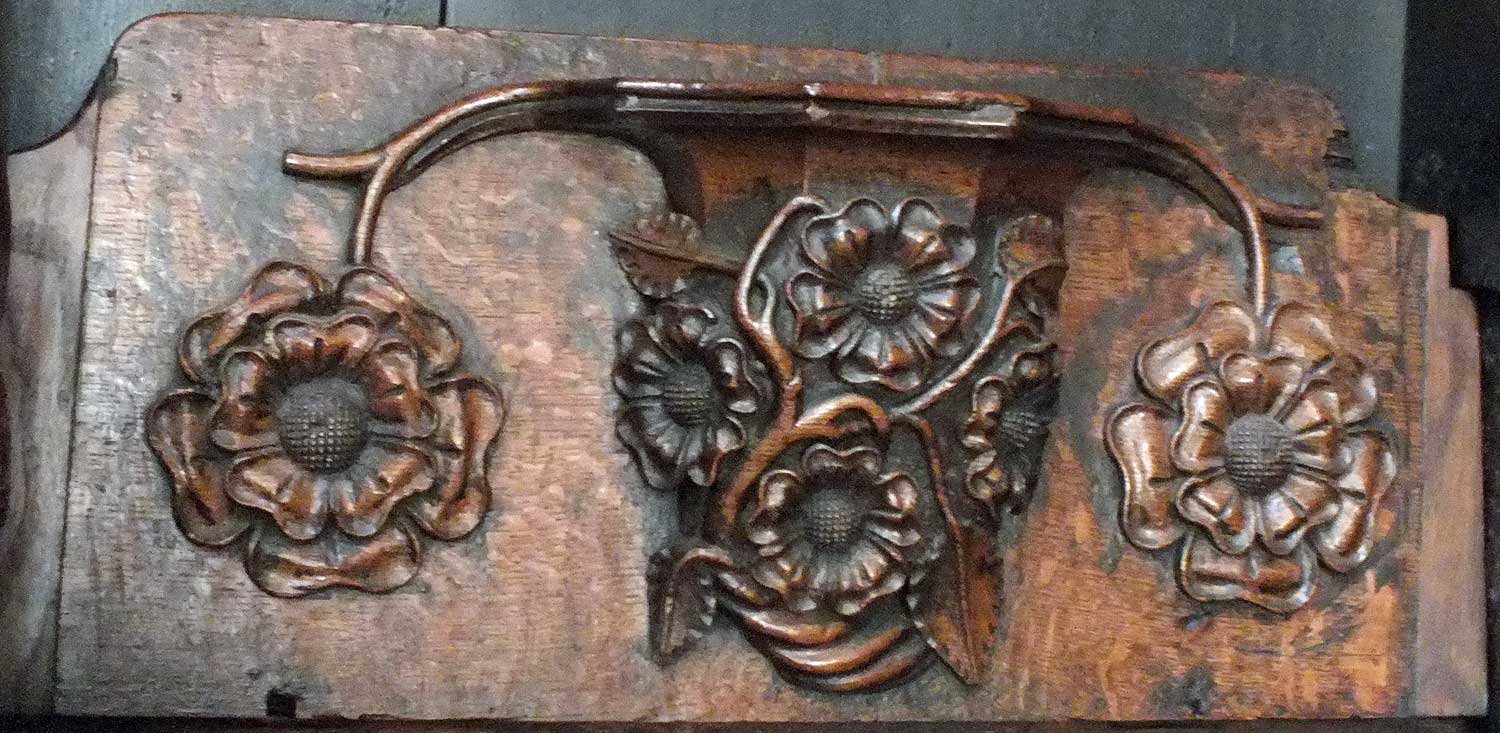
N15: Four roses entwined with rose leaves and flanked by a double rose on either side, clearly symbolic of the House of York.
N15
Source of text: Historic Ludlow ” The Misericords and Choir Stalls” by Peter Klein (1986)




 TRAVEL WORDS