Description: Every Tuesday I offer the “A to Z challenge”, walking step by step through the alphabet.
If you would like to join in then please click here
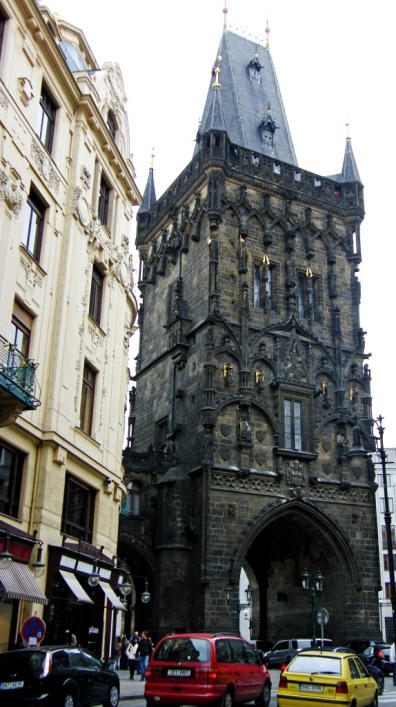
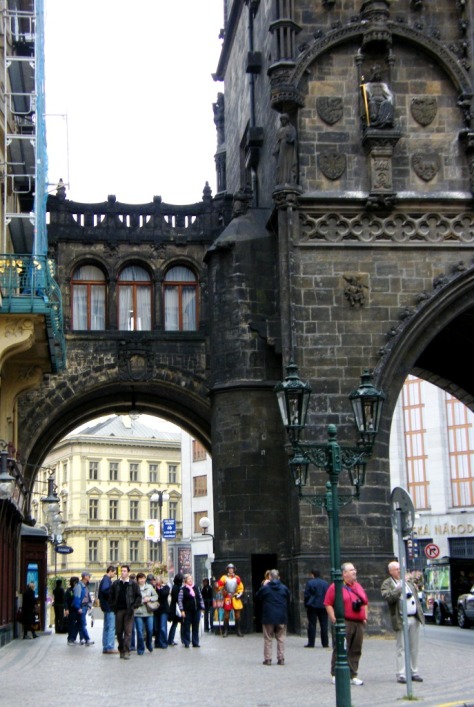
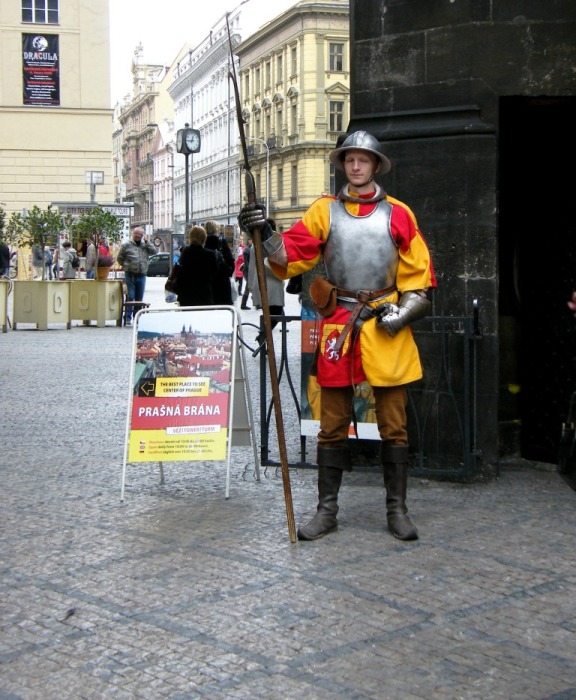
The Powder Tower or Powder Gate is a Gothic tower in Prague, Czech Republic. It is one of the original city gates, dating back to the 11th century. It is one of the symbols of Prague, leading into the Old Town. It is located in náměstí Republiky 5, just around the corner from the Municipal House. It was used to store gunpowder. Wikipedia
Have you been to Prague? Did you climb up the Powder Tower?
Description: Every Tuesday I offer the “A to Z challenge”, walking step by step through the alphabet.
If you would like to join in then please click here
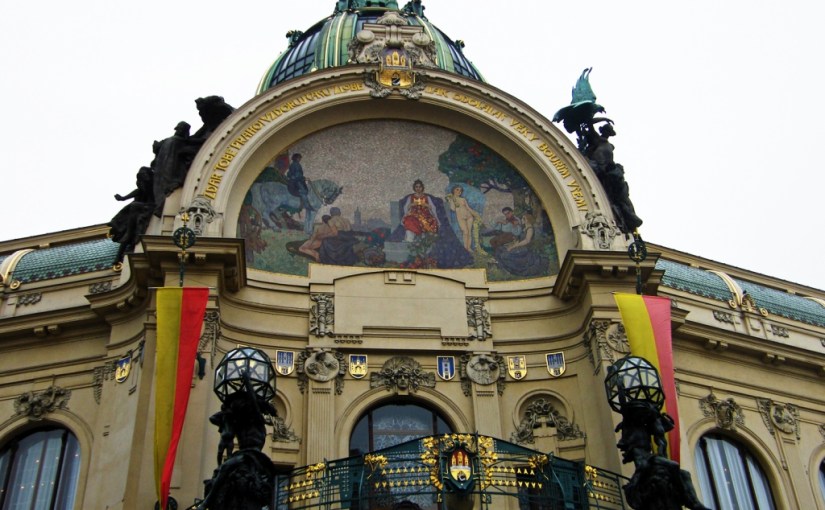
OBECNÍ DŮM / The Municipal House / Prague, Czech Republic
is Prague’s most prominent Art Nouveau building. It is a civic building and concert hall and located on Náměstí Republiky 5 next to the Powder Gate. It is a beautiful building from all aspects. The outside has intricate stonework, gold trimmings, frescos and stained glass windows.
The Smetana concert hall is an architectural masterpiece, a mix of carved white stone and gold, illuminated by hundreds of lights, and with frescos by Karel Spillar adorning the walls. It is home to the Czech National Symphony Orchestra.
PostcardStaircaseLift / Elevator
A couple of restaurants and an American bar can also be found inside the building though many of the rooms are closed to the public and open only for guided tours. Unfortunately we didn’t manage to time it right, so only had a glimpse of what lies inside.
Description: Every Tuesday I offer the “A to Z challenge”, walking step by step through the alphabet.
If you would like to join in then please click here
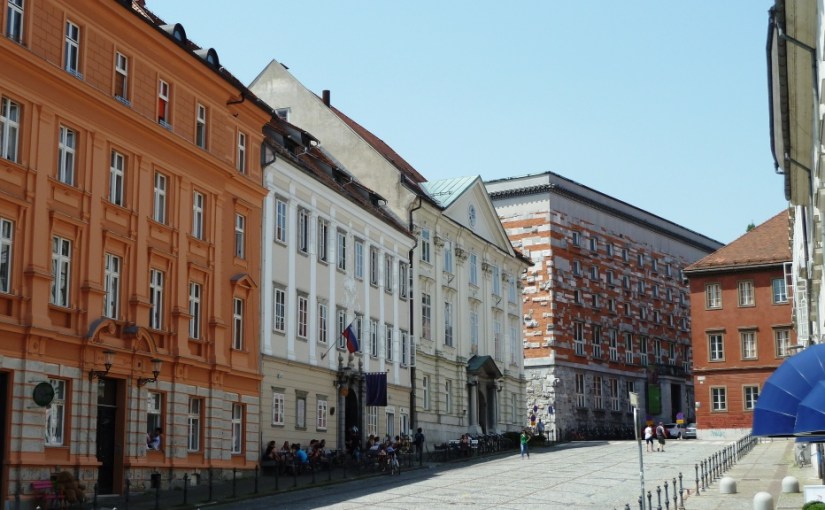
or National and University Library, Ljubljana, Slovenia.
It is located in the centre of Ljubljana, between Turjak Street (Turjaška ulica), Gentry Street (Gosposka ulica), and Vega Street (Vegova ulica), in a building designed by the architect Jože Plečnik in the years 1930–31 and constructed between 1936–41. The building is considered one of the greatest achievements by Plečnik. Wikipedia
“From the twilight of ignorance to the light of knowledge and enlightenment”
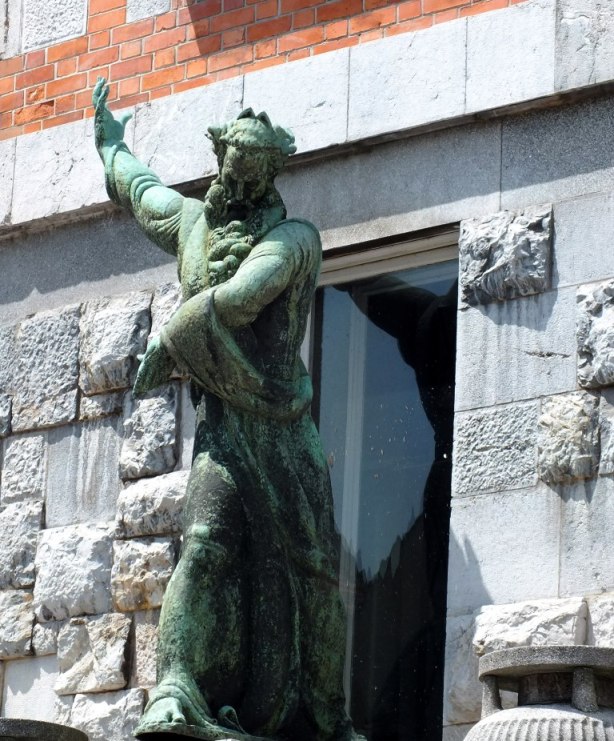
The building has a square ground plan and is a massive block with a court. The front façade, oriented toward Turjak Street, was designed as a combination of brick and stone embeddings, some of them archaeological remains from the place. It was modelled in the manner of the Italian palazzo and the handles of the main door end with a little head of Pegasus. The side entrance from the Lord Street is decorated with a sculpture of Moses, created by Lojze Dolinar.
Unfortunately we were being guided through the town by a friend so didn’t have a chance to get up close to this unusual building, nor go inside. So if you have seen the interior I’d love to know what it is like.
Description: Every Tuesday I offer the “A to Z challenge”, walking step by step through the alphabet.
If you would like to join in then please click here
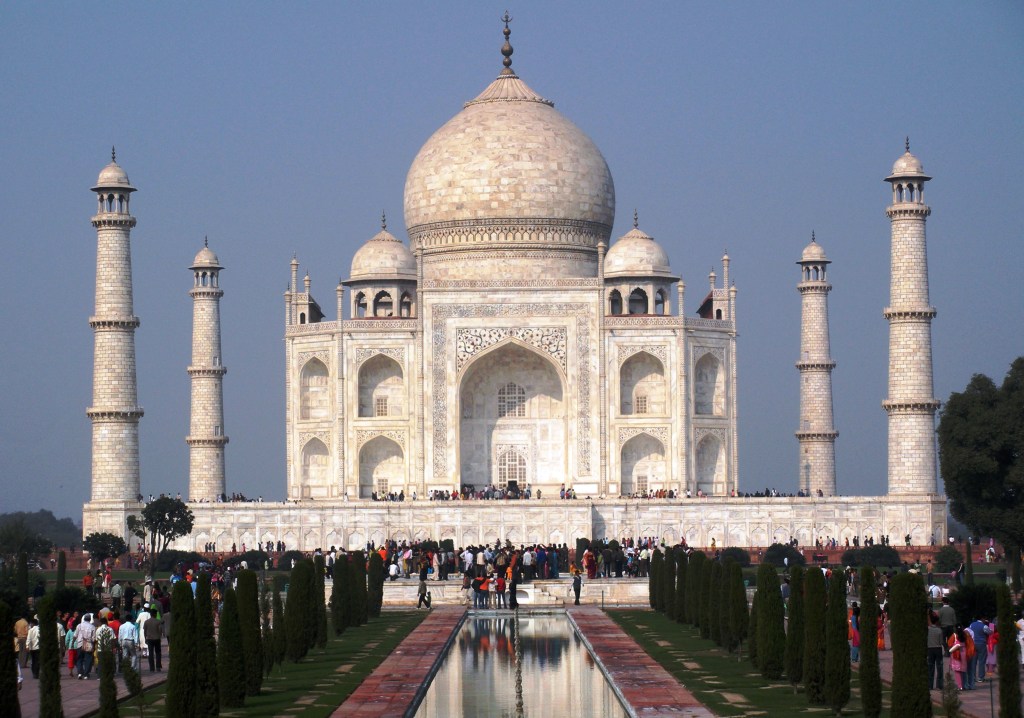
The five principal elements of the Taj Mahal complex—main gateway, garden, mosque, jawab and mausoleum (including its four minarets)—were conceived and designed as a unified entity.
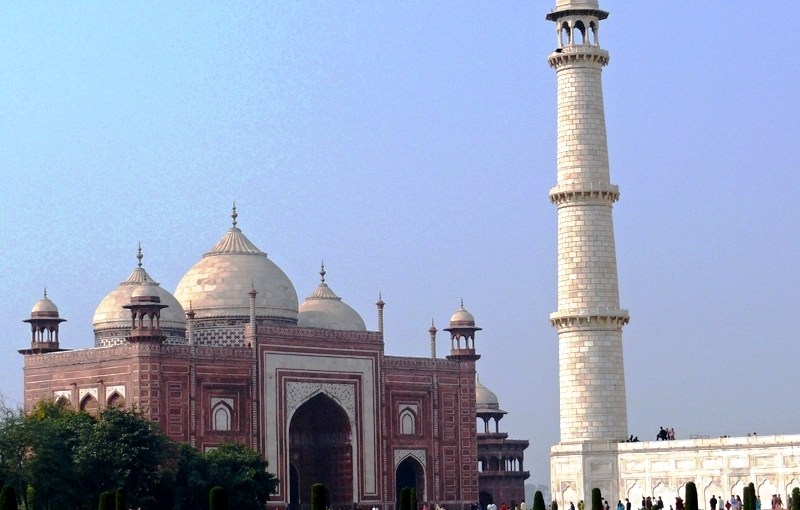
A couple of weeks ago I used the Jawabto illustrate architecture for the letter J so this week I am going to show you the Mosque, Minarets and Mausoleum which were mentioned in that post. Remember, the Jawab is simply a building mirroring the Mosque for symmetry in the design.
Mausoleum and Minarets
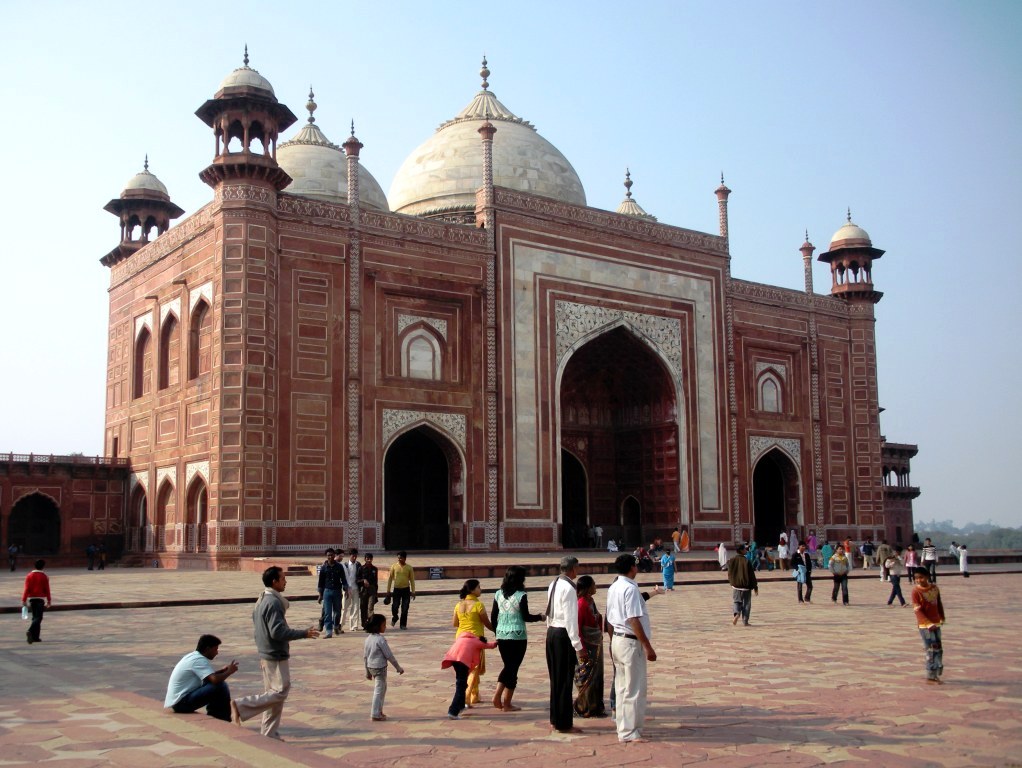
At the western side is the mosque (masjid) facing east, reported to have been built by Isa Muhammed 1631-1648. It is built of red sandstone and has one dominant portal known as an iwan.
Mosque
Either side of the major iwan are two smaller arches sandwiched between four towering pinnacles. The spandrels above the arches are studded with coloured marble inlay and the mosque dados feature naturalistic floral designs.
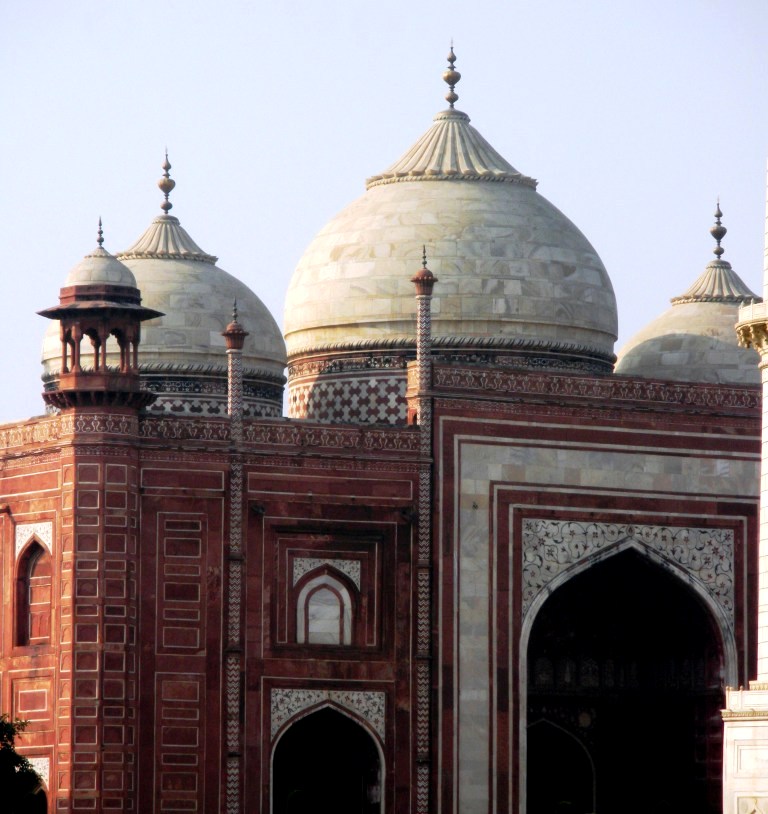
On the roof and complementing the arches below are three marble-coated domes. Inverted lotus shaped designs cloak the top of the domes, surmounted by gilded finials. On the four corners of the mosque are chattris, or domed kiosks, which have a marble coated veneer.
Mosque
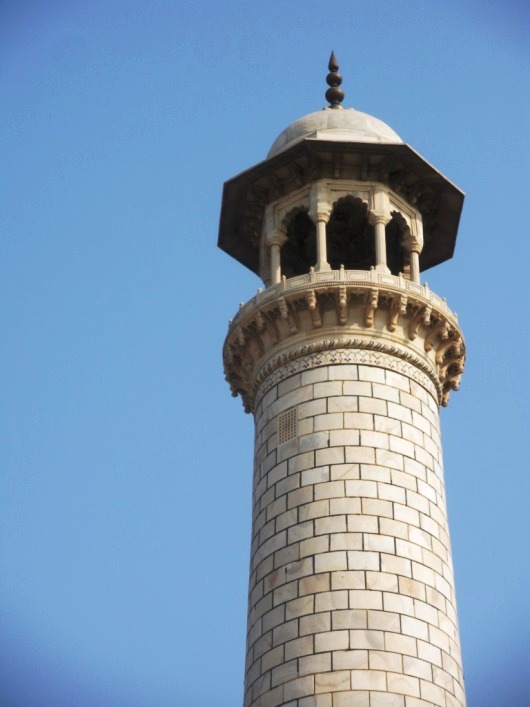
I will also include a minaret, four of these form part of the mausoleum, which have the same chattris as on the corners of the mosque and jawab.
Minaret and Chattri
One of the most beautiful structural compositions in the world, the Taj Mahal was designated a UNESCO World Heritage site in 1983.
Description: Every Tuesday I offer the “A to Z challenge”, walking step by step through the alphabet.
If you would like to join in then please click here.
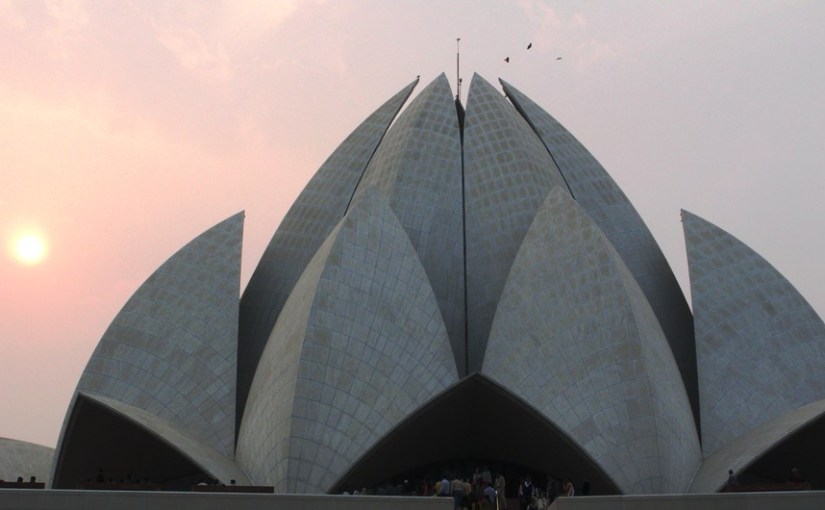
The Lotus Temple, located in New Delhi, India, is a Bahá’í House of Worship completed in 1986. Notable for its flowerlike shape, it serves as the Mother Temple of the Indian subcontinent and has become a prominent attraction in the city. Wikipedia
Delhi in winter is unfortunately plagued by fog and pollution caused by the many open fires in the city. Hence the rather hazy photographs.
Before you reach the House of Worship you need to deposit your shoes at the shoe room. You can then enter the Prayer Hall, which is a place for silent prayer and meditation for people of all religious backgrounds. Photographs are not allowed inside, but it is very plain with rows of chairs although the roof structure is quite interesting.
The lotus has been used as a unifying symbol for all Indian religions. The most basic idea in the design is that light and water are used as its two fundamental elements, and that these two elements alone are responsible for the ornamentation of the House of Worship in place of the thousands of statues and carvings to be found in other temples.







 TRAVEL WORDS