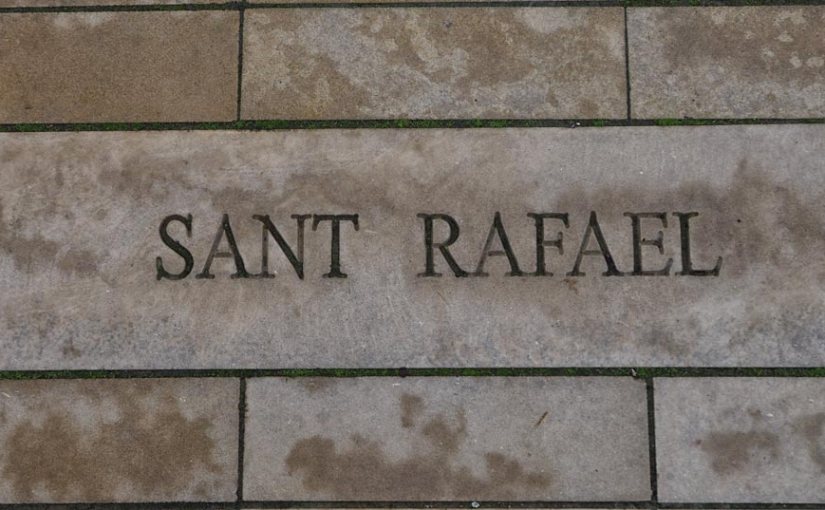
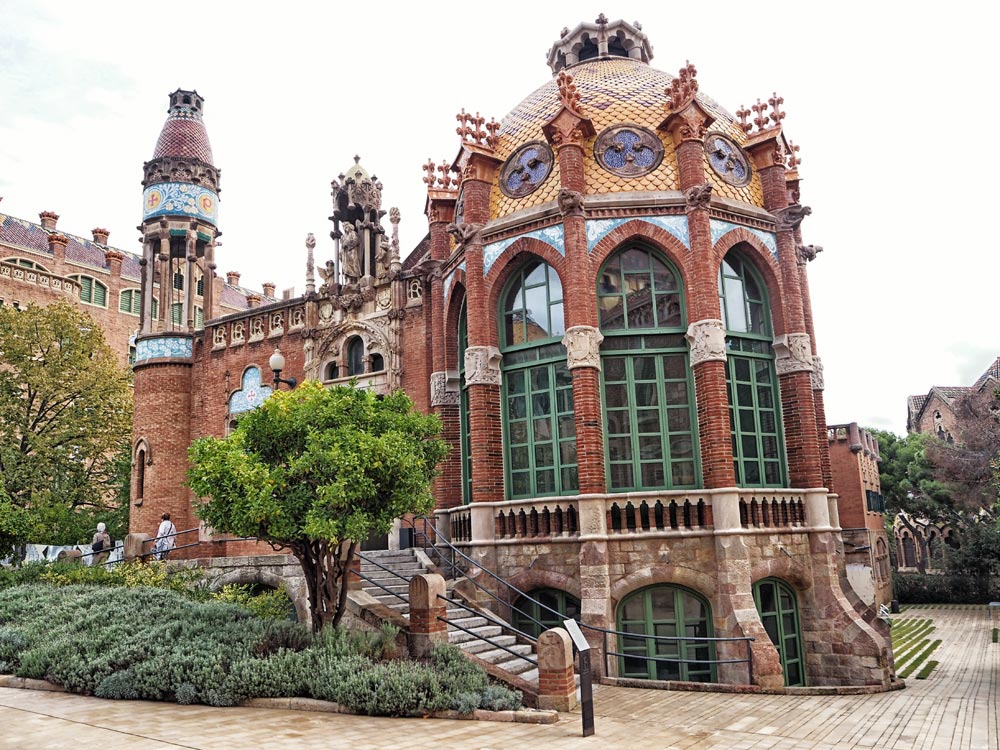
Sant Rafael Pavilion is one which you can enter. It was built between 1914 and 1918 and was initially the trauma ward then became used for internal medicine and infectious diseases.
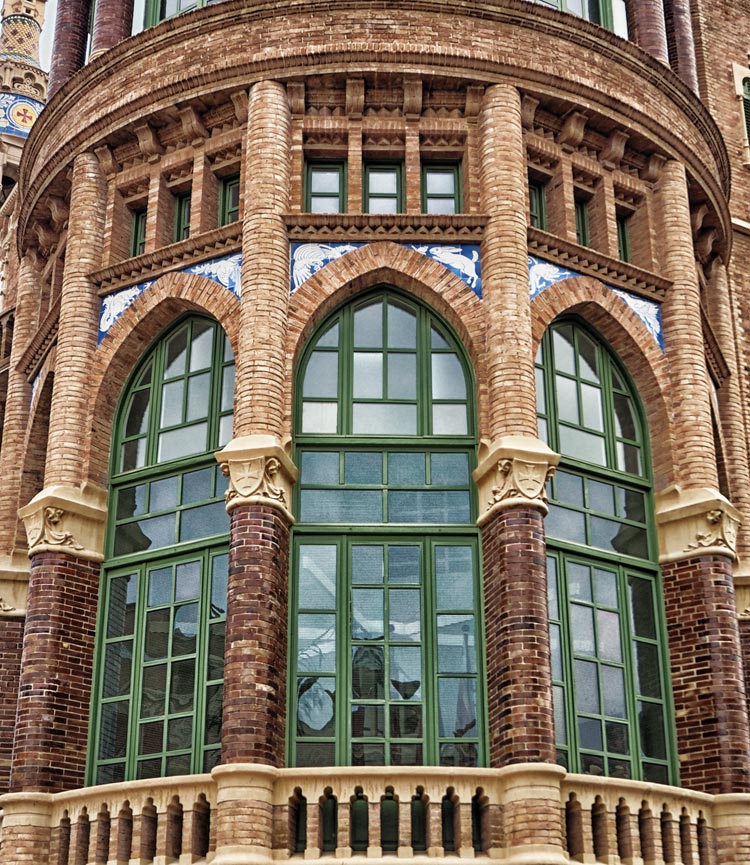
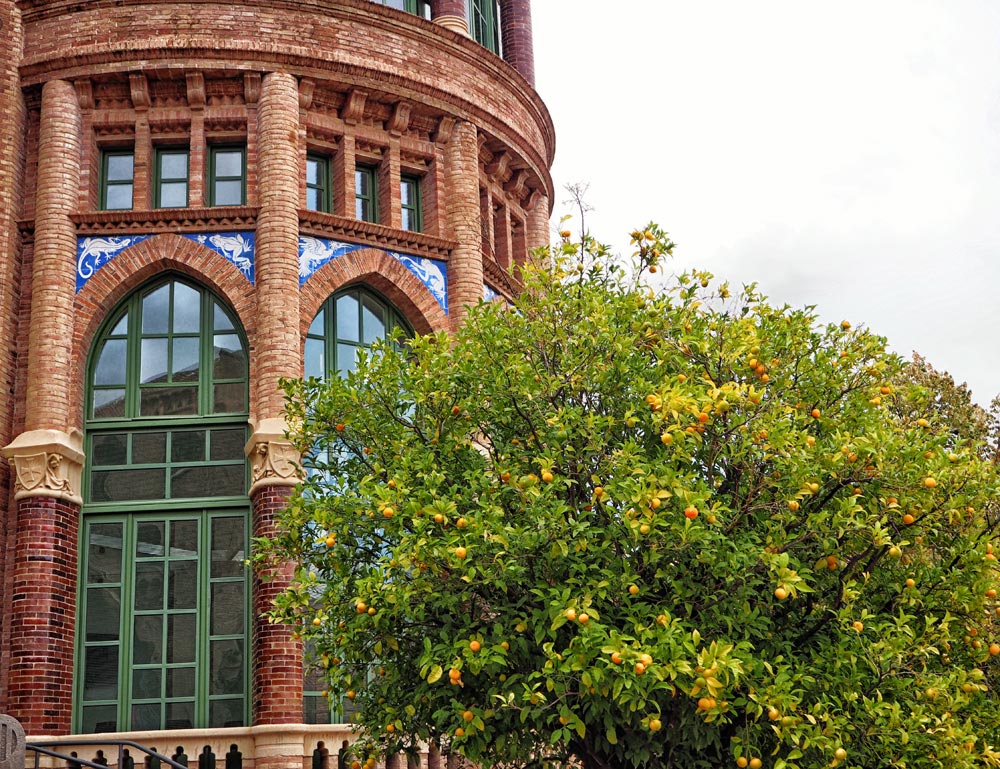
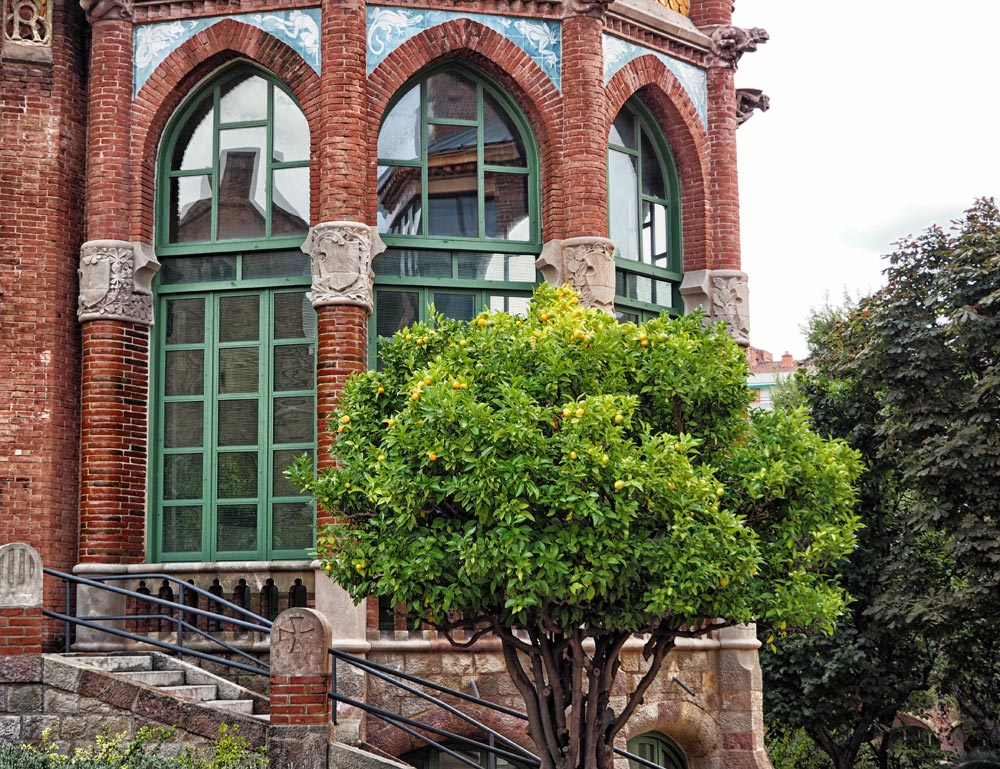
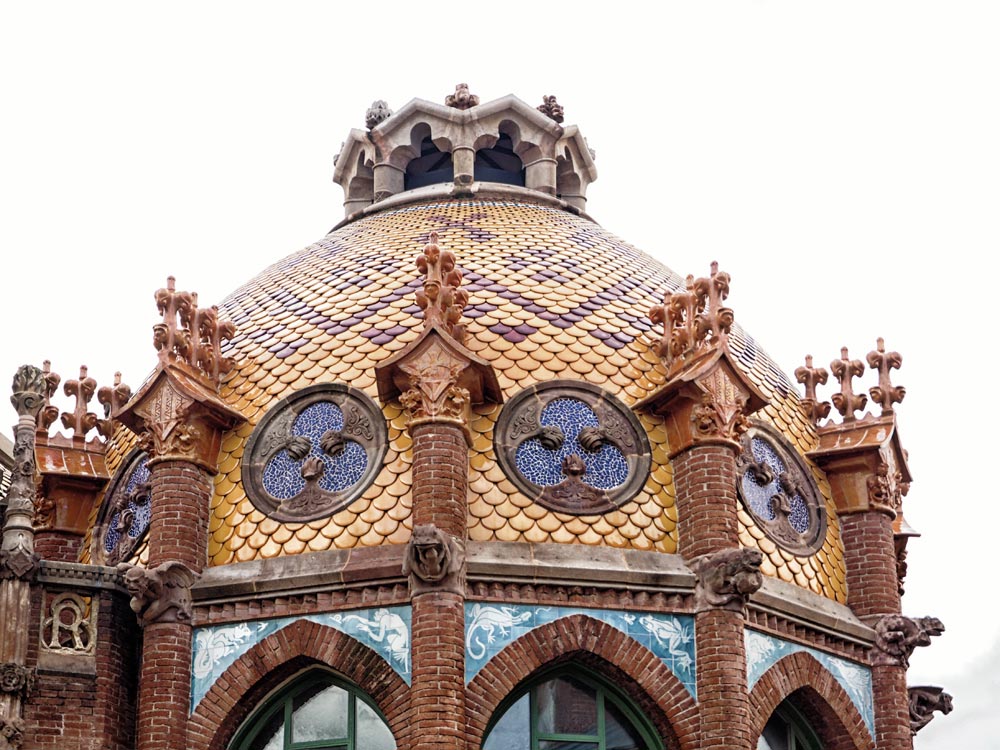
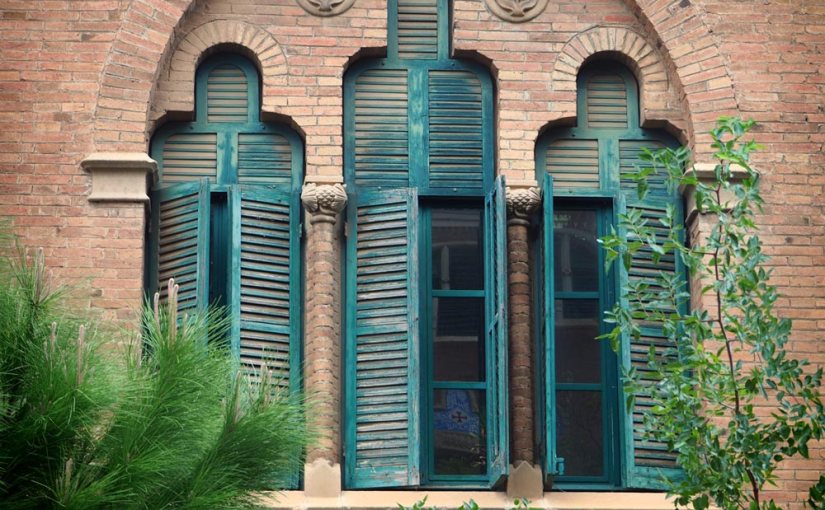
The adoption of flora and fauna as ornamental decorations (see above the windows and the decorative capitals) both in ceramics and sculpture are not only decorative, but also infer healing and regeneration, positive over negative and life above death.
The roofs also feature ventilation shafts surmounted by either glazed ceramic or decorated stone and ornamental pinnacles also in glazed ceramic. Above you can see the patterns created using the scales in different colours on the day room domes.
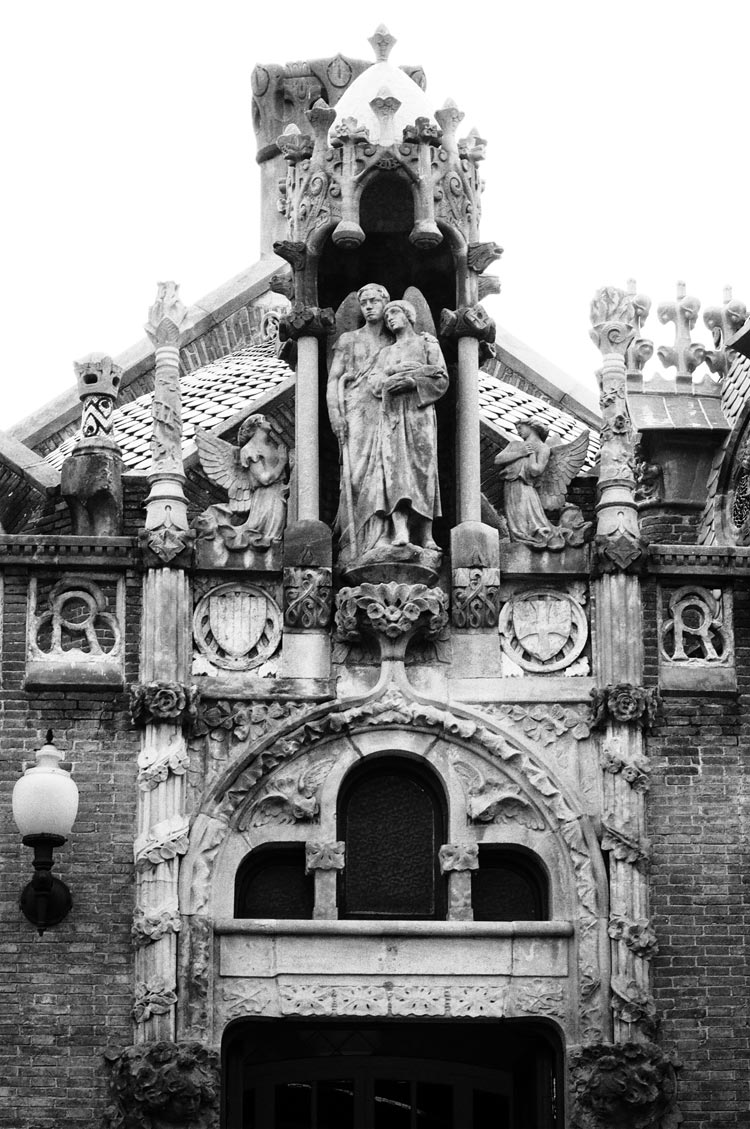
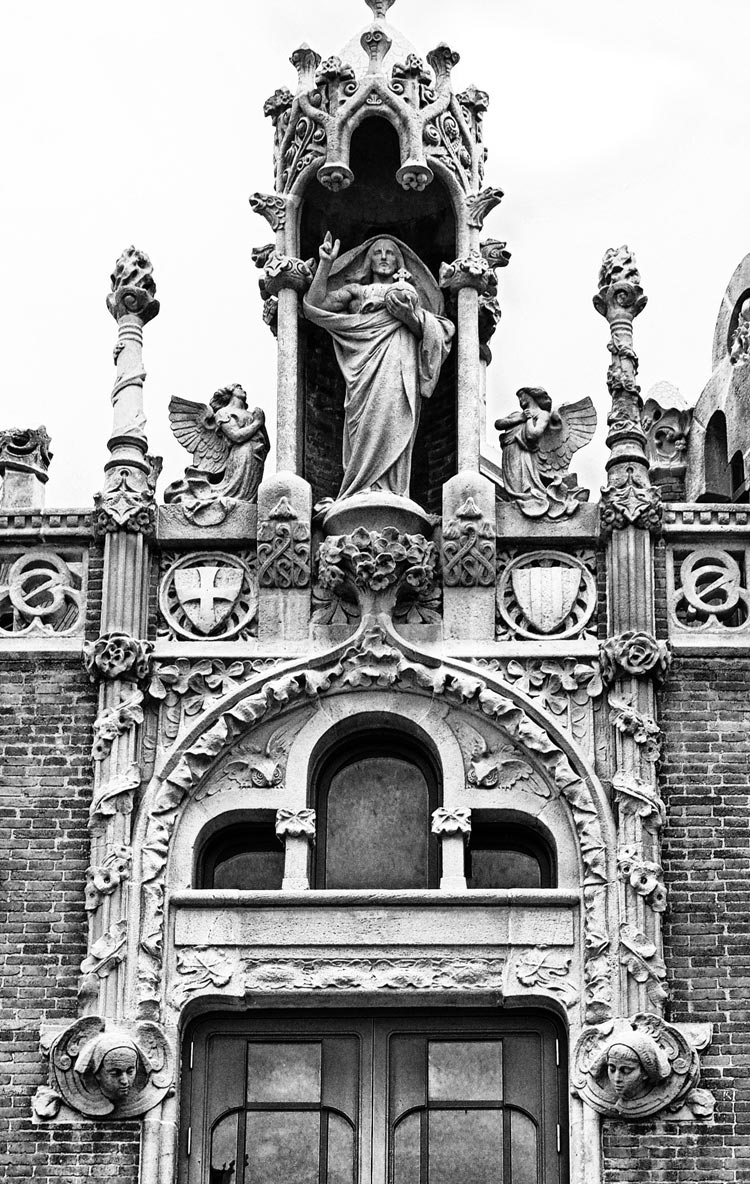
Eusebi Arnau was responsible for the sculptures of all the saints and virgins on the pavilions.
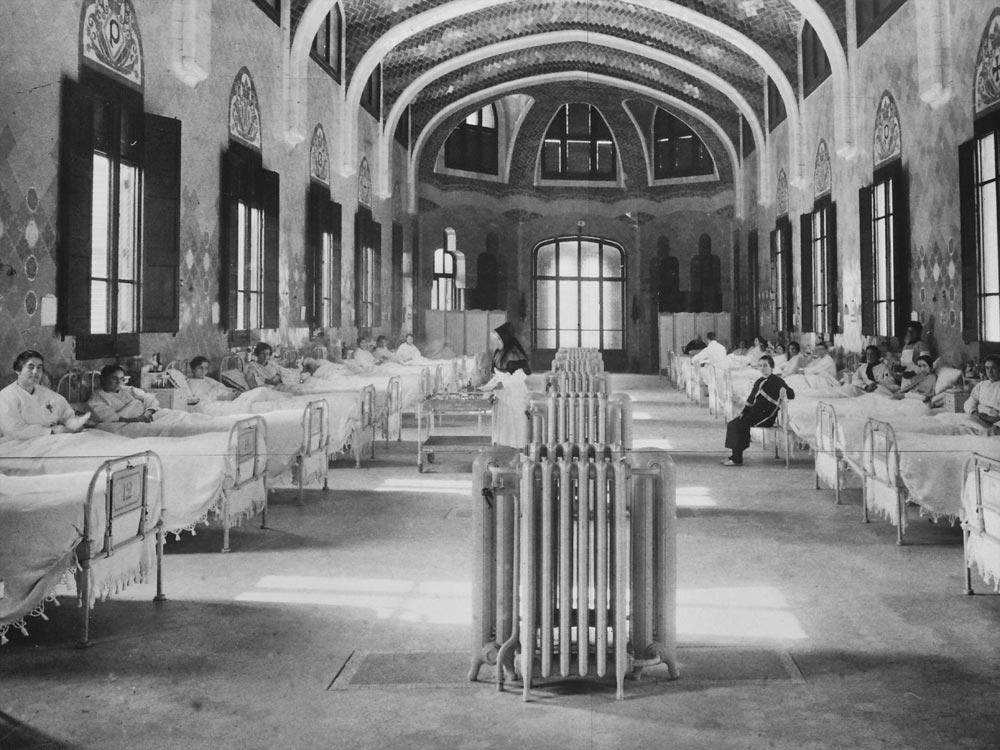
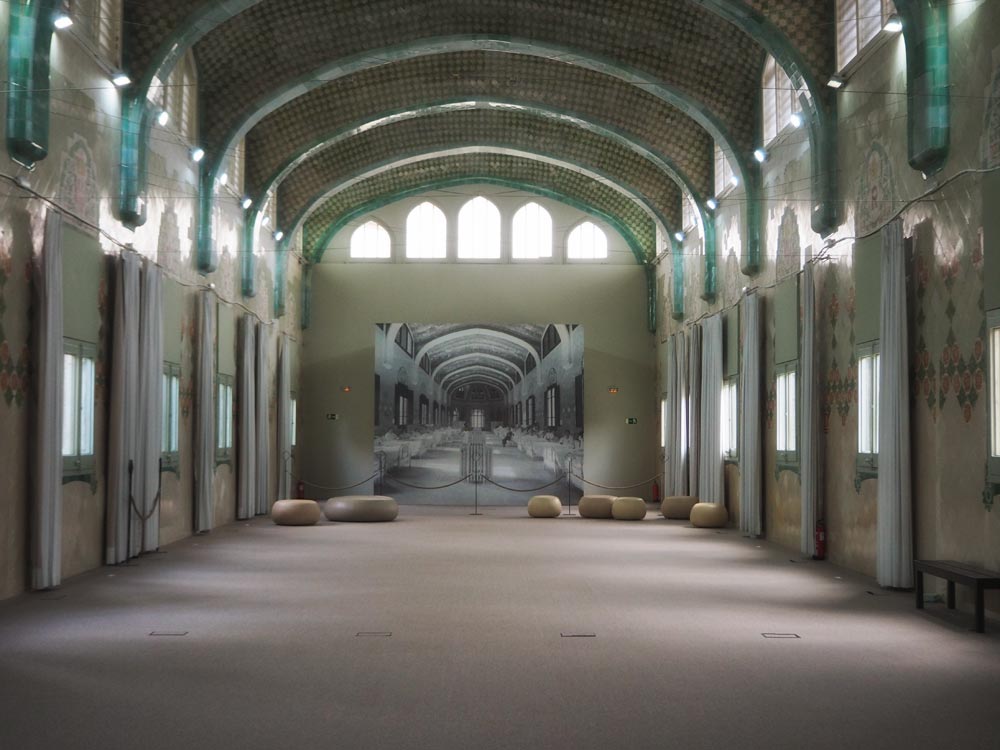
Inside Sant Rafael you can see an example of what the former infirmary pavilions were like. Each one consisted of a broad lengthwise ward for 28 beds along with a circular ‘day-room’ in which those patients not confined to bed could spend time with their families.
Old Photograph of the pavilion in use
The pavilion walls and ceilings have yet to be refurbished, only additions over the years have been removed to show the original volume.
Ceramics were used inside too as they are easy to clean and therefore guaranteed hygiene. The gentle colours served a therapeutic purpose.
The pavilion was named after Rafael Rabell, who along with his daughter, Concepció Romaguera funded the construction and you can see that both the outside and inside have been decorated with a letter R in his honour.
Source: All the information in these Sant Pau posts is taken from the admission booklet.
How to get there: Metro: L5 Sant Pau / Dos de Maig or L2 to Sagrada Familia and walk up Avenue de Gaudi Bus: H8, 19, 20, 45, 47, 50, 51, 92, 117, 192
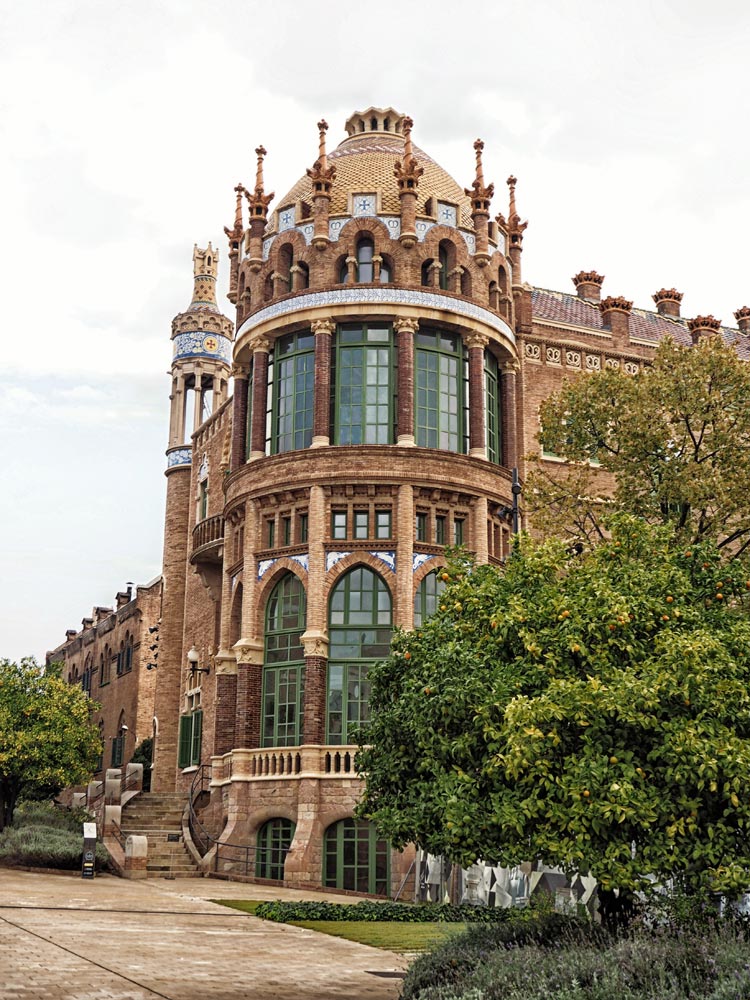
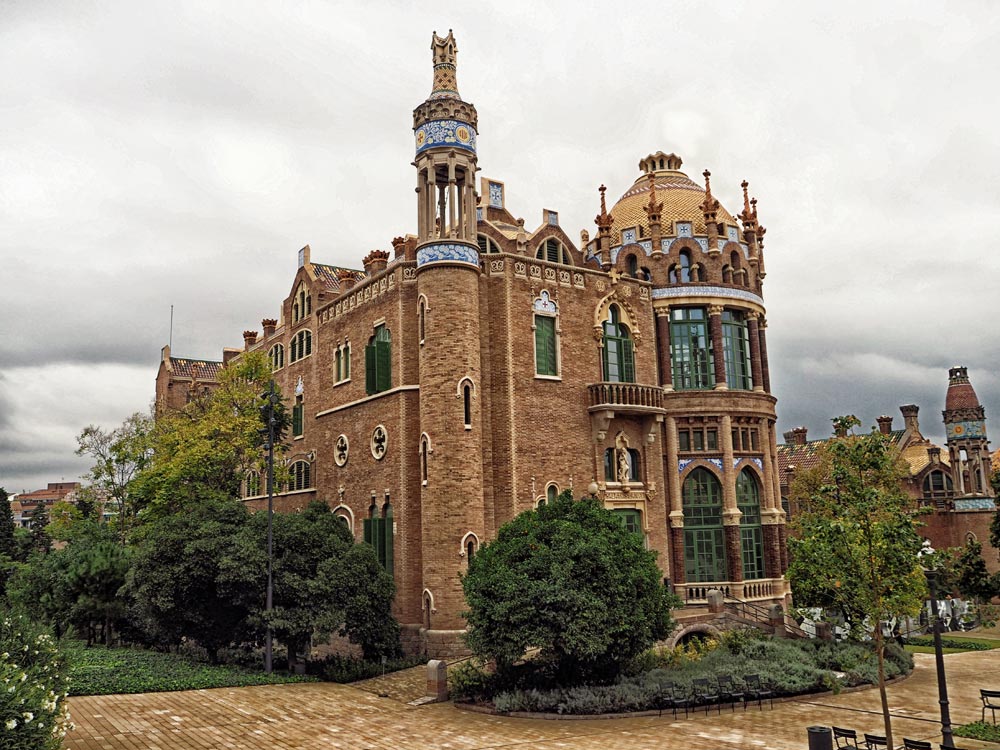
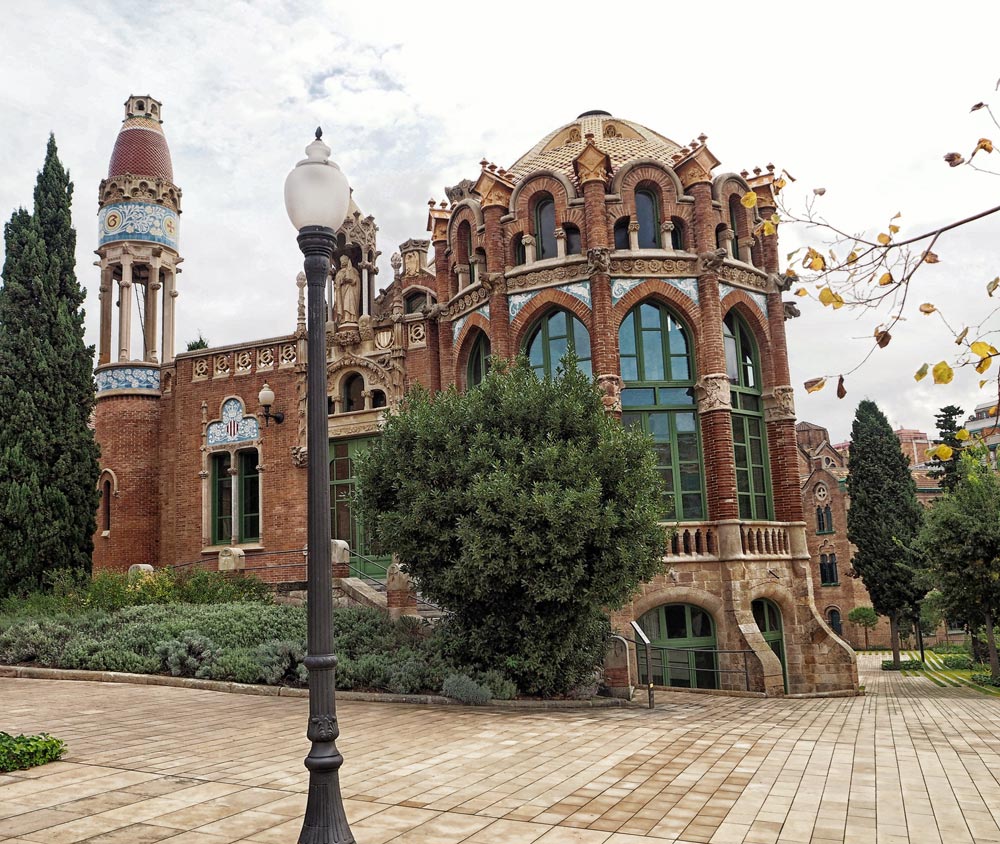
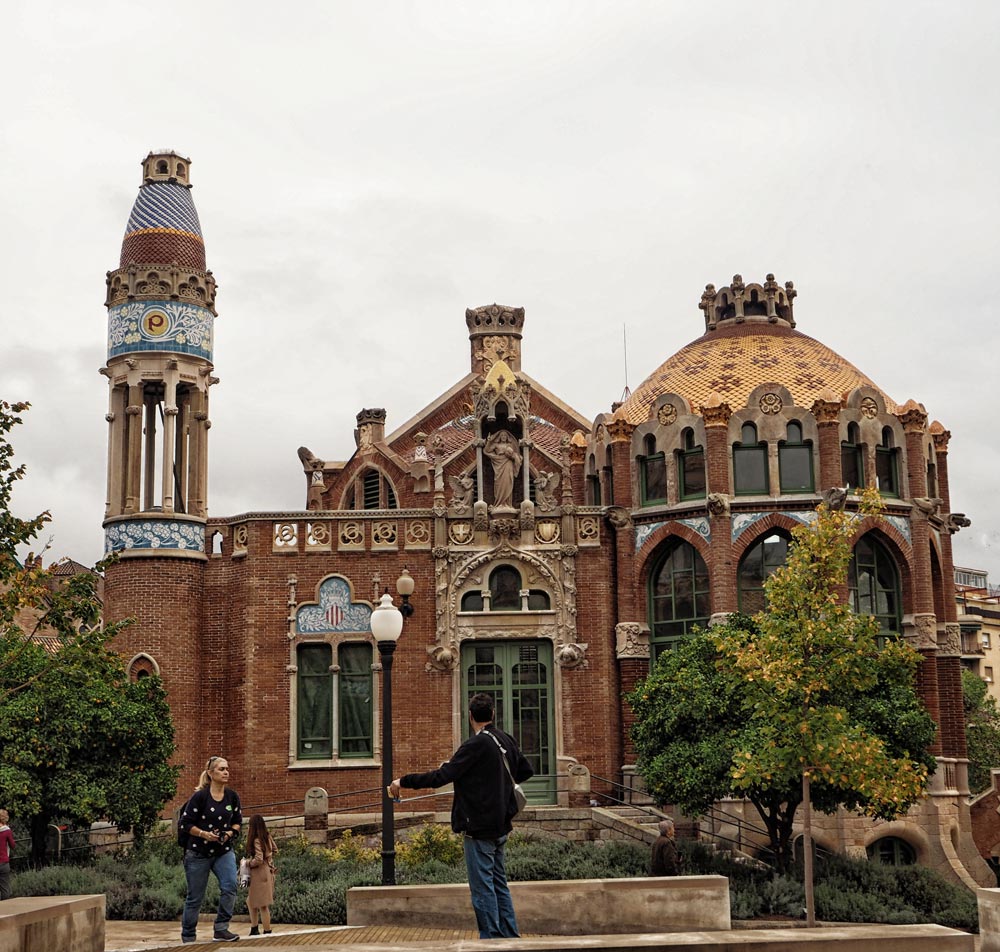
Sant Salvador was the first pavilion to enter service in 1916. Built between 1905 – 1912 it was used as the Female Medical ward. Later uses were General Surgery, Ophthalmology and subsequently an intensive care and semi-critical unit.
The materials for the pavilions were the most durable including red brick; stone, used for all the decorative architectural details as well as reliefs and sculptures; ceramics used to clad domes, roofs and decorative panels both inside and outside; ceramic mosaic; wood; marble; glass; metal and iron.
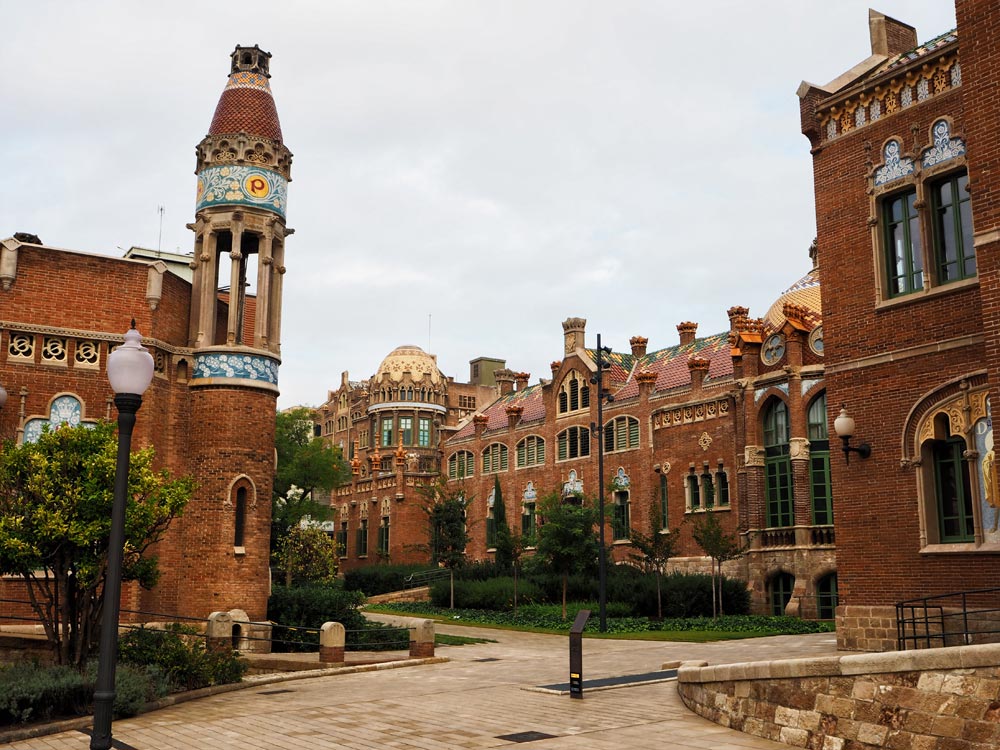
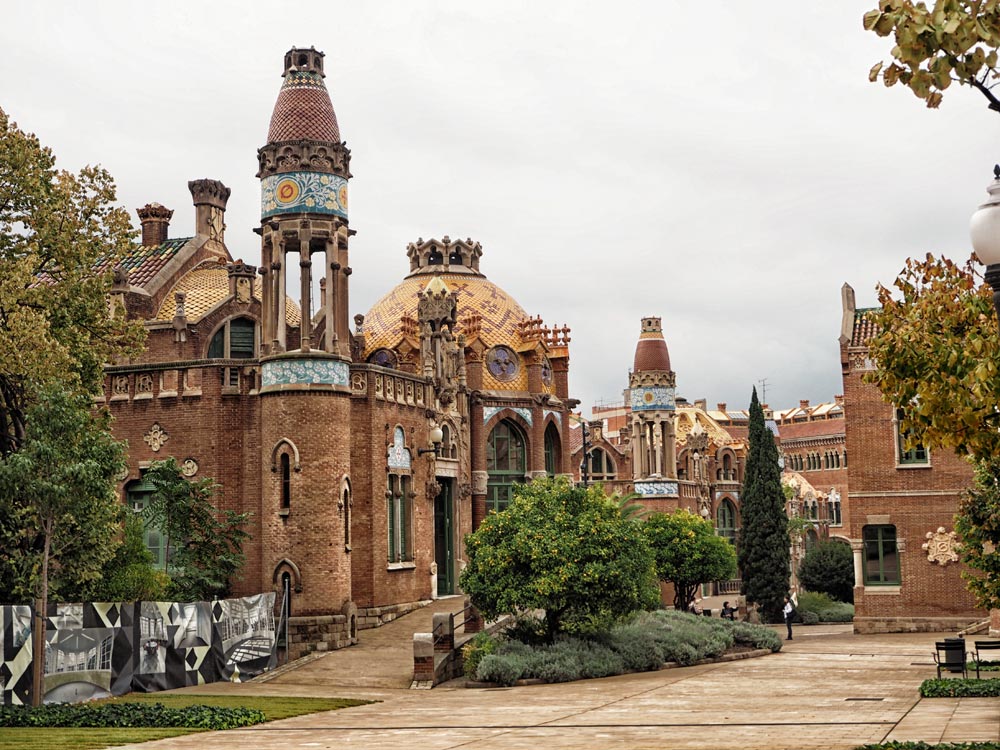
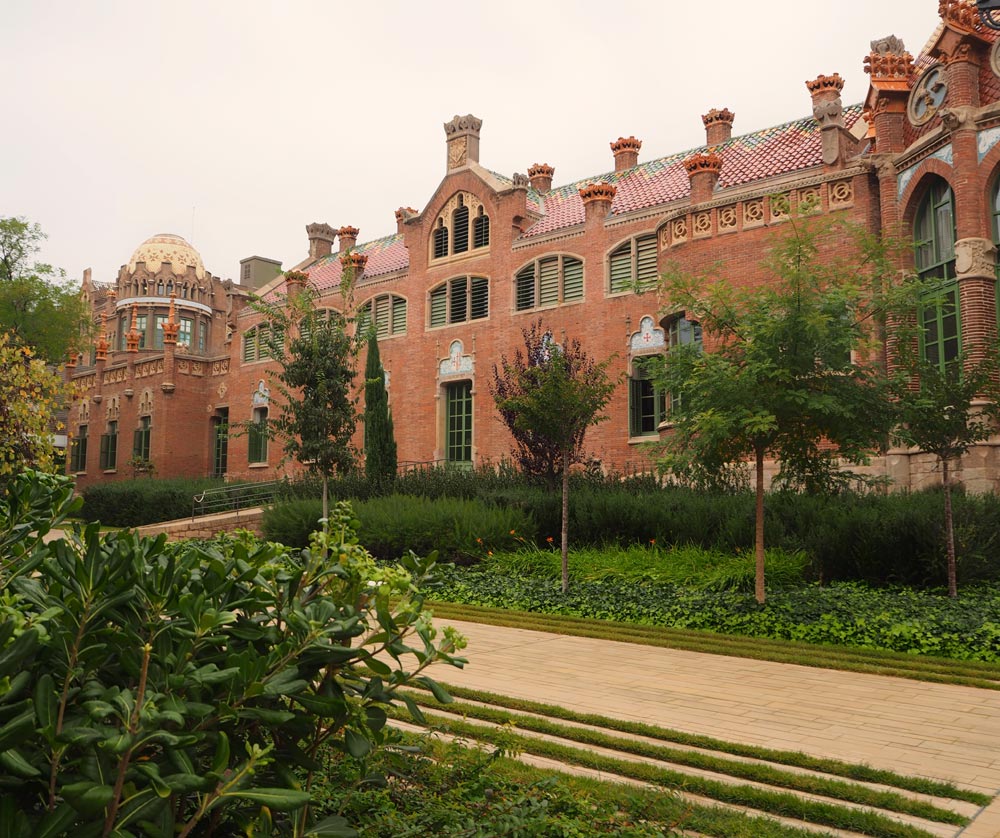
All the buildings are red brick. The gable roofs covered in semi-cylindrical Spanish monochrome clay tiles in a variety of colours which have been placed to create a pattern or section. Each pavilion has a different patterned roof.
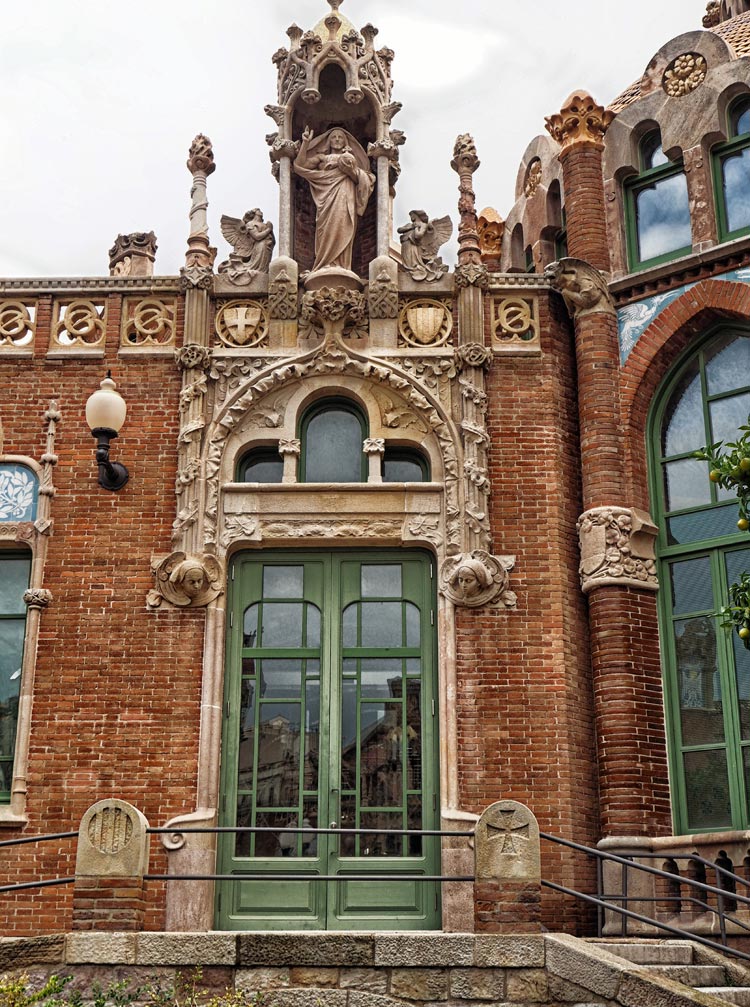
Saint Salvador and Angel Guardians
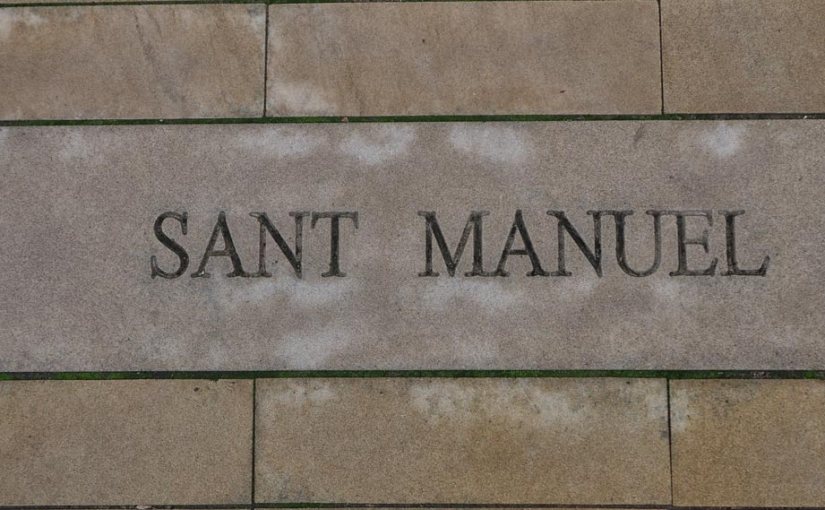
Individual pavilions were given the name of their own patron saint, who presides over their respective entrance. Those on the right were reserved for men and those on the left for women and the corresponding saints were male or female. (Though this pavilion is on the right and has a male saint it appears to have been used initially for female patients.)
Source: All the information in these Sant Pau posts is taken from the admission booklet.
How to get there: Metro: L5 Sant Pau / Dos de Maig or L2 to Sagrada Familia and walk up Avenue de Gaudi Bus: H8, 19, 20, 45, 47, 50, 51, 92, 117, 192
This breathtaking site is full of wonderful mosaics, colours, sculptures, windows, artistic design and architectural details from the modernist era.
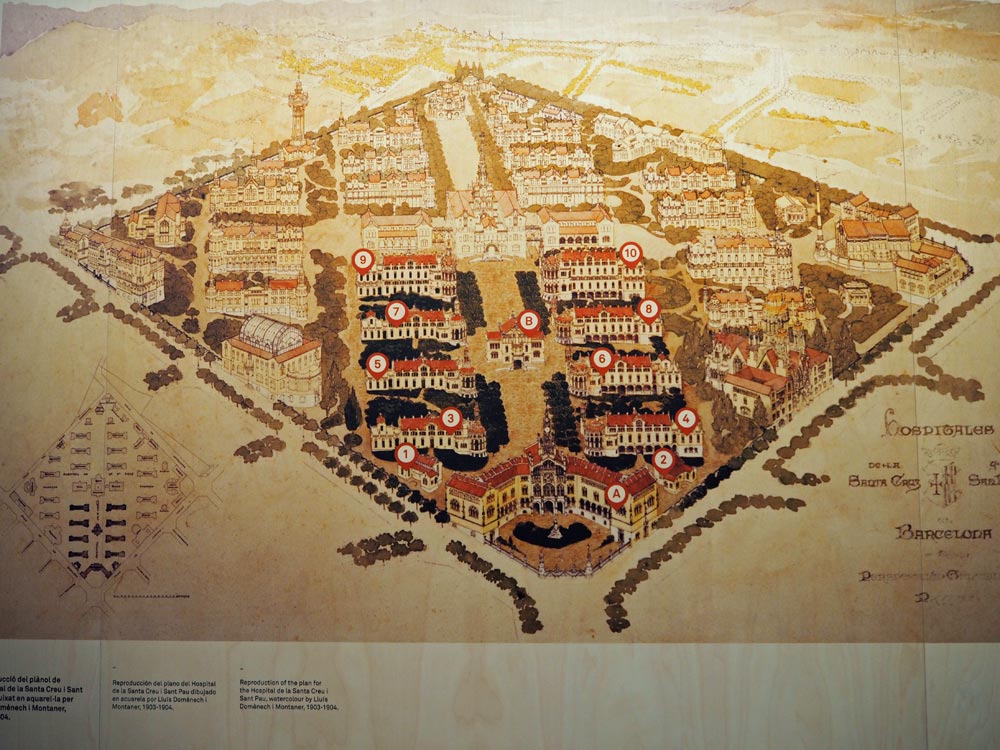
First I will show you the map of the site again so you can see where the pavilions are situated and then we’ll take a stroll around the site.
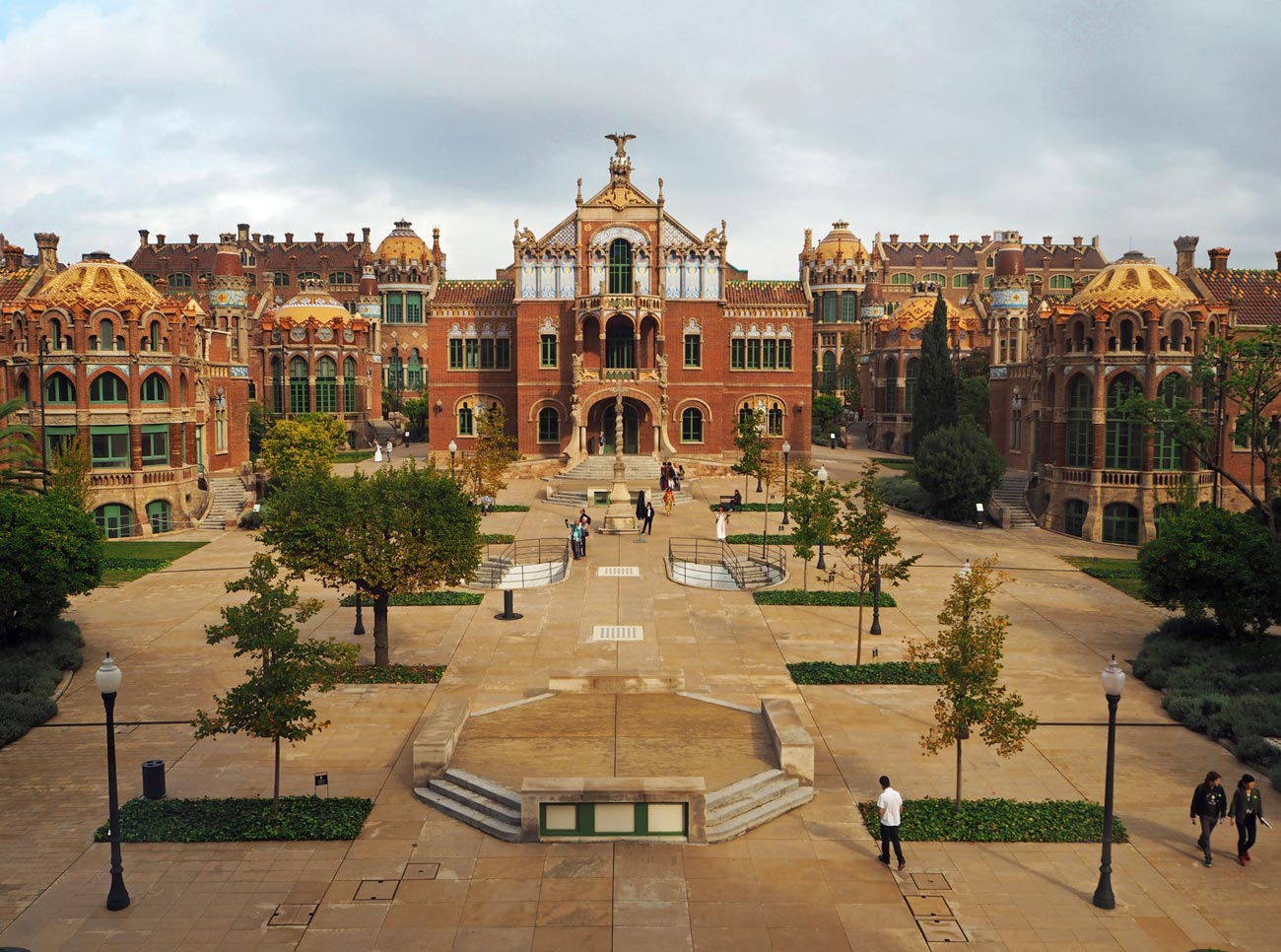
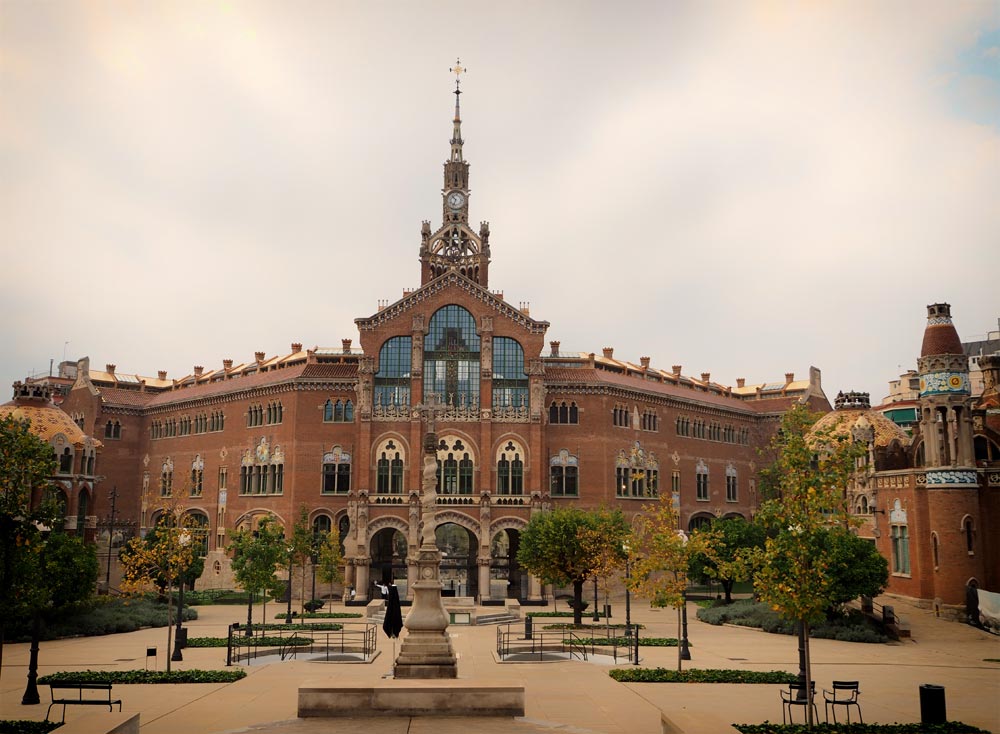
View from the Administration Pavilion (Building A on the map) looking at the Operations building (B) in the centre
After going through the entrance gate with our pre-booked tickets we found ourselves following the underground tunnel which brought us out just in front of the Casa D’Operacions (Sant Cosme and Sant Damia). For what felt like an eternity both my daughter and I were stunned into silence as we gazed around us. From the front we were already in awe of the craftsmanship we had seen, but we didn’t expect such beauty to continue so meticulously.
The grounds are so well laid out with lots of lovely planting of citrus trees, lavender, horse chestnut trees, lindens and deciduous trees all providing shade in the summer and warmth in the winter. Few of the original trees remain except for a couple of date palms. Bay, rosemary and lemon verbena and other medicinal plants grow in the parterres. The gardens were created to provide a pleasant space that would alleviate pain and suffering of the patients and their families. The plants helped to purify the air, fight bacteria, dust and toxic gases and shelter the exposed area from the weather. An idea hospitals of today would do well to replicate.
It was hard to know where to look. The symmetry of each building, the mosaic patterns on the roofs and domes, the elaborately decorated water turrets, the sculptures, the window shapes and the art nouveau style…
You can enter the operations building, but there is not much inside and the only other one that you can enter is Sant Rafael which shows how it was used as a ward. There is much to see externally though and each pavilion although built in the same style and using the same materials with the purpose of creating pleasant and natural surroundings for the patients have their differences.
Of the twelve main pavilions six have been finished and two are currently undergoing restoration. You can see how beautifully the work has been carried out when you see parts of the site still requiring refurbishment.
Next post we will visit the individual pavilions to take a look at the materials used and the differences which make them unique.
View of the Administration Pavilion (A) from the Operations building (B)
(In all of these posts I advise you to click on the photos to enlarge them as only then will you appreciate the incredible artistic detail. )
Source: All the information in these Sant Pau posts is taken from the admission booklet.
How to get there: Metro: L5 Sant Pau / Dos de Maig or L2 to Sagrada Familia and walk up Avenue de Gaudi Bus: H8, 19, 20, 45, 47, 50, 51, 92, 117, 192










 TRAVEL WORDS