L for Lotus Temple

frizztext hosts a weekly A – Z Challenge
A_Z logo Event Type: General Blogging

Start Date: Tuesdays, recurring weekly

Description: Every Tuesday I offer the “A to Z challenge”, walking step by step through the alphabet.

If you would like to join in then please click here.

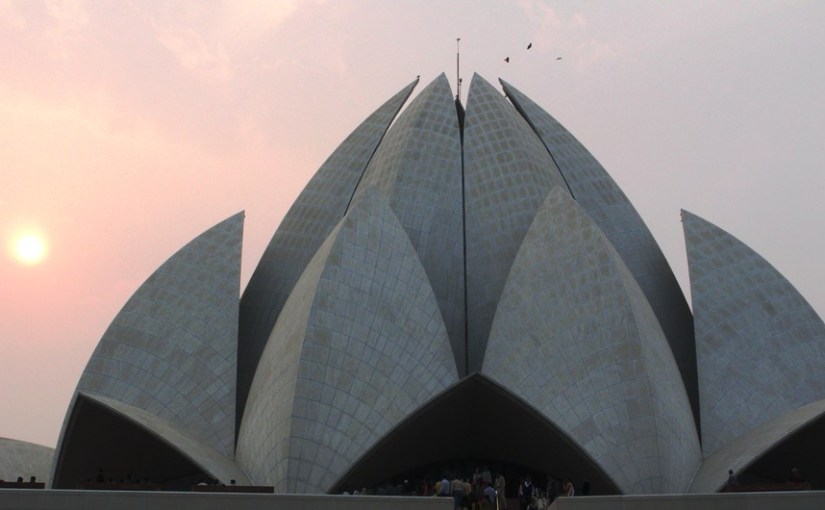
The Lotus Temple, located in New Delhi, India, is a Bahá’í House of Worship completed in 1986. Notable for its flowerlike shape, it serves as the Mother Temple of the Indian subcontinent and has become a prominent attraction in the city. Wikipedia

Baha'i Temple (6)Delhi in winter is unfortunately plagued by fog and pollution caused by the many open fires in the city. Hence the rather hazy photographs.

Before you reach the House of Worship you need to deposit your shoes at the shoe room.  You can then enter the Prayer Hall, which is a place for silent prayer and meditation for people of all religious backgrounds. Photographs are not allowed inside, but it is very plain with rows of chairs although the roof structure is quite interesting.

Baha'i Temple (4)

The lotus has been used as a unifying symbol for all Indian religions.  The most basic idea in the design is that light and water are used as its two fundamental elements, and that these two elements alone are responsible for the ornamentation of the House of Worship in place of the thousands of statues and carvings to be found in other temples.
 

A Lingering Look at Windows

This weekly challenge is hosted by Dawn from ‘The Day After’ who invites participants to post pictures of any windows that  they find curious, inviting, photogenic, or in some way tell a story. Visit her blog to see more windows and/or to join in with the challenge.

(click image to enlarge)

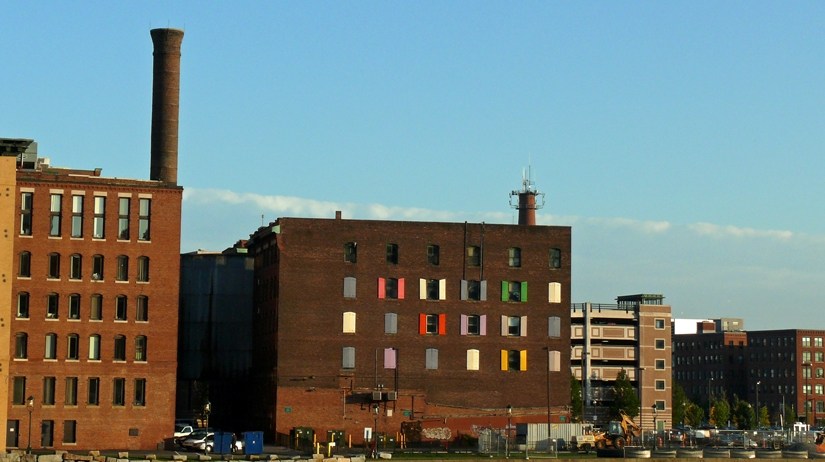
Boston Wharf: Colourful Shutters

I have no idea whether or not this warehouse in the Boston Wharf Industrial Real Estate area has been converted to apartments or not, but from the opposite side of the Fort Point Channel and close to Boston South Railway Station, this building with its colourful shutters caught my photographer’s eye.

K for Kafka

frizztext hosts a weekly A – Z Challenge

A_Z logo Event Type: General Blogging

Start Date: Tuesdays, recurring weekly

Description: Every Tuesday I offer the “A to Z challenge”, walking step by step through the alphabet.

If you would like to join in then please click here.

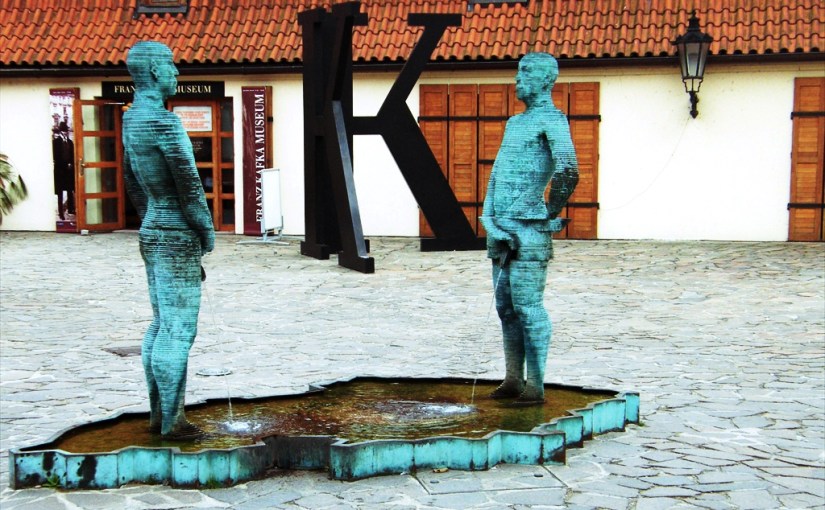
This exhibition on the life and work of Prague’s most famous literary son, entitled ‘City of K’, is the third in a series of exhibitions about world writers and their cities.  It explores the intimate relationship between the writer and the city that shaped him through the media of documents, photography and video.

Read more: Lonely Planet

K - Franz-Kafka

 The fountain in the courtyard of the Franz Kafka Museum  in the Lesser Quarter, is created by artist David Černý.  Two urinating men stand opposite one another above a lake in the shape of the Czech Republic. An electronic device turns their hips and raises their penises in a way that the flow of water traces the letters of several quotes on the water’s surface. But since Kafka wrote in German I’m afraid that aspect of the fountain passed me by.

I find it very amusing, but I’m sure some people are extremely shocked when they suddenly find themselves face to face with this – what do you think?

A Lingering Look at The Round Market

This weekly challenge is hosted by Dawn from ‘The Day After’ who invites participants to post pictures of any windows that  they find curious, inviting, photogenic, or in some way tell a story. Visit her blog to see more windows and/or to join in with the challenge.

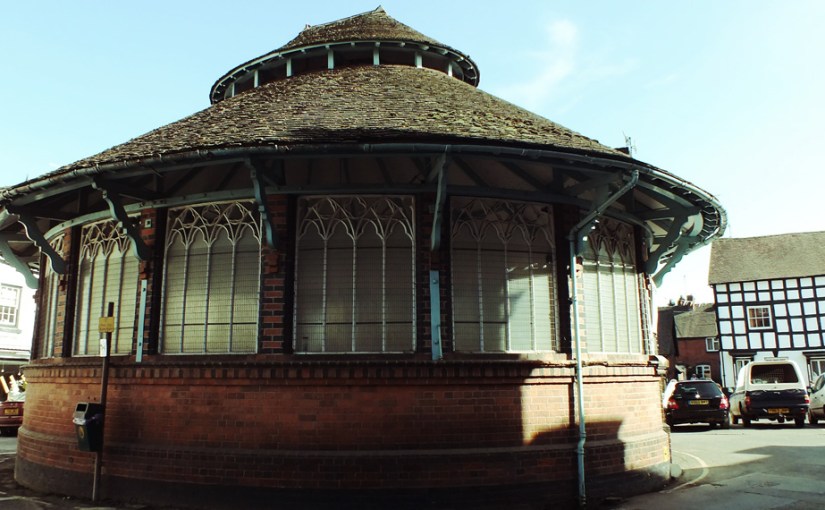
When visiting Tenbury (Wells) we grabbed a Tenbury Heritage Trail map from the tourist office and set off to admire the buildings from Tenbury’s past.  After looking around the Pump Rooms (last week’s post) we carried on into Market Street, which leads into Market Square and where we discovered another unusual building that was also built by James Cranston.

The Round Market

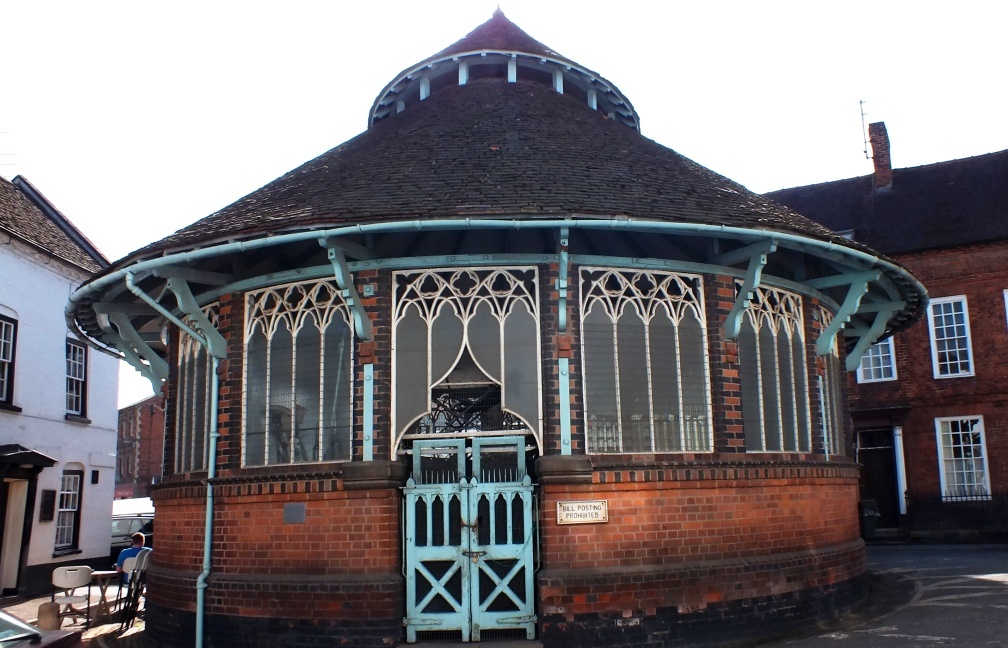
The Round Market (which is actually oval) was built to enable the farmers’ wives to sell their butter and poultry inside, with walls to keep out the wind and rain. Market Days are still held on Tuesday, Friday and Saturday.

But as usual I was drawn to the wonderful windows – just look at the shapes above the gateway! And the trefoils and quatrefoils at the top of each window (click image to enlarge). Divine.

(source of information from Tenbury Tourist Information Centre )

J for Jawab

frizztext hosts a weekly A – Z Challenge

A_Z logo

Event Type: General Blogging

Start Date: Tuesdays, recurring weekly

Description: Every Tuesday I offer the “A to Z challenge”, walking step by step through the alphabet.

If you would like to join in then please click here

The Taj Mahal, still one of the Seven Wonders of the World, attracts millions of visitors each year.  The traditional southern view of the white domed mausoleum doesn’t always demonstrate the sheer scale of the building, nor take into affect the remainder of the integrated structures on the complex and its harmonious proportions.

Jawab - facing west
Jawab – facing west

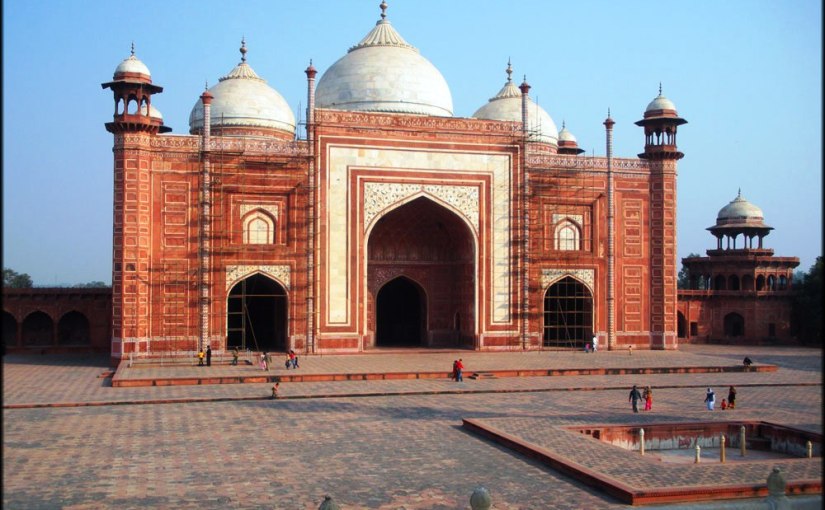
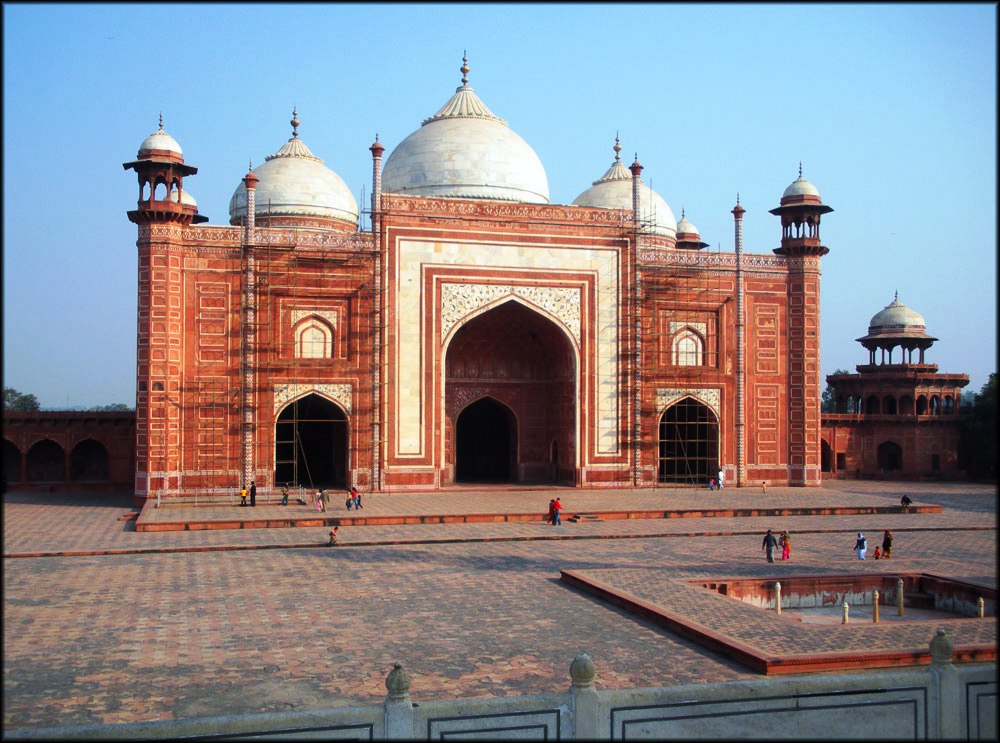
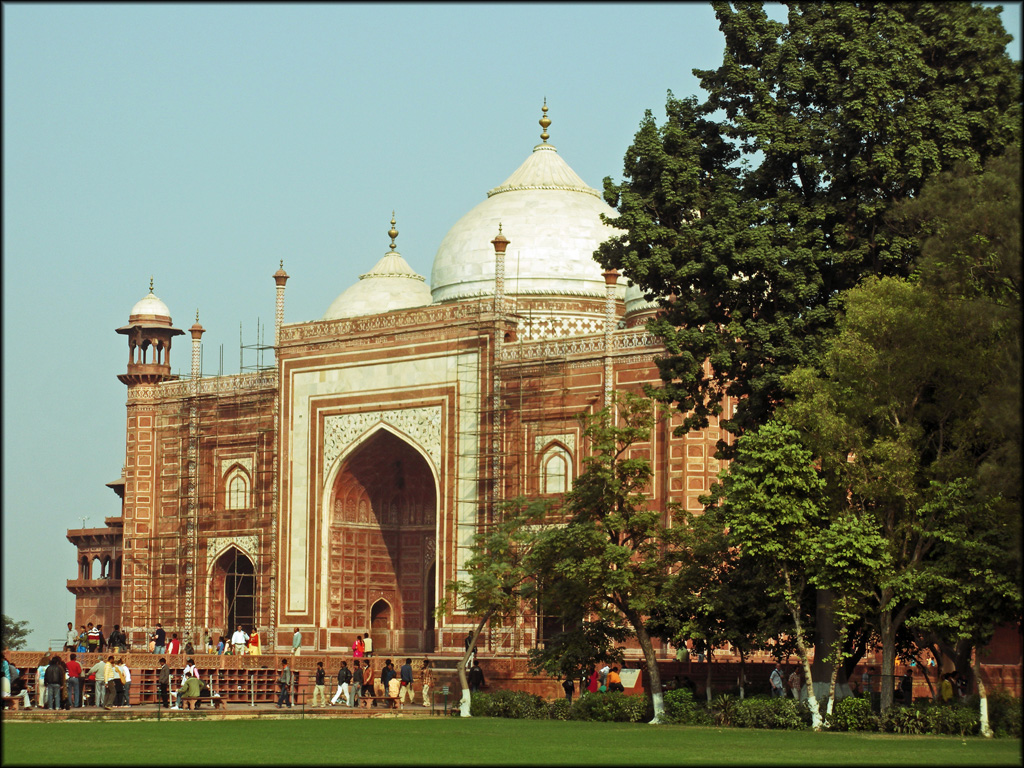
At the far end of the complex, there are two grand red sandstone buildings that are open to the sides of the tomb. These identical buildings flank the main tomb effectively and help to present the white marble monument in an aesthetic setting and form an integral part of the Taj design.

At the western side is the mosque (masjid) facing east, reported to have been built by Isa Muhammed 1631-1648. More about this when we reach M. On the eastern side is the Jawab (literally “answer”; a building mirroring the mosque) and providing aesthetic balance to the site. At the time of my visit the Jawab was covered in scaffolding, so I wasn’t able to go inside.

Jawab
Jawab

One of the most beautiful structural compositions in the world, the Taj Mahal was designated a UNESCO World Heritage site in 1983.