Bonus Red
Life in Colour
To find out more about this year’s photo challenge here on Travel Words, please read this post.
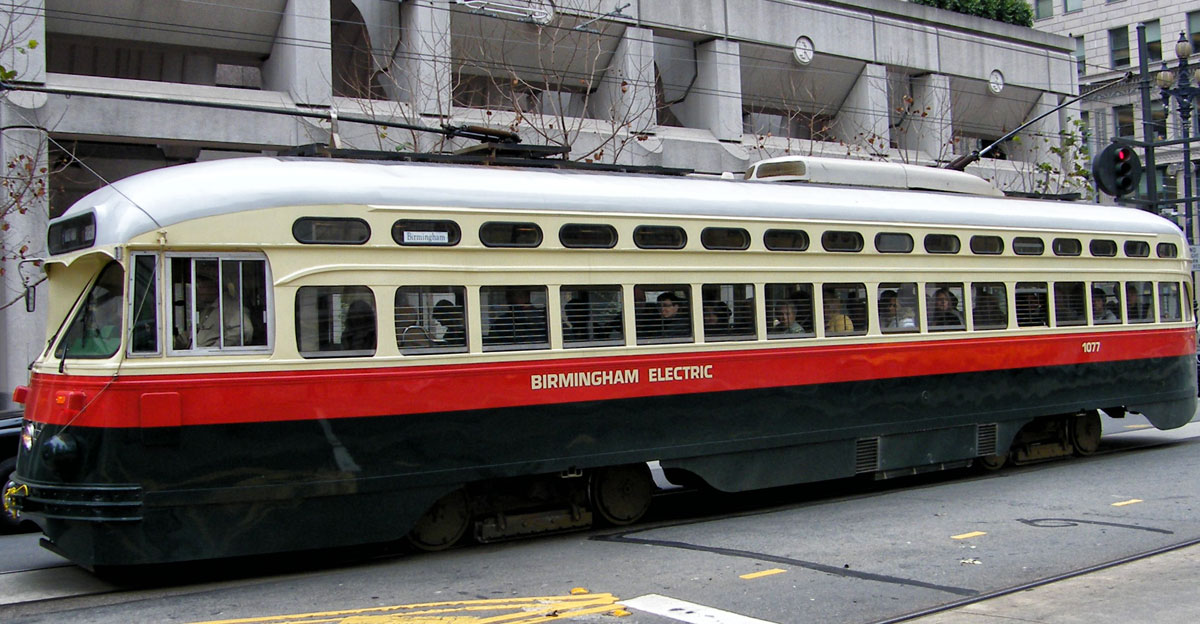
This week I am going to look at San Francisco Streetcars. Red ones naturally.
Birmingham, Alabama, PCC Car, 1077, built in 1947. This car’s exterior commemorates Birmingham, Alabama, which operated PCC streetcars from 1947 to 1953. When streetcars were a new technology, around the turn of the 20th Century, it was common for systems to be owned by the local electric utility.
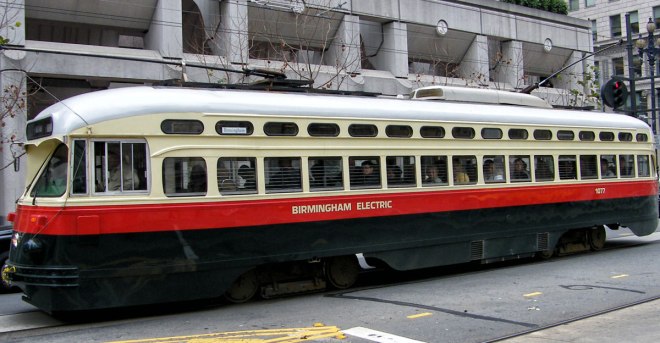
Philadelphia Suburban Transportation Co. PCC Car, 1007, built in 1948. This car commemorates Philadelphia Suburban Transportation Co. (PST)–the ‘Red Arrow’ lines serving Philly’s western suburbs–which ran interurban cars with some PCC features from 1949 to 1982.
If you want to learn more about San Francisco’s historic streetcars and cable cars then please visit the Market Street Railway Museum.
Do you have any red transportation?
Life in Colour
Life in Colour
To find out more about this year’s photo challenge here on Travel Words, please read this post.
This month we will be looking for red. One of the primary colours, red often indicates danger. It is pure energy, loud, demanding to be seen. Think of a red ladybird, a red rose, autumn leaves and a sunset. Passion. A heart.
“A thimbleful
of red
is redder than
a bucketful”~Henri Matisse
Possibly one of the easiest colours to notice – what unusual reds do you have to share?
Flashback Friday #31
In 2014 we took an add-on holiday to Dumfries and Galloway after spending a week in the Lake District based at Keswick. It is not a part of Scotland either of us had visited before, but it turned out to be one of the best holidays we have had.
The Gatehouse of Fleet
The town takes its name from its location near the mouth of the river called the Water of Fleet which empties into Wigtown Bay at Fleet Bay, and its former role as the “Gait House” or “the House on the Road on the River Fleet” or toll booth of the late 18th century stagecoach route from Dumfries to Stranraer, now the A75 road. It was a safe haven along this route, and travellers would often stop in the area rather than furthering the journey at night due to the high numbers of bandits and highwaymen at the time. Wikipedia
We drove a few miles from Kirkcudbright to visit the converted mill ‘The Mill on the Fleet‘ (1788) to have a look at the art gallery and bookshop and also have coffee and cake on the terrace at the Tart n’ Tea café. The most delicious cream choux pastry I have ever eaten. Cardoness Castle is on the outskirts of the town too and Cally Nursery, which I didn’t get the time to visit.
Having picked up a leaflet from the Information Office in Kirkcudbright of a Walking Tour of the town I dragged the OH off for a stroll. I think he’d have quite happily remained on the terrace or in the second-hand bookshop if it hadn’t been closing time.

Leaving the Mill behind you cross over a pedestrian bridge and through the park to the Riverbank – a housing project built in the 1950s to cope with the overcrowding and poor conditions in Gatehouse. Turning left on to Hannay Street you pass an interesting little Episcopal Church with robin’s egg coloured painted windows.
And on the corner stands the rather dilapidated Ship Inn (previously Anworth Hotel) where Dorothy L Sayers wrote Five Red Herrings. One of the Gatehouse artists of the ’20s and ’30s, Alice Sturrock, also lived along here.