Trelissick’s colourful history stretches as far back as 1750 but it’s most distinguished owner was Leonard Cunliffe, a former director of the bank of England.
Cunliffe fell in love with this Cornish house as he sailed past it on his yacht Laranda in the early 1900s. In 1937 he passed the house down to his stepdaughter Ida and her husband Ronald Copeland. Ronald was the chairman of the Spode-Copeland firm of bone china manufacturers in Staffordshire and hence part of the potteries aristocracy. They lived at Trelissick throughout their careers donating the house and gardens to the National Trust in 1955
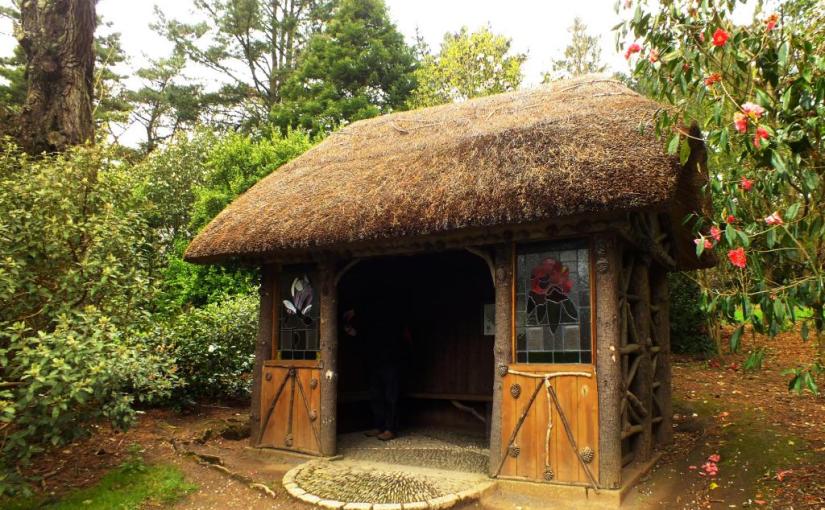
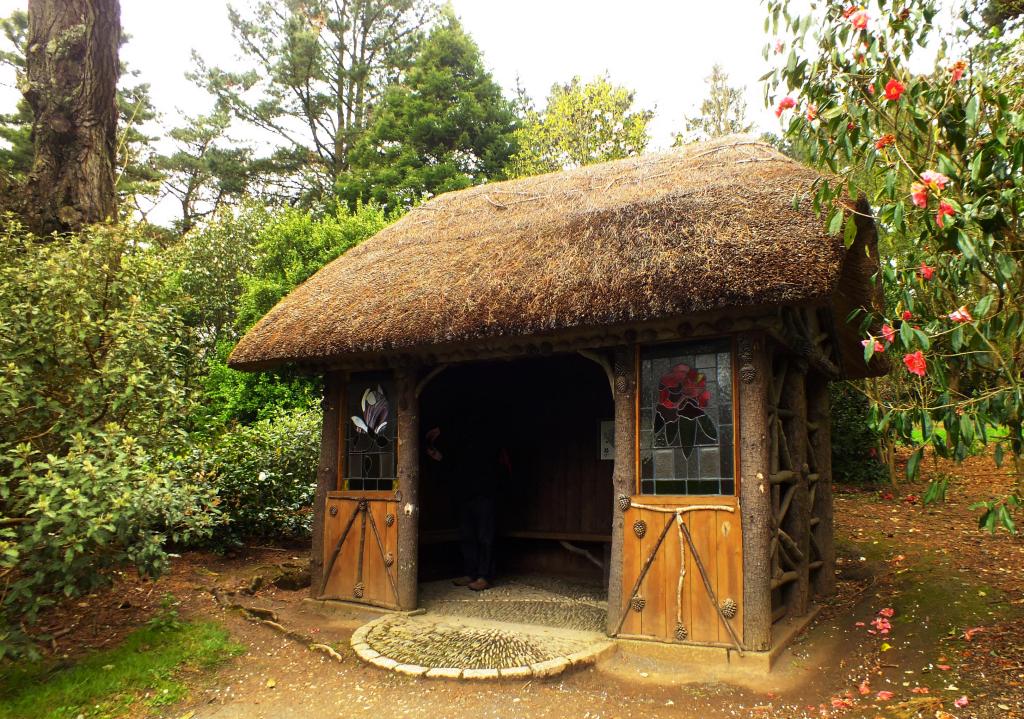
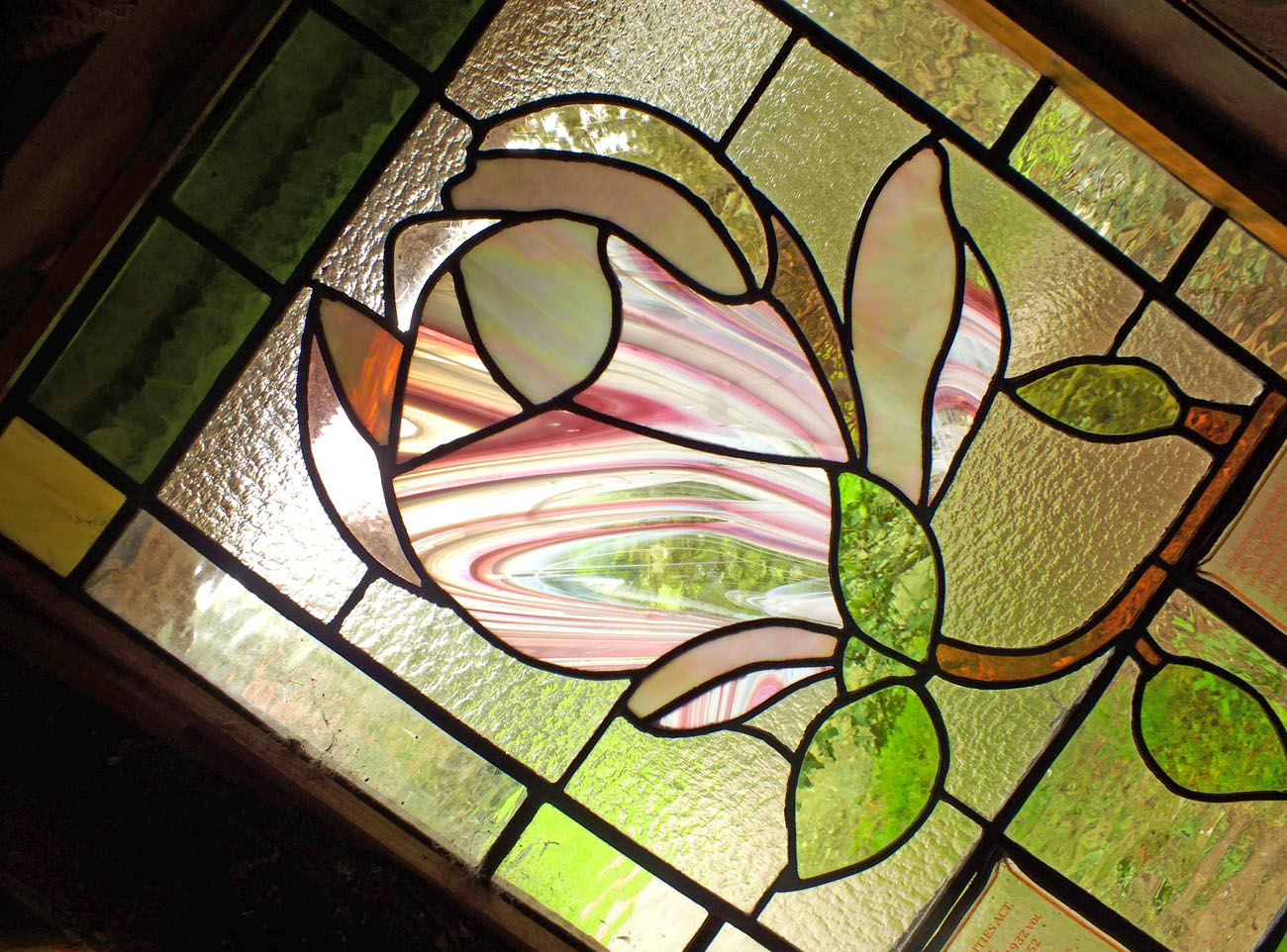
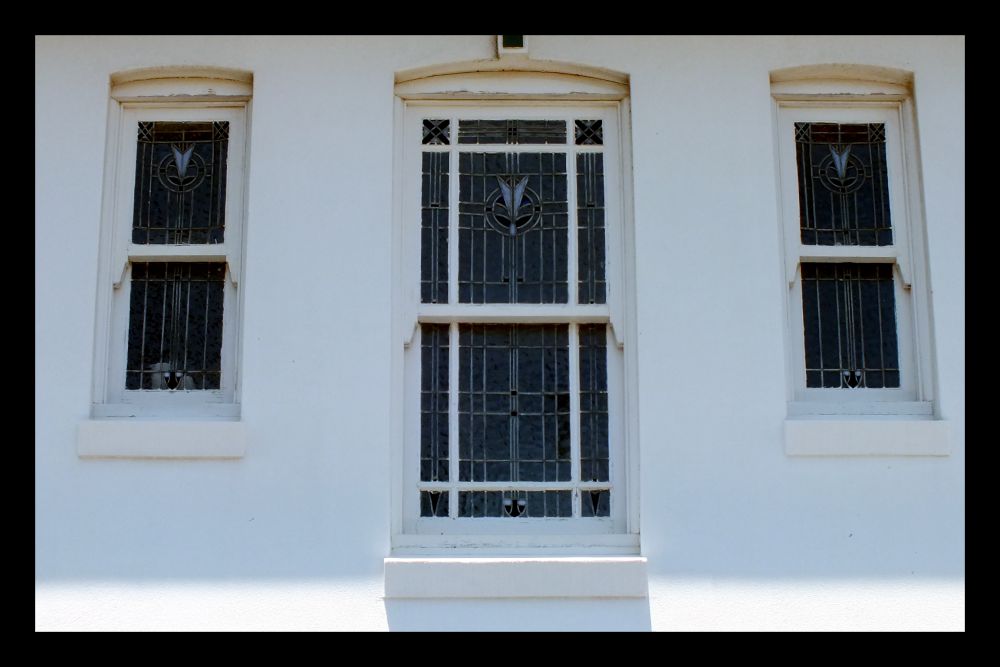
Trelissick has no less than four summer-houses. One in the area called Carcaddon* has two beautiful stained-glass windows.
The magnolia, “Rustic Rubera” window is for Ida Copeland and highlights her time as an MP for Stoke from 1931 to 1935 and contains an excerpt from her maiden speech to Parliament on the introduction of import duties on inferior ceramics being imported from abroad, taking away work from highly skilled people and threatening their livelihood.
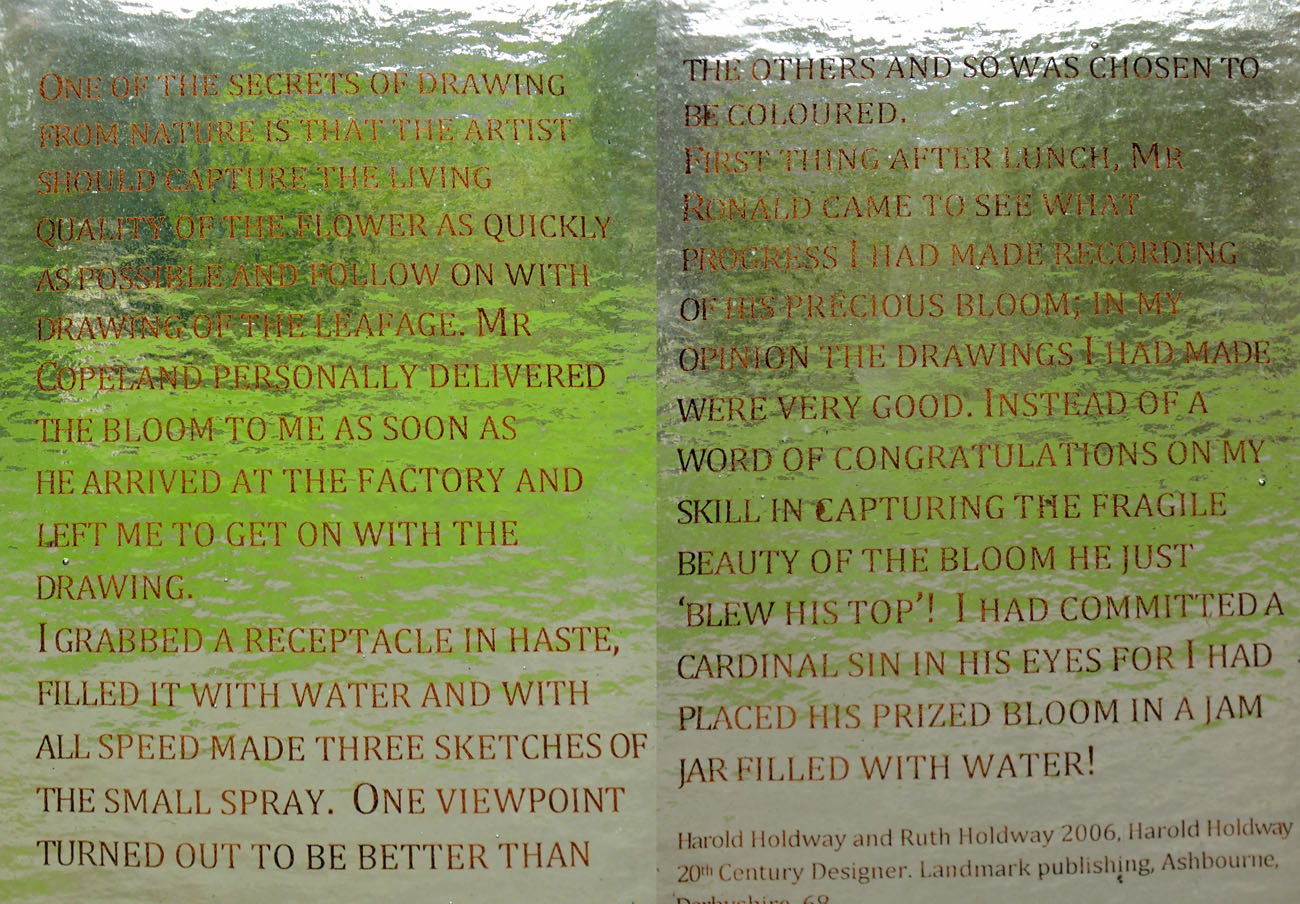
The rhododendron, “Taurus” window celebrates Ronald Copeland’s passion for rhododendrons and retells a story told by Harold Holdway, chief designer at the Copeland factory in Stoke. Mr Copeland took his prized rhododendrons from Trelissick and had Harold Holdway create designs from them for a Botanical series.
*The Cornish prefix ‘Car’ or ‘Caer’ denotes a fortified place. It contains mass plantings of daffodils followed by camellias, magnolias (including magnolia Trelissick), rhododendrons, viburnum and many other shrubs. Deutzia gives an early summer show, and lace-cap hydrangeas offer colour well into autumn.
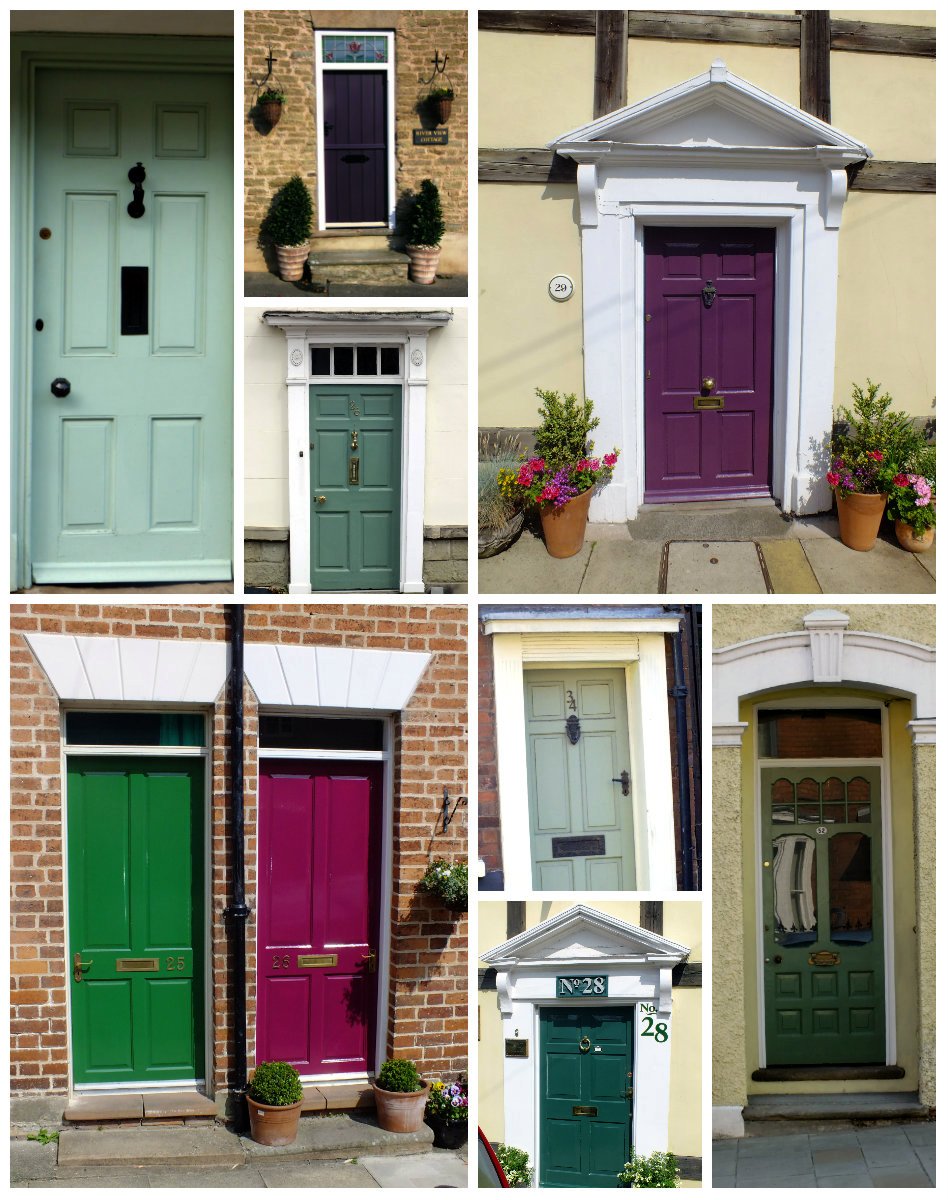
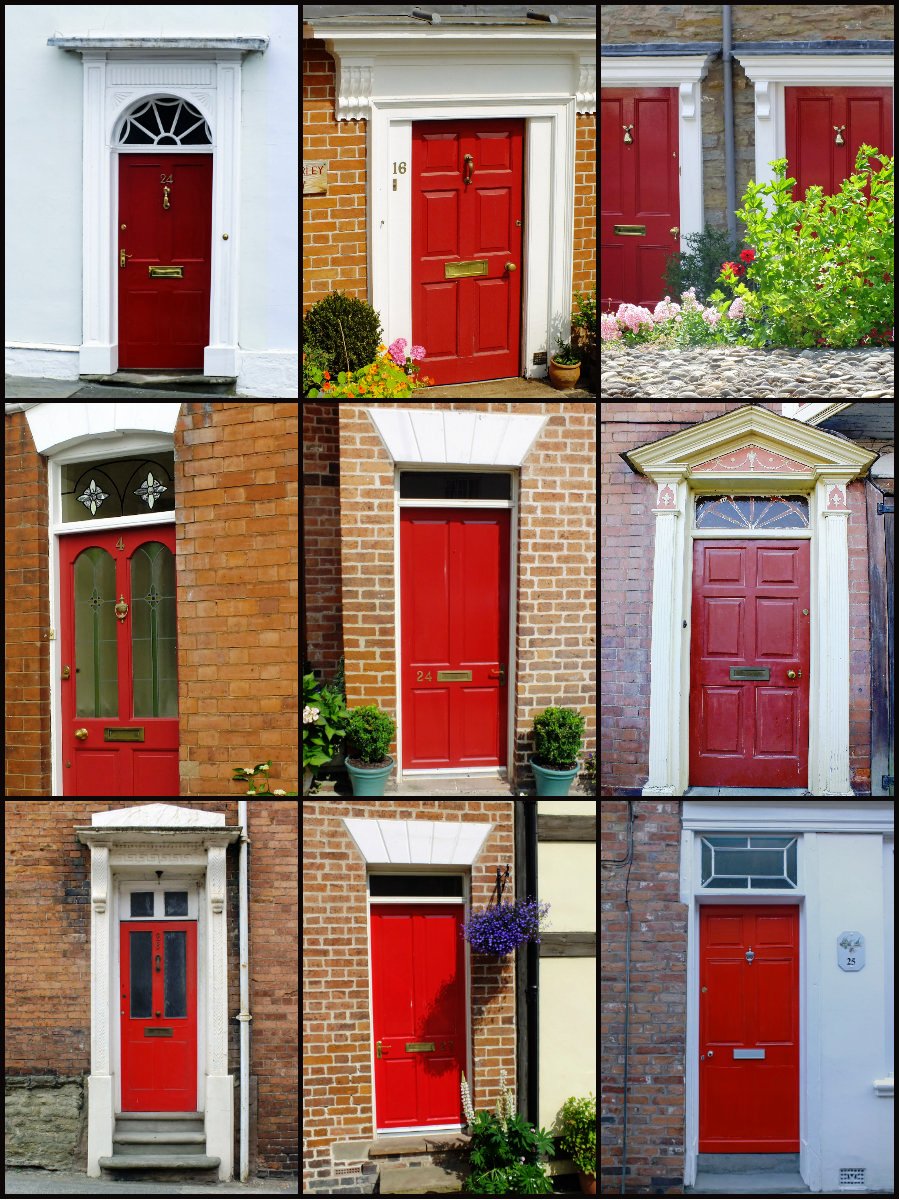
Dawn’s monthly architecture challenge features doors this month. I like doors. And in Ludlow there are a LOT of photogenic doors…
Front doors are very important in feng shui, it is through the front door – also called the mouth of Chi – that the house receives its nourishment of feng shui energy. Your choice should be based on the direction the door is facing.
East facing or South-east? Then you should look at Wood, or wood element colours such as green or brown. But as wood comes from earth and water you can look at colours from these elements as well. Green, brown, blue, black, pale yellow and earthy tones work well. But avoid purple.
West facing? Then the element is Metal. So white or grey are the most suitable though you could also use earthy shades and pale yellow. This also applies to a north-west facing door. Avoid water or fire colours.
South facing? Then the Feng shui element is Fire. So you can go for red, purple, deep orange, strong yellow or deep pink. Green and brown are also OK, but avoid blue and black.
South-west and north-east facing is Earth and therefore pale yellow, sandy or earthy colours are preferable, but as fire is an element of earth you can also choose the fire colours. Earthy/sandy colours, yellow, burgundy red, purple, deep orange, and rich pink. Avoid green, brown, white, grey, blue and black.
The feng shui element of the North direction is Water, so the best colours to choose are blue or black. Metal elements can also be used so white and grey are OK. Avoid green, brown, yellow, red, purple, orange, and deep pink.
My front door is south facing and wooden, so I guess that’s OK. Though I actually prefer a blue door so I need to look for a house with a North or East facing door.
Is your front door painted the correct feng shui colour? Do you care?
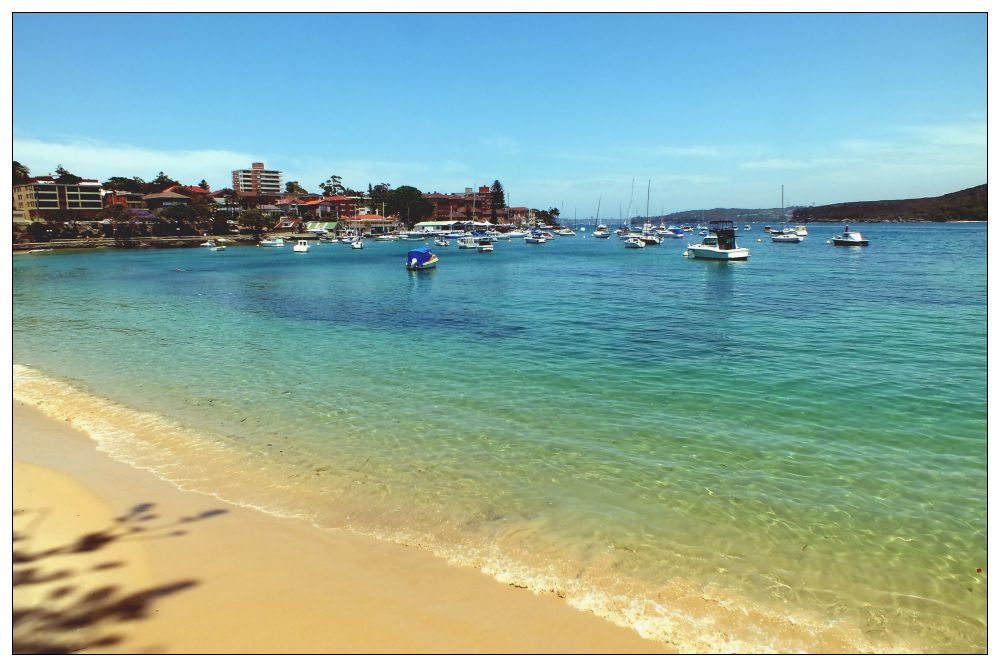
Manly is named after the Aboriginal people first encountered on the shores of Port Jackson in 1788. Due to its remoteness from Sydney it was not developed by Europeans until the mid-nineteenth century when a ferry service was introduced. Over the subsequent years Manly has undergone countless changes in its environment. Fortunately there are many fascinating buildings and parks that have been retained and the Heritage trails have been created to take visitors from the harbour beaches into the centre to appreciate Manly’s history.
I started on this trail from the East Esplanade on a very hot day in November. Under a large Moreton Bay fig tree is an interesting plaque that informs you about the first inhabitants of the Manly area who were the Aborigines known as the Kayimai. They lived as hunter-gatherers, roaming according to the seasonal availability of food and trading with other clans. They moved around, making shelter as needed from branches and fronds or using the many sandstone caves in the area.
Manly Cove Launch Club
Sailing and Rowing Club
Aboriginal Art
Following the path around the corner you find the Manly Cove Launch Club, established in 1937. Next to it stands the heritage-listed Manly Rowing and Sailing Club Boatshed. Established in 1875, this was one of the earliest waterside clubs in NSW. Carry on up the steps and right on East Esplanade to the corner of Stuart Street. Walk up Stuart Street to the junction with Addison Road, the second road to your right.
Addison Road Architecture
The road has been planted with an avenue of Norfolk Island Pines and mixed with Port Jackson Fig trees (smaller than the Moreton Bay fig) and was first planted in 1882. It provided the most welcoming shade on this hot day as I wandered down the road peering over fences to look at the homes.
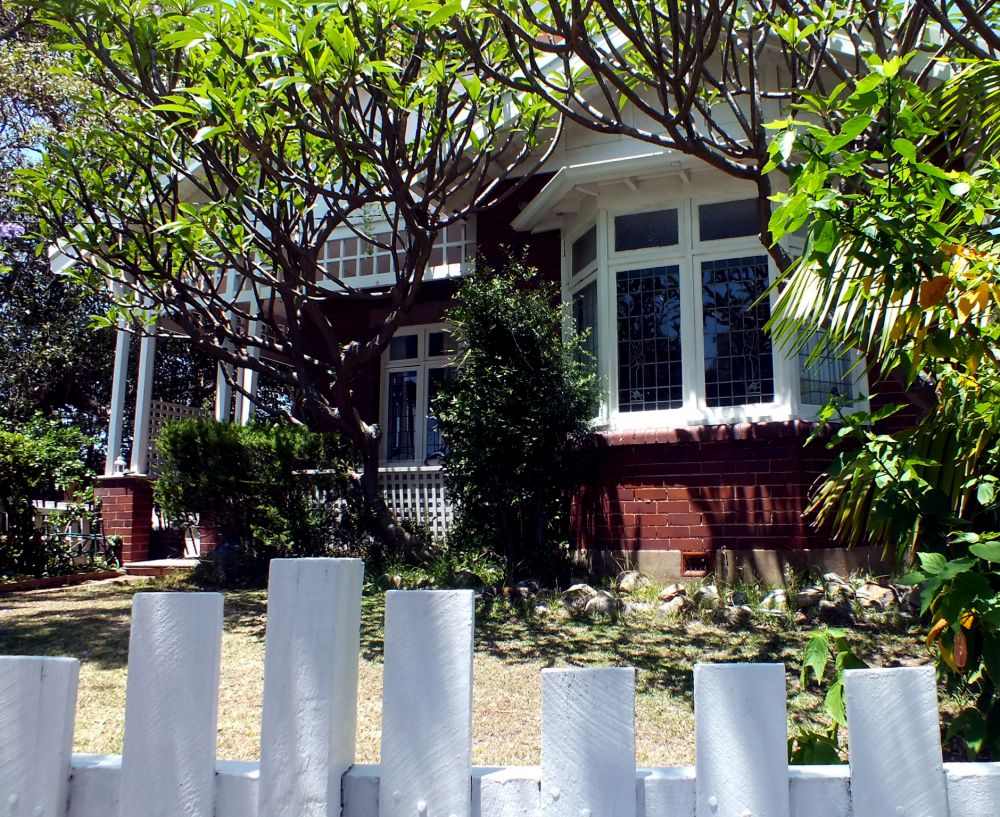
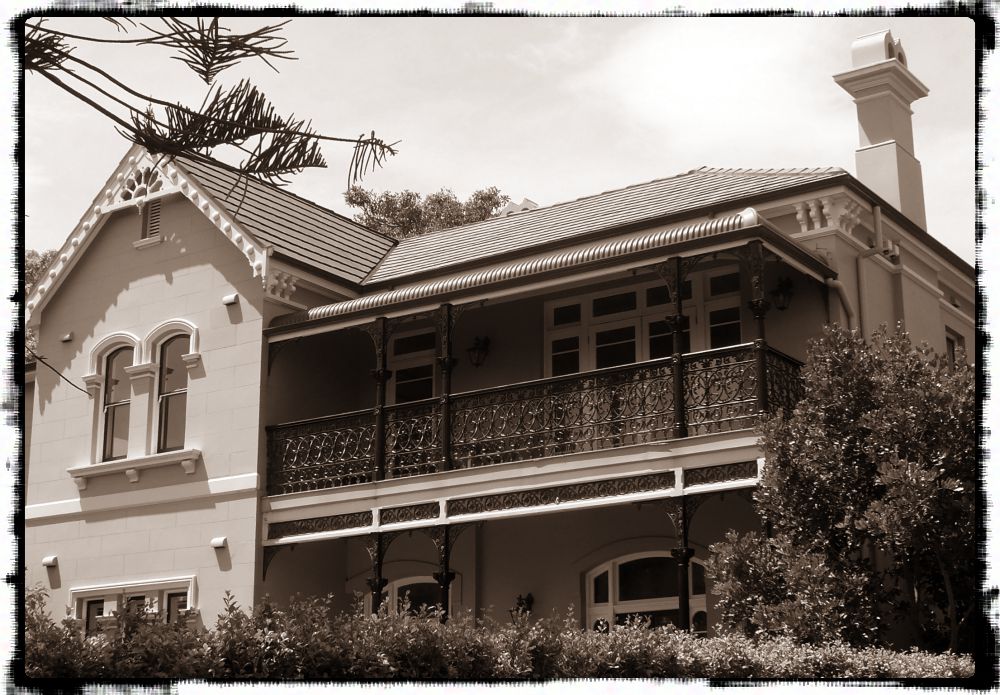
Here are some excellent examples of different styles and periods of architecture. There are Italianate, Victorian Villa, Federation, Interwar Spanish Mission, Old English, Californian Bungalow, Post-war International, Late Twentieth Century, and Post-modern architectural styles! I’m not expert enough to be able to identify them, but I do know that there are several very interesting features that I admire.
Could this be an example of Post-war International?
Federation Style, maybe?
At the end of Addison is a path onto Manly Point ‘Peace Park’, an area now a Little Penguin Critical Habitat. A plaque close by reads:
“World peace begins in the hearts and minds of each individual – may we each seek harmony and peace in our daily lives. “
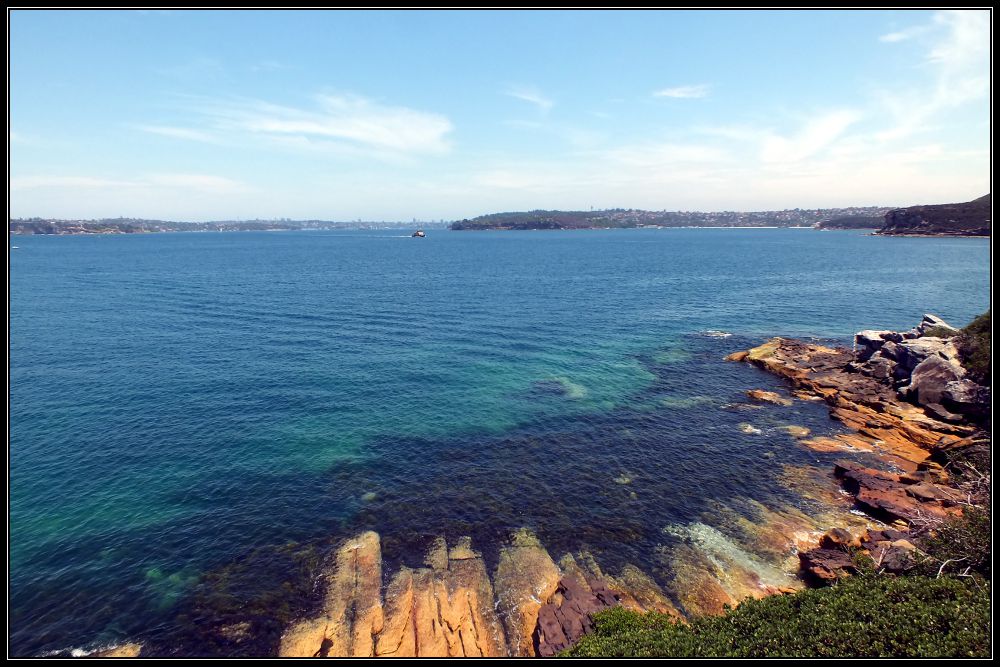
A couple of metal benches provide a resting place with a view over to the Quarantine Station and across the bay to Middle and South Head and where I sat and watched the Manly ferries pass by. Even if you are not interested in architecture it is still worth walking to the end of this road for the views.
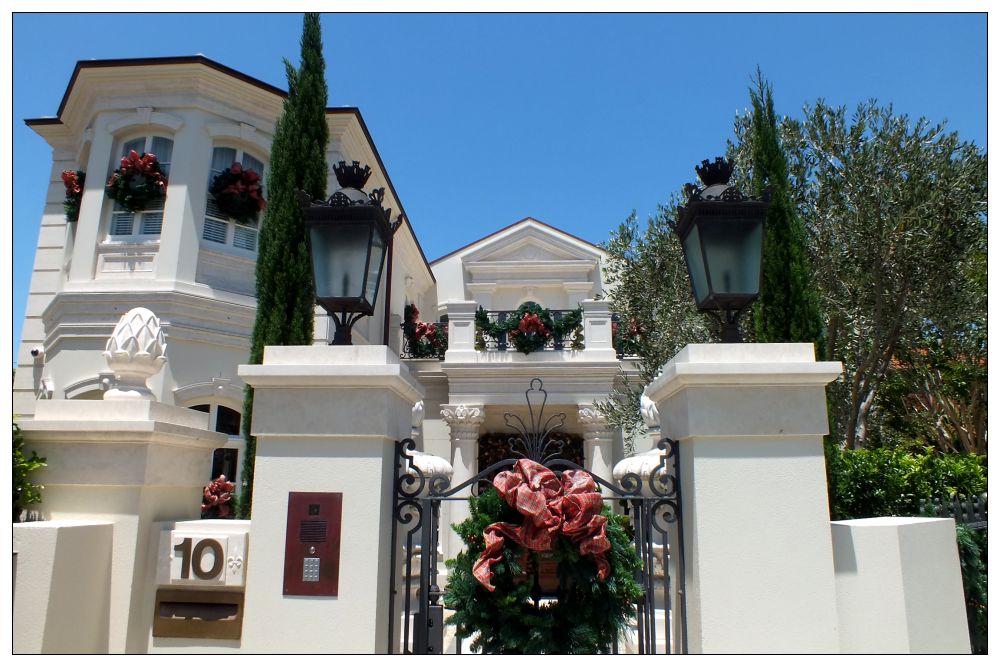
Retracing my steps I passed this imposing white building which was dressed for Christmas with beautifully designer wreaths and ribbons.
The grey and white decoration on this house (California Bungalow?) is perfectly framed by this wonderful gum tree with its peeling grey bark revealing a chalk-white trunk. Even the white lilies match. And just look at that fretwork above the windows!
And this one has interesting gables and windows. Lots of straight lines going on here.
I’d love to see inside some of these houses.
Returning to Stuart Street I turned right, then right again into Craig Avenue for Little Manly Beach. Here I walked along the beach to the Kiosk where I could get a much-needed drink, and decide where I went from here. My intention was to continue to Little Manly Point and follow the trail around Spring Cove to Collins Beach and possibly visit the Old Quarantine Station, but given the soaring temperature and the fact that storm clouds were fast appearing on the horizon, I decided to cut across Marshall Street (this area of Manly reminds me of San Francisco with all the steep hills).
Observe the chimney pots on this house on Marshall Street and the lovely 3D bargeboard on the gable end. Not to mention that wonderfully scrolled wrought-iron balcony and the arched windows.
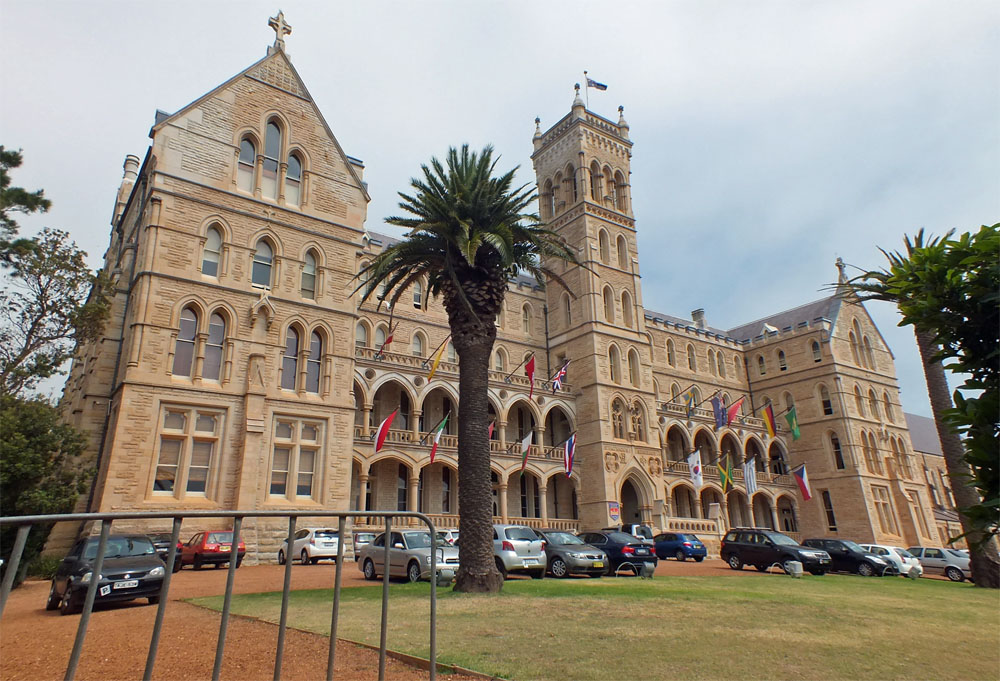
I cut through the grounds of St Patrick’s (the International College of Management, Sydney is now located in the former St Patrick’s Seminary)and down several sets of steps which brought me out onto College Street.
The ICMS building – formerly St Patrick’s Seminary
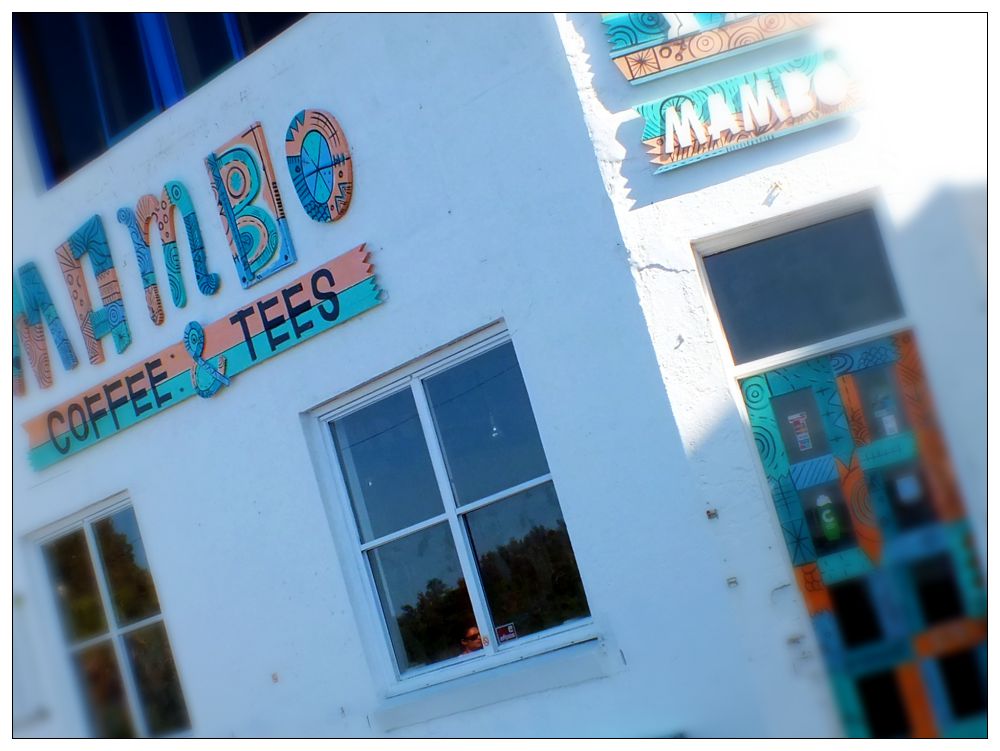
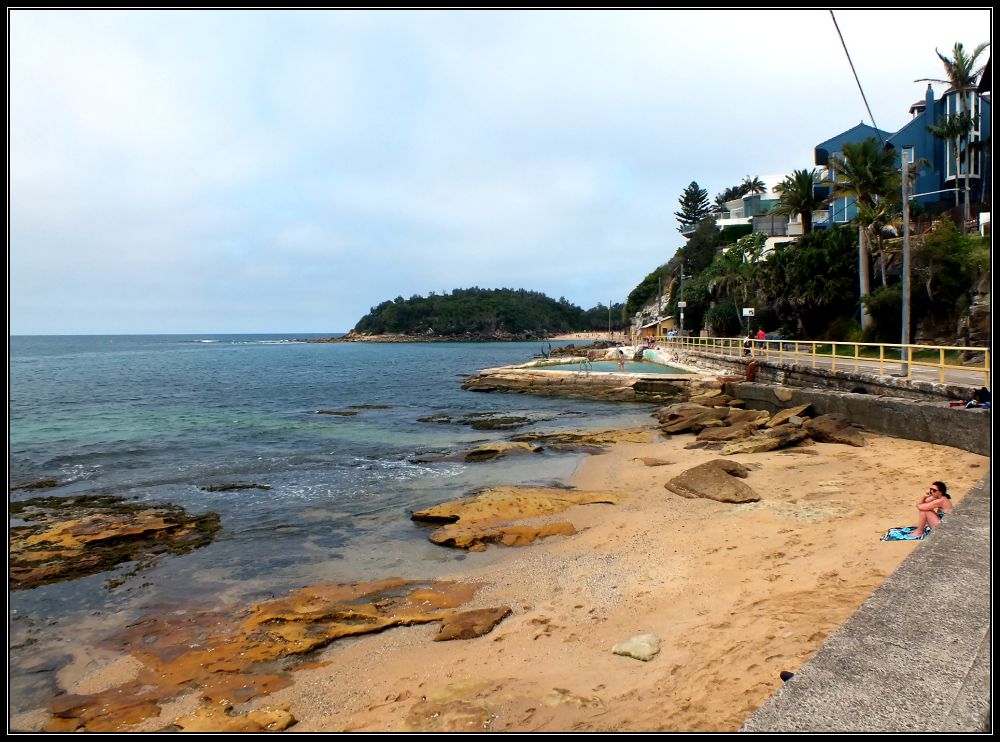
From there it was an easy stroll down Bower Lane to Marine Parade near the swimming pool and Mambo Coffee shop and make my way back to the esplanade. Just before the storm broke!
Mambo
This blue house (below right) overlooking Cabbage Tree Bay and in spitting distance of Shelly Beach is my dream house. Location, location, location!!
Marine ParadeA better view
I noticed some very interesting windows along this route:
Leaded windows with stained glass
Exquisite leaded windows
Stained Glass
More leaded windows
When walking an historical trail like this one it is important to pay attention to the details you see along the way. That might be a picket-fence post, a barge-board, a colourful tile, an interestingly shaped window, or some stained glass or gable ends.
Picket Fence
Decorative Gable end
Interesting shape
Gorgeous tiled stairs
Lovely balcony
Window design
Balcony
Federation Style?
Scrolled Bargeboard
…and maybe there are some Australians (or architects) out there who can help me to identify the different styles.
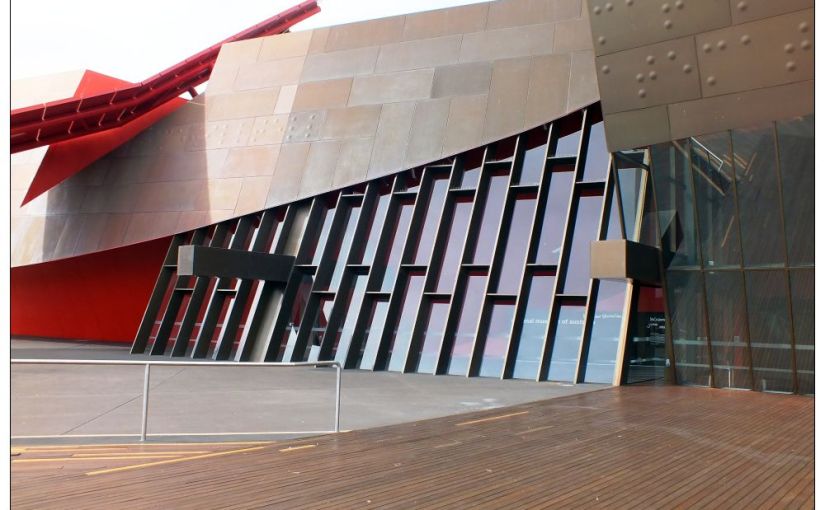
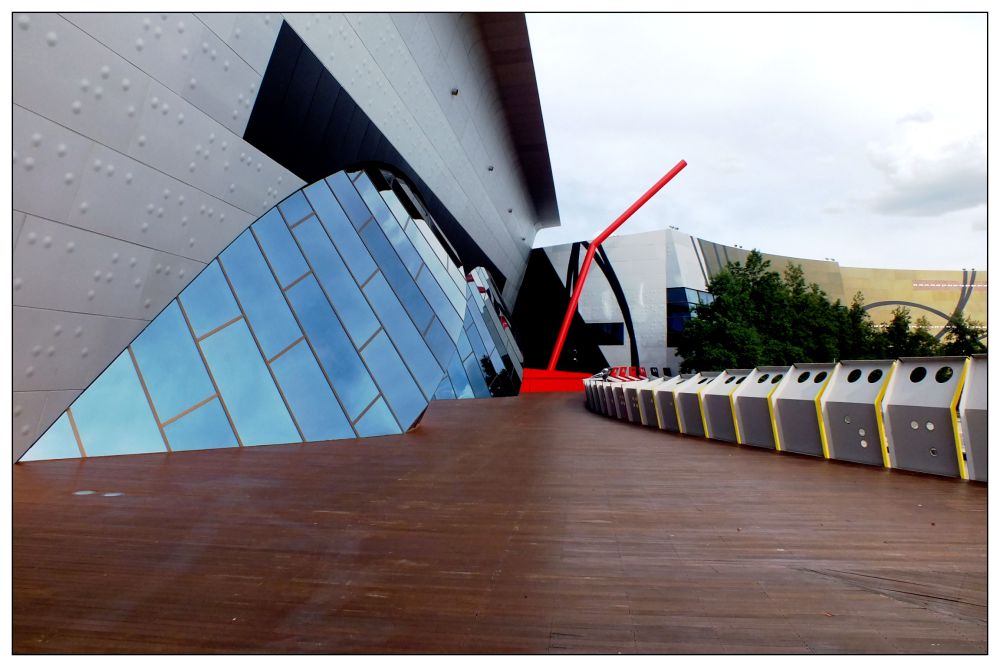
The National Museum in Canberra preserves and interprets Australia’s social history, exploring the key issues, people and events that have shaped the nation.
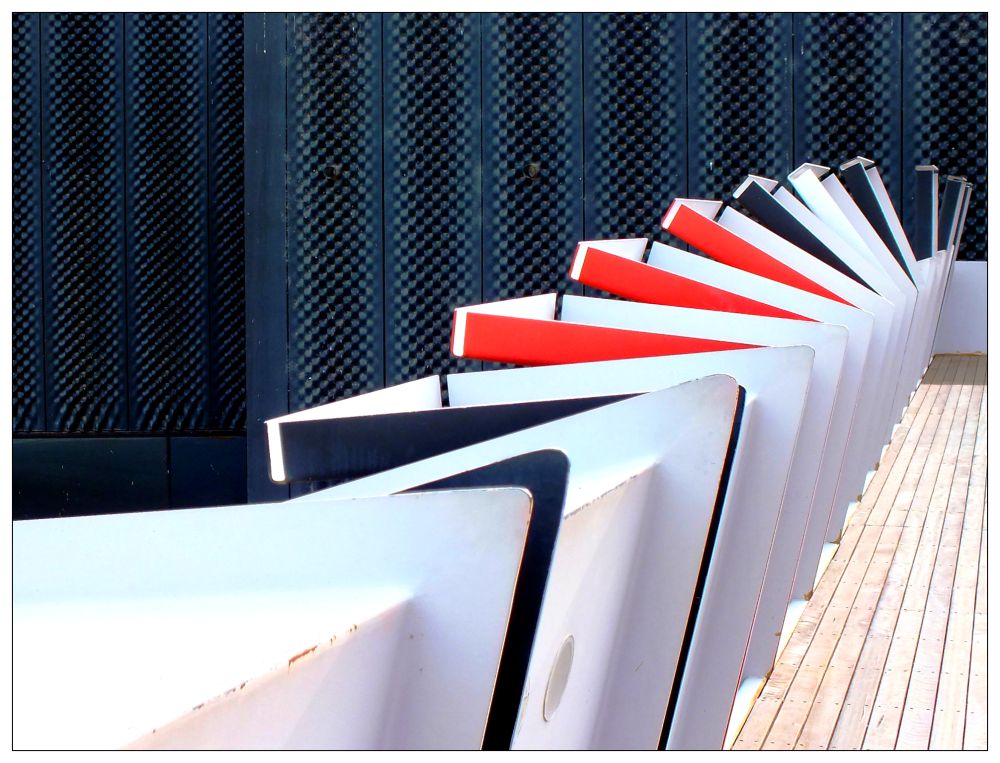
As designed by architect Howard Raggatt (design architect and design director for the project), the museum building is based on a theme of knotted ropes, symbolically bringing together the stories of Australians. The architects stated:
“We liked to think that the story of Australia was not one, but many tangled together. Not an authorized version but a puzzling confluence; not merely the resolution of difference but its wholehearted embrace.”
The building is meant to be the centre of a knot, with trailing ropes or strips extending from the building. [source of information fromWikipedia]
The design is not everybody’s ‘cup of tea’, but I love it! And on a rainy day it is the perfect place to spend a few hours inside where there is a rather good café with a view of Lake Burley Griffin from the terrace.
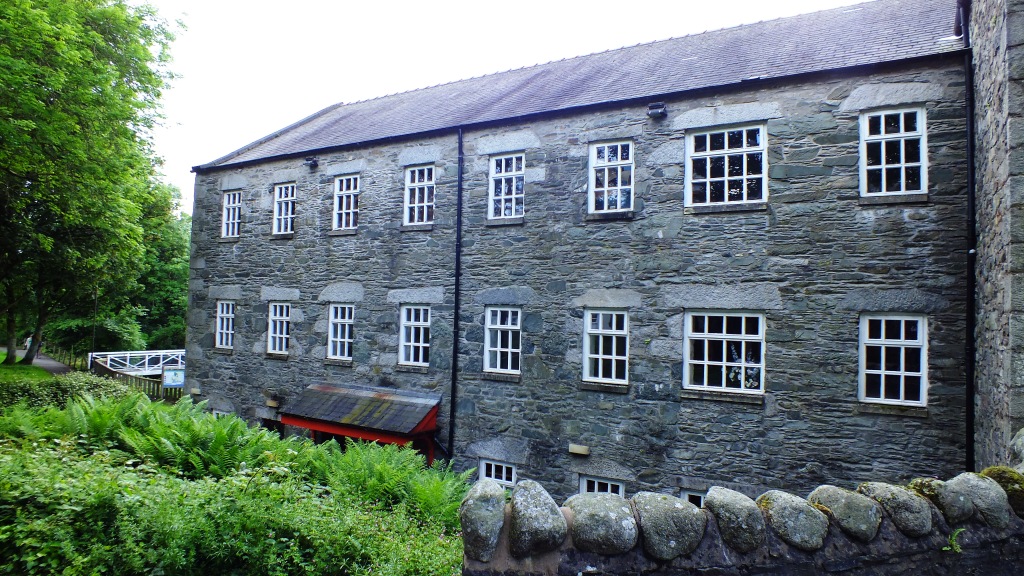
The Mill on the Fleet – The Mill was built in 1788 as a cotton spinning mill by James Birtwhistle from Yorkshire and was the second mill to be built on this site. The water wheel on the gable end was used to drive the machinery to spin the cotton.
(click to enlarge images)
The Mill and Terrace
The Mill Wheel
The Mill Gable End
By 1800, because of increasing competition from steam driven mills, the cotton industry in Gatehouse declined and by 1850 the mills were out of use. In 1859 they were bought by the Helme brothers from Dalbeattie and the upper mill was used to make wooden bobbins for the textile industry while this mill was used as a store and bark mill for the processing of oak for the leather tanning industry which was thriving in Gatehouse at the time. Source: History of the Mill
Note the thickness of the walls
The Mill Wheel (Textile)
Views out over the terrace
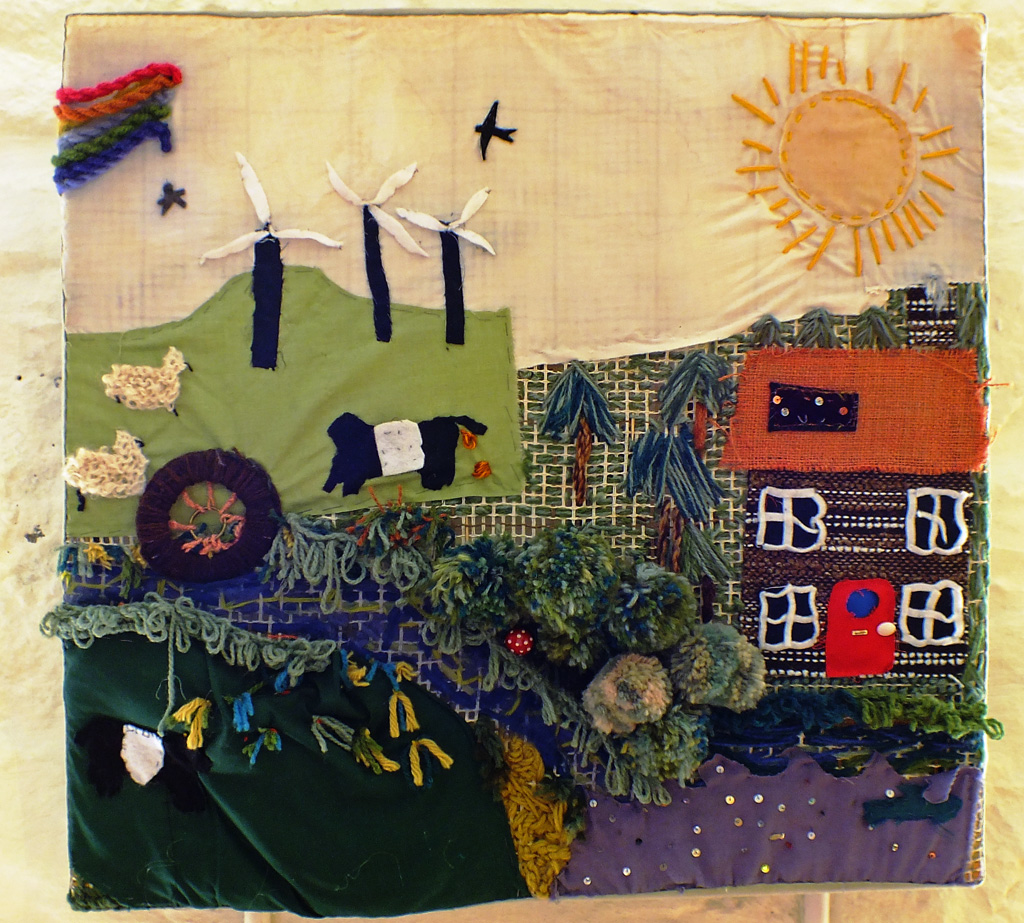
Art work on display
As well as a lovely tea room (and terrace), an information centre and a shop on the ground floor there is a bookshop and a permanent exhibition floor focusing on the history and heritage of Gatehouse, and exploring the Fleet Valley and surrounding areas, and on the top floor the Faed Gallery holds a programme of temporary exhibitions throughout the season.
The metal staircase
Bobbin Display
Bobbins
More textiles – and even more windows!
During our visit work by William Neal from his two current strands – Lyrical Abstraction and Iridescent Passages was on display. I have to say I was completely mesmerised by the way the light falling on the paintings changed with each angle you looked at them.



















 TRAVEL WORDS