On the Edge

Cape Cornwall

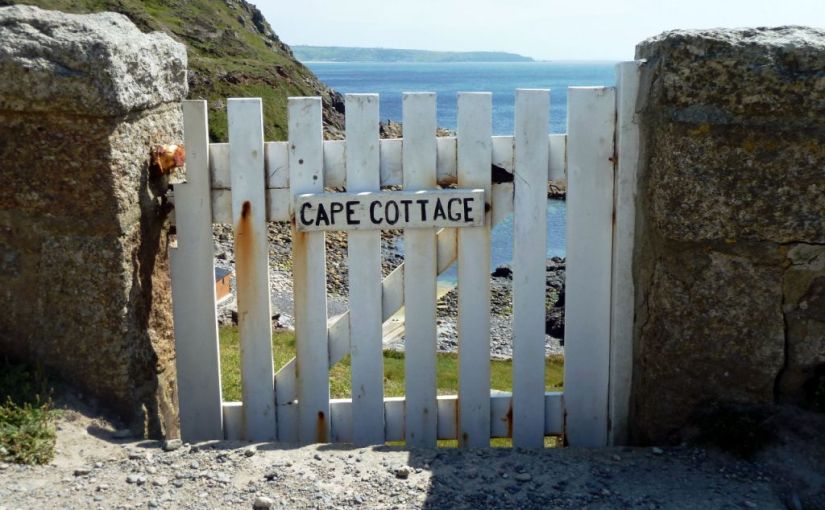
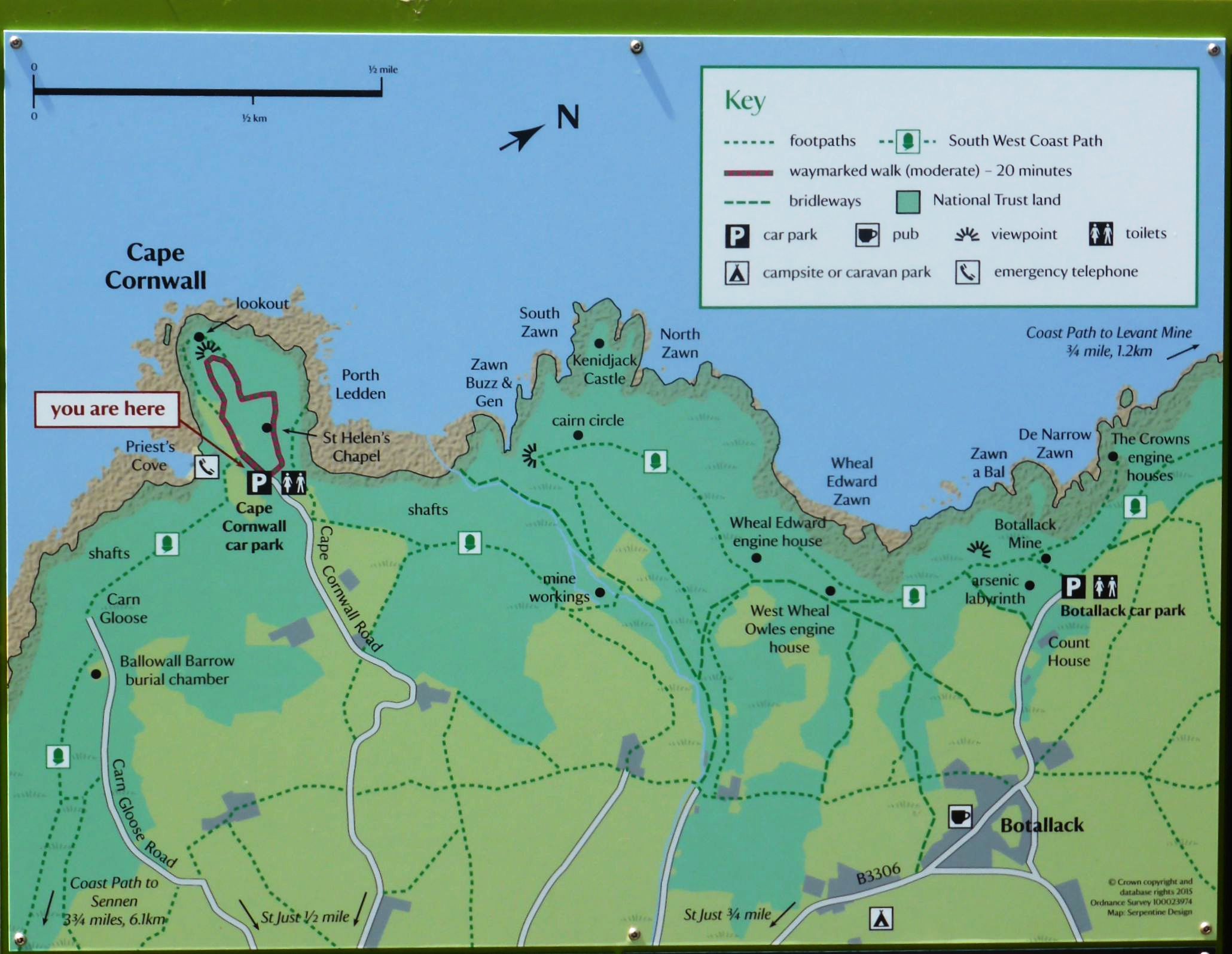
Cape Cornwall is the only Cape in England and is so-called because until the 19th century it was thought to overlook the meeting of the English Channel and St George’s Channel (they actually meet at Gwennap Head, near Land’s End). A climb up the Cape headland to the stack offers panoramic views of Lands End, Sennen Cove, the Brisons rocks, the Isles of Scilly and the Wolf Rock lighthouse. You can either walk here from St Just or via the south-coastal path, or drive down to the National Trust car park, from where you can walk down to the former Count House and holiday cottage Brisons Vean (the dark facing house with the two round windows)  and around to the lookout, or take one of the routes behind the house up to the summit.

The Summit

Continue reading On the Edge

Down the Cot Valley

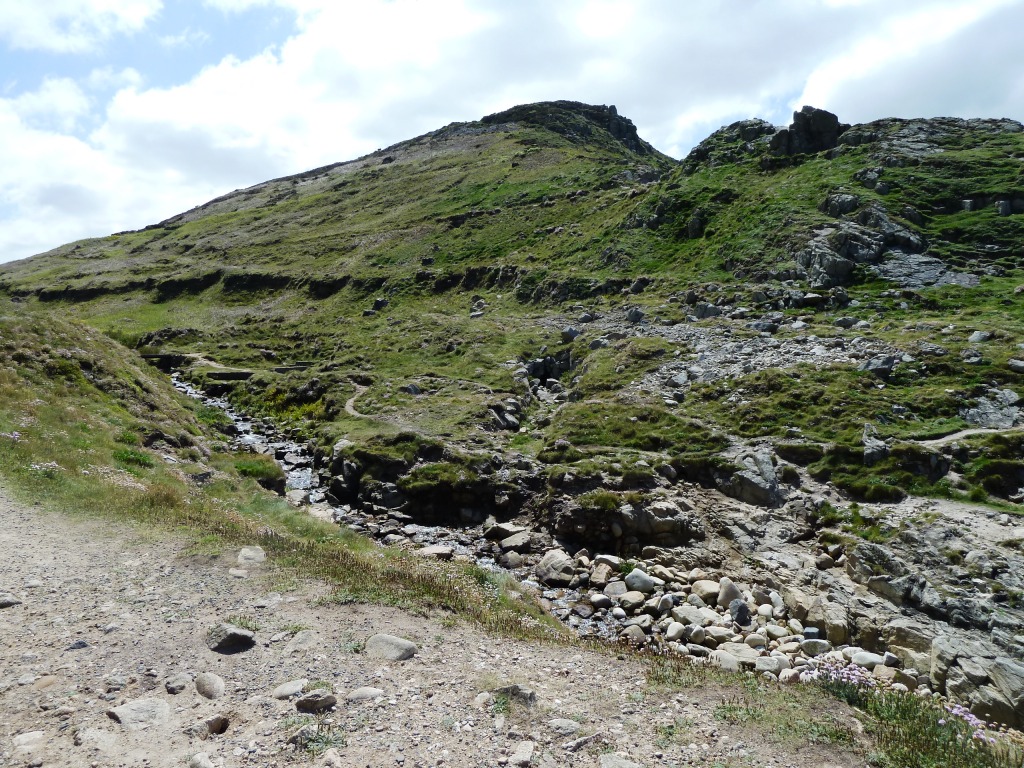
Another drive (or walk if you are so inclined) from St Just is down the Cot Valley following the Cot stream to the shore at Porth Nanven. Once this area was crowded with tin-dressing floors, stamps, settling tanks, reservoirs and wheel-pits. Now long abandoned and overgrown, it can make walking off track somewhat dangerous. The road is very narrow so take it slowly and there is a small car-park at the end.

P1210457

Porth Nanven is unusual in that the cliffs are formed from rounded boulders of an ancient raised beach, formed in the last ice-age. It is illegal to remove any stone from this location, though many might crave a few for their rockery. Continue reading Down the Cot Valley

Painting St Ives

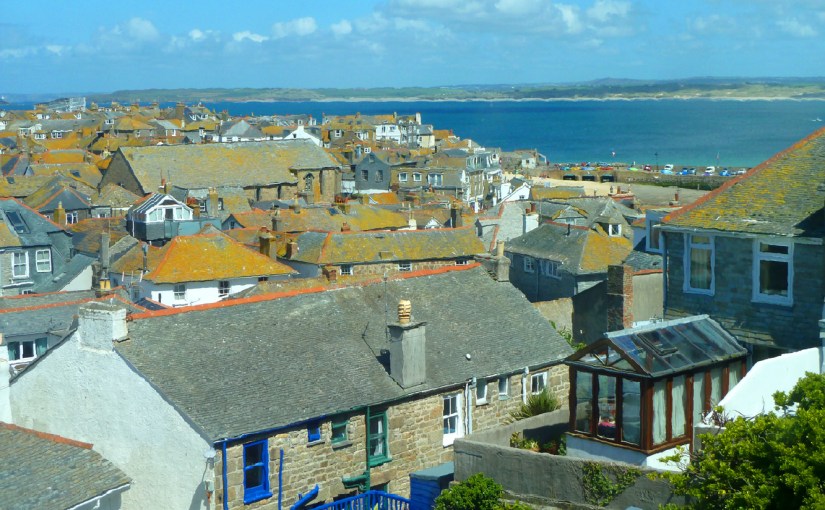
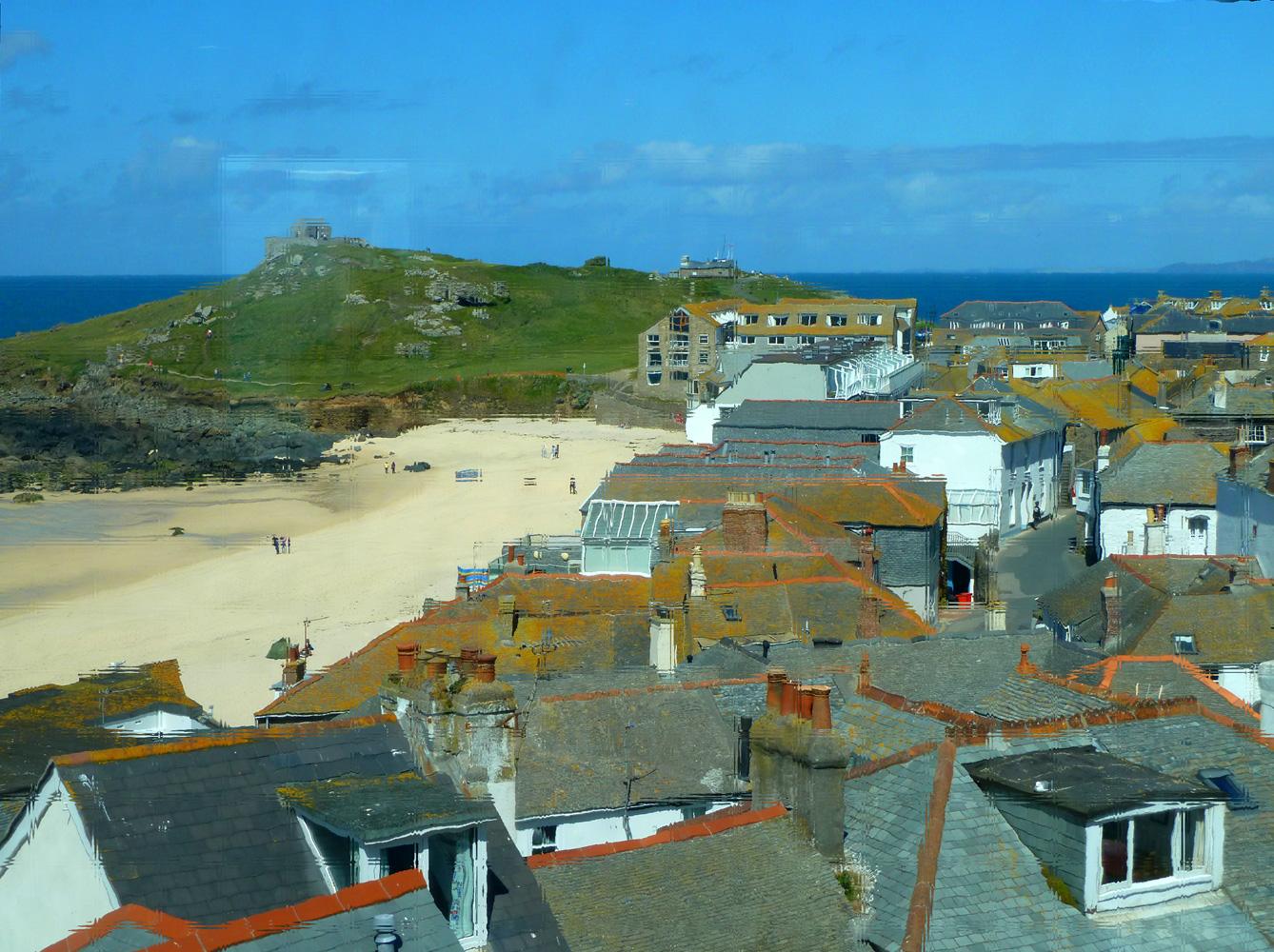
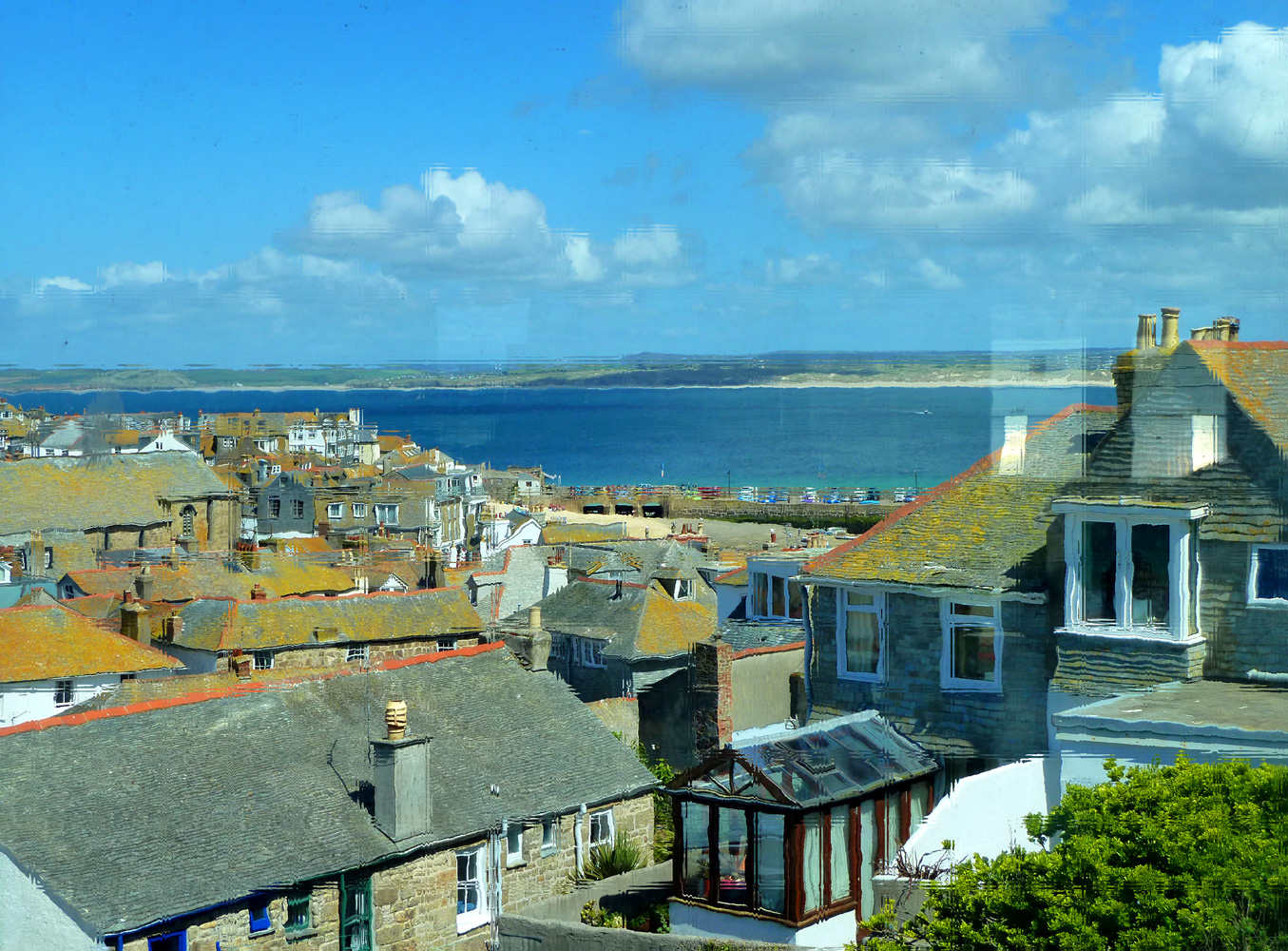
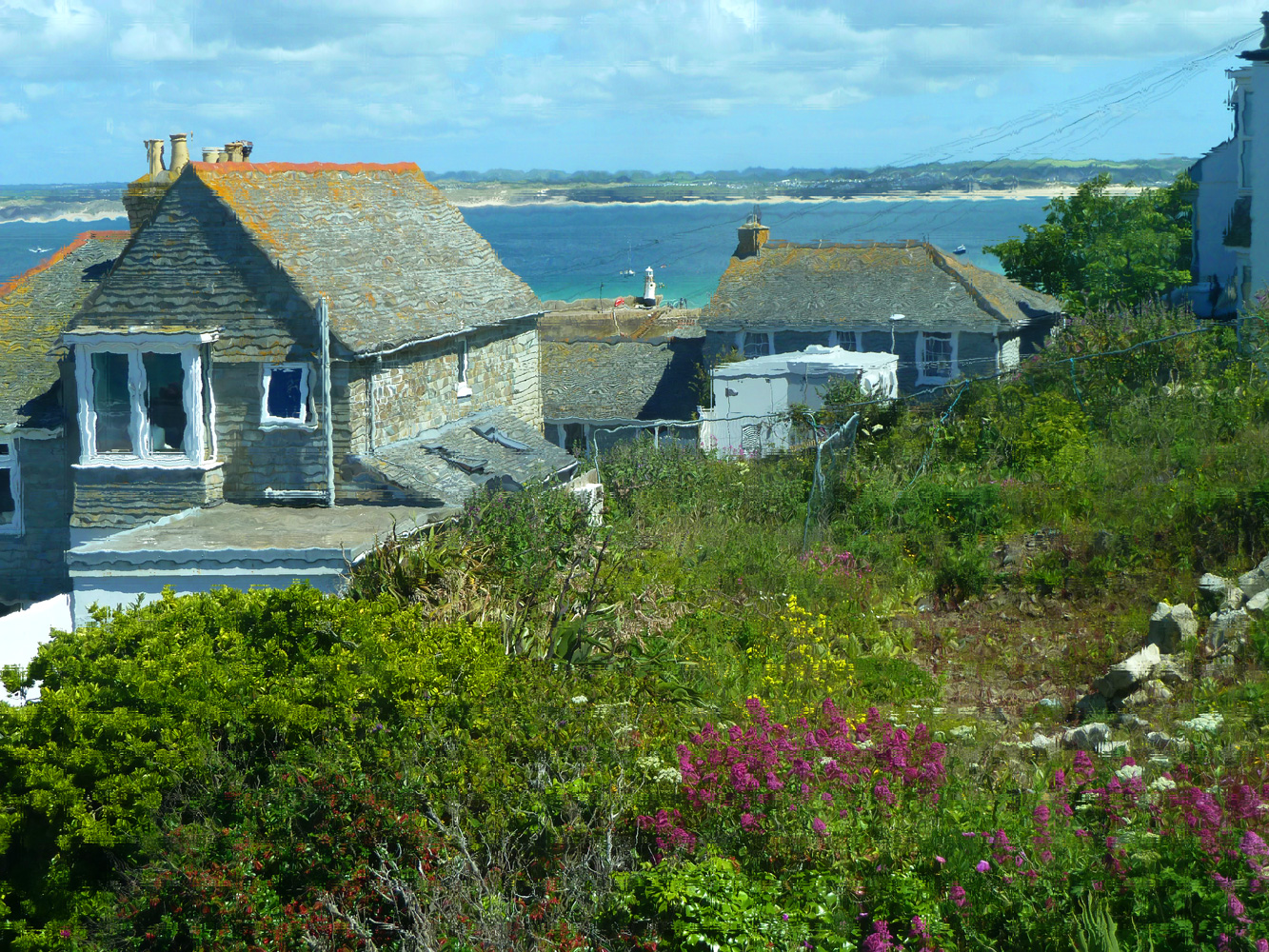
All these images were taken through the windows of the café located on the roof of the Tate, St Ives. A slight glass distortion effect has been applied. The reflections are original 🙂

Porthmeor Beach and St Nicholas Chapel
St Ives Harbour and Bay
St Ives Bay and Smeaton’s Pier
St Ives Bay and Wild flowers

Gilly of Lucid Gypsy posted similar images from her recent visit to St Ives. I’m beginning to get the glimmer of an idea for a challenge here.

A walk in the past

West Penwith. The furthest west you can go on British mainland and where you will find Land’s End. An area which was once rich in mineral wealth and is therefore riddled with mine shafts and abandoned engine houses. It is also an area rich in megalithic and archaeological sites. Fields of standing stones, stone circles, rocks with holes in the middle and a quoit or two.

Bojewyan

Staying near the former mining village of Pendeen which lies between the sea and moorland gave me a chance to explore this wild and rugged region. The sun shone brightly every day, although the accompanying wind from the north reduced the temperature to a mere 14°C and made walks on the exposed coastline ‘interesting‘ difficult to stand up in.

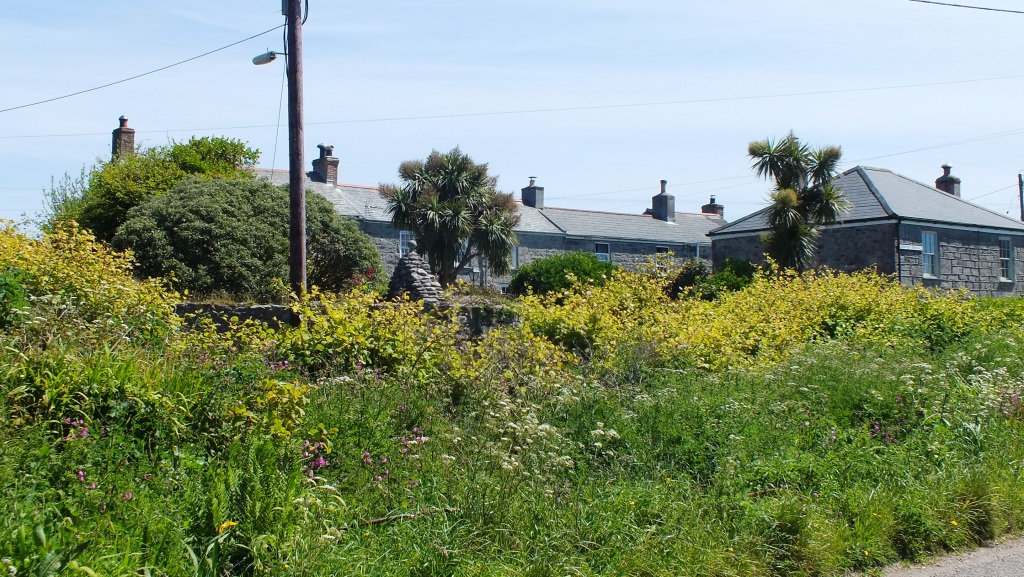
Higher Bojewyan

A rather more pleasant walk was inland to find Chûn Quoit and Chûn Castle (though the castle is reduced to a heap of stones as most of it was used to pave the streets of Penzance) as much of the route was along a sheltered lane with high Cornish hedges at either side.

Finding the start of the public bridleway was the first hurdle as it isn’t marked from the road, but consulting the Ordnance Survey map we had with us it appeared to start at the back of a group of houses/farm in Higher Bojewyan just around the corner from our cottage.

Continue reading A walk in the past

Pendeen Watch

It was our first day in Bojewyan – a bright cornflower blue sky, cloudless and bright. Though the wind was sharp for the time of year and lazy at that as it cut straight through you. We walked the mile into Pendeen for a cooked breakfast at Heather’s café and sat outside in the minuscule courtyard, sheltered from the wind, basking in the sun and ate a full English along with a mango smoothie, followed by a flat white. It tasted good. It felt good. And it set us up for our stroll down to the coast to look for a lighthouse.

Looking back at Pendeen from the lighthouse road

It’s only about a mile, but it took us a while as we stopped every few yards to take a photograph. So much to stop and look at. Chimneys on the horizon of abandoned and disused tin mines. Drystone walls brimming with wild flowers. A ruined cottage. The sea. Interesting gates featuring roses and an engine house. Continue reading Pendeen Watch