My weekend in Bude, north Cornwall was interrupted by the first named storm of the year – Amy. Sunday looked to be the better day so the one I decided to travel 50 mins across to north Devon and visit RHS Rosemoor. Not as big as RHS Wisley in the south-east, but I thought it would be nice to revisit this garden, last seen in April 2011.
The lesson I have thoroughly learnt, and wish to pass on to others, is to know the enduring happiness that the love of a garden gives – Gertrude Jekyll
Winter GardenCool Garden
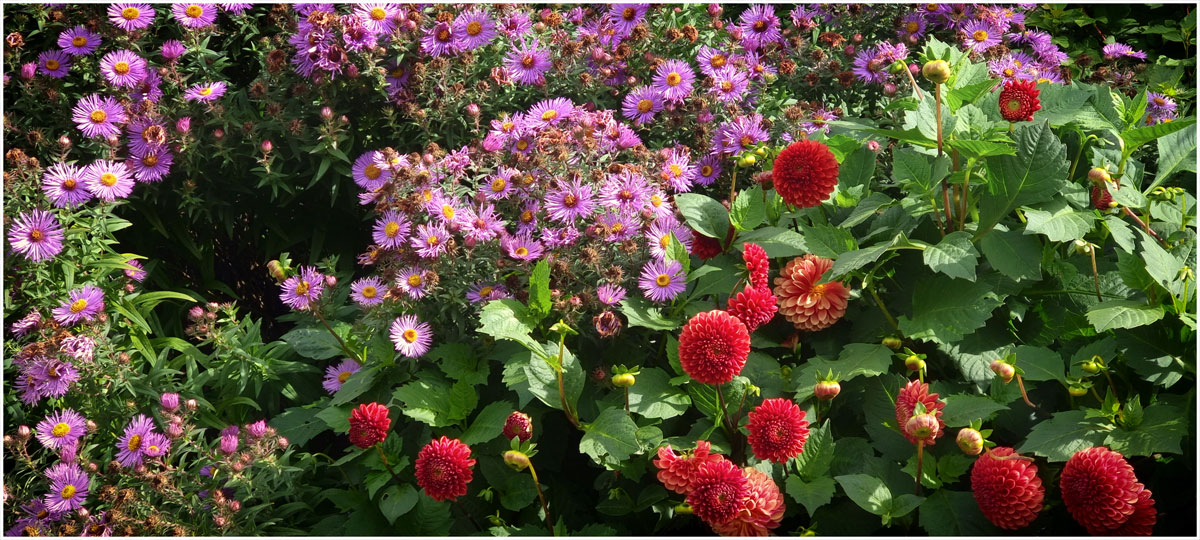
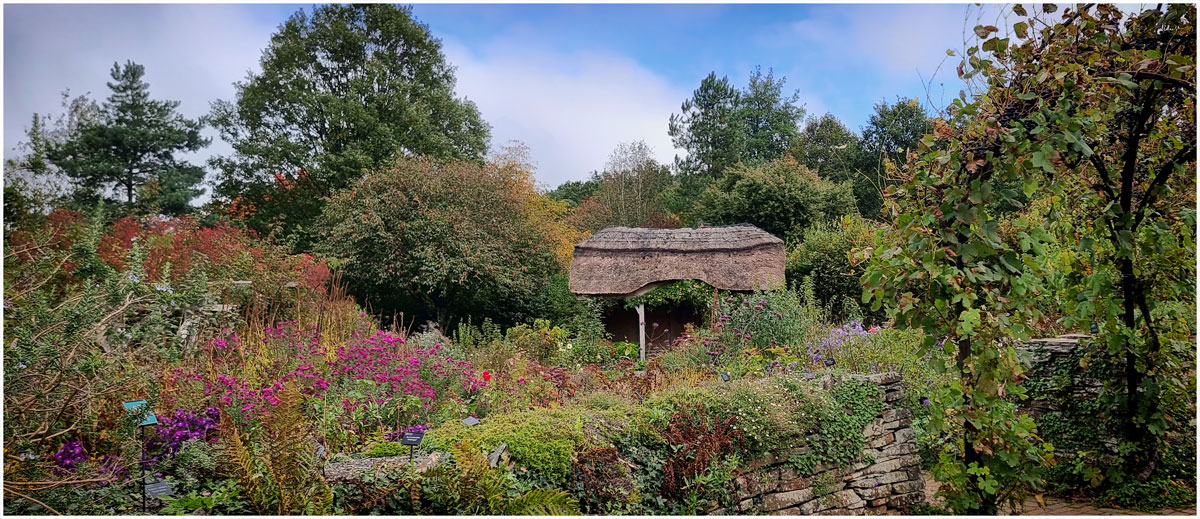
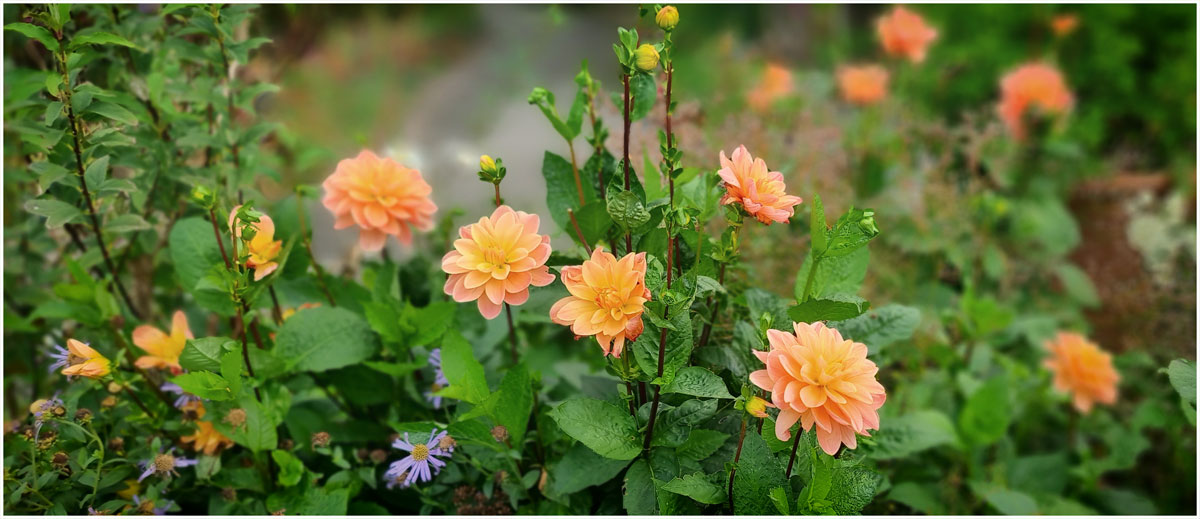
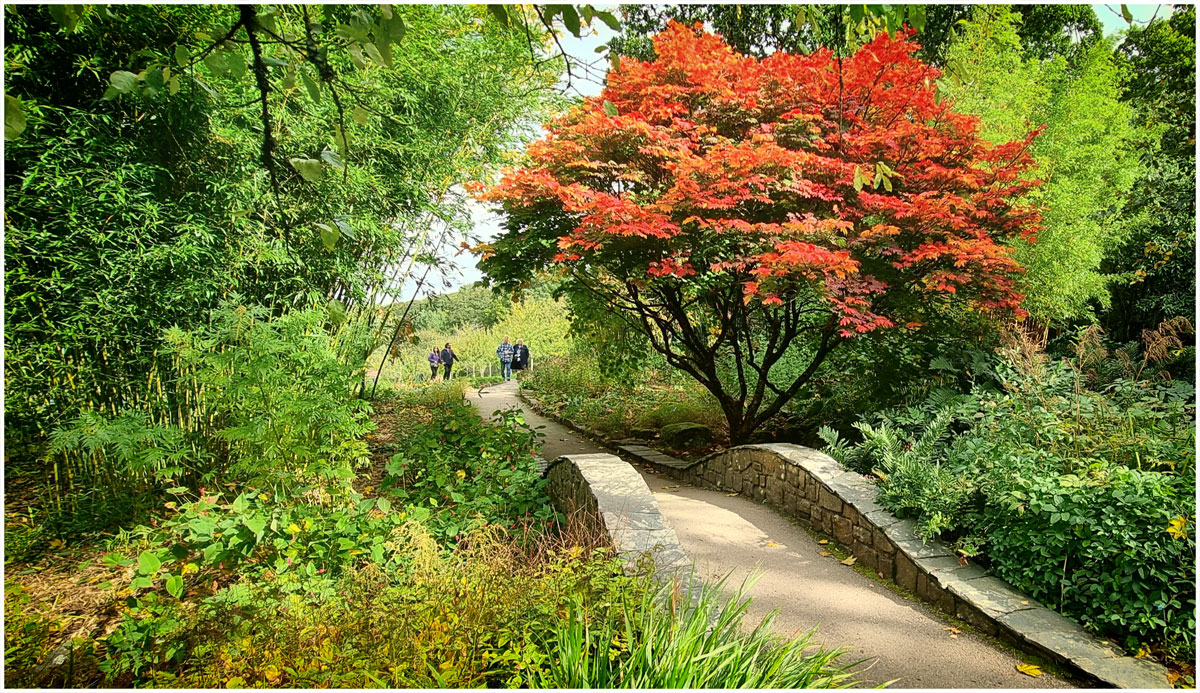
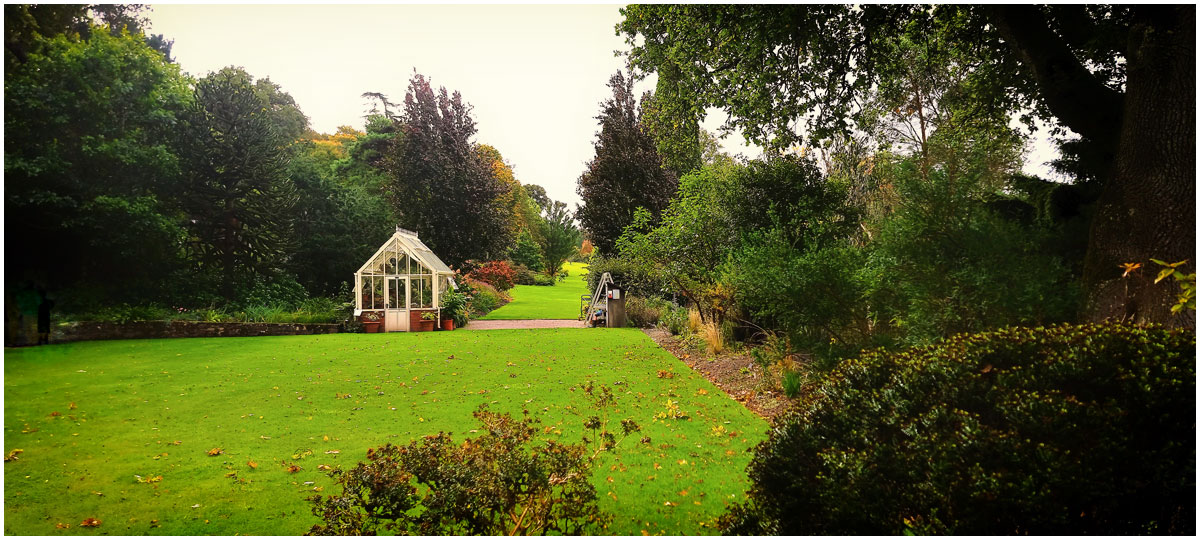
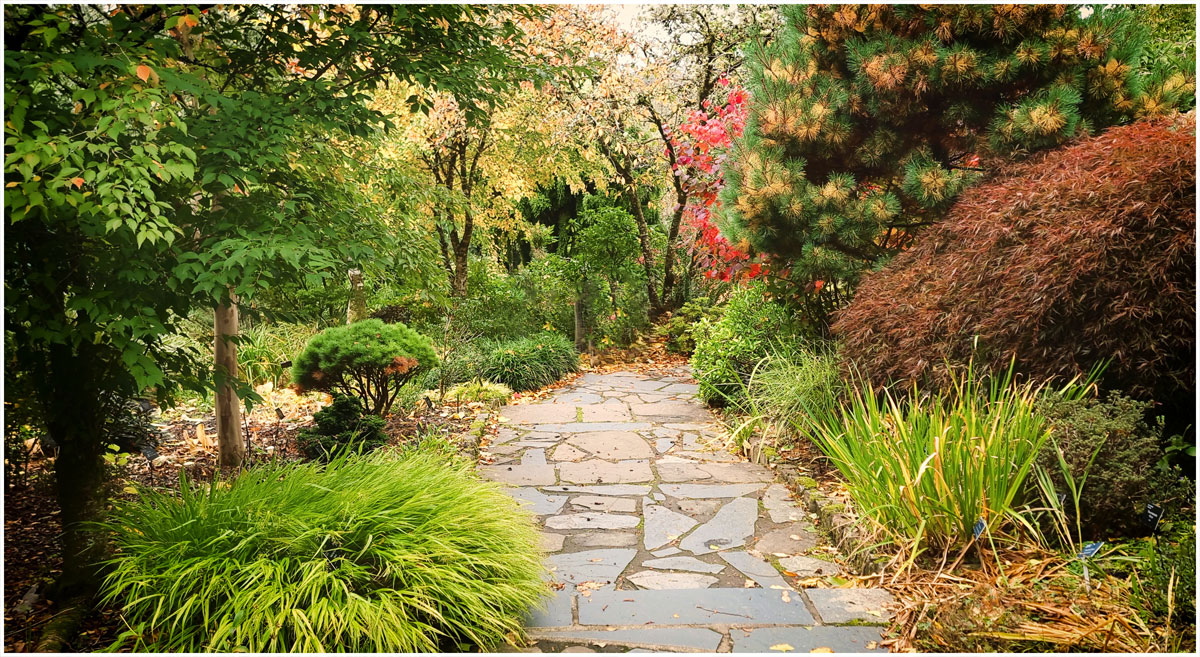
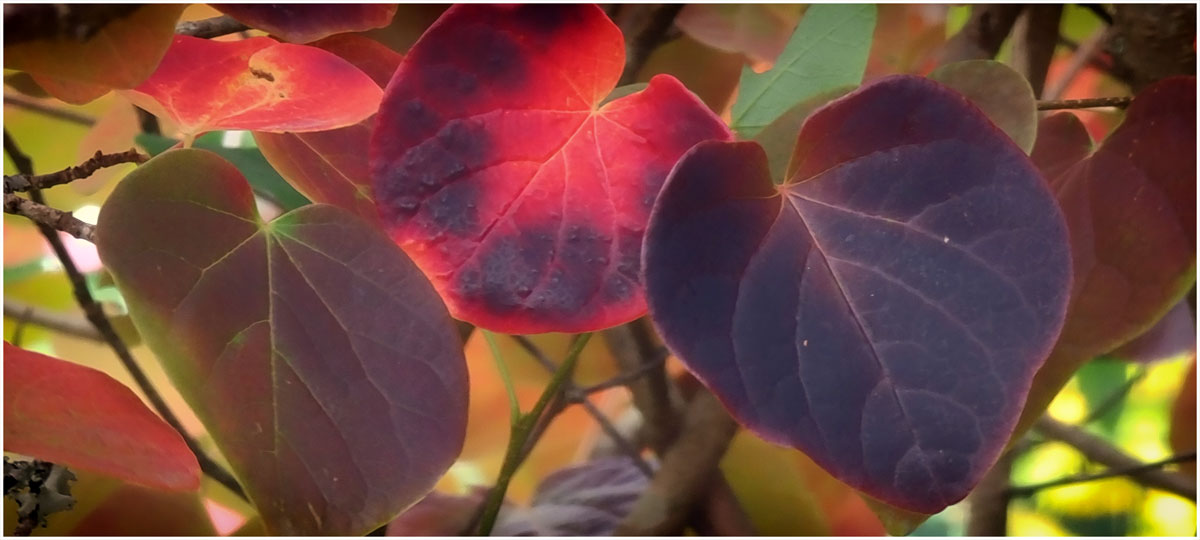
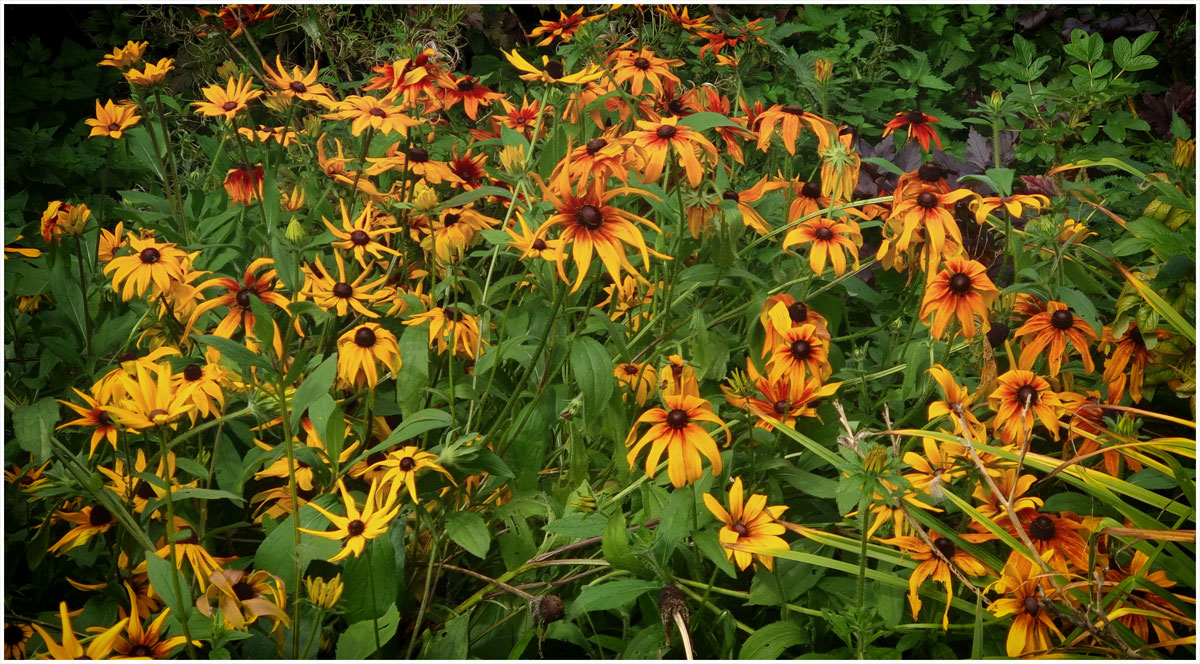
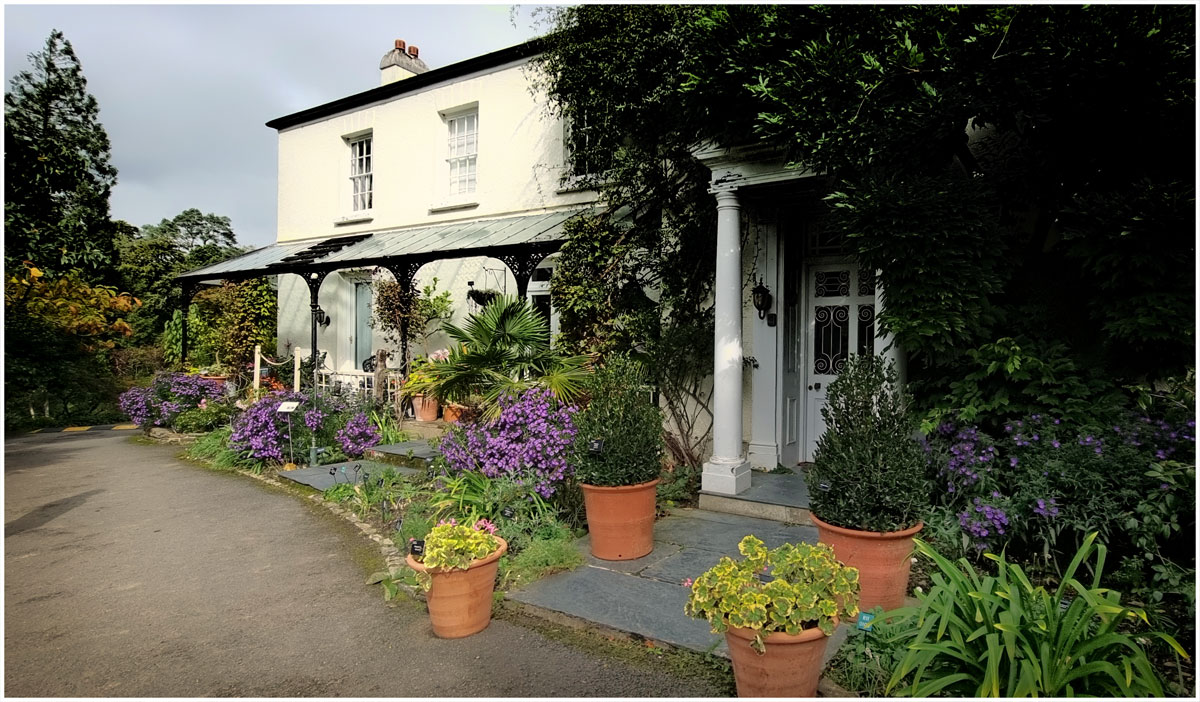
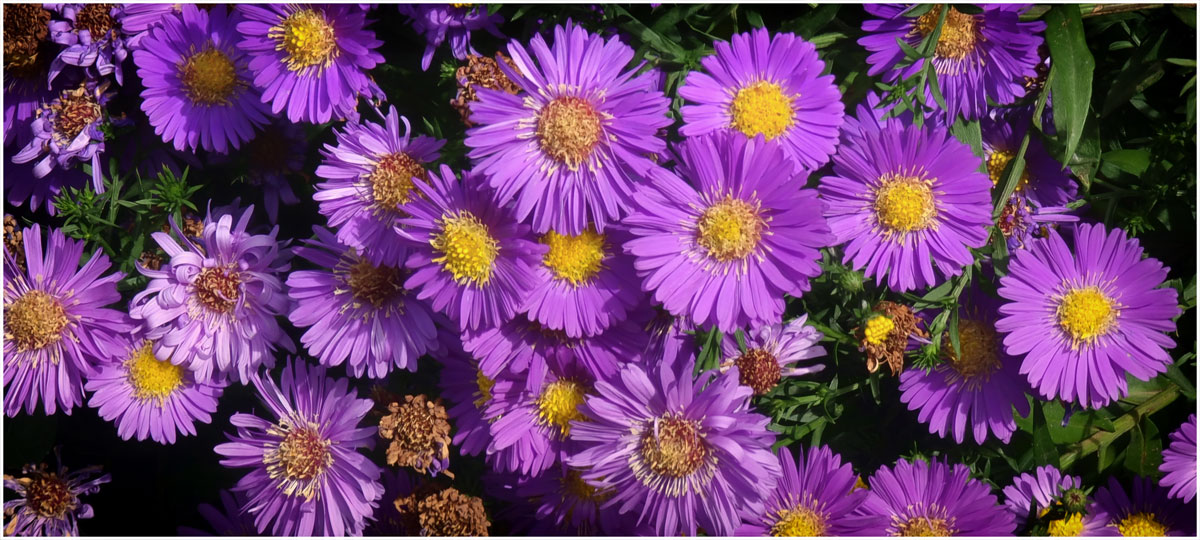
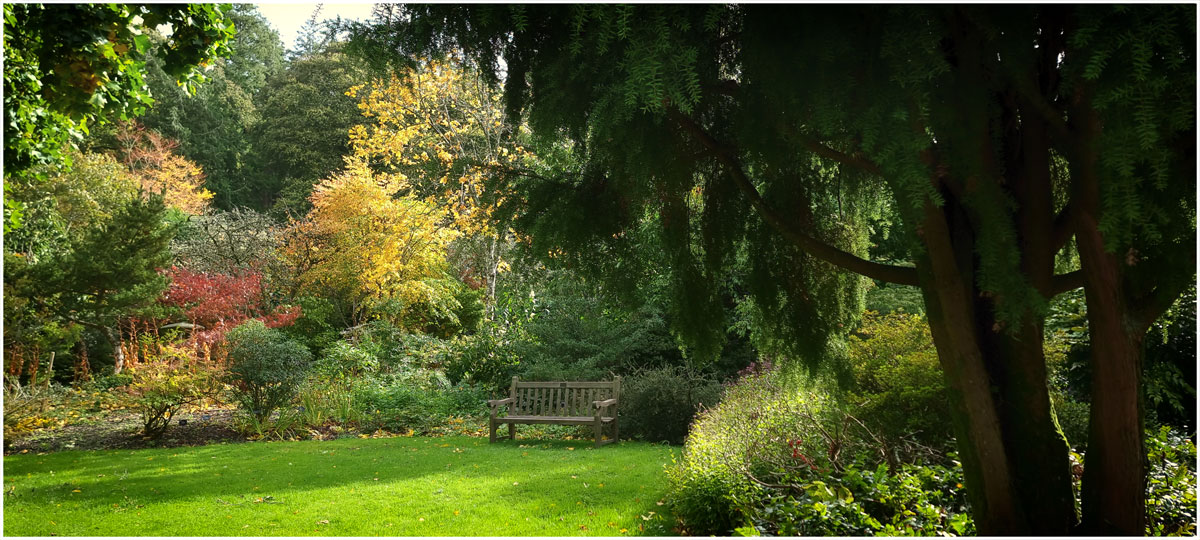
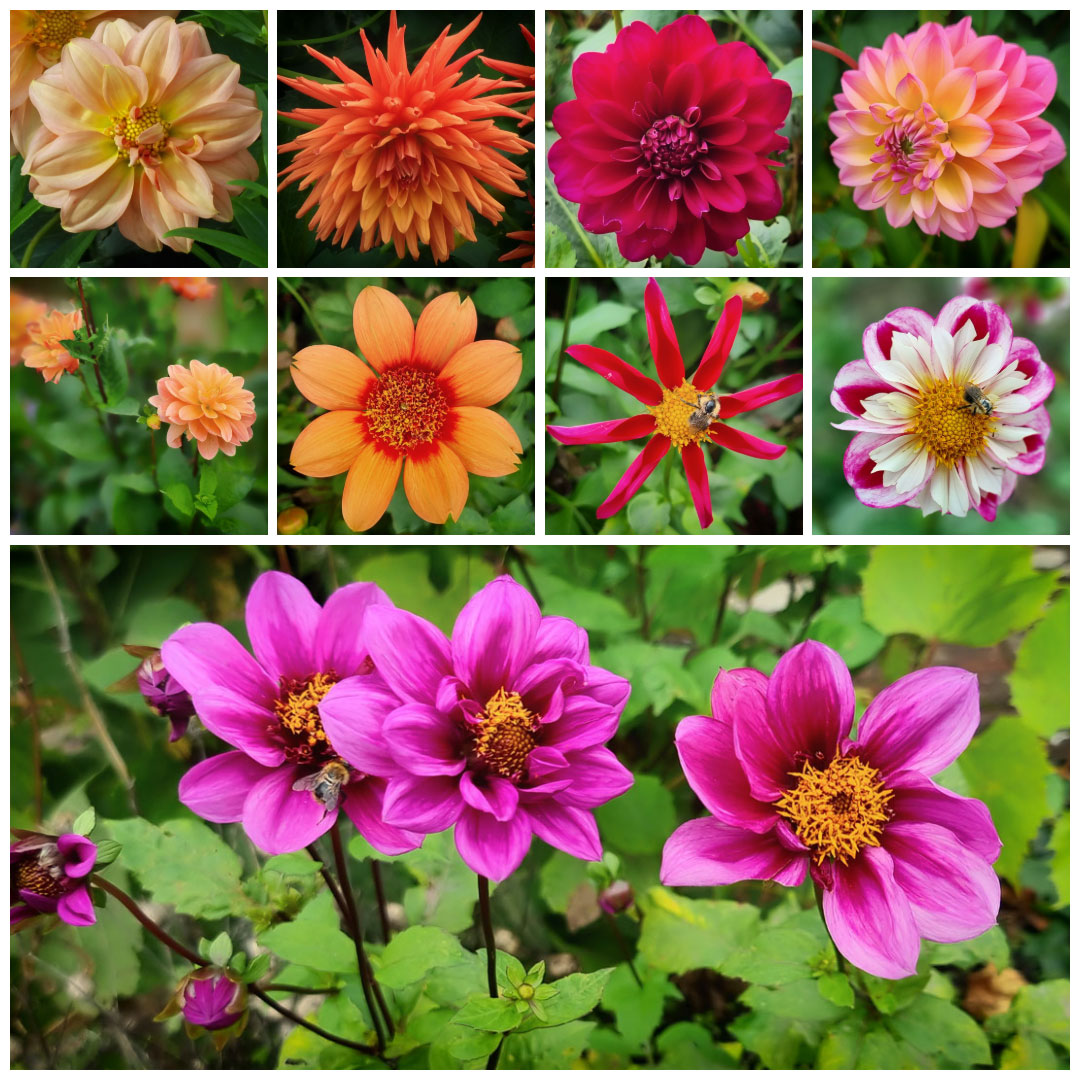
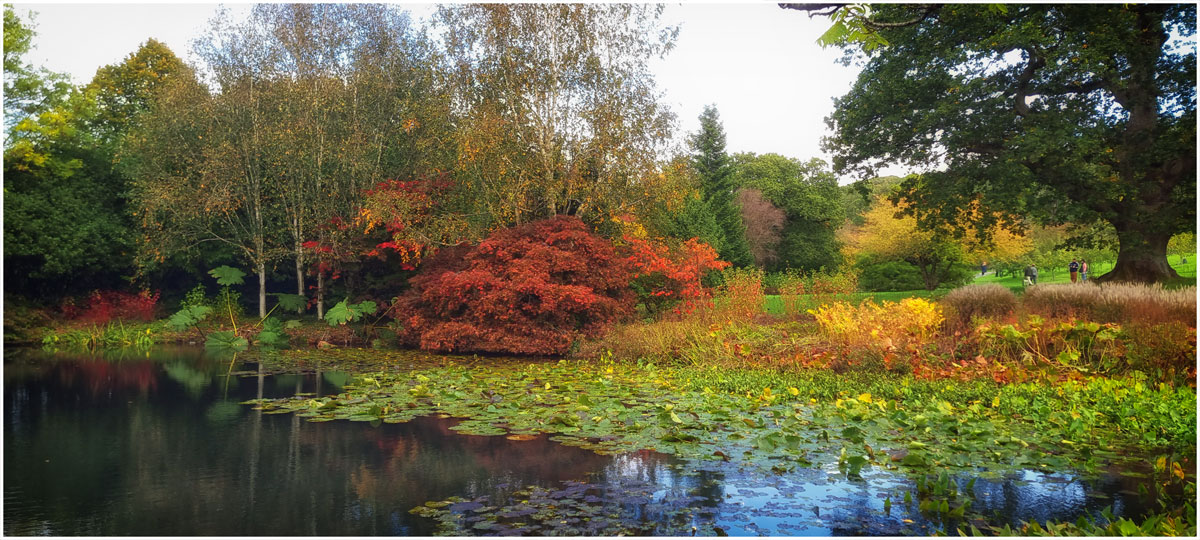
Asters and Pompon Dahlias in the Long BorderMiscanthus sinensis ‘Kleine-Silberspinne’The Herb, Potager and Cottage Garden with shelterBeautiful dahlias everywhereDogwoodOne moves between the new garden and the original garden, created by Lady Anne Palmer, through a tunnel beneath a road passing this little bridge and fabulous Japanese maple.Croquet lawn and Temperate HouseThe Stone Garden has a very Japanese feelCercis canadensis commonly known as Redbud trees or Judas treesHot colours in the form of RudbeckiasRosemoor House is fairly modest considering it belonged to the Earls of Orford who descended from Horace Walpole. It can now be rented out for holidays. There is a small tea-room at the side.More asters on the verandaThe Cherry Garden – best in springtimeA Kaleidoscope of colours (Dahlias – some with bees)The Lakeside in October is ablaze with autumn colour, from the molten leaves of liquidambars to the bright yellow foliage of Cornus sanguinea ‘Winter Beauty’ and the deep red of Acer palmatum ‘Chitose-yama’ – all reflected on the mirror-like water.
All approaches to the garden involve navigating miles of winding roads, hence Rosemoor is also one of the quietest RHS gardens, but utterly charming and demonstrating how colourful a garden can look in early October.
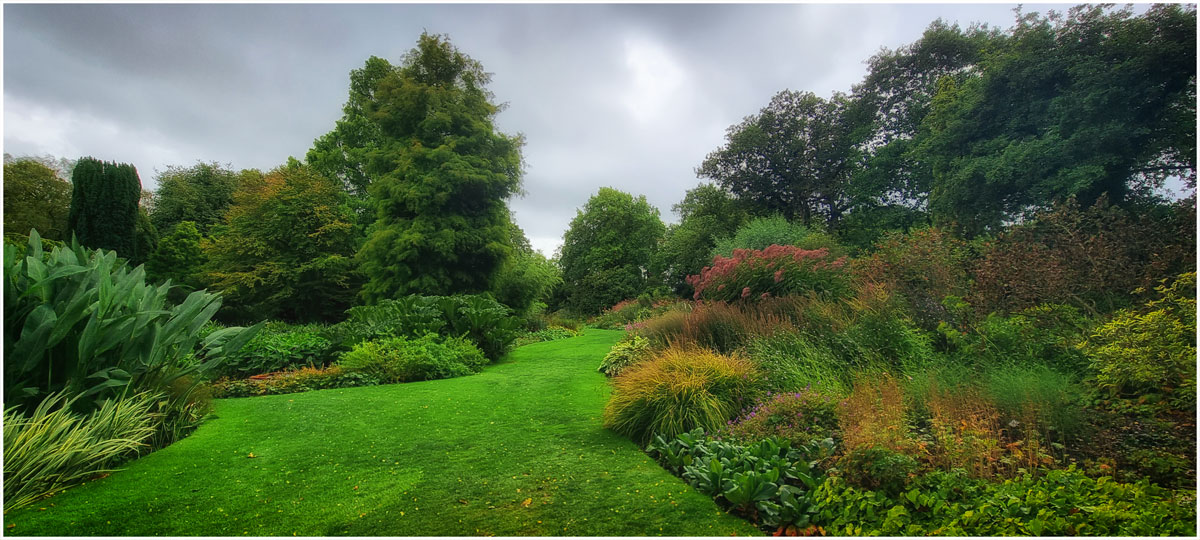
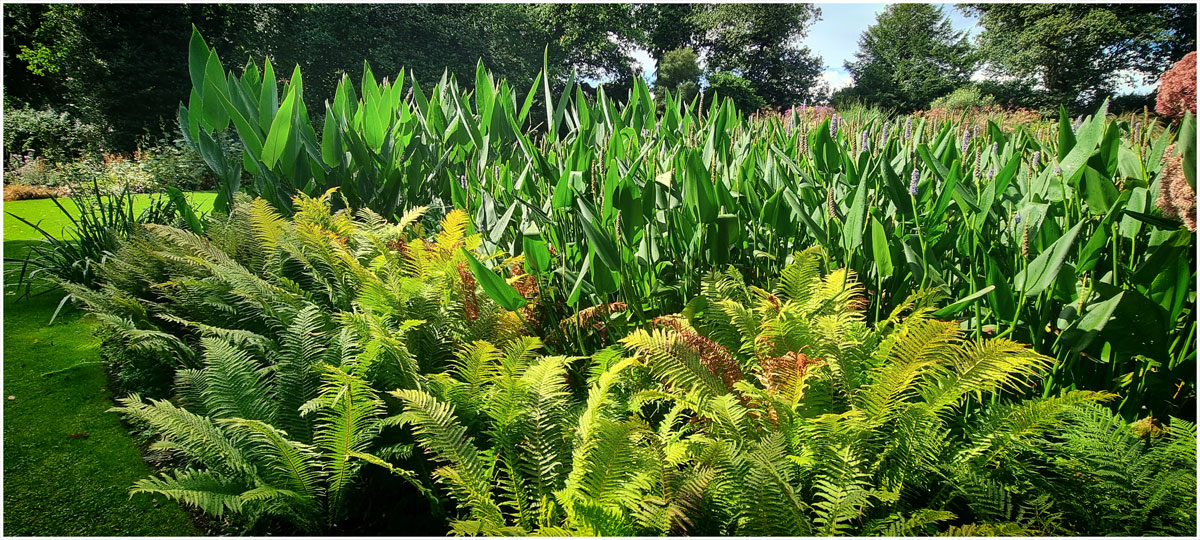
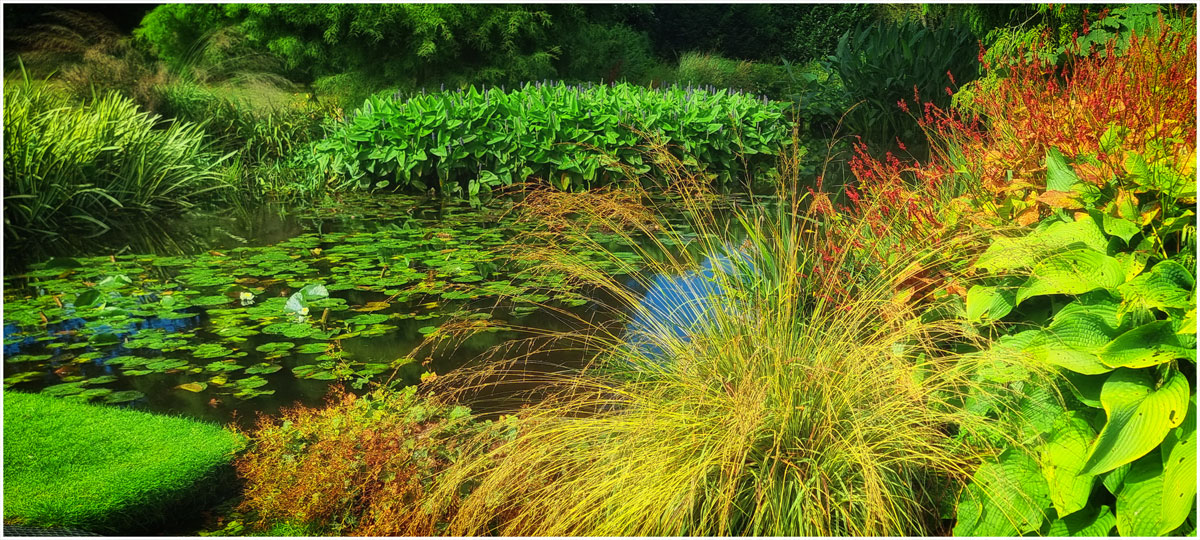
A short walk onto the cool, emerald-green grass of the Water Garden feels like stepping into another climate. In stark contrast to the hot, arid Gravel Garden, this area features lush, moisture-loving plants.
Ominous clouds as I stepped into the water garden.Still lots of colour.
It’s a calming space full of large, dramatic foliage and deserving of a visit on a hot day as the temperature by the water is several degrees cooler than the rest of the Gardens.
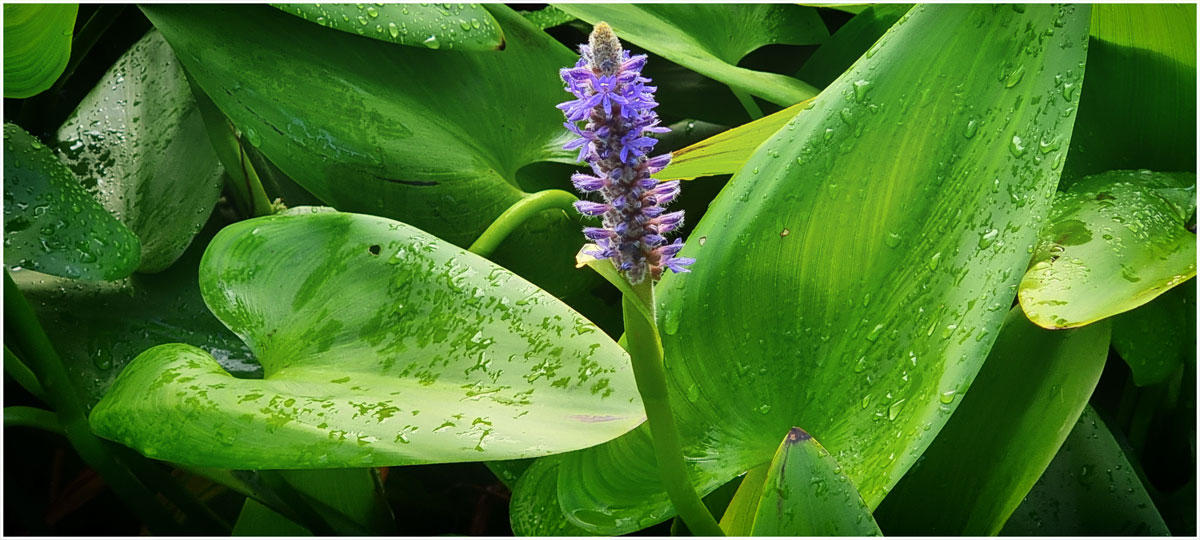
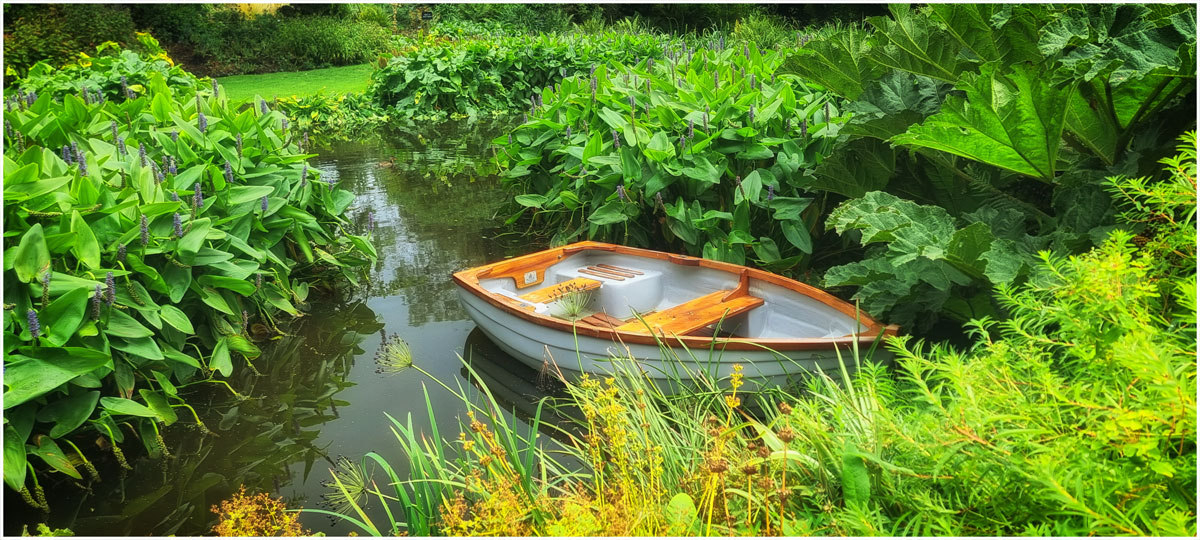
Although my garden is on the wet side these plants would be far too large.One of the pondsPickerel Weed (Pontederia cordata), also known as Giant Pickerel Weed
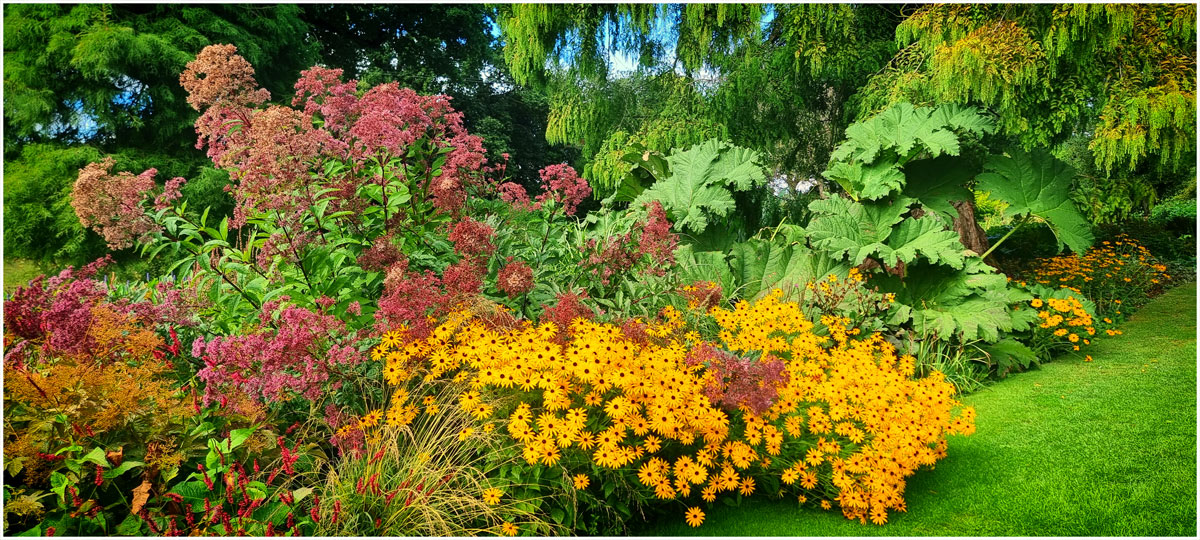
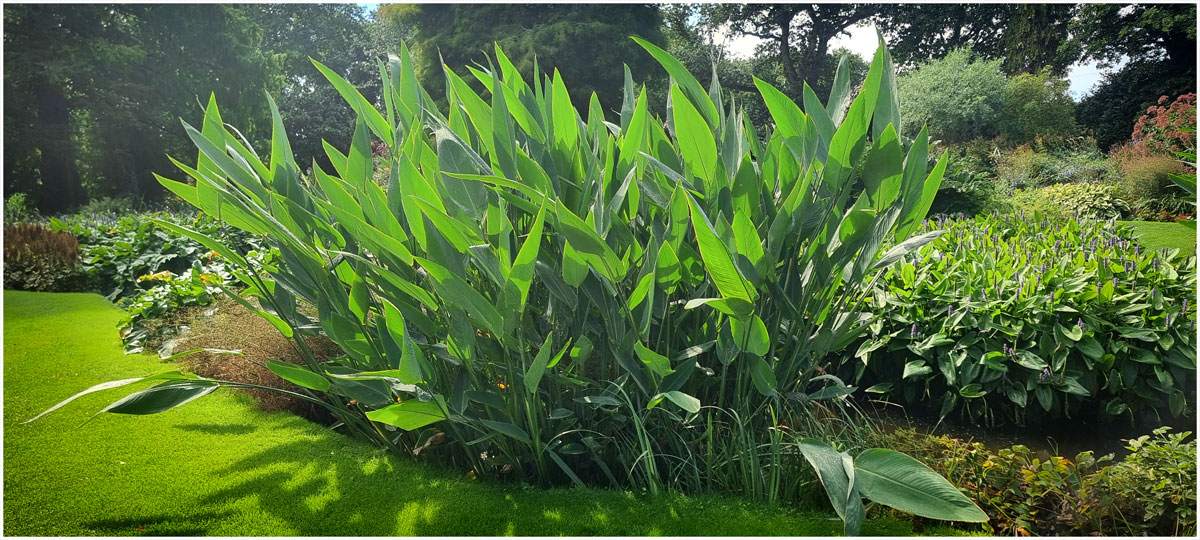
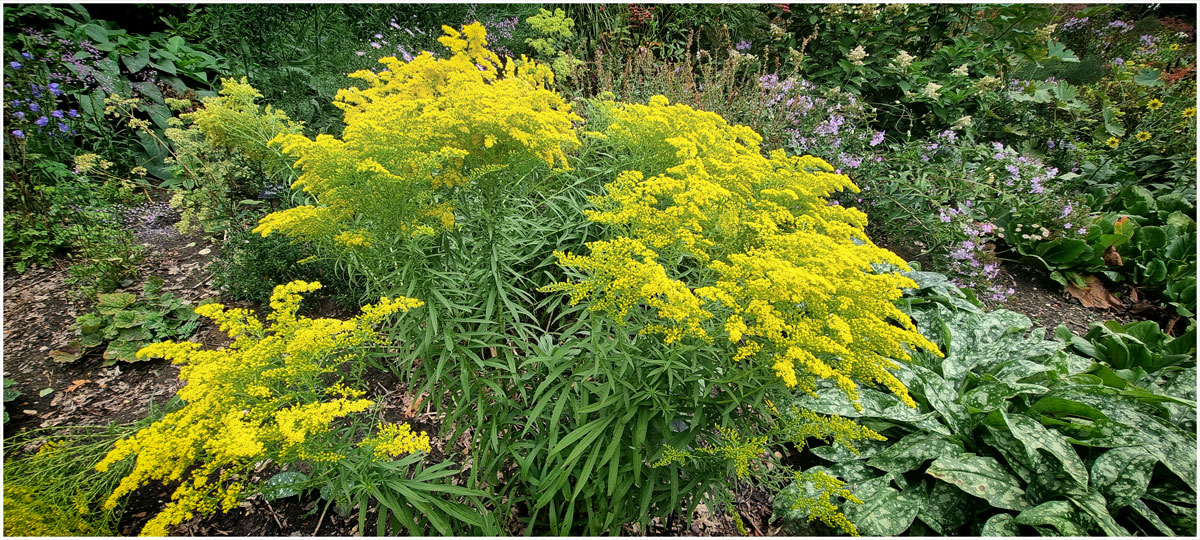
They use the boat to clear the pondsThalia dealbata – the architectural leaves remain but the flower stems are removed as the flowers trap pollinators.Goldenrods (Solidago) are herbaceous perennials known for their bright yellow flower plumes that typically bloom in late summer through early autumn.
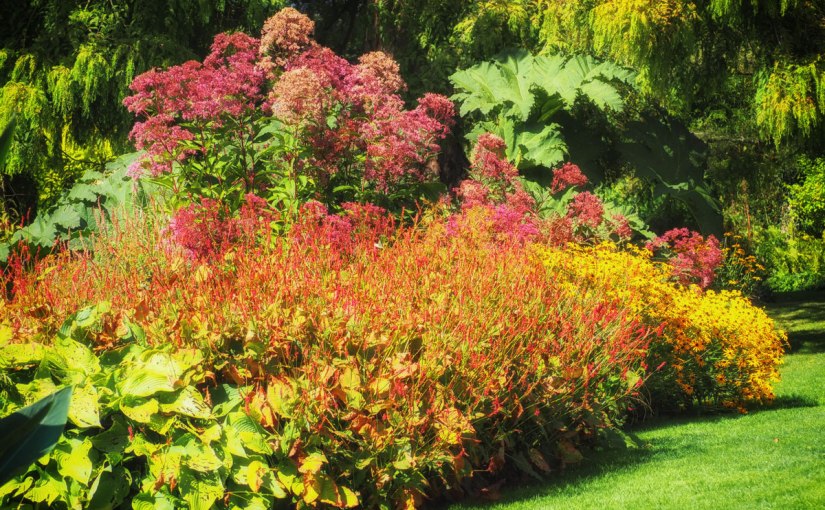
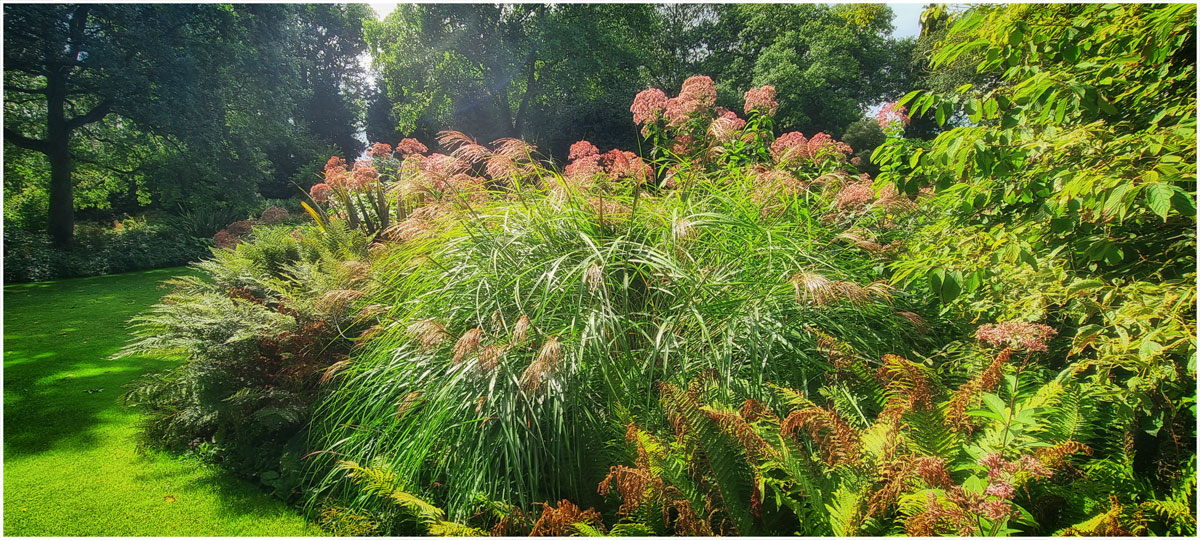
Ornamental grasses are used throughout this garden area too.Several types of asters, such as Aster tataricus, Eurybia radula, Aster pyrenaeus ‘Lutetia’, and Symphyotrichum ‘Prairie Purple’ and ‘Primrose Path’, are specifically mentioned as being grown or sold at Beth Chatto’s Gardens.More ornamental grasses and the purple heads of Eutrochium purpureum, also known as Sweet-Scented Joe-Pye Weed, features large, flat-domed heads of pink-purple flowers on sturdy stems, and is attractive to butterflies.
My visit to this area of the gardens was cut short due to a very heavy rainburst, but fortunately the sun did reappear and I was able to continue my ramble. I have only ever seen these gardens in September. I wonder what they are like at other times of the year. The Woodland for instance is probably best in spring with the bulbs, at this time of year I only saw colchiums (Also call ‘Naked ladies’ as they appear in autumn without leaves) and some patches of cyclamen. Sadly flattened by the rain so no photos.
Sadly this is the end of my series on Beth Chatto’s Gardens, I hope you have enjoyed the visit and I recommend it if you are ever in the Colchester area.
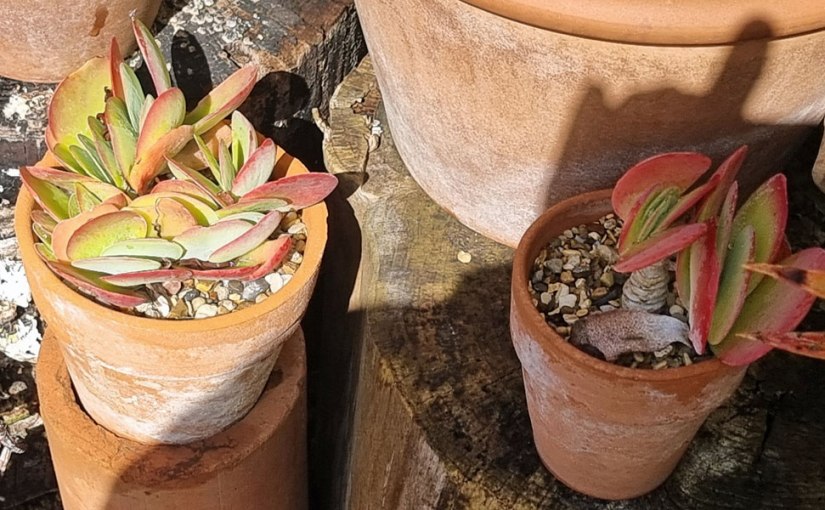
The Scree Garden showcases a large collection of alpines typically found growing naturally on stony, mountainous slopes. The free draining, nutrient poor soil in this area of the garden provides the perfect conditions for alpine plants to thrive.
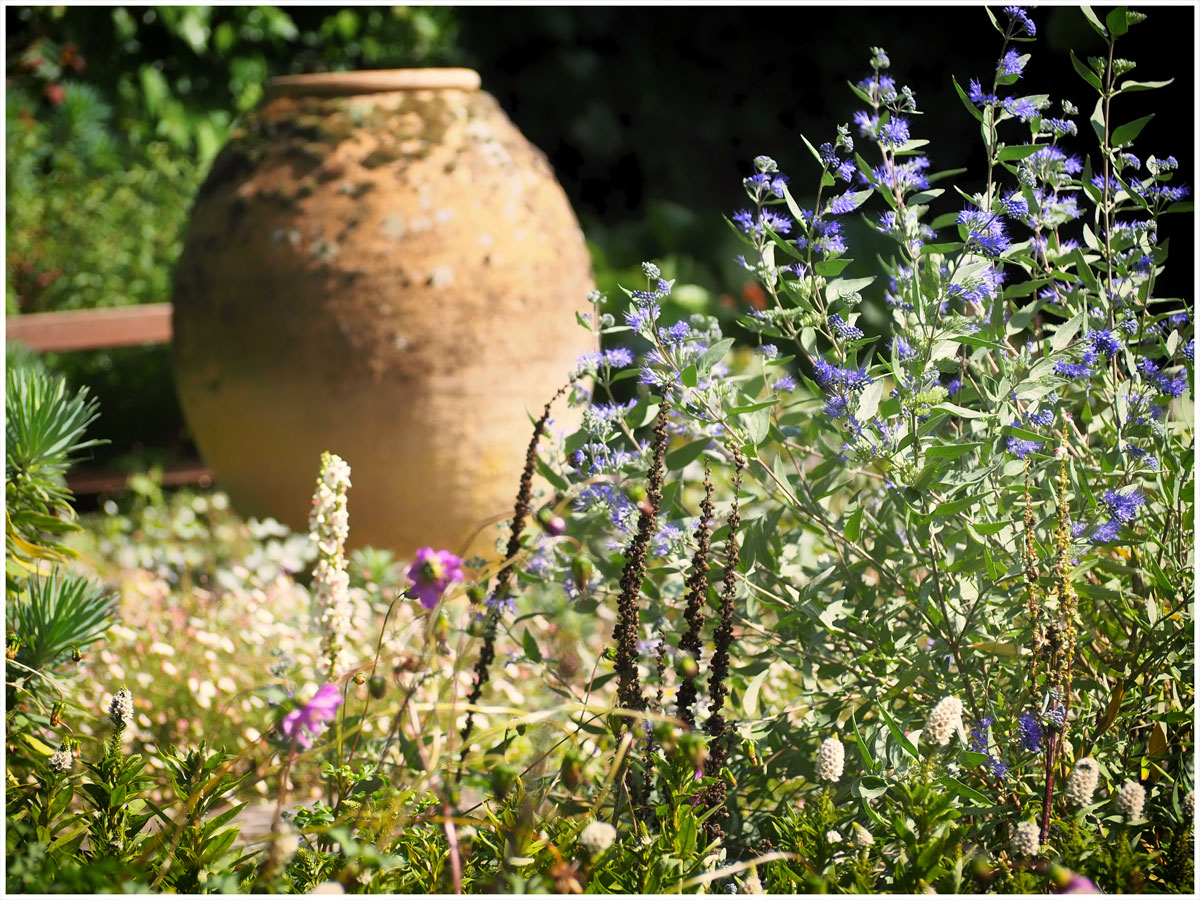
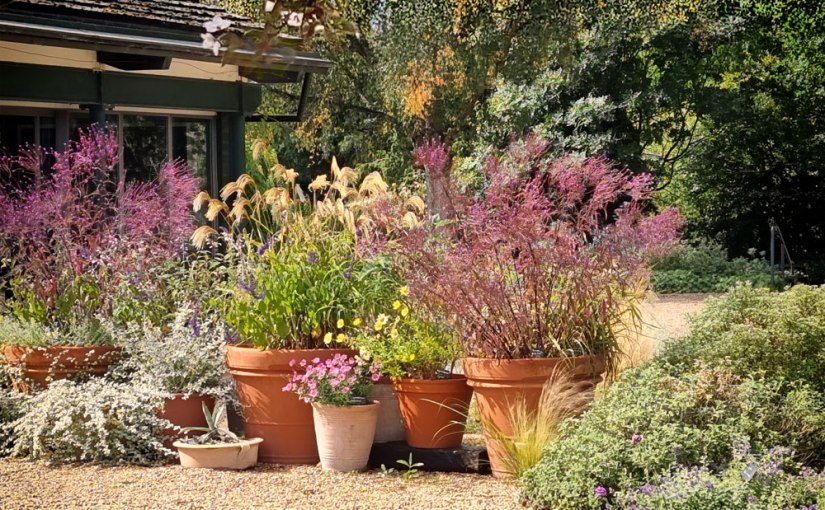
The Scree GardenI’m glad I’m not the one who has to move these into the glasshouse in October!Exotic looking Eucomis / Pineapple LilyVerbena rigida – a low growing varietyUrn
I didn’t take many photos in this area, it’s probably at its best during spring and early summer.
Beth Chatto transformed an overgrown wasteland deemed unfit for fruit farming, into a series of informal gardens. As the conditions within the garden vary widely, five distinct areas have been created providing useful examples of working with nature to find the right plant for the right place.
Grasses add height
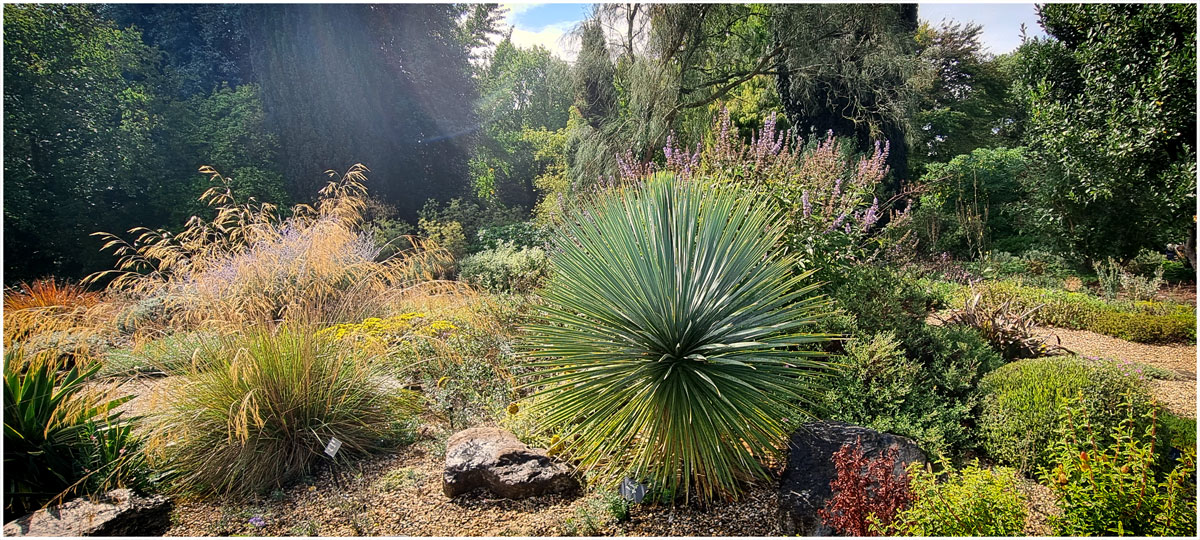
The world-famous drought-resistant Gravel Garden, created in 1992, began as an experiment to replace sun-scorched grass with a living garden of drought-tolerant plants.
Dark clouds on the horizon
The Gravel Garden, once a car park, was originally planted by Beth and her team as an experiment to test a range of drought-tolerant plants. The garden is famous for the fact that it is never watered, despite being situated in one of the driest parts of the country and having naturally occurring, free-draining soil.
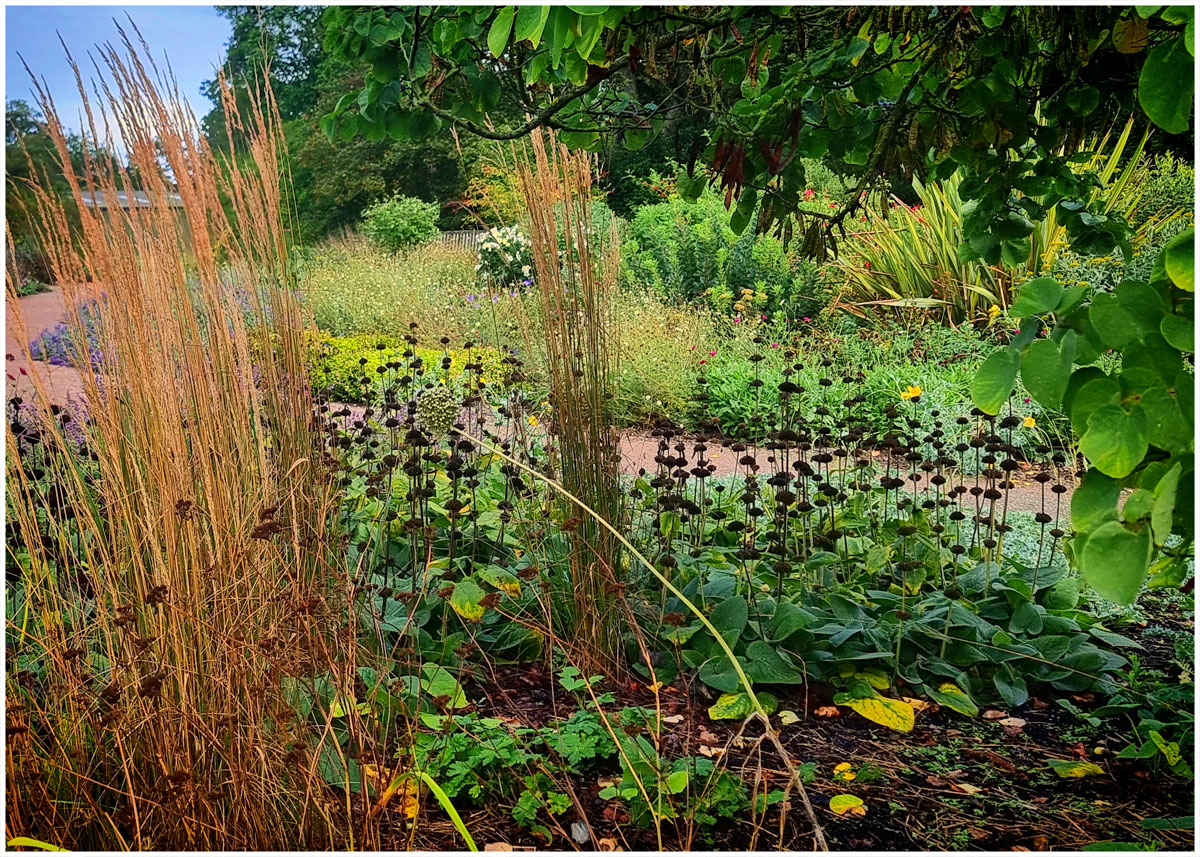
Sedums add contrast – this is Hylotelephium Red CauliThe seed heads of Phlomis russeliana have an impact here too.Eryngium ebracteatum; Hylotelephium Red Cauli; Verbena Bampton; Gaura / Oenothera lindheimeri; Pennisetum villosum
I want to know how they keep the gravel weed free.A lot of the plants in this garden are quite low growing
It serves as an inspiration for gardeners looking to create beautiful and resilient landscapes with minimal water use.
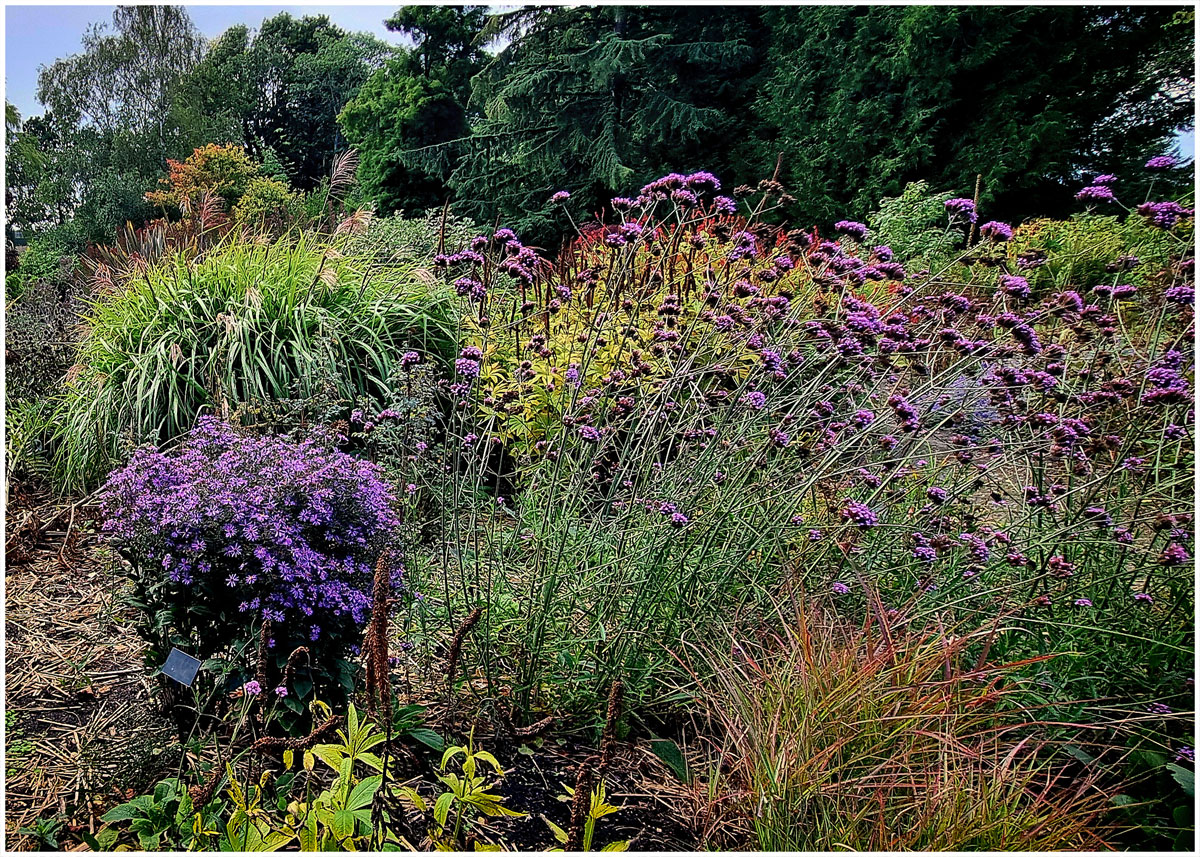
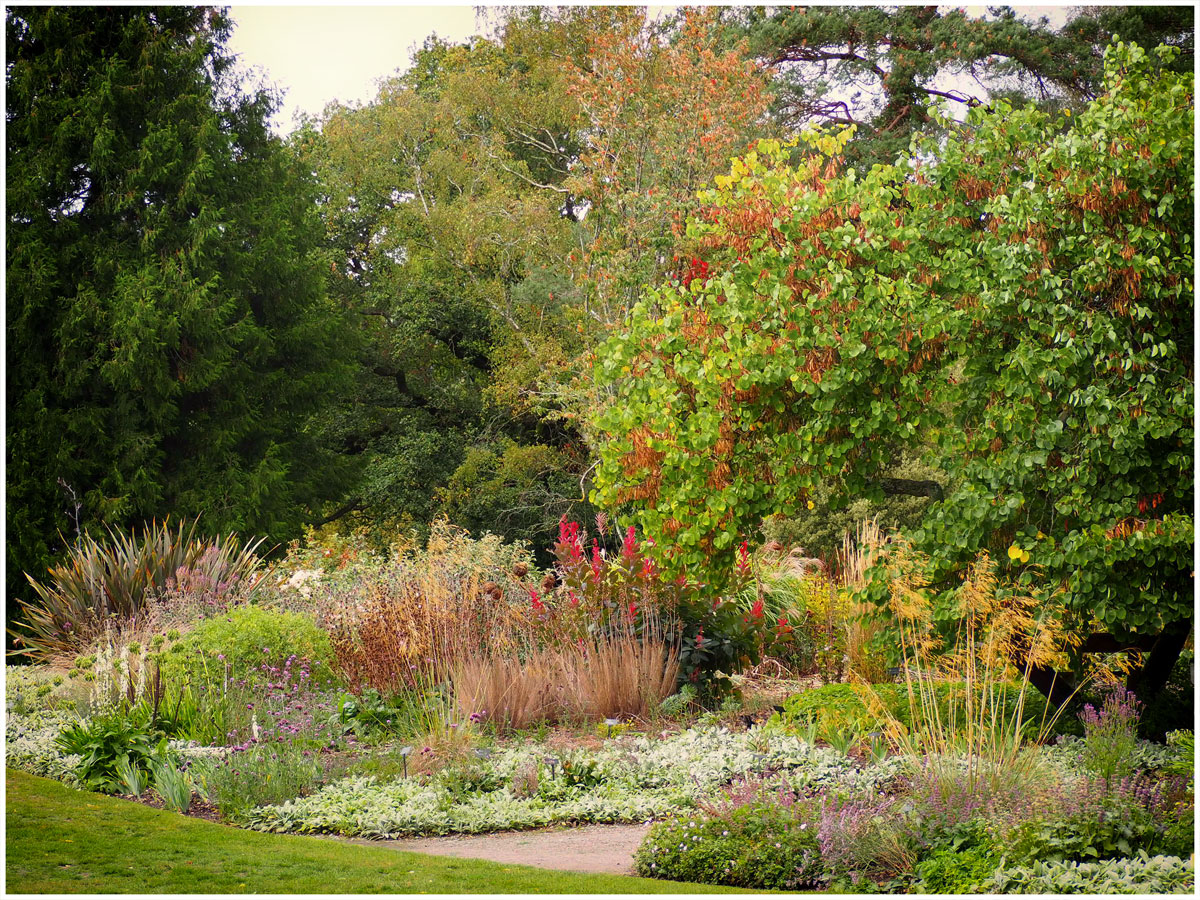
The heavy clay soil of the Reservoir Garden was improved by Beth’s team and replanted in 2017. The garden showcases a variety of ornamental grasses and prairie-style plants offering late season interest with an exciting new display of perennials, accessible via winding pathways.
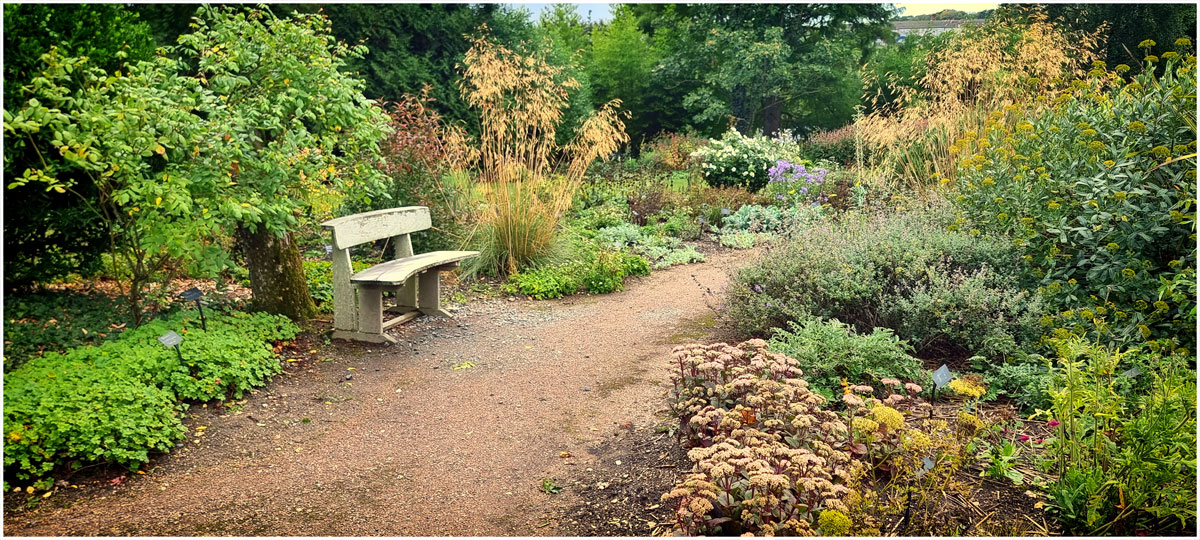
There are plenty of benches on which to sit and contemplate the garden.
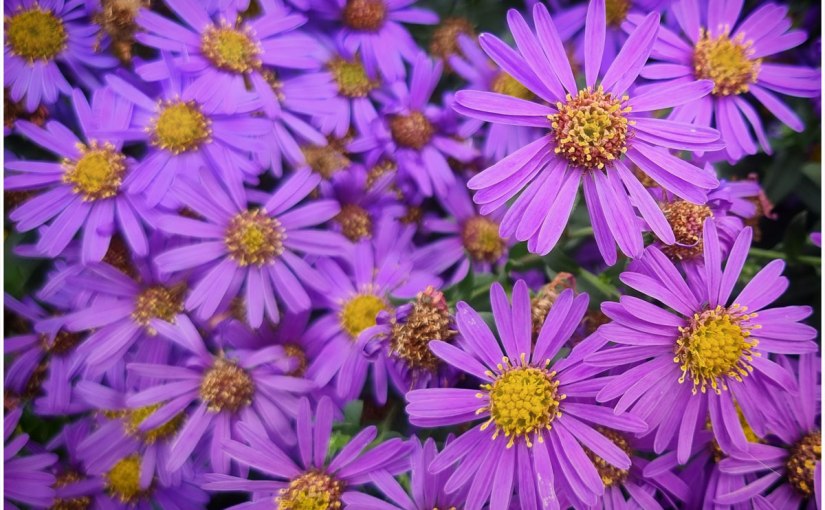
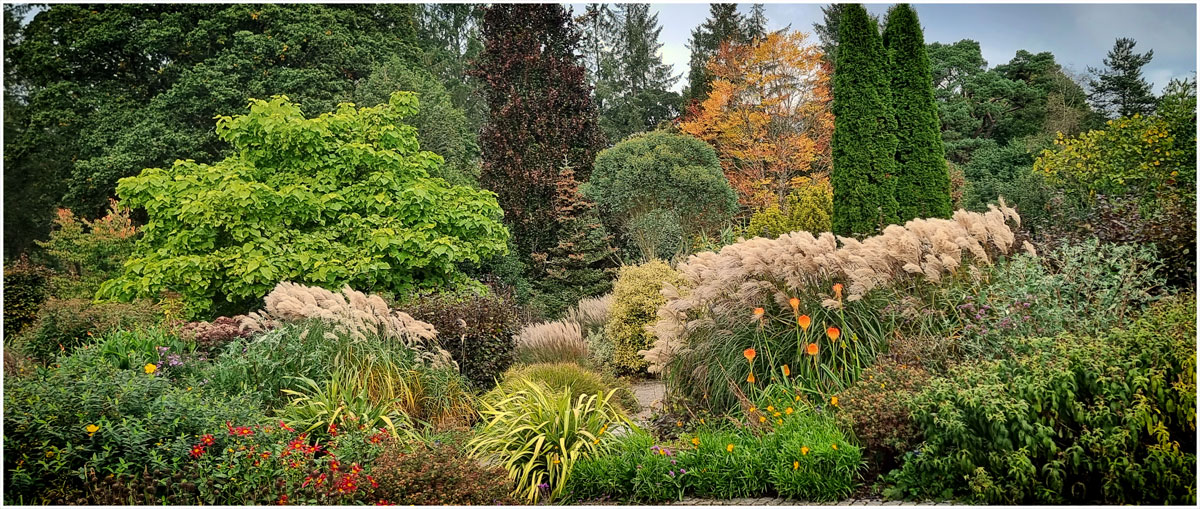
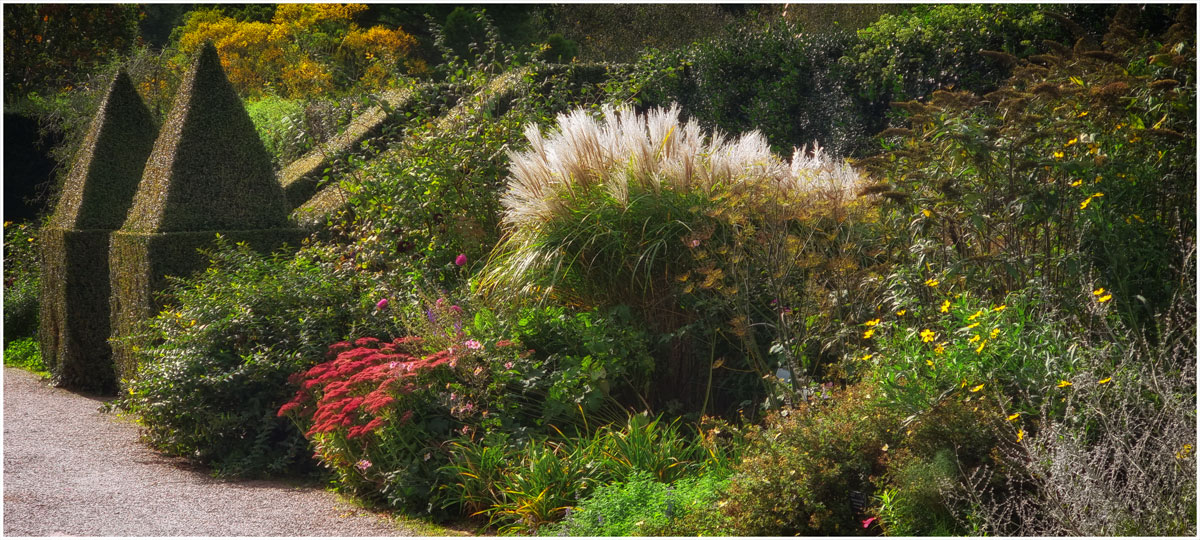
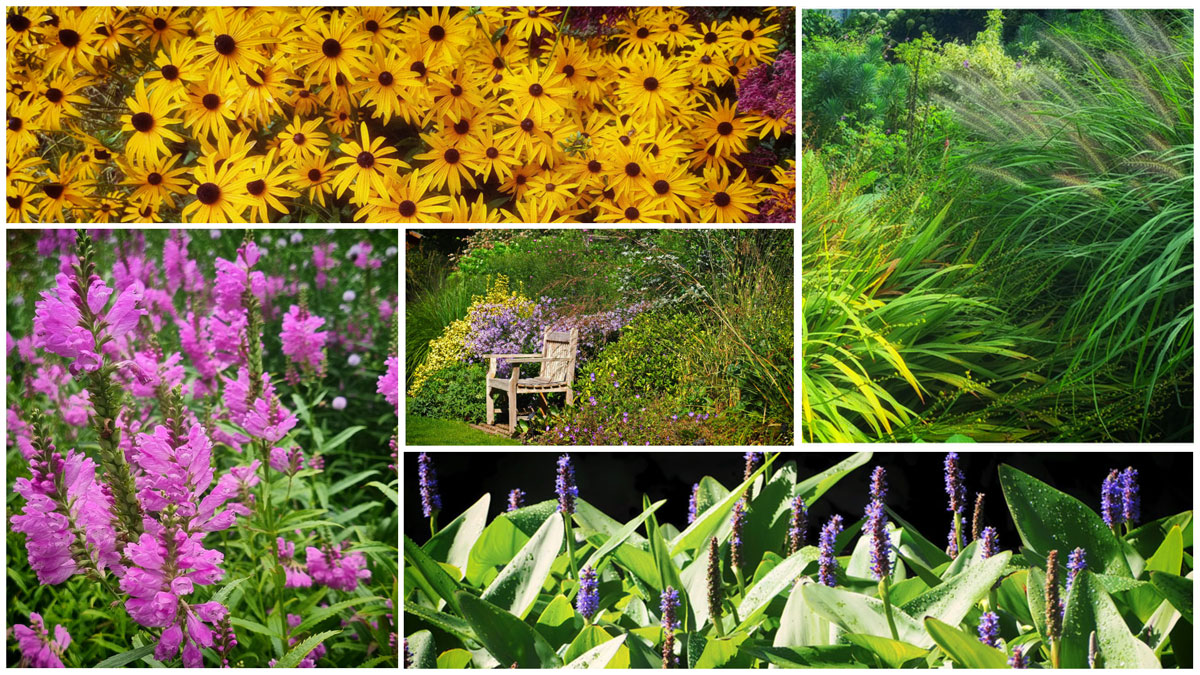
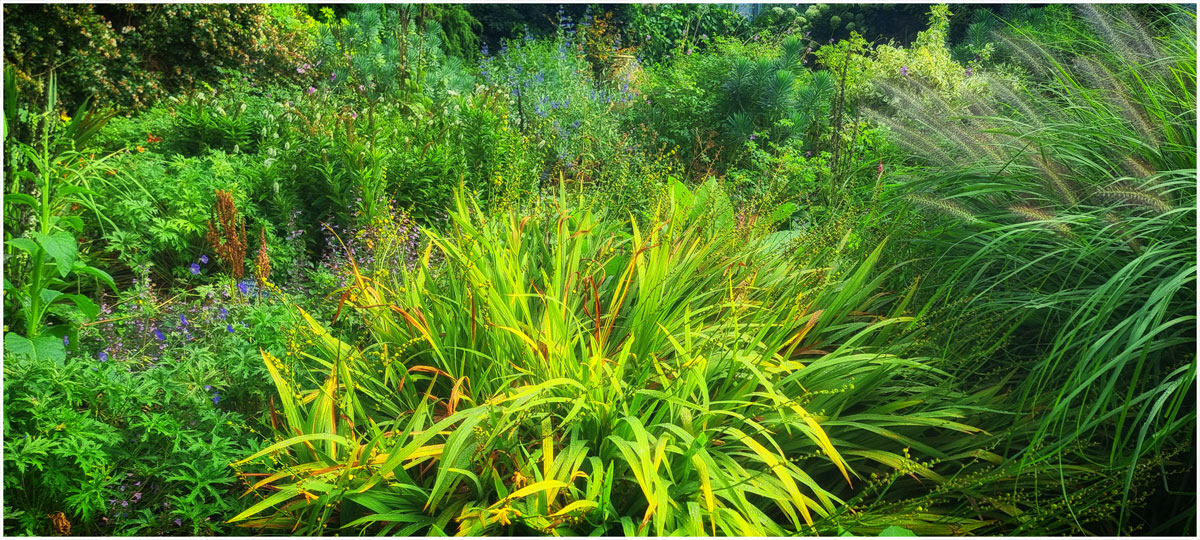
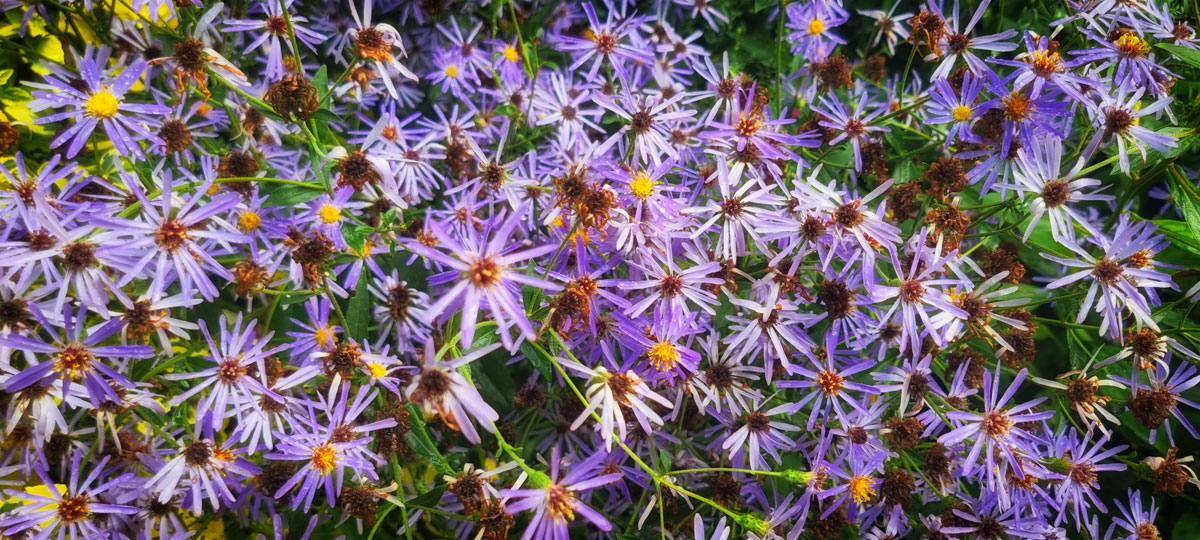
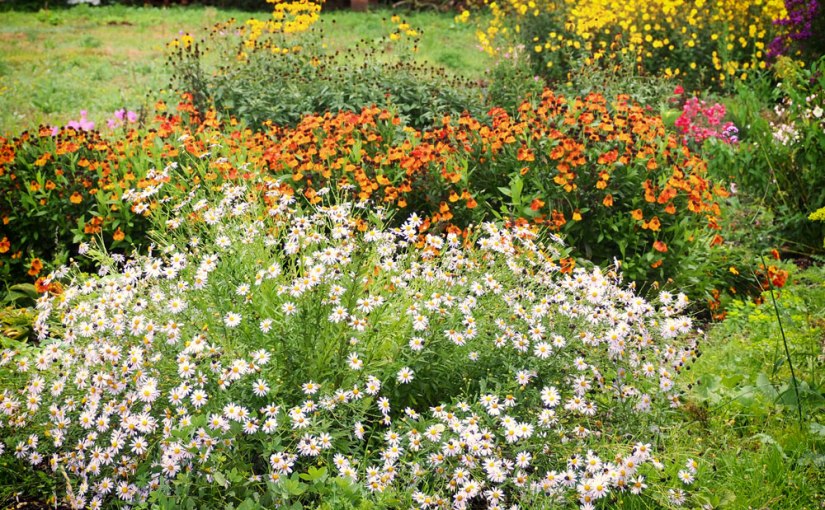
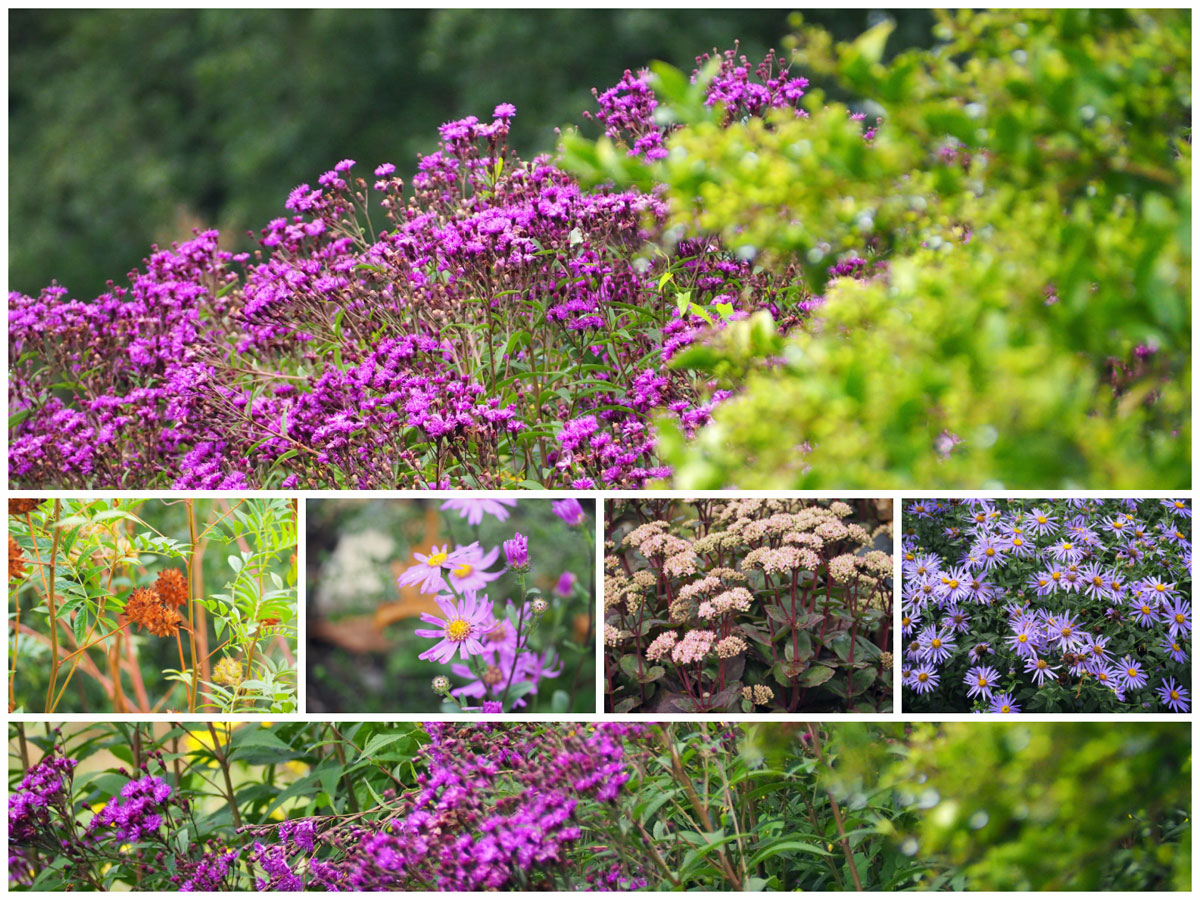
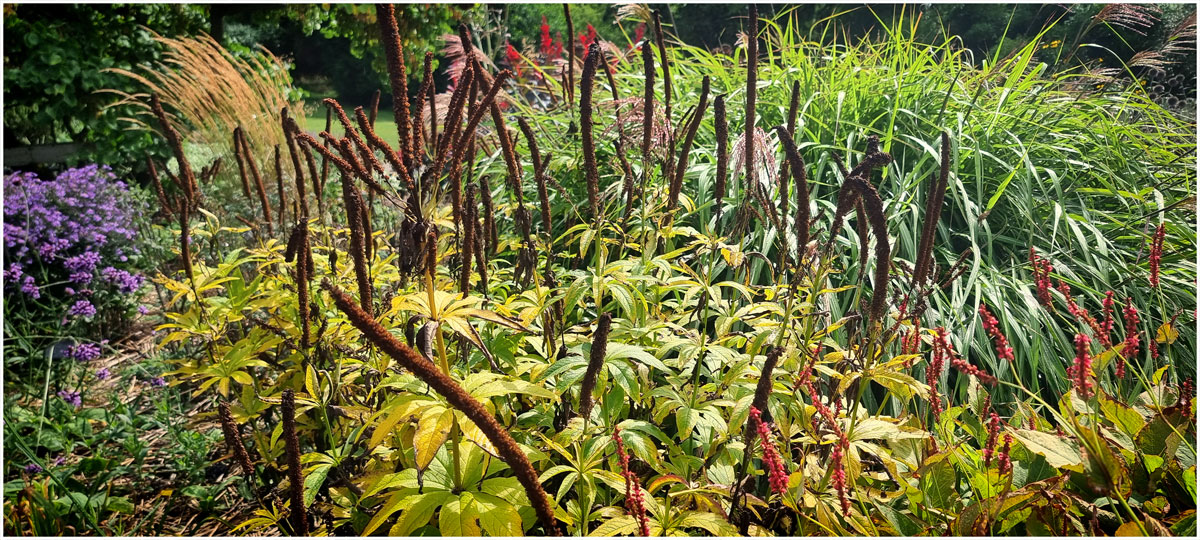
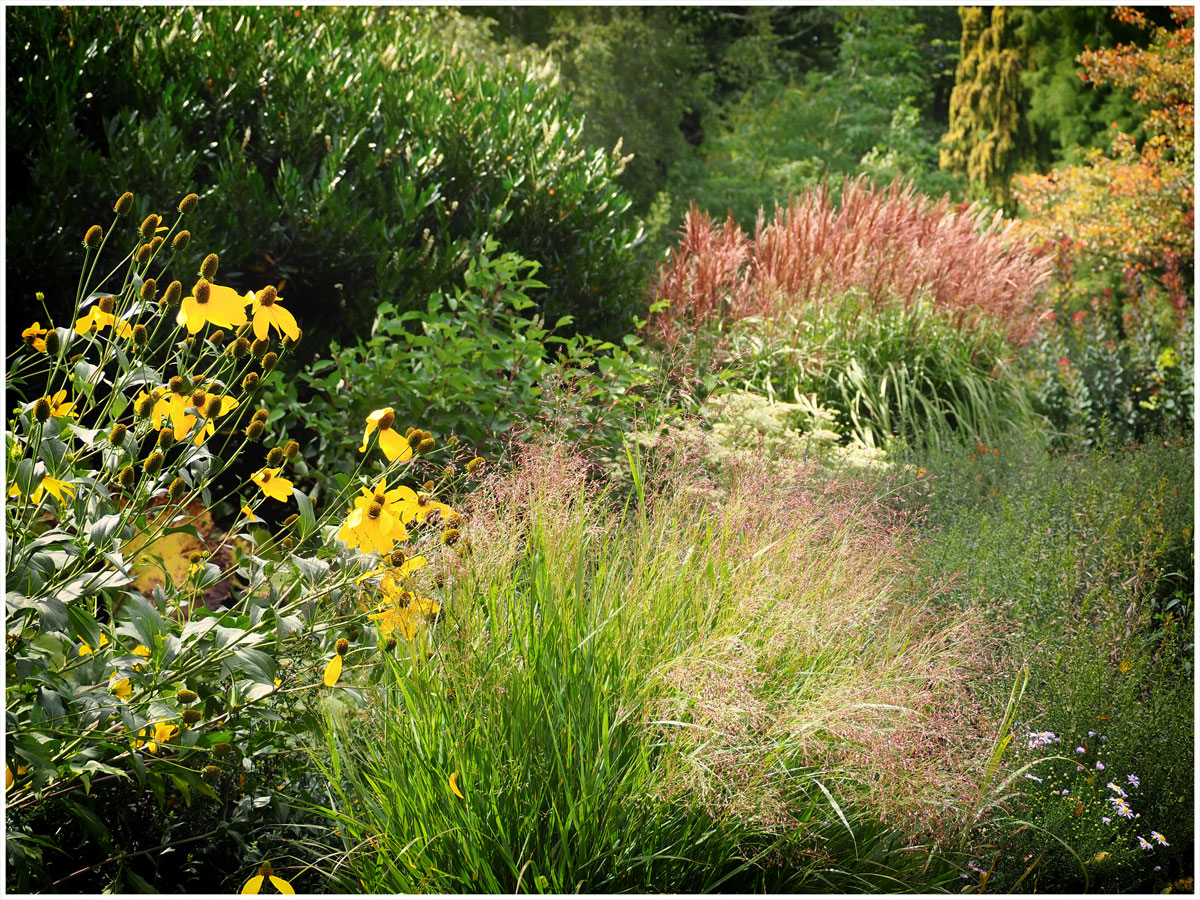
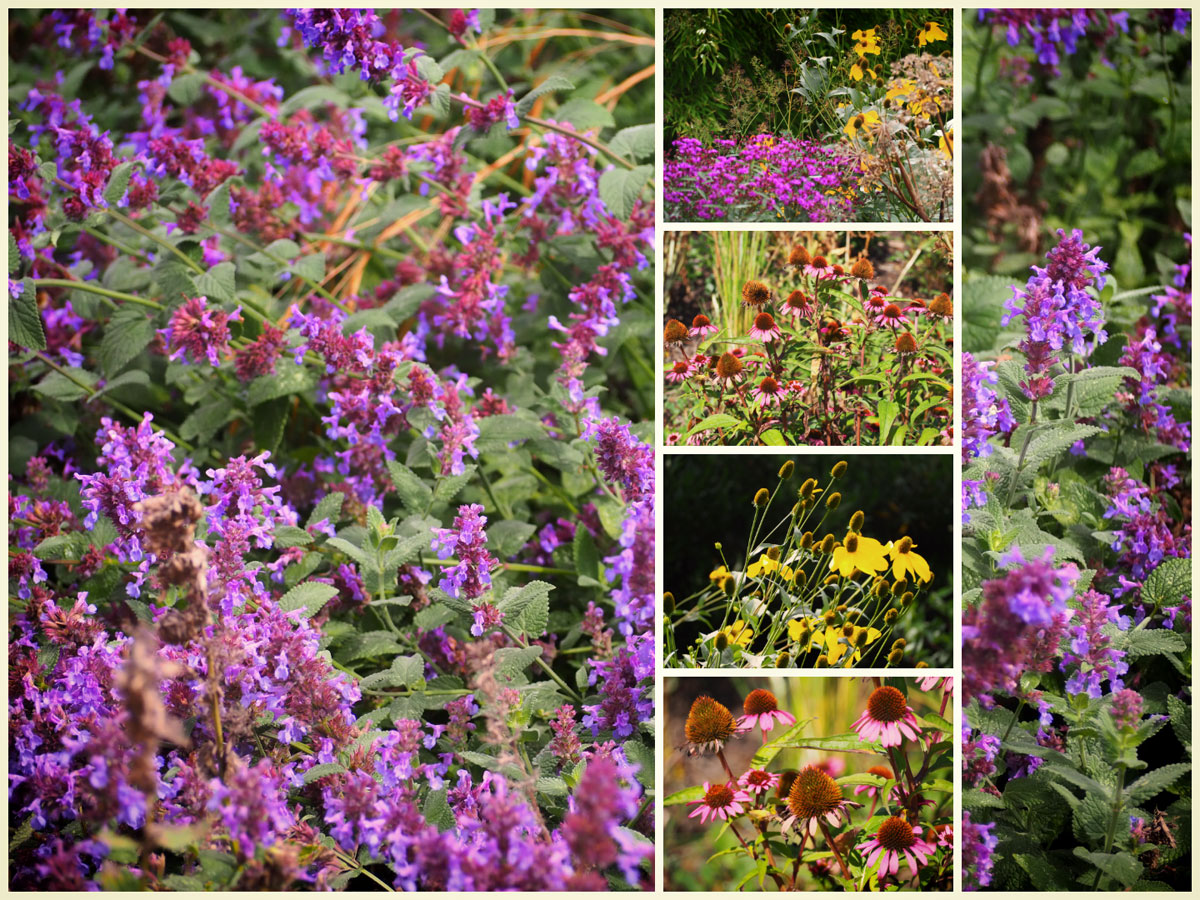
Lots of purpleAsters were a feature of this September gardenAnd seed heads. Phlomis russeliana are particularly effectiveWild seed heads of the VeronicastrumBeautiful flowering grasses soften the bordersPurple and Yellow contrasting coloursLovely prairie style planting
When I visited Beth Chatto’s Gardens in 2016 this area was a complete blank canvas. My favourite zone then was the gravel garden, but this year the Reservoir Garden with its naturalistic prairie planting, grasses wafting in the wind and the pops of colour from the asters, heleniums and rudbeckias intertwined with dramatic seed heads was by far my favourite area. In fact I sat here for a good half hour simply enjoying the peace.





 TRAVEL WORDS