Misericords of St Laurence – Part II

The Parish Church in Ludlow is famous for its 15th century misericords in the chancel stalls. These ignored carvings are found underneath choir stall seats and are mostly found in areas of the country whose wealth came from the medieval wool trade. The largest collection is housed at Salisbury Cathedral (106) compared to Hereford Cathedral (40) and the 28 intricately carved designs here in Ludlow.

Finally I have managed to get some decent photos of them all, so let me introduce you to them:

North Side 6 – 10

N6: The Antelope, gorged (the neck encircled by a coronet or collar) and chained is the personal badge of Henry VI in whose reign the misericords were carved. The grotesque masks either side are usually regarded as pagan imagery so an odd choice to accompany the Antelope. Leafed faces are often associated with the Green Man present at May Day celebrations. In a Christian context they are more likely to be a reminder against loose morals and sin.

N6
N6

N7: A bishop supported on either side by a mitre. Possibly a portrait of Thomas Spofford (1422-1448) during whose time the chancel was enlarged and whose name appears in the great east window.

N7
N7

N8: The three ostrich feathers have been the personal badge of the Prince of Wales since the mid sixteenth century. At the time of this carving it was the badge of the Black Prince, Edward of Woodstock who died in 1376 before he could succeed to the throne. He was father of Richard II (N10)

N8-PRINCE-OF-WALES
N8

N9: Here we have an ass preaching at the pulpit to a congregation of birds, geese and other farmyard animals. On the left two figures are whispering to one another having spotted the deception. The moral is about the gullible and foolish listening to false doctrine, a warning against the followers of Wycliffe, the Lollards.(John Wycliffe was concerned about the wealth of the clergy in the Middle Ages and not liked by the Church)

N9
N9

N10: The Hart at Rest is the badge of Richard II who was deposed by the first of the Lancastrian kings, Henry IV. The Yorkists regarded Richard as the last true legitimate monarch. In the heraldic version the Hart was white. The hounds on either side gave the idea of the chase.

N10
N10

Source of text: Historic Ludlow ” The Misericords and Choir Stalls” by Peter Klein (1986)

Misericords of St Laurence – Part I

The Parish Church in Ludlow is famous for its 15th century misericords in the chancel stalls. These ignored carvings are found underneath choir stall seats and are mostly found in areas of the country whose wealth came from the medieval wool trade. The largest collection is housed at Salisbury Cathedral (106) compared to Hereford Cathedral (40) and the 28 intricately carved designs here in Ludlow.

Finally I have managed to get some decent photos of them all, so let me introduce you to them:

North Side 1 – 5

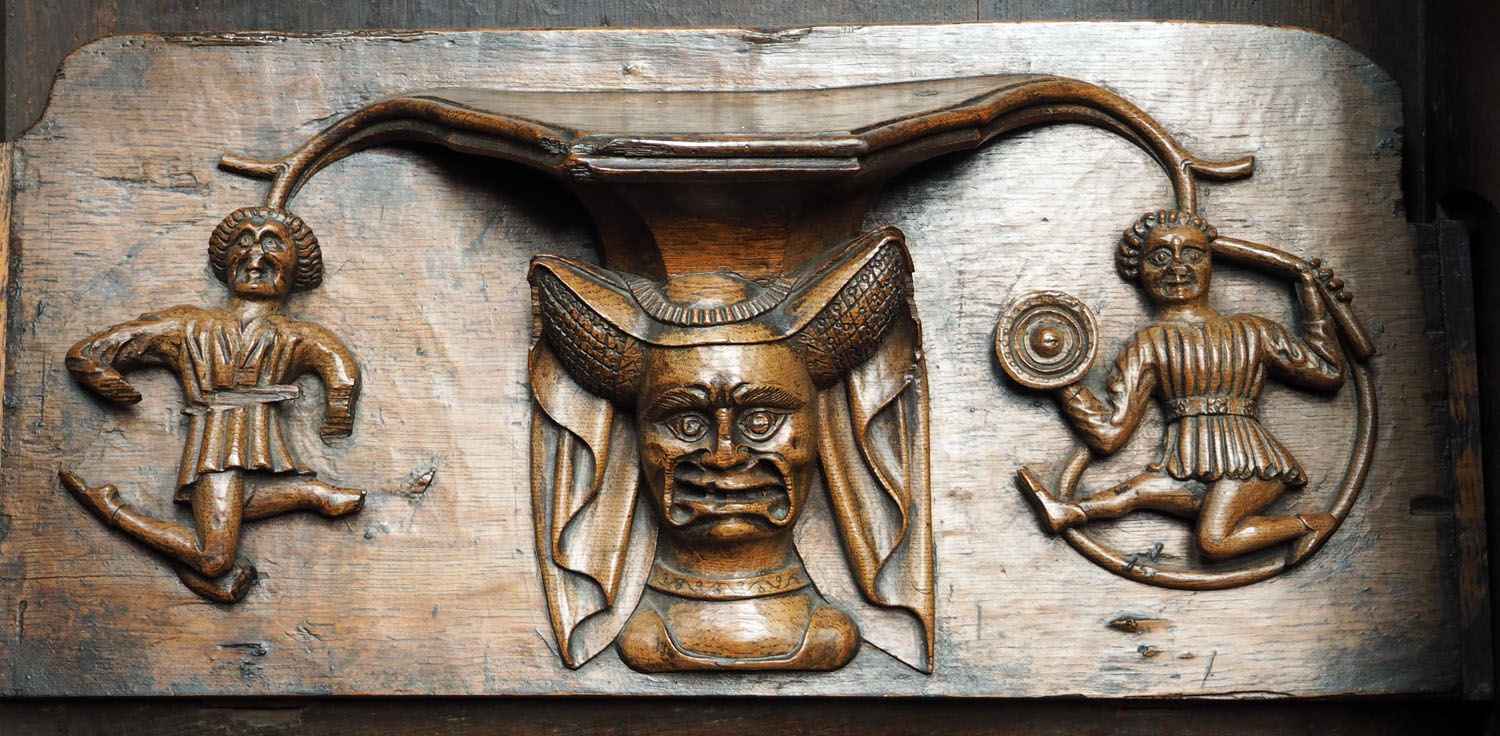
N1: There are several interpretations of this one. A scold wearing an outrageous horned head-dress or hennin being ridiculed, though the woman does not wear the scold’s bridle so it may represent street entertainment. It may also be a warning against misplaced vanity.

N1

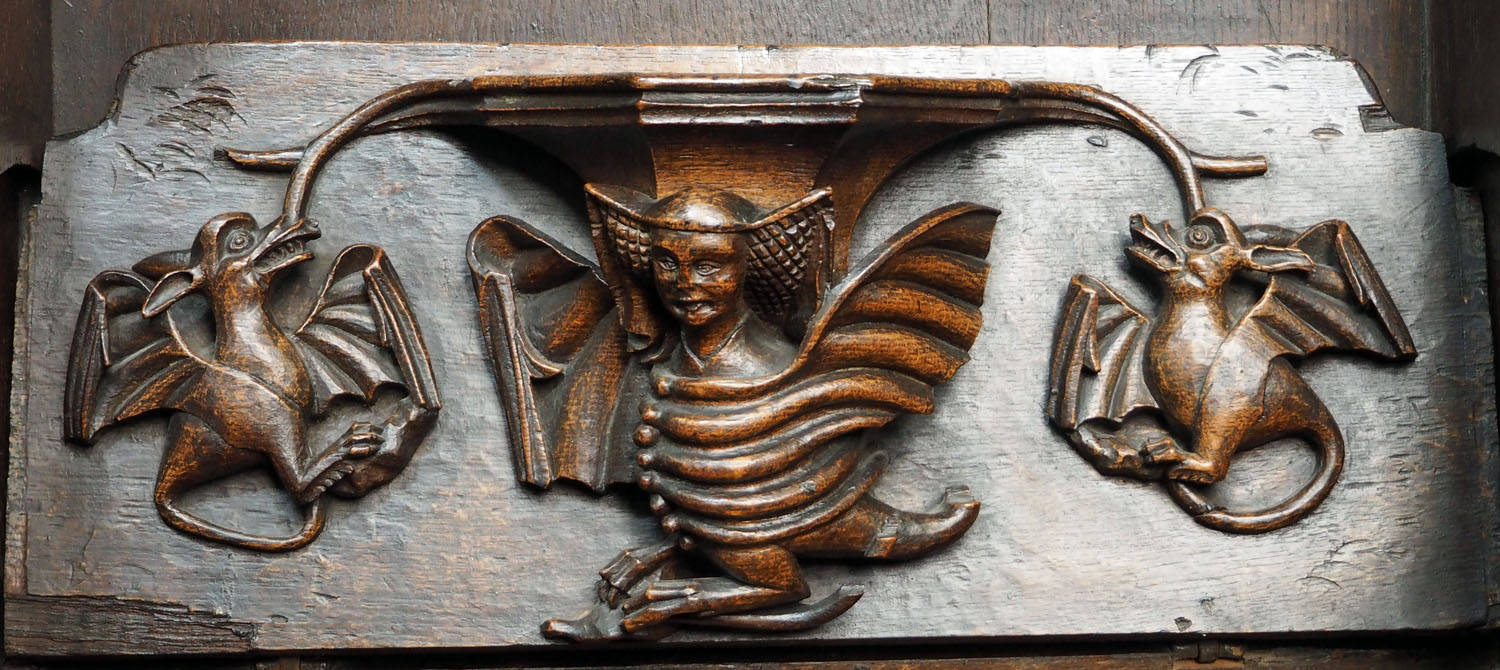
N2: The central corbel is the form of a Harpy, a young woman’s head being given the body and wings of a bat. Her supporters are bats – creatures of darkness and symbolic evil. This could be a cautionary tale about women using their charms to tempt a man aka Adam and Eve.

N2
N2

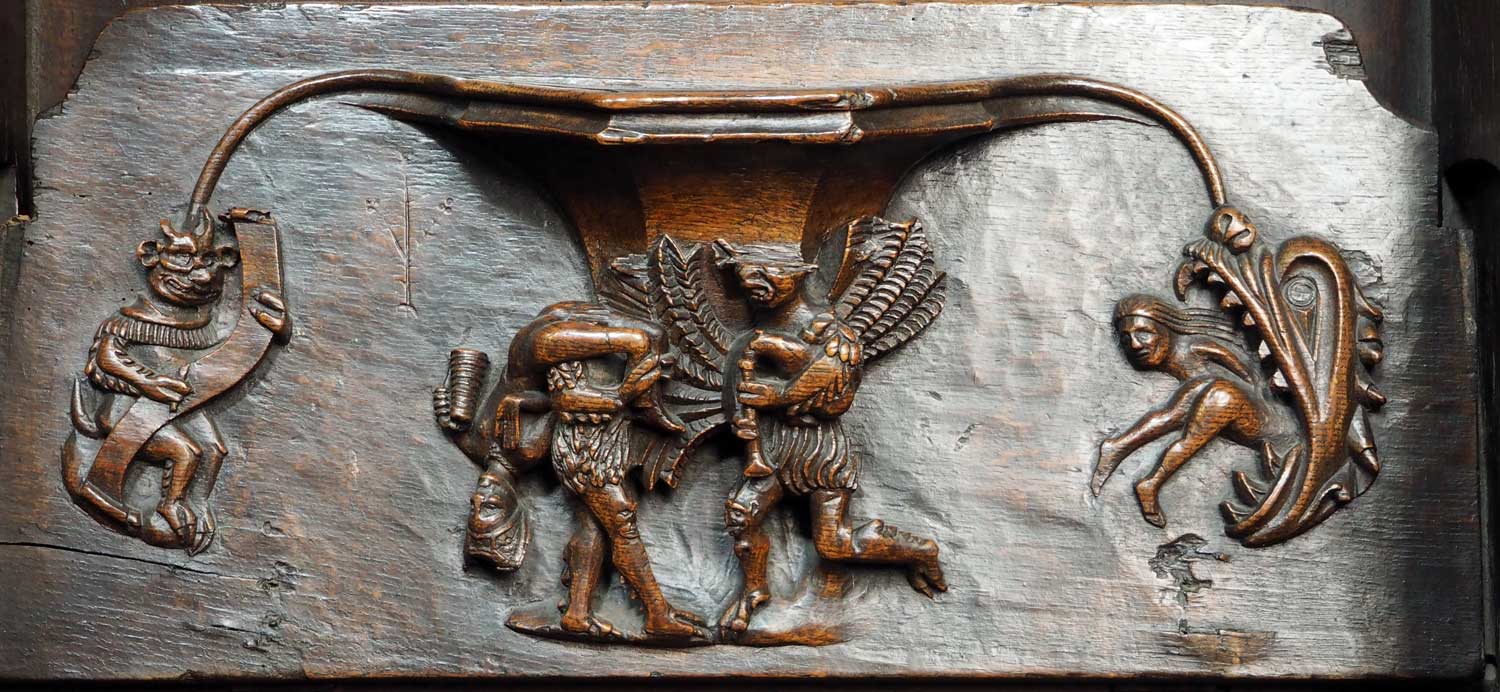
N3: This is Ludlow’s most famous one and shows a dishonest alewife who has given short measure and has been thrown over the shoulder of the devil. A demon, Tutivillus on the left reads a long list of her misdemeanours. Another devil  plays the bagpipes to serenade her journey to the gaping mouth of Hell shown on the right.

N3
N3

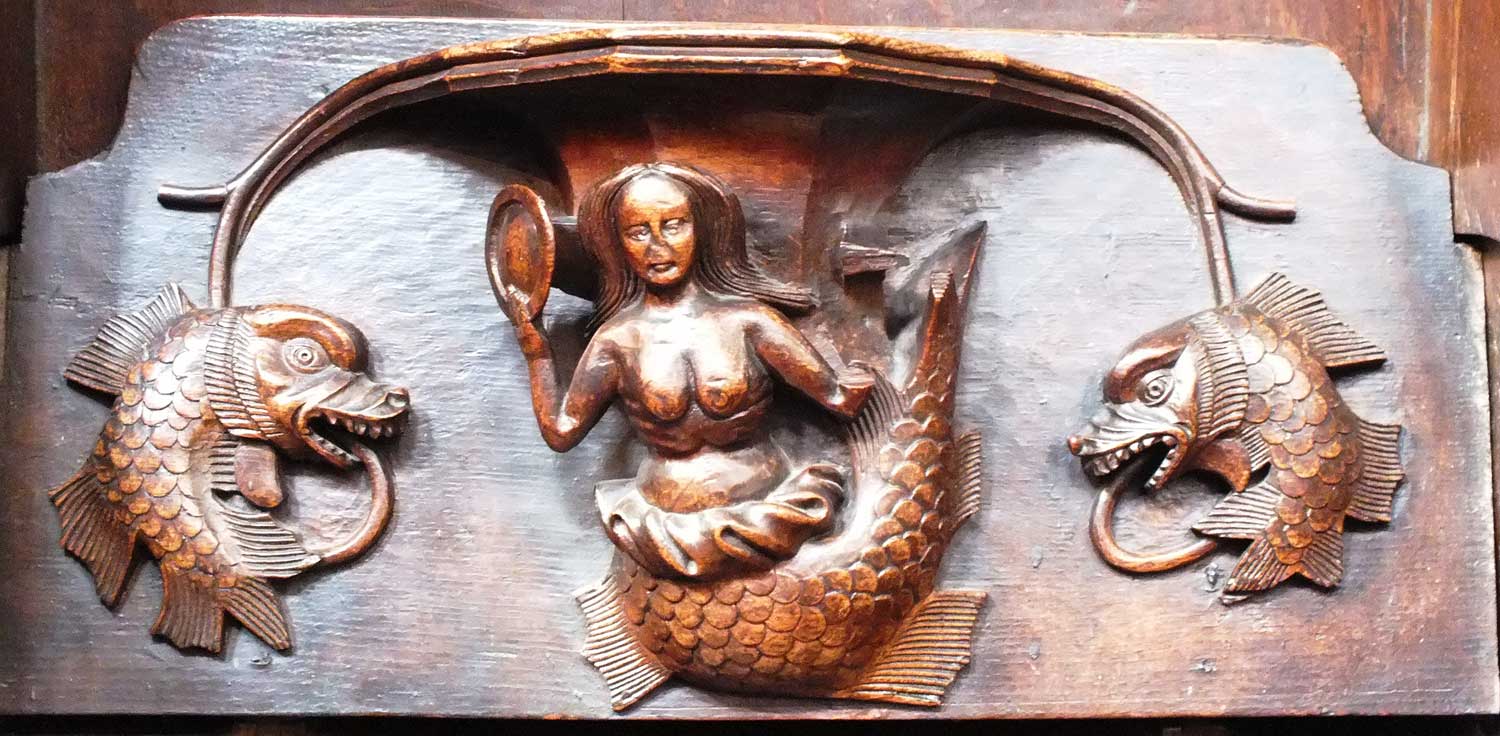
N4: My favourite. A mermaid holds a mirror in one hand and a now missing comb in her left. Two dolphins add to the theme. Yet another anti-feminine theme, the mermaid or siren being symbolic of the woman luring men away from the path of salvation.

N4
N4

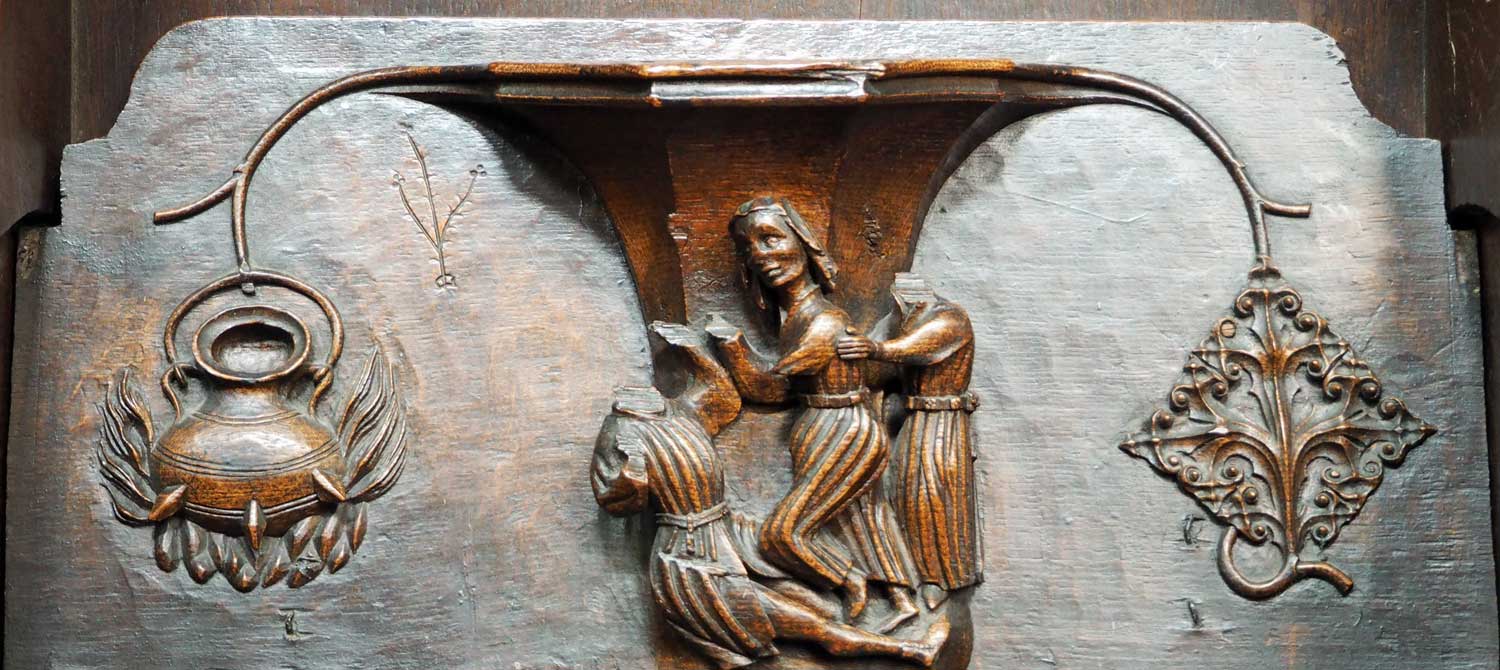
N5: A scene of domestic discord involving three male figures. The one on the right is trying to restrain the other two, whilst a cauldron bubbles away on the hearth. The kite-shaped leaf on the right is typically found on the Ludlow misericords and a stylised foliage often used in court manuscripts. The whole of the carving represents one of the seven sins – Anger.

N5
N5

Source of text: Historic Ludlow ” The Misericords and Choir Stalls” by Peter Klein (1986)
One Day One World Project: 08:00 – 09:00

The Bells of Ludlow

St Laurence Church

Oh, come you home of Sunday,
When Ludlow streets are still
And Ludlow bells are calling
To farm and lane and mill,

Or come you home of Monday
When Ludlow market hums
And Ludlow chimes are playing
‘The conquering hero comes’

~ partial from The Recruit. A. E. Housman (1859–1936).  A Shropshire Lad.  1896.

The tower of St Laurence’s contains one of the finest rings of 10 bells in the country.  The bells are rung in two distinct ways: by the bell ringers on Sundays and practice evenings; and by the church clock which is controlled electronically and chimes tunes four times a day. The clock chimes a different tune for each day of the week and it plays the tunes at 8am, 12pm, 4pm and 8pm.

Shaun Ward, clerk of works at St Laurence’s said  “The clock tells people to go to work, have their lunch, have a break, go home and go to bed.”

Lisa of the blog NorthWest Frame of Mind has decided to run a different project over the next 24 weeks. To try to show what is happening in different parts of the world (if you all join in) at a particular time of day. If you would like to participate you have until next Saturday midnight to post a photo or write about what is happening in your part of the world.   This week is between 08:00 – 09:00.  I hope you’ll join in! See links for more details.

Ludlow, St Laurence Church: Windows

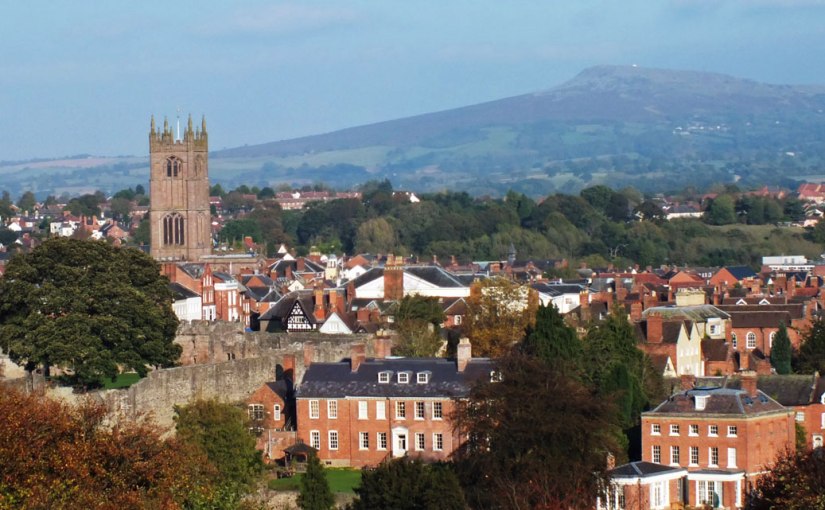
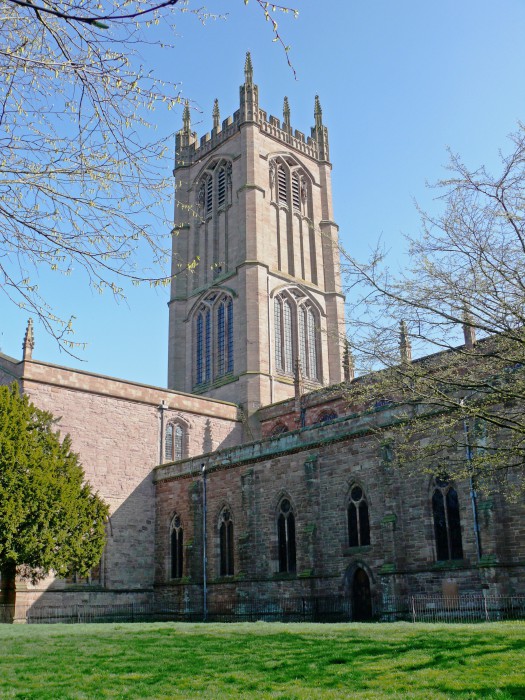
The Parish Church of Ludlow is crammed behind surrounding buildings so that although you can see the impressive tower from miles around, the actual church is quite hidden.

Inside it is full of history, a perpendicular Gothic delight with medieval stained glass, choir stalls and misericords, chapels and tombs and even the burial-place of Prince Arthur’s heart, who died in Ludlow and altered the course of history.

The West Window, showing the Lords of Ludlow Castle and ending with the unfortunate Prince Arthur.

window-1

The Palmers Window in St John’s Chapel shows a version of the legend of King Edward the Confessor and St John the Evangelist. The story is told in eight panels and centres round the Ludlow Palmers making a pilgrimage to the Holy Land

window-9 palmers window

window-8

Detail from the Jesse Window (restored to the original colours and design) in Lady Chapel

window-10-Jesse

The Annunciation or Golden Window with St Catherine and her wheel (L) and St Christopher (R)

window-9-st-catherine

Window in St Catherine’s Chapel

window-6

And finally a window in the unusual octagonal porch

window-7

This weekly challenge is hosted by Dawn from ‘The Day After’ who invites participants to post pictures of any windows that  they find curious, inviting, photogenic, or in some way tell a story. Visit her blog to see more windows and/or to join in with the challenge.

X for XV century Misericords

frizztext hosts a weekly A – Z Challenge

A_Z logo

Event Type: General Blogging

Start Date: Tuesdays, recurring weekly

Description: Every Tuesday I offer the “A to Z challenge”, walking step by step through the alphabet.

If you would like to join in then please click here

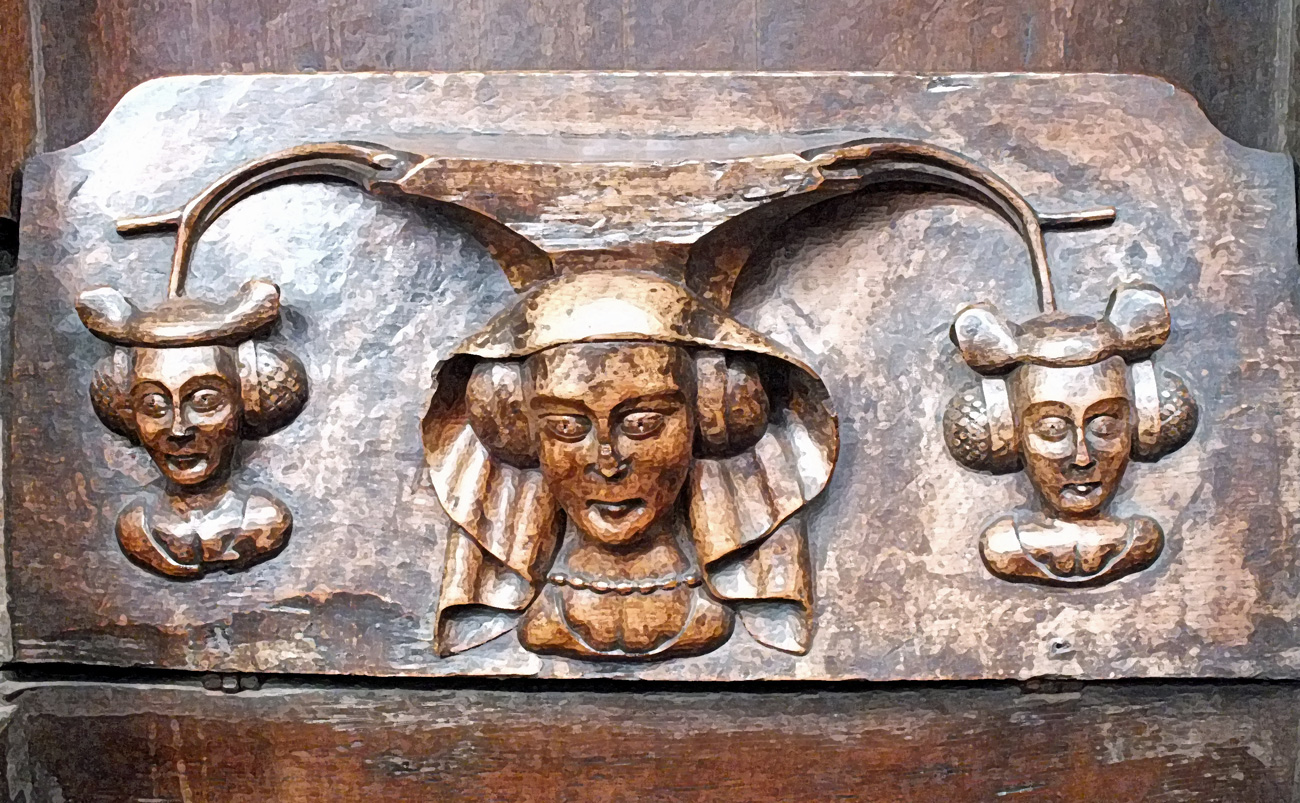
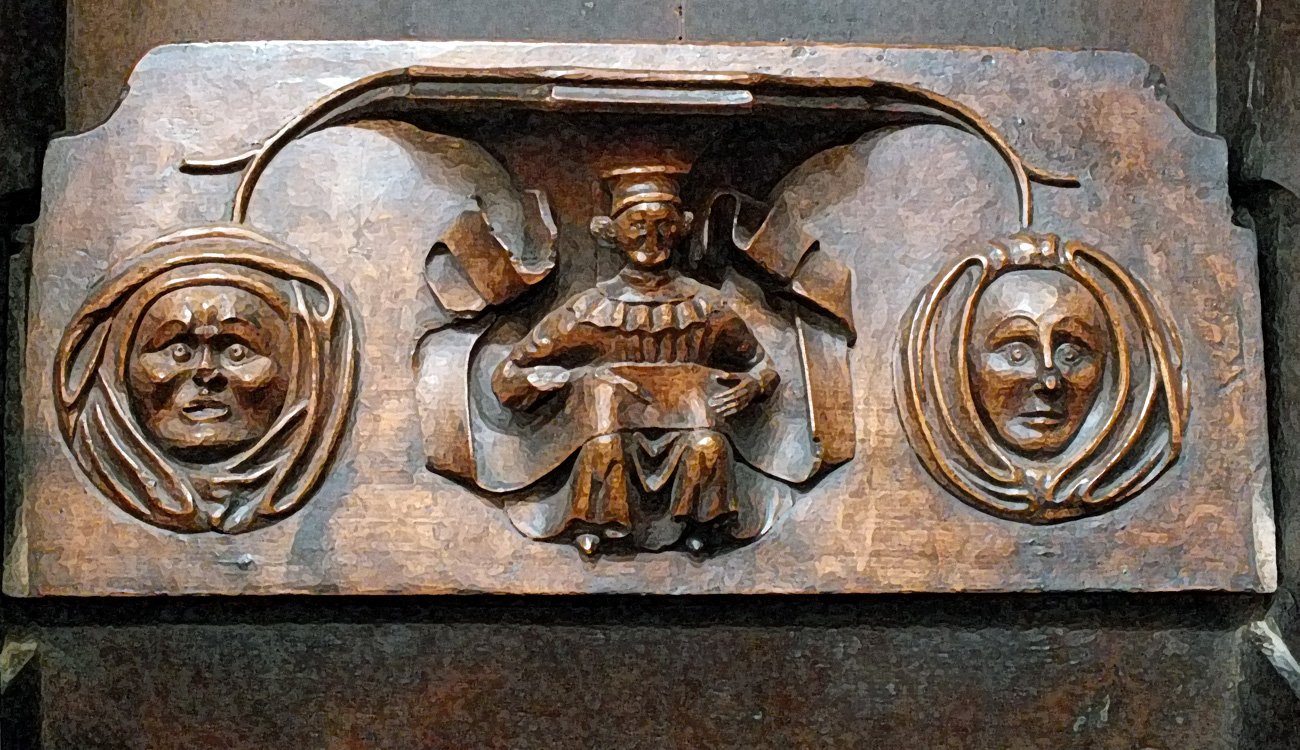
Woman with Coif
S4 – representing womanhood, possibly a mother and daughters

We are quite lucky in Ludlow to have a very impressive Parish Church – St Laurence, which is so big that it can be seen from miles around and is known as ‘The Cathedral of the Marches’. Now none of this has to do with the letter X, but inside the church you can find twenty eight misericords dating from the XV century.

Seated Man with Scroll
S13 – this could be a pupil or schoolmaster at the school run by the Palmers’ Guild in Ludlow.

Now I don’t propose to show you all 28, but here are a few of my favourites.

Owl with eagles
S5 – the owl in medieval times was a dark symbol. Here it is being mobbed by two birds looking inwards, possibly eagles.

St Laurence’s Church has twenty eight misericords in the choir stalls which are of a quality usually associated with great cathedrals such as Worcester or Gloucester.

Monster with female face
N2 – a Harpy (young woman’s head with the body and wings of a bat) with her supporters (bats) creatures of darkness and symbols of evil.

Carved on the underside of the hinged choir seats each misericord is fashioned from a piece of timber some 26 inches (660 mm) long, 12 inches (300 mm) deep and 6 inches (150 mm) thick.

falcon and scales
N13 – Falcon and Fetterlocks, the personal badge of Richard Duke of York (1411 – 1460)

The misericords have a wide variety of themes and with Ludlow then being a royal stronghold there is a royal influence shown in a number of misericords. Wikipedia

Prince of Wales Feathers
N8 – since the mid-16th century the three ostrich feathers have been the personal badge of the Prince of Wales.
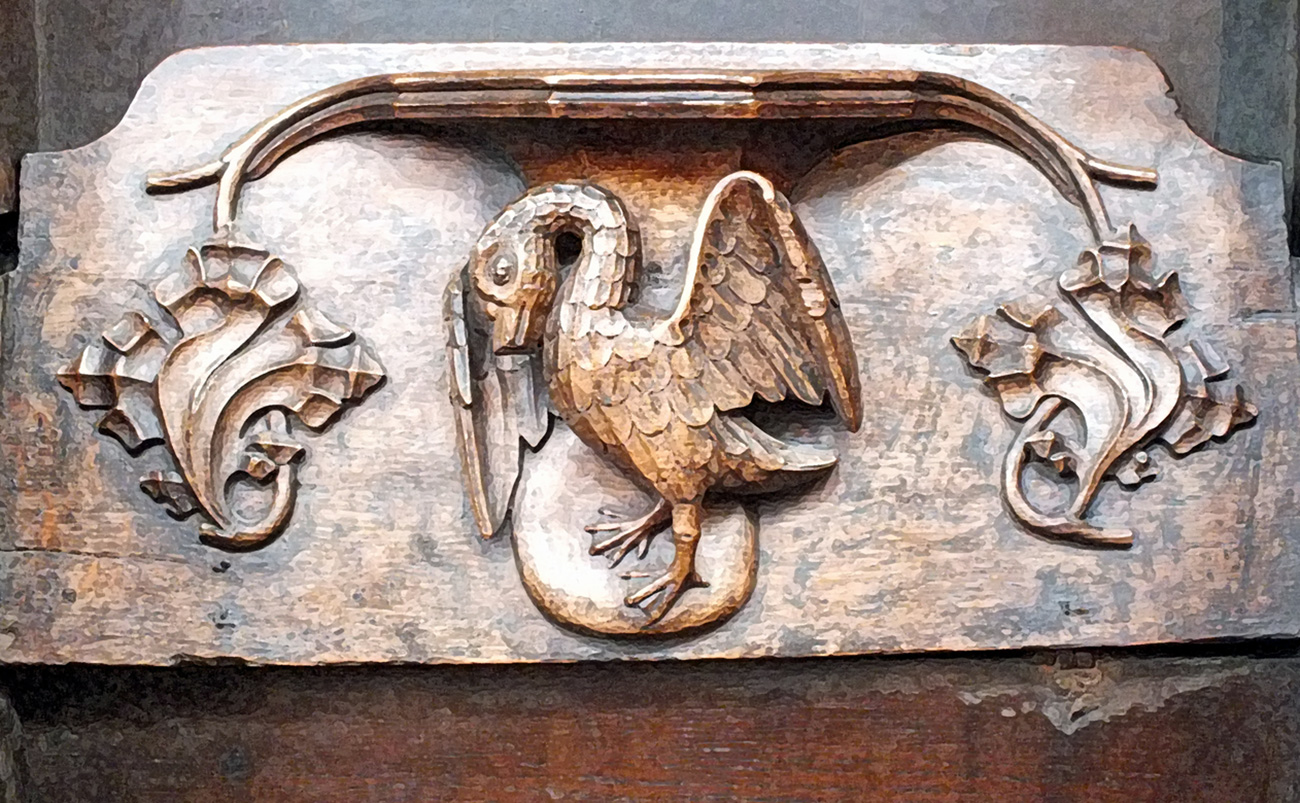
S6 – Swan flanked by leaves, the badge of the Bohun family though without the crown collar.

The header misericord is N4 – a mermaid holding a mirror in her right hand, a comb missing from her left. Two dolphins flank her.